
Spatial intelligence does not simply refer to a collection of smart devices controlled by a single terminal. Instead, it involves integrating various technologies such as comprehensive wiring, network communication, security systems, automation, and audio-visual technology to create a cohesive and efficient management system. This advanced method goes beyond basic automation and informatization to enable complex and diverse interactions between people and products, enhancing comfort and user-friendly design. It represents a high-tech, customizable, and flexible integrated service system designed for the future.
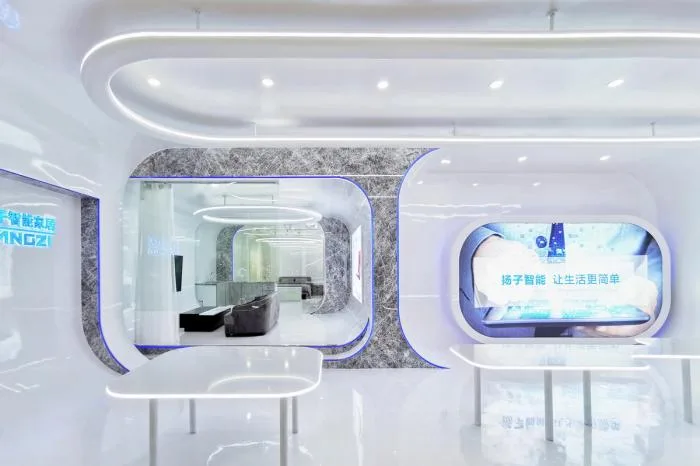
▲ Space Overview
The project is situated in Shangyue Bay Plaza in Lujiazui, Shanghai. As a key part of the urban plan for Lujiazui Binjiang Financial City, this smart home experience center is located within the bustling CBD financial district. Covering approximately 108 square meters, the store offers advanced, human-centered smart home products and intelligent control solutions.
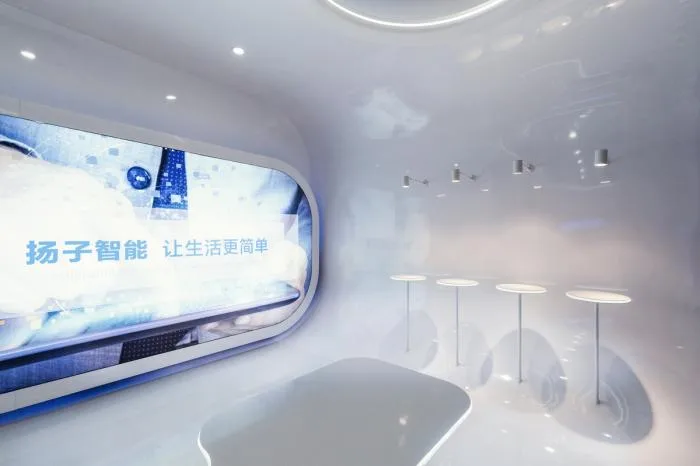
▲ Smart Home Image Wall
Embracing the concept of “smart life” and focusing on product display experience, the design employs a “modular space” approach. Rounded corner modules serve as the core units for experiential spaces, arranged linearly by nesting uniform-shaped blocks with varied functions. This clear and scientific layout enhances functional clarity throughout the space.
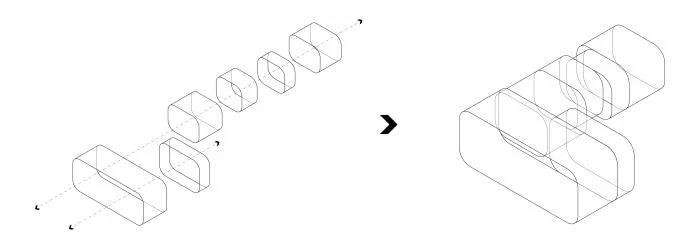
▲ Functional units with curved corners, nested and combined into a foundational spatial system
The design delivers a smooth and efficient visiting experience that effectively communicates product benefits. The soft, curved edges and orderly modular integration, along with consistent material tones, reflect the values of modularity, integration, freedom, technological sophistication, and futuristic style embraced by the smart life concept.
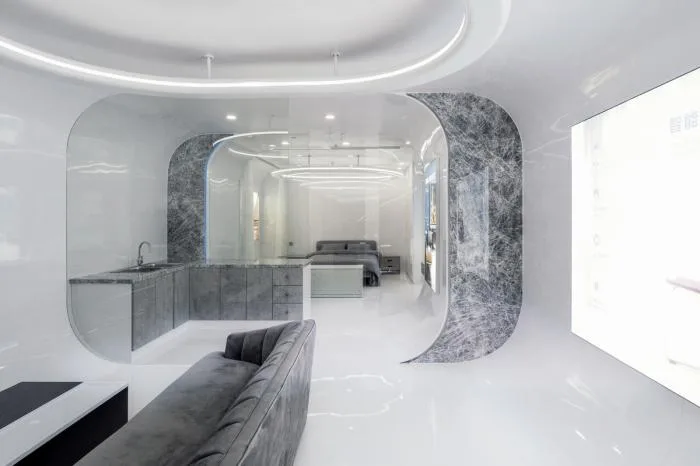
▲ Transition from living room module to kitchen module
Analyzing spatial functions and visitor habits led to a thoughtful reorganization of the modular layout. The entrance side features a display window that offers an open visual connection externally, while internally it creates a more private environment. This allows for strategic placement of the brand image and reception areas to optimize sightlines. The display booths combine product presentation with gentle, curved lines that soften boundaries and create staggered arrangements, subtly guiding spatial flow and limiting areas appropriately. The core “shuttle” experience area is expanded, with the living room positioned prominently at the forefront to provide a strong visual impact upon entry.
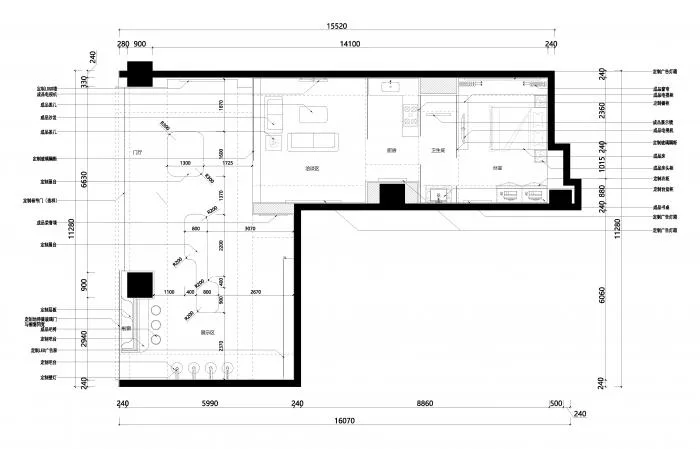
▲ Plan view
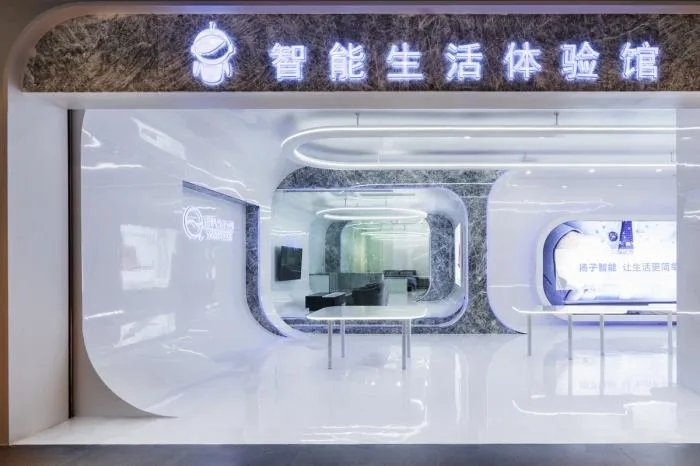
▲ Open entrance interface and visual corridor
Given the limited space and unique shape of the layout, simulating a traditional home environment could cause confusion in spatial function and scale. Additionally, considering the varied interior styles, personal tastes, and aesthetics of visitors, designing a realistic home setting could feel unfamiliar or alienating. Instead, the layout integrates individual home scenes with a linear experiential flow, arranging living room, kitchen, bathroom, and bedroom from public to private areas. This allows visitors to seamlessly “shuttle” between modules, clearly understanding each product’s features, advantages, and applications within different settings.
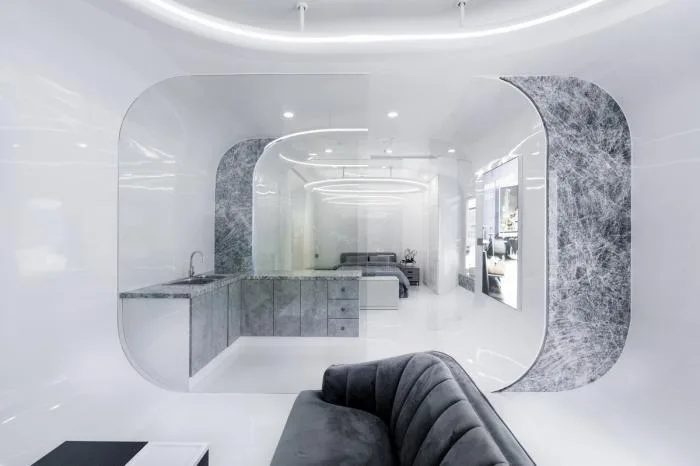
▲ Pure spatial modules highlighting product features
The bar negotiation area caters to customers with strong purchasing intent, facilitating in-depth discussions between clients and staff about products and purchasing options. Positioned in a corner of the floor plan, the bar counter creates a relatively private space within the store, enhanced by surrounding window displays.
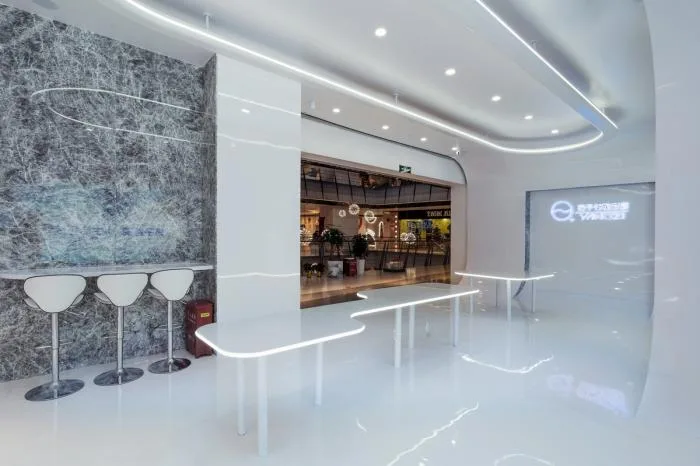
▲ Bar Negotiation Area
The scene experience area is elevated by two steps to create a sense of distinction and ceremonial entry. Display units are separated by electrically controlled glass panels, allowing staff to demonstrate the integrated functionality of the entire product set via a control panel located in the living room module.
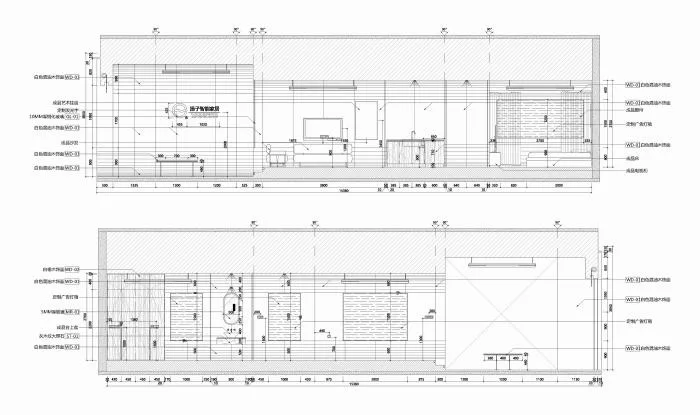
▲ Spatial section diagram
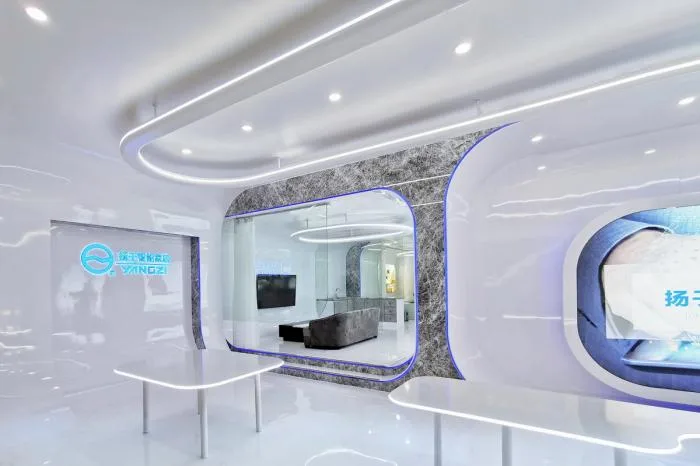
▲ Integrated linkage display space
To emphasize a futuristic atmosphere and highlight the products, the overall material palette features a pure white tone created with mixed oil wood veneer and epoxy floor paint. Curved surfaces seamlessly connect floors and walls, as well as ceilings and walls, constructed with galvanized square pipes. The digital control of floor paint allows for smooth color transitions with the walls, providing visitors with a high-tech, immersive experience where floors, ceilings, and walls blend harmoniously. This minimalist backdrop focuses attention solely on the products, maximizing their impact.
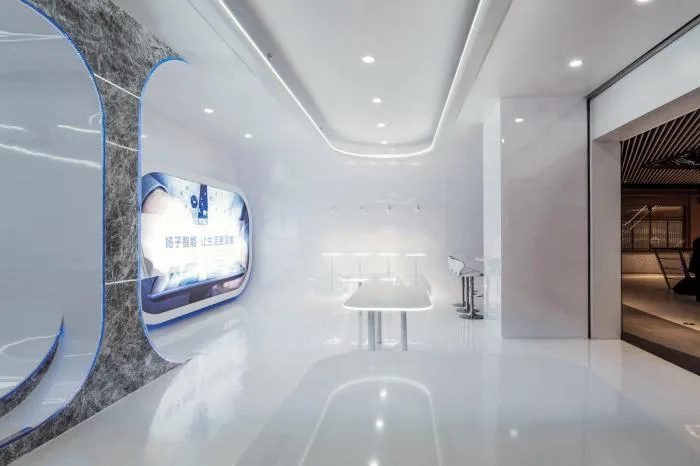
▲ Cornerless pure white space
Lighting design combines traditional spotlights and tube lights with rounded corner-shaped fixtures and LED strips, complementing the curved architectural elements throughout the space. This approach softens the volume and interaction of furniture while enhancing spatial design features. The contrast between points, lines, and surfaces, along with varying reflections on glass and walls, creates a captivating dynamic visual experience.
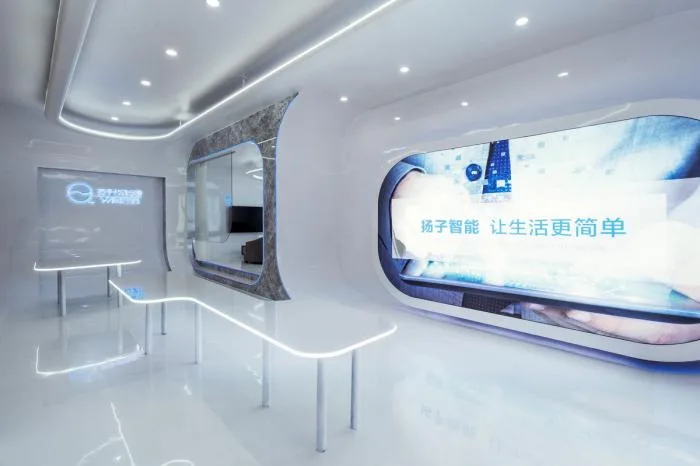
▲ LED strips and tube lights forming spatial points, lines, and planes
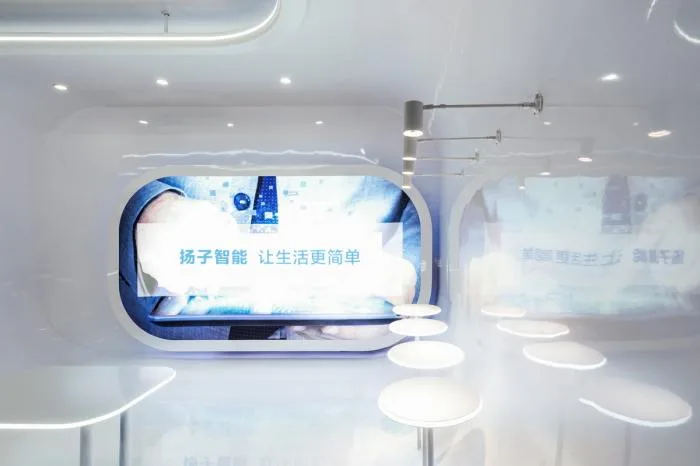
▲ Circular booth and lighting design
The overall design—from module shapes to booth edges, information walls, and lighting fixtures—features soft curves that reduce the coldness often associated with technology, making the smart home presentation more inviting and natural. Marble veneers on the walls at module edges emphasize these curved forms, adding texture and a sense of warmth that highlights the home-like qualities of the space. This material choice enriches the spatial hierarchy and prevents the pure white environment from feeling sterile or distant.
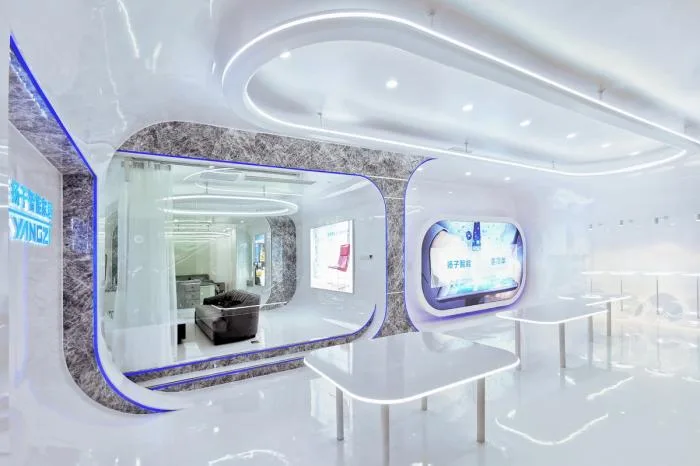
▲ Entering the future ‘shuttle’
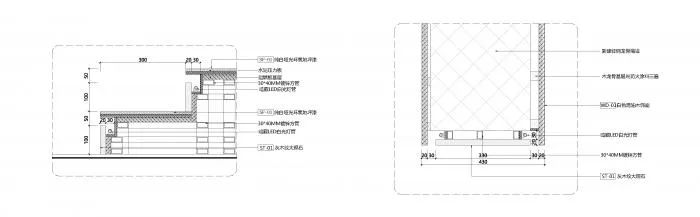
▲ Construction node A
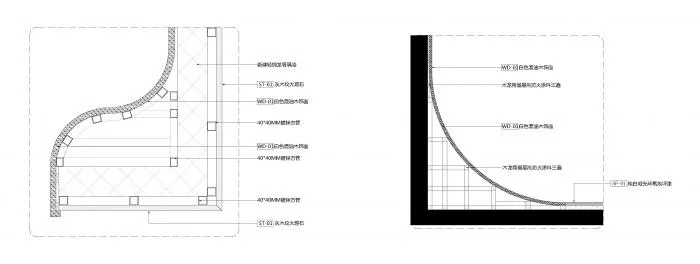
▲ Construction node B
Project Information
Project Name: Shuttle · Intelligent Life Experience Hall
Designer: Pingjie Design
Project Design & Year of Completion: 2019
Principal Creator and Design Team: Huang Di
Project Location: Shanghai
Building Area: 108 m²
Photography Copyright: Yao Jieqi
Client: Yangtze Smart Home
Partner: Suzhou Redesign














Must log in before commenting!
Sign Up