
The Small Tavern within the Yellowstone Wall
Located in the heart of Jiaoxi Ancient Town, Changzhou, this small courtyard was originally a three-entry residential building. Over time, most of the structures collapsed, leaving only one main building and the remaining half wall made of Huangshi stone. Protecting, restoring, revitalizing, and repurposing historic buildings is the most effective way to preserve history against the passage of time and fading memories.
Before our intervention, the Architectural Design and Research Institute of Southeast University had already carried out repairs on the remaining structures. Our project aims to transform the courtyard into a cozy tavern that bridges past and present, breathing new life into the former ruins. Visitors can stroll through the fragrant alleys lined with old houses, walk along stone-paved roads preserved since the Kangxi period, and spend leisurely afternoons in the half-walled Huangshi courtyard, enjoying autumn views and brewing tea around the stove. This experience offers a genuine way to connect with the water town’s heritage.
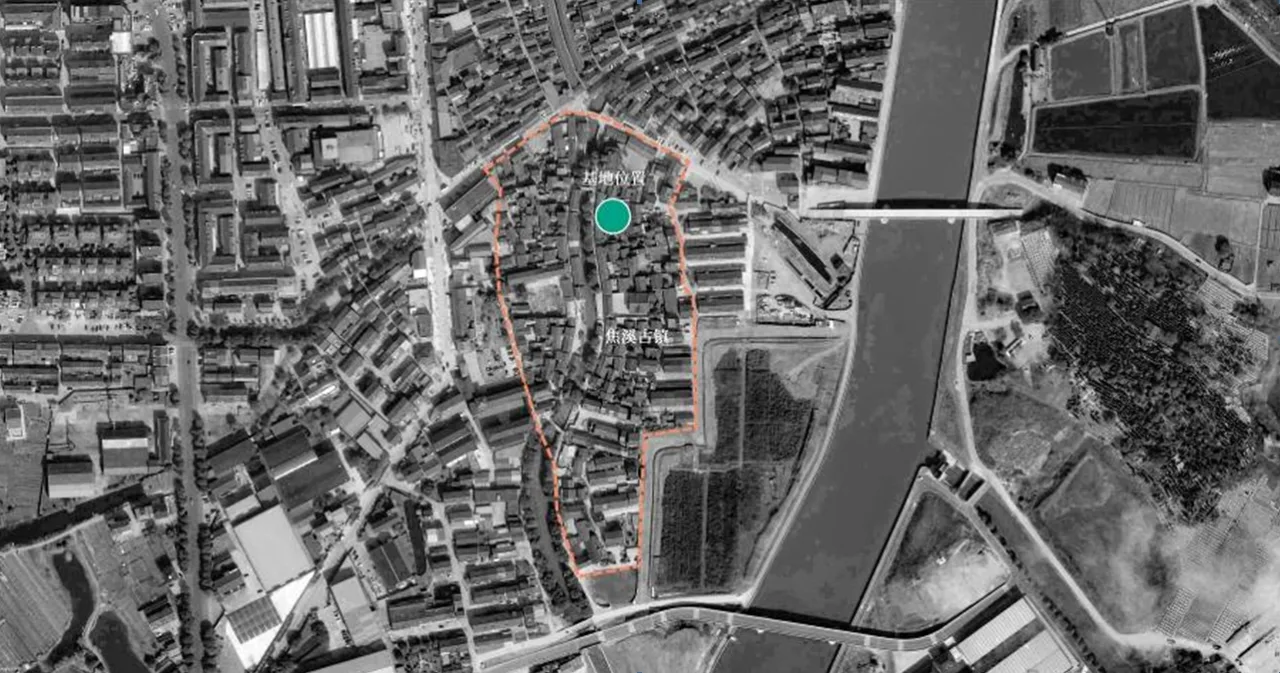
△ Project location © Pingjie Design
Jiaoxi Ancient Town, built along the Longxi River, boasts a history spanning over 700 years. Along the riverbanks, towering arches, granite spans, and numerous docks can be found, hosting 11 cultural heritage sites and 26 historic buildings. These landmarks vividly reflect the vibrant life that once flourished on both sides of the Longxi River.
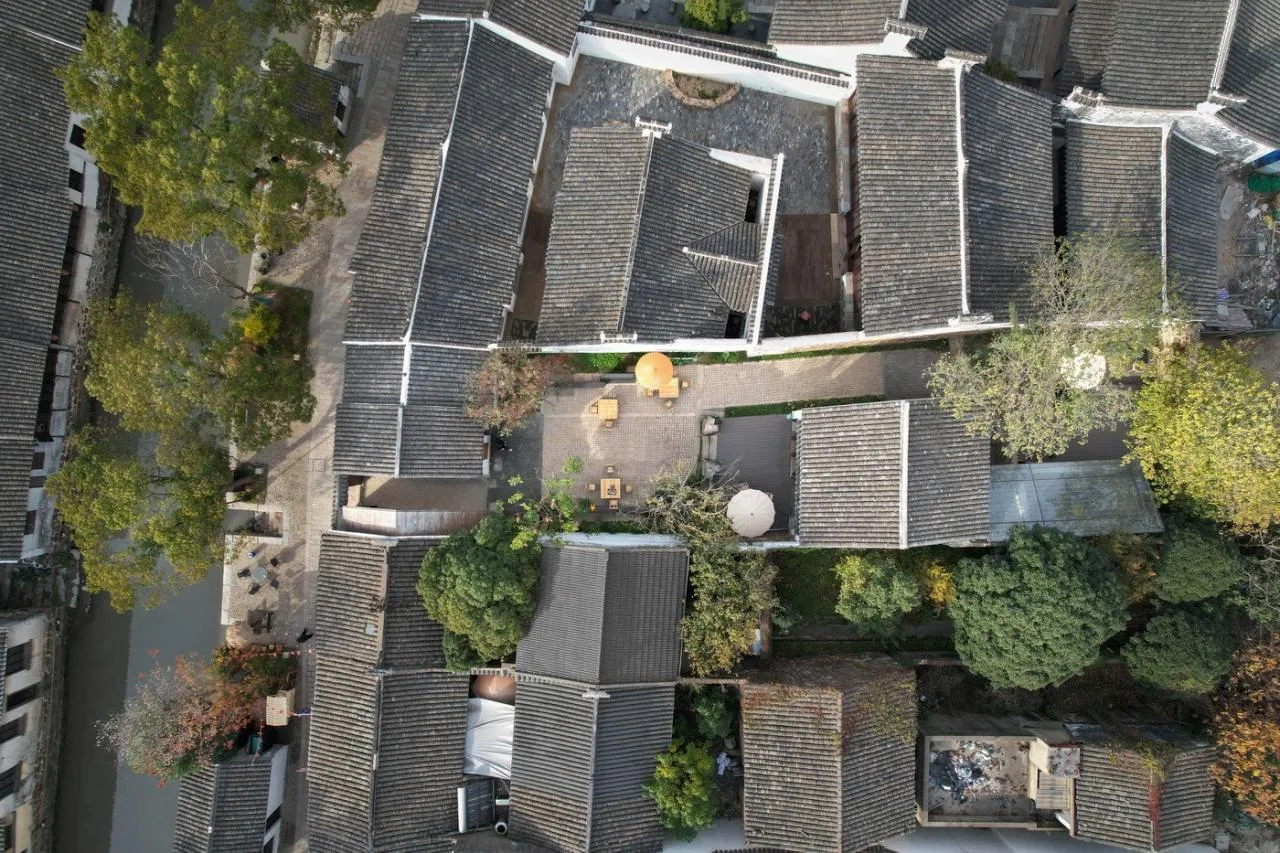
△ Aerial view of the project © Pingjie Design
The name Shijia Xiaoyuan derives from the rare surname “Shi,” which is held by fewer than 9,000 people in China, with about half residing in Changzhou. Jiaoxi accounts for half of Changzhou’s Shi population. Unlike other Jiangnan water towns known for their pink walls and black tiles, most traditional buildings here feature half walls made from yellow stone—locally sourced from nearby Shun Mountain and He Mountain. Stone houses are not only sturdy but also breathable; even after floods, moisture escapes through the gaps, reducing the risk of mold.
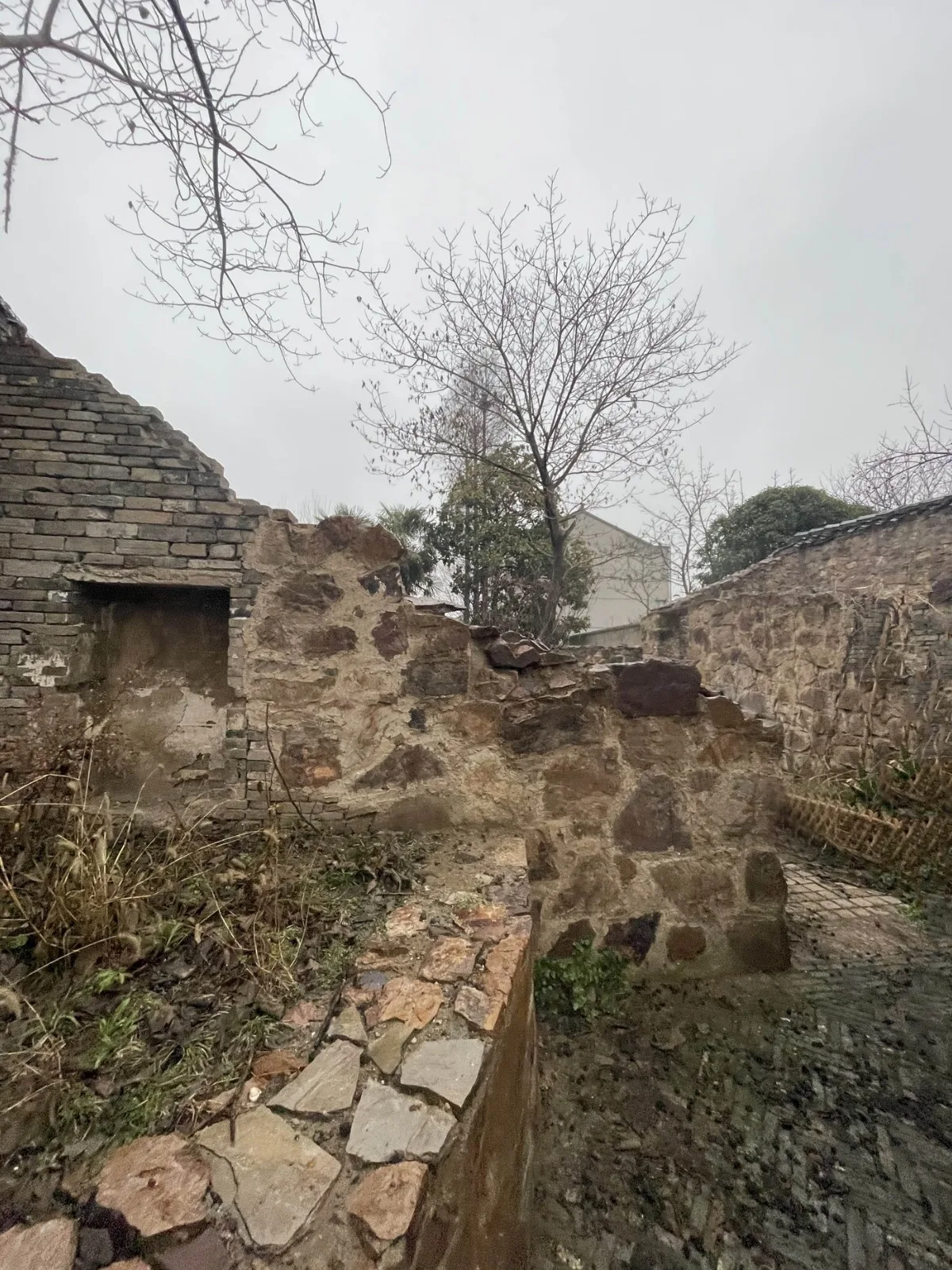
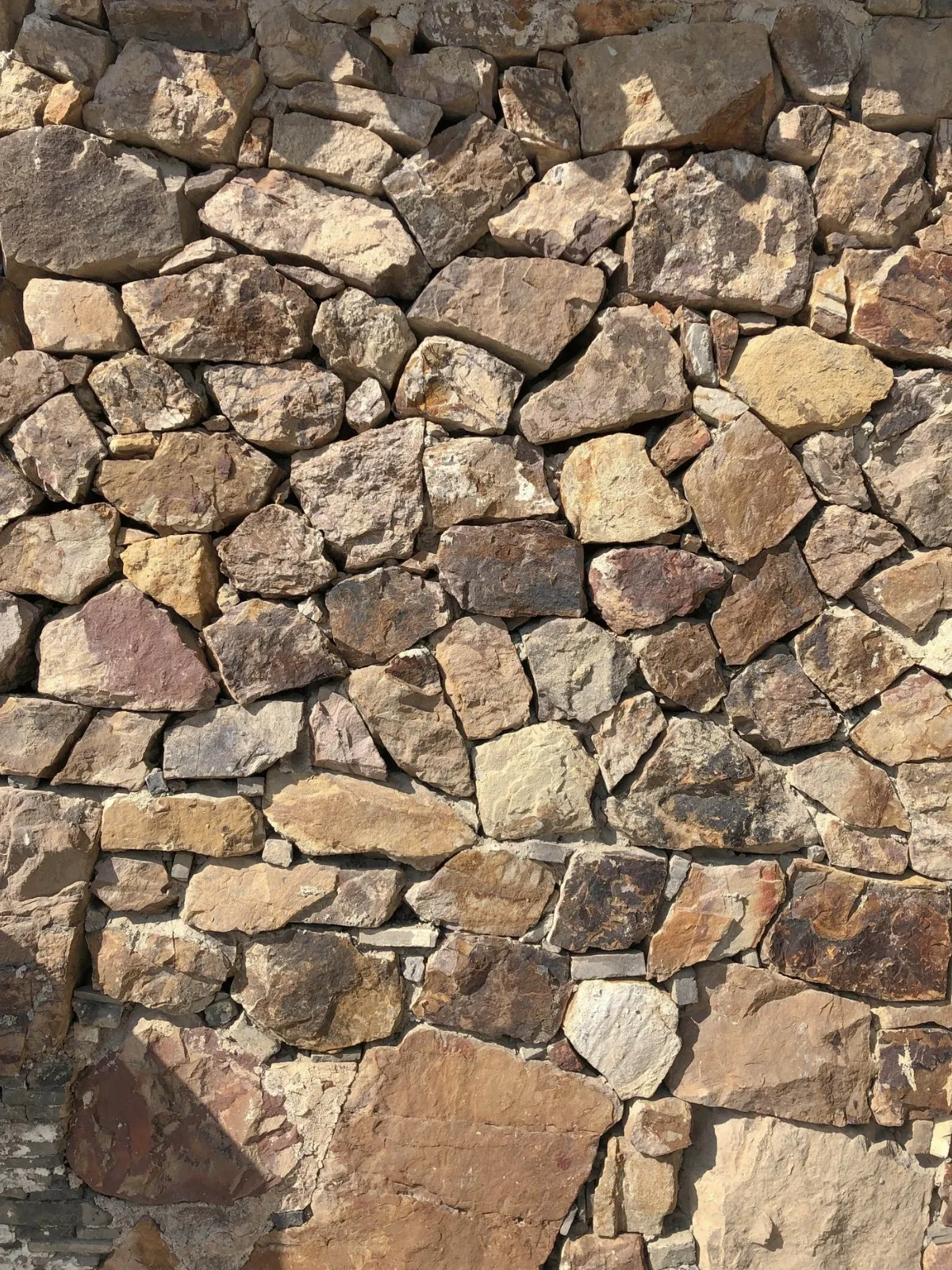
The ruins of the Huangshi Wall within the courtyard © Pingjie Design
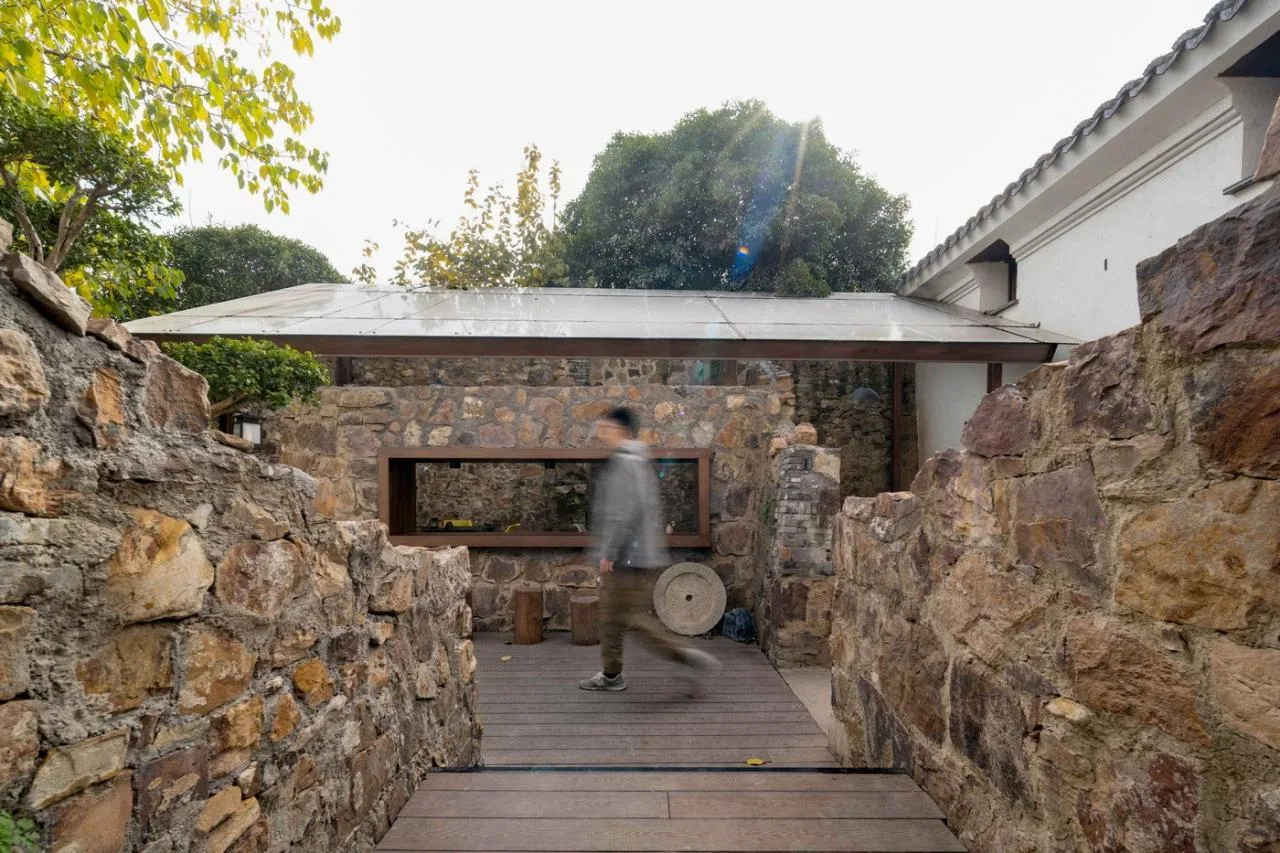
The entrance to the small courtyard preserves and showcases the remaining building walls. It consists of six rooms and five columns, with a large wooden frame blending lifting beams and piercing buckets—typical features of Jiangnan residential architecture.
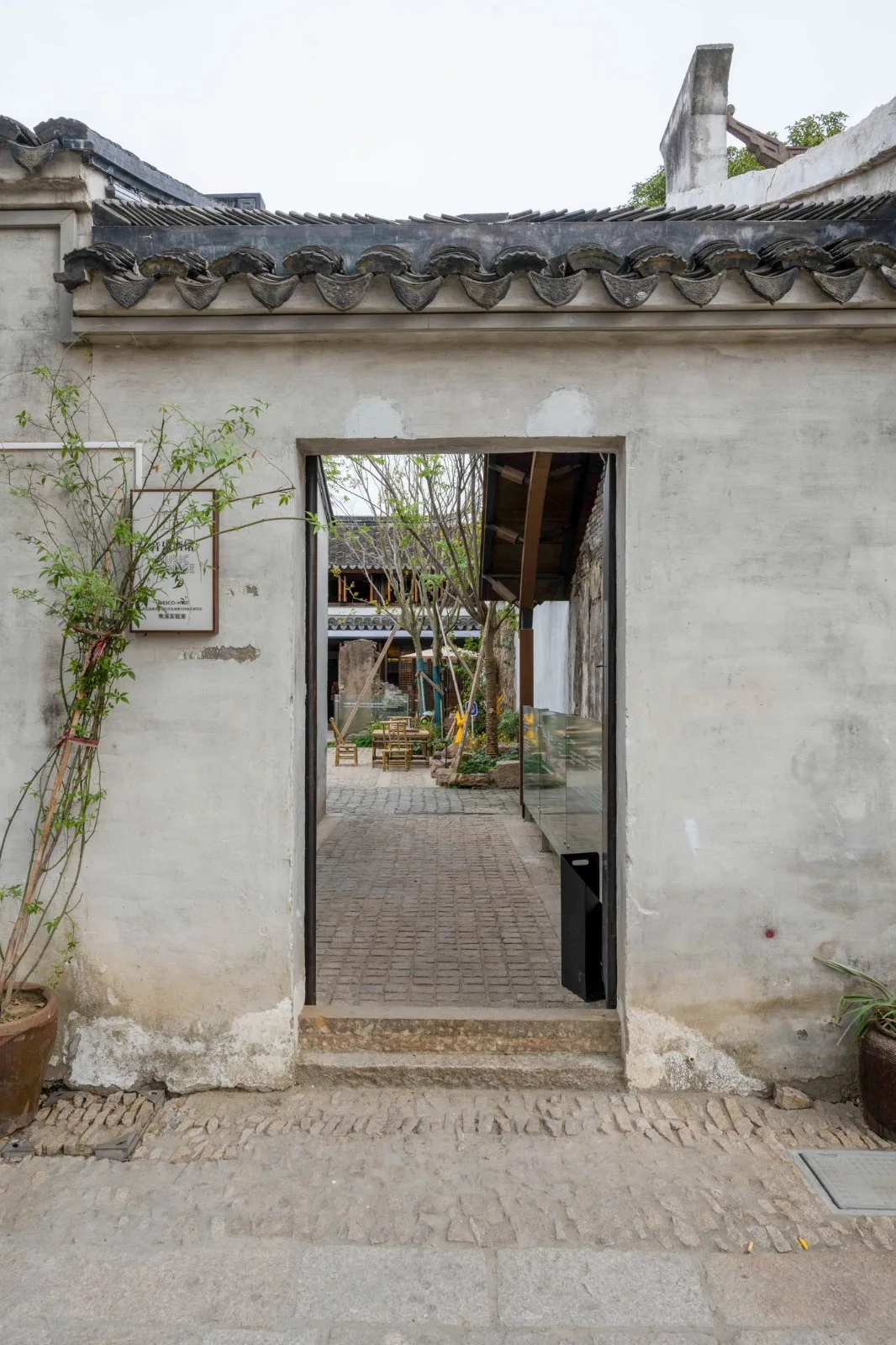
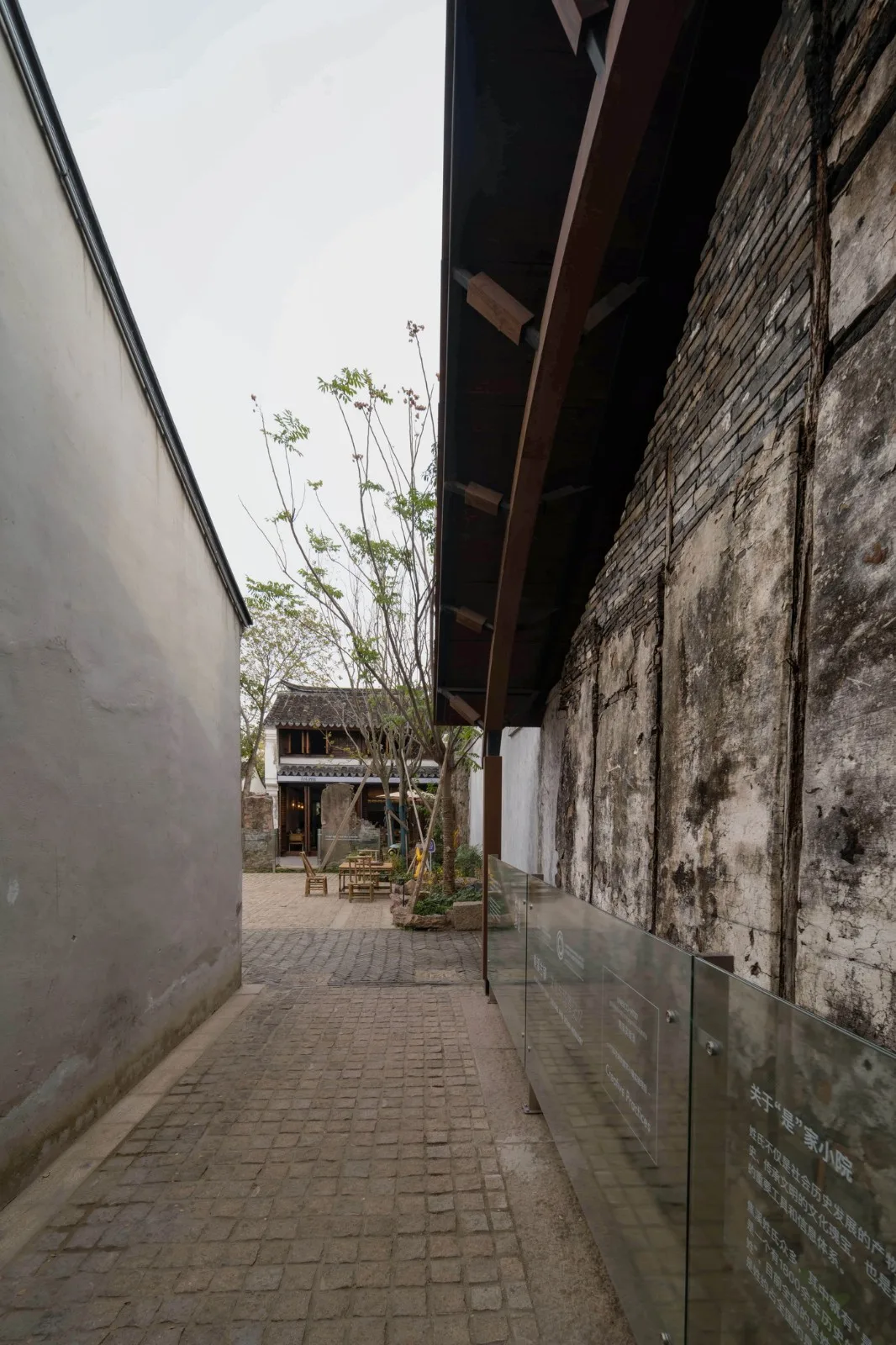
△ Courtyard entrance © Pingjie Design
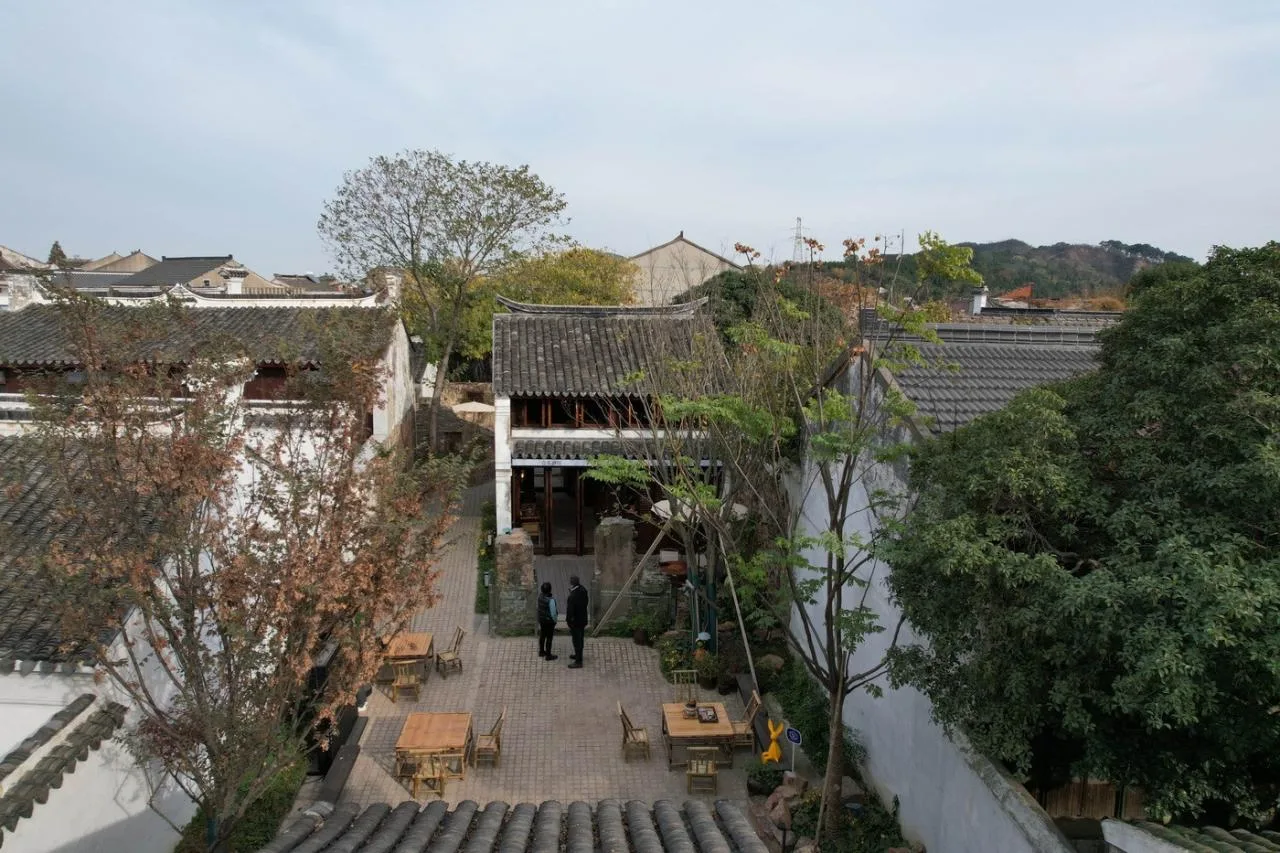
△ Aerial view of the front yard © Pingjie Design
The front yard, originally the building’s main hall, collapsed over time, opening up into a spacious courtyard. It now serves as an outdoor display area for the tavern.
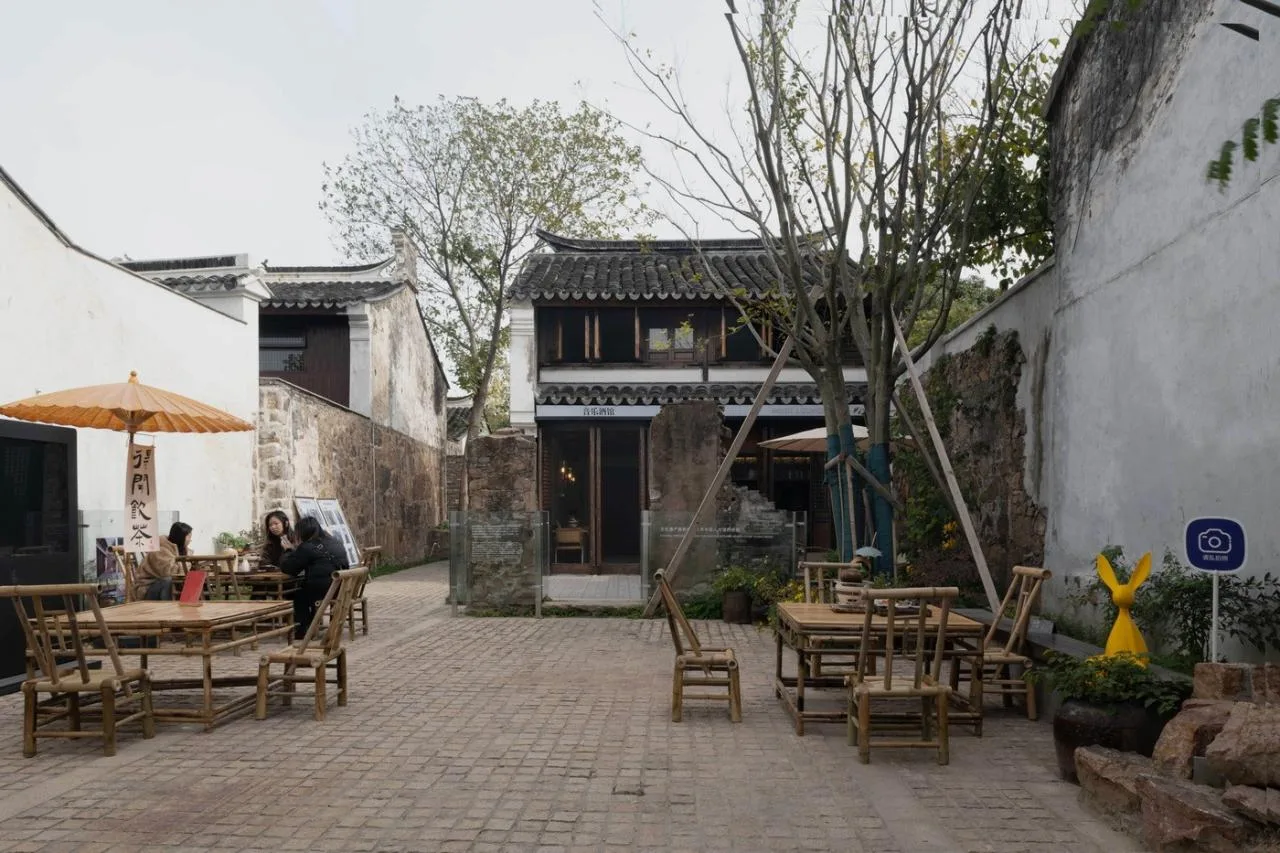
△ Front yard space © Pingjie Design
For landscaping, typical Jiangnan garden plants such as Chinese photinia (Pu Shu), chicken claw maple, and Dawu wind grass have been selected to create a serene and rustic atmosphere.
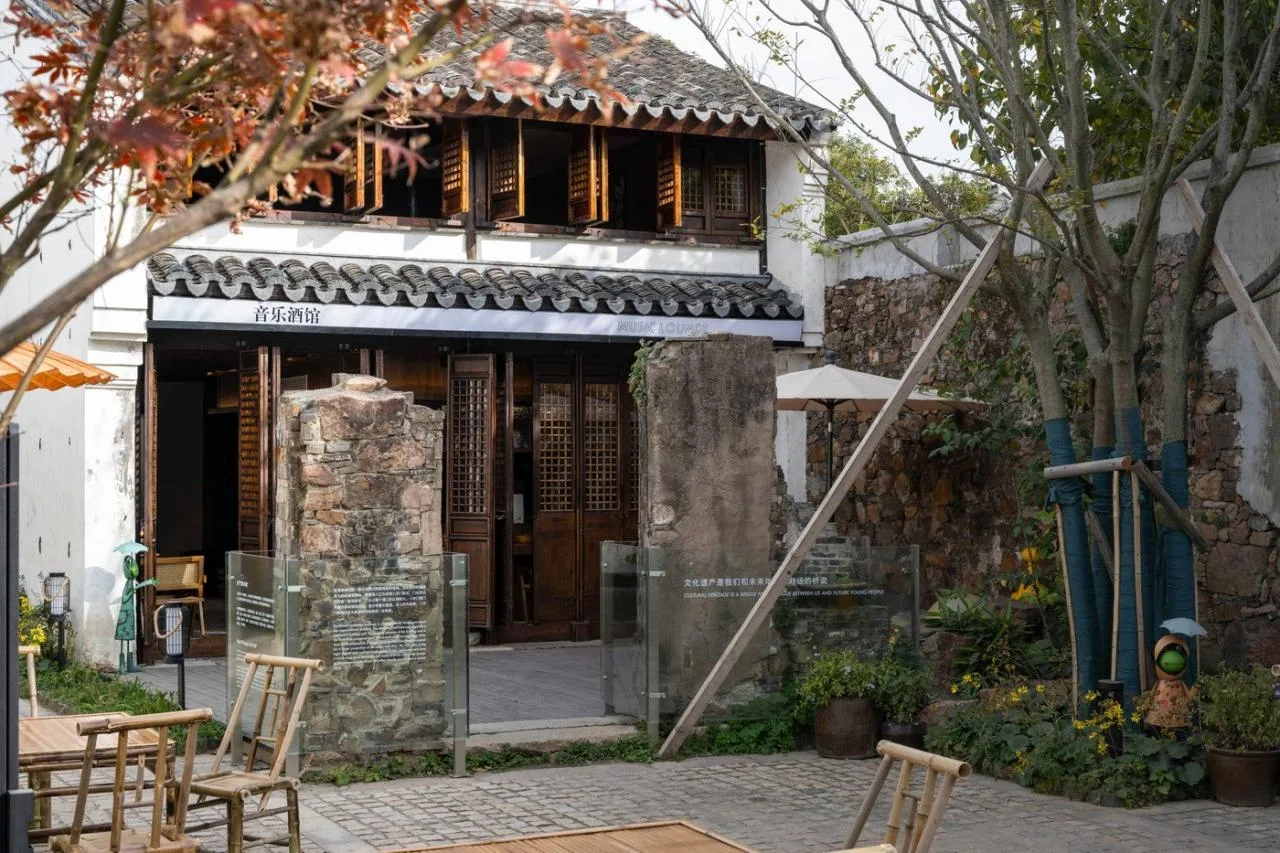
△ Front yard space © Pingjie Design
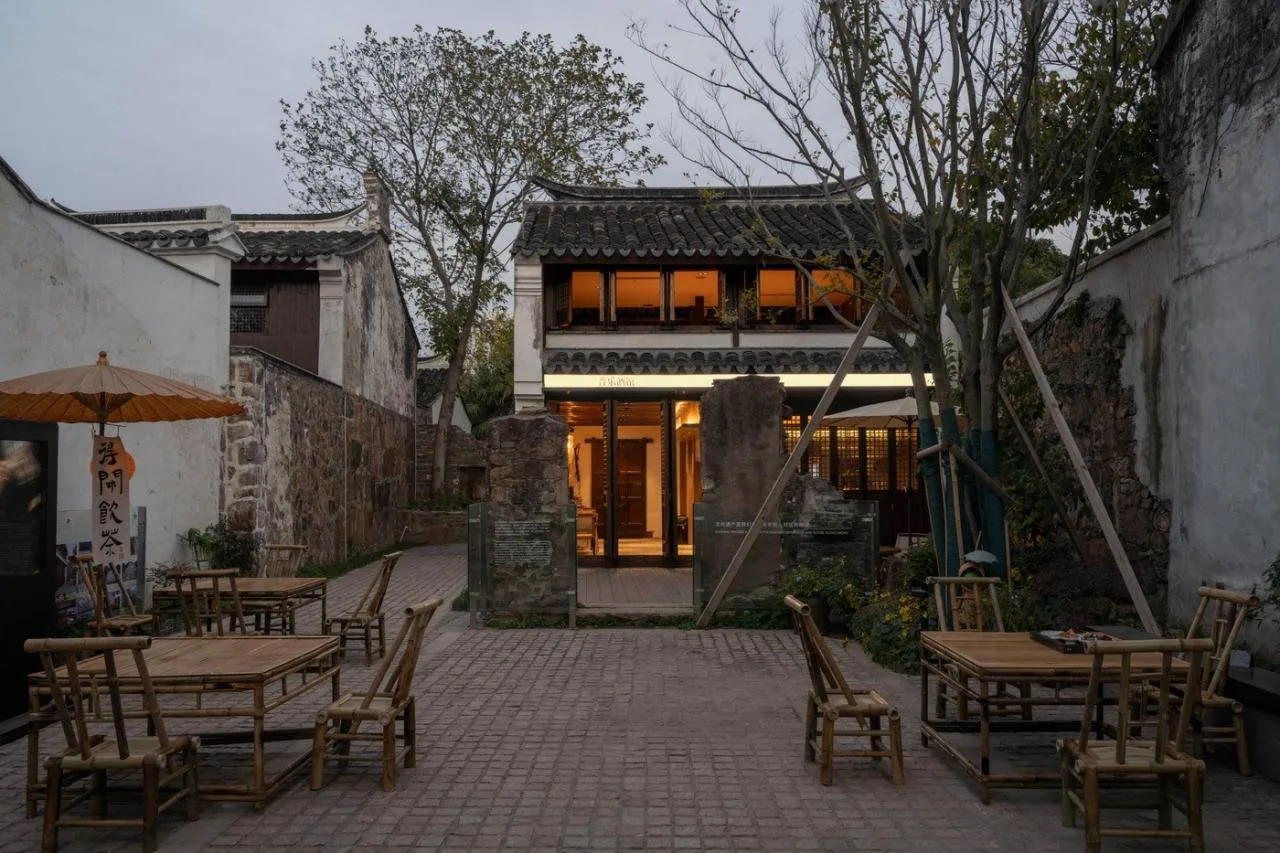
△ Front yard at night © Pingjie Design
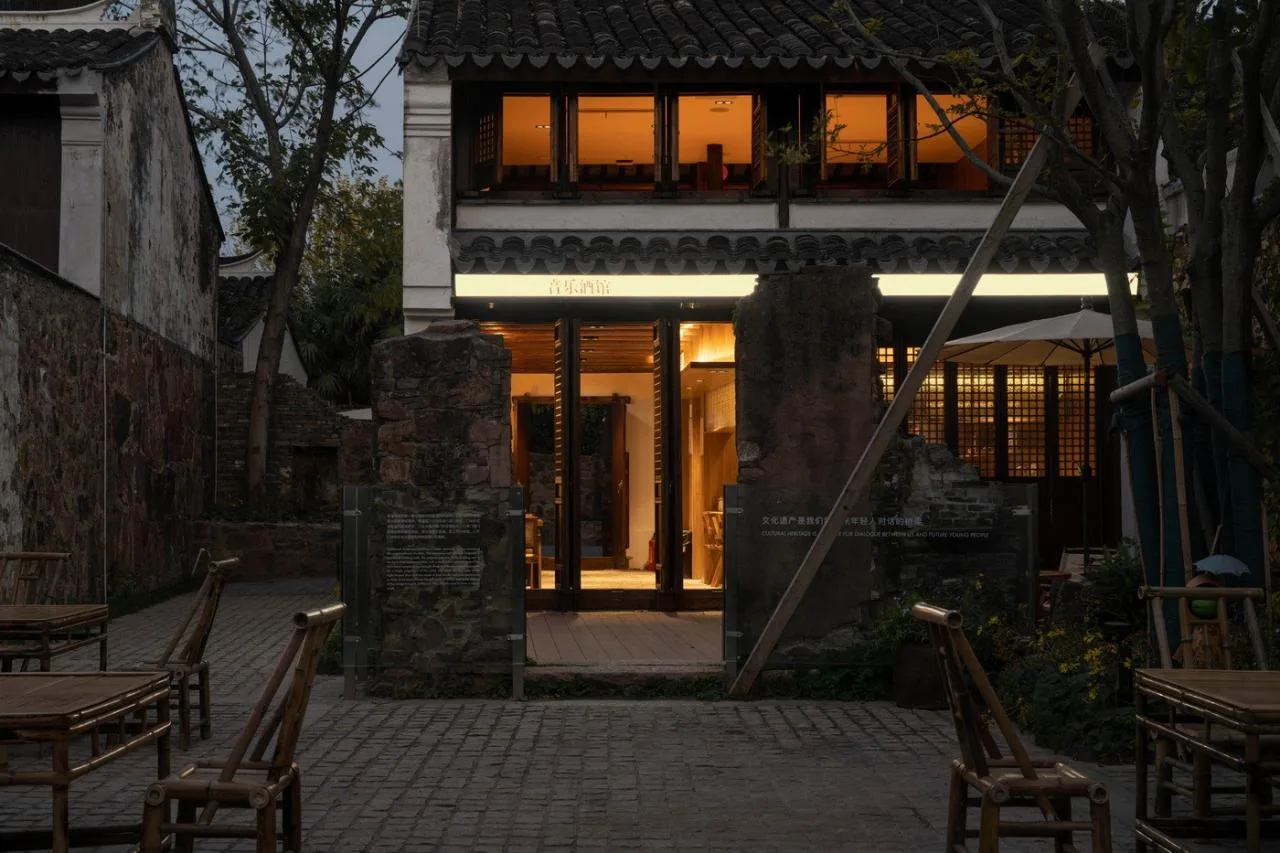
△ Front yard at night © Pingjie Design
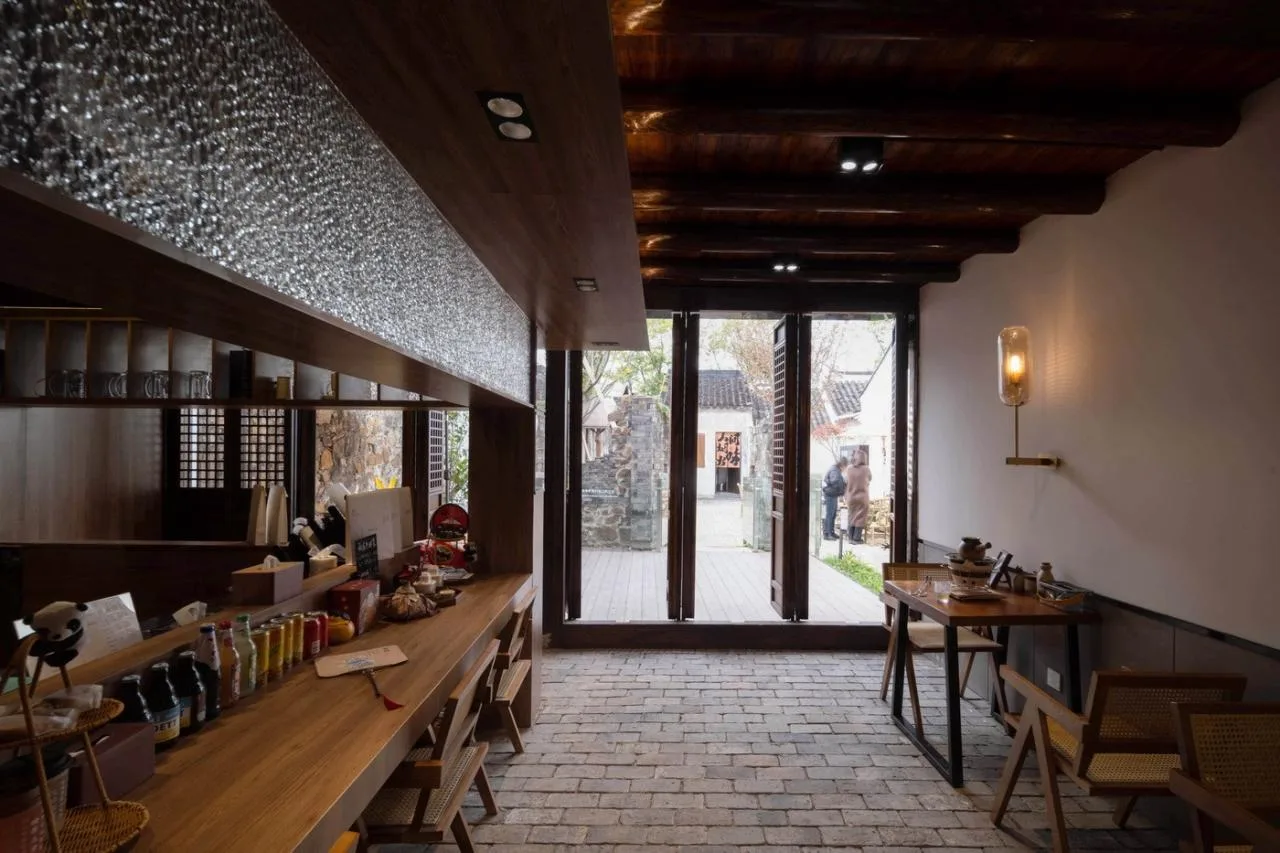
△ Indoor tavern © Pingjie Design
The interior space preserves the original structure, including doors, windows, and flooring.
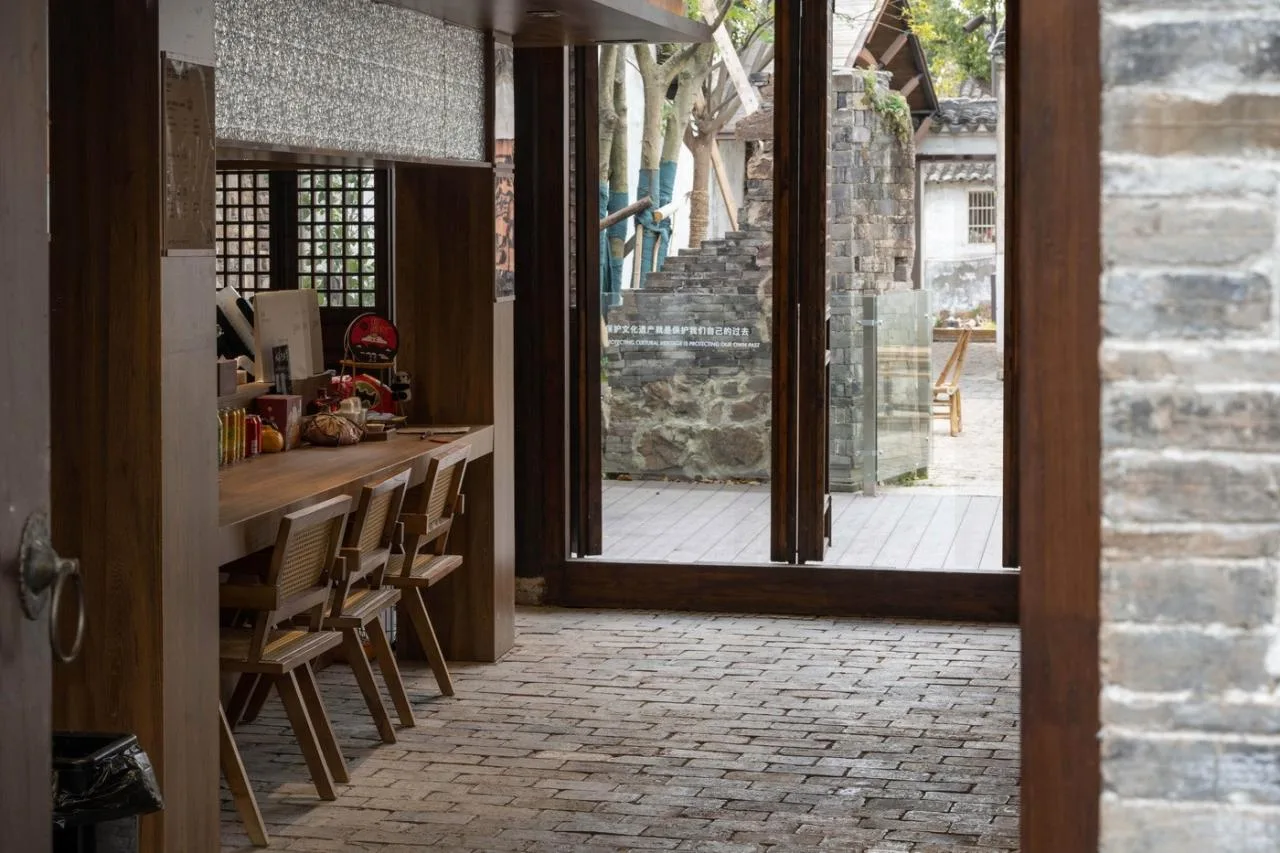
△ Indoor tavern © Pingjie Design
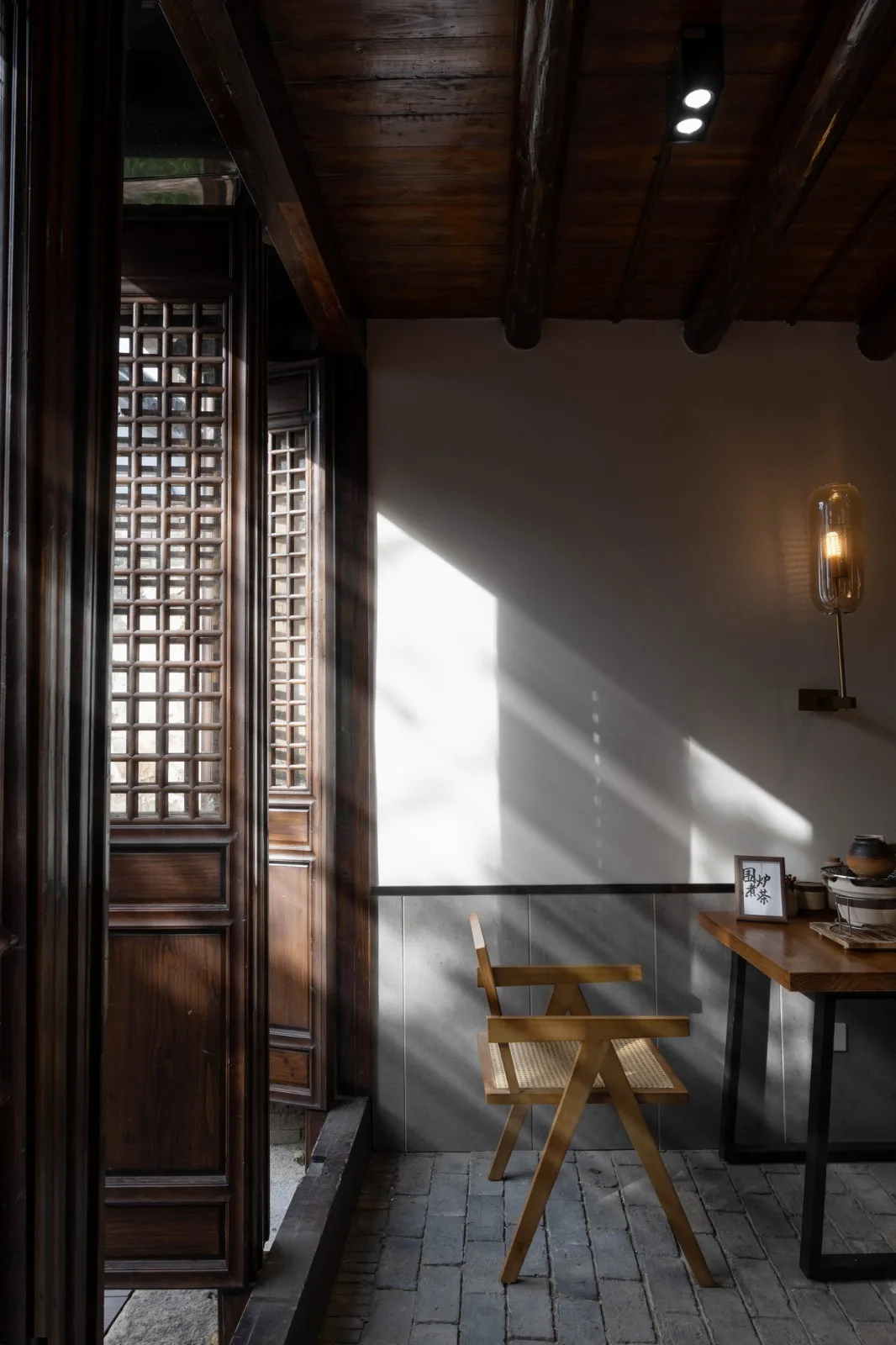
△ Indoor seating area © Pingjie Design
The doors and windows that run through the space act as a seamless connection between indoor and outdoor areas. In the morning, sunlight filters through the gaps between columns and walls, creating a unique interplay of light and shadow.
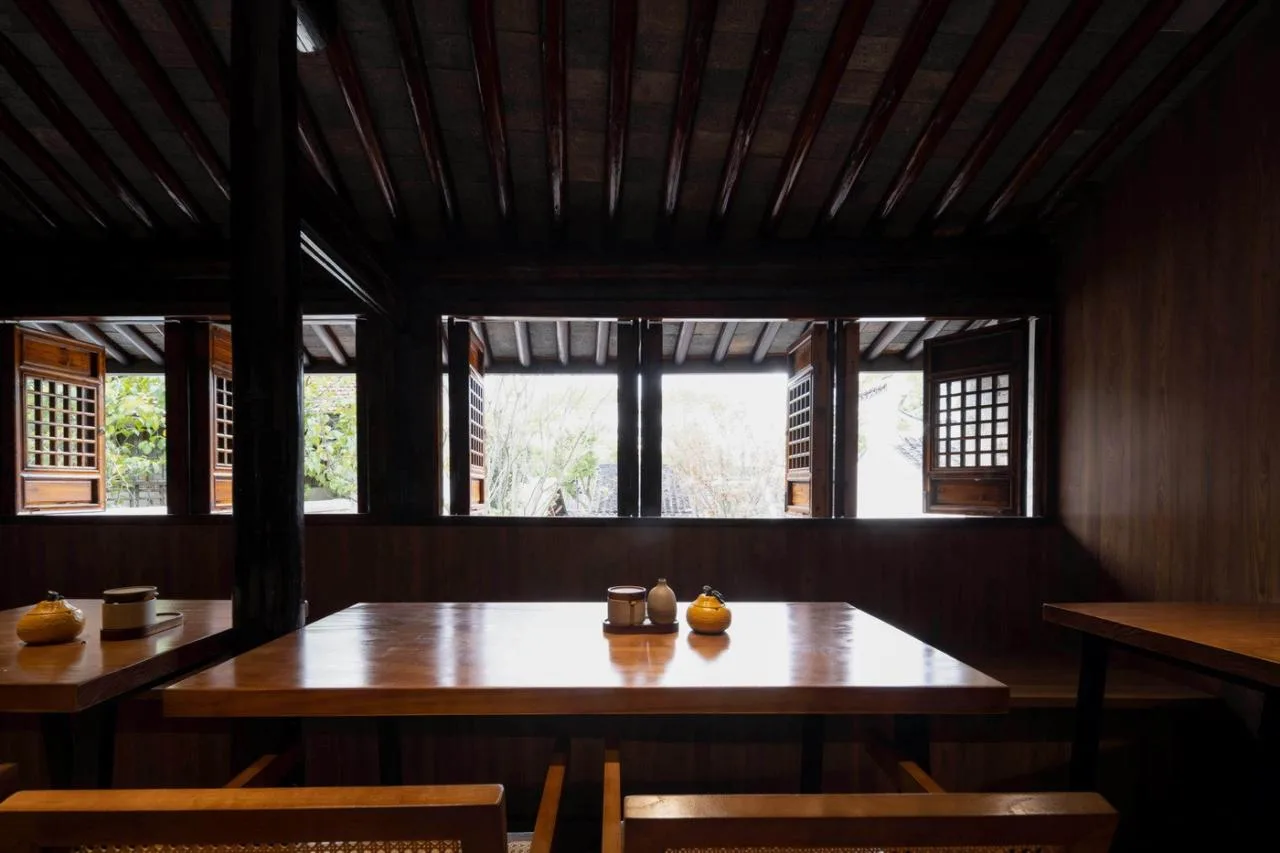
△ Tavern second floor © Pingjie Design
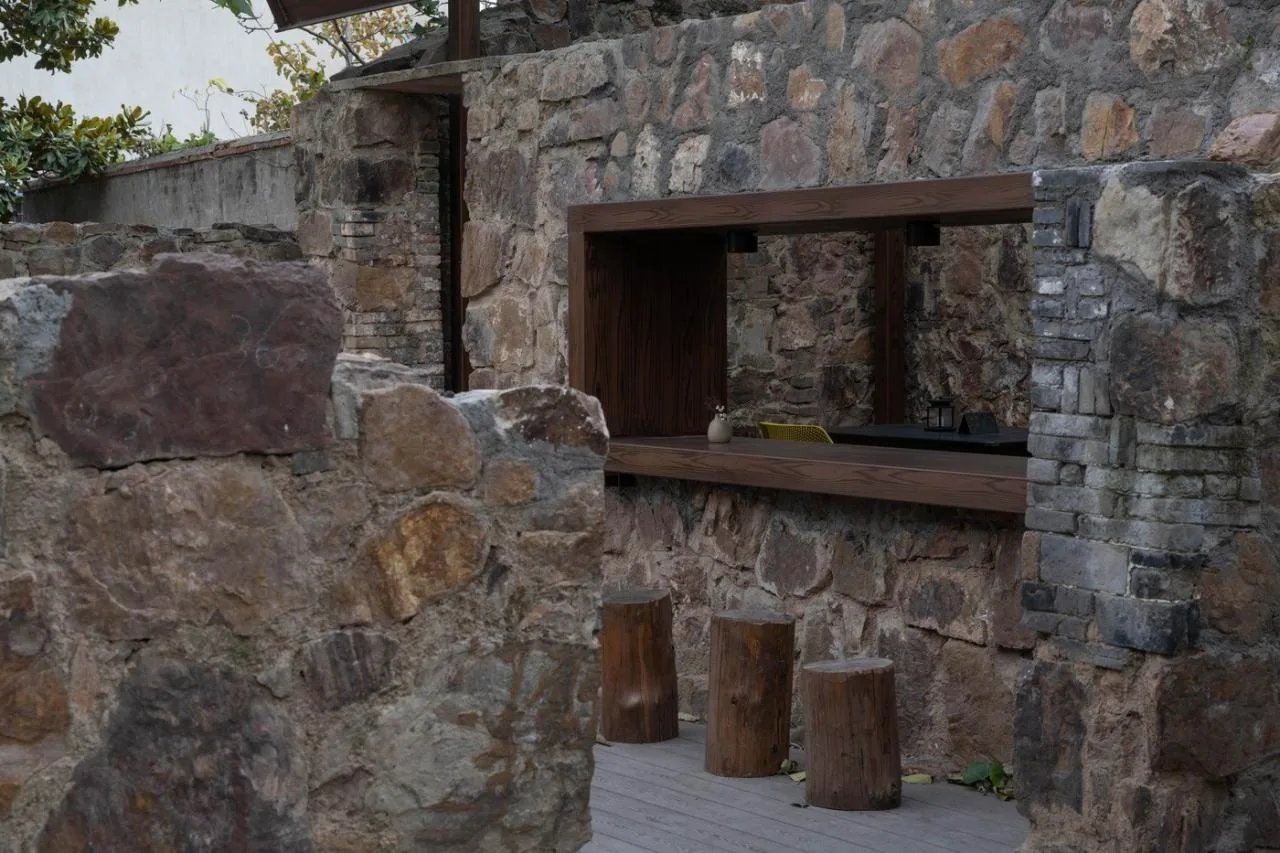
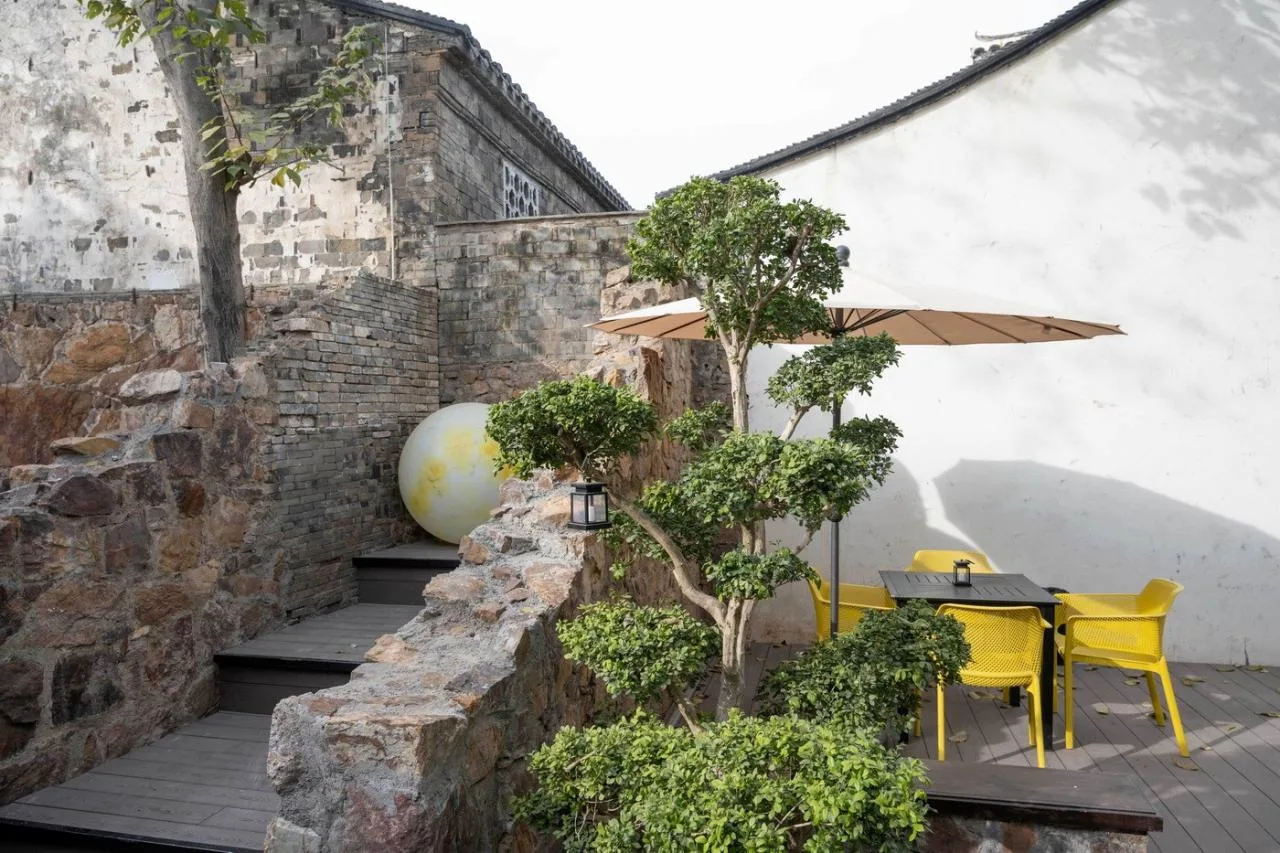
Preserving the remaining Yellowstone walls in the backyard, we added platforms, stairs, and seating to accommodate the tavern’s needs. These new elements have revitalized the ruins, transforming them from mere exhibits into vibrant spaces for gathering.
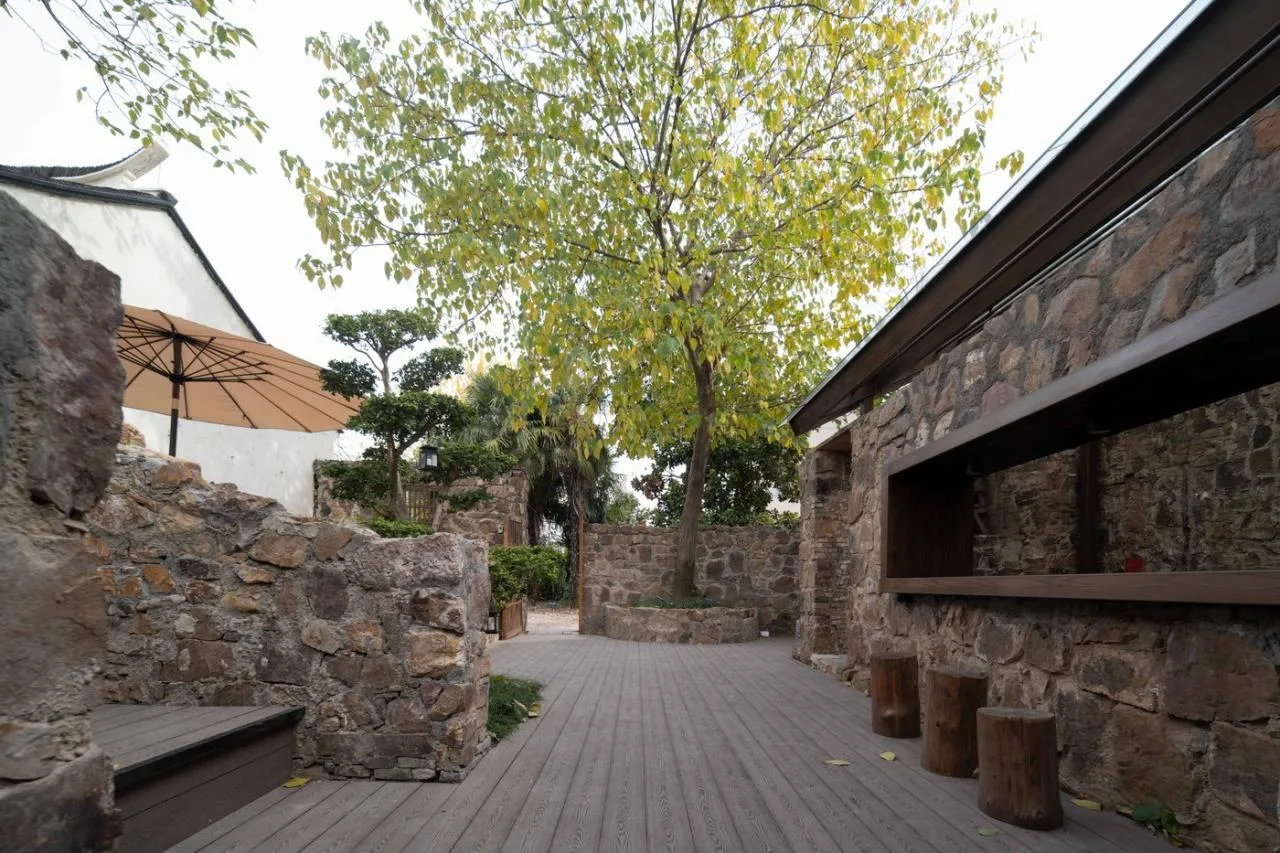
△ Backyard space © Pingjie Design
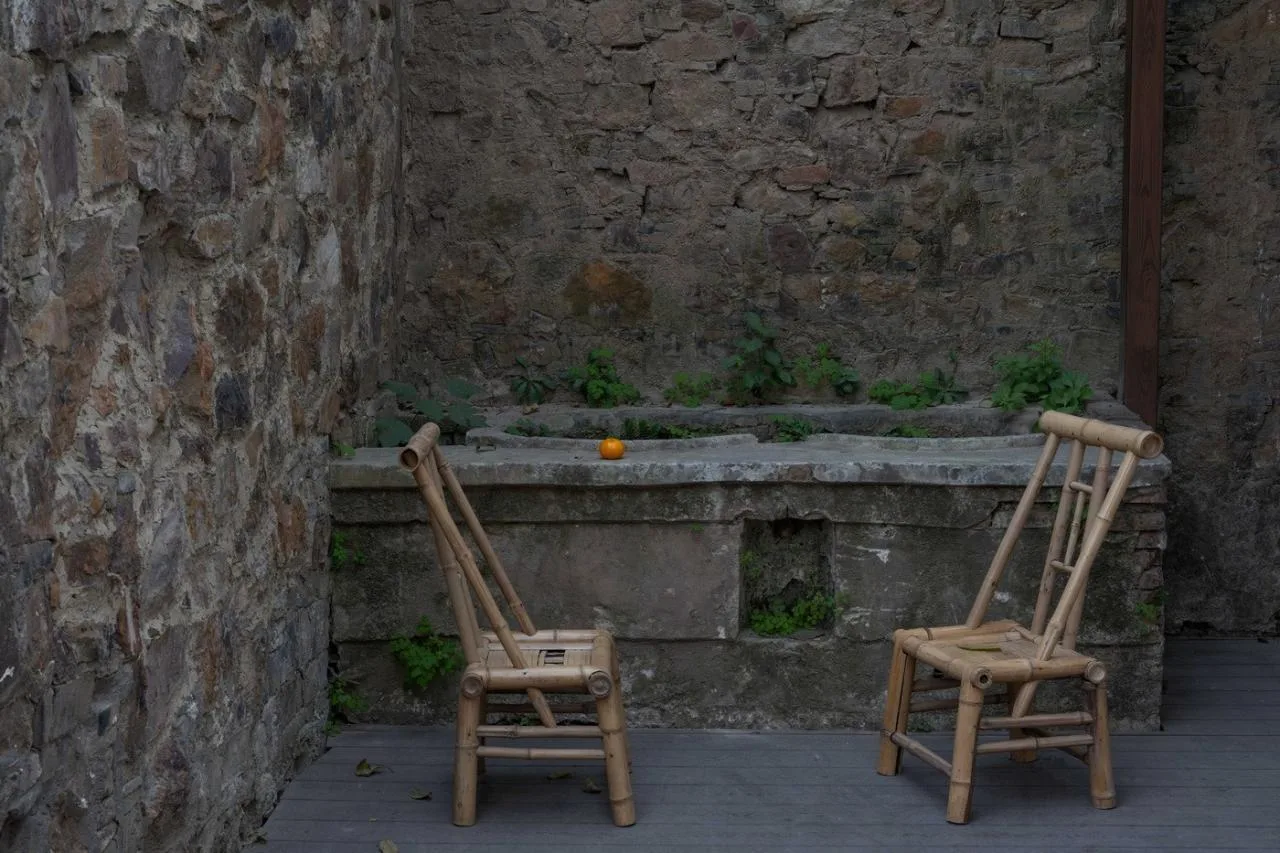
△ Preserved old stove © Pingjie Design
The old stove continues the legacy of past gatherings. Though now overgrown with weeds, it adds a charming, rustic touch to the courtyard.
© Pingjie Design
© Pingjie Design
© Pingjie Design
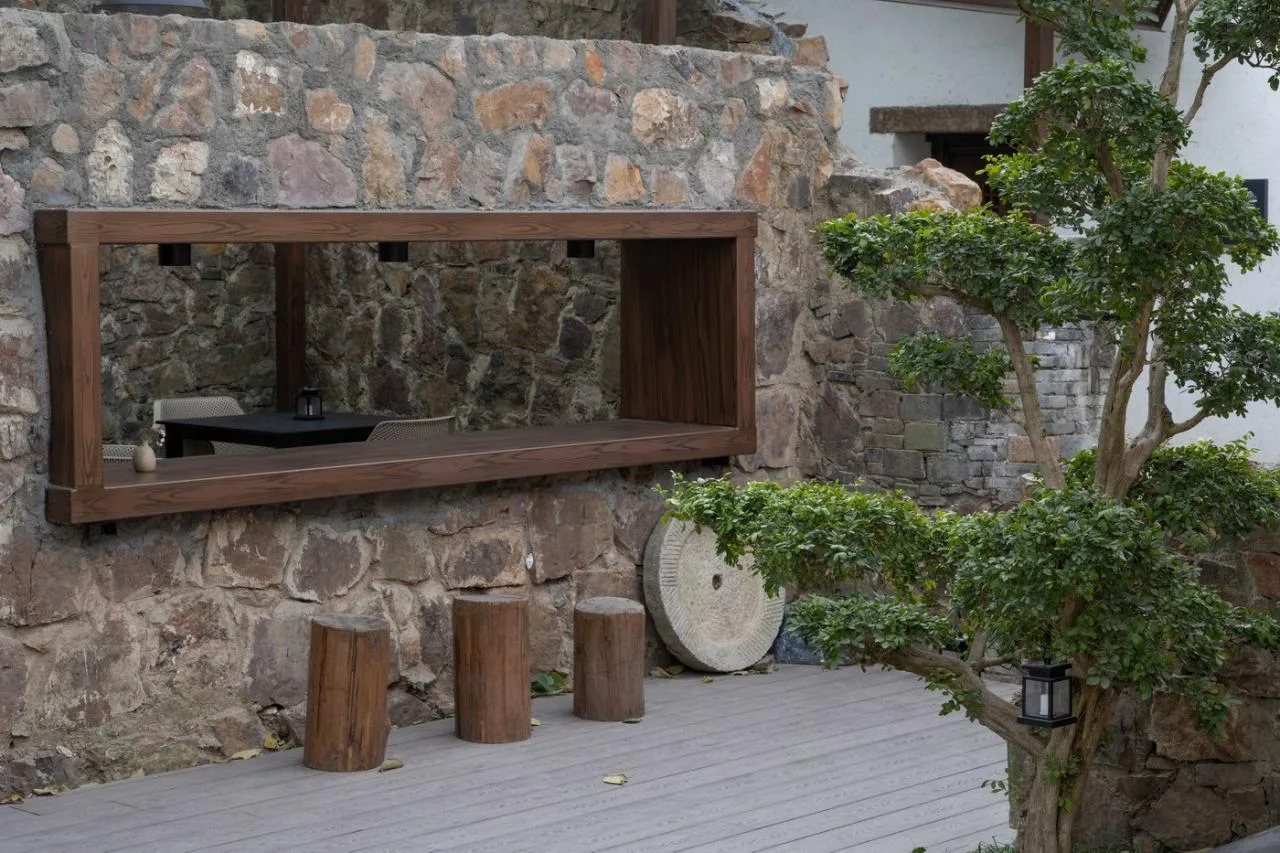
© Pingjie Design
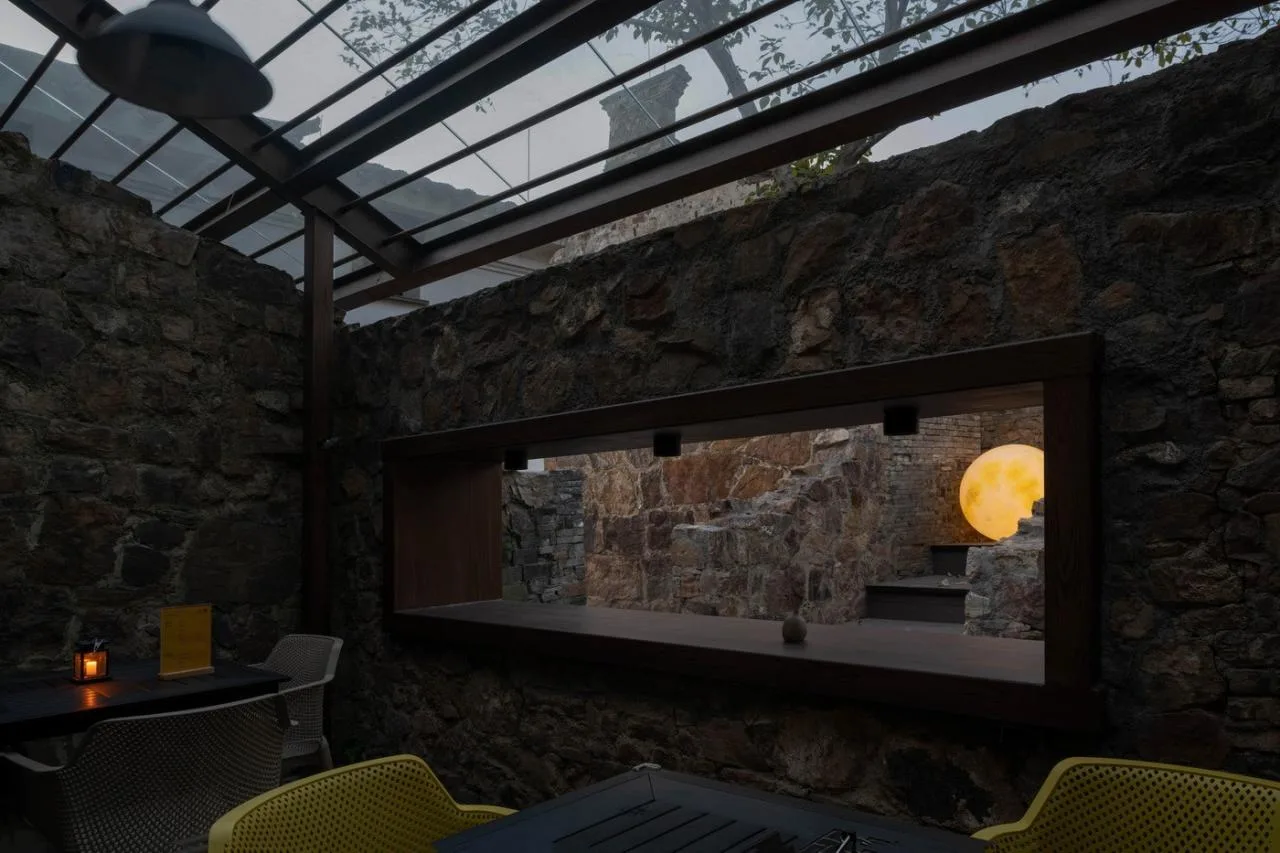
Looking out through the window opening © Pingjie Design
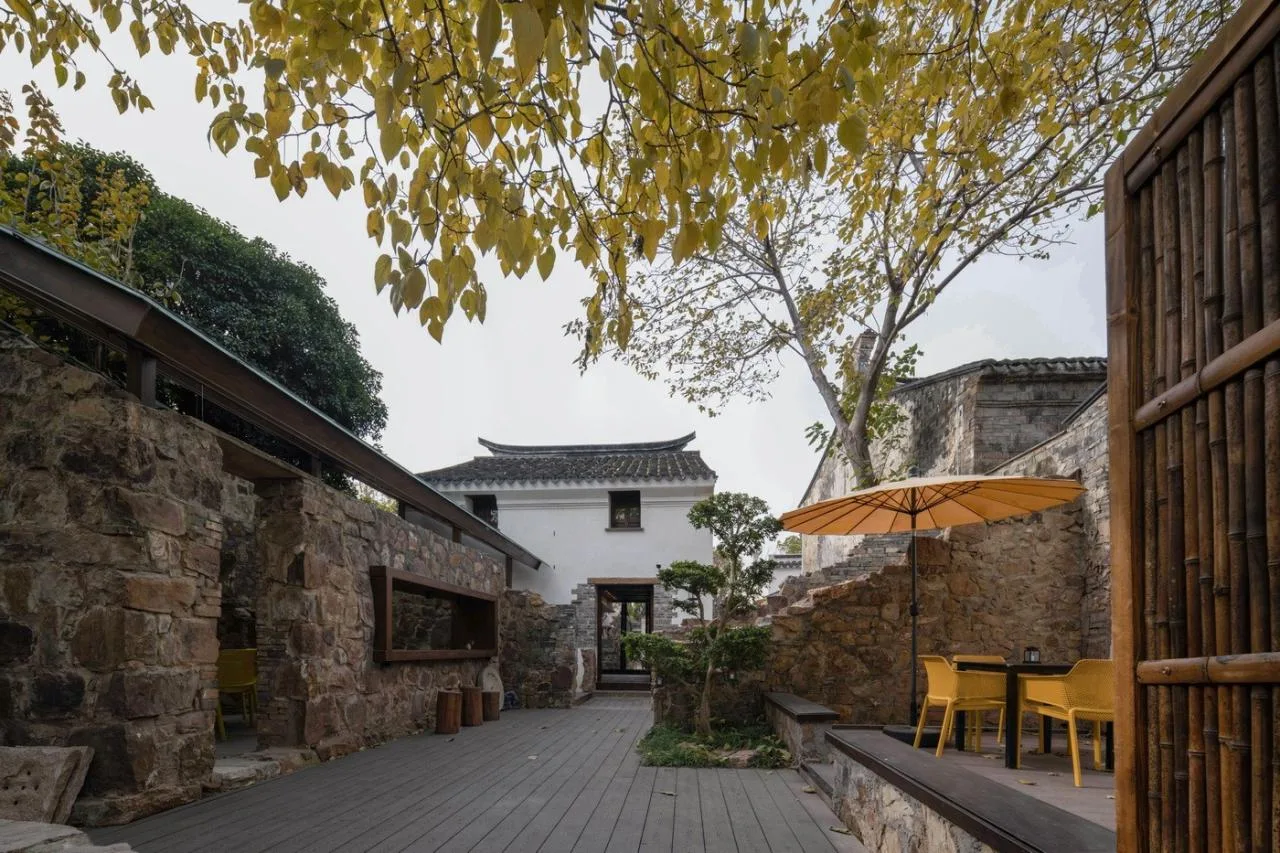
Looking back at the courtyard from the back door © Pingjie Design
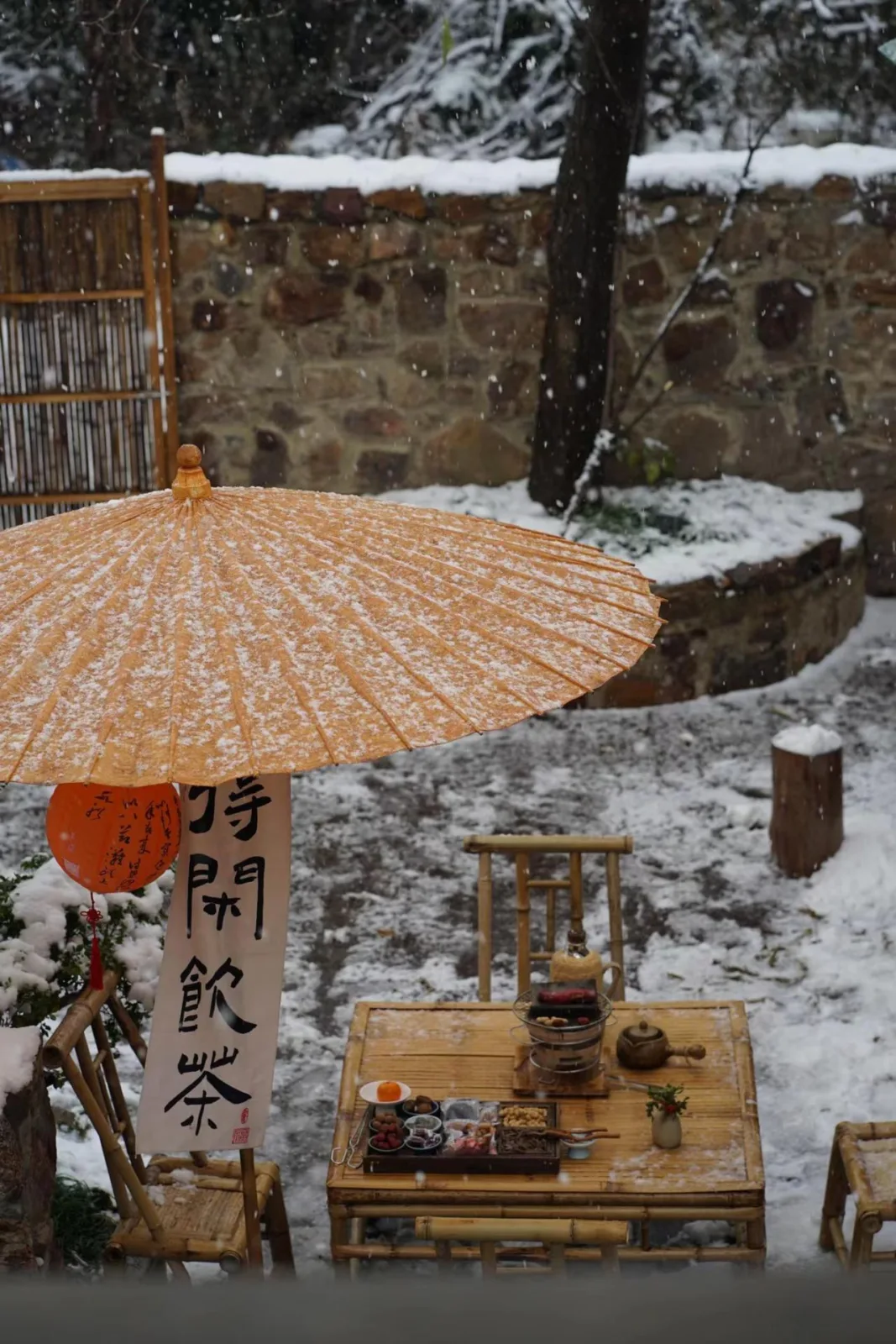
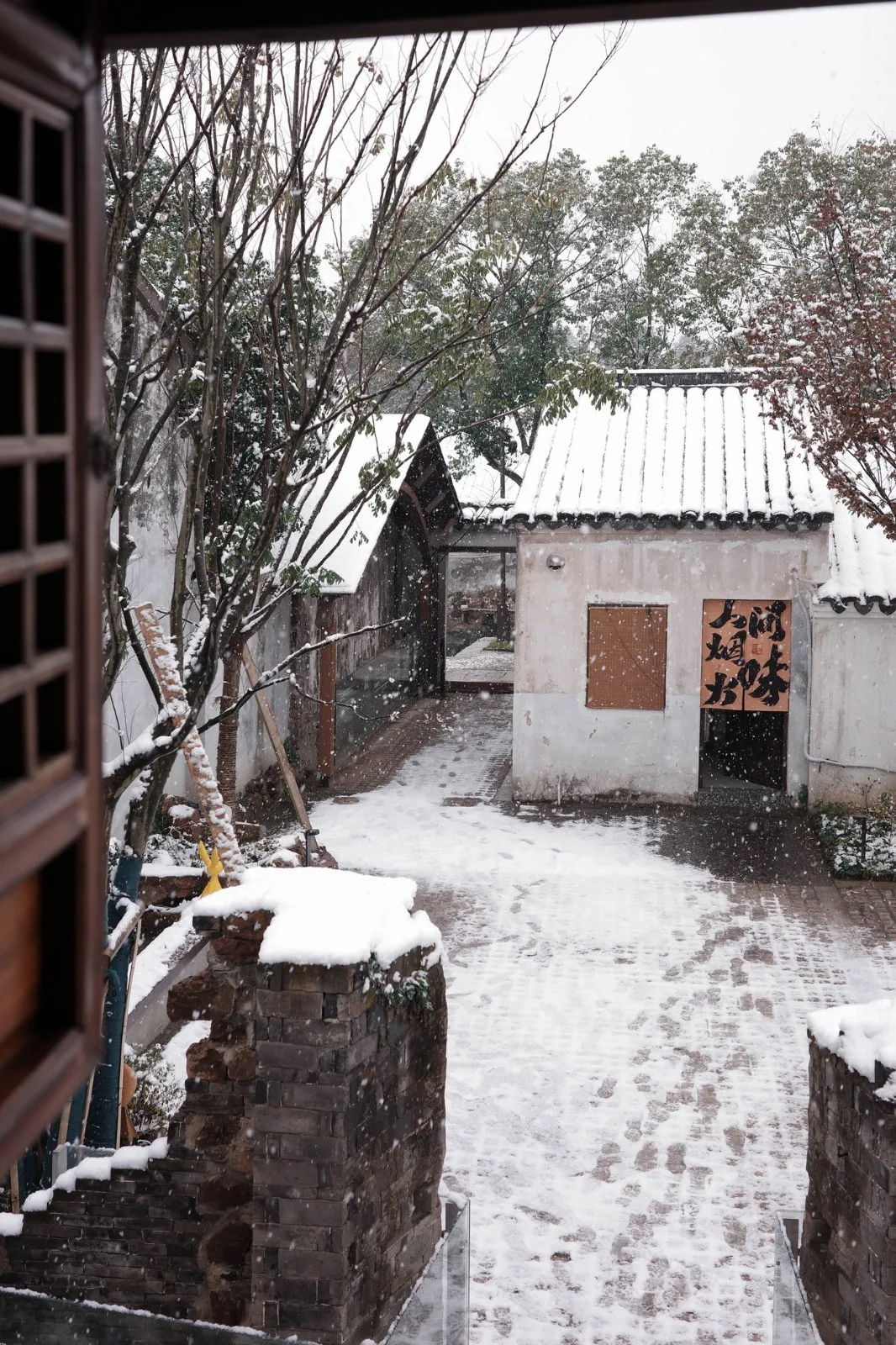
A small courtyard in the snow © Far sighted Culture and Tourism
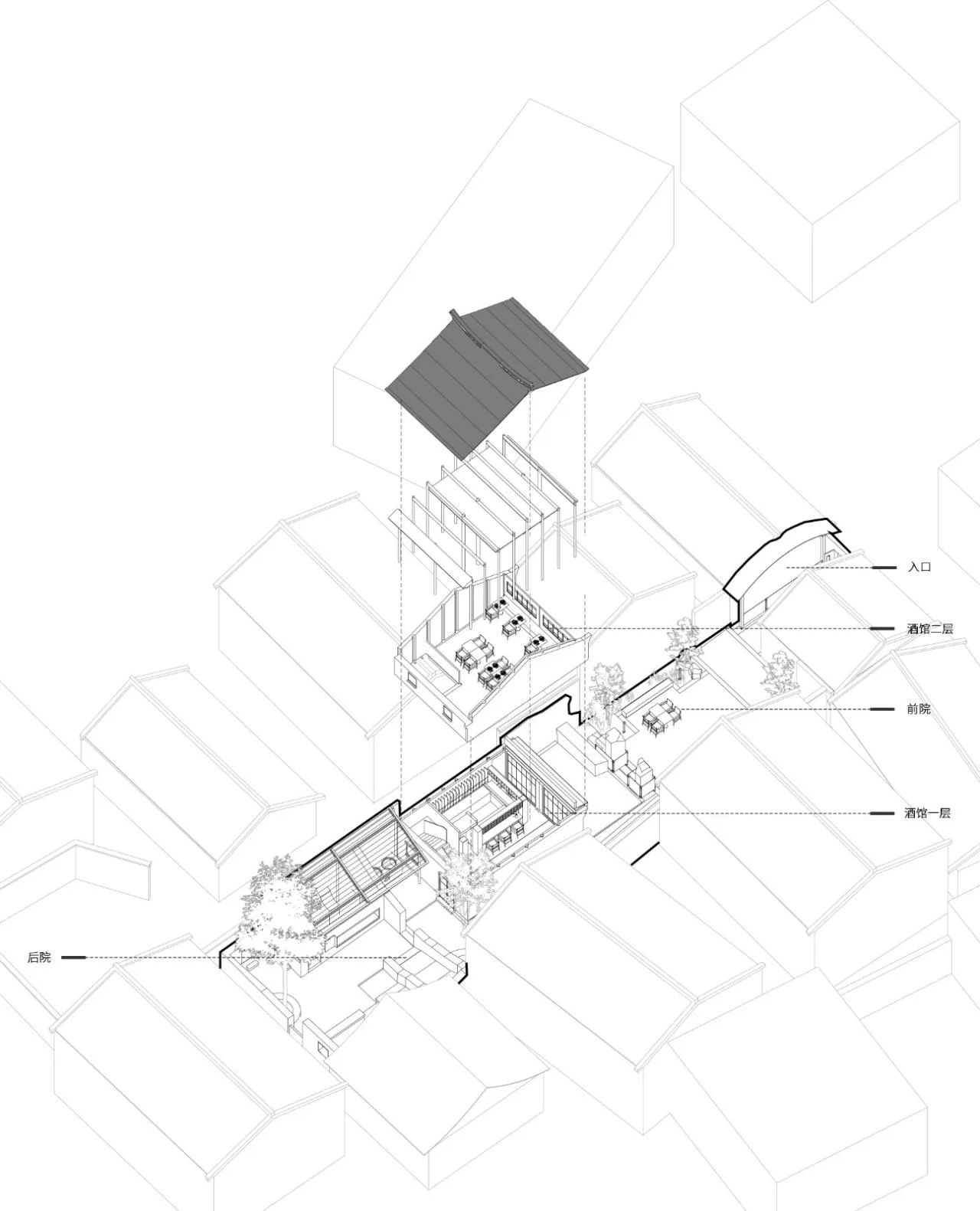
△ Axonometric diagram © Pingjie Design
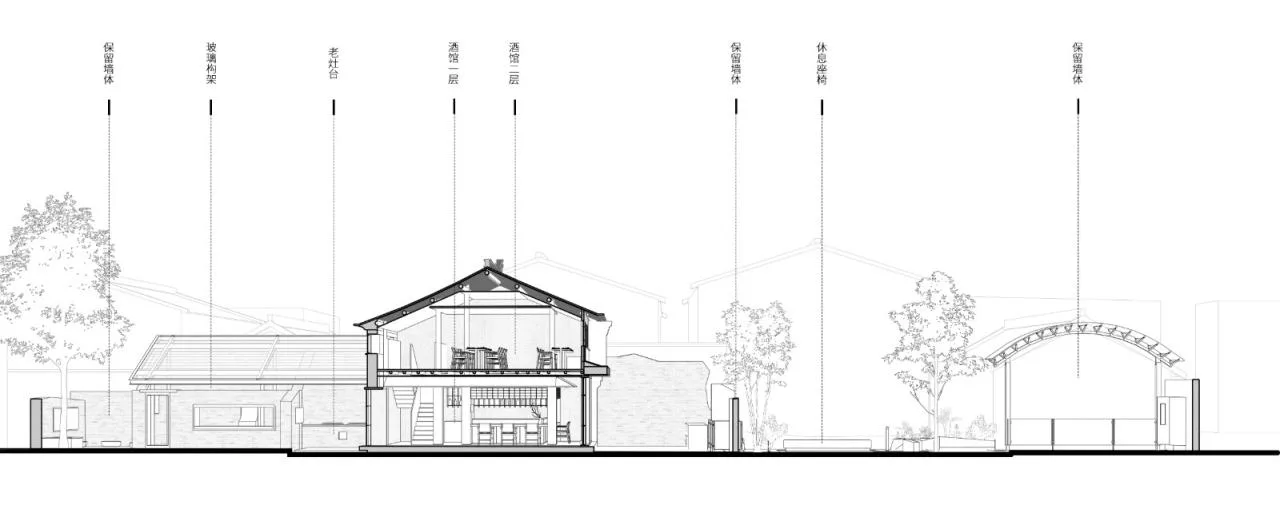
△ Section diagram © Pingjie Design
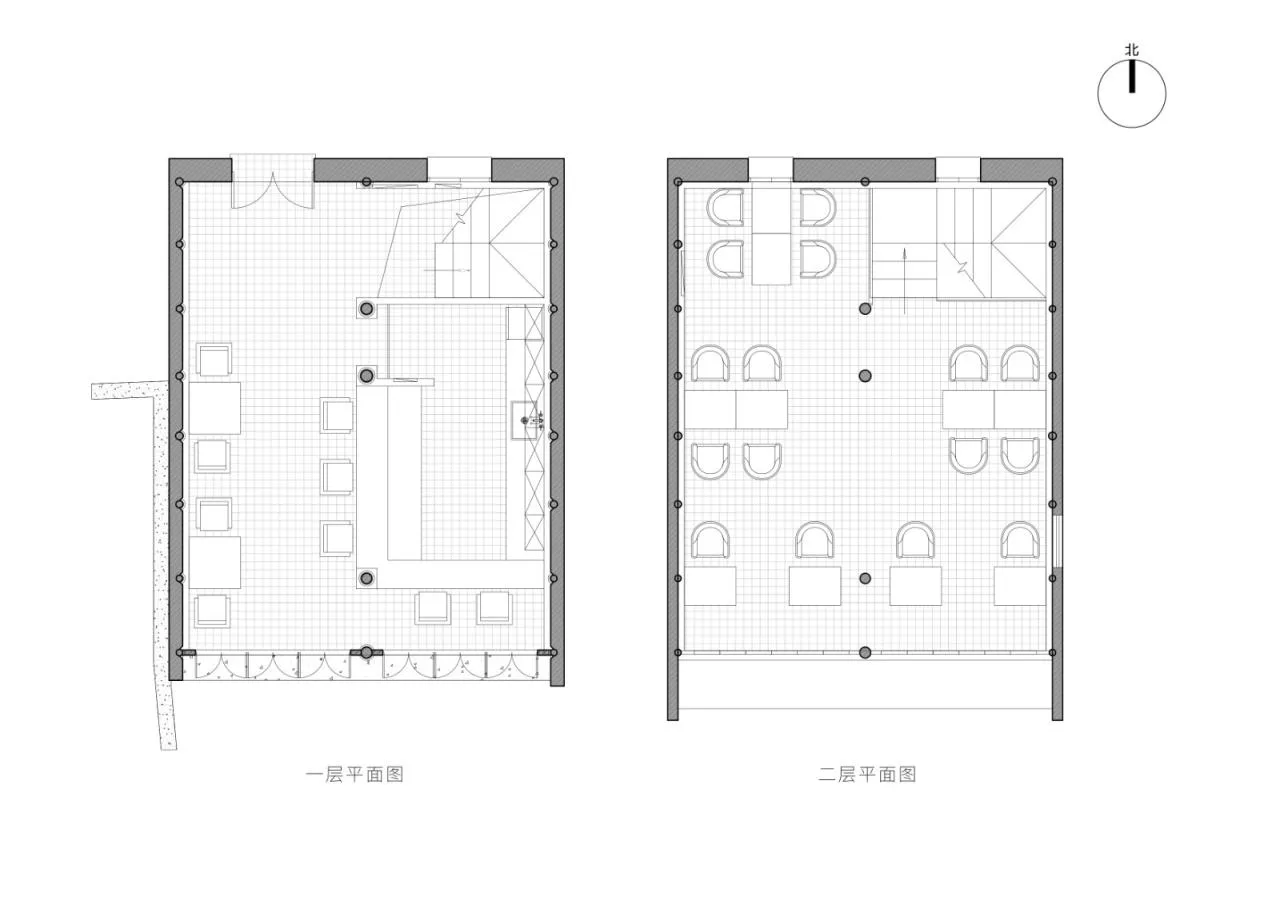
△ Bar floor plan © Pingjie Design
Project Information
Project Name: Small Tavern in the Yellow Wall Jiaoxi Courtyard
Strategic Guidance: Cheng Hong (Dayun Vision)
Completion Date: March 11, 2023
Project Area: 340 square meters
Location: Jiaoxi Ancient Town, Changzhou
Business Planning: Jiangsu Dayun Yuanjian Cultural Technology Co., Ltd
Design Units: Pingjie Design, Far Sighted Culture and Tourism
Design Team:
Landscape Design: Cao Kaiyuan, Xiao Xiangdong
Architecture and Interior Design: Li Wenjing, Yang Nan, Wujiang, Han Xutong
Owner: Jiangsu Dayun Yuanjian Culture and Technology Co., Ltd
Photographer: Xu Yingda
















Must log in before commenting!
Sign Up