
Site Conditions
The building occupies approximately 1.5 acres, with a housing area of 600 square meters. It features a traditional local courtyard-style design but is currently abandoned. Years of neglect have caused severe collapse of roofs, beams, and interior walls in the old brick and concrete structures, creating safety hazards. Thanks to the traditional stone foundations used in Xishan, the exterior walls have only suffered partial damage, leaving the overall structure relatively intact.
The courtyard contains four tall, straight water spruce trees, while five ancient camphor trees—each around 500 years old—stand outside the courtyard walls. These camphor trees are listed as national first-class protected ancient trees and serve as popular spots for locals to relax and socialize.
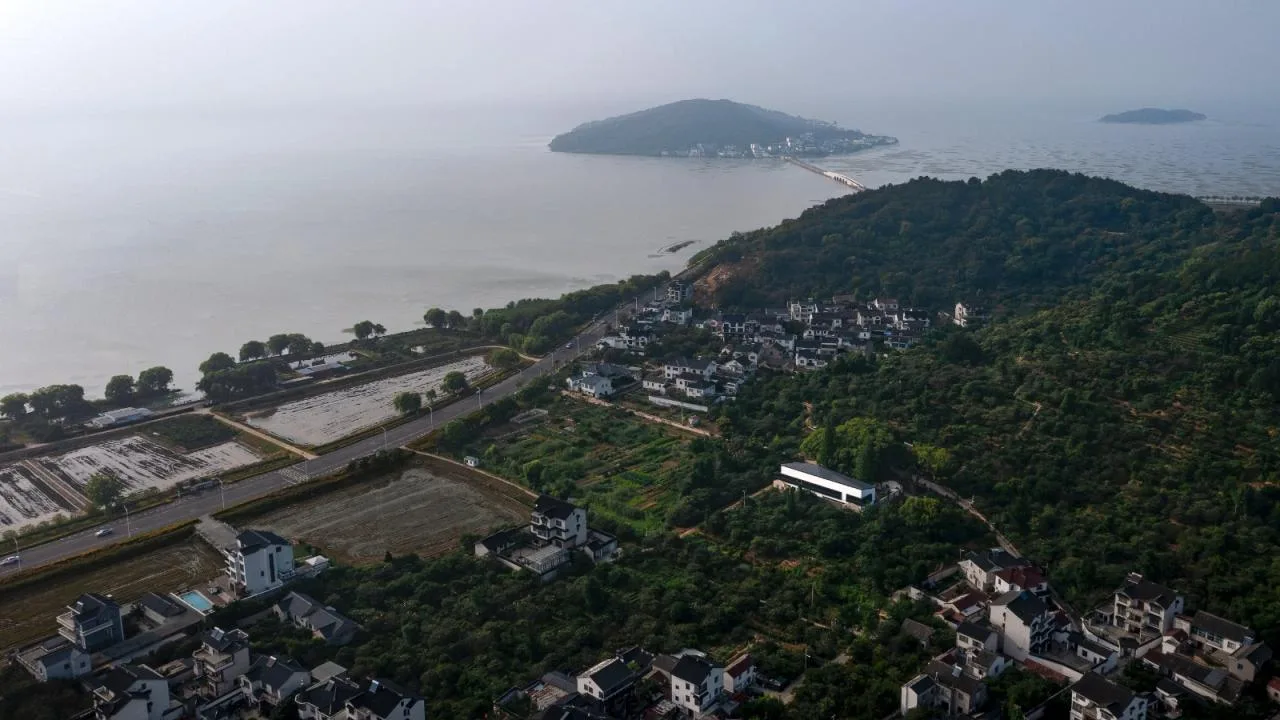
△ Building location © Wang Shang
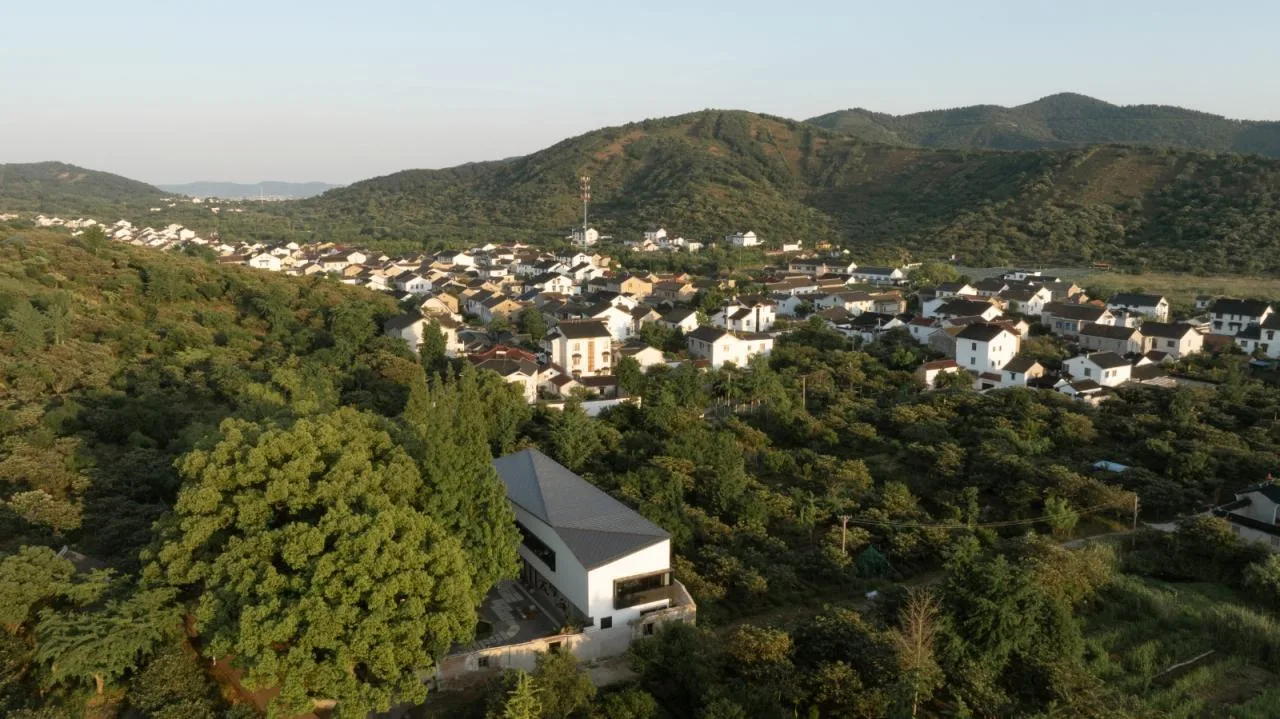
△ Aerial view of buildings © Lu Xiaoping
Design Positioning
The name “Wuzhangting” derives from its location, emphasizing the project’s focus on memory and place. The design explores the relationship between history, the present, and the future—not simply considering ruins and rebirth but overlapping and reconstructing them. When the new becomes old (as with the abandoned village school), the old fades into time (such as the old clothing factory exterior wall), and the updated (Wuzhangting Cultural Reception Hall) reemerges, what is the relationship between old and new? This is the central challenge of the project.
Inspired by the Jiangnan water town village culture and the classical garden culture of Suzhou, the design respects history, integrates with the local environment, inherits culture, and creates new value. It aims to serve as a rural reception room for the preservation and development of Xishan regional culture.
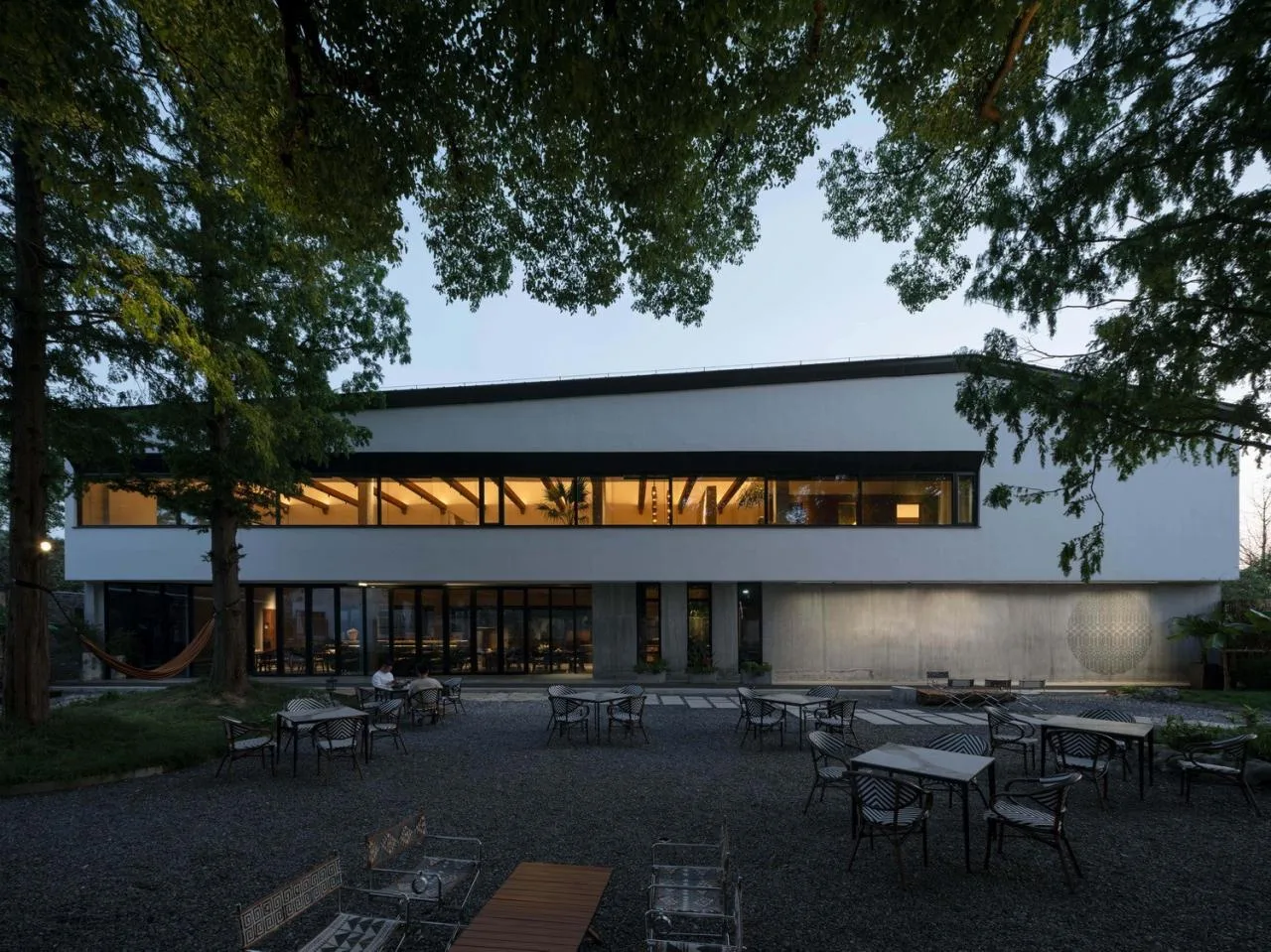
△ Architectural night view © Lu Xiaoping
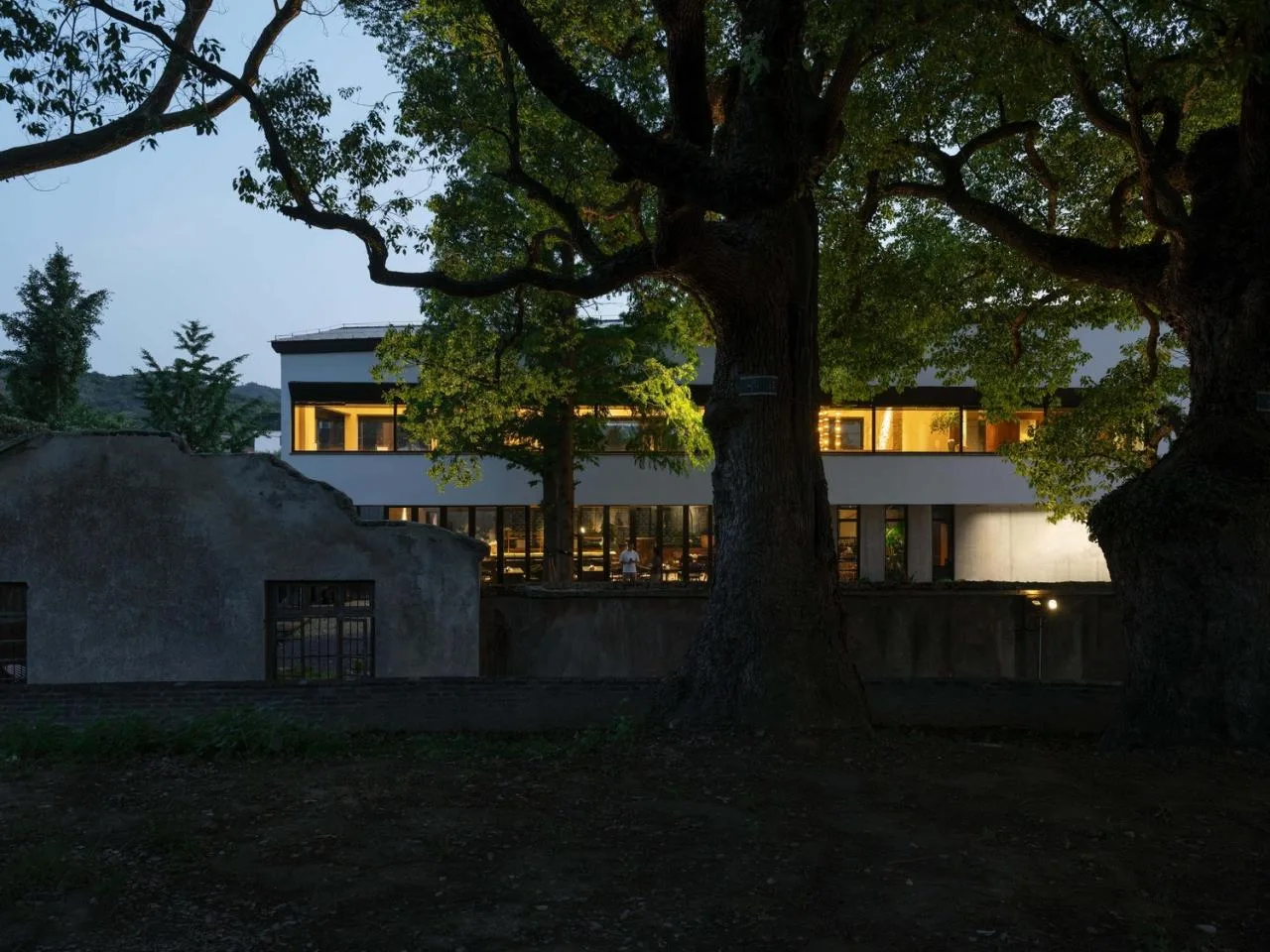
△ Architectural night view © Lu Xiaoping
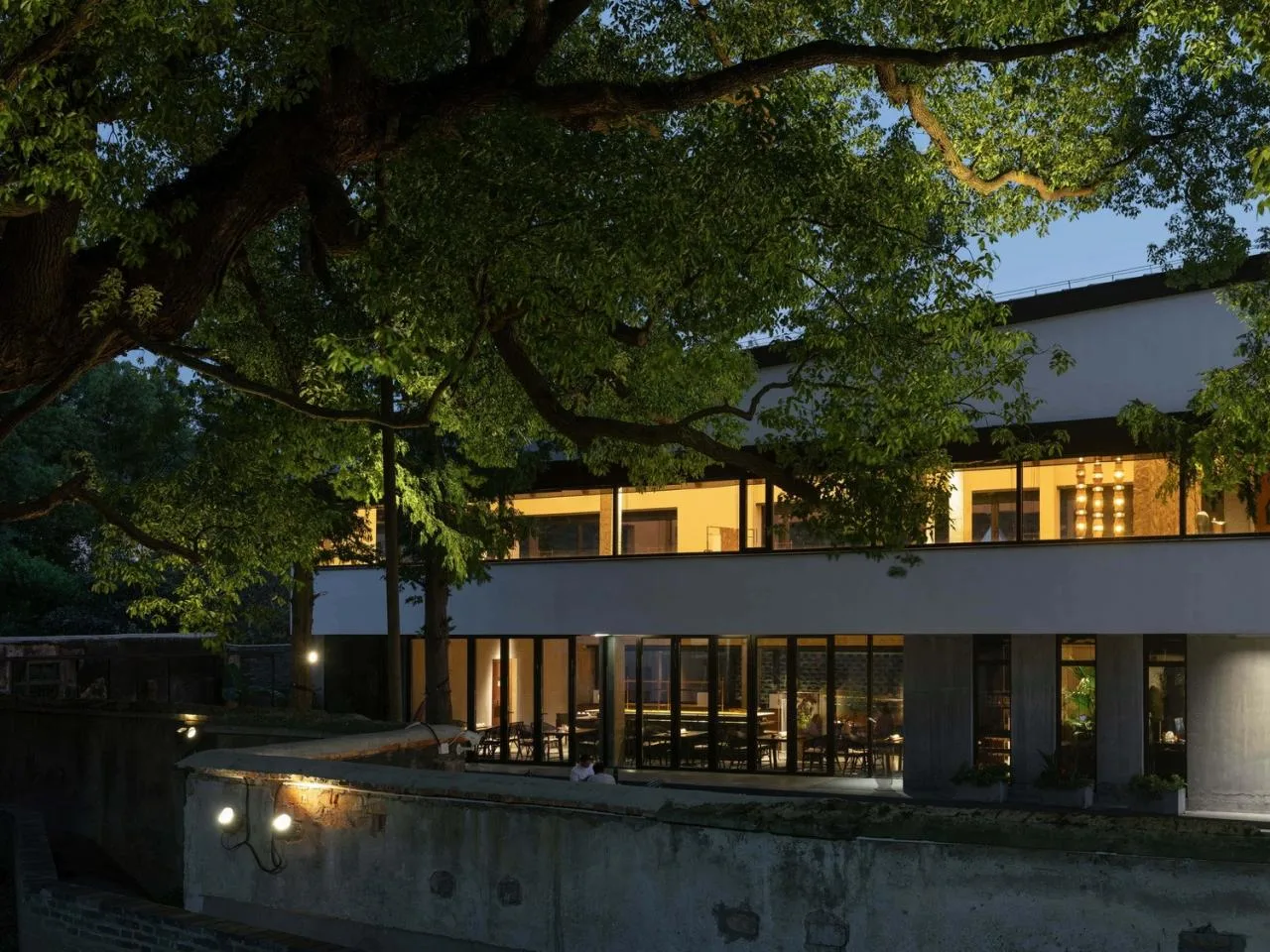
△ Architectural night view © Lu Xiaoping
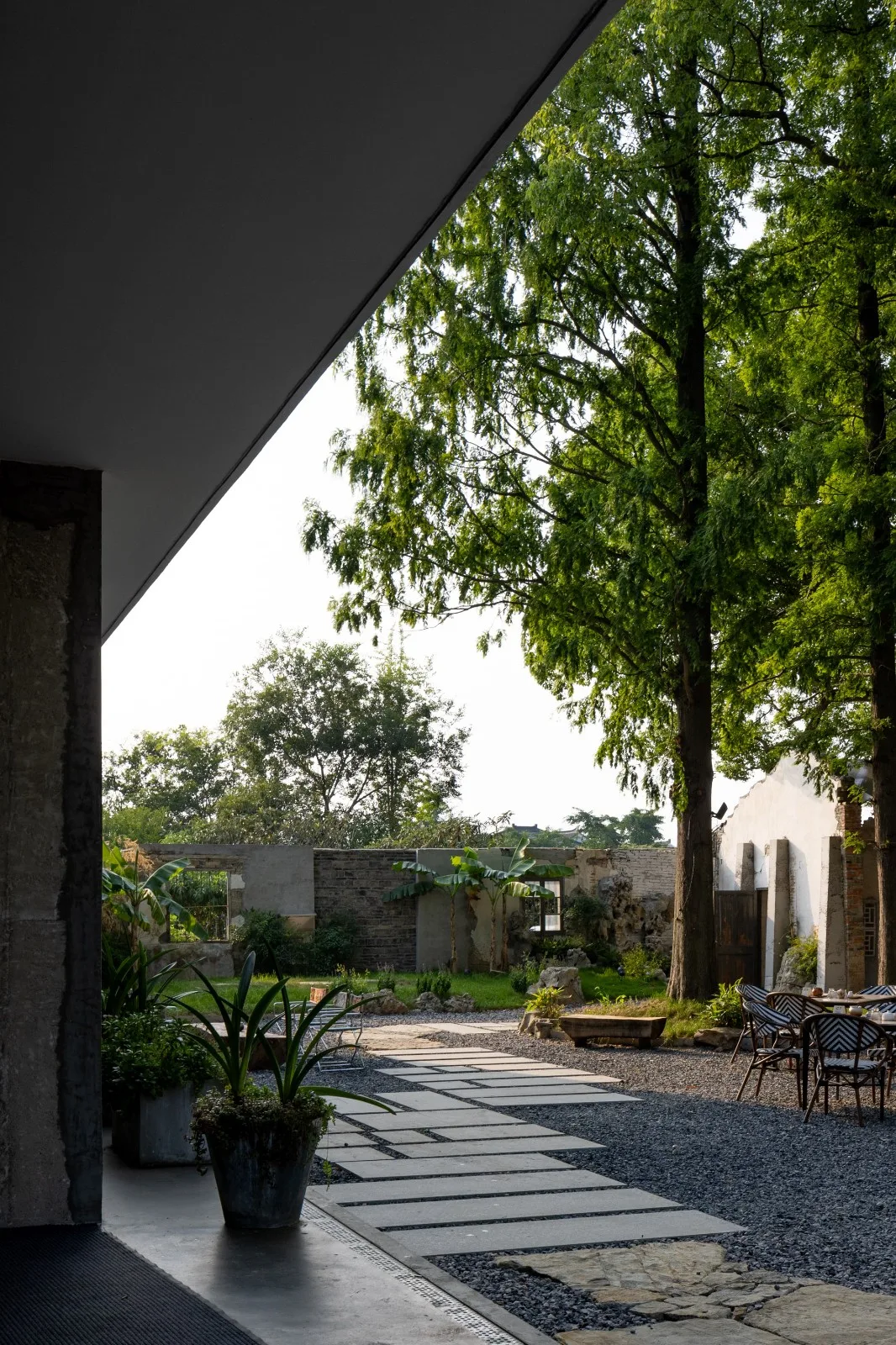
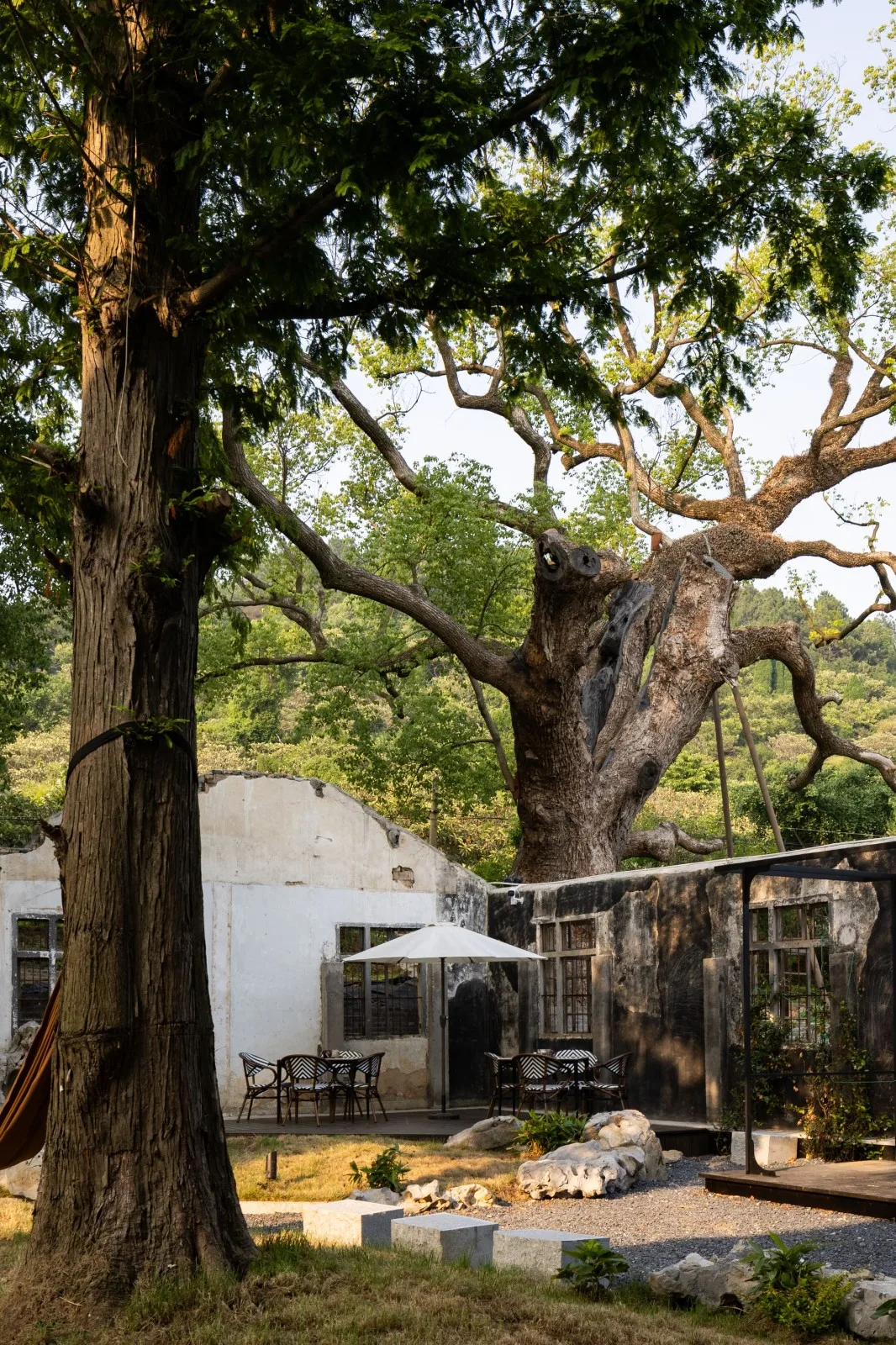
△ Courtyard Landscape © Wang Shang
Design Strategy
Memory is a key cultural theme in rural projects. While preserving traditional buildings and their physical shells maintains material heritage, intangible memories require continuation even more. Rural development may soon adopt top-down construction models like prefabrication, energy efficiency, and centralized community planning. However, caution is needed to avoid homogenization and standardization.
Adapting to local conditions and fostering places with unique lifestyles could be a promising strategy. This project seeks to explore such an approach.
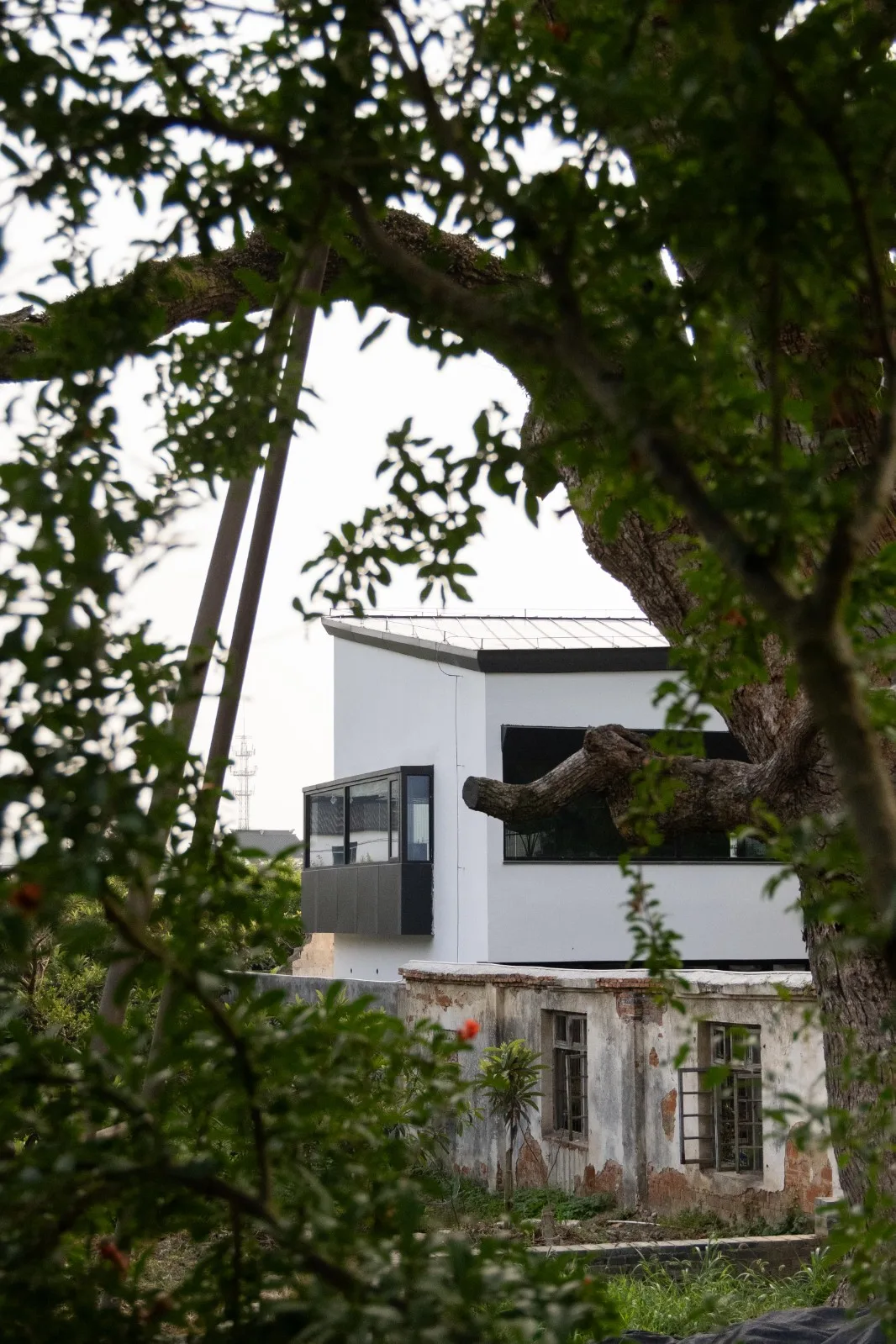
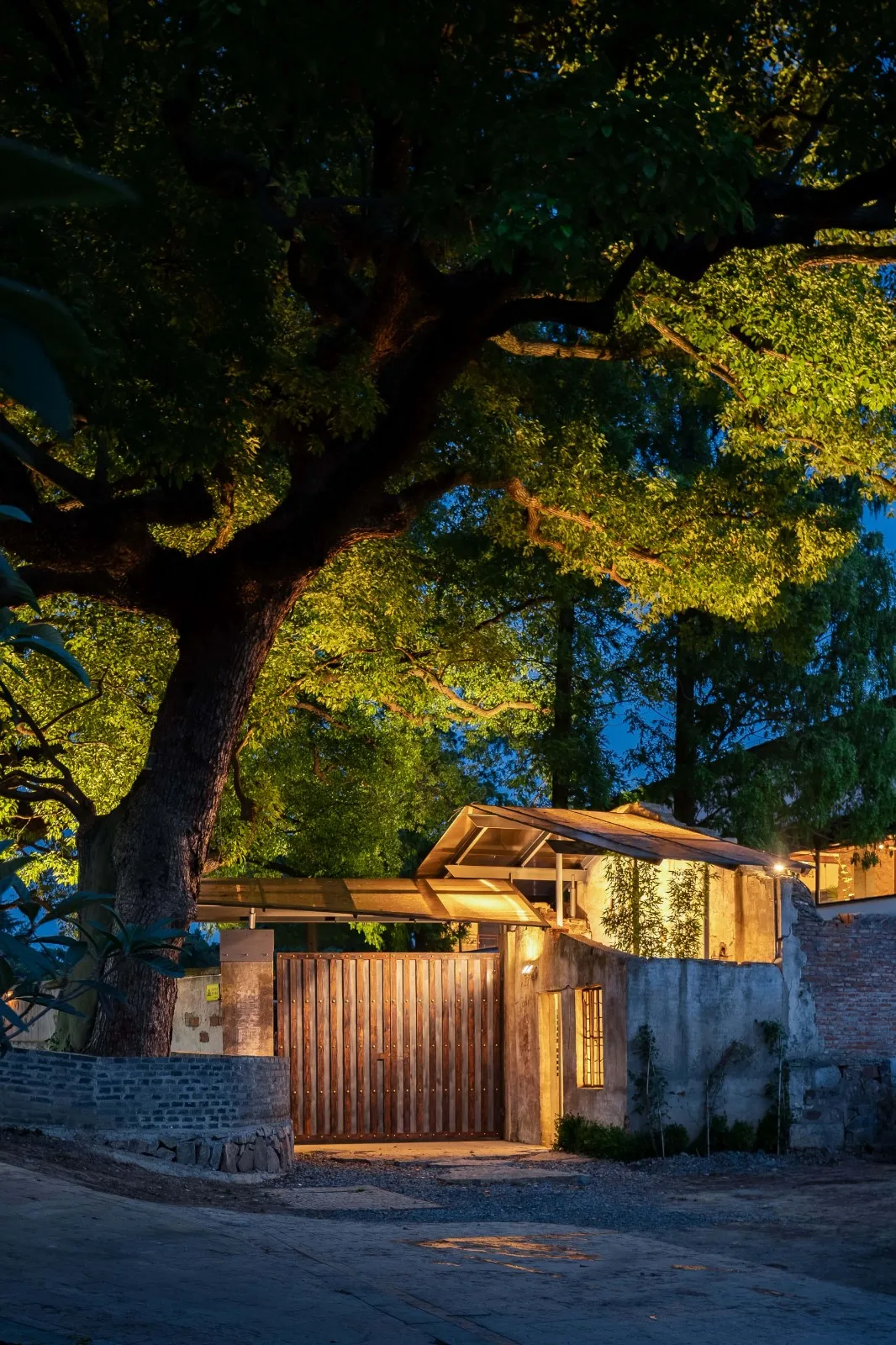
△ New Life on the Old Wall © Wang Shang
The site combines elements like old walls, ancient camphor trees, the former Holy Hall Temple site, clothing factories, and village primary schools—all forming the cultural memory of generations of Xishan residents. Although the main structure of the old building collapsed, the surrounding walls remain largely intact, shaded by century-old camphor trees, giving the site a strong regional character.
Interacting with the existing context is essential. The site carries a unique aura, making it rewarding to build here. Surrounding roads, ancient trees, old walls, Taihu Lake, and nearby mountains are all considered in the design, resulting in buildings well-suited to the region.
Respecting the current state of the old house and the site’s cultural memory, the design preserves the old walls while constructing new interiors. New buildings with traditional Suzhou residential features emerge from the old walls.
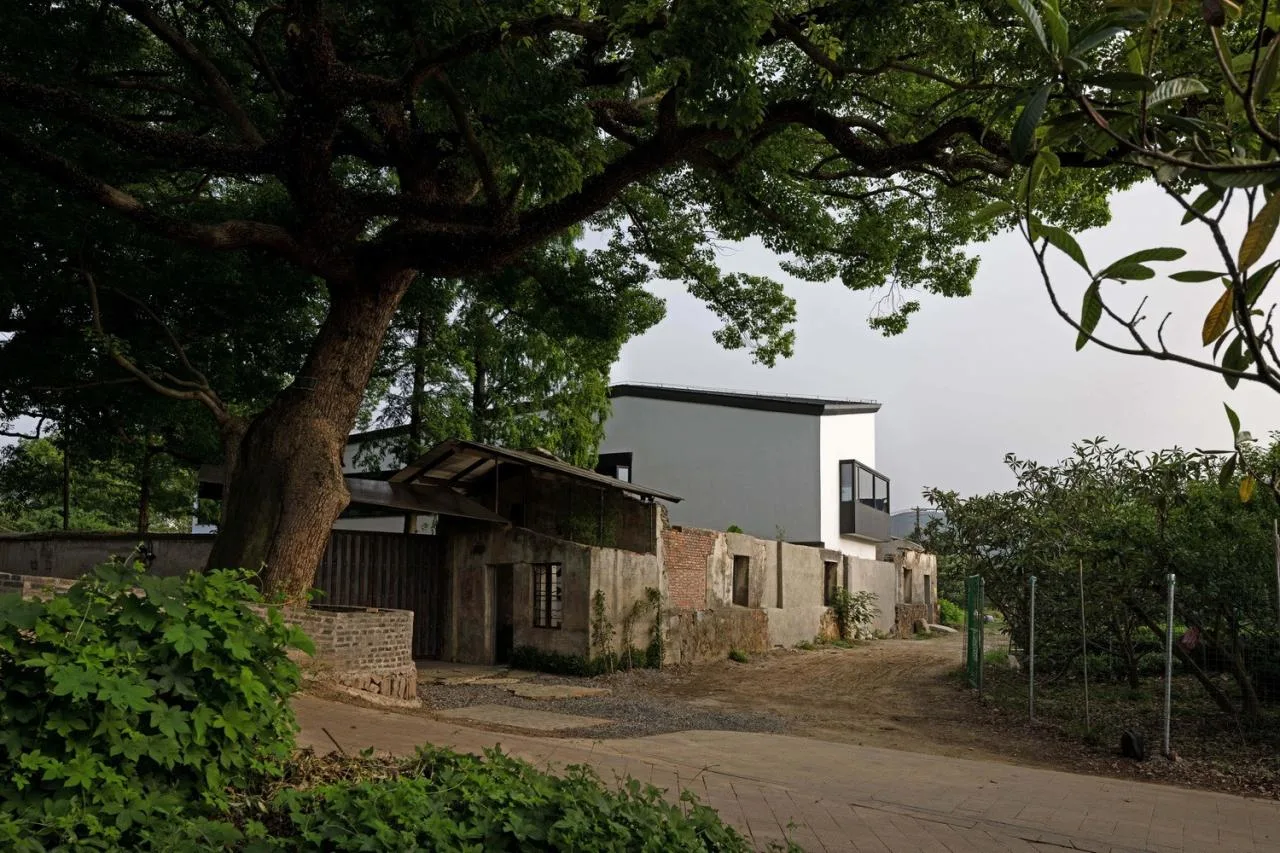
△ New Life on the Old Wall © Wang Shang
Design Specifications
- The design reinforces the old walls within the new building.
- The northern part near the ancient camphor tree is fully set back to protect the tree and create a courtyard space for visitors to appreciate its beauty.
- The southern section facing Taihu Lake rises two stories to offer scenic views.
- The courtyard preserves four tall water spruce trees.
- A linear volume with a folded roof is introduced to meet functional needs, reflecting Jiangnan water town characteristics.
- The entire building integrates humbly with old walls, ancient camphor trees, and the village.
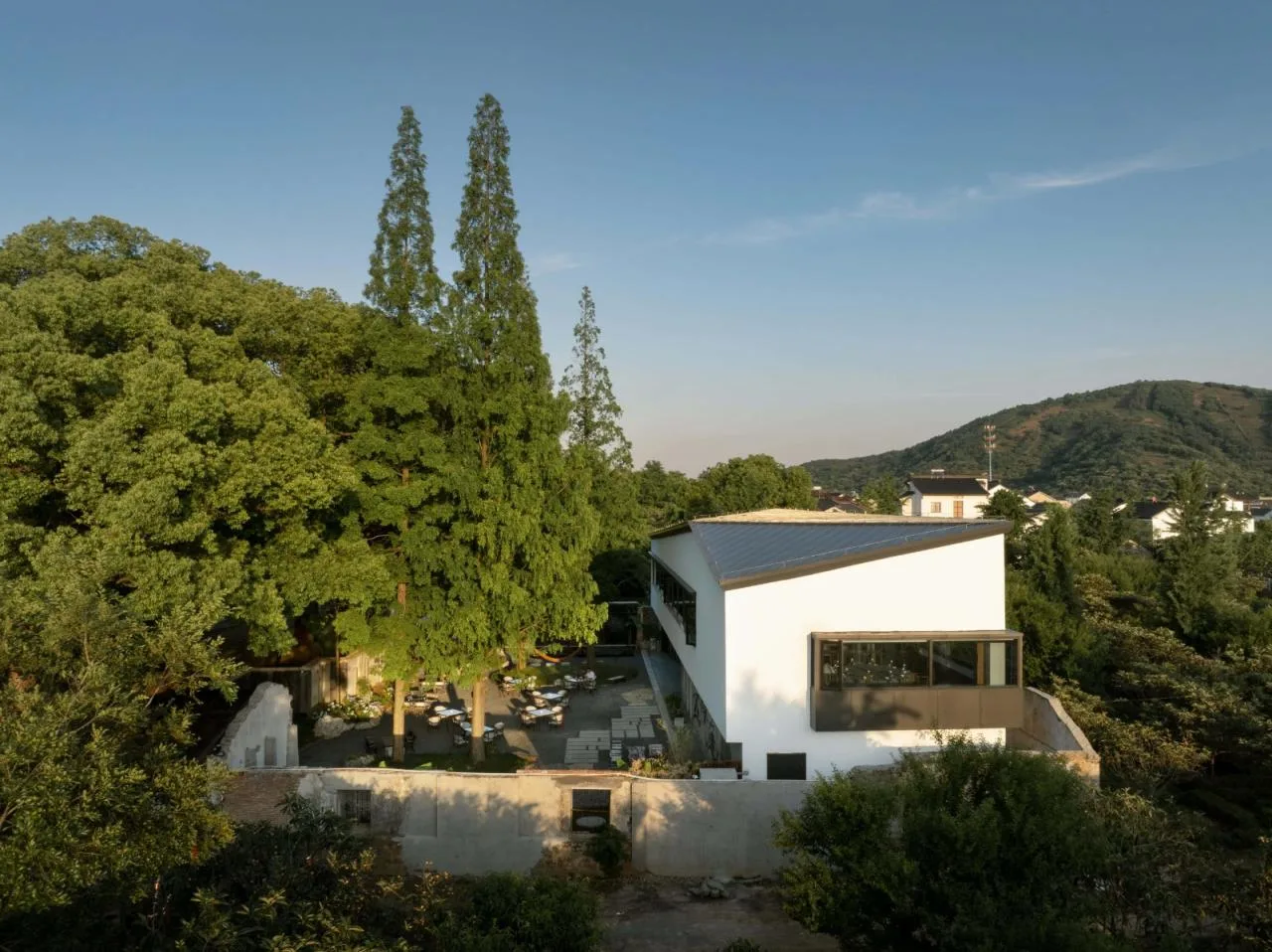
△ Old walls and newly constructed buildings © Lu Xiaoping
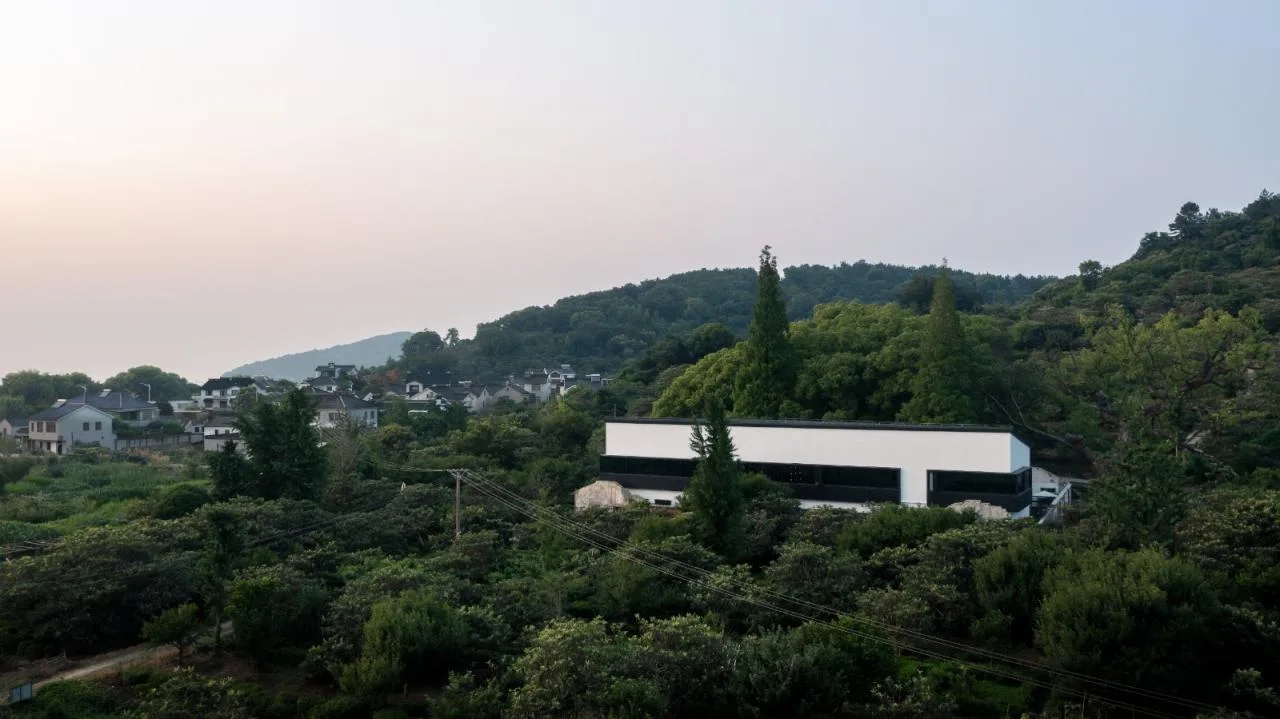
△ Old walls and newly constructed buildings © Wang Shang
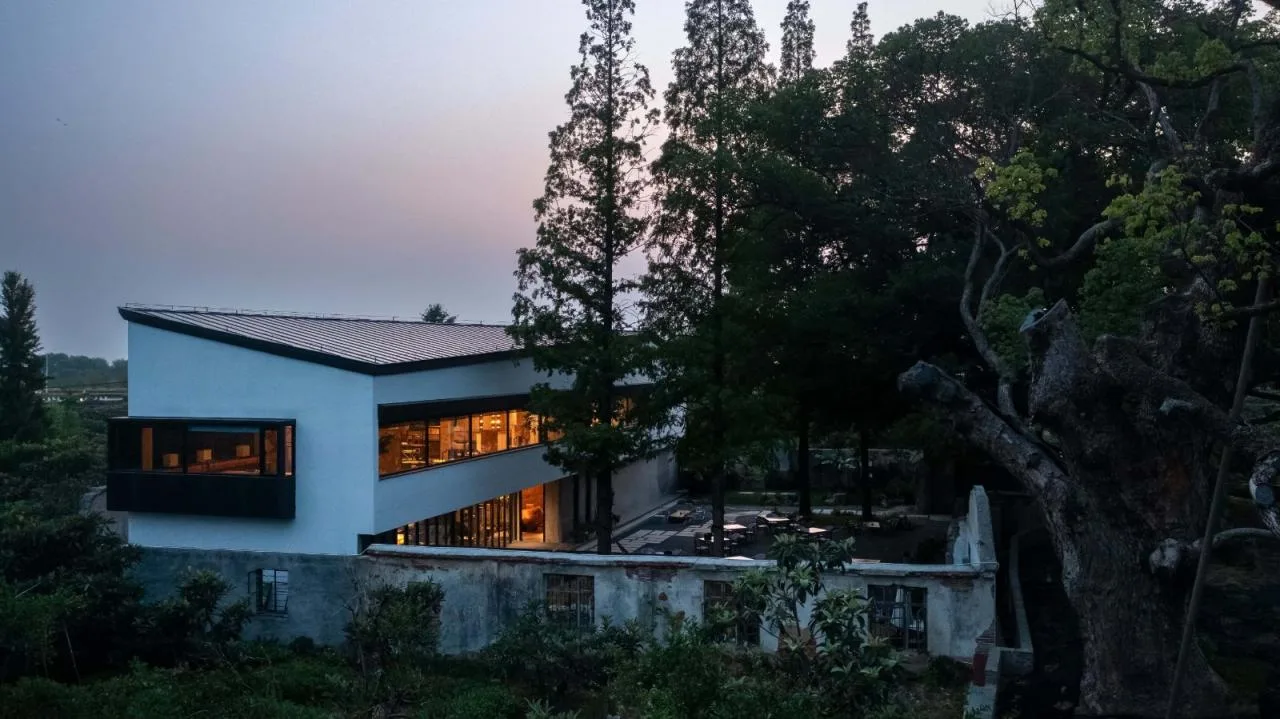
△ Old walls and newly constructed buildings © Wang Shang
To minimize damage to the roots of ancient trees, the building uses a raft foundation raised three steps above the original ground level, providing moisture protection. The minimum gap between the building and old walls is 60 centimeters, ensuring separation between the new raft foundation and the original reinforced foundation, allowing construction space, and honoring historical respect.
Windows on the first floor connect with the weathered brick walls, while a reverse beam structure ensures the second-floor interior showcases a solid formwork folding effect after concrete curing.
Following ancient tree protection guidelines, the courtyard’s water spruce trees are preserved, with hardened foundation rest areas for visitors. The new buildings feature white artistic exterior paint and dark gray aluminum-magnesium-manganese roofs, reinterpreting Jiangnan water town’s iconic pink walls and black tiles in a contemporary style.
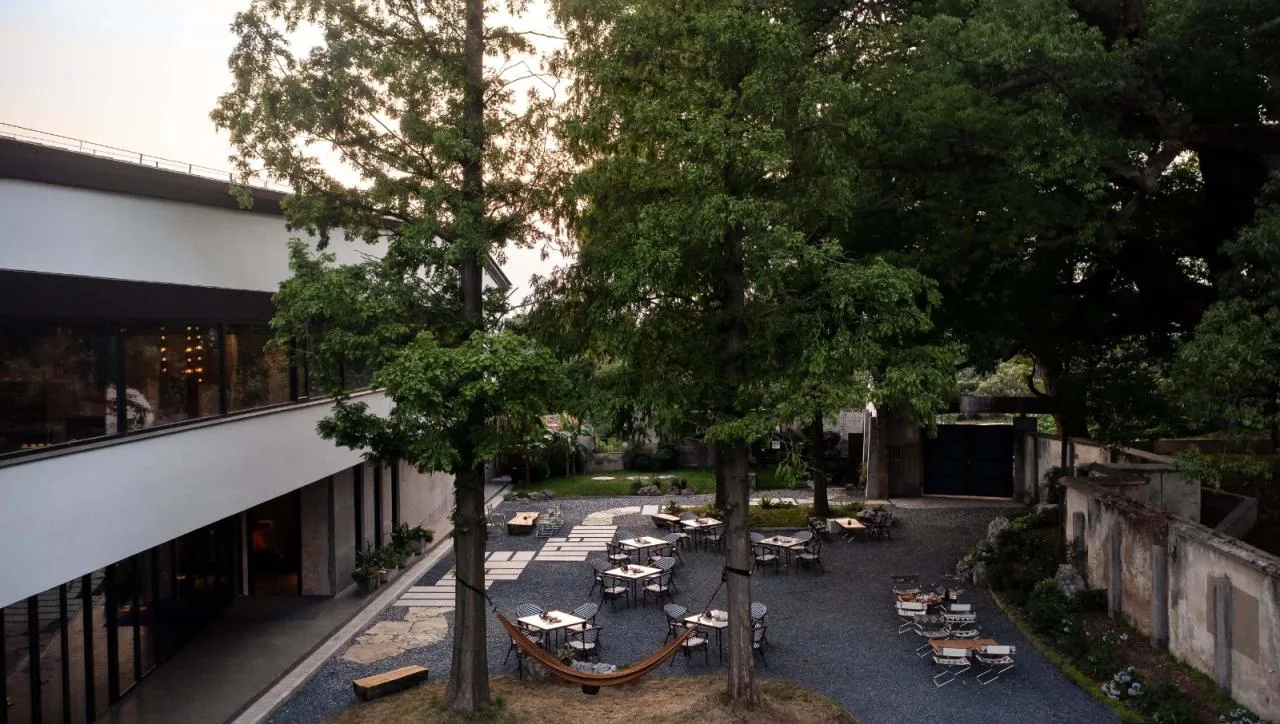
△ Retained in-house water spruce © Wang Shang
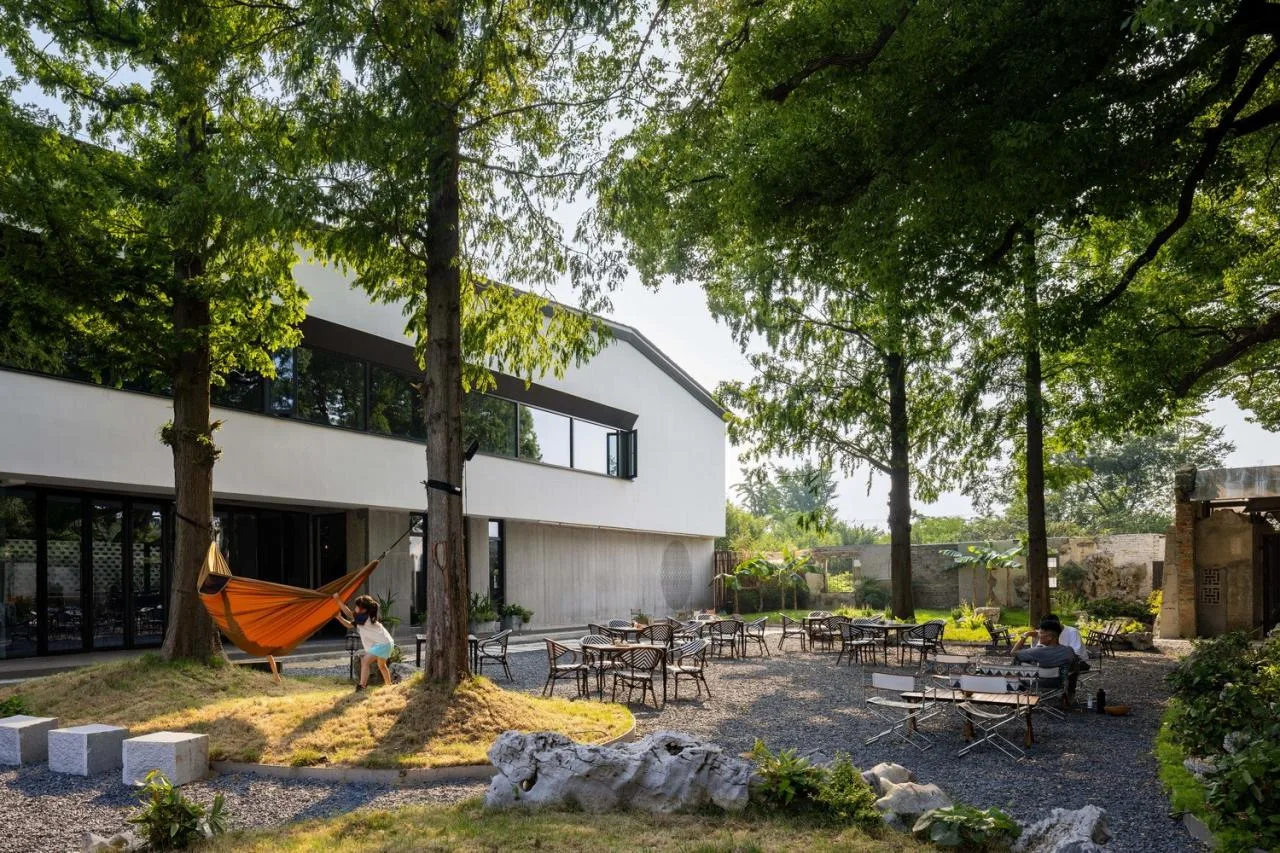
△ Retained in-house water spruce © Wang Shang
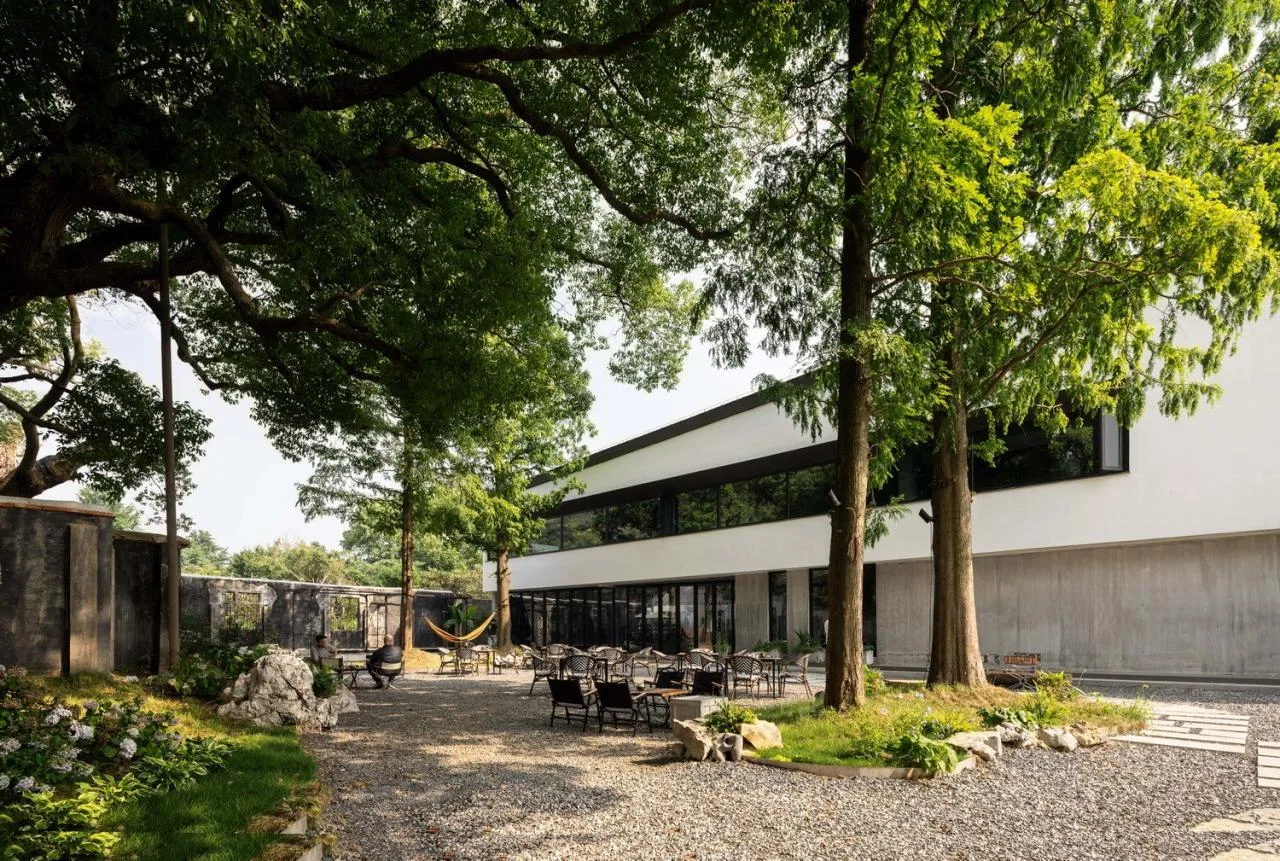
△ Courtyard © Wang Shang
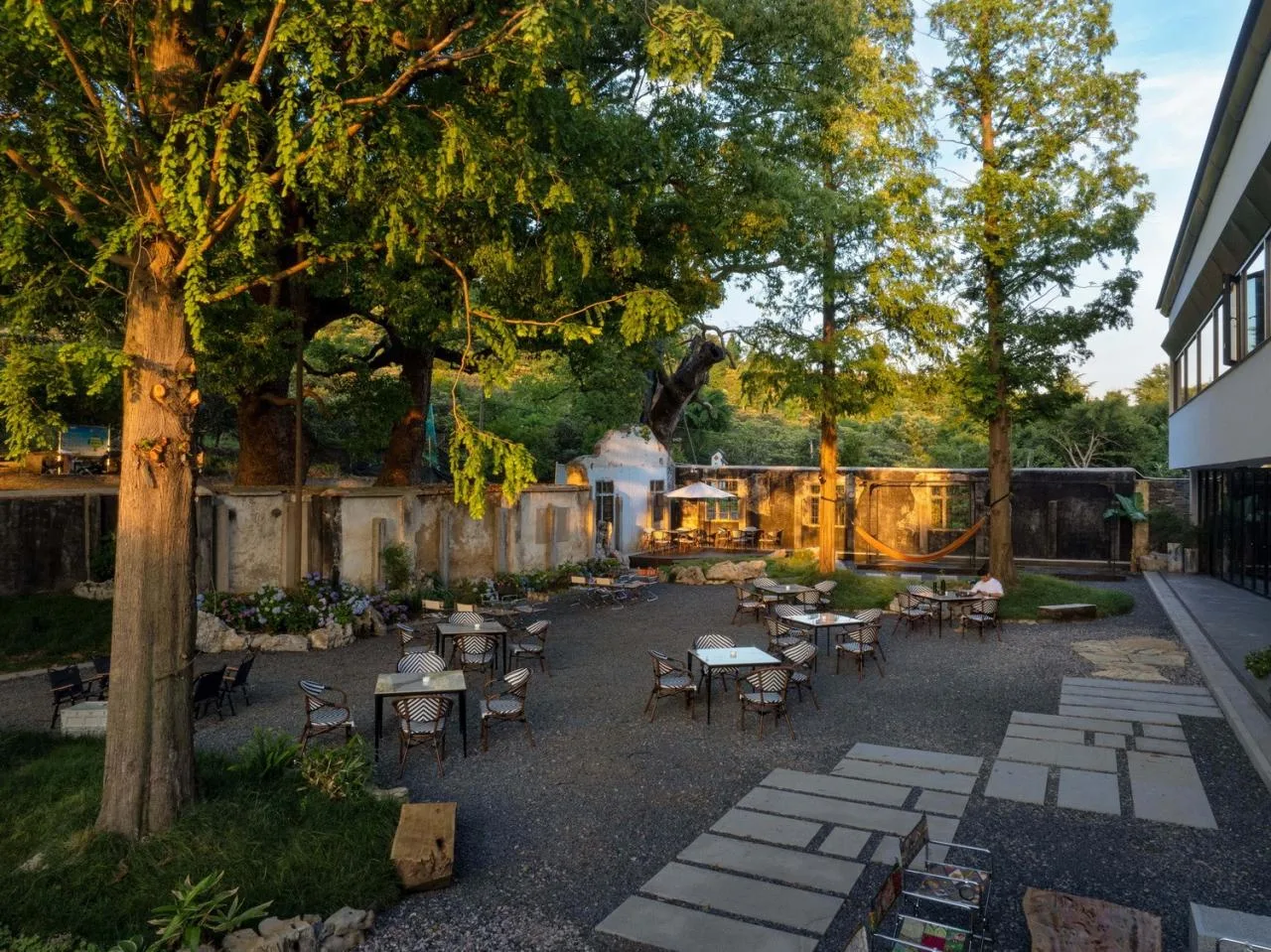
△ Courtyard © Lu Xiaoping
Interior Space
The integral concrete beams allow the second floor to have larger overhangs without additional finishes, while the first floor retains exposed concrete for a rustic simplicity. This “honest” construction approach extends to the interior design: air conditioning units are discreetly placed under bay windows with side vents, and lighting fixtures are softened by incorporating old wooden beam decorations to reduce their ornamental impact.
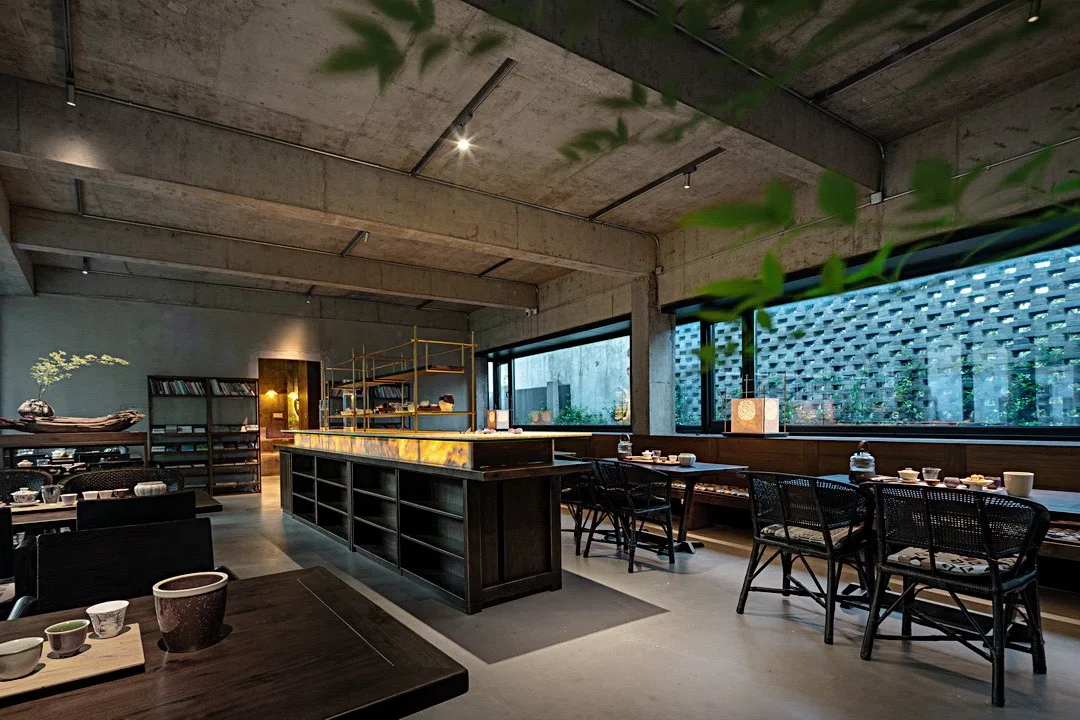
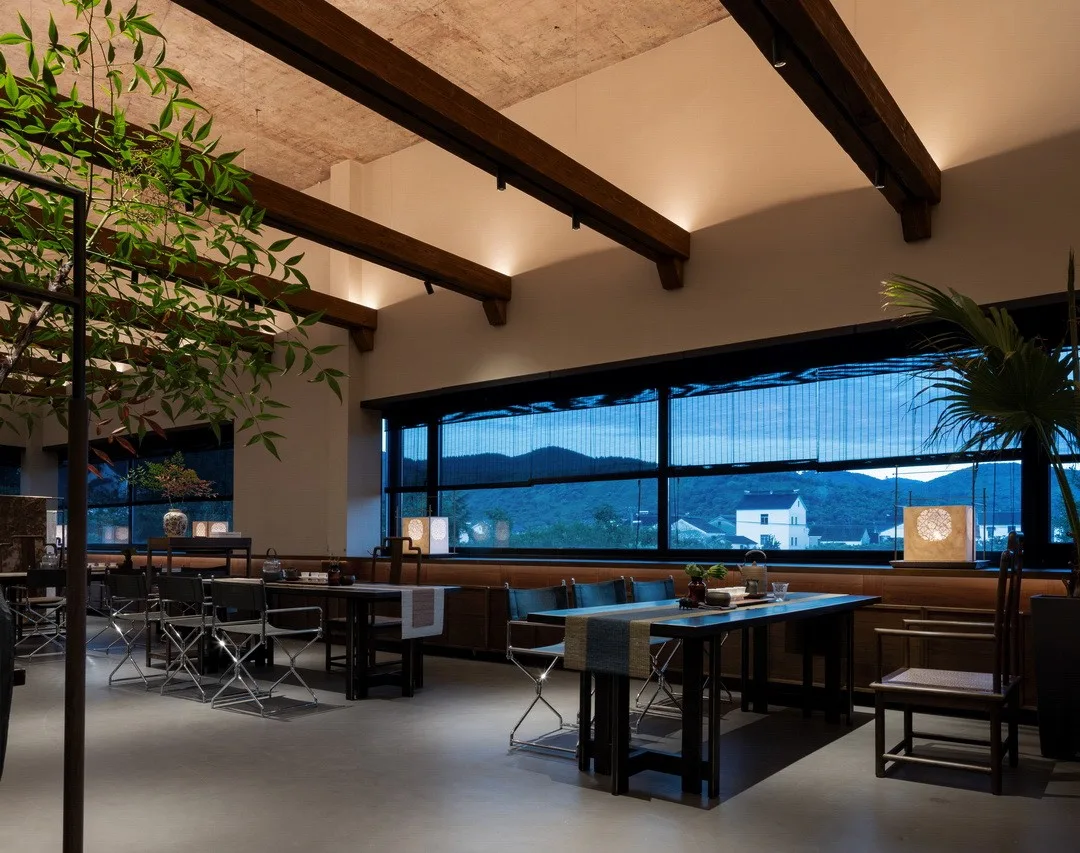
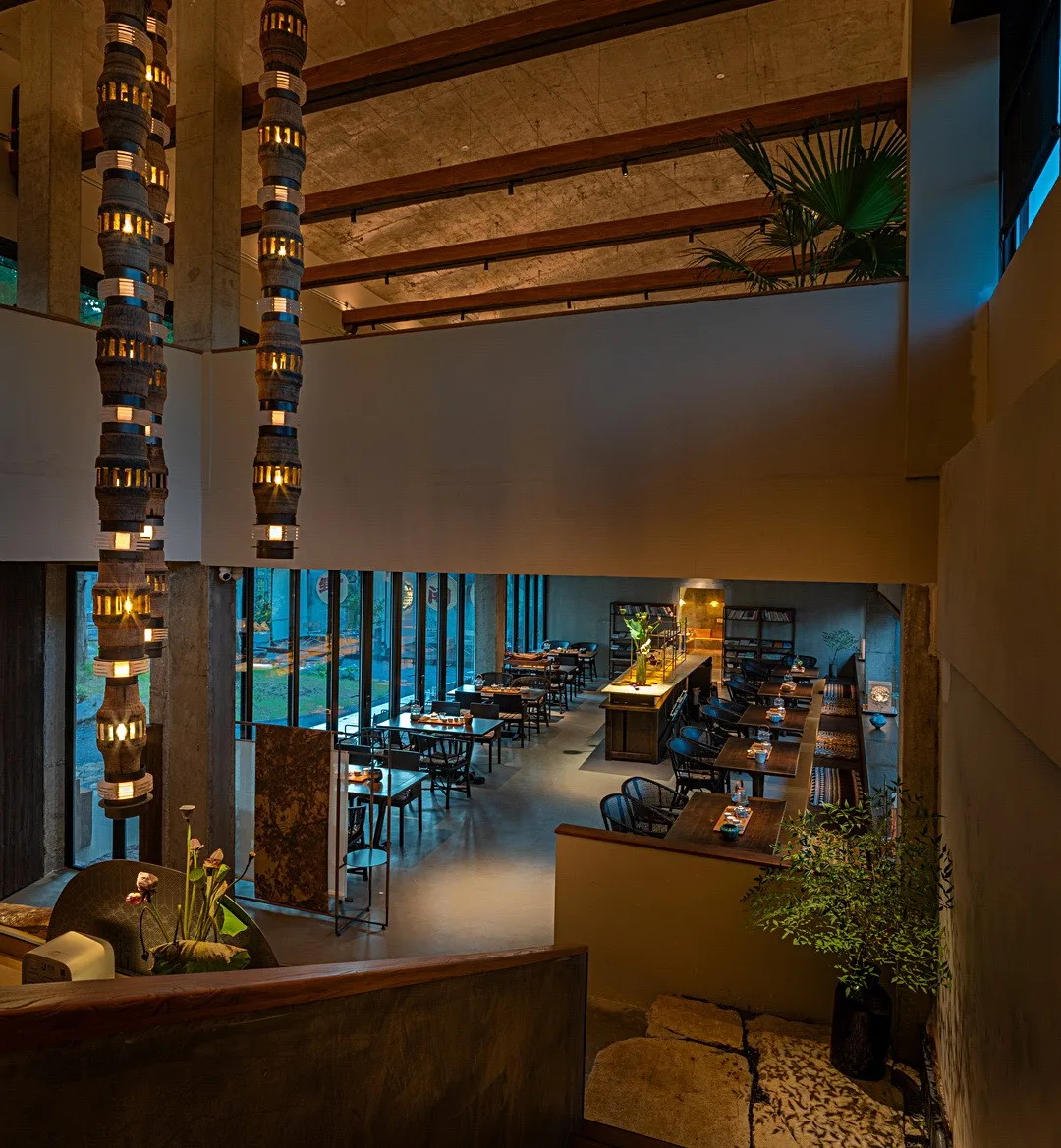
△ Indoor space © Wang Zhaolou
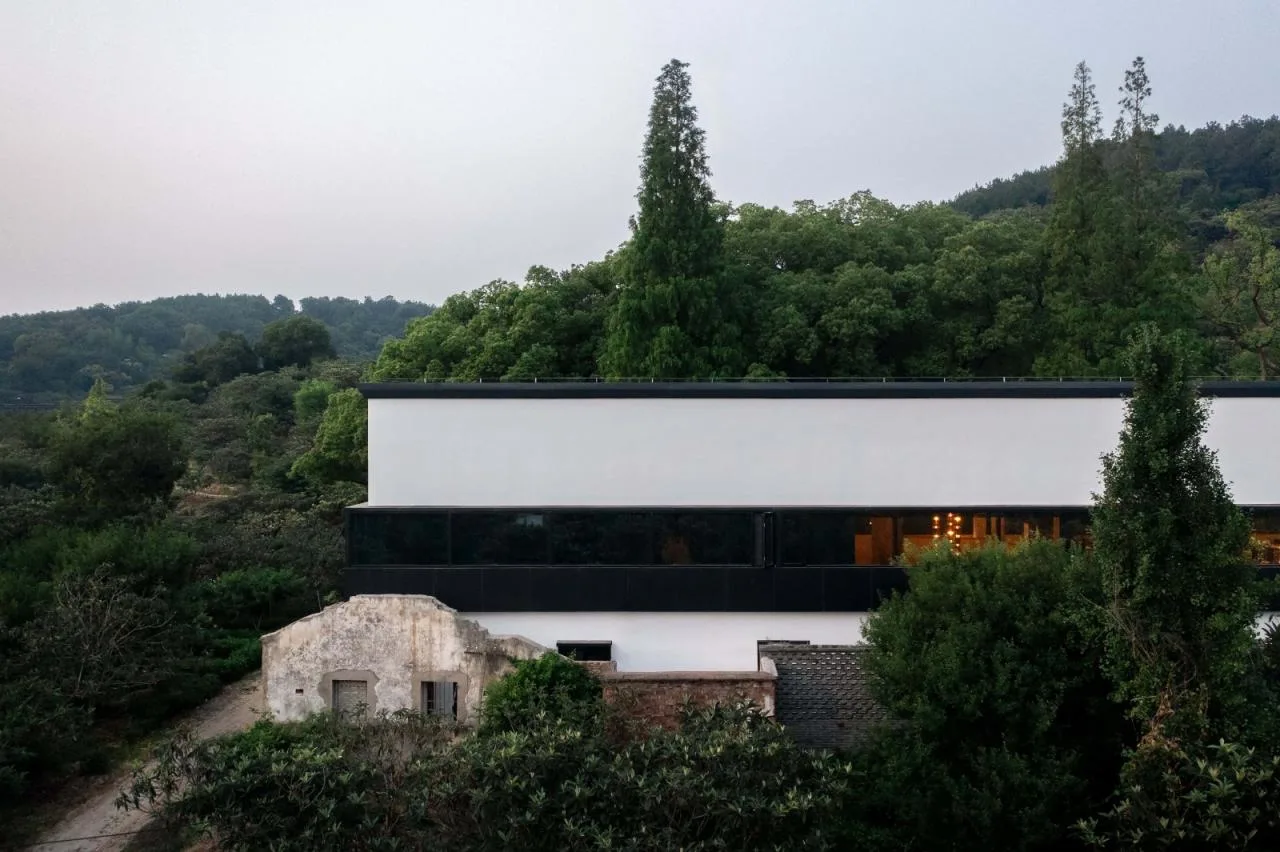
The contrast between old and new walls on the south facade © Wang Shang
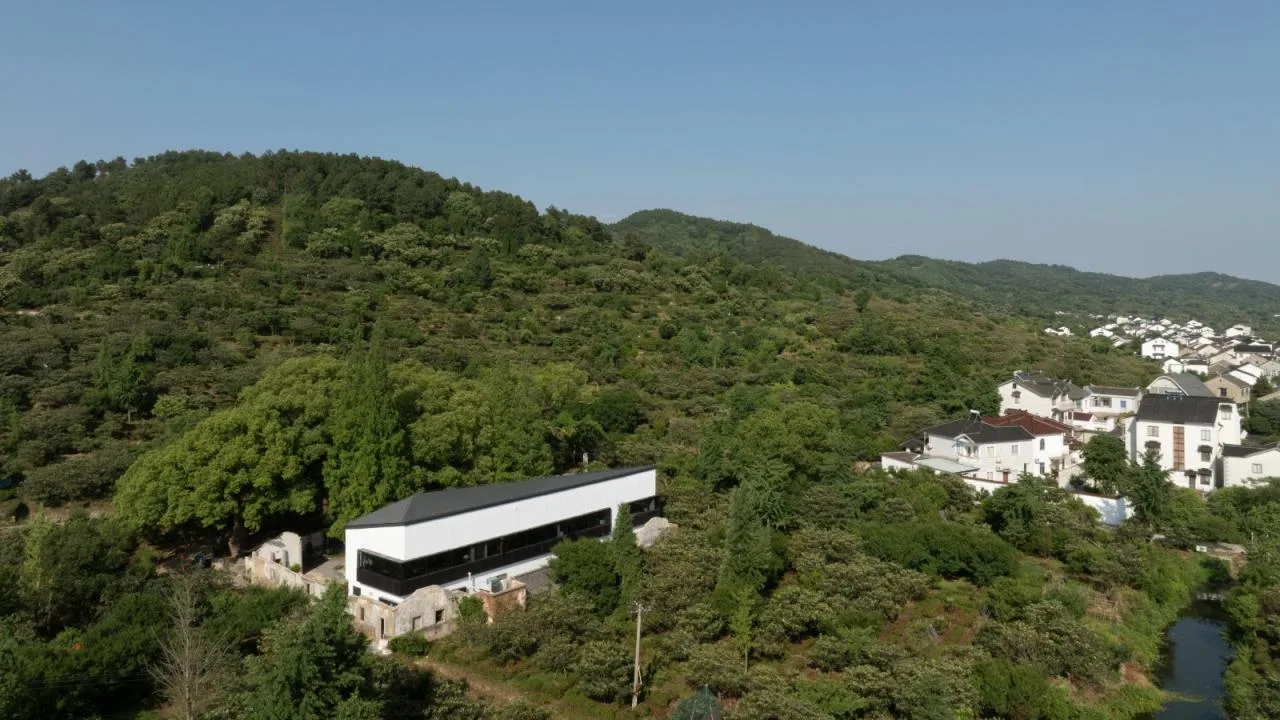
△ Aerial view of the building © Lu Xiaoping
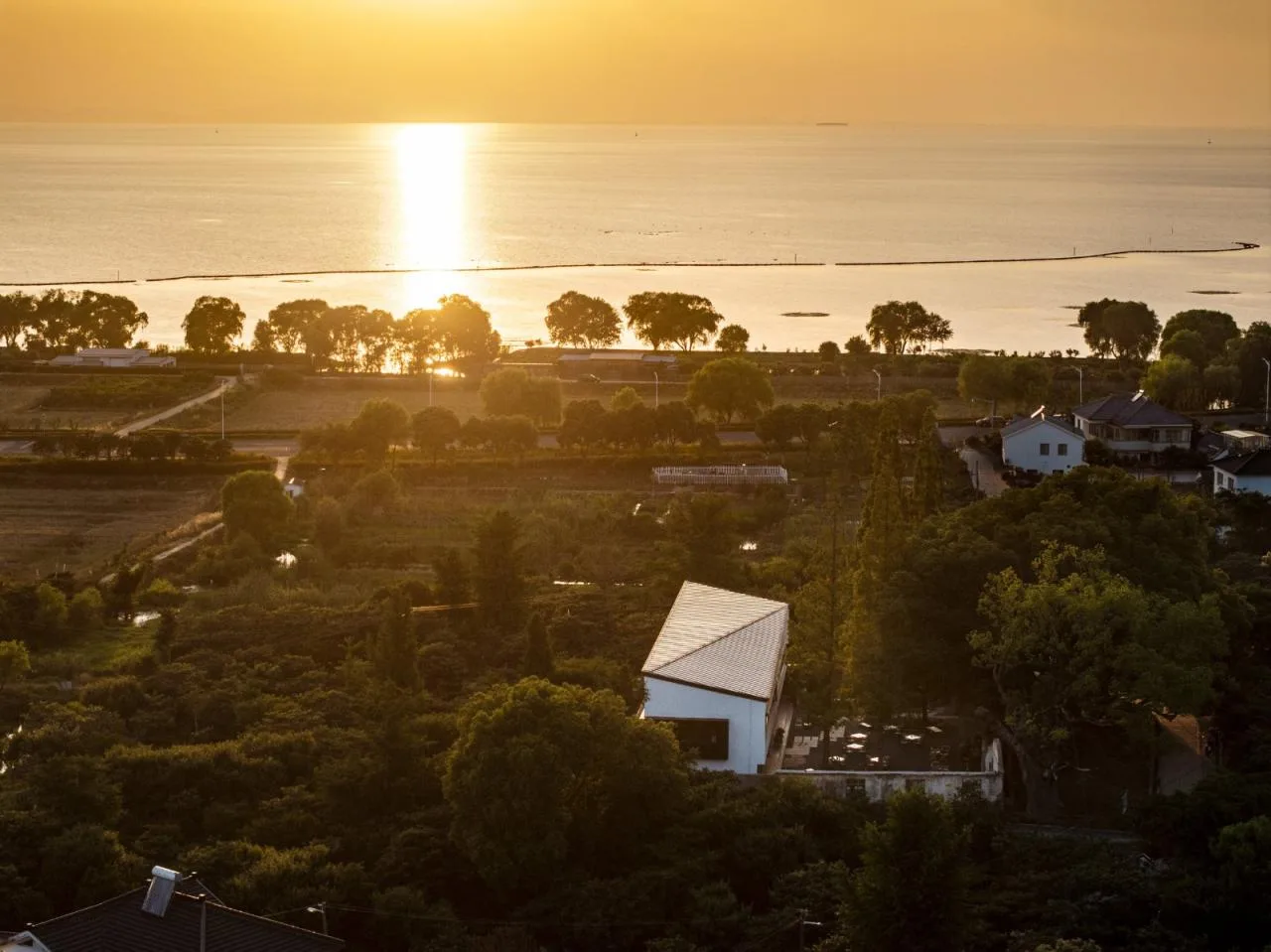
Buildings under sunset light © Lu Xiaoping
Ancient trees possess a unique sense of place. When this historically significant building is set alongside five ancient trees, it creates an overlapping of different places, generating more intriguing spaces. This intersection between architecture and environment conveys relationships between various historical memories.
Choosing to set the building back—nestled among old walls and shaded by trees—demonstrates respect for history and nature. It reduces the formal presence of the new building, simplifies its exterior, and enriches its internal spatial diversity, integrating it harmoniously into the historical and natural landscape.
Project Drawings
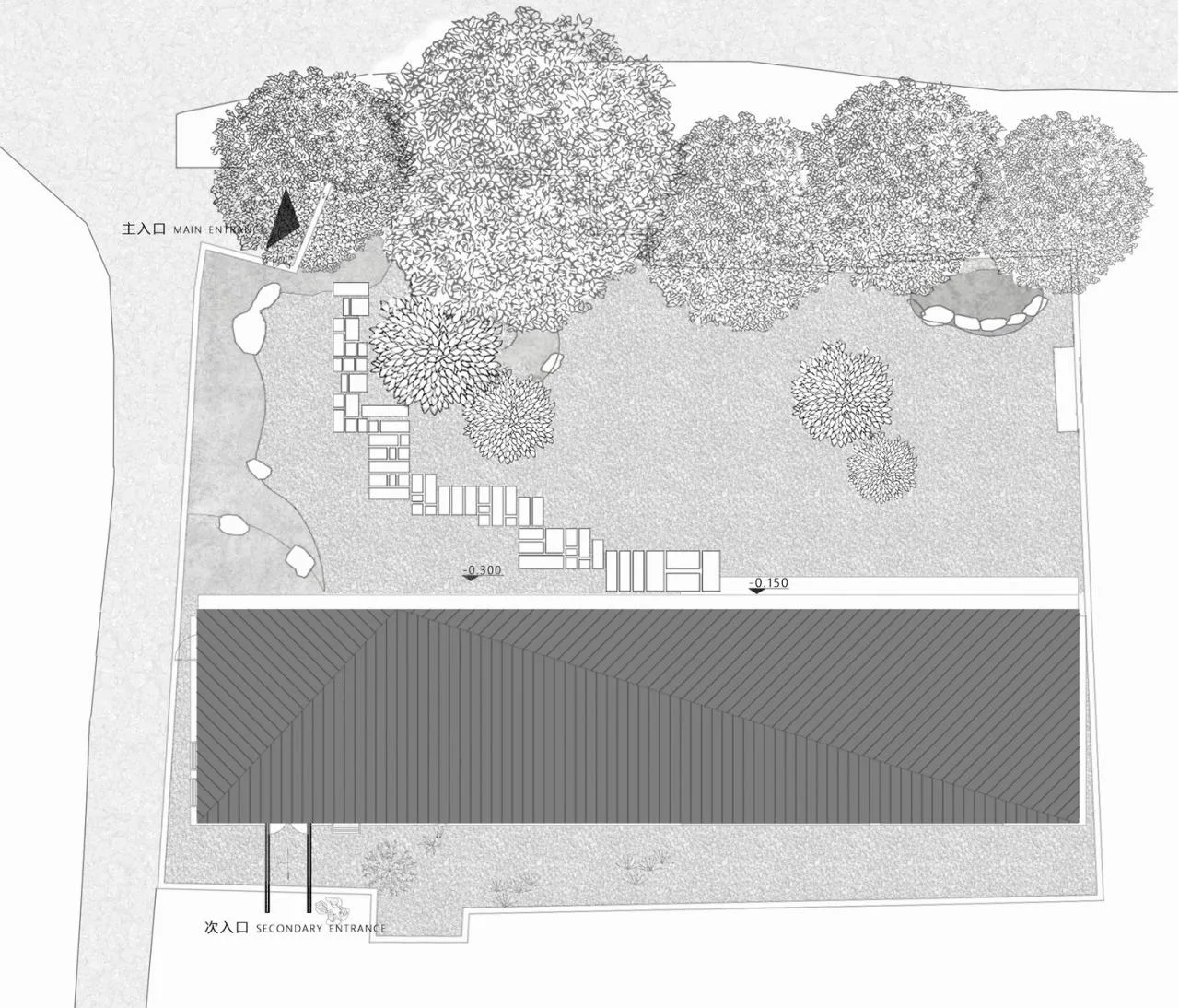
△ General layout plan
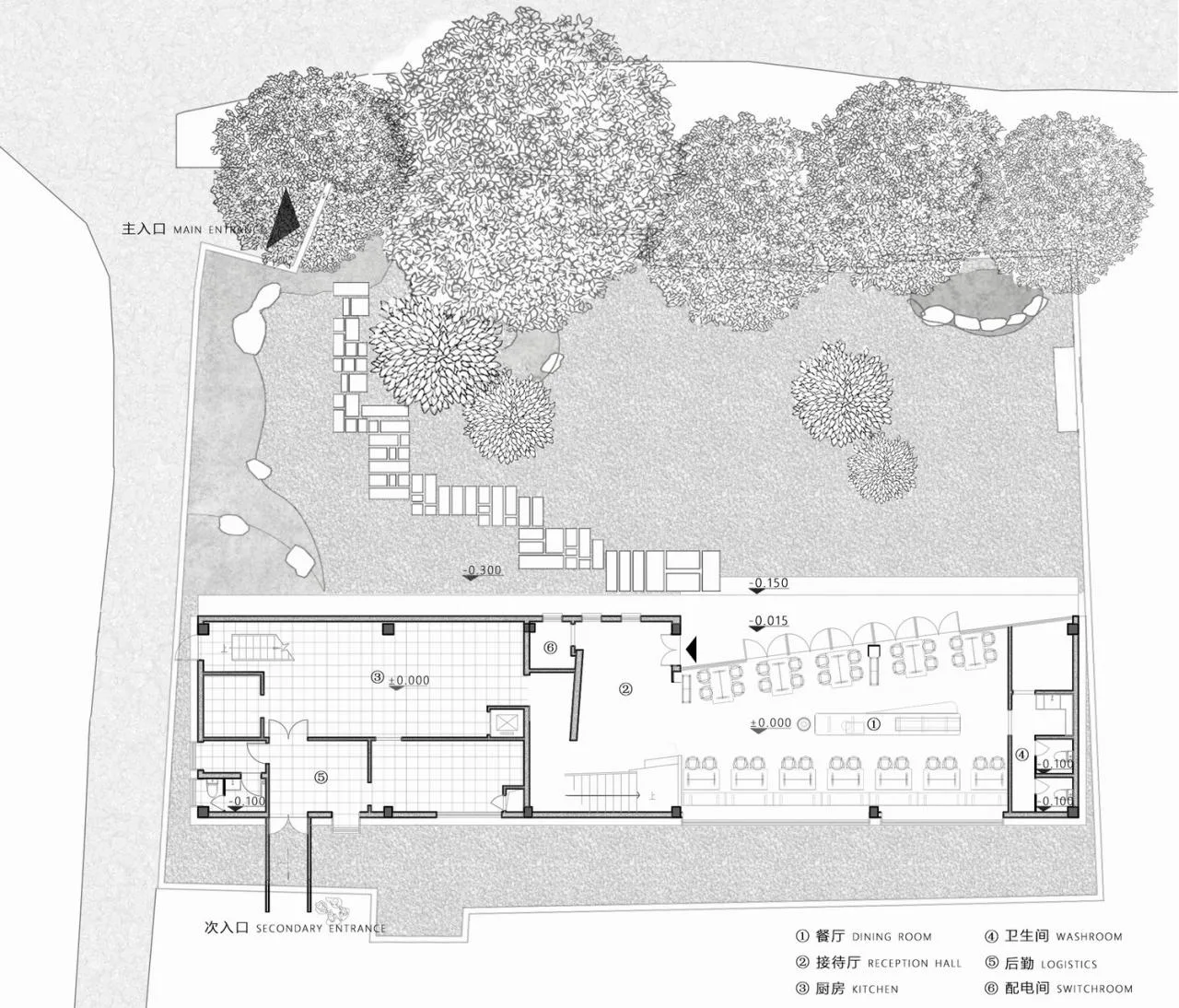
△ First floor plan
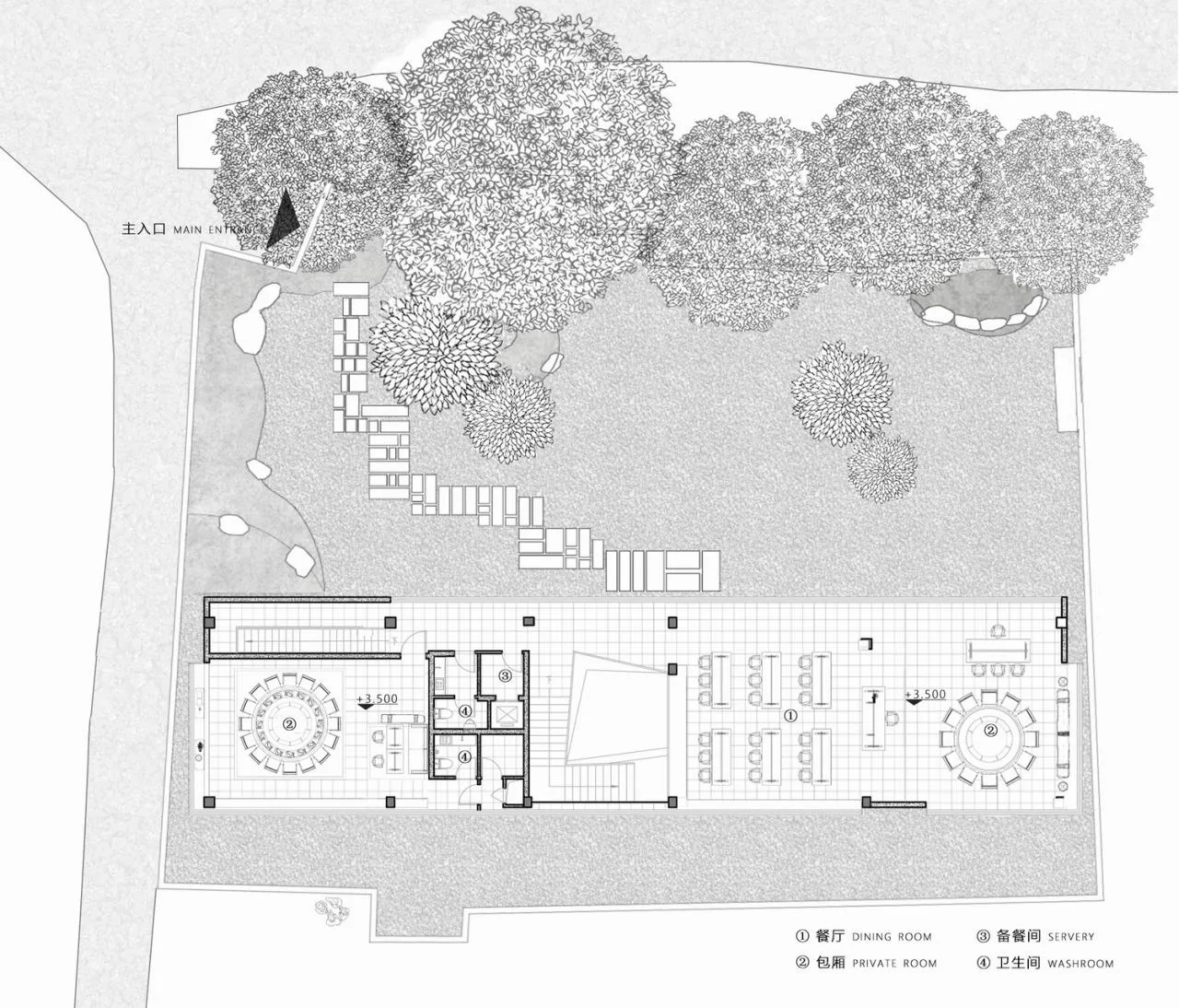
△ Second floor plan
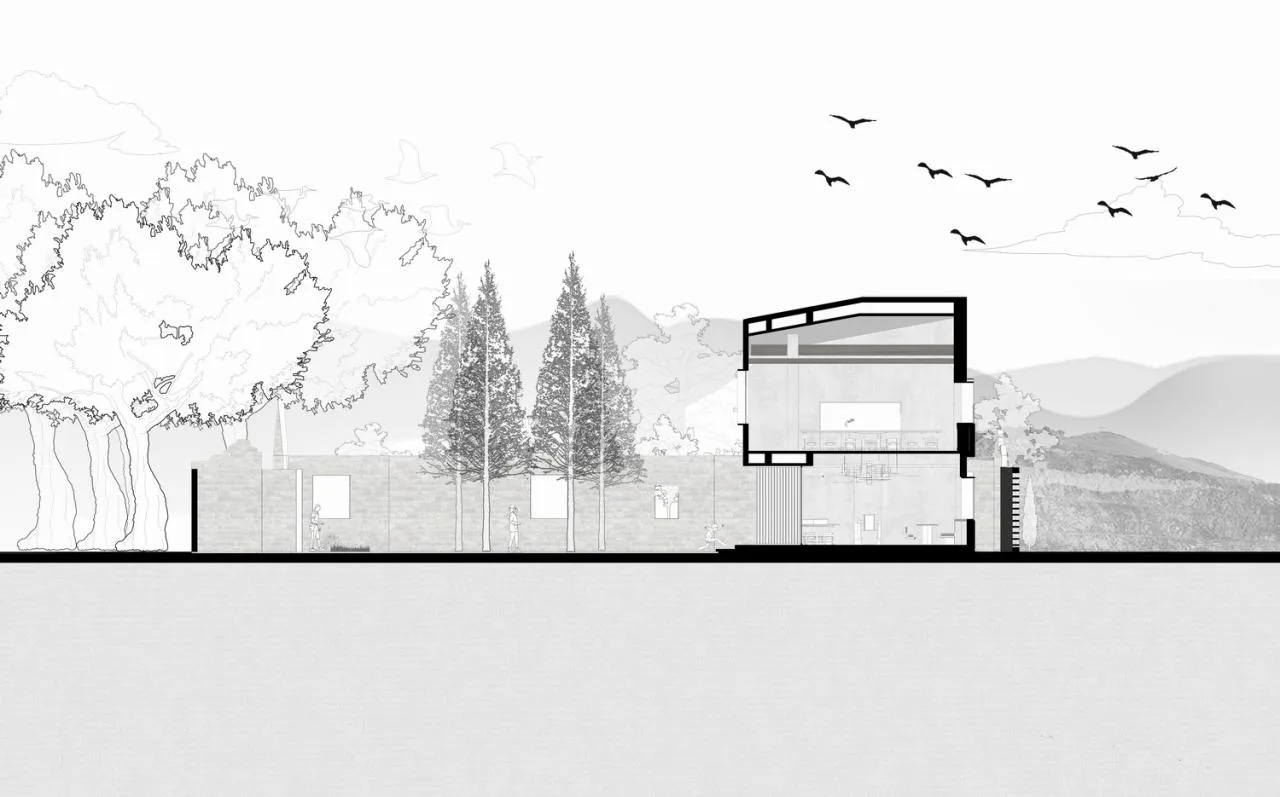
△ Section diagram
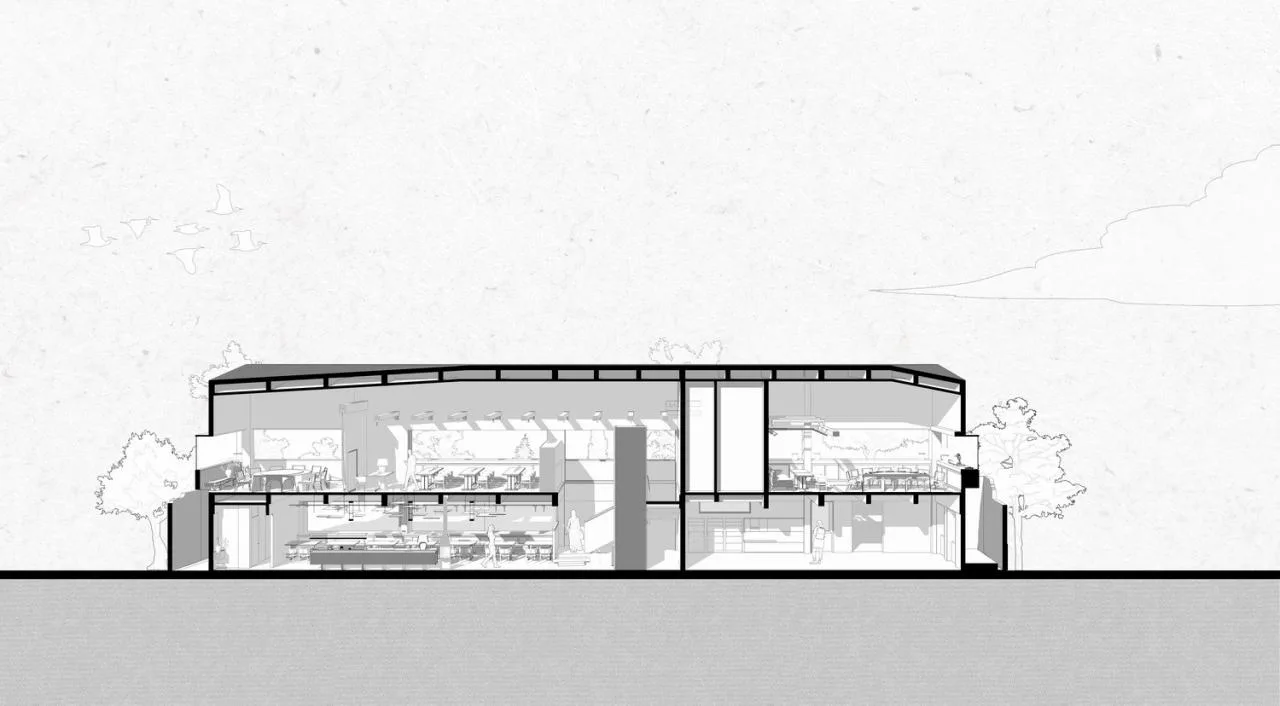
△ Sectional perspective view
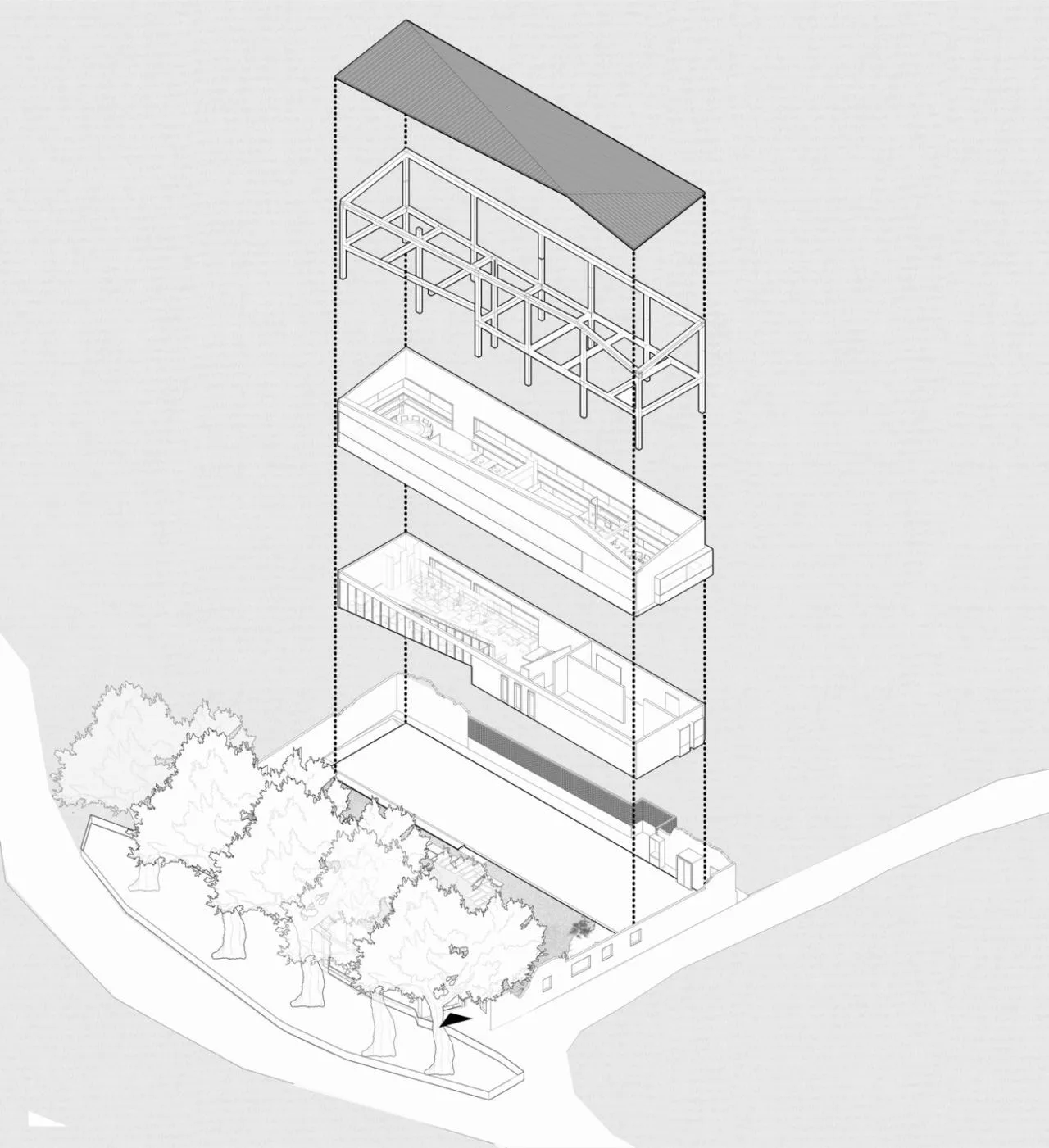
△ Explosion diagram
Project Information
Project Name: Wuzhangting Cultural and Tourism Life Hall
Design Period: June 2021 – January 2023
Design Team:
Shangrui Yuanzhu: Zheng Xinyang, Hong Chenjian, Liang Kecheng, Bai Xiangwen, Fei Ning, Lv Kai
Ping Jie: Wu Si, Jing Wanqian, Li Zongjian, Xiao Mingfeng, Wu Jiang, Wang Haidong, Li Wenjing
Suzhou University: Yang Nan, Xiao Xiangdong
Jiangnan University: Meng Lei
Owners: Suzhou Jinmanting Modern Agriculture Development Co., Ltd., Suzhou Wuzhang Cultural Management Co., Ltd.
Planning Team: Haoqi Brand Operation Management (Suzhou) Co., Ltd., Suzhou Buduo Hotel Management Co., Ltd.
Project Location: Zhangjiawan, Dongcun Village, Jinting Town, Suzhou City, Jiangsu Province
Design Area: 1000 square meters
Photographers: Lu Xiaoping, Wang Shang, Wang Zhaolou (combining spatial vision)
Partners: Suzhou Liudu Architectural Design and Research Institute, Shanghai Hengtai Architectural Design Consulting Co., Ltd.
Materials: Aluminum-magnesium-manganese panels, concrete, natural stone paint















Must log in before commenting!
Sign Up