
Situated at the foot of the Taihu Lake Bridge, this project combines both renovation and new construction. The architect aims to explore the relationship between space and nature through the use of materials, light, and shadow. Unlike the castle café visible from the Taihu Lake Bridge, the homestay area is more secluded, requiring visitors to cross the entire bridge to fully appreciate it.
After demolishing a jagged building on the site, a two-story cylindrical structure was preserved. The site enjoys a prime location, backed by the scenic Taihu Lake landscape. The architect sought simplicity in the design, transforming the new construction into a minimalist cuboid connected to the existing cylinder via a large platform. In this natural setting, geometric beauty is achieved through the interplay of simple squares and circles.
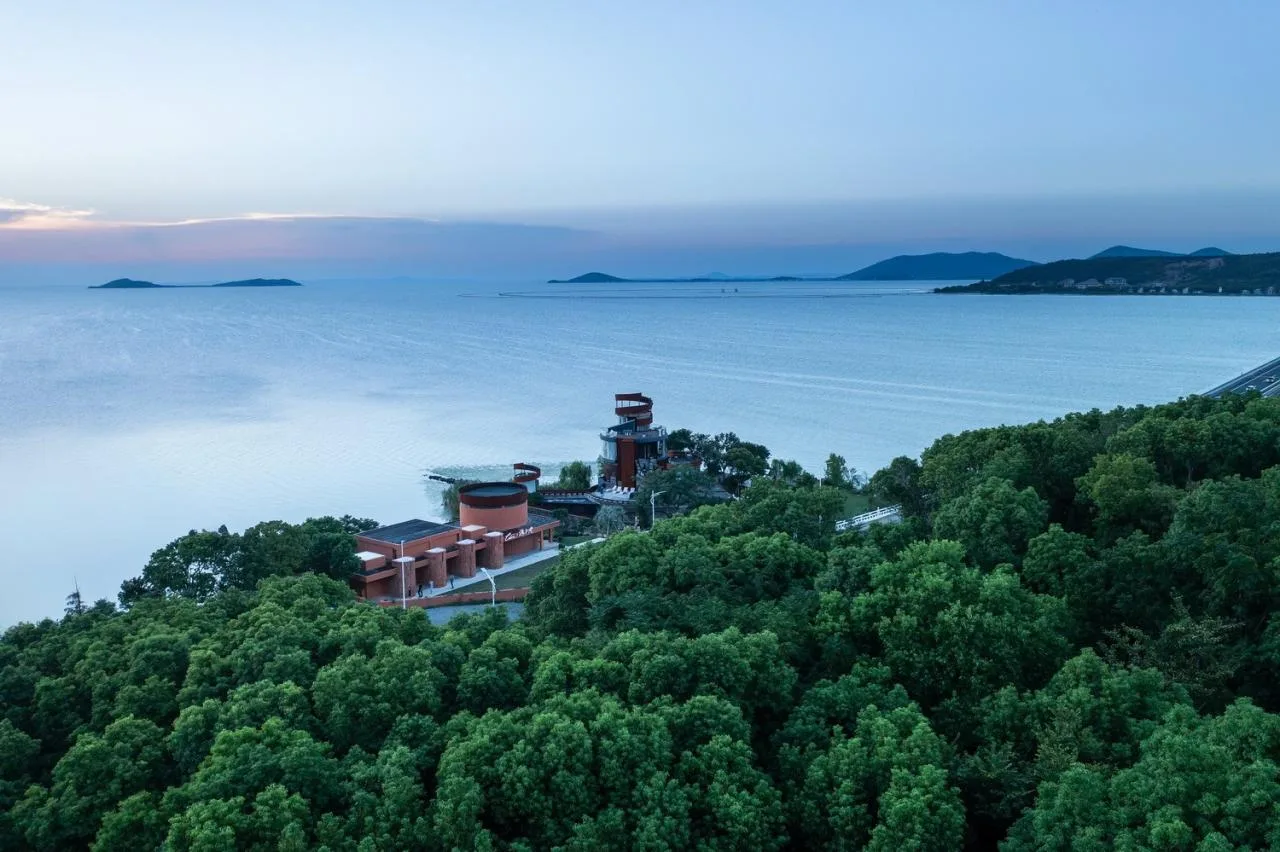
△ Project appearance © Wang Shang
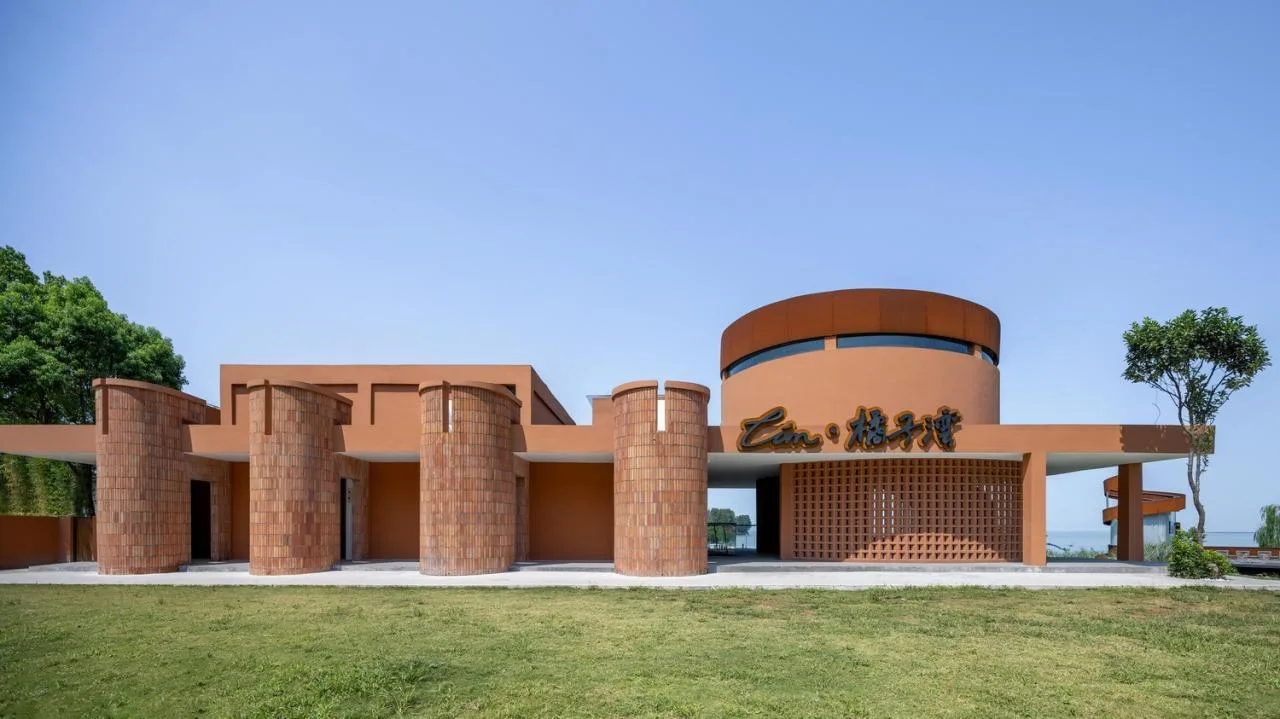
△ Building facade © Wang Shang
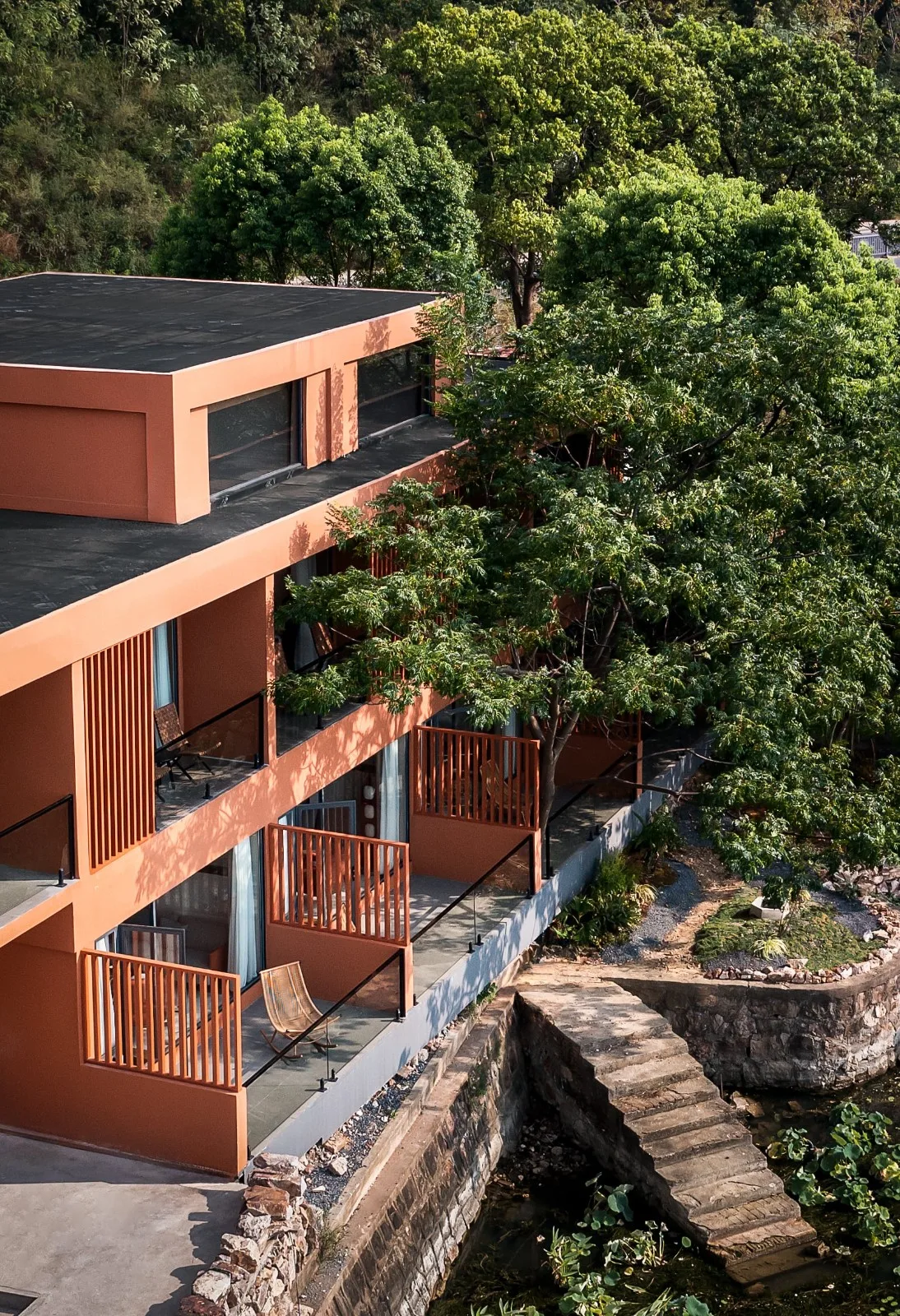
△ Project appearance © Wang Shang
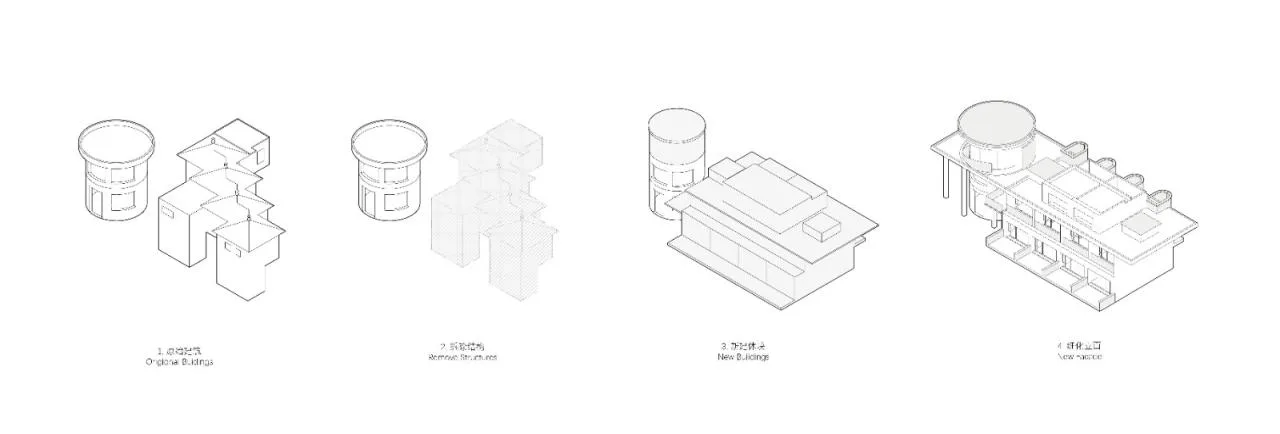
△ Design Strategy
Spatial Order
The homestay features nine rooms divided into four main layouts. The large existing cylinder, after renovation, uses the basement (-1F) for logistics such as linen storage, while the first floor (1F) serves as the reception area with French windows facing the lake to maximize natural views.
The new rectangular cuboid houses eight rooms distributed evenly across its floors. One floor includes two loft-style rooms centrally located, flanked by skylight king rooms on either side. The integration of square and circular volumes is unified by a large platform, which also elevates the base volume.
The second floor of the cylinder is designed as a guest room, and additional rectangular volumes rise above the cuboid on the opposite side. This composition continues the geometric harmony of squares and circles on the facade, while the interior spaces offer rich variations in spatial and lighting experiences.
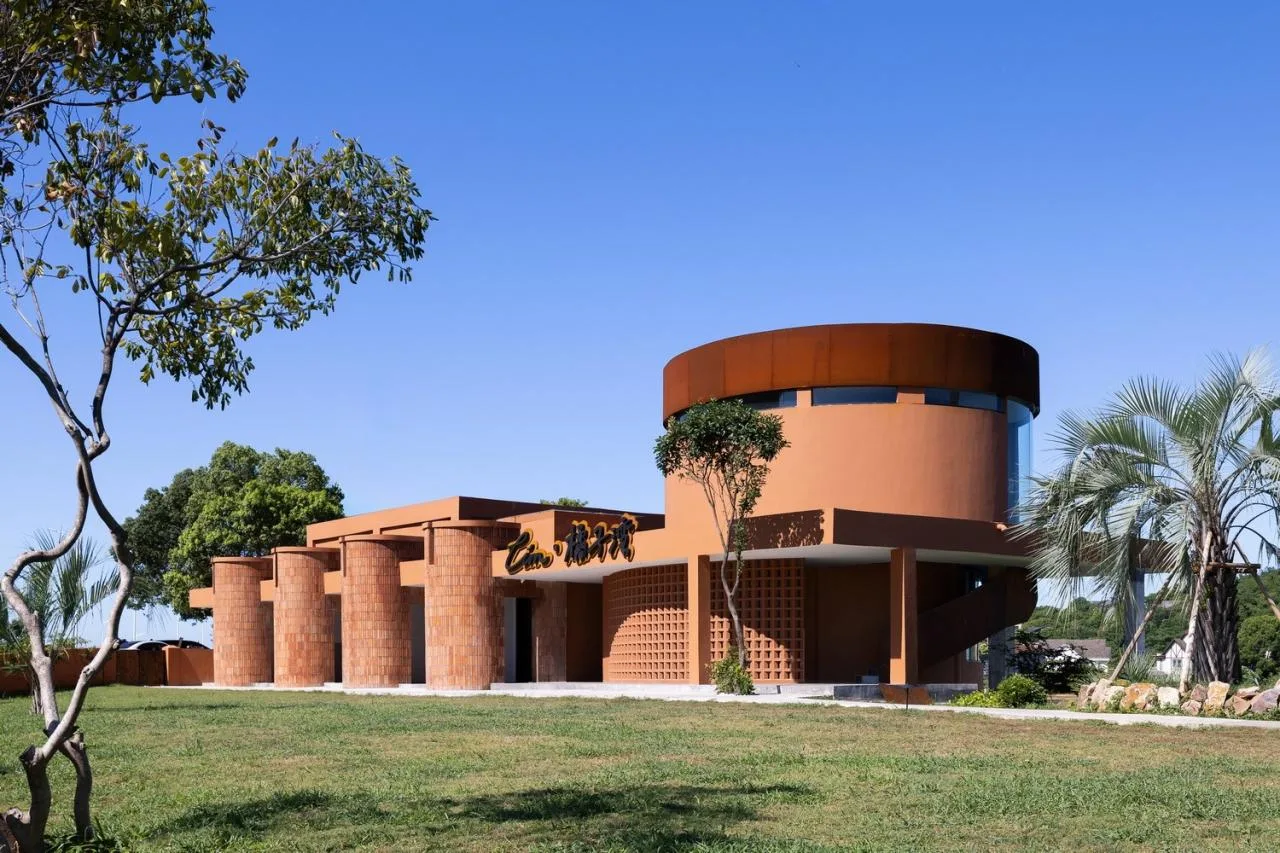
△ Project appearance © Wang Shang
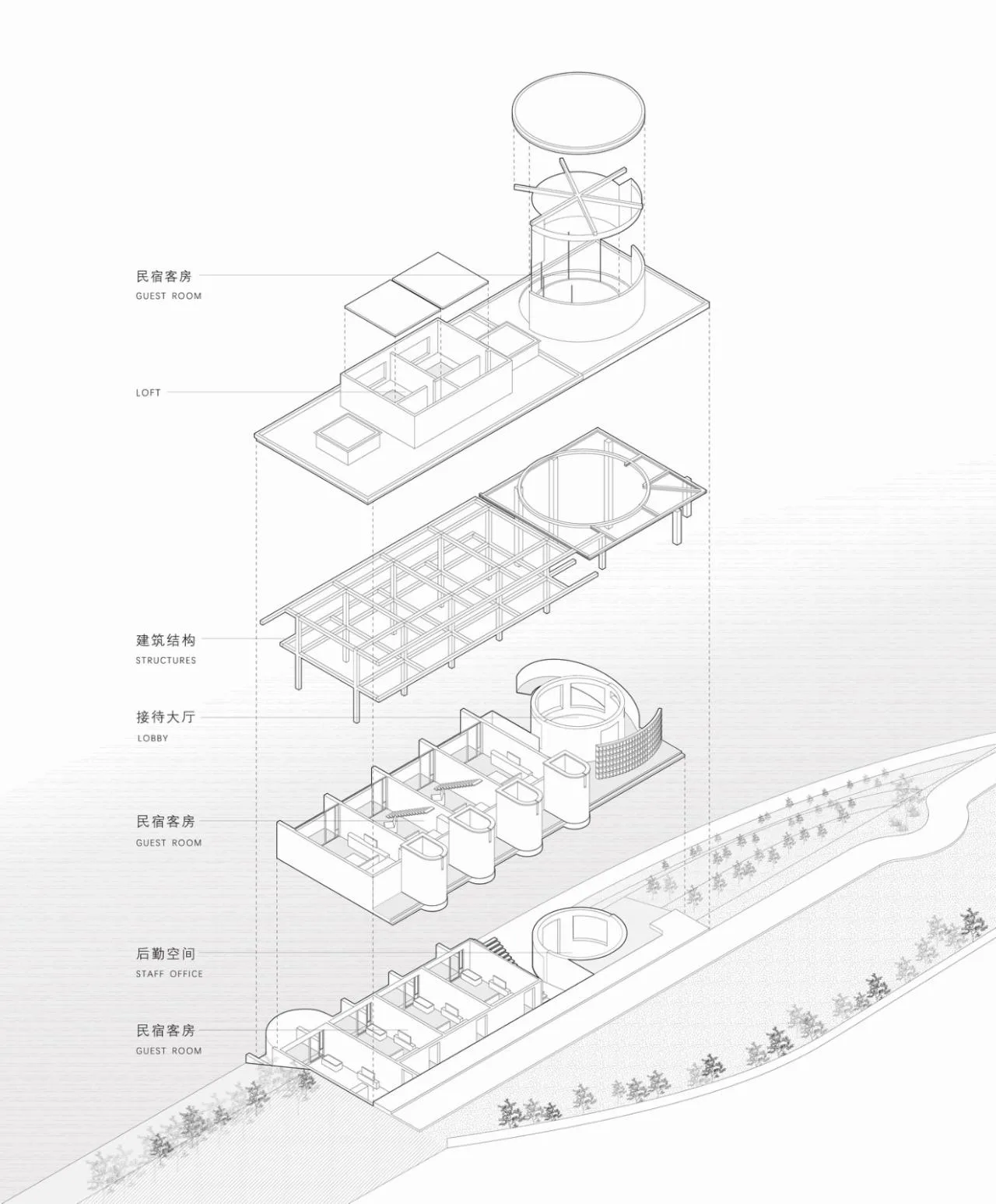
△ Exploded Diagram
Light Design
Modern travelers seek not only beautiful scenery and unique local culture but also distinctive living experiences during their short stays. A successful homestay integrates natural landscapes with spatial design, where lighting plays a crucial role.
The cylindrical entrance on the first floor aligns with the large existing cylinder and features an open top that allows varying light, rain, and snow to filter in according to the season and weather. This entrance space both blocks visual distractions from the outside and muffles external noise, helping guests reconnect with nature and enjoy a peaceful, comfortable stay.
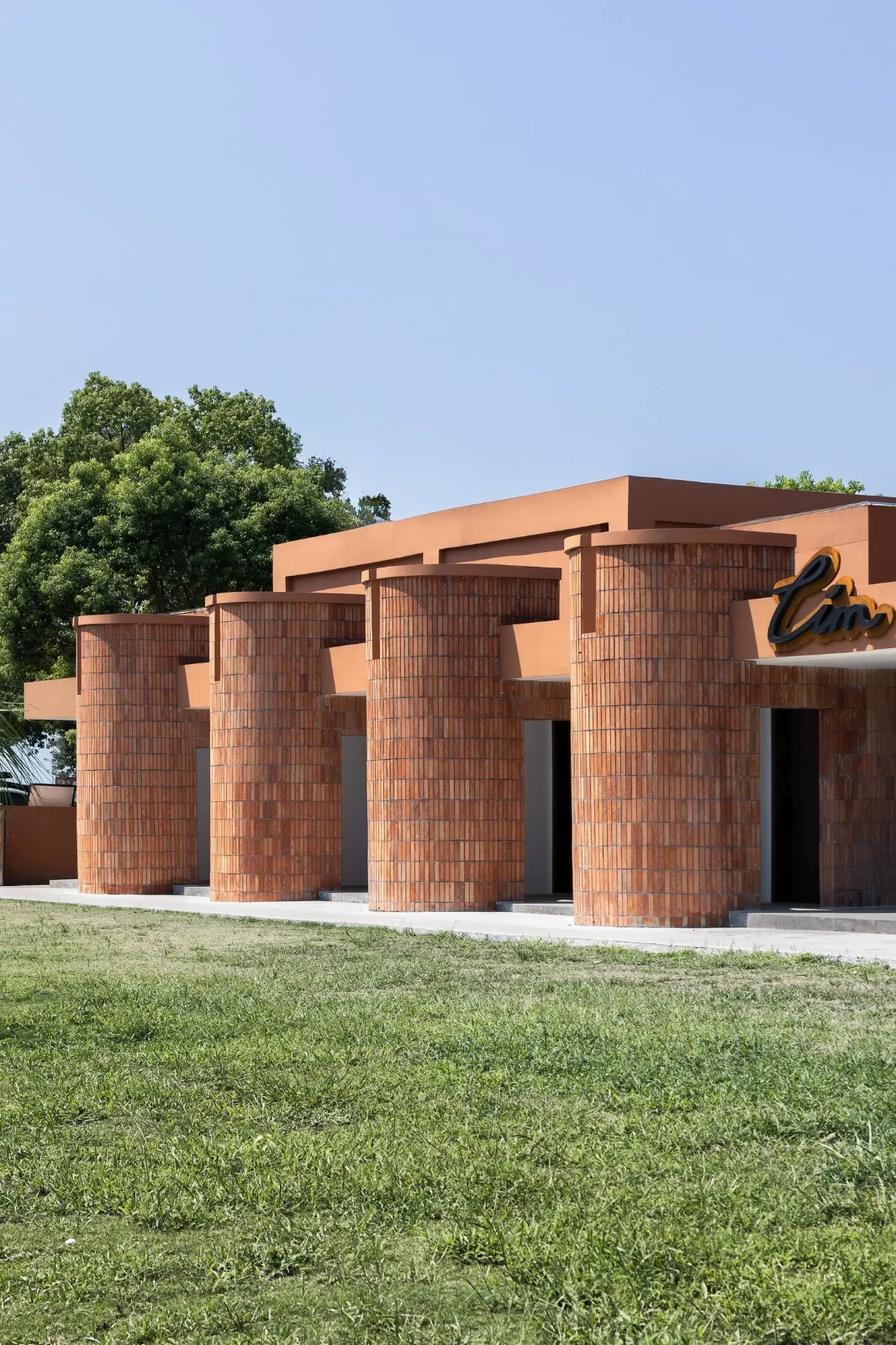
△ Project appearance © Wang Shang
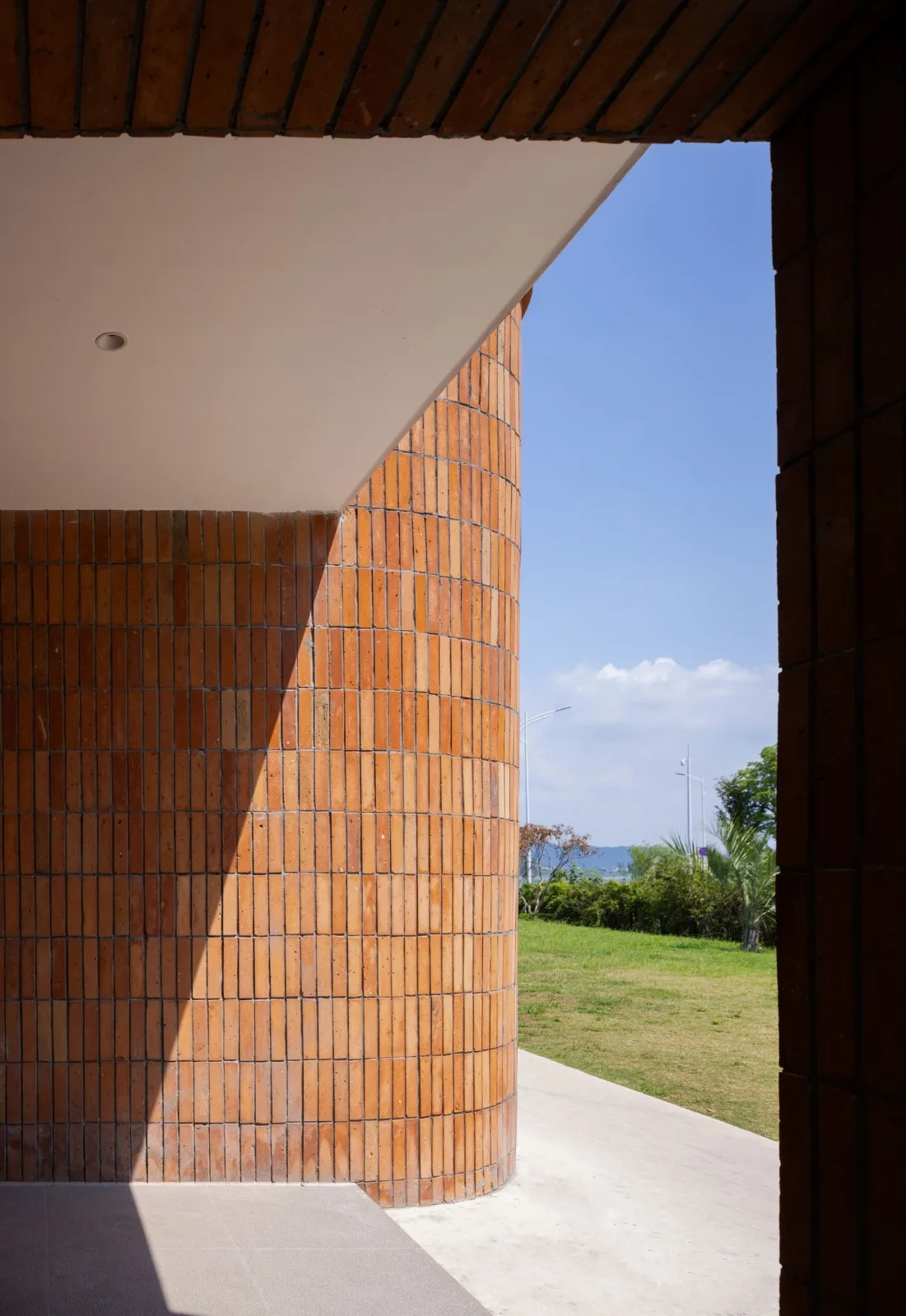
△ Guest room entrance © Wang Shang
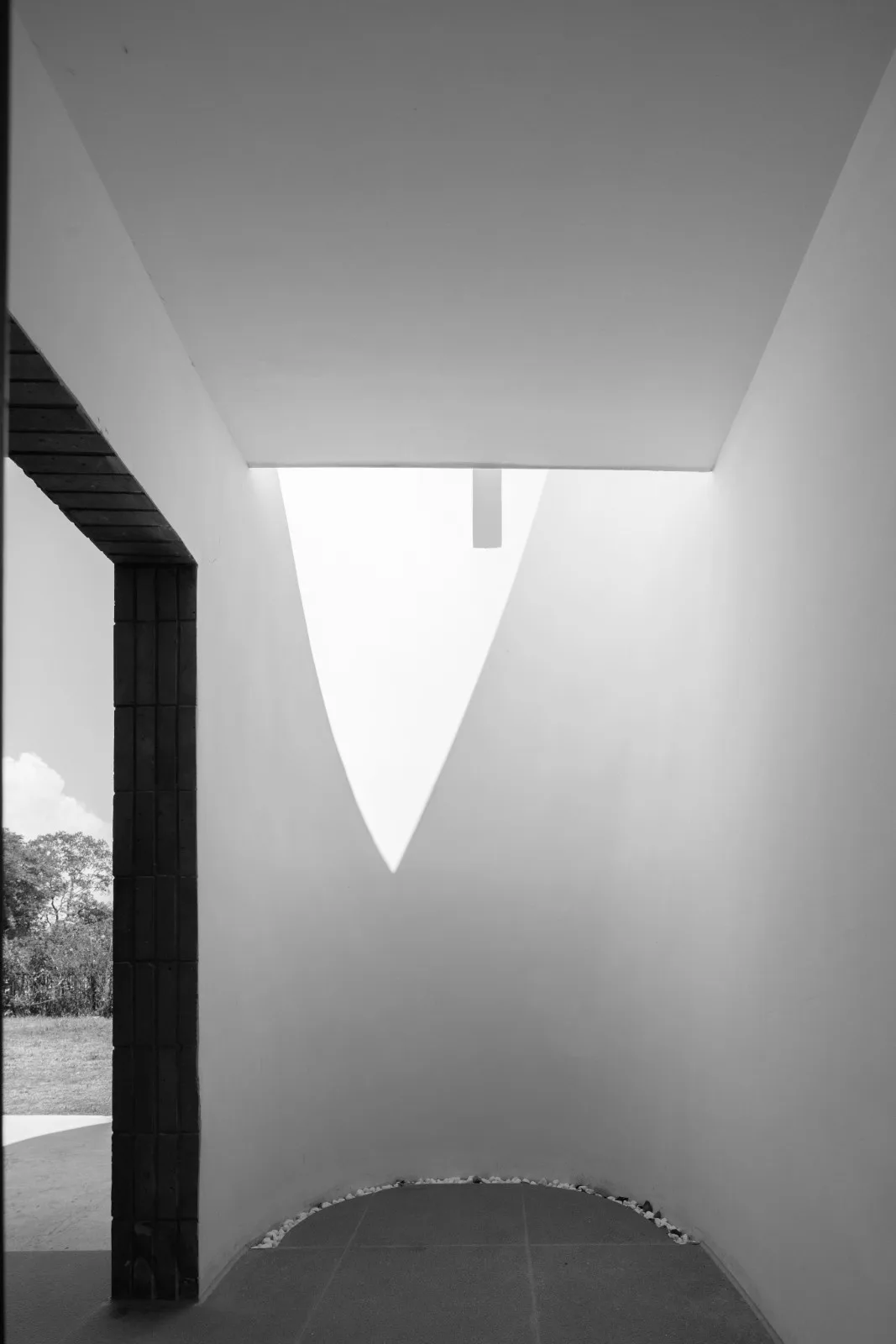
△ Guest room entrance © Wang Shang
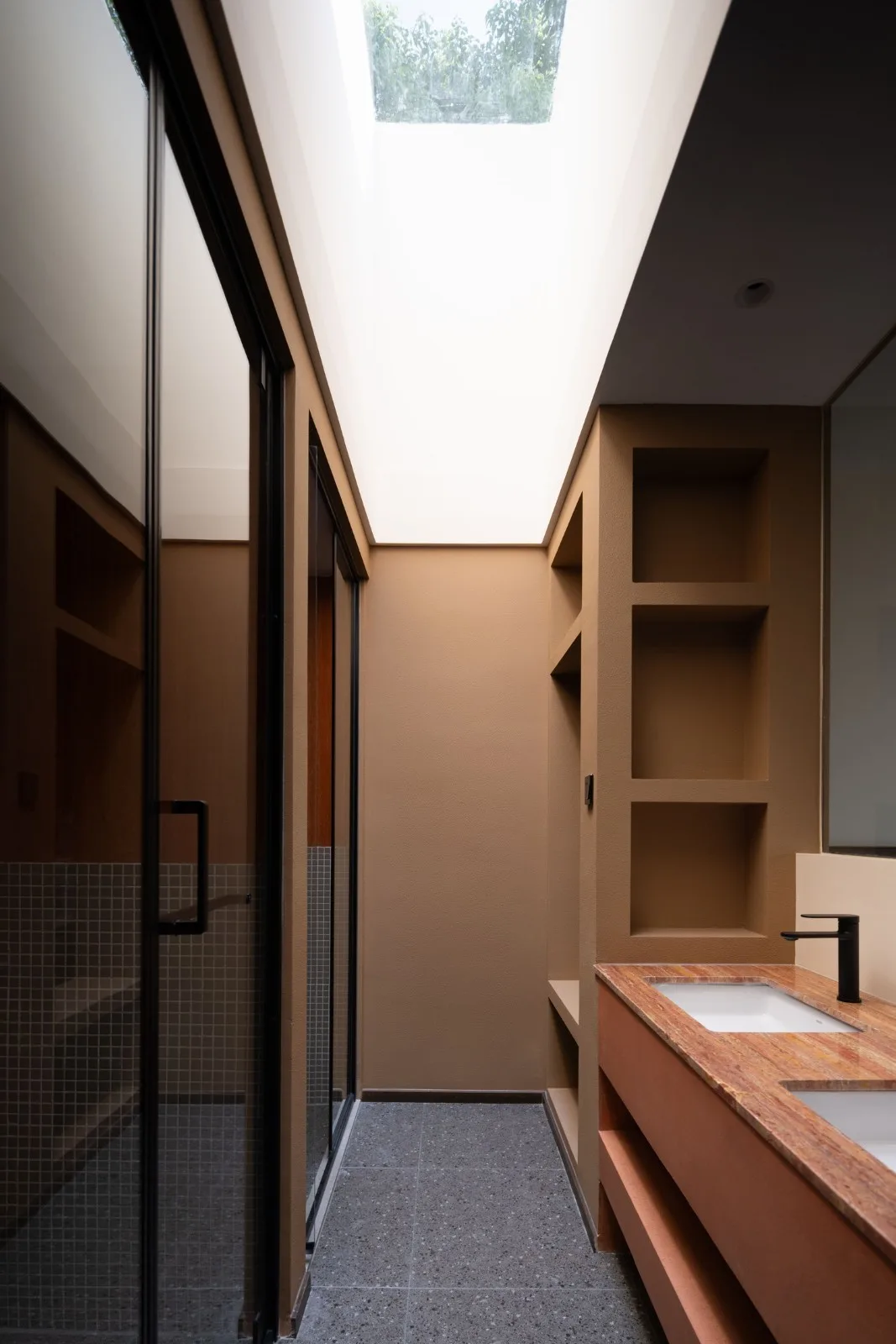
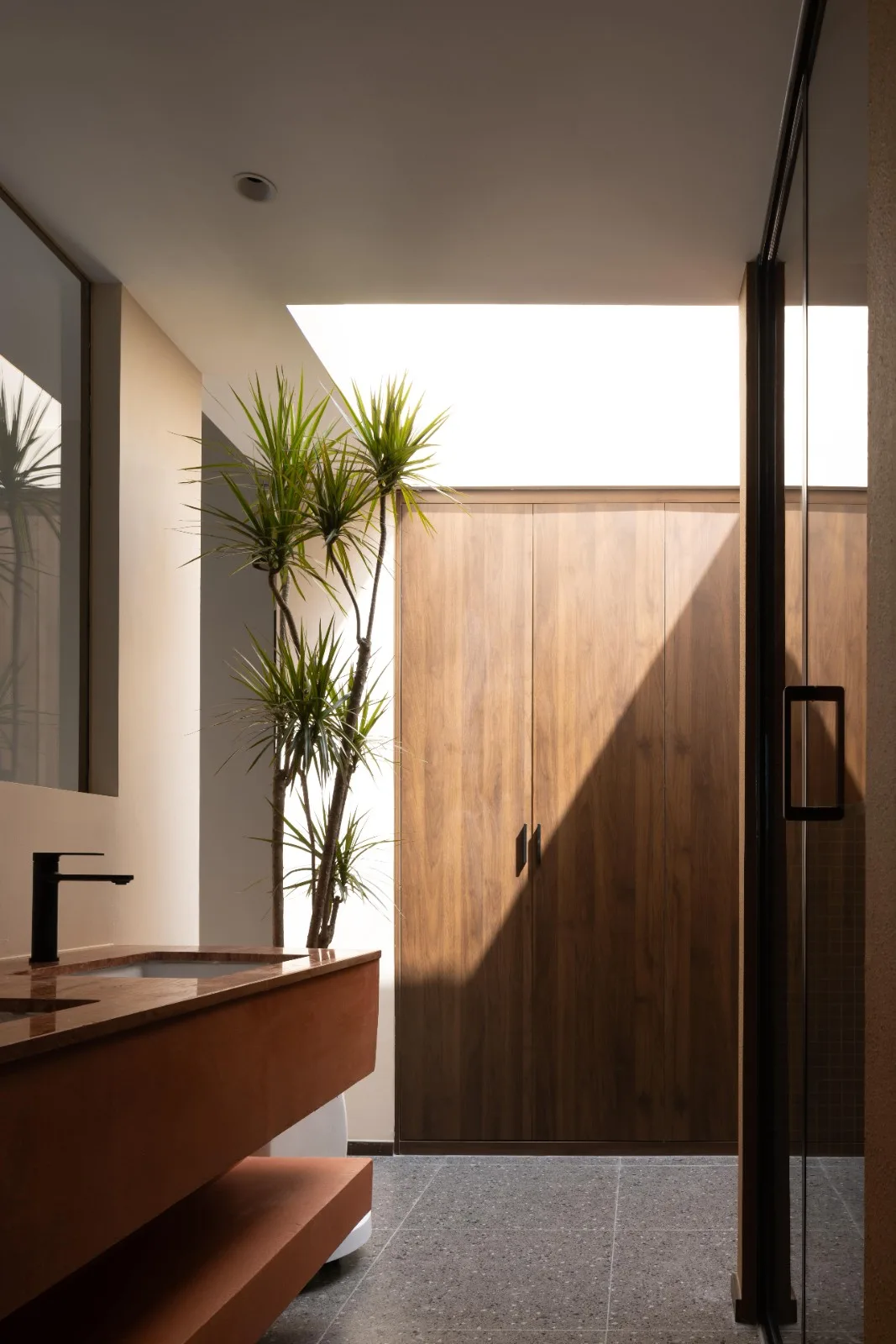
△ Room interior © Wang Shang
Color
The space’s primary color is pottery brick red, inspired by the sunset over Taihu Lake. Unlike the monochromatic tones of traditional Chinese landscape paintings, natural colors here are rich and vibrant.
The homestay’s main structure features a rough texture, with small cylindrical volumes accented by ceramic tile veneers. The simple architectural forms paired with rustic materials create a harmonious balance, while different materials in the same color scheme add depth and visual interest to the facade. The warm hues evoke sensory stimulation, peaking beautifully at sunset.
These buildings function both as frames for the landscape and as visual subjects set against the natural backdrop.
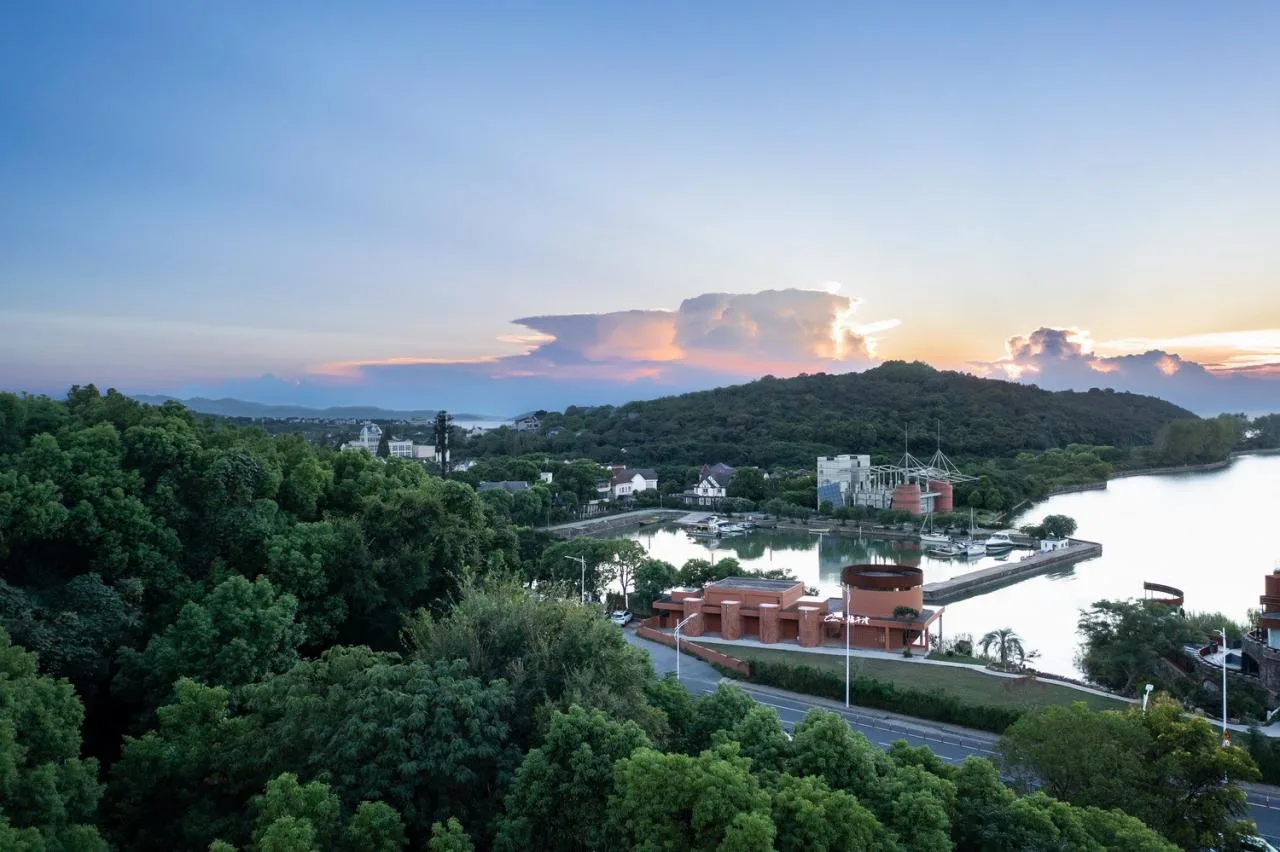
△ Project appearance © Wang Shang
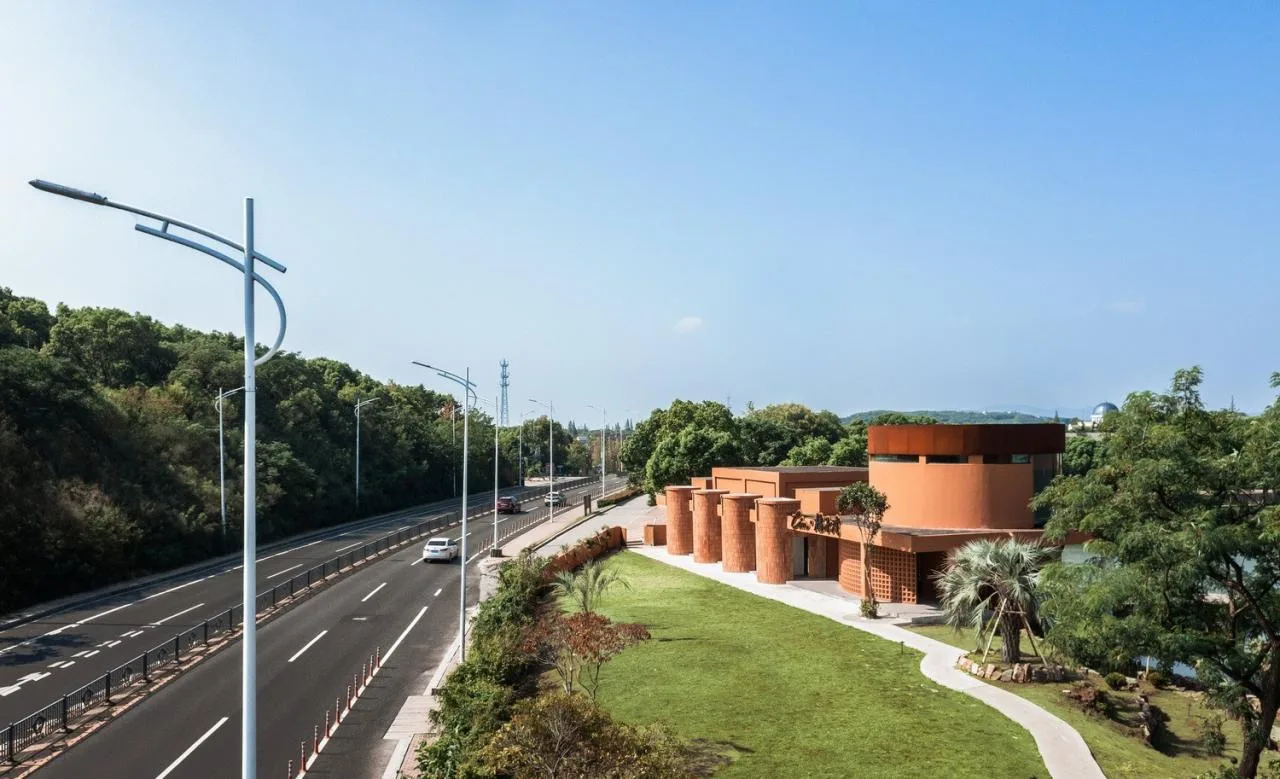
△ Project appearance © Wang Shang
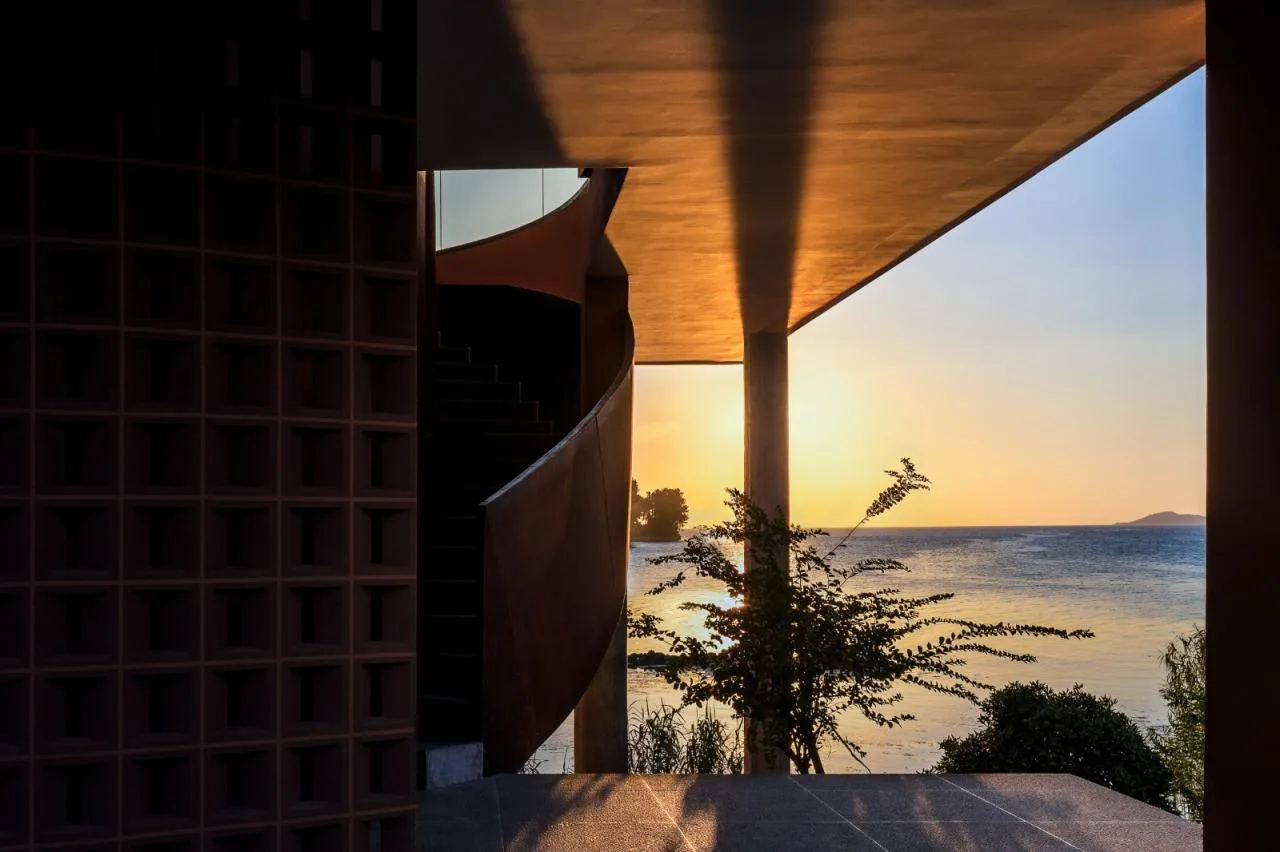
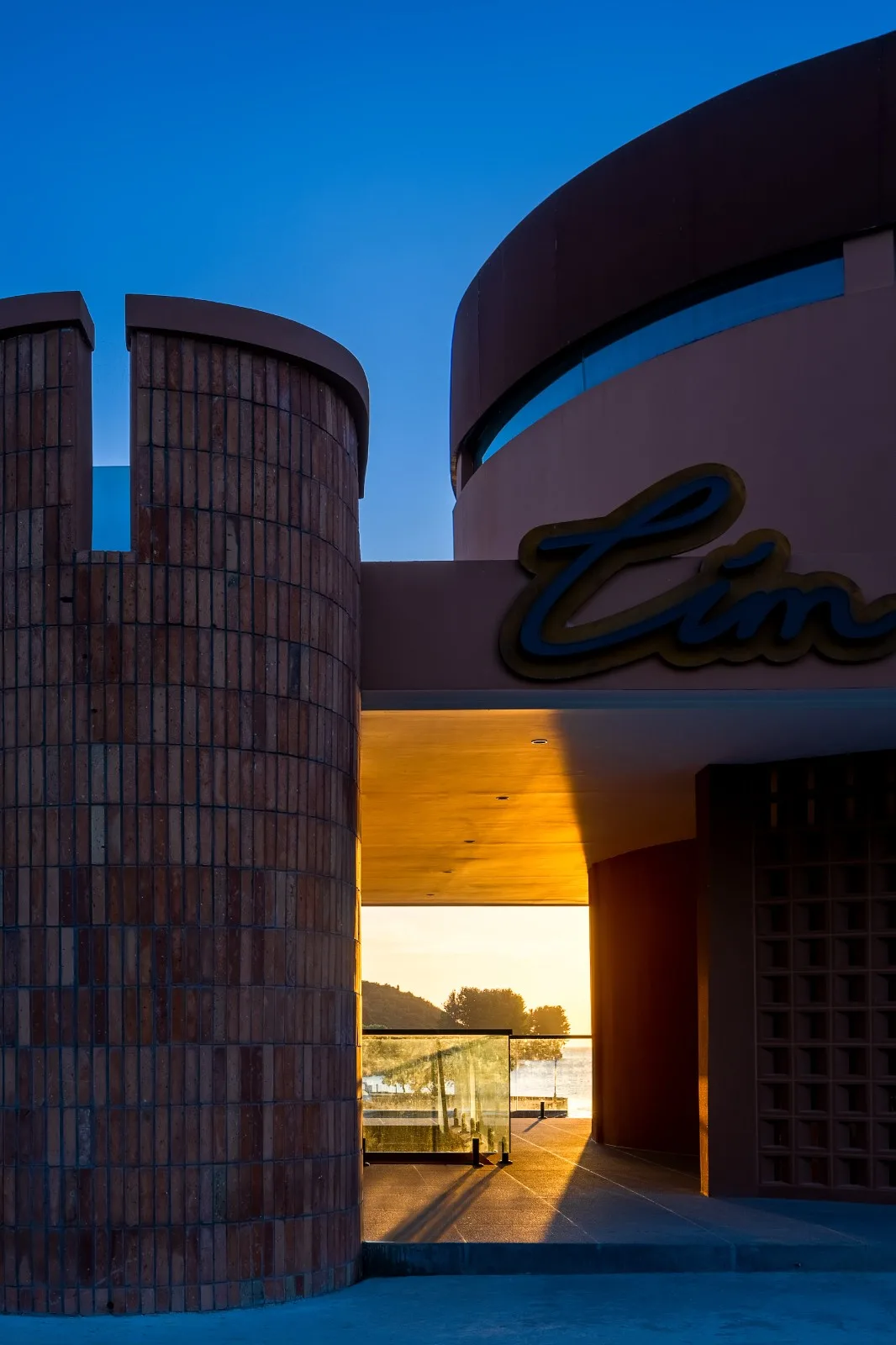
△ Balance and Restraint
During the project’s development, the design team faced complex challenges, especially balancing the new and old elements as well as natural and artificial features within the site.
Through extensive site analysis, the team concluded that “simplicity” is the most effective solution to complexity. Using simple geometric shapes, the buildings emerge naturally from the environment without drawing excessive attention.
The consistent use of materials in a single color further emphasizes the simplicity of the architectural form, while allowing design details to be appreciated at a human scale. The architectural forms and interior spaces align closely with their functions, avoiding any flashy or superficial expressions. The goal is for users to experience the harmonious beauty of architecture and nature.
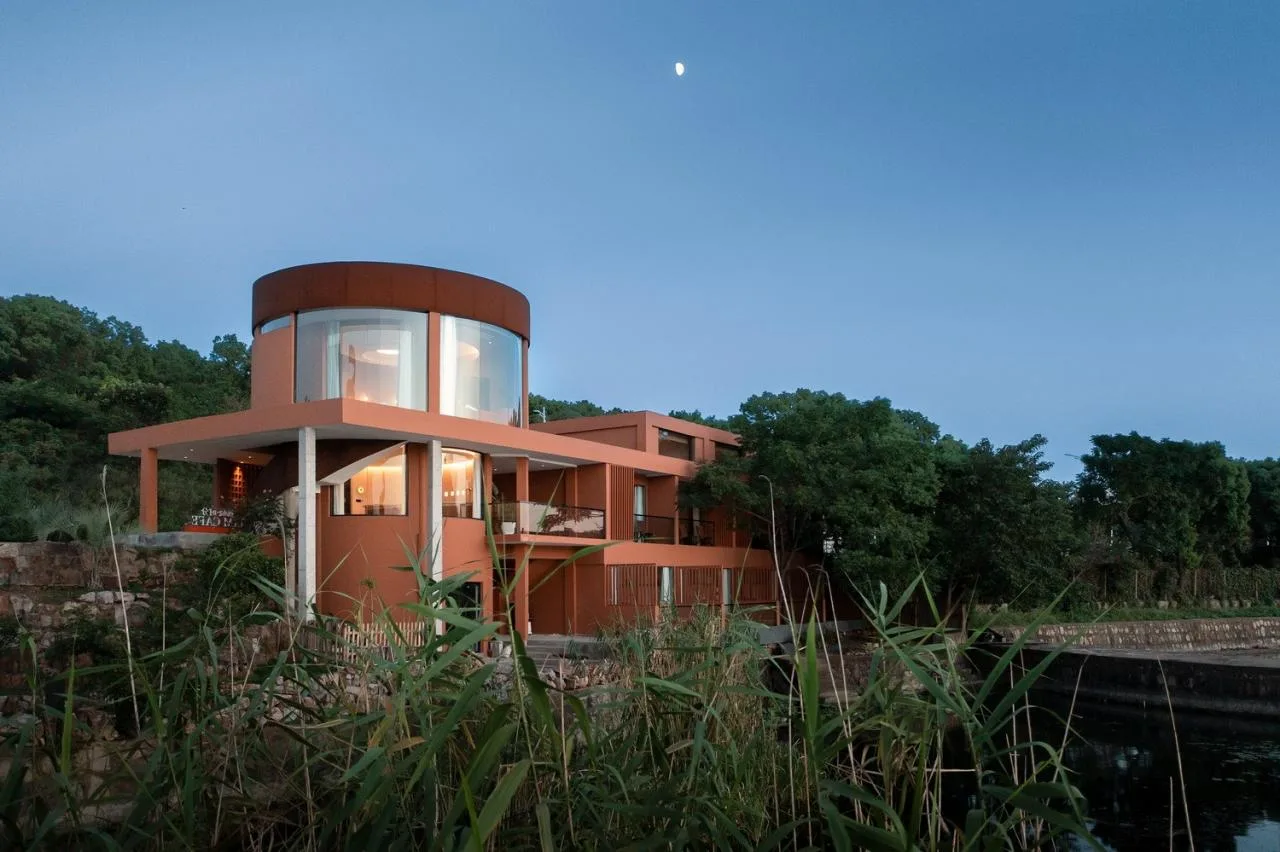
△ Project appearance © Wang Shang
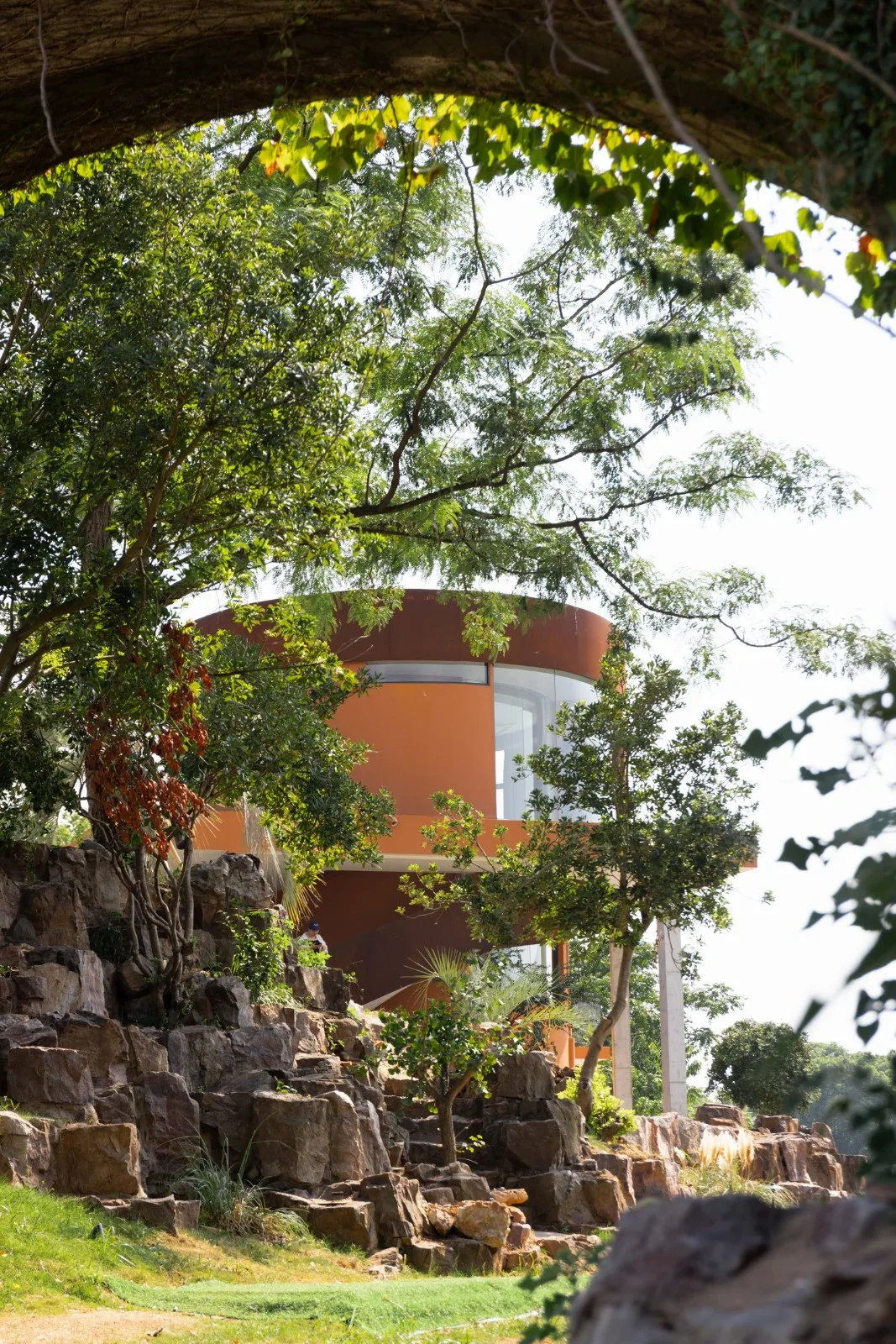
△ Project appearance © Wang Shang
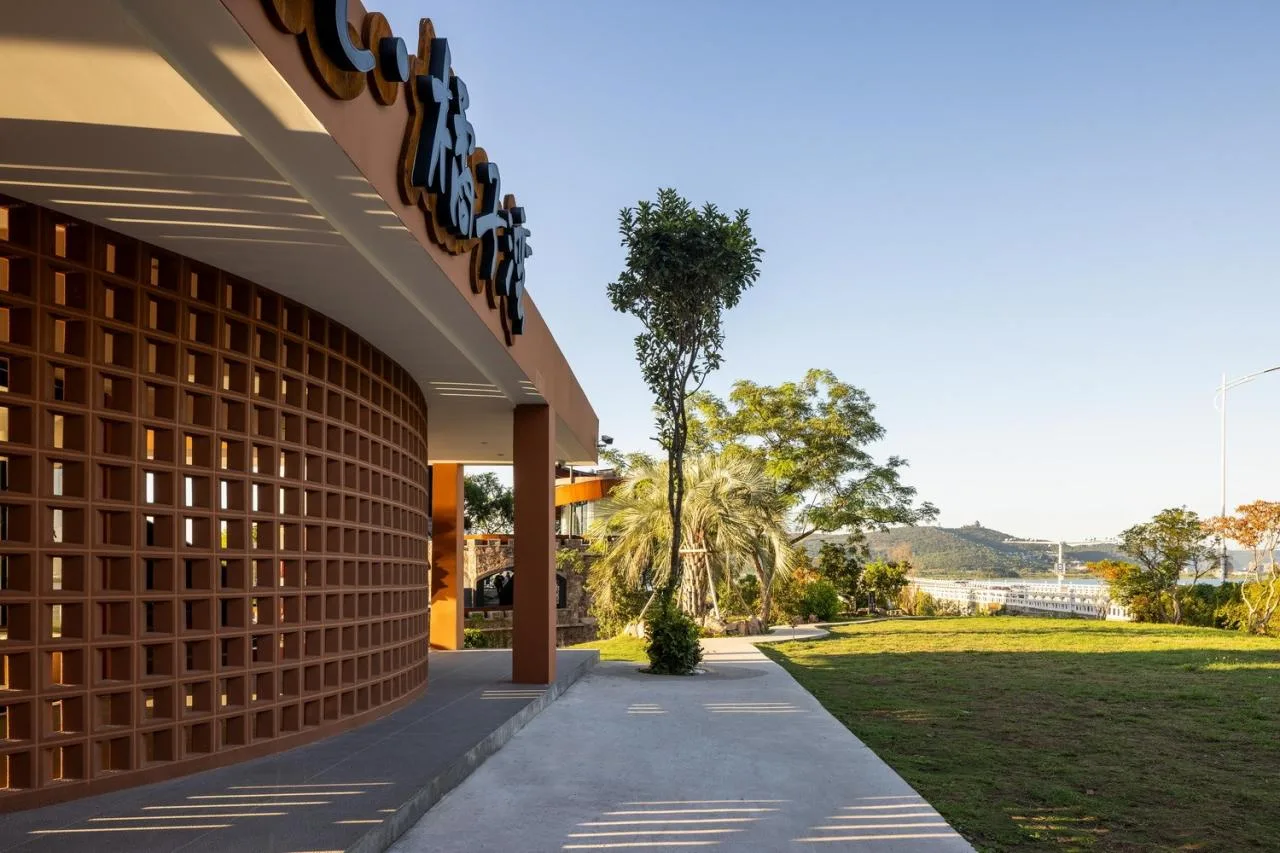
△ Homestay Entrance © Wang Shang
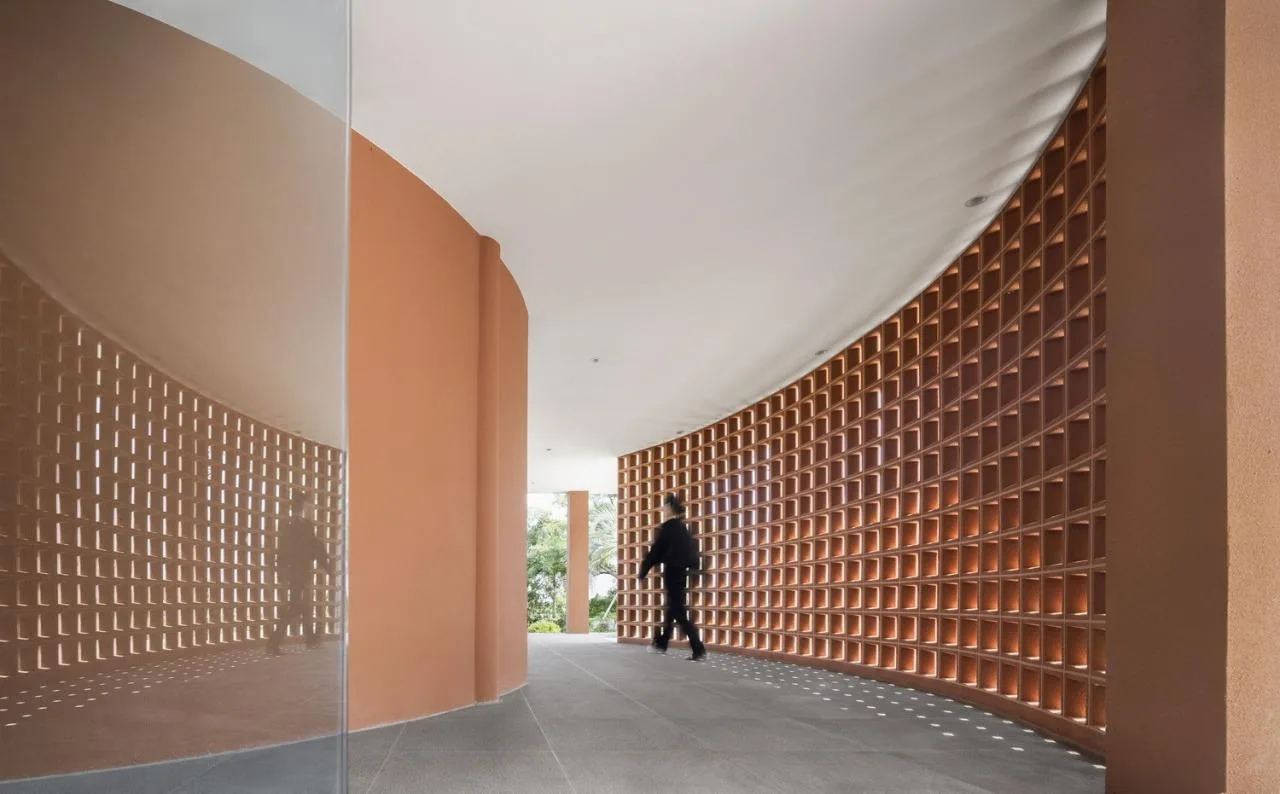
△ Homestay Entrance © Wang Shang
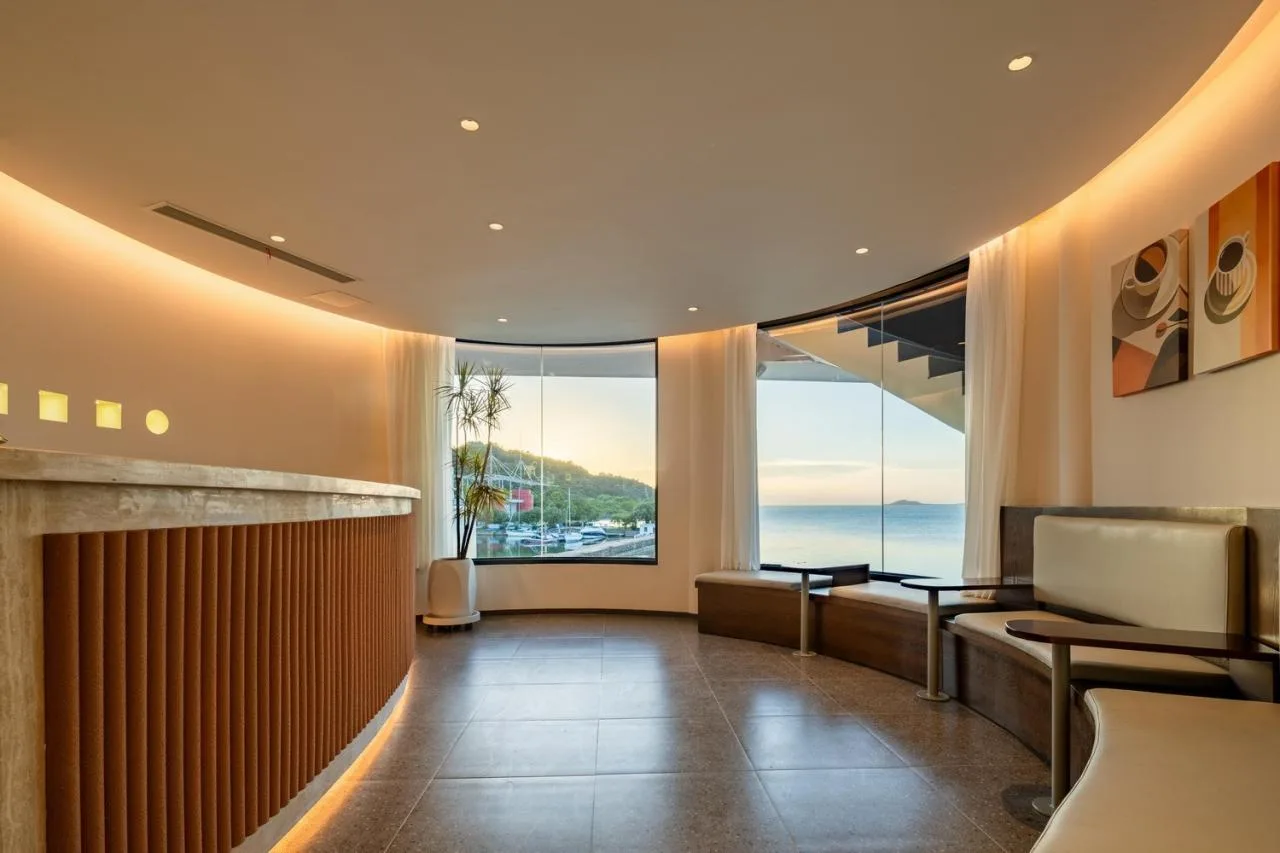
△ Reception Space © Wang Shang
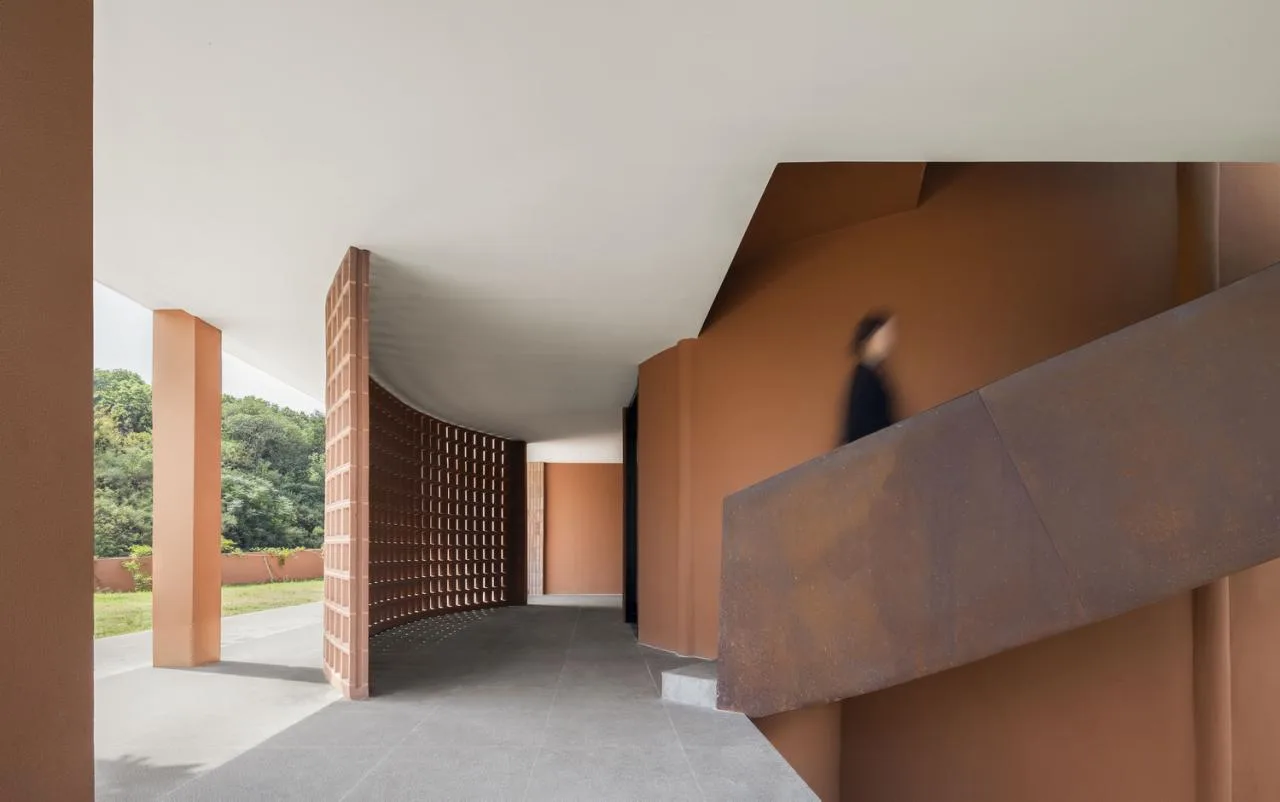
The spiral staircase leads to the viewing room © Wang Shang
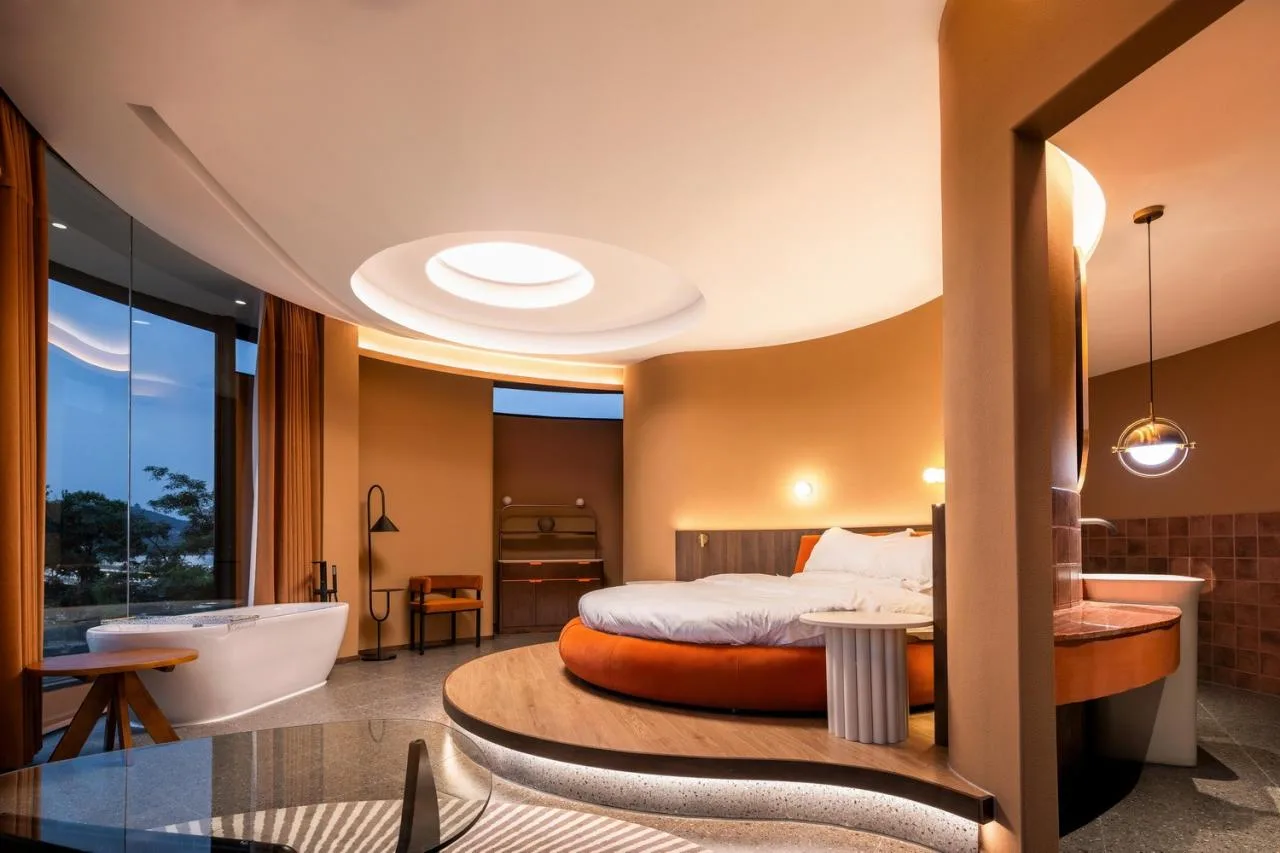
△ Room interior © Wang Shang
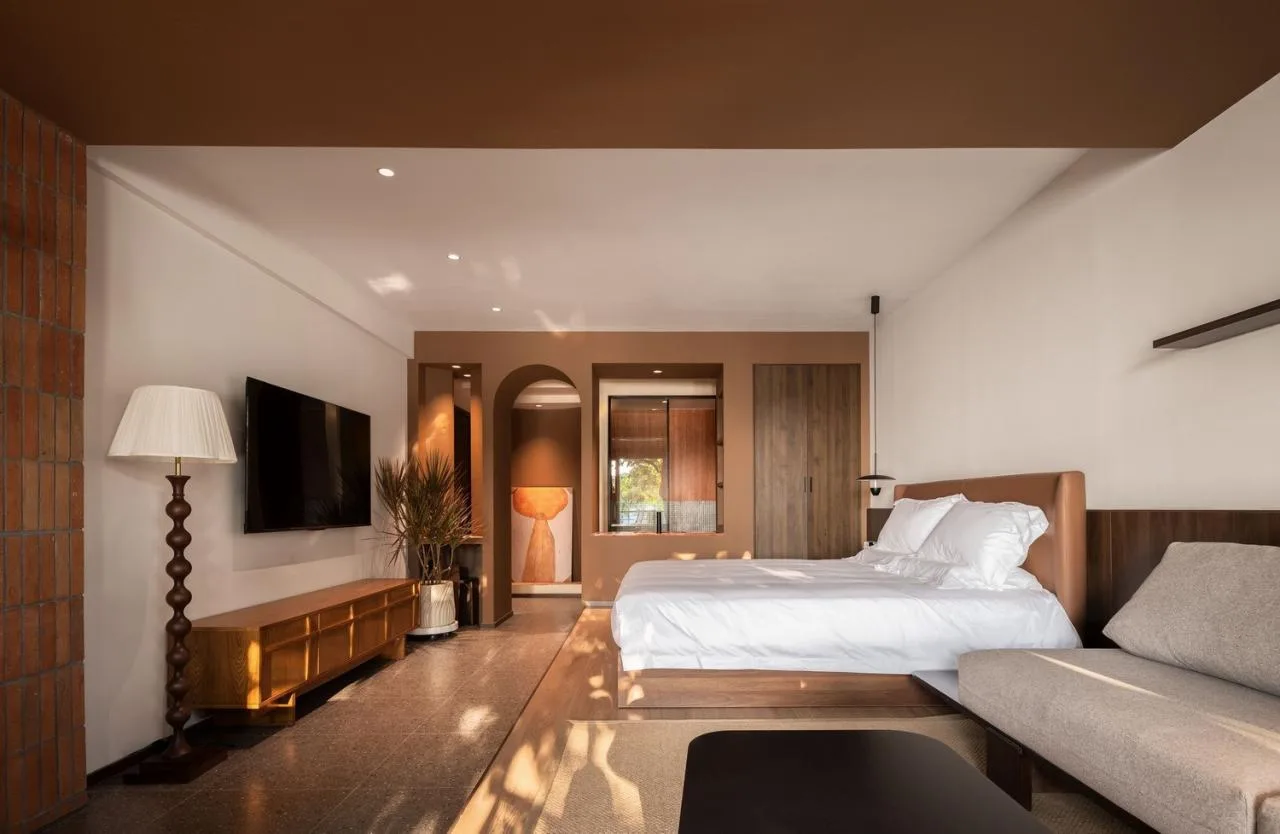
△ Room interior © Wang Shang
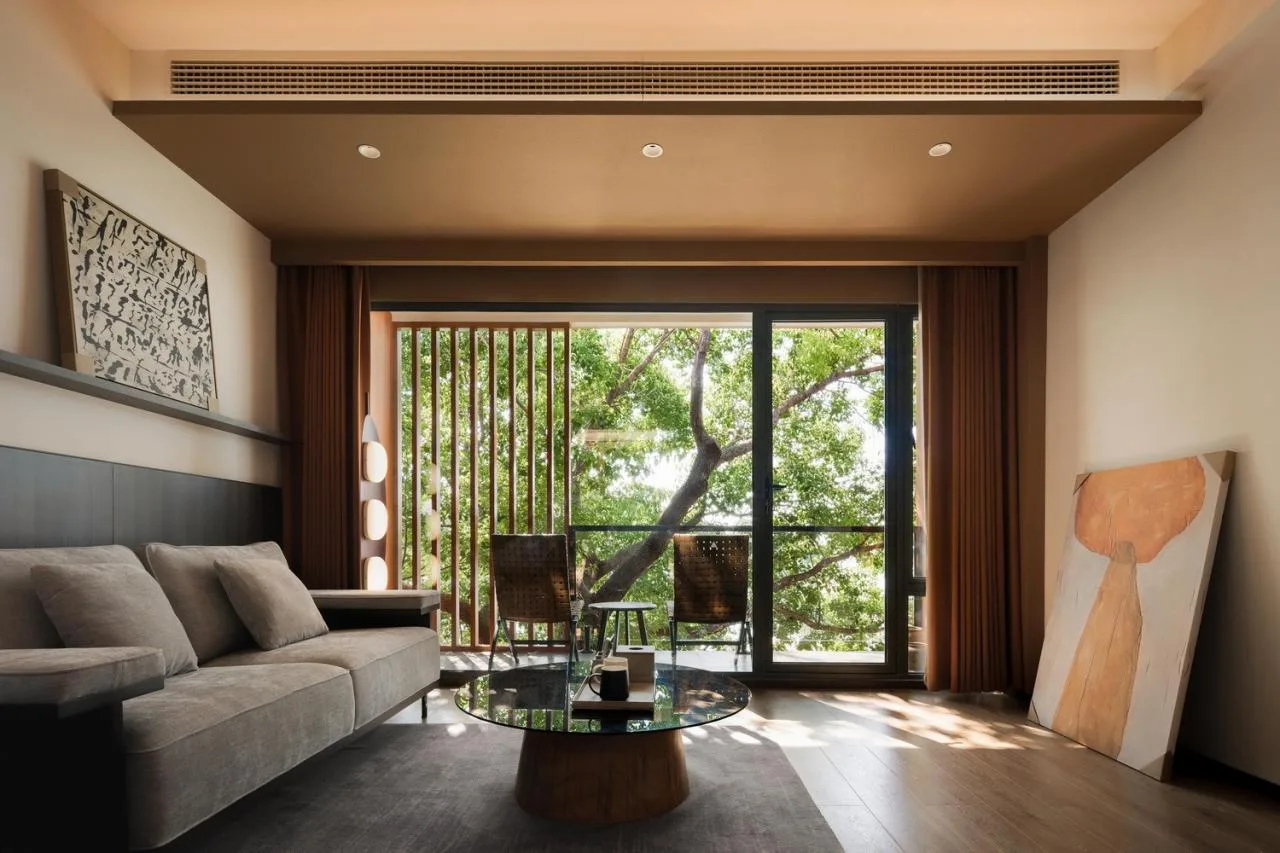
△ Room interior © Wang Shang
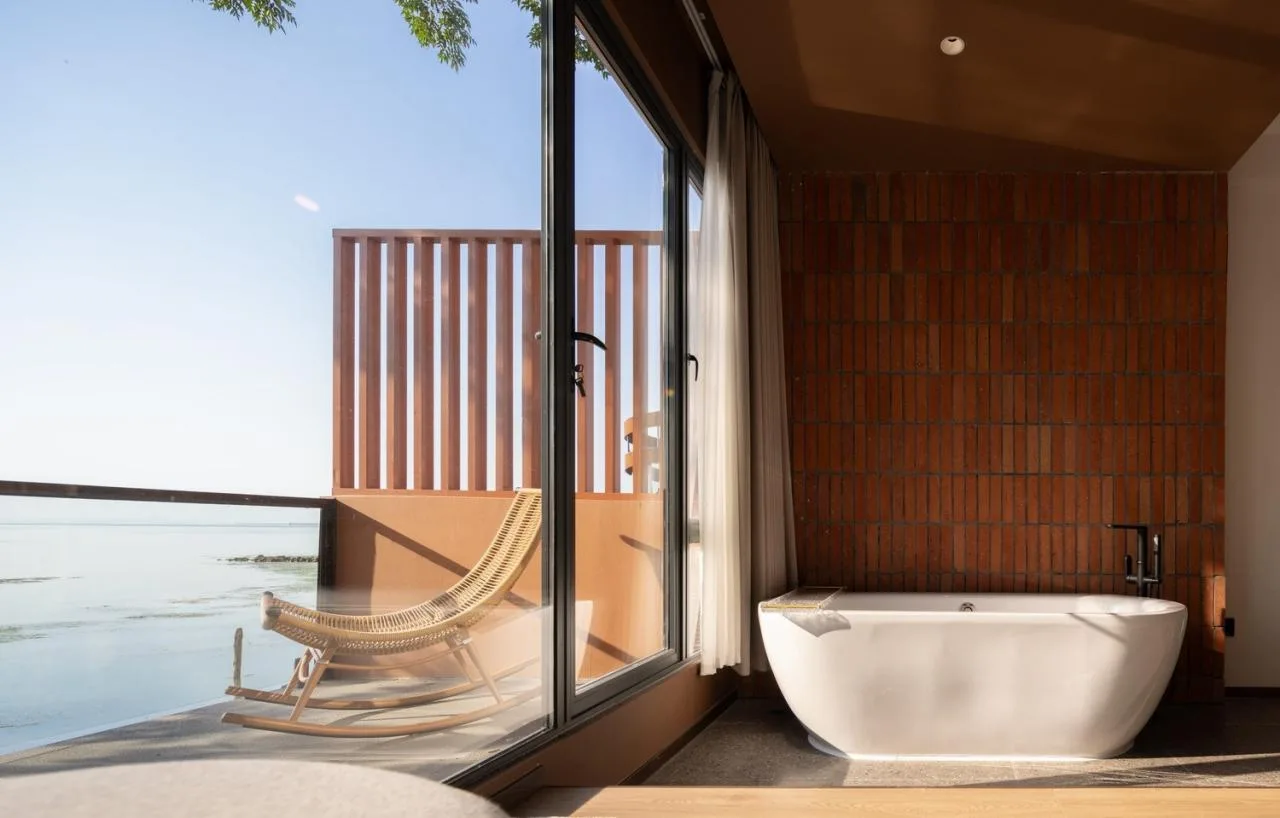
△ Room interior © Wang Shang
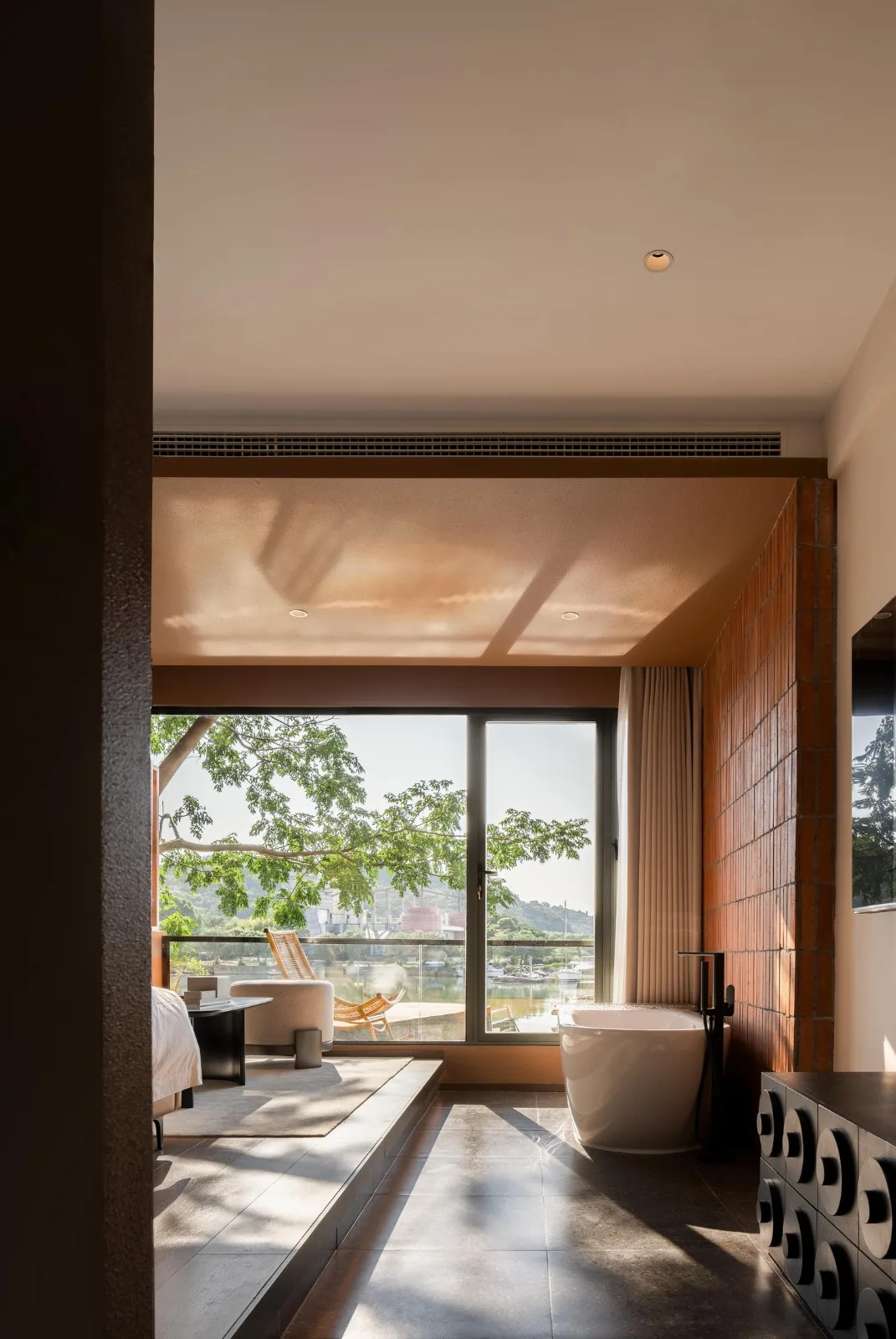
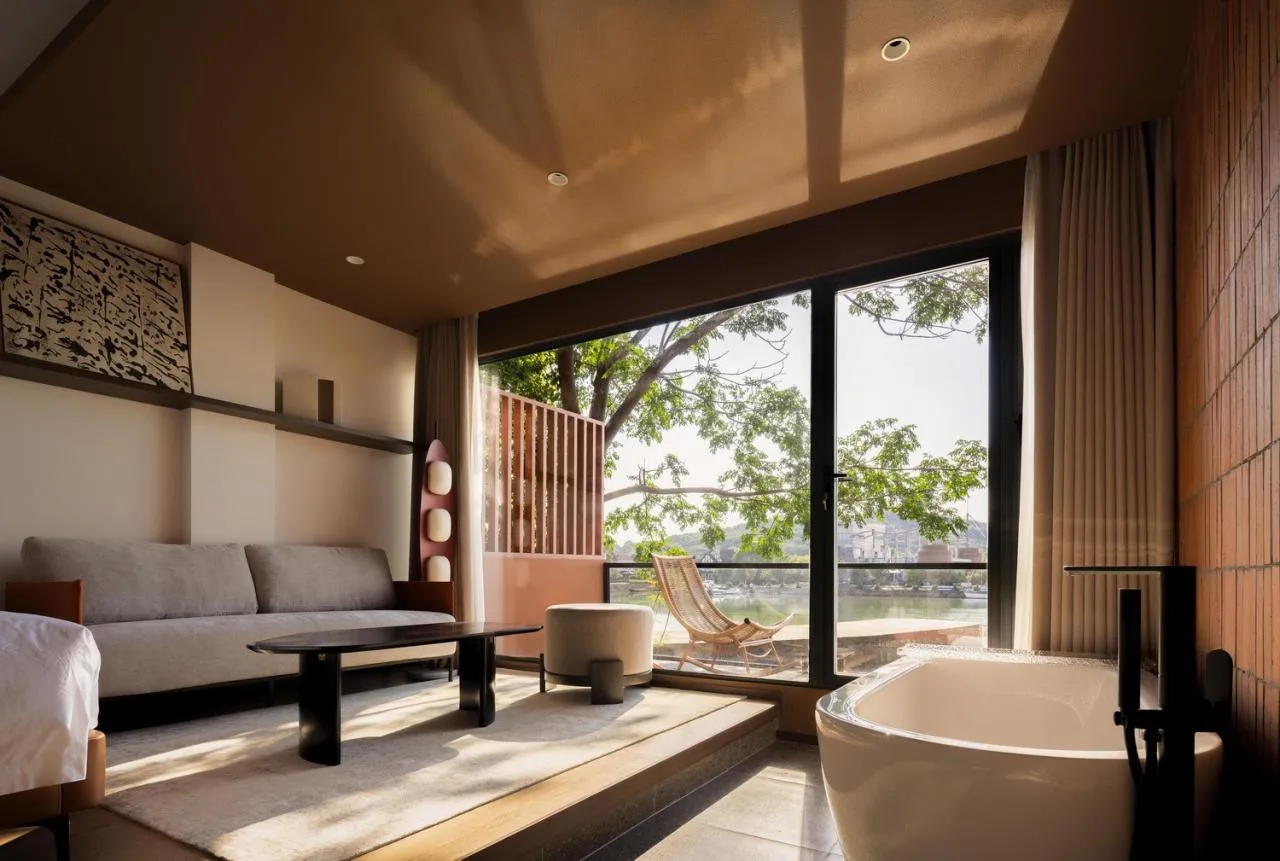
△ Room interior © Wang Shang
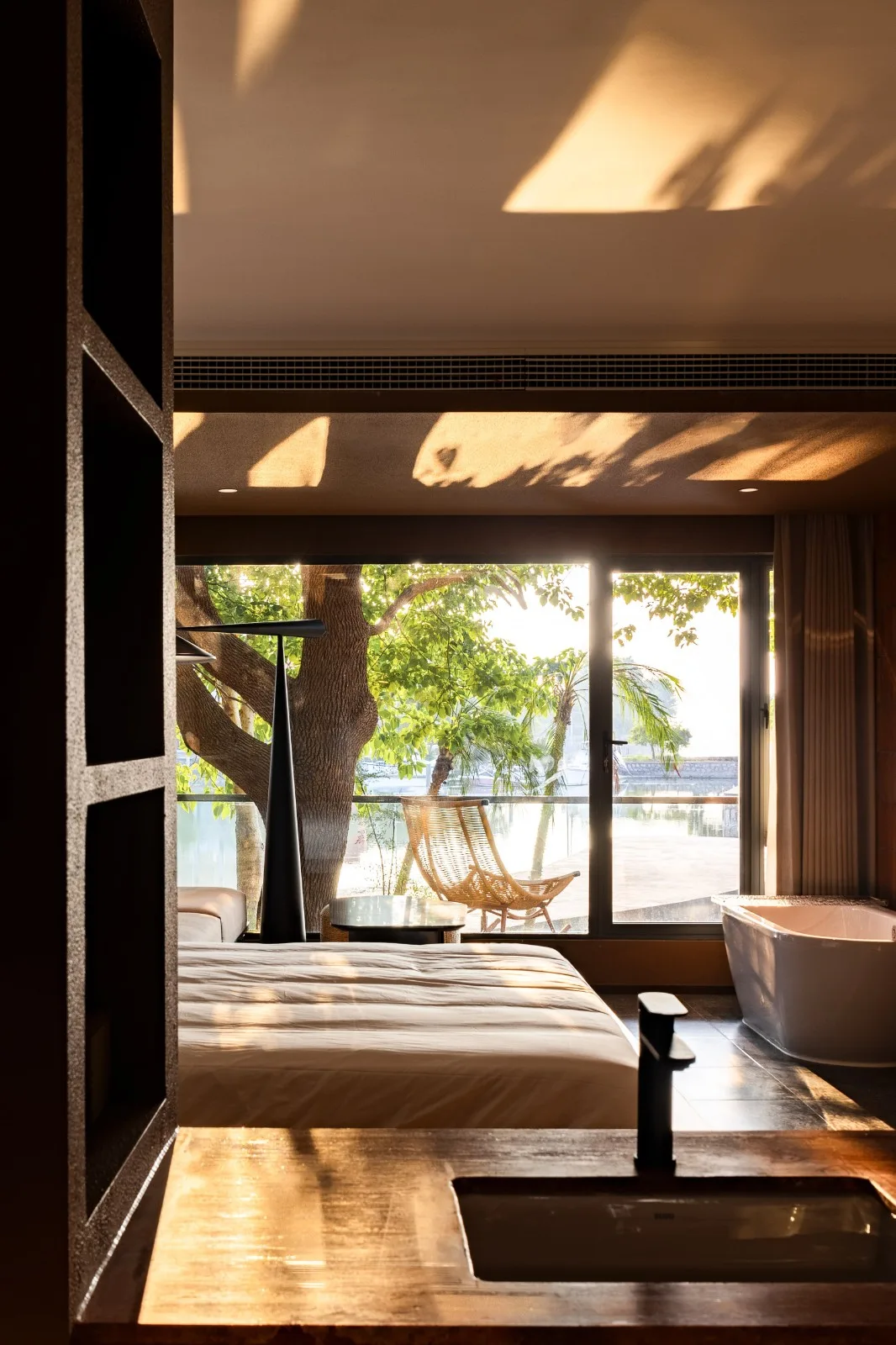
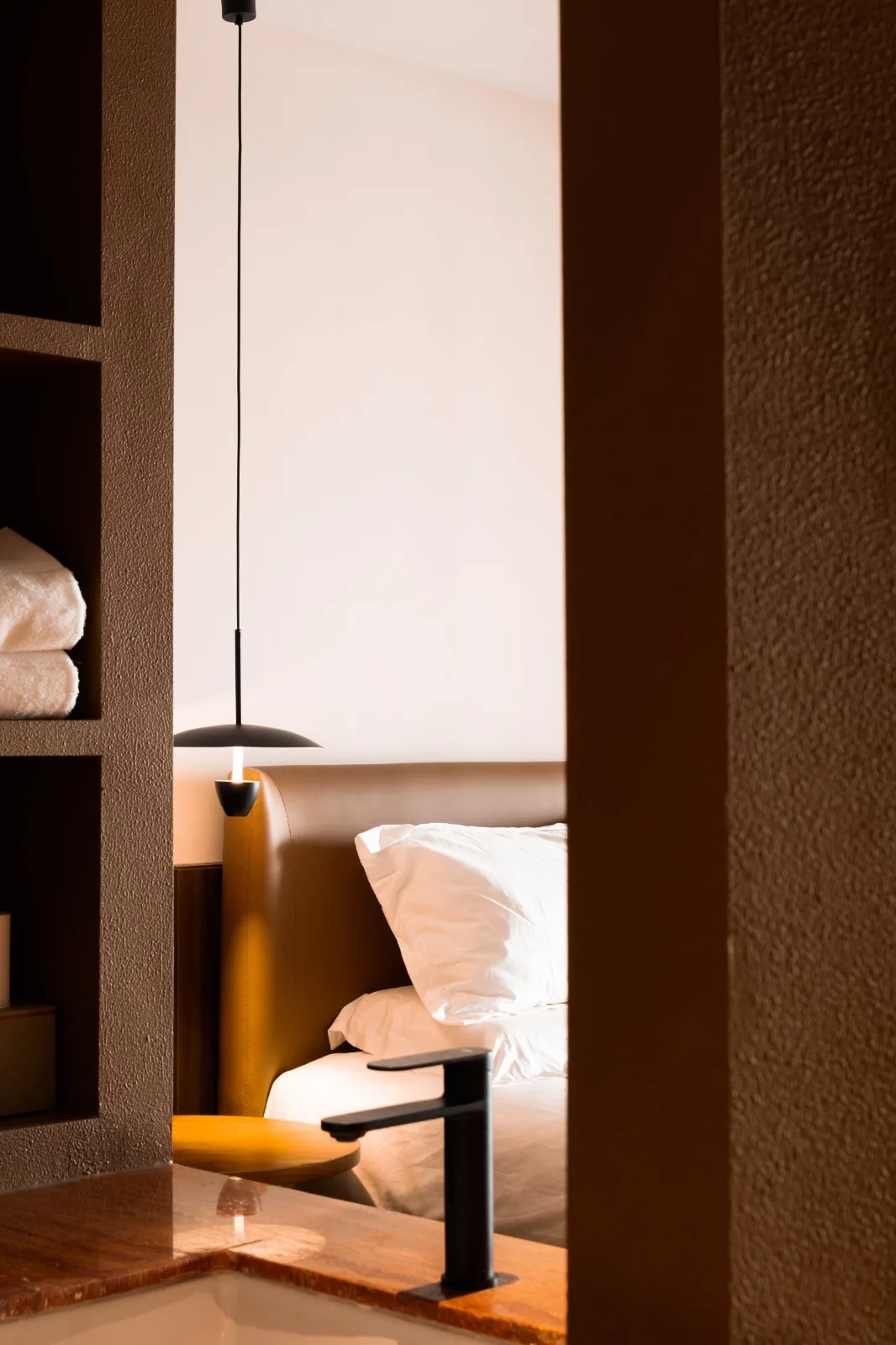
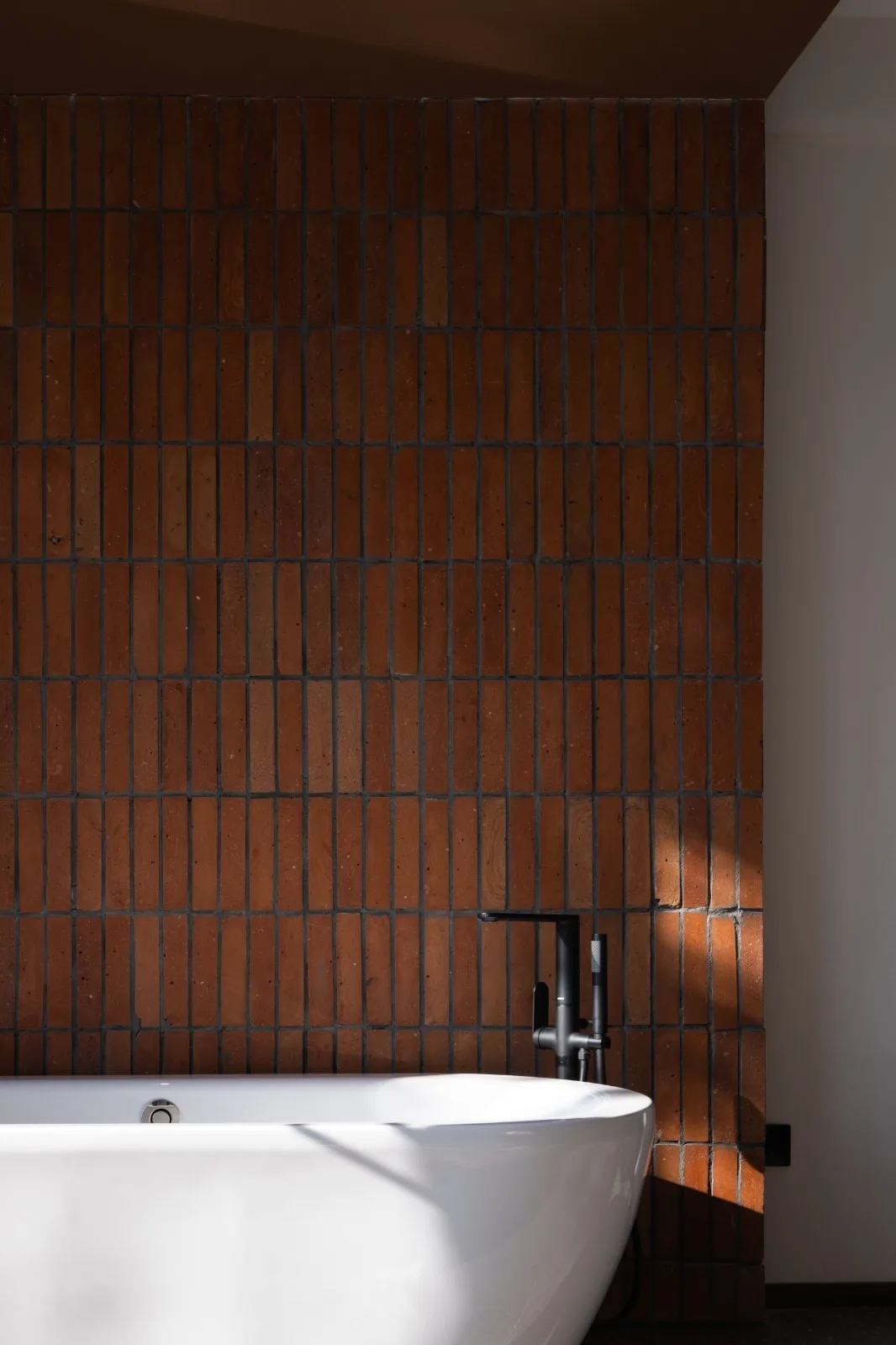
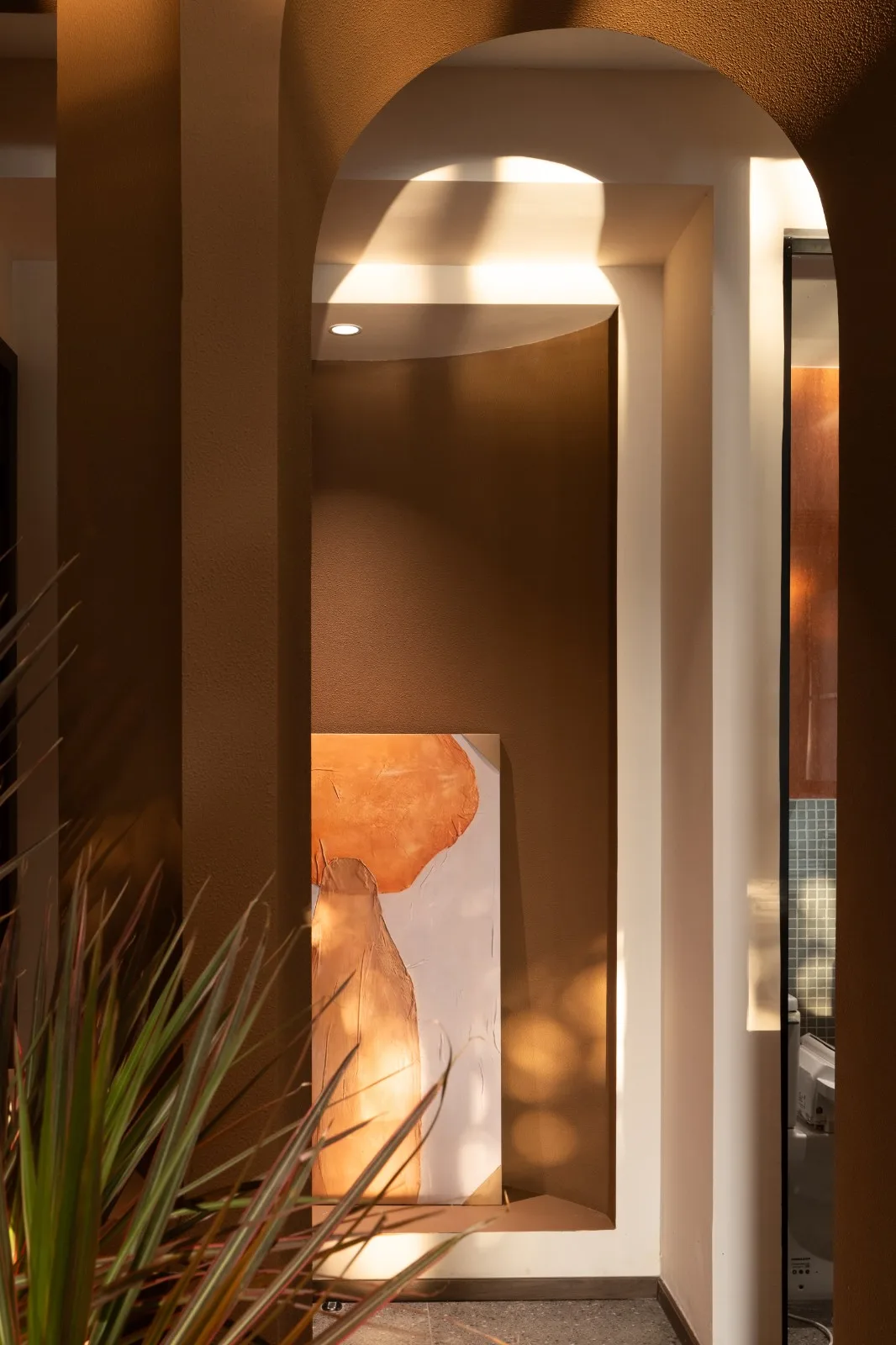
△ Spatial Details © Wang Shang
Project Drawings
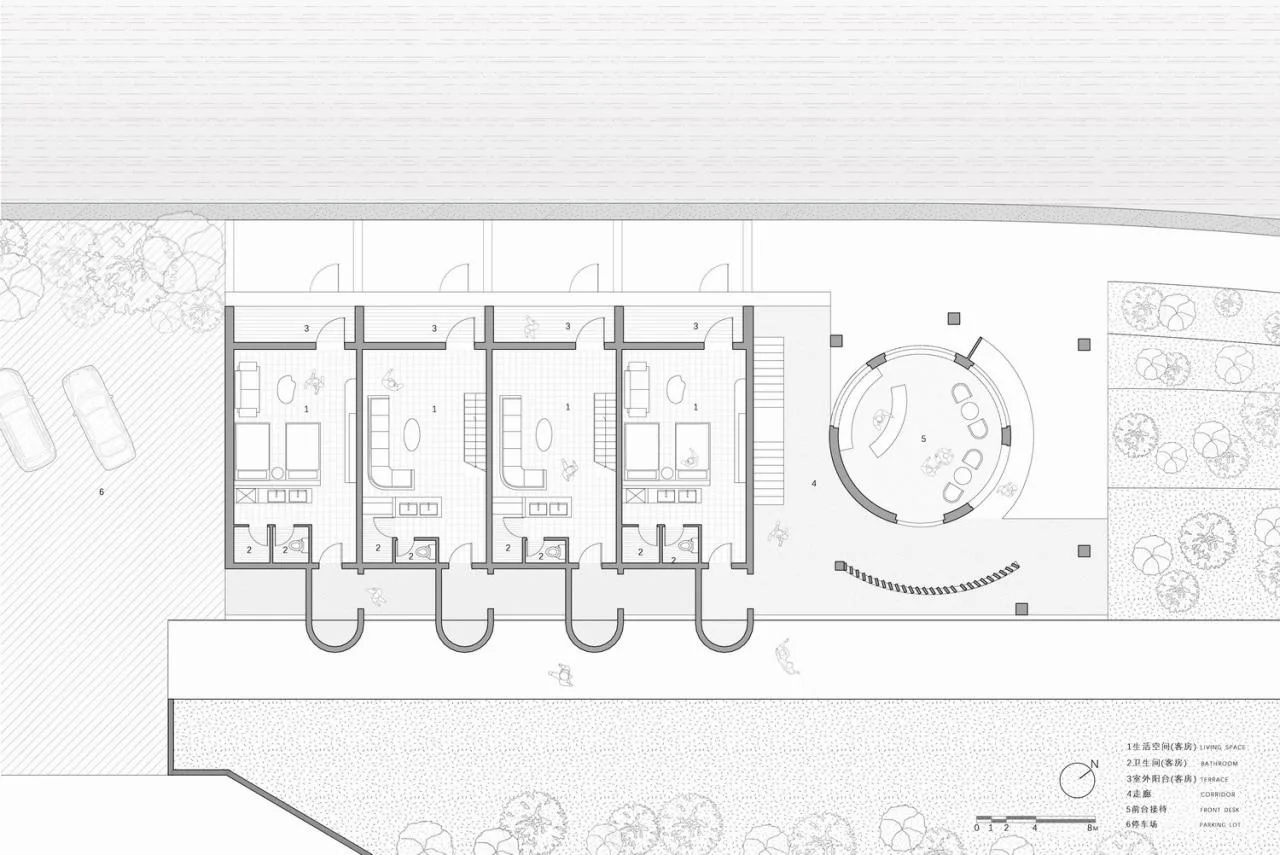
△ First Floor Plan
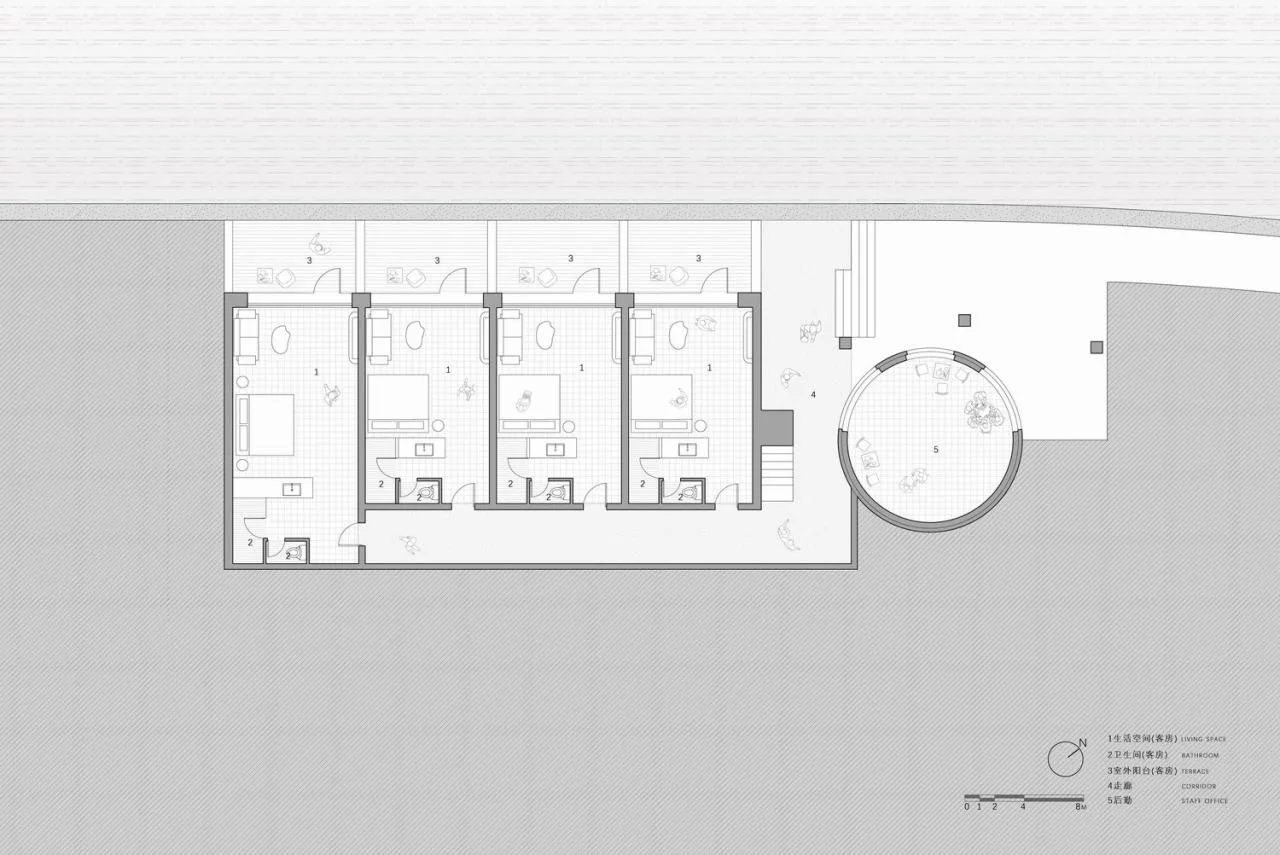
△ Basement Plan
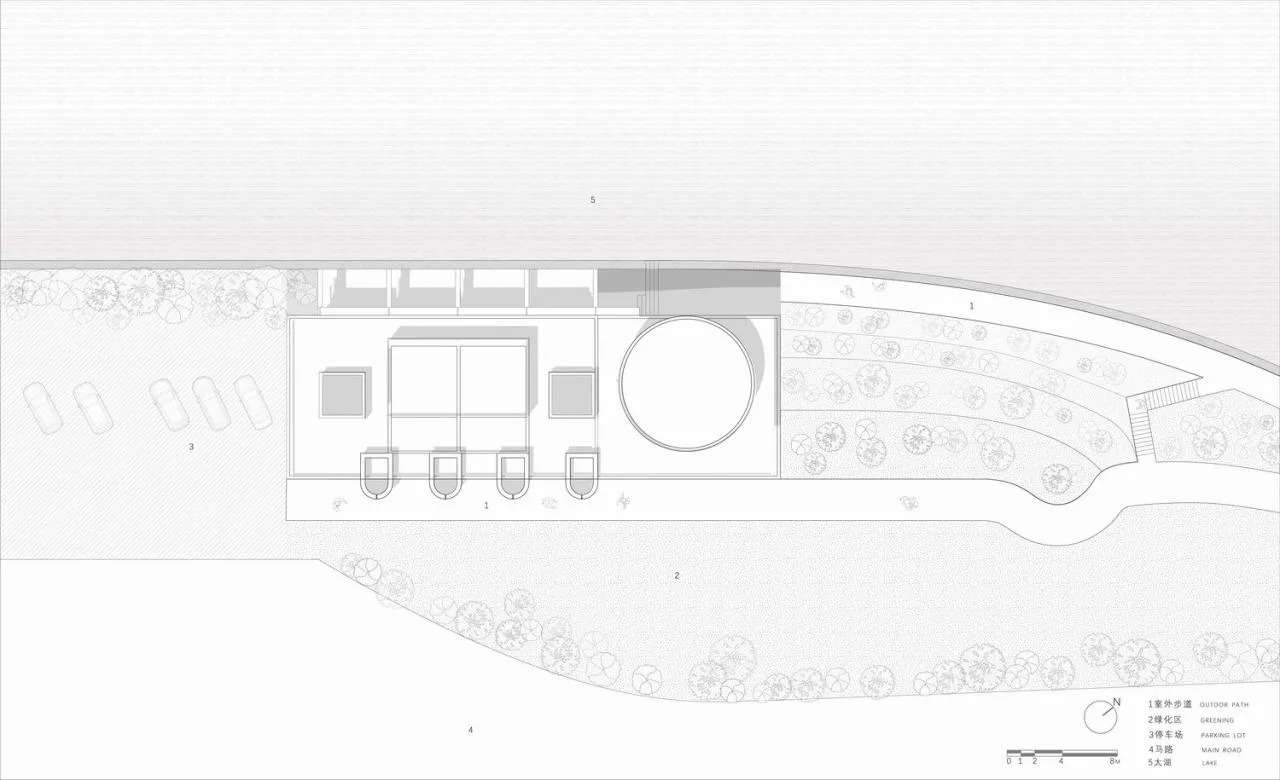
△ Second Floor Plan
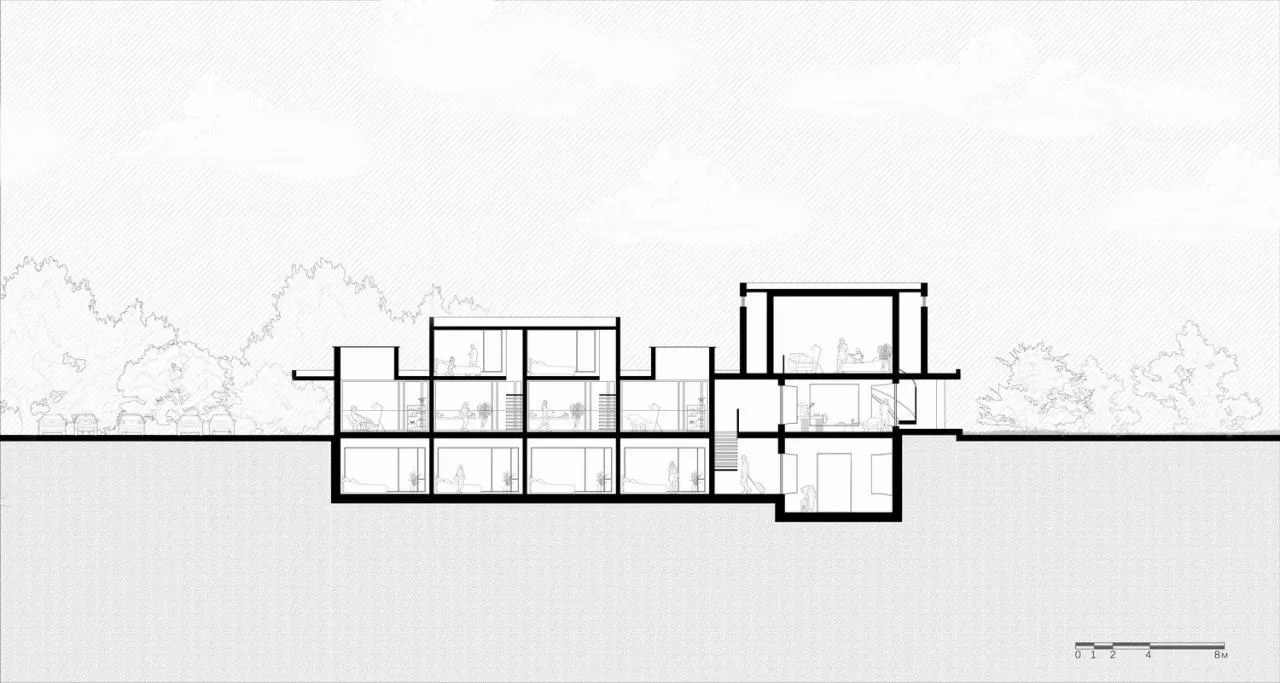
△ Elevation
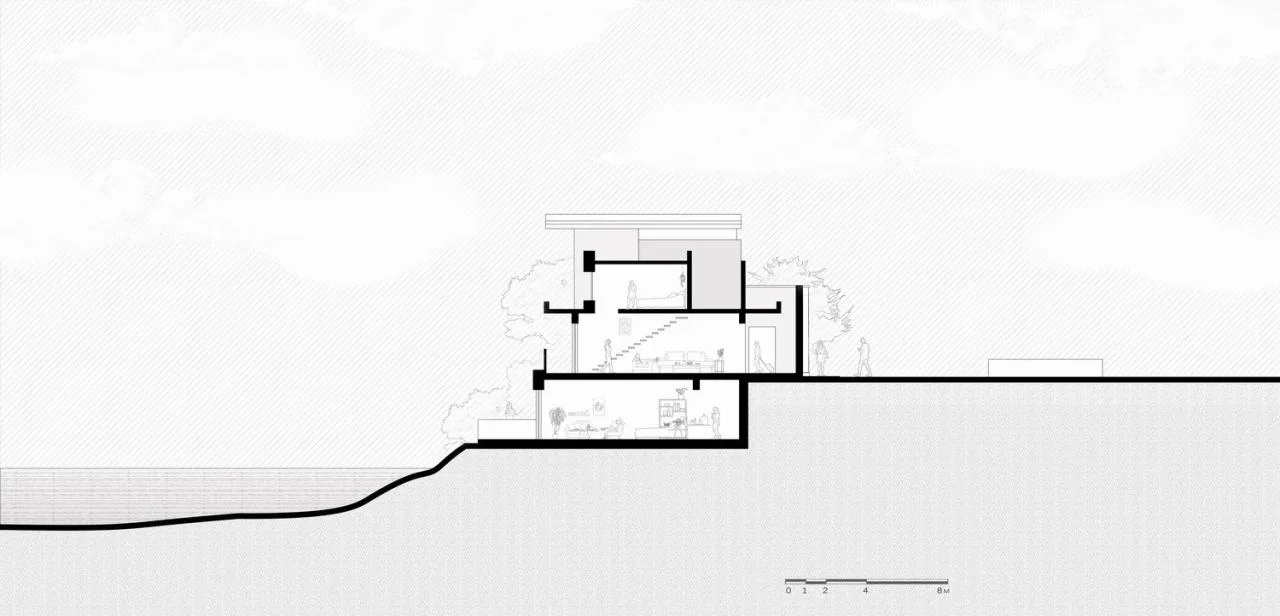
△ Elevation
Project Information
Project Name: Orange Bay Homestay on Changsha Island
Designer: Pingjie Design
Design & Completion: December 2023 to August 2024
Design Team:
Ping Jie: Wu Si, Li Xiaowei, Chang Bowen, Wu Jiang, Zhang Chuyue, Yang Jiayi
Suzhou University: Yang Nan, Xiao Xiangdong
Suzhou Tongcai Environmental Art Design Co., Ltd.: Xu Fei, Song Ying
Location: Near Taihu Lake Bridge, Changsha Island, Jinting Town, Suzhou, Jiangsu Province
Building Area: 930 square meters
Photography © Wang Shang
Client: Suzhou Taihu Lake National Tourism Resort, Limo Coffee
Partner: Shanghai Hengtai Architectural Design Consulting Co., Ltd. (Construction Drawings)
Company Website: __AI_ST_URL_0__
Email: Info@parallect-design.com
Materials: Concrete, clay bricks, paint














Must log in before commenting!
Sign Up