
1. Project Overview – Building 6-05 of Nanjing Shangfang North Affordable Housing Project

Building 6-05, part of the economically affordable housing project on the north side of Nanjing Shangfang, is a fully prefabricated reinforced concrete frame with a steel support structural system. It features one underground floor and 45 floors above ground, covering a total area of 10,380 square meters and reaching a height of 45 meters. This building is recognized as the first high-rise fully prefabricated building in China.
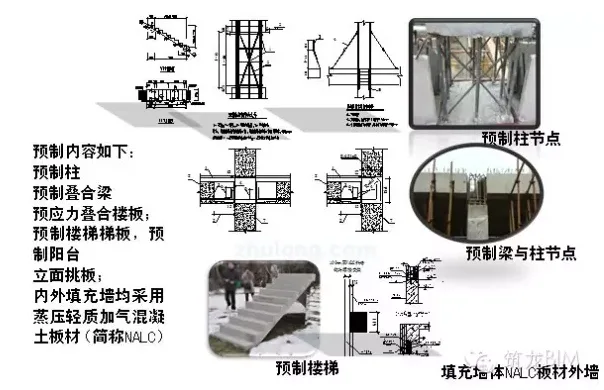
The prefabricated components used in this project include:
- Vertical structural components made from precast concrete frame columns;
- Beams constructed from prefabricated concrete composite beams;
- Floor slabs utilizing prefabricated prestressed concrete composite panels;
- Lateral resistance components consisting of a frame structure with steel support system;
- Standard staircases made of prefabricated concrete stair treads;
- Balconies using prefabricated concrete laminated slabs;
- Balcony partitions constructed with prefabricated K-plates;
- Internal and external infill walls composed of autoclaved lightweight aerated concrete slabs (NALC slabs);
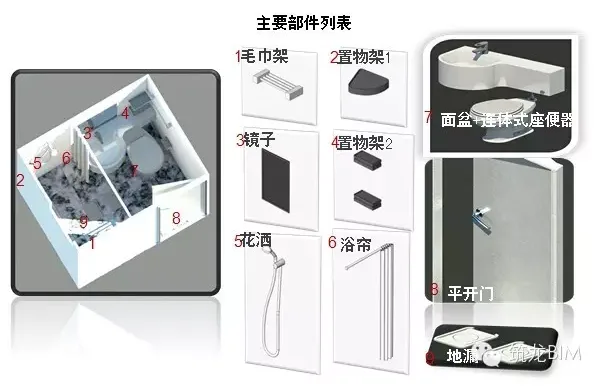
- Integrated bathrooms including dedicated prefabricated sunken floor slabs.
2. Project Challenges and Solutions
As the first high-rise fully prefabricated building, this project faced several challenges including tight timelines for design, production, and construction, along with stringent quality requirements. Utilizing prefabricated assembly technology demanded efficient transmission and coordination of building information to ensure high-quality completion from design through construction within a short timeframe.
Key challenges included:
- Design Phase: Collision detection between prefabricated components needed to be precise down to the steel reinforcement level. Traditional methods relying on experience and 2D drawings were inadequate for this level of detail within tight deadlines.
- Production Phase: Manufacturers faced the complex task of managing, planning, producing, and supplying over 10,000 prefabricated component drawings.
- Construction Phase: Rapid and accurate positioning of components required new technological support to ensure high-quality installation.
In response, the Second Engineering Bureau Co., Ltd. established a BIM simulation research center, enabling information-driven project management through BIM technology.
3. Overview of BIM Applications Across Project Stages
3.1 BIM in the Design Phase
The BIM modeling for this project primarily utilized Autodesk Revit’s 3D modeling platform. Designers from various disciplines created 3D information models for the building, structural elements, and water supply and drainage systems. This process took place within Autodesk’s collaborative environment, ensuring accuracy and efficiency.
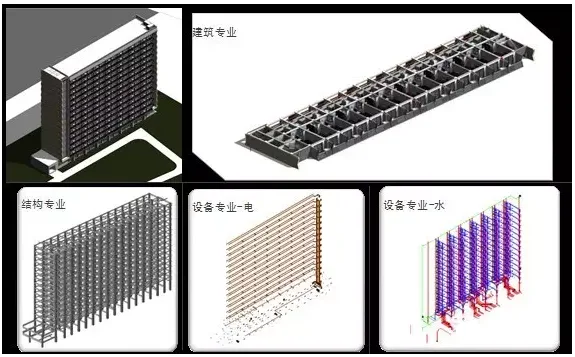
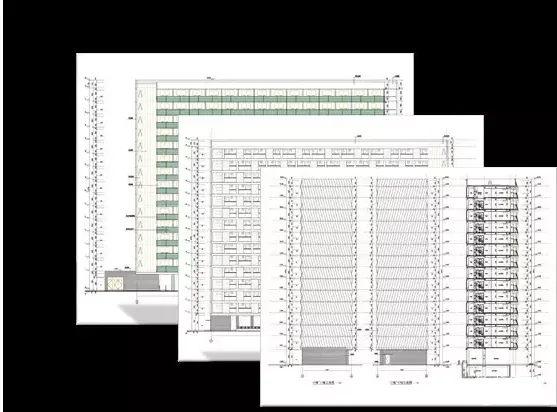
Unlike traditional 2D workflows where each drawing is treated as a separate mini-project—starting with plans, then elevations and sections, and requiring constant revisions—BIM revolutionizes design by making the model itself the core. Drawings are automatically generated from the model, becoming secondary outputs rather than primary tasks.
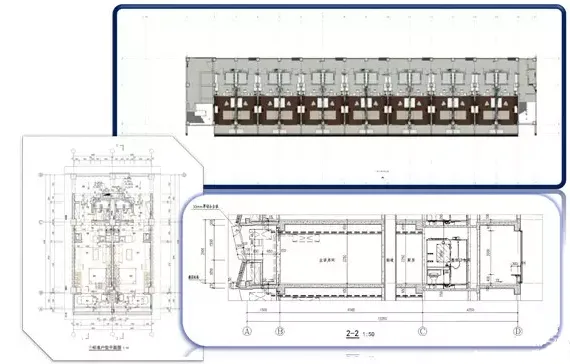
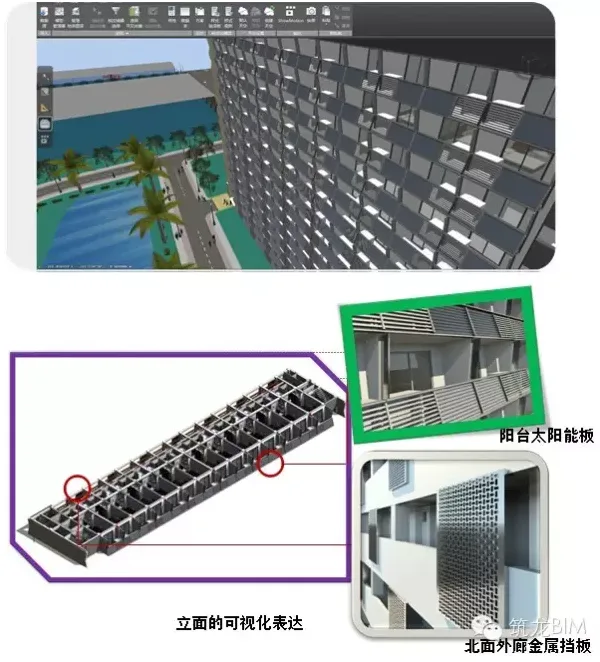
Each view in BIM draws from the same consistent database but presents data from different perspectives. Architects can generate plans, elevations, sections, 3D visualizations, detailed drawings, material lists, area calculations, and cost estimates anytime, directly from the building model.
Construction Drawing (Vertical Section)
Standard Unit Layout
3D Visualization
Collision Detection
Detail designers used Tekla Structures’ built-in collision verification manager to precisely check steel reinforcement conflicts. Users select components or models to verify, then run the check. The manager lists all collisions with details such as involved object names, collision types, and corresponding IDs. Selecting a collision highlights it within the model for review and correction, as illustrated below.
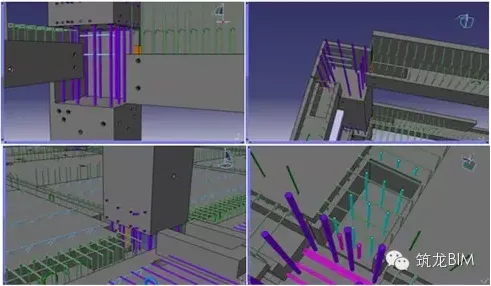
BIM technology applied to steel bar connections in fully prefabricated beams, slabs, and columns
3.2 BIM in the Component Production Stage
BIM facilitates seamless information transfer from design to manufacturing by extracting and updating design-phase BIM models for production use. The key advantage at this stage is the high accuracy and timeliness of information flow, enabling true lean manufacturing of components.
Guided by lean construction principles and powered by BIM’s centralized data platform, the project ensures accurate, timely, and efficient information management throughout the lifecycle, supporting lean production goals.
Prefabricated Structure and Construction:
Prefabricated Modular Bathroom:
3.3 BIM in the Construction Phase
3.3.1 Component Assembly and Installation
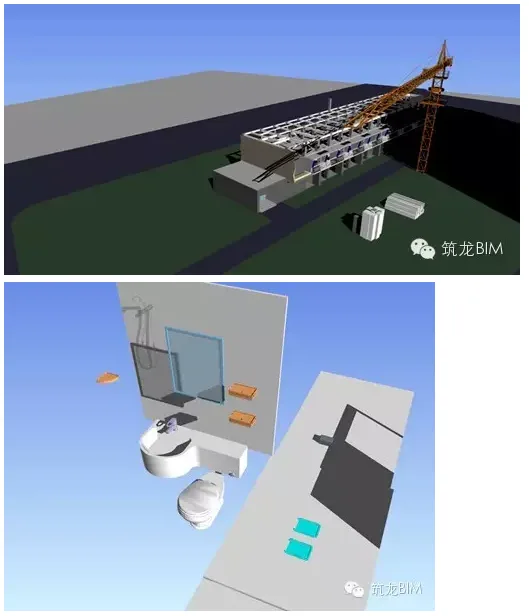
Building on the 3D BIM model database, a 4D model incorporating time-based construction progress data was developed. Leveraging Autodesk Navisworks API and advanced BIM quality management techniques, the project minimized information loss, enhanced construction quality, and improved safety management.
Using handheld tablets, a construction management system was implemented to guide workers during lifting and positioning. This system allowed querying of component parameters, provided construction quality alerts, and supported traceable quality records.
Simulated Construction:
3.3.2 BIM for MEP (Mechanical, Electrical, Plumbing) Installation
Key and Challenging Points of Mechanical and Electrical BIM Work in This Project:
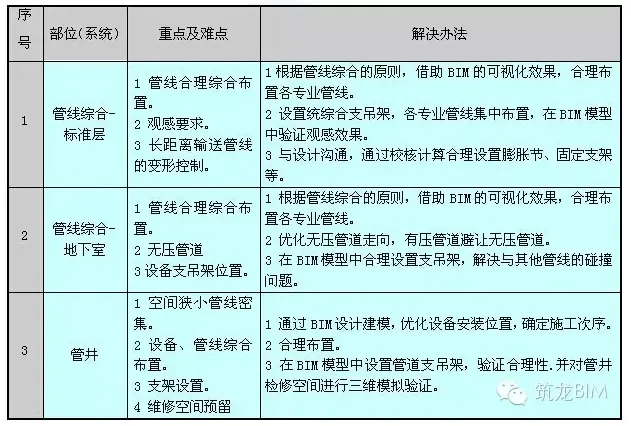
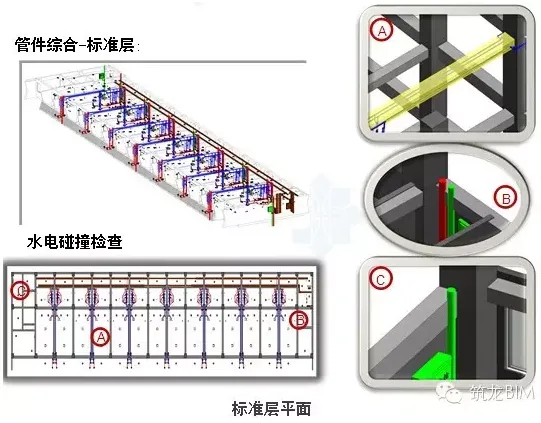
Comprehensive Pipe Fitting – Standard Floor:
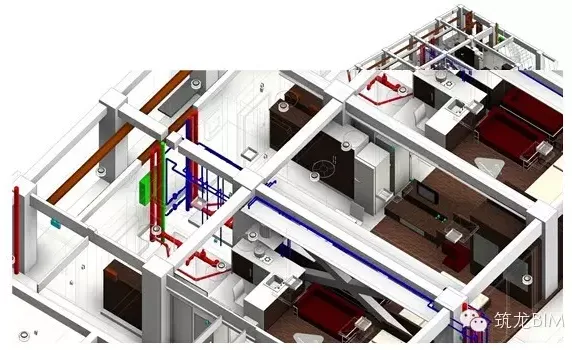
Comprehensive Pipe Fitting – Standard Floor:
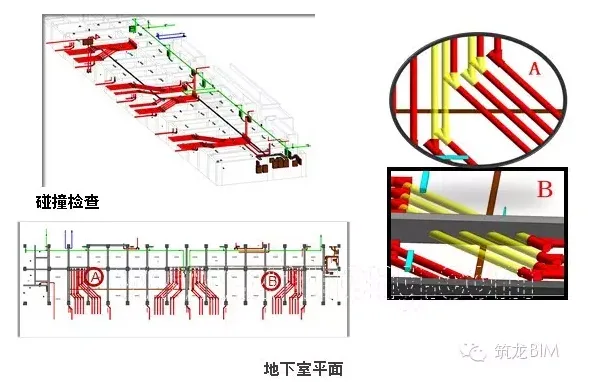
Pipe Fittings Integration – Basement:
4. Overall Impact
The application of BIM technology throughout all project stages—from design to construction—enabled comprehensive drawing reviews and guided the successful completion of China’s first high-rise fully prefabricated assembly structure. The 3D visualization of complex node connections significantly improved efficiency in design, production, and construction, reducing errors and rework caused by missing models for complex joints, and ultimately enhancing construction quality for fully prefabricated buildings.














Must log in before commenting!
Sign Up