
Haydn Space is a multifunctional cultural venue located in a former factory building in Beijing’s Chaoyang District. It serves as a creative agency promoting a free-spirited and artistic work lifestyle. Designed by Mengshe, the space emphasizes flexible layouts to accommodate various uses and encourages diverse patterns of human interaction within the environment.
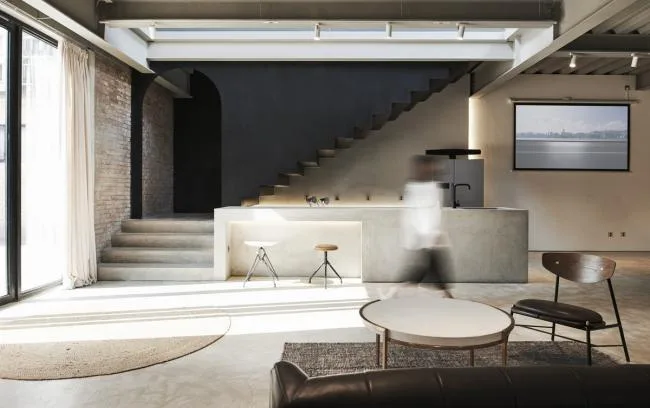
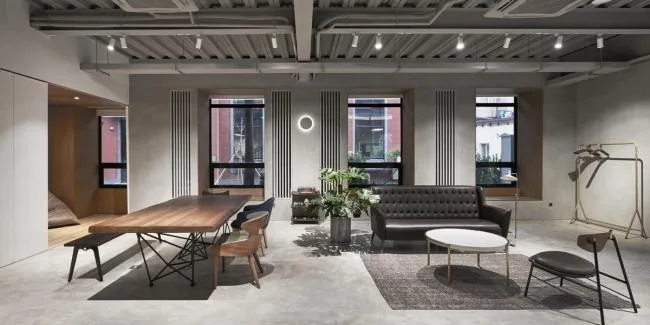
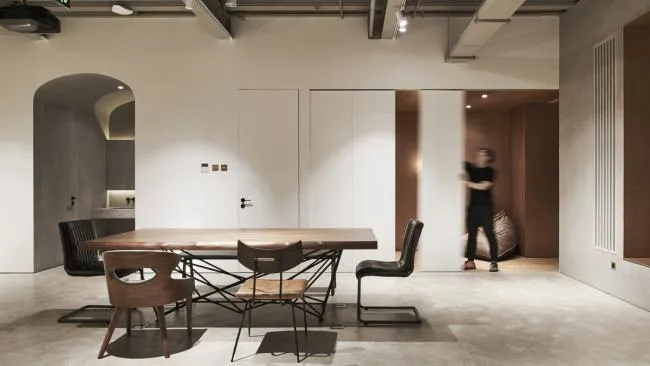
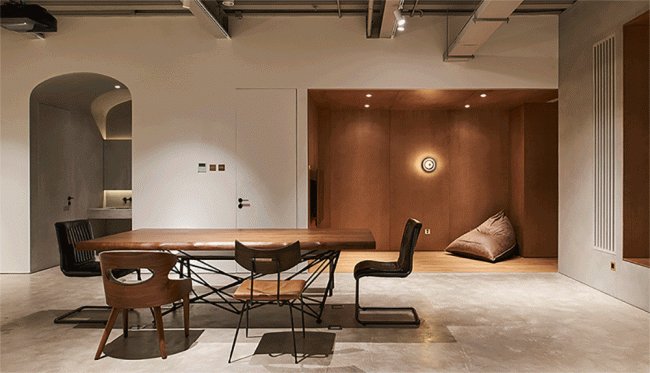
The first floor primarily facilitates communication and social exchange. The walls, floors, and ceilings are coated in warm white and cement finishes, producing a textured, granular surface that balances rawness with warmth.
The puzzle-like wall facade wraps around three external windows with nearly 700mm thick walls that accommodate storage and plumbing infrastructure. These window niches create semi-private “personal spaces” within the public area, with large sills allowing users to comfortably occupy the space in various postures.
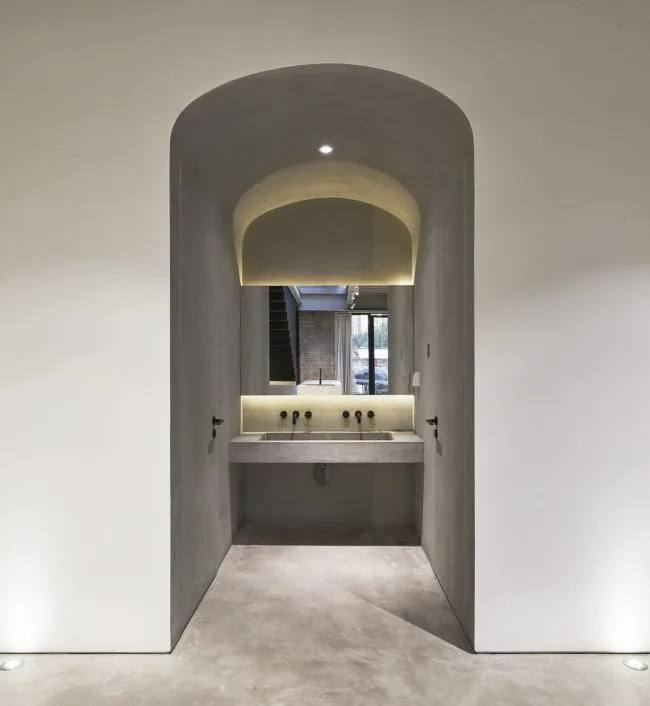
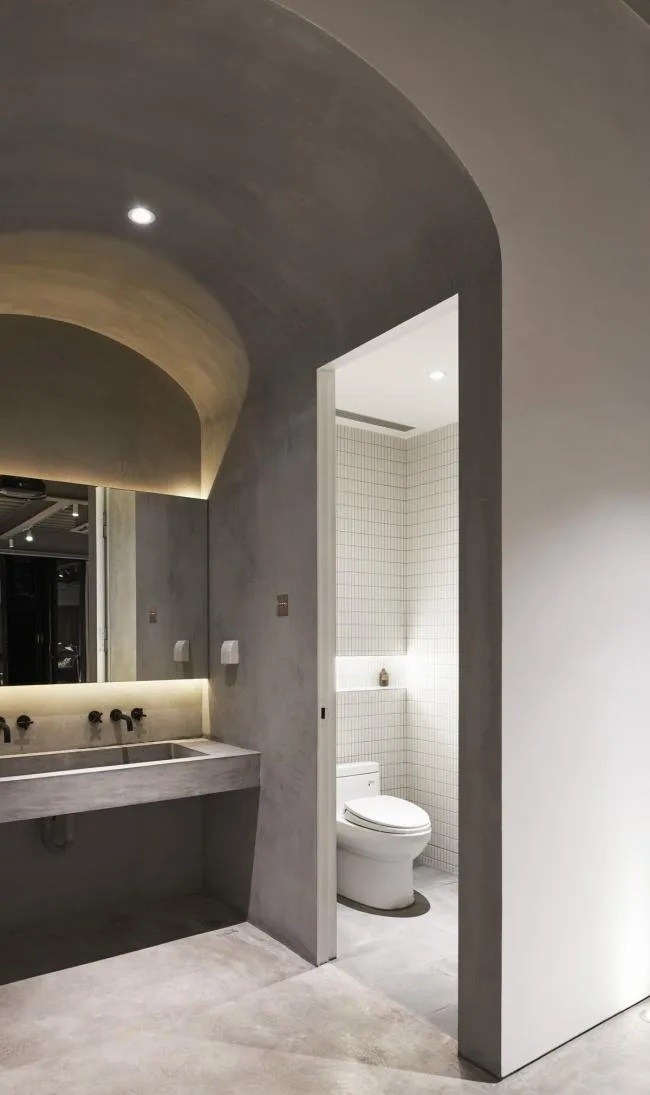
The bathroom area features an arched design, softening the overall atmosphere with smooth, flowing forms.
The bathroom walls are adorned with fine brick strips, adding texture and detail while maintaining a clean, minimalist feel.
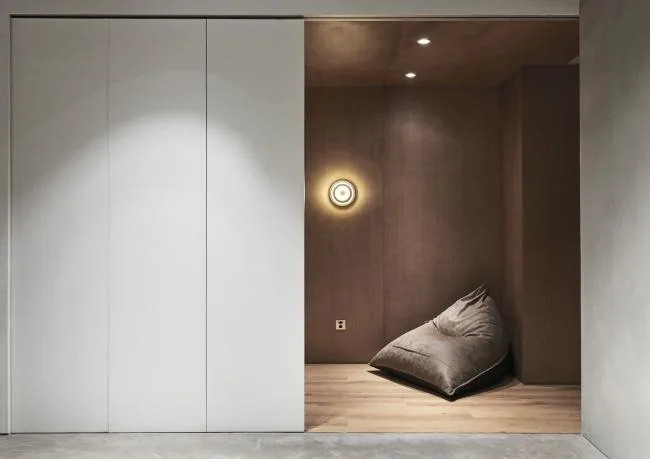
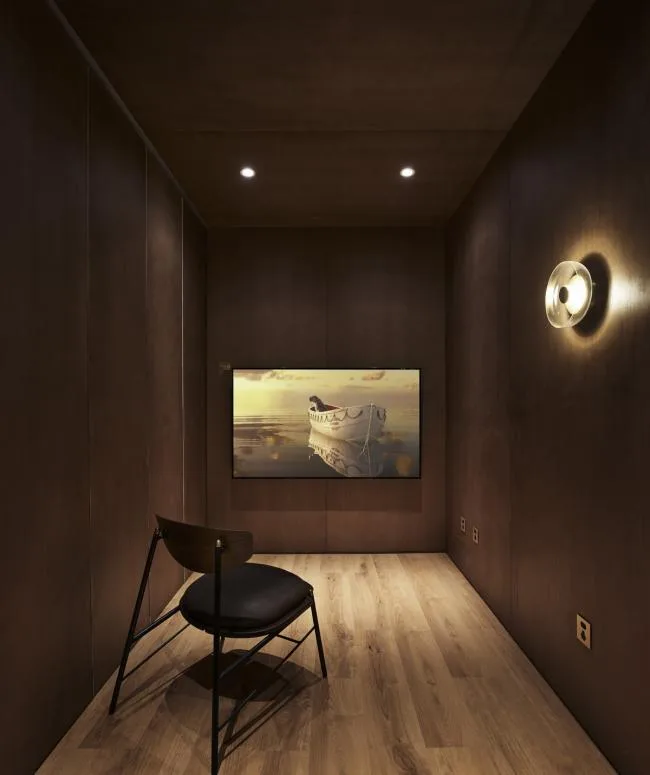
A secluded audiovisual room occupies a corner on the first floor. Clad in wooden veneer, it offers an intimate and pure spatial experience. The room features a sliding door that can be opened or closed at will.
A striking black staircase box, nearly 6 meters tall, connects the first and second floors. The serrated pattern of the staircase steps is intentionally exposed at the base, creating a strong visual dialogue with the concrete bar counter and steps below. This sculptural element enhances the drama of the first-floor space and signals a shift in spatial rhythm as one moves upstairs.
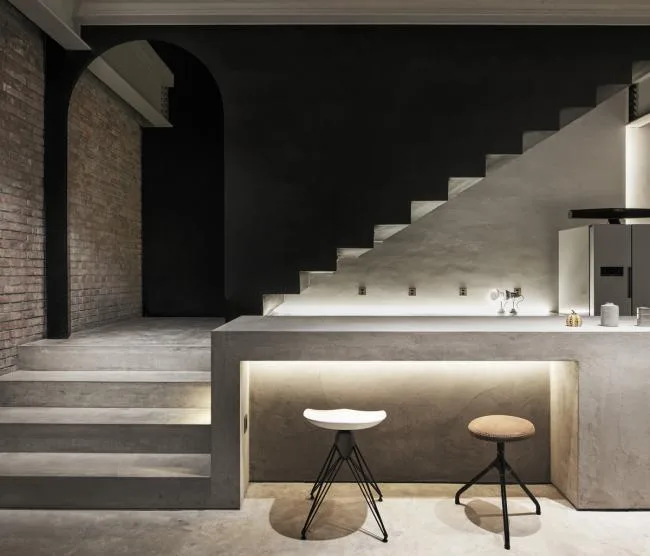
The interior lighting within the black box is deliberately subdued, aiming to evoke a mysterious and intriguing atmosphere. Its imposing size combined with dim illumination piques curiosity about the spatial experience awaiting on the second floor.
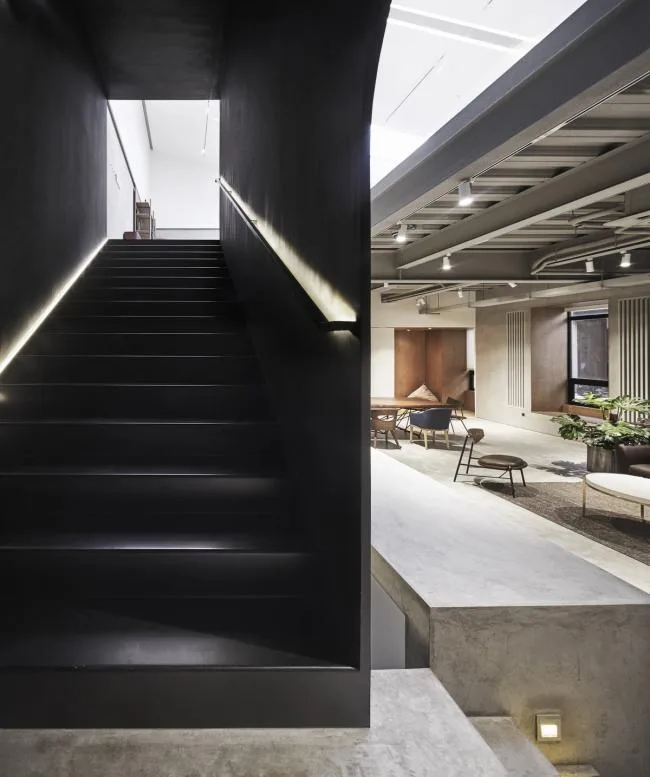
The second floor features a single-slope roof with skylights that flood the space with natural light, creating a bright and open environment that contrasts with the more intimate atmosphere downstairs.
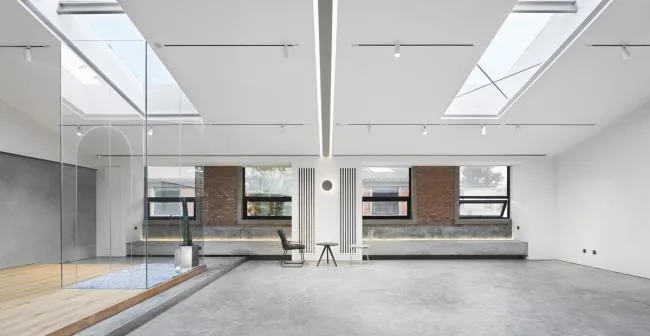
A “glass box” sits beneath the skylight, filled with gravel from the outdoor courtyard, effectively bringing an outdoor courtyard experience indoors.
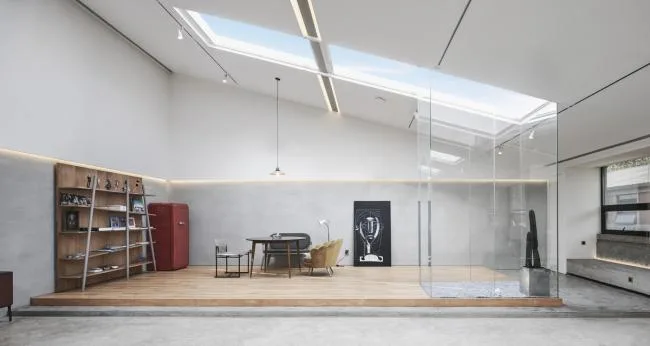
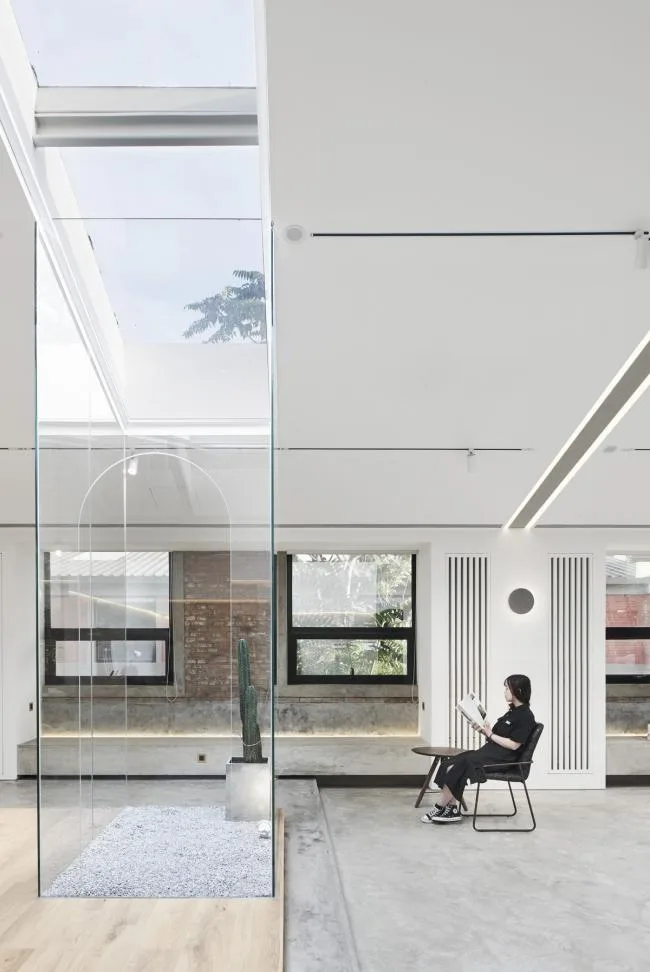
Part of the second floor’s flooring has been transformed into tempered glass slabs, adding a transparent layer that softens the boundary between floors. This design allows visual connections and ambiguous shared spatial relationships between the two levels despite their separation.
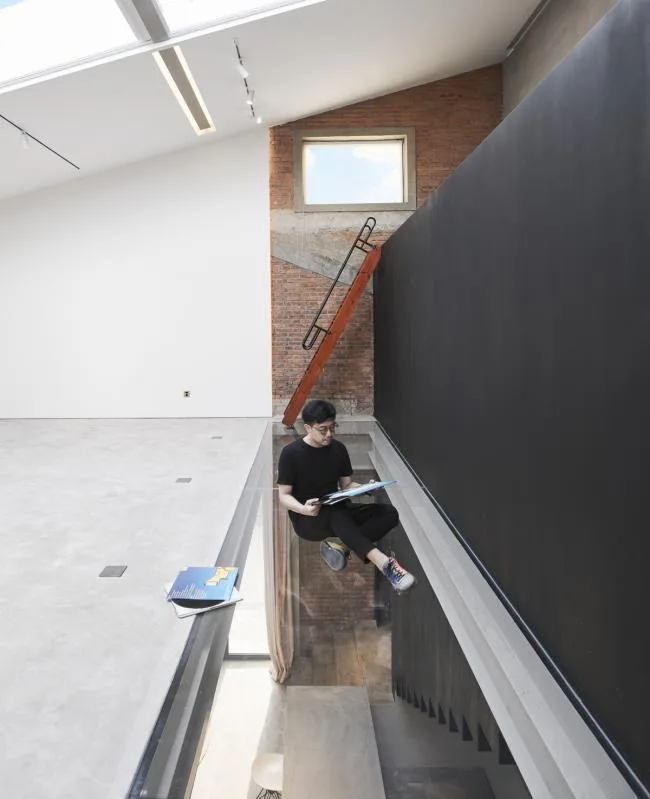
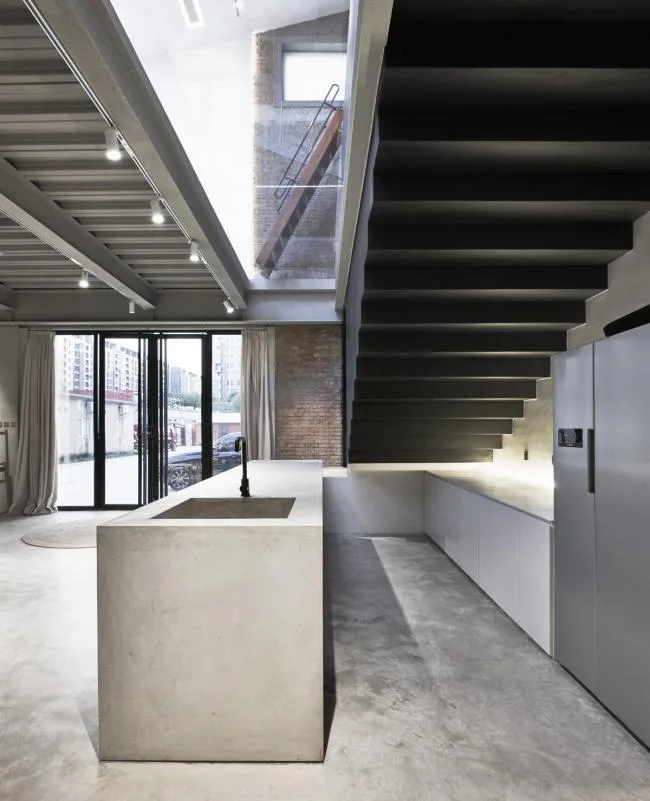
The interplay of concrete platforms, wooden decks, glass floors, concrete benches, and the black box roof at varying heights enriches the vertical experience of the second floor. These elements transform the spatial experience from a vertical emphasis created by the black box into a more horizontal flow, allowing users to freely move among diverse components. This dynamic spatial concept, emphasizing fluidity and material variation, is a key expression of Mengshe’s design philosophy.
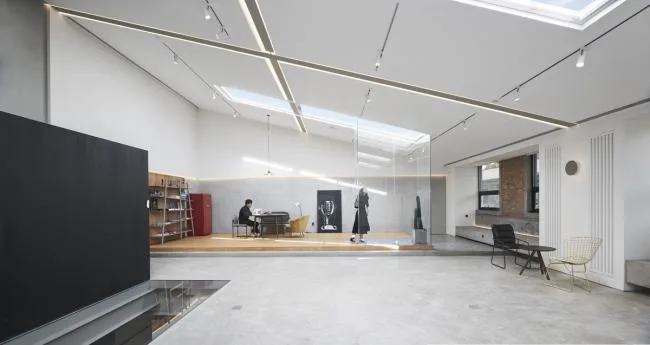
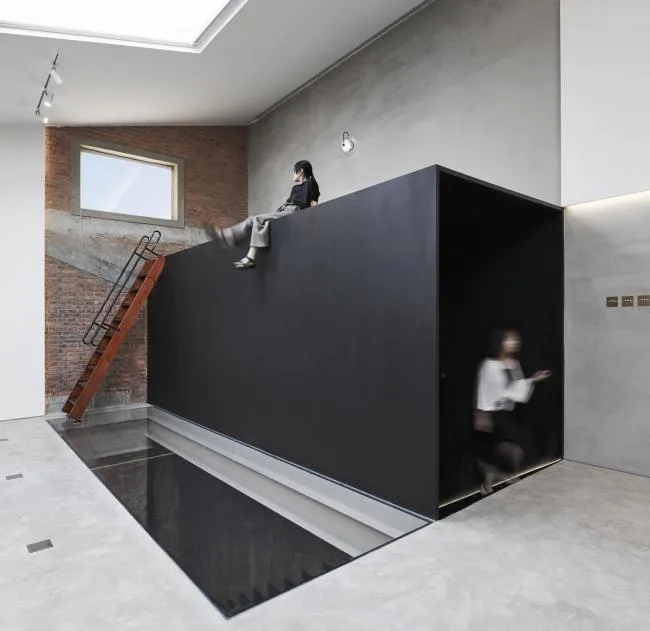
The second floor retains traces of its industrial architecture, which have been carefully preserved and cleaned. The color palette centers on whites and cement tones. Mystery House employed a planar composition technique to study and organize the colors, textures, and proportions of each surface, aiming to create a spatial form that balances multiple expressions with geometric order.
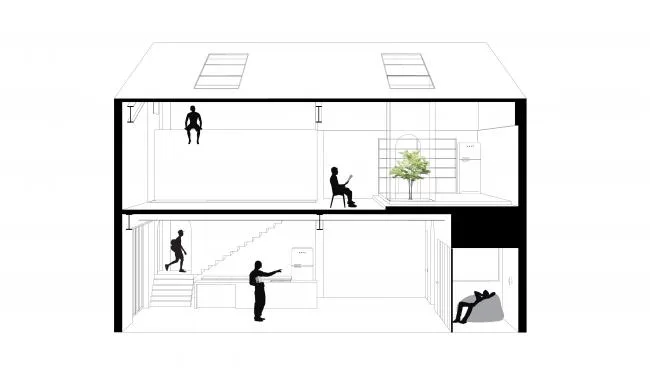
▲ Section 1
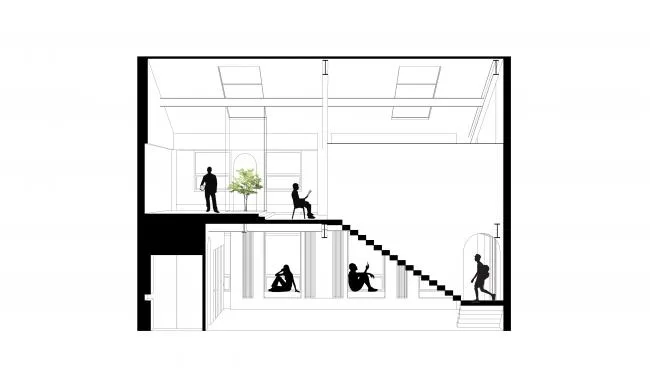
▲ Section 2
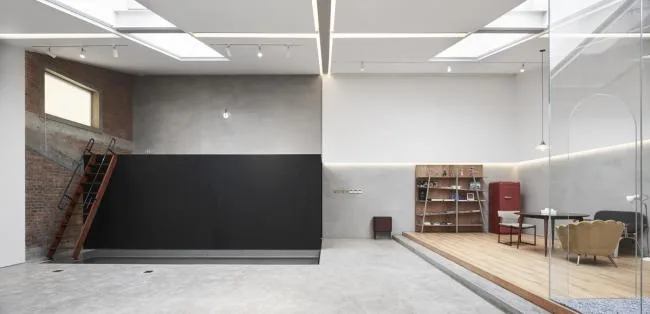
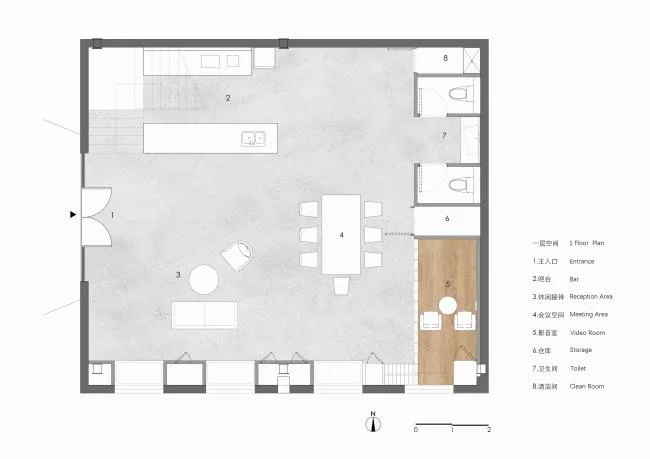
▲ First floor plan
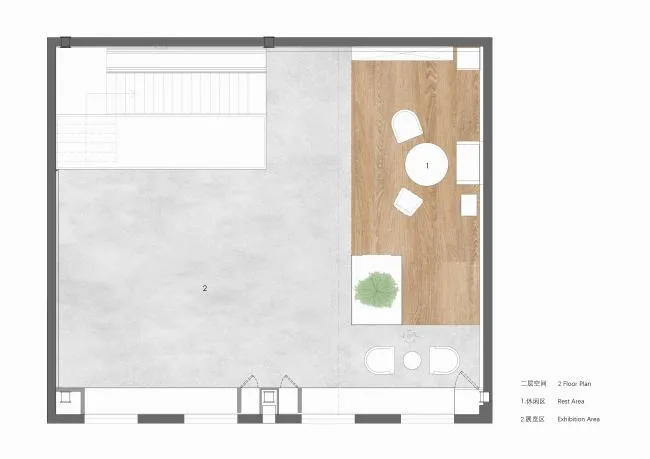
▲ Second floor plan
Project Information
Project: Haydn Space
Area: 260 square meters
Location: Beijing, China
Completion Date: September 2019
Design Studio: Mystery House Design Studio
Contact Information: __AI_S_SC0__
Design Team: Tian Shaoyin, Zeng Yuxian, Long Zeyangyi, Guo Yike, Zhang Qing, Huang Kaifeng
Construction Team: Beijing Shandong Building Decoration Engineering Co., Ltd. (BIM Learning)
Photography: Misaojiang Guangsong, Yuming Song (Beijing Ruijing Photography)












Must log in before commenting!
Sign Up