
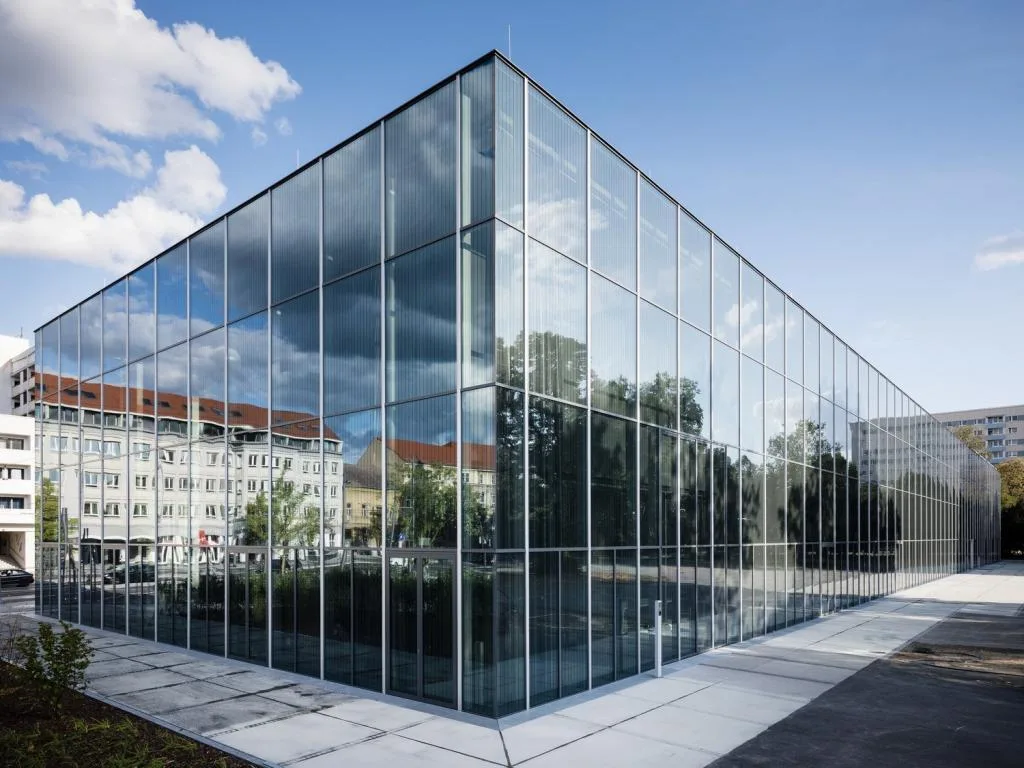
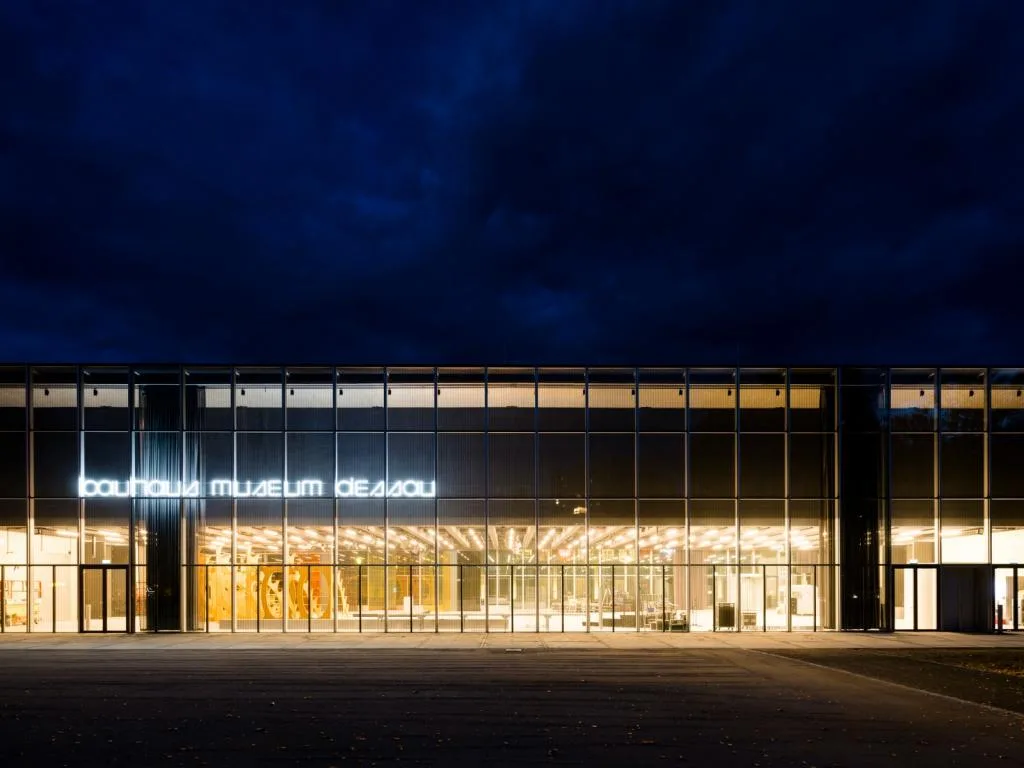
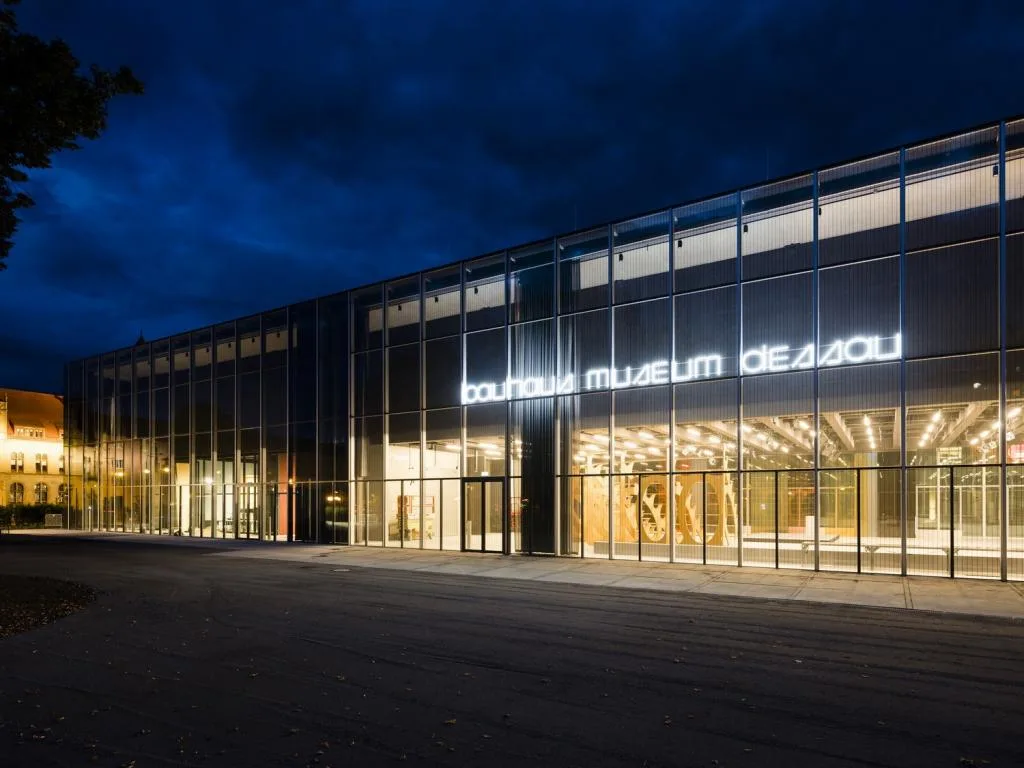
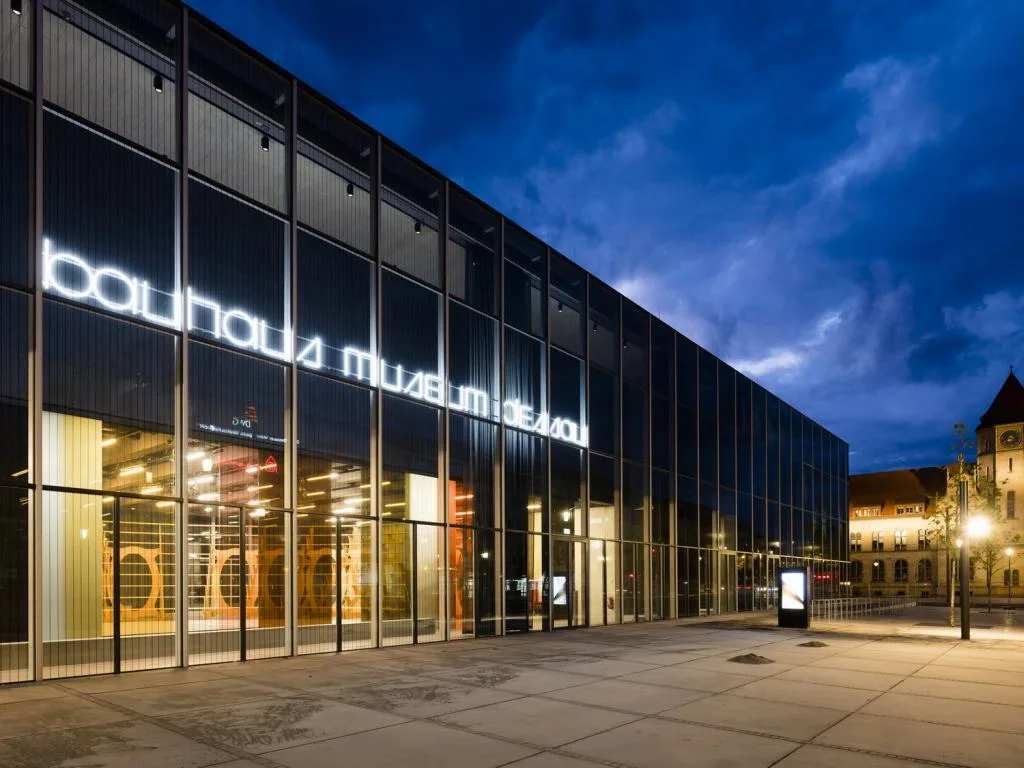
In 2015, Addenda Architects from Barcelona distinguished themselves among 830 submissions by winning the international competition to design the Bauhaus Museum in Dessau. Their design is a pragmatic and precise interpretation of Mies van der Rohe’s famous principle, “less is more.” The project draws inspiration from key architectural elements of the original Bauhaus school in Dessau, including glass curtain walls, two-story bridges, overall transparency, lightness, and smooth exterior surfaces.
This new museum serves as a modern cultural statement, described as a “low resolution version of the best state,” embodying the essence of Bauhaus in a contemporary context.
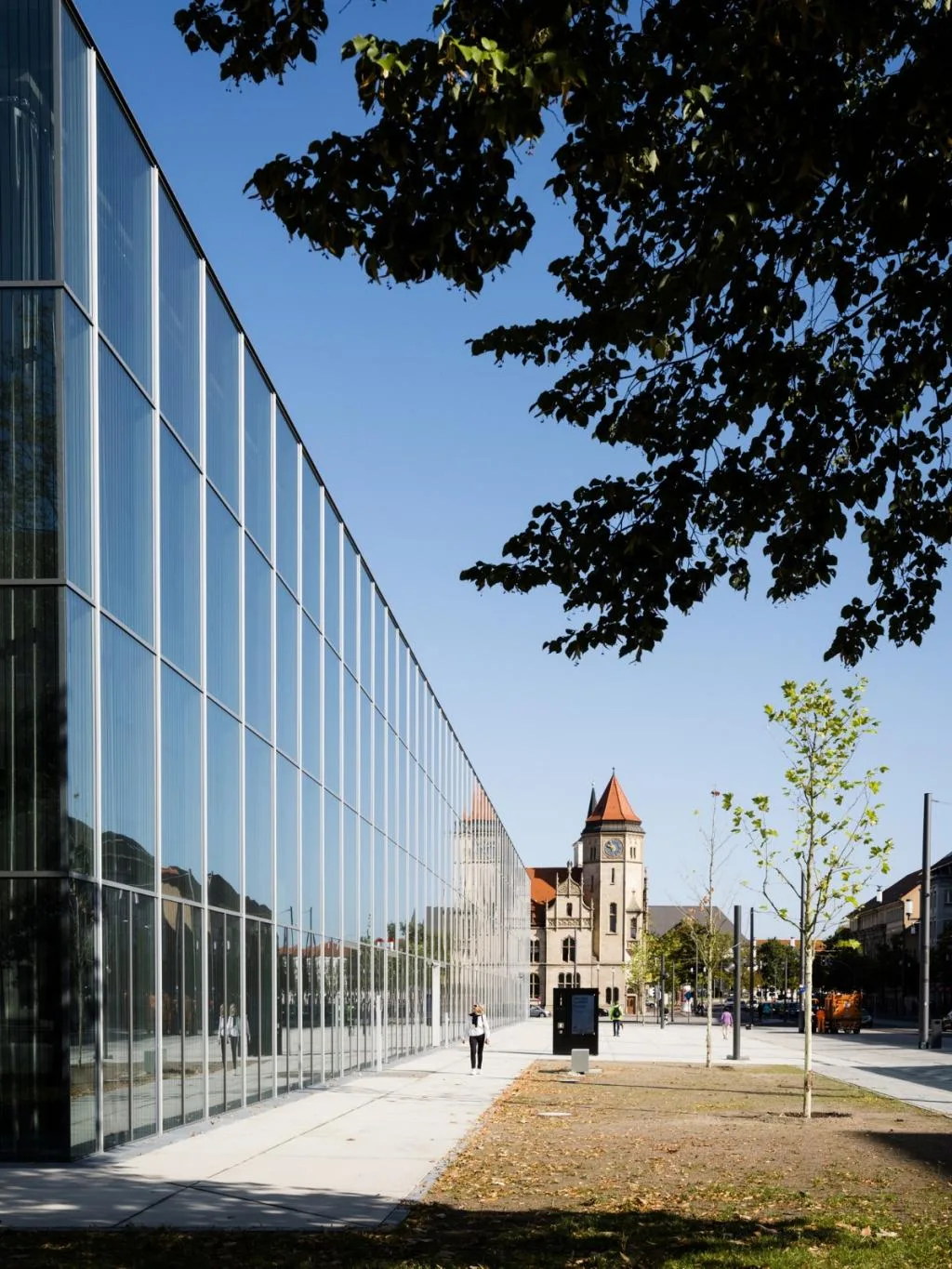
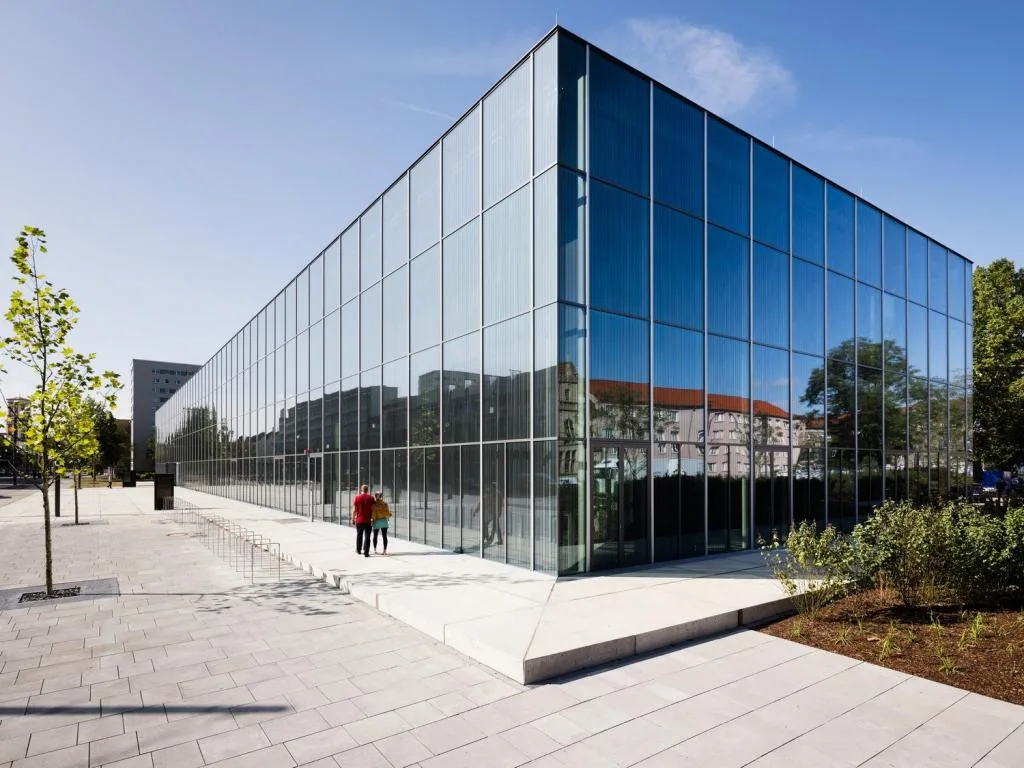
The new museum connects the established architectural heritage of “less is more” with a modern cultural ethos described as “the era of less.” Its simple building blocks are thoughtfully positioned between the city and the park, blending buildings with nature.
The building is set back from the original historical boundary to emphasize continuity with the city’s traditional architecture. Its scale falls between that of a single building and a city block, marking the transition between urban space and parkland. Each of the four facades faces key urban points, reflecting the building’s geographical context.
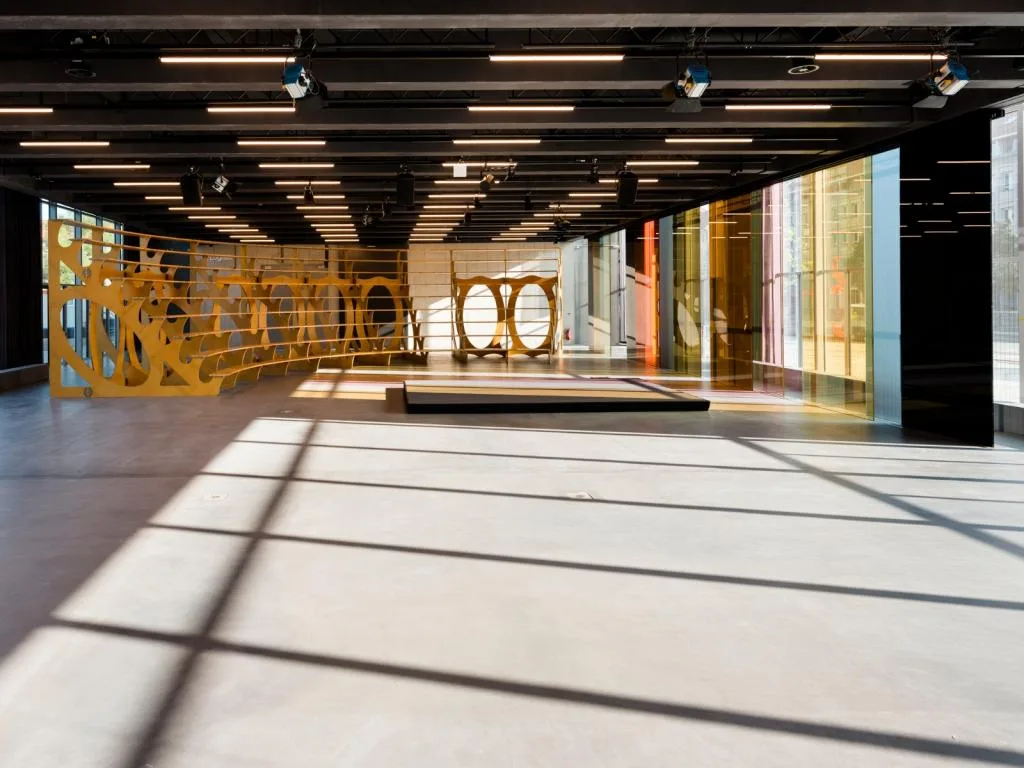
The east facade, facing Cavalier Street, evokes the architectural lines and urban characteristics of the historic buildings that once stood there. The west facade faces the park and reflects natural surroundings, serving as a backdrop for outdoor gatherings. The north facade along Friedrichstrasse, adjacent to the postal building, houses logistics and administrative functions. Meanwhile, the south facade facing the City Hall Fountain encourages social interaction through art museum programs such as workshops and cultural activities.
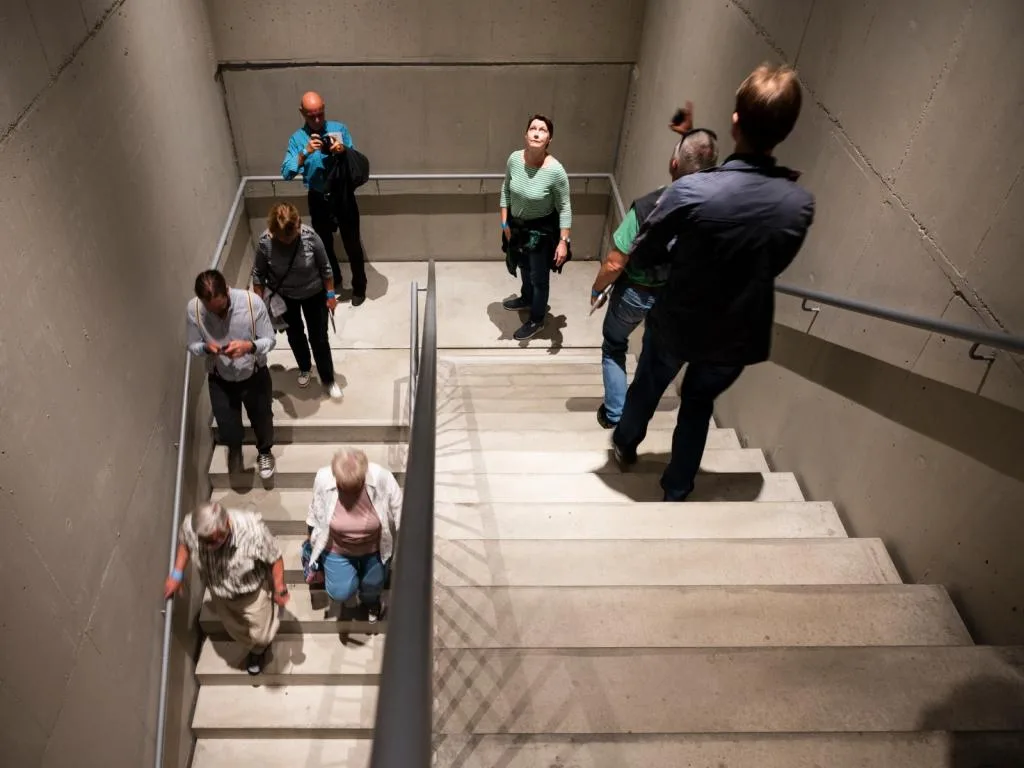
Inside, the glass box encloses a hollow black concrete crossbeam structure supported by two square stairwell boxes that discreetly house the museum’s art collections.
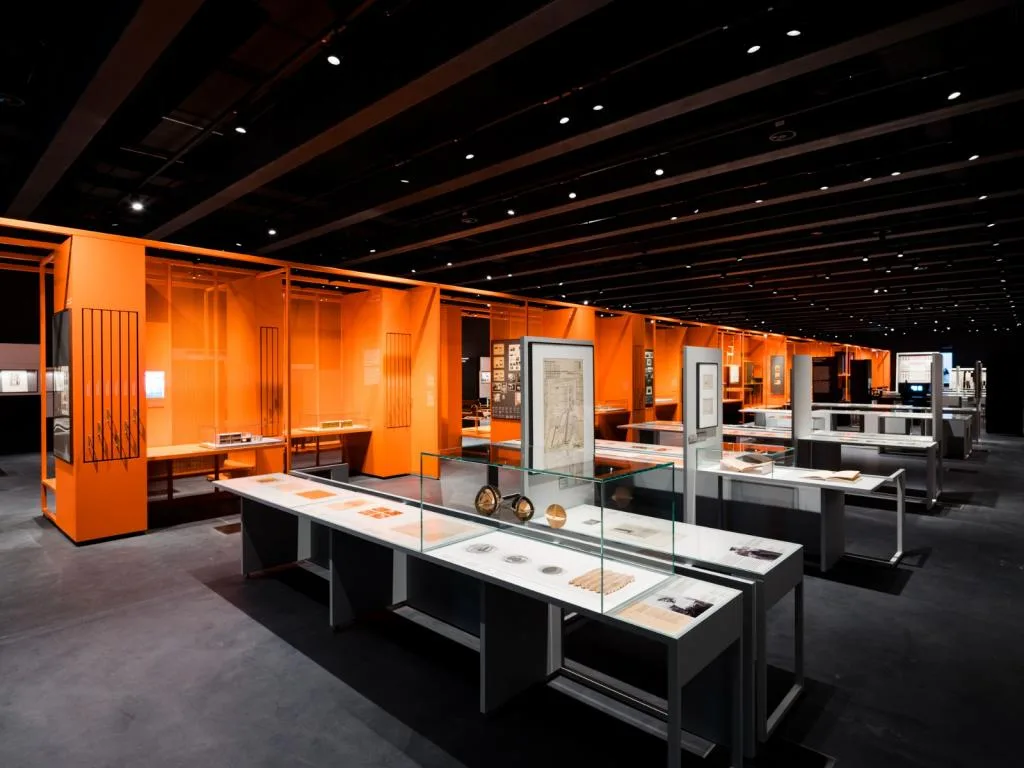
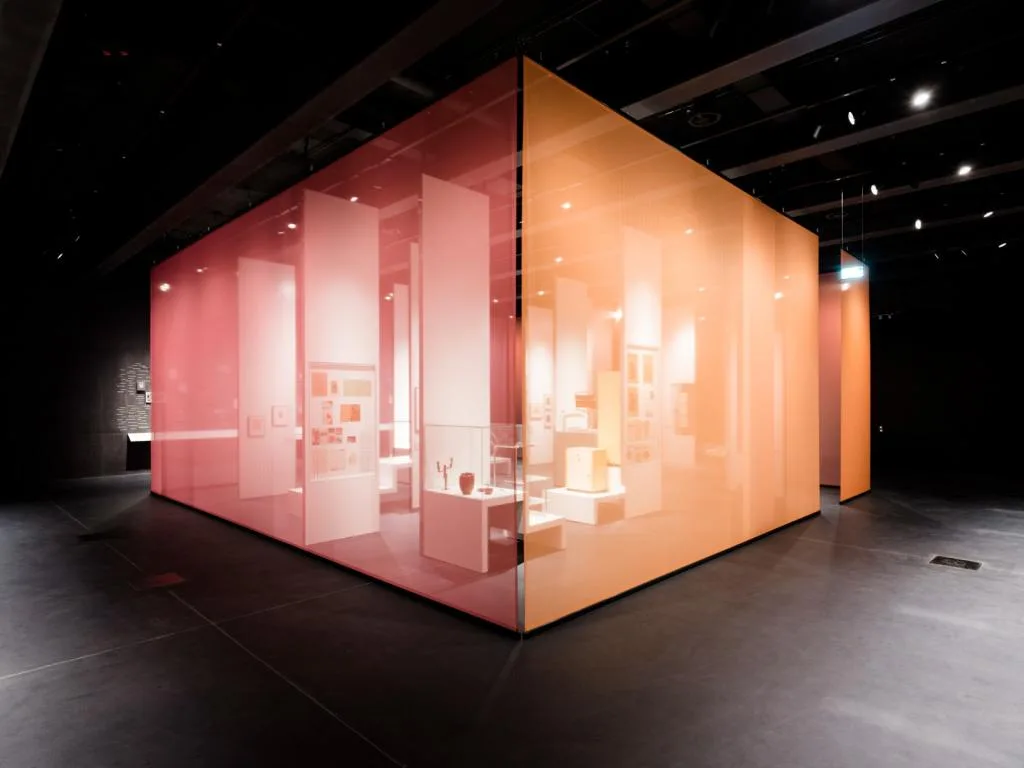
The flexible interior space within the glass box and cantilevered structure allows for easy construction and adaptation, subdividing the building into virtual grids of regular geometric shapes. This design ensures optimal efficiency in terms of time, cost, and quality.
The main visitor entrance is located at the intersection of Wright Street and City Park, leading into the central indoor space known as the “Open Stage.” This open area serves as a gathering and exhibition space bridging the park and the city.
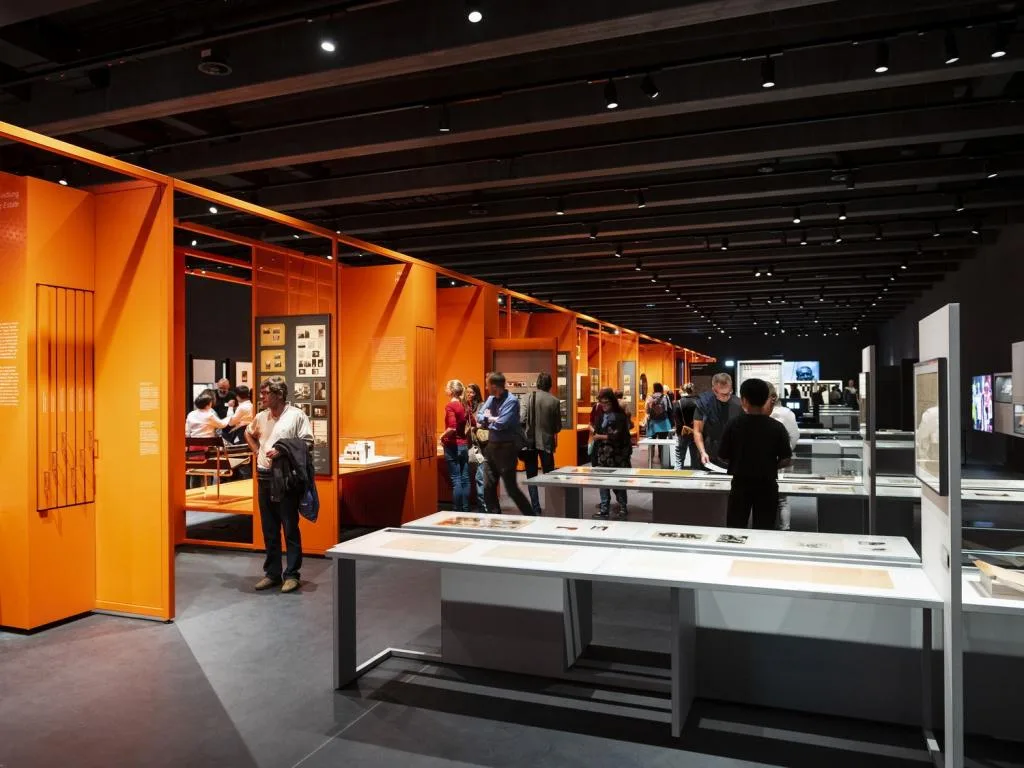
The permanent exhibition hall is situated on the second floor in a spacious, column-free room accessible via stairs and elevators within the two supporting stairwell boxes.
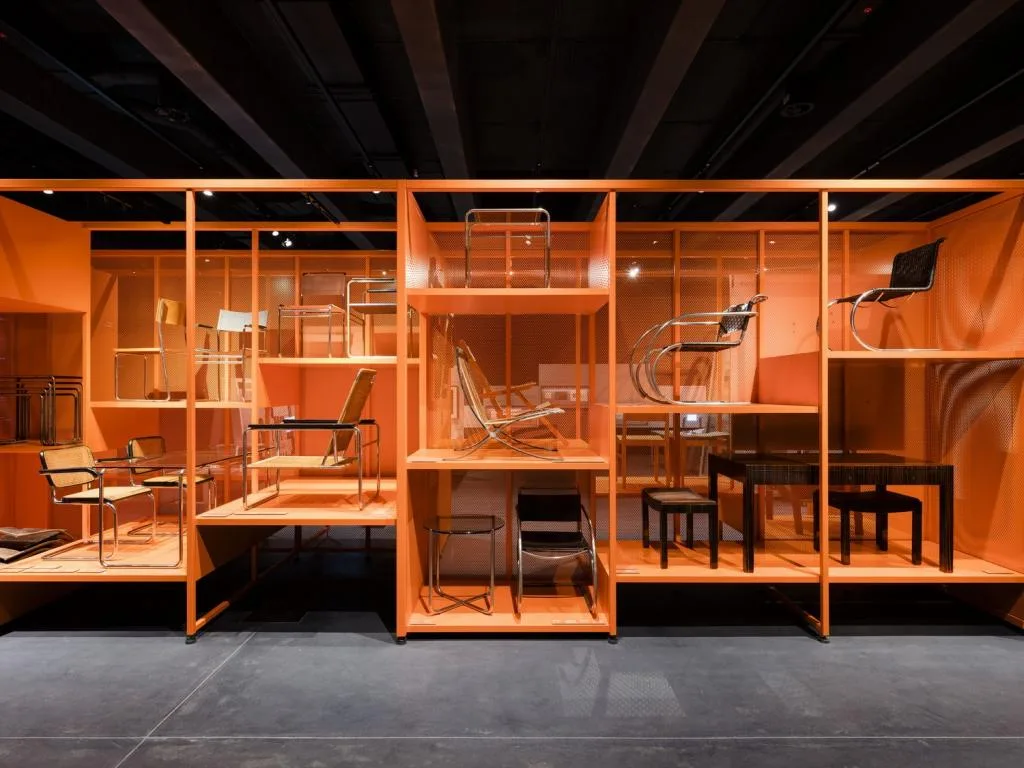
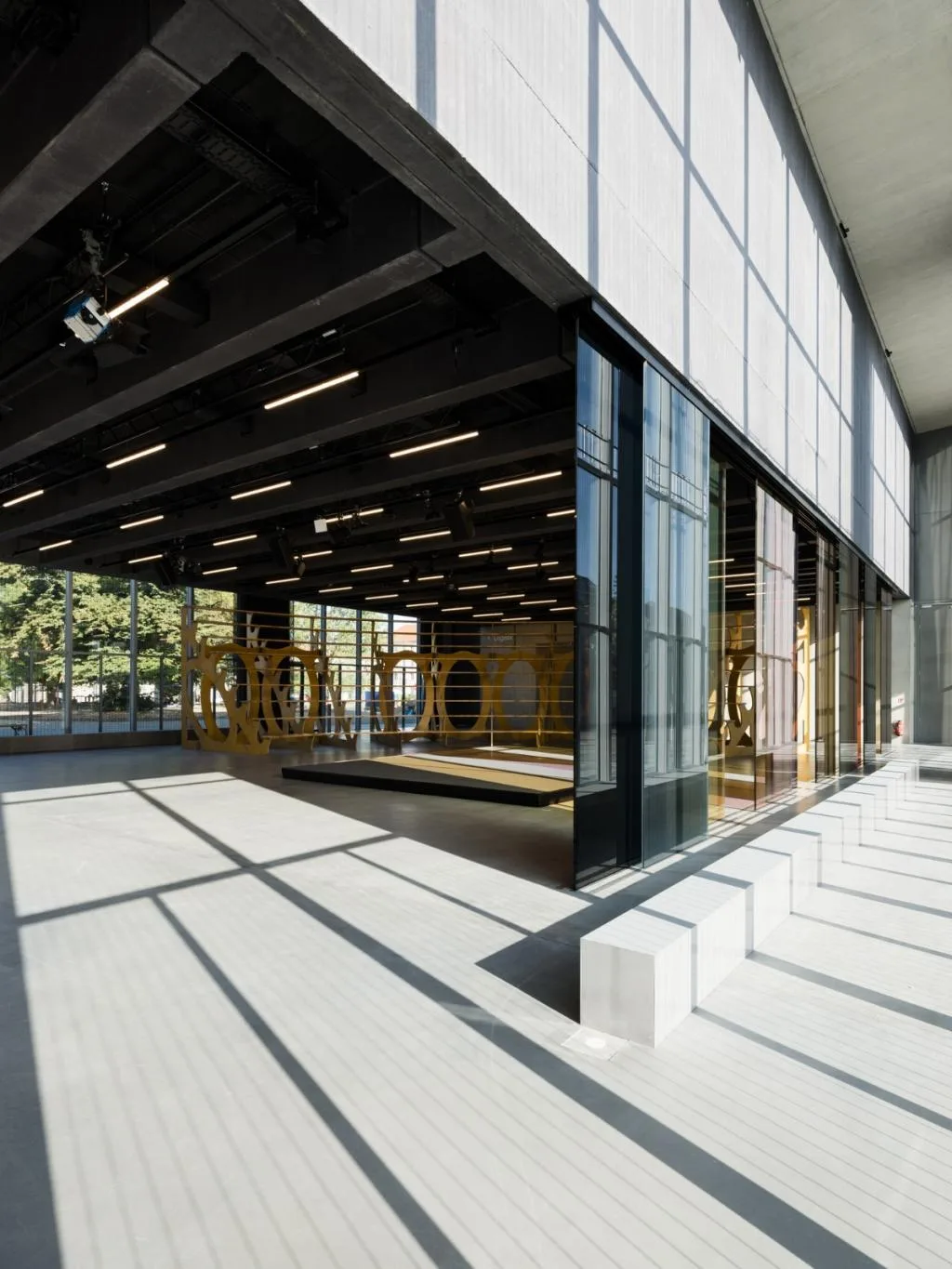
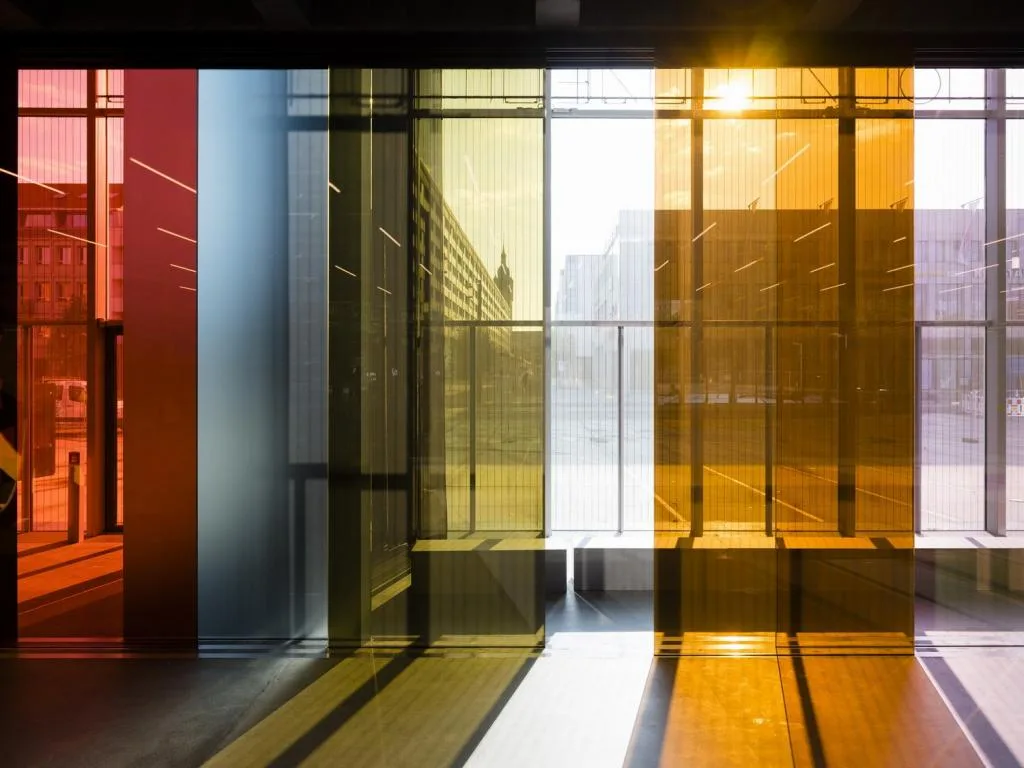
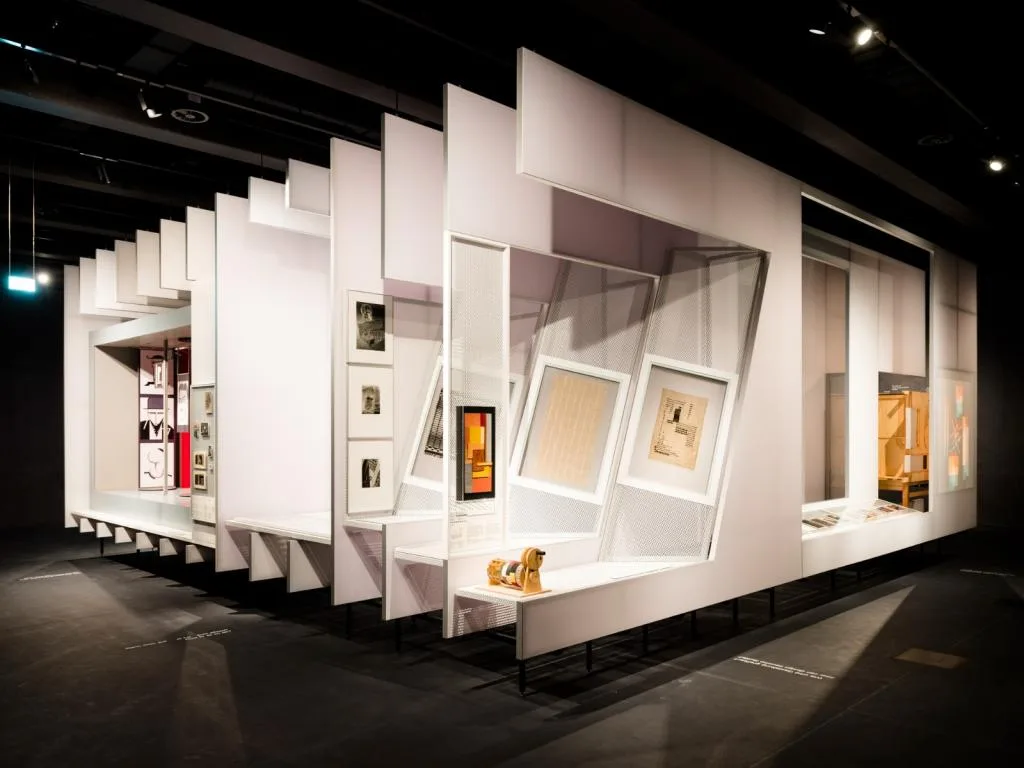
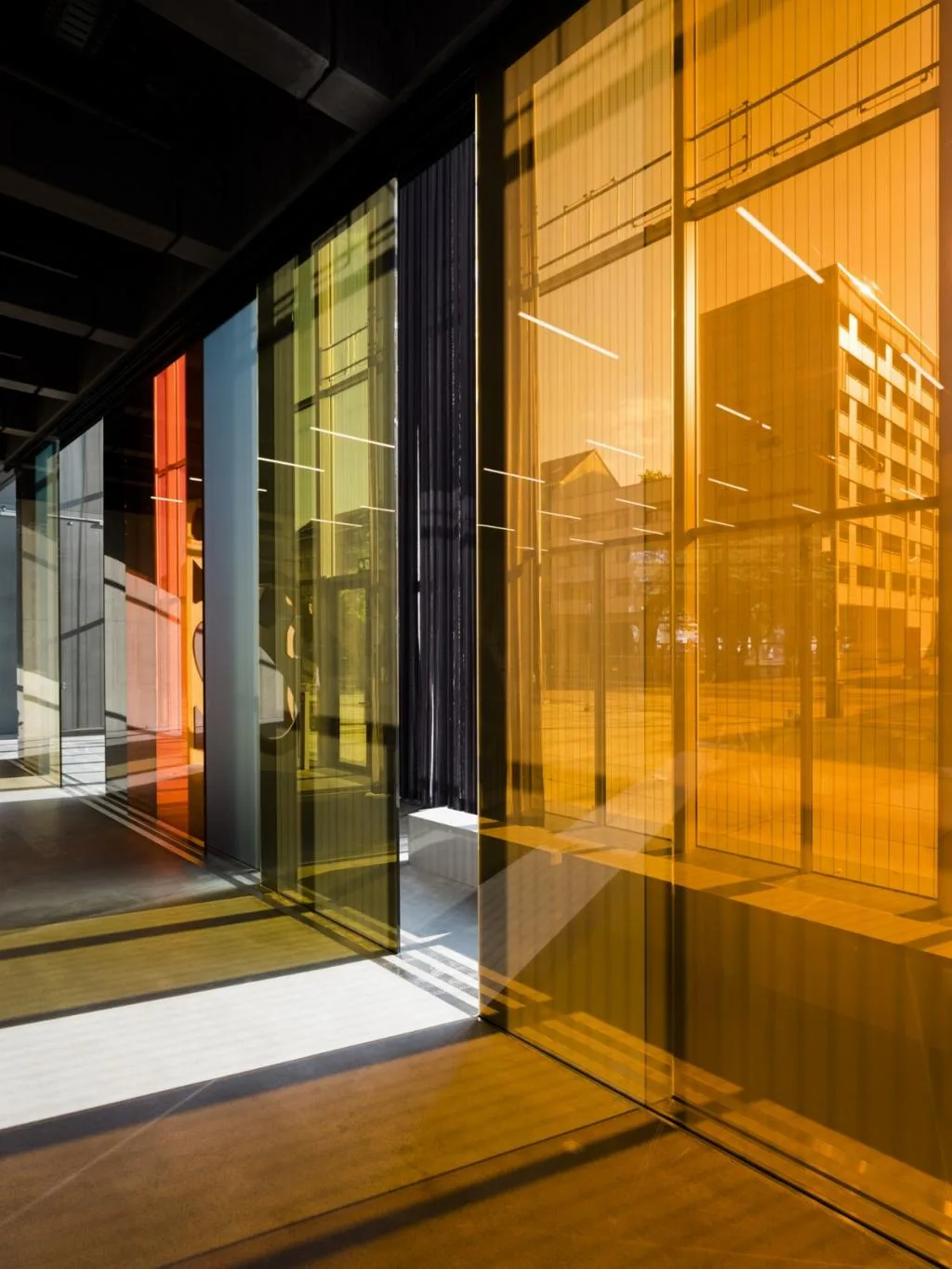
Temporary exhibitions are located beneath the permanent galleries, also integrated into the “Open Stage.” This space fosters communication with the surrounding urban environment while offering a dynamic facade that changes with each exhibition.
The museum’s logistics, administration, and educational facilities are positioned at either end of the black box: logistics and administration to the north, and education, workshops, and activities to the south. This calm and distinctive environment allows the Dessau Art Museum to play a vital role in fostering creativity, productivity, and social engagement throughout the city.
Project Drawings
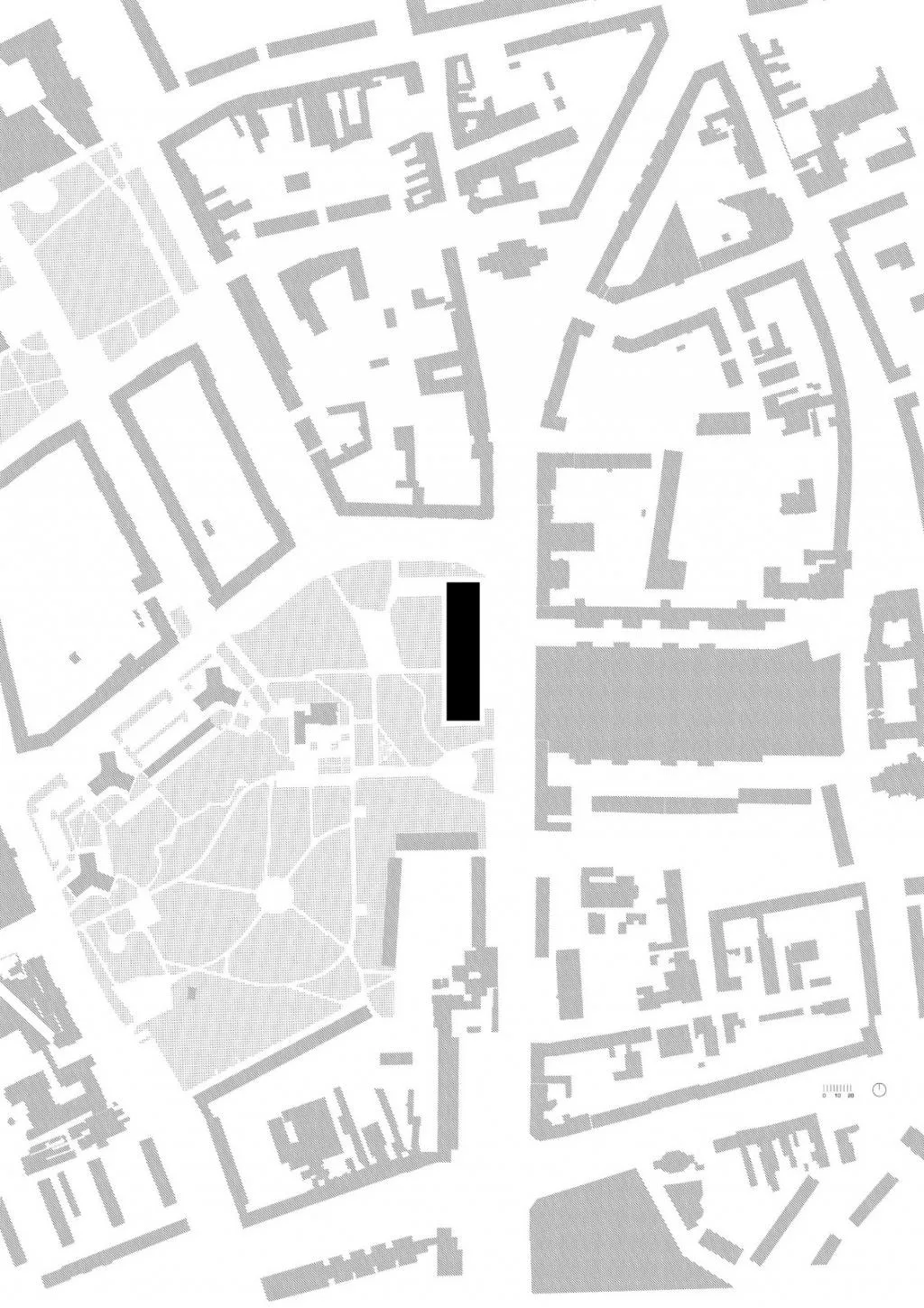
△ General layout plan
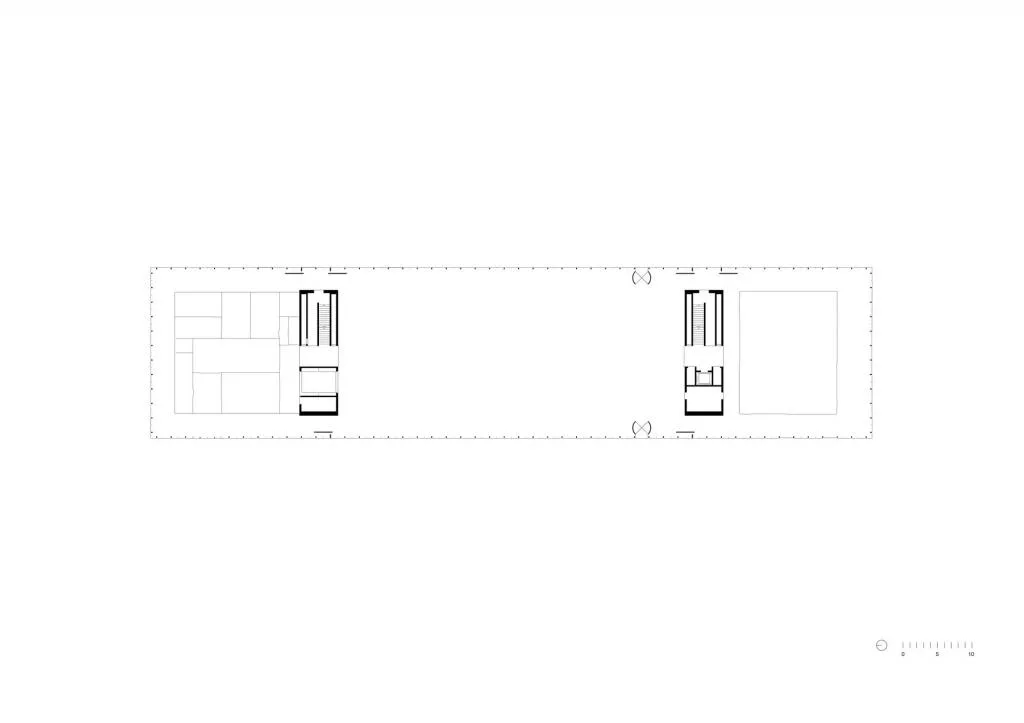
△ First floor plan
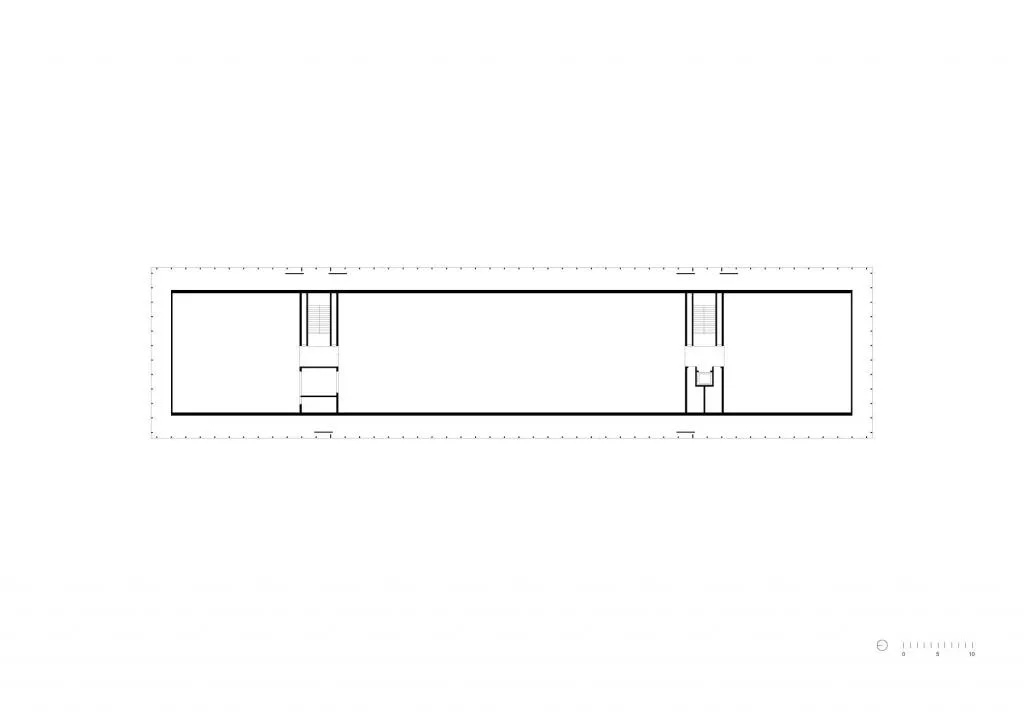
△ Second floor plan
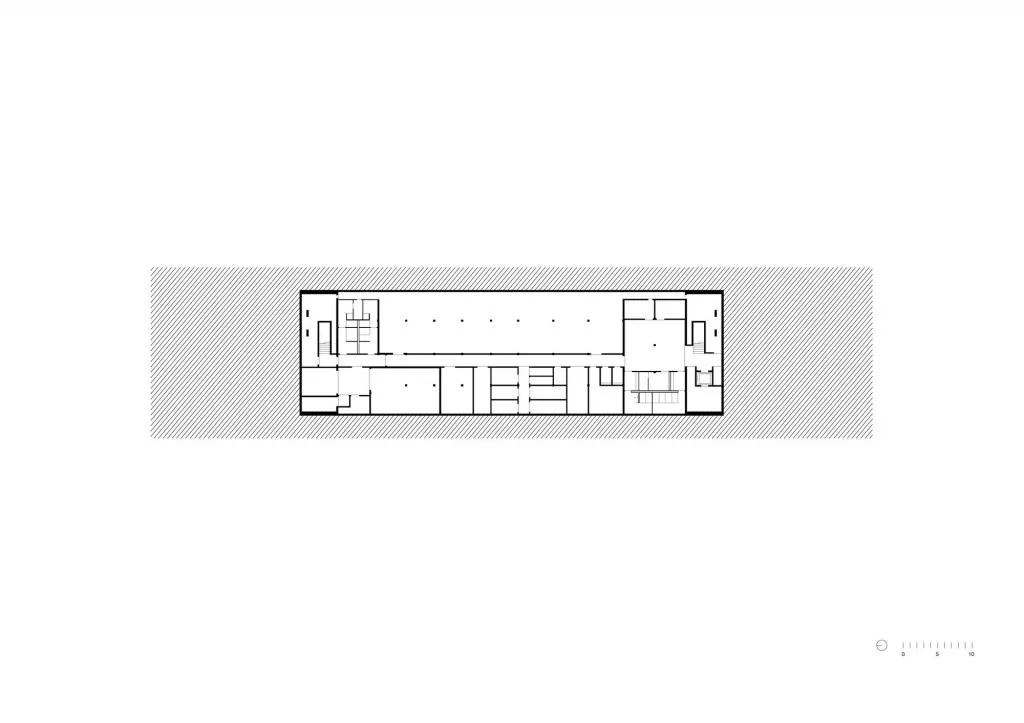
△ Underground floor plan
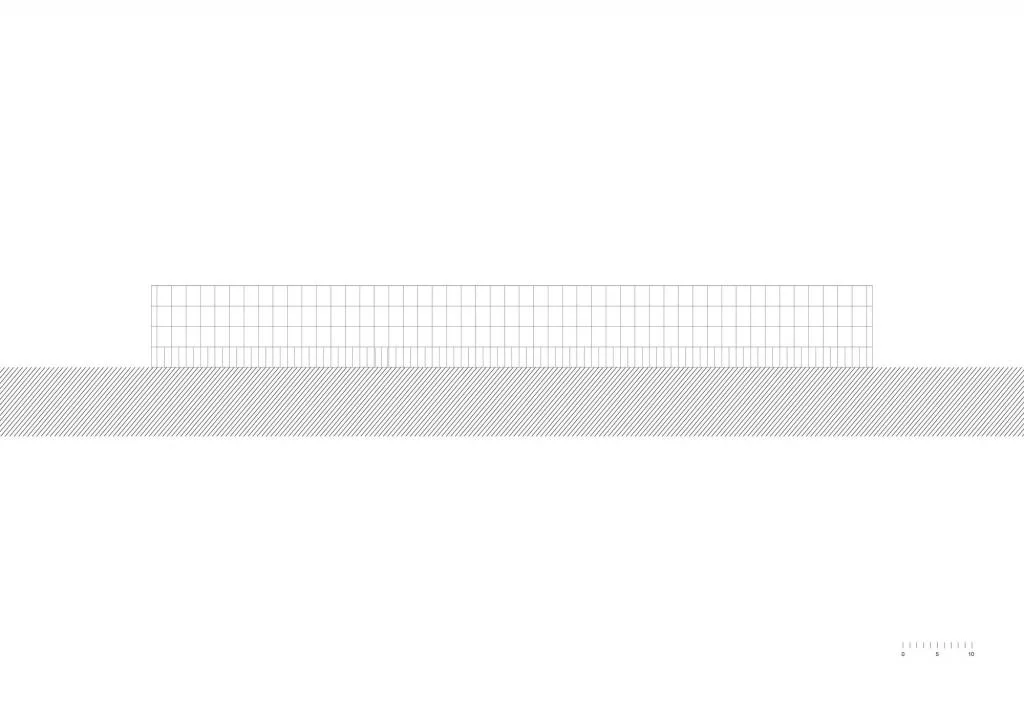
△ Elevation drawing
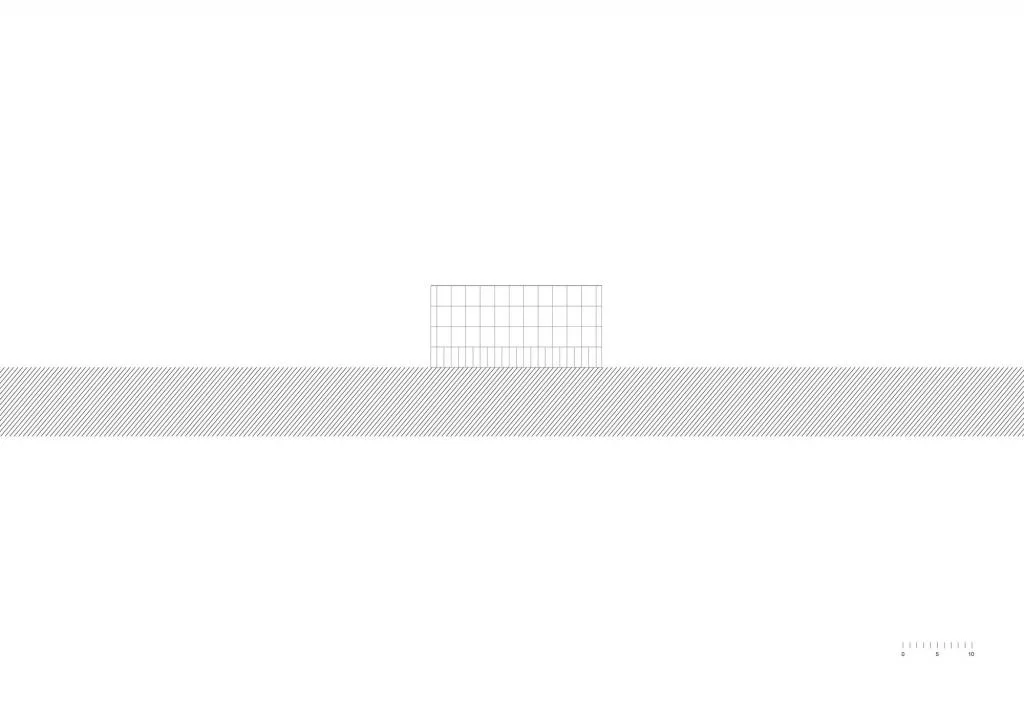
△ Elevation drawing
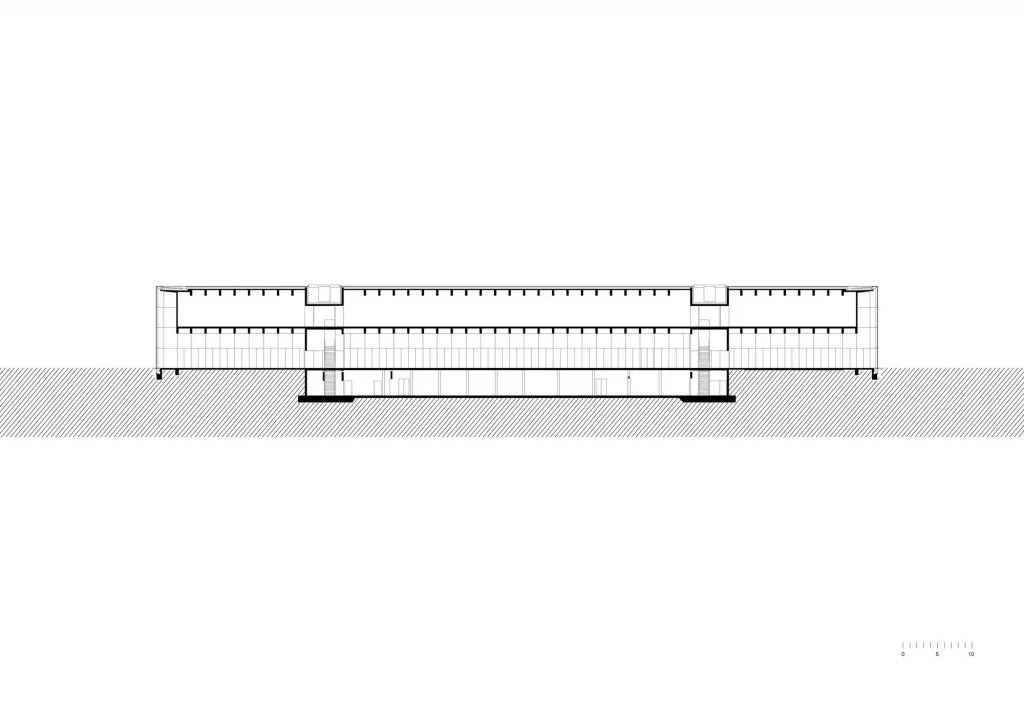
△ Section diagram
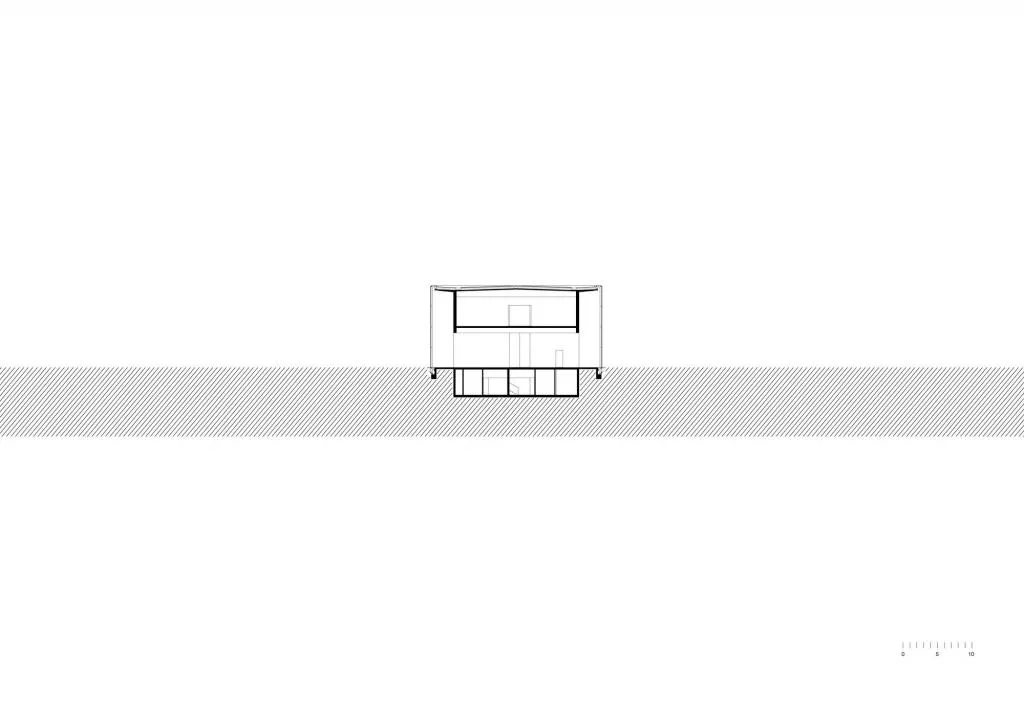
△ Section diagram
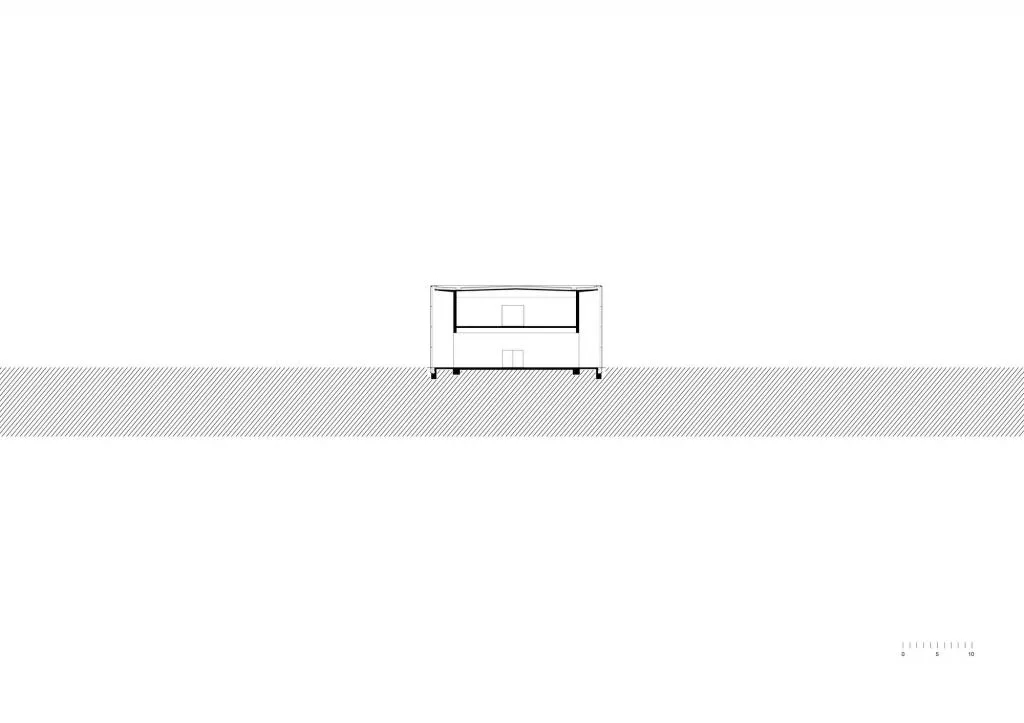
△ Section diagram
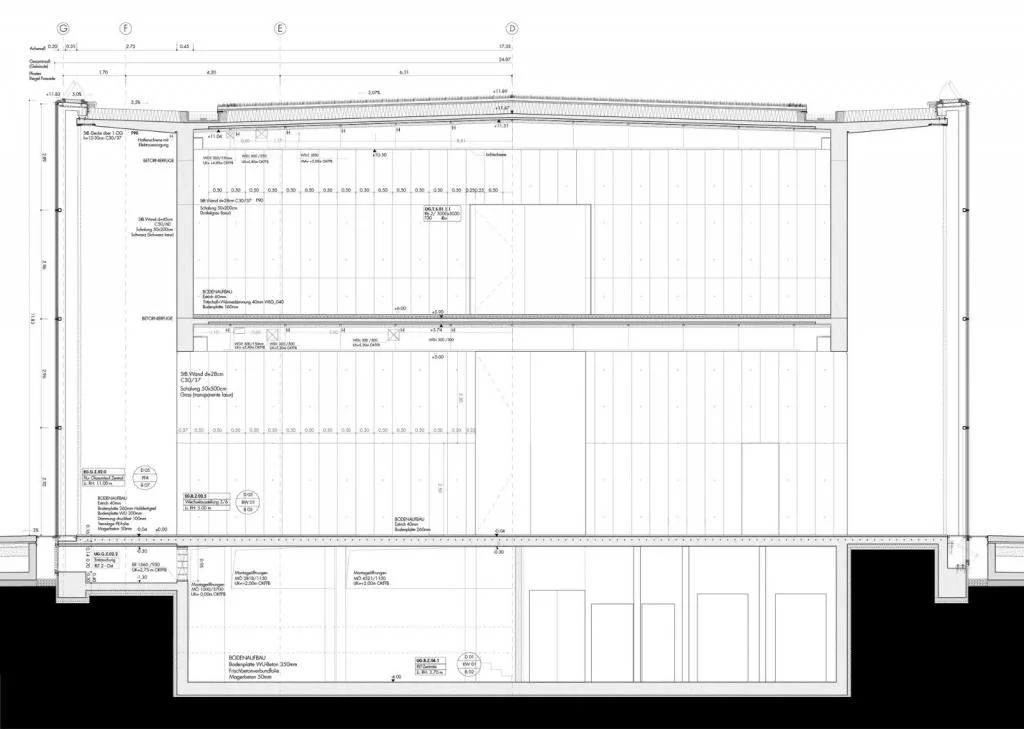
△ Detailed drawing
Project Information
Architectural Design: Addenda Architects
Area: 5513 m²
Project Year: 2019
Photographer: Thomas Meyer
Suppliers: Jansen, AutoDesk, Creation Baumann, Duravit, FSB Franz Schneider Brakel, Hager, Zumtobel
Lead Architects: Addenda Architects (Roberto González, Anne K. Hinz, Cecilia Rodríguez, Arnau Sastre, José Zabala)
Local Architect: BAL Bauplanungs und Steuerungs GmbH
Design Team: Addenda Architects
Client: Bauhaus Dessau Foundation and City of Dessau-Roßlau
Structural Engineer: B+G Ingenieure Bollinger und Grohmann GmbH
Equipment Engineer: Inros Lackner SE
Landscape Design: Roser Vives de Delàs and Patricia Pérez Rumpler
Construction Consultant: Xmade
Lighting Consultant: Lichtvision Design GmbH
Project Manager: TP Management GmbH
Artwork: Moritz Küng
Facade Lighting: Mevis & van Deursen and Karl Nawrot
Partner: Anne C. Kiefer
Location: Dessau, Germany












Must log in before commenting!
Sign Up