
Overview of BIM Application:
Ludancun Station is the 19th station on Shenzhen Metro Line 9, covering a building area of 16,039 square meters. It features an underground, three-story island structure with a total of four entrances and three sets of ventilation pavilions. The station’s post-construction mechanical and electrical engineering includes systems for strong and weak electricity, ventilation and air conditioning, water supply and drainage, as well as fire protection.
Scope of BIM Application
2.1 Visual Design
Traditionally, 2D designs are created using CAD platforms, showcasing design results through three views: plan, elevation, and section. These conventional graphical outputs consist of a series of floor plans, which are often not intuitive. The comprehensive pipeline layout can only be visualized after project completion. However, with 3D visualization BIM technology, the appearance of the finished project can be presented clearly and intuitively even before construction begins.
The initial step in applying BIM involves converting 2D drawings into 3D models, a process that spans multiple disciplines. The speed of modeling depends largely on two factors: proficiency with BIM software and the availability of an extensive family library. At the outset, the project team developed a BIM talent training plan, engaged in external communication and learning with the project owner and other construction units, and participated in internal professional training sessions. These efforts have significantly improved software skills. Currently, the project’s BIM engineers meet the requirements for rapid modeling. Additionally, leveraging the company’s broad platform has enabled resource sharing of a rich family library, addressing the limitations of the software’s native libraries.
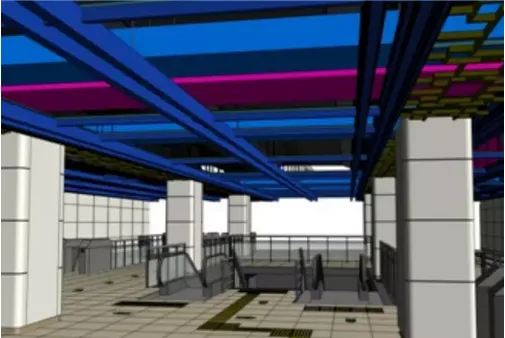
Figure 1: Ludancun Station Model Visualization
2.2 Collision Detection
Collision detection is a critical and practical feature of BIM software. It allows for the early identification of conflicts within the design, enabling BIM engineers to promptly adjust and optimize the model while proposing feasible solutions.
From a construction standpoint, collision detection simulates and analyzes the model in advance, helping to ensure that pipeline installations are both aesthetically pleasing and functional. This process significantly reduces the risk of rework caused by issues discovered during construction.
During the detailed design phase at Ludancun Station, collision detection revealed a total of 182 clashes: 59 at the concourse level, 86 at the equipment level, and 37 at the platform level involving pipeline conflicts.
Below is a comparison of the model before and after partial collision adjustments:
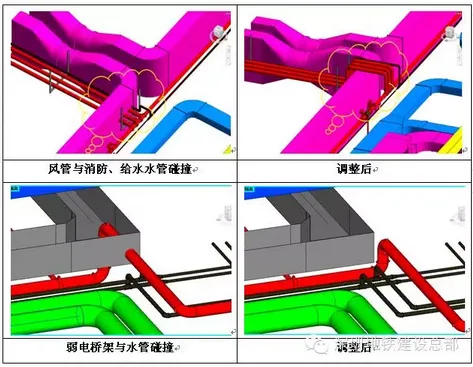
Post-collision detection, the BIM comprehensive model identified that conflicts primarily occurred between conventional electromechanical pipelines. After adjustments within the BIM model, some collisions remained due to the complexity and number of electromechanical systems involved, making some omissions inevitable. Consequently, multiple rounds of pipeline adjustments were necessary. Following continuous refinement and inspections, all collisions between conventional mechanical and electrical pipelines at Ludancun Station were resolved.
With all issues addressed, the finalized model and exported CAD drawings provide essential references for designers, aiding in the creation of drawings and guidance materials for on-site construction.
2.3 On-Site Construction Management
To maximize BIM technology’s benefits, the project team introduced the BIM360 cloud platform alongside 3D laser positioning equipment and ensured technical staff received training on the cloud platform’s usage.
Currently, all management personnel have joined the BIM360 cloud platform, and three iPads have been allocated to the water, heating, and electrical departments. The platform hosts building structures, comprehensive electromechanical models, drawings, specifications, equipment details, personnel information, and other relevant materials. Access is available through individual accounts on the iPads.
Ludancun Station has completed the layout and positioning of mechanical and electrical pipelines within the public areas of the station hall using a total station and 360Layout software. On-site verification confirmed the positioning accuracy reached millimeter-level precision. This method significantly improves accuracy and shortens installation time compared to traditional approaches.
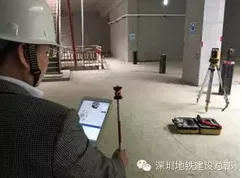
Figure 2: On-Site Positioning and Layout
With the promotion of the BIM360 cloud platform, the project team continues to provide application training for technical personnel. All technical staff are now proficient in operating software tools such as Glue and Field on the platform. When issues arise during construction, they can record and generate reports via iPads, promptly notifying responsible parties to follow up and implement corrective measures. This has greatly enhanced the overall efficiency of the construction process.
Summary of BIM Applications
Since launching BIM efforts, the project team has continuously learned and explored new applications, achieving notable results. In March, the team was invited to share BIM experiences with the subway group. In April, they secured first place in the initial phase of BIM detailed design at Southern Company. More recently, they participated in the China Construction Engineering BIM Competition. Moving forward, the team will continue researching BIM applications and promoting the technology.
In subway engineering, BIM technology enables more rational pipeline layouts in confined spaces such as equipment corridors and chiller rooms, facilitating both construction and future maintenance. Compared to traditional drawings, 3D models offer a more intuitive understanding and ease the exchange of project information, construction progress, and other data with owners. Additionally, BIM serves as a testament to corporate image and technological capabilities, fostering better collaboration with owners and supporting further market development.














Must log in before commenting!
Sign Up