
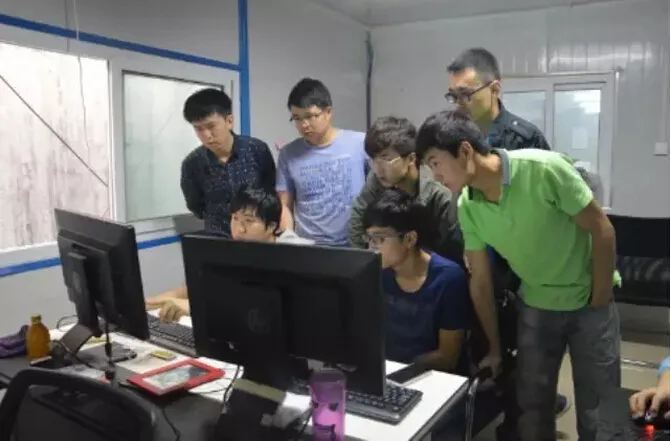
For the past two months, a dedicated group of individuals has been consistently working on the Wugui project. During the day, each person focuses on their own tasks, but after work, they gather together — some swiftly moving the mouse, others typing on their keyboards, while many engage in intense discussions. This is the BIM team of the Wugui project.
The energy and determination of youth shine brightest during these moments. Every evening after dinner, the team assembles around their computers, listening attentively to their peers’ explanations, determined not to miss a single detail. They understand the importance of seizing every learning opportunity, even when exhaustion sets in. Balancing their daily responsibilities with dedicated BIM technology research at night has become their routine and passion.
They have faced challenging periods along the way. In the early stages, lacking experience in managing the entire process and without guidance from mentors, they struggled to identify which models were necessary for simulating the construction process. According to team members, “We took many detours.” While independently simulating the four-dimensional construction of vertical shafts and horizontal passages, they repeatedly revised models, learned from failures, searched for breakthroughs, and explored new technologies driven by curiosity. Through perseverance, they eventually overcame these challenges and moved beyond the low point.
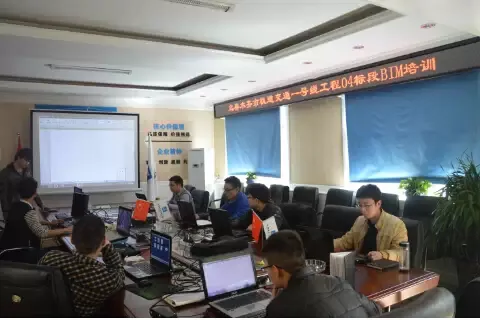
Team spirit has been essential throughout this journey. The BIM team lives by the principle of efficient integration: combining knowledge with action to perform at their best. Communication fosters consensus, and trust builds synergy. The team members never work in isolation; instead, they divide responsibilities and collaborate closely to overcome challenges. Questions like “Why?”, “How do we do this?”, and “Does the simulation meet construction method requirements?” are tackled collectively. Whenever doubts arise, the team draws on their collective wisdom to find solutions.
Thanks to the BIM team’s commitment and collaboration, the project has successfully completed several key milestones. These include establishing the model for the first-phase fence at Nanmen Station, conducting four-dimensional construction simulations for the initial risk sources beneath the section cross passage, and managing the relocation of pipelines for the first phase at Nanmen Station.














Must log in before commenting!
Sign Up