
This article explores the value of BIM visualization during the design phase through two recent projects undertaken by the Landao BIM Design Center.
Over the past two decades, the widespread adoption of CAD technology has revolutionized architectural and engineering design. It has freed professionals from traditional manual drafting, design, and calculations, marking a significant technological leap in the engineering design field. While CAD has improved design efficiency to some extent, it still has limitations. For complex spatial designs requiring multiple views and sections, 2D designs lack intuitiveness, often leading to omissions and errors. Many mistakes are only discovered during construction, causing unnecessary rework and waste. Even more concerning are errors detected only during operation, which pose significant risks to project implementation.
The primary goal of implementing BIM during the conceptual design phase is to uncover hidden issues early, provide spatial visualization, and support proactive decision-making. Besides verifying the plan’s accuracy and feasibility, BIM enables non-construction stakeholders to better understand the design, reducing communication costs and accelerating project progress. Below, we present two recent cases where Landao BIM Design Center demonstrated the benefits of visualization during the design stage.
Landao BIM Service Case 1: Shanghai Jiuzhi Building
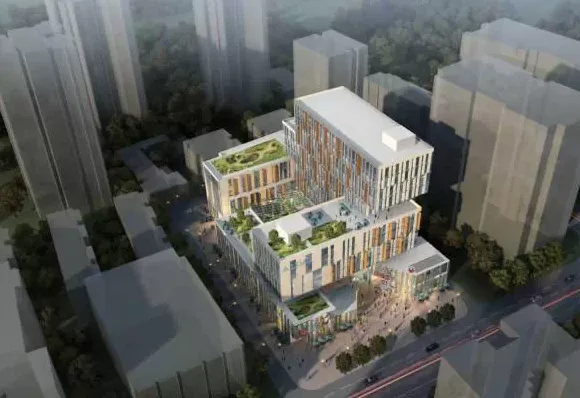
The preliminary development project covers Block 57 and Block 101 at Xietu Street, located within the 59th Middle School plot in Xuhui District, Shanghai — specifically Plot 108-03. The site extends east to Damuqiao Road, south to Yunzhou Antique City, west to the residential area of Lane 381 on Zhaojiabang Road, and north to the Asia Pacific Enterprise Building. The total planned construction land area is 10,319.9 square meters.
This project involves underground space development, with an underground construction area of 19,522.2 square meters (excluding subway ancillary facilities) and a building depth of 15.75 meters (absolute elevation -11.5000 meters). The first basement level is designated for commercial use; the second combines commercial spaces with subway ancillary facilities; and the third basement floor serves as a motor vehicle garage.
Value Interpretation of Landao BIM Visualization:
Challenge: The underground parking garage is located on the third basement level, with no parking spaces on the first and second basement floors. The ramp connects the outdoor level directly to the third basement, spanning a height of 14.45 meters. Due to the ramp’s significant height, its path is complex. There was uncertainty regarding the ramp’s length and slope design, and it was difficult to clearly communicate multiple design options to the client using 2D drawings.
Solution: Using BIM, the ramp was modeled as a solid 3D structure integrated into the building, based on real parameter data. This allowed verification of the design’s feasibility and enabled the client to clearly visualize and compare different solutions.
Below are three ramp design options presented by Landao using BIM 3D visualization, aiding the client in deciding on the optimal length and slope of the underground garage ramp. In the images, red indicates the ramp to the underground garage, while yellow highlights the ramp itself.
Option 1
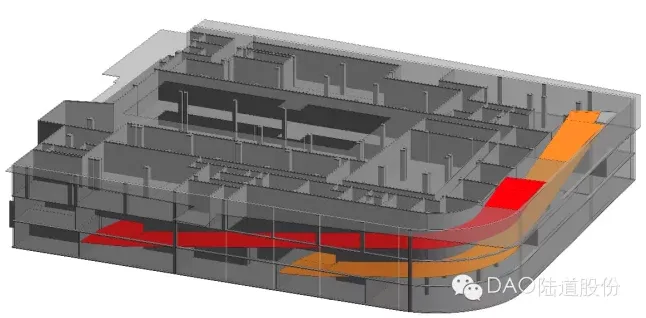
3D View (Option 1)
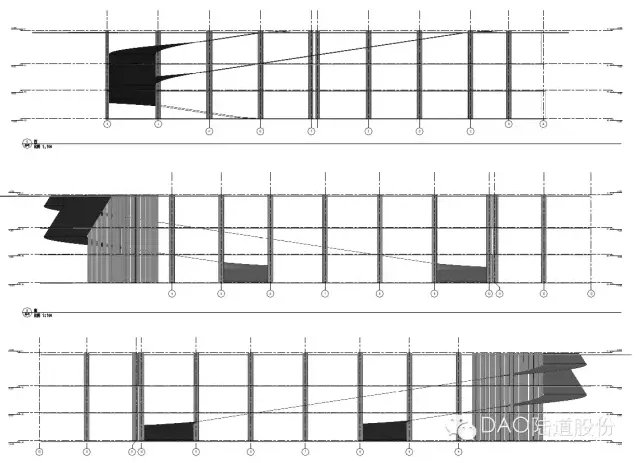
Slope Elevation View (Option 1)
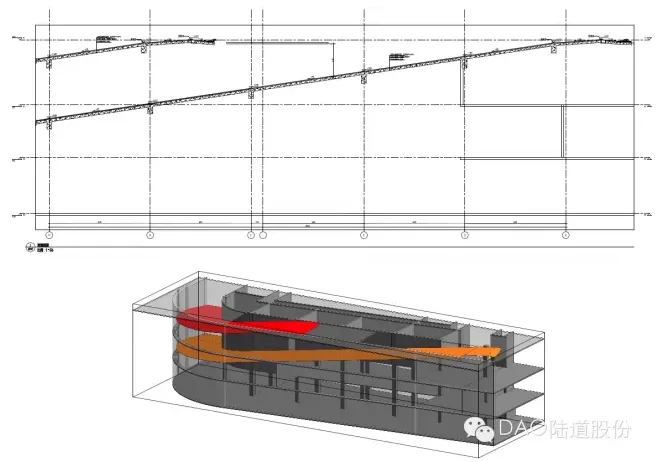
Slope Section Diagram (Option 1)
Option 2
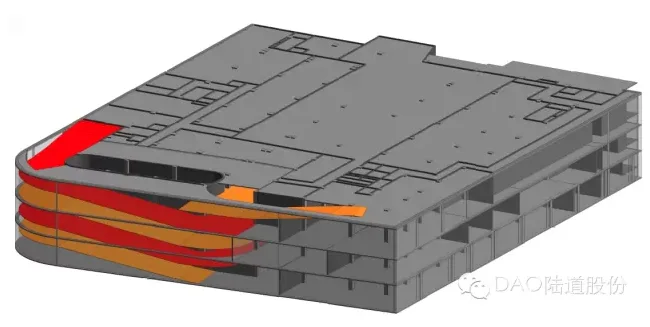
3D View (Option 2)
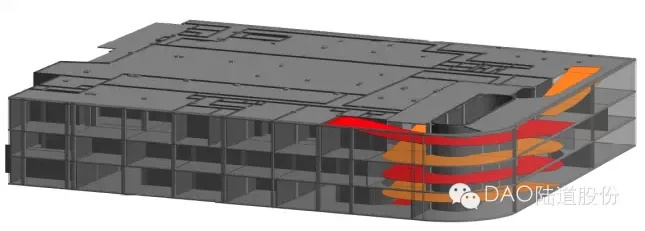
3D View (Option 2)
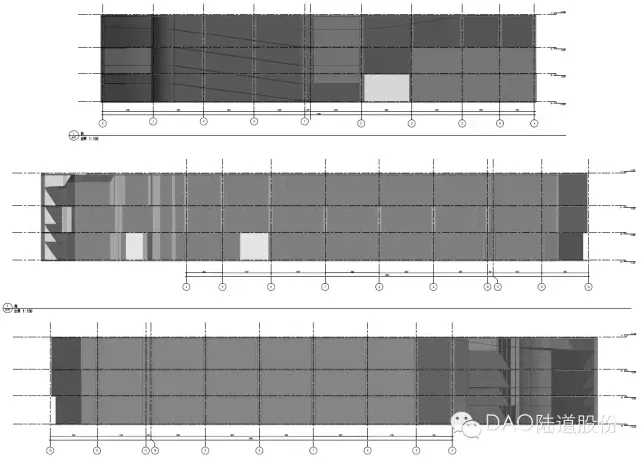
Slope Elevation View (Option 2)
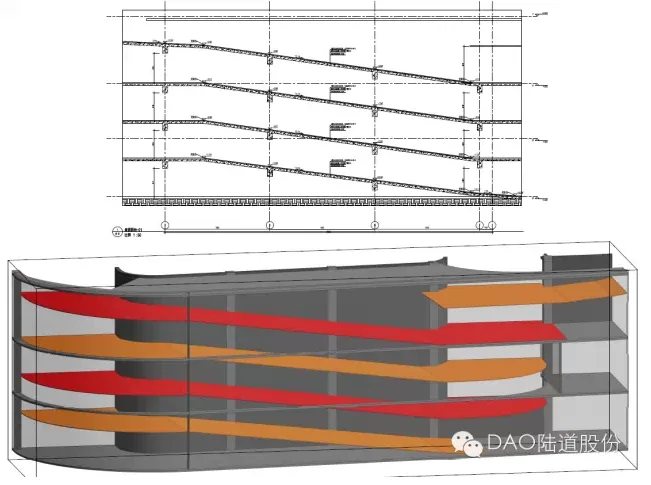
Slope Section Diagram (Option 2)
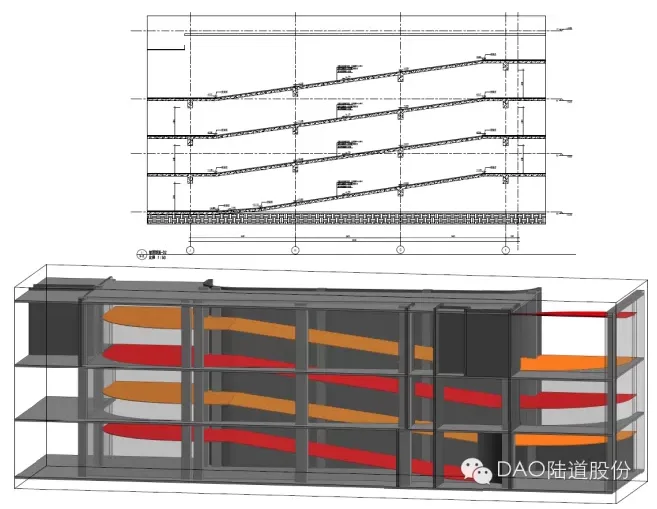
Slope Section Diagram (Option 2)
Option 3
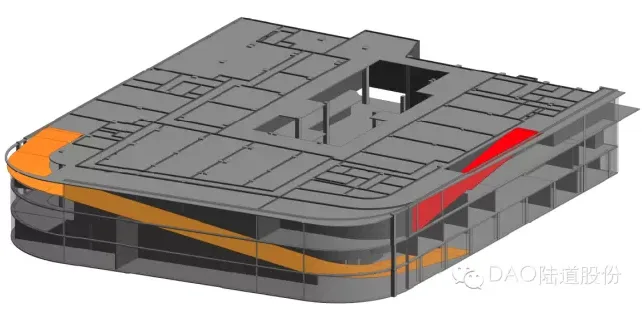
3D View (Option 3)
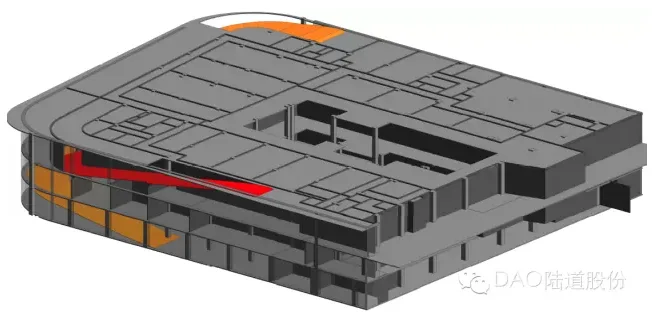
3D View (Option 3)
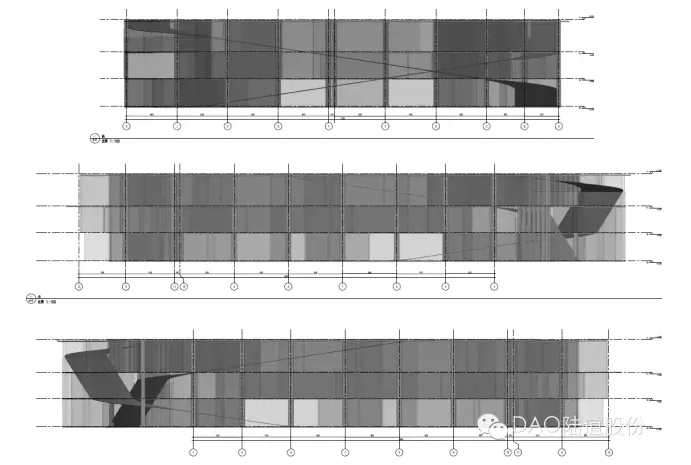
Slope Elevation View (Option 3)
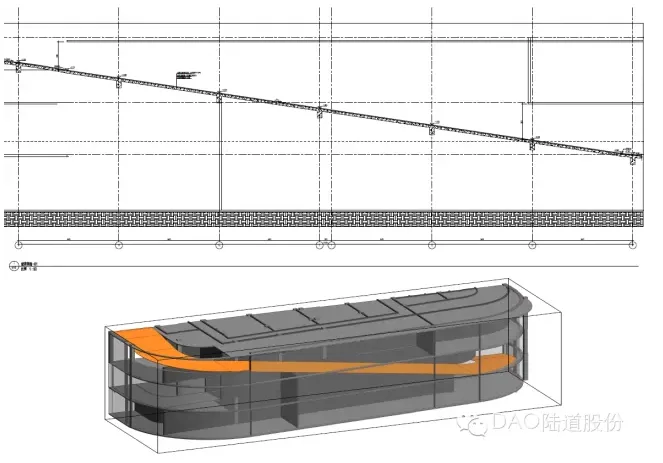
Slope Section Diagram (Option 3)
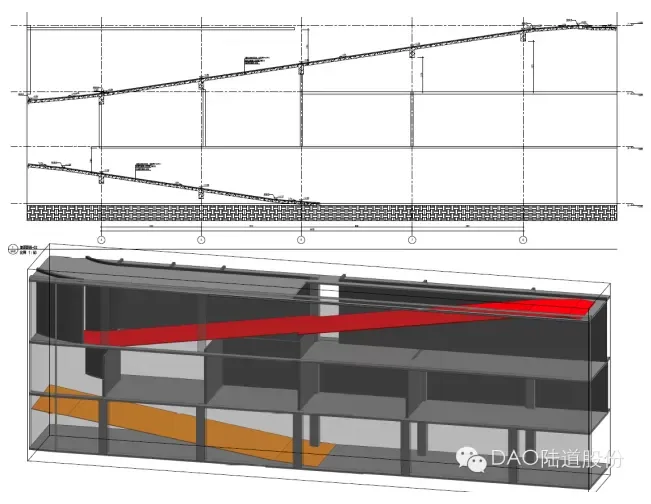
Slope Section Diagram (Option 3)
Landao BIM Service Case 2: Shanghai Qingpu Jiating Central Urban Complex
The Shanghai Qingpu Jiating Central Urban Complex is located on the north side of Dianshanhu Avenue, Yingpu Street, Qingpu District, covering plots 54-01 and 55-02. The above-ground construction area totals 245,263.20 square meters, with an underground building area of 122,000 square meters. The underground commercial space and the connecting passage between the plot and the Dianshanhu Avenue Metro Line 17 station cover 12,318.3 square meters.
This project features two basement levels. Due to the use of double-layer mechanical parking, there is a high demand for floor height, while the underground excavation depth is limited. Additionally, the main building height is capped at 80 meters. To meet the floor height requirements, the client aims to minimize the excavation depth. BIM technology was utilized to analyze and compare the economic feasibility and minimum floor height requirements of two structural options: beam slab structure and beamless floor.
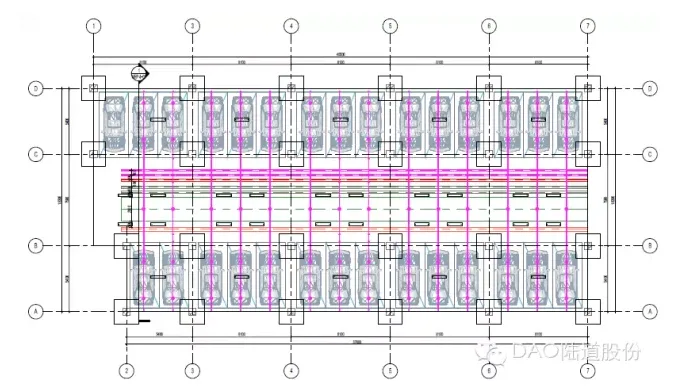
Plan View (Beamless Floor)
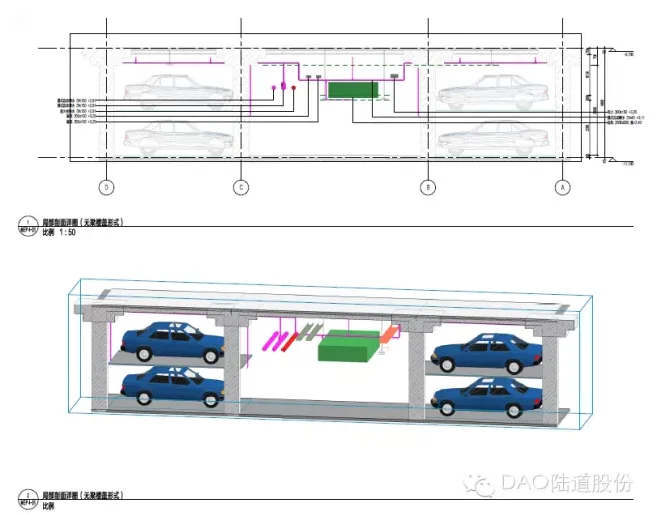
Section View (Beamless Floor)













Must log in before commenting!
Sign Up