
As a form of spatial structure, prestressed steel structures combine both aesthetic appeal and mechanical strength. The introduction of Building Information Modeling (BIM) technology, coupled with parametric design thinking, has significantly enhanced structural design processes. Engineers can now design and perform calculations more rapidly, create models and drawings with greater accuracy, and communicate and collaborate more effectively.
The Xuzhou Olympic Sports Center project stands as one of the most advanced and comprehensive real-world applications of BIM technology, developed by the BIM Center at the Beijing Academy of Building Engineering. This structure is notable for being one of the longest-span complex cable-supported grid systems worldwide, spanning approximately 263 by 243 meters. Its construction presented considerable challenges. At the outset of our involvement, we considered whether BIM, as an emerging technology, could bring tangible benefits to such a complex spatial structure.
In response to these engineering challenges, and under the Beijing Postdoctoral Fund Project titled Research on BIM-Based Construction Control and Monitoring Technology for the Entire Process of Prestressed Steel Structures, we combined BIM technology, structural analysis, construction control, and monitoring technologies. This comprehensive approach was applied to the Xuzhou Olympic Sports Center Stadium project.
1. Project Overview
The Xuzhou Olympic Sports Center Stadium is a large-scale, complex cable-supported grid structure with a nearly elliptical planar shape, measuring approximately 263 by 243 meters. It features a large elliptical opening in the center, roughly 200 by 129 meters in size. The stadium’s maximum structural height reaches about 45.2 meters, incorporating 42 cantilevered steel frames supported by cables. The longest cantilever extends approximately 39.9 meters. The lower chord is reinforced by a single ring cable and 42 radial cables. Figures 1 and 2 illustrate the rendering and sectional view of the steel structure.
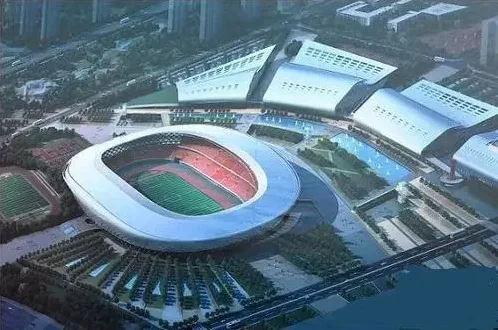
Figure 1: Rendering of Xuzhou Olympic Sports Center Stadium
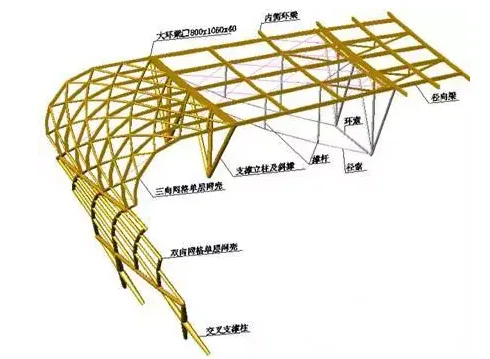
Figure 2: Sectional View of the Steel Structure of the Sports Stadium
2. Development of the Prestressed Steel Structure Family Library
2.1 Family Library Standards
For prestressed steel structures, precise component cutting, the sequence of component assembly, and the cable tensioning order during construction critically influence the final shape and stress distribution of the structure. These factors determine whether the structure fulfills architectural and structural design requirements. Due to the high complexity and demanding construction standards of prestressed steel structures, the information embedded within the BIM family models must be increasingly detailed.
When building the prestressed steel structure family library for the Xuzhou Olympic Sports Center Stadium, the focus was on generating detailed construction drawings, enabling parameter-driven modeling, and reflecting the company’s unique characteristics. Thus, the family library was developed using a customized company template. This template, based on Revit Structure’s original family templates and combined with the company’s extensive experience and standards, serves as the baseline for future projects. It includes essential parameters such as dimensions, stress values, cost, materials, and construction sequencing.
2.2 Establishment of the Family Library
Given the complexity of the Xuzhou Sports Stadium structure, creating a dedicated prestressed steel structure family library was a vital and intuitive step. The library primarily includes families such as ear plates, cable clips, cable heads, cable bodies, and complex nodes unique to this project. Figures 3 through 9 showcase these families. Each family is highly parameterized, allowing for adjustments tailored to different engineering projects, ensuring versatility and scalability.
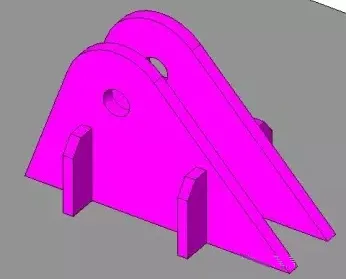
Figure 3: Ear Plate Family
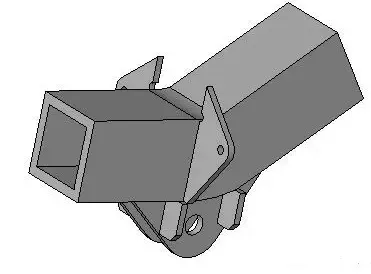
Figure 4: Complex Node Family
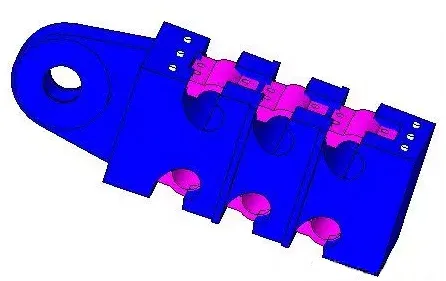
Figure 5: Loop Cable Clamp Node Family
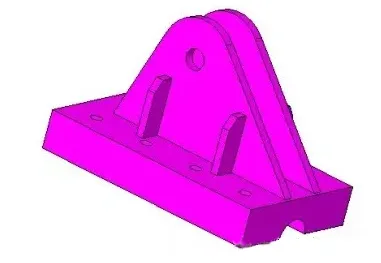
Figure 6: Upper Half of Cable Clamp Node for Radial Cables
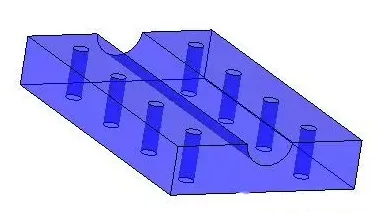
Figure 7: Lower Half of the Cable Clamp
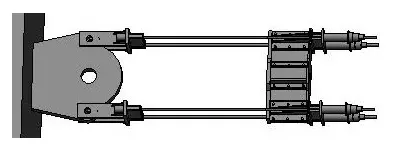
Figure 8: Cable Tensioning Tooling Family
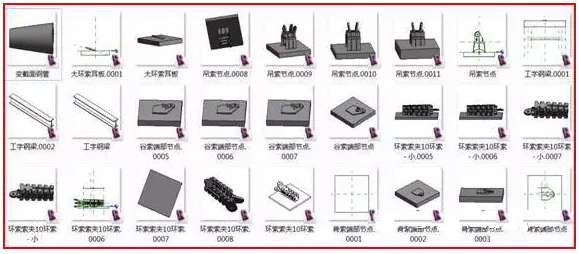
Figure 9: Prestressed Steel Structure Family Library of Xuzhou Sports Stadium
3. Conclusion
Practical engineering experience has demonstrated that the parameterized prestressed steel structural component families developed here have substantial potential for expansion and adaptation. The BIM-based parameterized design approach for prestressed steel structures not only enhances design efficiency but also significantly reduces errors, proving its strong feasibility in construction deepening design.












Must log in before commenting!
Sign Up