
The National New Urbanization Plan (2014-2020) has brought significant attention to smart cities among industry professionals. The plan emphasizes promoting smart city construction by coordinating the use of material, information, and intellectual resources for urban development. It encourages innovative applications of next-generation information technologies such as the Internet of Things, cloud computing, and big data, aiming for a deep integration with urban economic and social development.
When discussing “Smart Cities,” the intelligence of buildings is central to this concept. True intelligent buildings go beyond mere usage; their intelligence lies in the formation of interconnectedness and collaboration throughout and after the construction process. Conventional building methods—covering planning, design, construction, and operation—often face unforeseeable challenges, which is a drawback of traditional construction technologies. To address these challenges, Building Information Modeling (BIM) technology has emerged.
BIM technology supports the entire construction lifecycle, enabling comprehensive information management and intelligence at every stage. During design, BIM uses 3D modeling to provide an intuitive representation of buildings. In the bidding phase, 3D models facilitate faster and more accurate quantity calculations. The construction stage benefits from process simulations and detailed data support for management. Finally, during operation and maintenance, BIM offers intelligent, comprehensive data to building managers. This full-process application of BIM is key to smart city development, ensuring coordination and cooperation across departments. In essence, buildings are the “organs” of a city, and BIM technology serves as the vital “lifeblood” that keeps these organs functioning healthily.
During China’s 12th Five-Year Plan, the Ministry of Housing and Urban-Rural Development designated BIM as the core technology for the informatization of design and construction enterprises. They mandated that construction companies focus on researching and applying BIM during the construction phase as a primary strategic goal. Guangdong Province’s housing department encouraged collaboration among construction, surveying, design, building, and supervision parties to establish a BIM technology alliance, promoting BIM across the entire project lifecycle of large, complex projects. Similarly, Shenzhen’s Action Plan for Improving Construction Quality (2014-2018) and Shanghai’s municipal government have actively promoted BIM technology adoption.
Internationally, the United States was among the first to research information technology in construction, leading BIM development globally. Today, most US construction projects incorporate BIM at various application points, supported by numerous BIM associations and standards. According to McGraw Hill, BIM adoption in the US construction industry rose from 28% in 2007 to 71% in 2012. Notably, 74% of contractors are using BIM, surpassing architects (70%) and mechanical/electrical engineers (67%).
The UK government mandates BIM use; in May 2011, the UK Cabinet Office released the Government Construction Strategy, requiring comprehensive collaborative 3D modeling and IT management of all project data by 2016. Singapore aimed to promote BIM adoption industry-wide by 2015, developing strategies to overcome implementation challenges. Japan considers 2009 as the start of BIM adoption, with many design firms and construction companies embracing BIM. The Japanese Ministry of Land, Infrastructure, Transport, and Tourism initiated pilot projects in 2010 to explore BIM’s benefits in design visualization and information integration.
In China, BIM has become a hot topic in recent years. Beyond early advocacy by software vendors, government agencies, industry associations, experts, design units, construction firms, and research institutions have increasingly prioritized BIM promotion. Awareness rose from 60% in 2010 to 87% in 2011, with 39% of surveyed units reporting BIM software usage, predominantly among design firms. Initially, design institutes, construction units, and consulting firms led BIM adoption. Recently, property owners’ awareness has grown, with leaders like SOHO Chairman Pan Shiyi identifying BIM as a core future competency. Major developers such as Wanda and Longfor actively explore BIM applications. Large projects like the Shanghai Center and Shanghai Disney require BIM throughout the lifecycle, making it a prerequisite for project participation. BIM is also increasingly included in bidding contracts and technical proposals.
Currently, large and medium-sized design firms typically have dedicated BIM teams with practical experience. Construction companies started BIM integration later but many have since implemented and explored its use, with some successful case studies. BIM application in operation and maintenance remains in the exploratory phase.
About Wuhan Tianwei Information Technology Co., Ltd.
Wuhan Tianwei Information Technology Co., Ltd. is the earliest company in Central China dedicated to BIM consulting, training, practice, and R&D. Leveraging BIM experts and scholars from leading Wuhan universities, its team comprises some of the region’s earliest engineers engaged in BIM promotion, training, and application exploration. The company integrates BIM technology experience with IT research achievements in construction, delivering value-added solutions to clients. Over years of experience, Wuhan Tianwei has standardized business processes, professionalized operations, enhanced service capabilities, and developed business models aligned with BIM informatization and construction development.
The company’s BIM center employs over 40 professional engineers with backgrounds in major construction companies, design institutes, or related sectors, including 5 PhDs and 10 master’s degree holders. This talent pool ensures strong expertise in both BIM theory and practice. The team handles professional model construction in architecture, structure, steel structure, pipelines, equipment, and electrical systems, while also optimizing and analyzing models to meet design and construction needs. They produce construction drawings, building effect animations, construction simulations, and optimization analysis reports.
Selected project highlights:
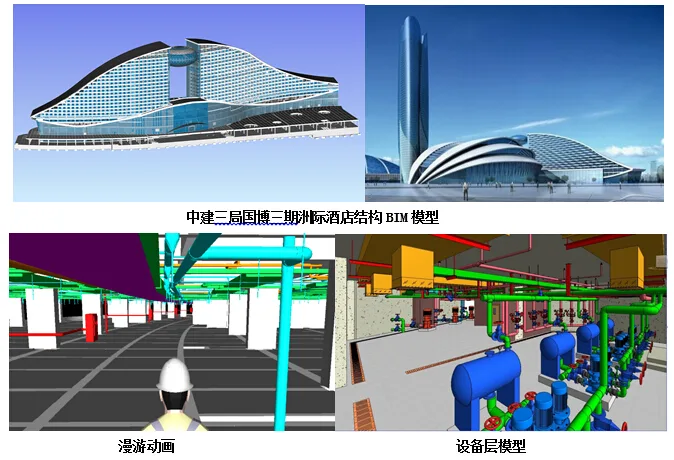
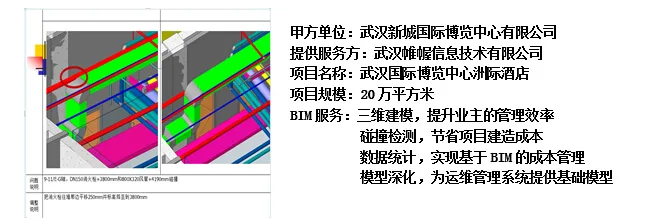
In collaboration with Guobo owners and Wuhan Construction Engineering, Wuhan Tianwei applied BIM multidimensional construction management technology to the Wuhan Guobo Intercontinental Hotel. This comprehensive BIM application covered construction plan management, cost control, and quality and safety management.
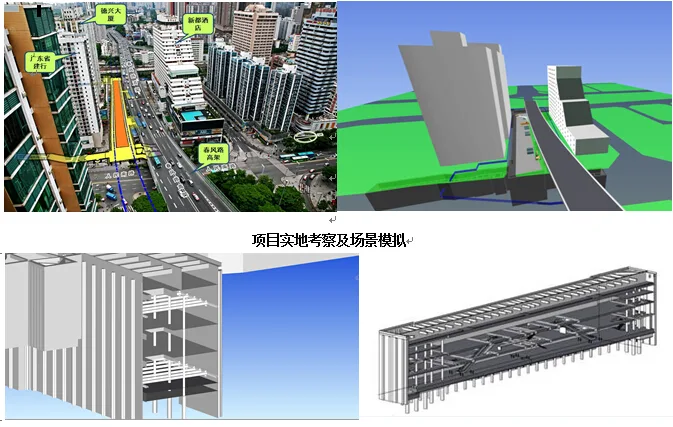
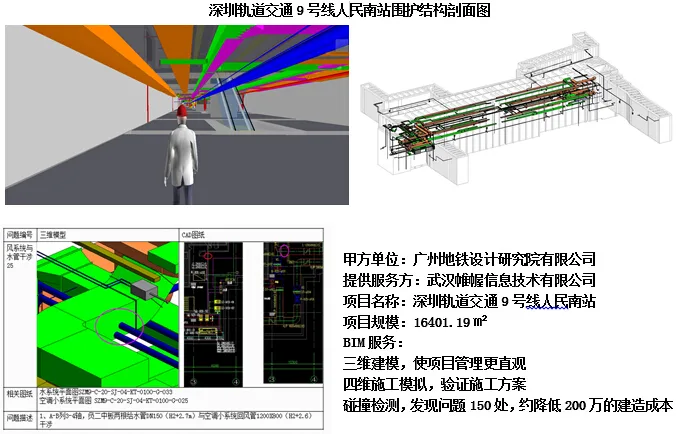
For the Shenzhen Metro Meilin Line (Line 9) People’s South Station, BIM integration technology enabled design optimization and helped the design team resolve over 200 errors.
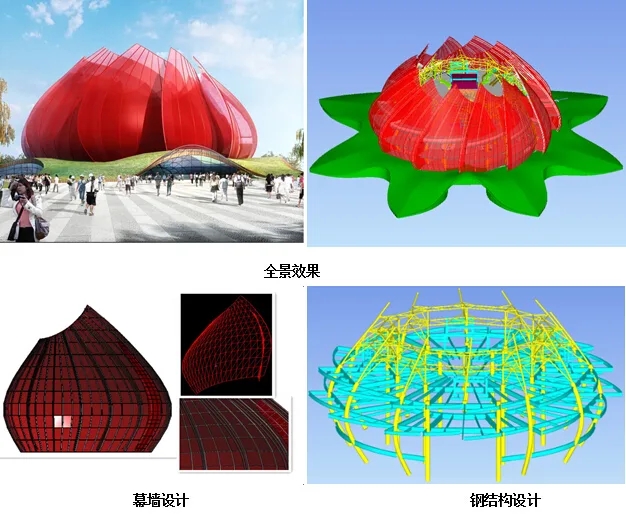
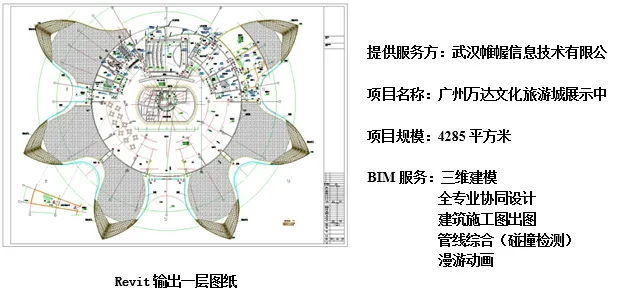
Wuhan Tianwei also contributed to BIM design applications for the Guangzhou Wanda Cultural Tourism City Exhibition Center, participating from preliminary design through construction drawing development, achieving full-process BIM implementation.
In the Zhongye Tiangong Inner Mongolia 2×45000kVA high carbon ferrochrome closed electric furnace project, BIM construction was applied to integrate bidding, construction organization, materials, and cost management, significantly improving construction efficiency.
Wuhan Tianwei has long been dedicated to digital information system research, amassing extensive building information application technologies and rich cooperative resources. The company maintains strong partnerships with major enterprises such as China Construction Third Engineering Group Co., Ltd., China Construction Eighth Engineering Group Co., Ltd., China Railway First Engineering Group Co., Ltd., China Railway Twelfth Engineering Group Co., Ltd., China Railway Fourteenth Engineering Group Co., Ltd., China Communications Second Navigation Engineering Group Co., Ltd., MCC Tiangong Construction Co., Ltd., and Wuhan Iron and Steel Co., Ltd.
Moreover, Wuhan Tianwei collaborates with renowned universities including Tongji University, Huazhong University of Science and Technology, Wuhan University, and Wuhan University of Technology. Together, these partnerships contribute to the robust development of China’s BIM industry.
Authors: Guo Qingfeng, Wang Guangbin, Xiang Peng
















Must log in before commenting!
Sign Up