
The Foshan Public Cultural Complex features square-shaped towers, forming a stylish and innovative architectural design.
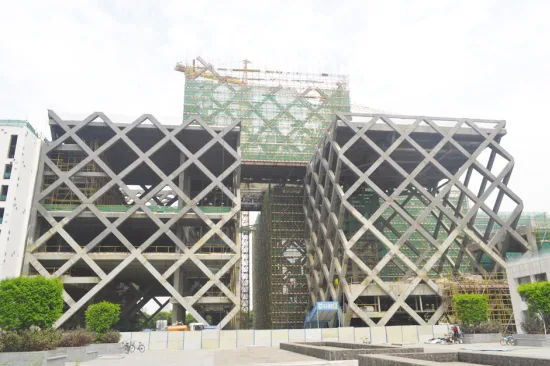
Construction of the Fangta project officially began in June last year. The four square blocks at the base have been completed, and work on the upper five square blocks is currently underway.
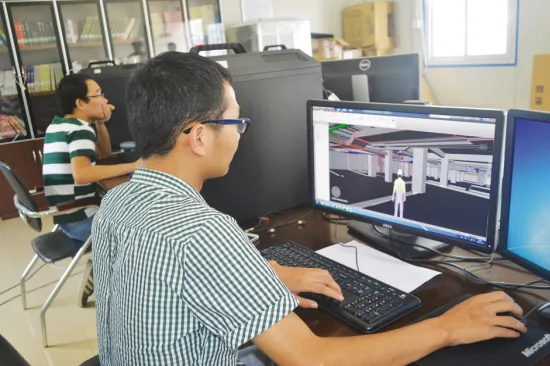
Utilizing BIM technology allows potential construction issues to be addressed during the design phase.
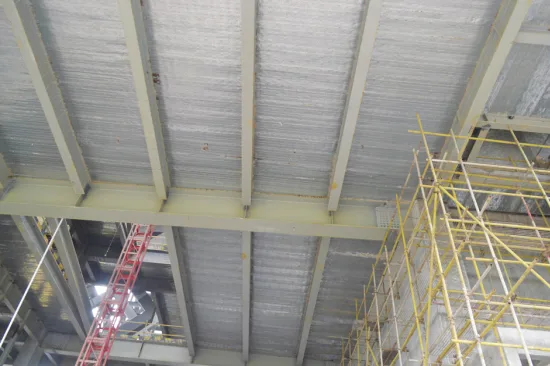
High flatness achieved in the steel truss floor support plate.
“The construction challenges of this project surpass those of Guangzhou and Xita, approaching the complexity of the CCTV headquarters building,” stated the technical director of the Fangta Project Department at China Construction Third Engineering Bureau, who oversees the construction site, during an interview.
1. The ‘Dancing Magic Cube’
Located in the core of Dongping New City, Foshan, the Foshan Public Cultural Complex is a key cultural infrastructure project currently under construction. It occupies approximately 43,400 square meters of land, with a total built-up area exceeding 70,000 square meters. The complex features two underground floors and 17 above-ground floors, reaching a total height of 153.6 meters.
This structure presents a captivating and creative “Magic Cube” design. The Fangta employs a dual lateral force resistance structural system supported by diagonal steel core tubes, comprising nine square buildings. Four square buildings form the base, while the upper five are staggered and suspended in various directions around the core tube. This arrangement creates a unique and elegant tower that appears to be dancing, resembling a Rubik’s Cube in motion.
The Fangta harmonizes architecturally with surrounding buildings in Dongping New City, the future central business district of Foshan. Nearby structures like the Foshan Media Group Building, Youth Palace, and Library predominantly feature square designs, establishing the area’s architectural style. The Fangta’s main building retains a square shape, seamlessly blending with its neighbors, but its interlocking and overlapping square towers set it apart. This “Dancing Magic Cube” design will make the Fangta a striking landmark upon completion.
2. Maximum Overhang of 9.5 Meters
The most challenging aspect of the Fangta’s construction involves its steel structure engineering. The building’s distinctive structural system and shape demand complex steelwork, including steel columns, supports, transfer trusses, roof trusses, diagonal steel columns, and outer frame columns. The total steel usage exceeds 10,000 tons.
“Unlike conventional buildings with circular steel columns surrounding a core tube containing staircases and elevator shafts, this project uses grid-shaped diagonal steel frames. The most notable feature is the extensive cantilevering: four upper square blocks are staggered and overhang outward, with a maximum projection of 9.5 meters. This overhang approach is rare in China,” explained the technical leader in charge of steel structure construction.
The overhanging structure must support the building facade’s self-weight as well as the indoor loads on the extended sections. Ensuring the quality and safety of these cantilevered elements is critical.
Due to the complex shape, especially at the corners, steel structure construction presented significant challenges. To maintain quality and precision, components were processed at fixed points in the factory. X-shaped corner steel parts were manufactured with strict control over spatial angles and pre-assembled to ensure zero errors. On-site, standardized templates marked the building’s exterior, with protrusions and recesses carefully indicated on alternating floors. Additionally, a total station was used for precise three-dimensional positioning of key areas during construction.
“We guarantee the accuracy of the installed components,” the technical manager affirmed. “Next, we plan to use a ‘tire rack’ method to ensure the stress state during construction and dismantling remains consistent, further assuring the quality of the cantilevered structures.”
Reportedly, rechecks on completed sections show maximum deviations within 1 centimeter, well below the design tolerance of 2 centimeters.
3. Steel Truss Floor Slab Accelerates Construction
The height of the Fangta varies significantly across different sections, ranging from over 10 meters to more than 42 meters. Traditional construction would require high formwork, consuming large amounts of wood and slowing progress, typically taking at least two months to set up.
“Instead of conventional methods, we used a steel truss floor support plate measuring 1.2 millimeters thick. After installing the steel beams, the steel truss floor plate is laid directly. Concrete can then be poured without removing the formwork, significantly improving efficiency and saving at least three-quarters of the construction time,” the technical director of the Fangta project explained.
This steel truss floor slab eliminates the need for high formwork or scaffolding, converting high-risk tasks into routine operations. It provides a flat working surface immediately after installation and remains part of the floor structure once completed. Additionally, the slab offers fire resistance, rated to withstand fire for 1.5 hours.
4. Safety Facilities and Model Guidance
The Fangta construction site emphasizes safety through well-designed facilities and educational models. Upon entering, various safety signs catch attention with clear, impactful messages, such as “Quick knives rust if unused; safety comes from vigilance,” reminding workers to stay alert.
A safety display area at main site entrances showcases essential equipment, including construction electrical boxes, wiring installations, edge protection for tools, guardrails for openings, mobile welding machines, cylinder frames for oxygen and acetylene, firefighting gear, and personal protective equipment like helmets, safety belts, and nets.
The site also features a safety experience zone for pre-shift training. Workers can experience simulated impacts of falling steel pipes, fasteners, and wood debris on helmets, as well as the protective effects of edge safeguards and fall arrest systems. These simulations effectively raise awareness and improve safety outcomes among personnel.
Throughout construction, the Fangta project leverages BIM technology to address issues. For example, the basement features nearly 30 densely packed pipelines—air, water, and various cable trays—arranged like a “spider web” both vertically and horizontally. Previously, conflicts between systems required costly rework, wasting materials and delaying progress. BIM allows comprehensive simulation of the construction process, identifying and resolving clashes during the design phase to prevent conflicts on site.
Reportedly, the adoption of BIM technology has significantly enhanced efficiency, resulting in smooth on-site construction progress.














Must log in before commenting!
Sign Up