
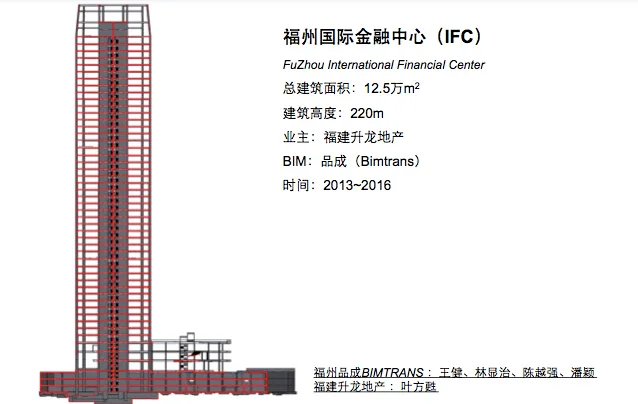
Project: Fuzhou International Financial Center (IFC)
All professional BIM models and data links for this project are developed using Trimble’s SketchUp Pro (Professional Edition) platform.
BIM Provider: Fuzhou Pincheng BIMRANS Company
The IFC BIM project is guided by the owner’s project management department, with coordination provided by an independent third-party BIM team. BIM was introduced near the completion stage of the civil engineering phase. The goal is to explore how BIM can enhance the construction process through collaborative applications by focusing on:
- The practical value of BIM in improving communication, cost control, scheduling, risk management, and other aspects of real estate project implementation;
- How BIM teams can integrate into the real estate project management system and collaborate effectively with various departments;
- Expanding BIM applications into additional areas beyond the initial scope.
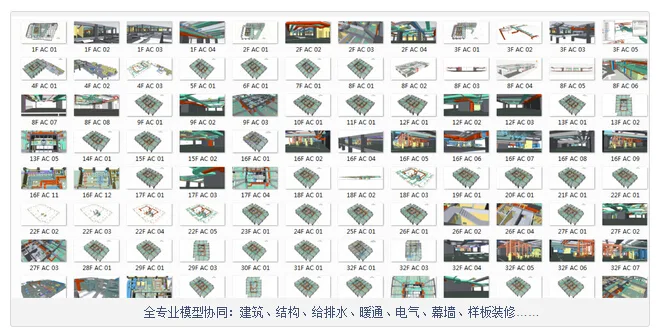
Overview of SketchUp BIM in the IFC Project
Leveraging secondary development of SketchUp Pro, Windows applications, and other tools, the project team gradually established model libraries for various building components. These models adhere to domestic design and construction industry standards, allowing for clear representation of building systems and seamless linking of building information files.
Key Features of SketchUp BIM:
- The SketchUp platform is streamlined and highly scalable, providing designers with creative freedom to expand their ideas and enjoy the modeling process.
- Its openness supports the creation of complex and large-scale BIM building systems through component libraries, secondary development, and customized enterprise standards.
- Despite skepticism about SketchUp’s professionalism, its simplicity enables building professionals to quickly master the tool. A professional modeling team ensures BIM models meet engineering standards and support construction and operational needs.
- SketchUp requires relatively low hardware specifications, facilitating smooth interaction between BIM companies and clients, and embodying BIM’s collaborative principles.
- The platform delivers sufficient model accuracy combined with excellent visualization capabilities.
- Fast modeling speeds and easy integration of professional models with large-scale sub-models meet the tight construction schedules typical in domestic real estate projects and align with actual engineering practices in China.
The Goal of SketchUp BIM
BIM draws from mature industrial design and manufacturing concepts, aiming to transform the current extensive reliance on 2D drawings, which causes collaboration difficulties and wastes human and material resources during design, construction, and operation phases of the construction industry.
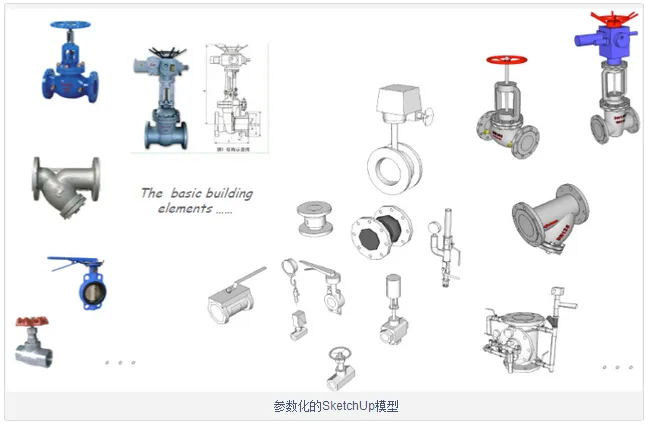
The core of parametric design involves:
- Feature-based finite element modeling;
- Modular modeling concepts combined with a unified database;
- Collaboration between design and manufacturing processes.
Objectives:
- Facilitate the representation of complex architectural forms, products, and components to enhance professional understanding and smooth project execution;
- Address challenges like rework, unclear interfaces, repetitive resource waste, and project delays caused by asynchronous subcontracting and poor collaboration;
- Enable transparent project management to improve investment efficiency.
SketchUp BIM’s Value to Owners
1. Visualization
BIM’s visual representation supports spatial relationship analysis, interdisciplinary understanding, design optimization, early problem detection, and simplified communication. This reduces design changes and rework, helping owners make faster, informed decisions. Transitioning from 2D to 3D modeling, BIM’s value is realized only when models are combined with real workflows and processes.
Through active communication with construction units and the owner’s management department, BIM collaboration has been applied to complex node discussions, sample layer construction, comprehensive management coordination, curtain wall detailing, decoration coordination, and more. SketchUp models’ exceptional visualization and portability greatly facilitate on-site presentations, project meetings, and multi-party communication.
2. Coordination
In practice, subcontractors enter the project at varying times with different contracting methods. Despite seemingly clear project interfaces, frequent mistakes, omissions, and changes occur during construction, causing additional costs and delays. Change orders can represent 10% to 25% of the total contract value, increasing owner costs and wasting professional staff efforts across departments.
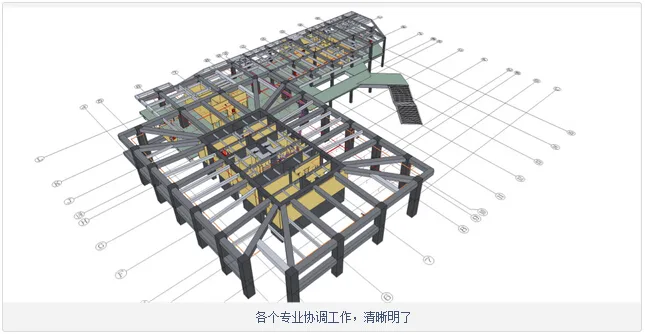
BIM technology’s critical value lies in linking various professional models to visually expose problems and anticipated effects, streamlining communication and accelerating decision-making and execution. The portability of SketchUp models enables convenient interaction with various owner departments on their devices, embodying BIM’s core principles of design and construction collaboration.
3. Informatization
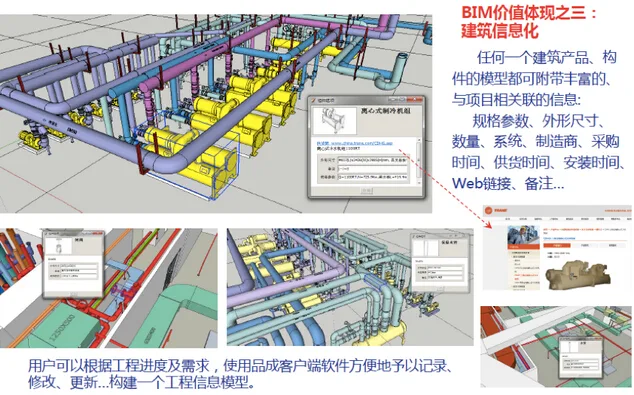
The most promising BIM value lies in the integration and application of building information embedded in the model system. In this project, every SketchUp building product and component carries rich, project-relevant data accessible to technical, engineering, procurement, and other departments for retrieval and quantity analysis.
The scope of BIM information application is broad. Coordinating, summarizing, analyzing, and applying this information—especially for transparent cost control—is still under exploration by the project and its functional departments. Future efforts will focus on collaboration with other advanced Trimble software and hardware.
4. Process-Oriented Approach
Successful BIM implementation requires collaboration among software developers, professional BIM teams, and owner teams.
BIM is not a one-time design task; it is a dynamic information model continuously updated throughout design changes, project progress, and procurement confirmations until completion. This approach aims to create a building information model as close to reality as possible.
Our third-party team collaboration model centers on the owner management department, involving all departments and project phases to harness professional collaboration.
Resistance to BIM adoption is expected to diminish gradually—from initial skepticism (“less is better”) to understanding that “more BIM leads to fewer problems.” When communication and workflows improve, stakeholders become more willing to embrace this methodology. A process-oriented BIM implementation supports effective project adjustment and control at different stages.
SketchUp BIM Engineering Case Studies
1. Early Problem Detection
While 2D drawings from different disciplines may appear coordinated individually, combining them often reveals conflicts.
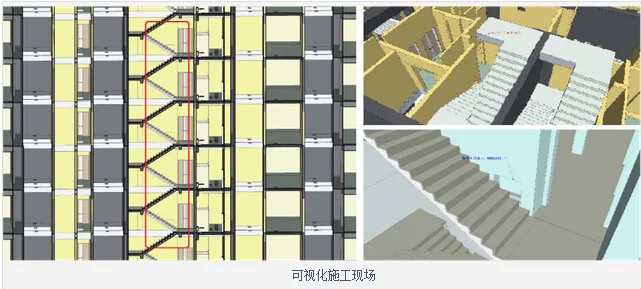
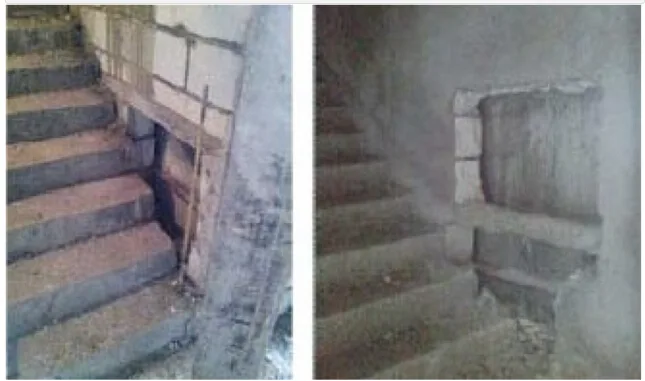
For example, during civil engineering, a coordination error between architectural and HVAC disciplines caused clashes between the fire stairwell’s positive pressure air supply opening and stair treads. Resolving this required costly and time-consuming modifications, including reconstructing masonry openings across 11 floors, resulting in additional expenses and schedule delays.
Traditional 2D design leads to frequent collaboration issues during construction. Early BIM integration allows problems to be identified and resolved by professional departments, significantly reducing effort and costs.
2. Integrated Mechanical and Electrical Pipelines
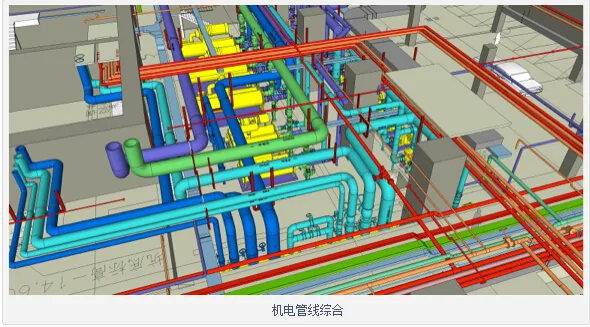
2D construction drawings for mechanical and electrical management often lack clear spatial relationships and involve multiple specialties and subcontractors, complicating coordination. This is especially challenging in complex pipeline areas, making it difficult for owners to make decisions regarding building height and optimization.
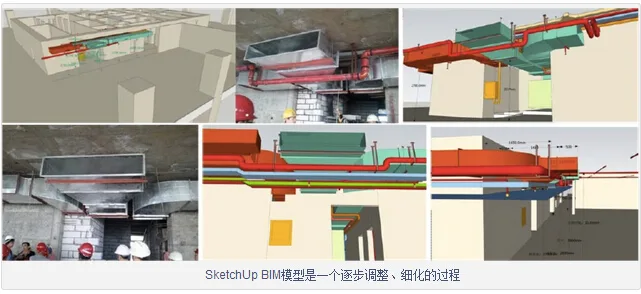
For example, at the project’s 16th and 32nd floors—conversion layers with numerous large equipment and complex pipelines—installation proved challenging. Before construction, we collaborated with related departments to link multiple professional models. Using intuitive SketchUp models, we clarified spatial relationships and simulated pipeline installation sequences and elevations based on professional experience. This iterative process resolved installation bottlenecks in core tube wells and elevator exits, reducing rework and shortening execution times.
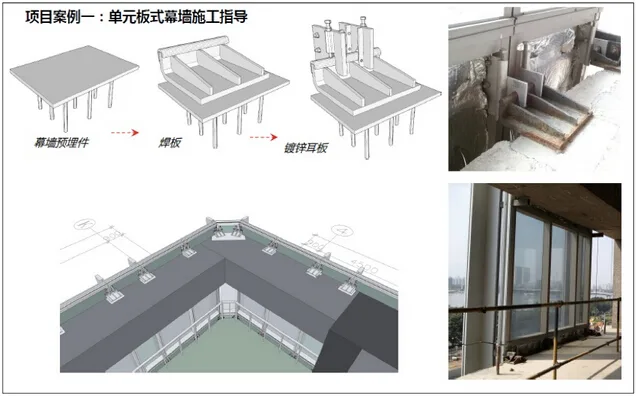
3. Complex Node Simulation and Construction Guidance
The super high-rise project demands high construction quality across structural forms, curtain wall installation, MEP systems, and finishing. Through SketchUp BIM simulations, the owner’s design institute, construction units, and manufacturers maintain smooth communication. This reduces the impact of varying construction experience and personnel quality, helps control risks, accelerates progress, and lowers costs.
4. Project and Specialty Collaboration
Effective coordination between design and construction subcontracting reflects strong project control and delivers direct economic benefits.
Case Study: BIM collaboration on the template and sample layers aimed to:
- Establish reasonable floor heights and define office area decoration styles;
- Identify potential issues early through pre-installation of MEP pipelines, decoration coordination, and collaboration among construction units;
- Provide guidance on material procurement, installation plans, and decoration styles for other floors.
Challenge: Complex MEP pipelines from the elevator shaft to the inner corridor ceiling raised concerns about meeting the owner’s floor height requirements.
5. Model Output and BIM-Based Cost Management
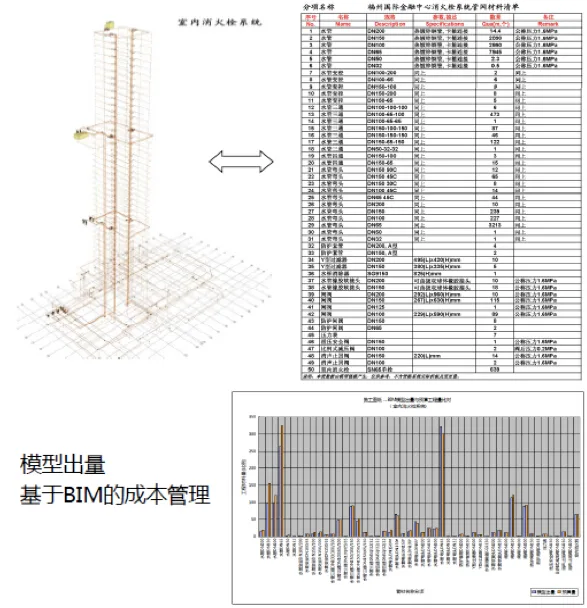
Once the stage building information model is established, its data can be classified, systematized, and extracted in stages to assist the owner’s control department with project understanding and data analysis.
After establishing the stage model, component sampling for building materials and MEP main materials began according to owner requirements. Although BIM output is non-lossy and highly reliable, it currently serves as a reference for engineering, procurement, and budgeting departments.
Discrepancies between CAD designs, BIM models, and actual construction sites exist but are within acceptable limits. Three parallel quantities—construction bidding, owner budgeting, and BIM model outputs—allow verification and clear understanding of equipment queries and inventory for unfamiliar disciplines through visual models.
6. Sample Area Decoration Assistance
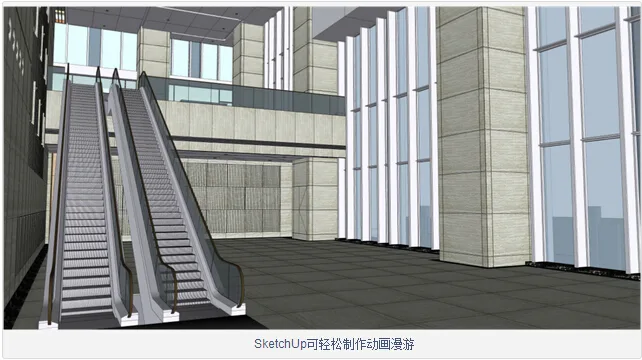
SketchUp Pro provides excellent visualization and simulation capabilities for public area walkthroughs, aiding design decisions.
7. Curtain Wall Detailing Support
The nearly 50,000-square-meter unit panel curtain wall involves design, processing, batch production, on-site storage, installation, communication, and documentation. SketchUp BIM collaboration at both macro and micro levels has proven valuable in helping owners optimize design and coordinate installation schedules.
Other Applications of SketchUp BIM
Additional tasks during the SU BIM collaboration include:
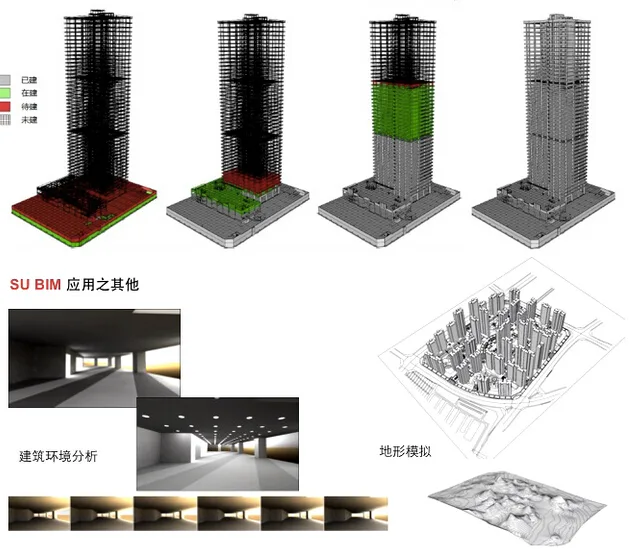
- Visualizing construction progress;
- Supporting prefabrication based on BIM models (e.g., high-precision prefabricated templates, curtain wall components) to reduce costs and ensure quality and schedule;
- Building environmental simulations.
Summary of SketchUp BIM in IFC
BIM visualization and collaboration bring tangible benefits to owners, but the development of new communication platforms and management systems may have even deeper implications for enterprises. Early adoption and effective use of BIM not only save project costs and schedules but also enhance core competitiveness.
Throughout the project, the BIM team has worked closely with the owner’s management department and construction subcontractors. While some shortcomings remain, the third-party BIM service collaboration model and its value have begun to emerge and gain recognition from the owner.
Article Author: Wang Jian, Fuzhou Pincheng BIMTRANS
Project Implementers: Wang Jian, Lin Xianzhi, Chen Yueqiang, Pan Ying
Fujian Shenglong Real Estate: Ye Fangsu














Must log in before commenting!
Sign Up