
Contributed by: Yu Tuan Tuan (Shanghai Vanke), Chen Siyuan (Nanjing Zhenghua)
1. Project Overview
Shanghai Vanke Real Estate Co., Ltd. (referred to as Shanghai Vanke) is a subsidiary of Vanke Enterprise Co., Ltd., the largest professional residential developer in China. Founded in May 1984, Vanke Enterprise entered the real estate industry in 1988. Over more than 20 years of development, it has grown into the largest residential developer in China. Currently, its business spans over 50 major cities across the Pearl River Delta, Yangtze River Delta, Bohai Rim economic zones, as well as central and western regions.
The Vanke Qibao 53# project is located in Qibao Town, Shanghai, bordered by Caobao Road to the north, Qingnian Road to the south, Qishen Road to the west, and Minzhu Road to the east. The total construction area covers 239,526 square meters, comprising 127,750 square meters above ground and 111,776 square meters underground. The above-ground area is dedicated to commercial spaces, including rental shops, amusement parks, cinemas, restaurants, and other diverse formats. Part of the underground level also contains commercial spaces, connected to the north side of Line 9 and the west side of Line 17 subway lines. The rest of the underground levels (first, second, and third floors) serve as parking garages, equipment rooms, warehouses, and logistics areas.
As Vanke’s first commercial venture in Shanghai, the project is designed to be a large-scale shopping center offering shopping malls, cinemas, dining, exhibitions, and a variety of services. It aims to provide comprehensive “one-stop” services including shopping, leisure, entertainment, and cultural education.

Shanghai Vanke Qibao Vanke Center Rendering
2. BIM Application Practice and Planning
The implementation of BIM technology in this project focuses on three main areas: enhancing design quality, supporting construction management, and facilitating future operation and maintenance.
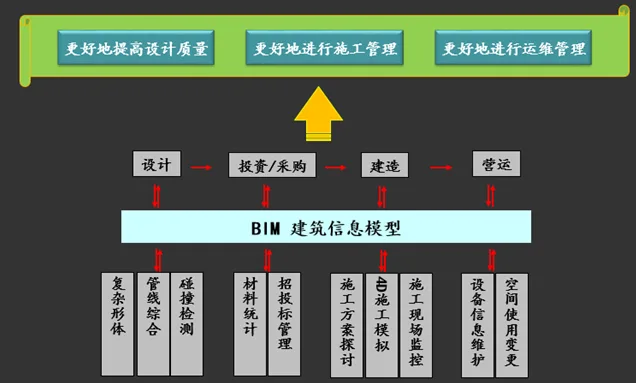
BIM Implementation Framework Diagram for Shanghai Vanke Qibao Vanke Center
This project integrates BIM throughout the construction drawing and design phase to identify errors, omissions, and deficiencies in drawings, enabling timely updates and ensuring high-quality documentation. During construction, BIM assists with pipeline coordination by considering space usage, net height requirements, and equipment lifting needs, improving overall construction management. In the operation and maintenance phase, specialized BIM consultants refine and finalize the model based on actual conditions to support ongoing facility management.
2.1 BIM Application Objectives
BIM application planning requires practical, stepwise strategies aligned with project timelines and company development goals. Each phase must have clearly defined conditions and objectives. For organizations new to BIM, the initial focus is establishing a BIM-based workflow. The aim is to clarify who does what, when, and to what extent. This process should build upon existing workflows, organizing activities by key events, prerequisites, procedures, assigned responsibilities, and deliverables with completion standards.
Given the complexity of this large commercial project and the involvement of multiple general contractors, design quality, coordination, and construction standards are key concerns for the Shanghai Vanke project management team. From the outset, senior leadership expressed strong interest in leveraging BIM. The successful adoption of BIM in the Vanke Qibao Commercial Plaza project is expected to catalyze wider BIM implementation across Vanke’s future projects, establishing a comprehensive set of standards covering events, assumptions, workflows, role responsibilities, and deliverable criteria.
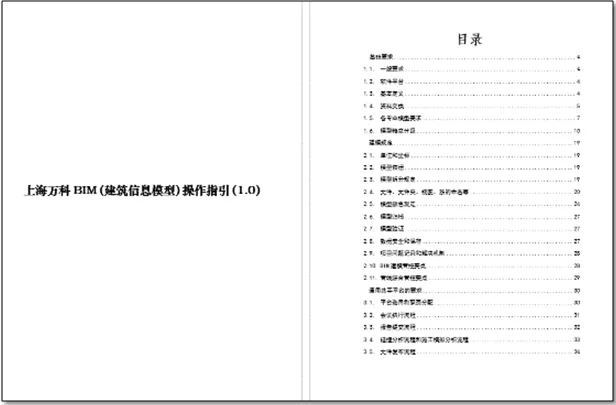
Shanghai Vanke BIM Application Standard Operating Guide Version 1.0
2.2 BIM-Assisted Design
Project Challenges:
1. In design, common issues include errors, omissions, clashes, and shortcomings in construction drawings, such as conflicts among building structures, water supply and drainage, HVAC, electrical systems, and interior finishes, as well as high-clearance demands in certain areas. Limited project timelines require BIM technology to efficiently detect these problems.
2. From a construction standpoint, improving drawing quality ensures project quality by addressing reserved holes and resolving structural clashes. BIM also facilitates 3D dynamic simulation of complex construction processes.
3. Regarding pipelines, the basement commercial areas feature dense pipe layouts with strict clearance requirements. BIM modeling for various disciplines revealed many design inefficiencies. Using Navisworks for clash detection exposed numerous conflicts, necessitating extensive coordination with design institutes and mechanical and electrical contractors.
Software Used:
Modeling for each discipline was completed using Autodesk’s suite of BIM tools, including:
Autodesk® Revit® Architecture
Autodesk® Revit® Structure
Autodesk® Revit® MEP
Autodesk® Navisworks®
During the design phase, BIM application points were developed based on project complexity and specific challenges at each stage. BIM modeling laid a critical foundation, with flexible model usage to create value. Given the large scale and complex functional layout of Qibao Vanke Plaza, Autodesk Revit tools were extensively employed to refine technical details of key project components.
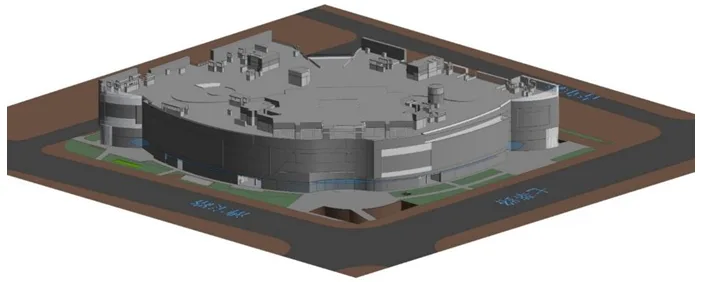
Overall Model View
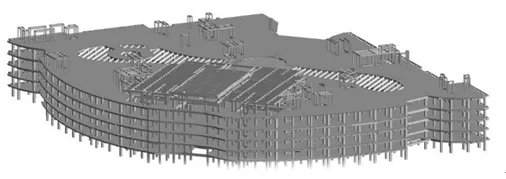
Structural Model
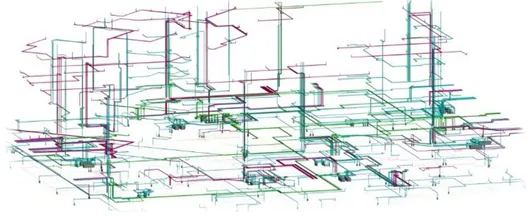
Mechanical and Electrical Model
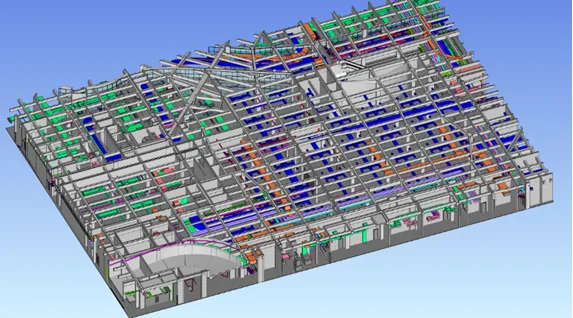
Integrated Professional Models
Design Optimization:
Throughout the design phase, BIM was used for multiple rounds of optimization in civil and mechanical-electrical engineering, particularly focusing on the basement’s specialized design challenges.
Commercial Complex Space Planning
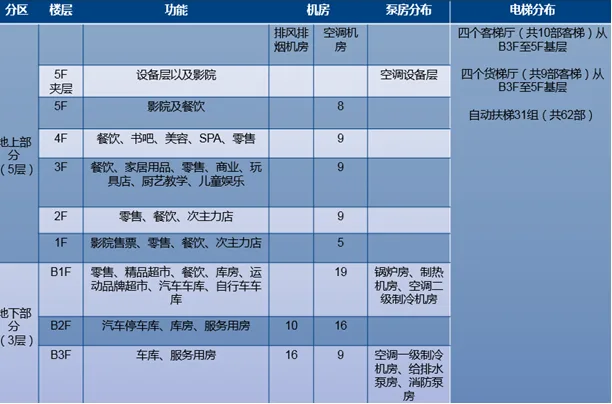
Civil Engineering
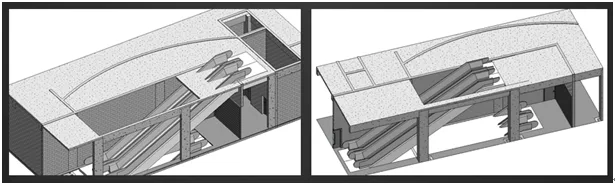
Before and After Modification
Mechanical and Electrical Systems
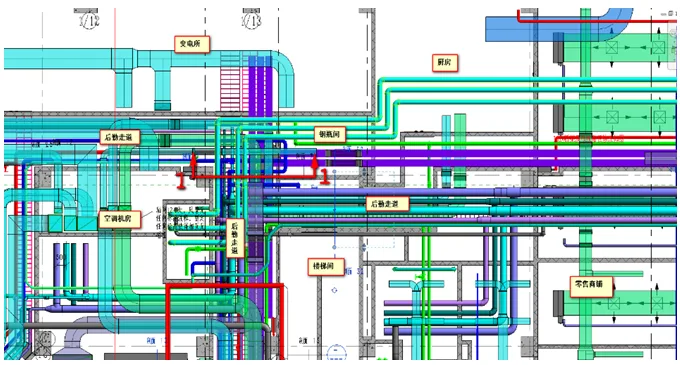
Explanation: Pipeline adjustments were made in areas with complex, dense arrangements that did not meet clearance requirements.
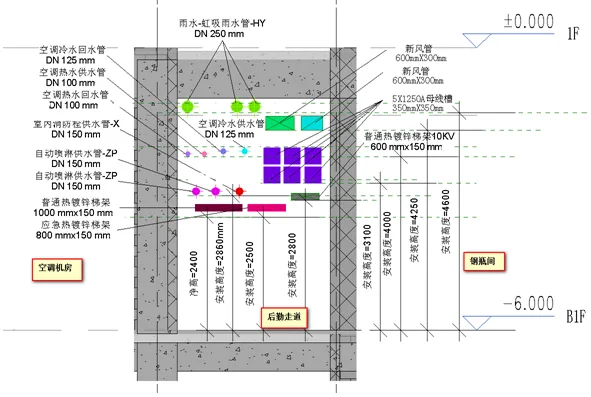
Explanation: The space needed for each discipline was optimized through clear and realistic visualizations.
Comprehensive Pipeline Clash Detection
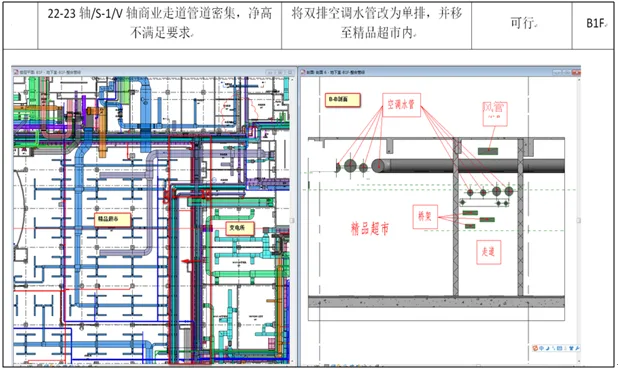
1. Narrow logistics corridors, dense piping, insufficient clearance, and pipes crossing through retail shops:
2. Issues with water pipes passing through structural beams:
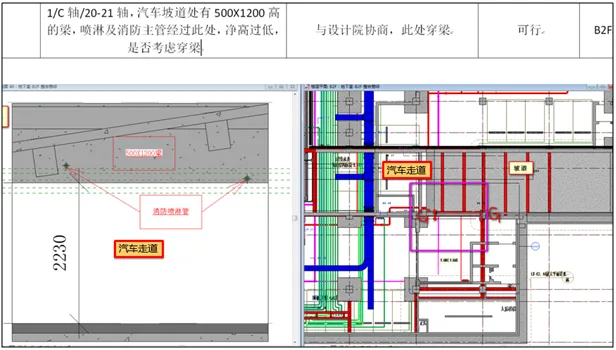
Using BIM software to analyze the models, over 10,000 effective clash points were identified. After filtering out those allowed by design standards, more than 2,000 clashes remained. Clash reports were generated in standardized formats and sent to the design institute for correction during coordination and drawing revision phases.
Clash Report for Shanghai Vanke Qibao Vanke Center
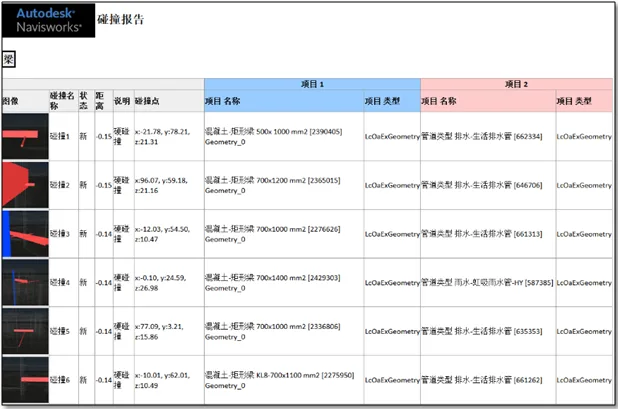
During construction, the BIM team collaborated closely with the general contractor’s mechanical and electrical installation team to coordinate pipeline integration and installation requirements. The BIM team incorporated these into the model, providing feedback to construction drawing designers. Through multiple iterations of modeling, review, and adjustment, detailed construction drawings were finalized, ensuring that the net heights of underground and public walkway areas met all requirements after pipeline coordination.
Construction Drawing Detailing
Example: Pipeline routing near the logistics corridor adjacent to the Caobao Road boutique supermarket in the basement level:
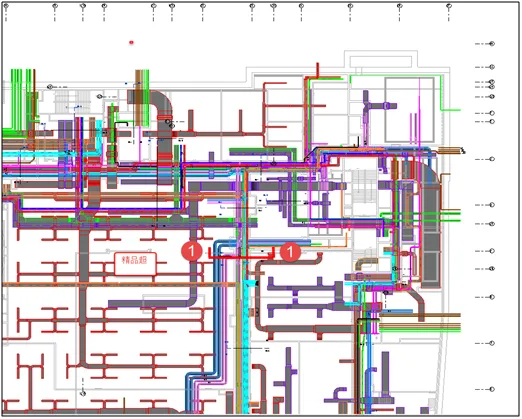
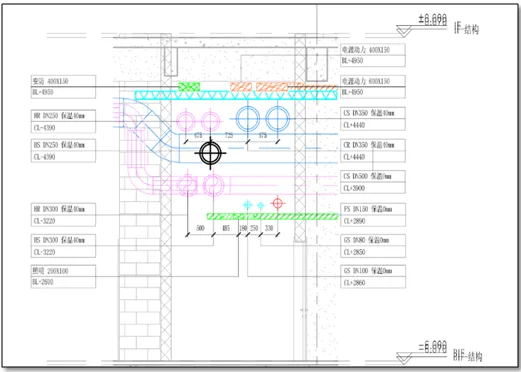
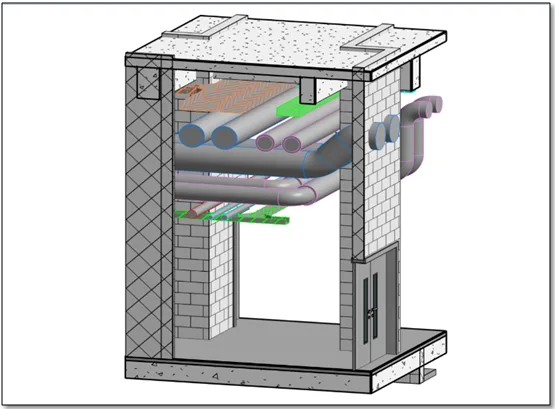
3D Integration of Construction Detailing Drawings
4. BIM Cloud Platform
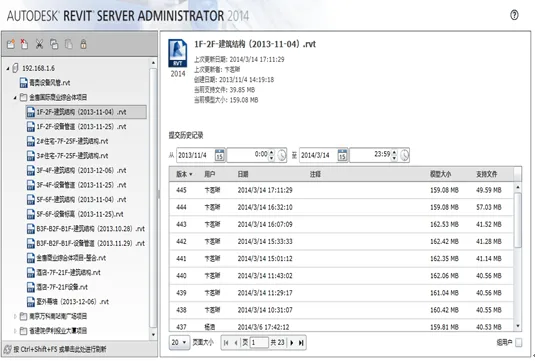
To enable the project team to view and navigate BIM models on standard laptops and various devices, a BIM cloud platform system was established. This platform facilitates local viewing and system management, while also addressing cross-network BIM collaboration challenges by processing all operations within a centralized data center.


Summary:
Shanghai Vanke’s management has placed great emphasis on BIM, actively promoting its application throughout the entire project.
Through BIM implementation in the Vanke Qibao Commercial Plaza project, collaboration across multiple teams has been strengthened, accelerating BIM adoption in future projects and enabling comprehensive, forward-looking project execution.
Project personnel’s practical knowledge and skills in BIM have significantly improved, inspiring enthusiasm among Vanke’s younger team members.
Using a BIM-led design process—where models precede drawings—allows for deeper early-stage design exploration compared to traditional methods. This approach facilitates cross-disciplinary coordination and enhances design organization and critical thinking.
BIM technology has played a vital role in improving construction drawing quality, optimizing pipeline layouts, and conducting thorough collision detection, all of which ensure high-quality, efficient project delivery.
Looking ahead, Vanke plans to integrate BIM data with project management and cost systems to enable seamless extraction and application of information for future operation and maintenance. This integration is key to sustained BIM adoption and realizing BIM’s full potential throughout the project lifecycle.














Must log in before commenting!
Sign Up