
To enhance the management quality of bridge construction, the Road and Bridge Group has pioneered the pilot implementation of BIM technology on large-scale bridge projects. Let’s explore how BIM technology is deeply integrated into the Zhaoqing Yuejiang Bridge project.
1. BIM Organizational Deployment
The Road and Bridge Group applies BIM at the project level, assigning engineers to the Yuejiang Bridge project to handle BIM modeling, applications, structural analysis, and provide technical support for key project phases. Throughout the process, the BIM plan is dynamically adjusted based on issues identified during model development. The model is also updated in response to changes in plans and design drawings, seamlessly integrating BIM technology into daily project management.
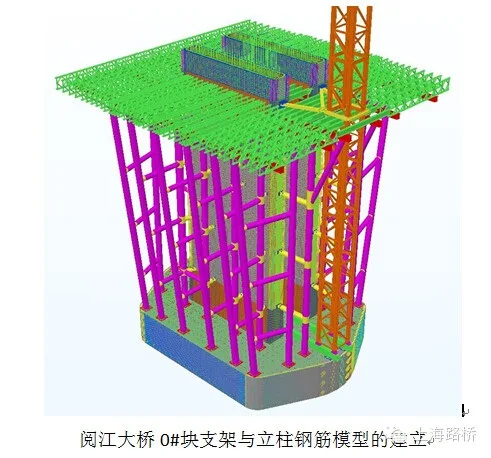
2. 3D Model Development
The BIM application for the Yuejiang Bridge encompasses detailed 3D models of both permanent steel reinforcement structures and various temporary facilities and construction equipment. Key features of these models include:
1) Separate modeling and application phases, building three-dimensional models in blocks and segments.
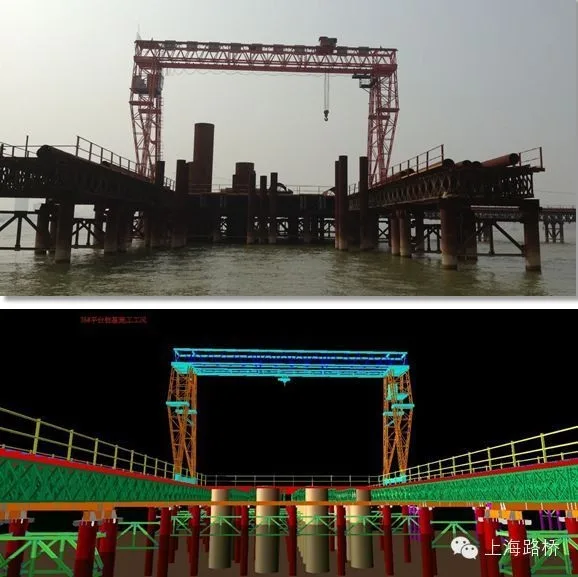
2) High accuracy: permanent structures are modeled down to each steel bar, while temporary structures are accurate to every screw.
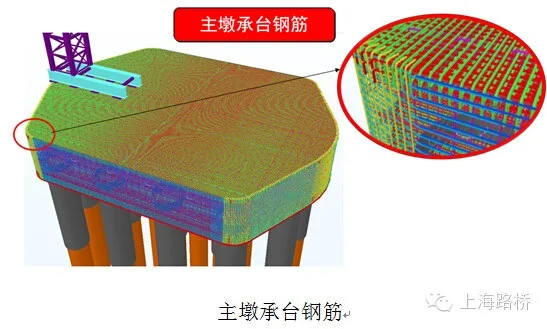
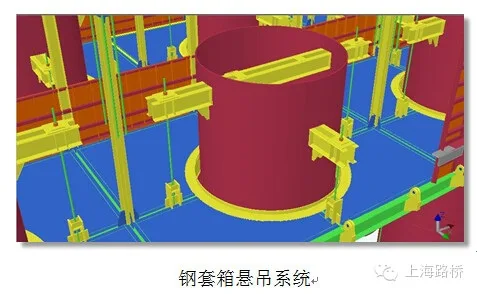
3) Leveraging the combined technical expertise within the Road and Bridge Group by utilizing various software tools such as TEKLA, AUTOCAD, and SKETCHUP for modeling, maximizing the strengths of each platform.
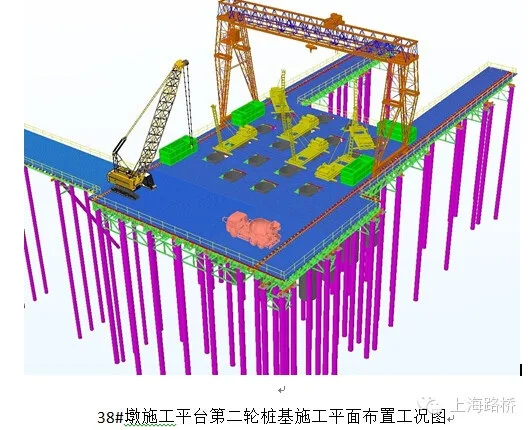
3. Model Applications
The Yuejiang Bridge construction involves numerous temporary structures and heavy machinery. The water operation platform is susceptible to flooding, resulting in limited construction time and space. Additionally, many embedded parts are reserved for subsequent processes, placing significant demands on the rational arrangement of the construction site.
BIM models have been primarily utilized in the following ways:
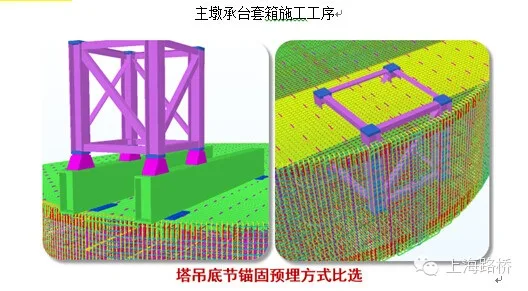
1) Dynamic simulation of construction processes and scheme comparisons. The construction of the main bridge pier is the most complex and risky subproject of the lower structure. A BIM model of the steel platform and steel suspension box was created to simulate the construction process dynamically. This model supports technical briefings and guides the construction process.
Dynamic simulation of steel box construction for Zhaoqing Yuejiang Bridge
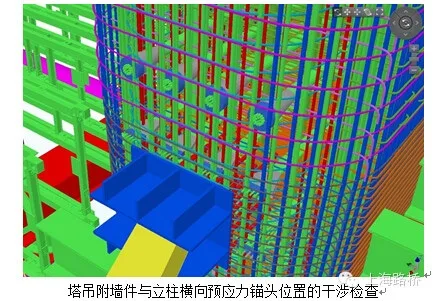
2) Interference checks. Design errors discovered during the modeling phase were identified and resolved before construction began. Additionally, extensive model inspections helped detect clashes between temporary and permanent structures, eliminating obstacles to smooth construction.
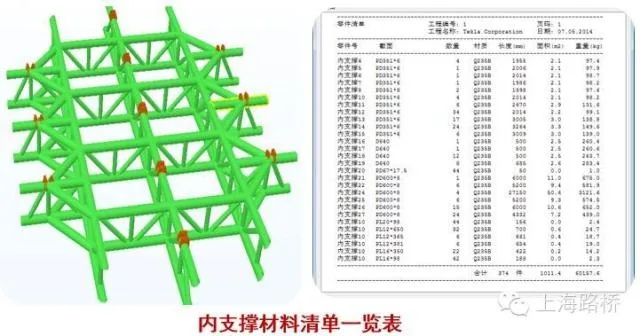
3) Statistical analysis of material quantities for both permanent and temporary structures. By comparing quantities derived from detailed models to those from drawings, inconsistencies in workload statistics were identified.
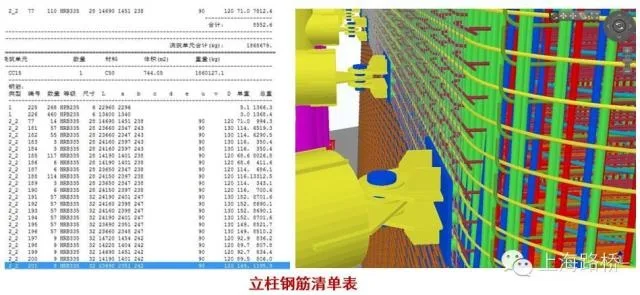
The Significance of BIM Technology Application
The introduction of BIM models has transformed site management at the Yuejiang Bridge project. Increasingly, critical activities such as design discussions, technical briefings, on-site problem analysis, and workload accounting are conducted based on these models. The Road and Bridge Group is committed to steadily advancing BIM technology application according to project needs. Only by fully integrating BIM within the project team can its true value in project management be realized.














Must log in before commenting!
Sign Up