
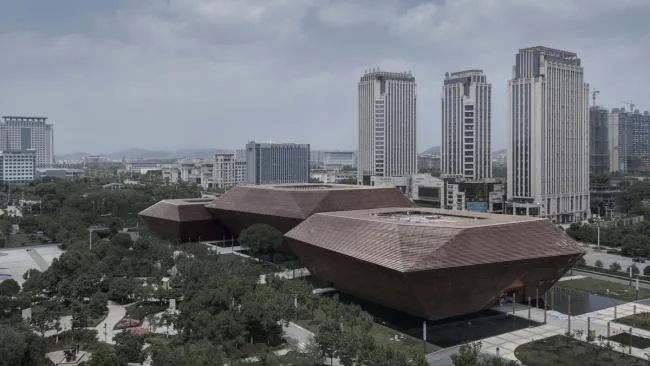
▲ Overall view of the building
Shangrao is a developing inland city, and like most other inland cities, its urban construction is in the process of renewal and rapid expansion. Multiple relatively small-scale urban cultural buildings forming a large-scale comprehensive building is a very typical type of architecture in this context, and it is a common issue that architects encounter in the process of urbanization.
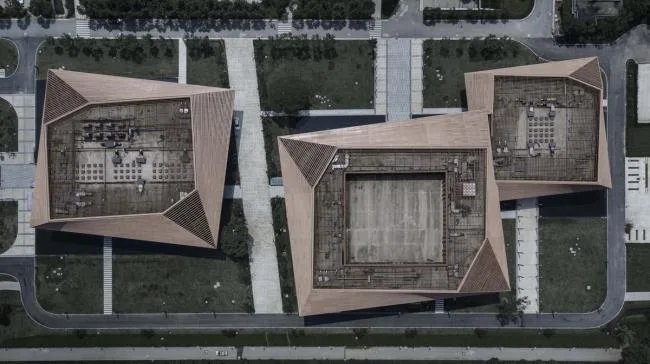
▲ Aerial photography of building roofs: Hou Bowen
The museum site is located on the east side of the urban central axis in the central urban area of Shangrao, covering an area of approximately 40000 square meters with a total construction area of 42000 square meters. It includes a museum, urban planning exhibition hall, and urban construction archives. The main axis of the city connects the administrative center, citizen park, entrepreneurship park, and landscape mountain from north to south, and extends all the way to Xinjiang. The urban square has a grand scale and is surrounded by high-density urban buildings, forming a sharp contrast between high-density and zero density. The museum base is 360 meters long, spanning two different spatial orders of different densities. The biggest design issue is what features the building needs to use to communicate with these two.
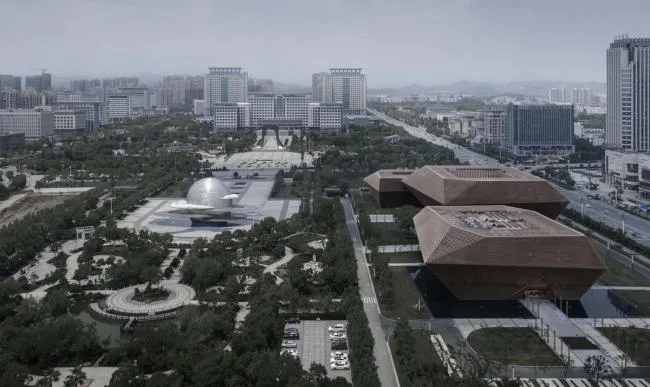
▲ Shangrao Sanguan located on the east side of the city’s central axis Photography by Hou Bowen
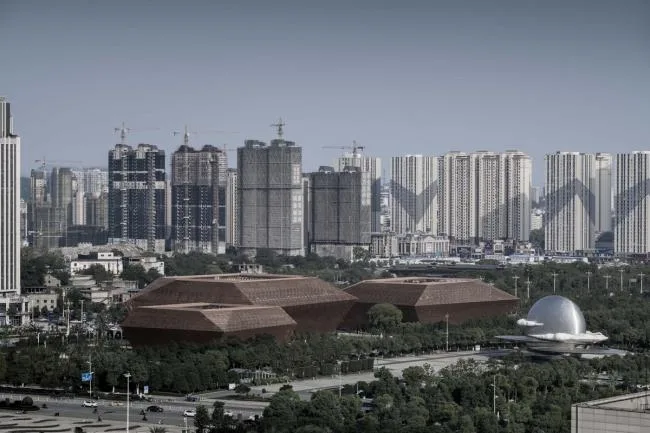
▲ Architectural panoramic photography: Hou Bowen
The design first avoids the pursuit of a holistic layout of building volume, and sequentially arranges three building volumes from south to north: the Urban Construction Archives, the Urban Planning Exhibition Hall, and the Museum. According to the user population, area, and method, the three volumes are of different sizes and arranged in a staggered manner from east to west. Several outdoor spaces of different scales are formed on both sides of the BIM (Building Information Modeling) site in the direction of urban squares and roads. Different content and landscape elements are set according to the functional use of the building, thus clarifying the way people enter and play in the building. In addition, these outdoor spaces form a transition between urban roads and the central square, enriching the sense of scale and functionality of the central square, and endowing the magnificent central square with the atmosphere of citizens.
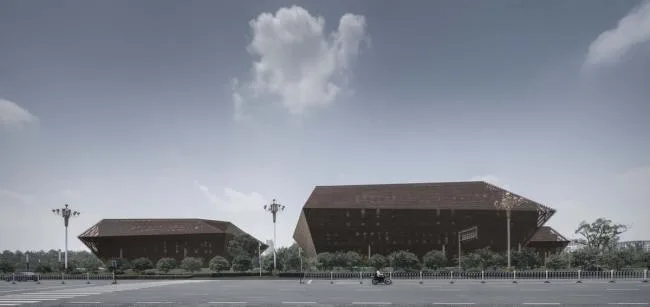
▲ View the entire building along Guangxin Avenue Photography by Hou Bowen
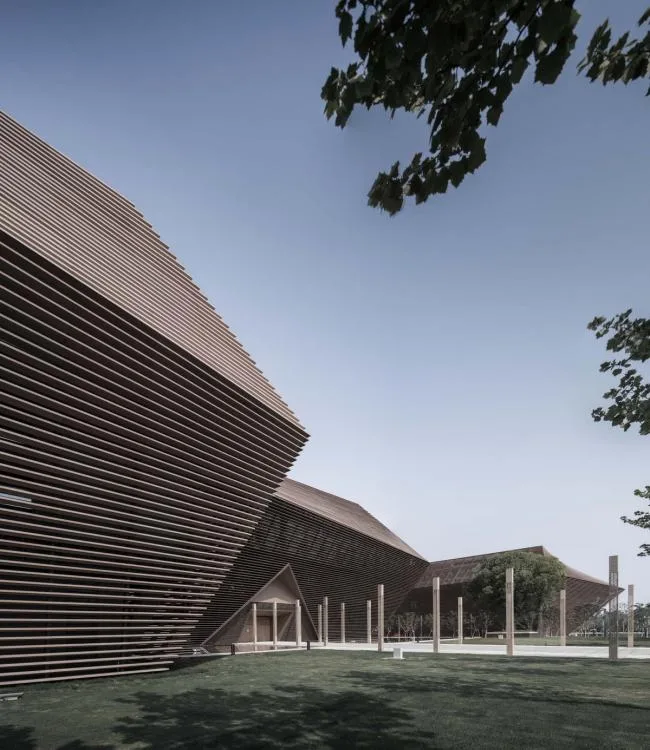
Southeast facing People’s Perspective Photography: Hou Bowen
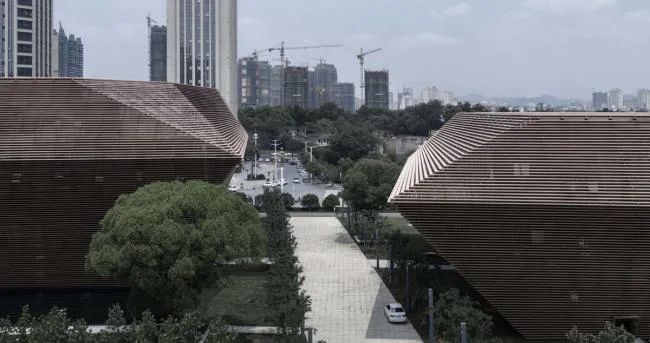
▲ Museum and Urban Planning Exhibition Hall Photography: Hou Bowen
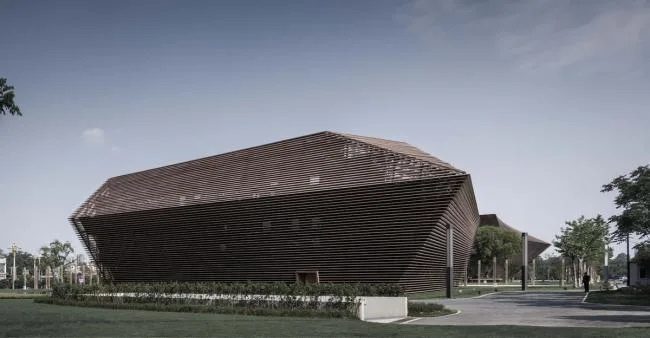
▲ South facing Photography of Urban Construction Archives: Hou Bowen
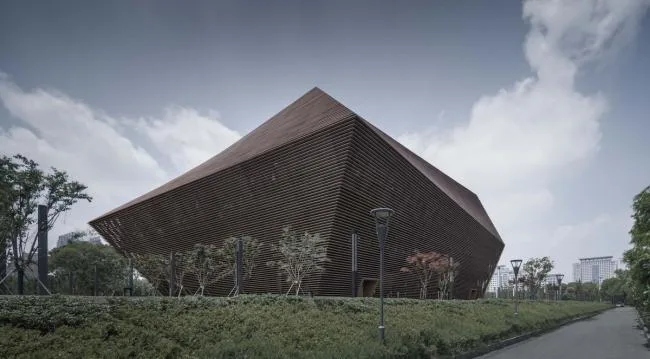
▲ Southeast facing Museum Photography: Hou Bowen
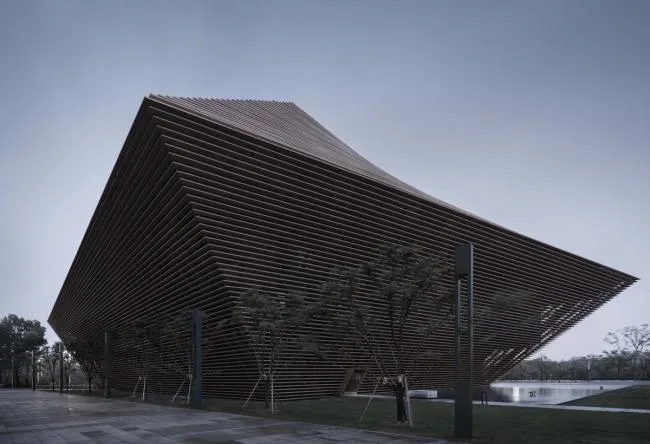
▲ Photography of the museum’s eastern entrance: Hou Bowen
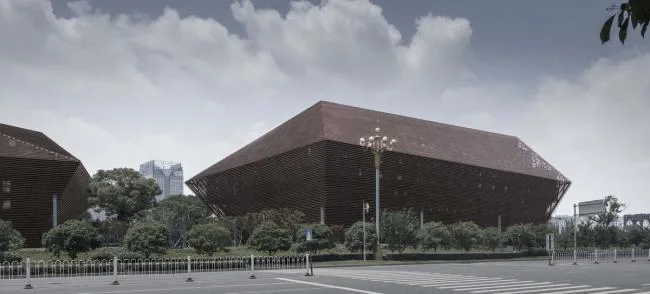
▲ Viewing the Planning Exhibition Hall along Guangxin Avenue Photography by Hou Bowen
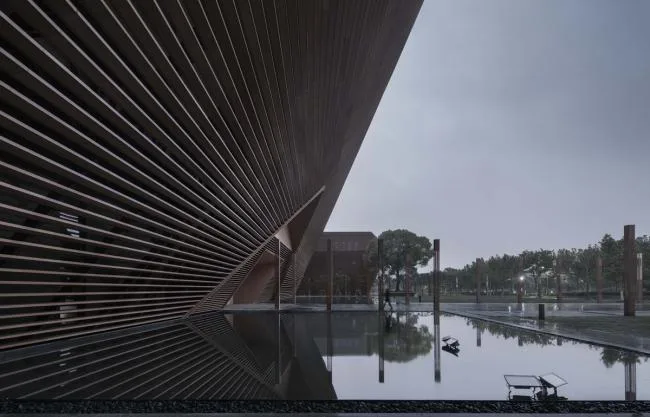
▲ Planning Exhibition Hall Main Entrance Photography: Hou Bowen
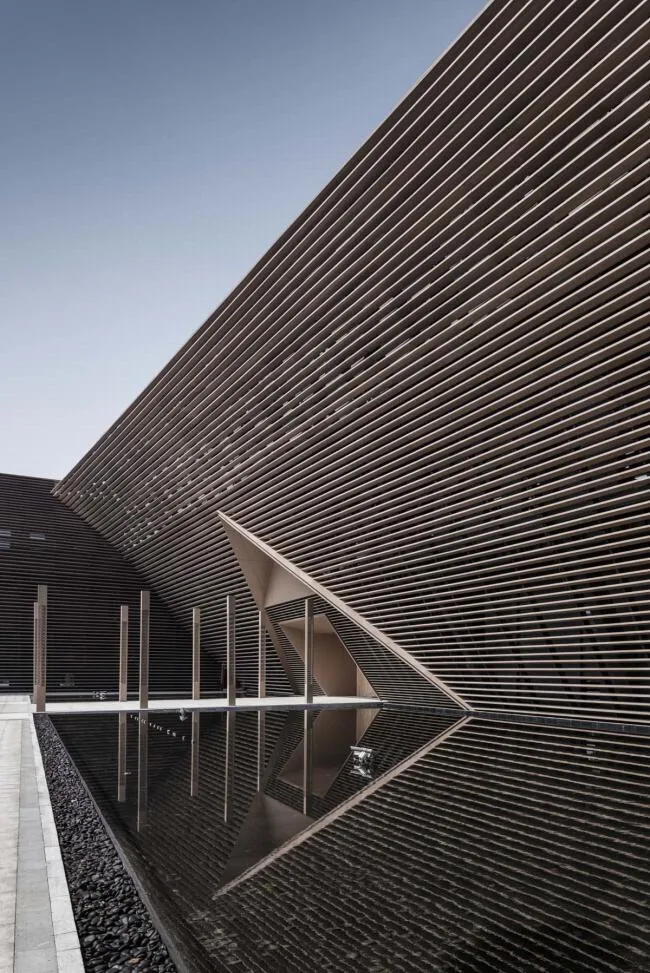
▲ Landscape Water Institute Photography: Hou Bowen
The architectural volume presents a clear sculptural feel, using curtain walls to extend outwards without affecting the use of internal space. The rectangular pattern is dissolved through a sloping surface, presenting an inverted vertebral shape that enhances the visual perception of the city square direction and reduces visual pressure on the eastern city road. It also enhances the integrity of the building from the perspective of high-rise buildings in the surrounding city. The sloping walls bring stronger confinement and sense of place to the external space of the building, establishing a tense spatial order of its own, presenting a dynamic tension, and forming a sense of terrain that echoes the city and urban squares.
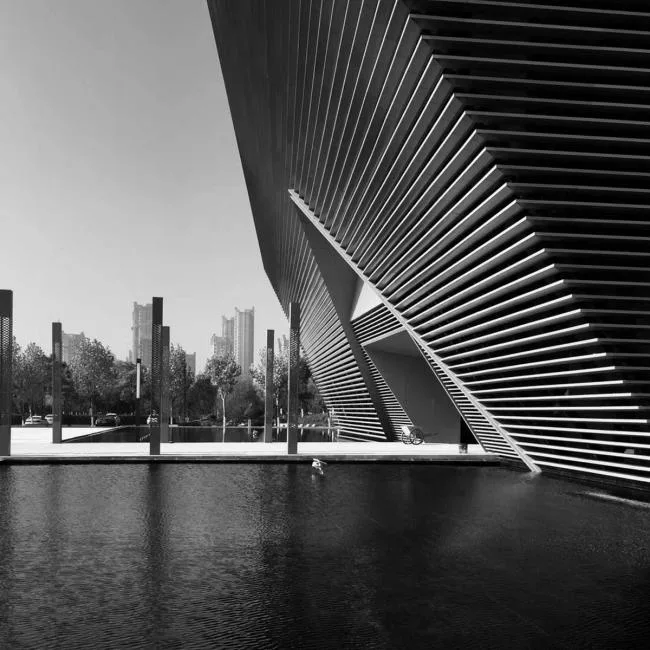
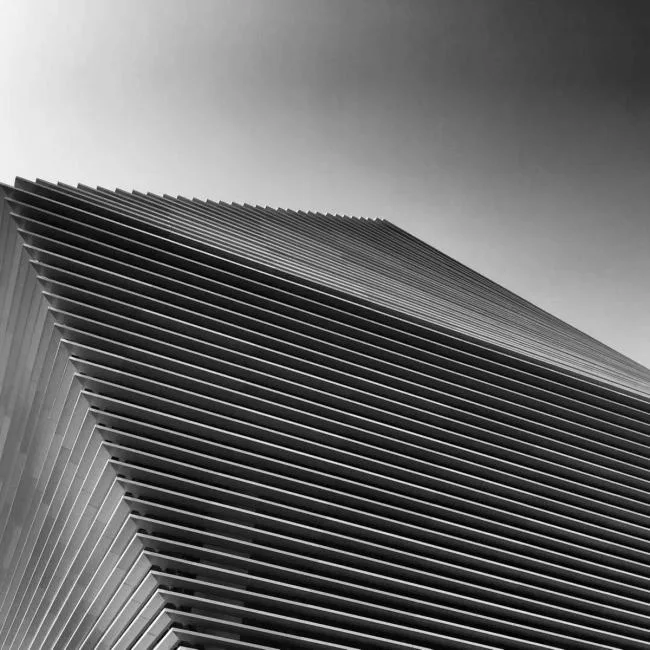
(BIM Engineer)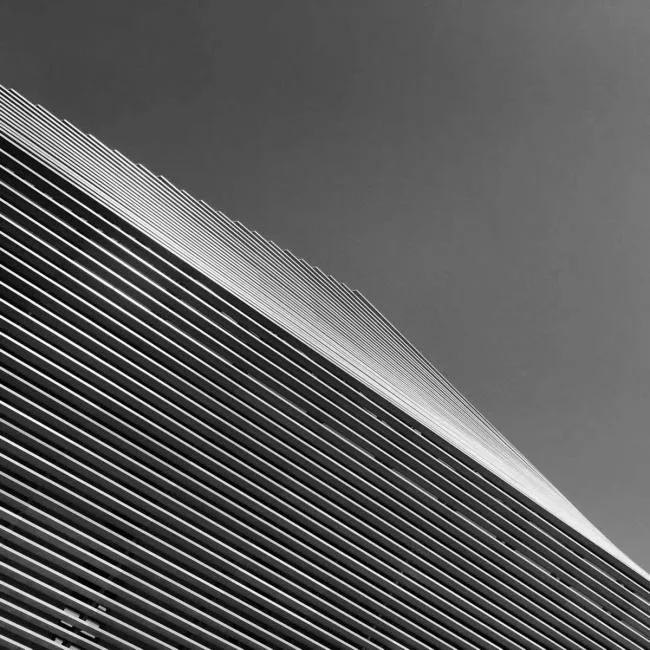
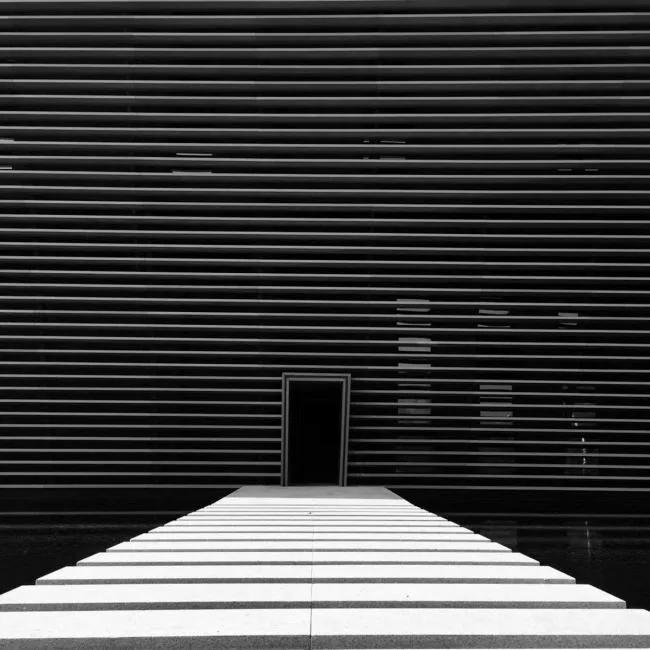
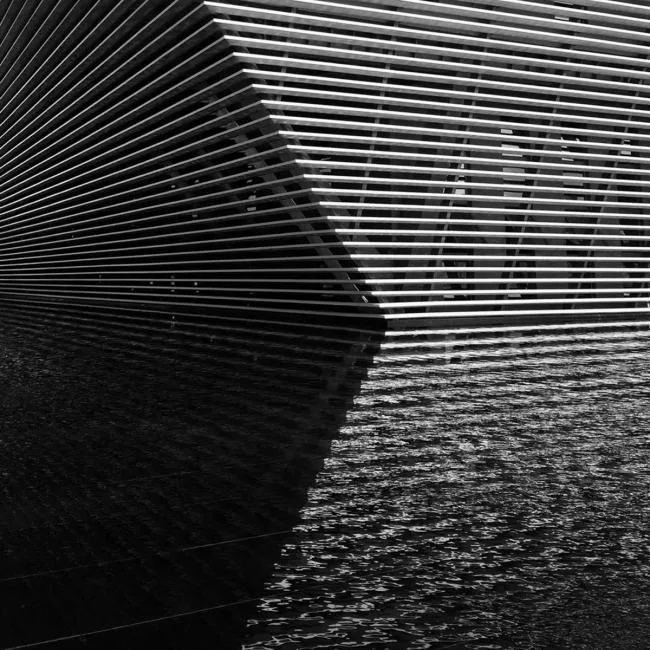
▲ Sculptural Photography of Architecture: Whale Interactive
From the construction of the building surface, it can be seen that under limited cost, the exterior walls of three slightly different sizes and shapes all use horizontal metal grilles. The metal grille adopts a color close to copper, which is in line with the long-standing copper mining industry in Shangrao. The metal grille is evenly spaced and consistent with the modulus of the door and window openings. The curtain wall at the corner is significantly detached from the building volume, forming a clear hollow out where sunlight can penetrate through the gaps, adding a more vivid visual experience to the building. BIM assisted design runs through the entire design process to guide construction material selection and spatial positioning in response to the irregularity of building outlines.
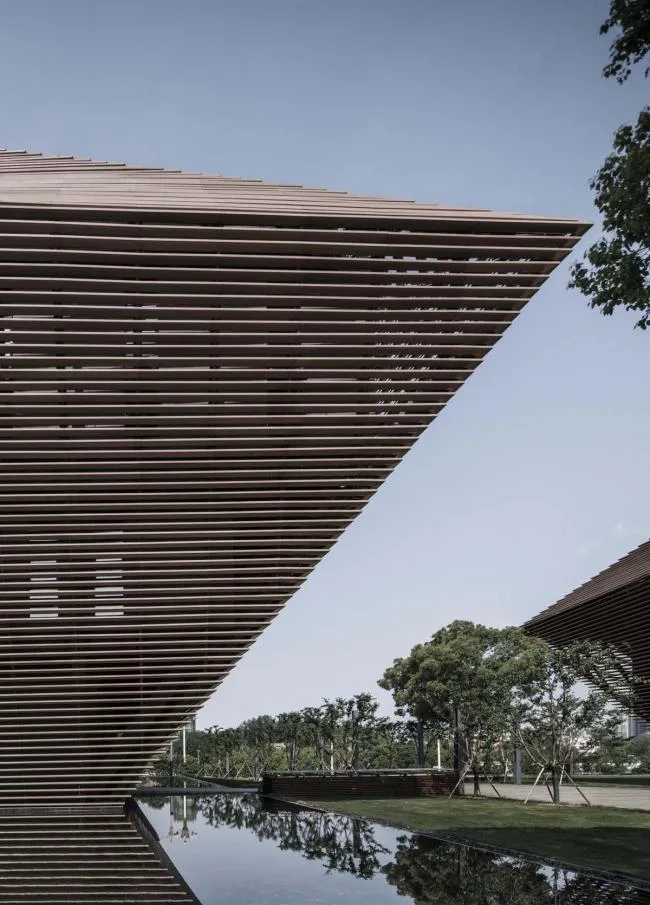
▲ Architectural Facade Photography: Hou Bowen
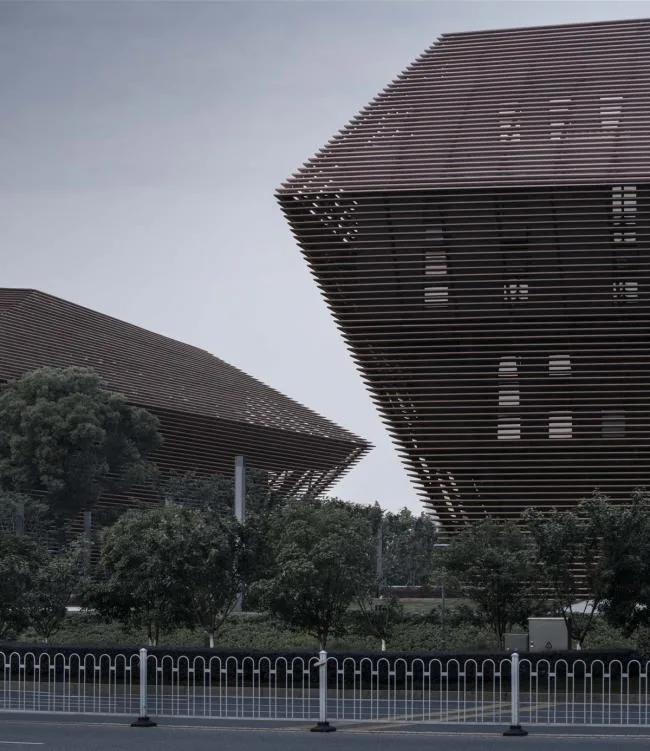
▲ Photography of building facades along Guangxin Avenue: Hou Bowen
Due to the uncertainty of exhibition content, higher requirements are placed on the compatibility and variability of the interior space of the building. Organizing the space based on differences in future usage content, frequency, and population can economically reduce energy consumption and operating costs. This is also one of the reasons for using three relatively separate buildings. For each building, the public space and transportation system are limited for overall design, while the exhibition space is designed as large as possible to ensure flexibility in future operations.
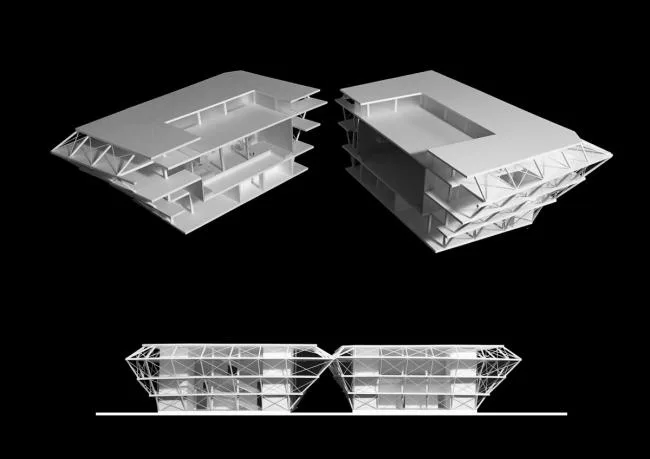
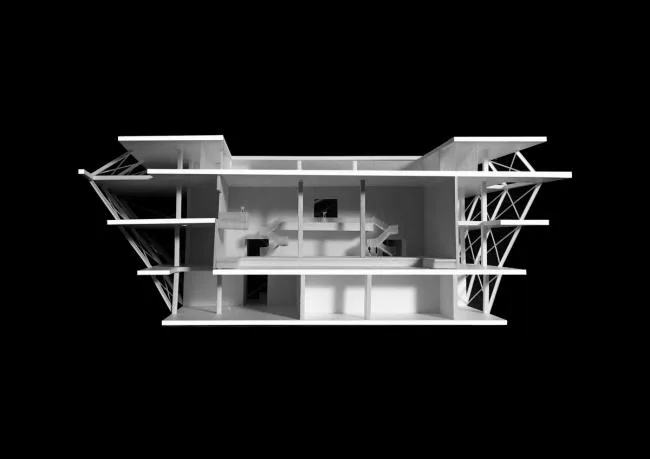
▲ Model
Design drawings:
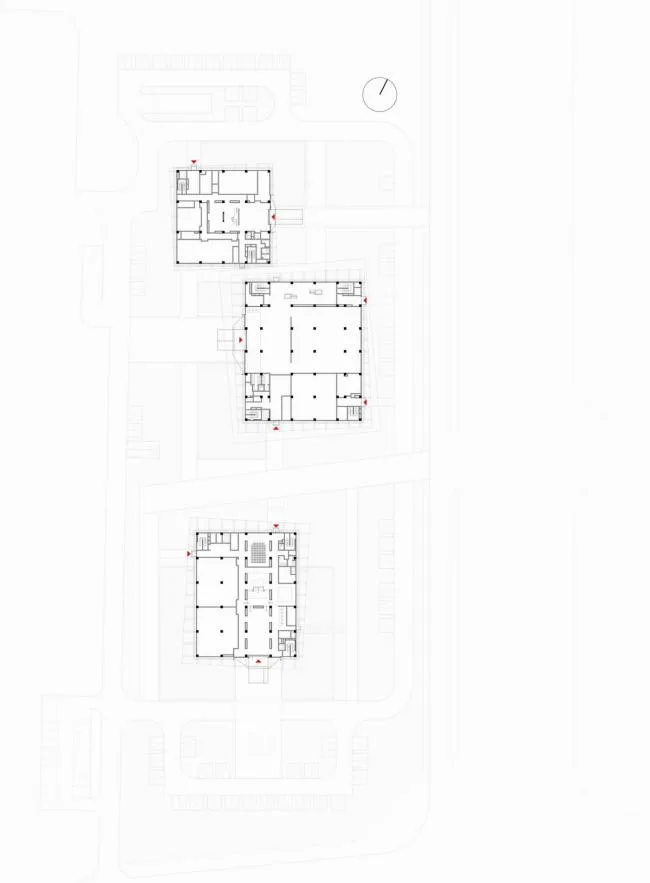
▲ General layout
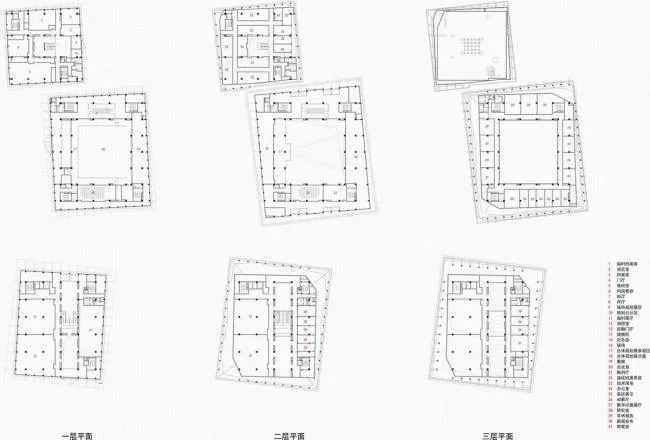
▲ Plan view
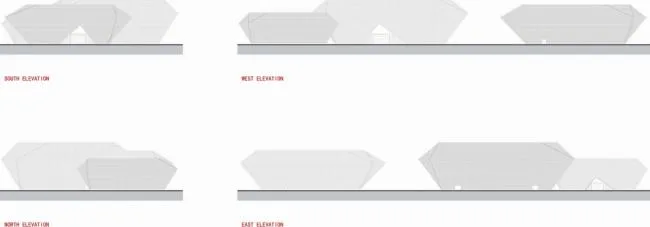
▲ Elevation view
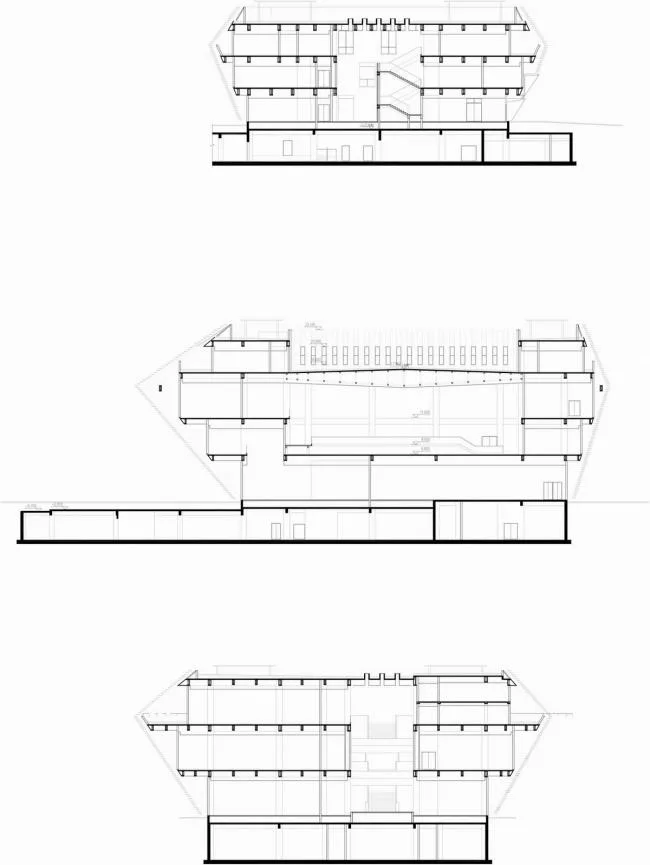
▲ Sectional view
Project Information:
Architectural Firm: Zhang Lei United Architectural Firm
Address: Shangrao City, Jiangxi Province, China
Category: Exhibition Architecture
Lead Architects: Qi Wei, Gong Huan
Architectural Design: Wang Liang, Fan Xinwo, Chen Genlin
Construction drawing design cooperation: Nanjing University Architectural Planning and Design Institute Co., Ltd
Landscape Design: Chen Junjun, Qiu Jing, Sun Xueran
Building area: 42000.0 m2
Project Year: 2017
Photographer: Hou Bowen












Must log in before commenting!
Sign Up