
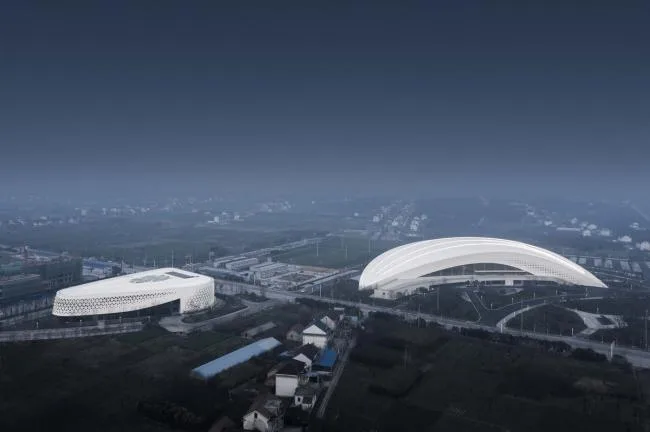
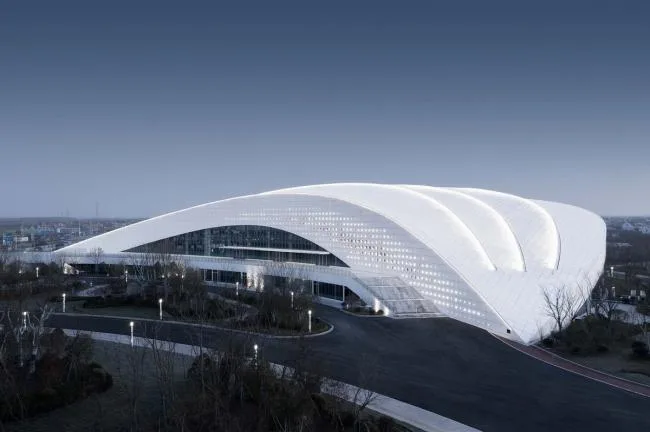
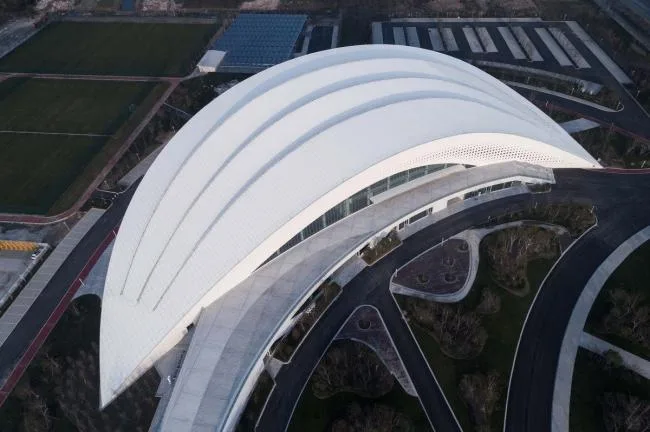
Located in the new district of Rudong County, Nantong City, Jiangsu Province, the Rudong Sports Center encompasses a sports hall with a swimming pool, a fitness center, and a comprehensive sports stadium. Serving as a cultural hub for the area, it complements the neighboring cultural center to the south, together forming a landmark symbolizing the new district. This project is poised to become a significant catalyst for local development.
The design competition was launched in 2012, with the BIM design proposal from Tongji University Architectural Design Institute winning the bid. The first phase was completed in 2018.
Openness and Enclosure
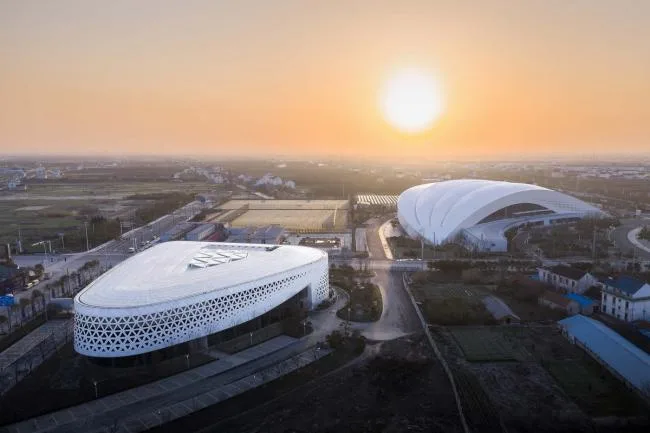
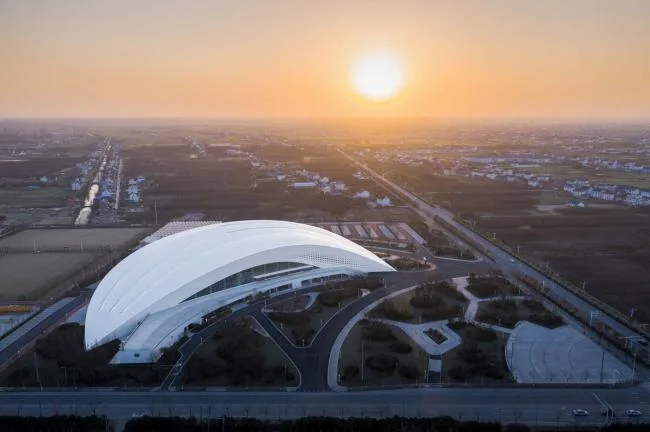
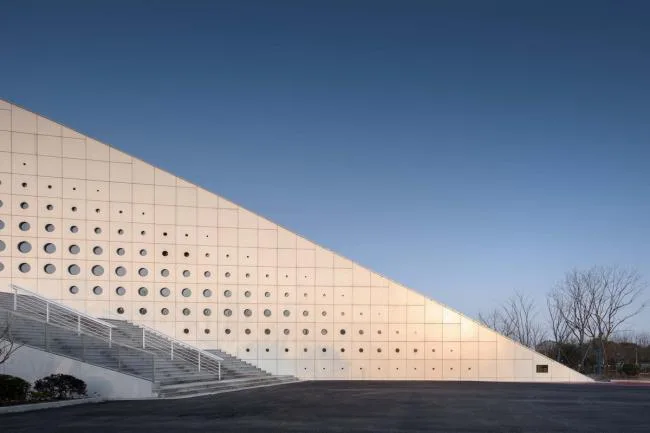
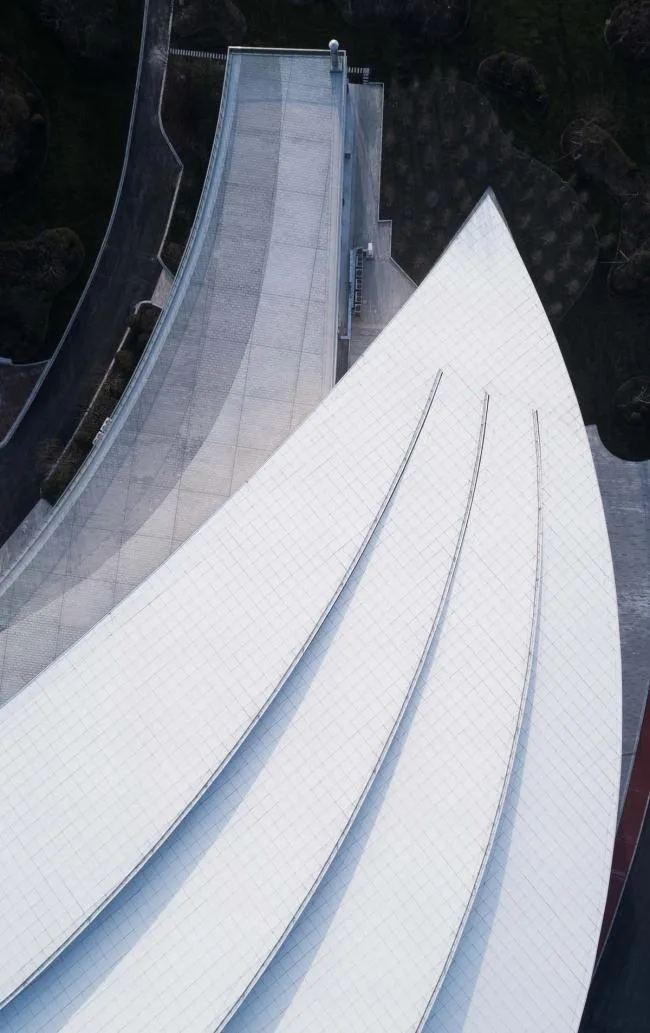
The design prioritizes spatial openness and encourages public participation to promote nationwide fitness. Instead of focusing solely on the buildings themselves, the overall plan uses the structures to enclose a sports park intended for community activities. This design integrates seamlessly with the cultural center to the south, creating a unified cultural and recreational district.
The open park invites residents to engage with fitness facilities while enriching the city’s landscape. A two-level pedestrian bridge connects the sports stadium and gymnasium, facilitating easy pedestrian movement between the venues.
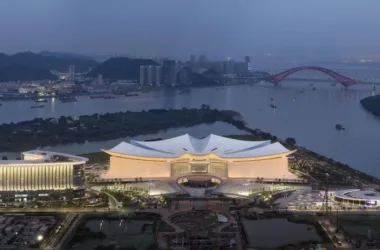
White Giant Waves
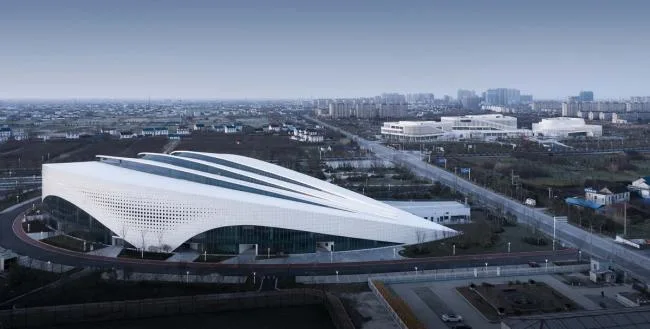
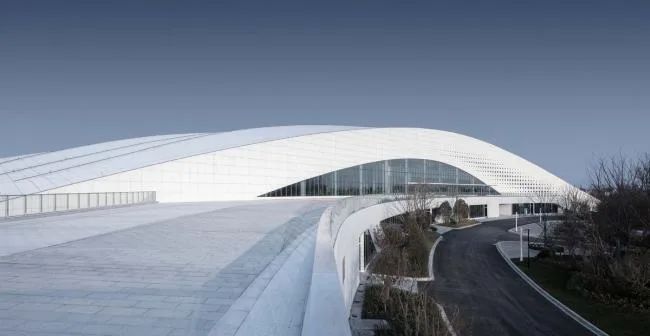
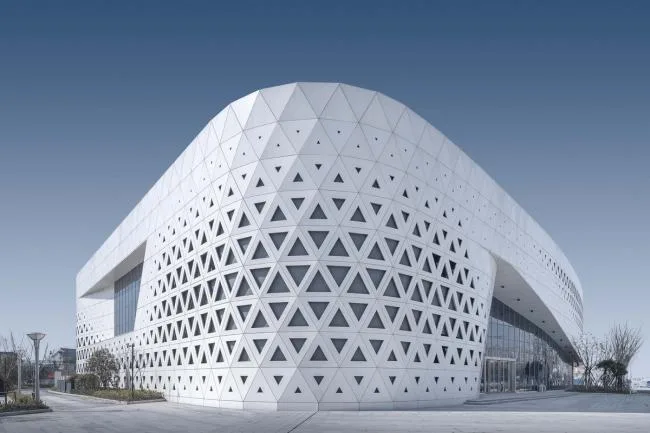
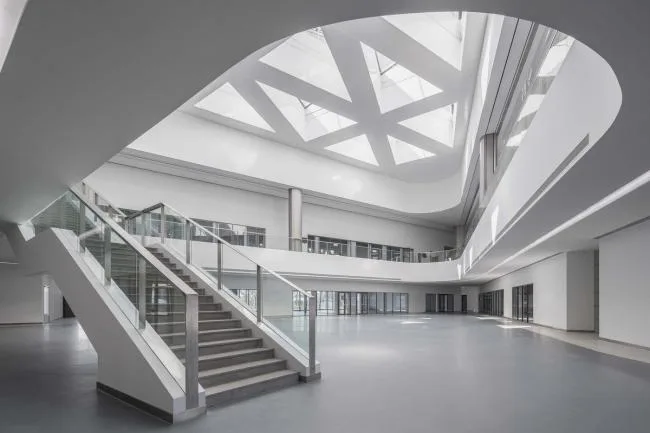
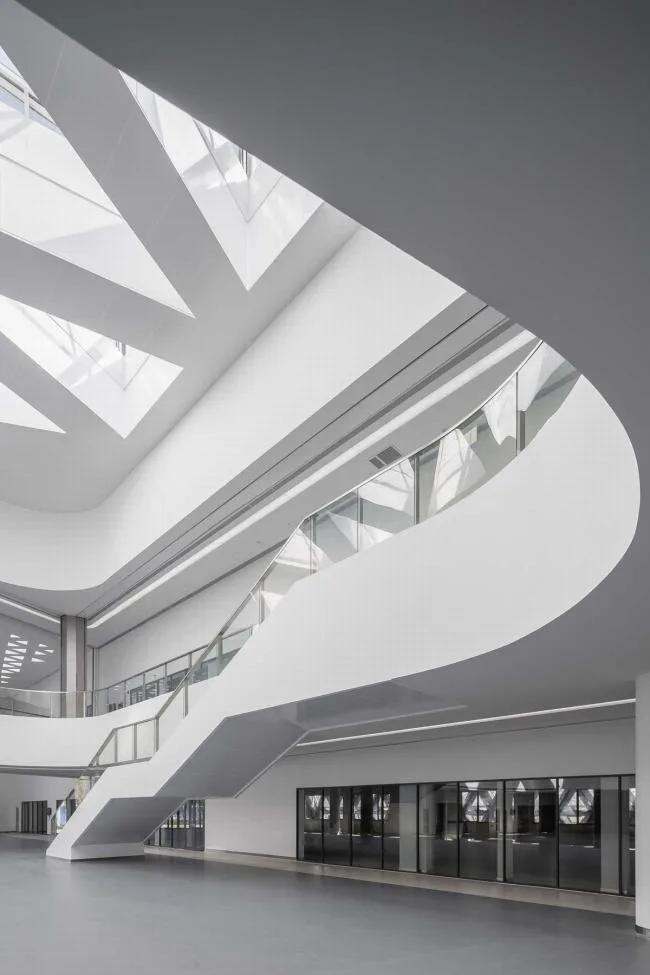
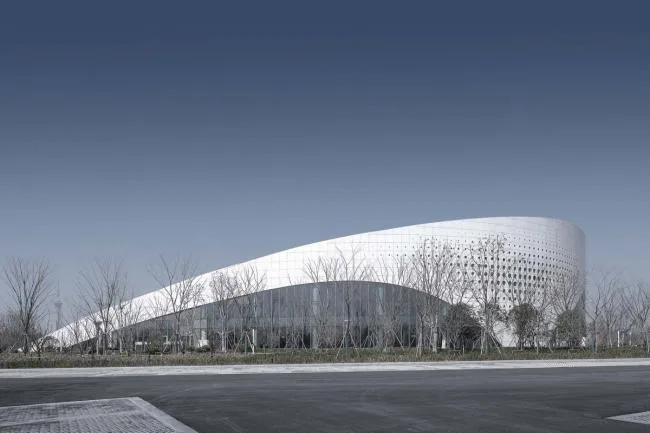
Facing east towards the sea, the vast sky and expansive sea, along with the open geographical landscape, inspired the design concept profoundly. The flowing architecture resembles rolling white waves, with curved forms that convey the vitality and grace of sports.
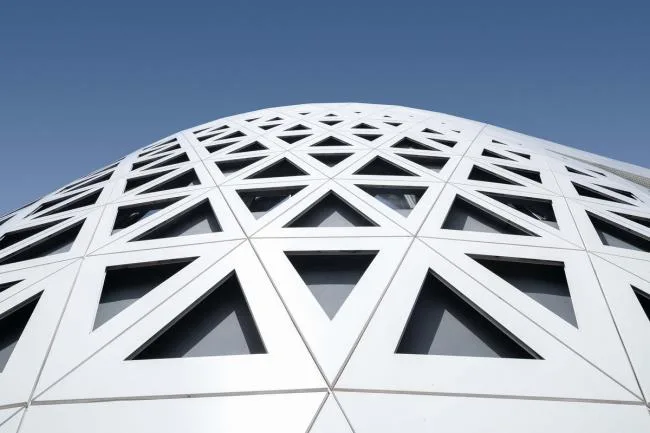
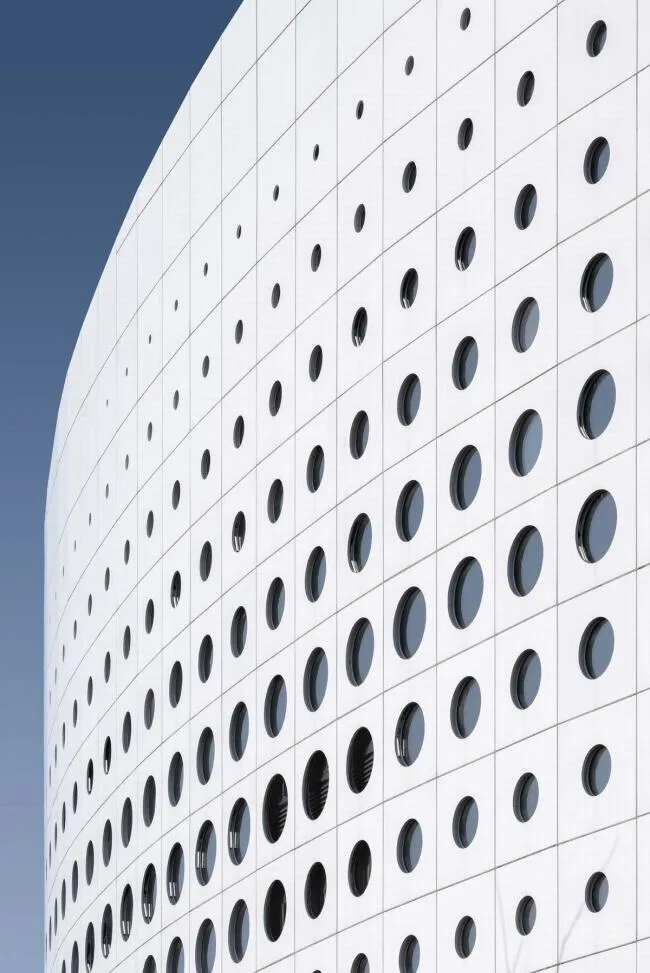
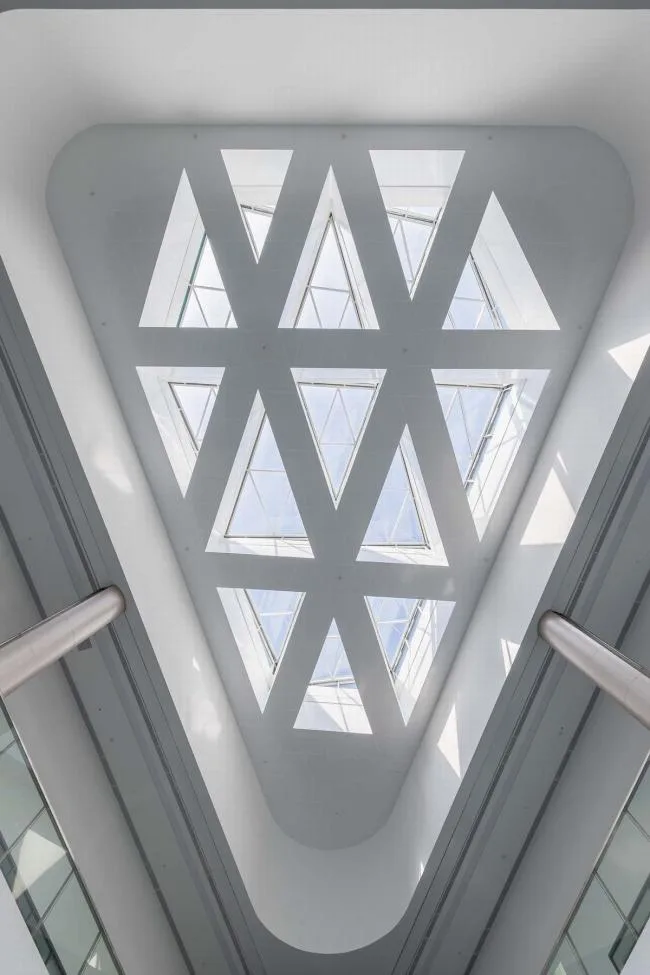
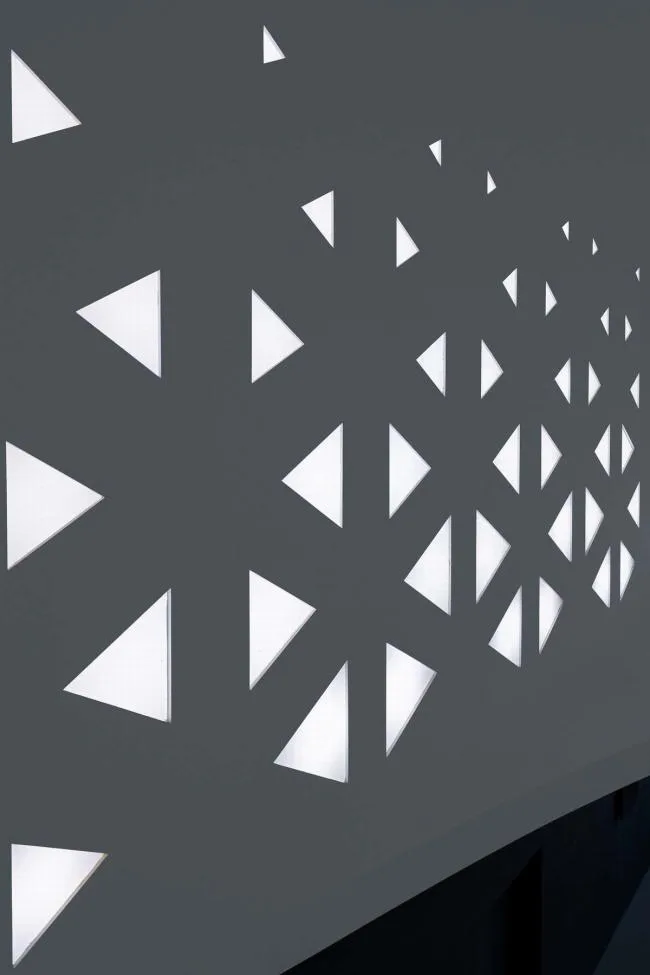
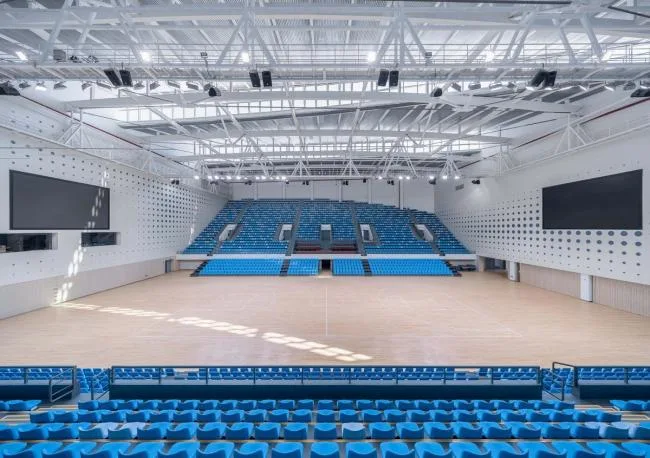
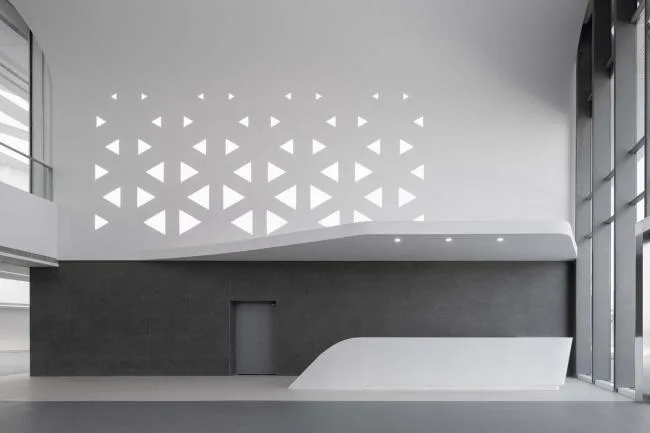
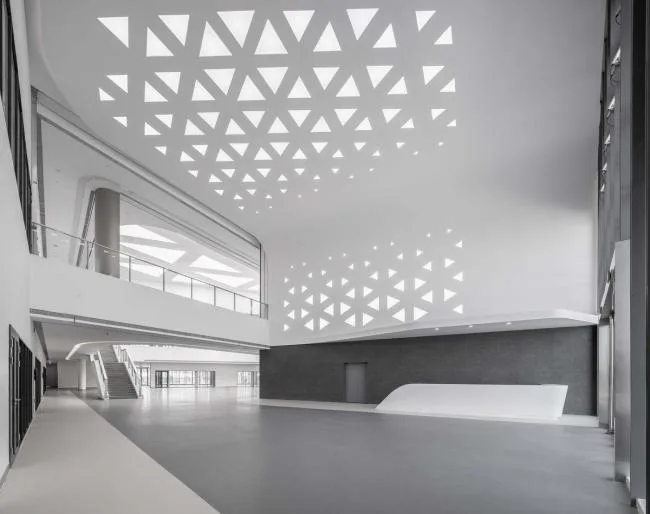
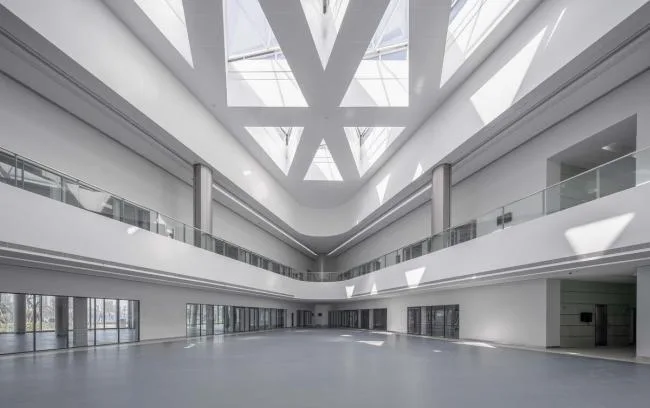
The building’s exterior features white metal panels, some adorned with gradient perforated patterns that create captivating light and shadow effects inside. Skylights flood the interior with natural sunlight, enhancing the sense of openness and brightness. The exterior’s gradient motif continues into the interior, emphasizing the unique character of each space through varied shapes and themes.
Compact and Shared
As a county-level sports facility, Rudong Sports Center avoids excessive focus on comprehensive functionality. Instead, it follows the principle of “compact sharing” to prevent redundant, costly sports infrastructure.
During early design, the sports arena and swimming pool were combined into a single structure, enabling shared use of competition and training rooms. This approach reduces the overall building footprint.
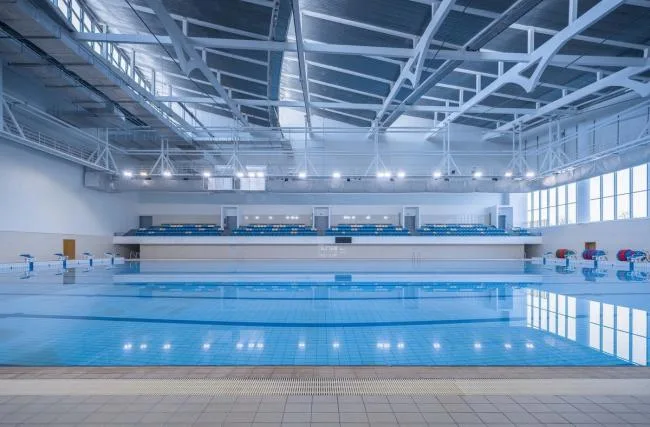
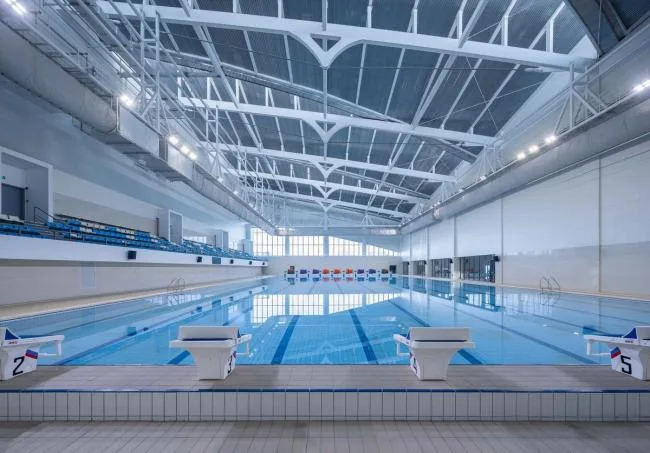
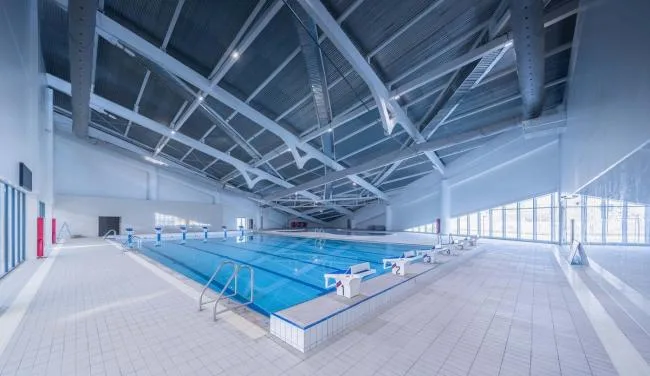
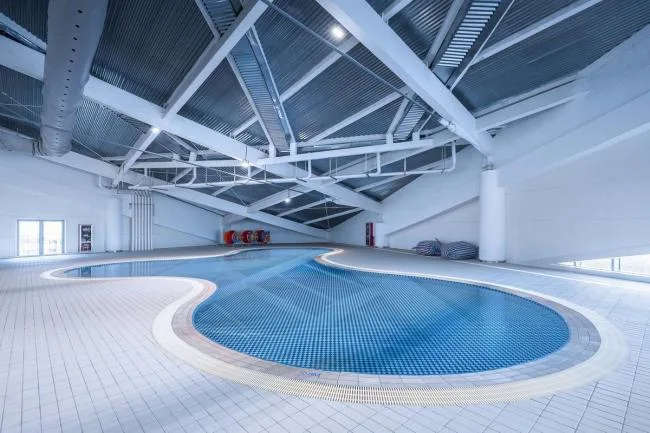
Within the 20,000 square meter gymnasium building, facilities include a 4,000-seat arena, a training hall, a standard 50-meter swimming pool with 200 seats, a 25-meter training pool, and a children’s pool. To accommodate varying spatial needs, the building adopts a crescent shape with a higher center and lower wings, ensuring efficient use of space and preventing wastage typical in circular sports venues.
Embracing Change
The multifunctional use of sports facilities is a growing trend. Equipped with versatile spaces and comprehensive lighting and sound systems, the center can easily host large-scale cultural and commercial events.
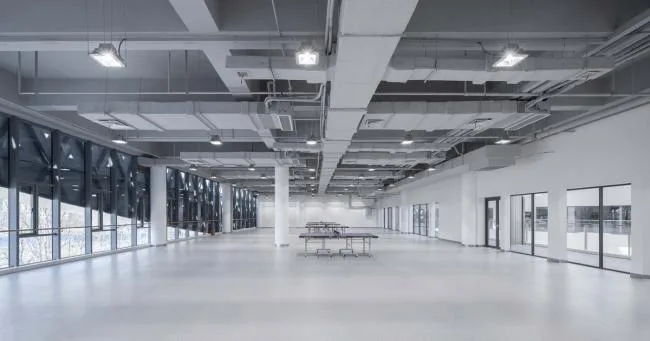
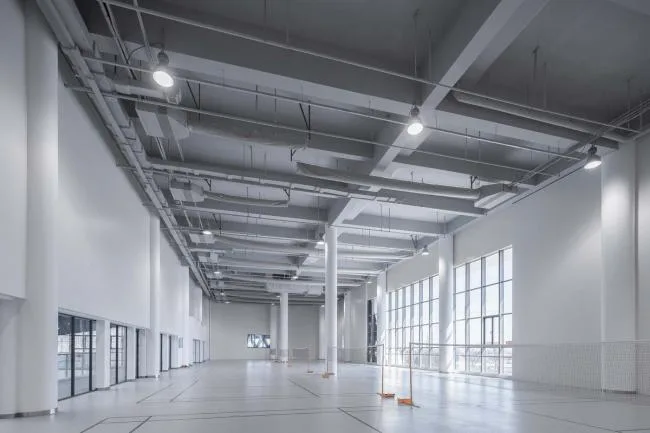
Our design embraces efficient space use and adaptability for future needs. The gymnasium and training hall on the ground floor are separated by a sliding door that can open to create a large, transparent space suitable for county-wide exhibitions.
The swimming pool operates in two modes according to the season: summer and winter. During summer, all three pools are open to accommodate high demand. In winter, when attendance is lower, the pool area can be divided by glass doors and partitions, allowing only the smaller pool section to remain open. This design reduces the energy load on air conditioning and underfloor heating systems.
The indoor atrium of the fitness center doubles as a venue for commercial and cultural exhibitions. All functional rooms are rectangular, allowing flexible transformation through secondary decoration to meet future needs.
Design Drawings:
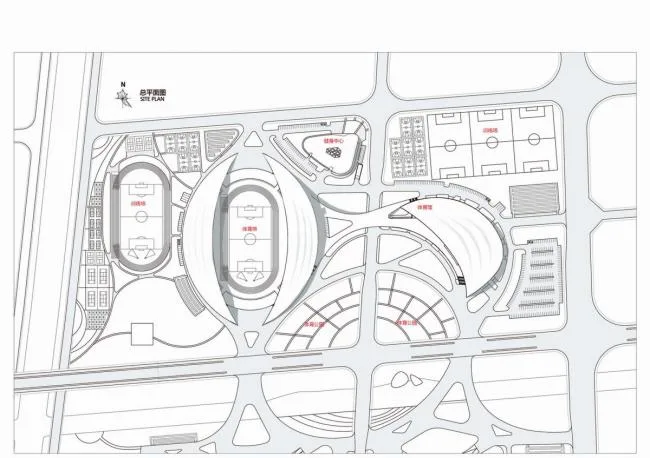
▲ General Layout
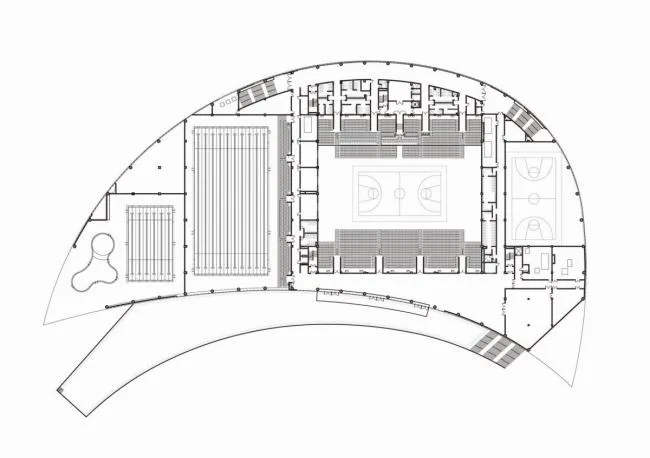
▲ Sports Center Floor Plan
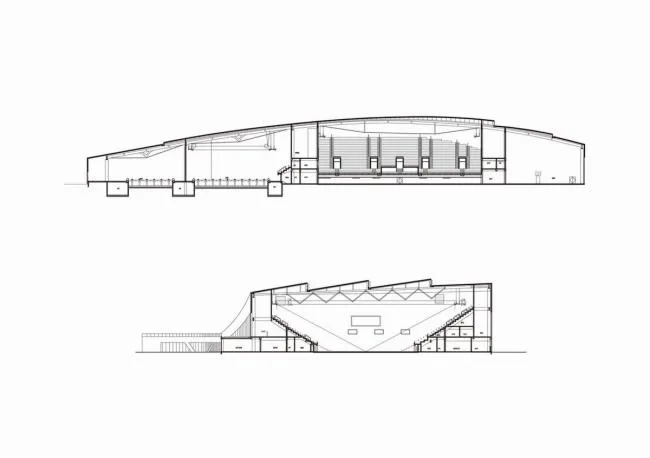
▲ Section of Sports Center
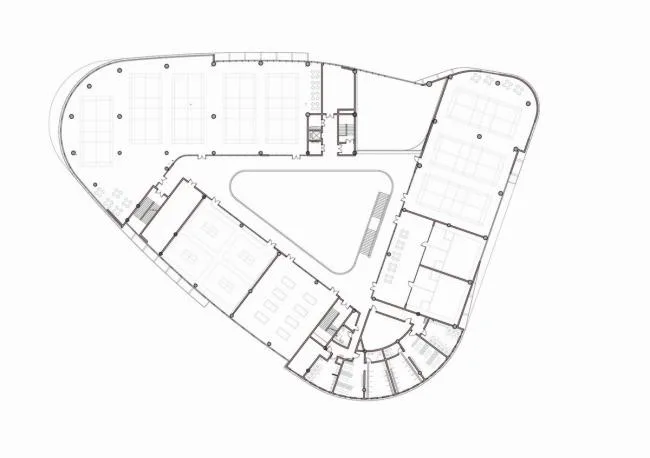
▲ Fitness Center Floor Plan
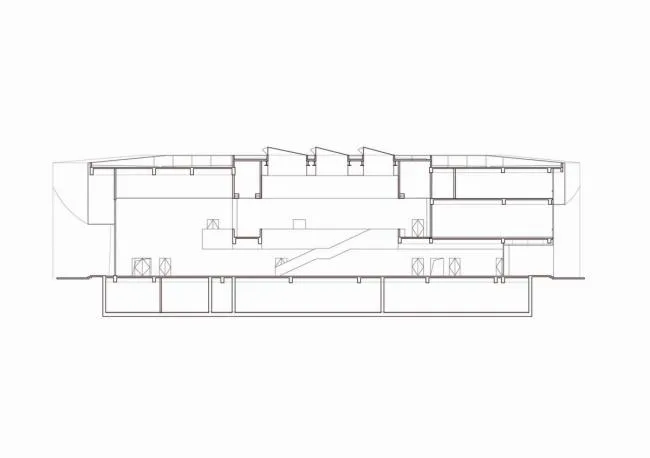
▲ Fitness Center Section
Project Information:
Architect: Tongji University Architectural Design and Research Institute
Location: Rudong, Nantong City, Jiangsu Province, China
Category: Gym
Lead Architects: Wang Wensheng, Li Heng
Building Area: 70,000 square meters
Year Completed: 2018
Photographer: Shao Feng
Manufacturers: DAIKIN, AACER












Must log in before commenting!
Sign Up