
Can an outdoor campsite nestled between mountains and wilderness serve as both a welcoming destination for exploration and a picturesque stop along the way?
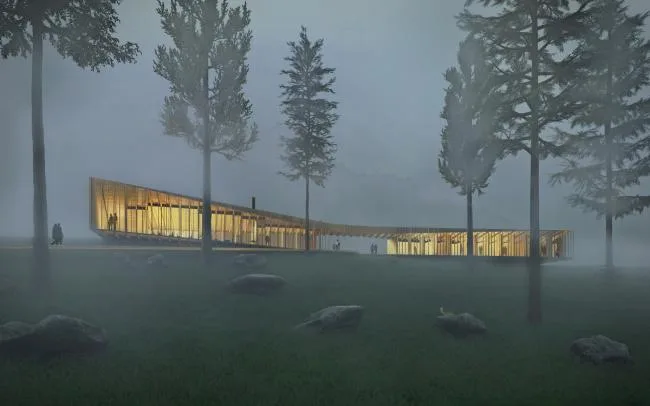
▲ Summer Mist Landscape
The project, named Long Lodge, earned first prize in the 2018 Maine Mass Timber Design Competition. The competition invited American architects to propose designs for a new campsite to be built for the Maine Mountain Forest Management Committee, intended for outdoor enthusiasts.
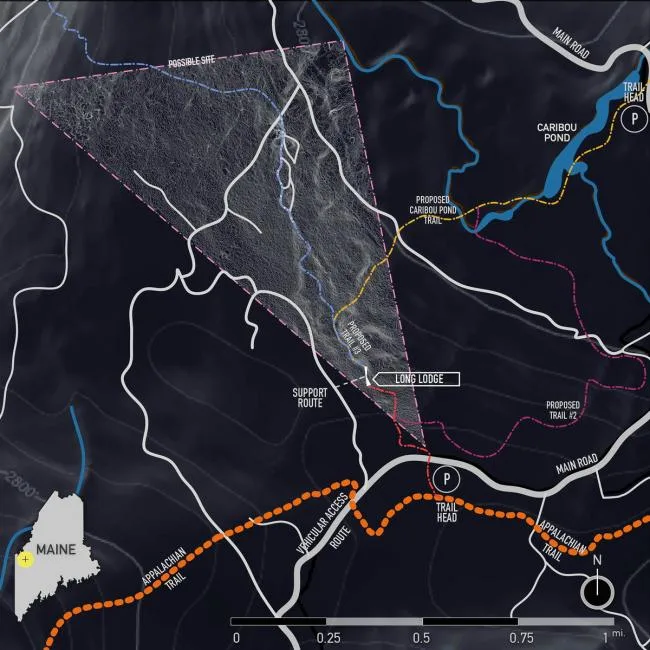
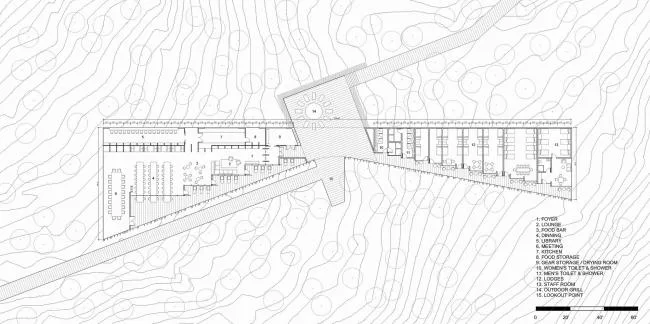
▲ Site Plan
Unlike traditional campsites that emphasize a distinct destination, this design integrates the building into Maine’s existing Caribou Pond Trail hiking route. The slender structure is accessible from two directions, with the camping path running through the central hall, effectively dividing the building into two zones: a public area for entertainment and a private space for rest and relaxation.
The design frames stunning views of the mountain landscape below and offers a suitable area for picnics. Whether hikers arrive from either direction, they are greeted by two slender, curved surfaces that rise naturally with the terrain, resembling open arms welcoming all visitors.
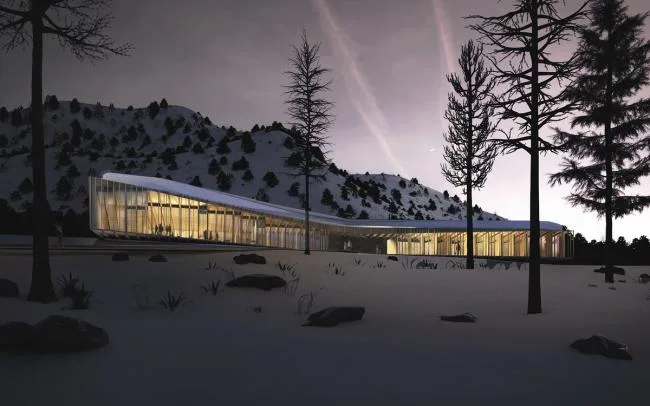
▲ Winter Snow Landscape
The site slopes from high in the west to low in the east, with the longhouses aligned north-south along the terrain. This orientation effectively shelters the buildings from the harsh west winds during winter, while offering expansive views of the forest landscape to the southeast through floor-to-ceiling wooden windows.
The library and activity room, positioned at the southernmost end, enjoy full southern sunlight throughout the day. Additionally, an existing motor vehicle road on the west side provides easy access to the wooden houses for logistical support.
Environmental sensitivity guided the site selection, aiming to minimize the removal of existing pine trees. This approach not only preserves the natural surroundings but also highlights the vertical texture of the towering pines, which complements the longhouse’s horizontal form. Together, they create a harmonious balance between human-made structures and nature from a spatial aesthetic perspective.
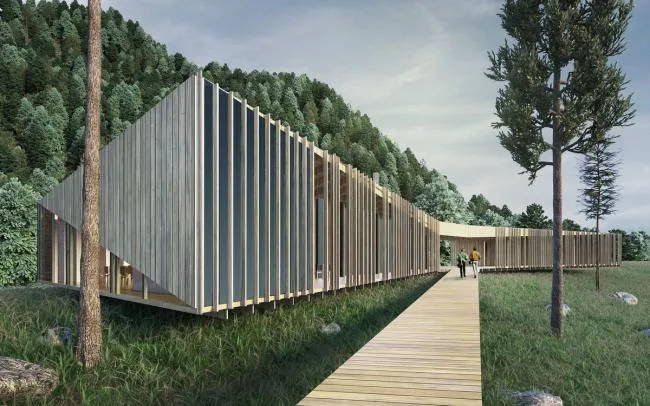
▲ Close-up of the Building
(BIM Design)
▲ Plan View
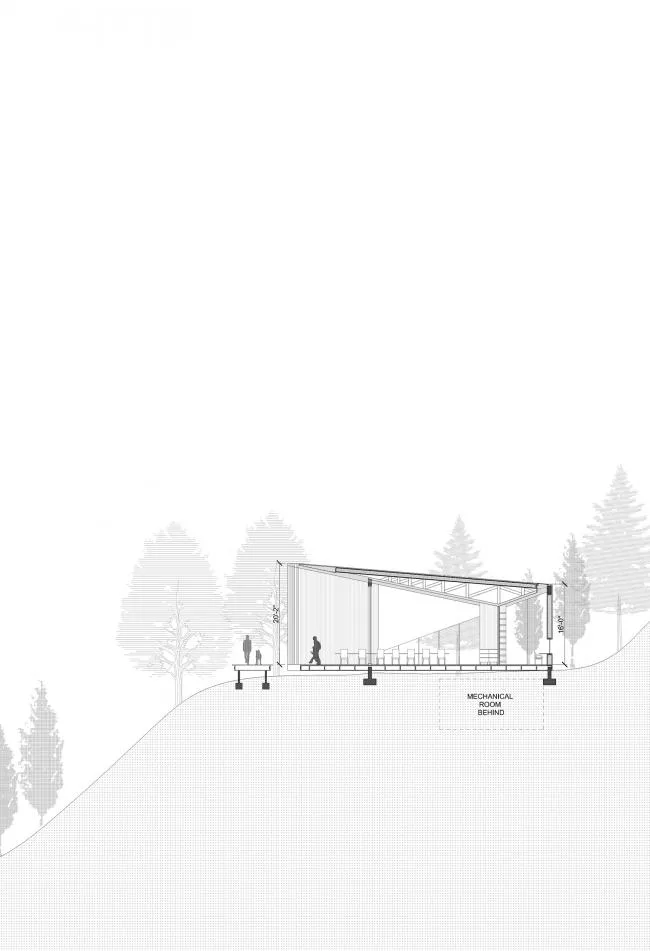
▲ Sectional View
The longhouse design leverages the latest heavy timber structural system. A reverse truss made from laminated wood panels forms the roof structure, featuring a single-slope roof on the exterior and a double-slope profile indoors. The truss’s two ends and center are reinforced with cross-laminated timber (CLT) wall panels to handle gravity loads and lateral forces.
Between these, a row of orthogonal laminated wooden panels spaced at four feet (approximately 1.2 meters) creates a thick wall that serves multiple purposes beyond structure, including dining tables, storage spaces, and bookshelves. The dormitory area uses similar laminated wood walls, allowing for varied and rich interior layouts within the modular design.
The exterior protective wall comprises three layers of insulated glass combined with a ventilated curtain wall system. This design separates the decorative layer from the structure and ensures continuous waterproof and breathable membrane protection through an external insulation layer, effectively safeguarding the internal wooden framework.
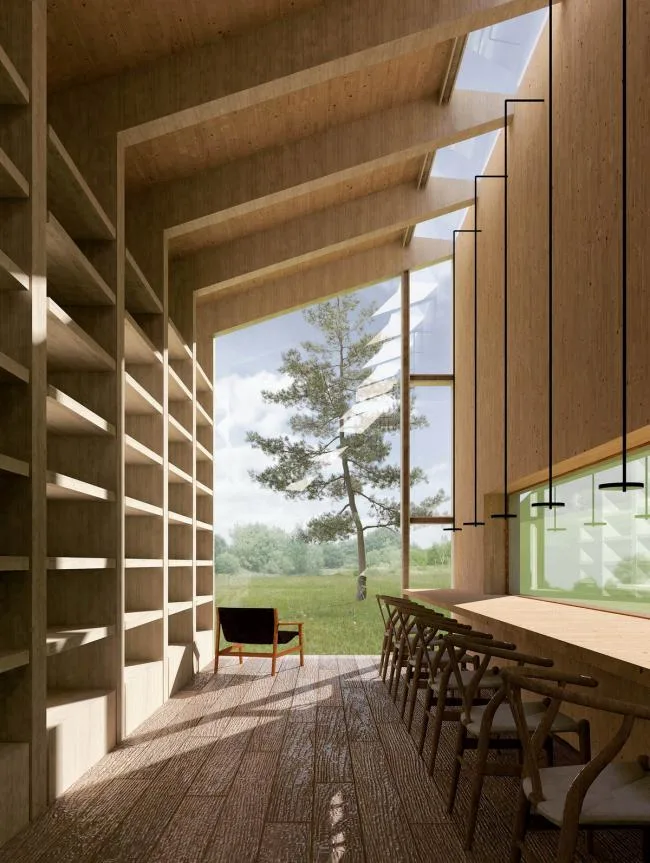
▲ Library
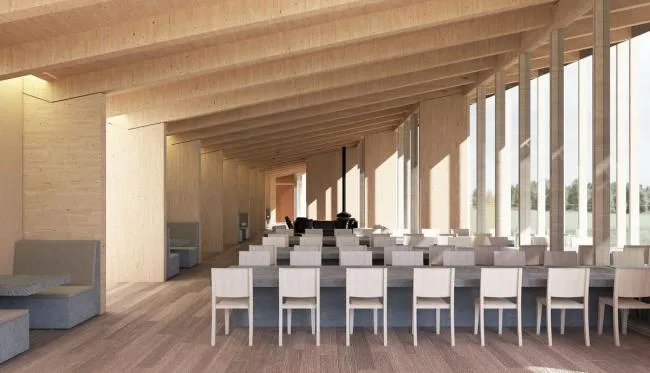
▲ Restaurant
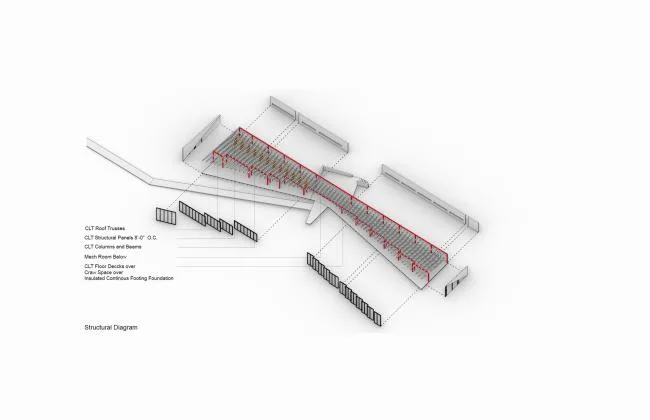
▲ Structural analysis diagram
Design Team:
Yueqi ‘Jazzy’ Li (李樾祺), AIA (Design Lead)
Shuang Bao
Nan Wei
Braham Berg, Associate AIA
Architect’s personal website: http://yueqi.li/















Must log in before commenting!
Sign Up