
Key focus areas:
1. Innovative approaches to transforming urban villages;
2. Spatial organization of horizontal super-residences;
3. How communities can adapt through design during both epidemic and non-epidemic periods.
Competition Theme
The unpredictable nature of population mobility led to the global pandemic’s rapid spread and uncontrollability in 2020. In response, the world entered a ‘pause mode.’ Reflecting on human history, what truly protects and supports us? Epidemic experts emphasize that “staying at home” effectively blocks virus transmission. As our activity range shrinks suddenly, architects face significant challenges.
Our design concept, “Super Residence”, aims to facilitate a quick transition into ‘pause mode,’ providing both a barrier and connection to the outside world. Once restrictions lift, it should serve as a vibrant community fulfilling people’s aspirations for better living. The plan includes ‘Super Units’ within the ‘Super Residence,’ enabling residents to live independently for extended periods within these units.
Award-Winning Project
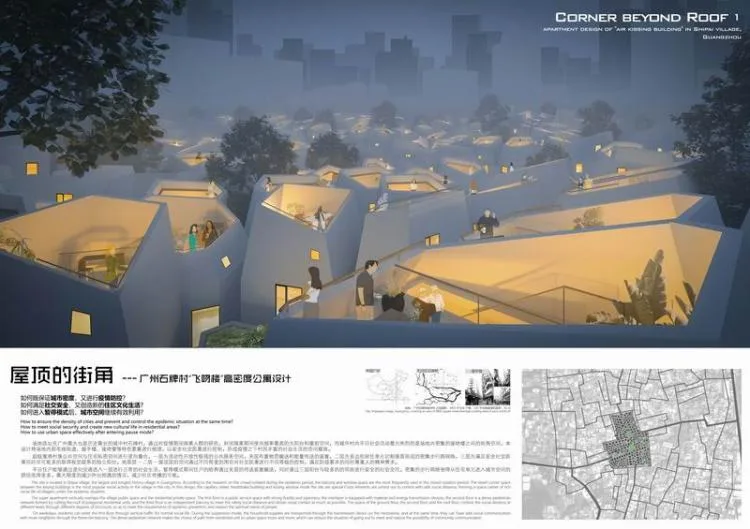
Key Questions Explored
01. Urban Challenges During Epidemics
Upon receiving the competition brief, we confronted three critical, sometimes conflicting questions:
- How to maintain urban density while ensuring epidemic prevention and control?
- How to balance social safety with fostering new cultural life in residential areas?
- How to effectively utilize urban space once the city enters ‘pause mode’?
Most importantly, urban public life and community engagement cannot simply pause because residences enter lockdown. Our focus was on how to cultivate a new community culture under ongoing epidemic prevention measures.
Considering these challenges led us to focus on urban villages, vibrant and complex areas that pose unique difficulties for epidemic control. In Guangzhou, Shipai Village stands out as one of the largest and oldest urban villages, with a staggering population density of 52,000 people per square kilometer.
Shipai Village’s densely packed housing coexists with a dynamic urban environment, where social activities and public events occur constantly. During China’s epidemic outbreak, the village’s high density, numerous rental properties, influx of migrant workers, and complex transport networks made it a focal point for epidemic prevention efforts and a significant challenge for Guangzhou city management.
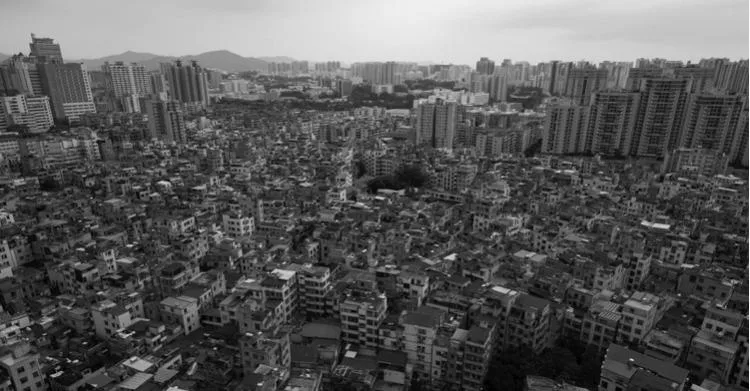
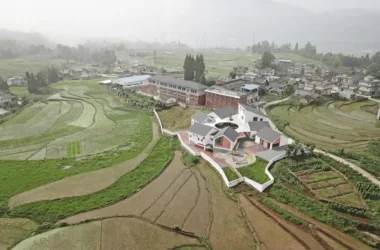
Aerial view of Shipai Village © network
The balance of order and chaos in urban villages caught our attention.
On one hand, the urban village is chaotic: intricate narrow roads, self-built temporary structures, and a dense migrant population create complex living conditions. On the other hand, beneath this apparent disorder lies an invisible order—daily routines such as routes for shopping, garbage disposal, leisure activities, and socializing all follow unspoken rules and logic.
This interplay of chaos and order fuels the vitality of the village while maintaining residents’ daily life rhythms.
From an epidemic control perspective, order is crucial in managing virus spread. Understanding how to balance chaos within this order is essential for fostering a new community culture under ‘pause mode.’ Thus, chaos and order represent both opportunities and challenges in our design process.
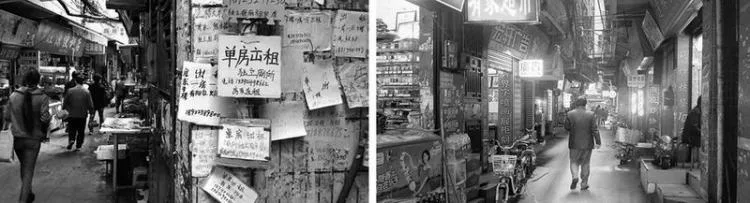
Daily activities in Shipai Village © network
Our project is located in Shipai Village’s core, spanning approximately one kilometer by eight hundred meters, connected to the city via two main north-south roads and a network of smaller capillary streets.
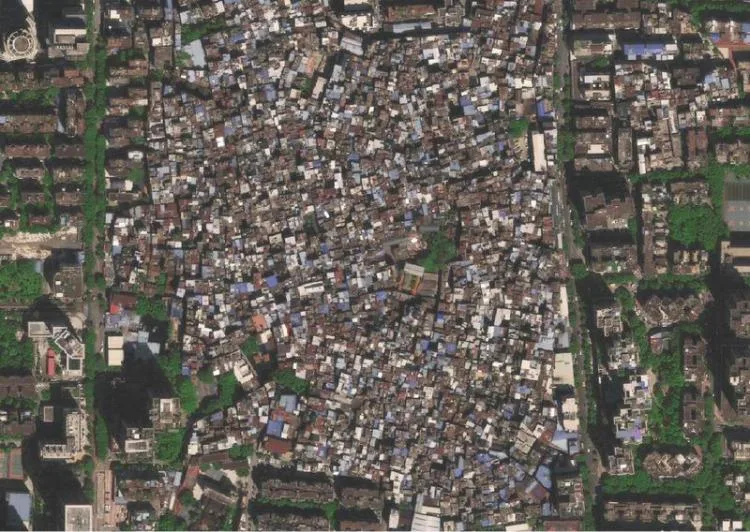
△ Satellite map of Shipai Village
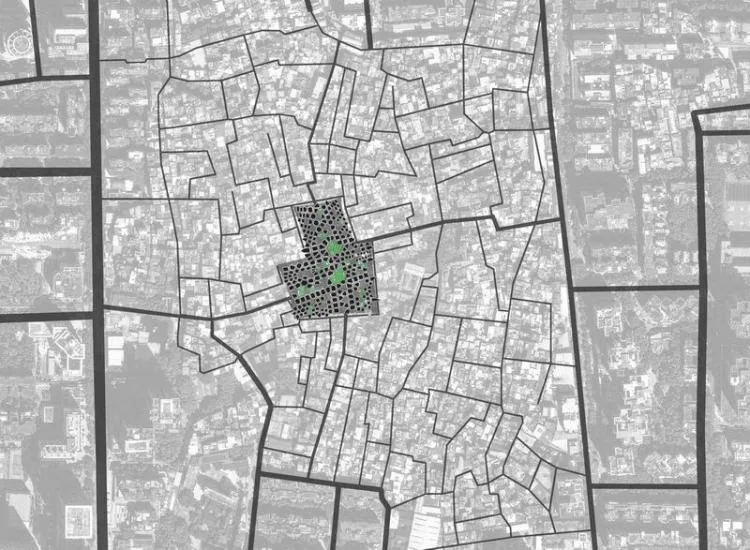
△ Overall project plan
Design Proposal
01. Epidemic Prevention Needs and Operational Forms
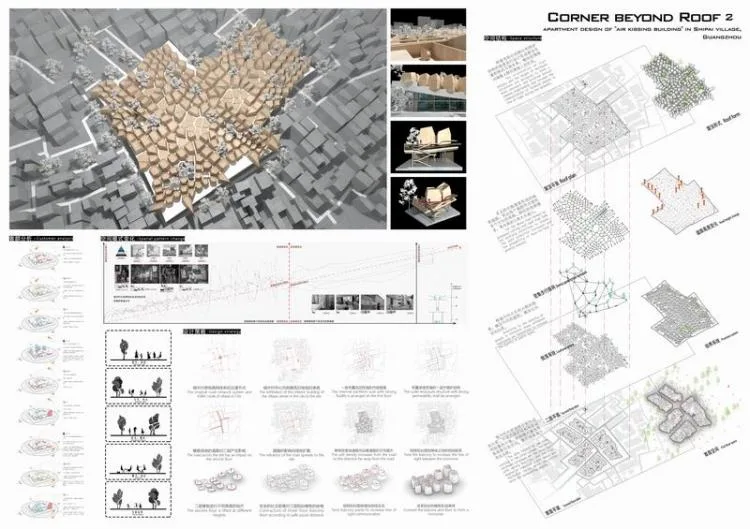
Our design begins with a rigorous, rational mathematical model to develop a prototype that meets epidemic prevention requirements during a pandemic.
We control the distance between the center points of residential units to range from 6 to 10 meters, ensuring sufficient living space per household. Narrow streets approximately 1.2 meters wide separate units, offering multiple routes for residents to return home while minimizing contact. Roof levels of units are recessed inward, maintaining a minimum 2.4-meter distance between edges to satisfy social distancing norms.
These carefully calculated building volumes form the foundation for the ‘Super Residence’ to transition into ‘pause mode’ efficiently when necessary.
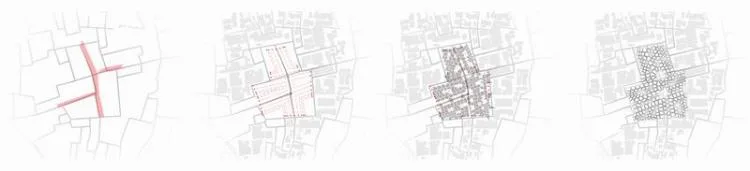
△ Step 1: Generation of square building form
Next, we adapt building volumes to the existing texture, spatial relationships, and road network of the urban village to seamlessly integrate the new structures.
We align internal roads with the original site road network to ensure quick connectivity with the surrounding environment. Units are rotated based on road orientation to correspond with the village’s layout. Heights and roof angles are adjusted to optimize sightlines, natural lighting, and inter-unit communication.

△ Step 2: Refining building form
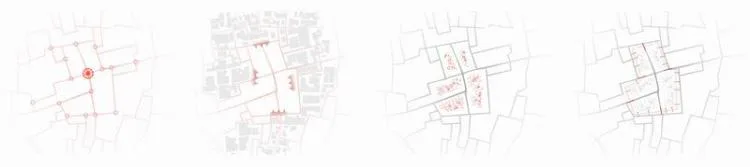
△ Step 3: Final building form adjustment
The model illustrates that the entire design functions as a ‘building’ with the same high-density qualities as the surrounding urban village, while also serving as a ‘Super Residence’ that can respond to epidemic conditions.
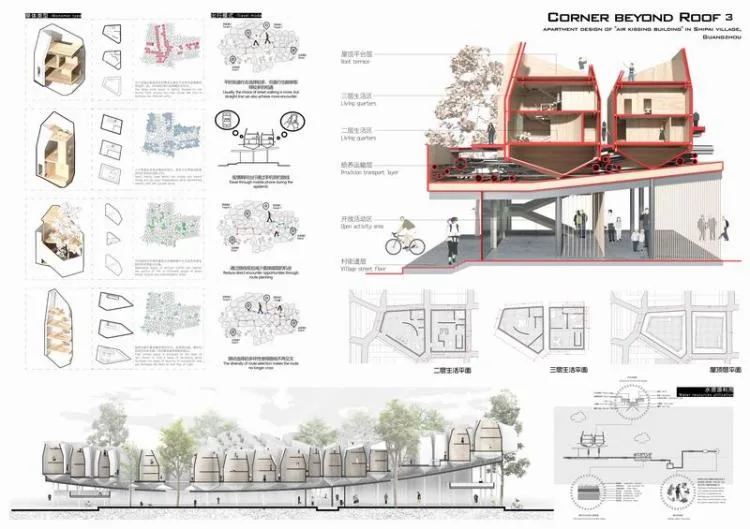
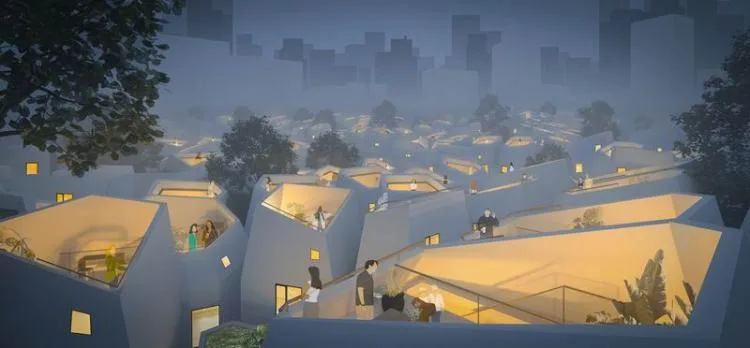
The first floor is an open space connecting directly to the city with through-roads and courtyards, providing ample activity and municipal space. A mezzanine serves as a logistics and energy transfer layer connecting residential units to the urban environment. The second floor features a detailed road network ensuring residents can safely return home, while the roof terraces are recessed inward, creating communal activity spaces.
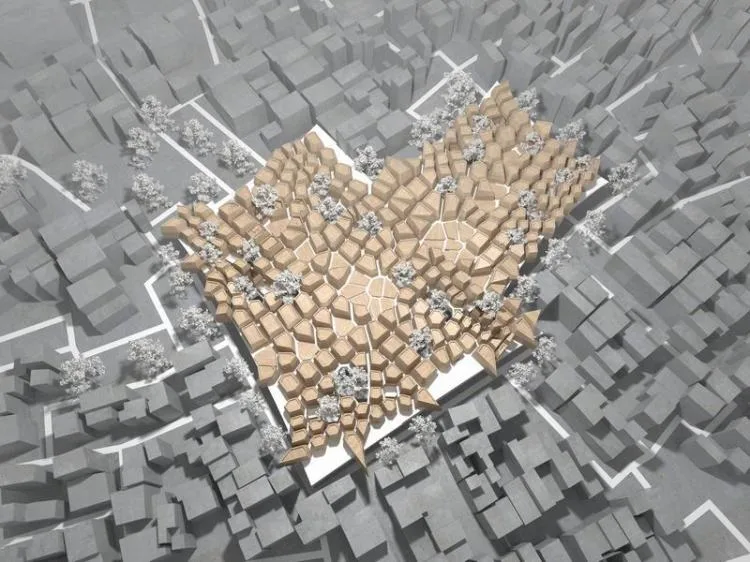
△ Model bird’s-eye view
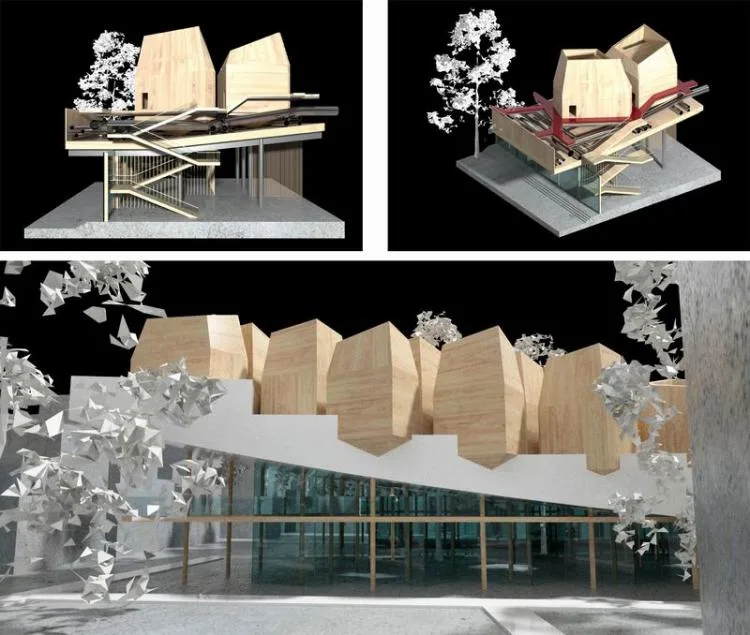
△ Model perspective
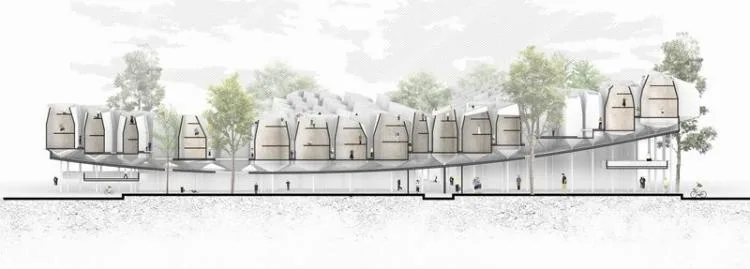
△ Sectional perspective
02. Open and Suspended Community Models
Our design incorporates each element of the super-residence—streets, public spaces, terraces, and homes—with the flexibility to adapt from open to suspended community models based on the epidemic status.
1) Streets – Capillary-like networks around housing
During normal conditions, streets serve as social spaces where residents hang laundry, take walks with pets, and greet neighbors.
During epidemics, these streets become safe, contact-free routes for residents to return home.
2) Public spaces – Elevated open areas
In normal times, these spaces host community gatherings and activities.
In epidemic times, they act as interfaces for external support to provide aid to each household.
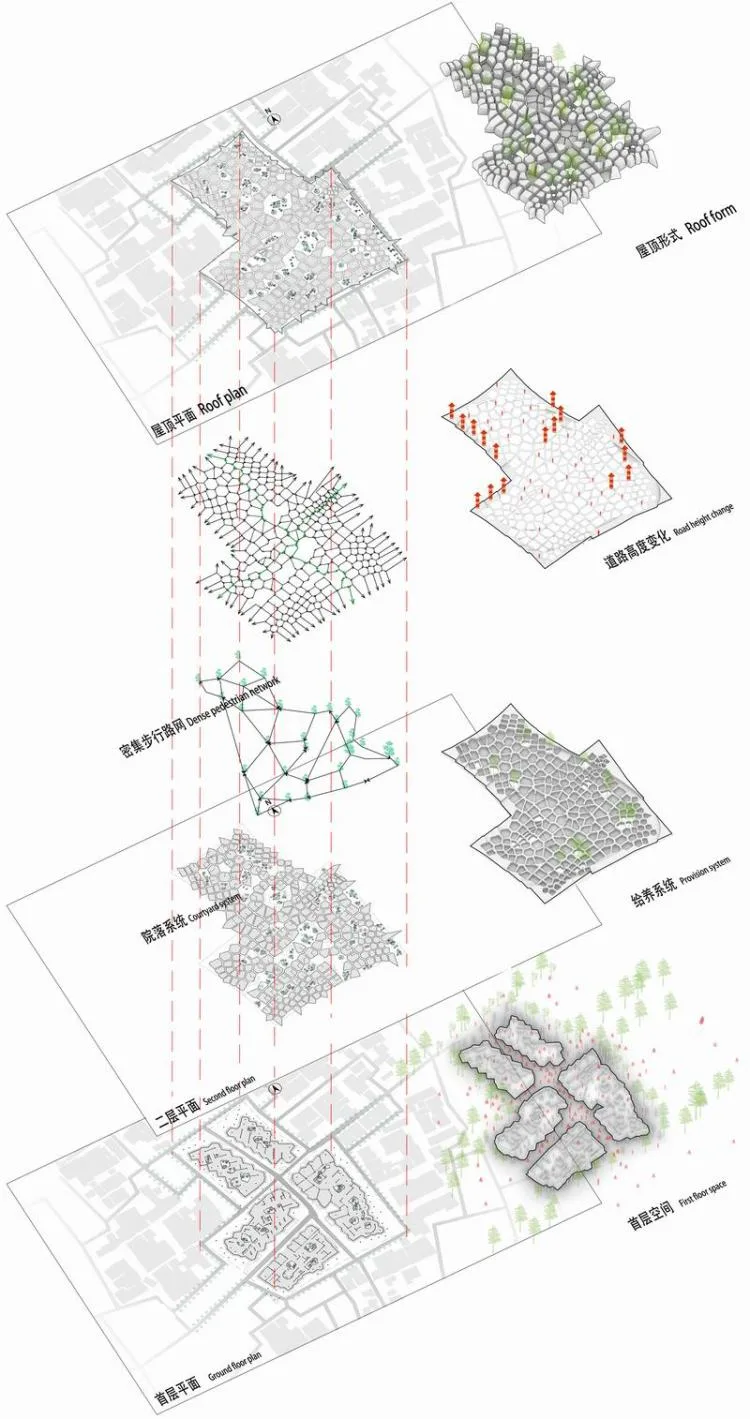
△ Exploded plan diagram
3) Terraces – Overlooking neighbors and the sky
During normal times, terraces provide residents with relaxing and recreational space after work and family time.
During epidemics, they serve as quarantine spaces offering views of neighbors and the outside world.
4) Homes – Safe havens for each family
In normal life, homes are life anchors and personal refuges for migrant workers navigating big city challenges.
During epidemics, homes become safe units protecting family members from viral exposure.
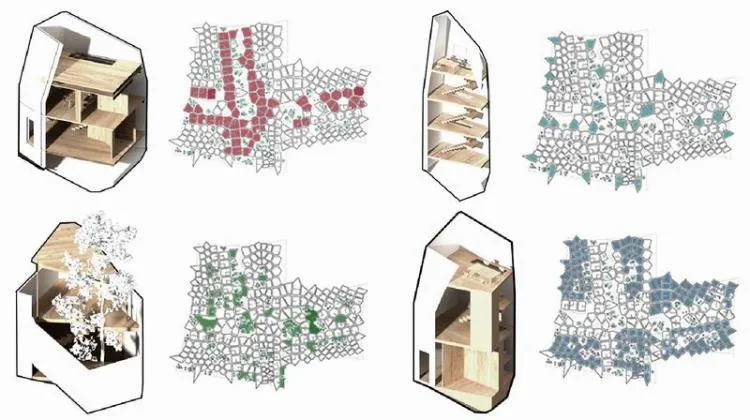
△ Residential unit
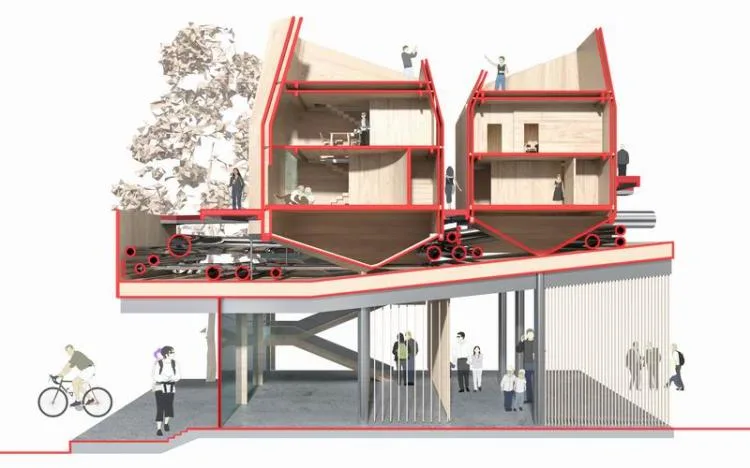
△ Sectional drawing of individual residential units
Designer’s Statement
Changing the name from “Kiss Tower” to “Flying Kiss Tower” encapsulates the three core questions posed earlier. The Guangzhou Shipai Village Super Residence is a high-density rooftop community designed to adapt seamlessly between epidemic and non-epidemic states, offering a new model for urban village transformation.
The sudden epidemic outbreak forced us into home isolation, highlighting the need to re-evaluate residential design. Rational spatial planning can prevent virus transmission while fostering emotional community bonds among residents.
Through straightforward, effective design, we aim to cultivate a new community culture in urban villages that meets epidemic prevention needs.
For moreinterpretations of high-quality projects, please visit the High Quality Student Works section:
http://www.archcollege.com/home.php?m=Index&a=newTopicDetail&id=48838

Archcollege is recruiting authors long-term.
Manuscript fees range from 300 to 1000 RMB per article, with an annual best-work bonus of 10,000 RMB.
To learn more, please leave a message on the website backend or add WeChat ID: JZXY-YZ.













Must log in before commenting!
Sign Up