
© Yang Guangkun
In today’s fast-paced world, taking a moment to step back and relax away from the “original world” is essential for restoring inner peace and reestablishing order. Although traveling to distant places has become more accessible than ever, achieving a true body-and-mind vacation experience remains challenging. This raises a crucial question for designers: how can we create a genuinely relaxed experience?
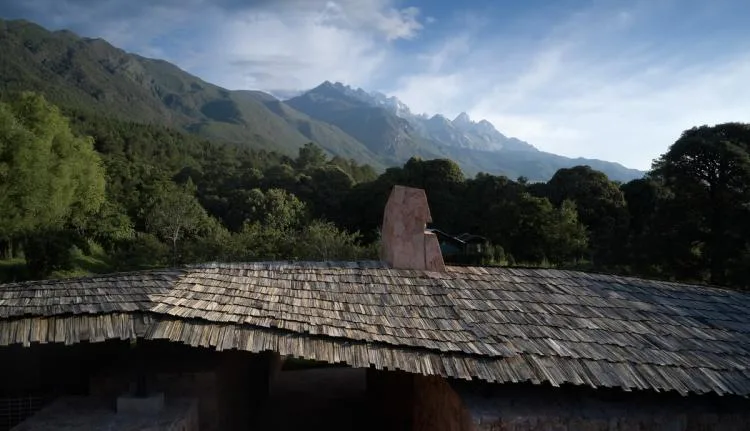
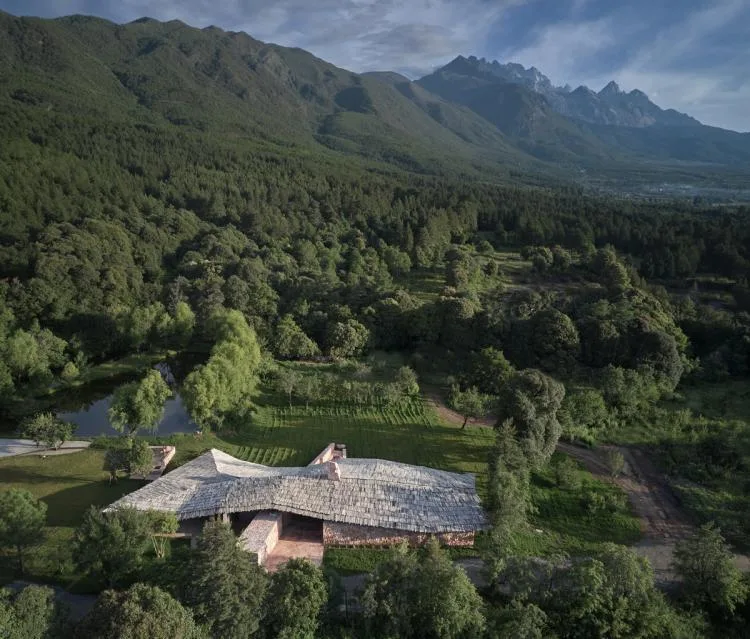
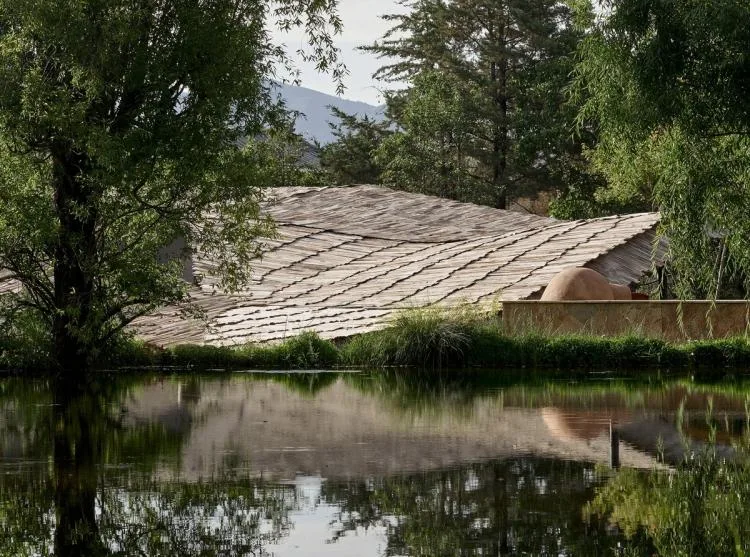
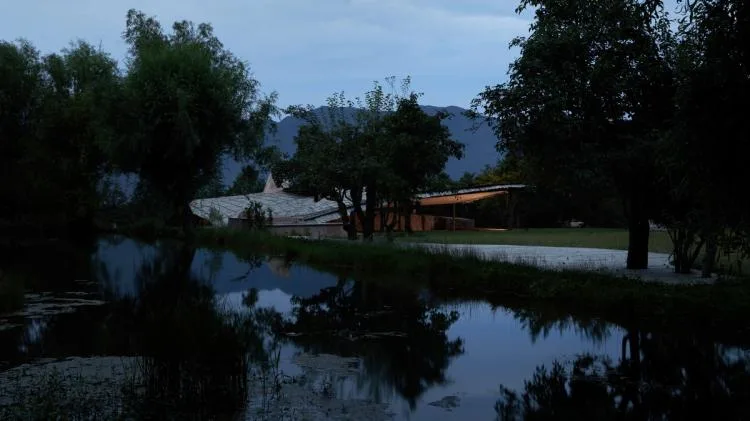
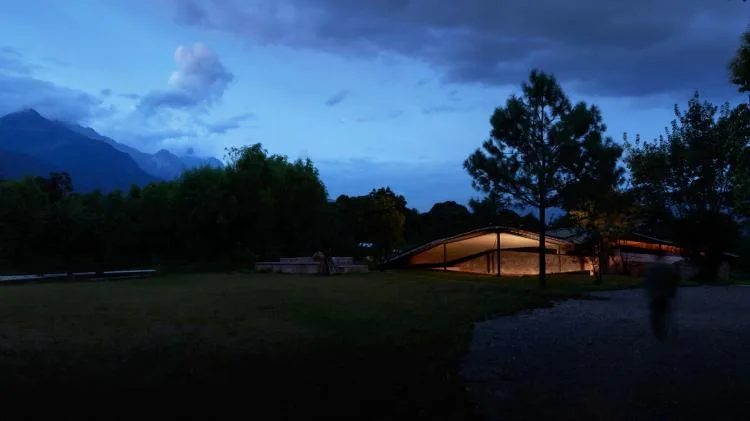
The Hylla Falling Cloud Nature Experience Center—affectionately known as the “Red House”—is located on a gentle slope in Yanjiao Village, Baisha Town, Lijiang, Yunnan. This natural living experience site sits at the boundary between Hylla Land and Lan. One side offers breathtaking views of snow-capped mountains and glaciers, while the other overlooks the countryside. Except for the countryside side, the other three sides are enveloped by a dense forest canopy extending from Zhishan. The site features a sequence of lawns, water pools, and forests arranged in varying elevations. Behind the building flows a natural canal facing the hotel’s main building across the water. On this unique site, the architect applied a distinctive interpretation of “locality,” transcending conventional experiences and trendy labels to create a “spontaneous” structure that emerges naturally from the earth.
© Yang Guangkun
Cloud-like Free Structure
Vacations are about finding moments of true relaxation, and Yunnan embodies this relaxed state perfectly. Observing local architecture, the architects noted that traditional buildings in Yunnan are created with remarkable freedom: old craftsmen build without strict designs or plans, casually stacking stones and shaping edges, indifferent to perfect neatness. This randomness, imagination, and effortless approach inspired the design team to adopt a similarly relaxed approach for this project.
© Pan Jie
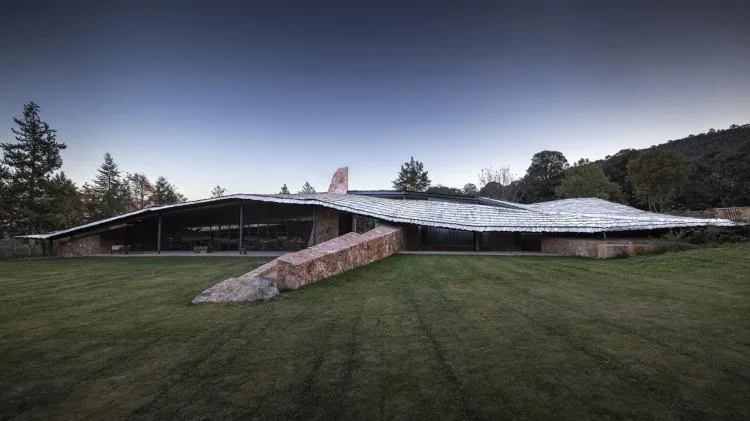
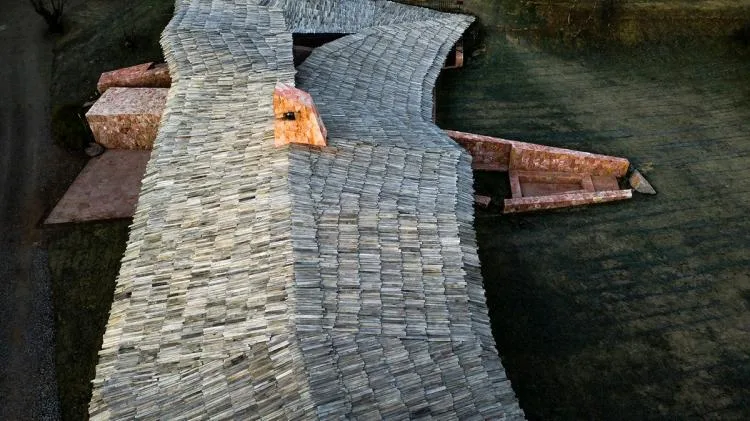
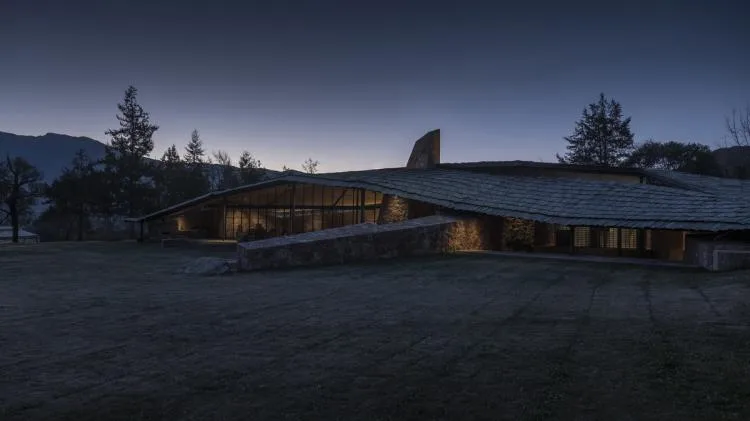
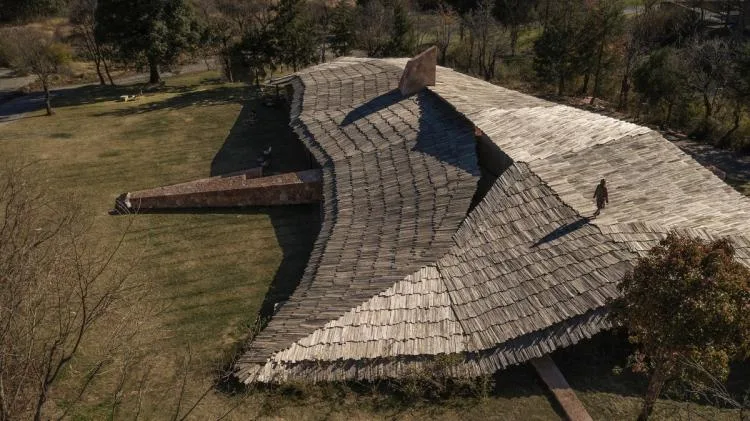
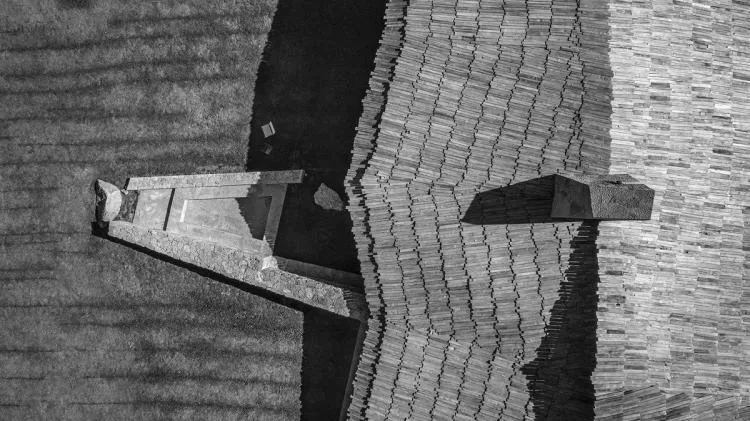
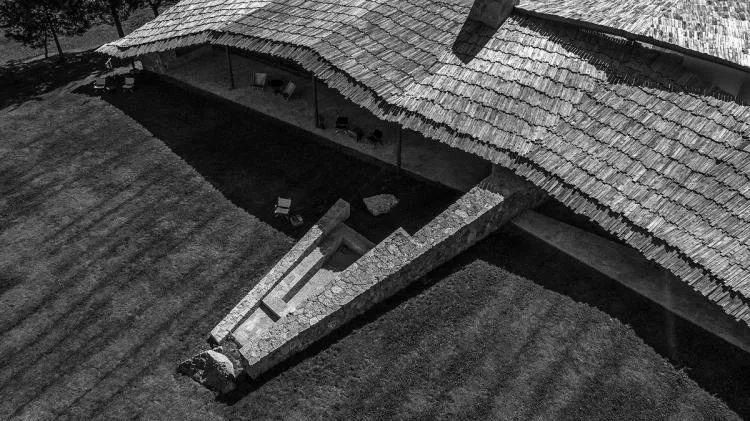
Lijiang enjoys bright, sunny weather, with cloud shadows providing natural shade. Clouds symbolize freedom and fluidity, inspiring the design team’s choice to shape the roof like a drifting cloud. This roof wanders naturally, adjusting to the site’s scattered trees by retreating or expanding to fit gaps, forming an organic architectural plan from a bird’s-eye view.
© Pan Jie
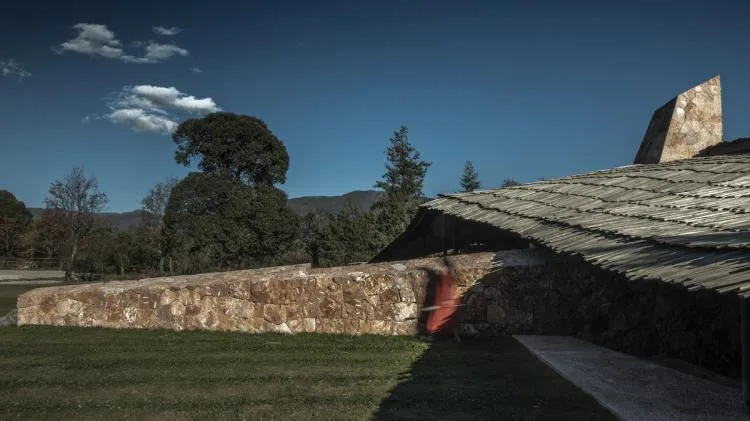
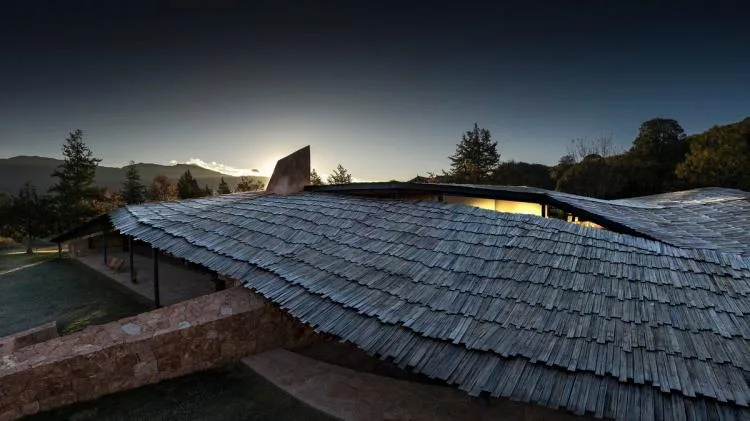
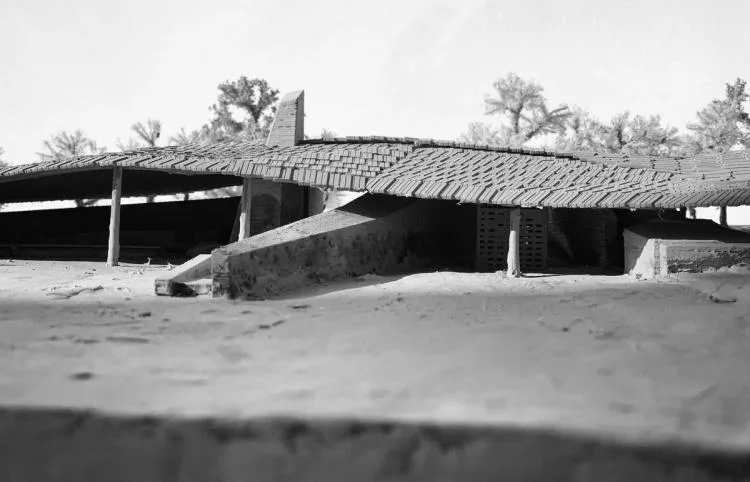
The cloud’s shadow naturally defines the building’s interior space. Drawing inspiration from Kaare Klint’s 1933 Safari outdoor chair design, the architect adapted the building’s structural supports to the uneven terrain. Each side varies in length, responding to site conditions, resembling a large tent resting on the grass. This tent-like structure aligns with the owner’s vision, as the site’s flat grasslands, water pools, and forests make it ideal for camping in a natural setting. The building’s form evokes the feeling of an outdoor campsite, blending function with nature.
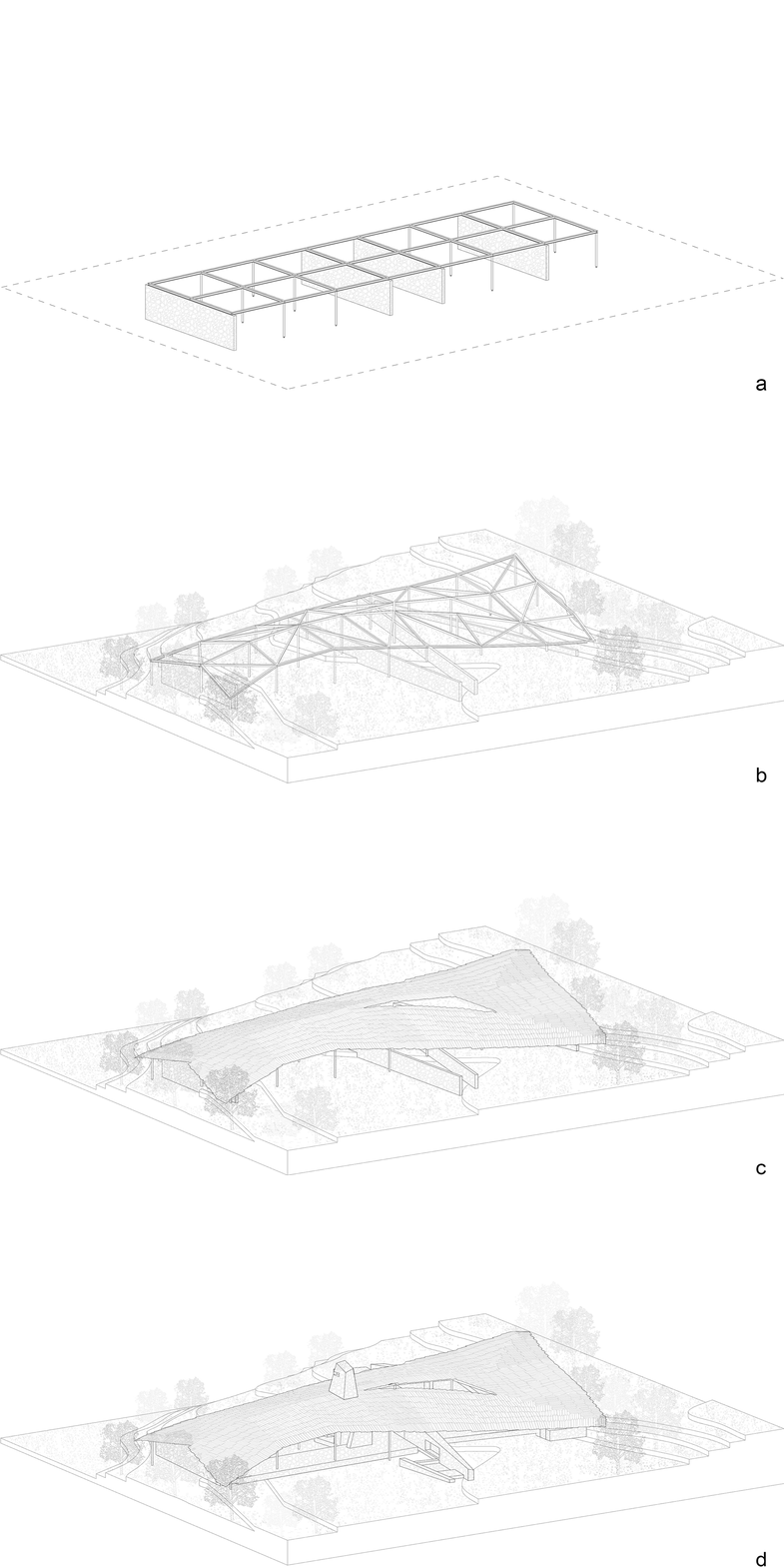
△ Architectural Form Analysis
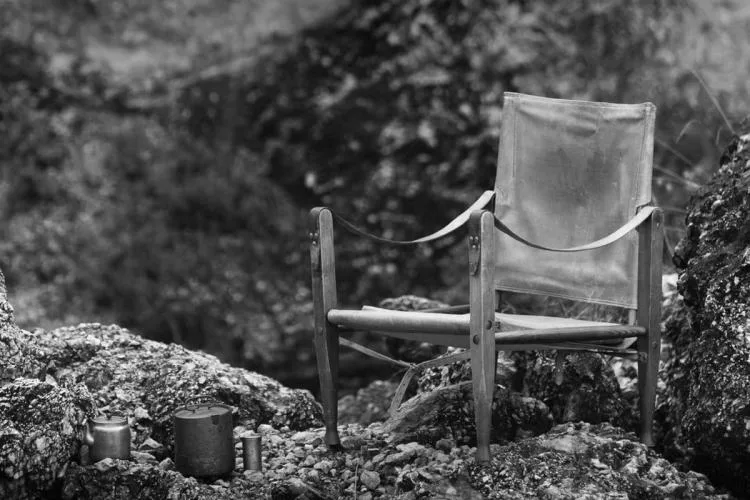
△ Safari Outdoor Chair © Sun Yiwen
© Pan Jie
© Pan Jie
Natural and Spontaneous Material Choices
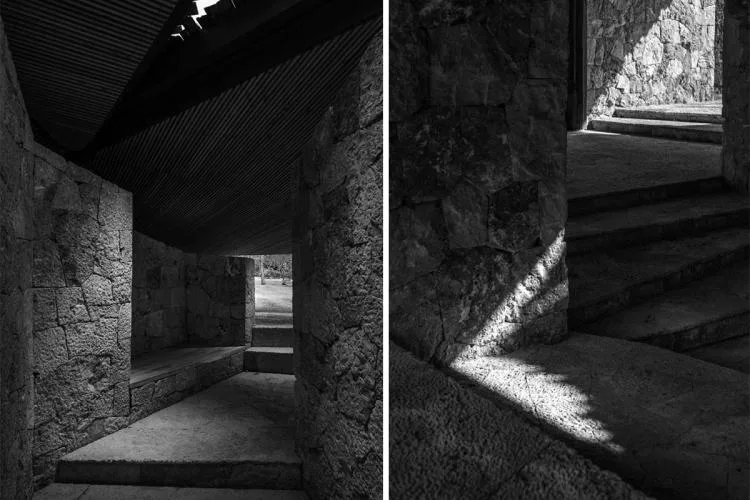
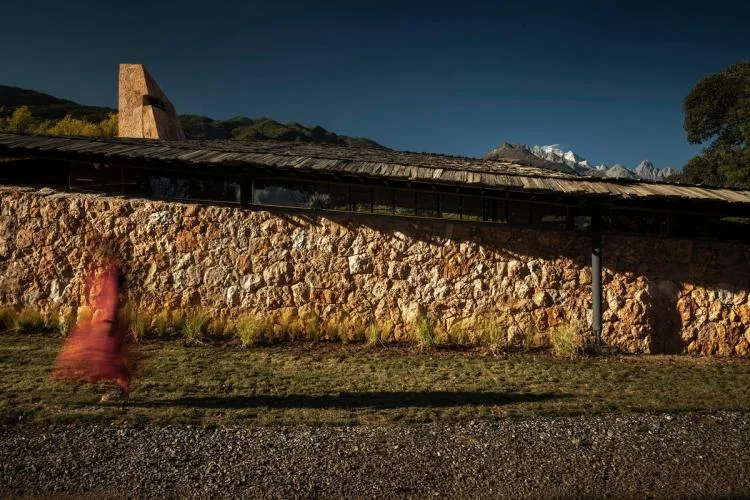
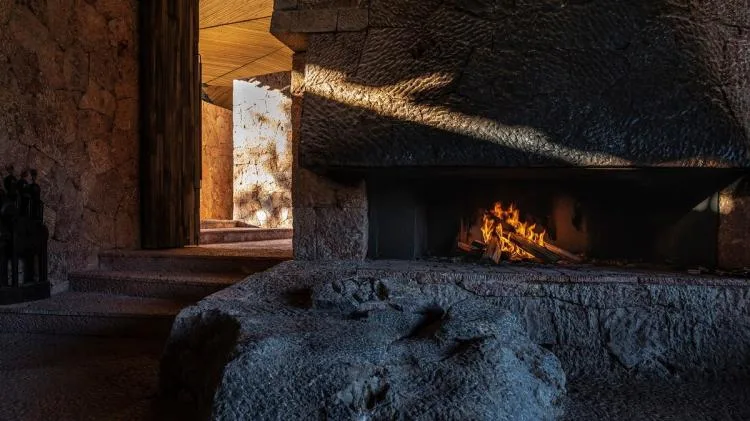
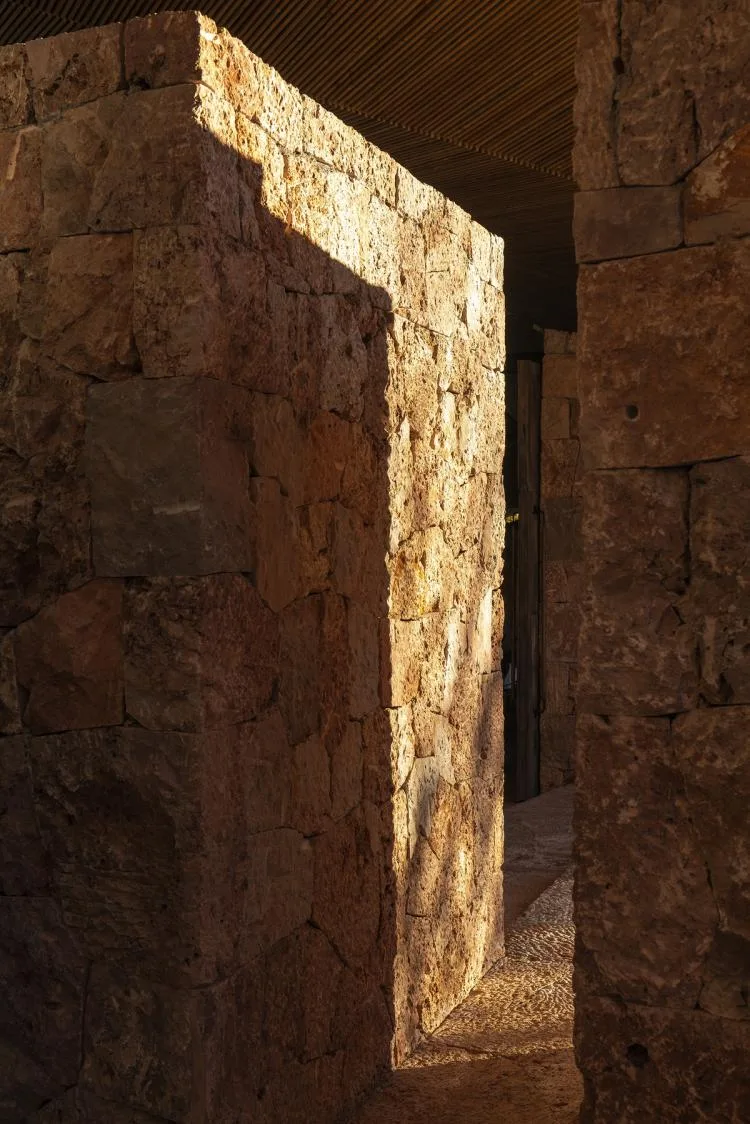
Beyond its freeform structure, the Hylla Cloud Nature Experience Center embraces “readily available” materials. The ground and walls are constructed from the same locally sourced stone from Lijiang, without unnecessary decoration, revealing the stone’s original color and texture. This stone, unique to Guifeng Village, boasts a distinctive pink hue reminiscent of a flamingo. Its extensive use creates a bold contrast with the wild Yunnan landscape, earning the building its affectionate nickname, the “Red House,” passed down among workers.
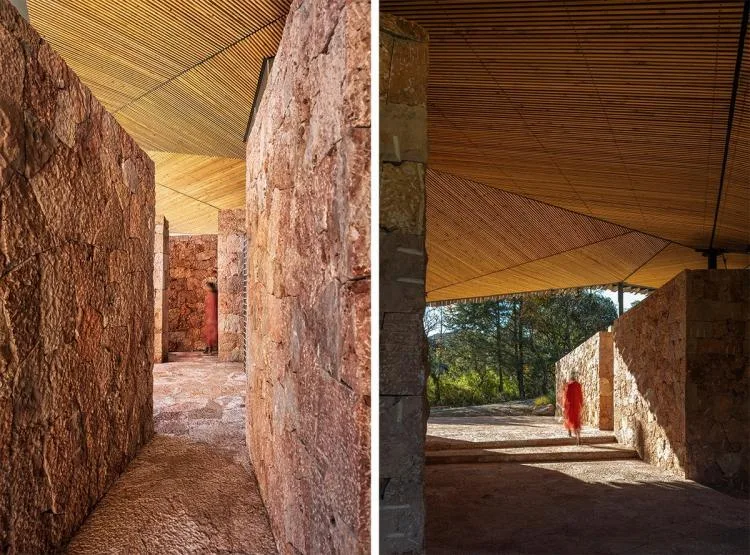
© Pan Jie
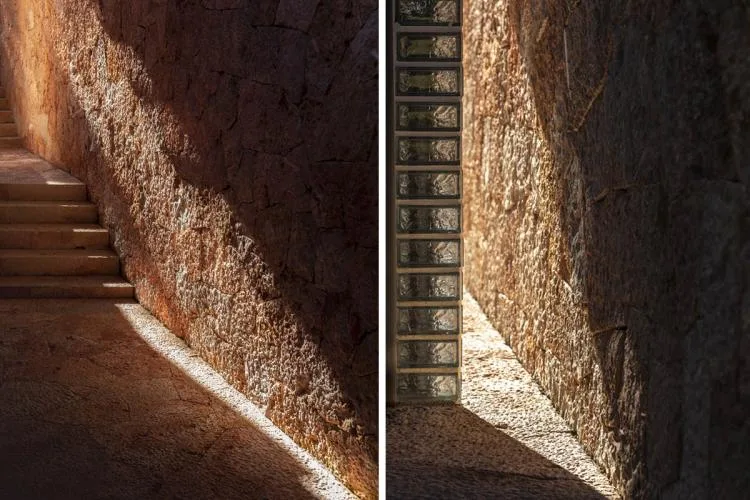
© Pan Jie
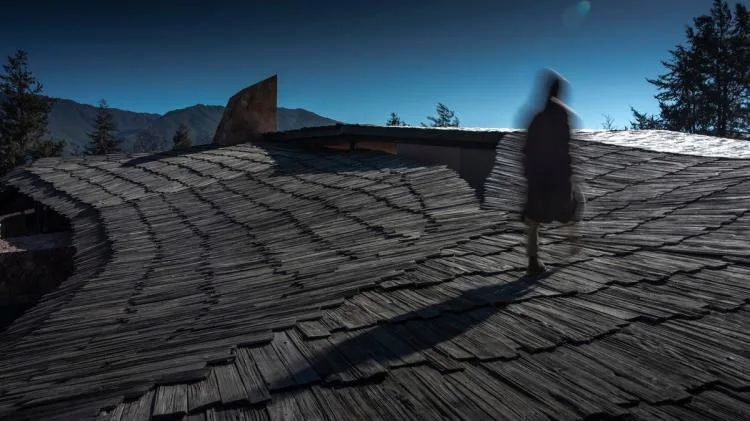
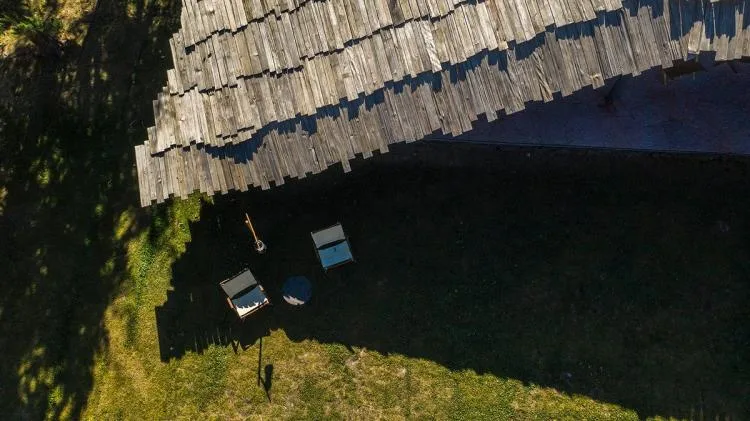
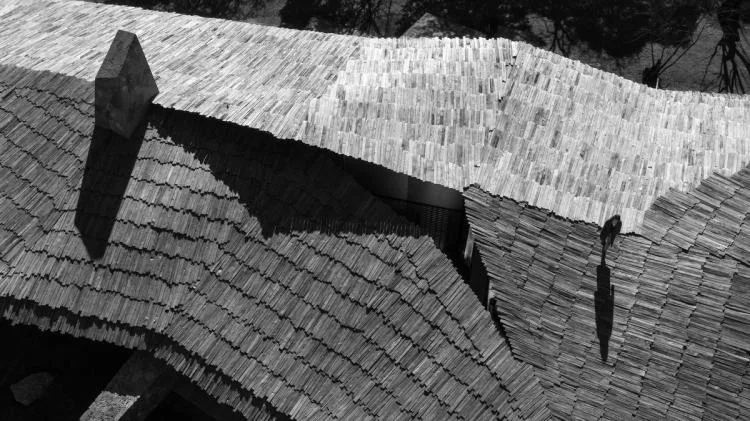
When surveying the site, the design team discovered piles of dismantled old wood. They chose to repurpose this wood, piecing it together to form the building’s roof.
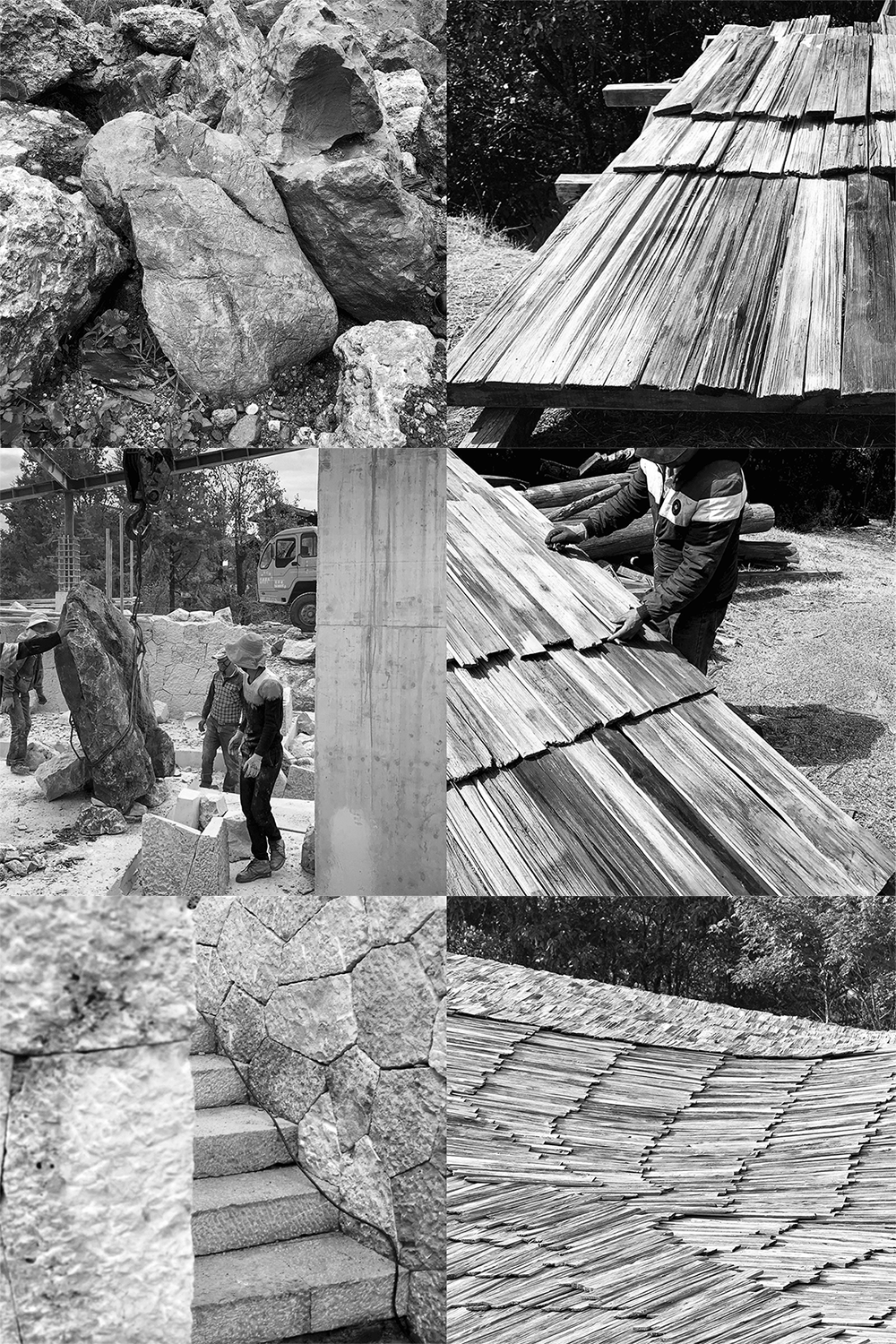
△ Stone and Wood
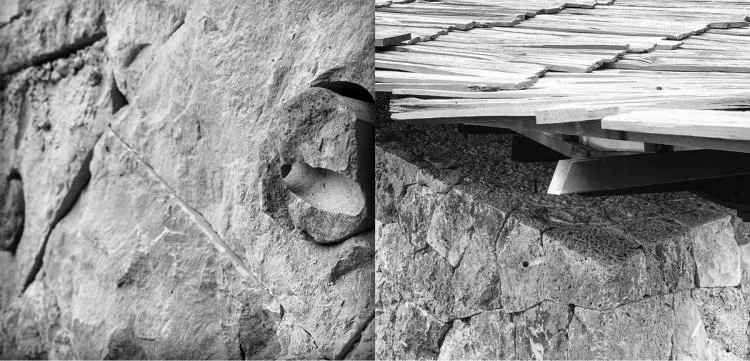
△ Material Details
The assembly edges are intentionally irregular, with varying wood lengths preserving the handcrafted feel. This aligns with Yunnan’s philosophy of embracing an unpretentious, “indifferent” way of life.
© Pan Jie
© Pan Jie
However, this seemingly “random” choice of materials did not simplify the construction process. In an era dominated by machine precision, every stone was meticulously hand-chiseled by skilled stonemasons to preserve its natural texture.
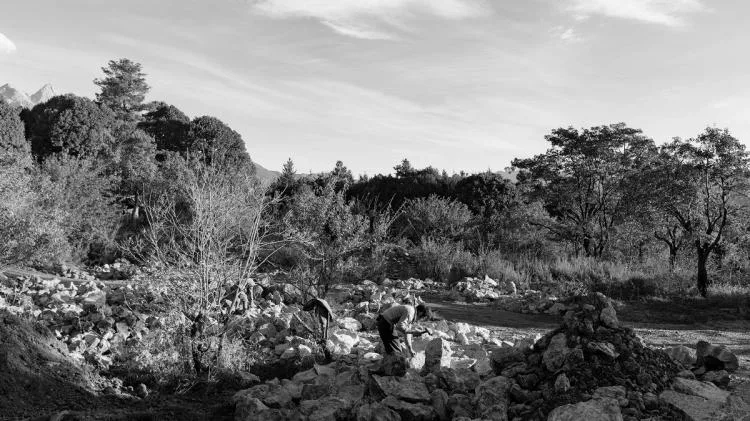
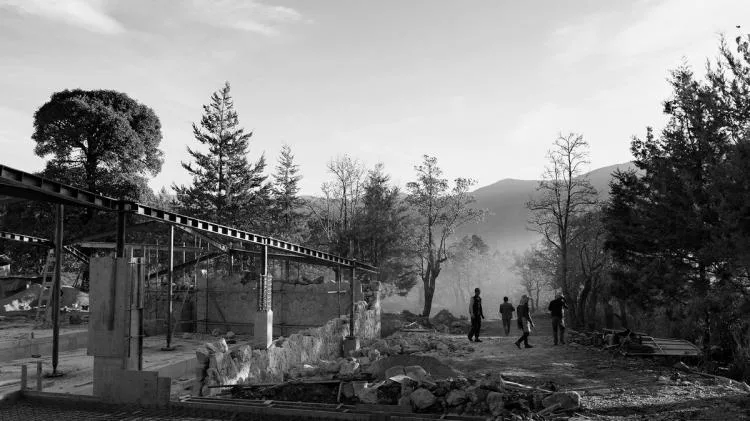
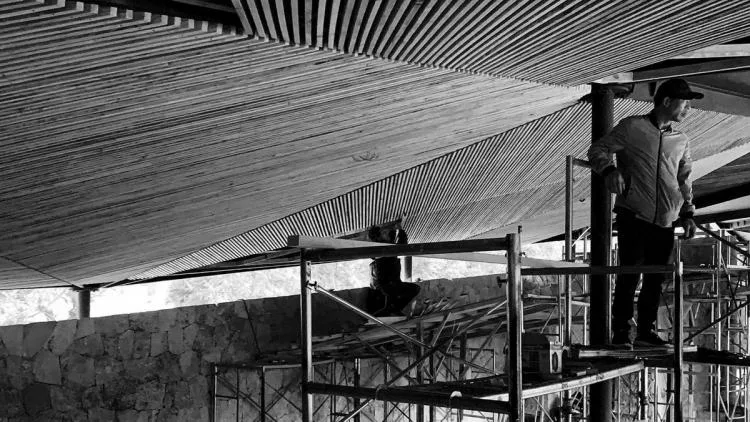
△ Construction Site © Wu Xia
For the architects, building this project was akin to crafting molecular cuisine: using local materials to create something innovative yet rooted. Ultimately, they crafted a modern building with simple materials and techniques that honors the local spirit, harmonizes with nature, presents thoughtful design, and radiates warmth.
© Pan Jie
Offering an Open Experience
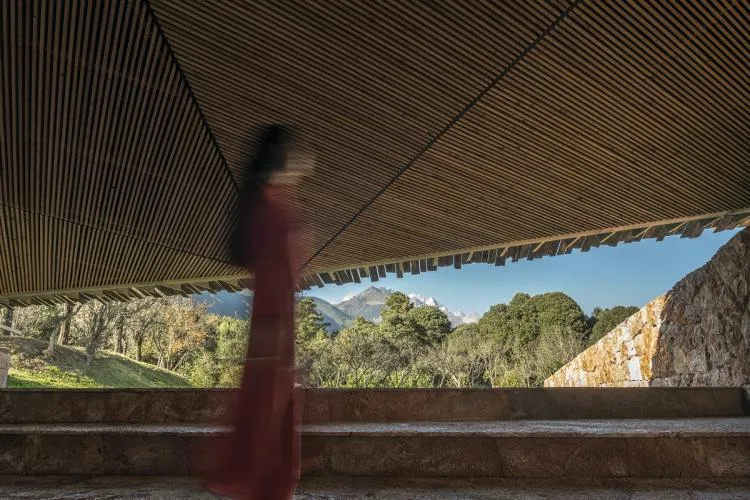
Aside from its unconventional form, another way the “Red House” differs from traditional architecture is its lack of predetermined usage rules. The architects believe that architecture should not dictate how people use the space; rather, the experience is an open-ended concept, with the designers providing possibilities.
© Pan Jie
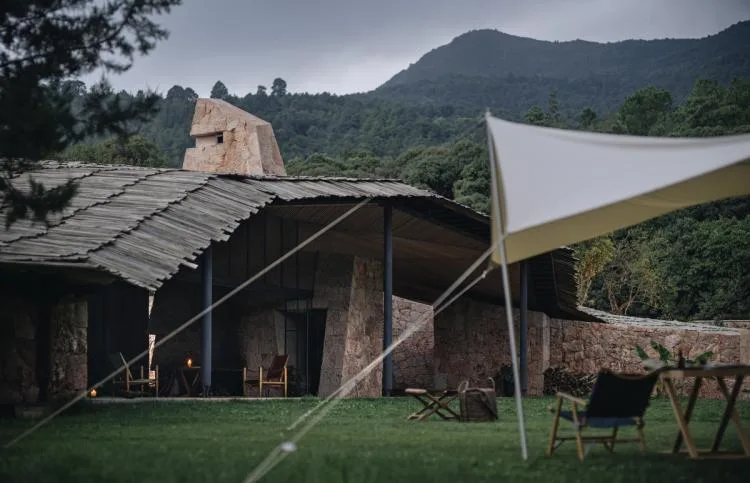
Firstly, the boundary between architecture and nature is intentionally blurred, inviting users to freely engage with and experience the natural surroundings. However, the architects emphasize respecting “locality” and recognizing that visitors are “strangers” in the area. For foreigners, the sight of snow-capped mountains offers a profound sense of difference and wonder.
© Hylla Thunder Altar
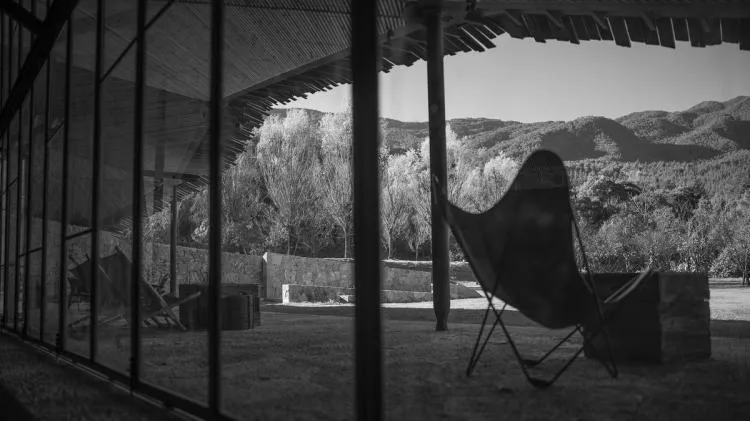
The design thoughtfully considers how to best “see the mountains.” Sharing the joy of travel is integral to the vacation experience. Thus, crafting unique viewing points and accommodating various postures offers visitors diverse ways to appreciate the landscape.
© Pan Jie
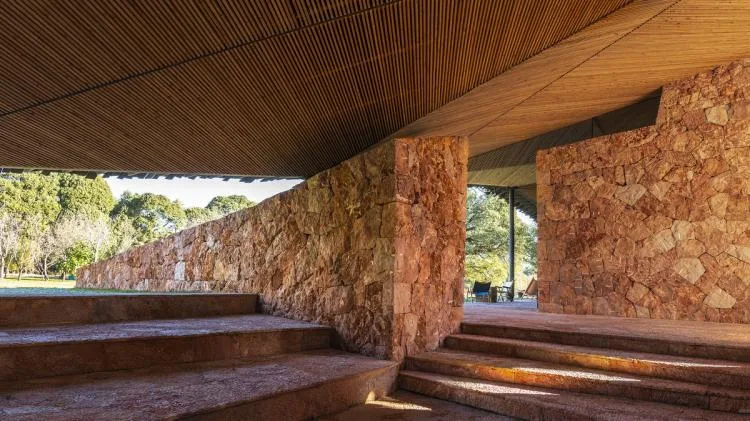
Internally, the center imposes minimal spatial restrictions aside from necessary partitions for rest and activity areas, bathing spaces, and storage. The rest area remains flexible—it can serve as an open lounge, café, bar, retail space, or shared venue, adapting to changing needs. Visitors are free to use the space as they prefer, whether sitting, lying, standing, or walking, fully embracing user autonomy.
© Pan Jie
To enhance luxury camping, the bathing areas use semi-transparent glass bricks, allowing vague silhouettes to be seen from outside, evoking the sensation of a plane passing through clouds. The bathroom and rain system simulate natural rainstorms, delivering an unpredictable, immersive experience. The designers eagerly explore this edge of controlled daring.
© Pan Jie
Conclusion
Throughout the design and construction process, the architect did not rigidly imitate local Yunnan architectural forms. Instead, they created a building that stands apart visually yet captures the essence of the local architectural spirit: naturalness and relaxation. Returning to the question of how to create a relaxed experience for visitors, the answer may lie first in the builders themselves embracing a relaxed approach.
© Pan Jie
© Yang Guangkun
© Yang Guangkun
△ Project Video
Models and Drawings
△ Model © Cheng Yue
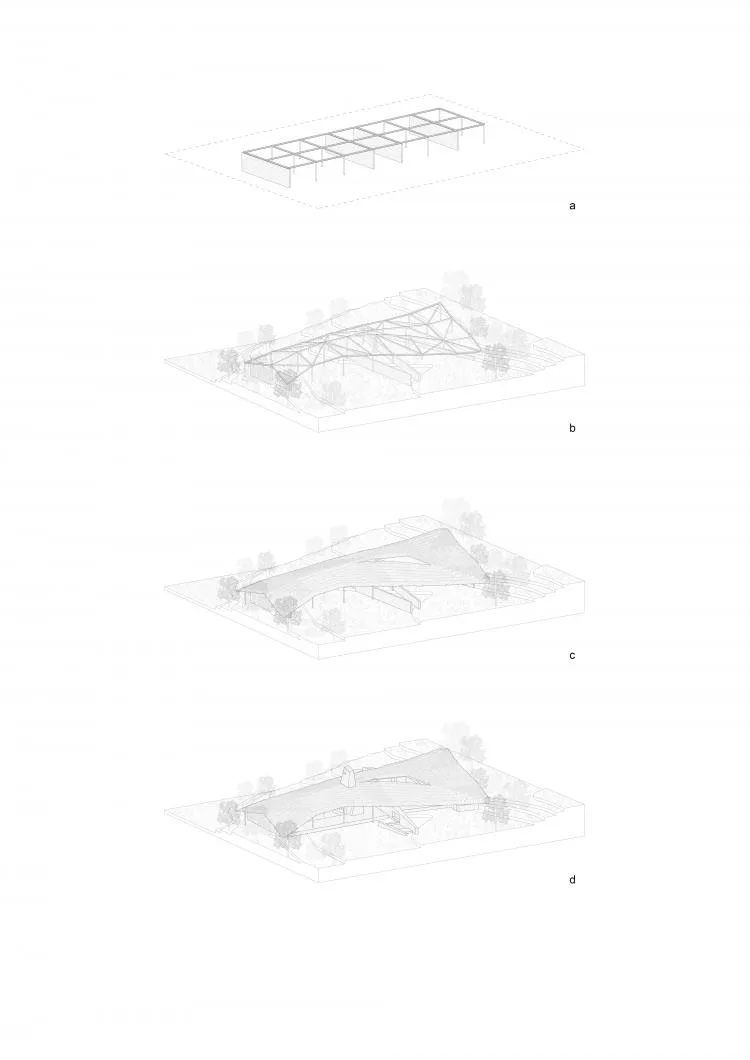
Concept Analysis Diagram
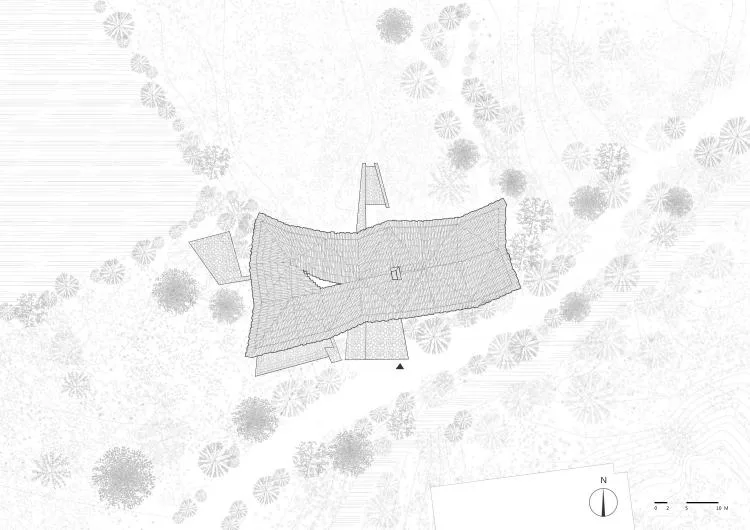
△ General Layout Plan
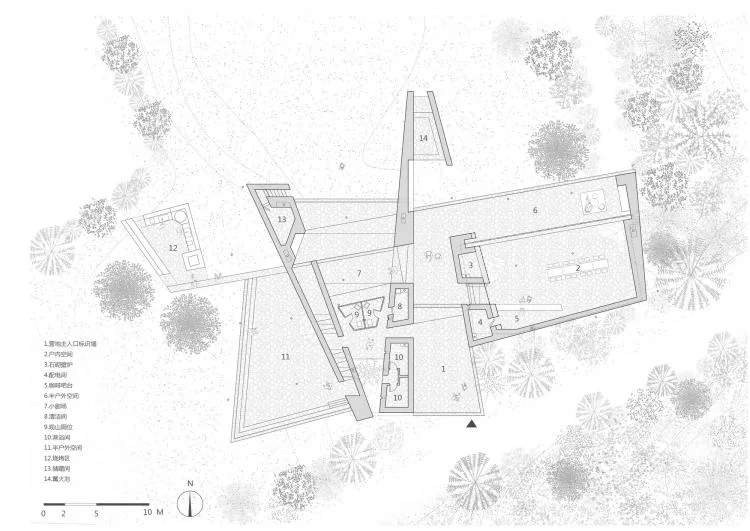
△ Plan View
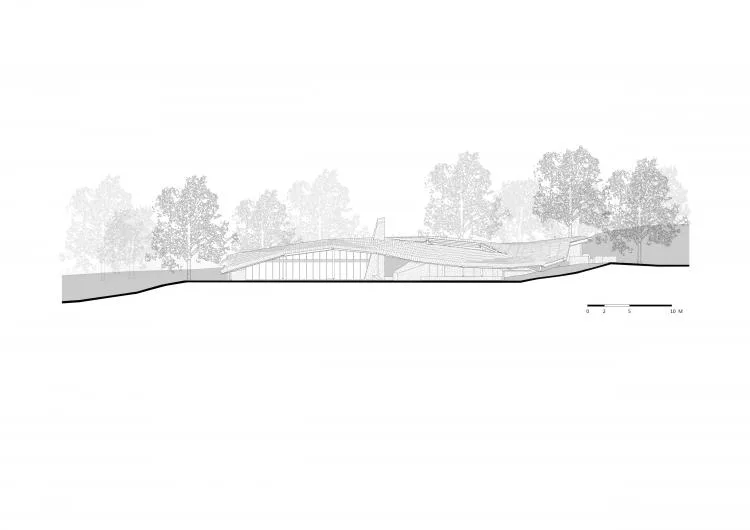
△ Elevation 1
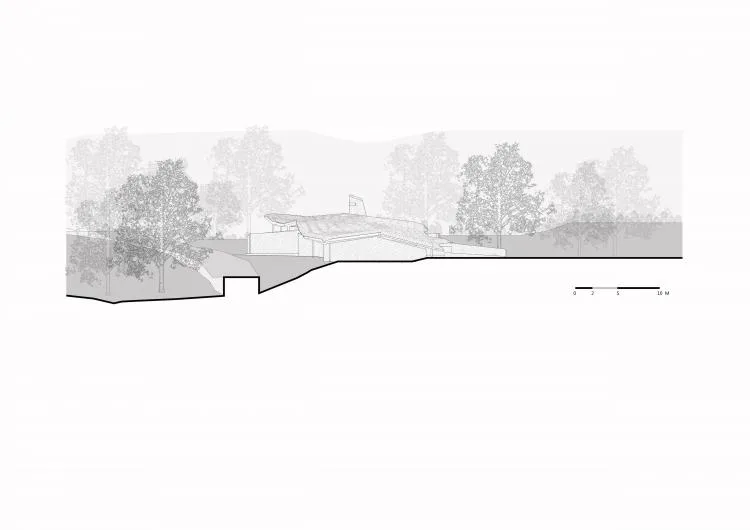
△ Elevation View 2
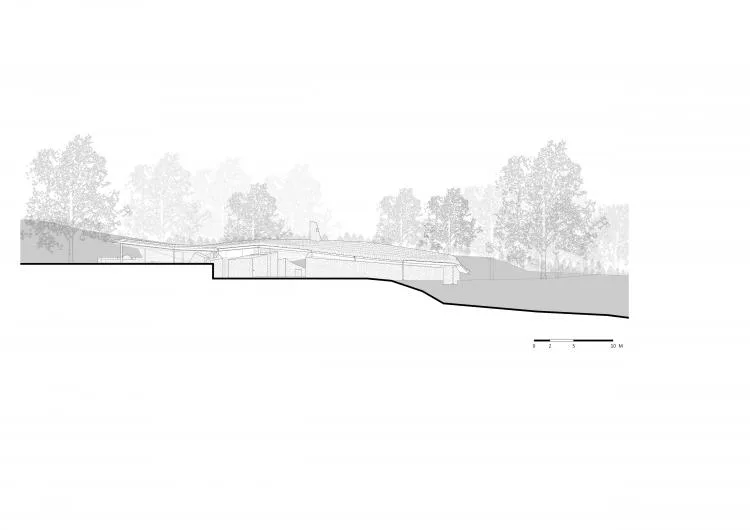
△ Elevation View 3
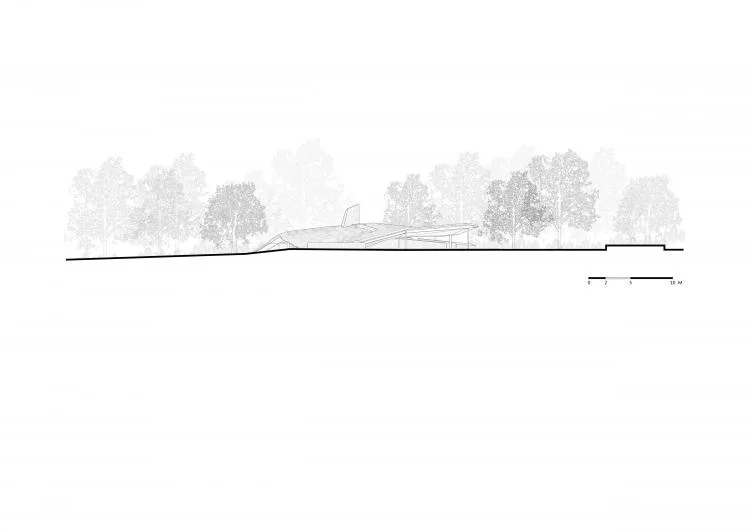
△ Elevation Drawing 4
Project Information
Project Name: Hylla Cloud Natural Experience Center
Location: Lijiang, Yunnan
Address: No. 99 Yanjiao Village, Baisha Town, Yulong County, Lijiang City, Yunnan Province
Type: Hotel / Café
Design Date: August 2019
Construction Date: June 2020
Area: 538 square meters
Design Team: Gad
Project Lead: Cheng Yue
Team Members: Tang Junru, Shi Yiyuan, Ma Jia, Lv Chaohao, Zhao Yuting, Ma Yuqing
Architectural and Interior Design: Cheng Yue, Tang Jun, Shi Yiyuan, Ma Jia, Lv Chaohao, Zhao Yuting, Ma Yuqing
Structural Design: Li Baozhong, Huang Jie
Water Supply and Drainage Design: Cheng Yongqing
HVAC Design: Fangyuan Garden
Electrical Design: Pan Xiaoyan
On-Site Construction Team: Yang Fei, Huang Qingxiang, Hu Qiujin, Wang Jialei, Raofei Marquis
Construction Team: Dai Jingui, Liao Haibin, Han Fujun, Liu Huan, et al.
Owners: HYLLA and Lan
Photographers: Pan Jie, Hylla, Lei Tan Tan Tan, Yang Guangkun, Cheng Yue, Wu Xiansun, Yi Wen, Yang Fei
Structural Techniques: Masonry and steel structures
Materials: Recycled stone, wooden boards, steel, glass bricks













Must log in before commenting!
Sign Up