
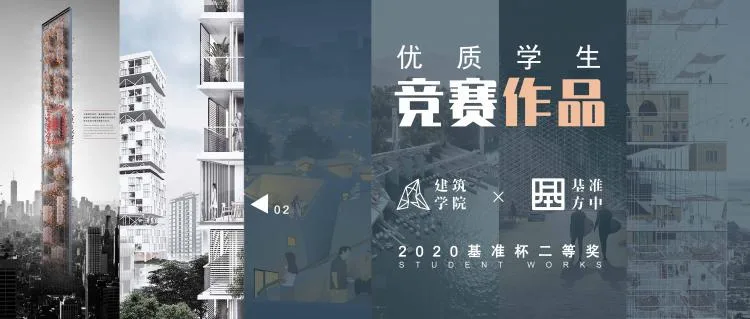
Competition Theme
The uncertainty of population mobility in 2020 led to the rapid spread and uncontrollability of the global pandemic. To address this epidemic, the world entered a ‘pause mode’. Reflecting on humanity’s brief history, what can truly protect and support us? Epidemic experts emphasize that “staying at home” is the most direct and effective method to block virus transmission. As our activity range suddenly shrinks, what critical challenges arise for architects?
Our design is based on the concept of Super Residence, a living model that can swiftly adapt to the “pause mode” by providing barriers while maintaining connections to the outside world. Once restrictions lift, it transforms into a free community that fulfills people’s desires for a better life. The plan includes a ‘Super Unit’ within the ‘Super Residence’, allowing residents to live independently for extended periods within a ‘super living unit’.
Award-Winning Project

Source of Inspiration
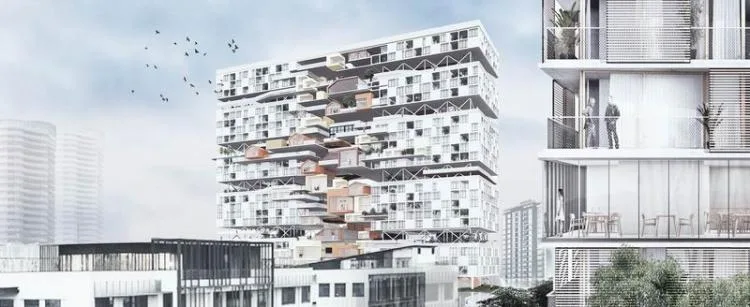
Traditionally, a home is both a physical shelter meeting daily needs and a place for emotional connection. Since the outbreak, home has evolved into a spiritual sanctuary. We aim to redefine the home model by breaking traditional limitations. The home no longer just protects from viruses or provides essentials; it expands beyond individual spaces, incorporating public areas shared among families. This creates a multifunctional, composite collection of homes—a super community.
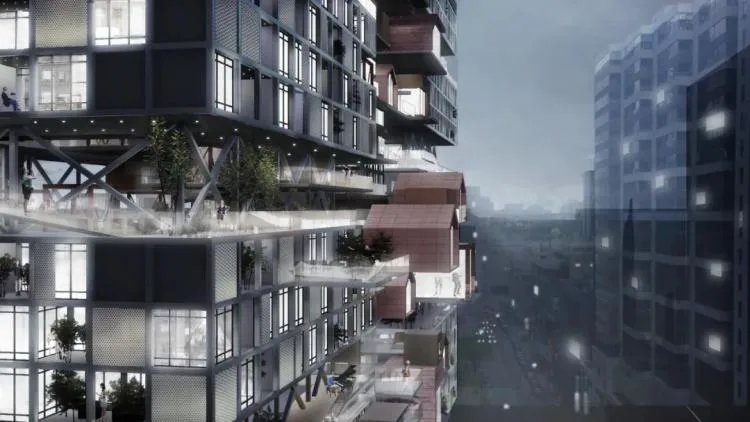
△ Aerial Perspective View
Understanding the Competition Challenges
A super apartment is designed to adapt to current social developments, embracing the concept of “super” space. It anticipates diverse needs, allowing the building to switch between open and closed states. This flexibility serves various groups, making the residence a multifunctional and resilient community. From personal experience during the pandemic, psychological healing is essential; thus, integrating healing and green spaces is a priority.
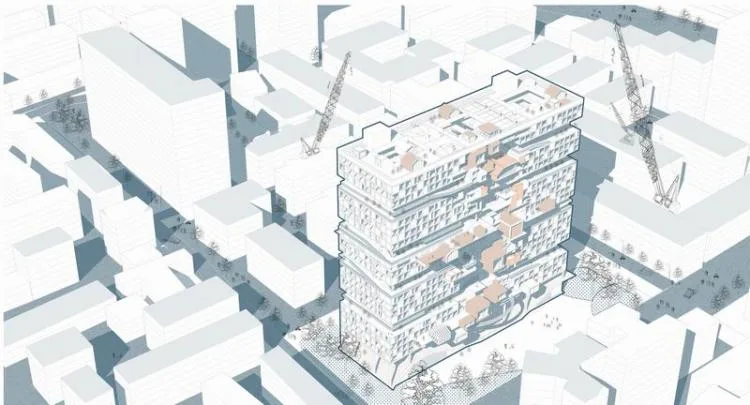 △ Aerial View
Design Proposal
01 Epidemic Context & Site Analysis
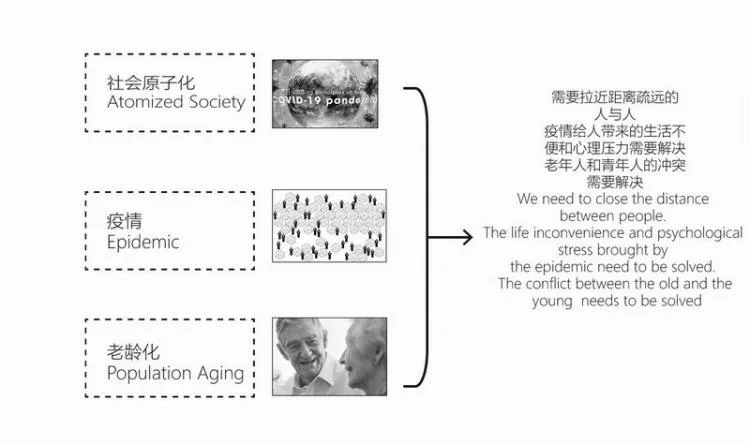
In today’s digital era, face-to-face communication and real-world connections are lacking. This leads to societal atomization, where families function as isolated individuals. Additionally, an aging population intensifies this fragmentation.
The pandemic disrupted daily life and imposed psychological strain due to isolation. Yet, home quarantine remains vital to interrupt virus transmission. The epidemic spreads via two pathways: transmission (contact in public spaces) and infection (unconscious exposure). Home is the final barrier in this chain, closely linked to infection control.
Site Selection
We selected Shuyuan Street Community as our design site, where 75% of residents are elderly. Due to its proximity to Taikoo Li, we aim to attract younger residents as well. Apart from open land by the river, the area has limited open activity spaces. Though close to the city center, commercial options are limited, and community healthcare and educational resources are insufficient.
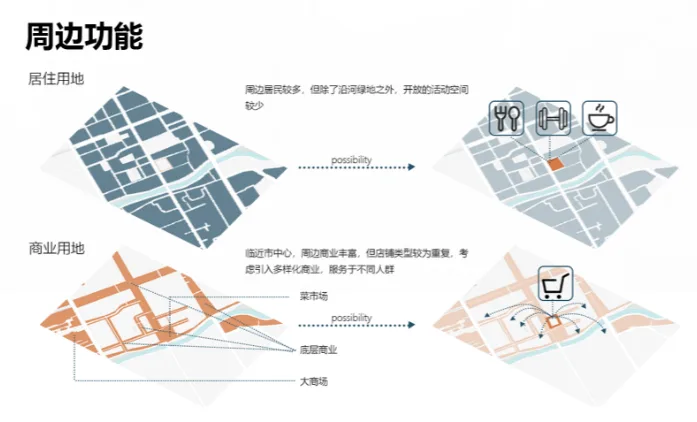
△ (Left) Surrounding Functions (Right) Geographic Location
02 Qingyin Co-Living Model: A Resilient Community
Design Philosophy
This site benefits from supportive policies but faces serious intergenerational conflicts and underutilized building resources. Our goal is to implement smart community management during the pandemic and respond to the “park city” initiative promoting harmony between elderly and youth. We introduce modular design and shared spaces to develop a new model of epidemic prevention and control: a green, silver co-living community that grows, prevents, controls, and shares.
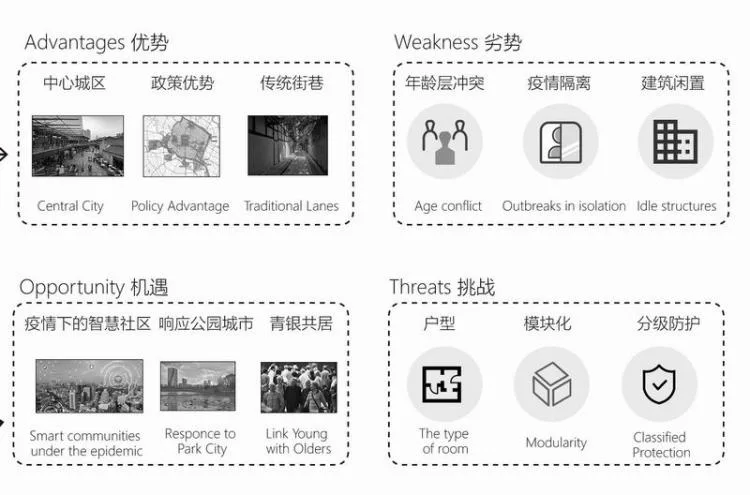
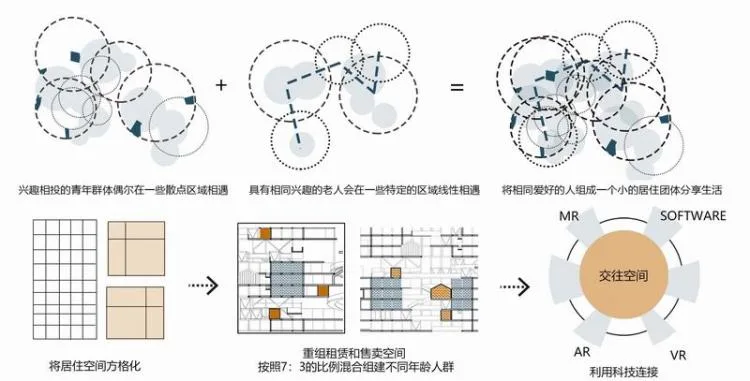
We explore how to redefine home amid the pandemic and social atomization by introducing the concept of “interesting fate.” What is Quyuan? In future societies, people will freely assemble based on interests and hobbies, fostering “interest groups” beyond blood ties, geography, or business connections.
Old age does not mean giving up social life or passions. With rising life expectancy, combating loneliness is crucial—especially during quarantine periods. Creating spaces for communication is therefore vital.
Architectural Form and Logic
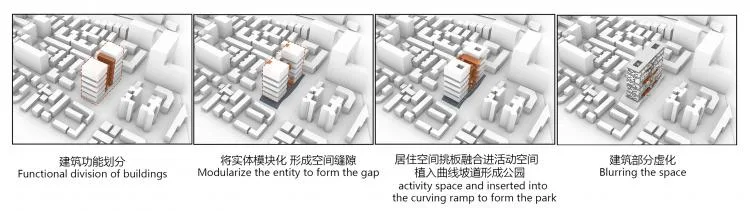
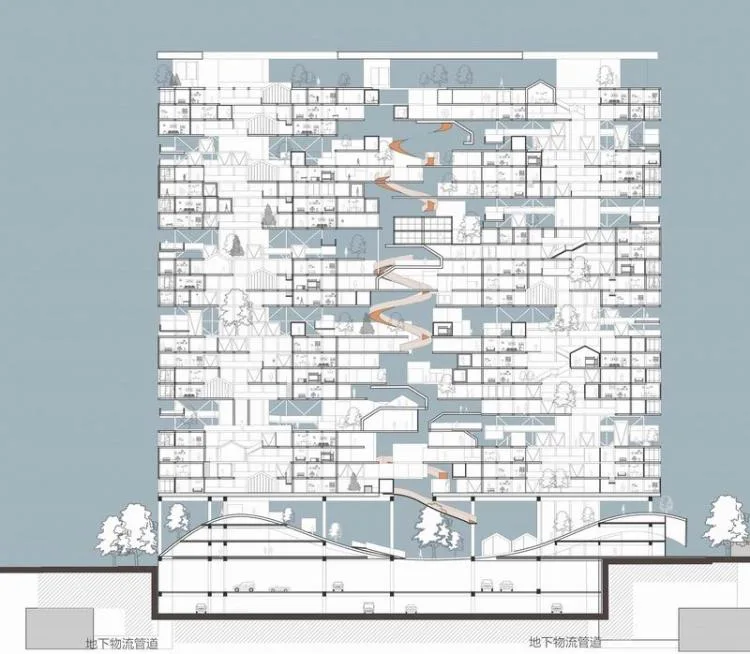
The building’s vertical layout organizes functional zones, while horizontal corridors create collective activity spaces. Living areas on both sides integrate into central activity spaces via cantilevered panels, connected vertically by curved ramps. This design forms a composite home combining residential, public, and communal elements.

Community Operation Model
Centered on “Fun Connection,” the community encourages residents with similar interests to gather and form “interest groups.” Designated spaces on each floor enable small residential clusters to share their lives and foster social bonds.
03 Epidemic Prevention and Open Community Integration
Epidemic Response: Resilient Housing
Following current public health emergency guidelines, the community can operate in three modes: full lockdown, partial restriction, and fully open. The building supports residents throughout its entire lifecycle.
Pause Mode — Level 1 Emergency Response
Streamlined Operations: Residents quarantine at home during lockdown. The building is sealed off externally, with floor-by-floor management. Prefabricated modules enable rapid deployment of outdoor entrances for disinfection and material storage.
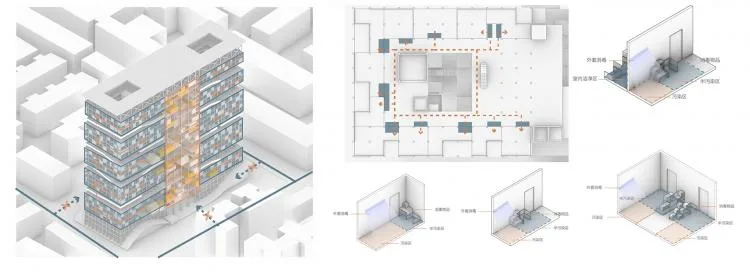
Functional Adaptation: The building employs a SI residential system allowing quick layout changes for home quarantine of suspected cases. Original activity spaces can be rapidly outfitted with prefabricated medical modules to serve as emergency medical areas.

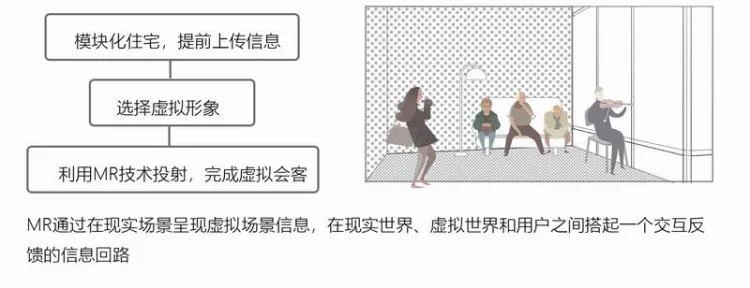
Communication Spaces: Pre-entry of modular housing data enables residents to use Mixed Reality (MR) technology for virtual meetings, fulfilling social interaction needs during isolation.
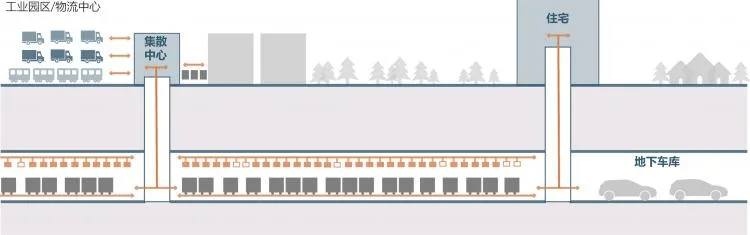
Material Handling: Part of the underground garage converts to storage and distribution space, linked to an underground logistics system for rapid supply transfer.
Partial Restriction — Levels 2, 3, and 4 Emergency Response
Level 2 Response: Some residents self-isolate while others access activity spaces through scheduled appointments.

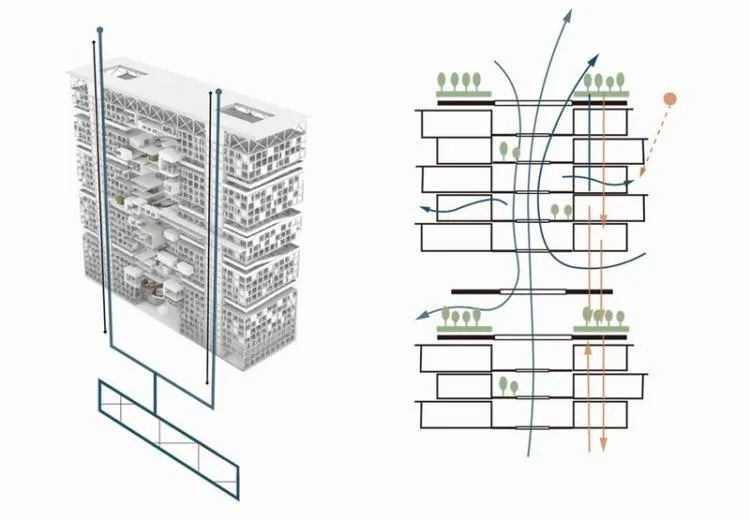
Under Level 2 response △
Shared activity spaces accommodate diverse uses. Pollutants are directed via built-in tracks to dedicated underground treatment rooms. Elevated floors and courtyards ensure ample natural light and ventilation.
Level 3 Response: Resident activities resume without restrictions. Community public spaces gradually reopen with intelligent temperature screening to identify suspected cases promptly.
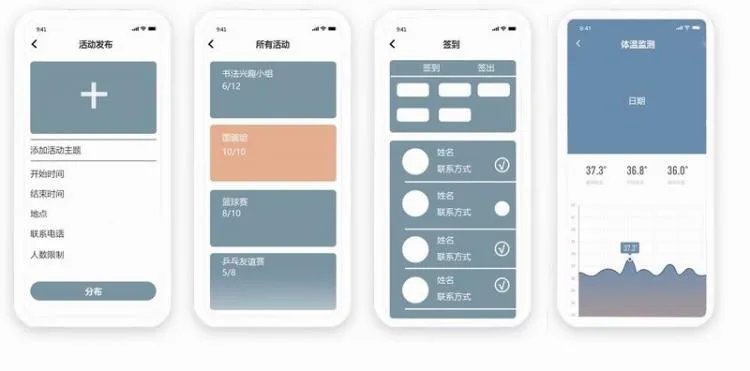
Level 4 Response: The ground floor opens to the surrounding environment while maintaining privacy.

Free Mode — Open Community
Residents enjoy shared spaces tailored to their interests and needs: relaxing in the grass slope park at ground level, strolling along aerial corridors, exercising in rooftop amusement areas, and participating in diverse lifestyle activities across the complex.
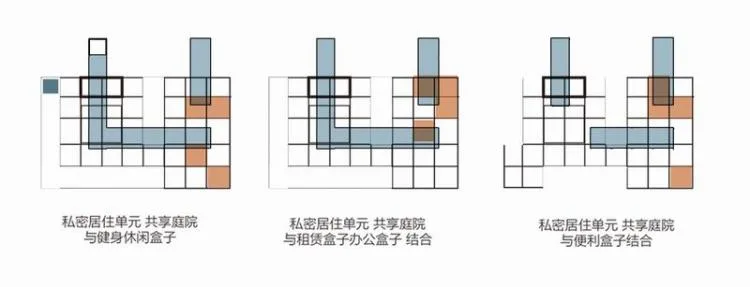
Modular Spaces
The main building is divided into modular spaces, offering various options to meet diverse resident needs and enabling flexible combinations. Standardized modules also allow rapid construction and renovation, fulfilling resilient housing requirements.


Summary and Reflections
Designing this project was both rewarding and challenging. We revised eight versions before settling on the theme of “home,” an essential aspect of architecture. Due to time constraints, some ideas remain unimplemented.
Our final presentation somewhat lacked a futuristic vision, which we consider our main shortcoming. Balancing feasibility and economic practicality of technologies and design methods leaves room for improvement. This building was not designed exclusively for the pandemic but considers it as a potential scenario after completion. Although we classified building states into four response modes during the outbreak, stronger integration with spatial design is needed. Future work could analyze spatial composition based on population needs, social distancing, and appropriate behavioral spaces under epidemic conditions.
[Acknowledgements]
We thank our mentor for valuable feedback throughout the design process and the judges for their insightful suggestions. We are also grateful to the Benchmark Cup staff for their dedication in organizing this competition and providing a platform for professional exchange. We look forward to participating in future Benchmark events.
More Interpretations of High-Quality Competition Works Coming Soon — Stay Tuned
Archcollege Long-Term Author Recruitment
We offer manuscript fees ranging from 300 to 1000 yuan per article, with an annual best work bonus of 10,000 yuan.
To learn more, please leave a message on the website backend or add WeChat: JZXY-YZ














Must log in before commenting!
Sign Up