
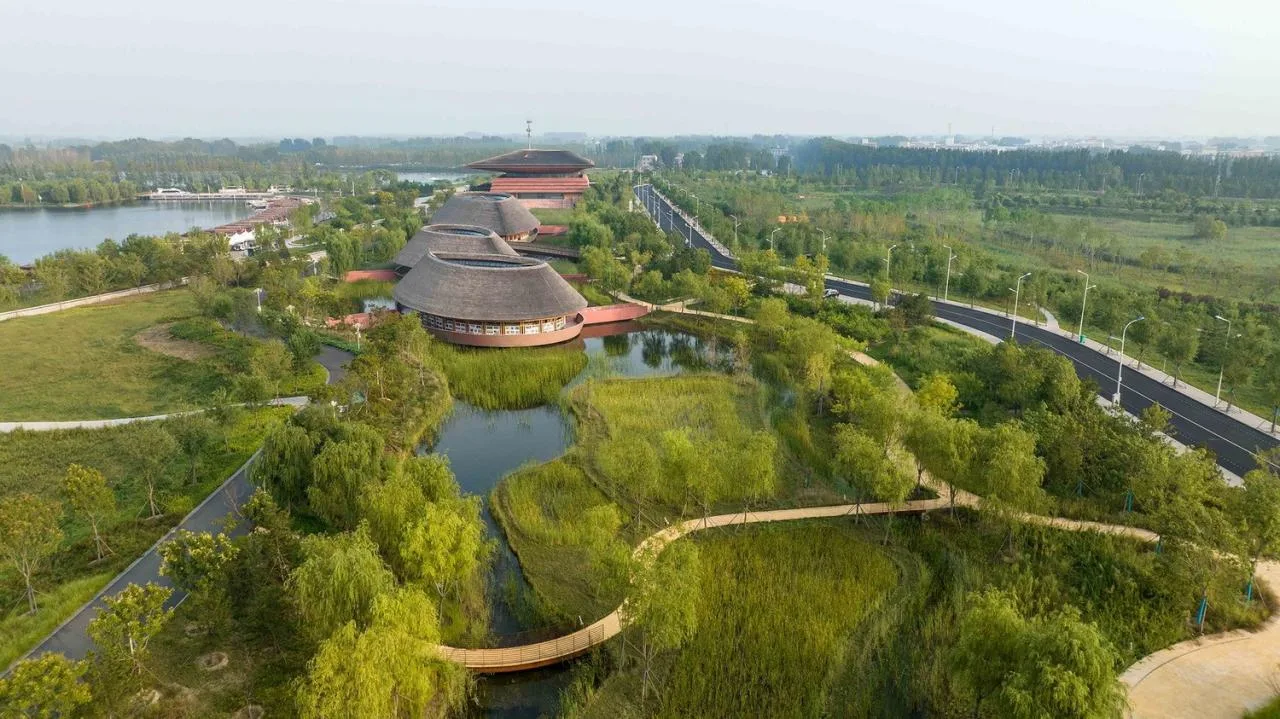
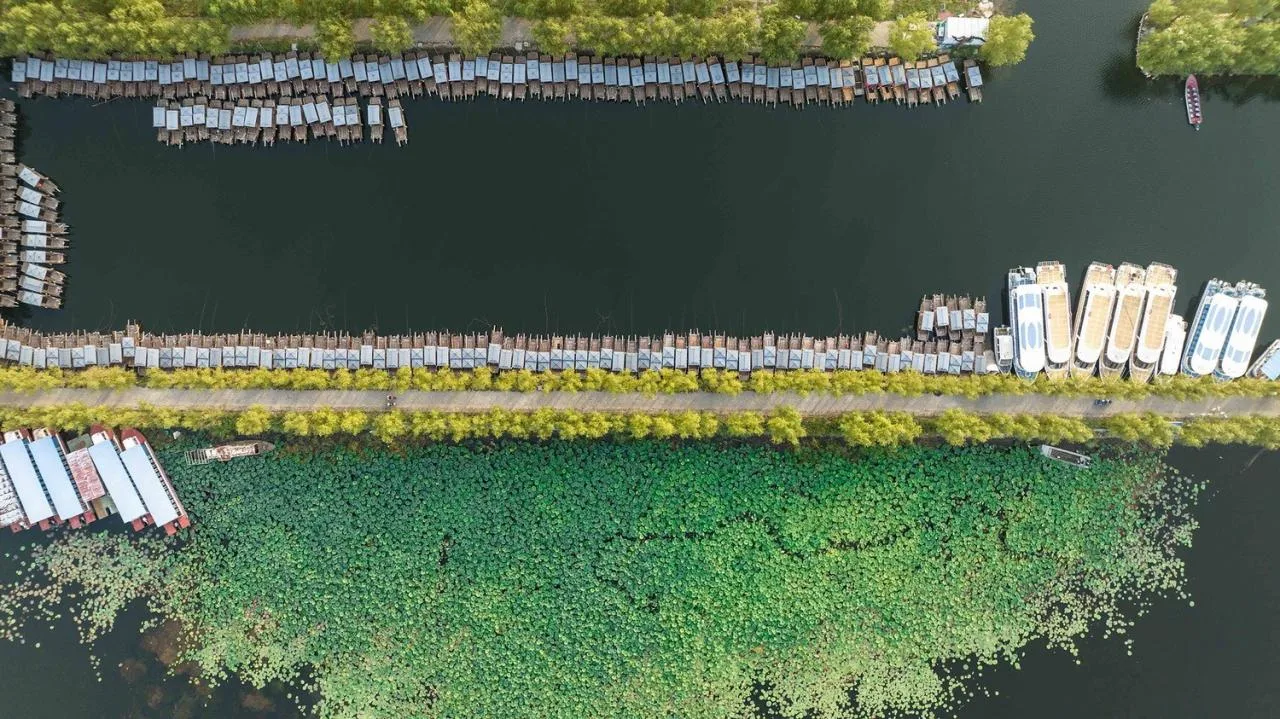
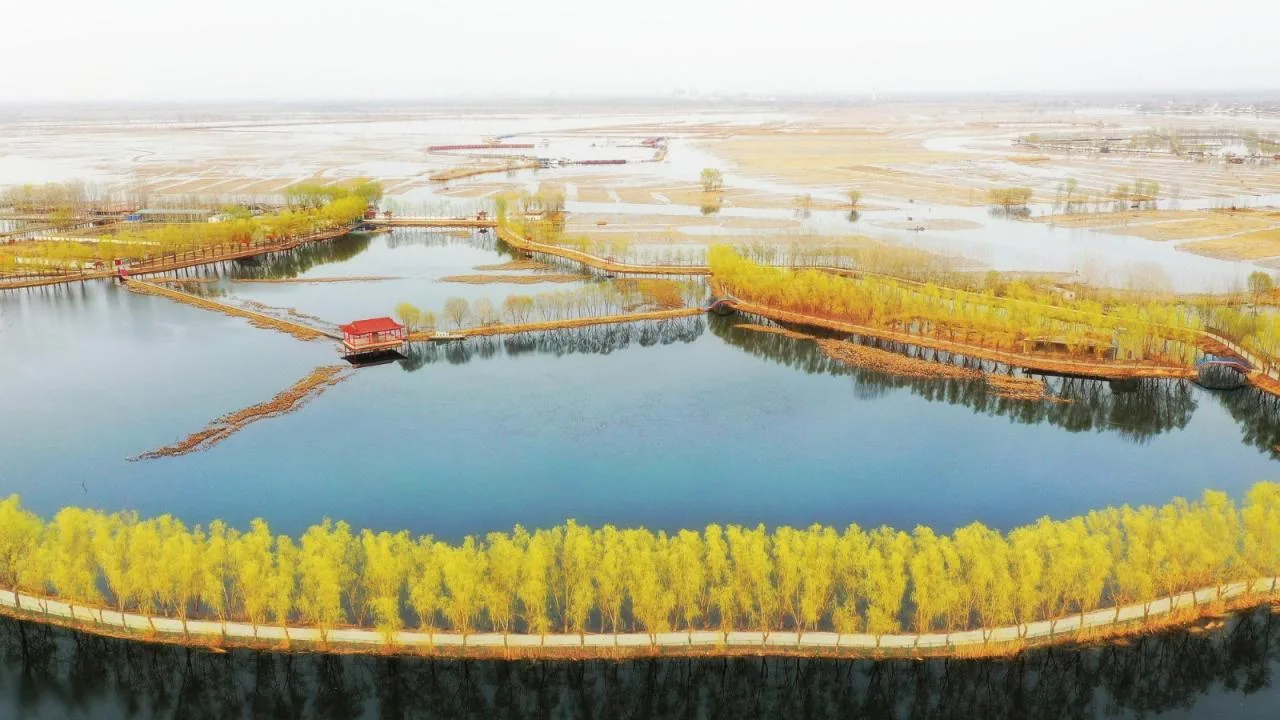
The design is inspired by the layout and style of the lotus pond and reed sea, utilizing a series of ecological dams and new public docks to narrate the history and present of “Baiyangdian Pier.” This approach addresses modern challenges such as flooding and ecological preservation.
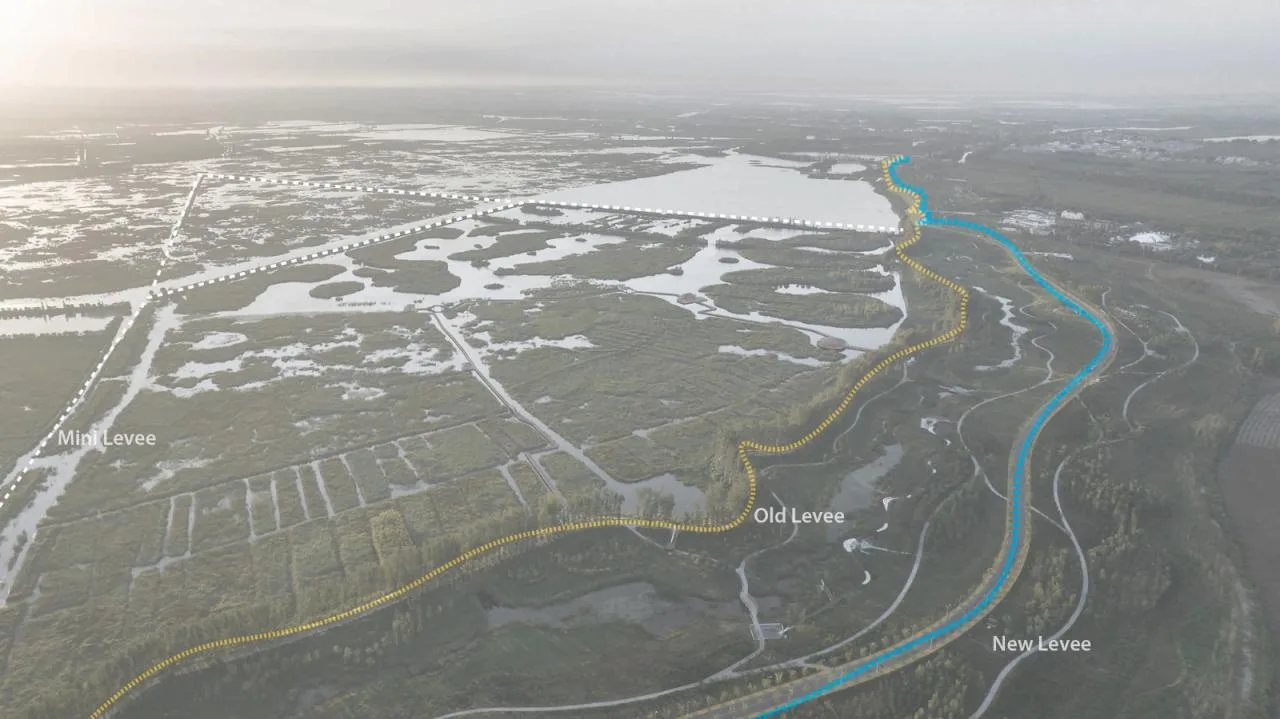
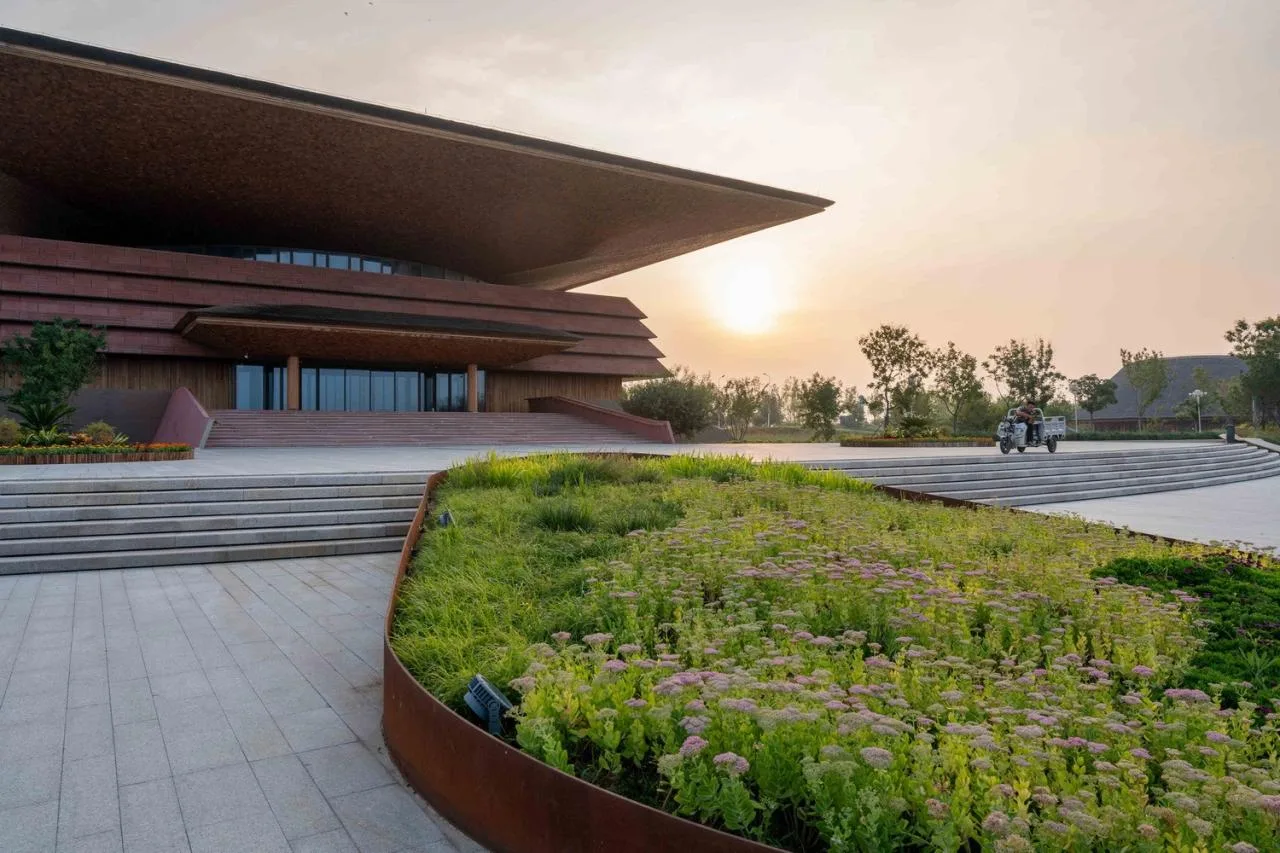
Baiyangdian is one of the few large shallow lakes in northern China and the largest freshwater lake in the former site of Xiong’an New City. Fed by a watershed of nine rivers, the lake has a maximum depth of only three meters. This shallow depth makes it vulnerable to agricultural pollution from nearby farms, as well as the impacts of floods and droughts intensified by climate change.
While urban development with a population of one million usually worsens the surrounding environment, the situation in the Baiyangdian area is different.
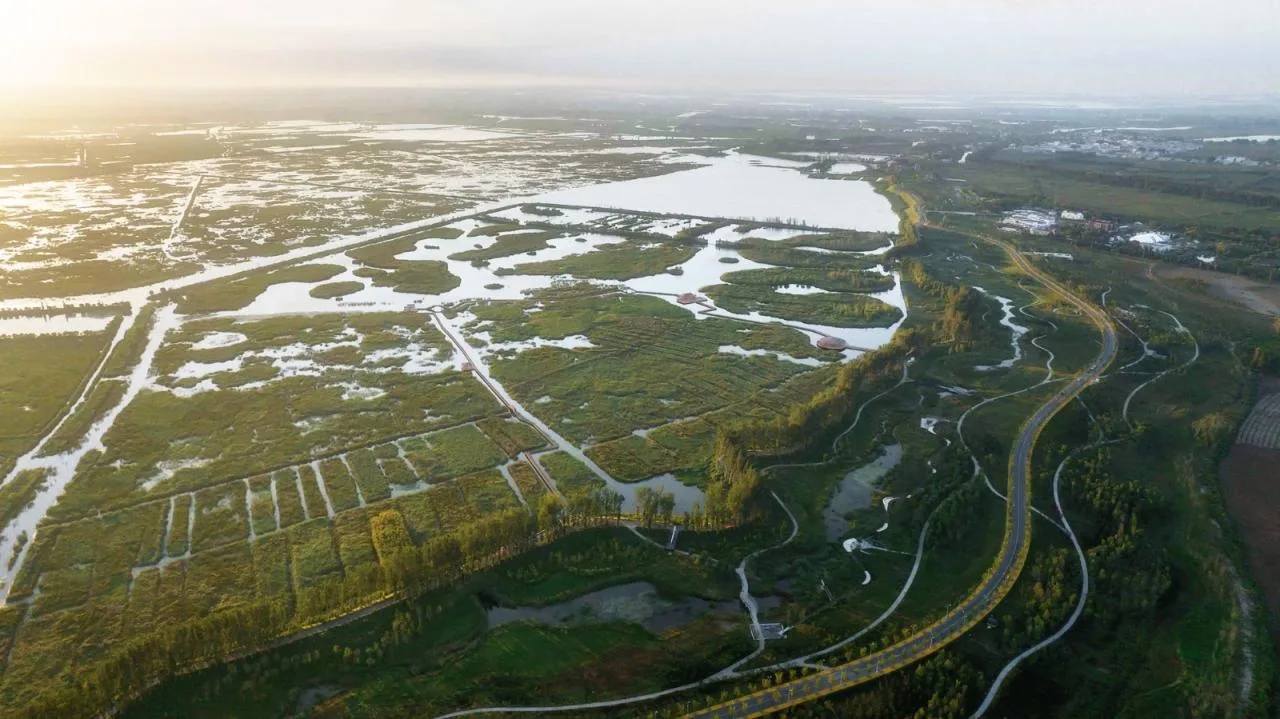
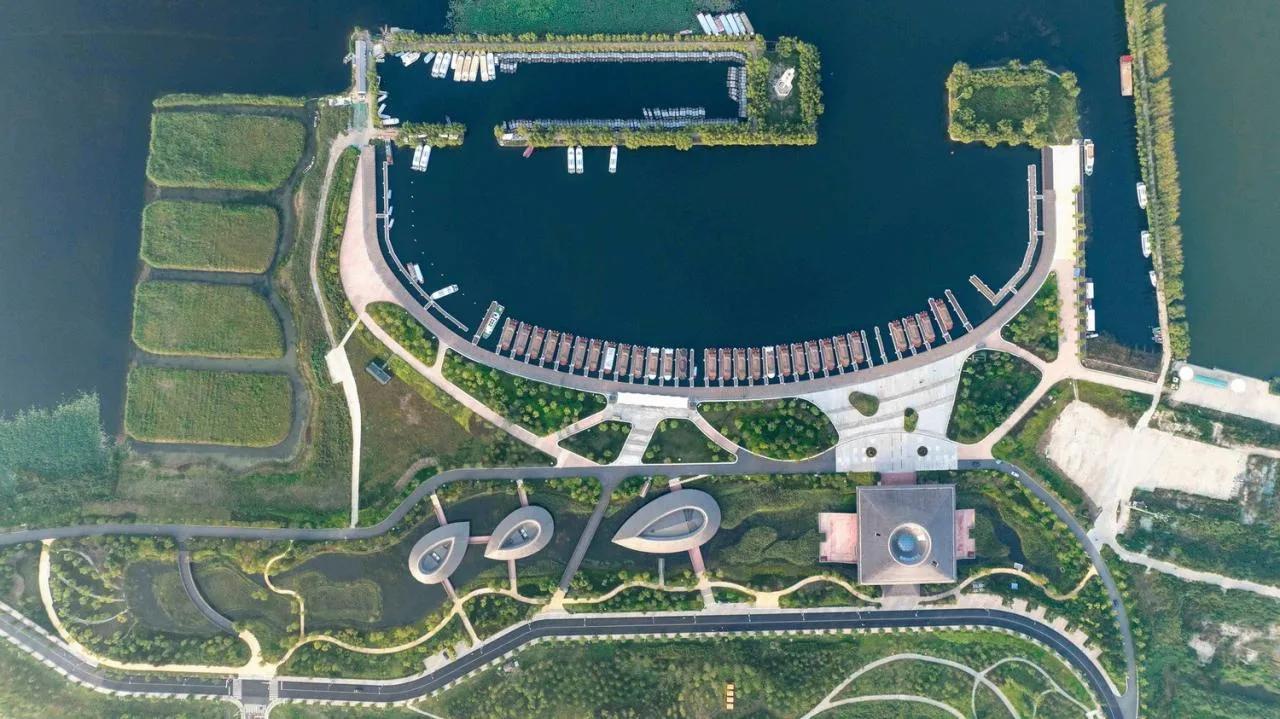
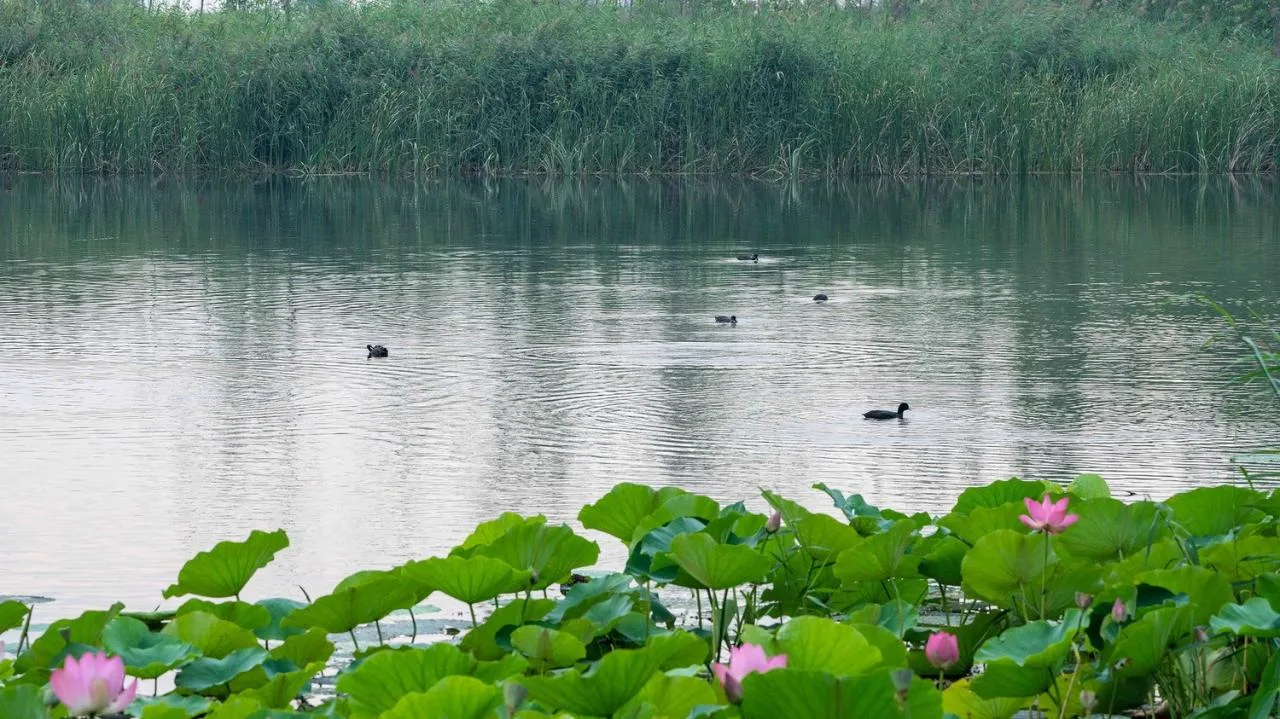
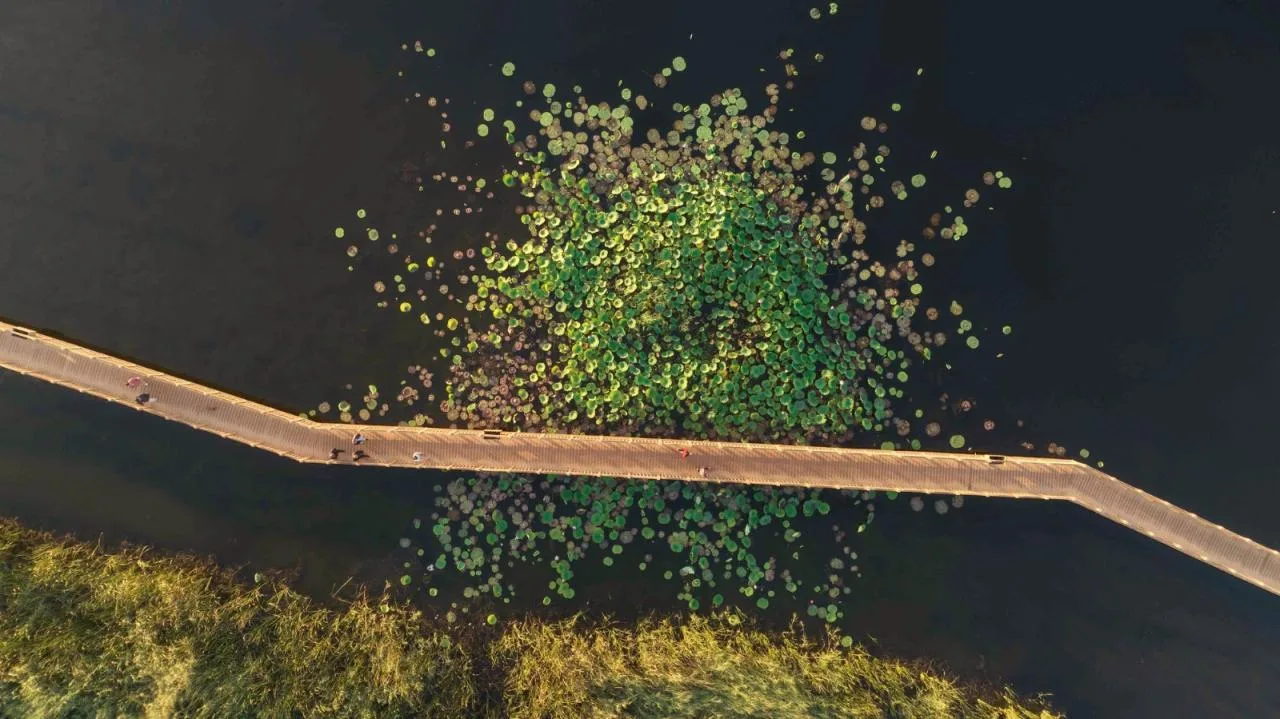
Thanks to regional efforts, the watershed’s water input has been effectively purified. The runoff from the new city is carefully managed and recycled within its own system, ensuring only clean freshwater flows into the lake. This hydrological stability allows Baiyangdian to cleanse its waters and sediments naturally, supported by flourishing native reeds and lotus flowers.
This restoration reaffirms Baiyangdian’s role as a vital Asian migratory route. The lake and surrounding forests provide habitat for diverse bird species, aquatic mammals, and fish. Looking ahead, the lake is expected to regain its vibrancy and ecological health.
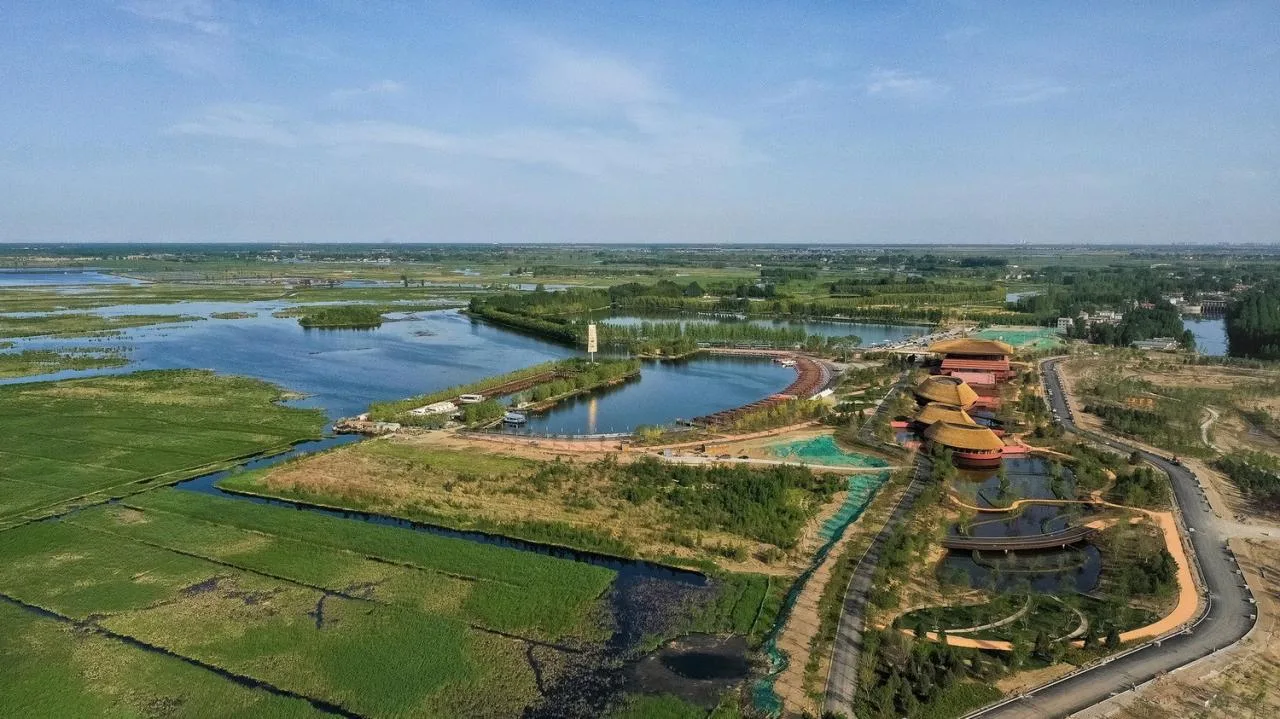
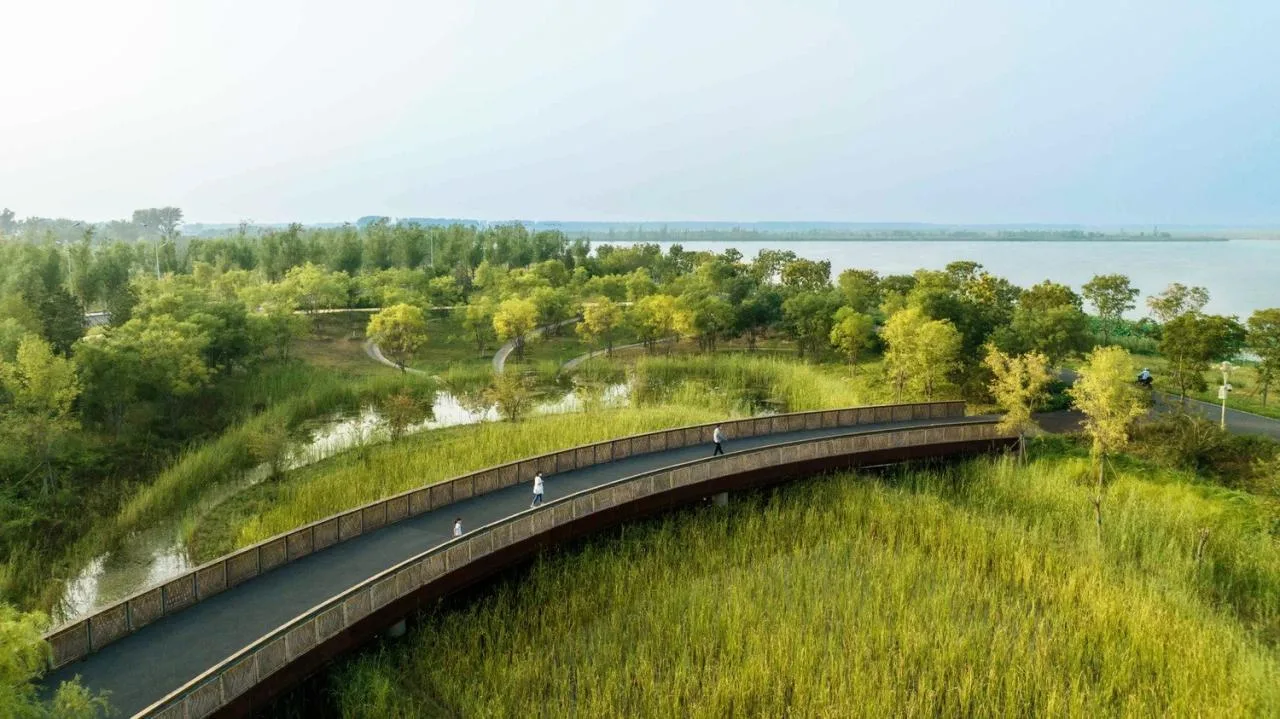
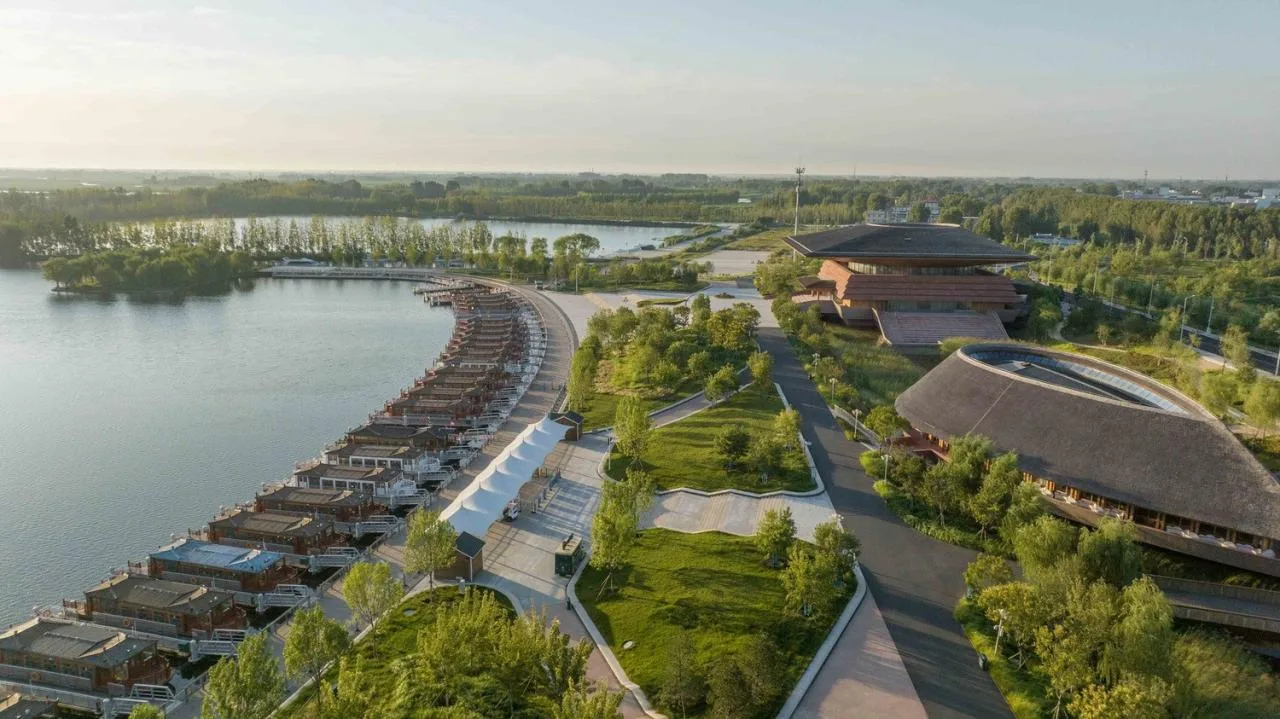
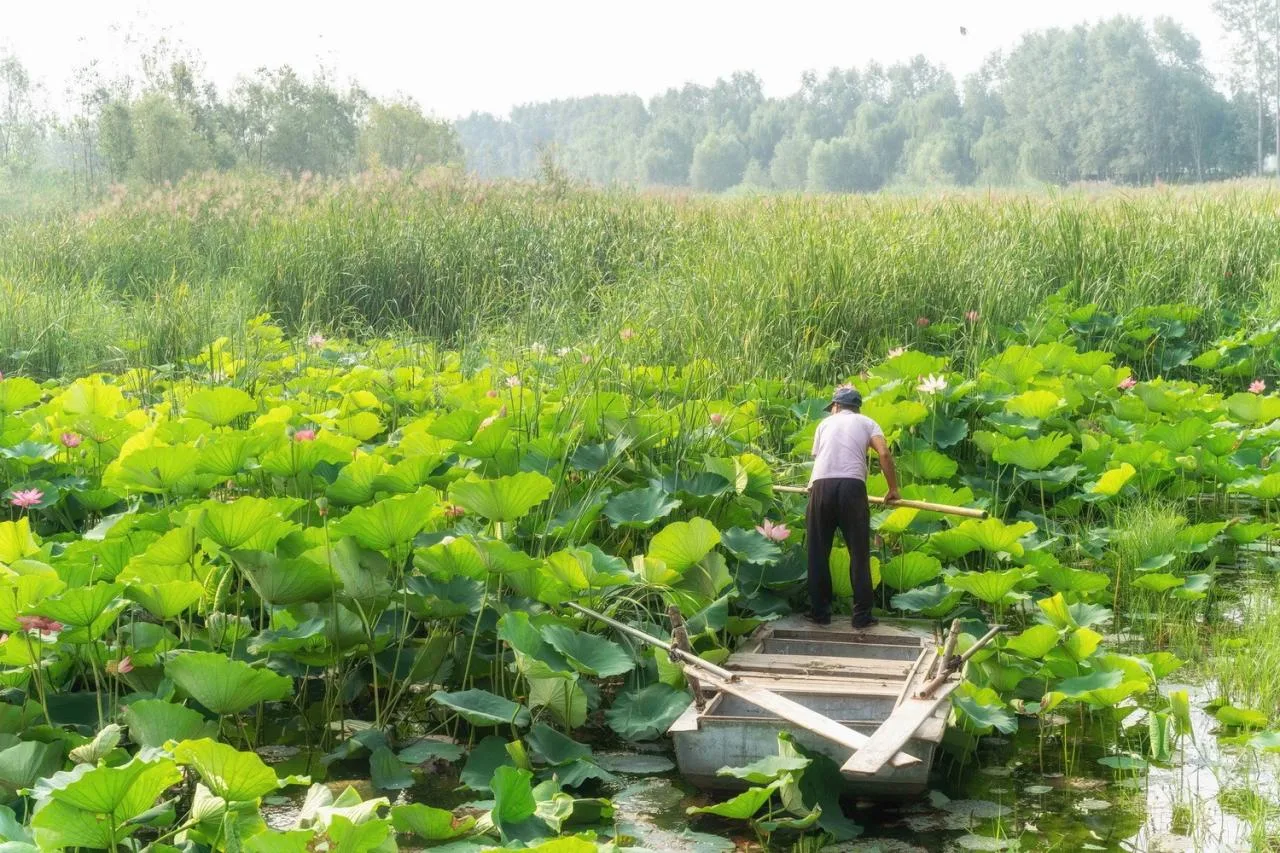
Baiyangdian holds a rich cultural heritage, with local communities traditionally relying on fishing, reed weaving, and lotus root harvesting for their livelihoods. Today, residents enjoy rowing through the intricate network of reed channels and open waters, while tourists from around the world seek to explore the lake’s unique charm.
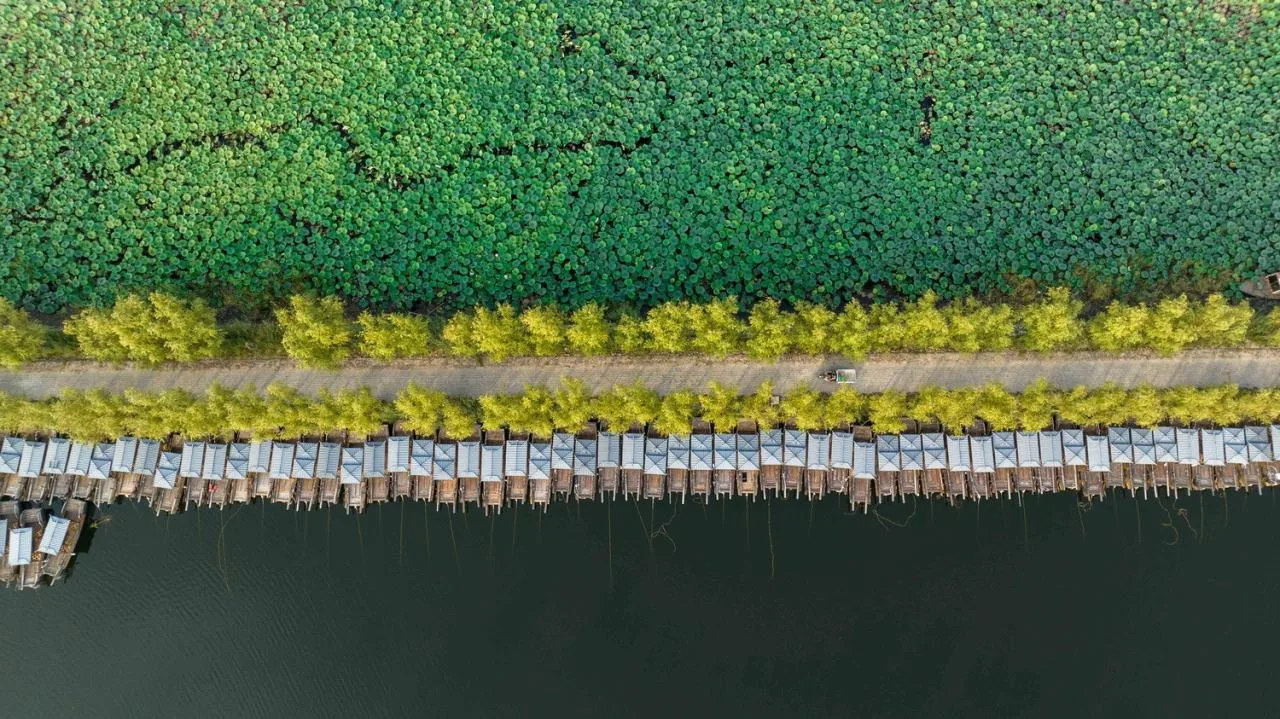
Our design preserves the dock’s primary function, catering to both locals and visitors who seek natural experiences and leisure activities. The area encourages hiking, running, and cycling along embankments and trail networks, some extending into the reeds and water.
Through this integration, the restored lake serves as a key ecological asset and open space for the new city. Instead of being lost to urbanization, the lake harmoniously blends with the city’s transformation and renewal.
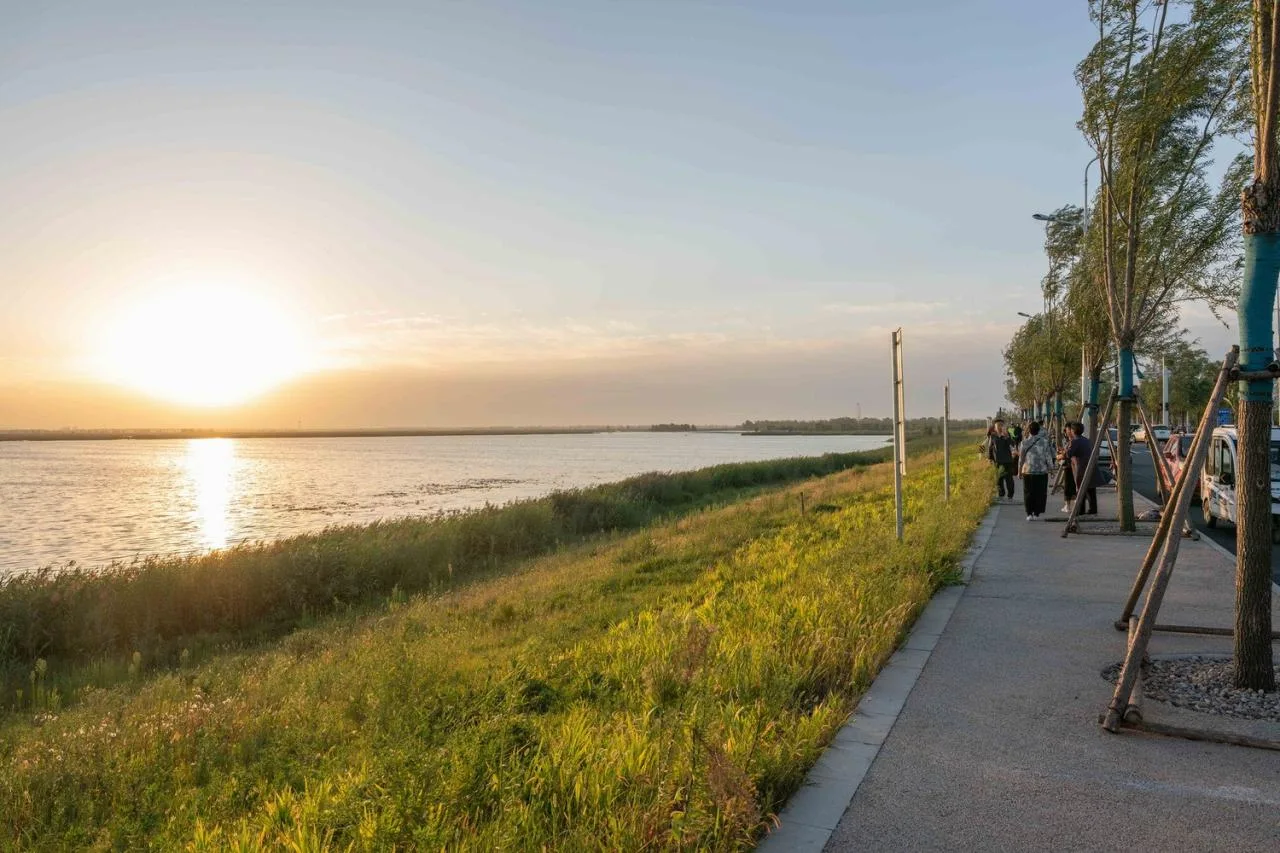
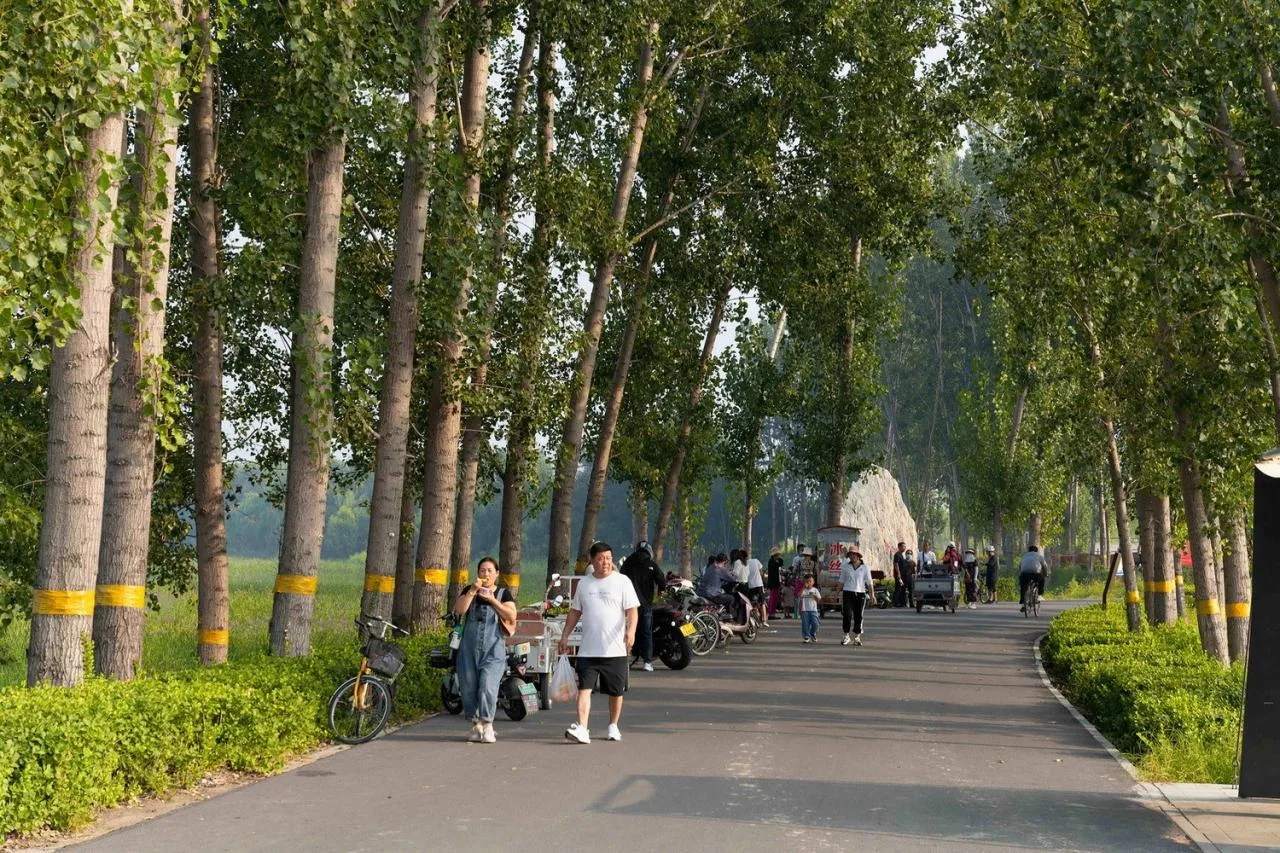
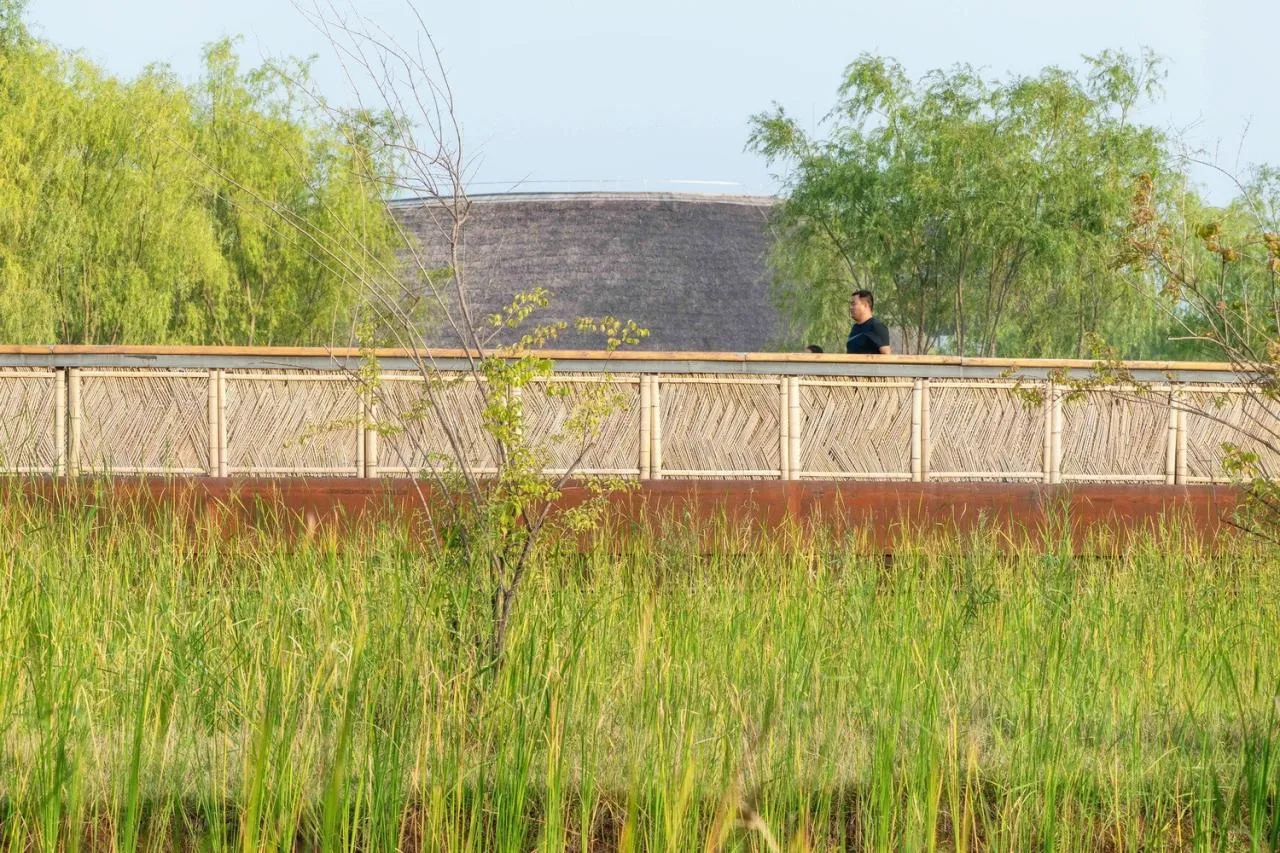
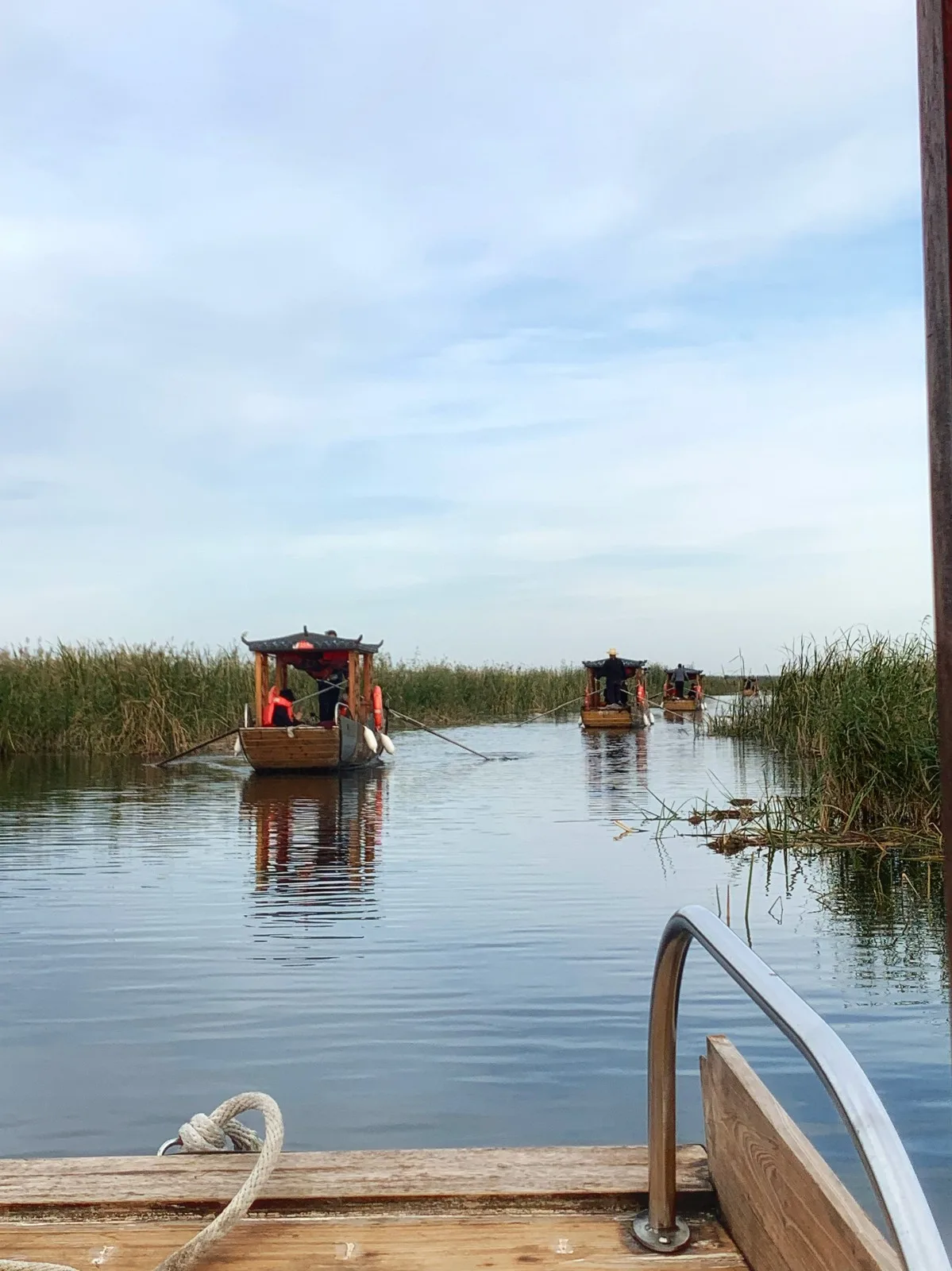
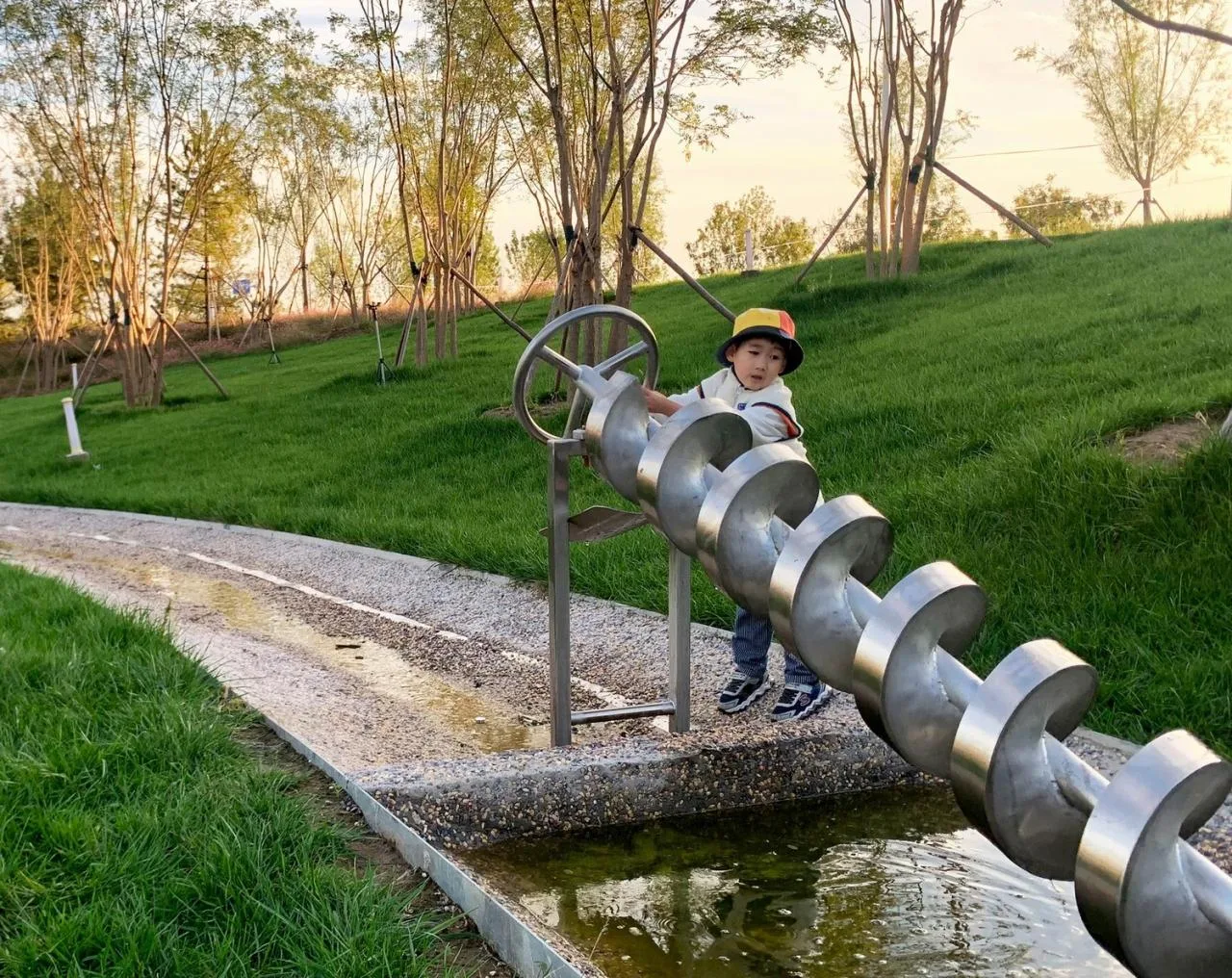
Since last year, the new Baiyangdian Waterfront Park has been open to the public, featuring reed-roofed pavilions filled with exhibits and historical displays. The surrounding landscape includes a “miniature Baiyangdian” vibrant area and a series of distinctive landscape bridges.
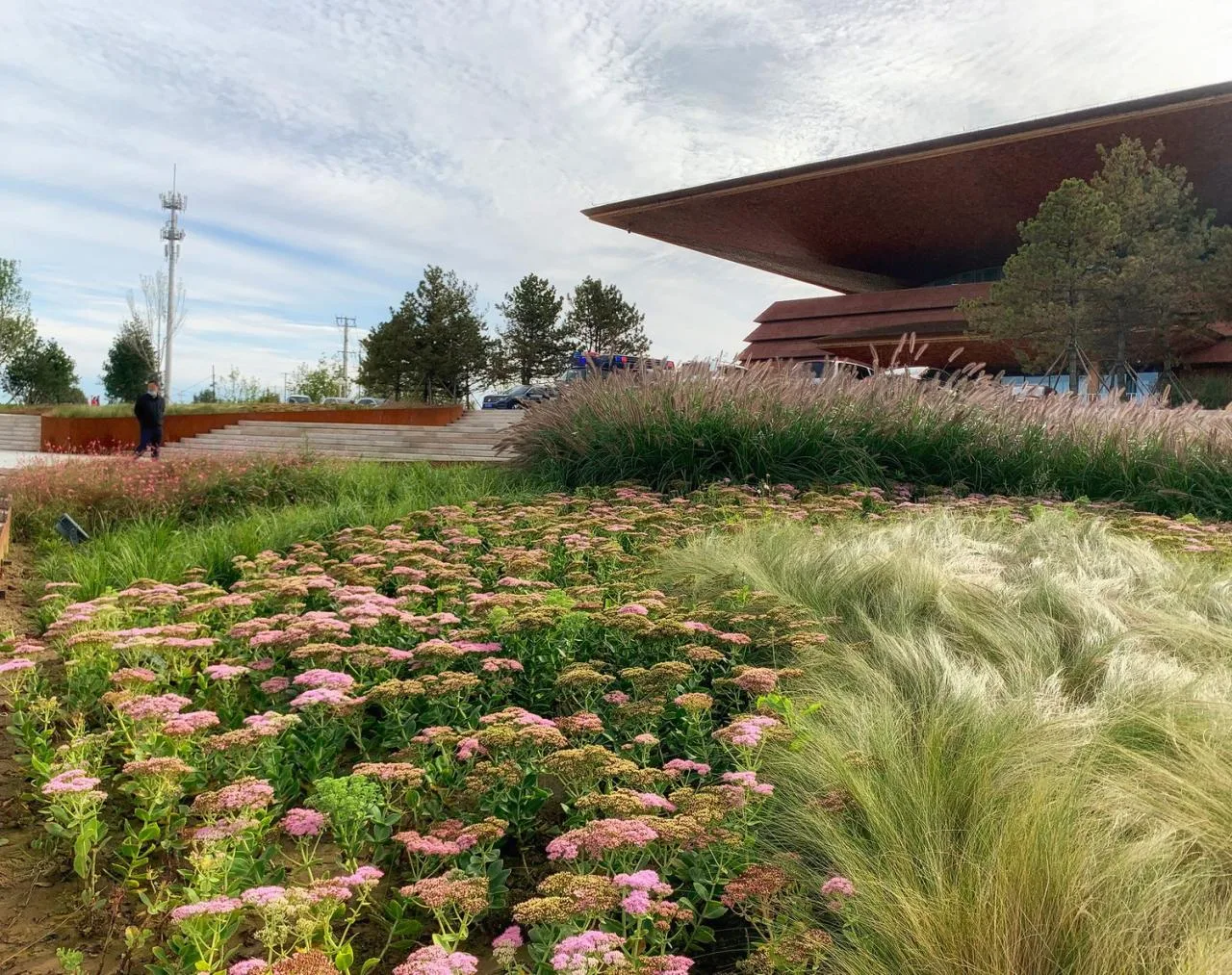
These elements showcase the reed weaving traditions of Baiyangdian’s embankments, ecological embankments, and reed seas. This area serves as a preview for visitors, allowing them to experience the ecological scenery and main species of Baiyangdian in advance of exploring the lake itself.
The ecological embankment and dock project represents the first natural system public open space in Xiong’an, effectively demonstrating the core principles of prioritizing ecology while building a new city.
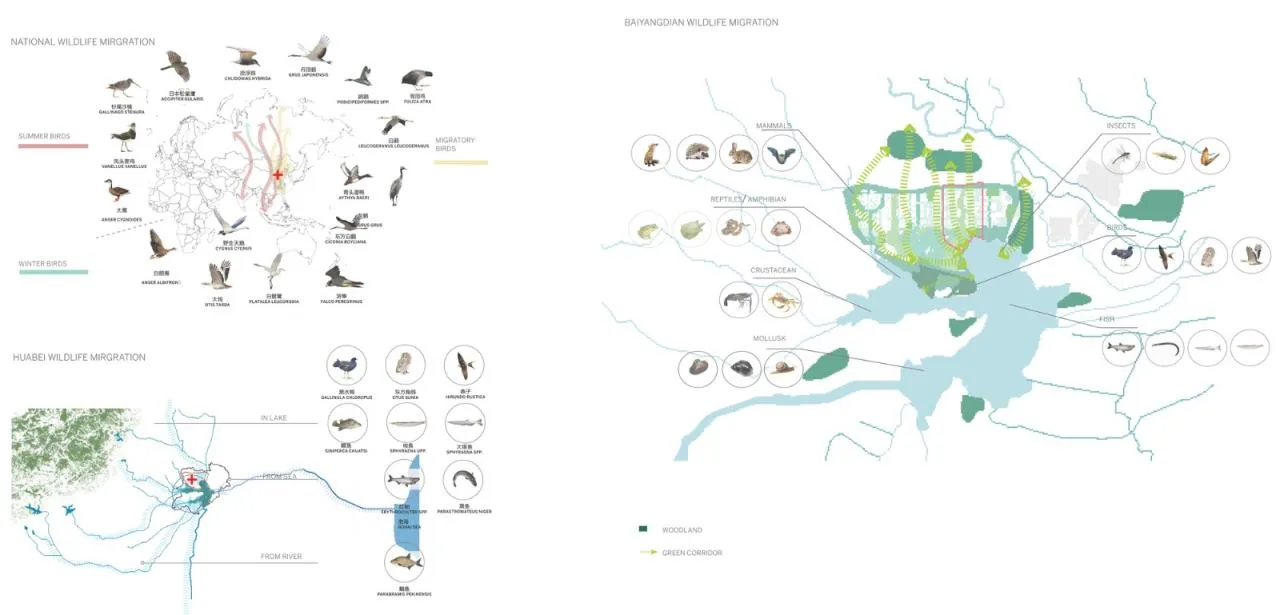
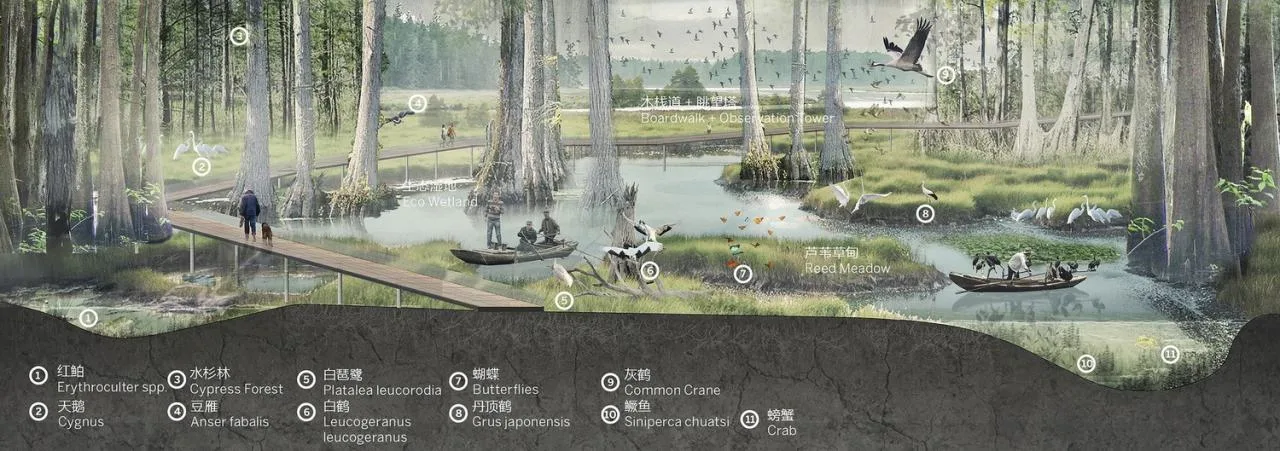
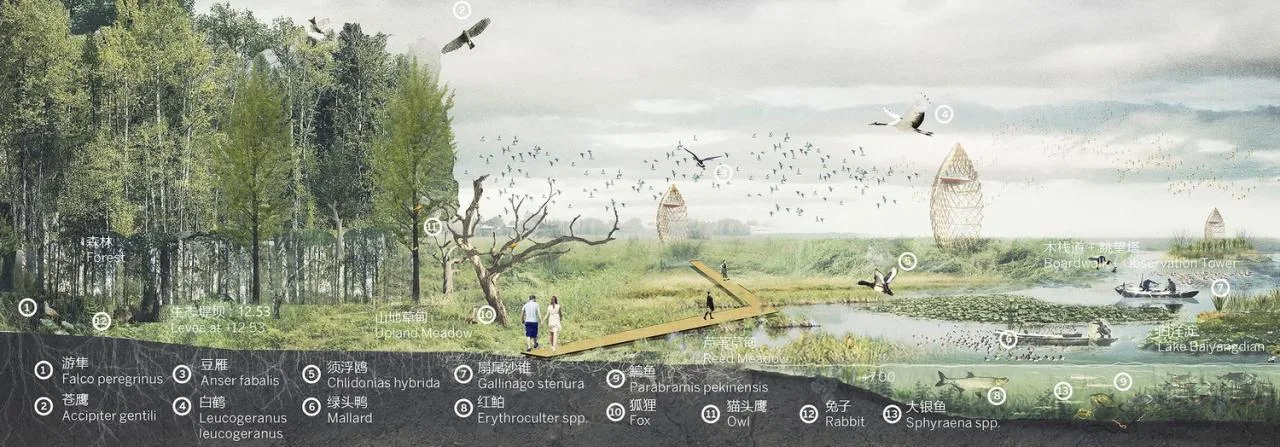
Note: In 2018, the collaboration between SOM and TLS teams won first place in the Xiong’an New Area Launch Zone competition. Since 2019, TLS has been involved in the landscape design of the Baiyangdian waterfront area.
Project Drawings
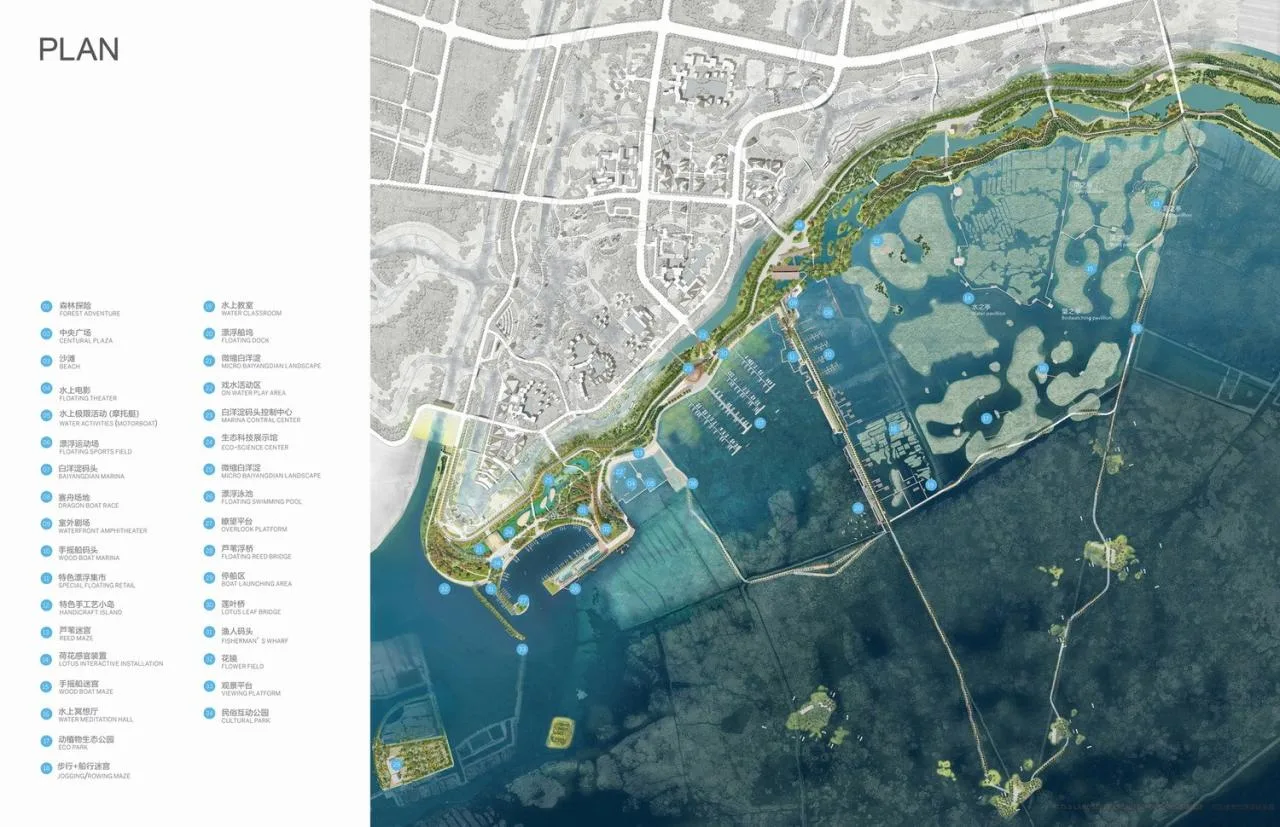
△ General layout plan
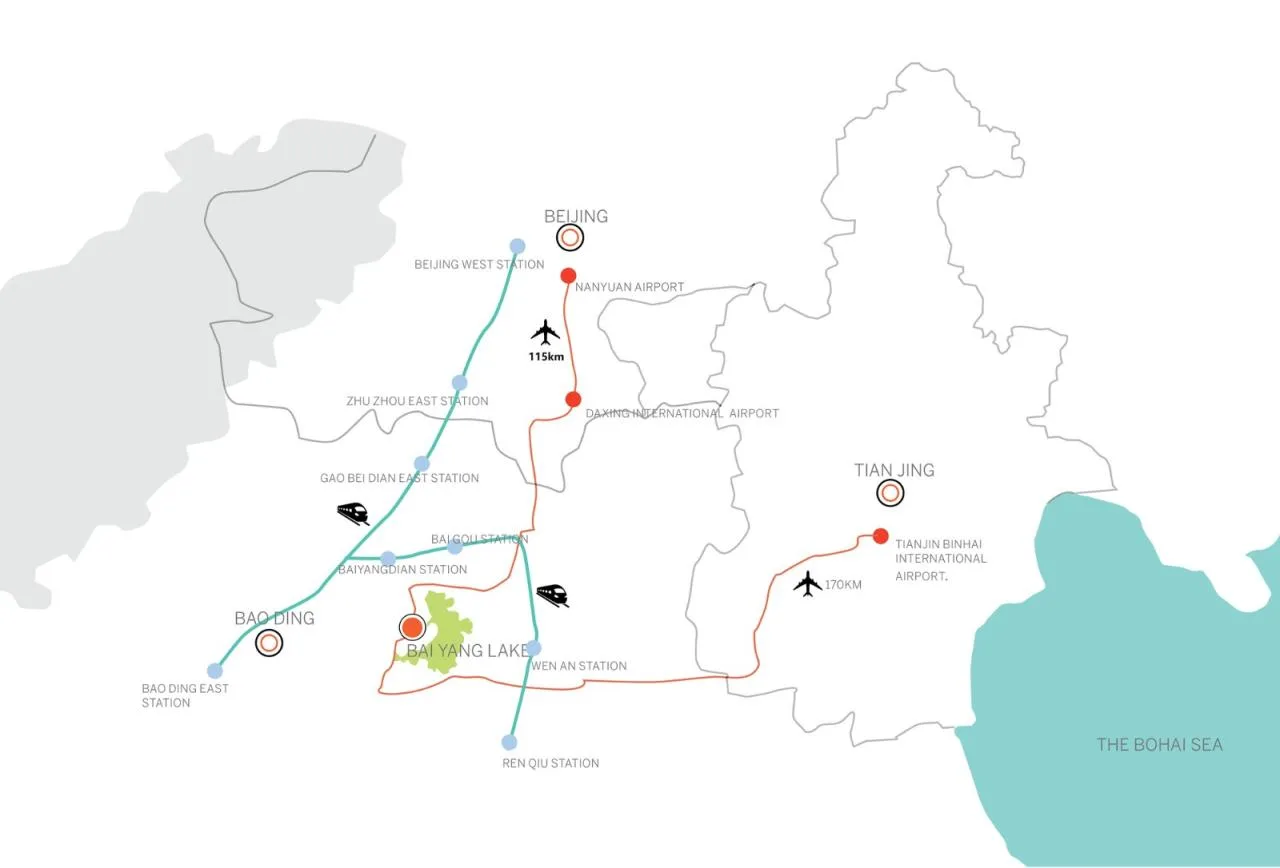
△ Route diagram
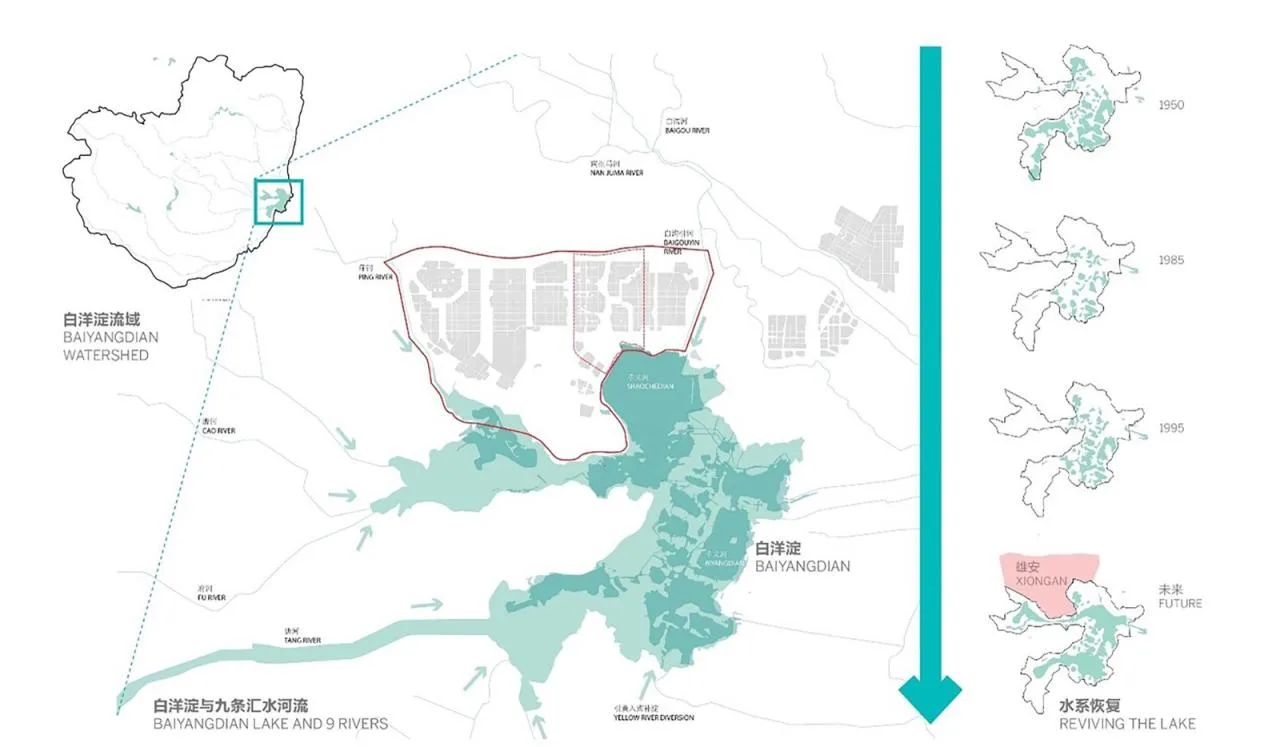
△ Base analysis chart
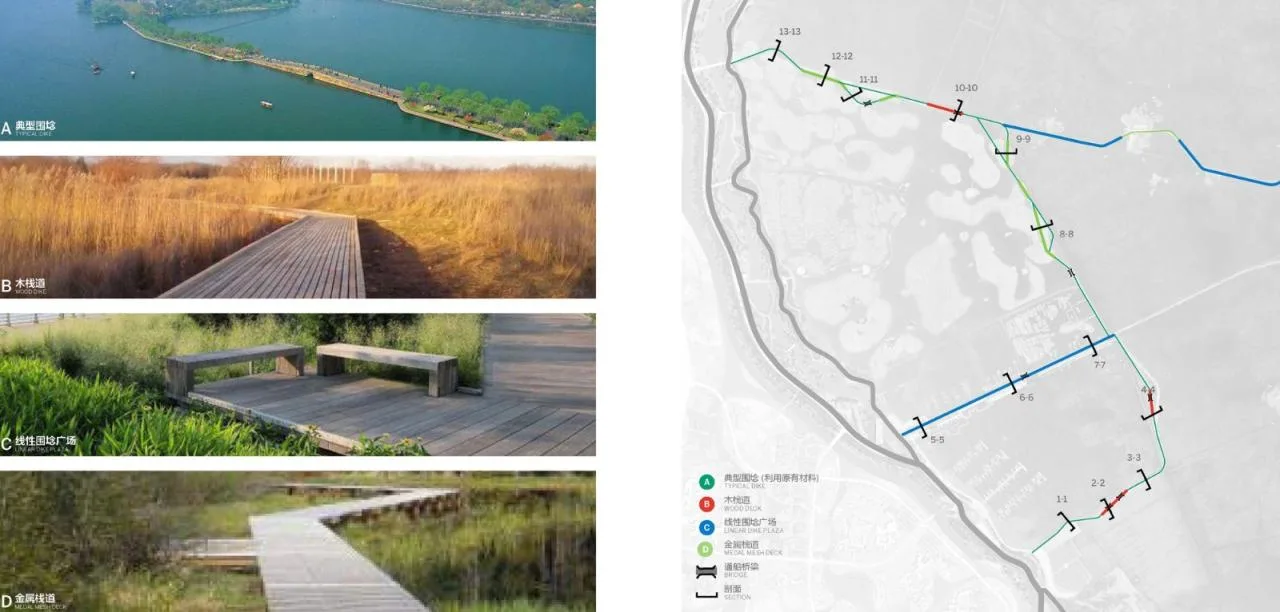
△ Analysis chart
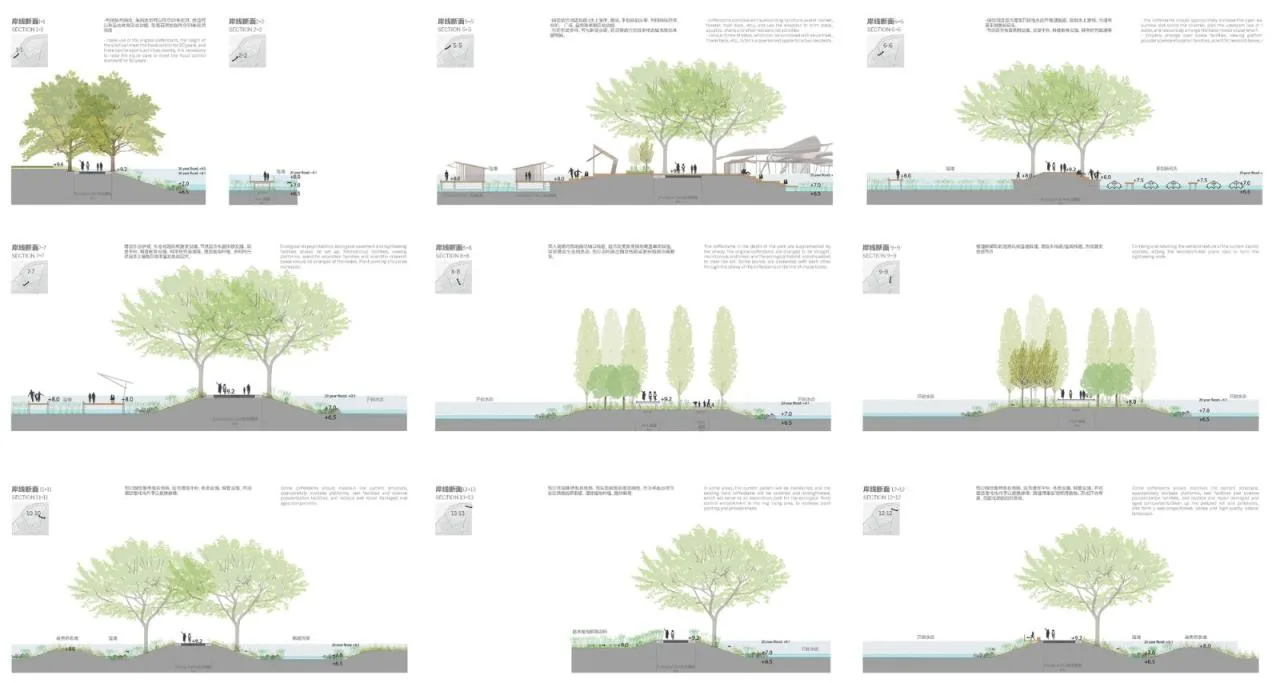
△ Analysis chart
Project Information
Architect: TLS Landscape Architecture
Area: 106,500 m²
Project Year: 2020
Photographers: Xiaohui Jin, Mu Yu
Lead Landscape Architects: Tom Leader, Chen Wei, Zhu Wanpeng
Core Design Team: Zhong Xin, Zhao Shuang, Bao Aiai, Luo Yayun, Zheng Si, Yu Yang, Ye Shuping
Design Team: Brittany Giunchigliani, Su Hang, Pablo Alfaro, Xing Xiaoye, Li Qianyu, Chen Jiawen
Collaborators: Hangzhou Landscape Design Institute, Shanghai Planning and Design Institute
Architecture: Zhizheng Architecture Studio
Principals: Xiong’an New Area Management Committee, Anxin County Government
Location: Baoding City















Must log in before commenting!
Sign Up