
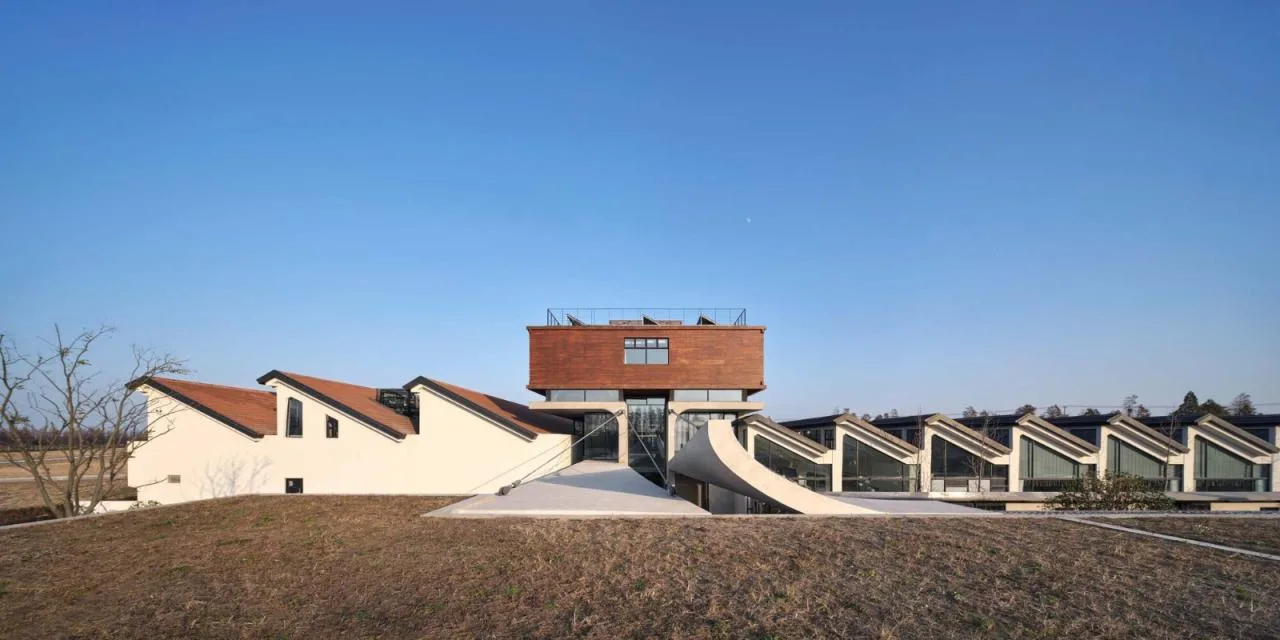
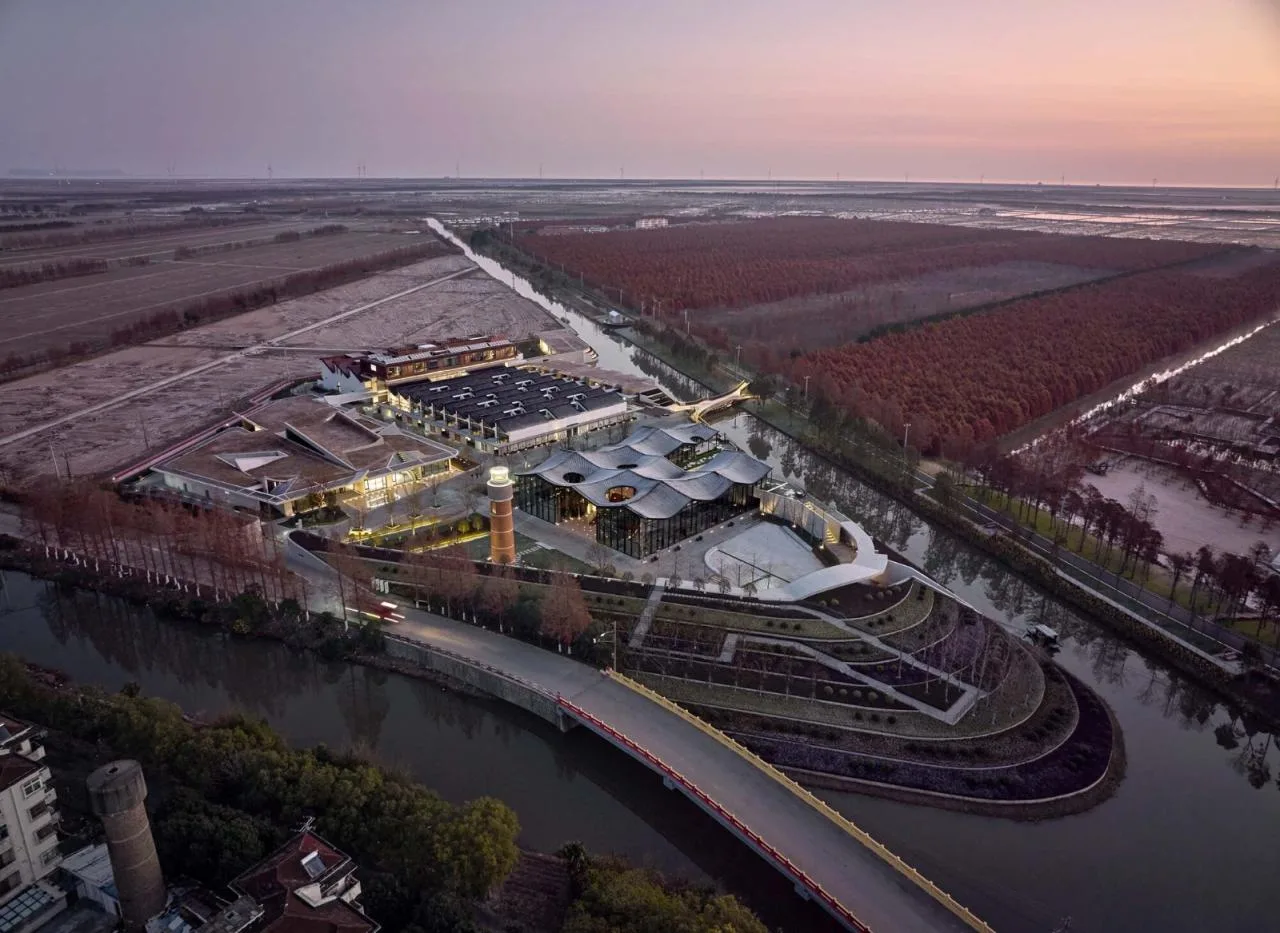
Our initial visit to the outpost farm took place on an early winter afternoon. Driving along the outpost road, lined neatly with water fir trees on both sides, the towering water tower peeking through the dense foliage offered a subtle glimmer of hope. Upon entering the factory grounds, the large sawtooth-shaped factories on the northern edge of the site told a grand story, echoing the memories of the old weaving factory. Meanwhile, the scattered, dilapidated smaller buildings disappeared amid the overgrown greenery. These iconic factories and water towers, serving as tangible memories of the site, were preserved independently from the surrounding environment by our team.
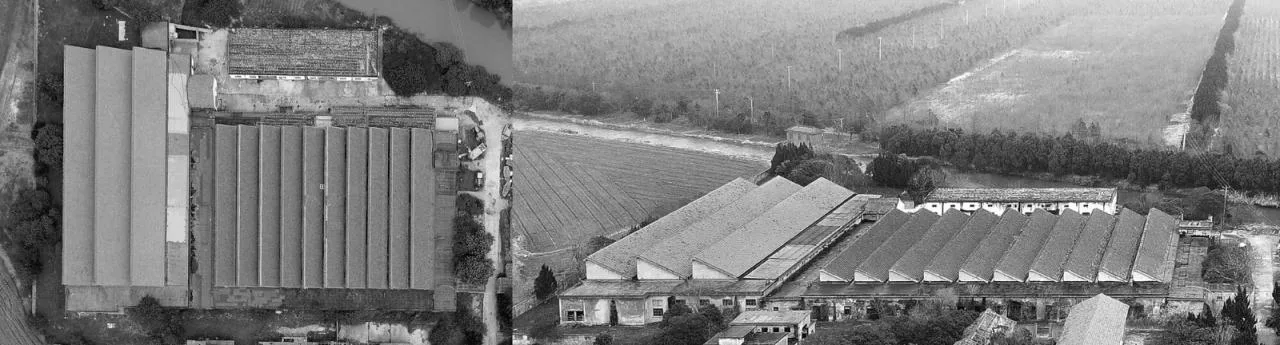
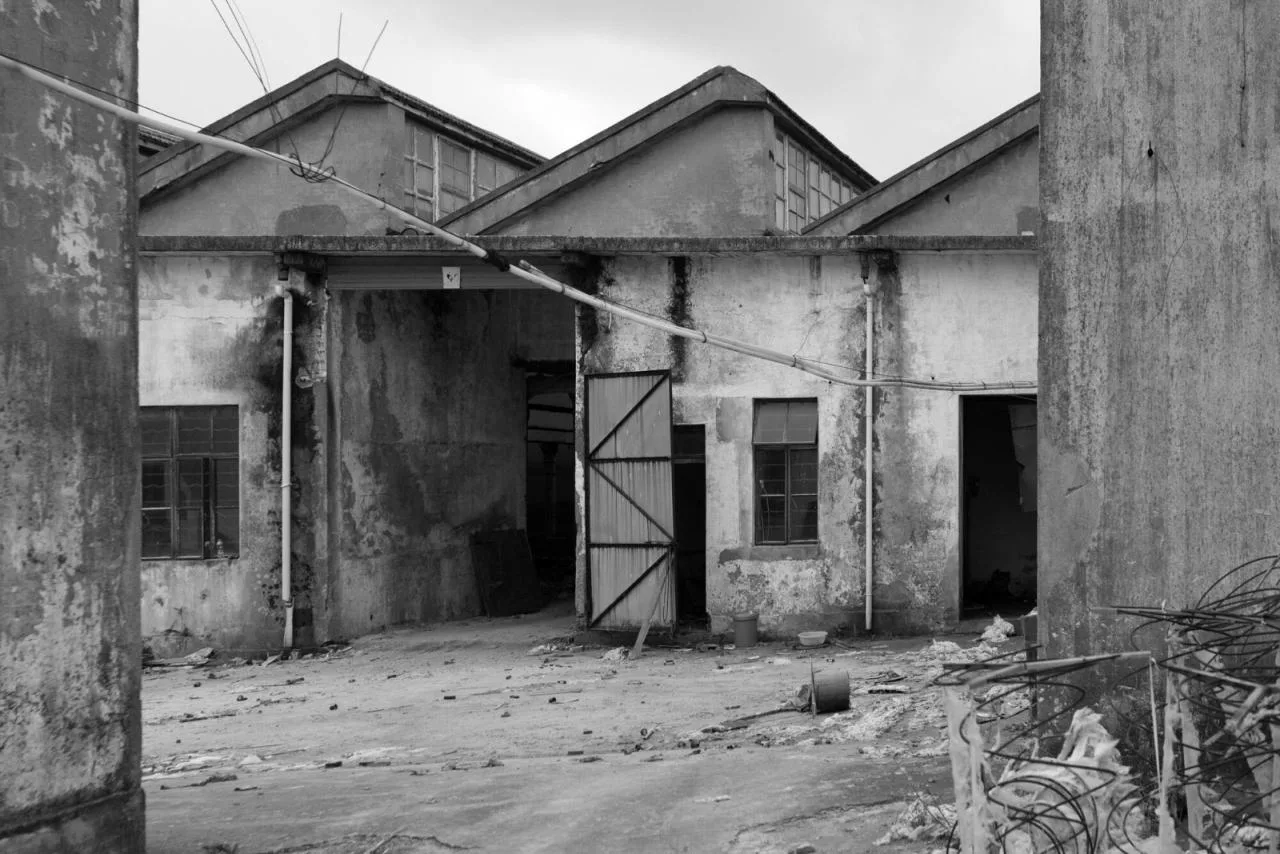
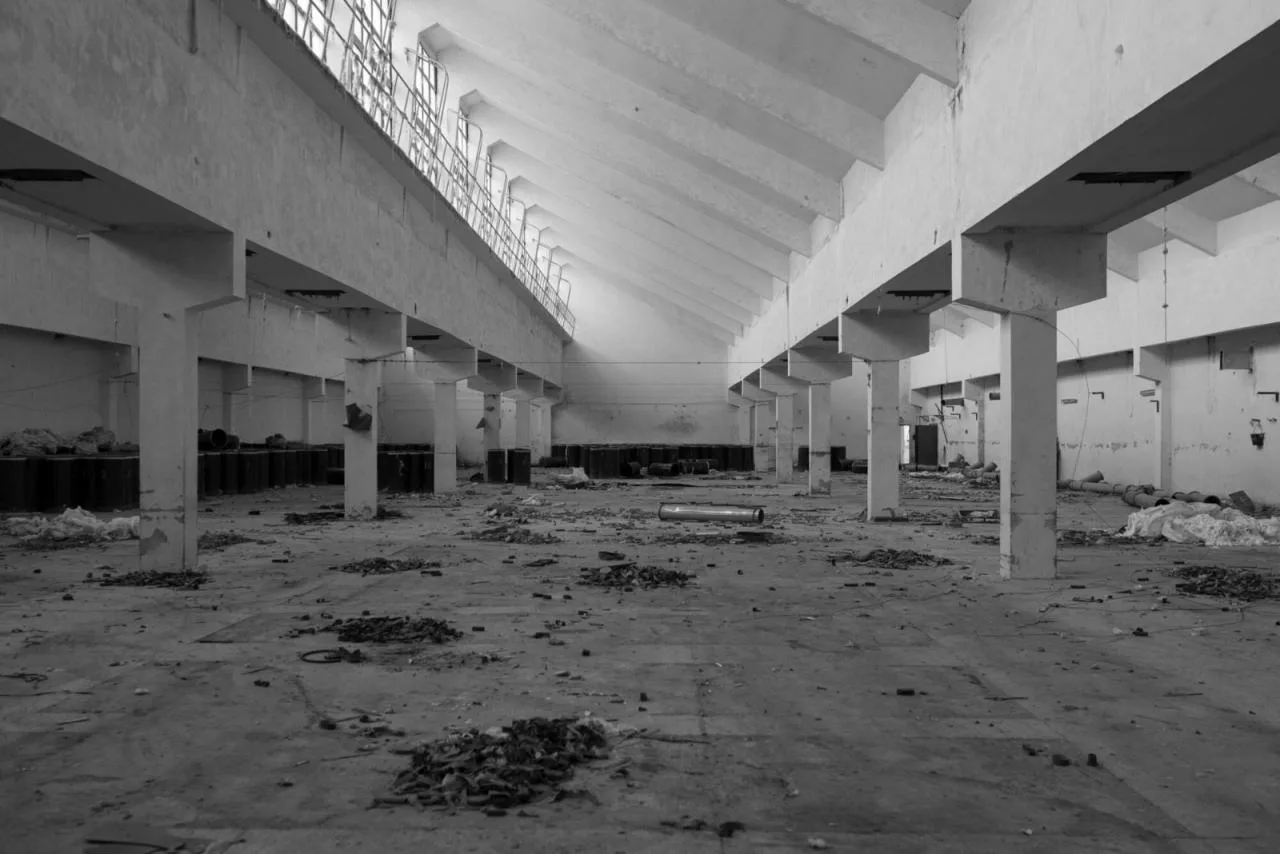
To address flood prevention, we constructed embankments and developed landscaped areas, creating an ecological green embankment system surrounding the site. This system extends as prominent nodes flanking both sides of the serrated factory building, forming two distinct landscape structures that visually contrast yet complement the main factory. Buildings inherently possess unique spatial qualities, which radiate outward like ripples, affecting their surroundings. The juxtaposition of these landscape structures alongside the factory creates overlapping spatial fields, resulting in more dynamic and engaging environments. This interplay not only defines relationships between buildings but also connects structures to their broader context.
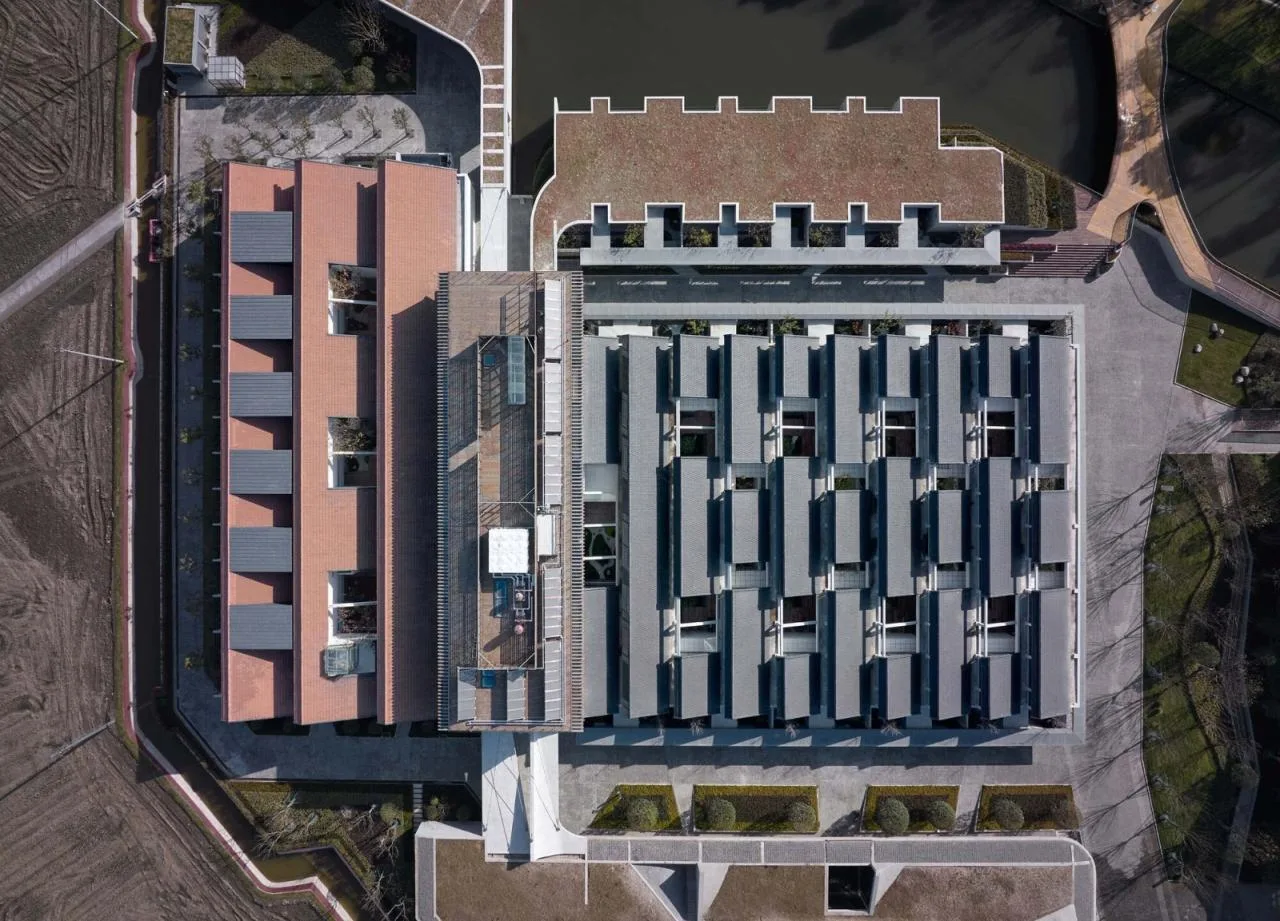
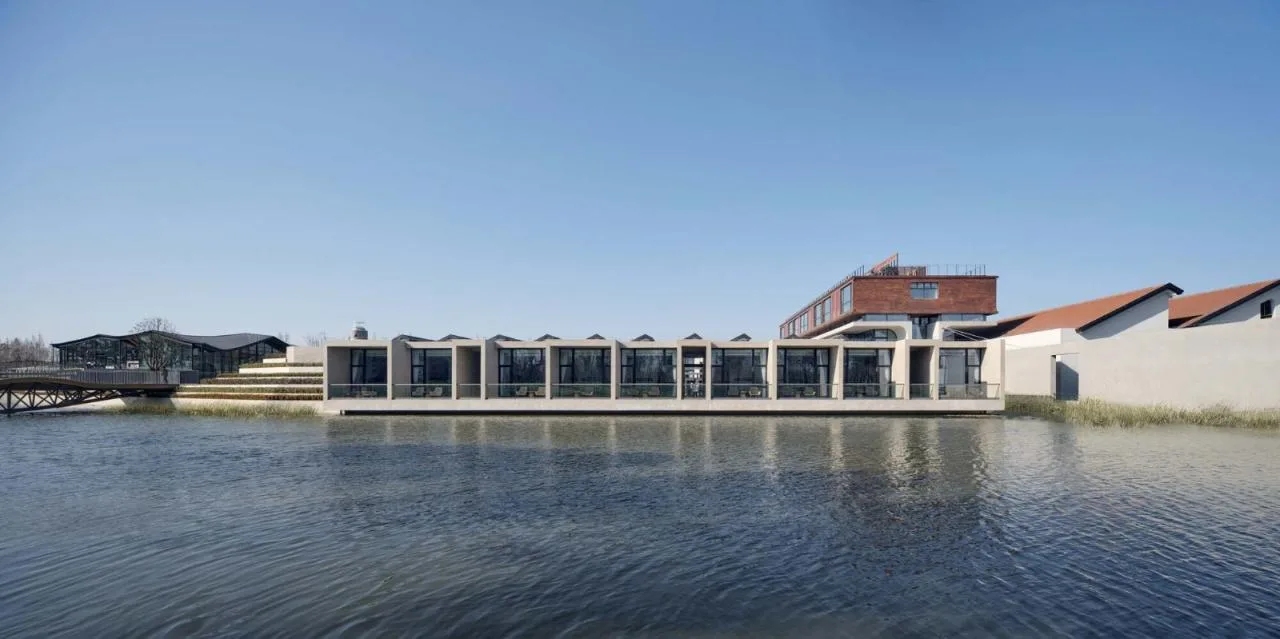
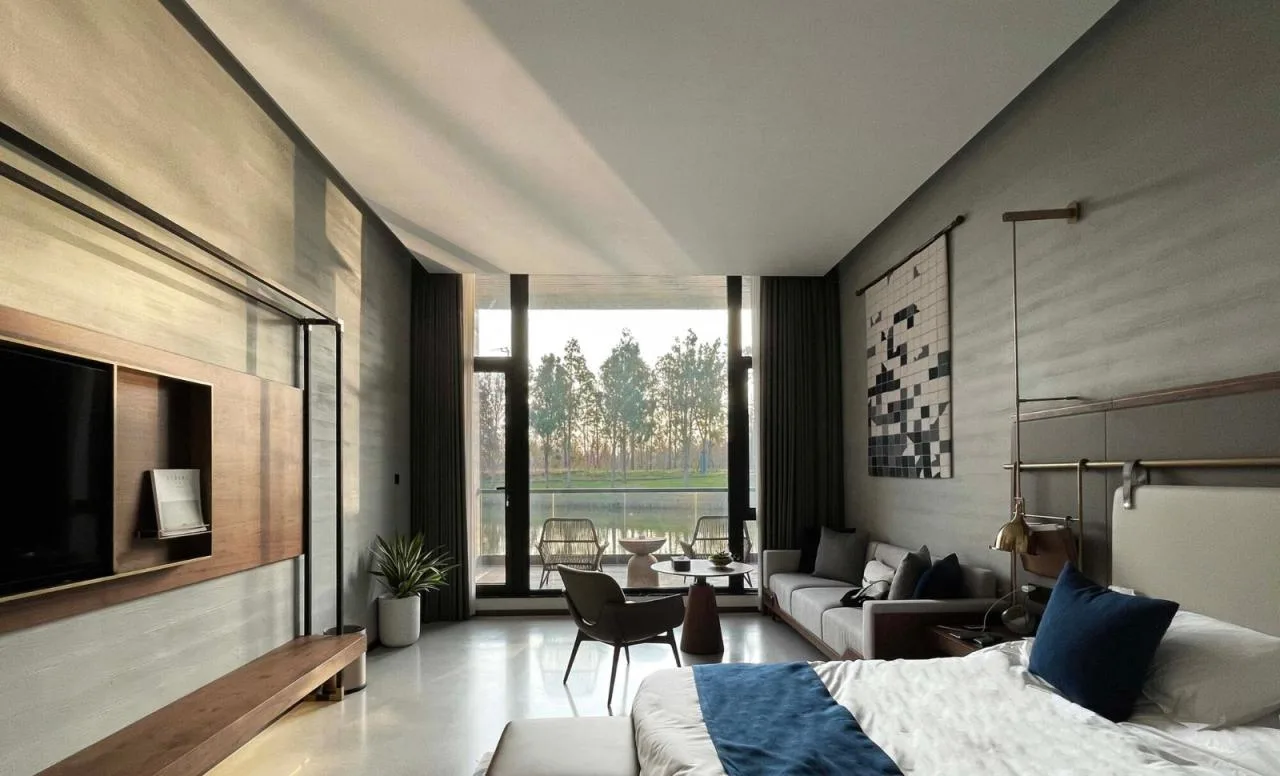
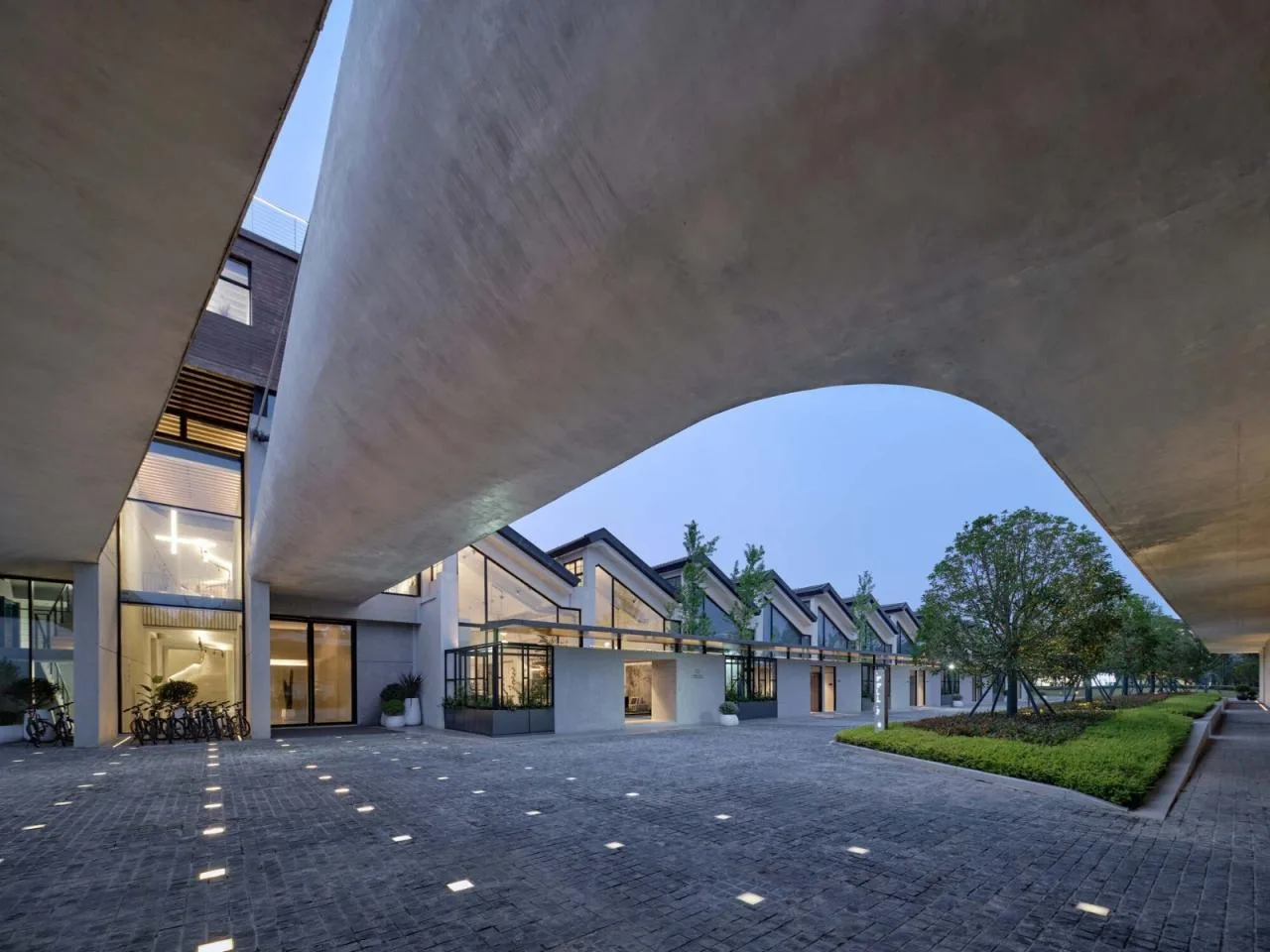
The decision to design the two newly constructed buildings adjacent to the main factory as landscaped elements was intentional. This approach minimizes the architectural presence of the new structures, simplifies their exteriors, and enriches the diversity of their interior spaces. Positioned on either side of the old factory, these landscape-oriented buildings serve distinct functions: the conference center lies to the west, while to the east, a collection of scattered volumes along the river forms unique river-view guest rooms. Together, they create a street and alleyway that foster a dialogue between the old and new, anchored by the preserved factory buildings.
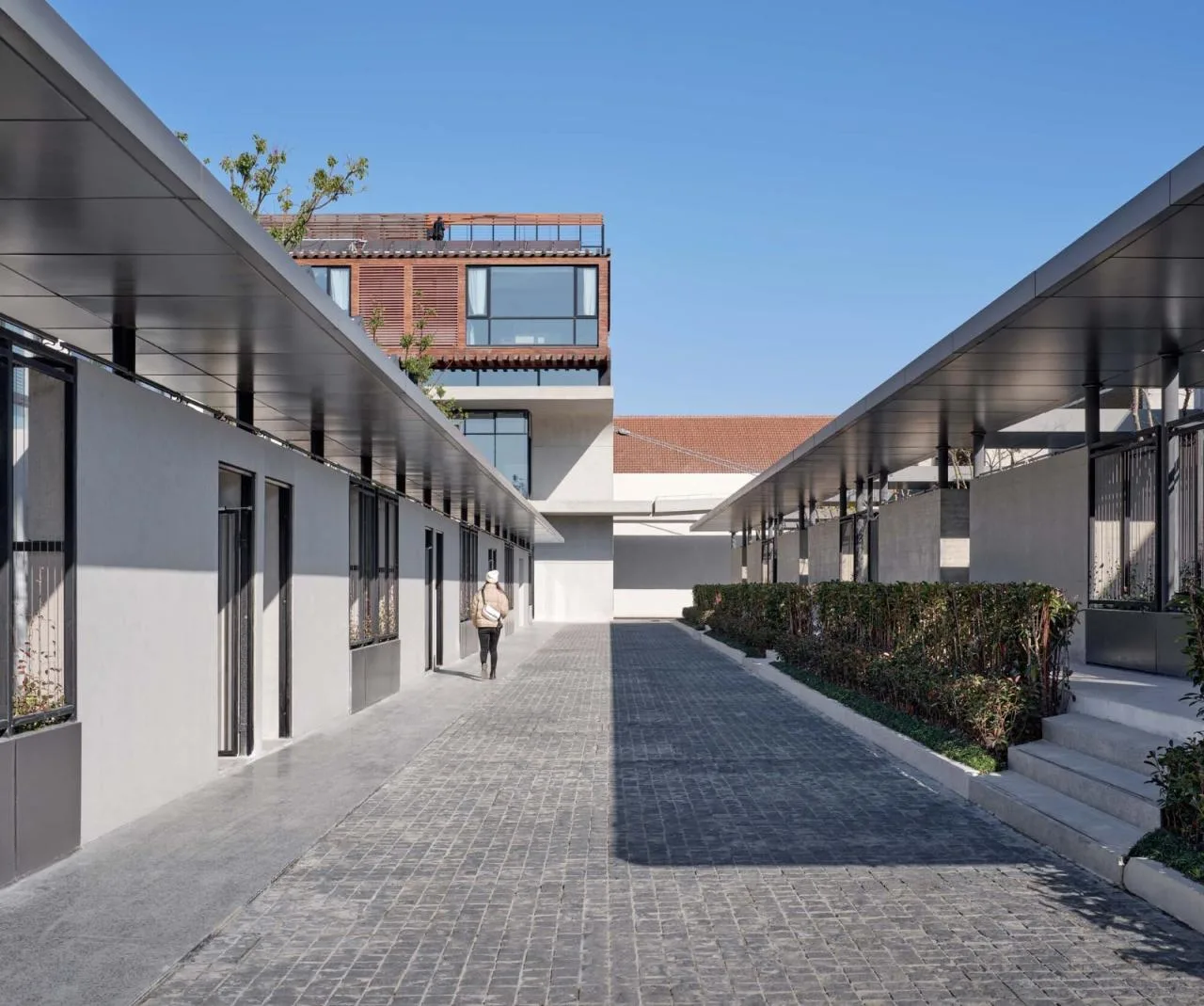
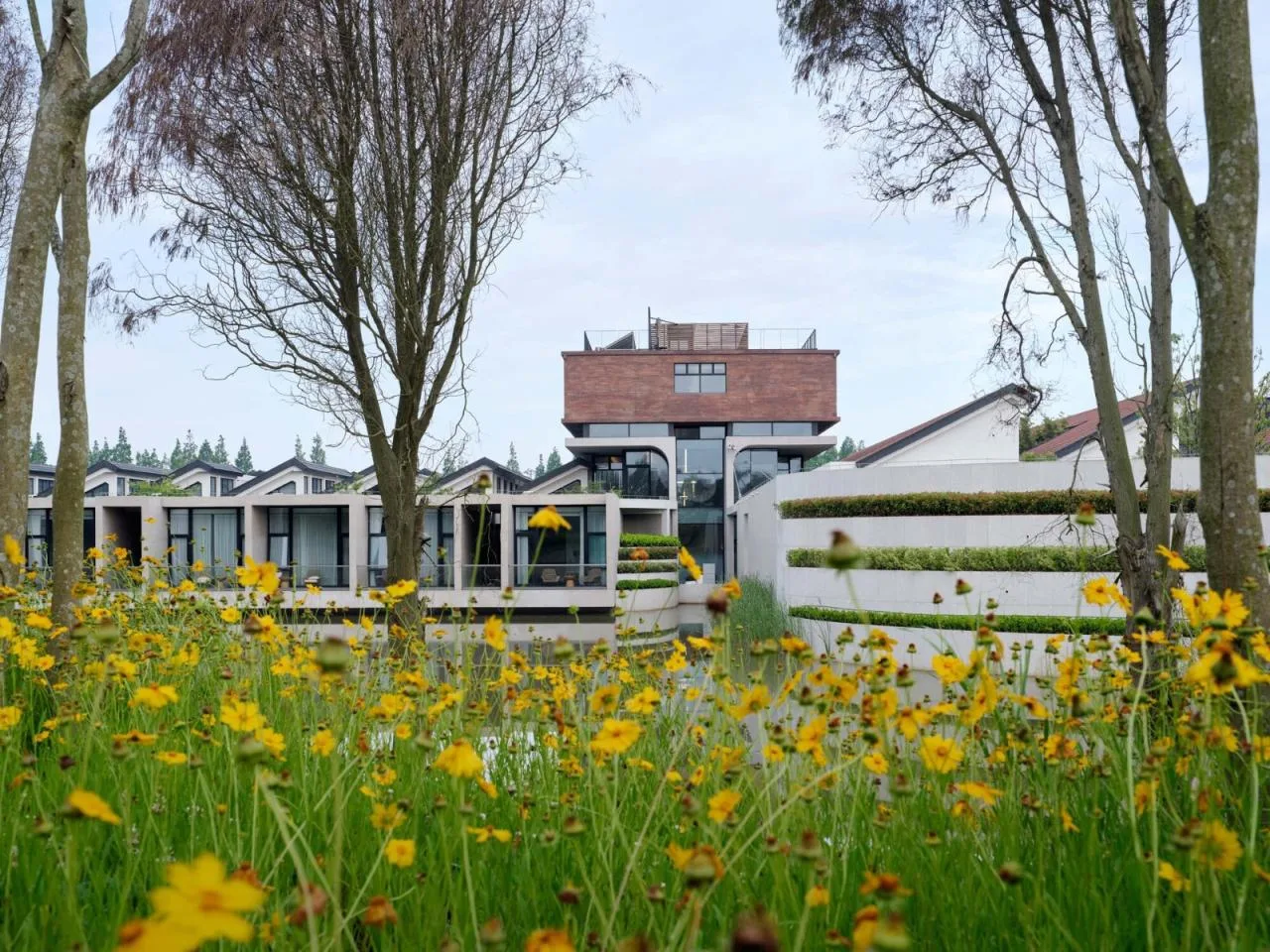
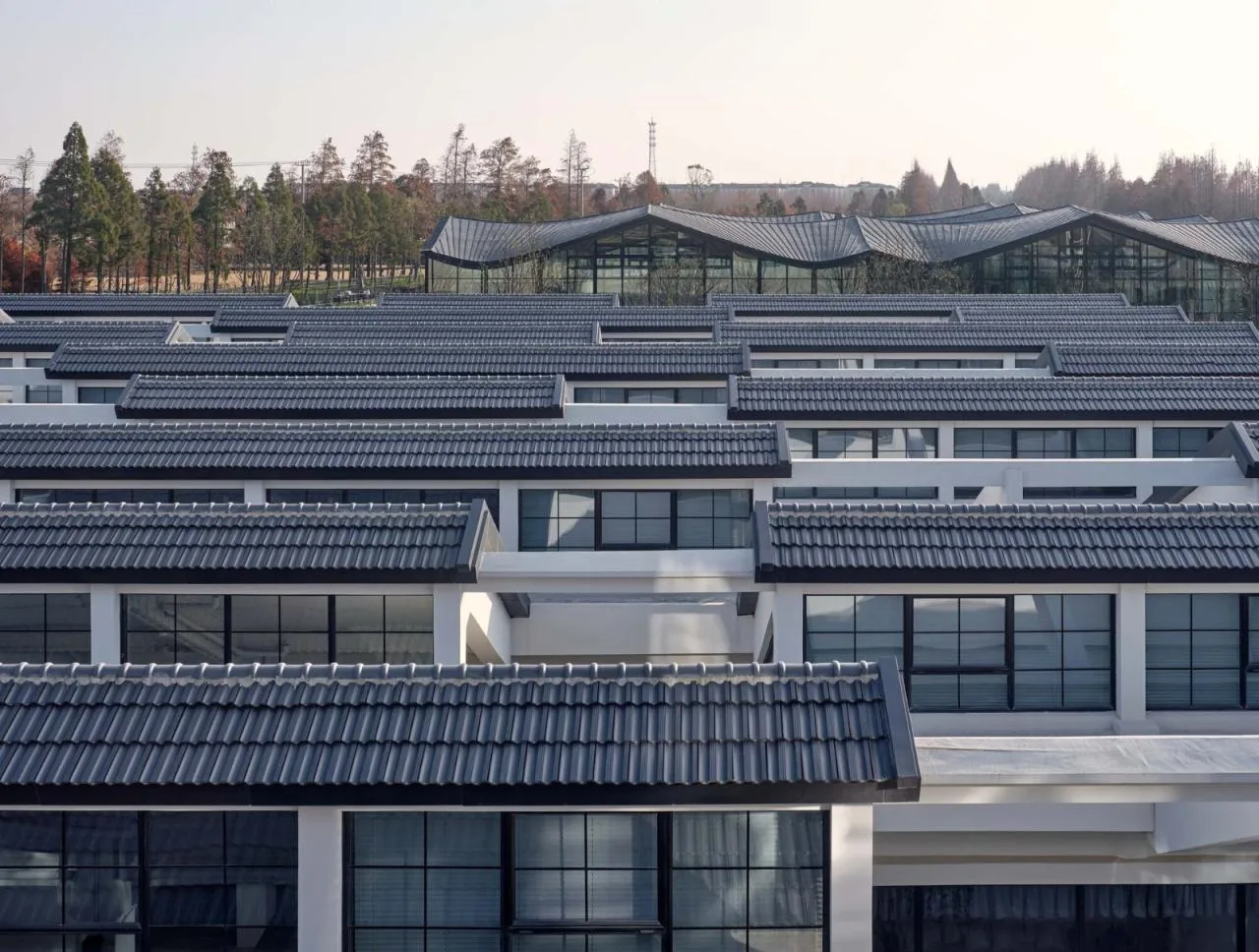
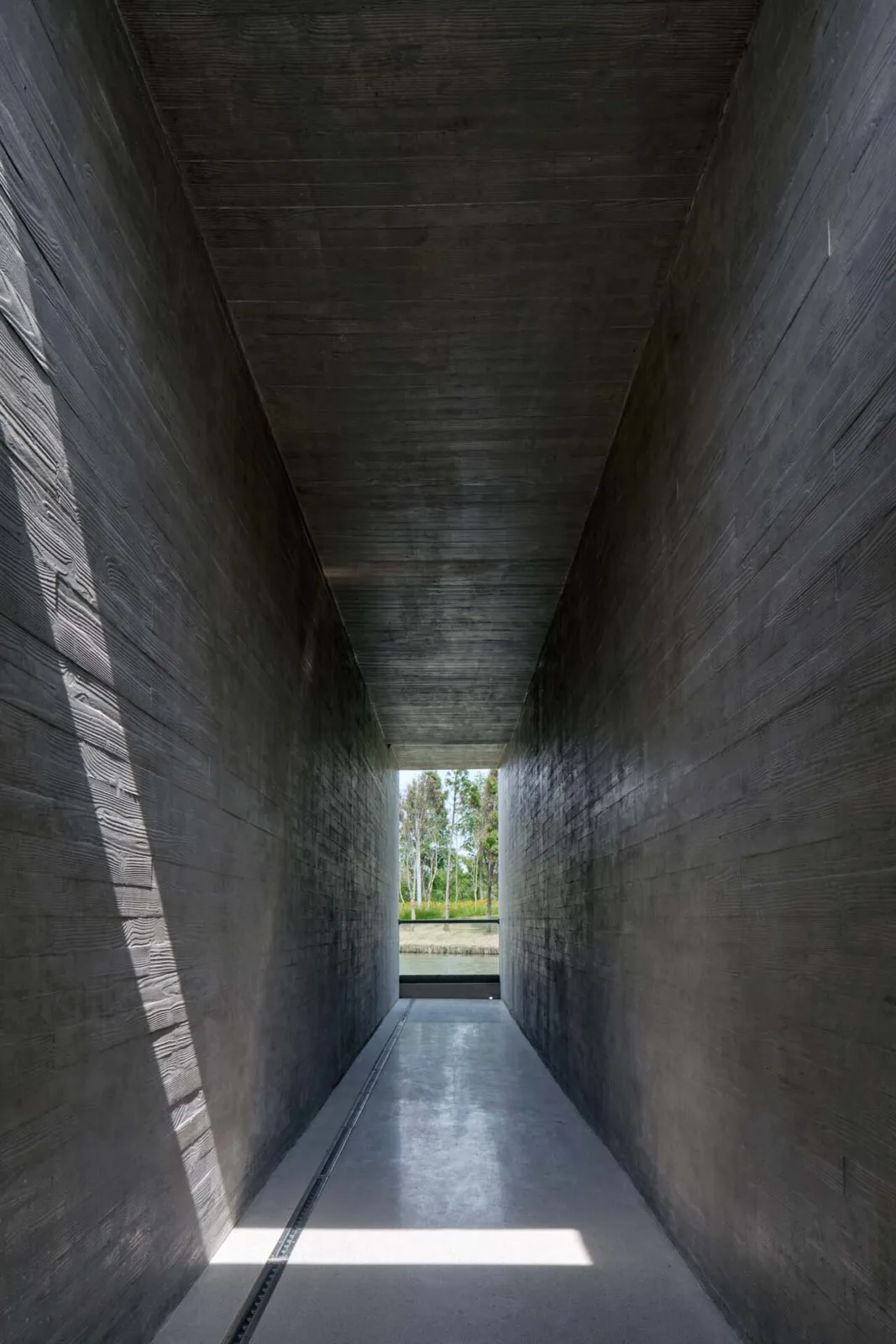
The Green Embankment’s diffuse pathways continue to extend, introducing a fresh juxtaposition strategy within the serrated factory rooms of the two core building groups. Two concrete walls rise from the embankment system, inserted into the gaps between the old factory rooms. These walls lift and fold upward, supporting a suspended steel and wood structure that appears to hover in the air. Viewed from a distance, this creates the illusion of a wooden box hanging from the jagged roof of the old factory building. Atop this structure, the observation room offers panoramic views of the sprawling rooftops below, inviting visitors to reconnect with the site’s history through this new spatial experience.
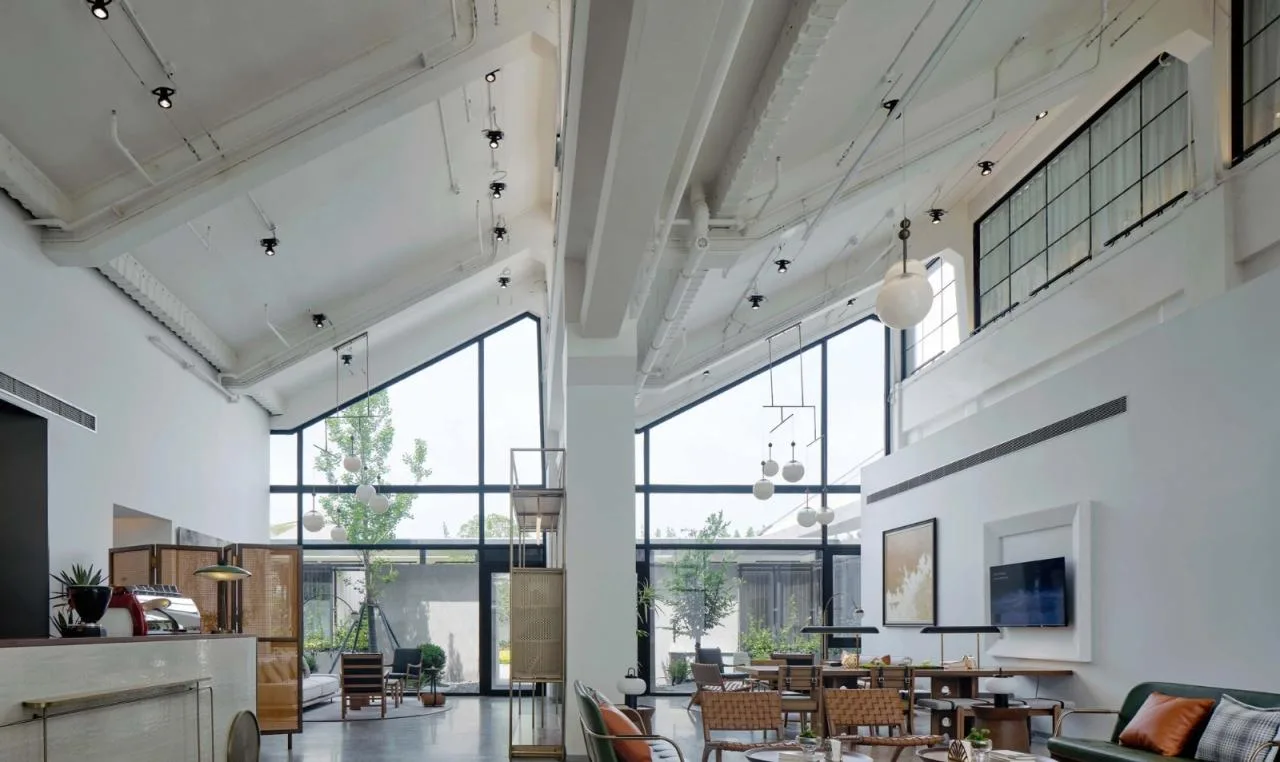
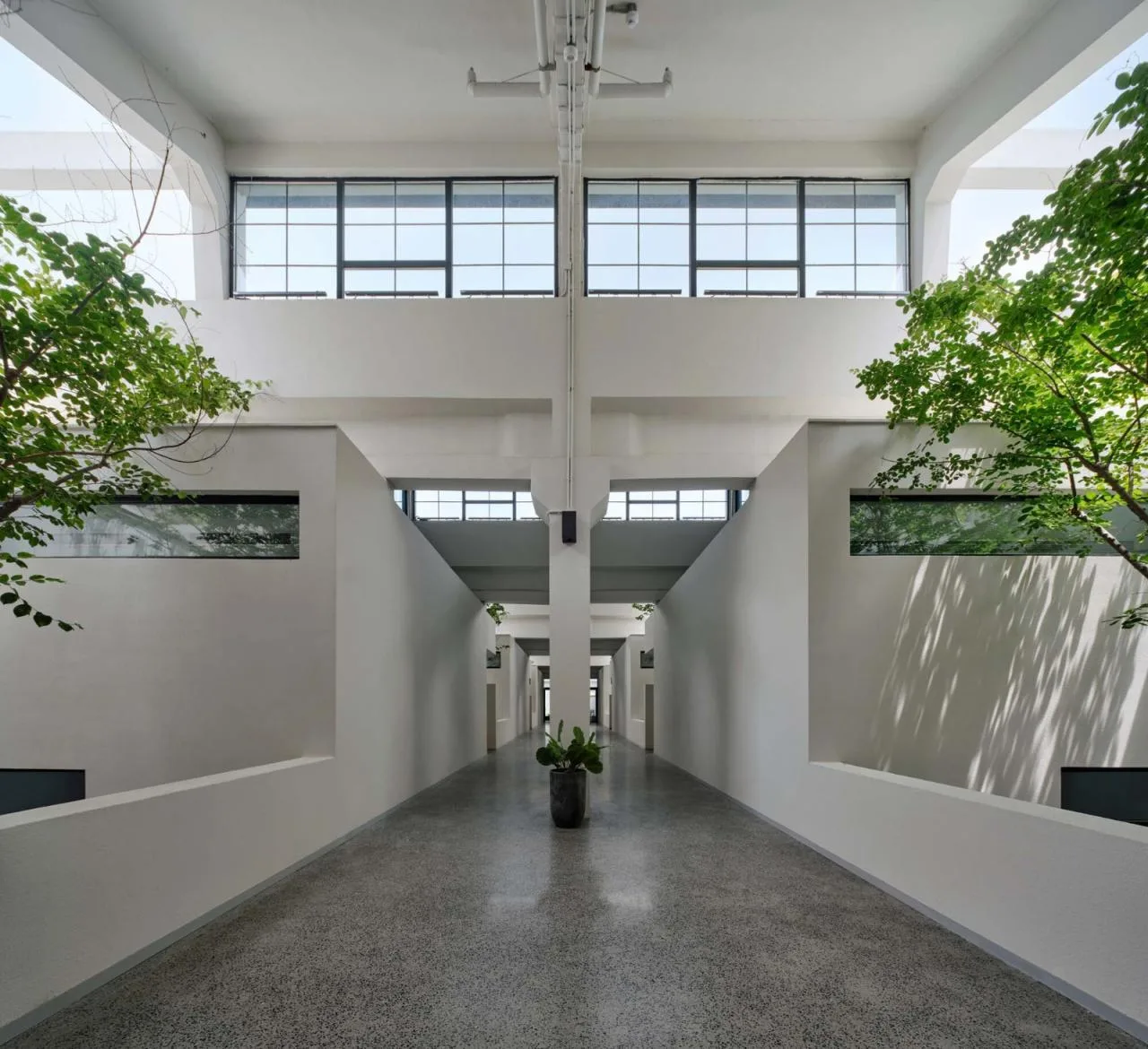
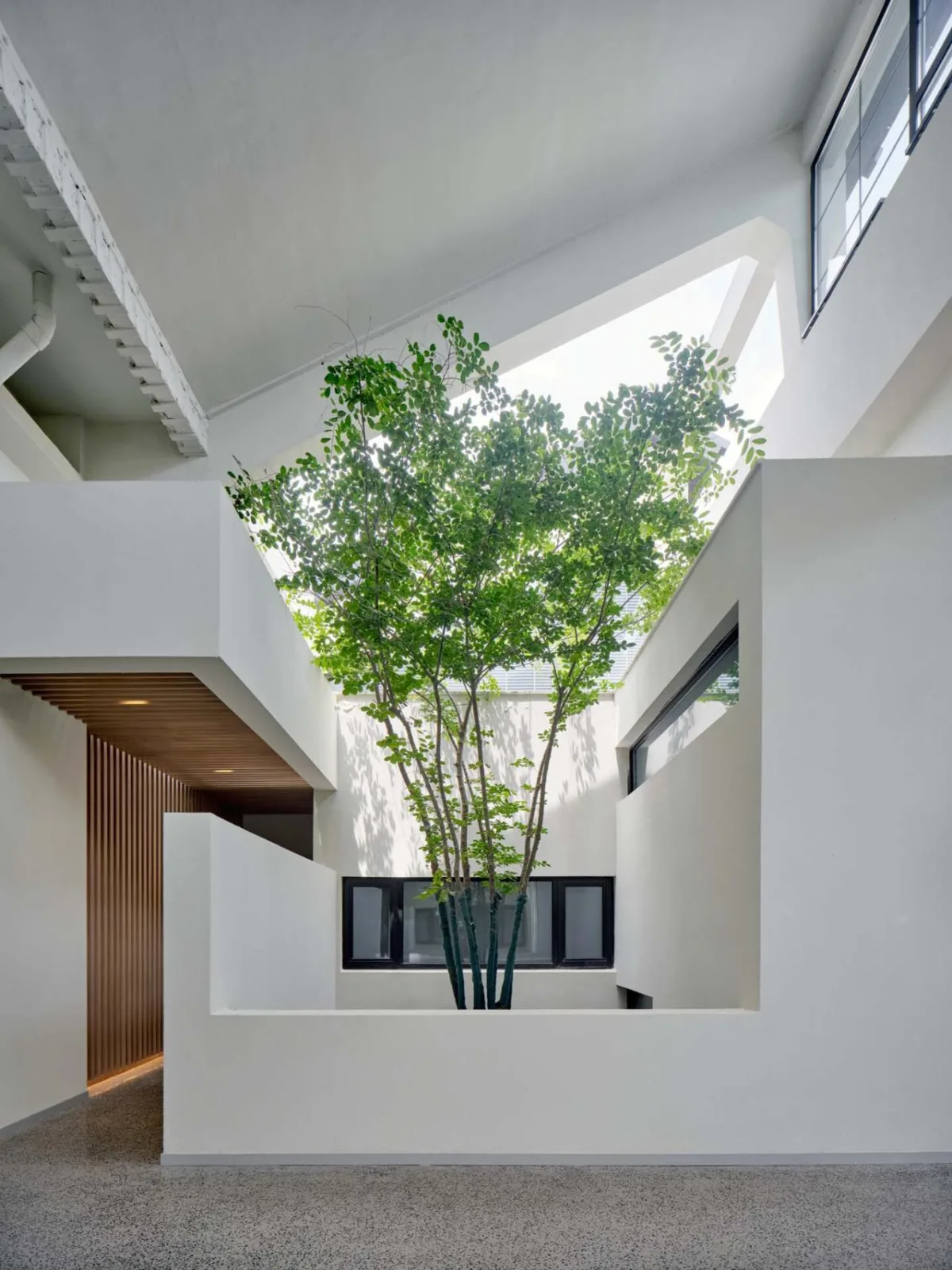
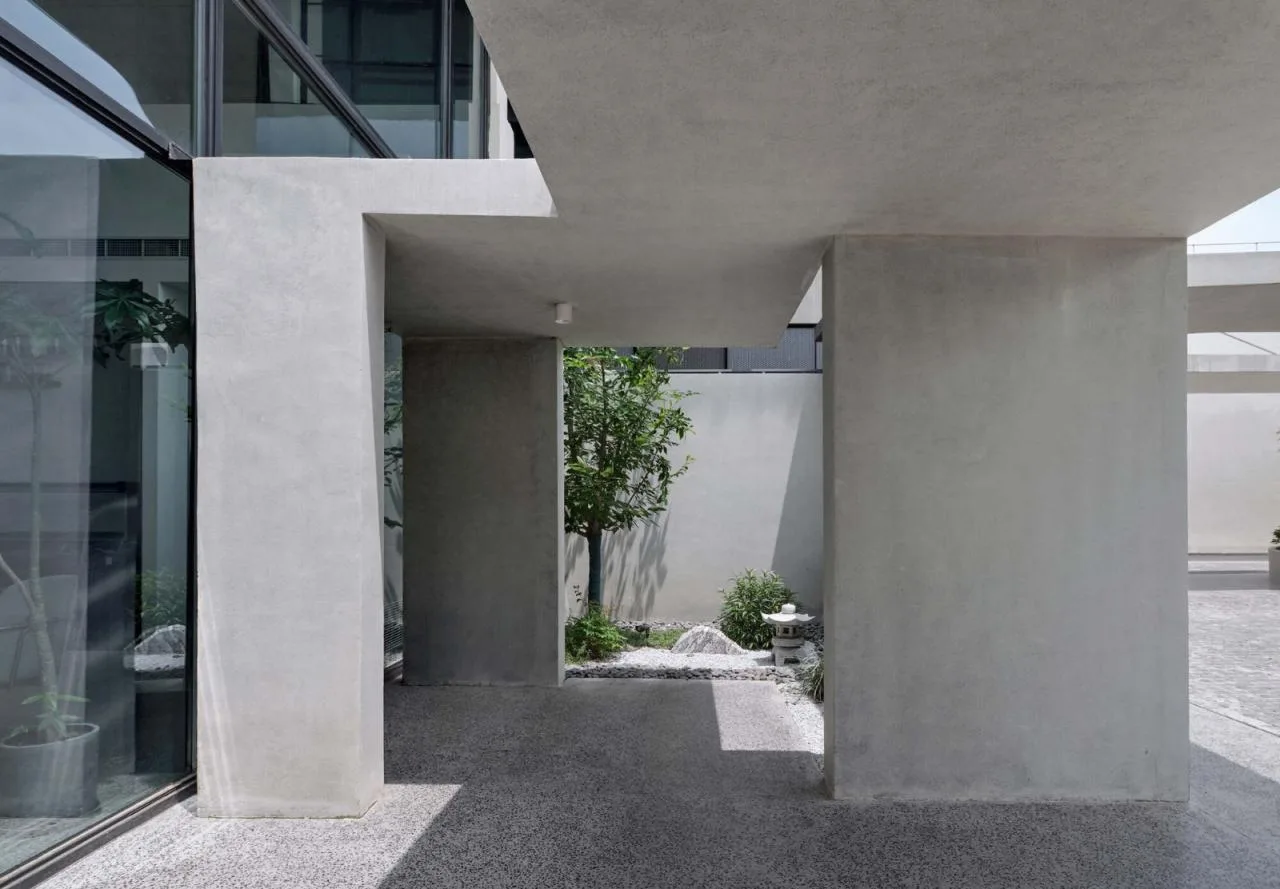
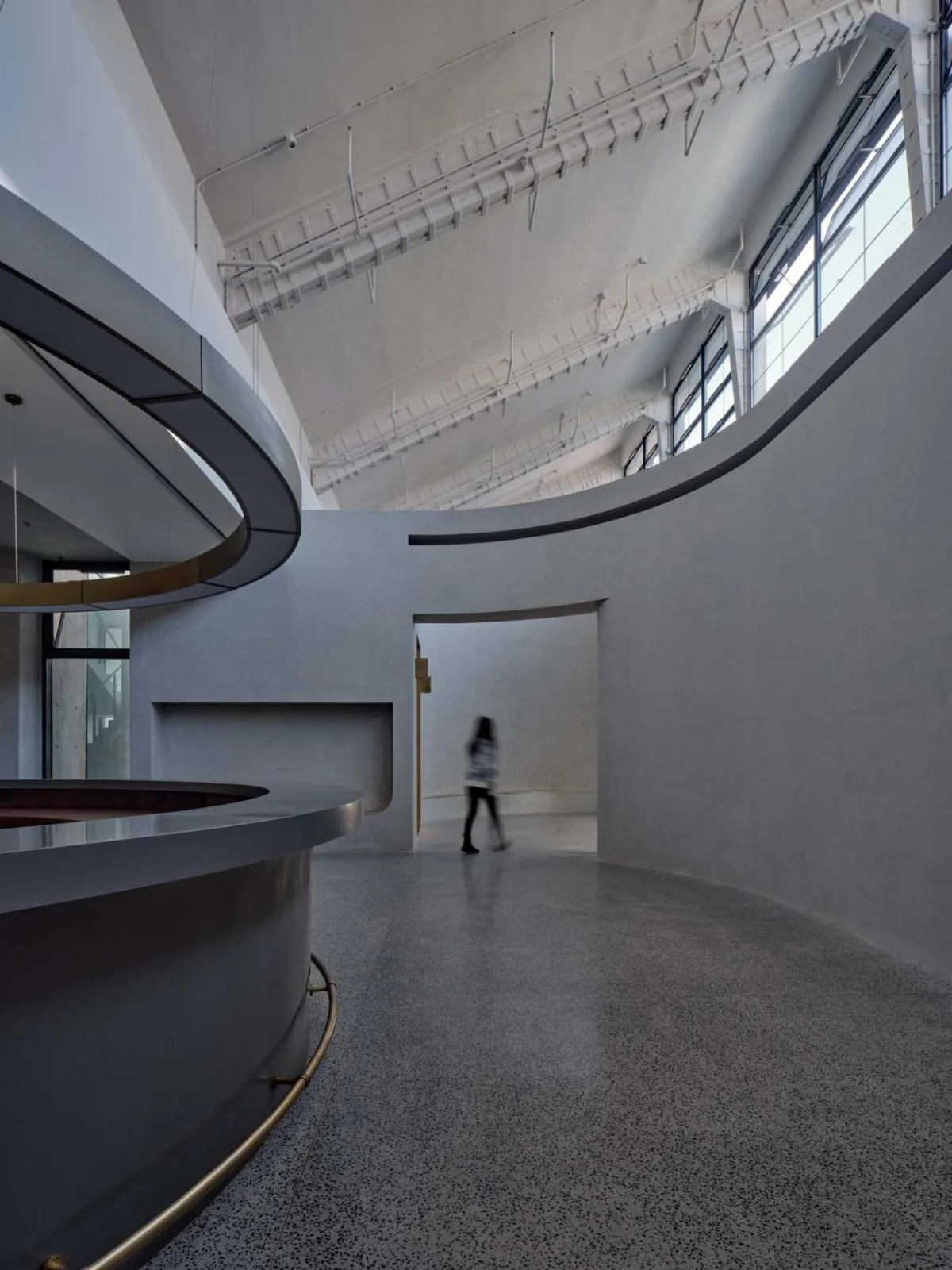
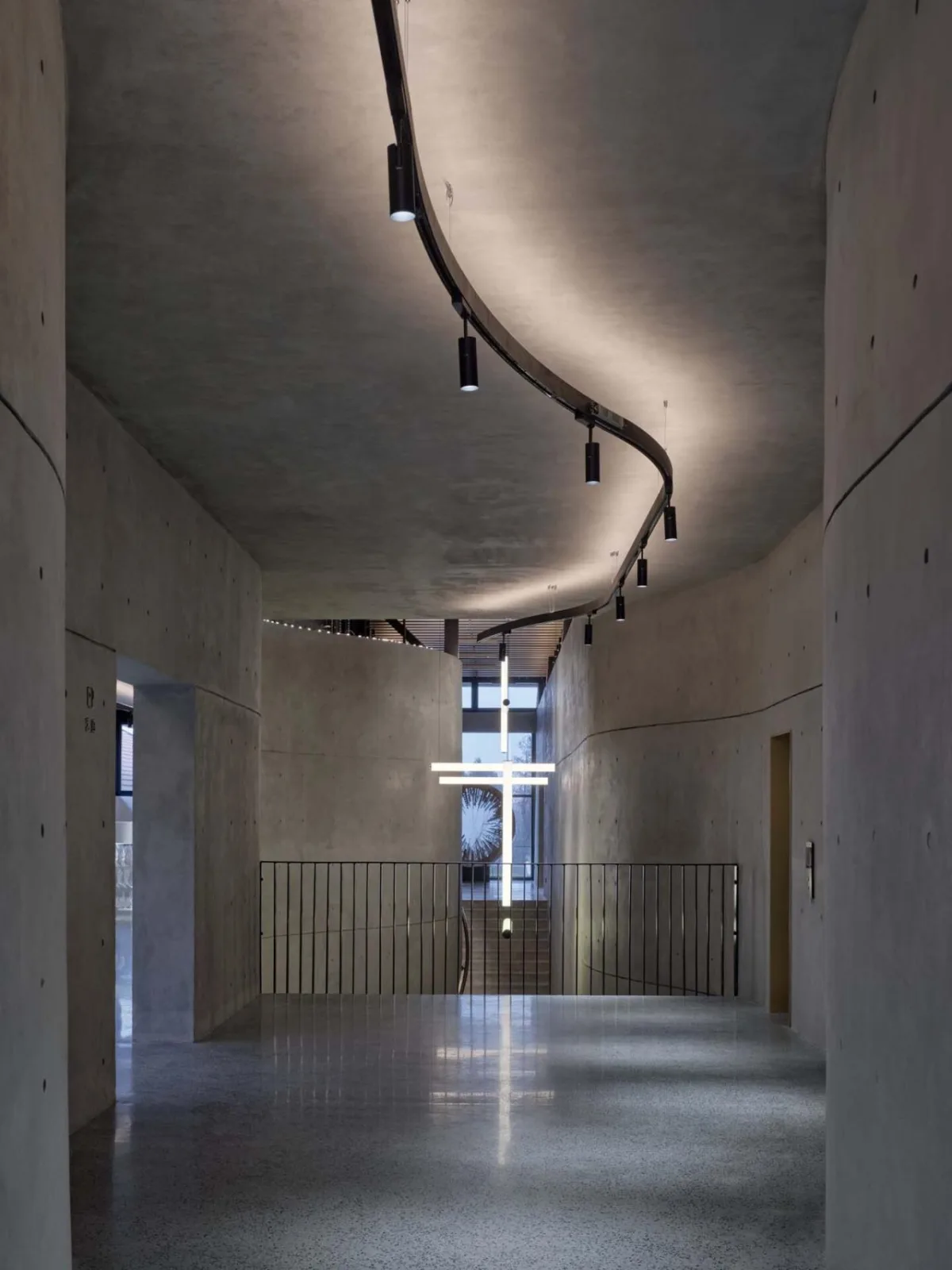
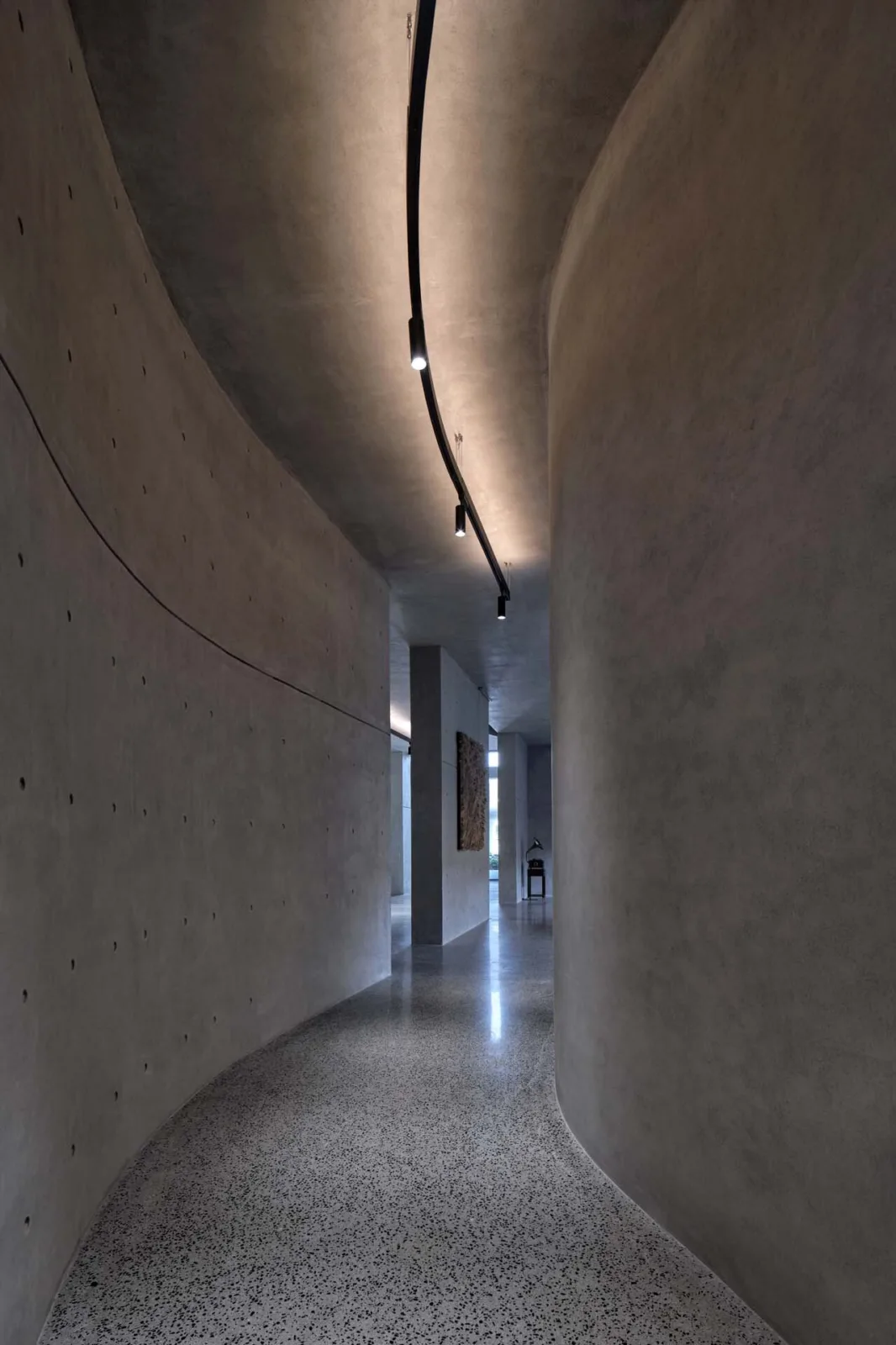
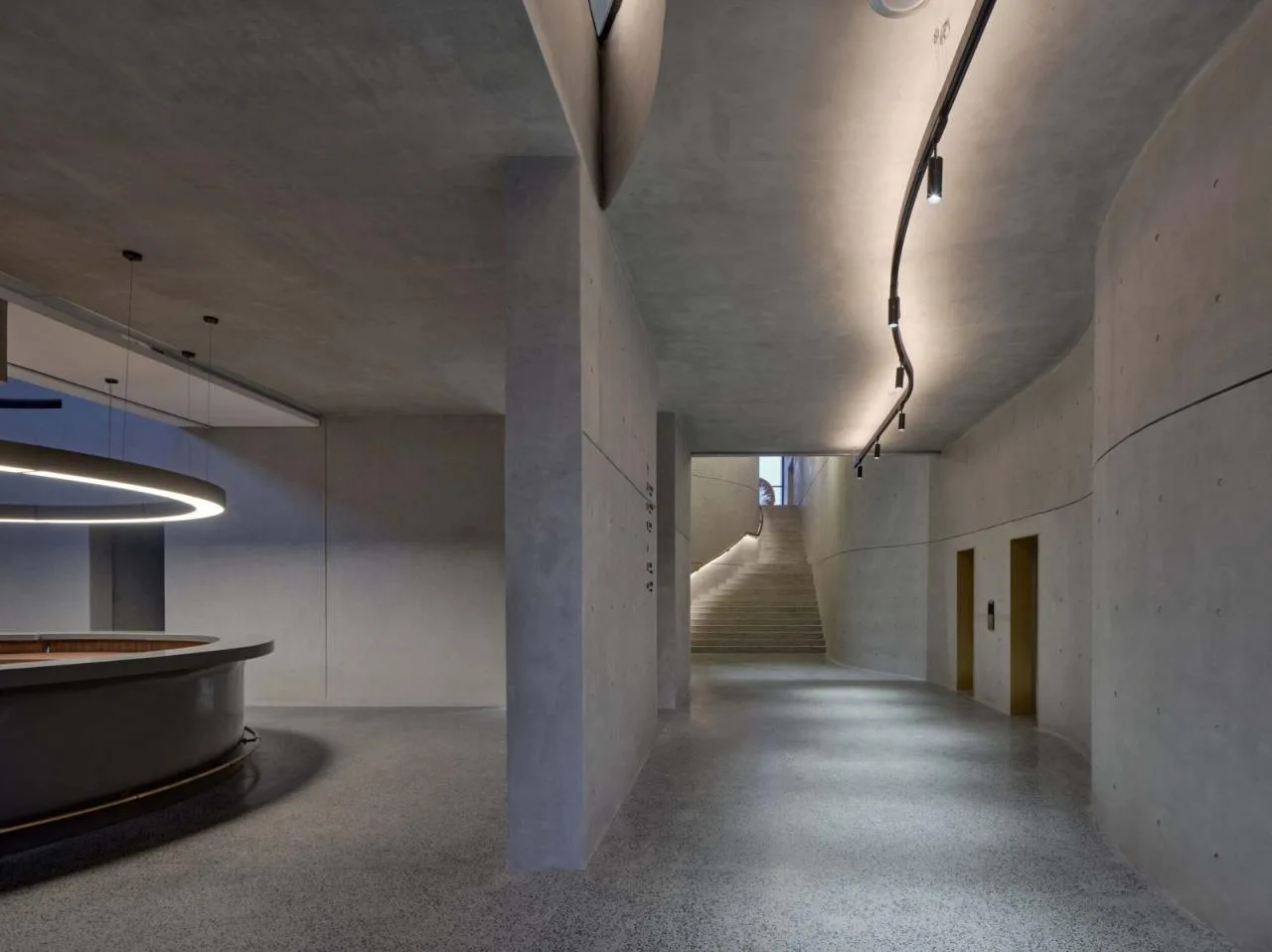
Unlike the previous horizontal juxtapositions, this new and old relationship is vertical, dictated by the spatial constraints of the site. The space beneath the new volume, between the old buildings, becomes the fascinating intersection created by this vertical juxtaposition. This area is enclosed with a transparent glass facade, functioning as the hotel’s core lobby and shared space. To enhance the artistic and playful qualities of the interior, the two concrete walls twist dynamically within the space, breaking the original order with a rhythm of expansion and contraction. These curved walls also offer flexible opportunities for multi-functional uses, such as art exhibitions.
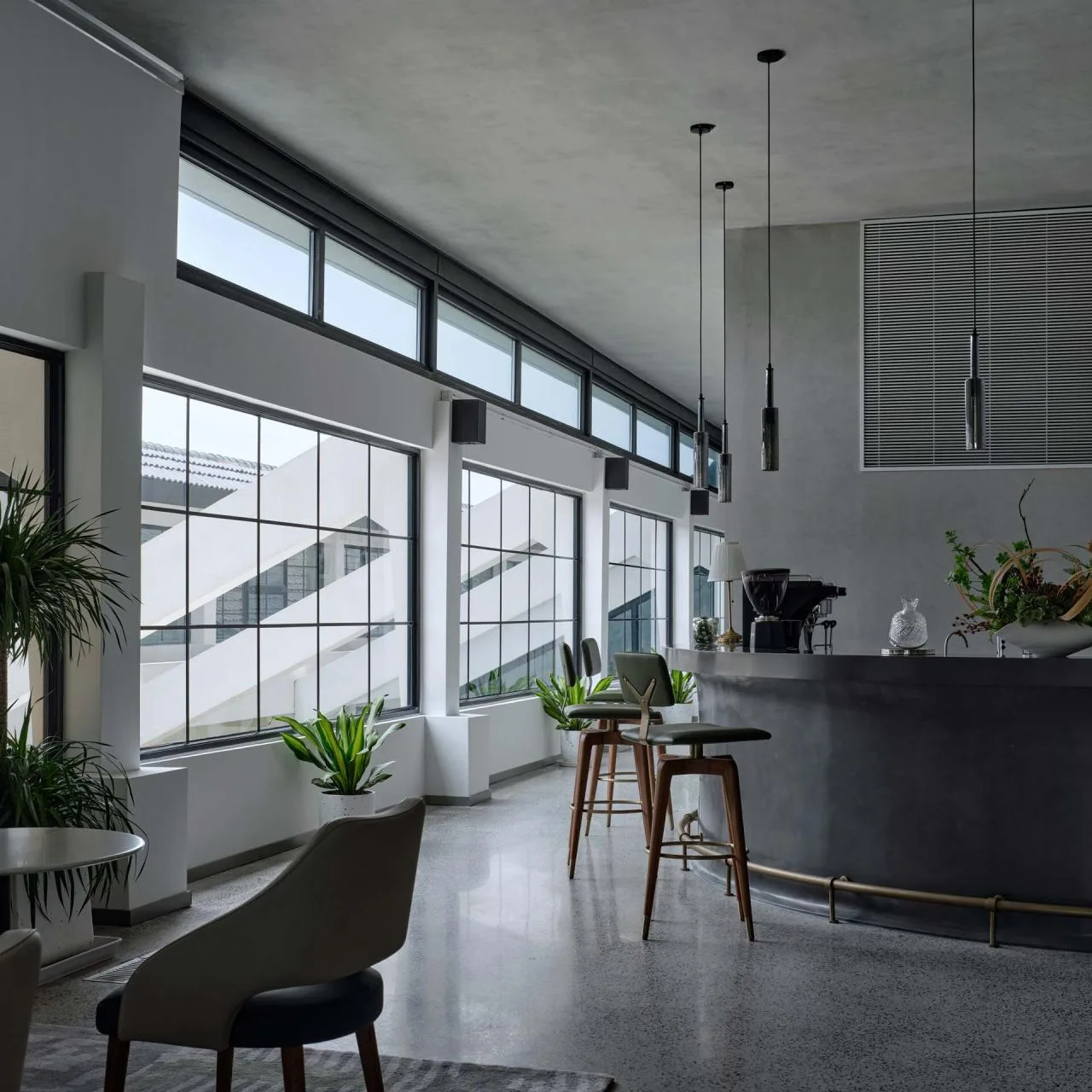
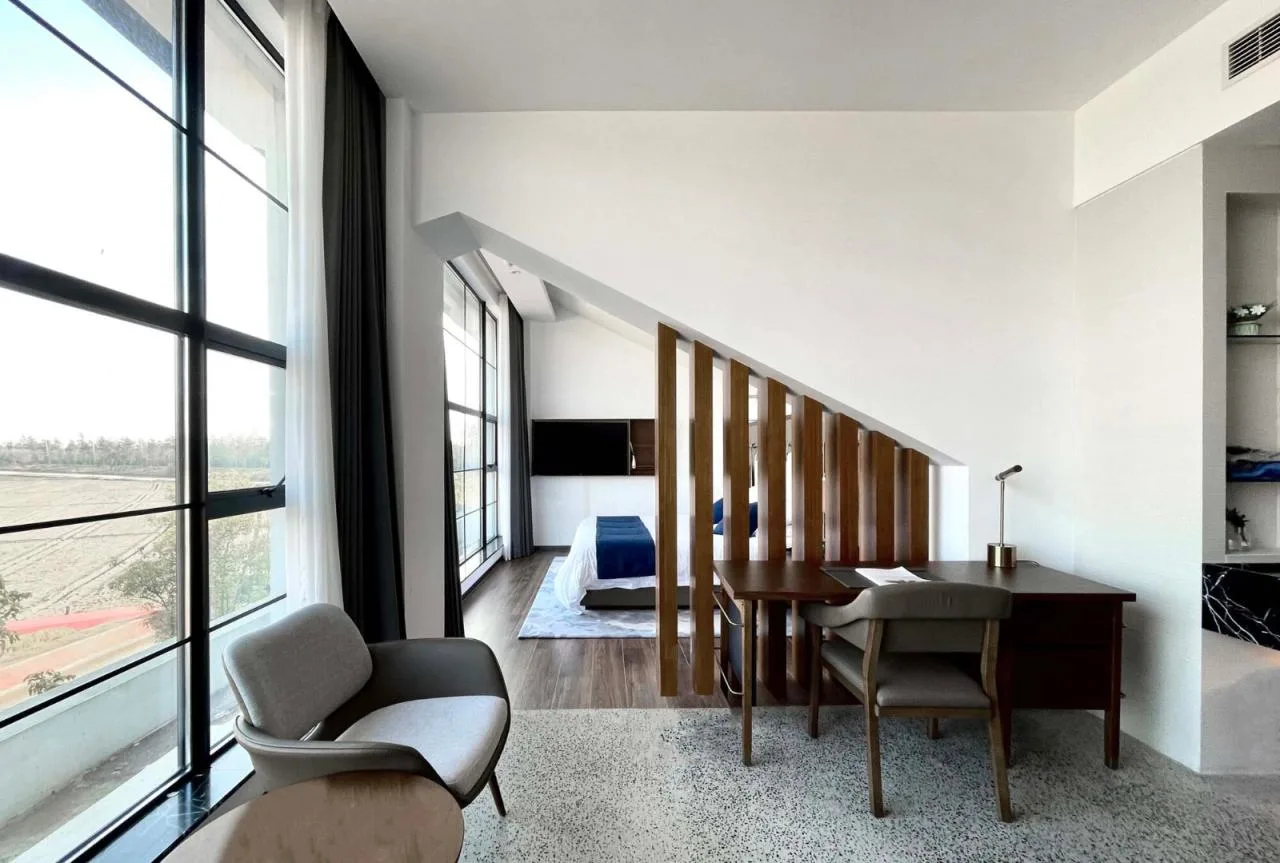
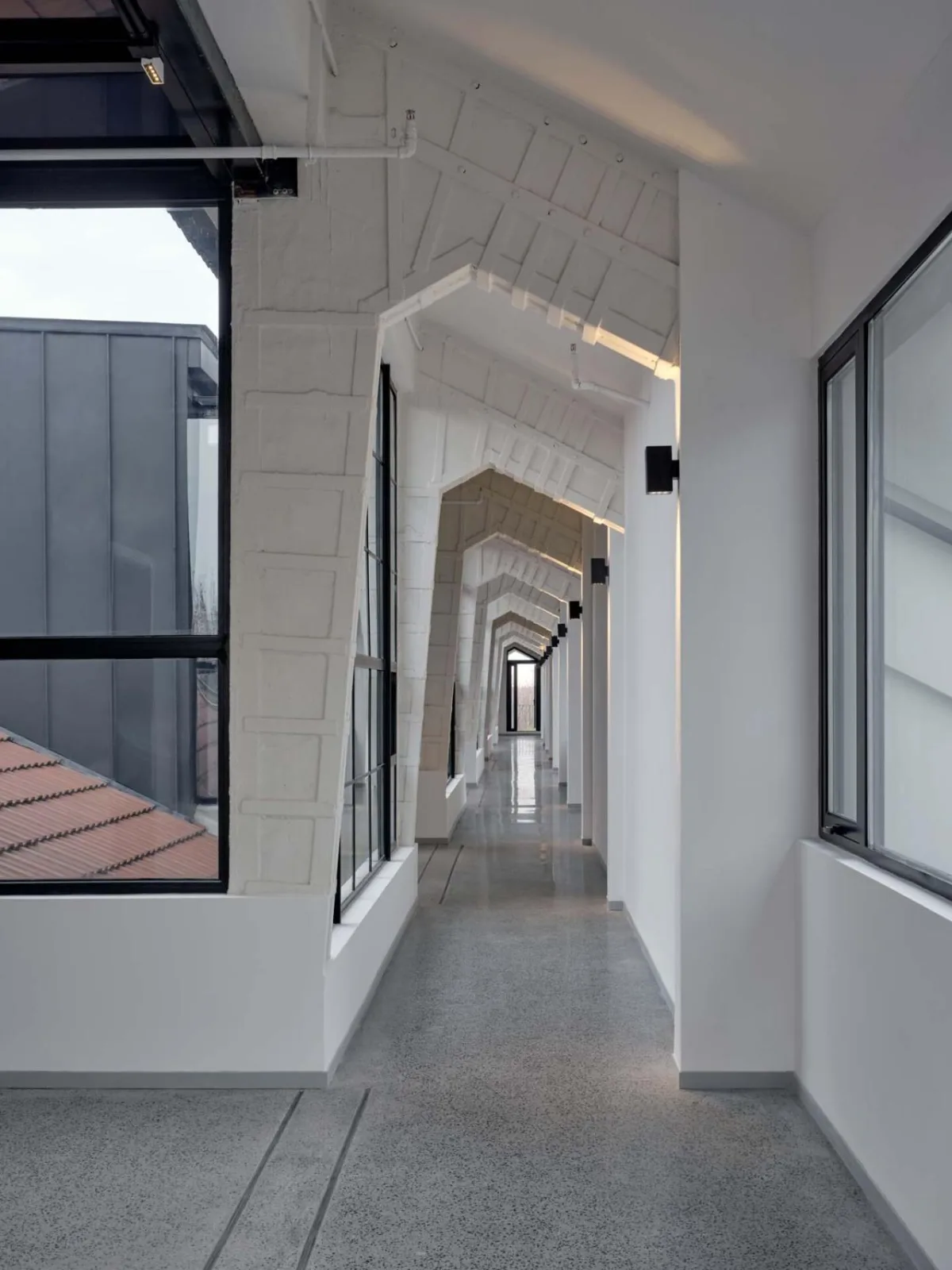
The northern group of the two preserved serrated factory buildings features a larger internal spatial scale and is bordered by expansive rice fields to the north. To optimize space utilization, the design transformed this area into a two-story structure. However, due to existing structural beam constraints, some second-floor spaces did not meet functional requirements. We improved conditions by locally replacing the original sloped roof with a flat metal roof, which also introduced a unique rhythm to the roofline. The southern group of factories, lower in height but larger in scale, underwent structural reinforcement and selective roof removal to create a courtyard-style guest room. This design preserves the mottled roof texture and complements the courtyard landscape. Private spaces were integrated as heterogeneous new volumes, establishing a dialogue between old and new. Despite this juxtaposition, spatial continuity is maintained, serving as a medium connecting architectural forms from different eras.
Project Drawings
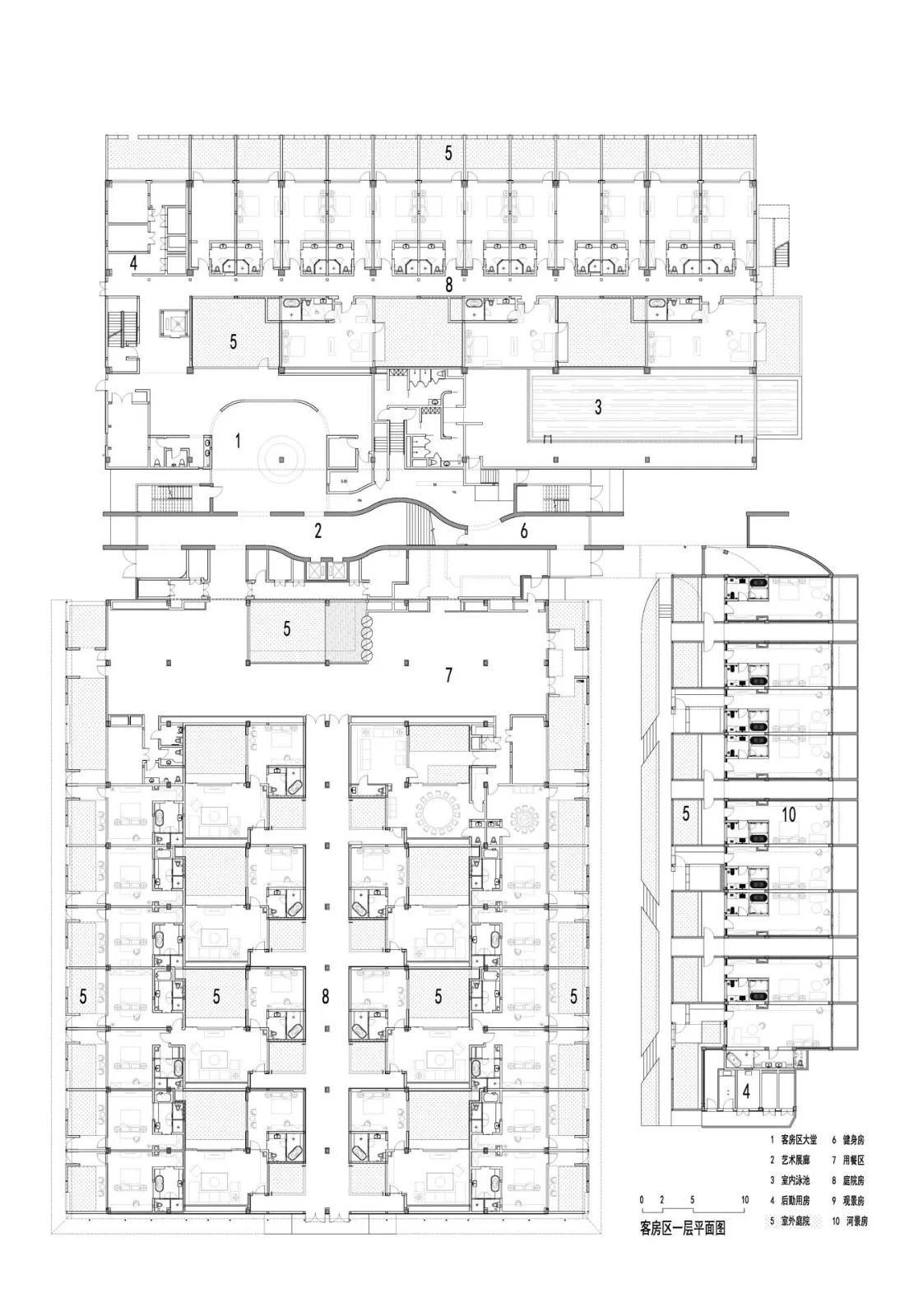
△ First Floor Plan
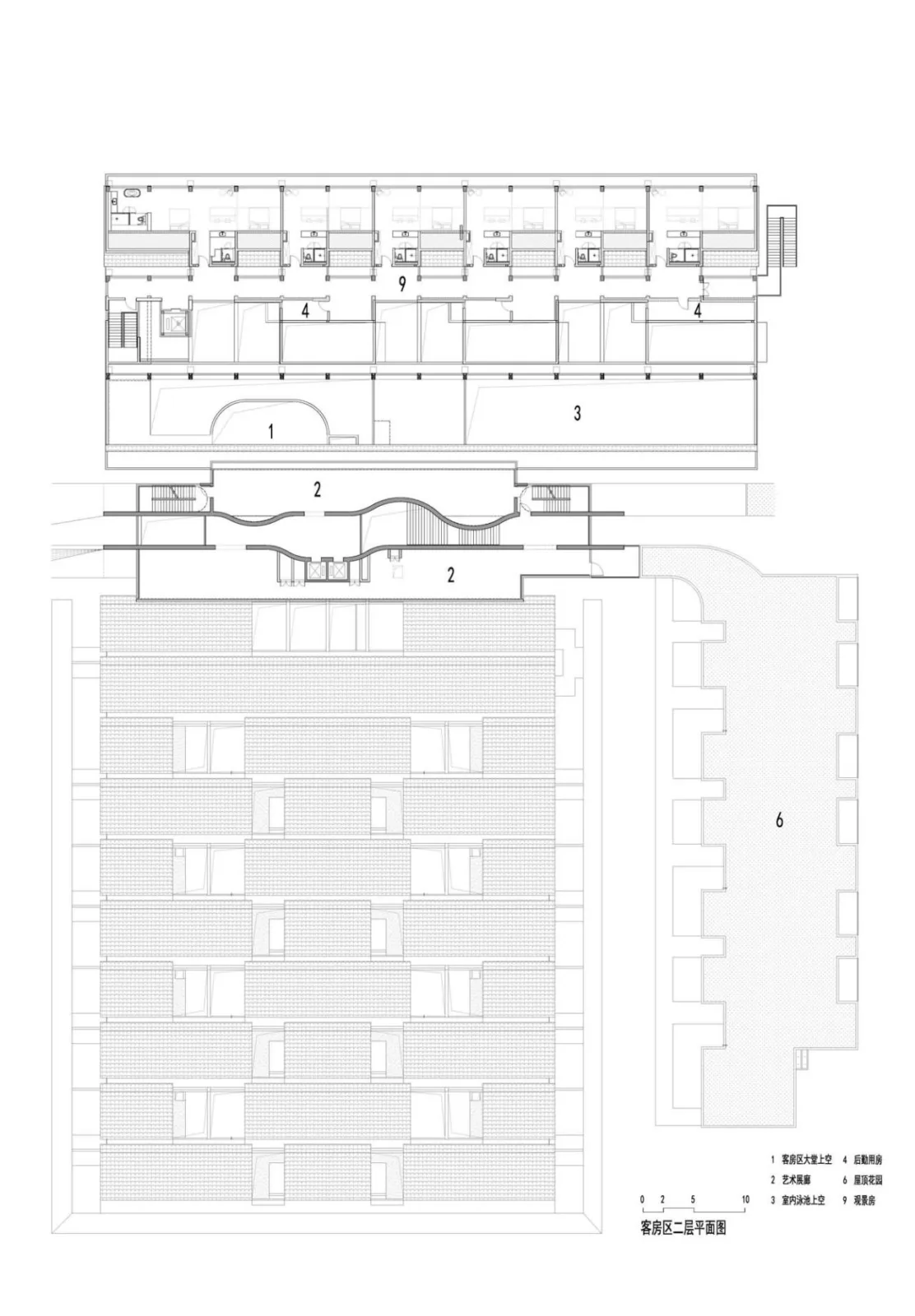
△ Second Floor Plan
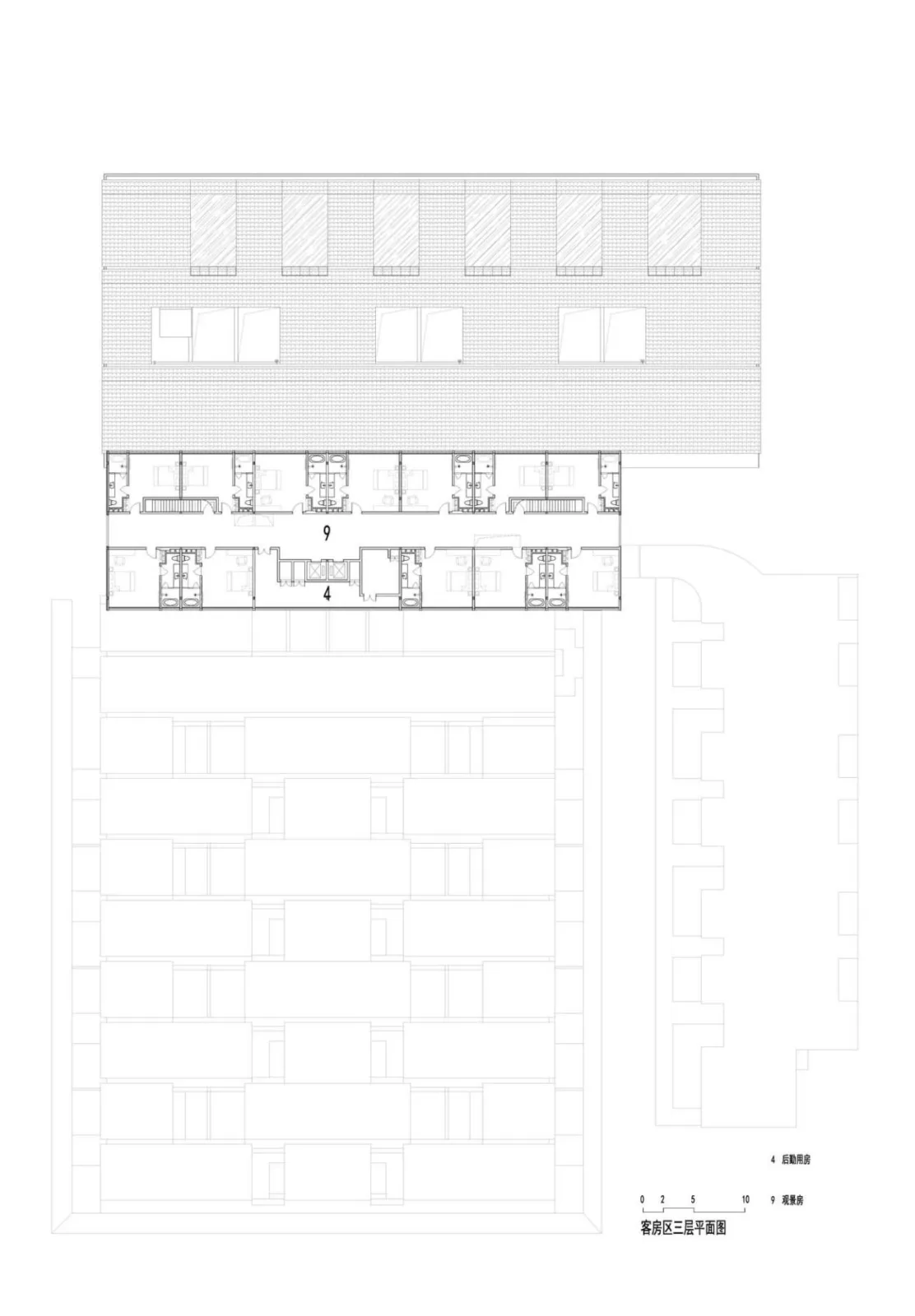
△ Third Floor Plan
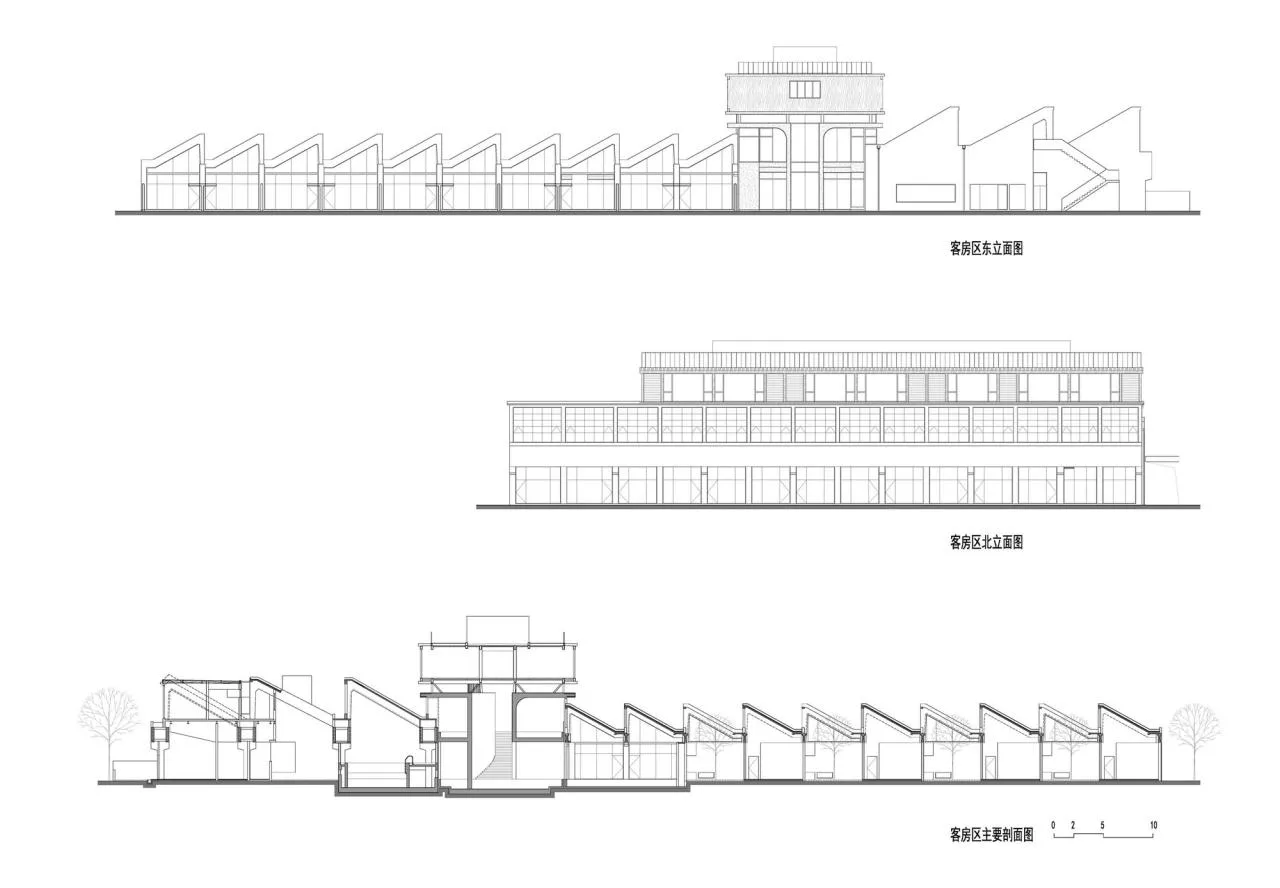
△ Vertical and Sectional Views
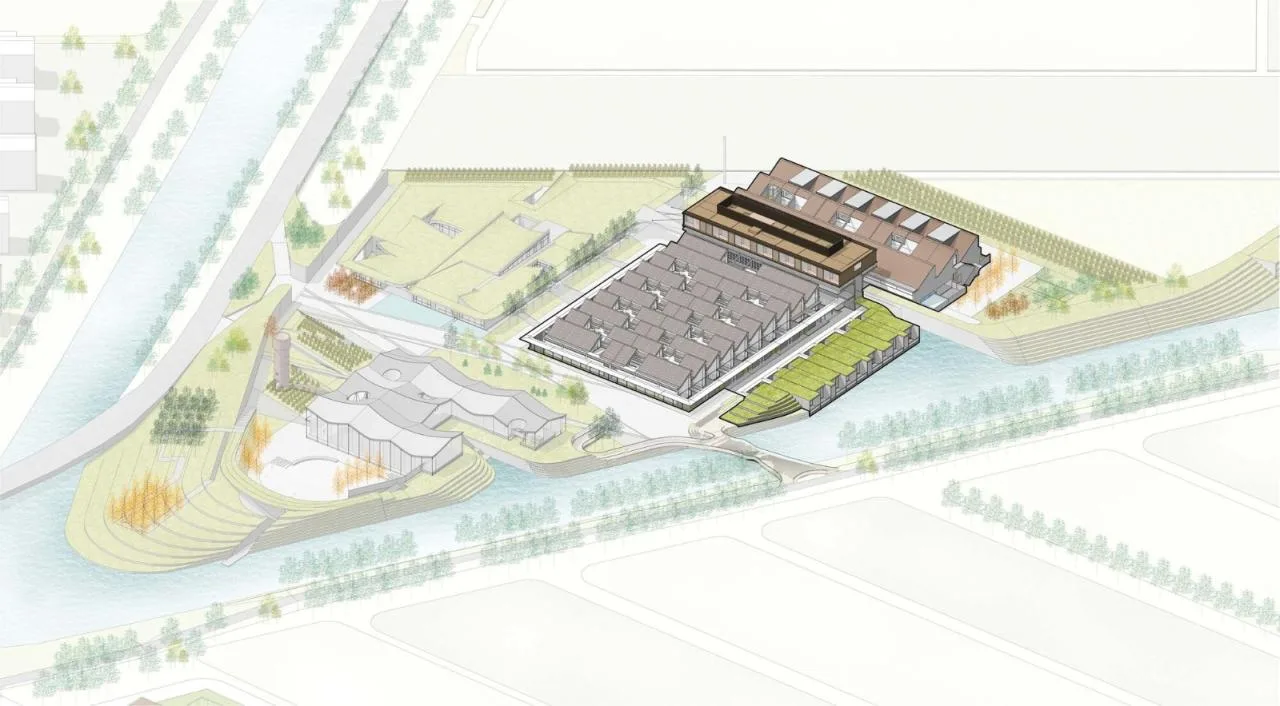
△ Aerial View
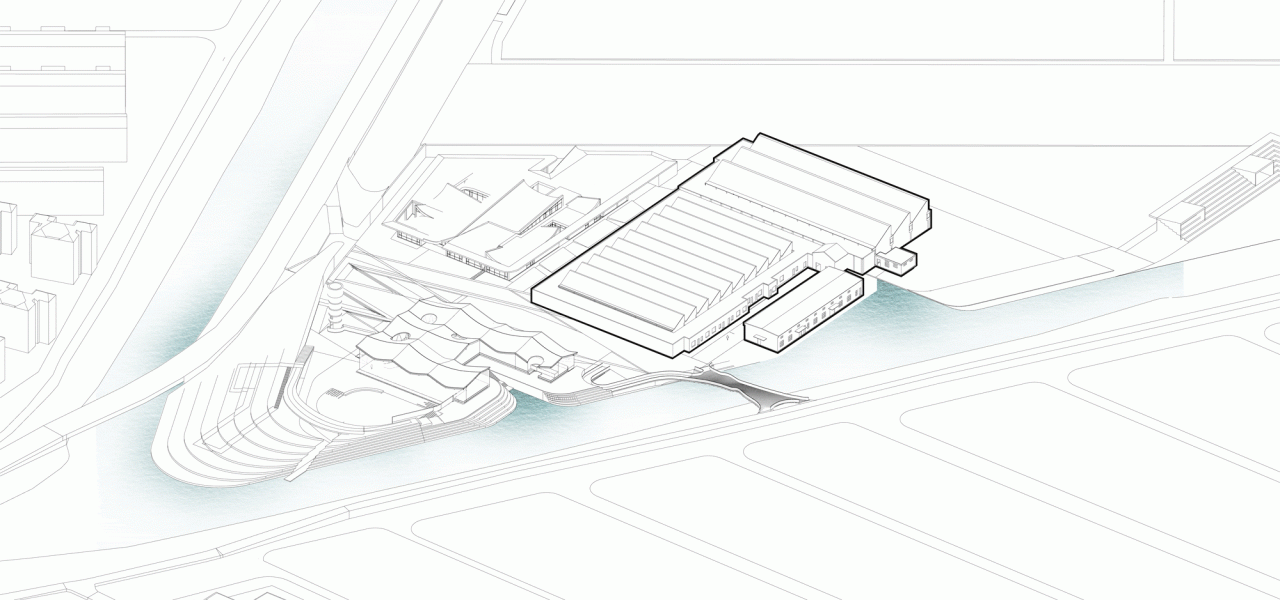
△ Analysis Chart
Project Information
Architect: Tongji Original Design Studio
Area: 7,267 m²
Year: 2021
Photographer: Octopus Seeks Architecture
Lead Architects: Zhang Ming, Zhang Zi
Design Team: Xiao Lei, Xi Weidong, Pan Si, Feng Shanshan, Huang Xiaoqian, Feliju
Equipment Design: Guo Changzhao, Fang Tao, Li Hanqian, Shen Bingchun, Yang Jiapeng
Lighting Design: Yang Xiu, Gu Xinghua, Bian Chen, Wu Yang, Liu Yu, Ge Wenjing
Structural Design: Wang Rui
Logo Design: Yike Design
Interior Design: Ten Thousand Views for a Century
Construction Unit: Shanghai Qianyi Agricultural Development Co., Ltd
Location: Shanghai
















Must log in before commenting!
Sign Up