
Transforming an abandoned primary school into a daycare center offers a practical solution amidst declining birth rates and an aging population. Our goal is to create a warm, spiritual home for the 96 elderly residents left on the island by revitalizing the space and rekindling treasured memories accumulated over time.” – Meng Fanhao
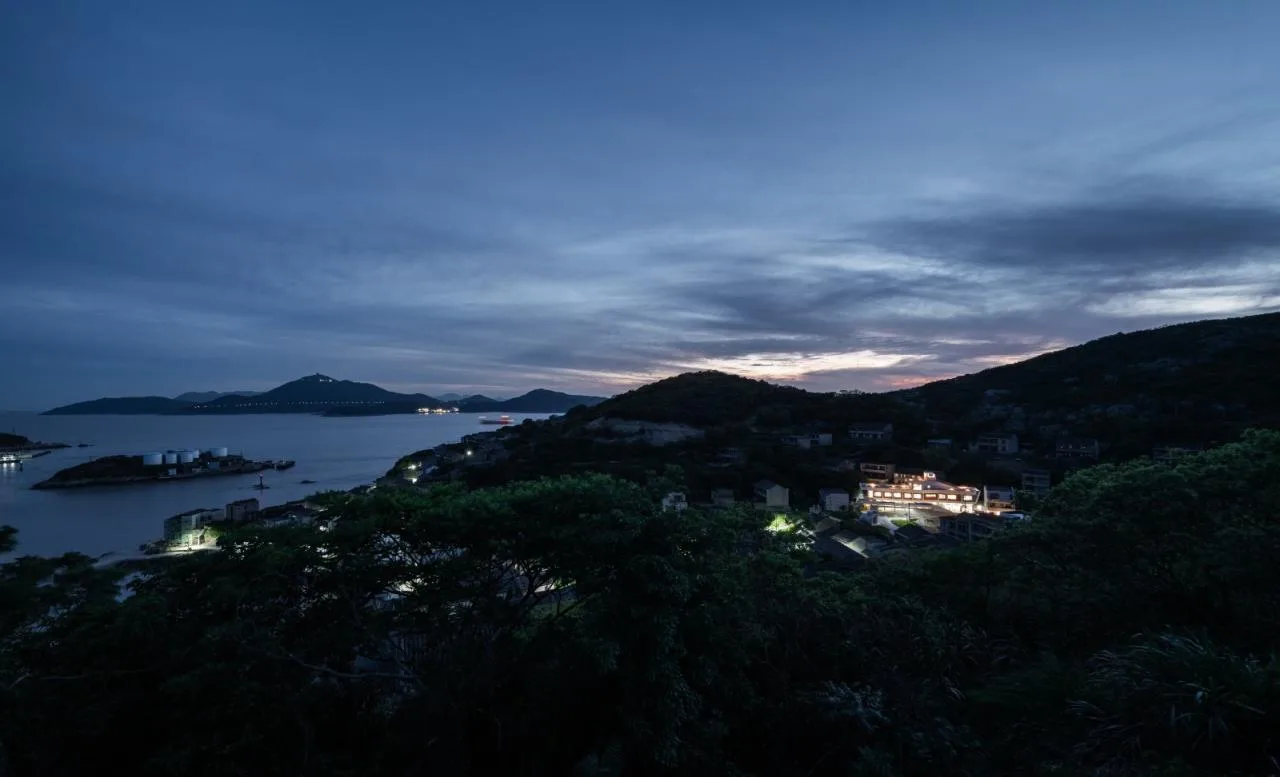
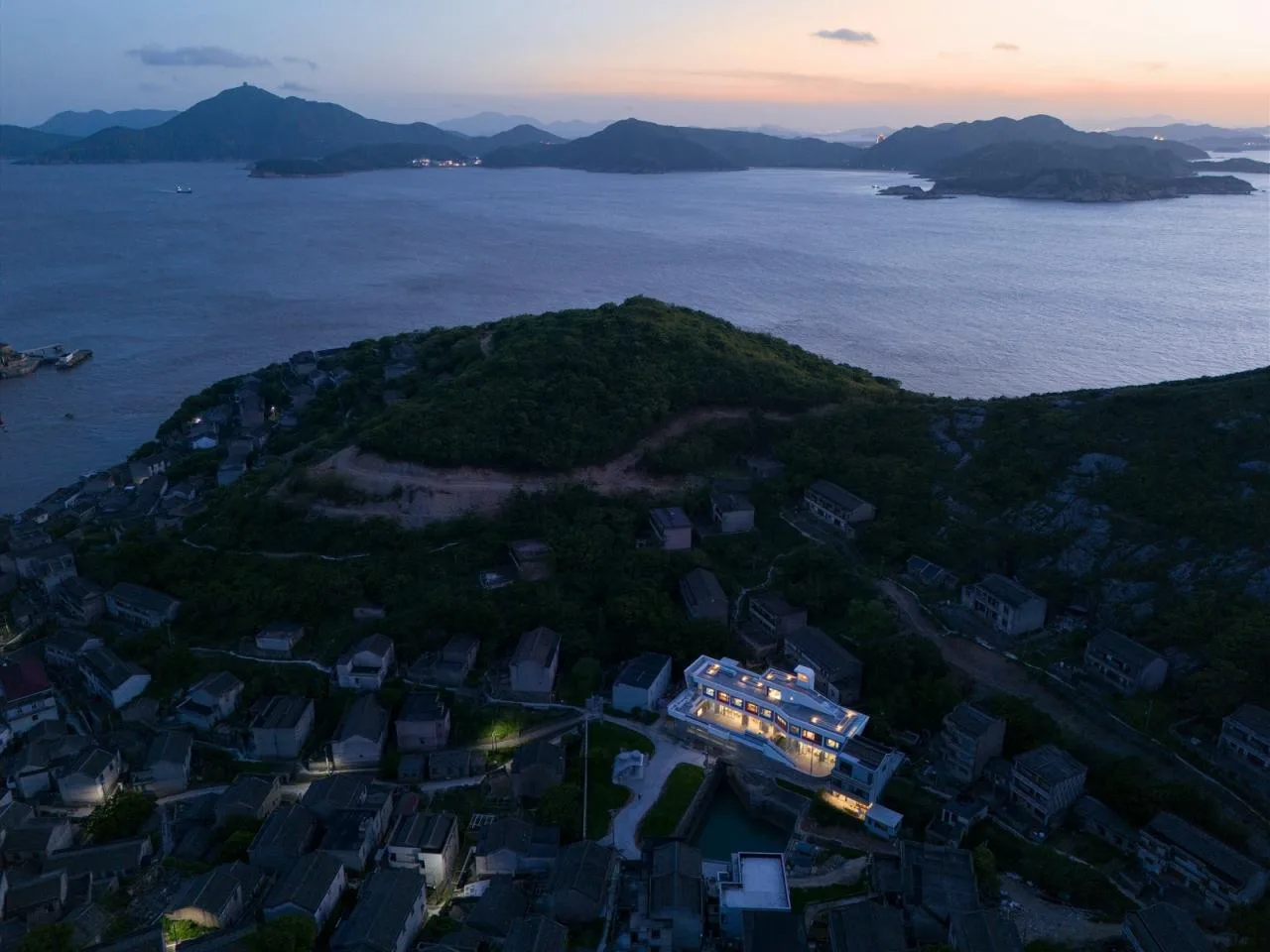
Located within the Zhoushan Archipelago, Chaishan Island resembles a pearl lost in time. Once a bustling fishing village, it was known for the sight of hundreds of boats returning fully loaded. With fishery resources now protected and overfishing left behind, younger generations are leaving in search of new opportunities, gradually isolating the island. The remaining 96 elderly inhabitants have become its last steadfast guardians.

△ View of Chaishan Island – Source: “Dream Reformer”
As populations migrate to urban centers, rural areas deteriorate, making elderly care for those left behind a pressing issue. In response to growing aging demographics, rural elderly care services have become a governance priority. To address the medical and nursing needs of the island’s elderly, Meng Fanhao, co-founder and chief architect of Line+, was commissioned by the Baisha Management Committee of Putuo District, Zhoushan City, to redesign and convert a primary school into a daycare center. This project, Line+’s first public welfare initiative, aims to become a beacon of hope—easing loneliness and offering a retirement home that integrates social and medical functions, allowing the elderly to live peacefully.
Unlike typical rural revitalization efforts centered on culture and tourism, Line+ focuses on the humanistic care of the elderly left on Chaishan Island. Our aim is to support aging in place while injecting vitality into the countryside. By creating shared public spaces and a harmonious living environment, the center helps the elderly reconnect with warm memories and fosters community ties, pioneering public elderly care services in rural settings.
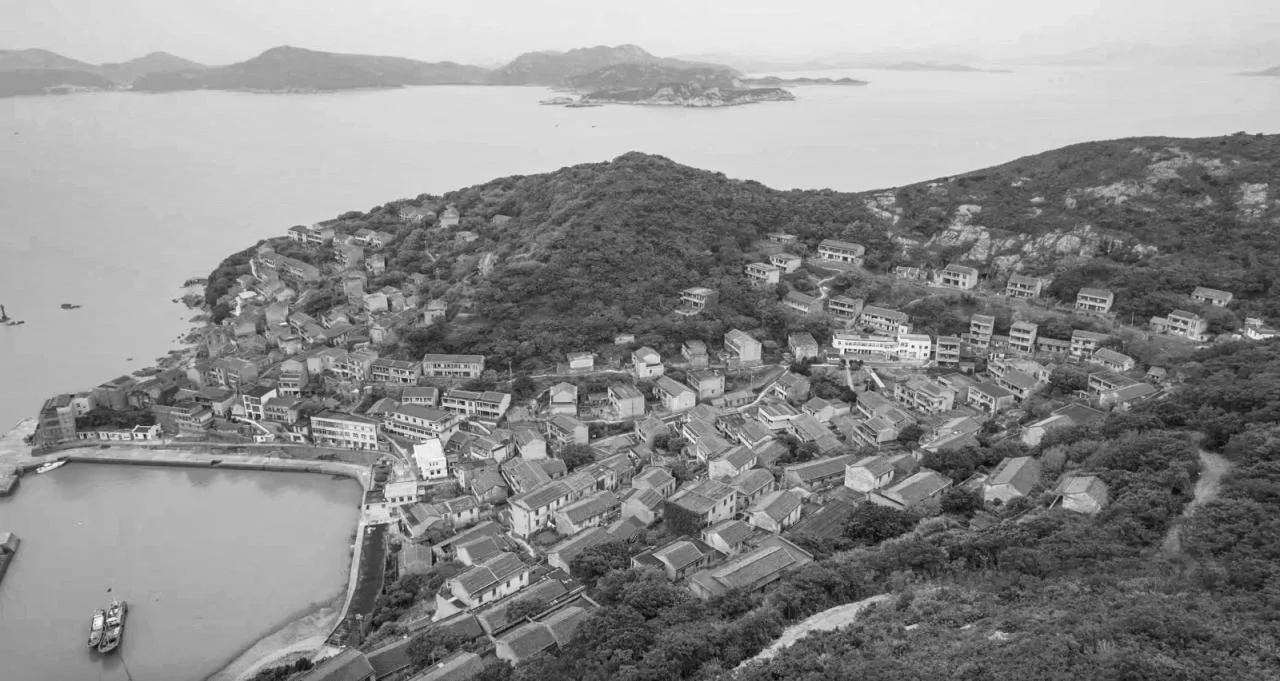
△ Aerial view of Chaishan Island – Screenshot from the video “Dream Reformer”

01 Current Conditions and Challenges
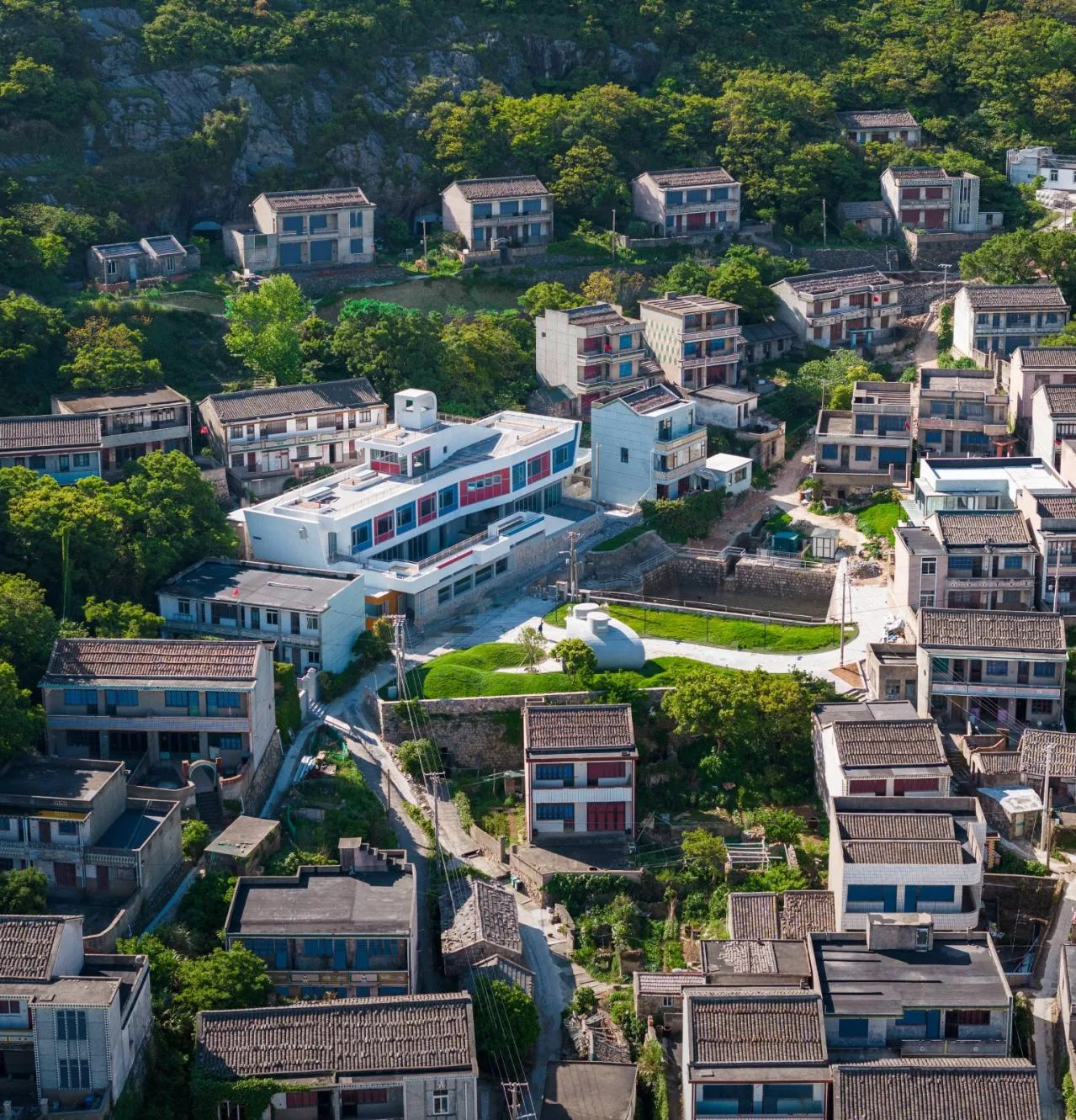
Chaishan Island, with a land area of 0.88 square kilometers, is part of Baisha Township in Putuo District, Zhoushan. The original building stands in the island’s center and is one of its few public structures. Constructed 20 years ago as a primary school, it was converted into a temporary nursing home four years ago. However, due to its basic facilities, few elderly residents were willing to move in.
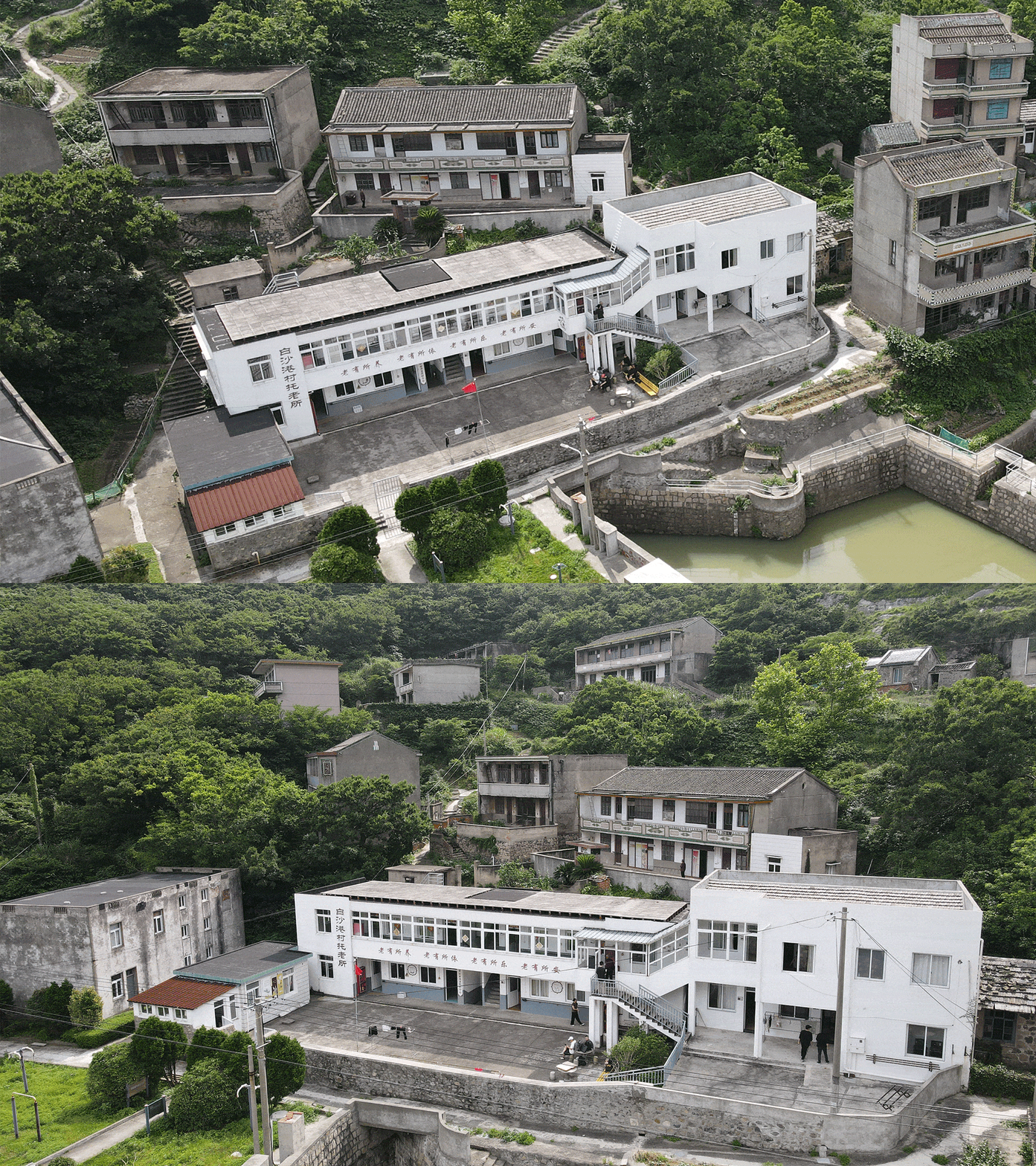
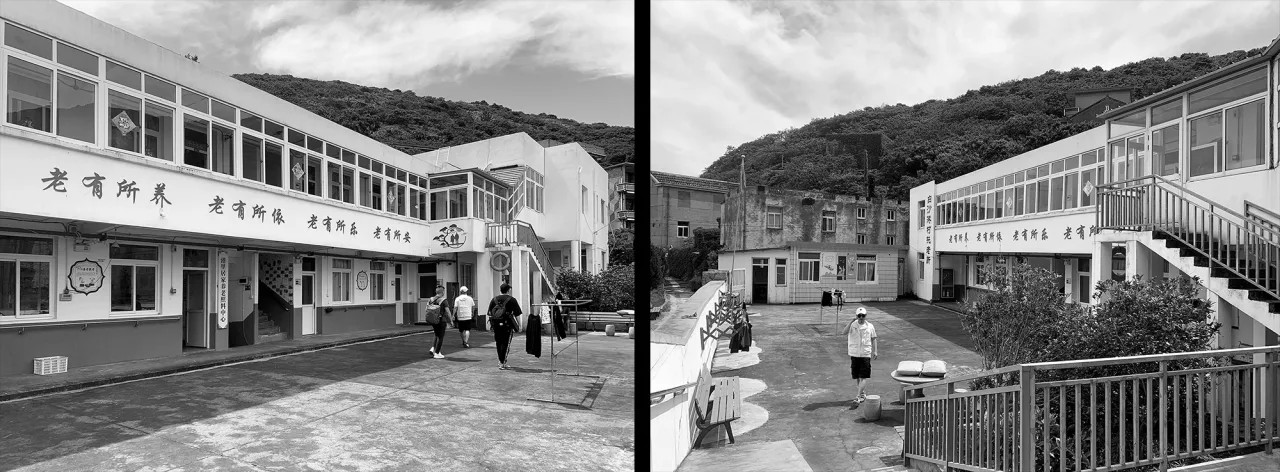
Daycare center before renovation
Initial research identified several issues: the site’s terrain causes significant height differences between inside and outside; narrow public spaces limit activity; and south-facing corridors exacerbate poor lighting and humidity in the living areas. These drawbacks reduce the nursing home’s practical value, making it unsuitable for elderly residents. Thus, the renovation needed to address both structural repairs and spatial reconstruction.
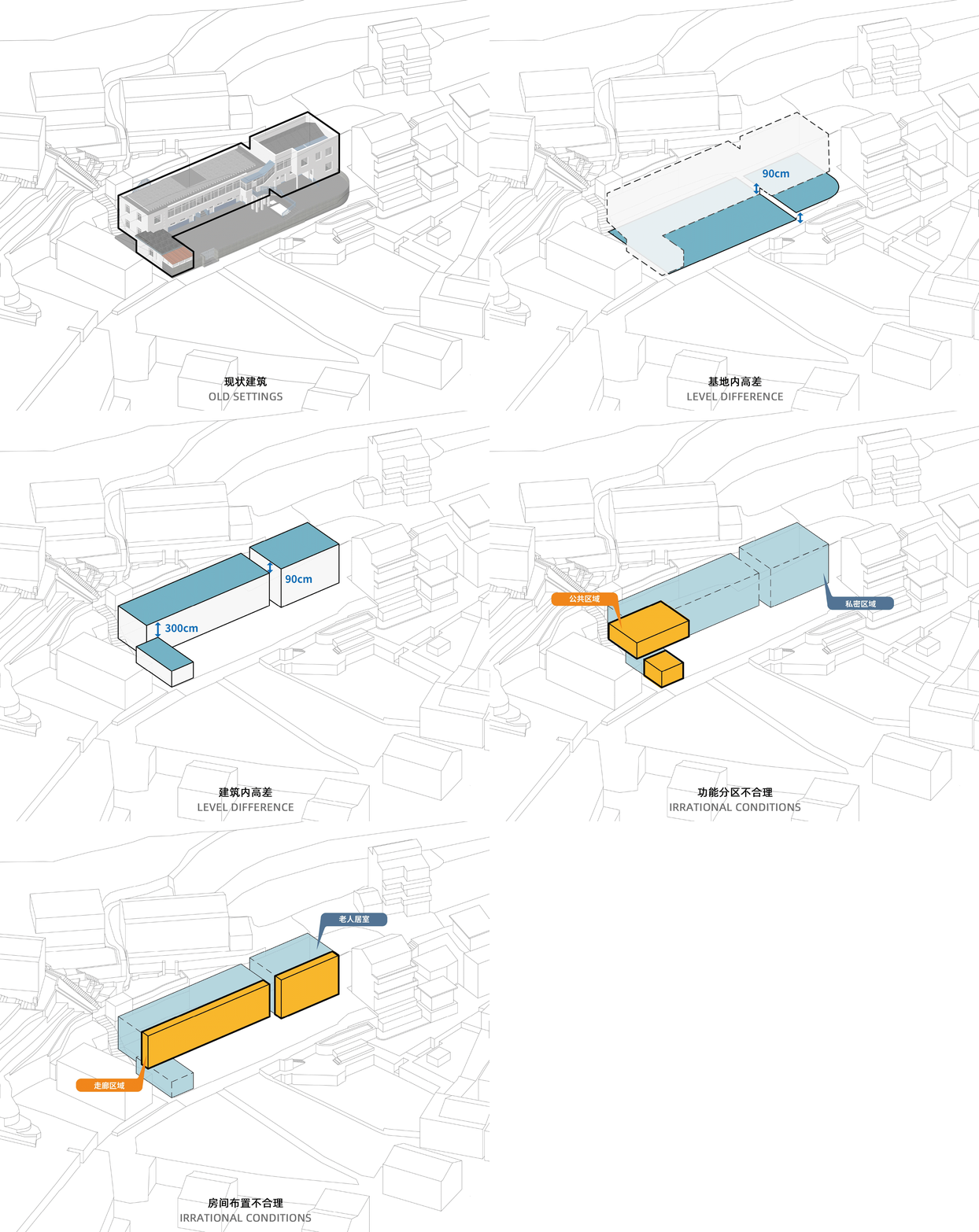
Analysis of existing problems
During construction, the team encountered logistical challenges. Chaishan Island has limited daily shipping, making timely waste removal impossible, so debris had to be temporarily stored on the island. Transporting materials like cement, gravel, and steel was also difficult due to narrow, aging roads; over 3,000 tons of materials had to be delivered in small batches.
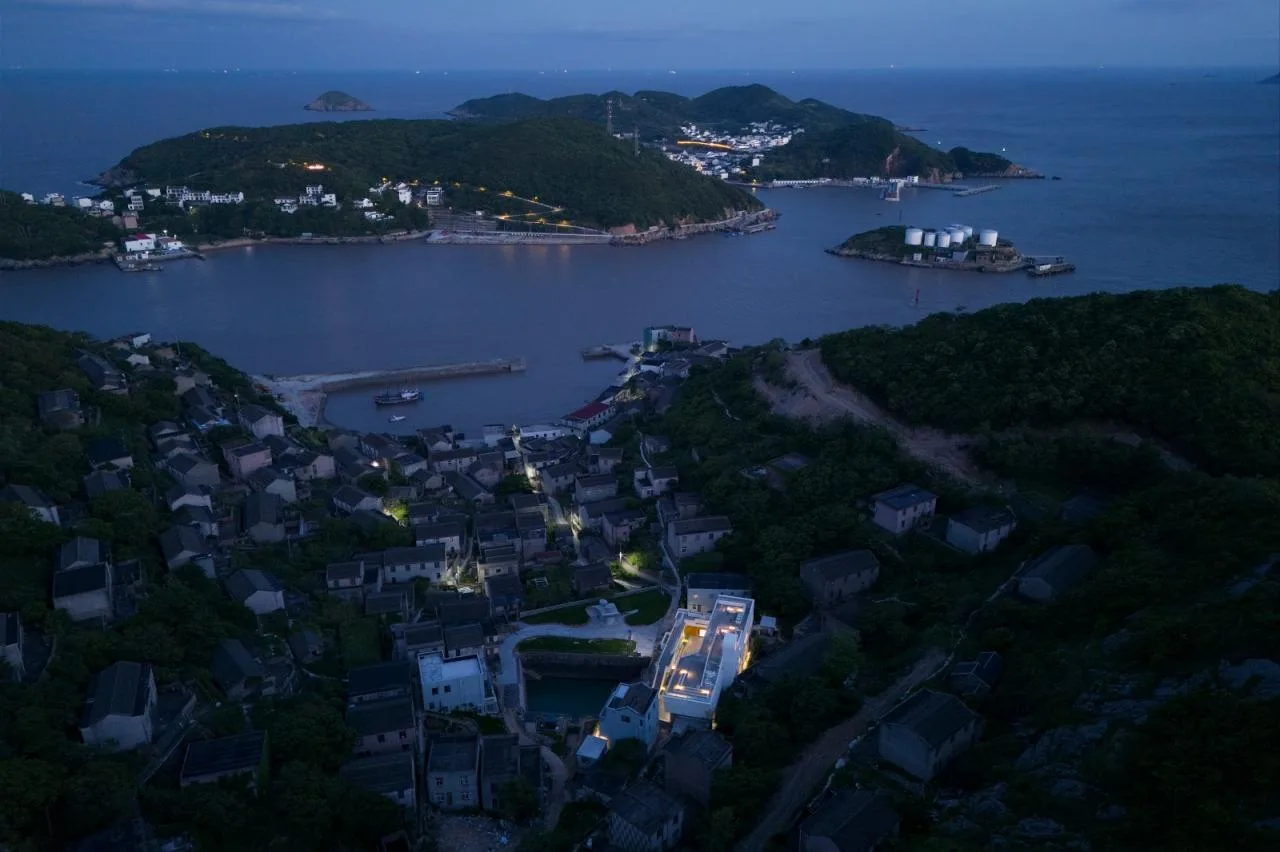
To overcome this, we collaborated with the owner to build a circular road linking the dock, integrating it into the island’s future comprehensive development plan by connecting the mountaintop to various regions. Materials were centralized at the mountaintop and then gradually distributed downward to their final locations.
02 Reawakening Memories
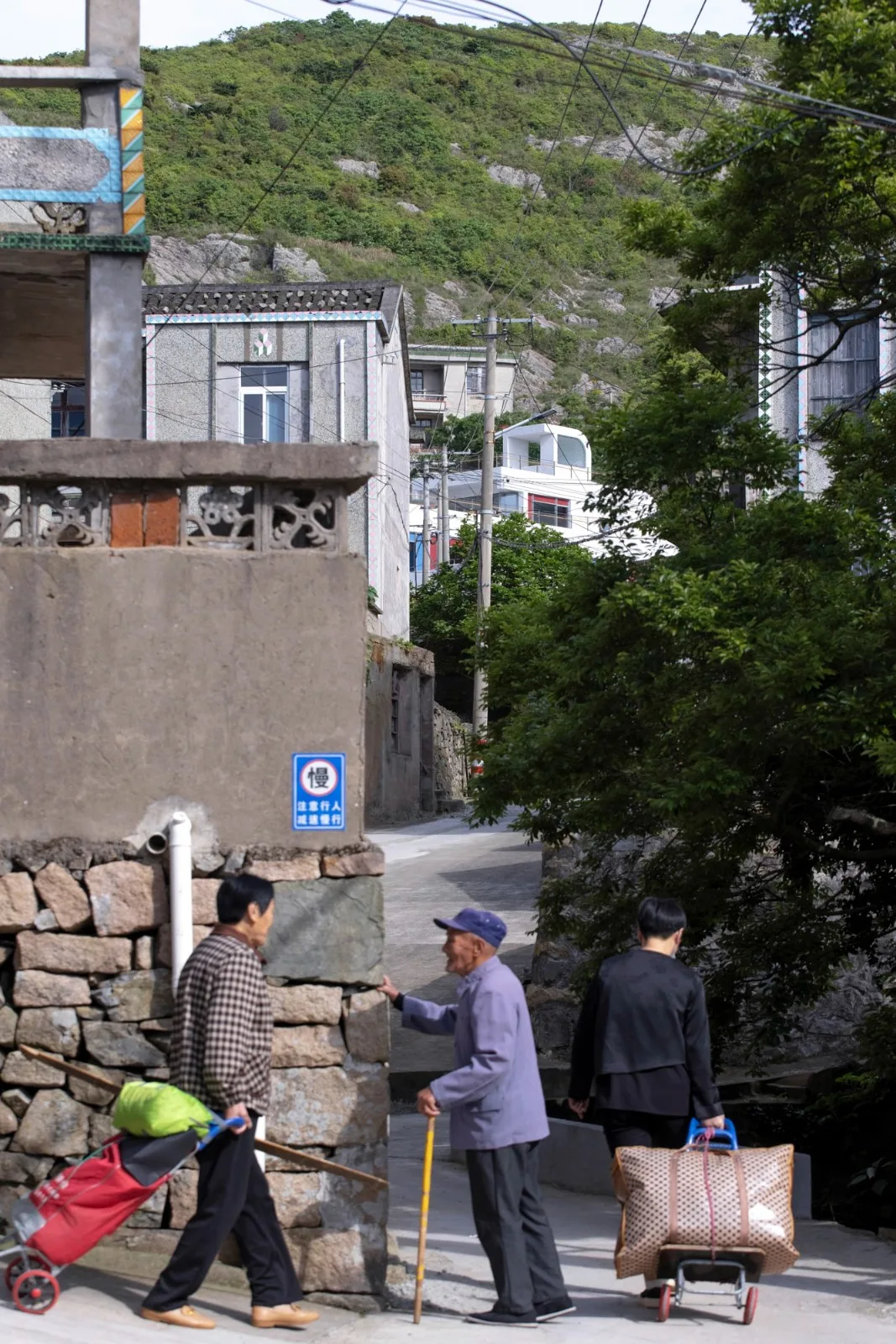
Chaishan Island remains naturally pristine, with quaint houses nestled between mountains and sea. Early in the design process, Meng Fanhao and his team immersed themselves in the island community, engaging closely with the elderly to understand their needs and listen to their stories. Most are former fishermen who depended on the sea. Reflecting on their youth, their once dimmed eyes now shine with revived memories.
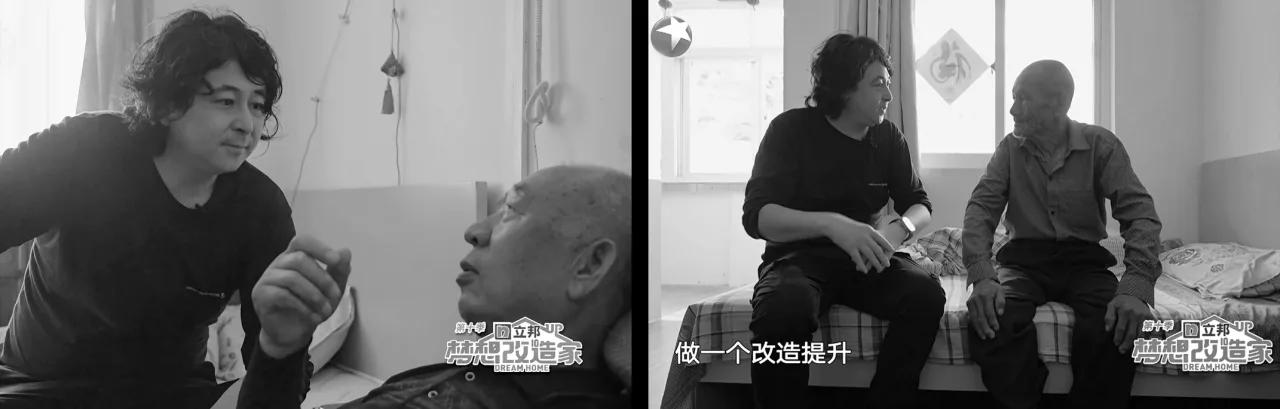
Listening to the needs of the elderly left behind – Screenshot from “Dream Reformer”
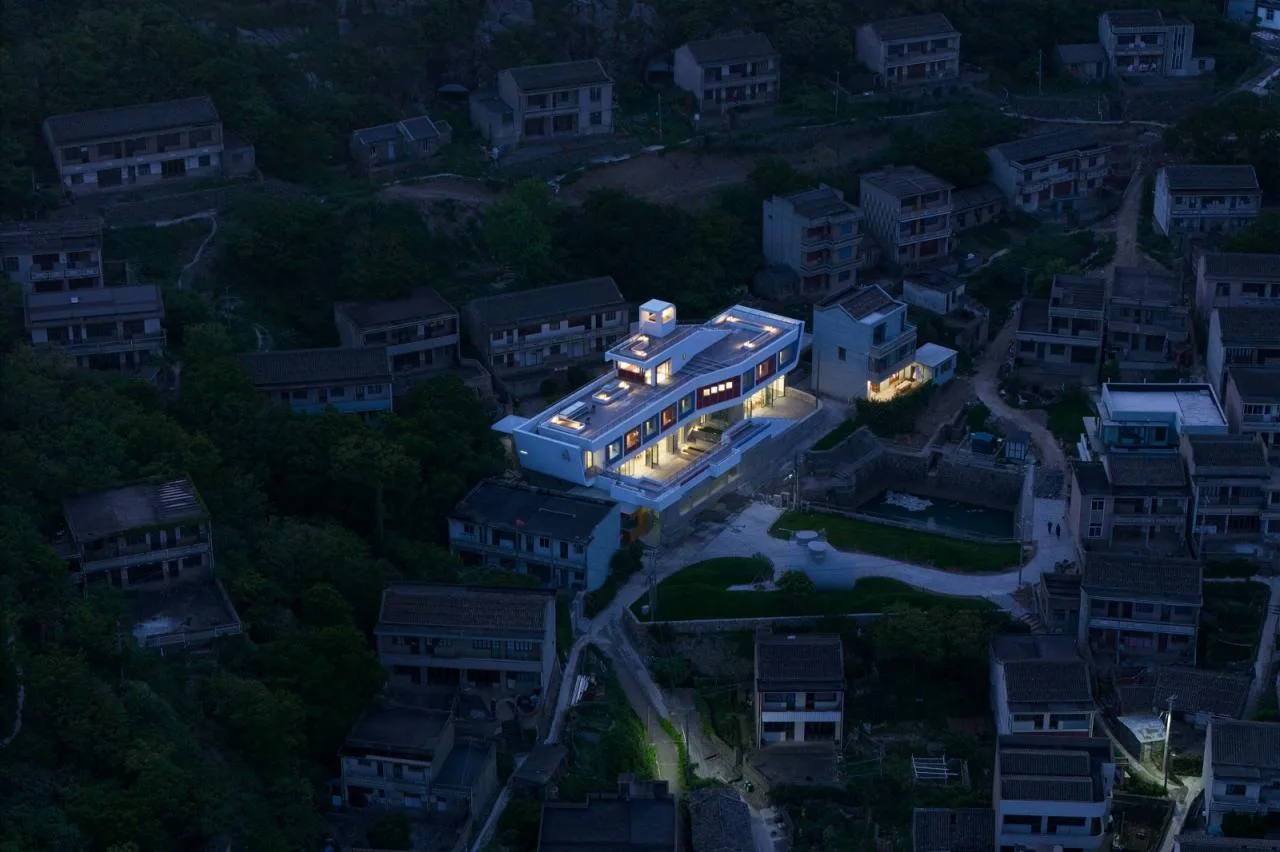
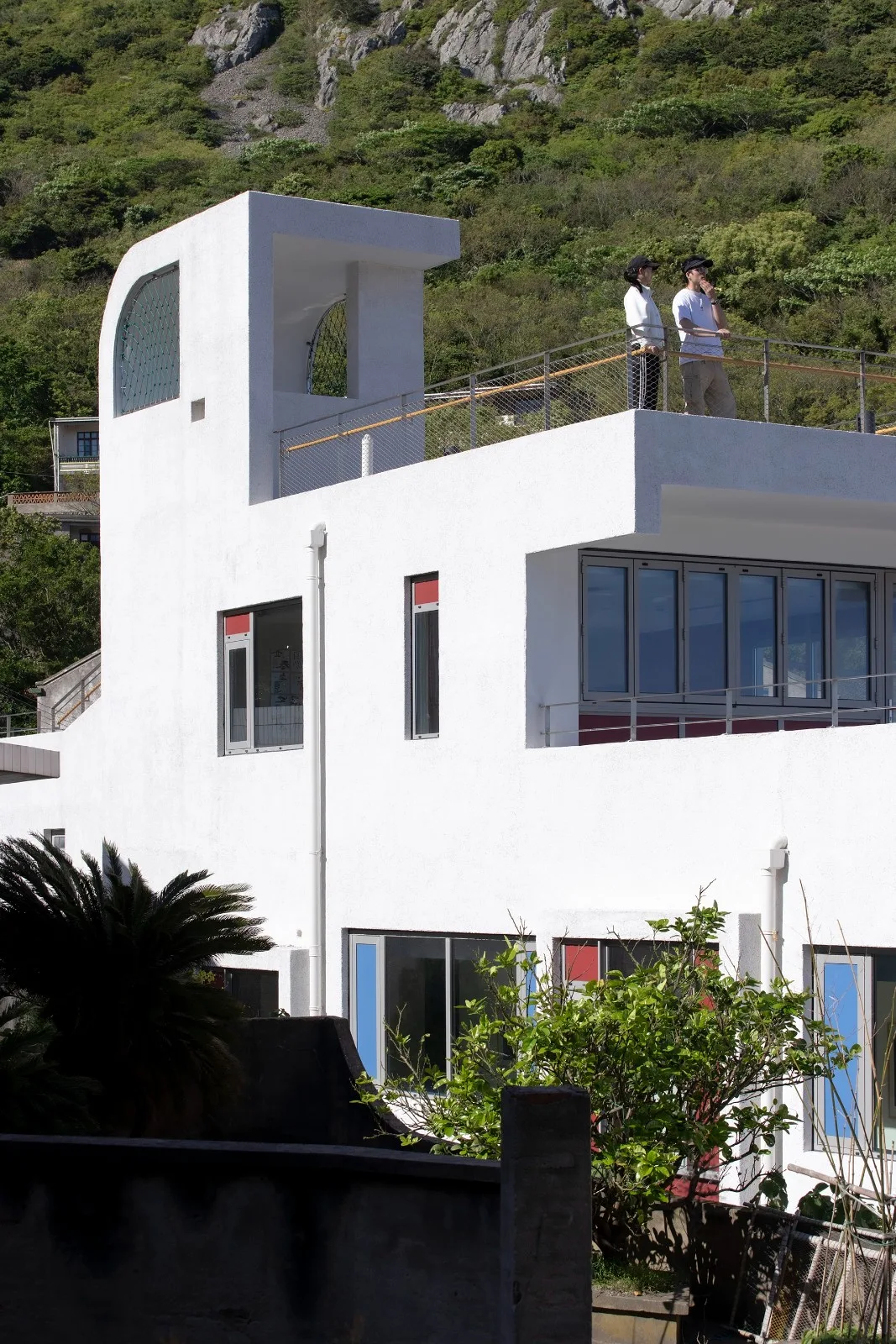
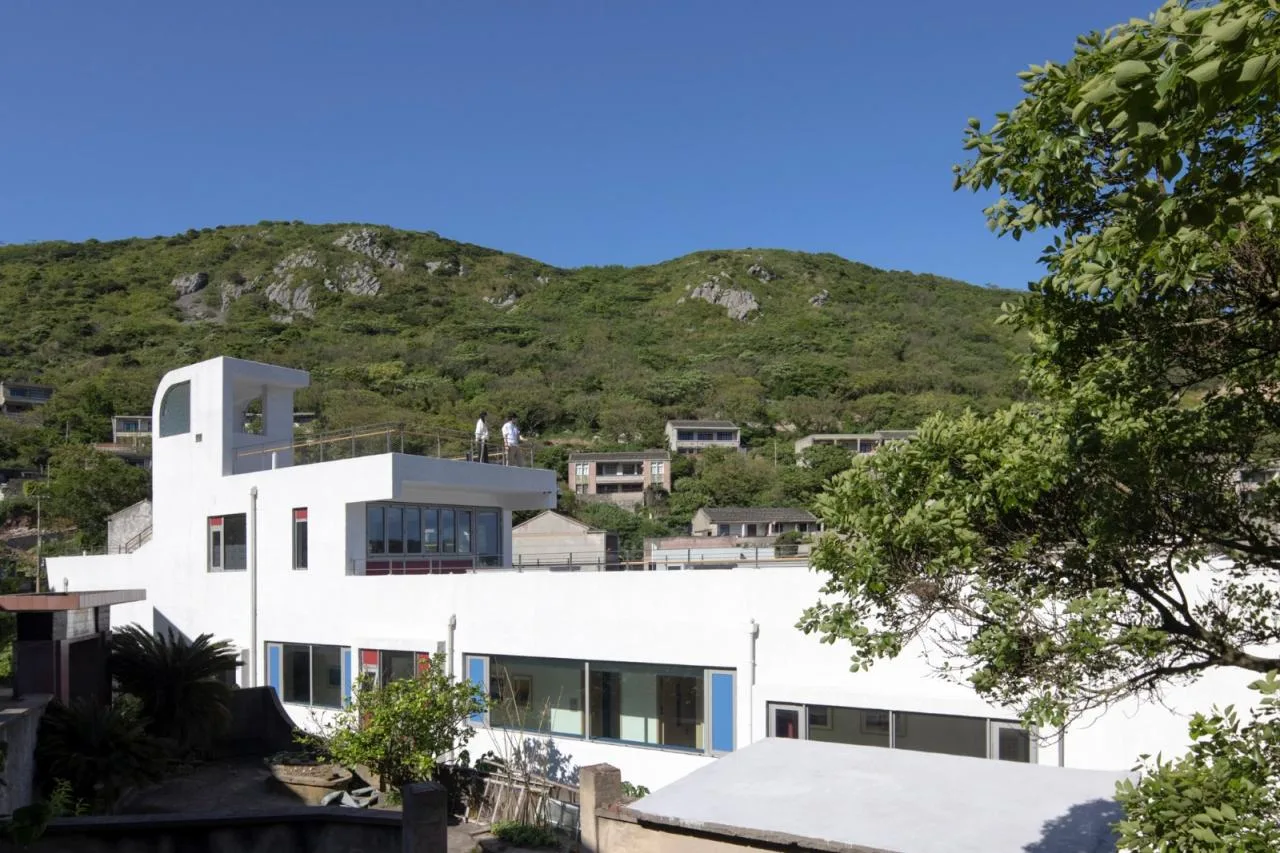
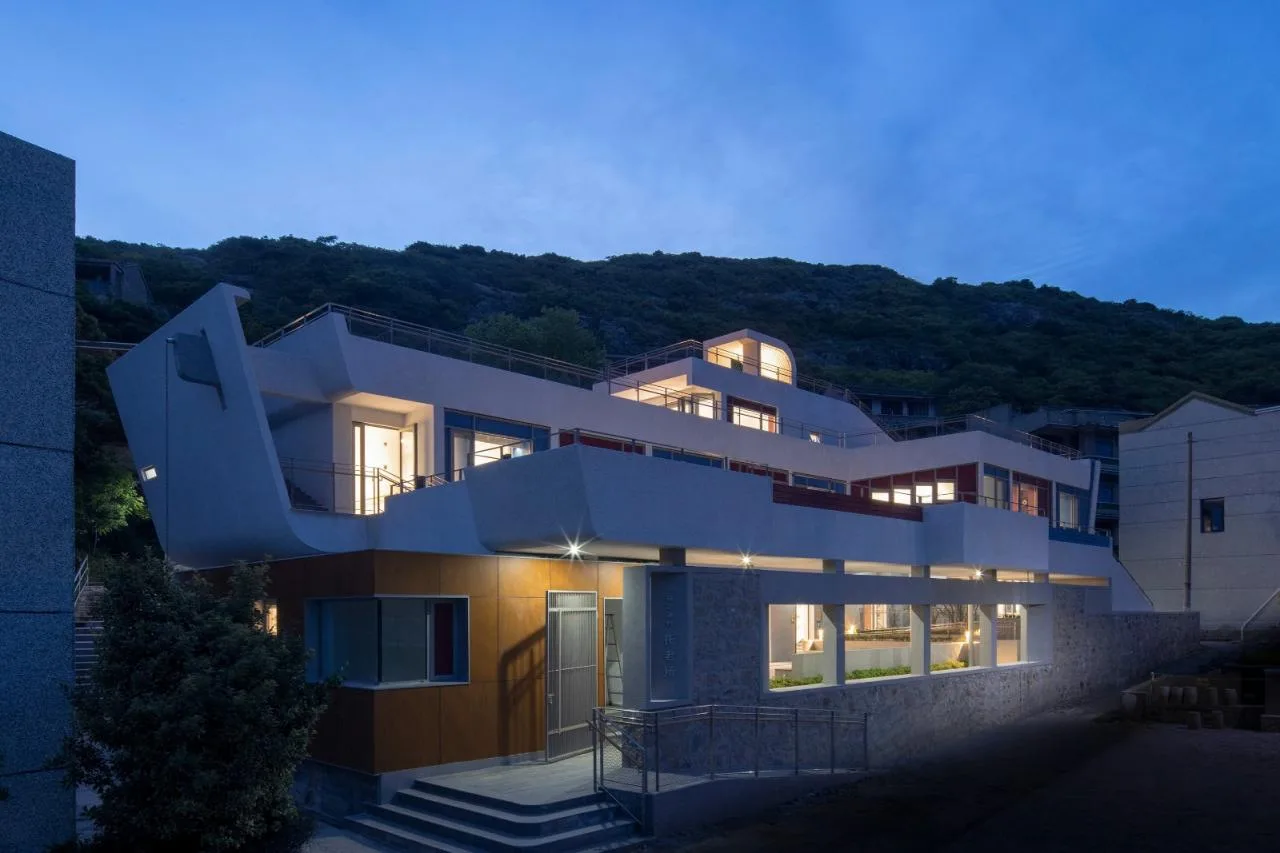
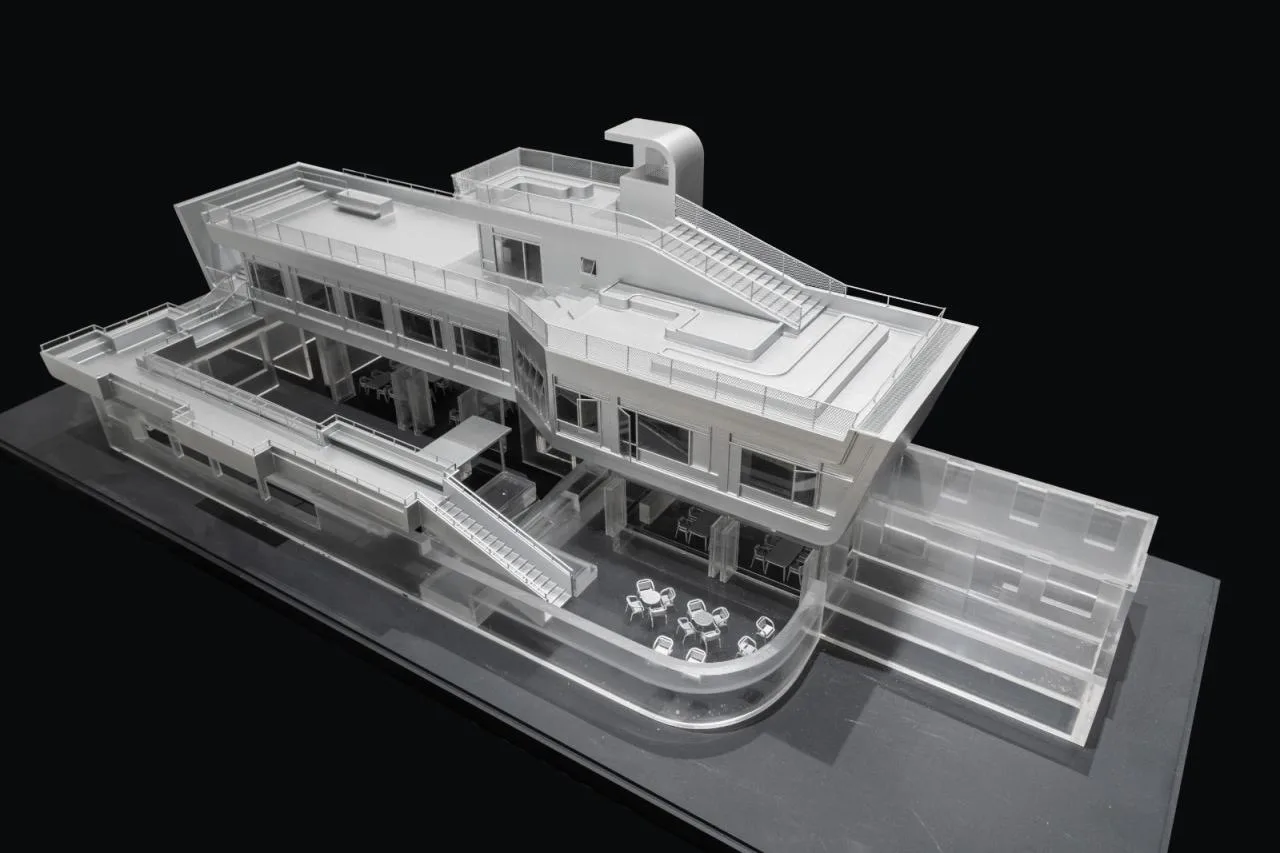
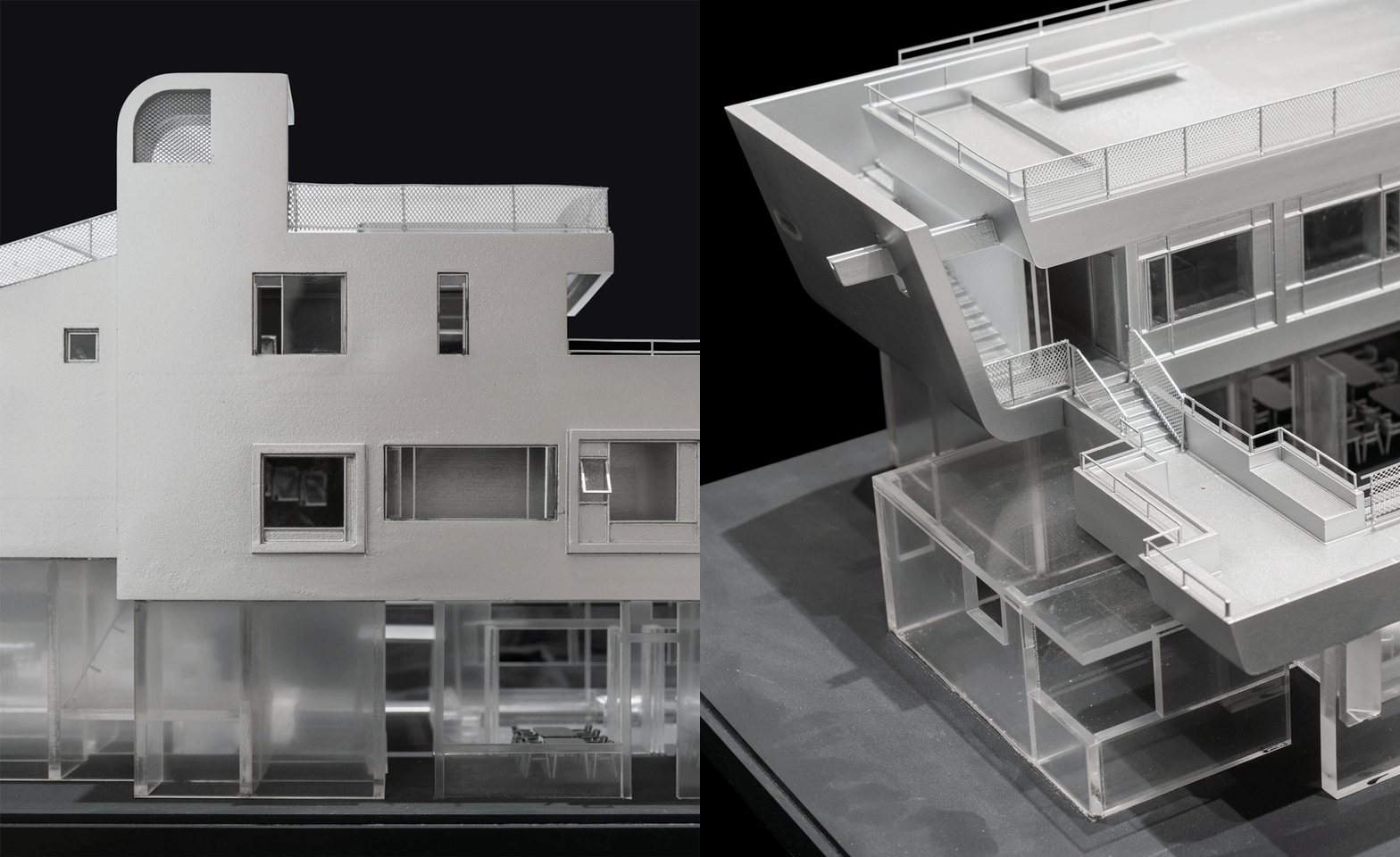
The daycare center’s design draws inspiration from fishing boats, featuring curved and overhanging shapes that give the impression of a boat floating on the island. This architectural metaphor awakens emotions and memories, telling the story of Chaishan Island through design.
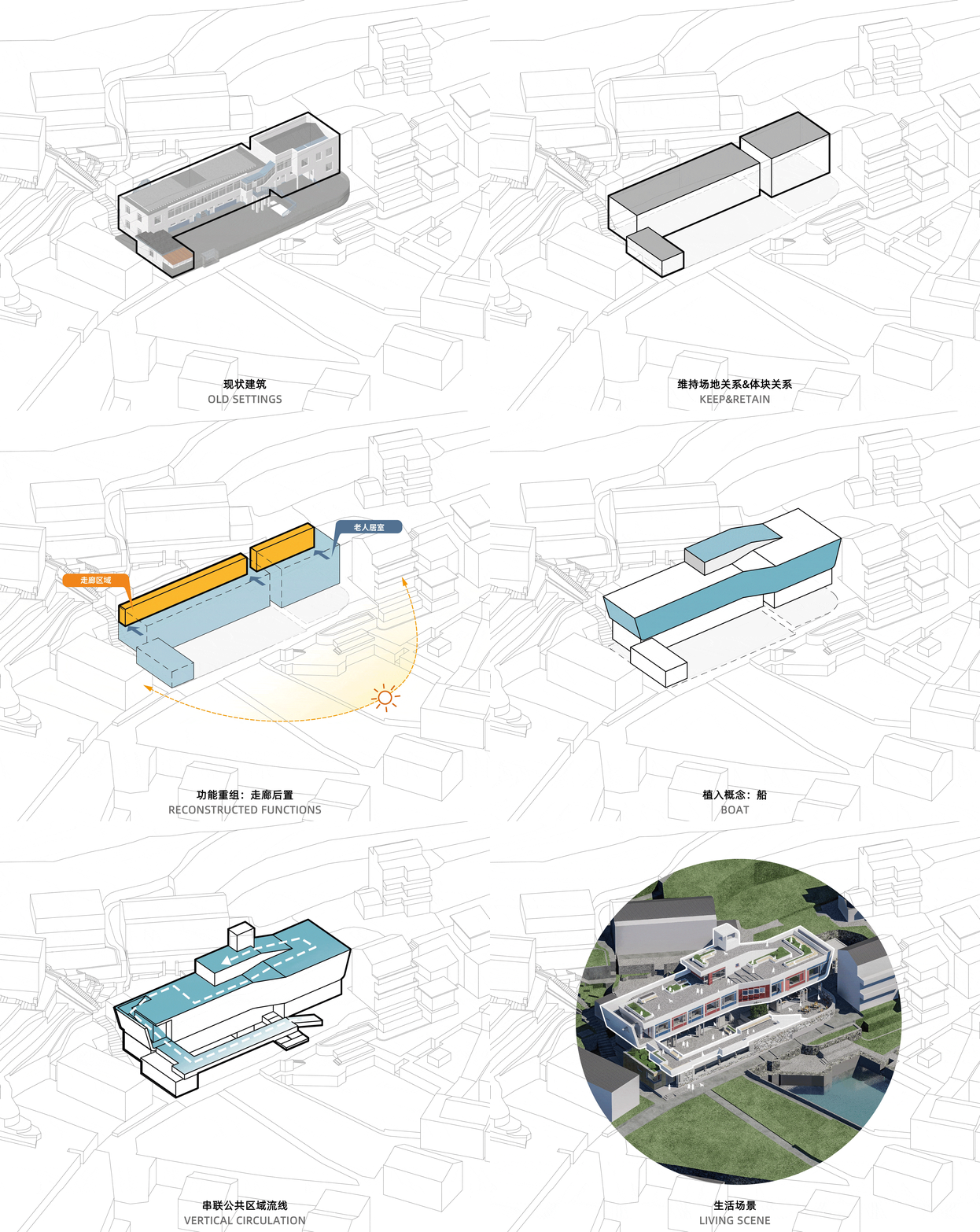
△ Generational analysis
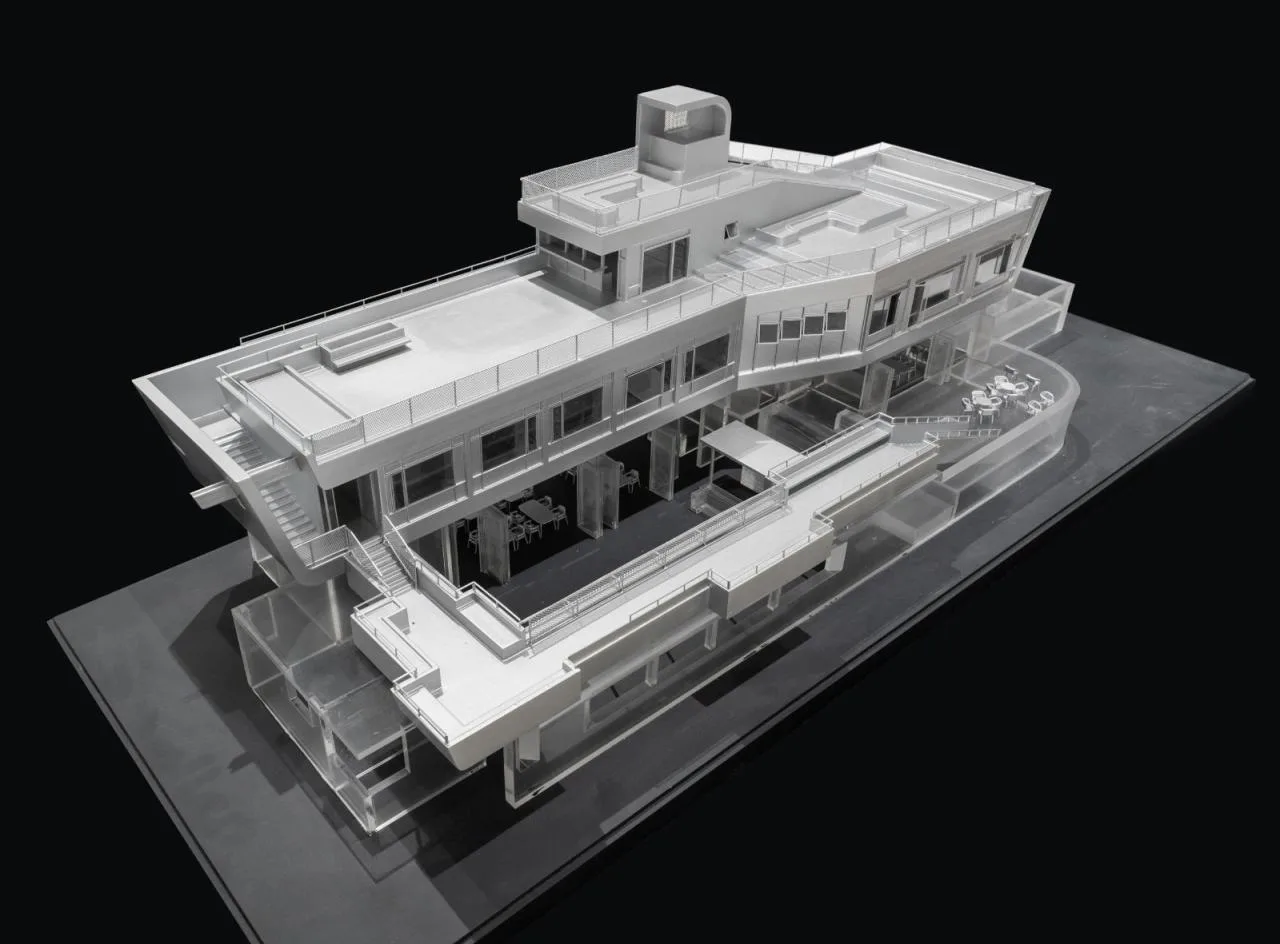
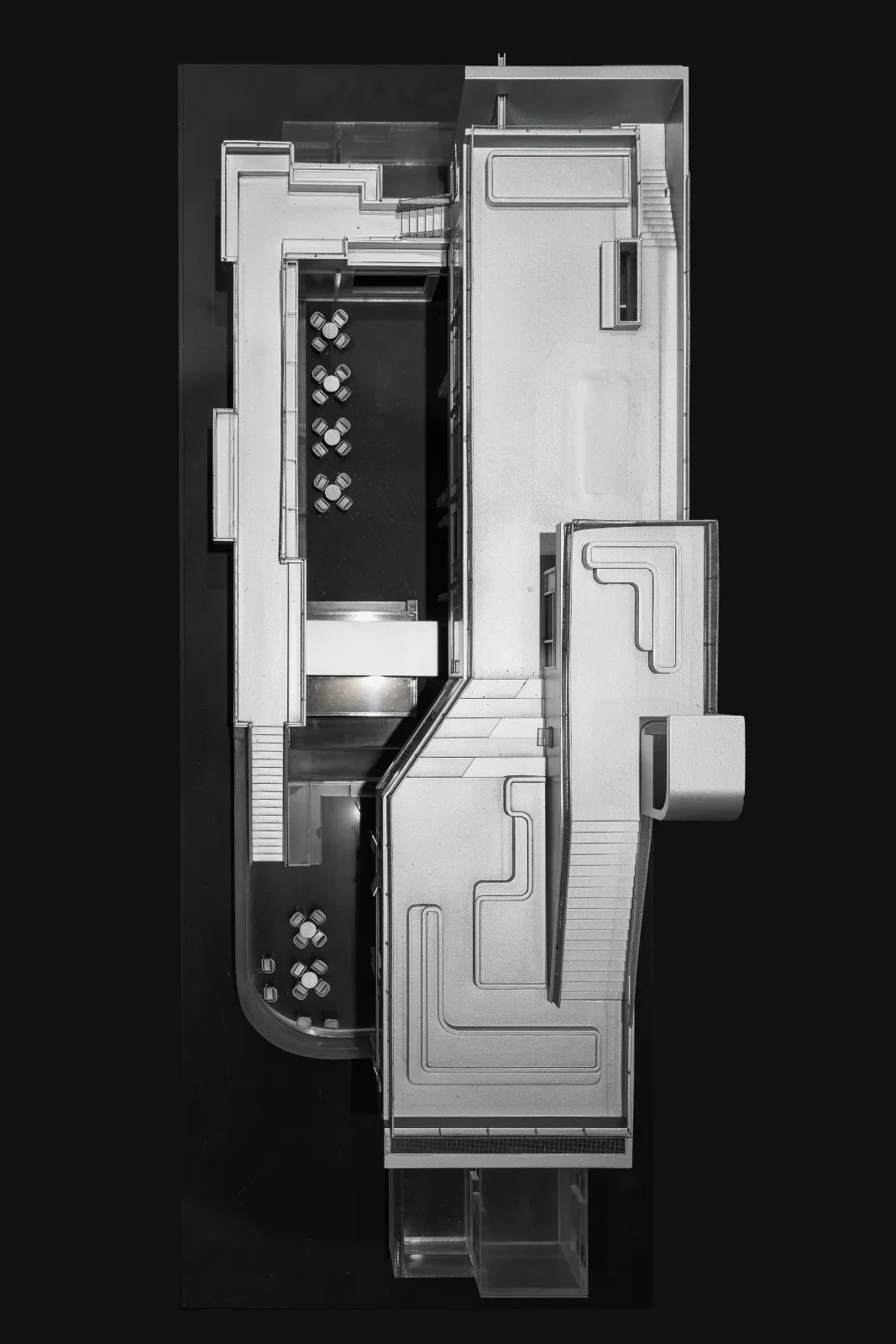
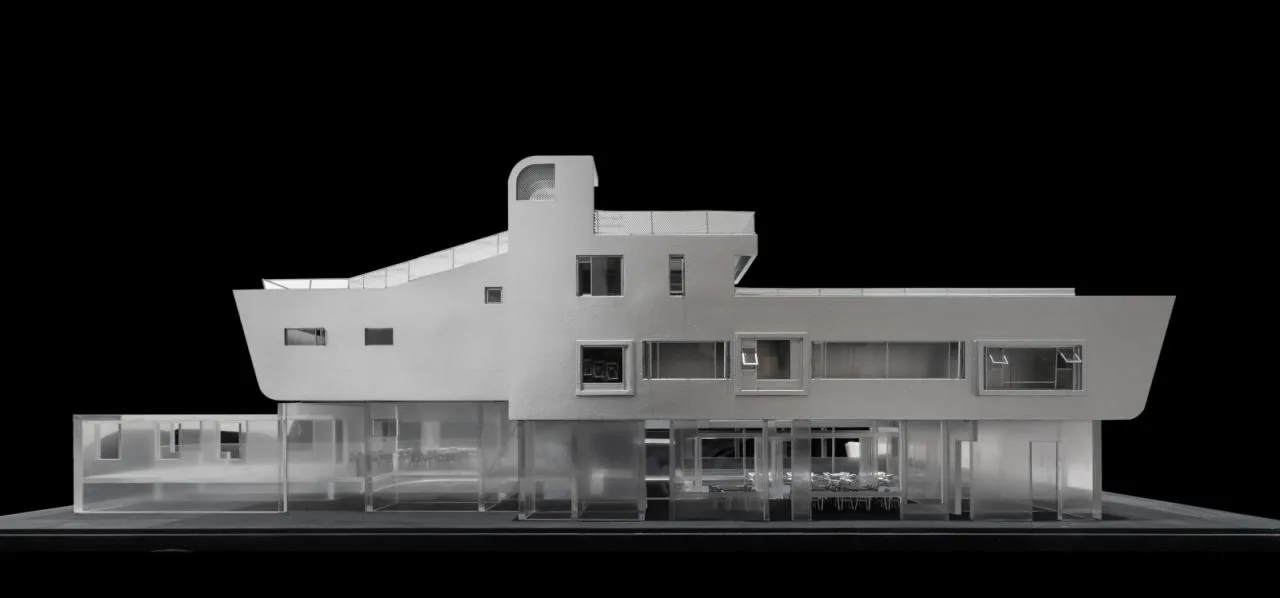
△ Model photo
03 Maximizing Public Space & 3D Design
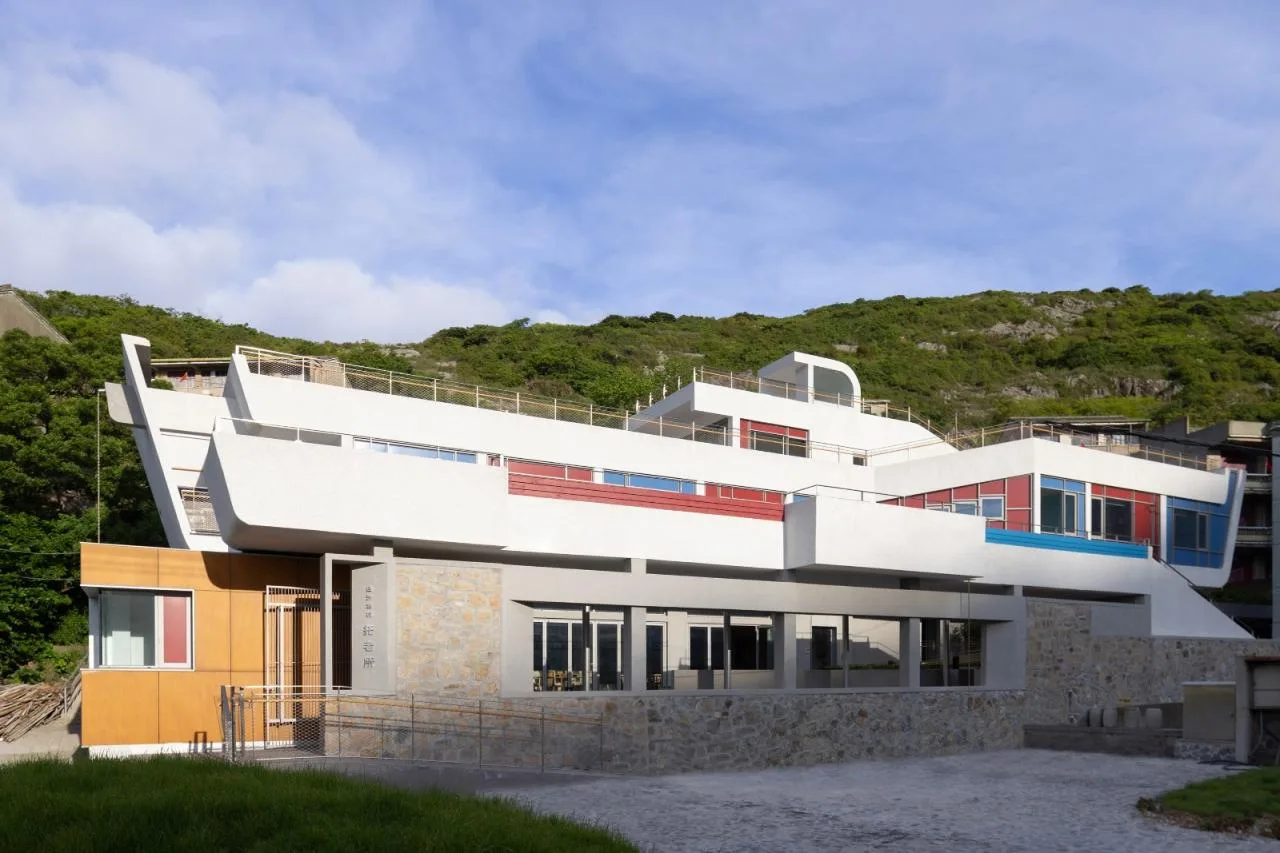
Prior to renovation, only four elderly residents lived in the daycare center, while others remained at home. As their mobility decreases with age, the need for communal public spaces grows to support daily activities, culture, and social interaction. This renovation strives to reconnect the elderly with their community and alleviate loneliness.
Given the island’s limited space, the entire first floor is dedicated to public use, housing end-of-life care rooms, shared dining areas, kitchens, and multifunctional halls accessible to all island residents. The second floor is reserved for elderly living quarters.
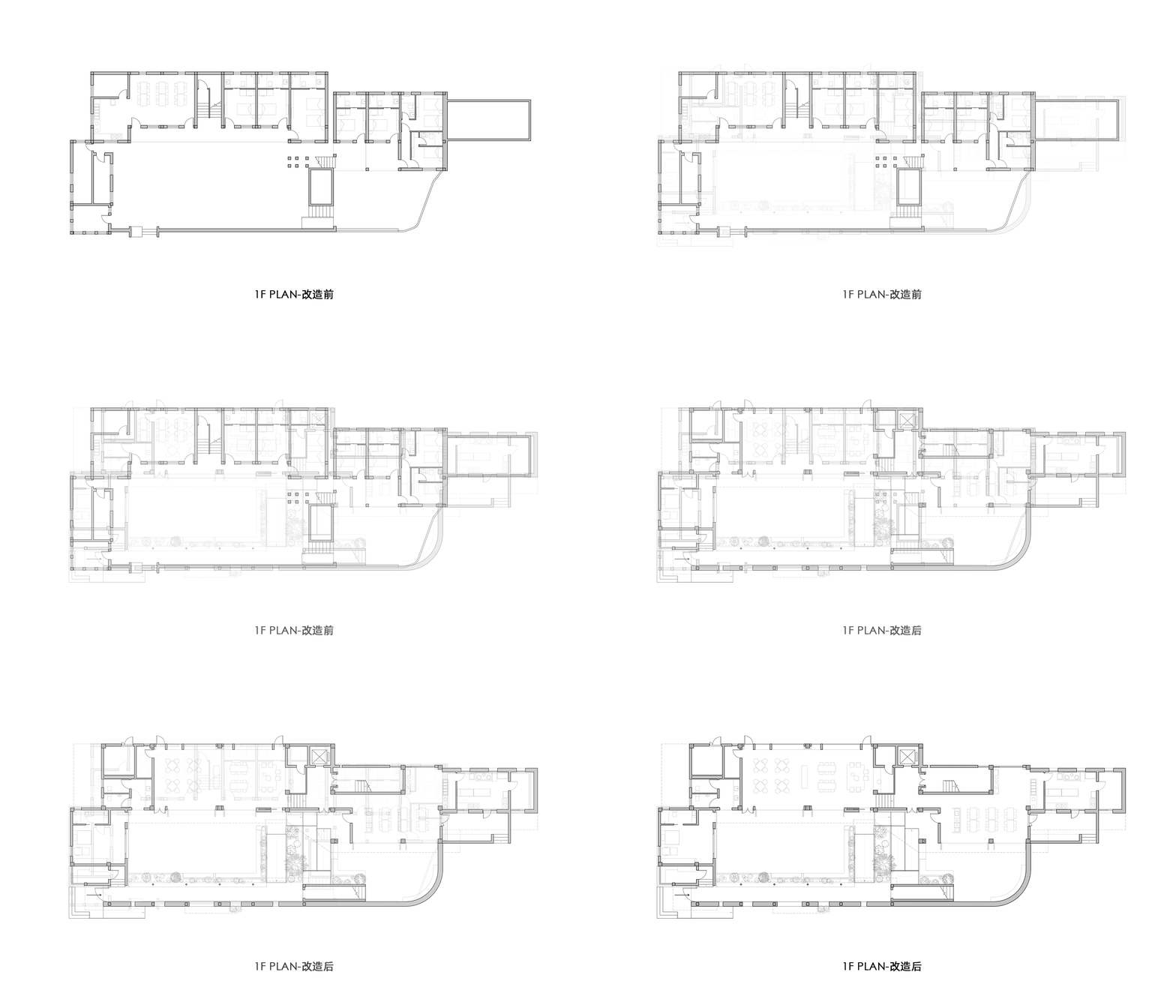
△ First floor plan comparison before and after renovation
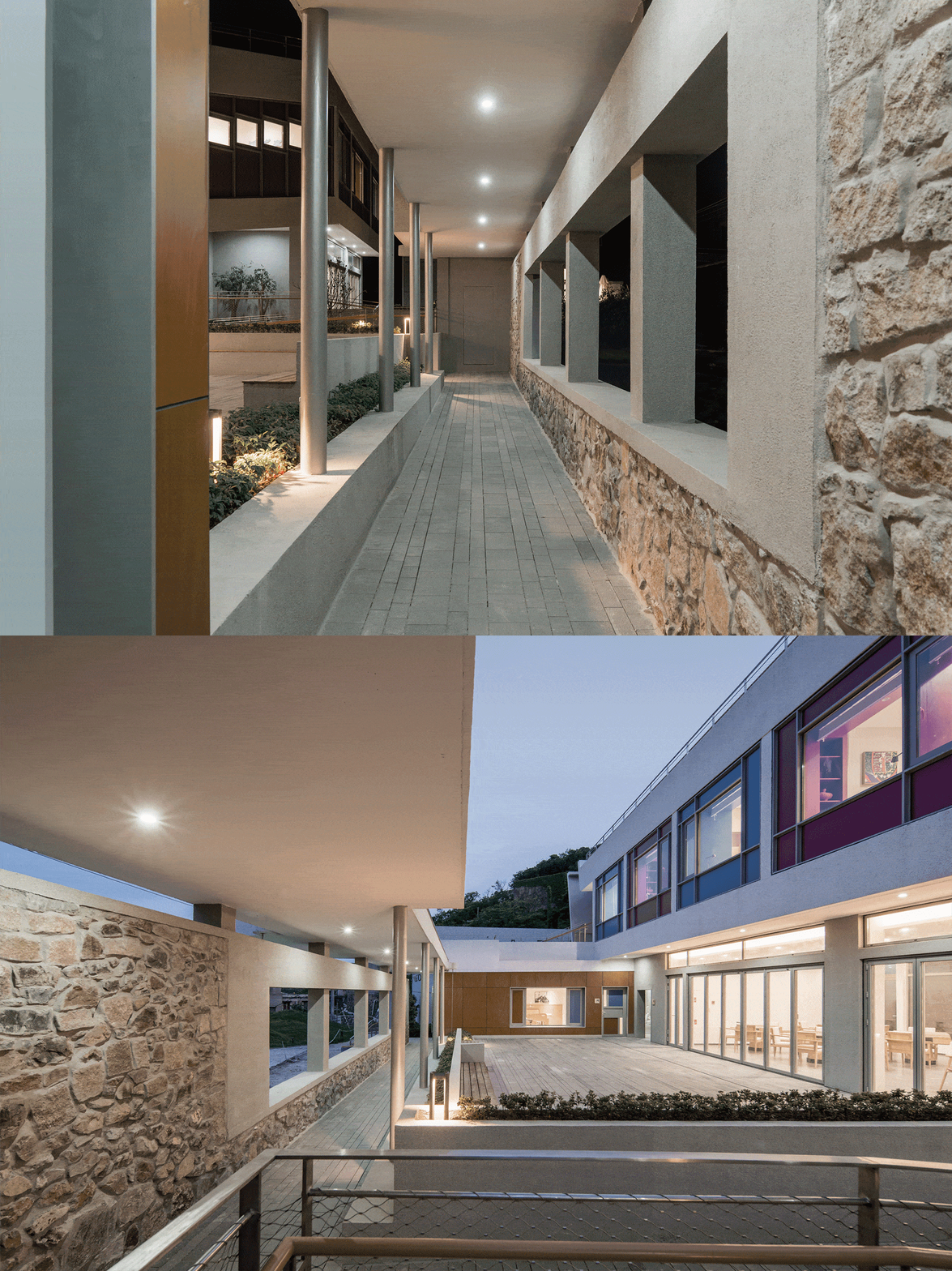
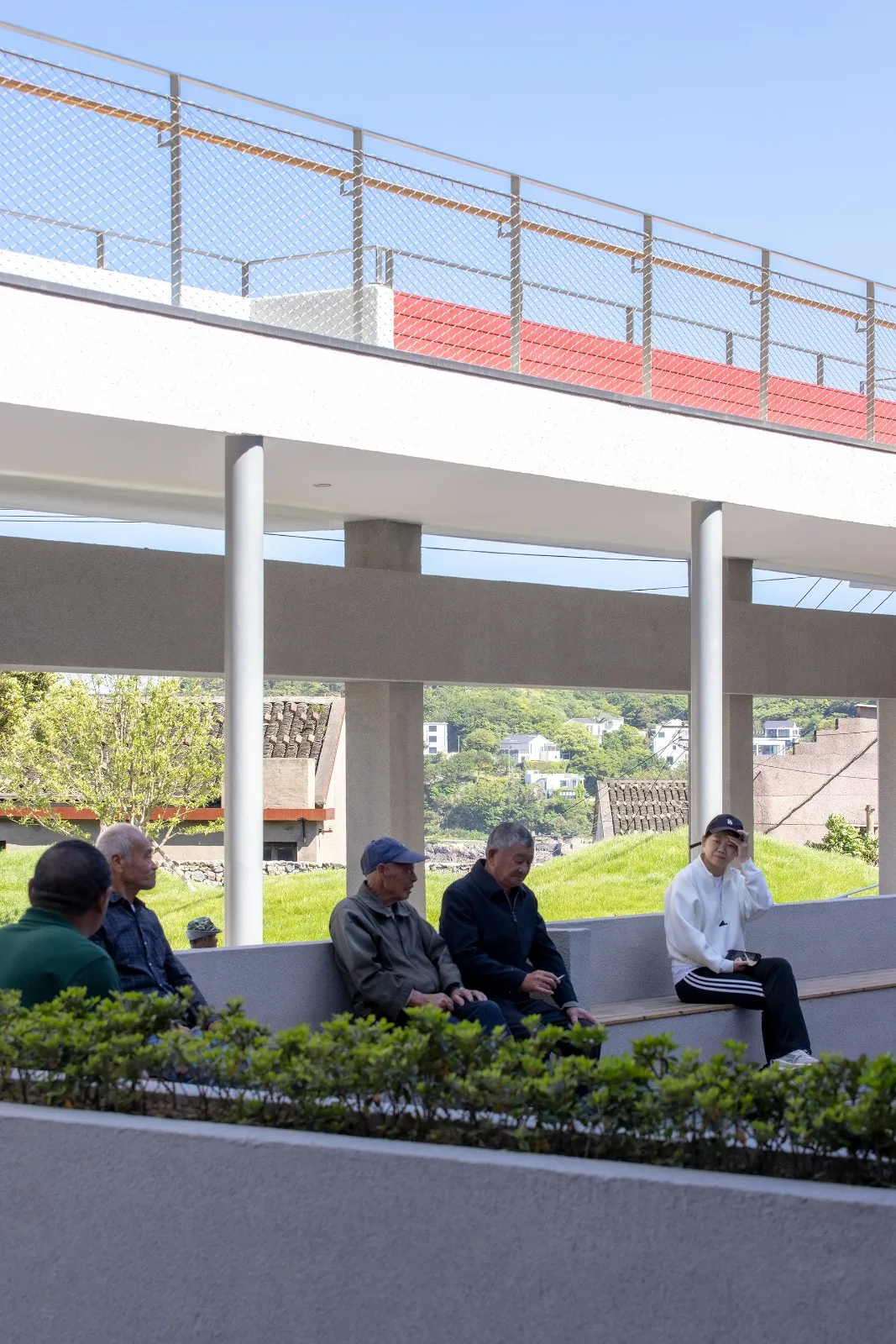
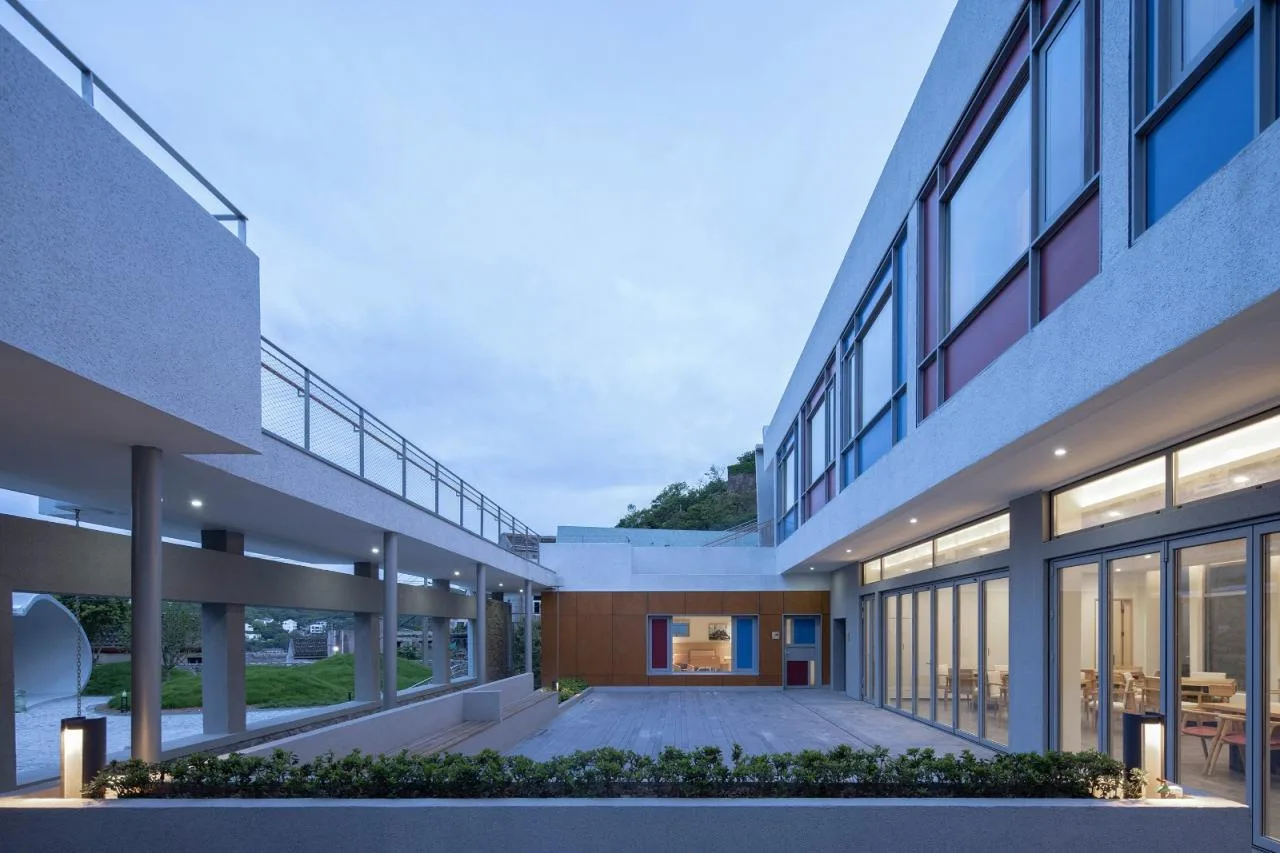
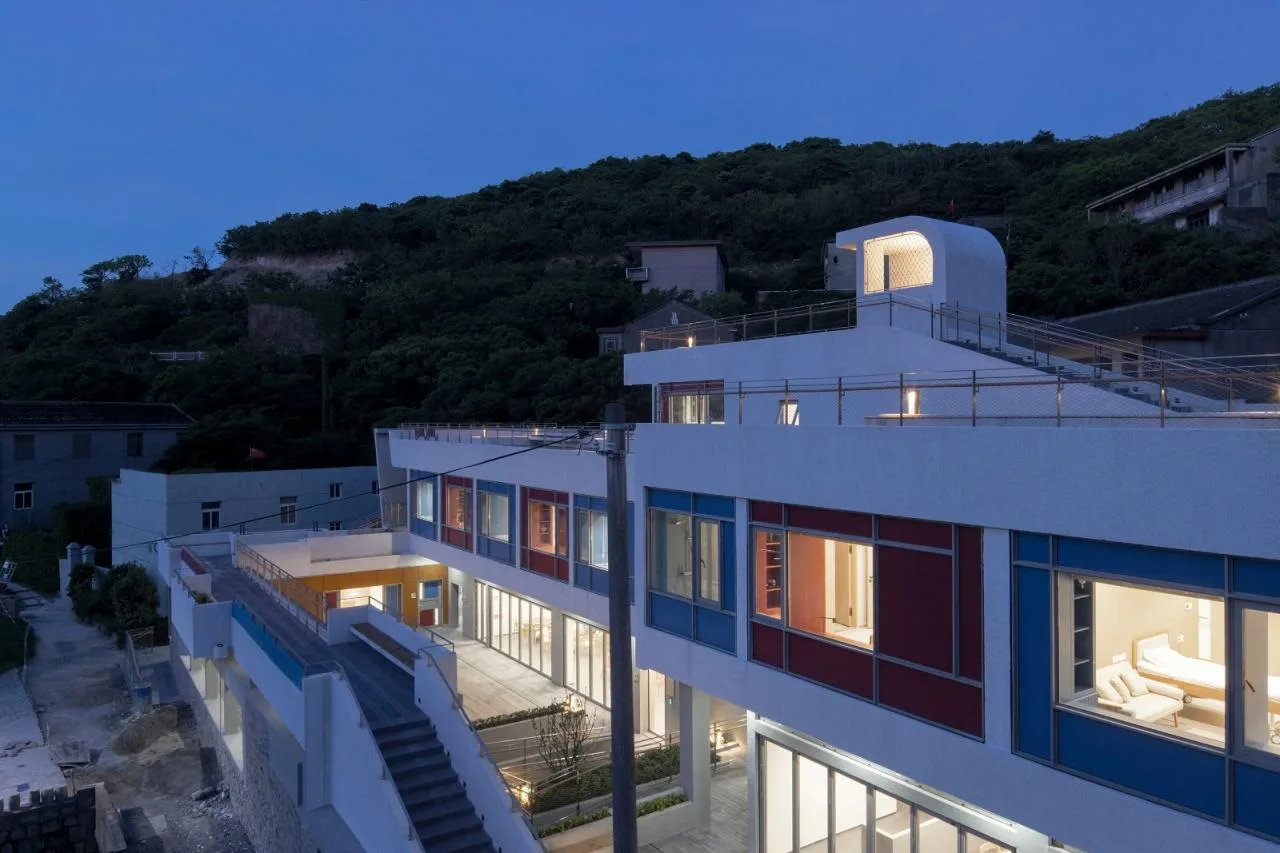
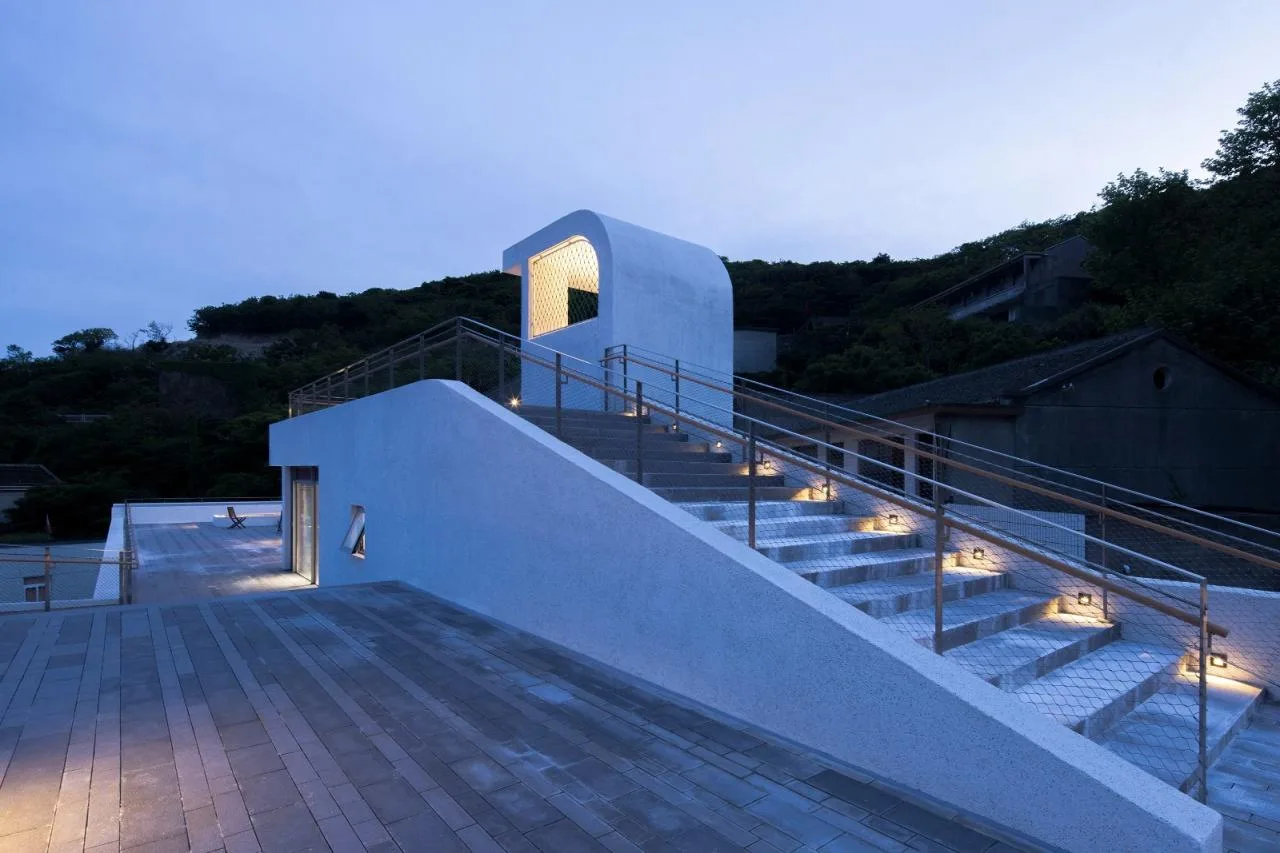
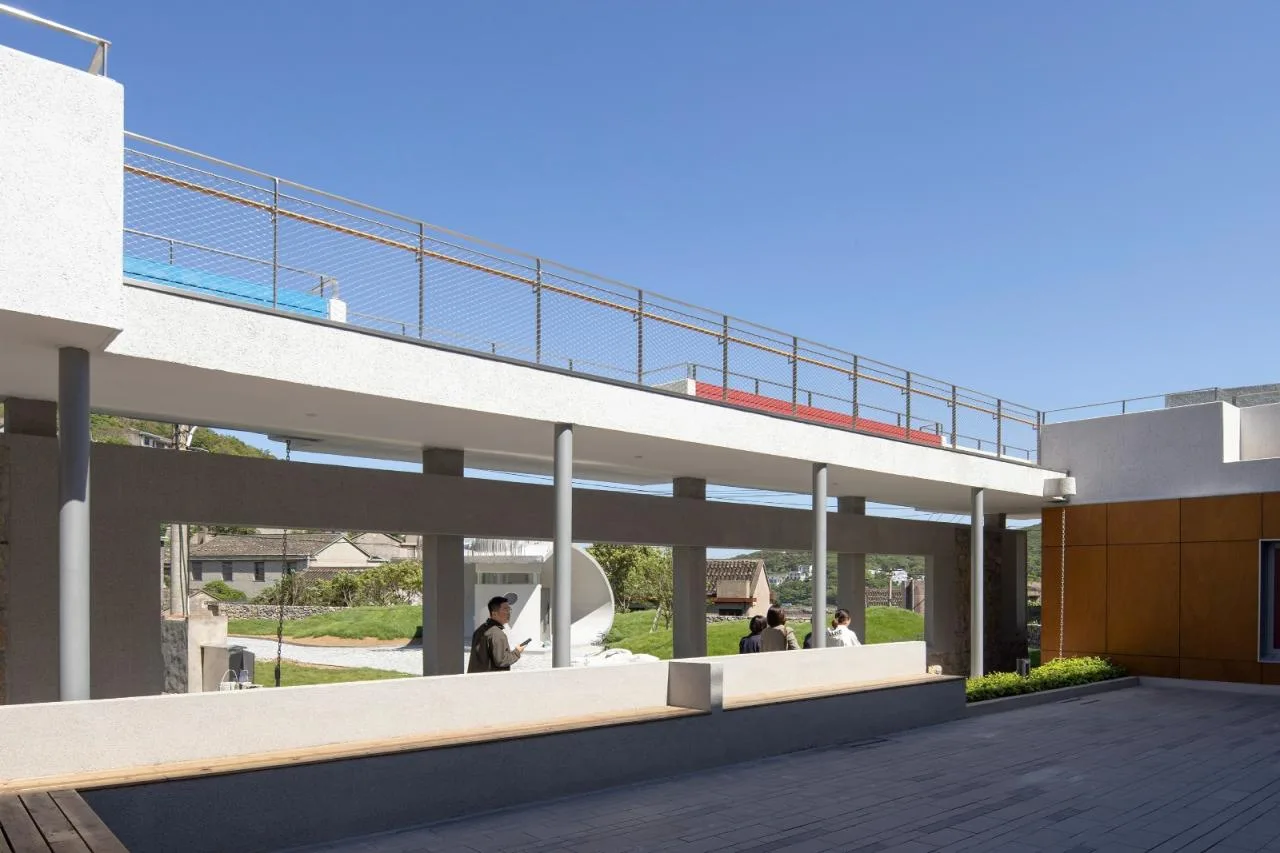
A multi-level rooftop terrace links the first-floor courtyard with terraces via ramps. Flower beds and seating areas separate flow and space, providing generous outdoor activity and rest zones, maximizing the use of limited underground public areas.
Streamlining Circulation
The original Tuolao residence was built along the mountain, spanning a 1.2-meter height difference between the east and west plateaus. Simply raising the foundation on the west side would create nearly a two-meter step at the courtyard entrance, hindering accessibility. To resolve this, we preserved the original terrace and connected the lower western terrace to the external road for smooth traffic flow.
△ Front yard renovation
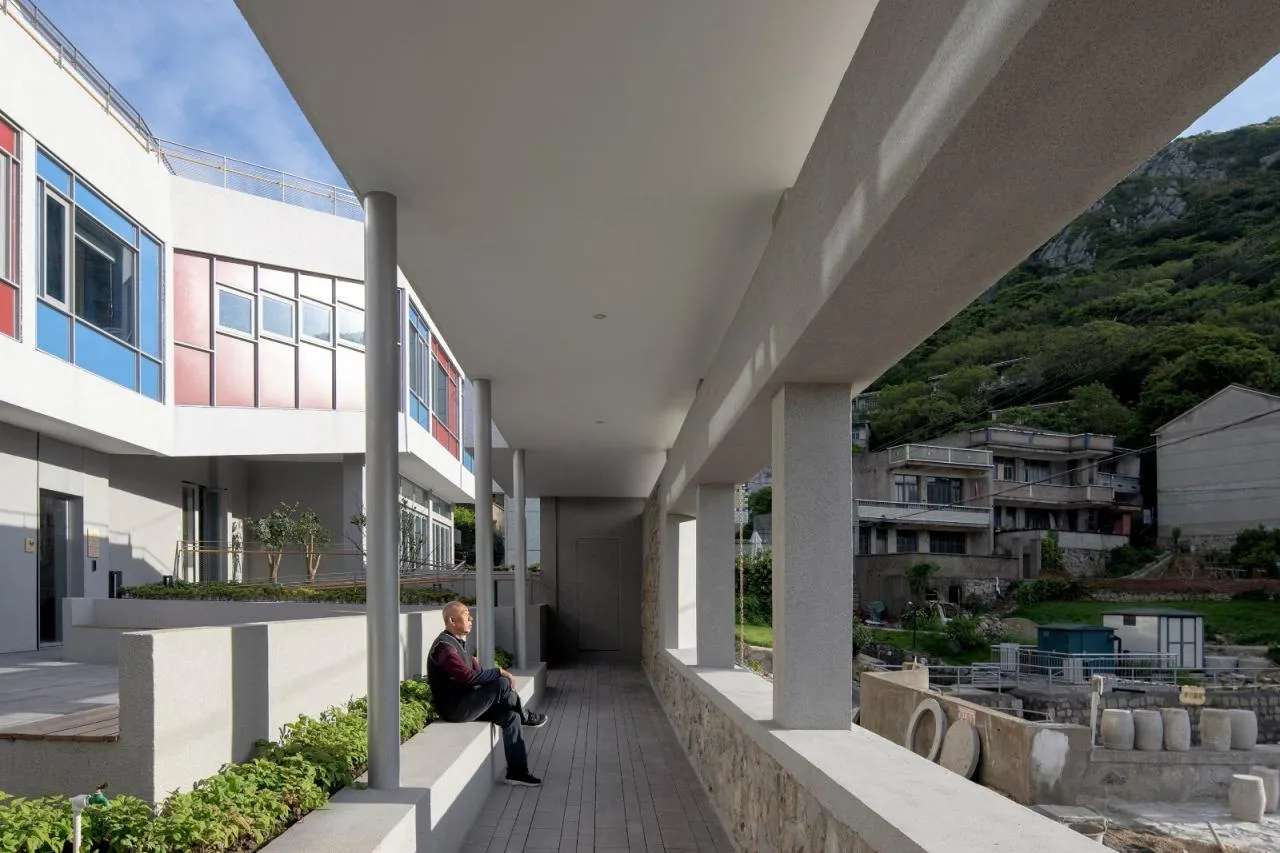
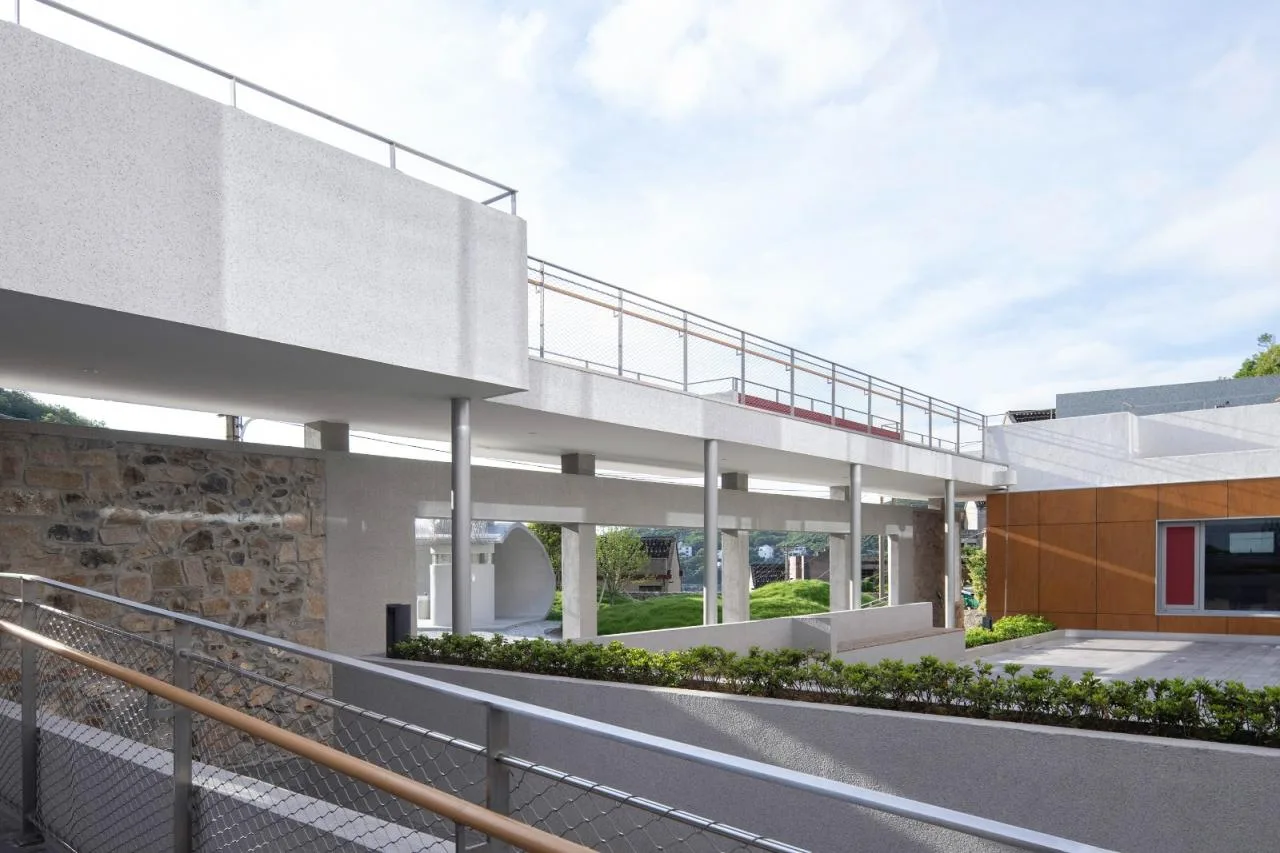
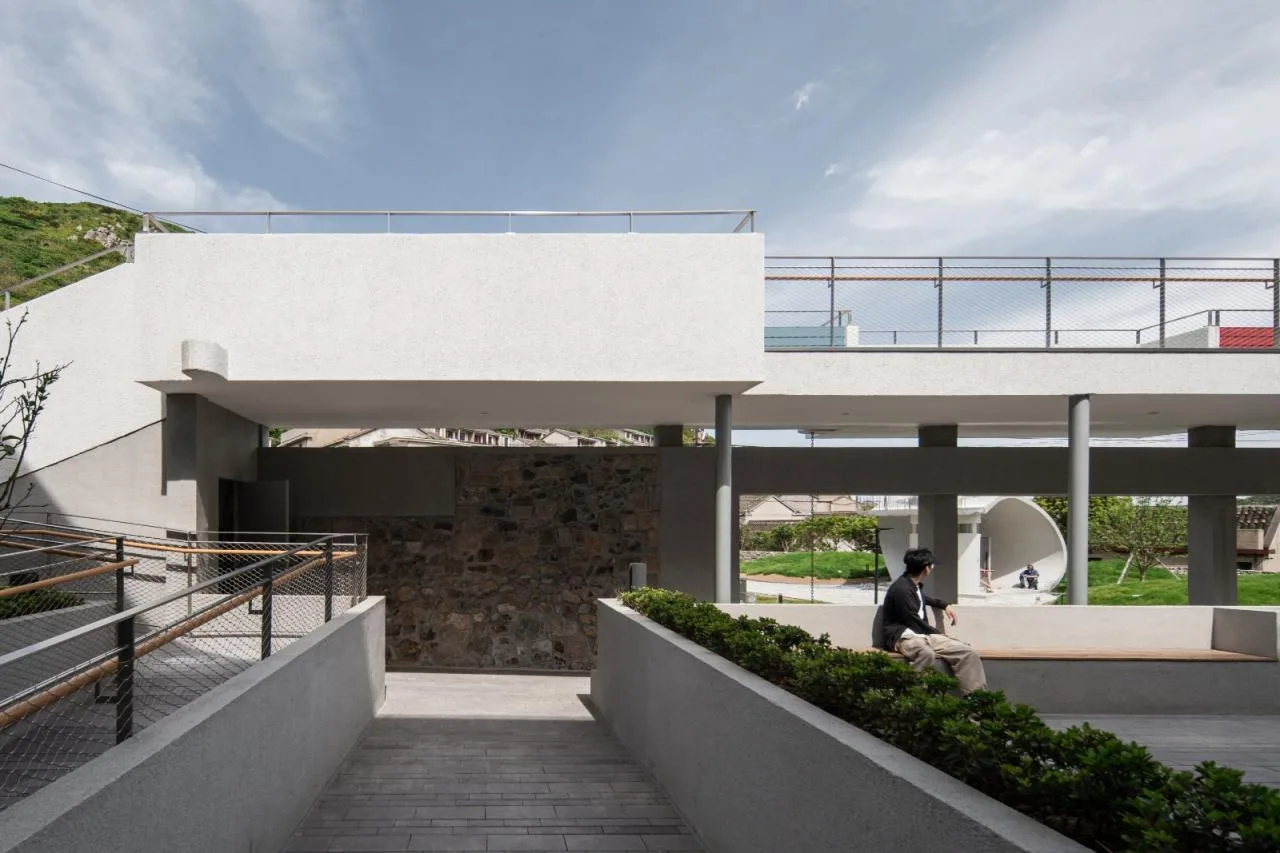
Though the original courtyard was open, it had limited functional use. We relocated the entrance, optimized foot traffic, and introduced a connecting corridor guiding visitors through the central courtyard before entering the interior. This design links the daycare center’s exterior and interior spaces.
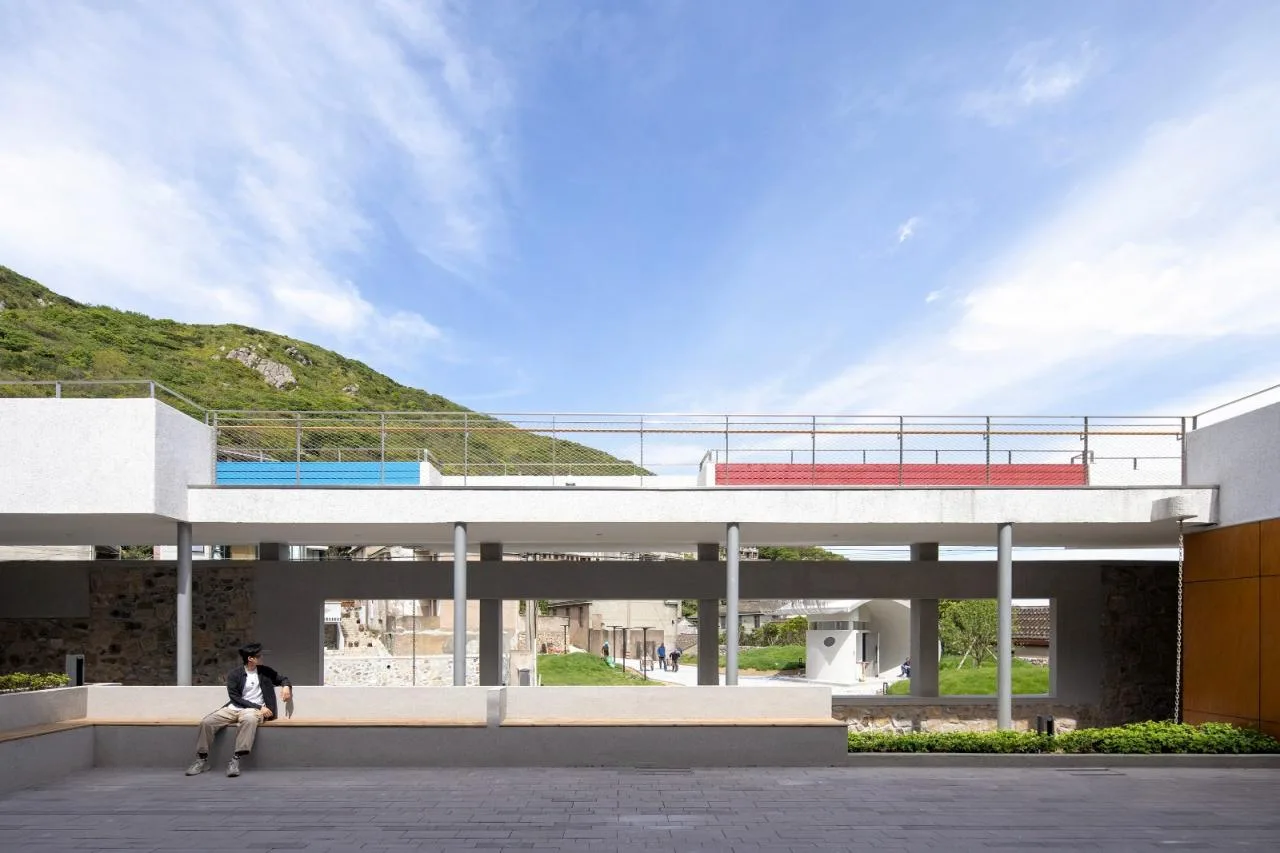
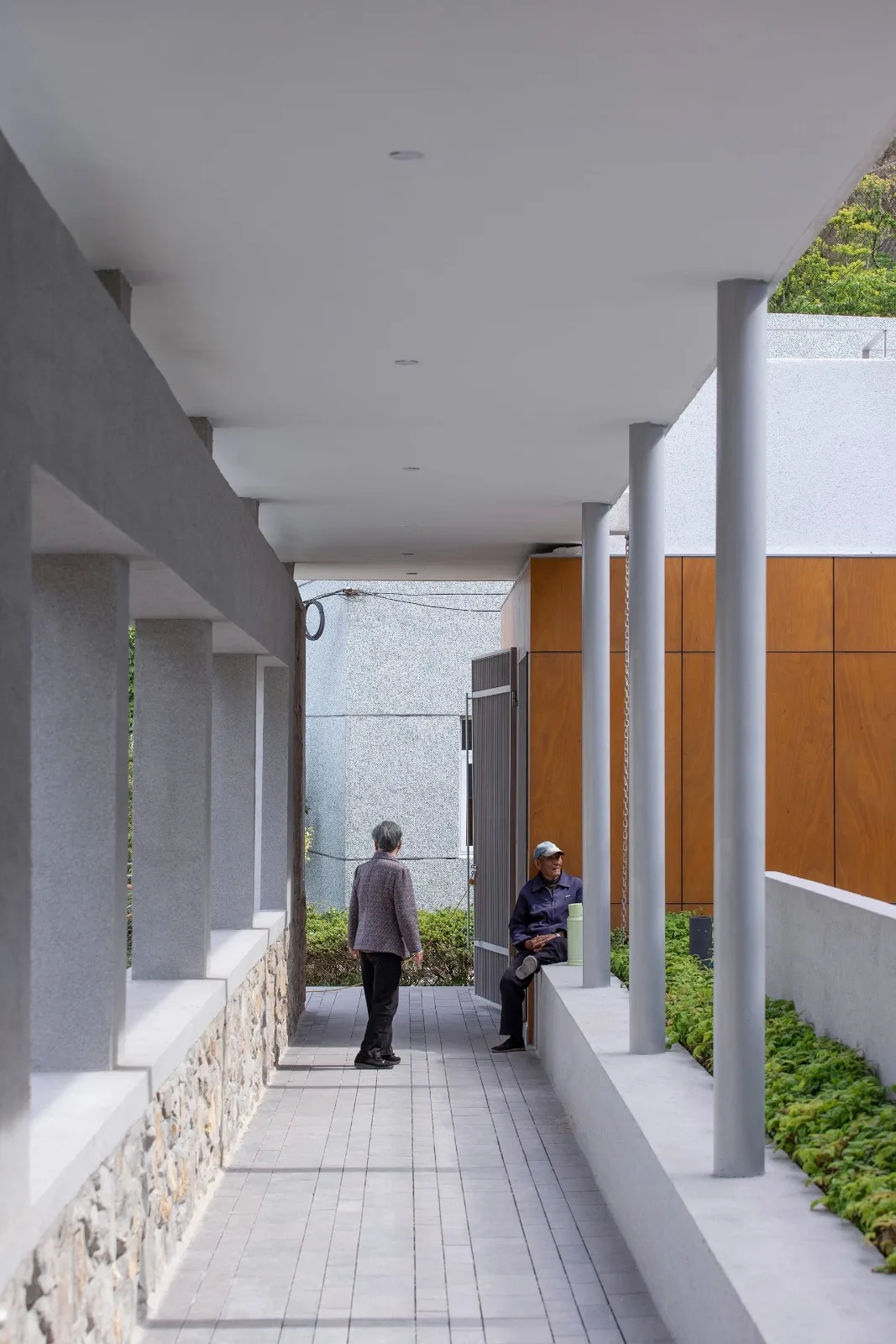
The boundary between the open courtyard and multifunctional hall preserves courtyard integrity while enhancing the connection between outdoor and indoor public areas. This encourages landscape interaction and fosters social engagement within the daycare center.
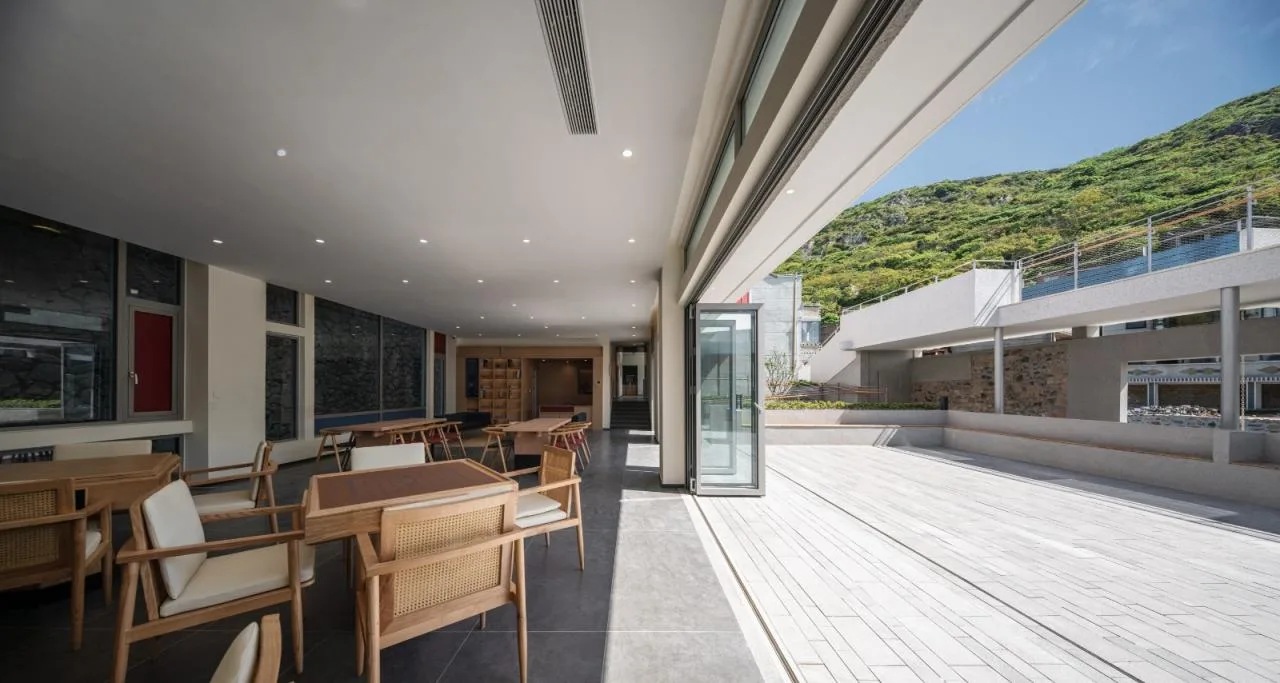
Kitchen and Cafeteria Connectivity
To the east of the first floor, we included a nearby residential building within the renovation scope, connecting it to the main structure to create a spacious, well-lit shared cafeteria and kitchen. This upgrade not only enhances dining quality but also serves as a multifunctional space for activities and social interaction.
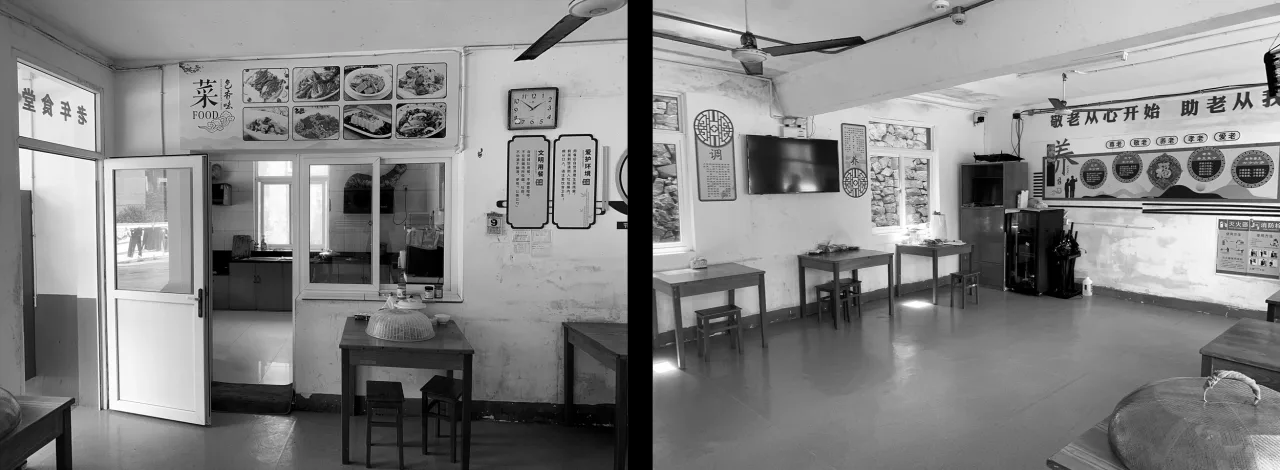
△ Restaurant interior before renovation
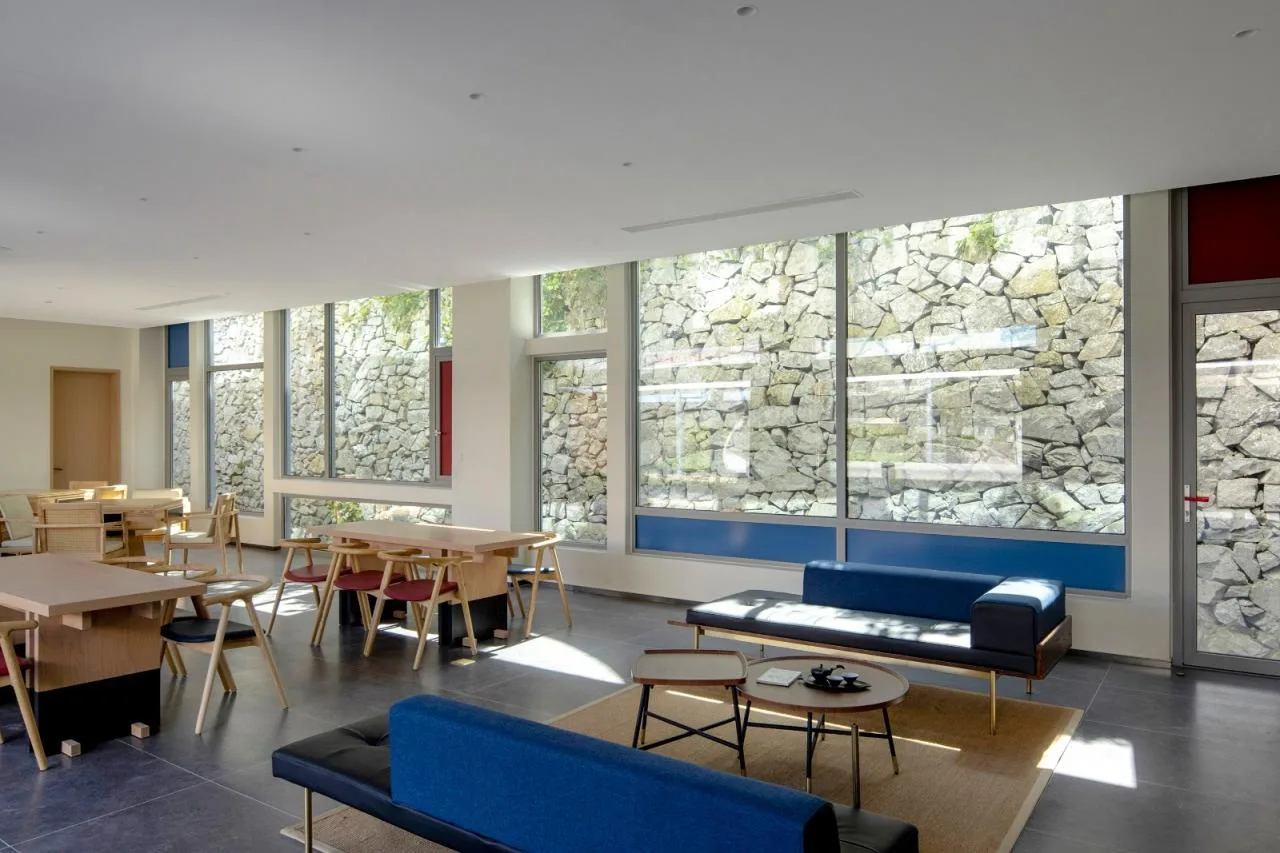
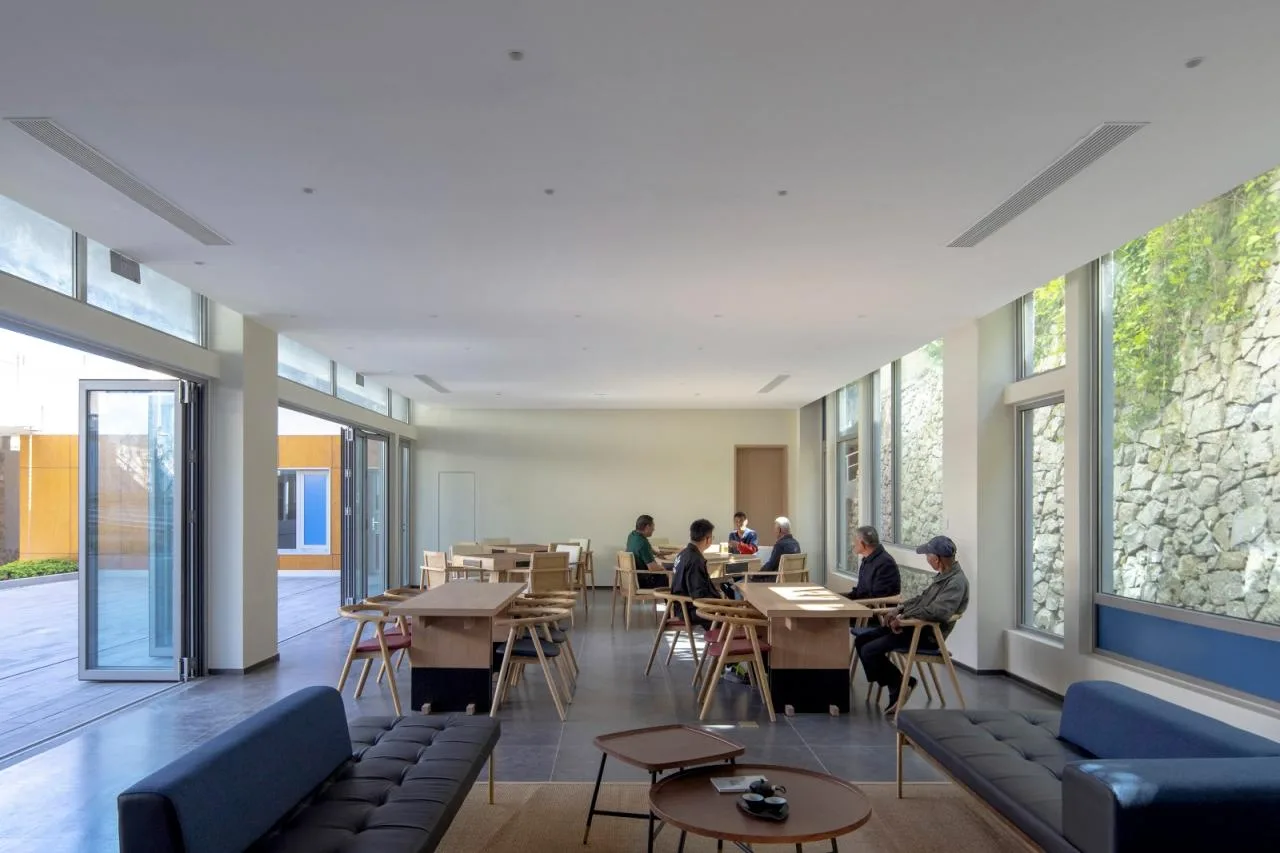
Roof Space Enhancement
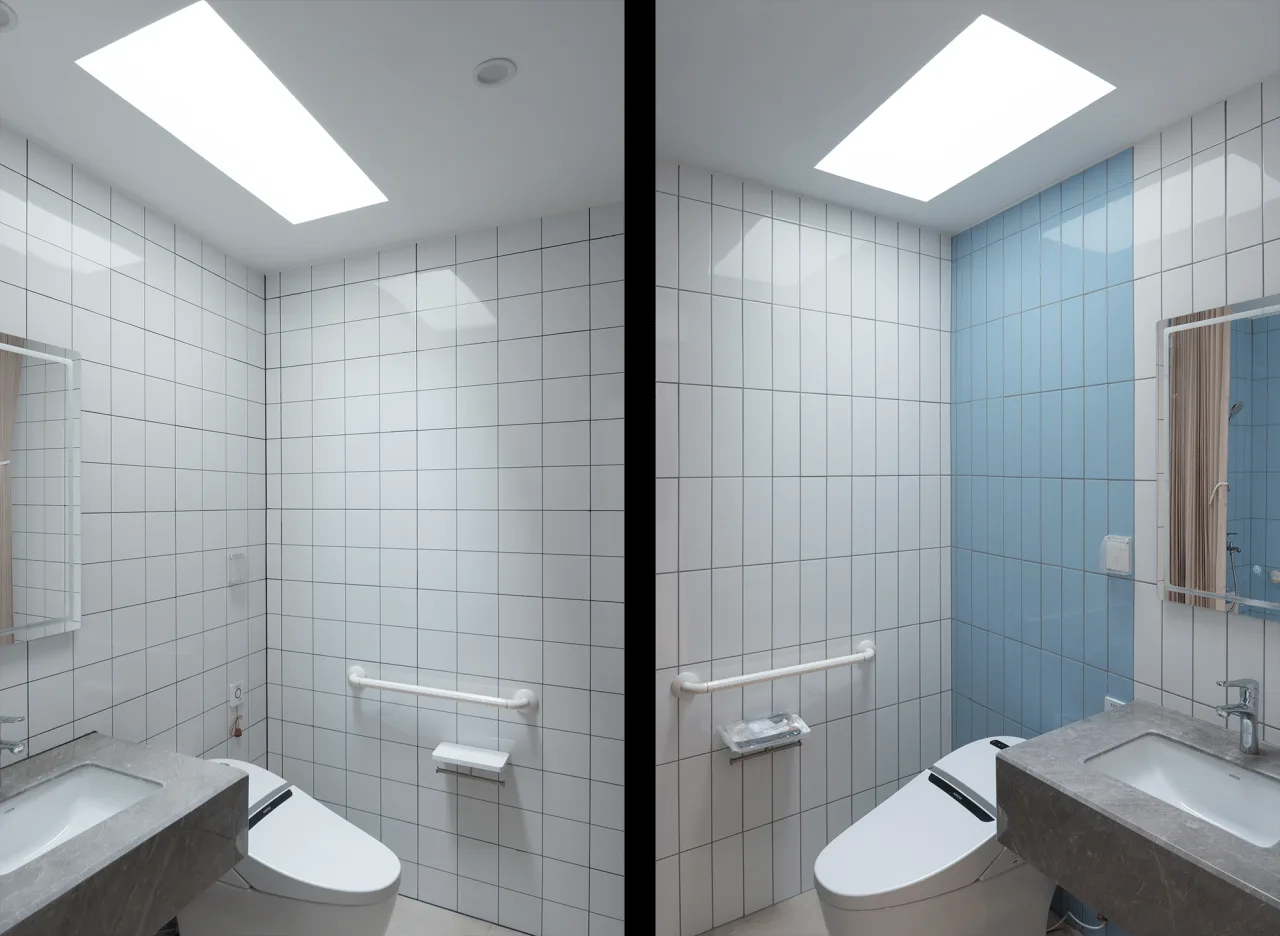
Renovating the roof strengthens the connection between the daycare center and island landscapes, expanding the elderly’s visual horizon. Skylights were incorporated to enhance natural lighting in second-floor bathrooms, maximizing daylight penetration.
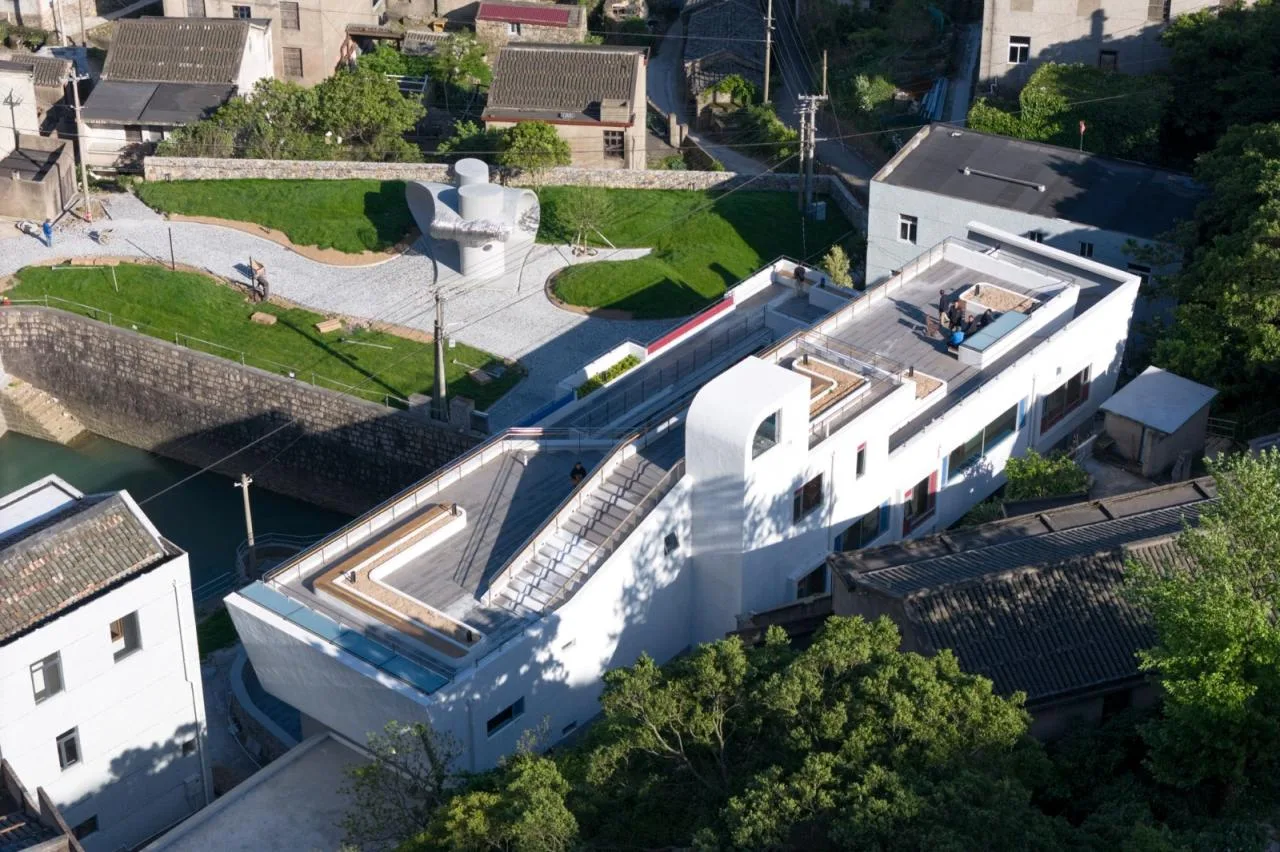
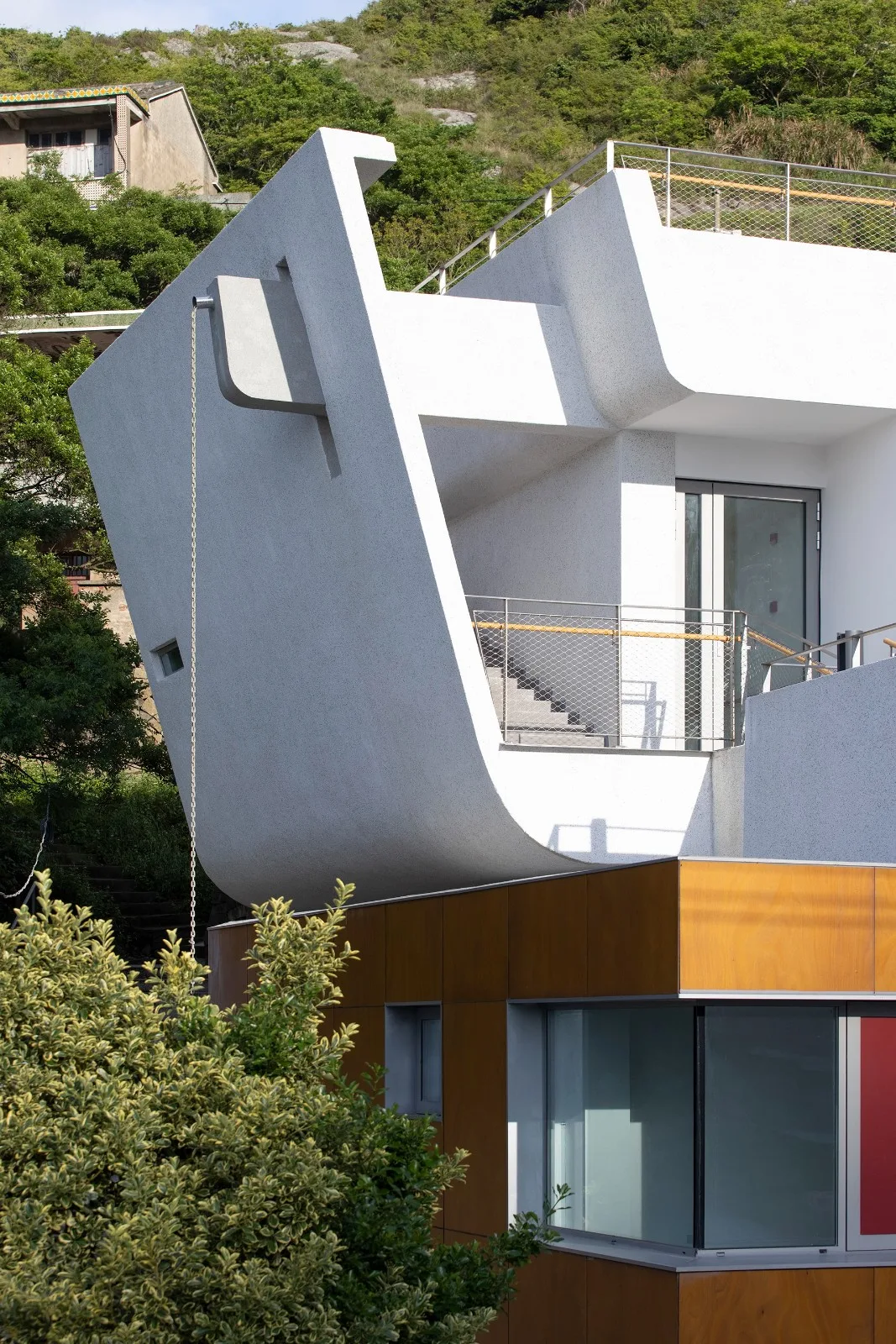
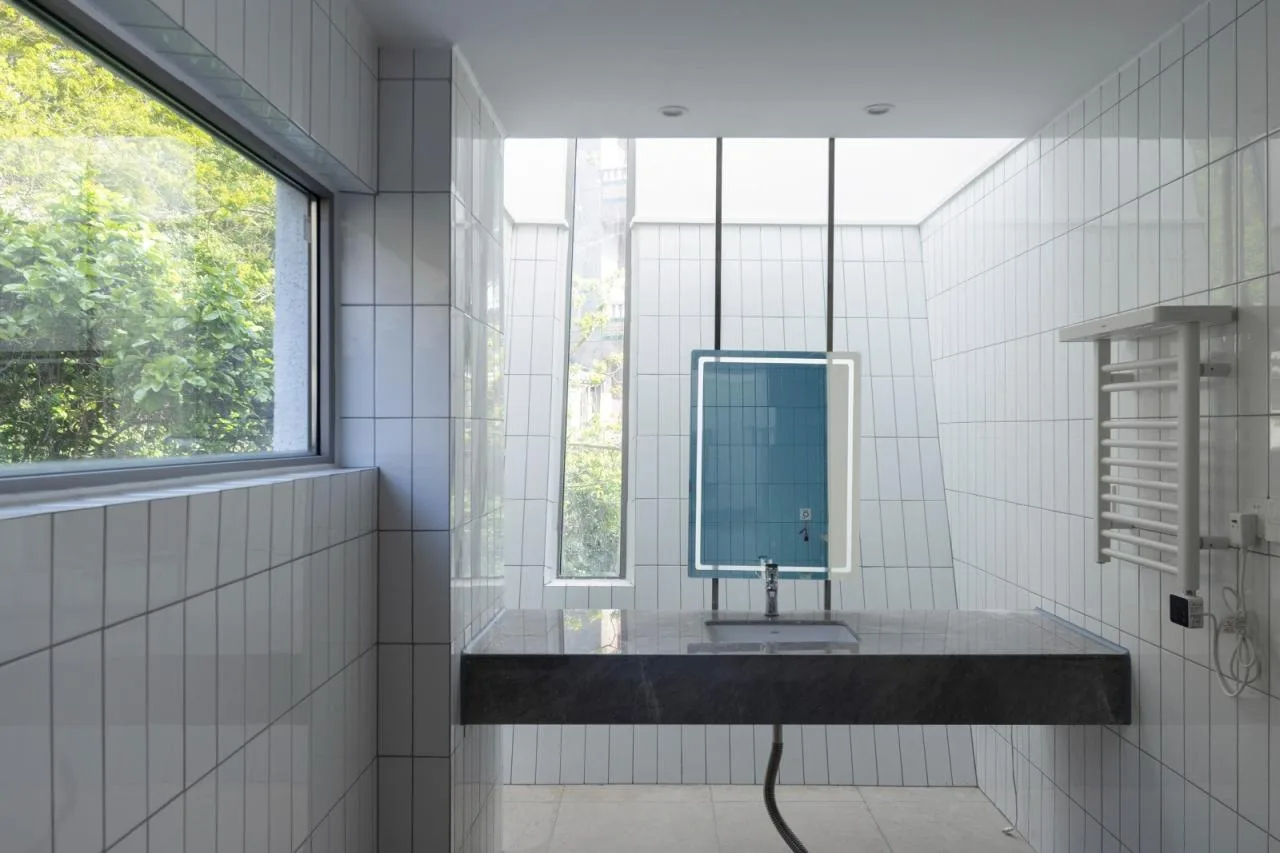
Surrounding the skylights are landscaped seating and vegetable gardens. Additionally, a rooftop tea room with panoramic views enriches the space’s functionality, allowing the elderly to enjoy natural beauty in a peaceful setting.
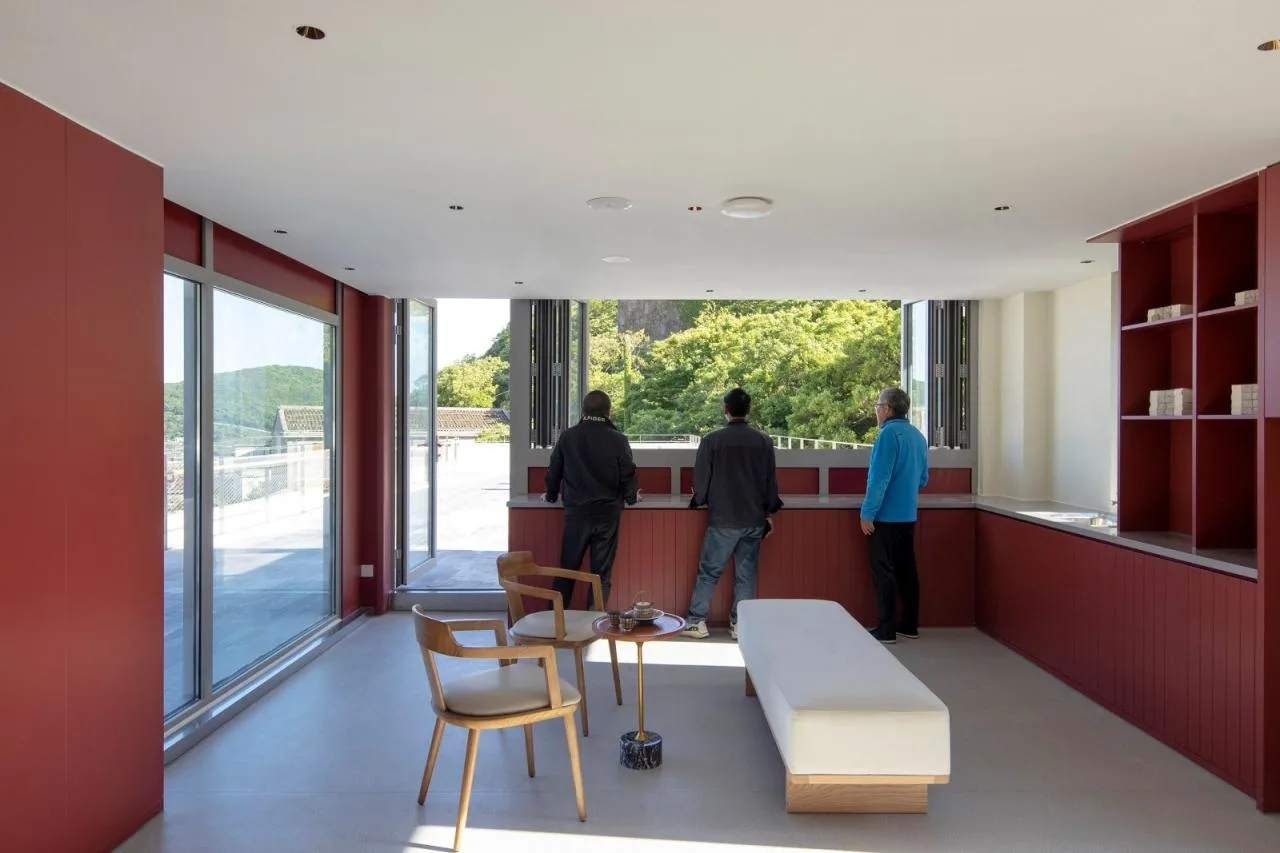
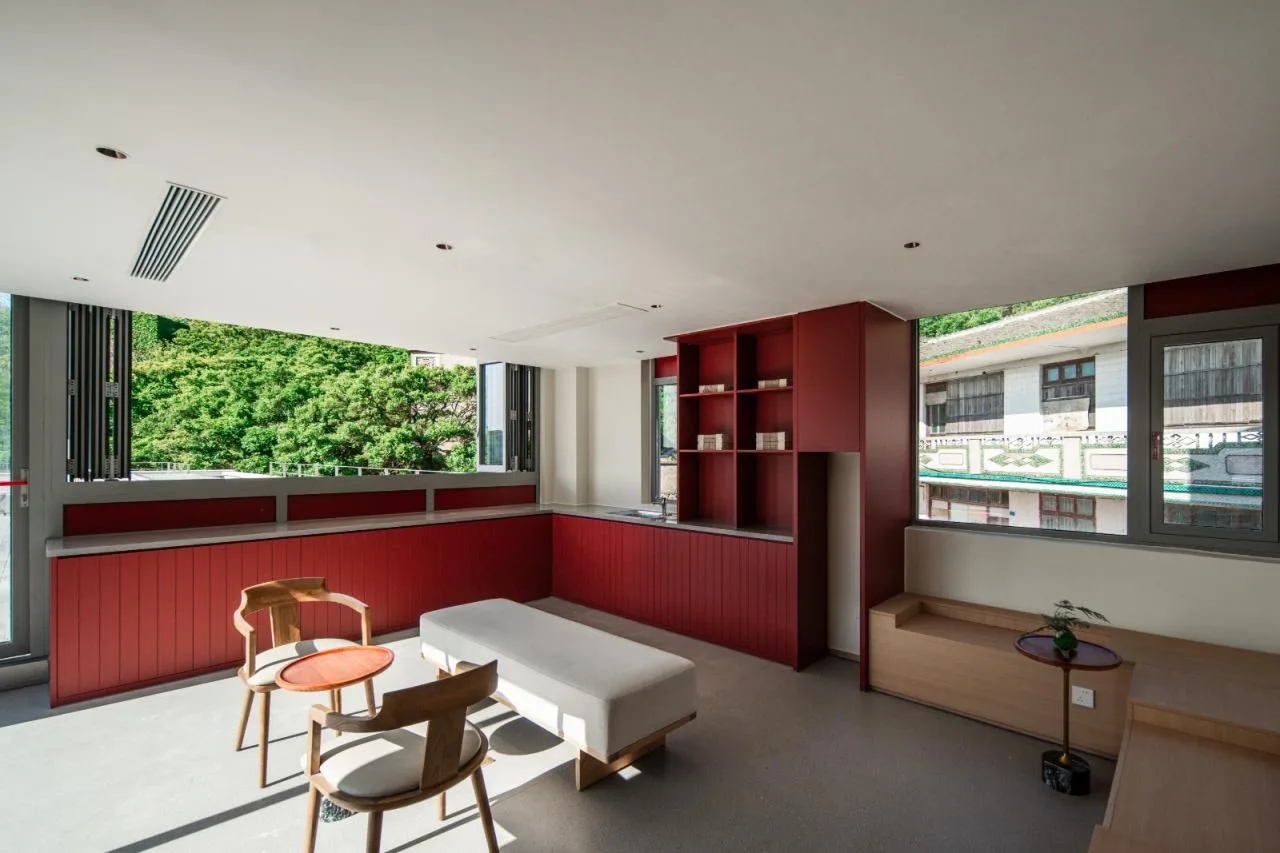
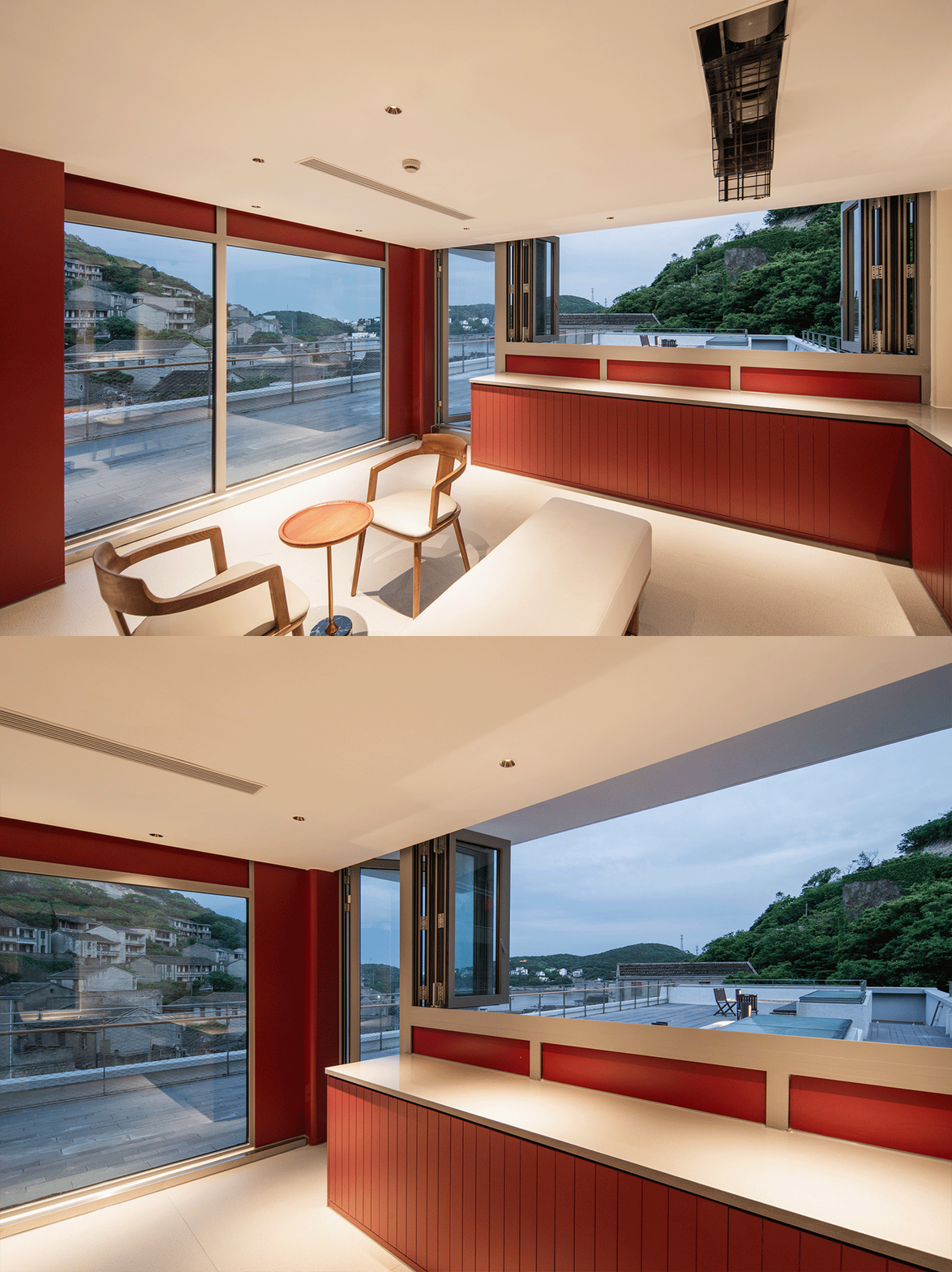
Opening the rooftop space amplifies landscape potential and expands usable area, allowing the elderly to enjoy views of the island and sea from above, enhancing comfort and wellbeing.
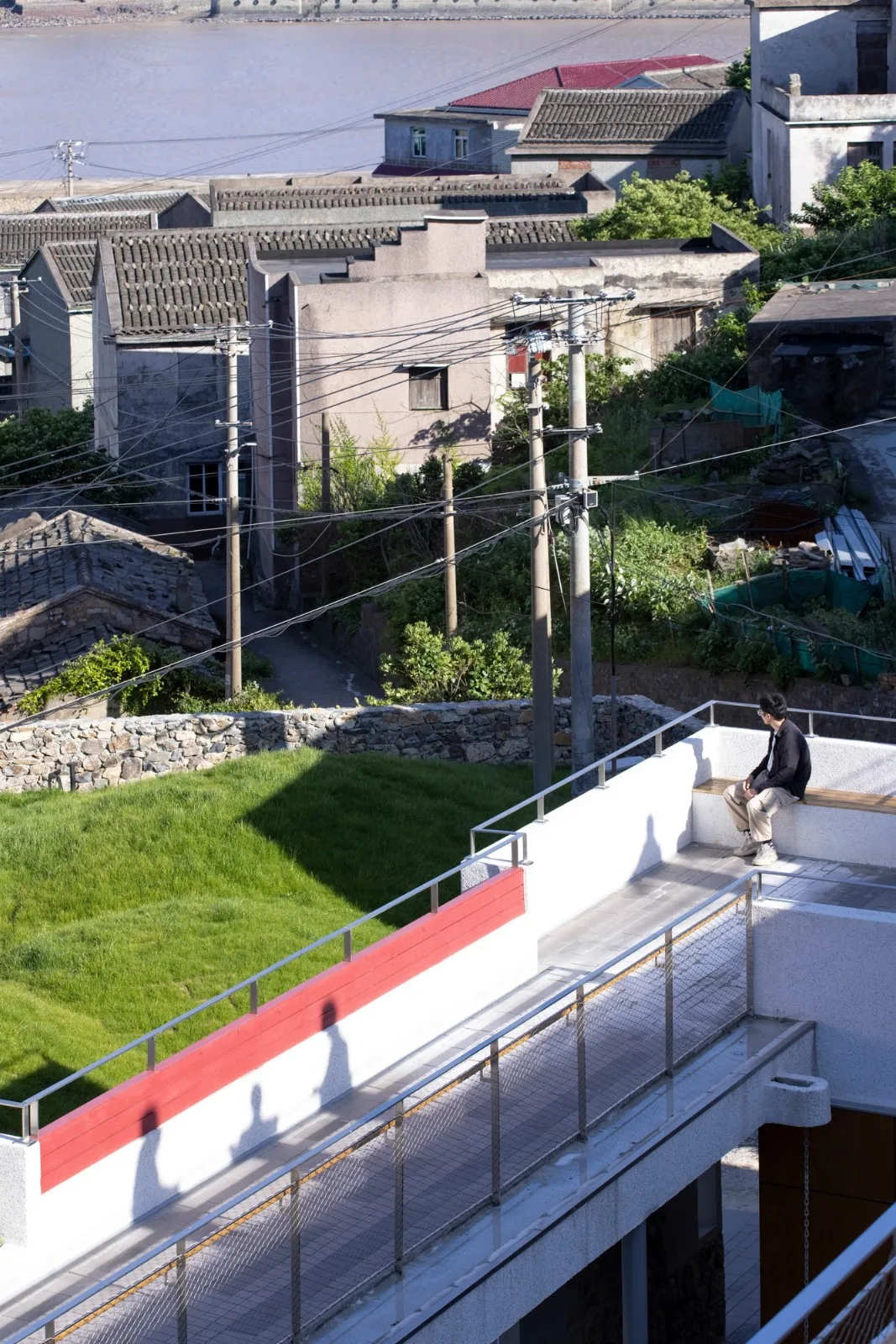
04 Medical and Care Space Transformation
To improve the building’s uneven spatial layout and poor functional compatibility, we integrated multiple functions into small spaces through zoned planning, optimizing medical and elderly care facilities.
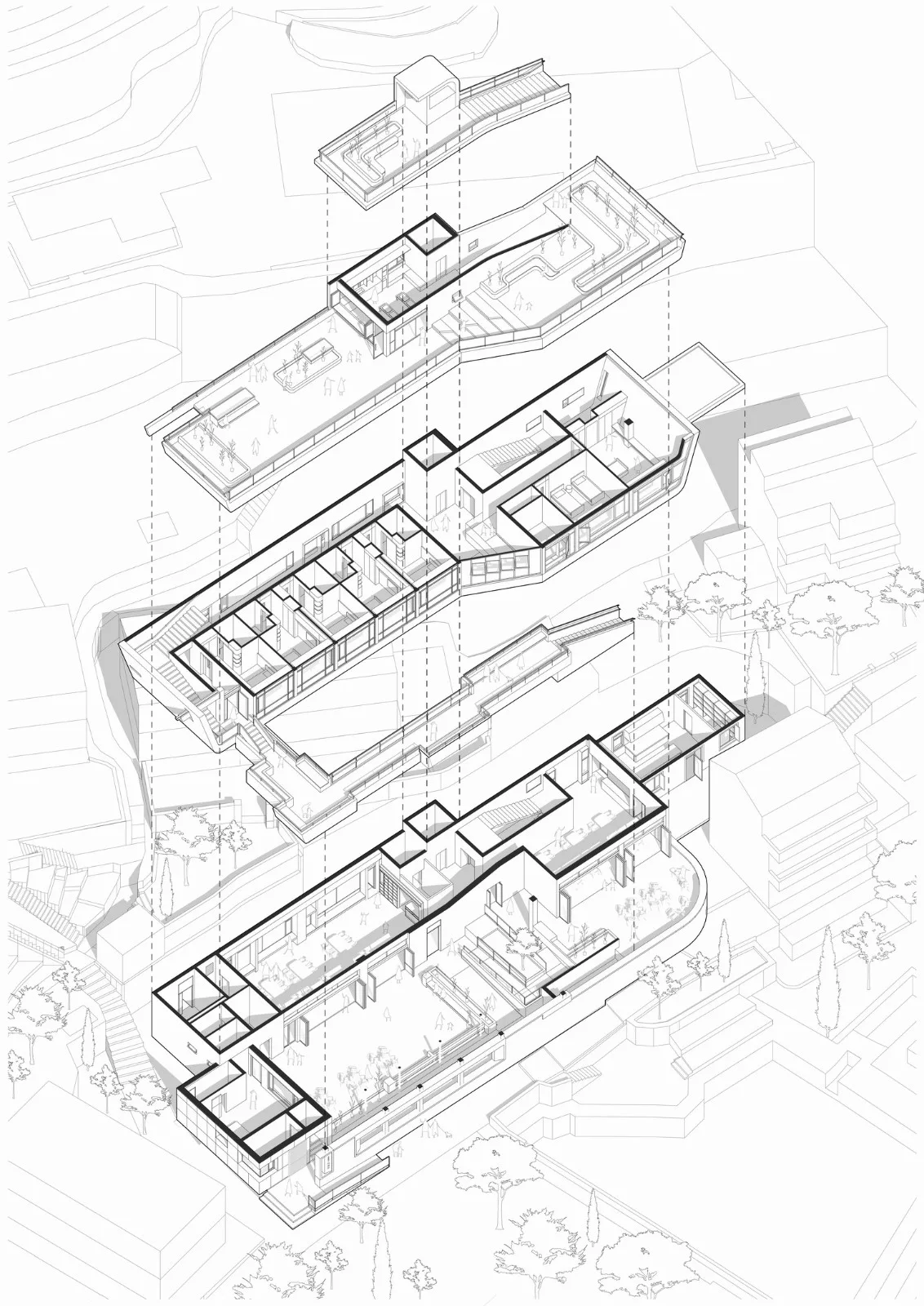
△ Exploded axonometric diagram
Residential Area Redesign
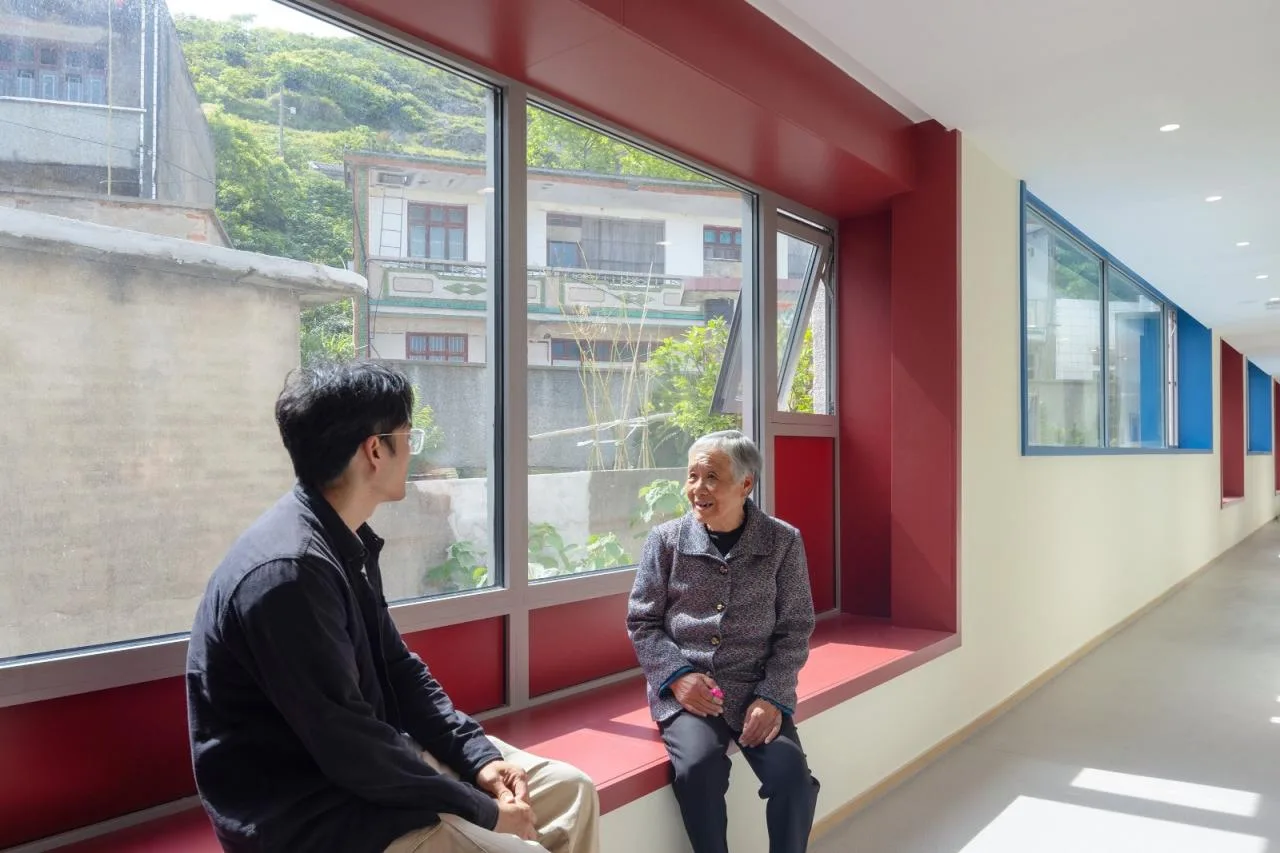
The second floor was originally residential, with corridors on the sunny side that negatively impacted bedroom lighting. We repositioned corridors and stairs to the shaded side, reserving the sunny side for bedrooms to improve light, ventilation, and views.
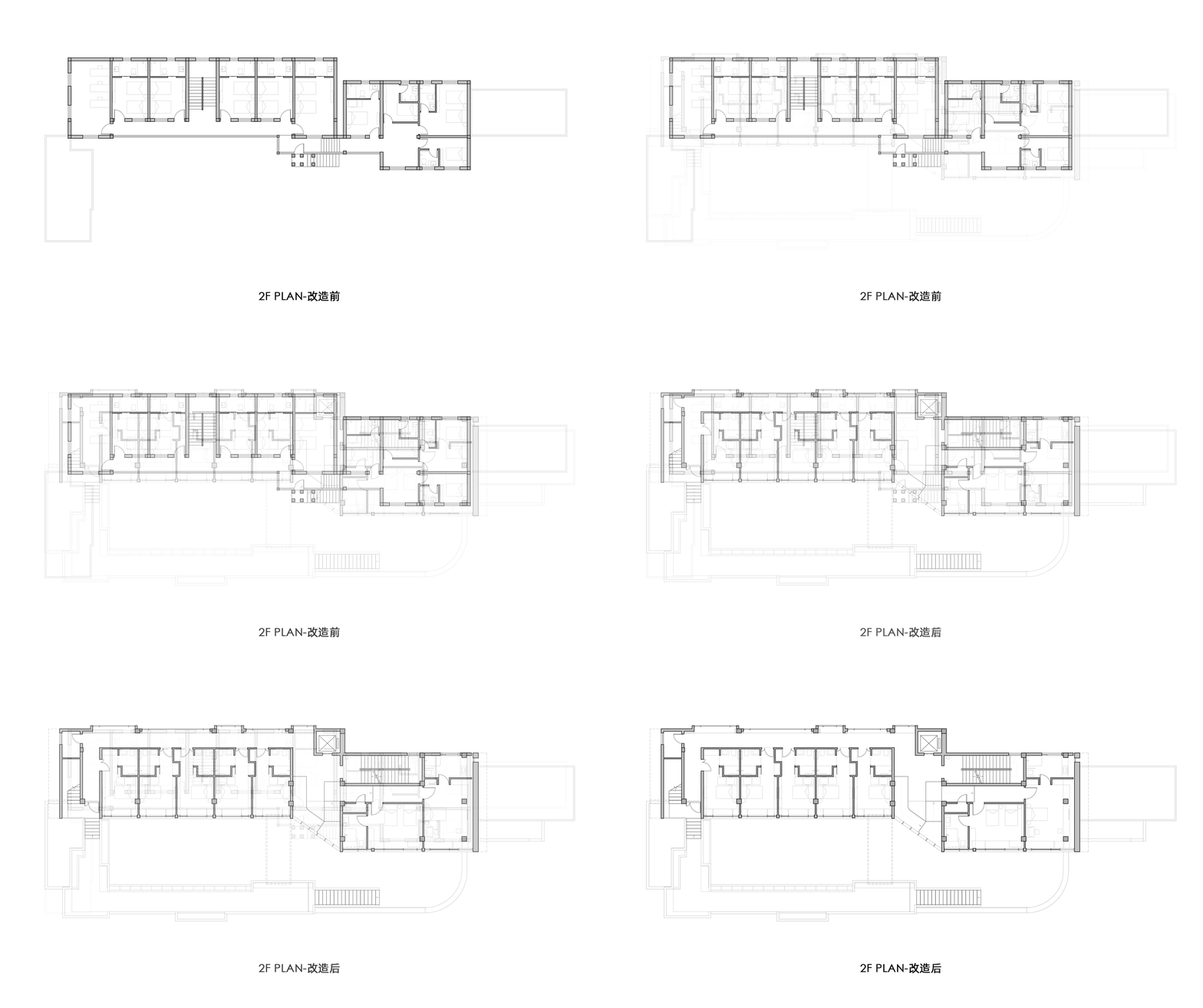
△ Second floor plan comparison before and after renovation
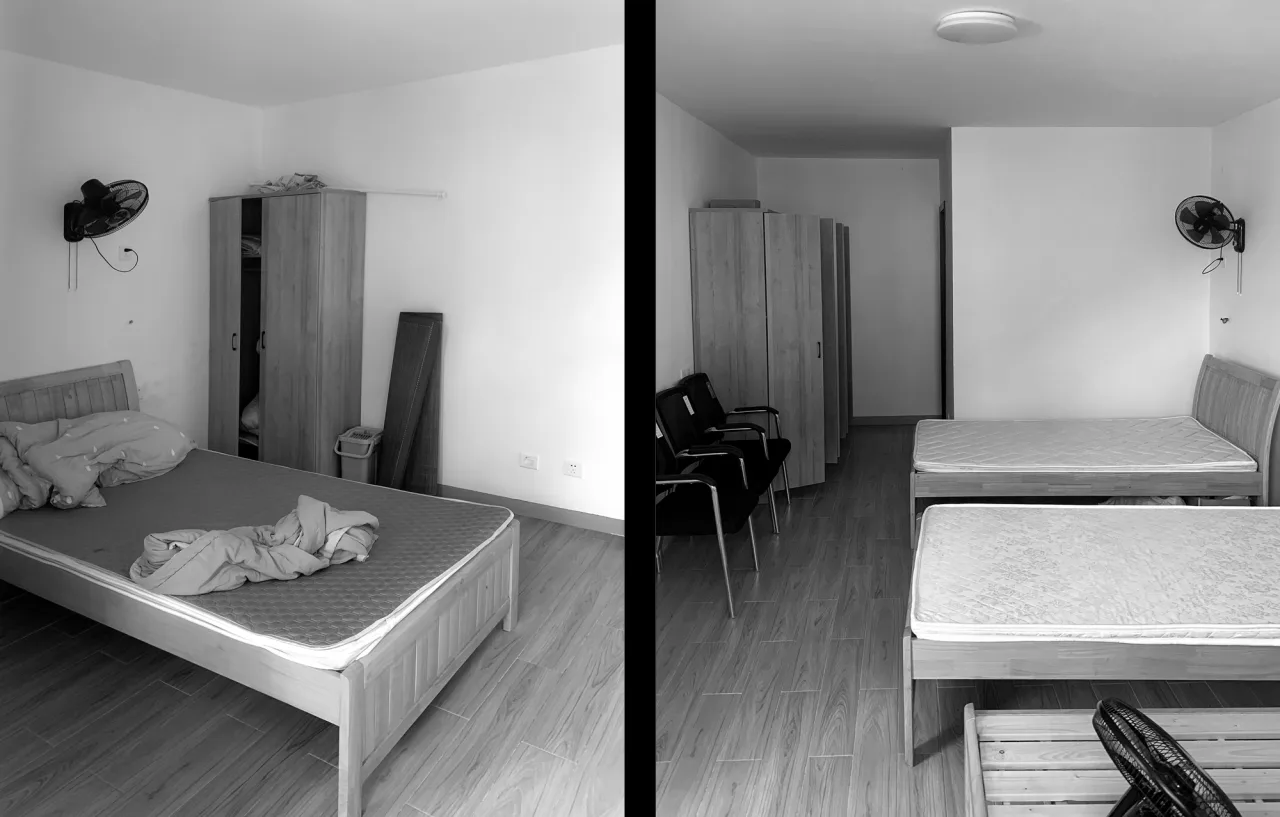
△ Elderly bedroom before renovation
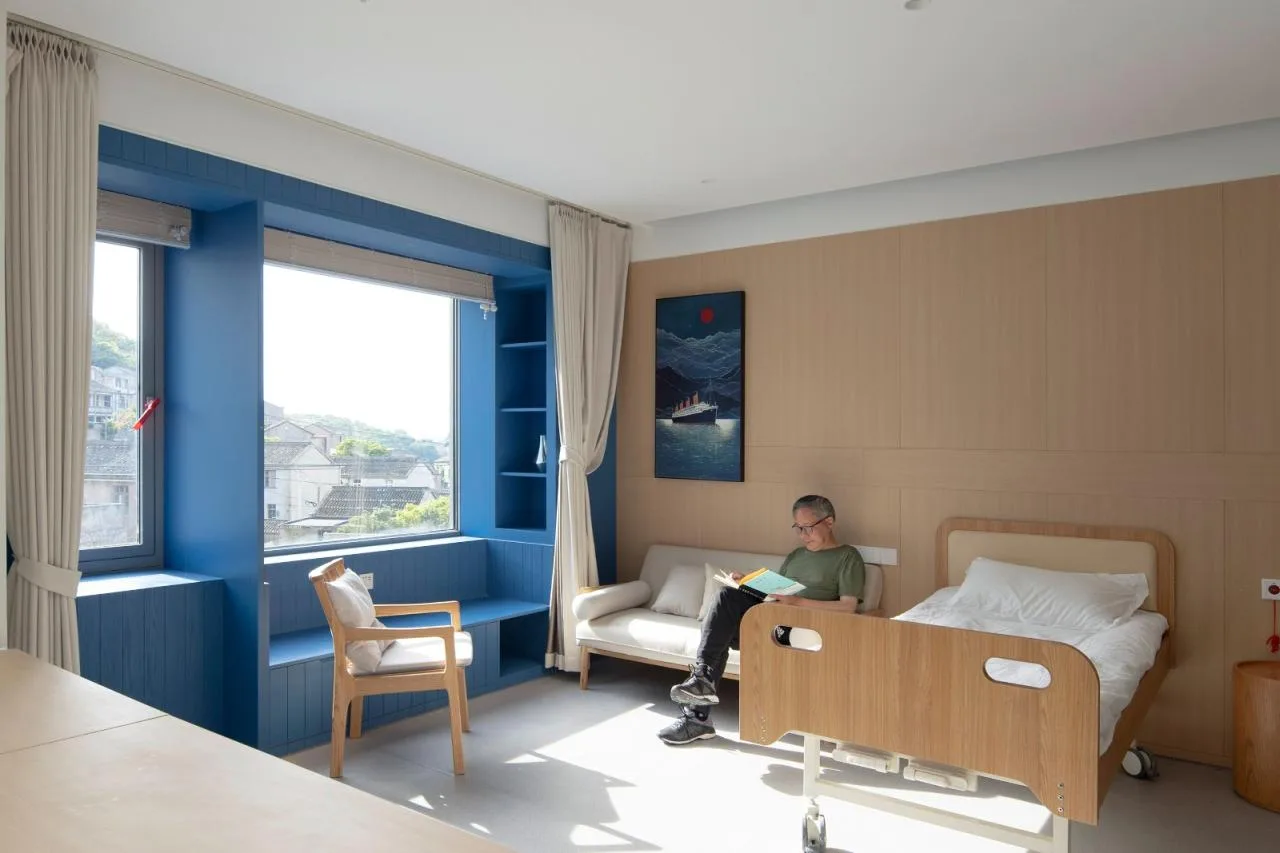
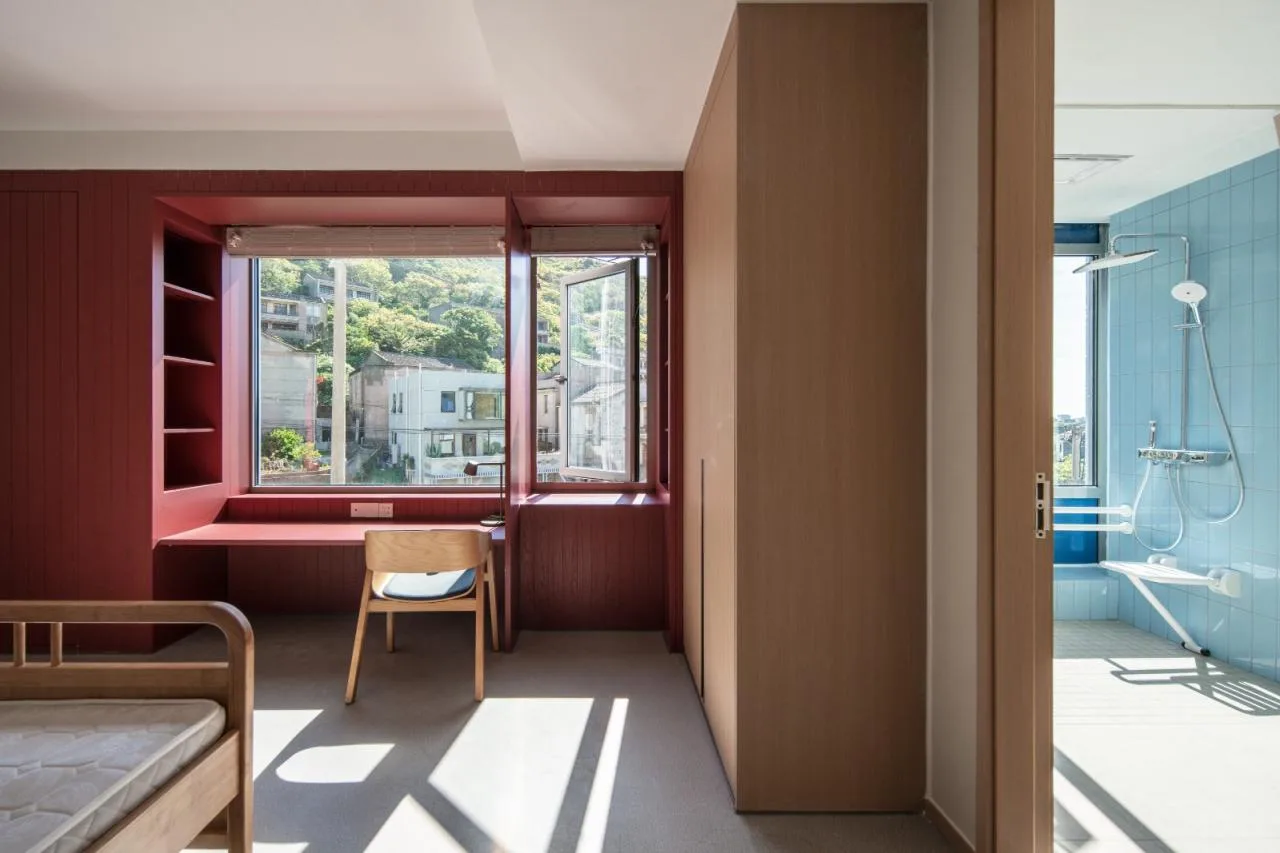
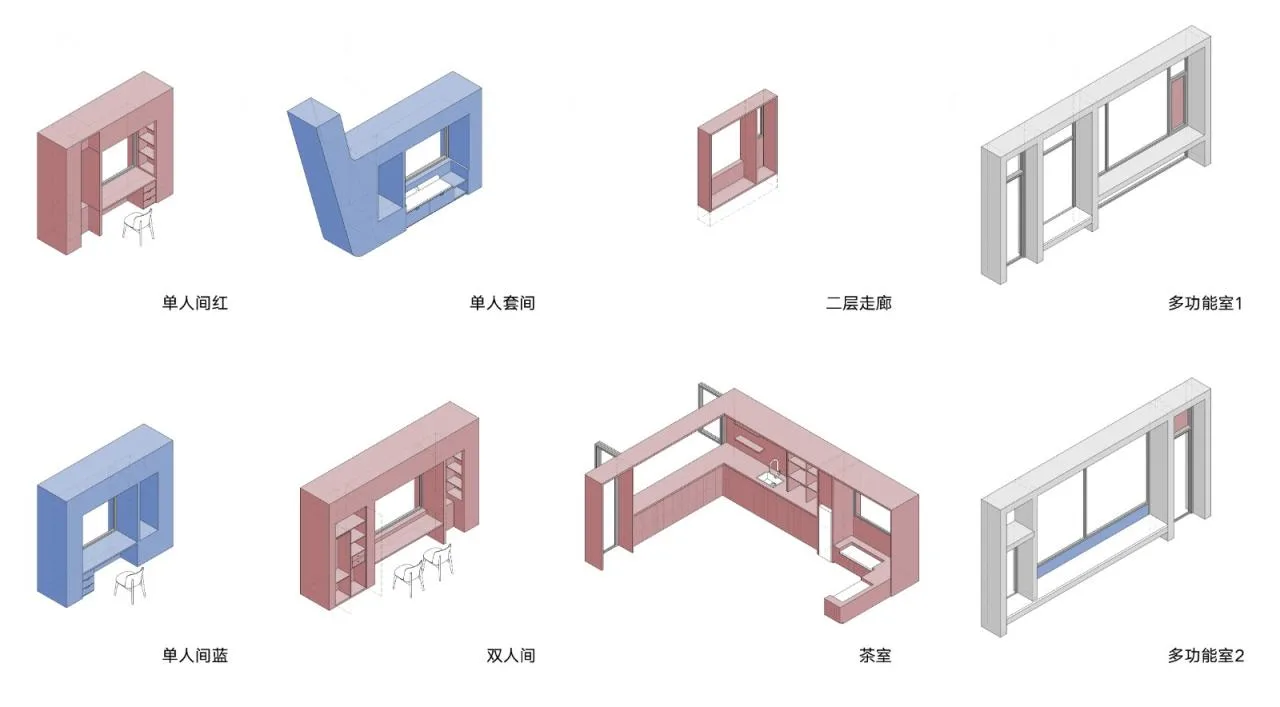
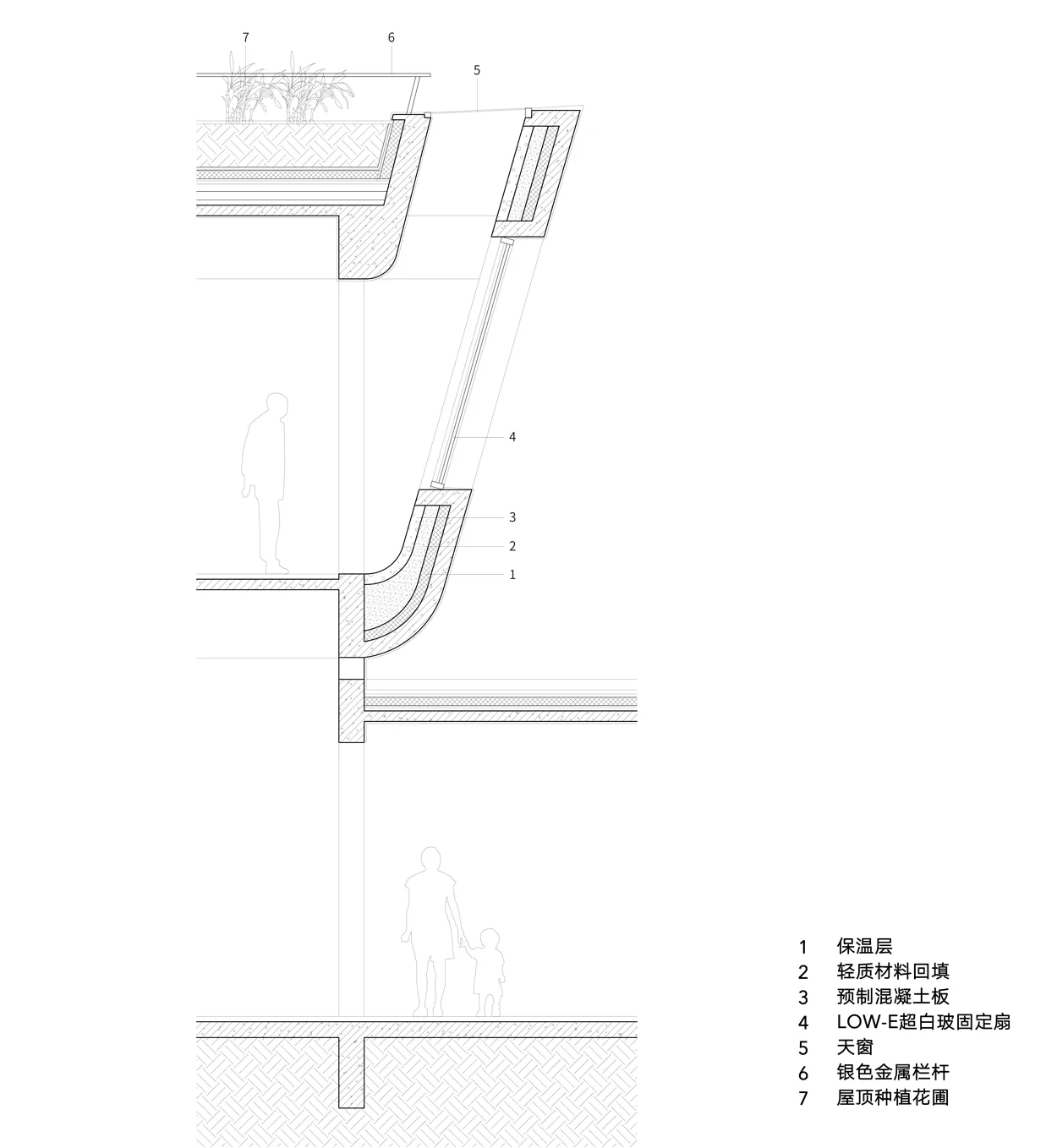
△ Window frame system axonometric drawing
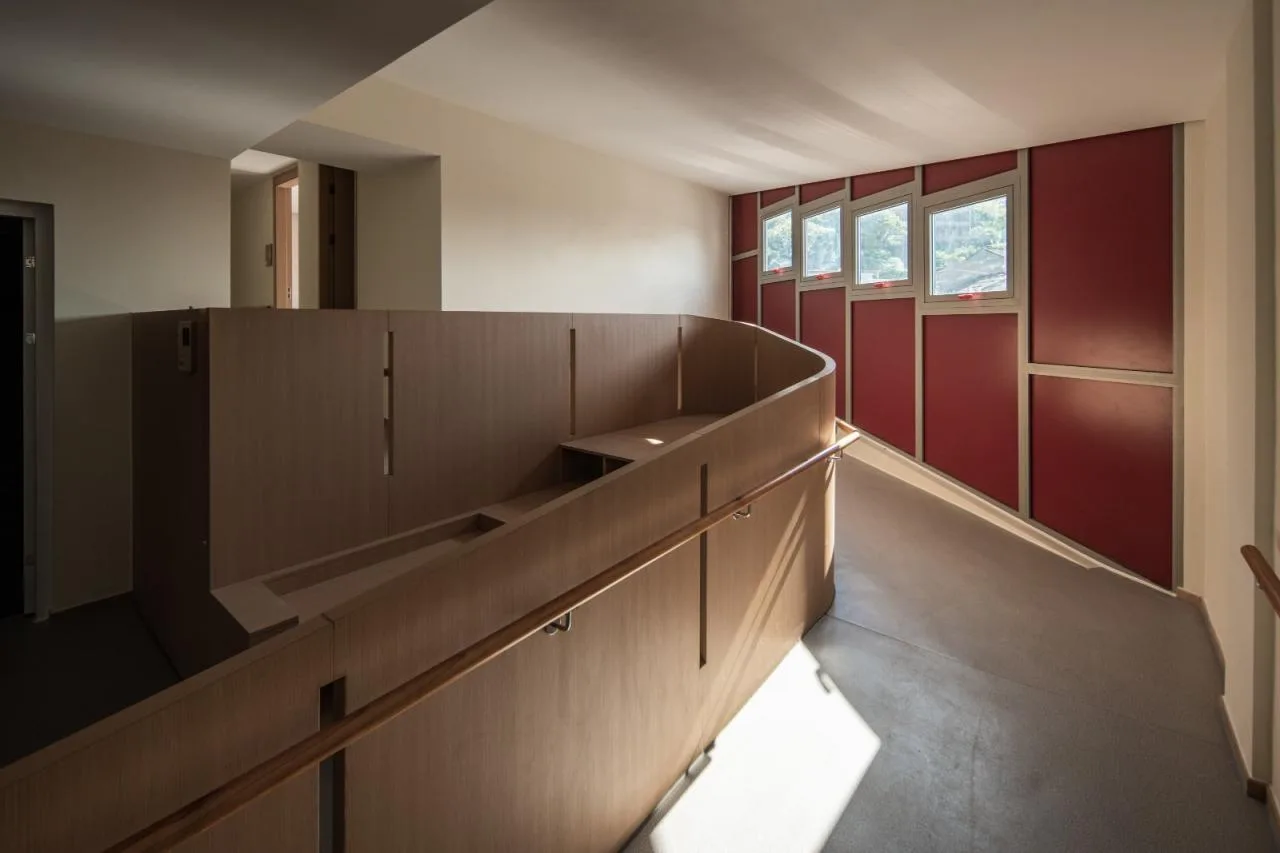
The original second floor featured a height difference between east and west buildings, complicating access for the elderly. We introduced a public space separating these areas, connected by accessible ramps, and added rest and social spots like book bars. These book bars transform indoor areas into outdoor-like environments, enabling those with limited mobility to enjoy nature and island views.
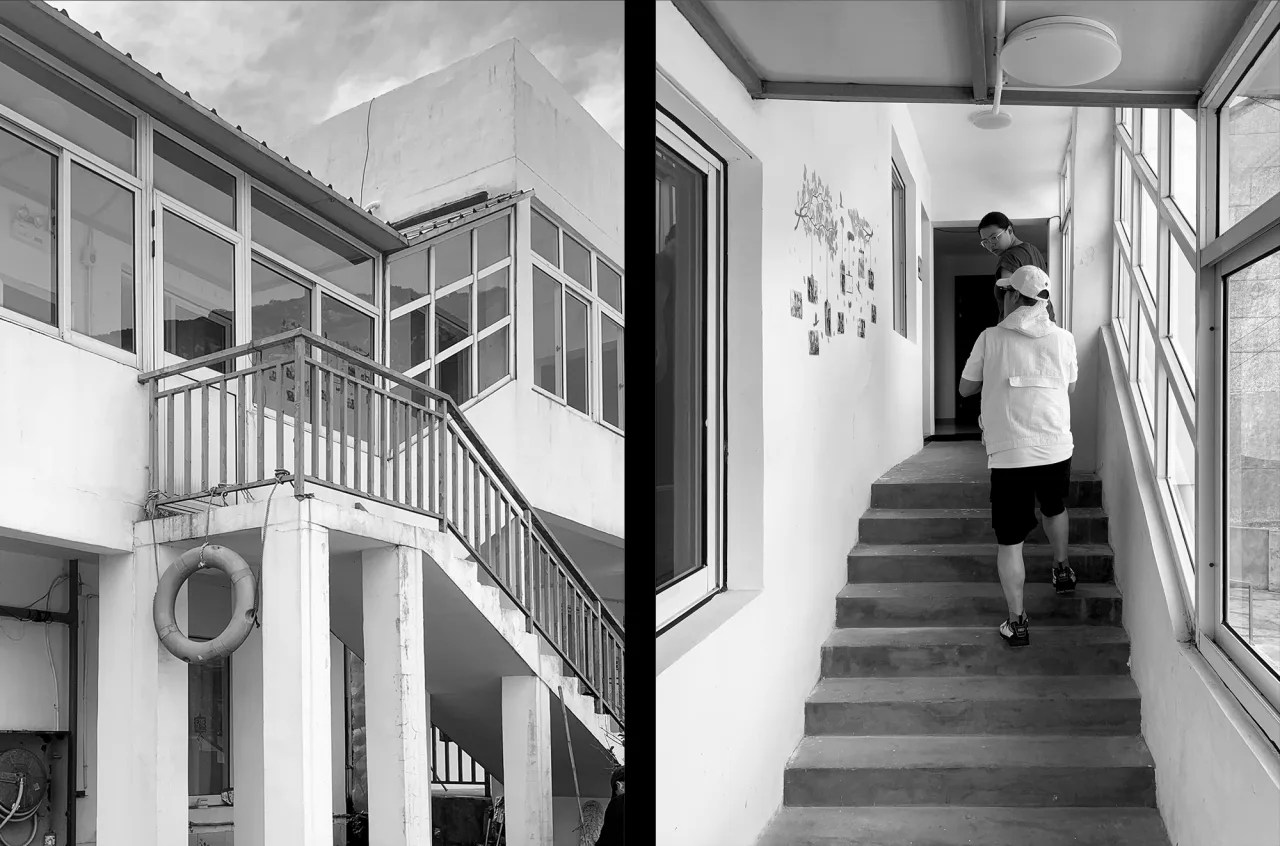
△ Internal height difference area before renovation
Aging-Friendly Improvements
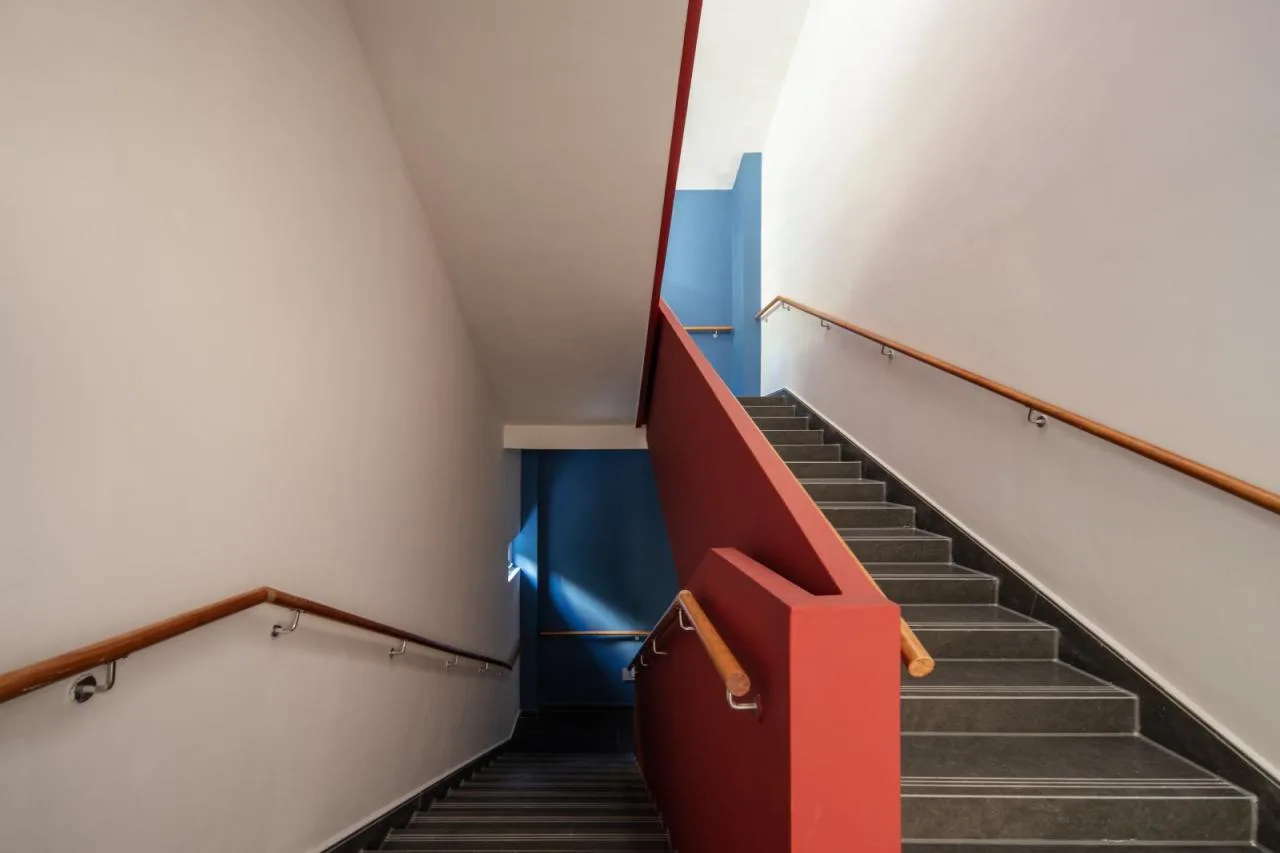
Safety is paramount in aging-friendly design. The original building’s steep stairs, a result of the terrain, were unsuitable for elderly residents. During renovation, the staircase was relocated to the site center, and an elevator reaching the rooftop was installed, connecting all levels and easing vertical circulation.
All staircases indoors and outdoors were redesigned with gentler slopes and handrails to support slower walking speeds. Barrier-free pathways connect all spaces, improving accessibility. Seating areas are spaced along long corridors to provide rest spots for residents with limited mobility.
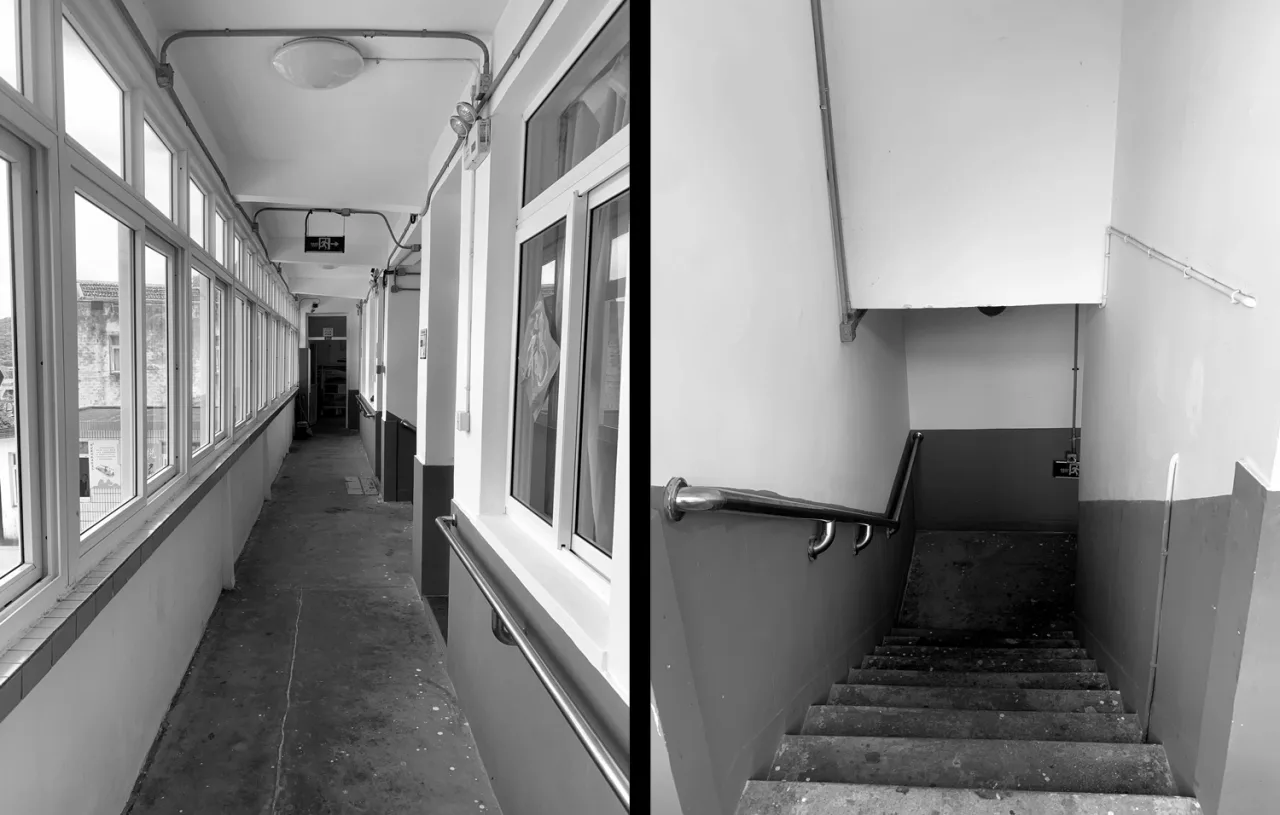
Interior before renovation
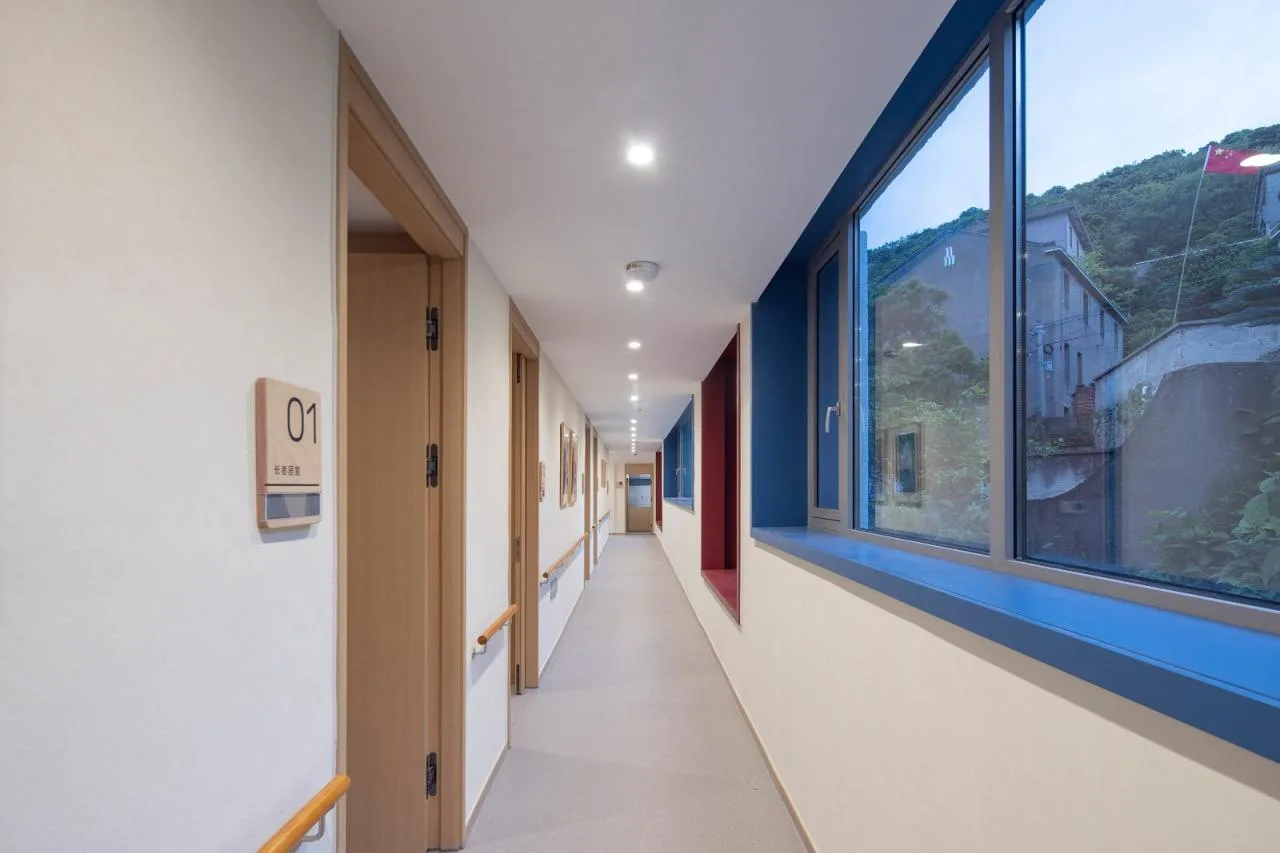
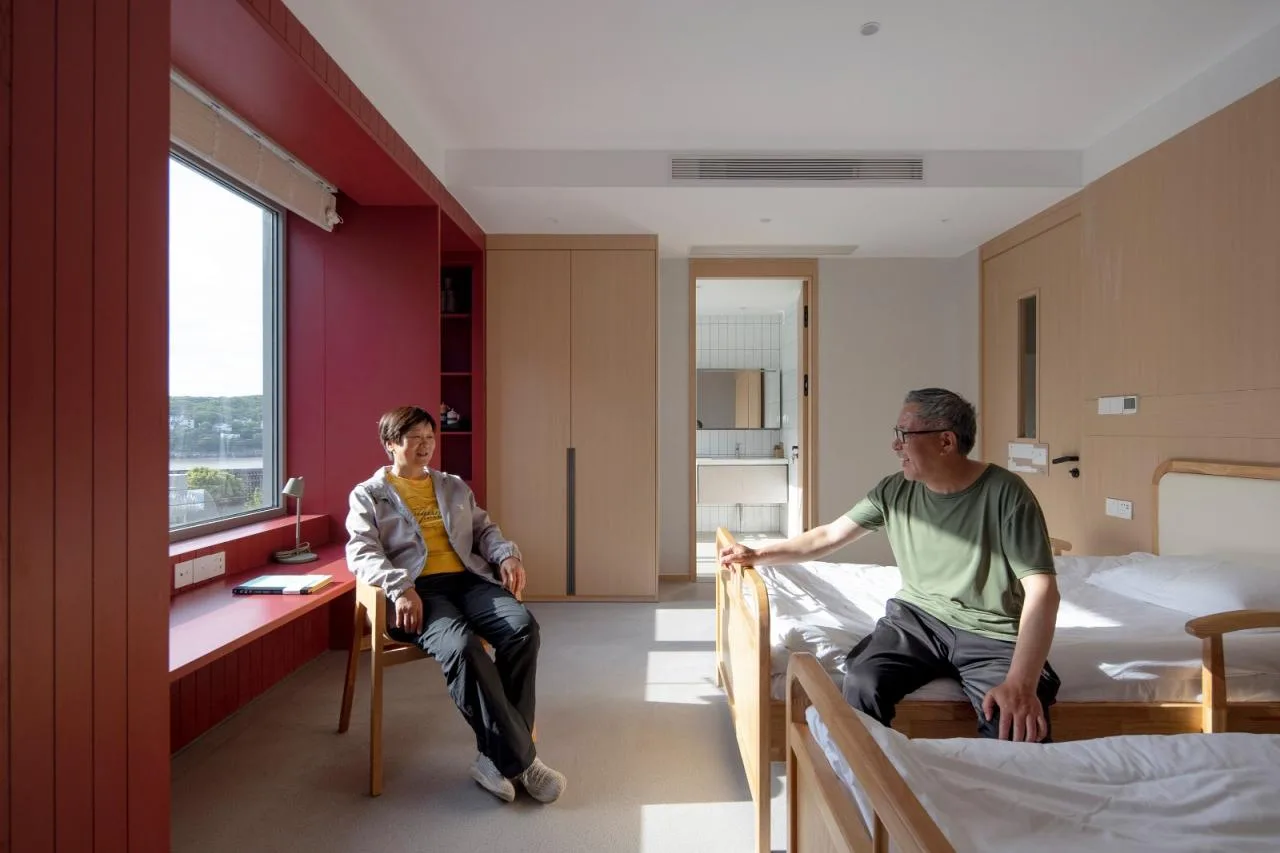
We enhanced elderly-friendly features in bedrooms, upgrading to professional nursing beds and emergency equipment for improved care. Furniture edges and corners were rounded to reduce injury risks.
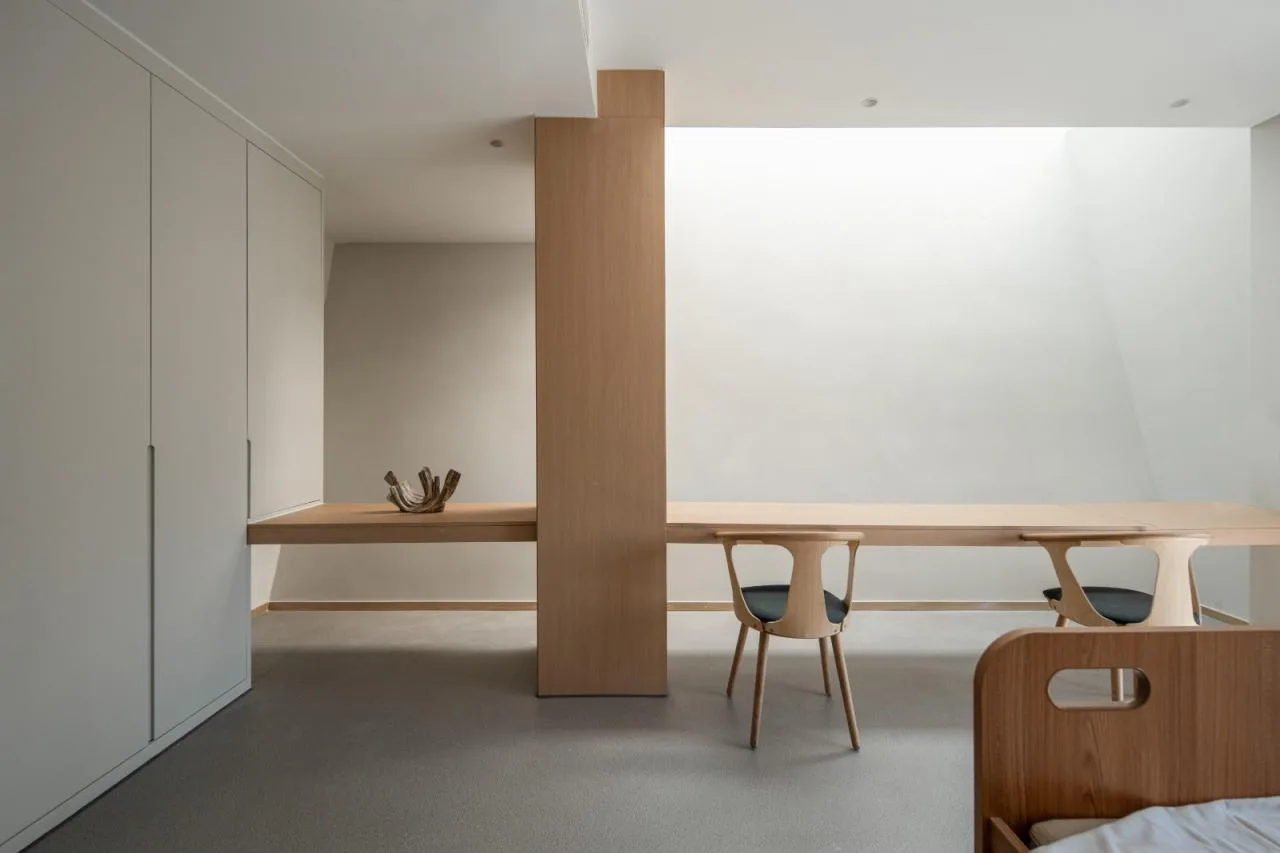
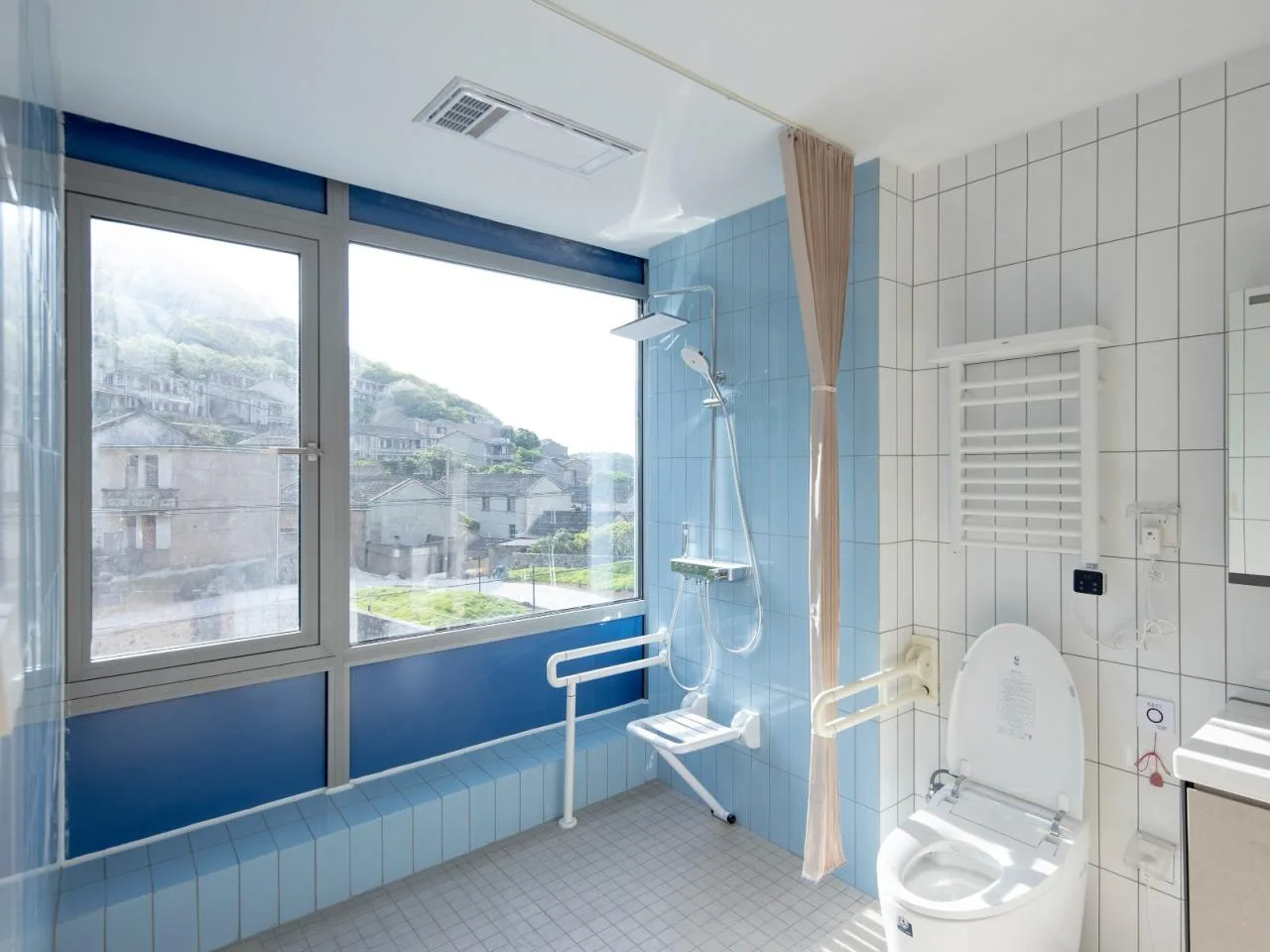
The original bathrooms were narrow and failed to meet accessibility standards requiring a 1.5-meter wheelchair turning radius. Layouts were modified to comply with accessibility guidelines. Floor height differences between bedrooms and bathrooms were eliminated, and smooth tiles replaced with anti-slip, impact-resistant terrazzo flooring, enhancing safety.
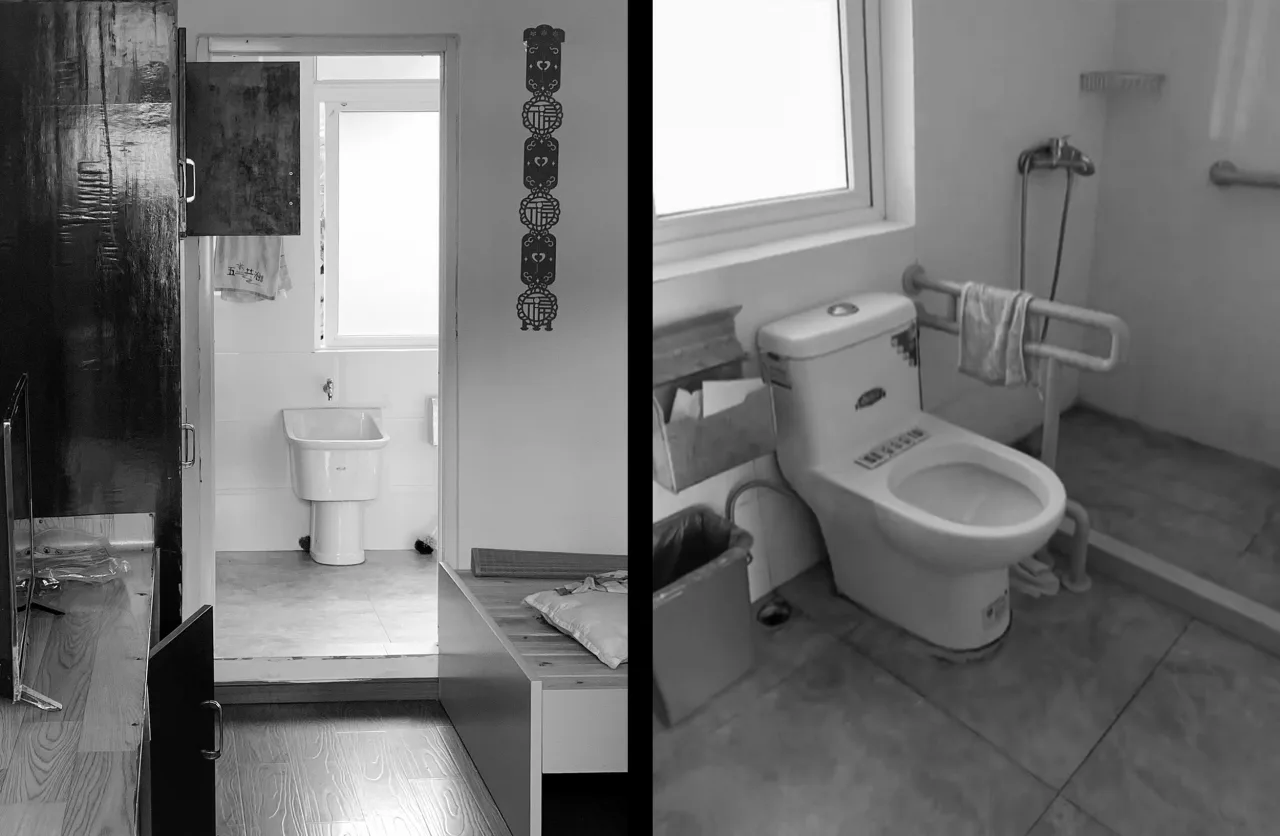
△ Bathroom before renovation
05 Preserving Color and Local Materials
Respecting the site’s memory and village character, we incorporated local elements into the building’s color palette and materials to blend harmoniously with the environment.
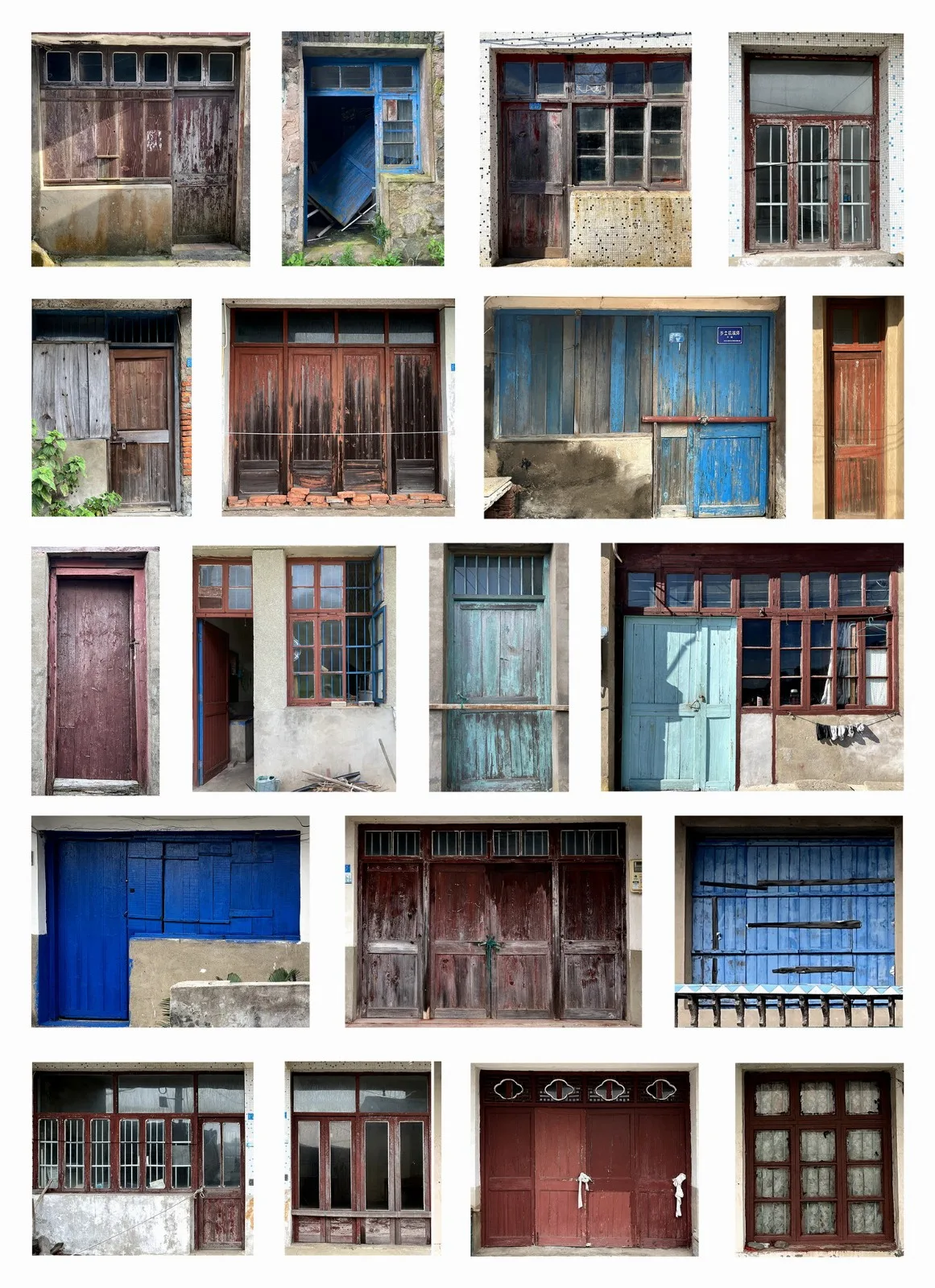
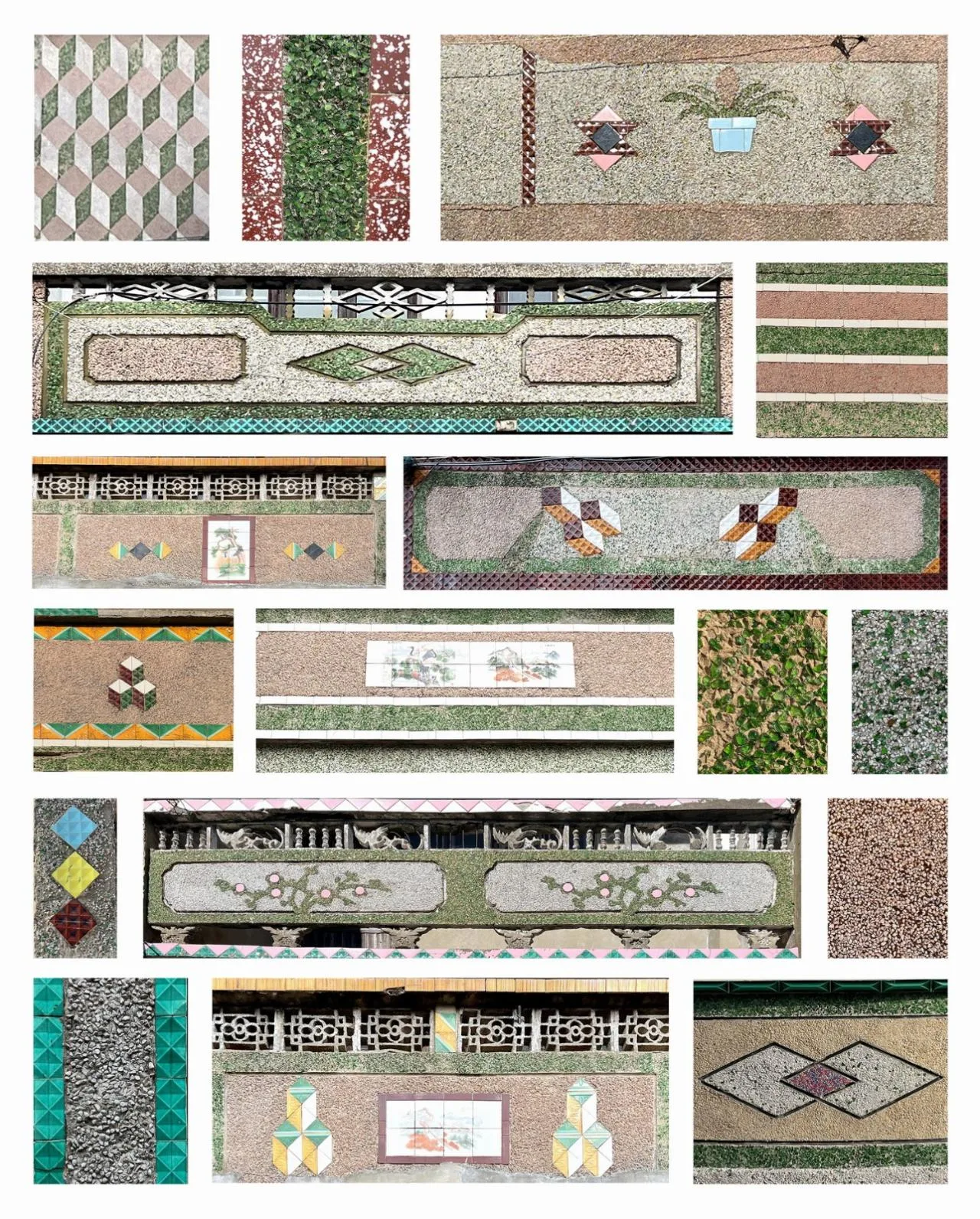
△ Typical residential facade on Chaishan Island
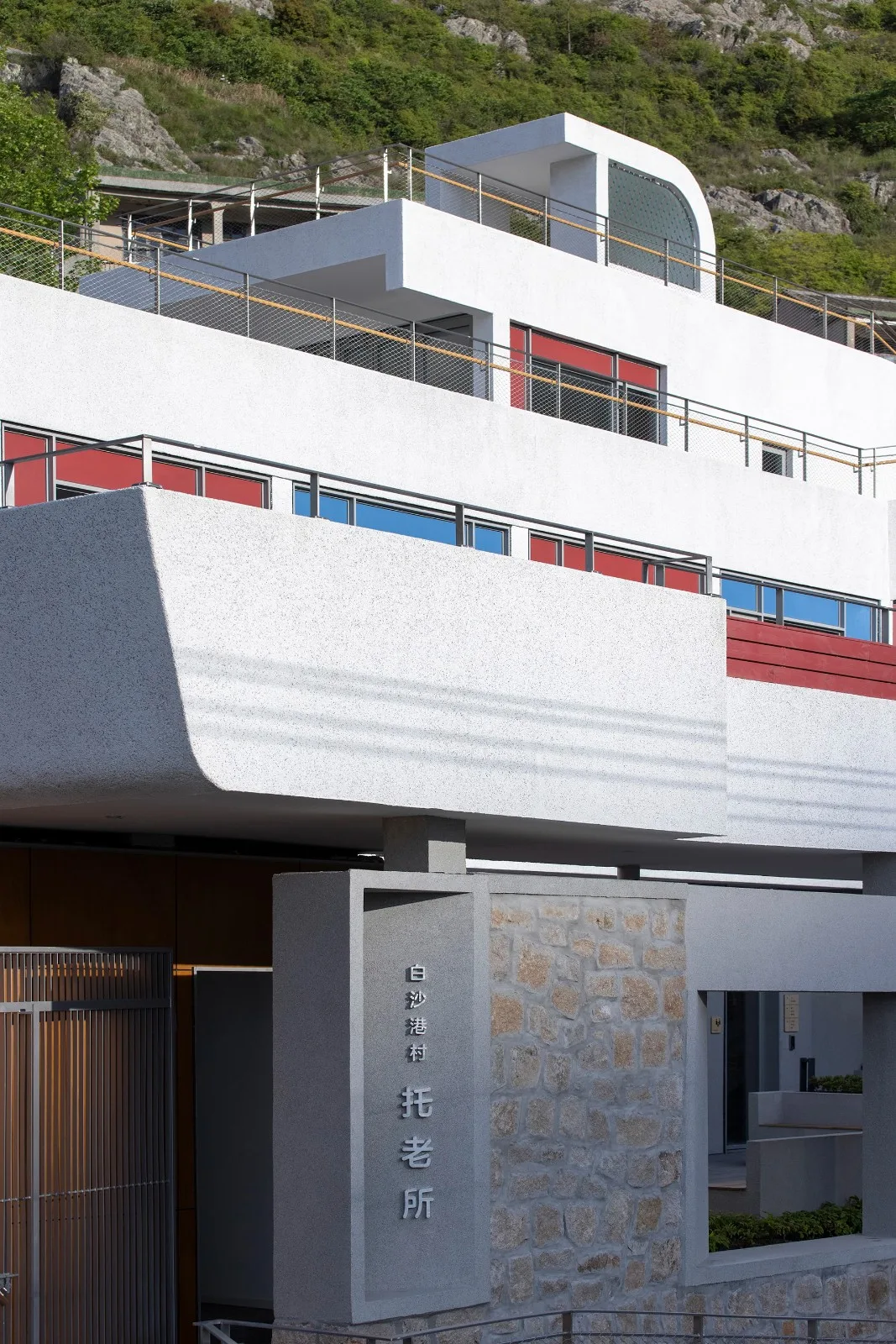
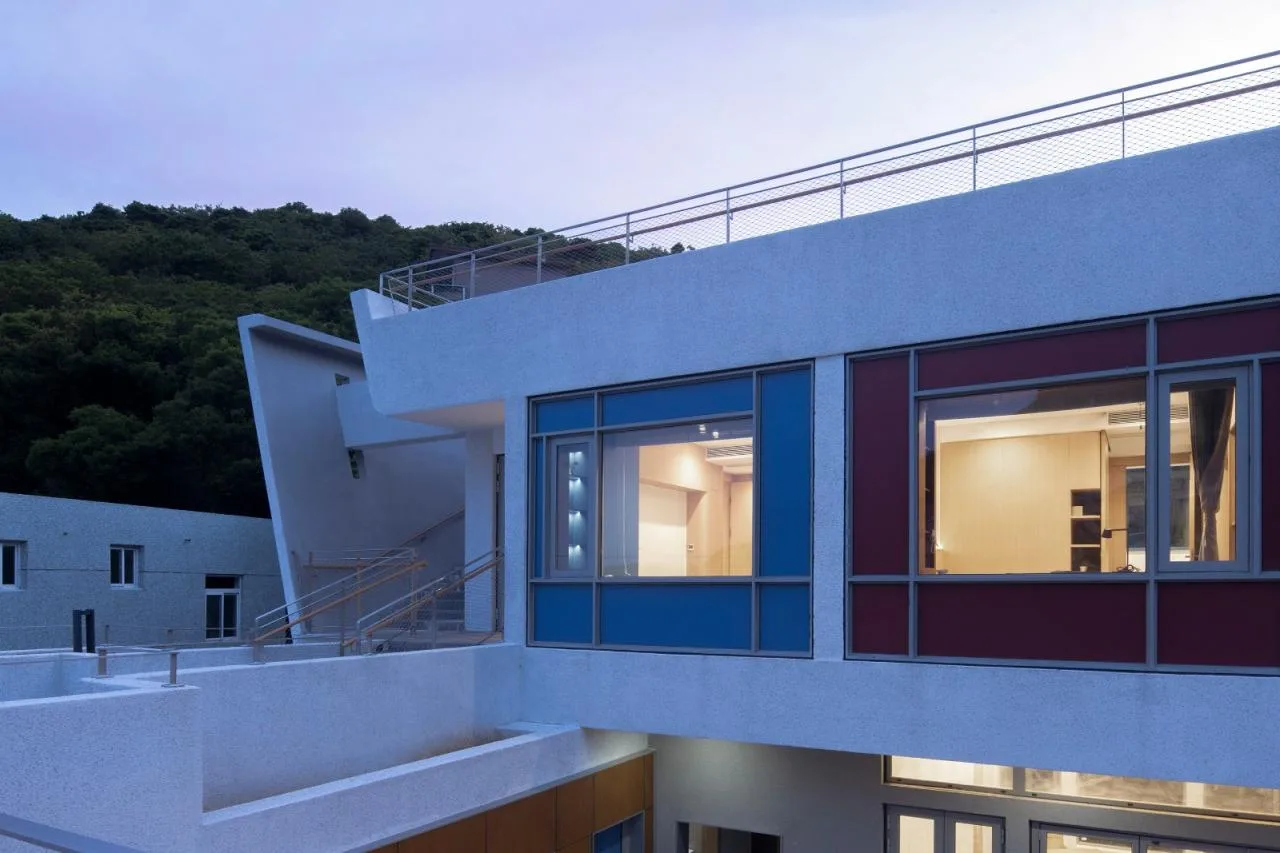
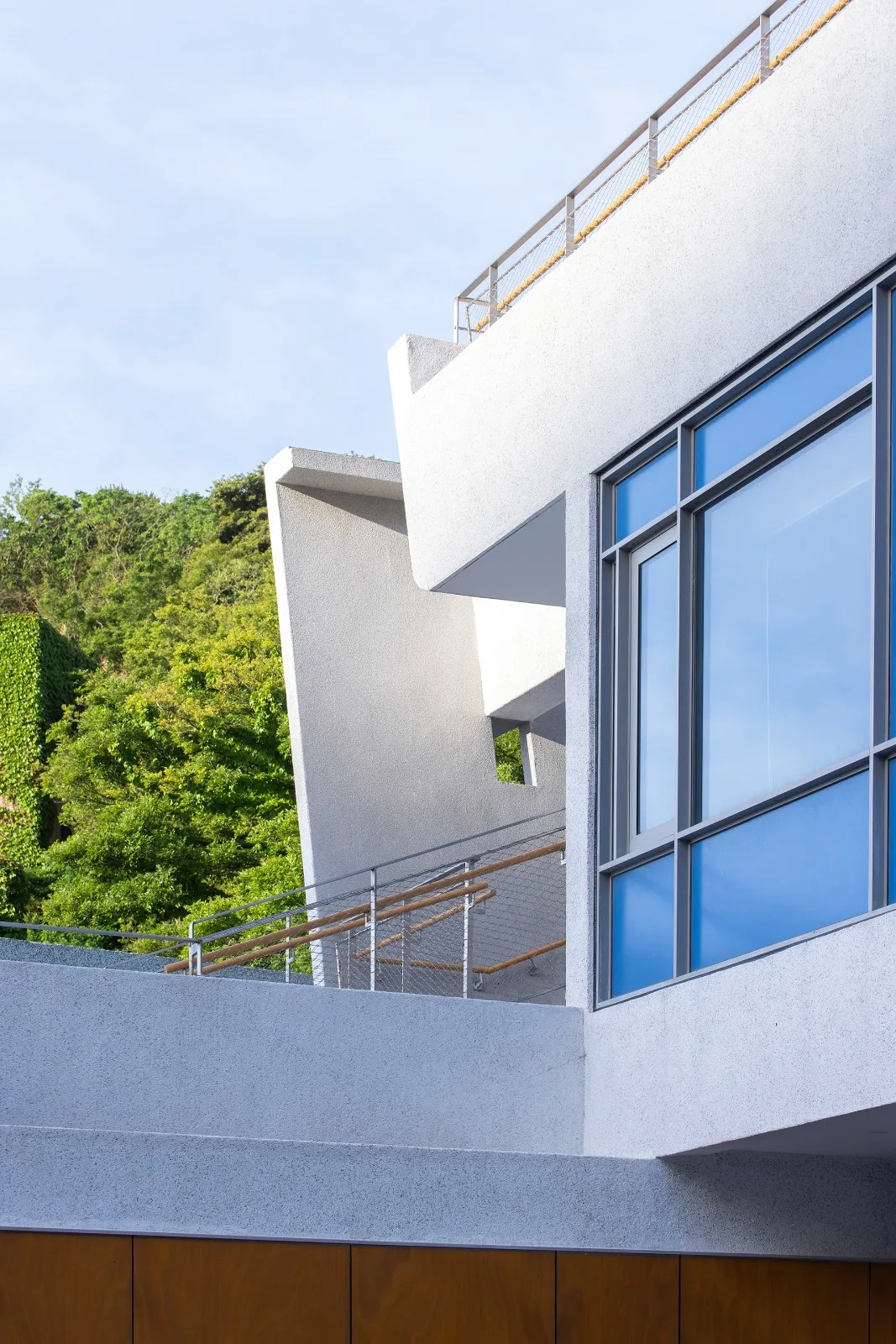
Red and blue hues derive from fishermen repainting their boats and using leftover paint on their doors and windows, creating distinctive facade marks. These colors were applied to the daycare’s exterior and interior second-floor window sills, as well as painted wooden boards on traffic spaces and outdoor ramps. The vivid palette helps elderly residents navigate and differentiate spaces.
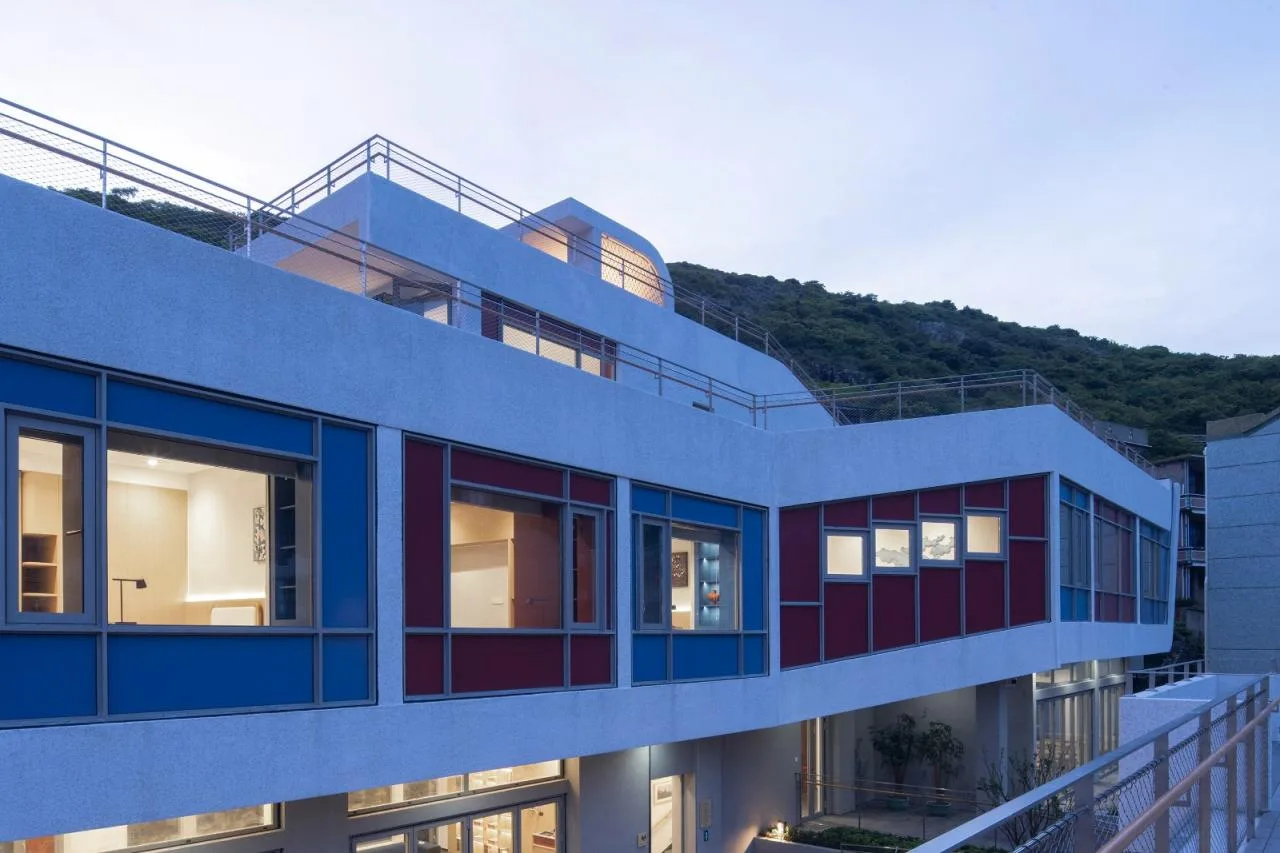
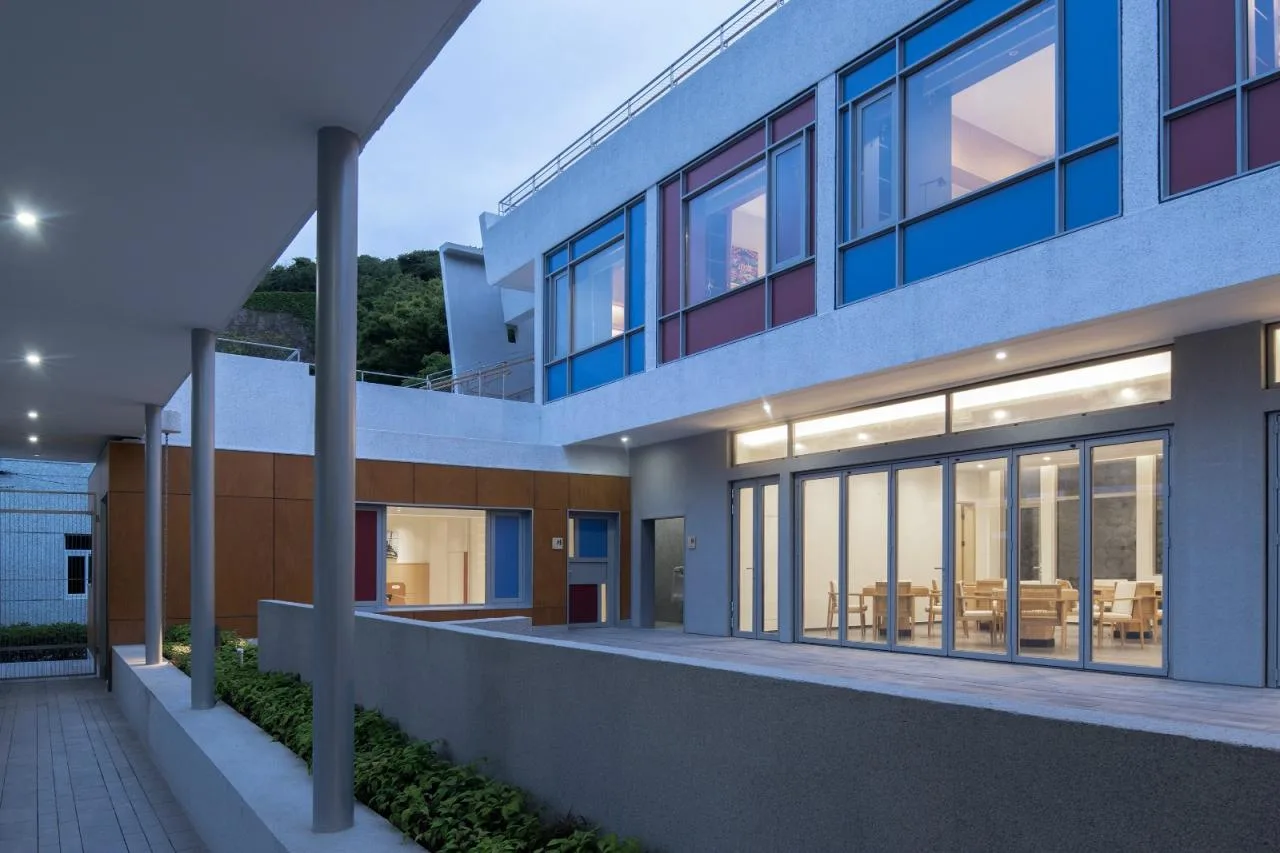
The primary building material is washed stone paint, offering a rich textured surface with a unique granular feel, greatly enhancing the building’s character. Entrance walls use locally common rough stone, while connecting corridors feature steel columns, creating a dynamic contrast and enriching the material hierarchy to reflect local architecture.
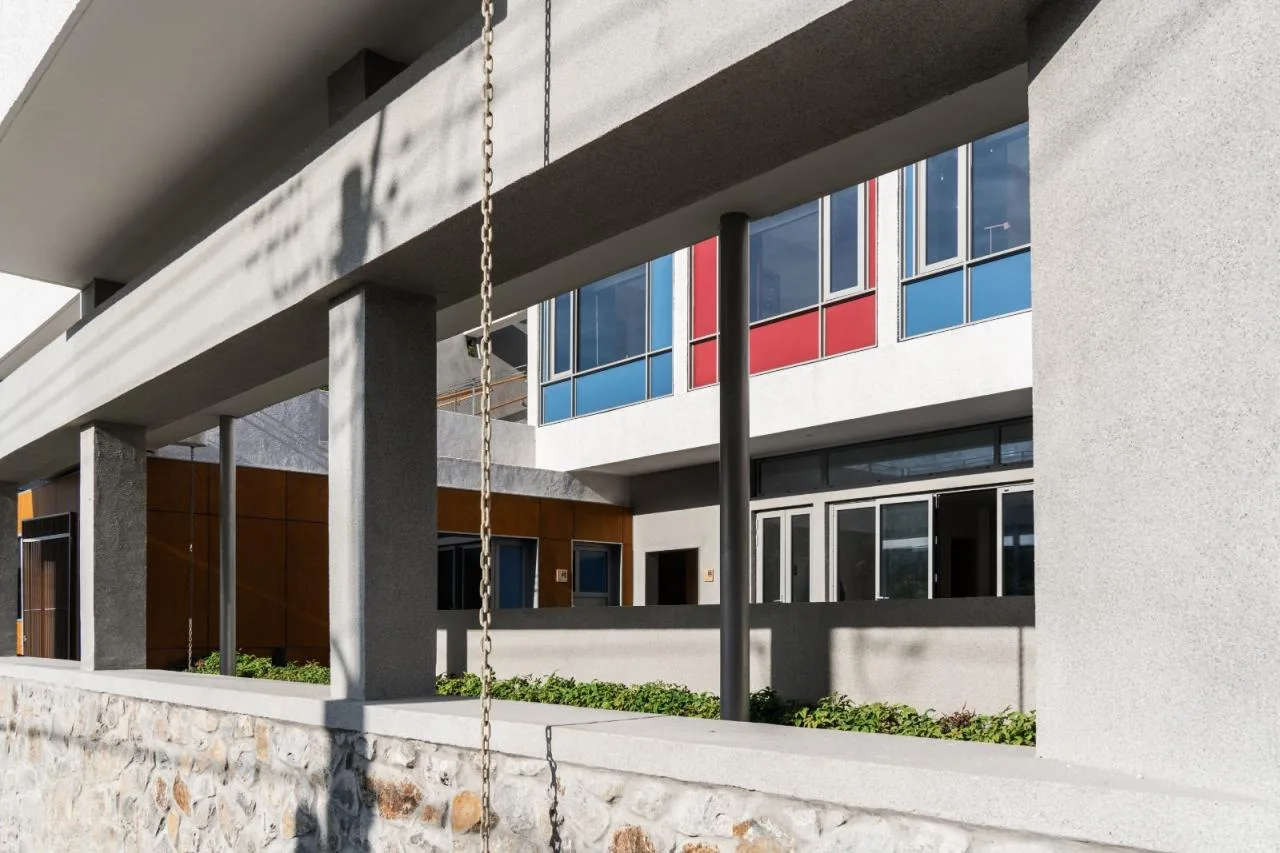
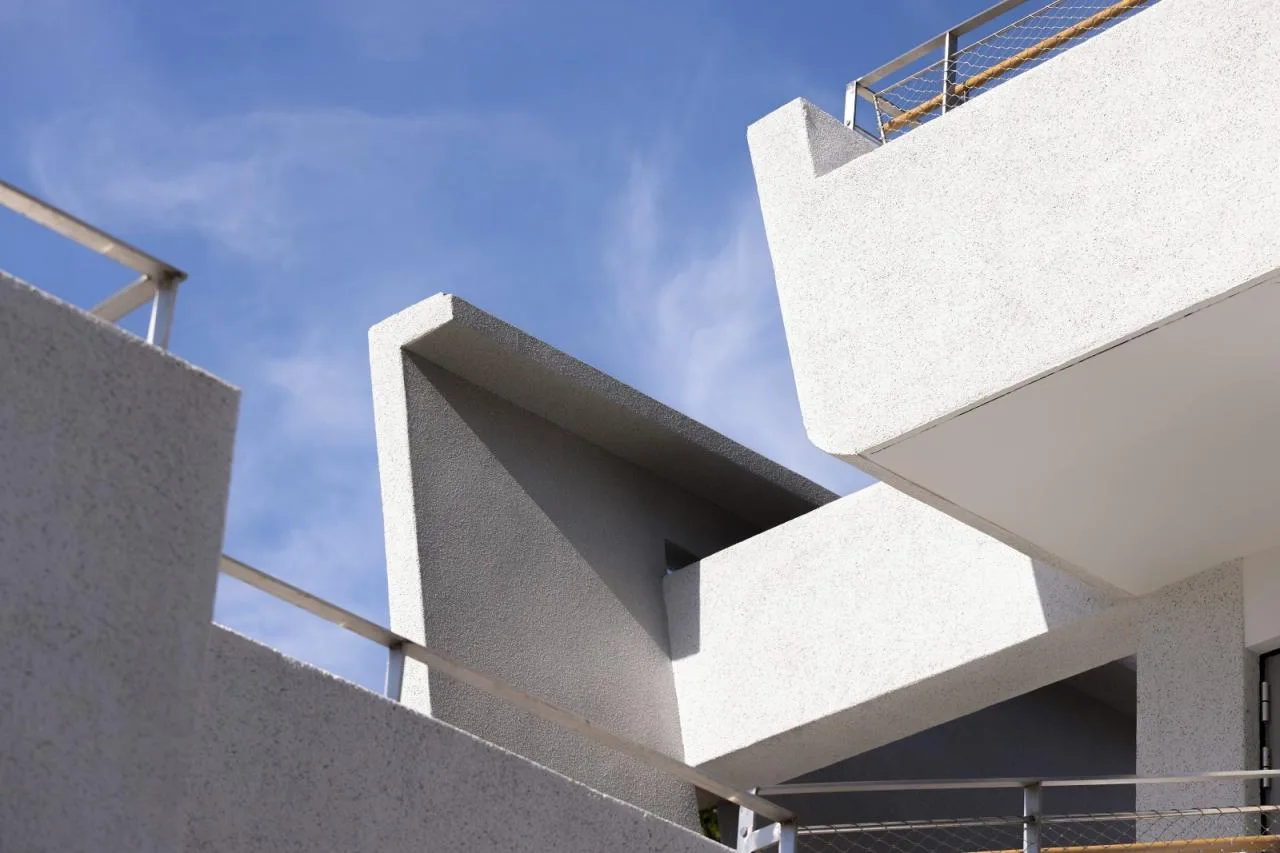
△ Wall material sample
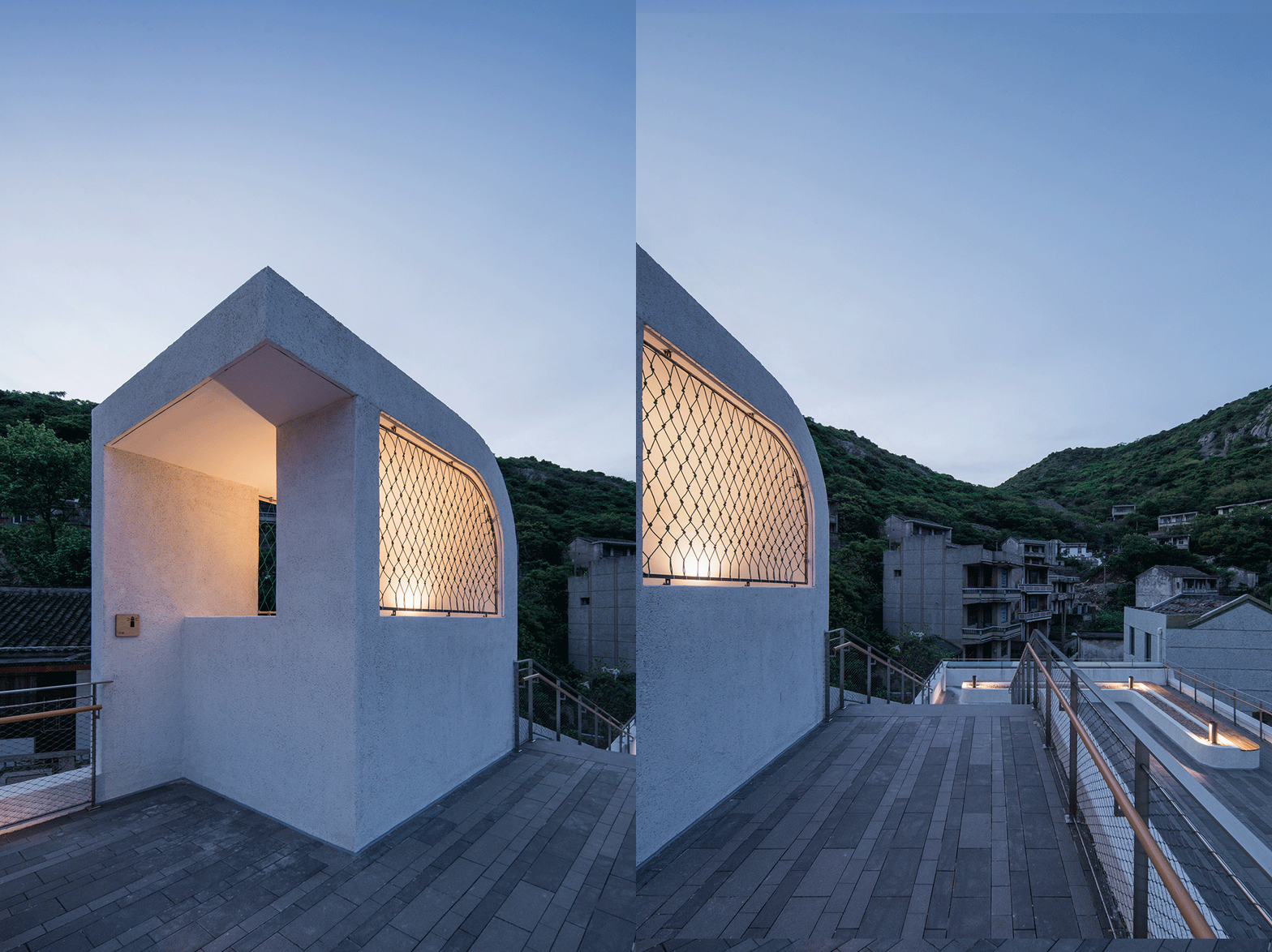
Additionally, fishing nets, often used as fences or entrance barriers in local homes, inspired new textures for protective netting in corridors and the rooftop lighthouse, giving these materials a fresh expressive quality.
06 Conclusion
The elderly of Chaishan Island, who have lived by and depended on the sea their entire lives, have simple wishes. Acknowledging their needs and hopes, Line+ dedicated itself to this public welfare daycare project focused on rural revitalization. Our ambition is to raise awareness about the living conditions of these vulnerable groups and to create a space that meets elderly care needs while reflecting local character—offering warmth and support to the elderly left behind.
This project is not only a design exploration in rural renovation but also a heartfelt tribute and transmission of spirit. We collaborated with expert teams across industries to support Chaishan Island’s future. We sincerely thank all participating teams and sponsors who made the dream of a floating boat on Chaishan Island a reality—ensuring the island is never alone.
Project model photo
Project drawings
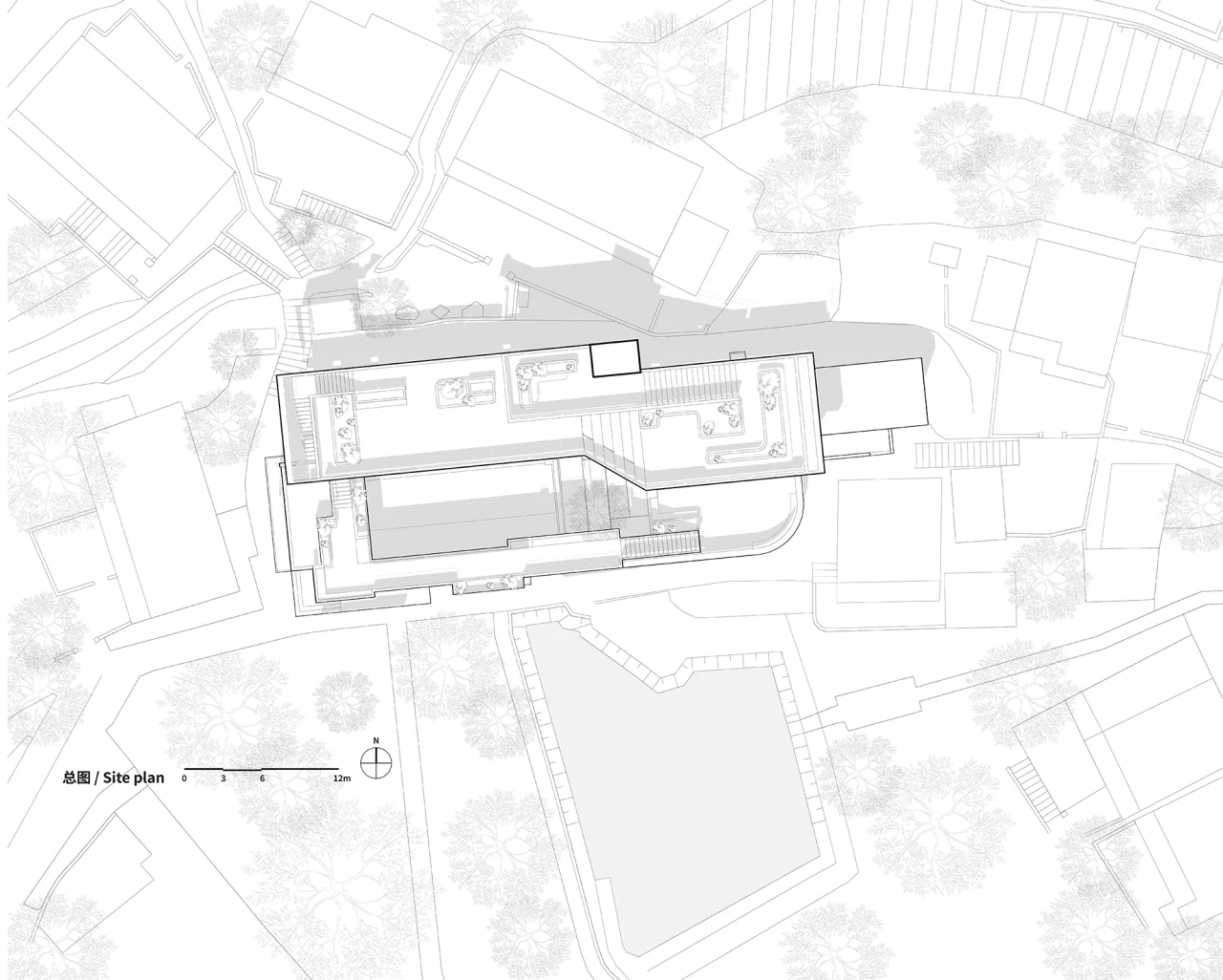
△ General layout plan
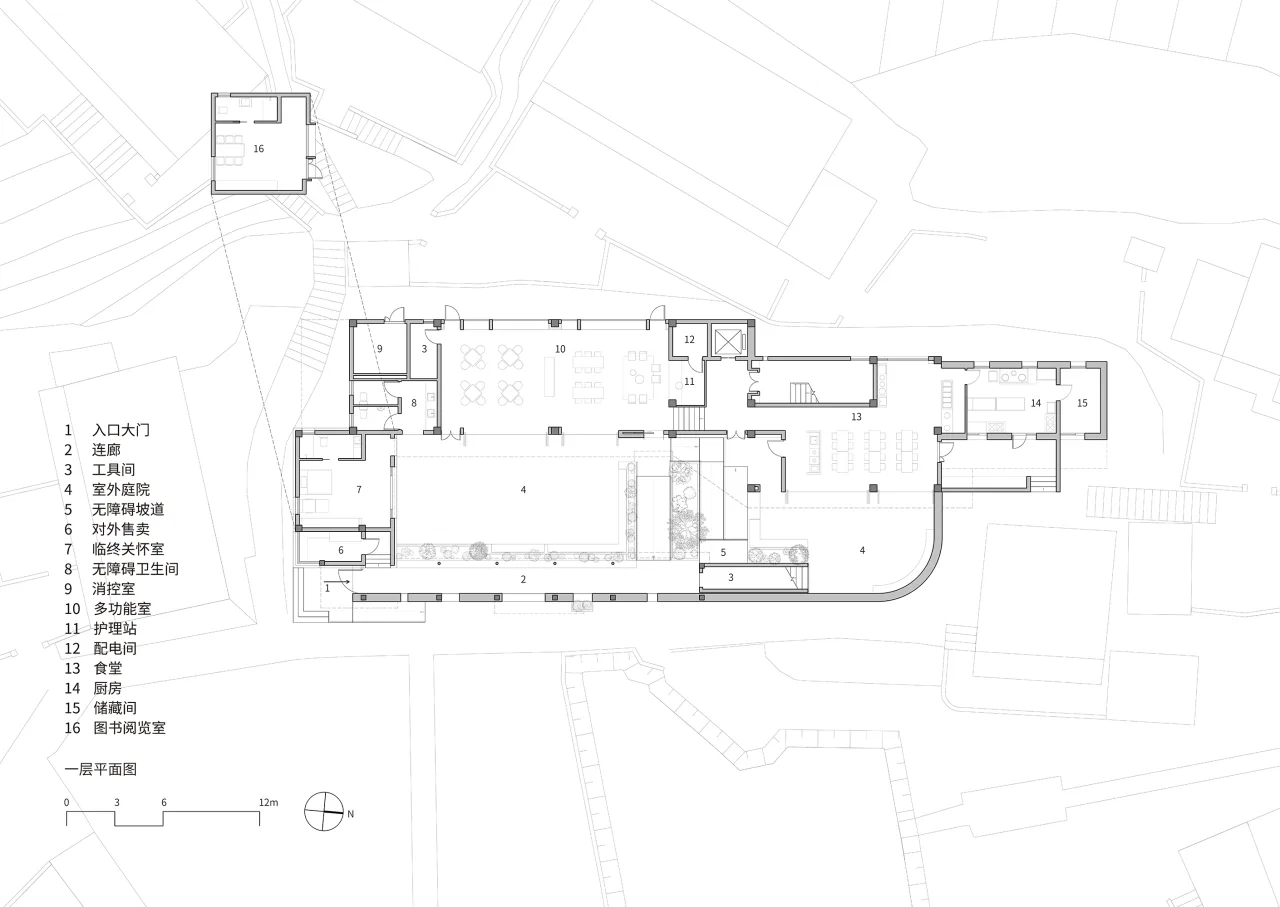
△ First floor plan
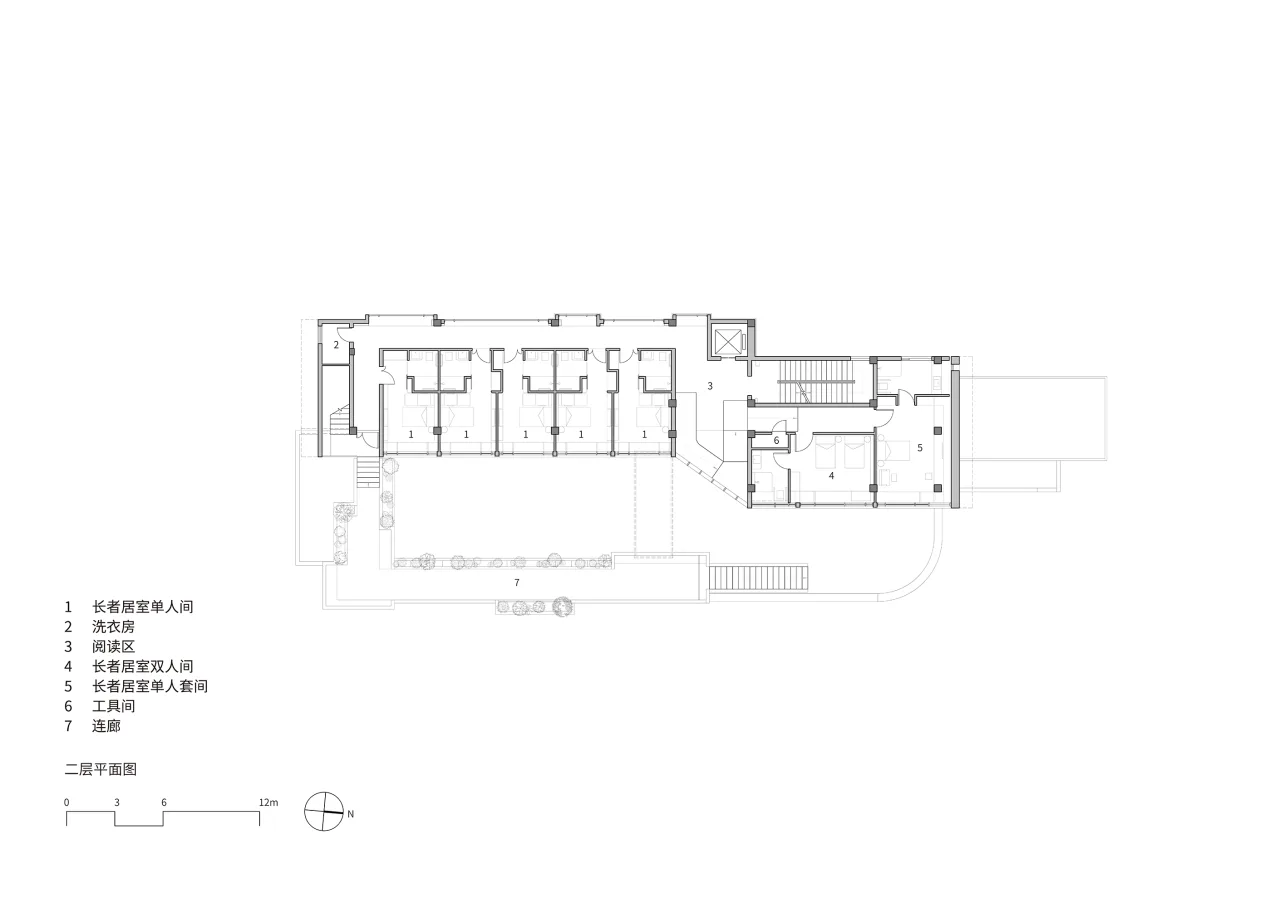
△ Second floor plan
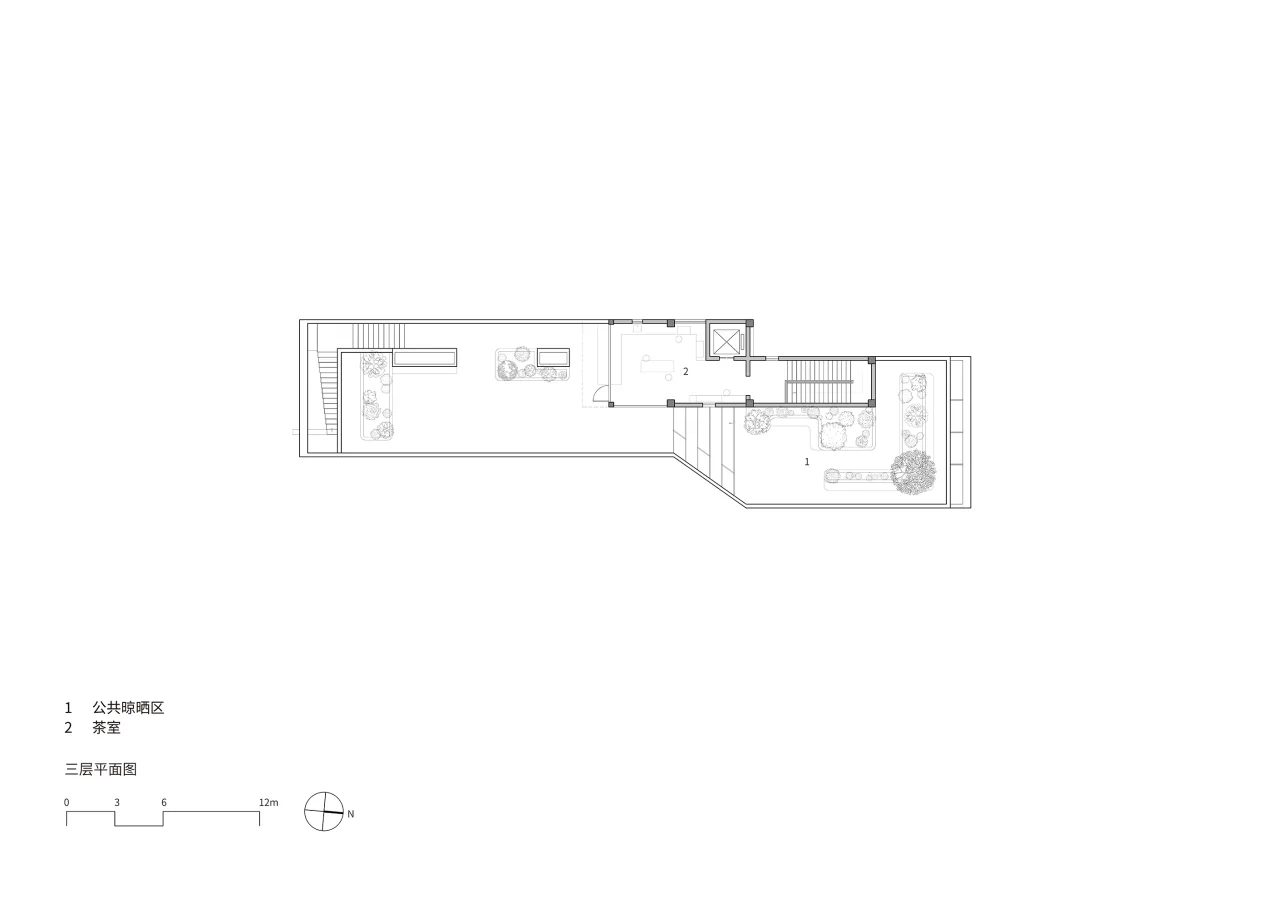
△ Third floor plan
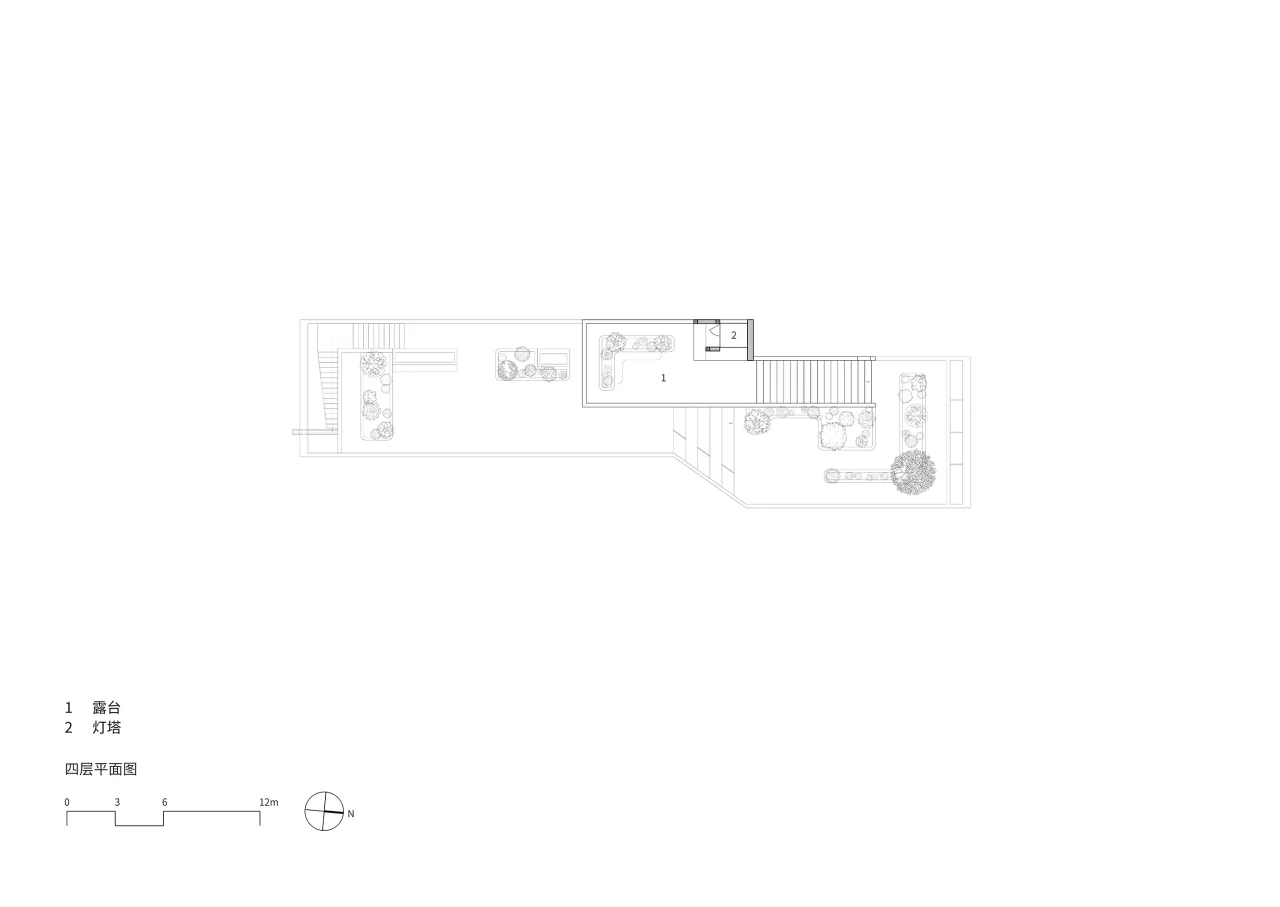
△ Fourth floor plan
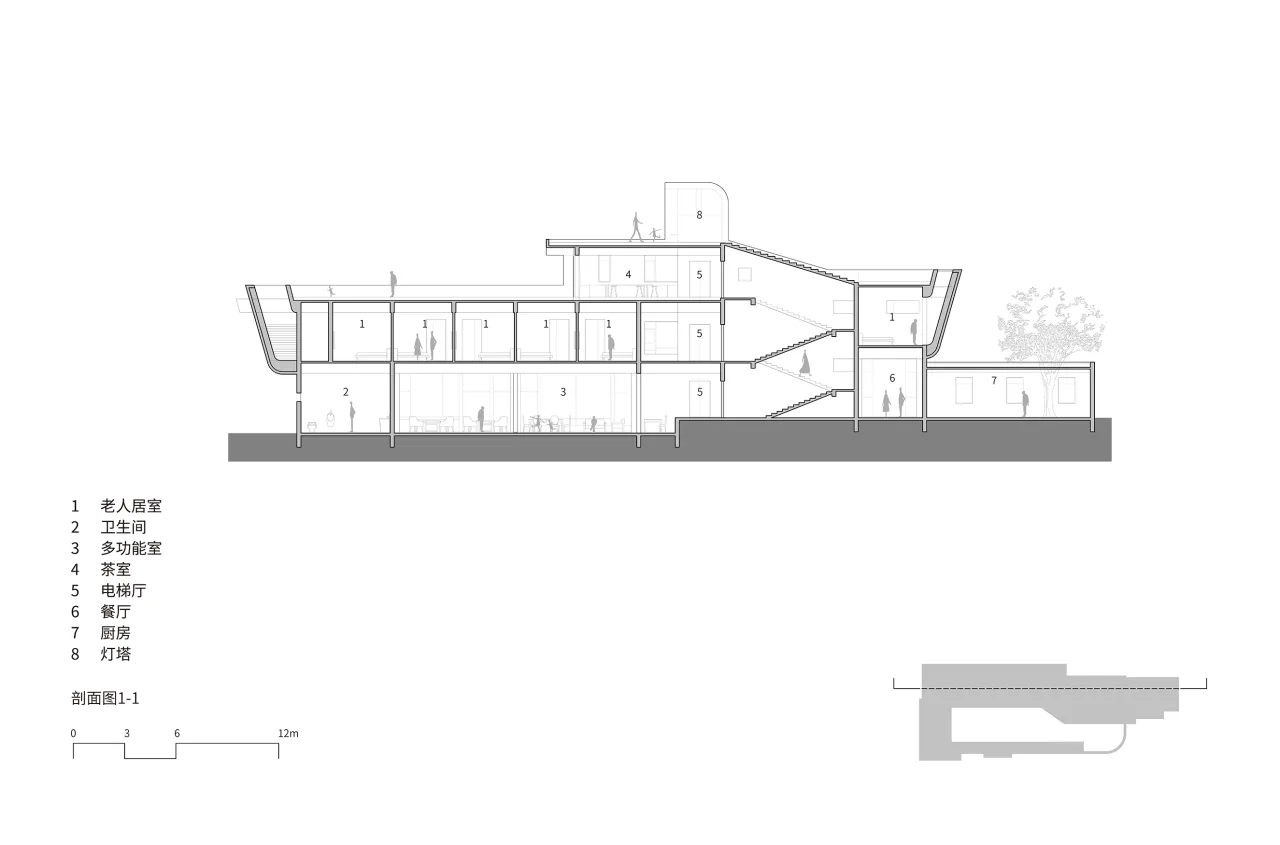
△ Section diagram
Project Information
Project Name: Baishagang Village Elderly Care Center
Architecture, Interior, and Landscape Design: Line+ Architecture Firm
Lead Architect / Project Creator: Meng Fanhao
Project Architect: He Yaliang
Design Team: Xu Yifan, Xu Hao, Wang Jionghao (intern), Jin Yuting, Fan Xiaoxiao, Ye Xin, Xu Yichang, Jin Kaidi, Zhang Weixuan (intern), Chen Hanxi (intern), Li Shangyang, Jin Jianbo, Rao Feier, Su Chenjuan
Resident Designers: Xu Yifan, Xu Yichang, Ye Xin
Owner: Baisha Island Management Committee, Putuo District, Zhoushan City
Project Planning: Zhu Xiaoming, Zhao Lijun
Program Partner: Shanghai Oriental TV Dream Maker
Construction Drawing Cooperation: Architectural Design and Research Institute of Three Gorges University
General Contractor: Zhejiang Changyi Construction Co., Ltd.
On-site Construction Coordination: Zhao Lijun
Design Guidance: M.TP 104
Location: Chaishan Island, Zhoushan, Zhejiang
Building Area: 799 square meters
Design Period: June 2023 – September 2023
Construction Period: September 2023 – May 2024
Structure: Reinforced concrete frame
Materials: Concrete, steel, washed stone coating, textured coating, matte stainless steel, wood fiber board, rough stone
Photography: Existence of Architecture – Architectural Photography line+
Thank You to Our Sponsors
Exterior washed stone: Terui Yu
Exterior wood fiberboard: Kemwood
Doors and windows: Villa standard doors and windows
Indoor paint: Nippon Paint
Indoor kitchen appliances: Linne
Indoor woodwork: Shupai Home Furnishings
Ceramic tiles: Dongpeng Ceramic Tiles
Lighting fixtures: Qiyi Lighting
Air conditioning and underfloor heating: York Air Conditioning
Bathroom fixtures: Hengjie Bathroom
Terrazzo and rock slab: Dongxing
Outdoor seating: Ningbo Helong New Materials














Must log in before commenting!
Sign Up