
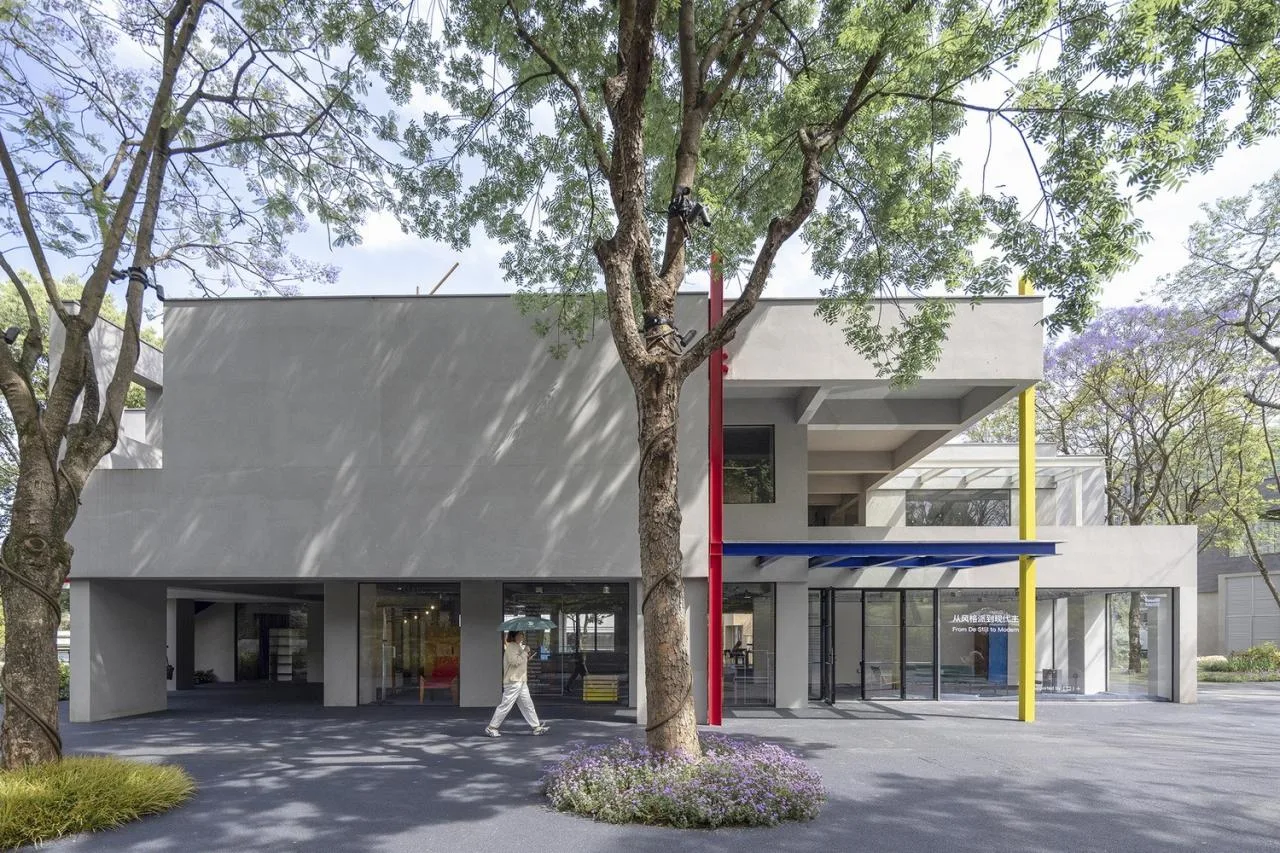
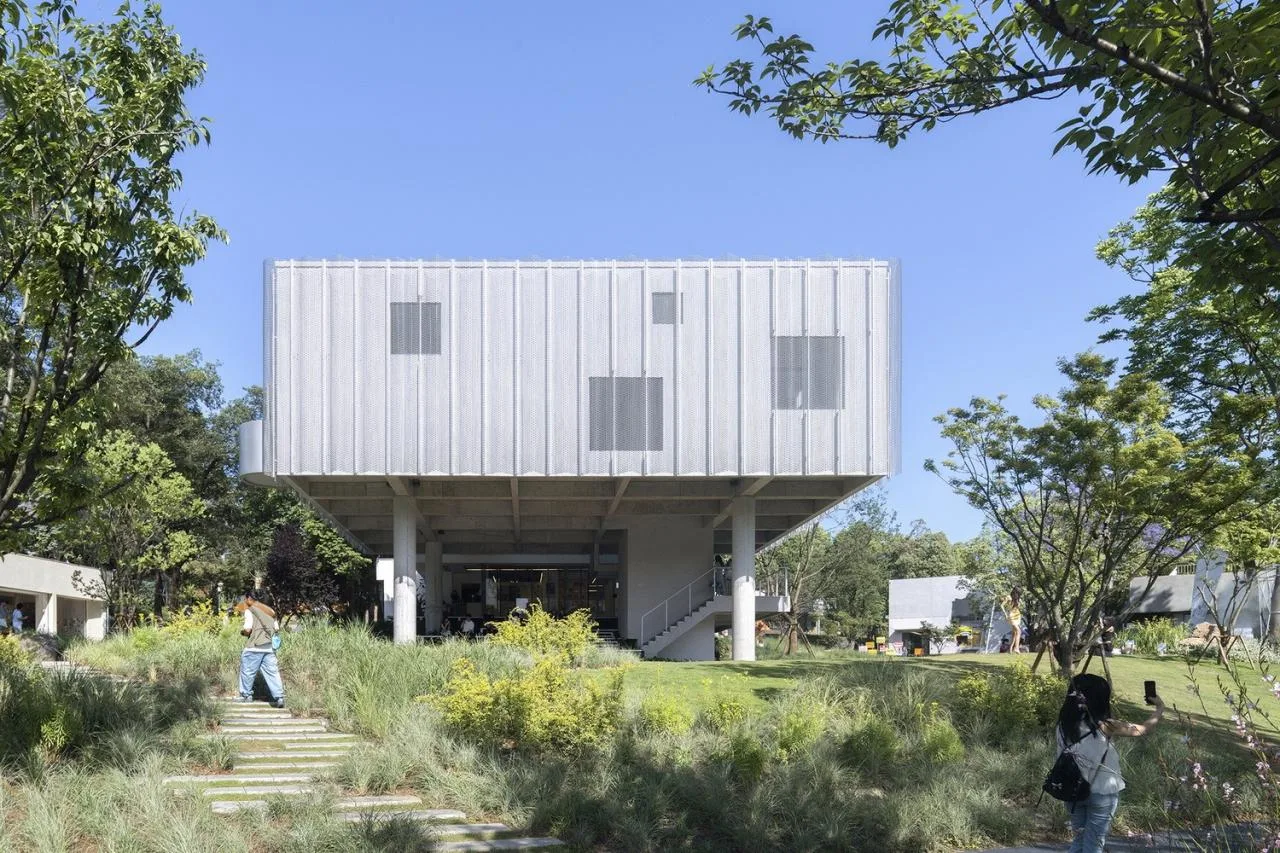
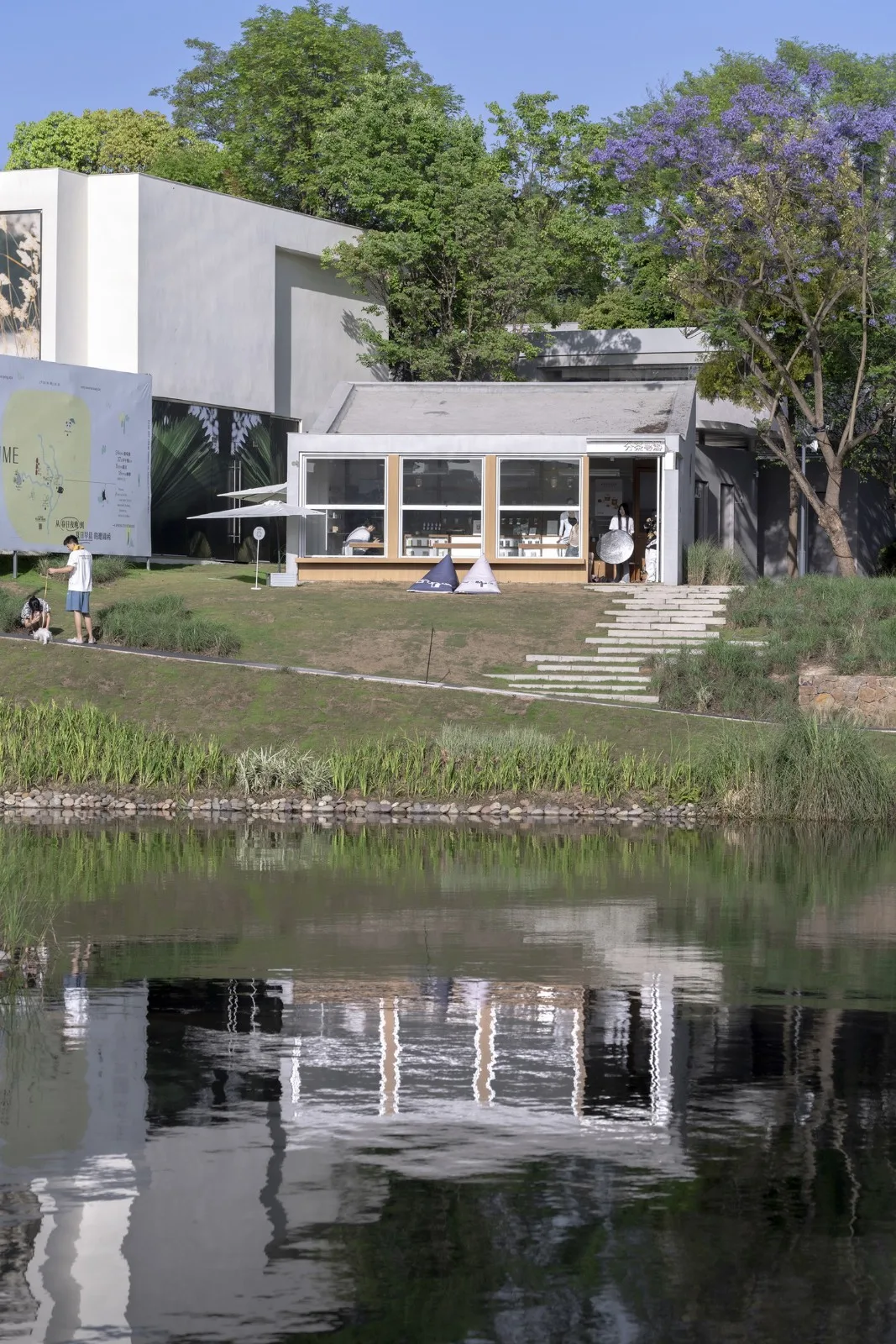
The Luhu CPI Island Commercial Renewal Project consists of a collection of villa model rooms located on the east side of Luke Island within Chengdu’s “Luhu Ecological City”. More than twenty former model villas are spread across the island. The goal of the CPI Island project is to revitalize these idle, aging properties through dynamic urban renewal and commercial redevelopment, enhancing the connection between the waterfront, residential, and commercial areas.
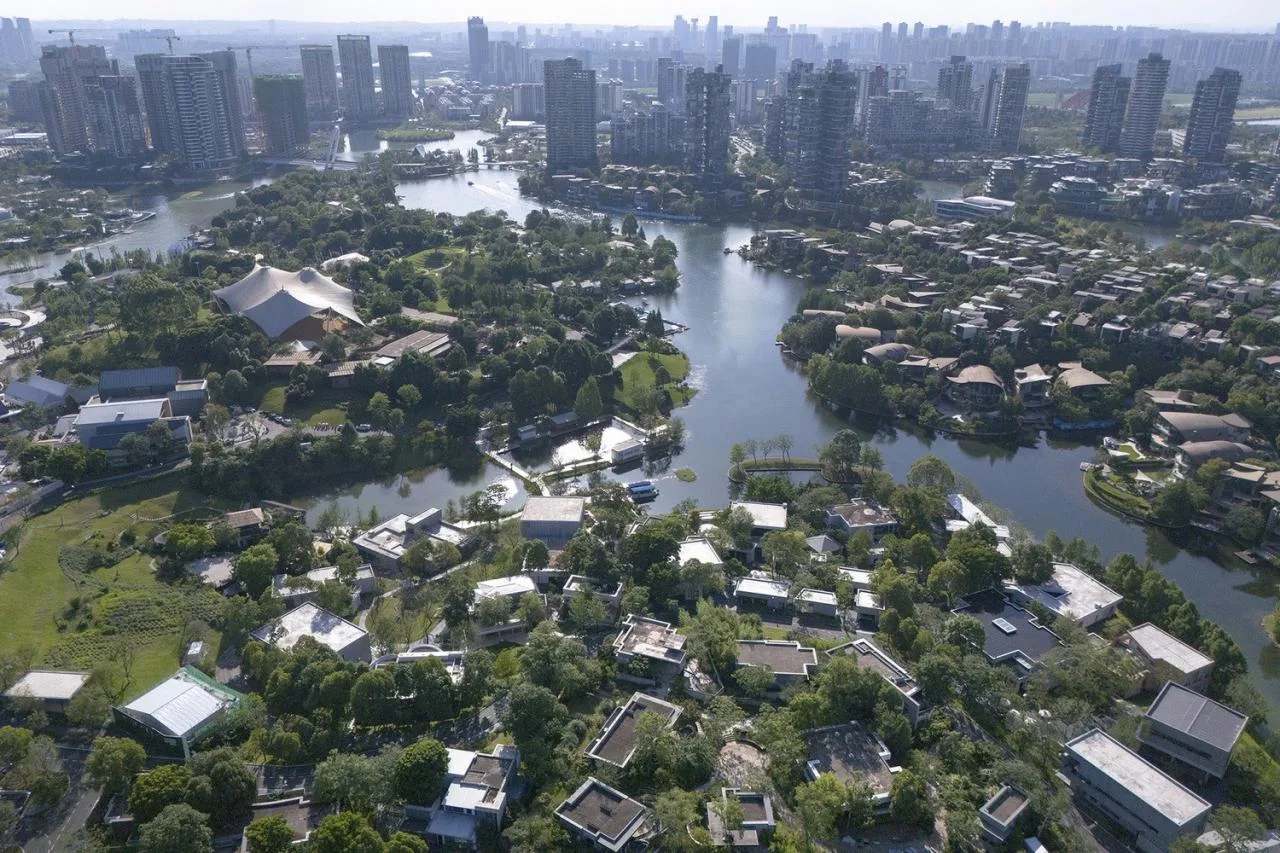
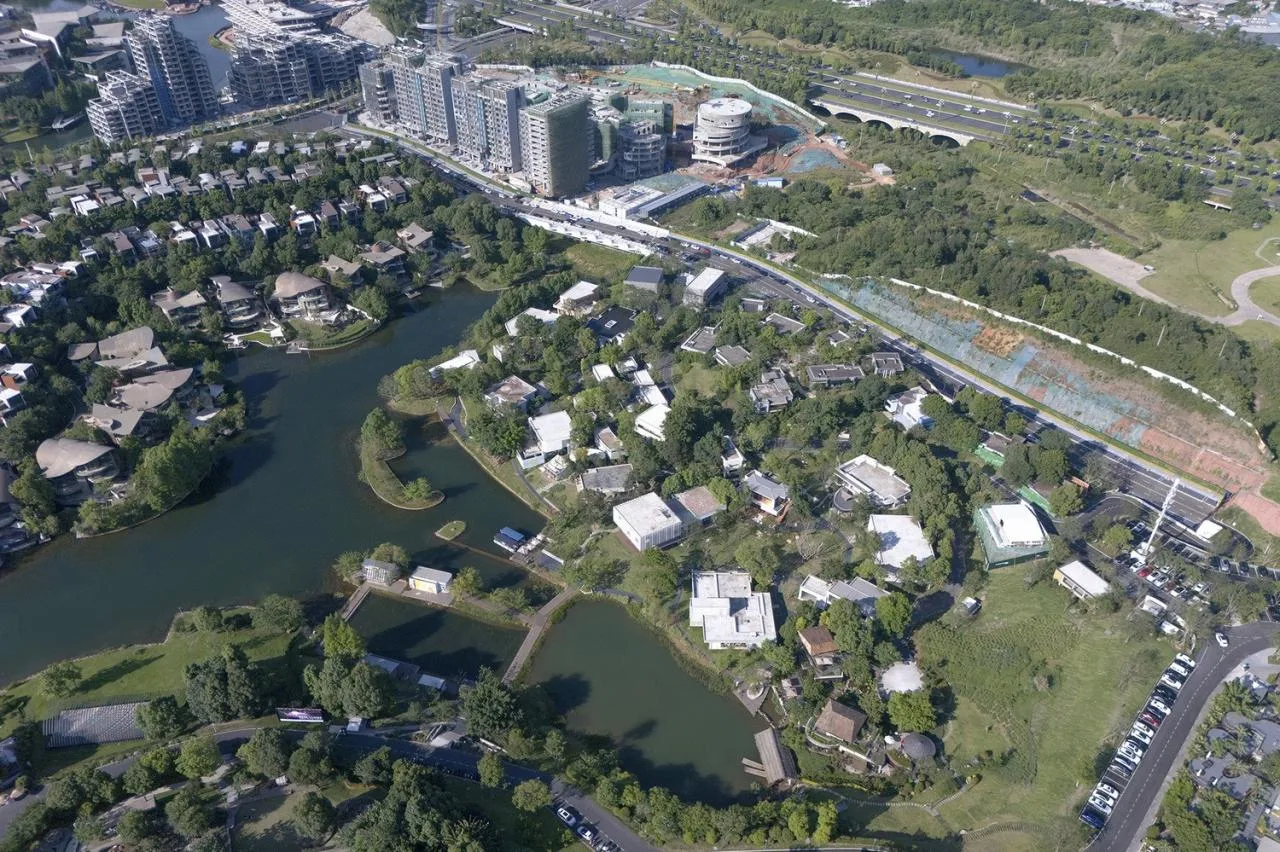
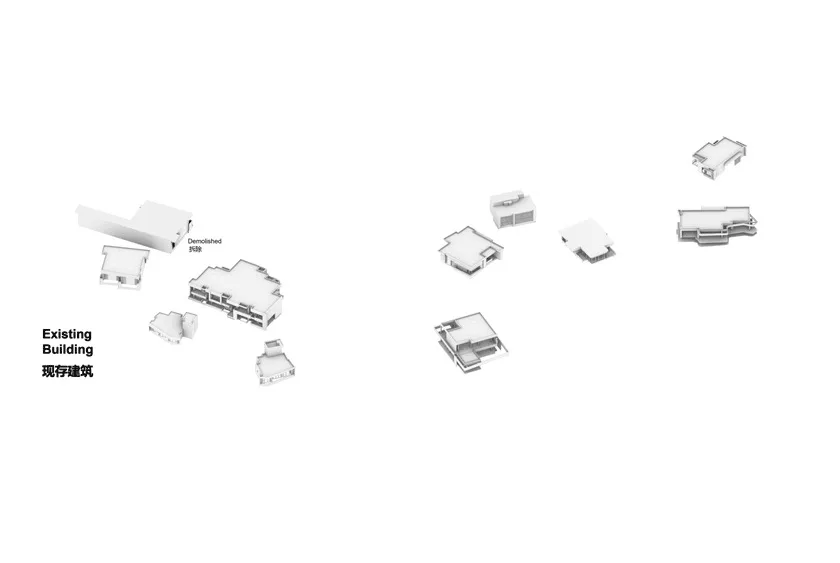
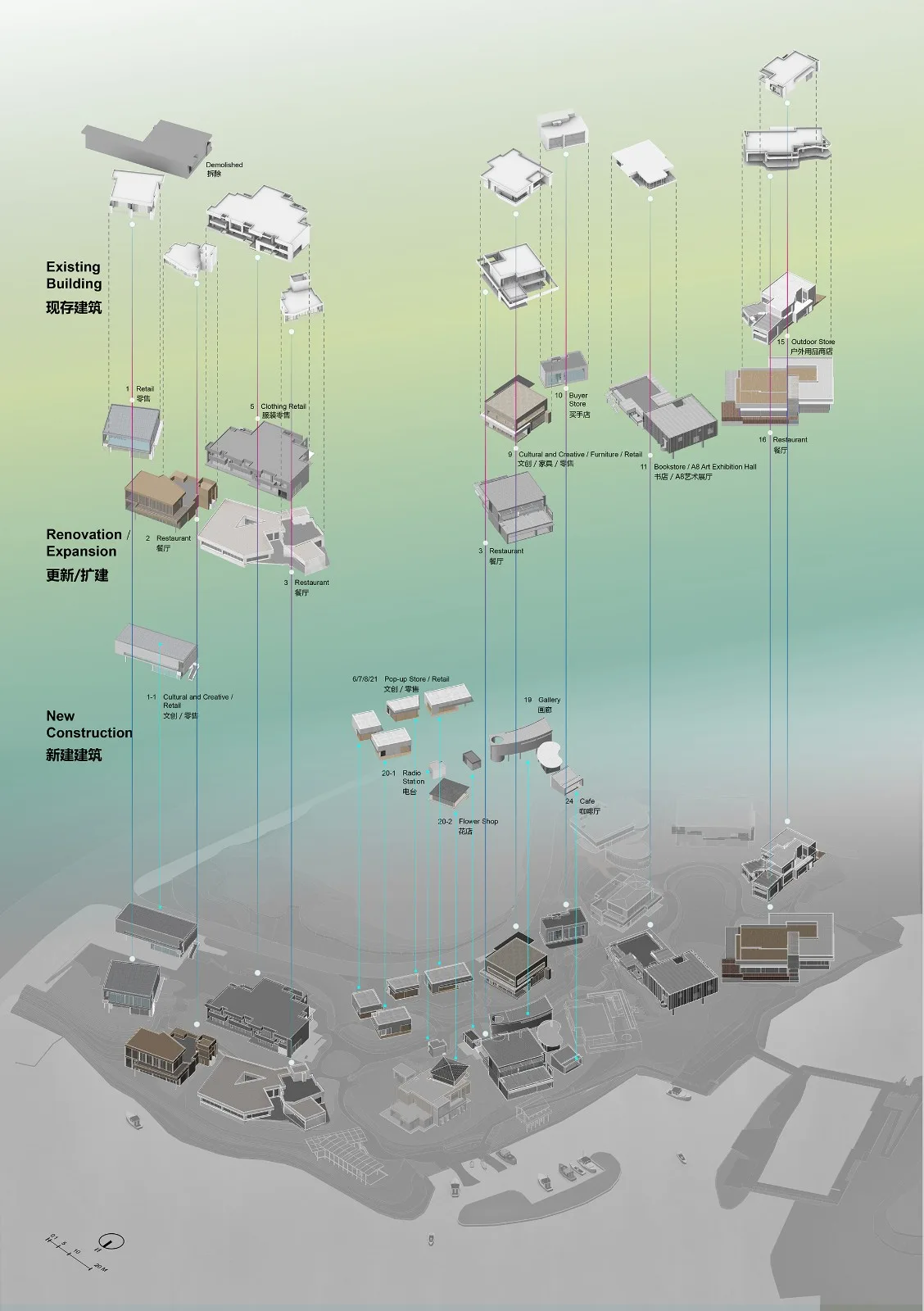
Through comprehensive planning and design, Jili Building renovated and expanded ten existing structures and constructed ten new buildings, carefully adapting to the terrain. This process redefined the axis system and spatial relationships of the original site, paying homage to the past while embracing a new beginning.
01 Design Concept
The design was deeply inspired by the concepts of “flat heat” and “light scenery” as defined by Japanese philosopher Kiyoshi Sakata. “Flat heat” refers to the typical or most ordinary state of a city, highlighting its core atmosphere, culture, and emotions.
From this perspective, Chengdu offers an ideal urban environment to cultivate a space imbued with relaxation. Therefore, the project focuses on creating a “flat heat” space unique to Chengdu by employing spatial strategies that emphasize the city’s gentle, comfortable temperament and everyday normalcy—qualities locals often describe simply as “comfort.”
02 Architectural Design Strategy
Following the overall design, the architectural approach further pursued the “flat heat” theme while exploring the concept of “light scenery.” “Light scenery,” or “hidden scenery,” refers to the subtle, often overlooked details in our sensory experience and environment. It emphasizes awareness of fleeting, delicate moments that enrich daily life, offering a sense of peaceful beauty and deeper connection with the world.
The design employs several techniques:
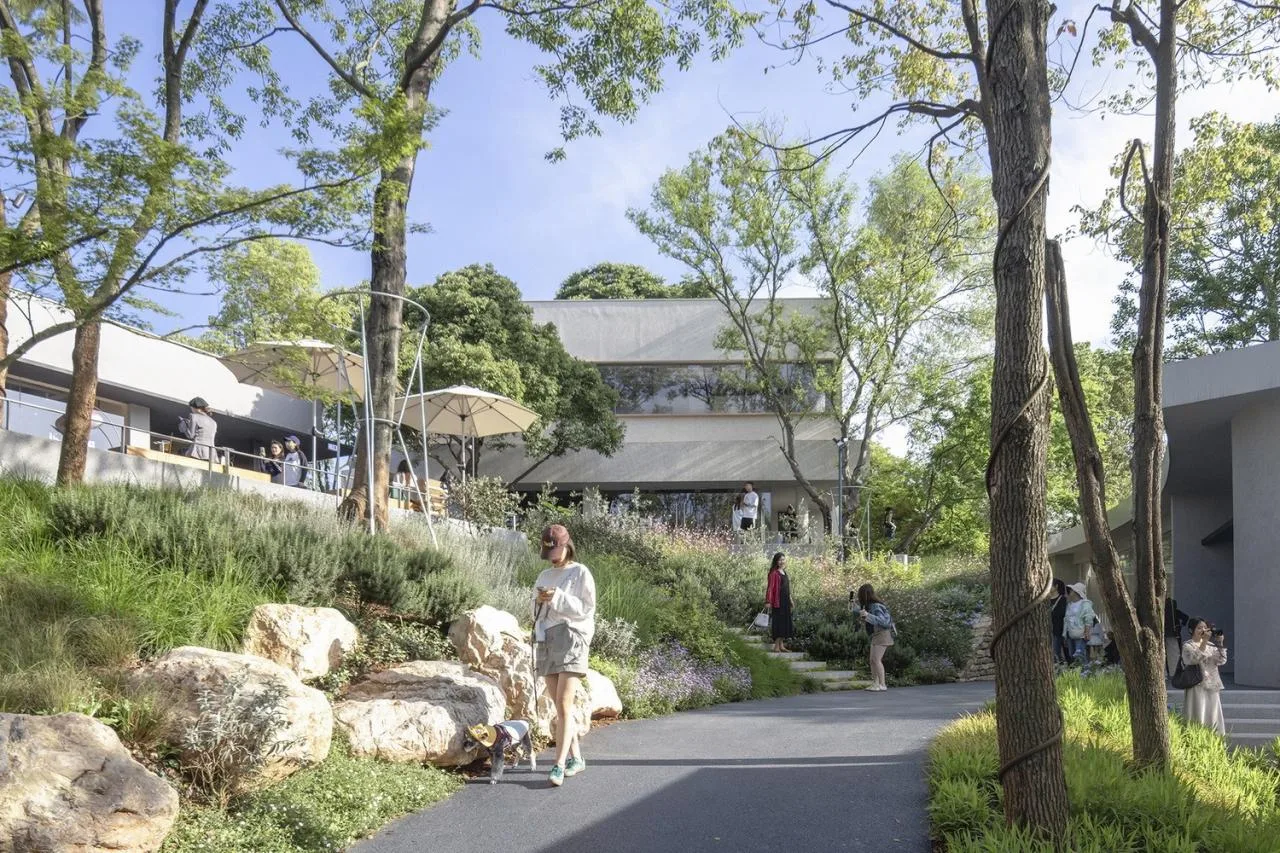
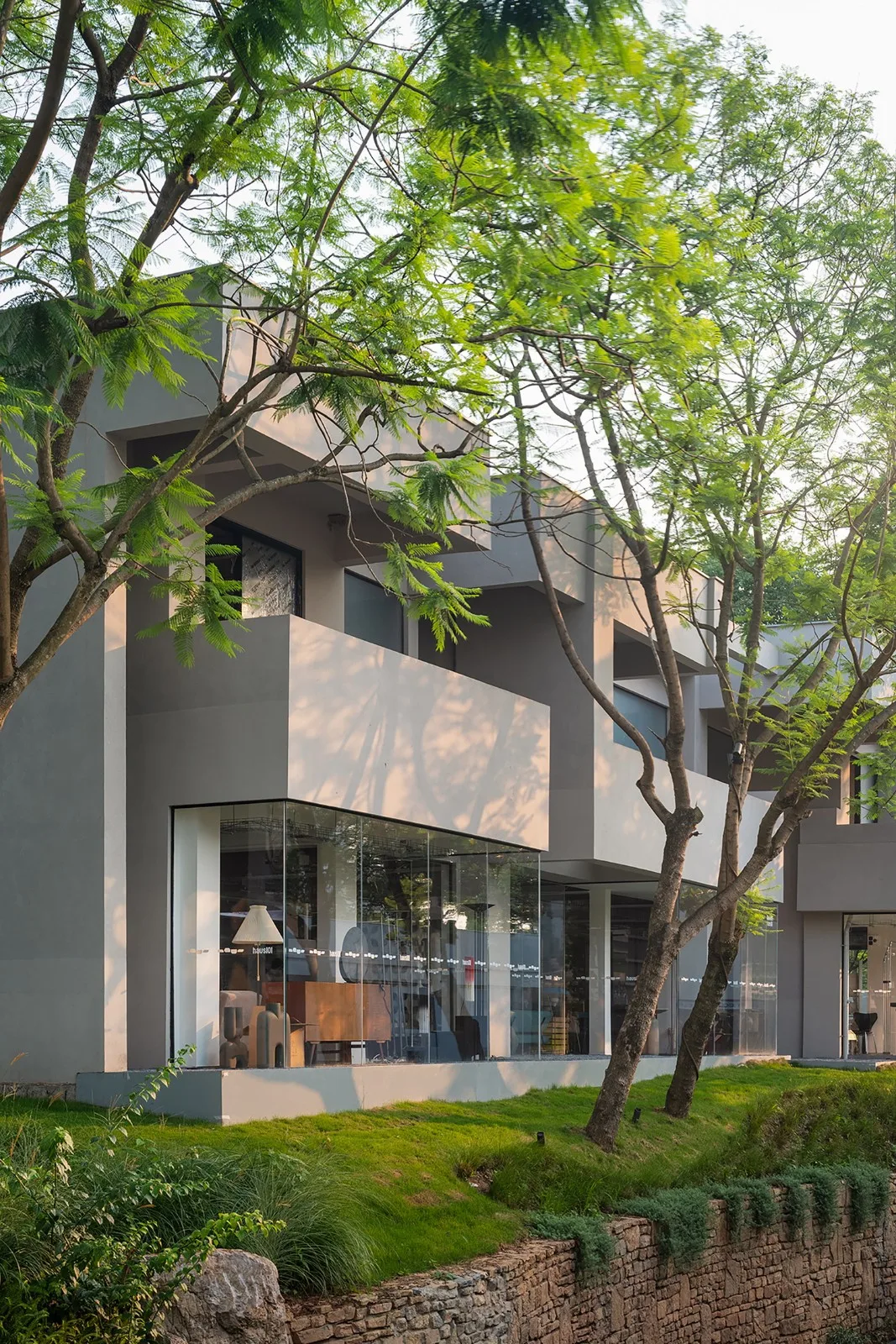
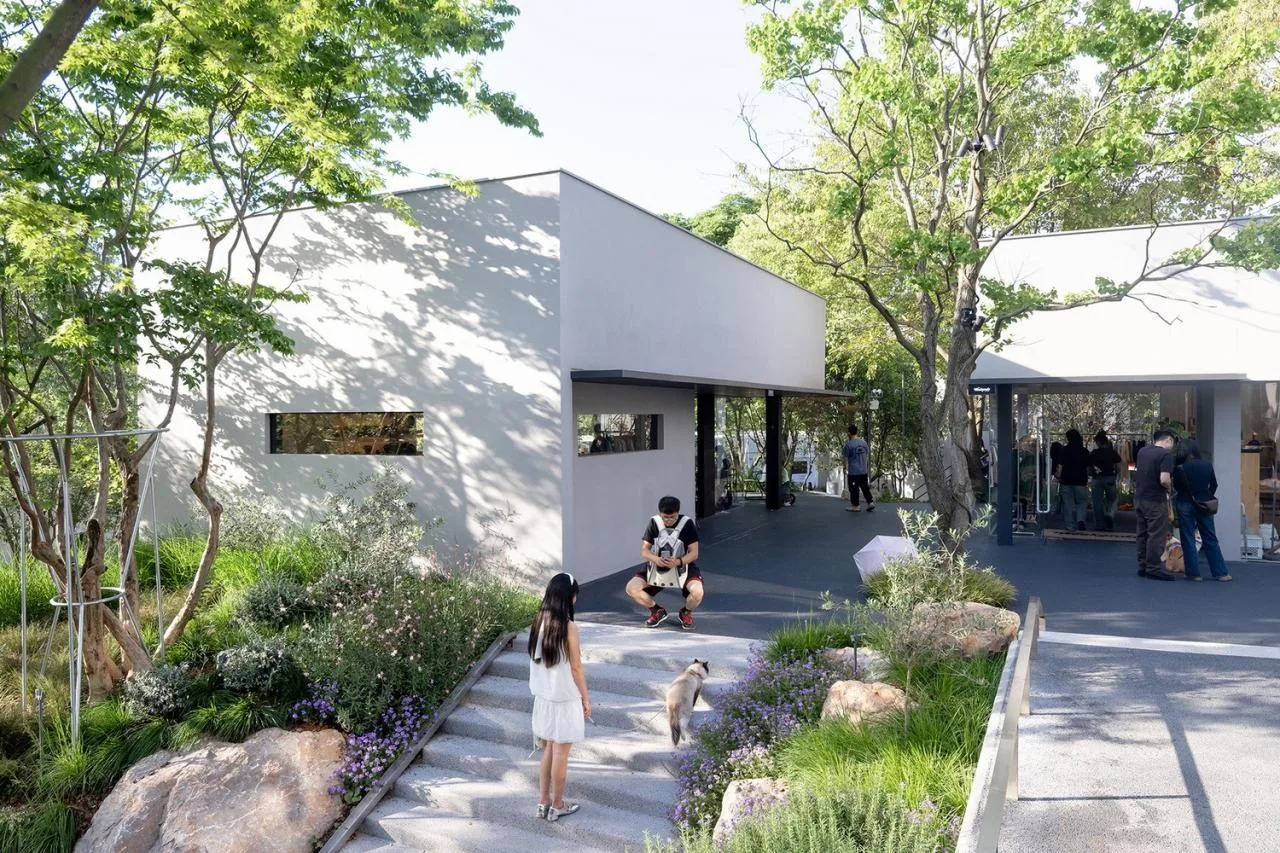
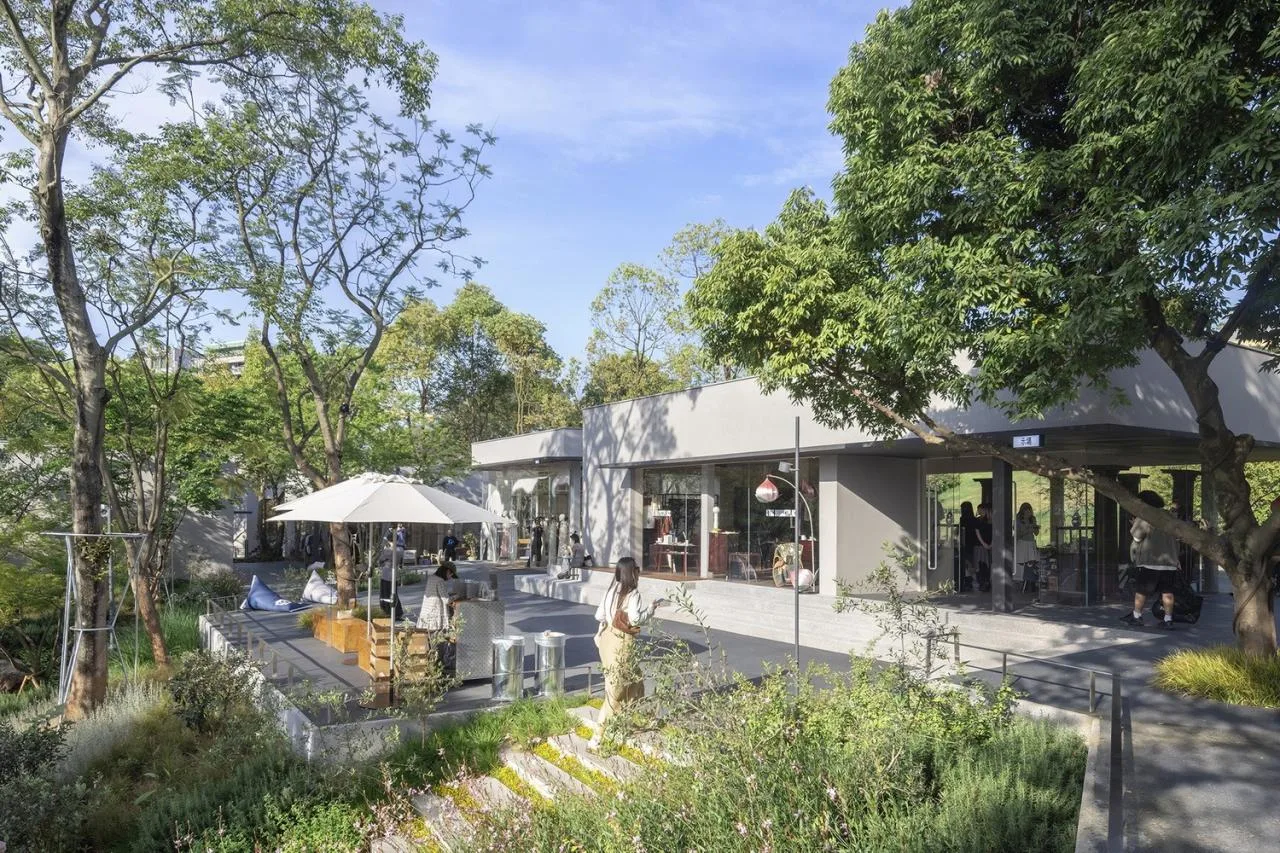
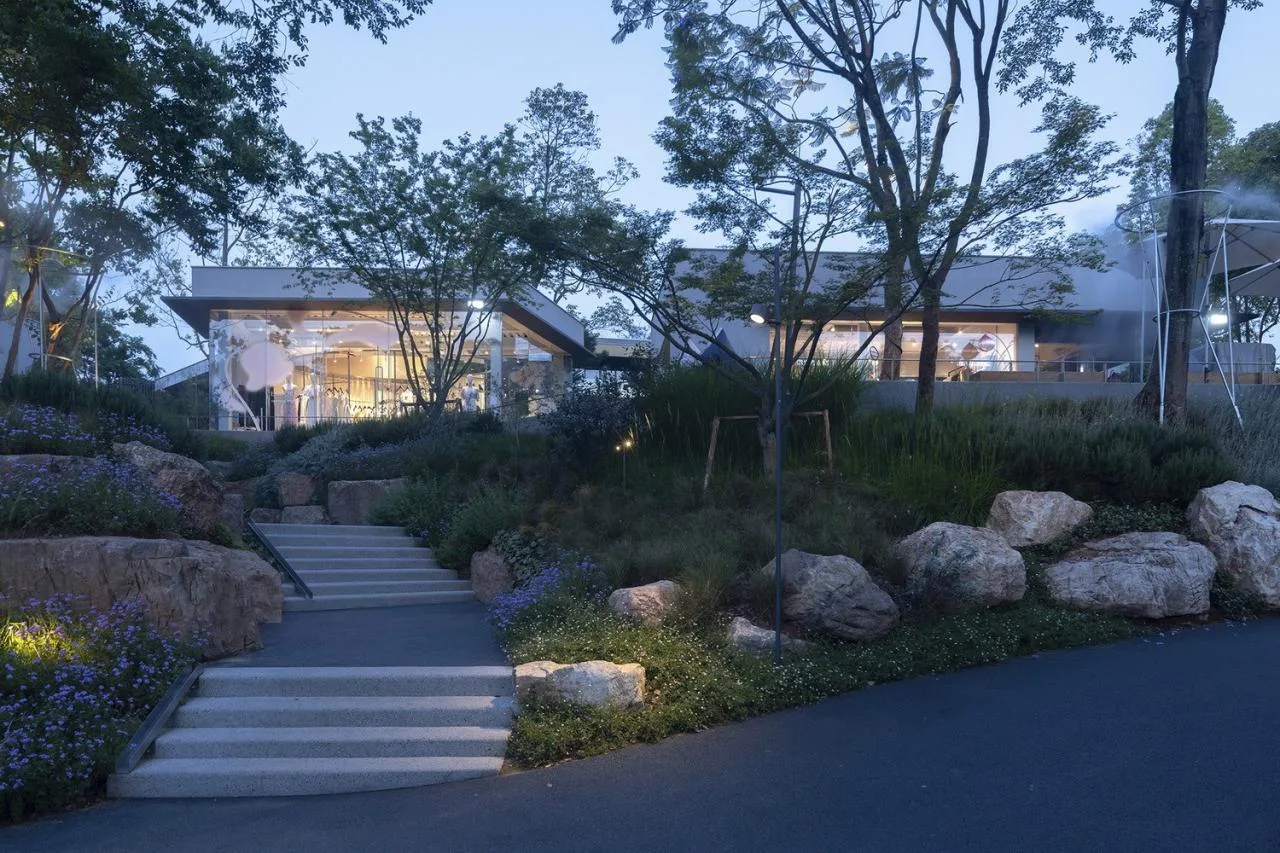
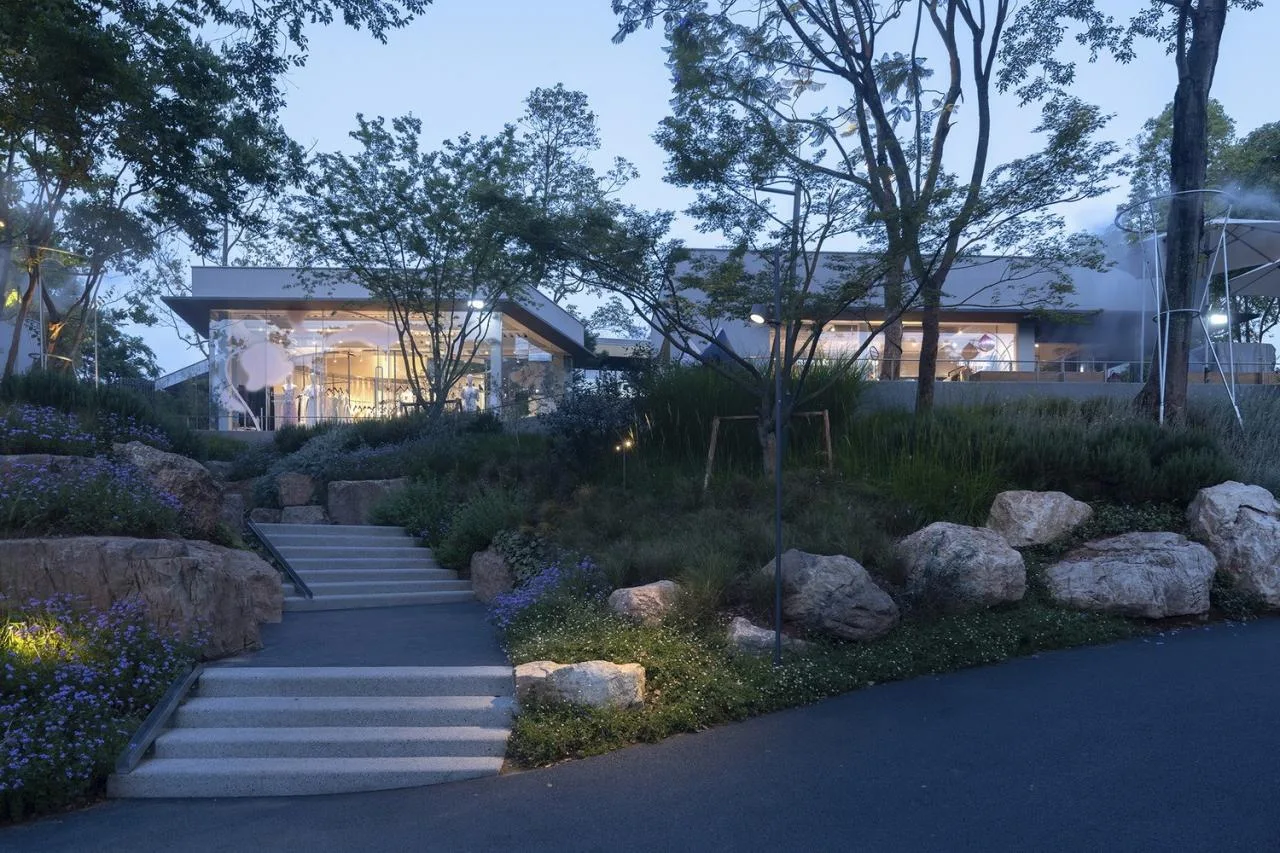
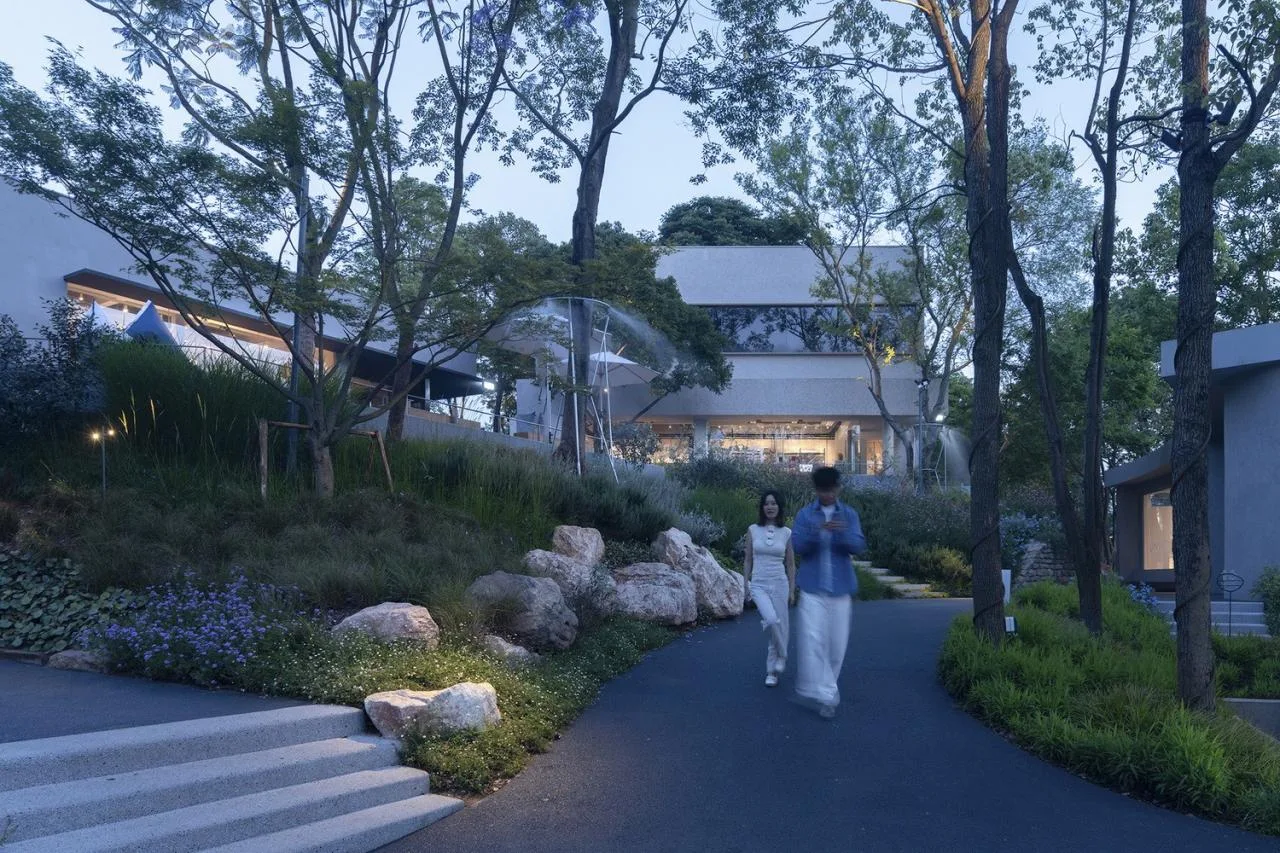
First, the micro-terrain is fully utilized to create terraces and staggered spaces. This approach allows buildings to harmonize with nature while introducing visual layers and spatial transparency.
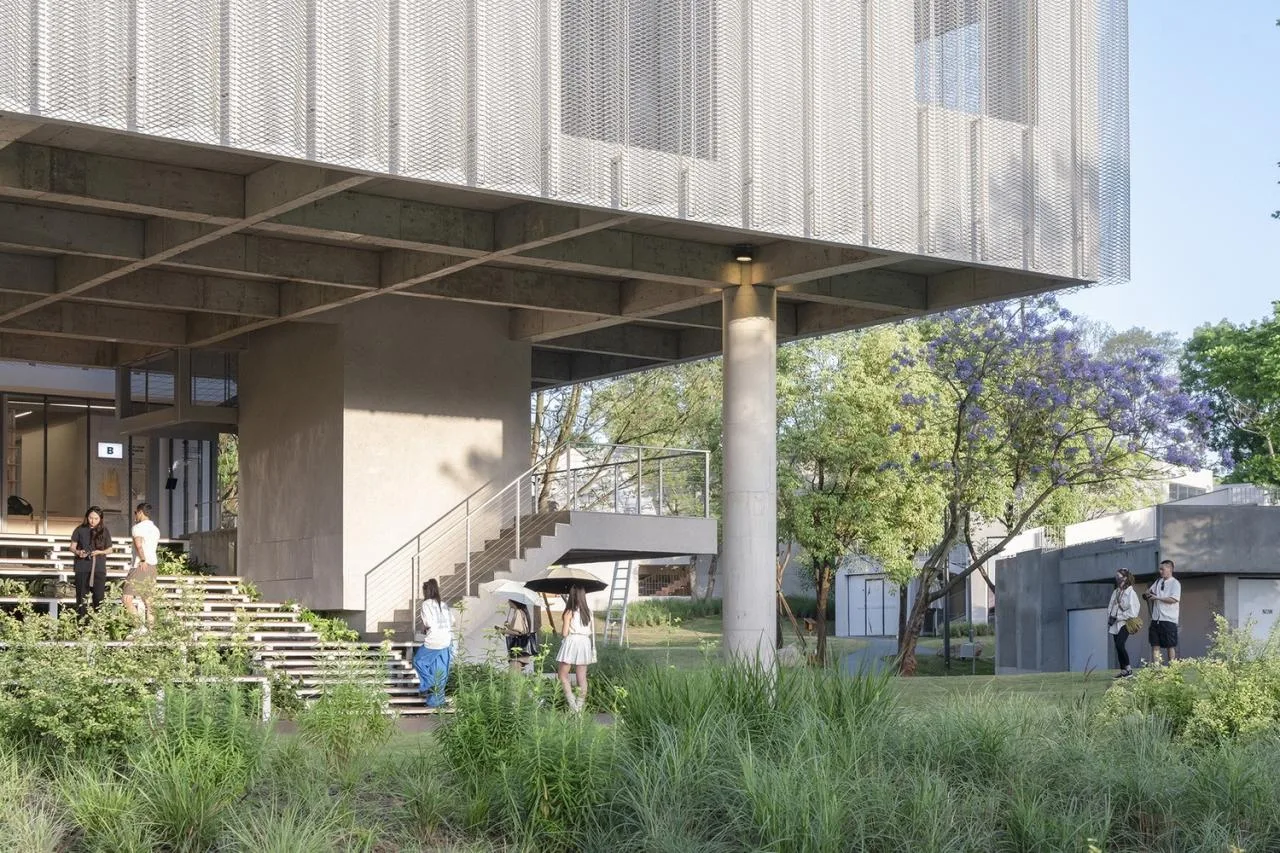
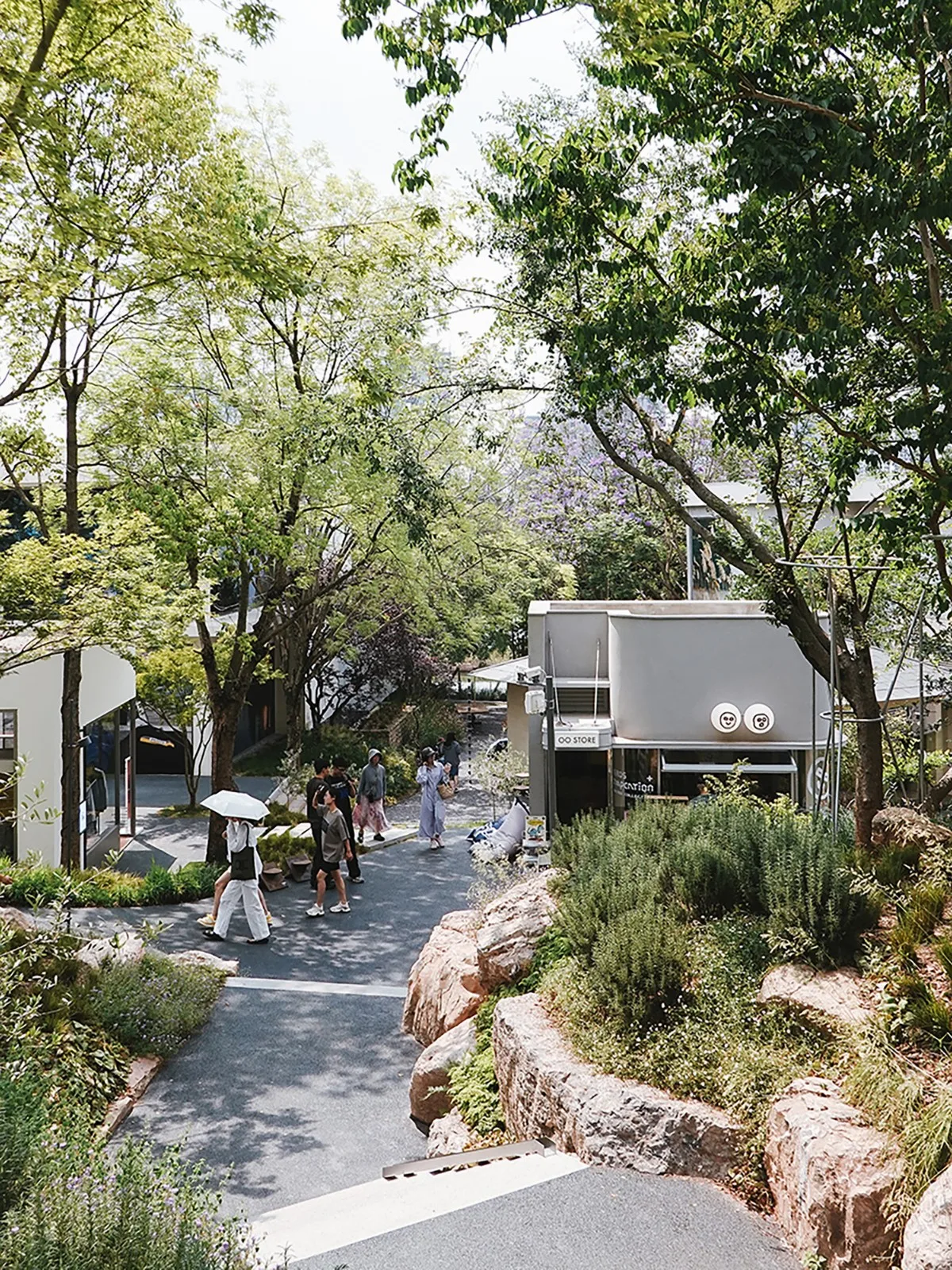
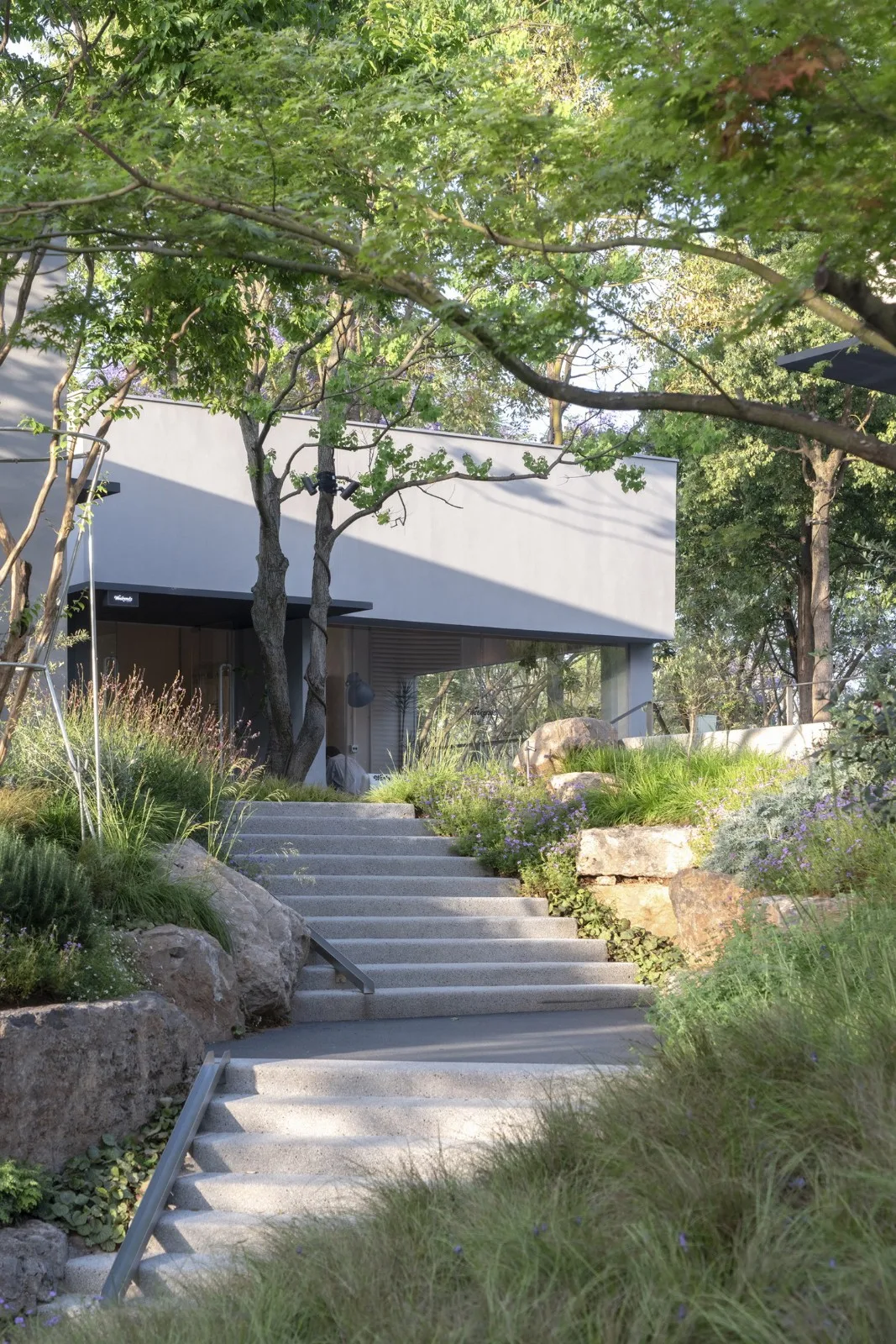
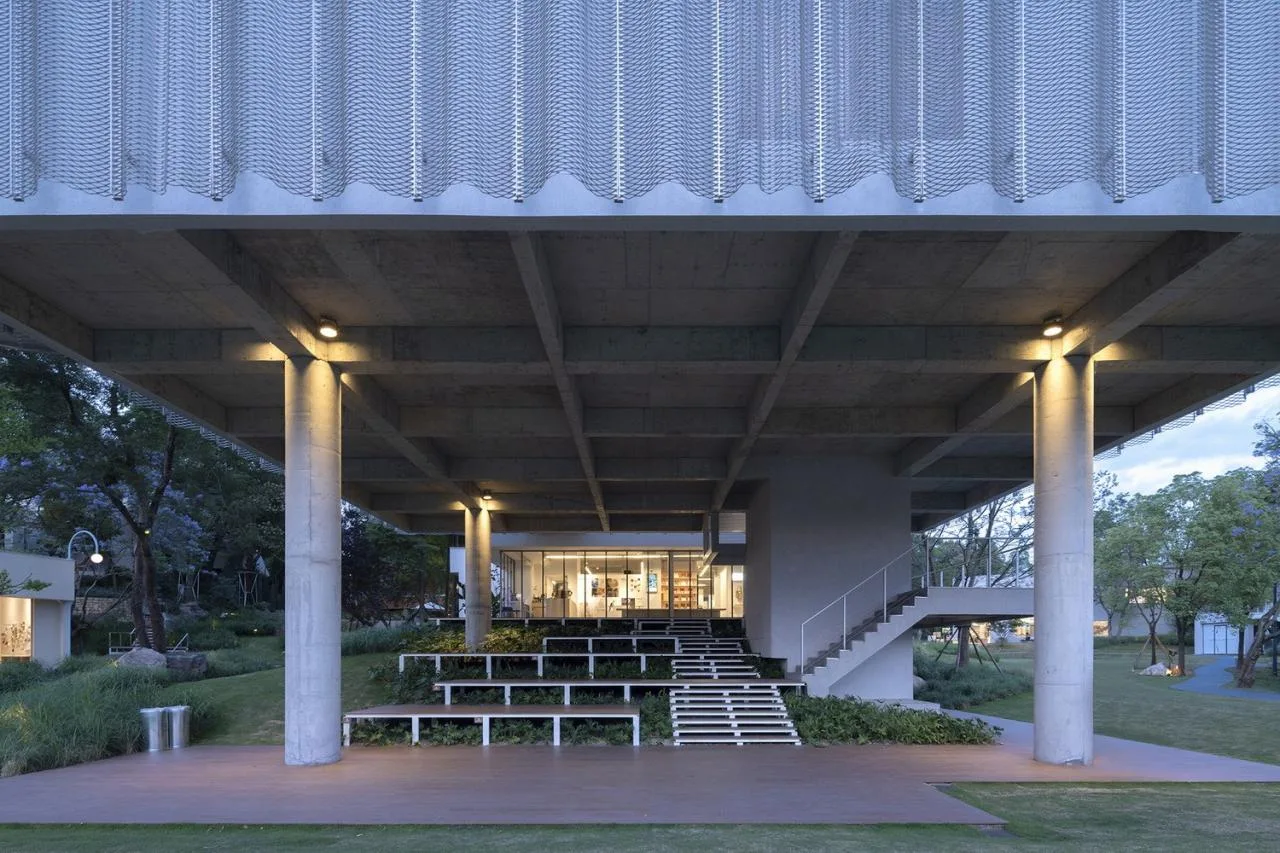
Second, the design incorporates “grey space” — hollowed-out areas that integrate Luke Island’s natural ecology into the built environment, fostering a seamless blend of people, architecture, and nature. These subtle scenes and retreats create social spaces that balance everyday life with ceremonial importance.
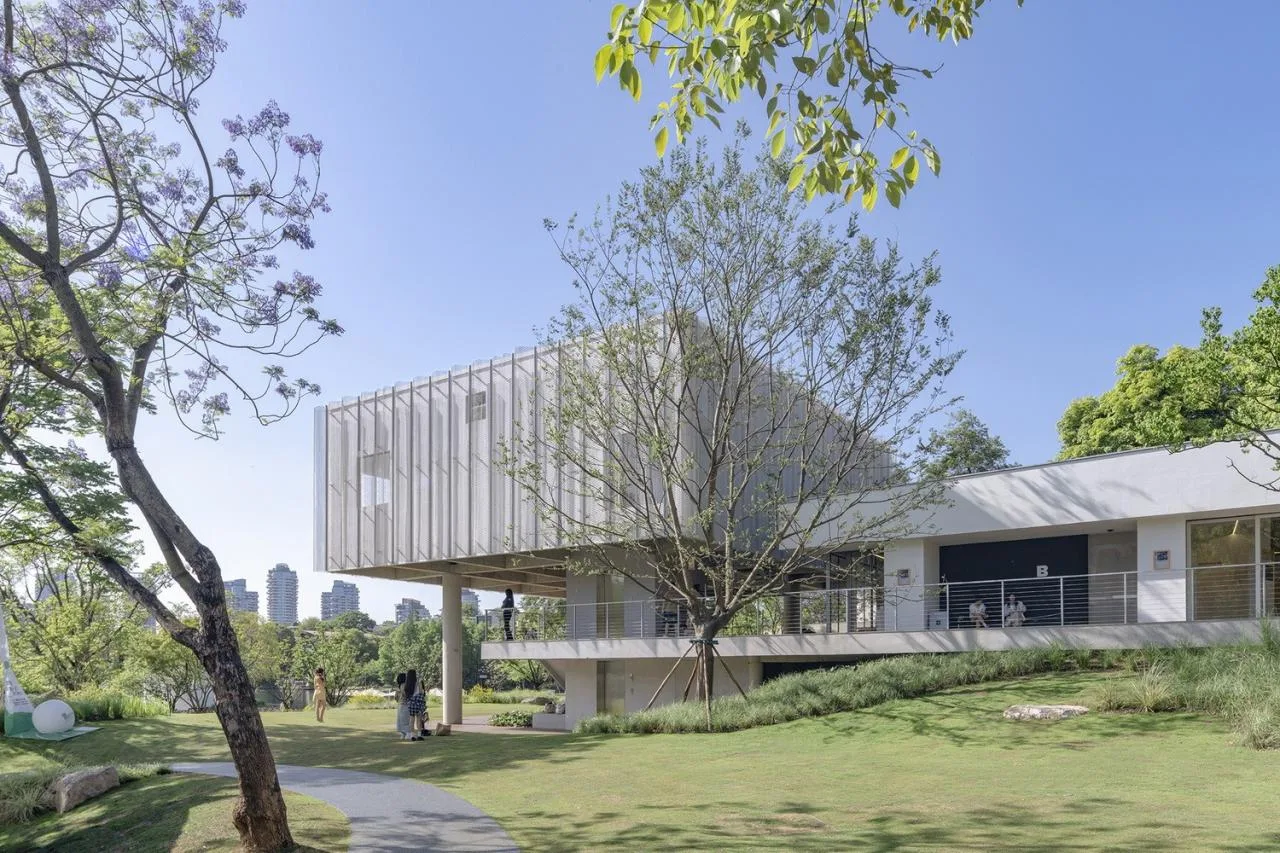
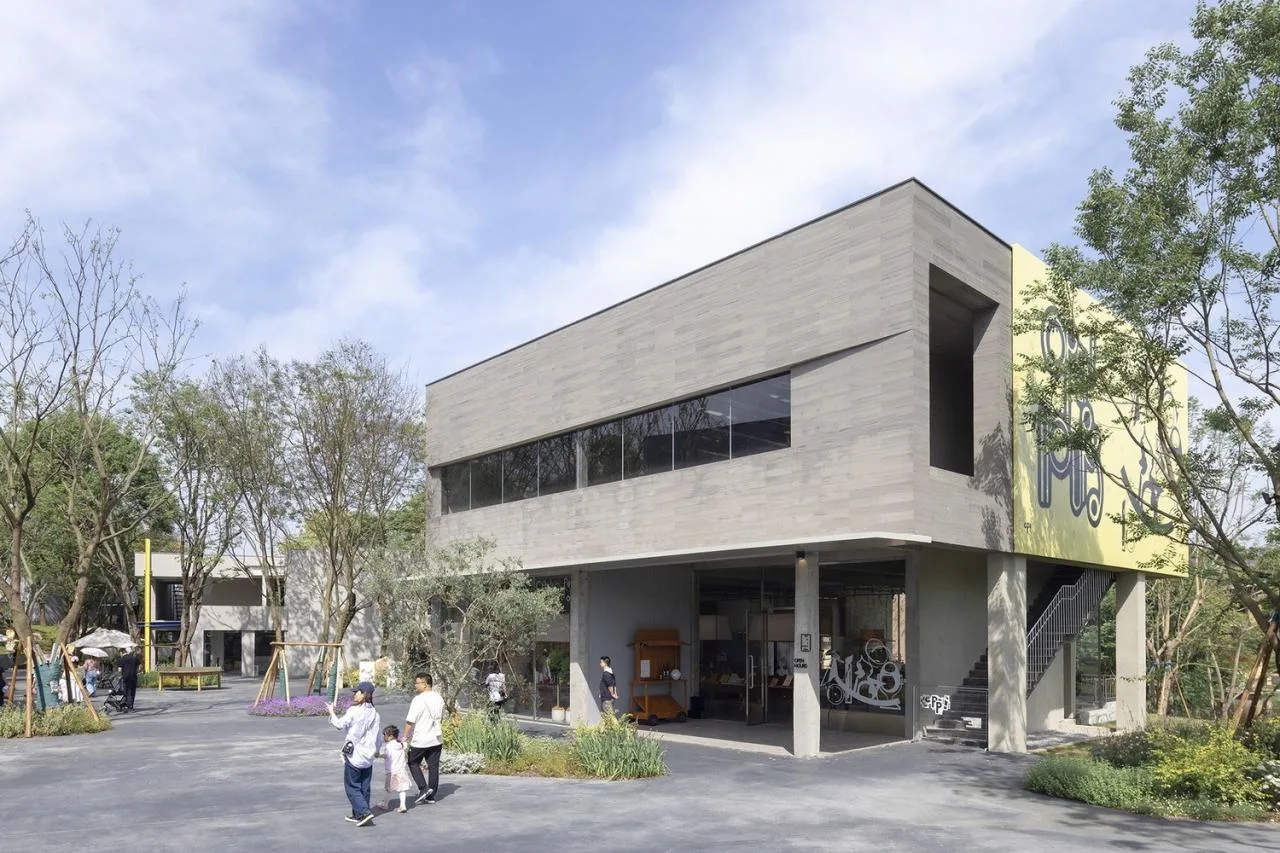
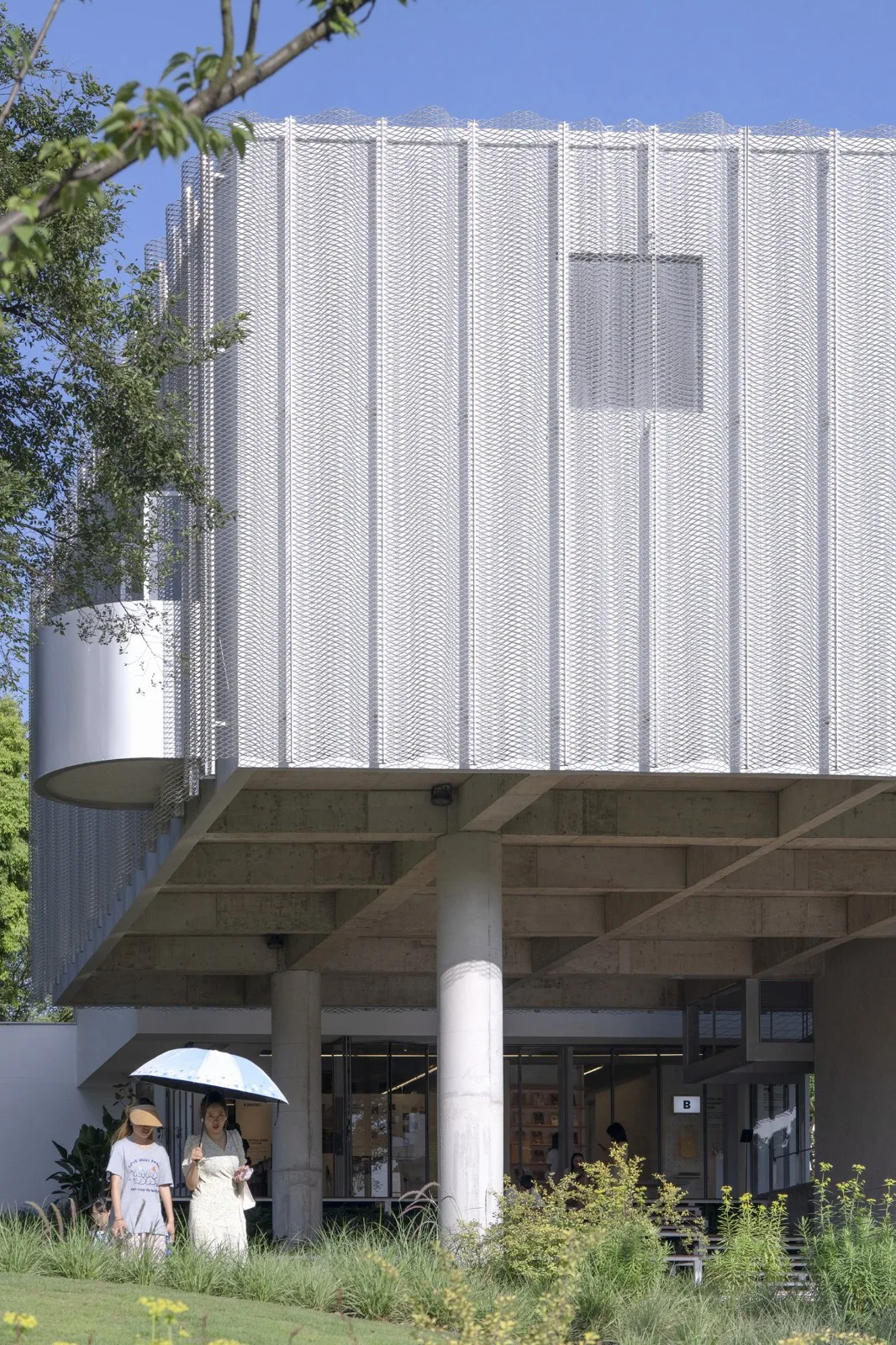
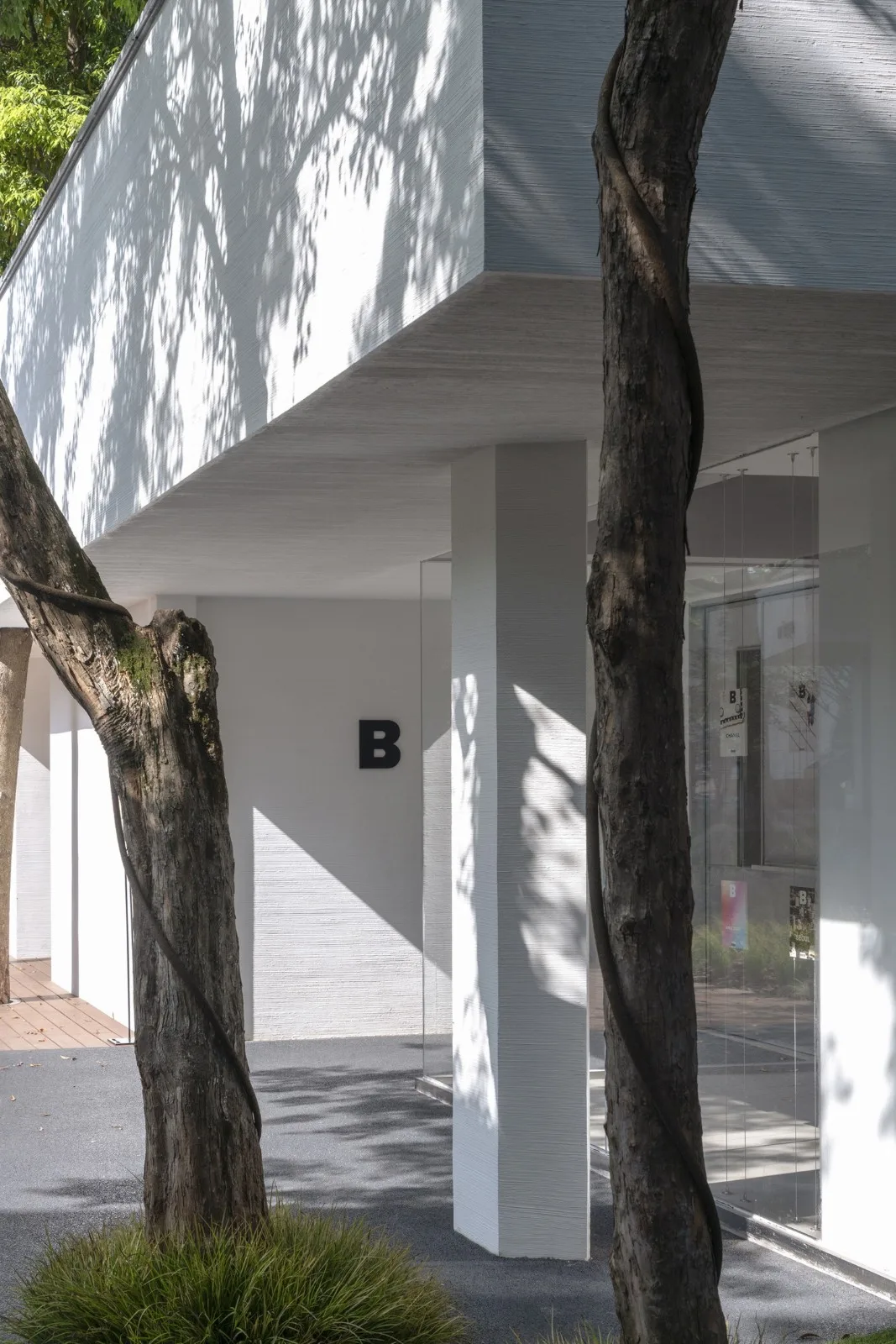
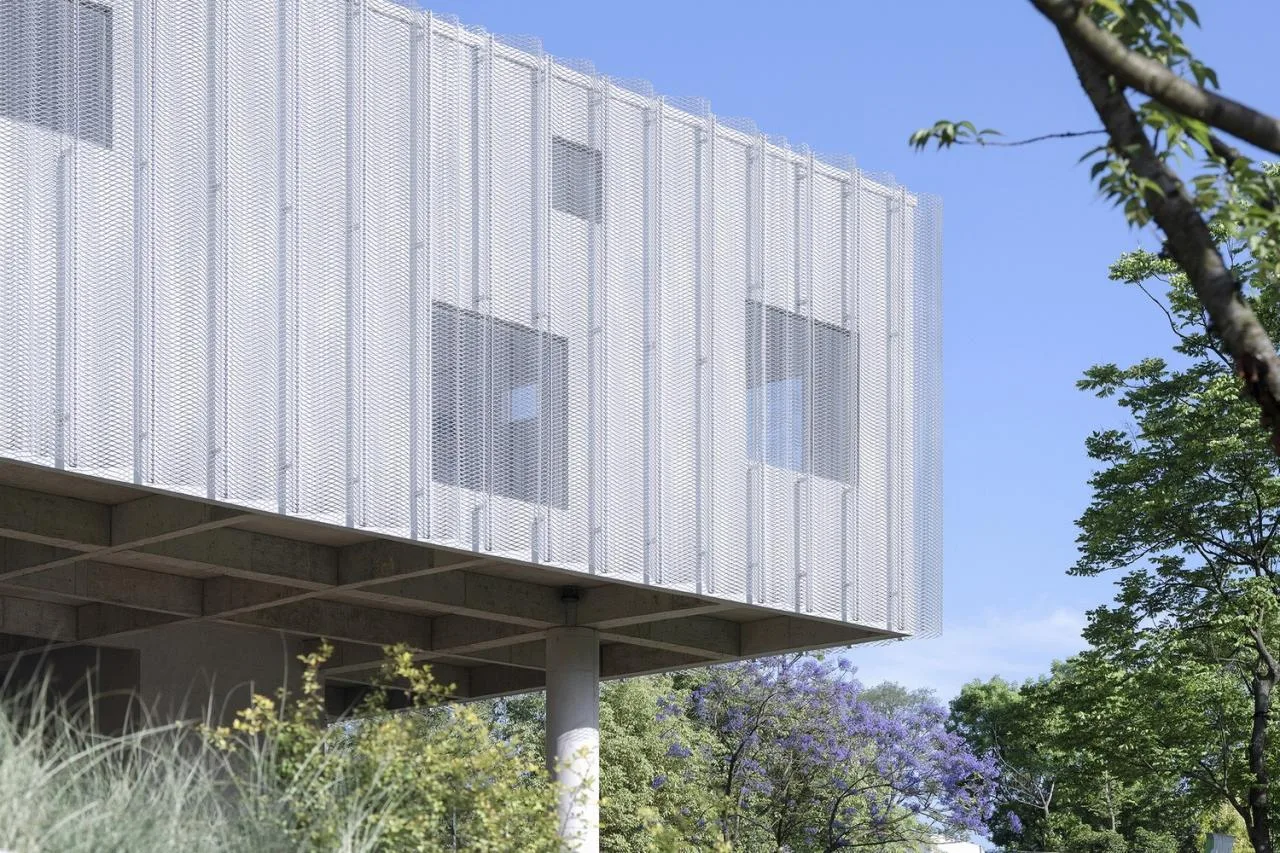
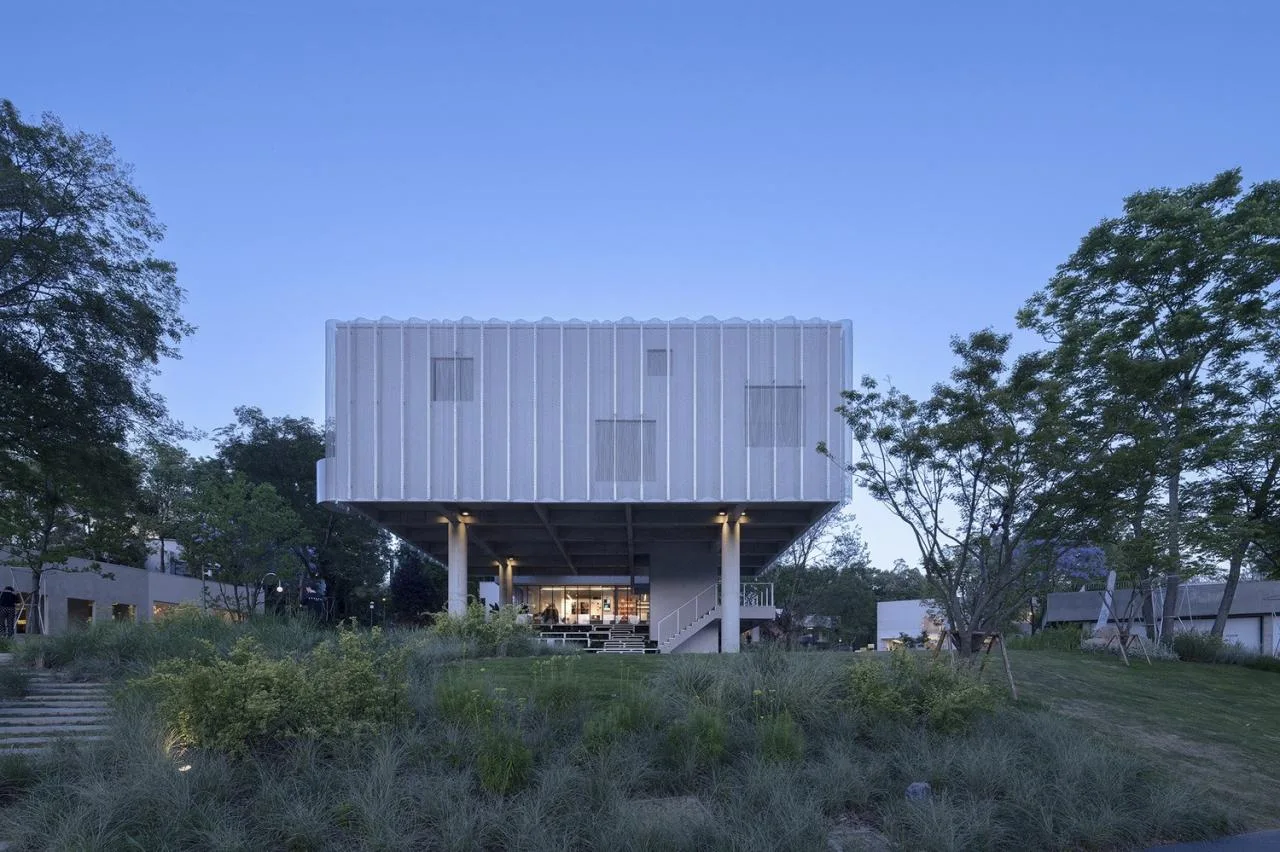
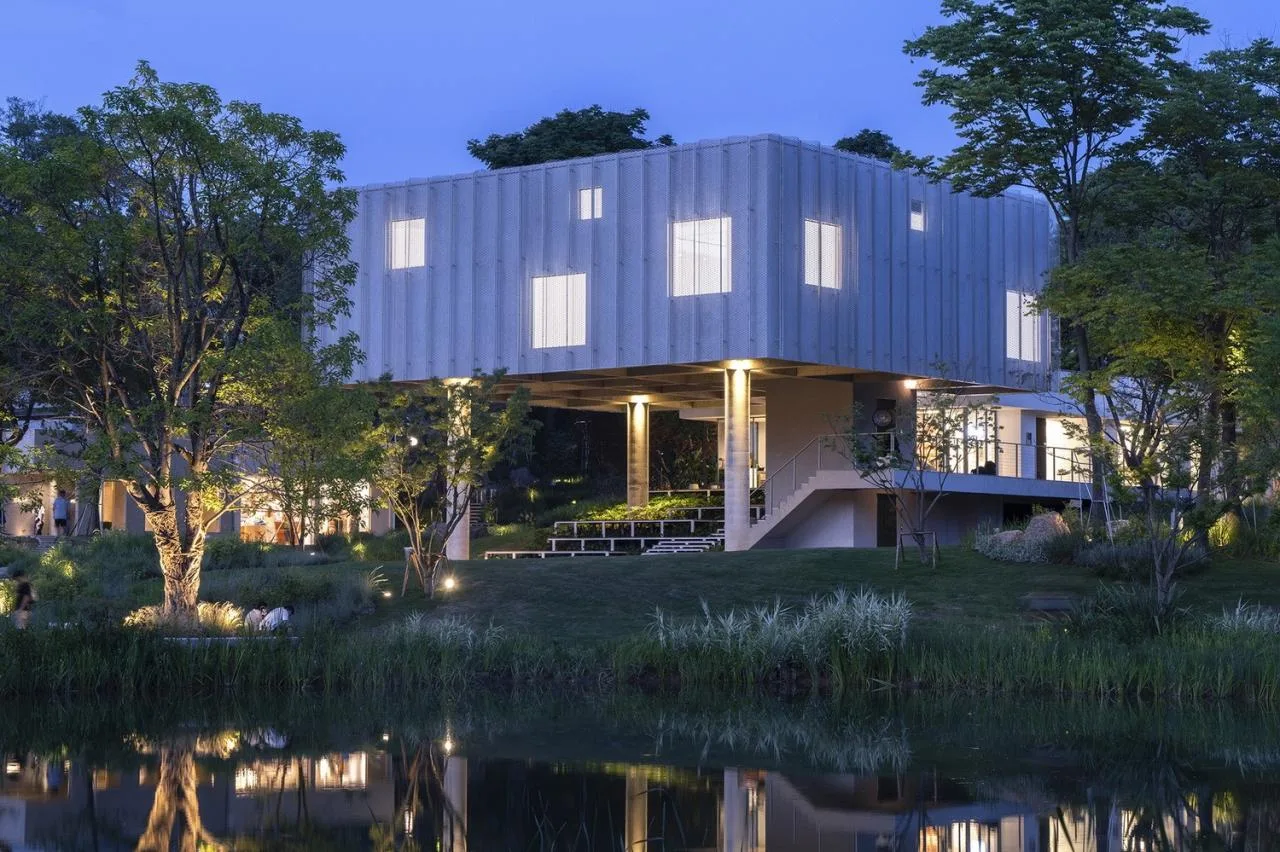
Third, a simple and effective cubist form is adopted, softening the architectural presence to appear approachable and even playful. Fourth, the exterior maintains a harmonious gray-white color palette, expressed through diverse materials such as concrete, paint, glass, and metal.
03 Overall Design Approach
Jili Building transformed CPI Island through three key renewal strategies:
- Updating the relationship between architecture and the natural environment,
- Revamping the waterfront and establishing spatial nodes,
- Renovating and constructing individual buildings.
Spatial Node Placement
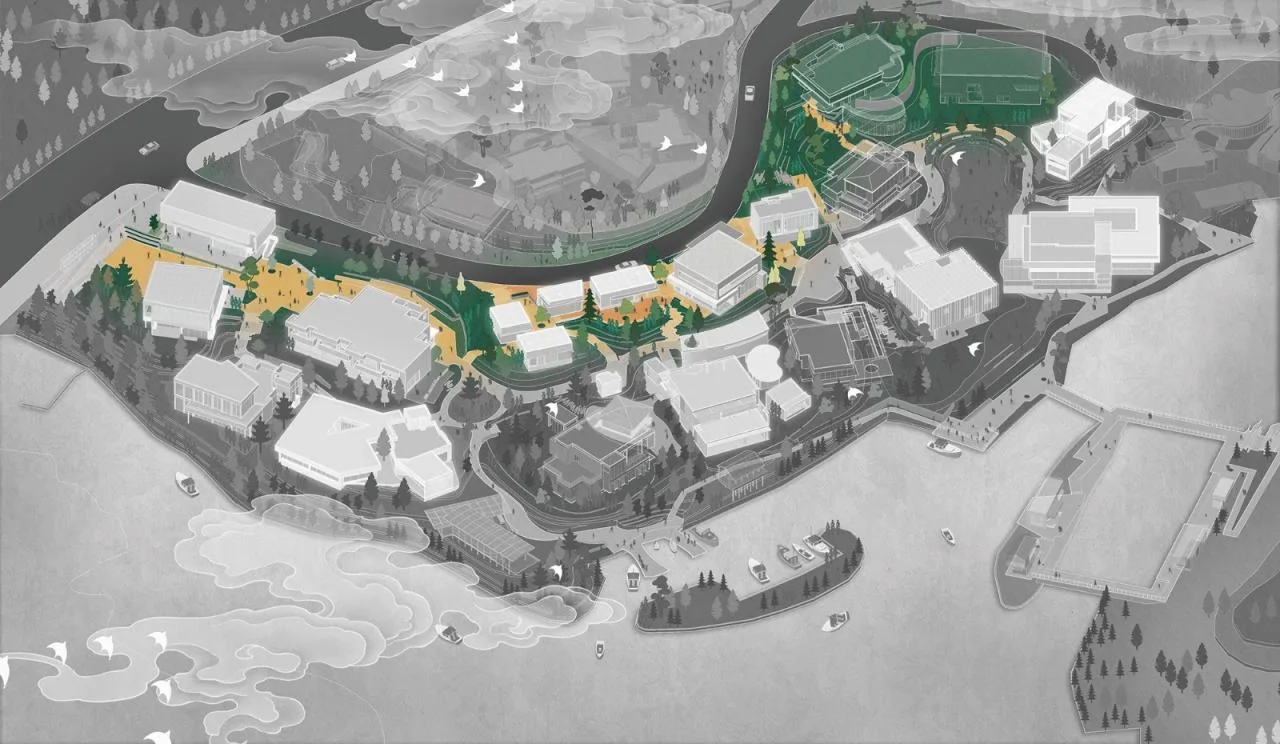
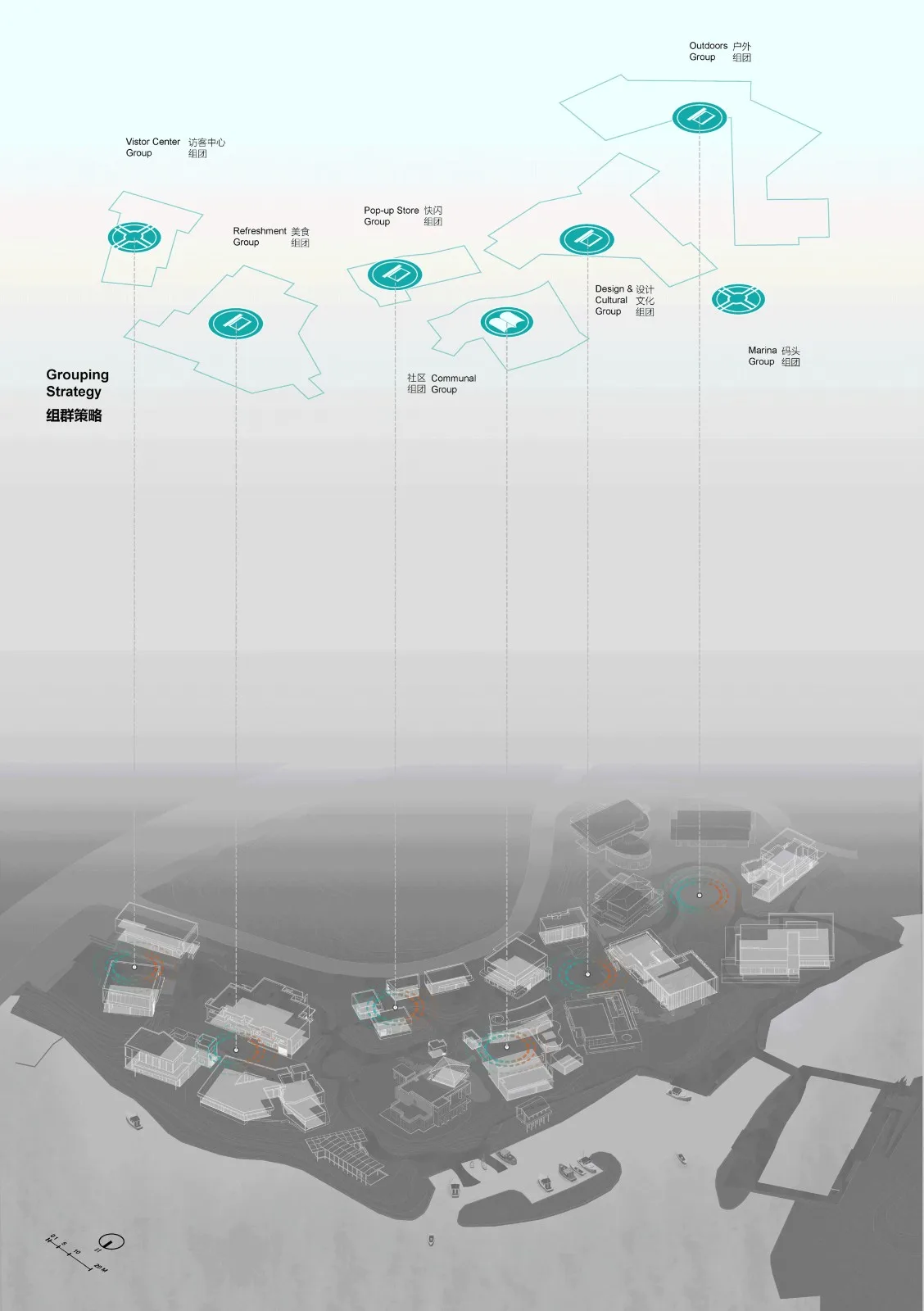
Centered on architectural functions, six natural social spaces focused around small plazas were developed. These provide welcoming social areas while creating spatial nodes that organize the site.
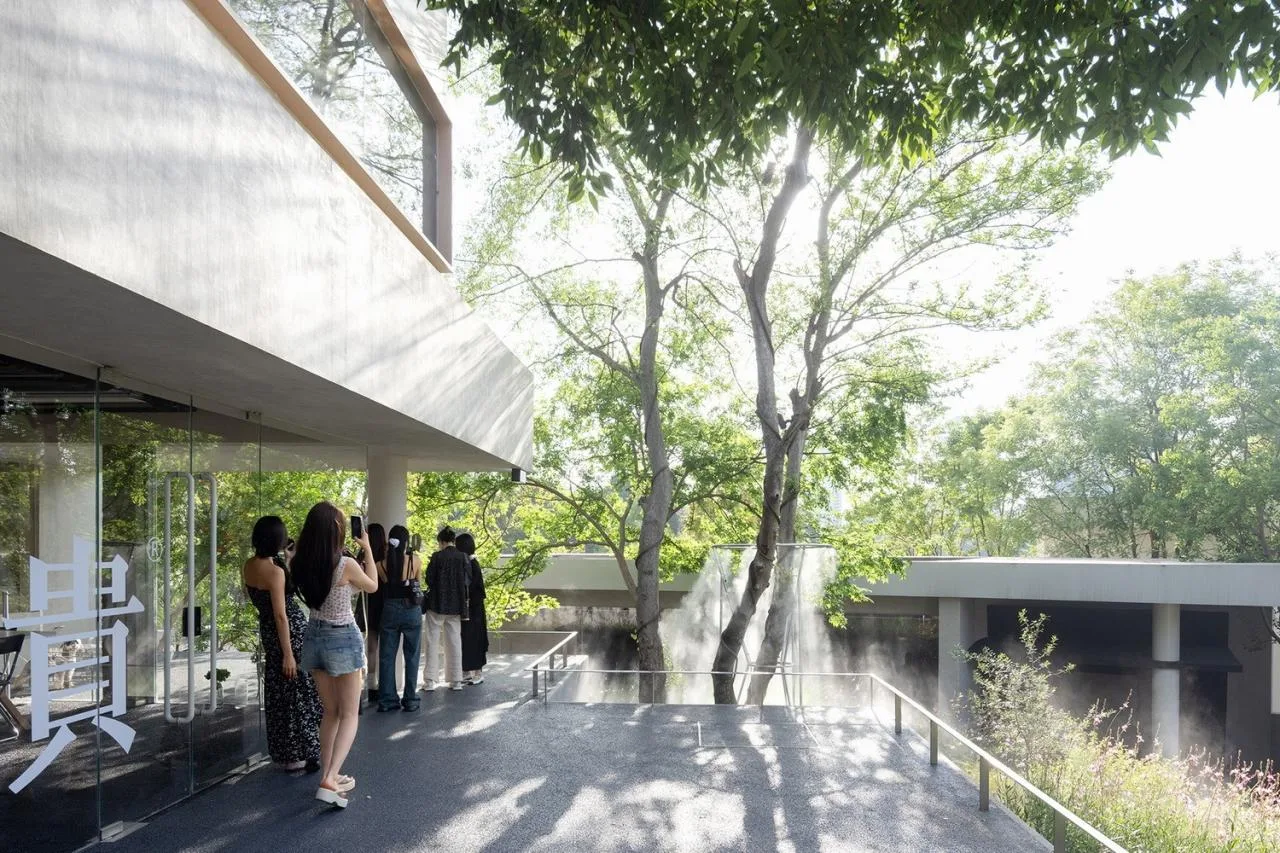
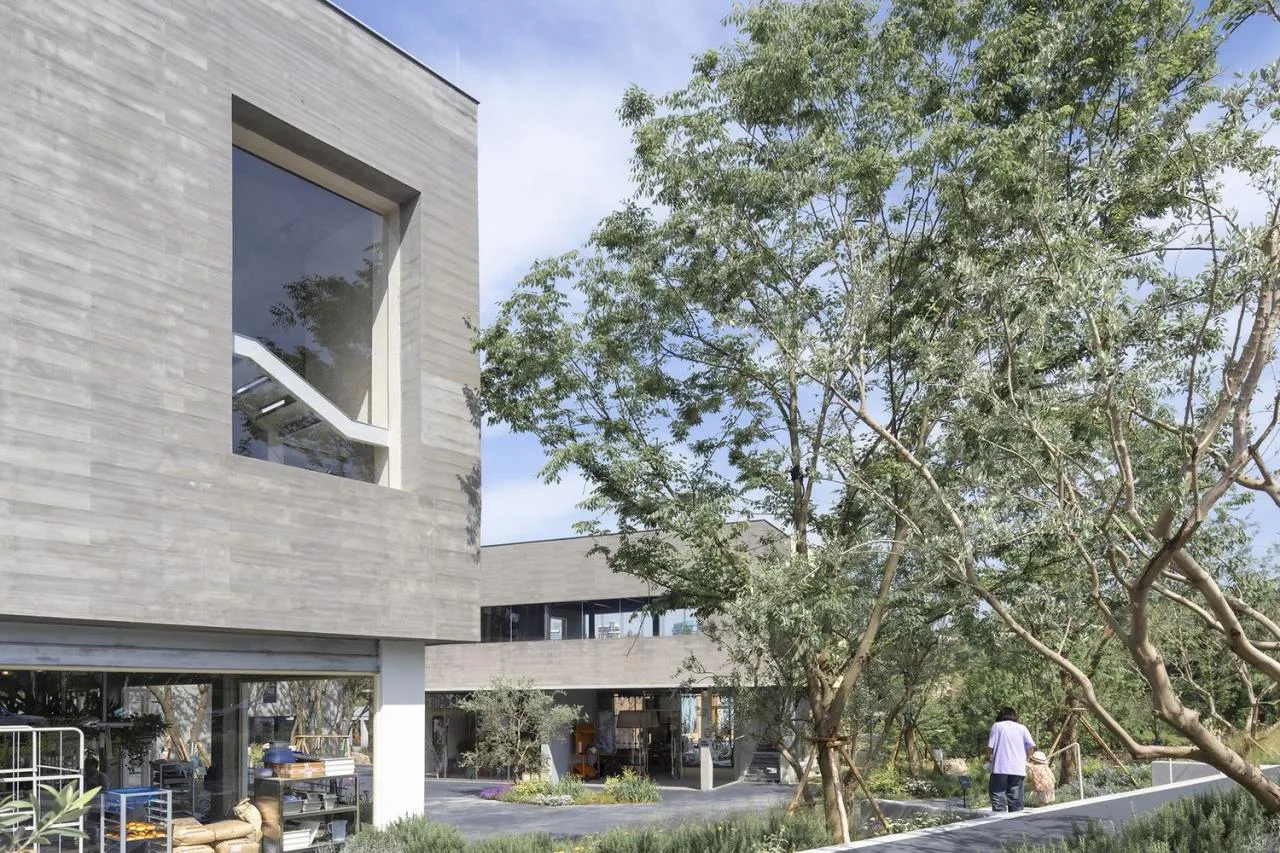
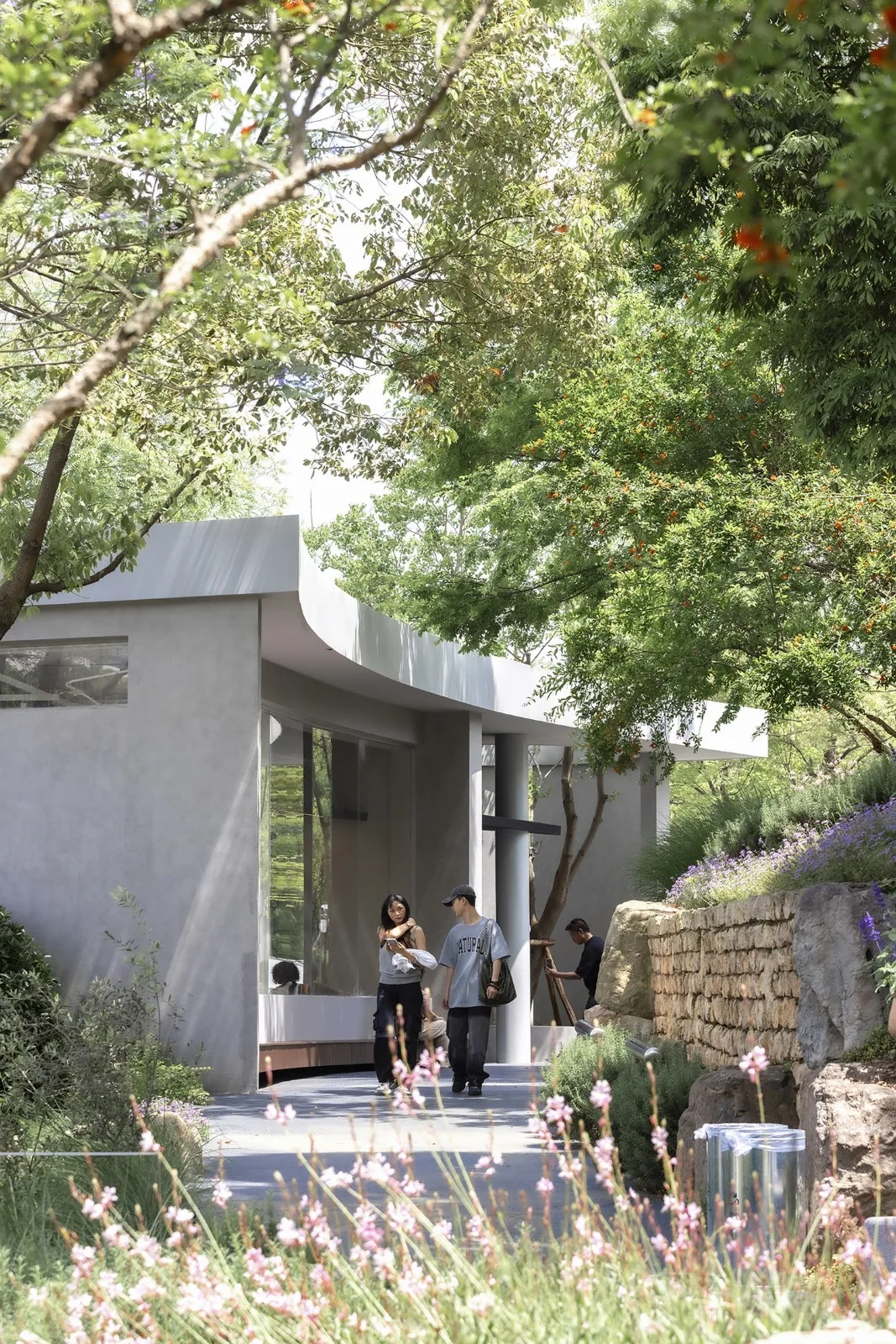
The renovation and reconstruction were organized into six groups based on these nodes, each carrying interrelated but distinct functional programs. By precisely integrating new buildings and sensitively transforming existing forms, a semi-open, center-oriented spatial layout was created. This shifts CPI Island from a collection of isolated building types into a collective community of multiple interconnected blocks. This spatial network invites visitors to explore, linger, and engage, reflecting and enhancing Chengdu’s local spirit.
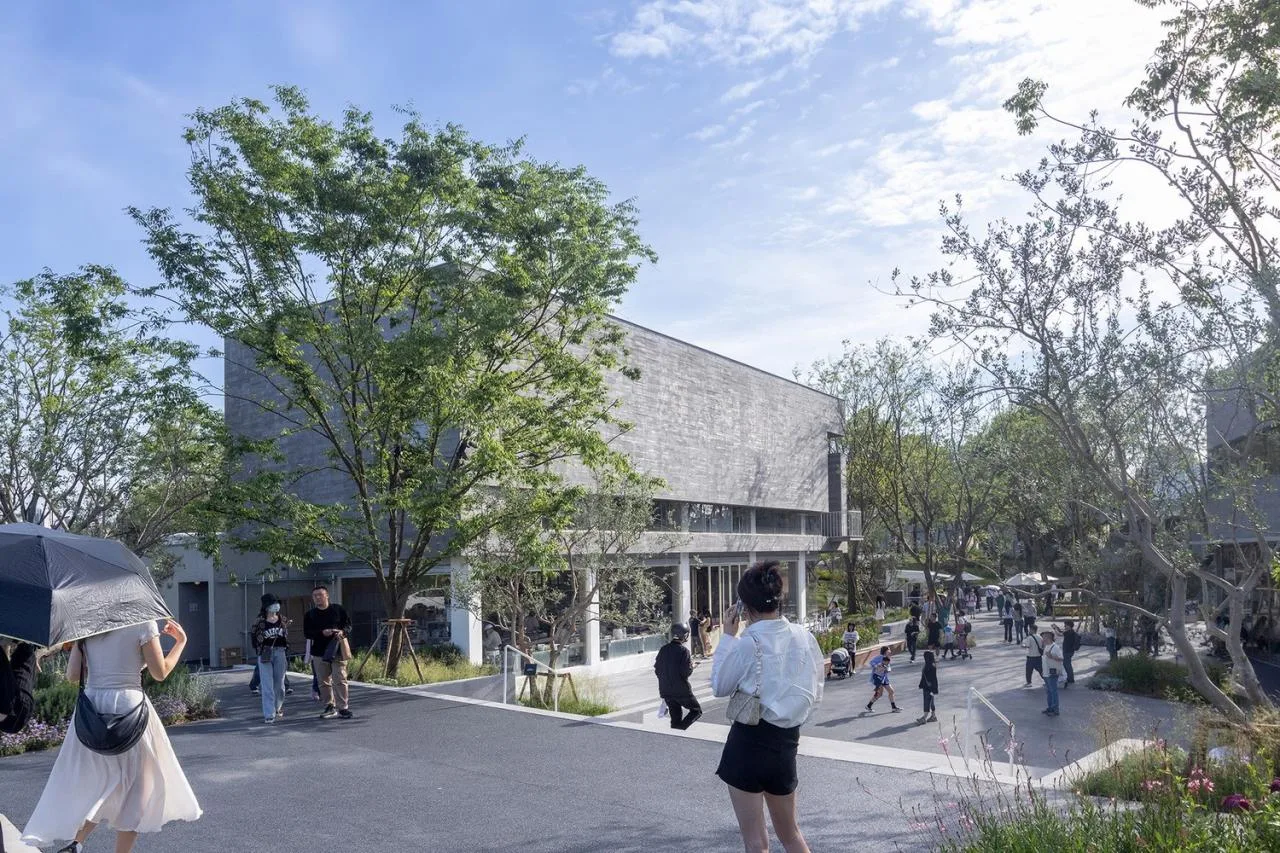
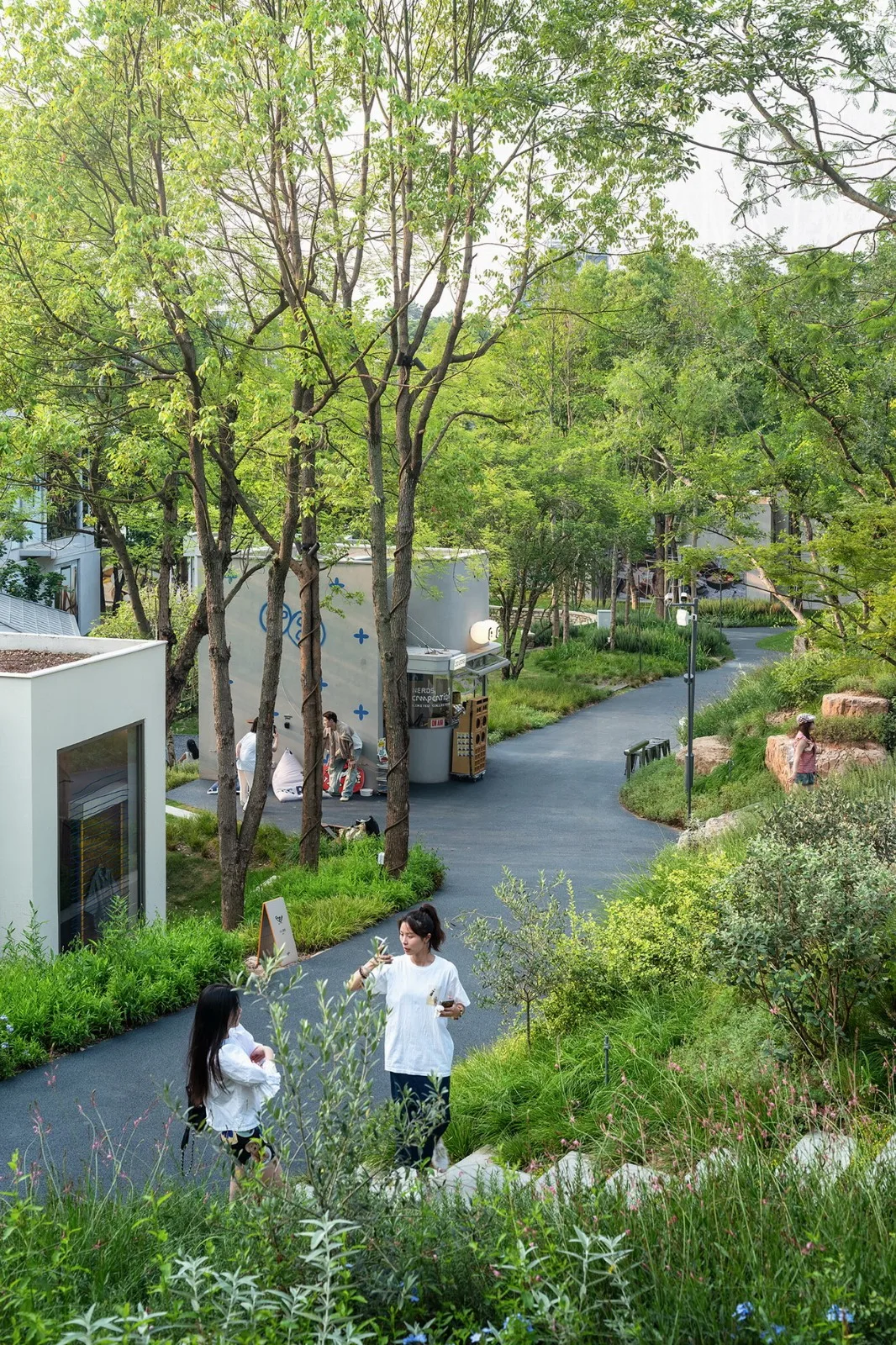
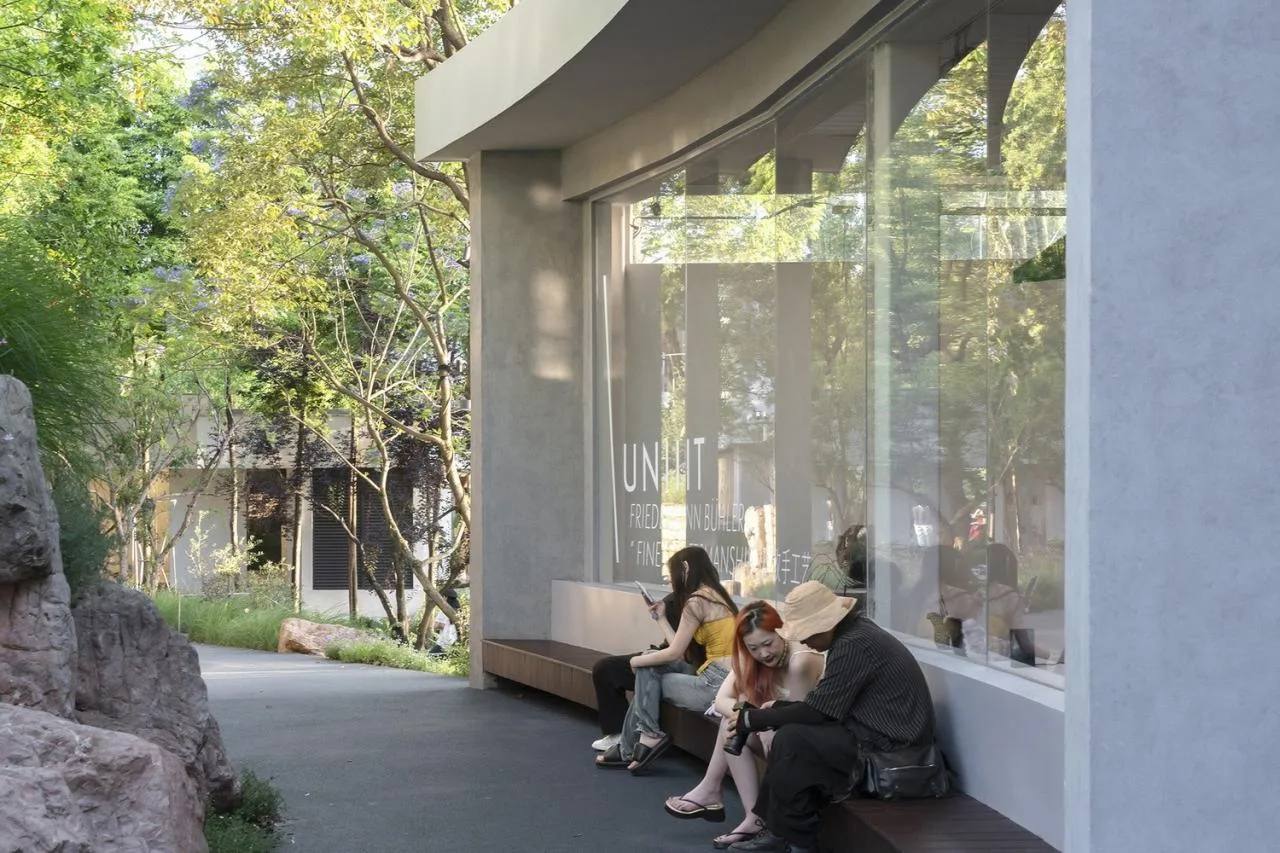
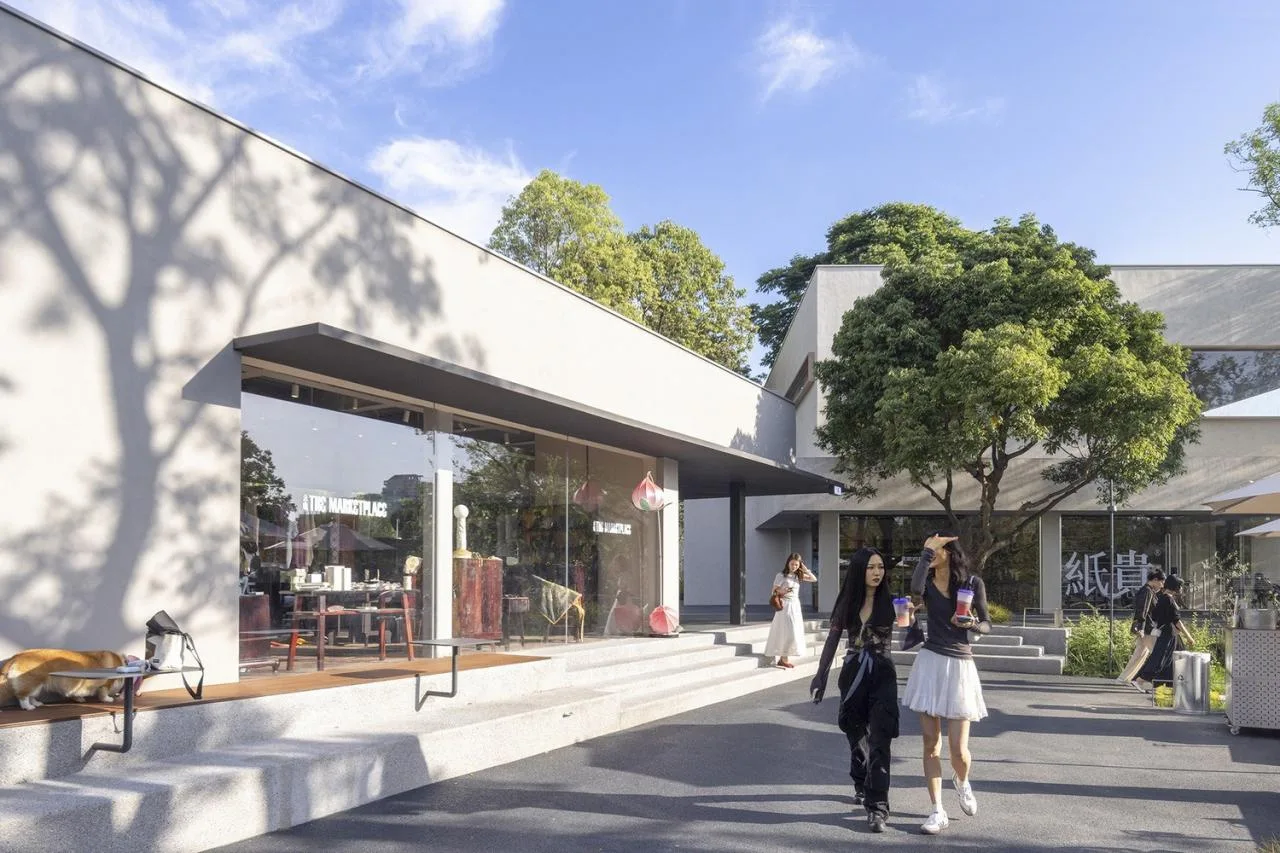
04 Detailed Design Explanation
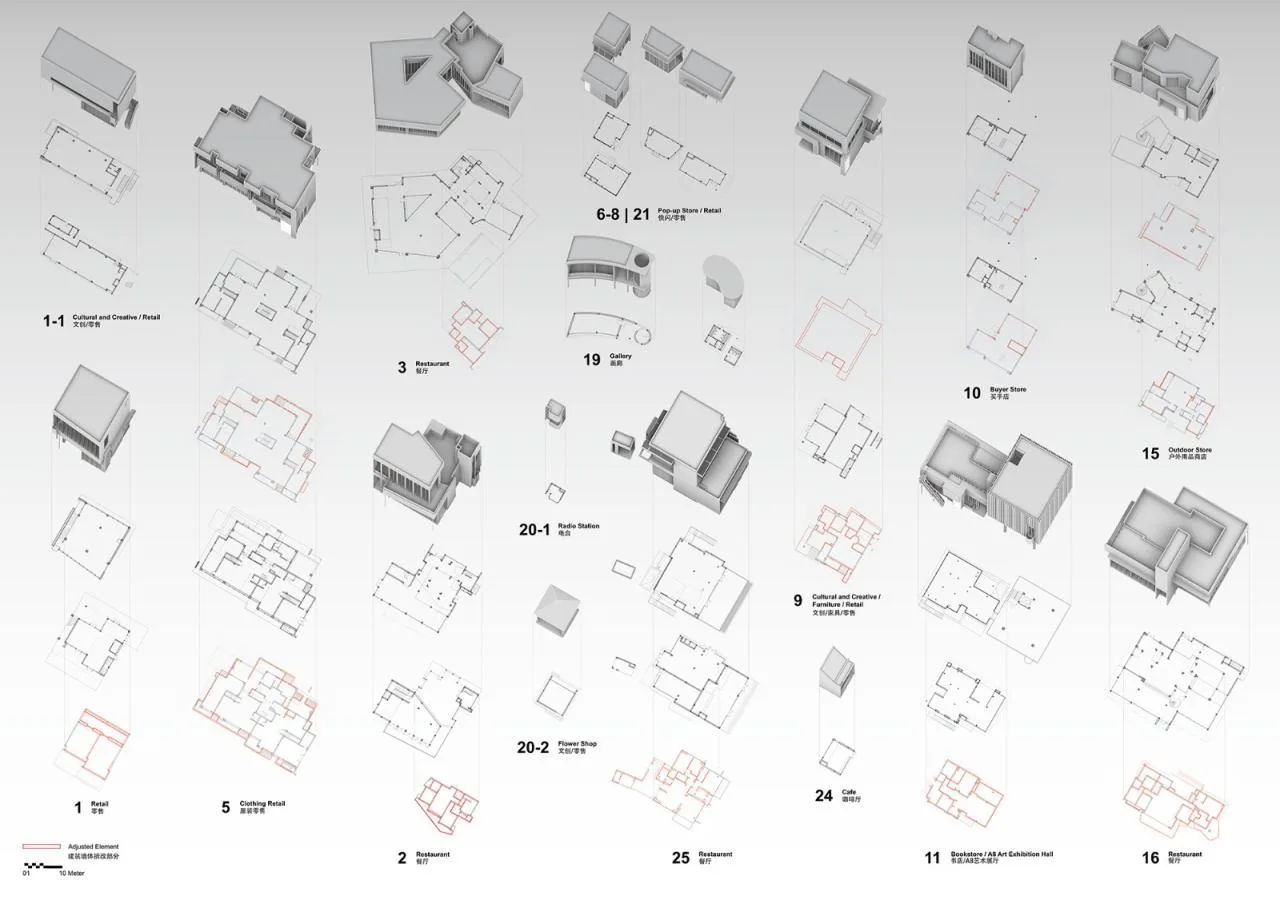
The project includes 10 newly constructed buildings and 10 renovated ones.
Node 1 – Visitor Center Cluster: Comprises W01 (renovated) and W01-1 (new). A second floor will be added to W01’s entrance, and a welcoming entrance plaza will be created between W01-1 and W01. The ground floor will be fully accessible to the public, offering a spacious and relaxed atmosphere.
Node 2 – Food Cluster: Includes W02, W03, and W05, all renovated. W03 expands both vertically and horizontally, enhancing continuity and forming a complete lakeside landscape. W05 features a concise facade with a clear water-textured coating complemented by colorful steel columns, emphasizing its geometric composition.
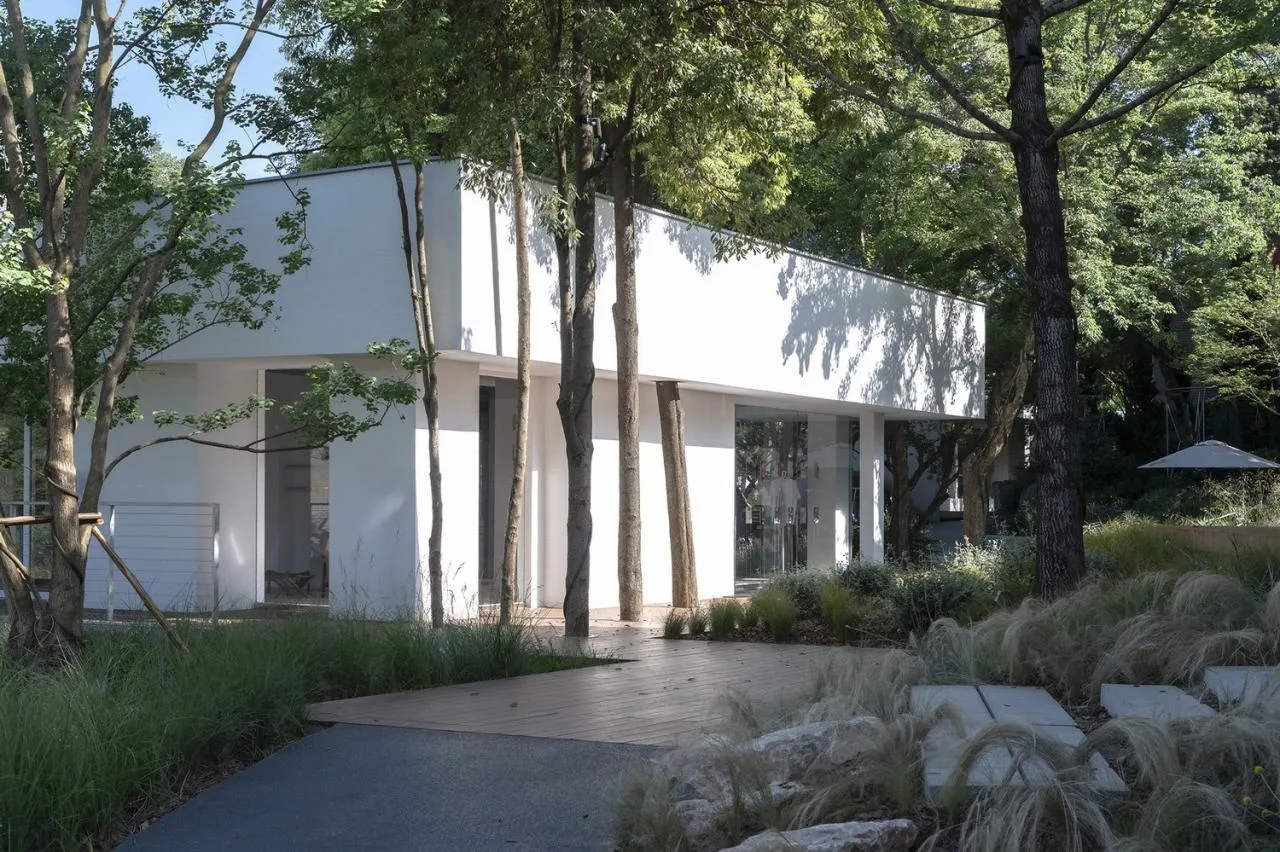
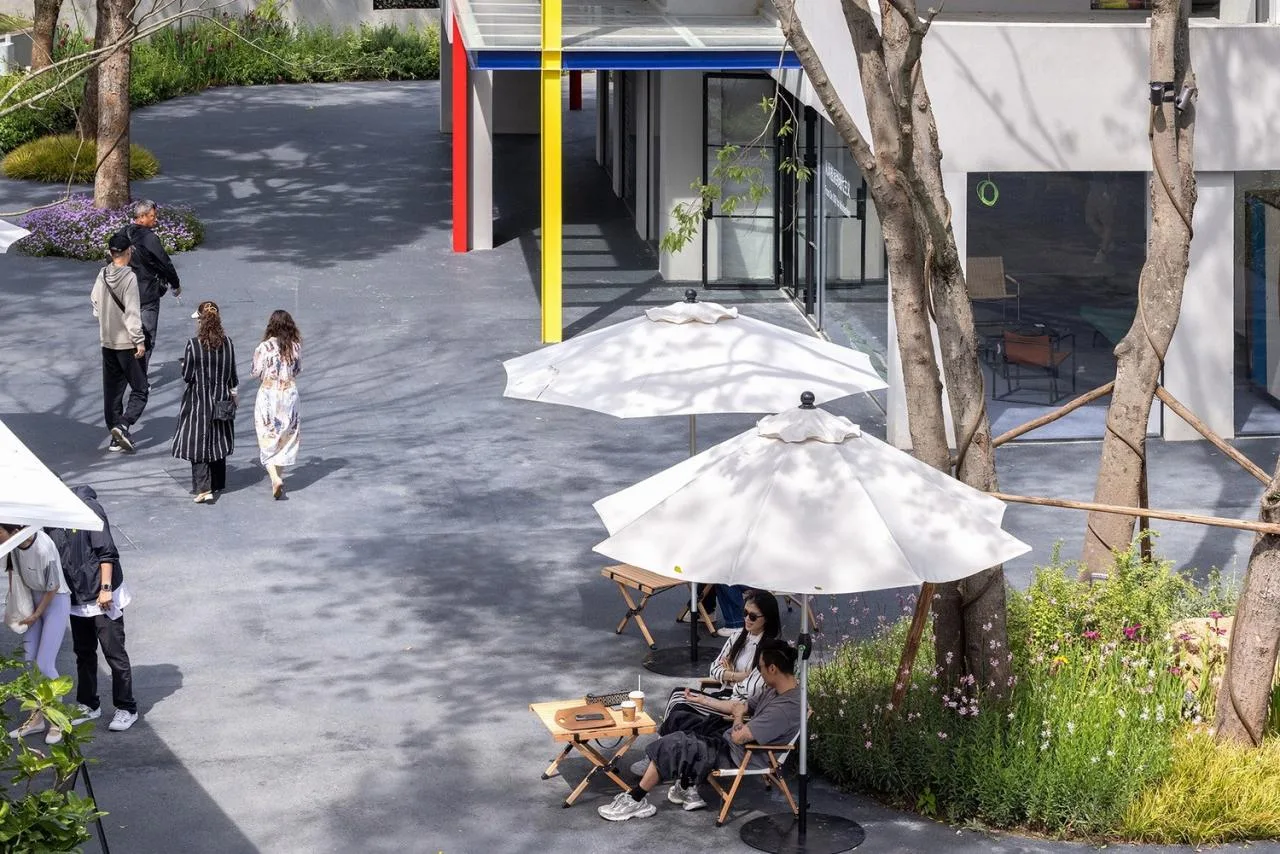
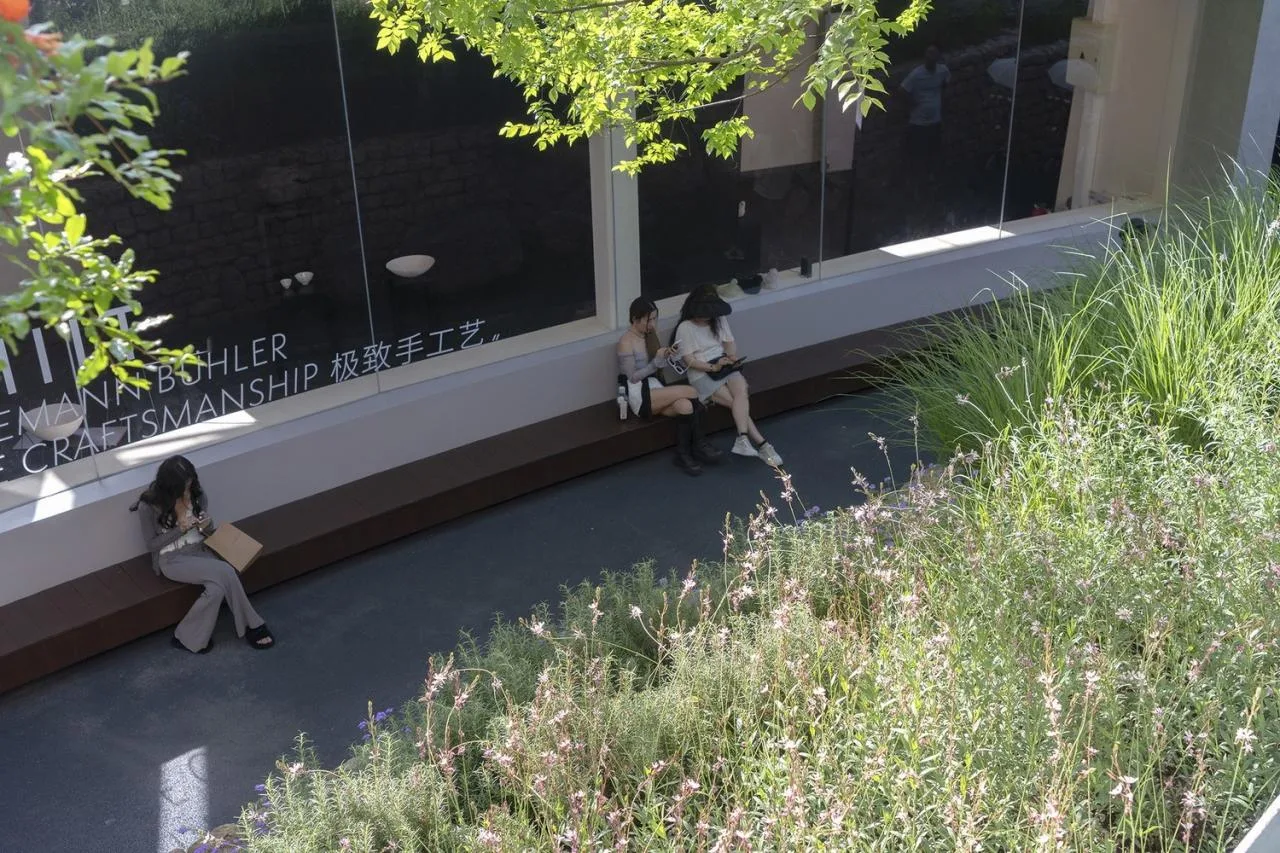
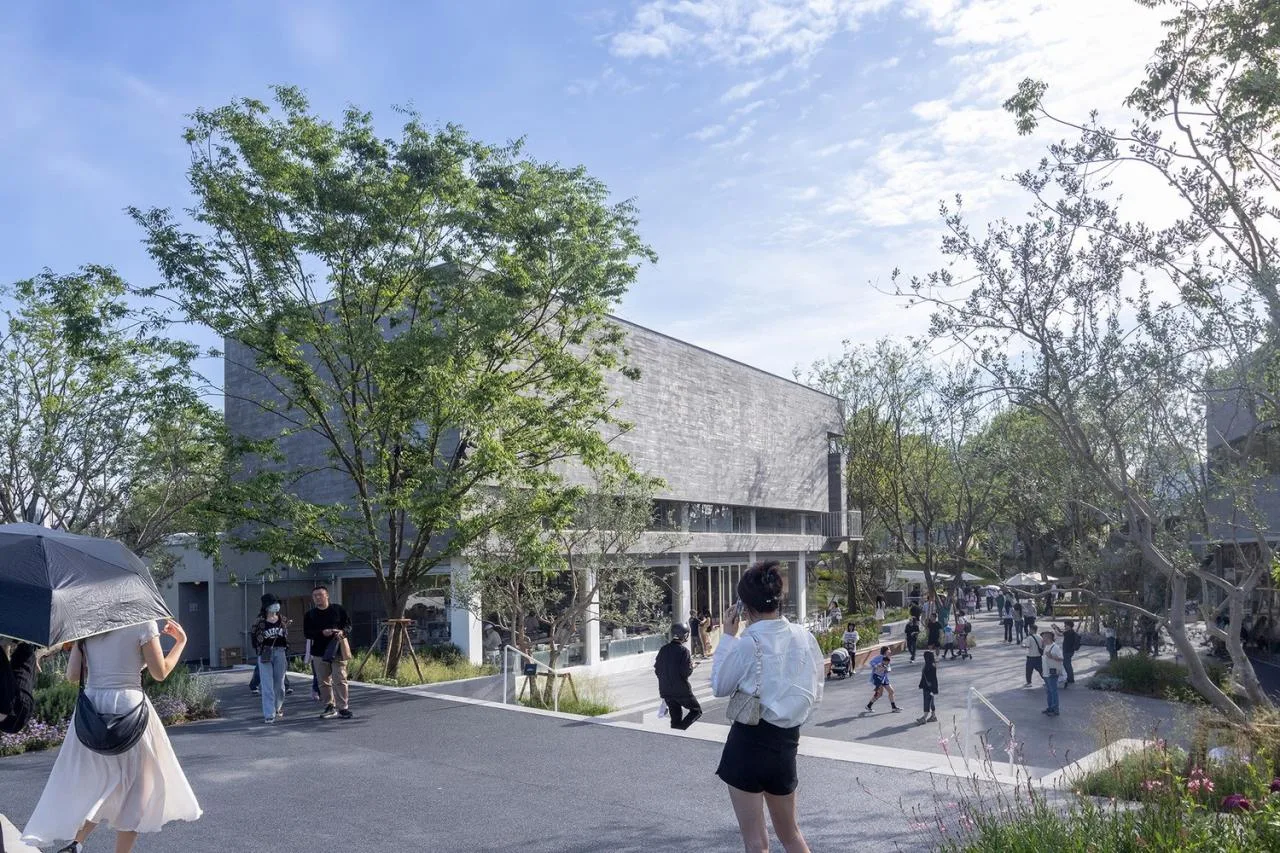
Node 3 – Pop-up Cluster: Features new buildings W06, W07, W08, and W21. This formerly open and spacious area is transformed into the most dynamic part of the project, providing a rich spatial experience and serving as the intersection for three transportation routes.
Node 4 – Community Cluster: Comprises new buildings W19, W24, W20-1, W20-2, and the renovated W25. The arc-shaped gallery at W19 and the radio station at W20-1 form a visual barrier, connecting two areas through a narrow landscaped pathway. This curved walkway enriches the spatial experience, and a series of small, engaging buildings create a vibrant community cluster.
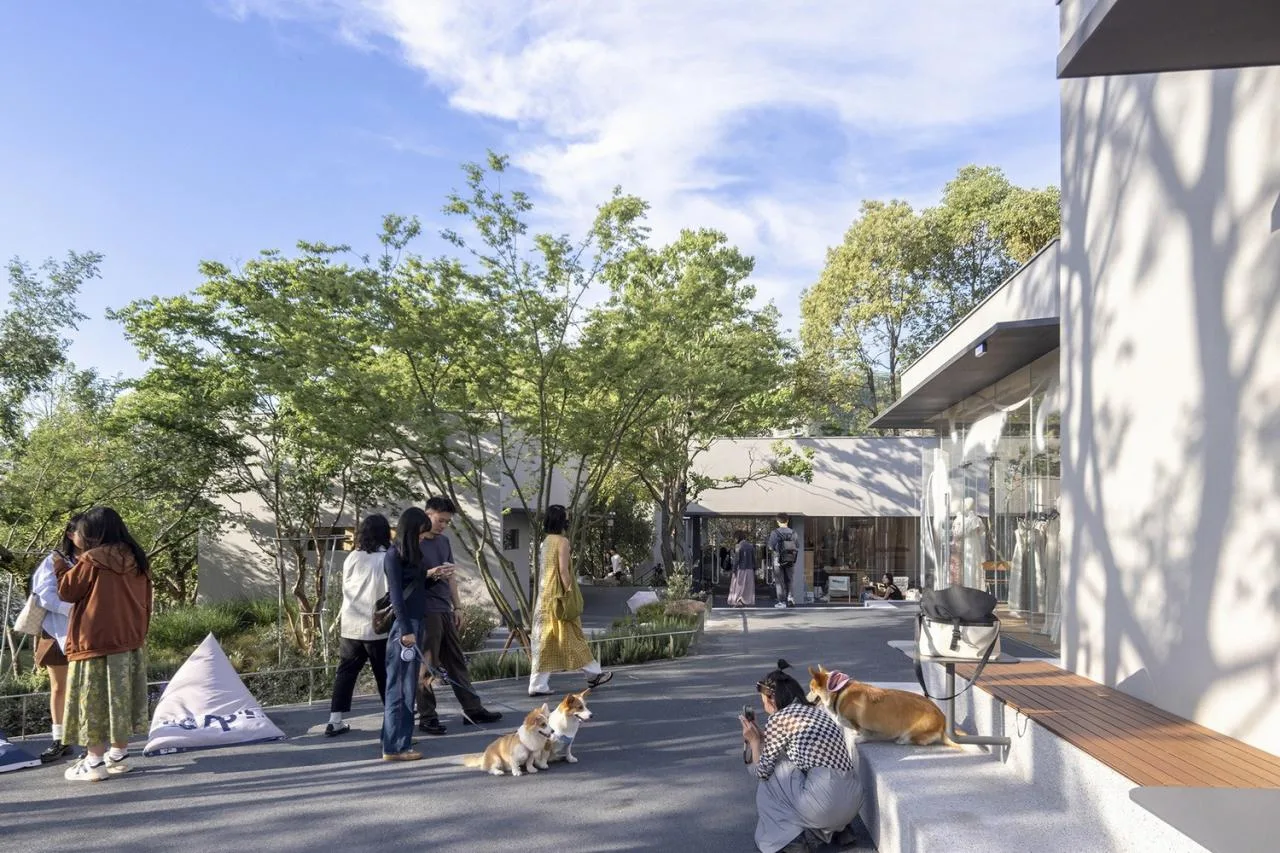
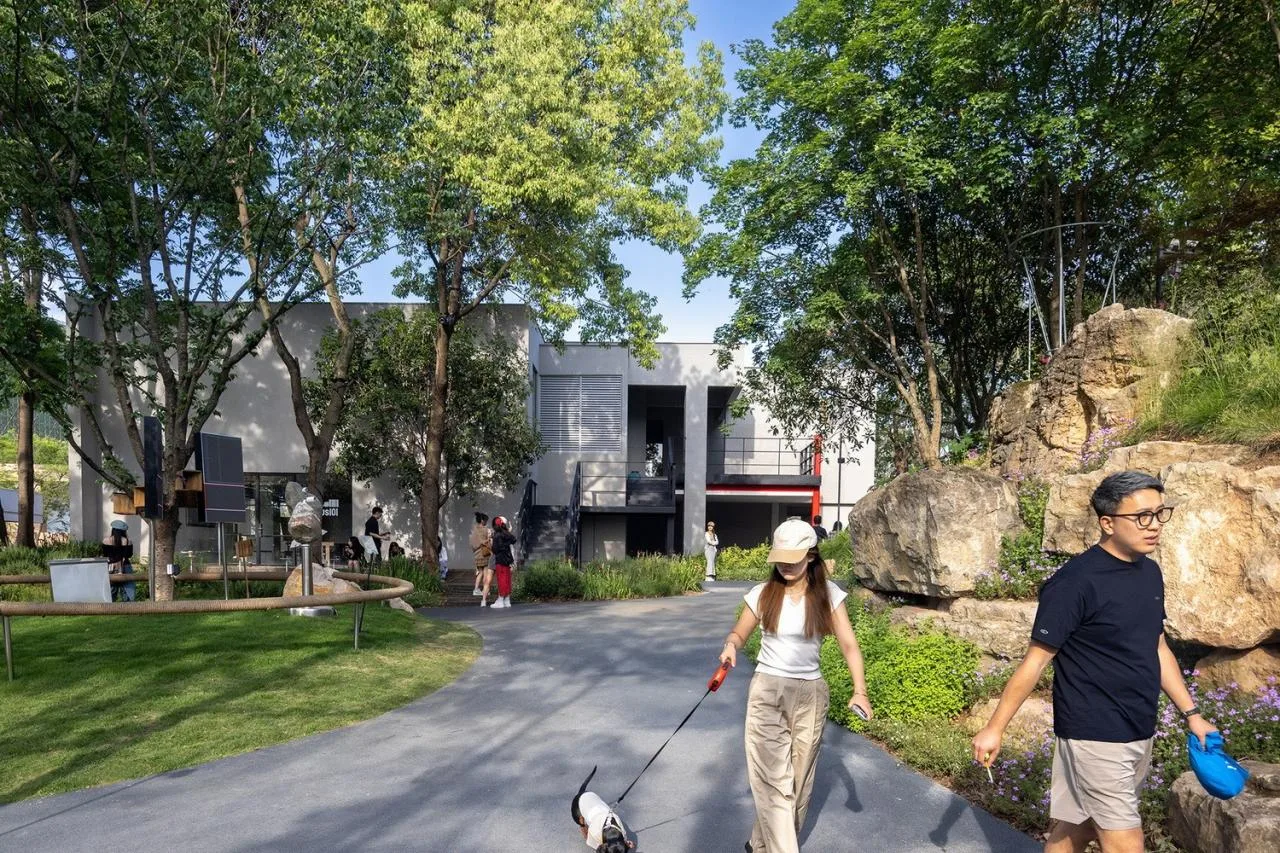
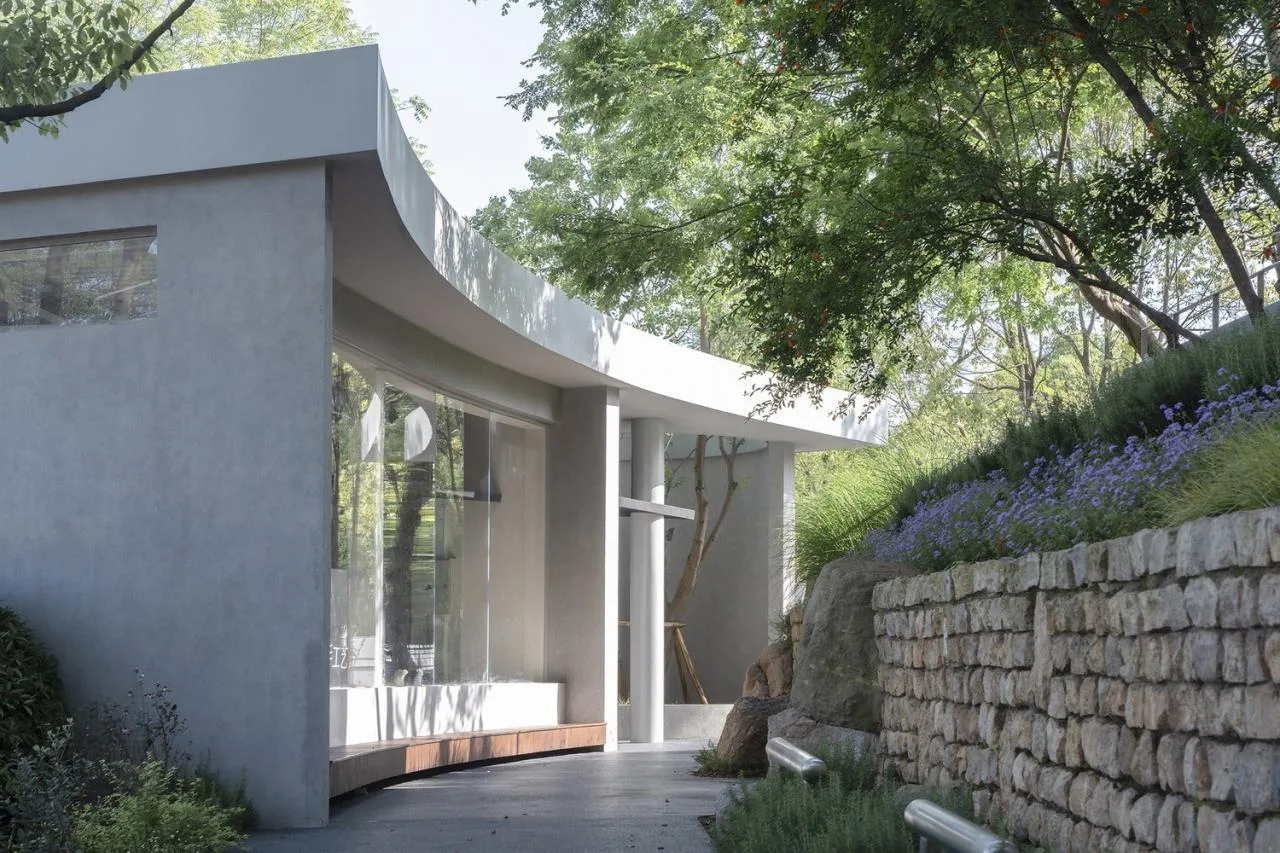
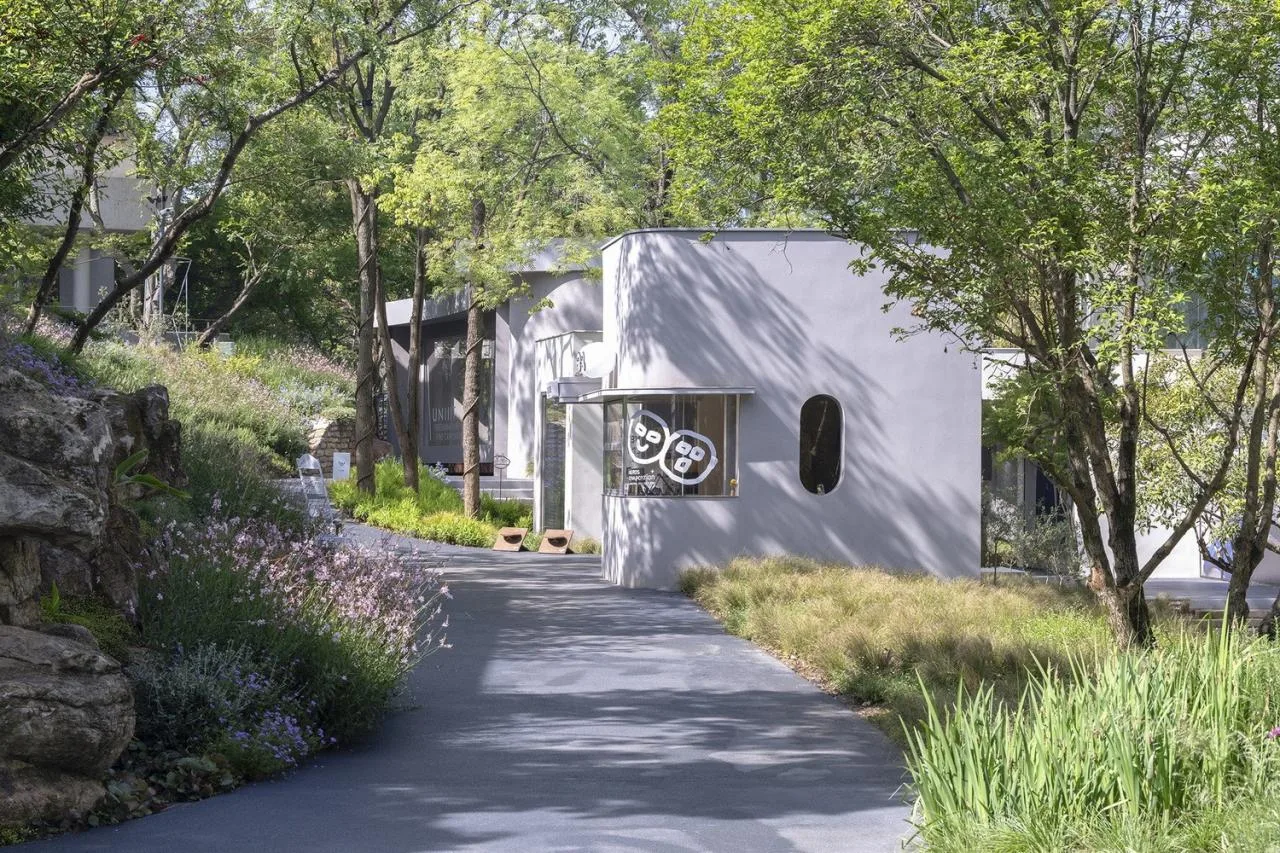
Node 5 – Design and Cultural Cluster: Includes renovated buildings W09, W10, and the bookstore section of W11, as well as a newly constructed exhibition hall section of W11. The original W11 building has been transformed into a bookstore, with the new exhibition hall positioned at the project’s center. The elevated first floor faces the wharf, serving as a secondary main entrance and hosting small-scale events that strengthen the connection between the waterfront and the community.
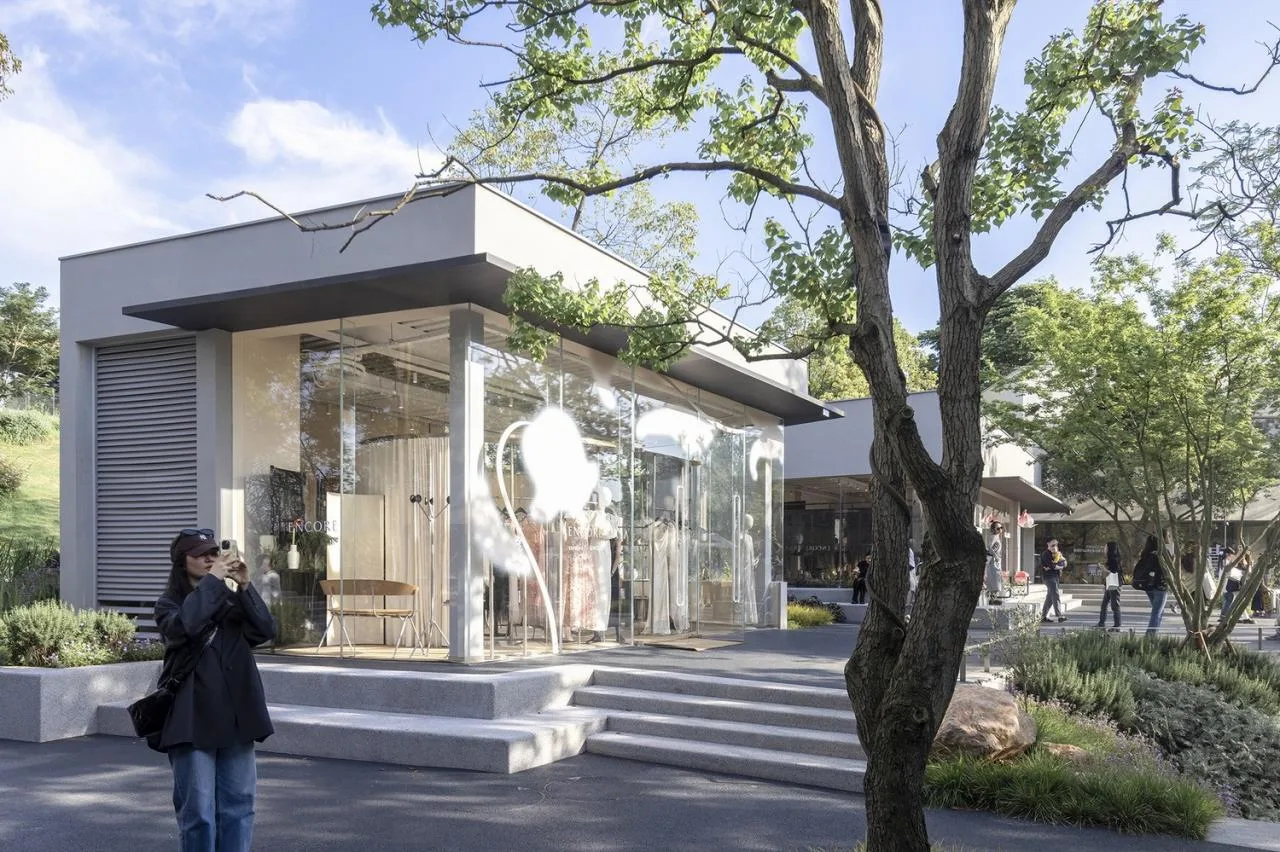
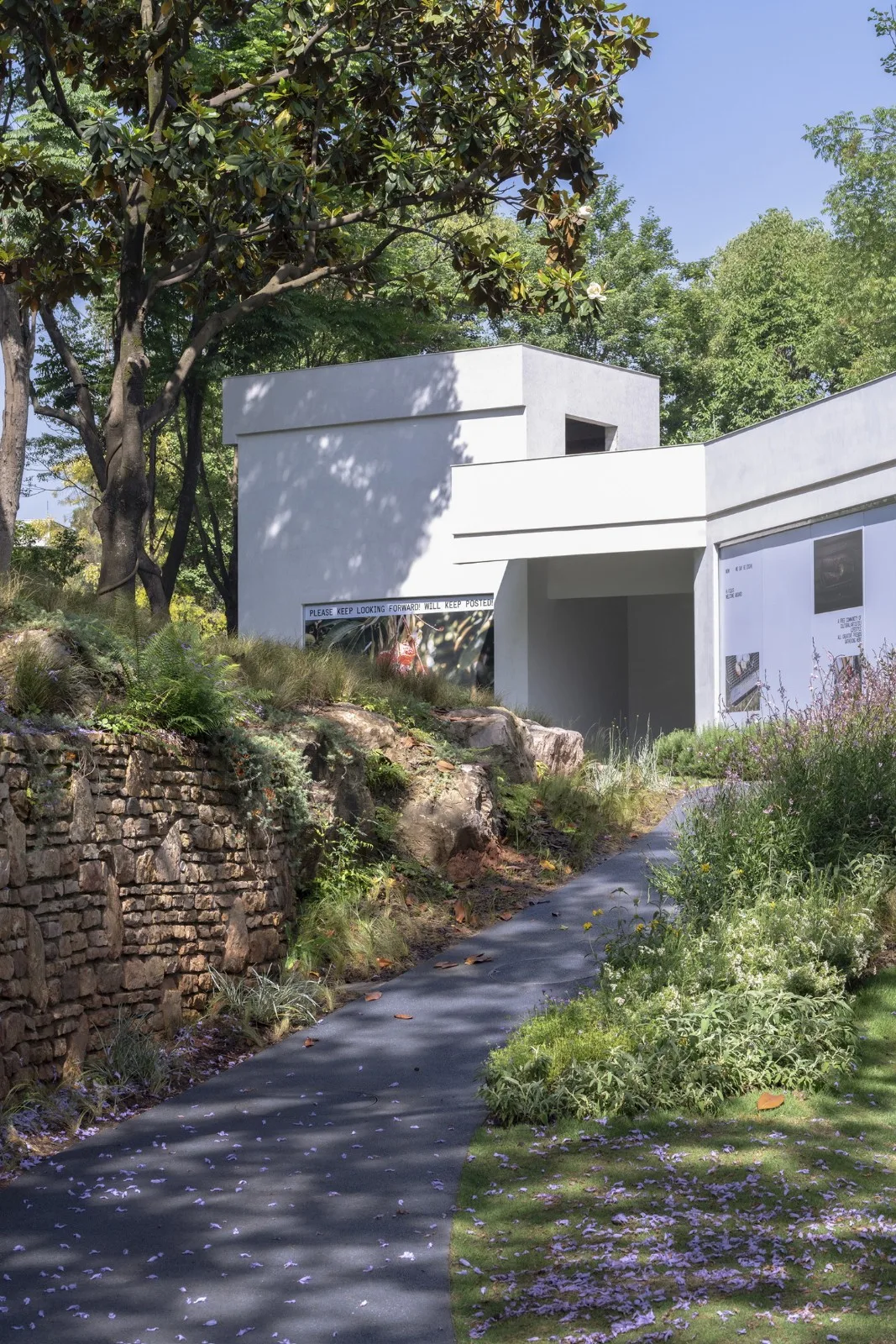
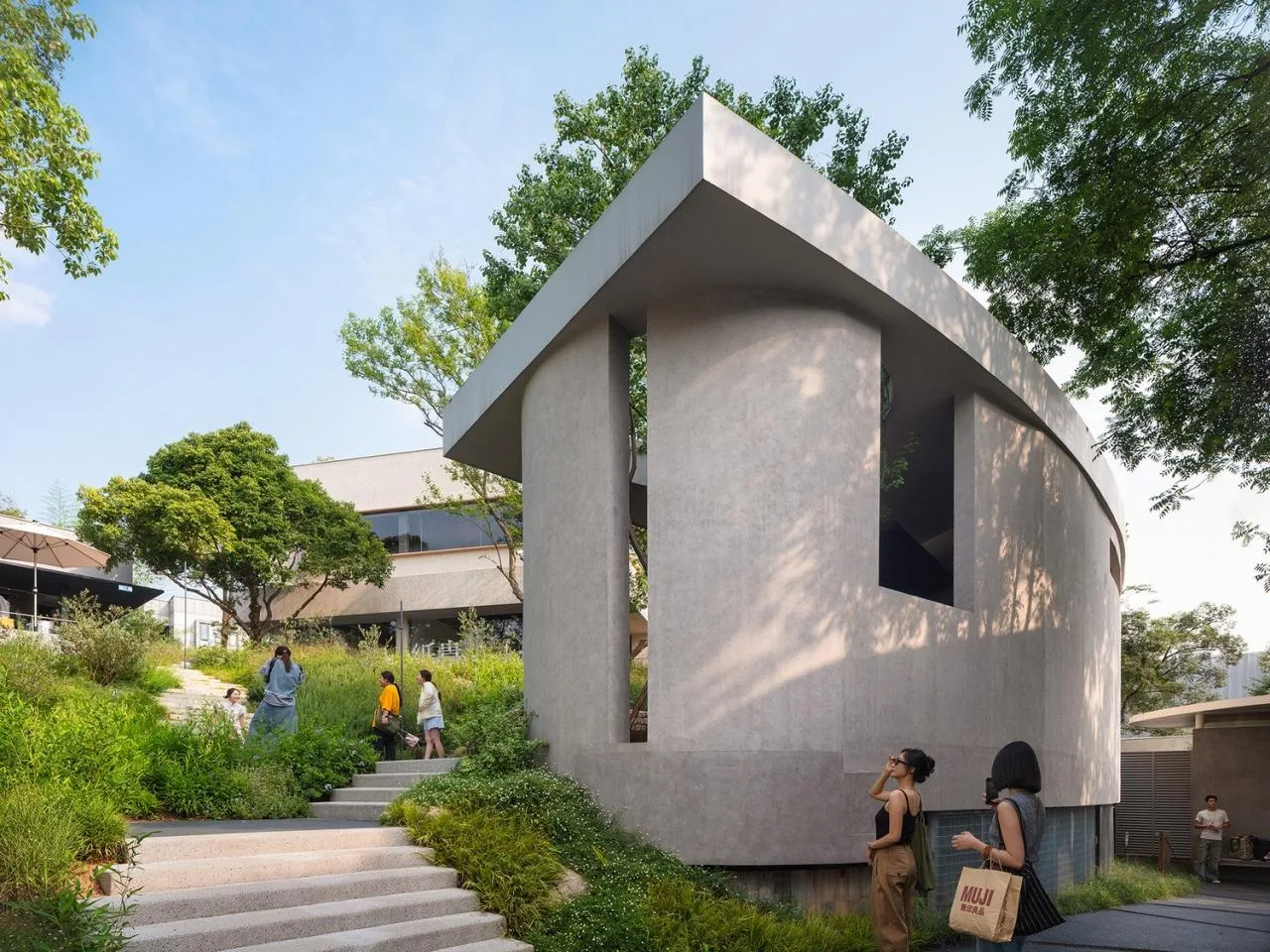
Jili Architecture approaches the project with humility and restraint, aiming to highlight the relaxed and informal spirit of the site. By integrating existing building structures and terrain features, the design pursues the ideals of flatness and light scenery, exploring the evolving and enduring qualities of Chengdu’s character. The project aspires to create a new urban lifestyle and inject fresh vitality into Chengdu’s Luhu Ecological City.
Project Drawings
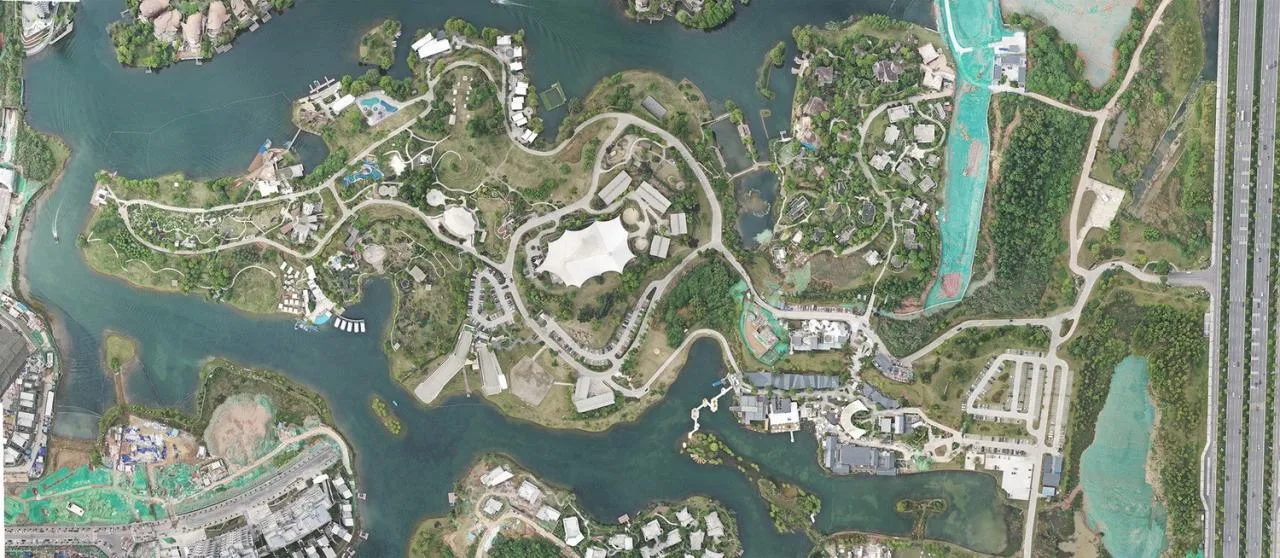
△ Plan View
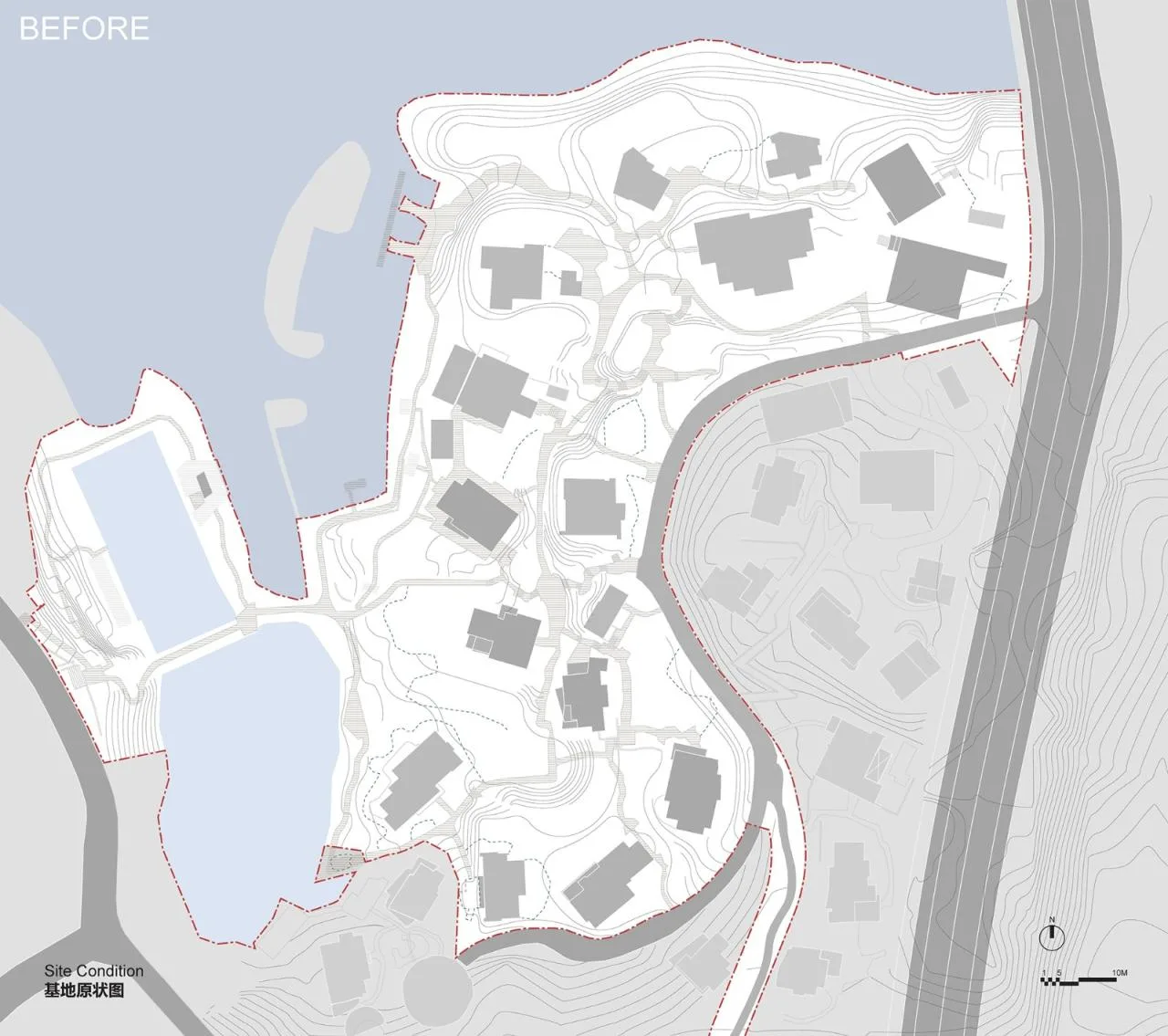
△ Original Site Map
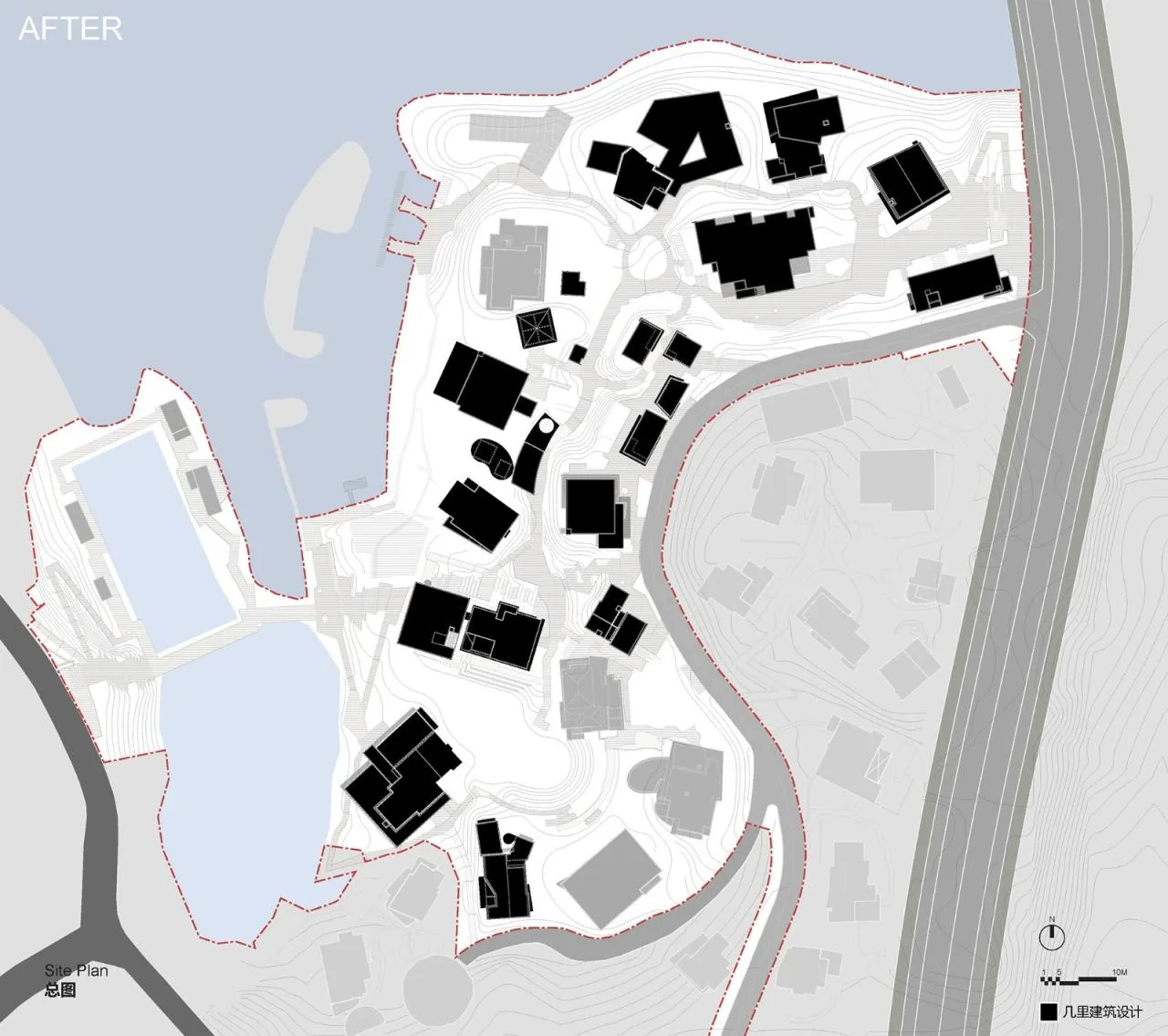
△ General Drawing
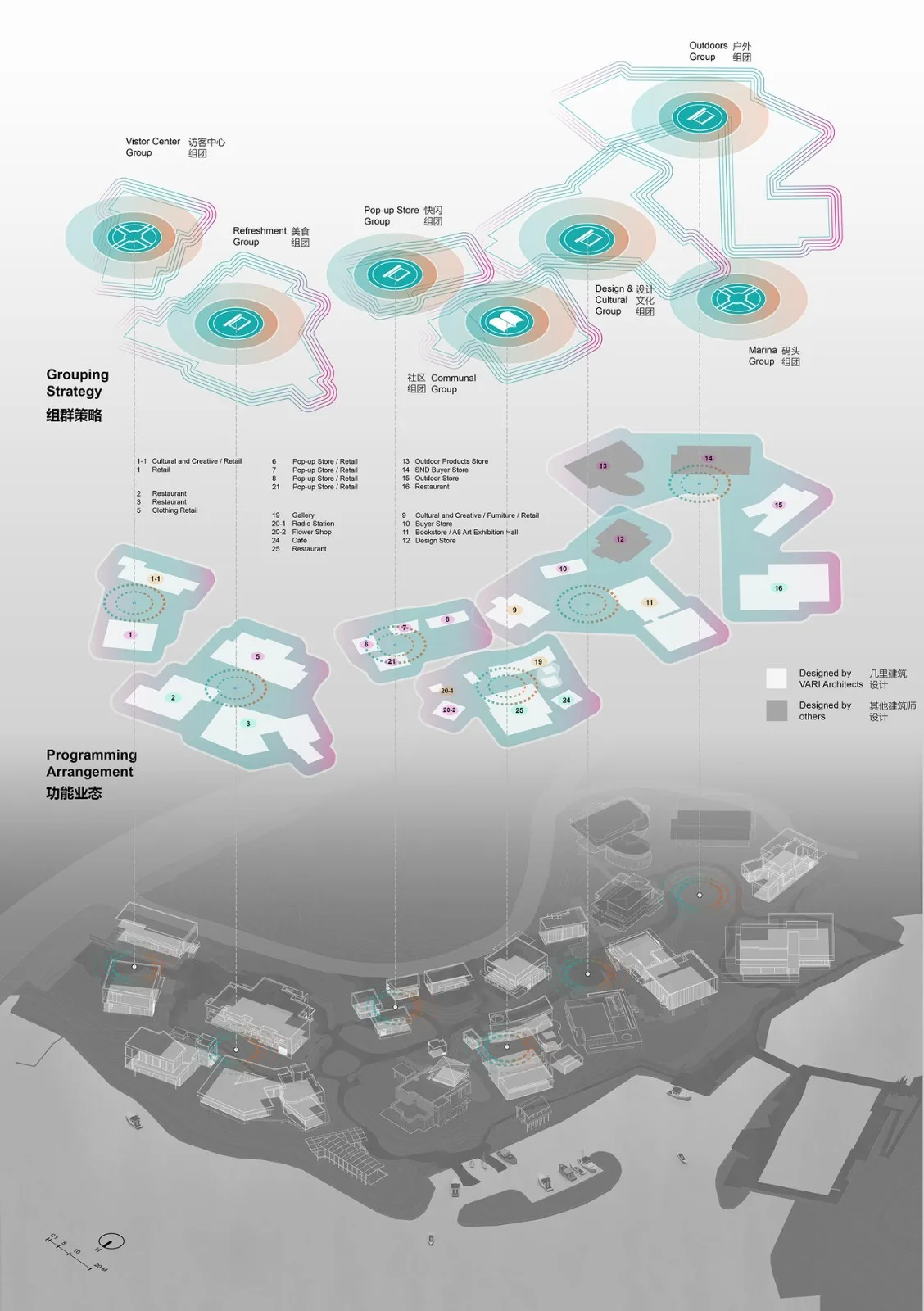
△ Functional Zoning Diagram
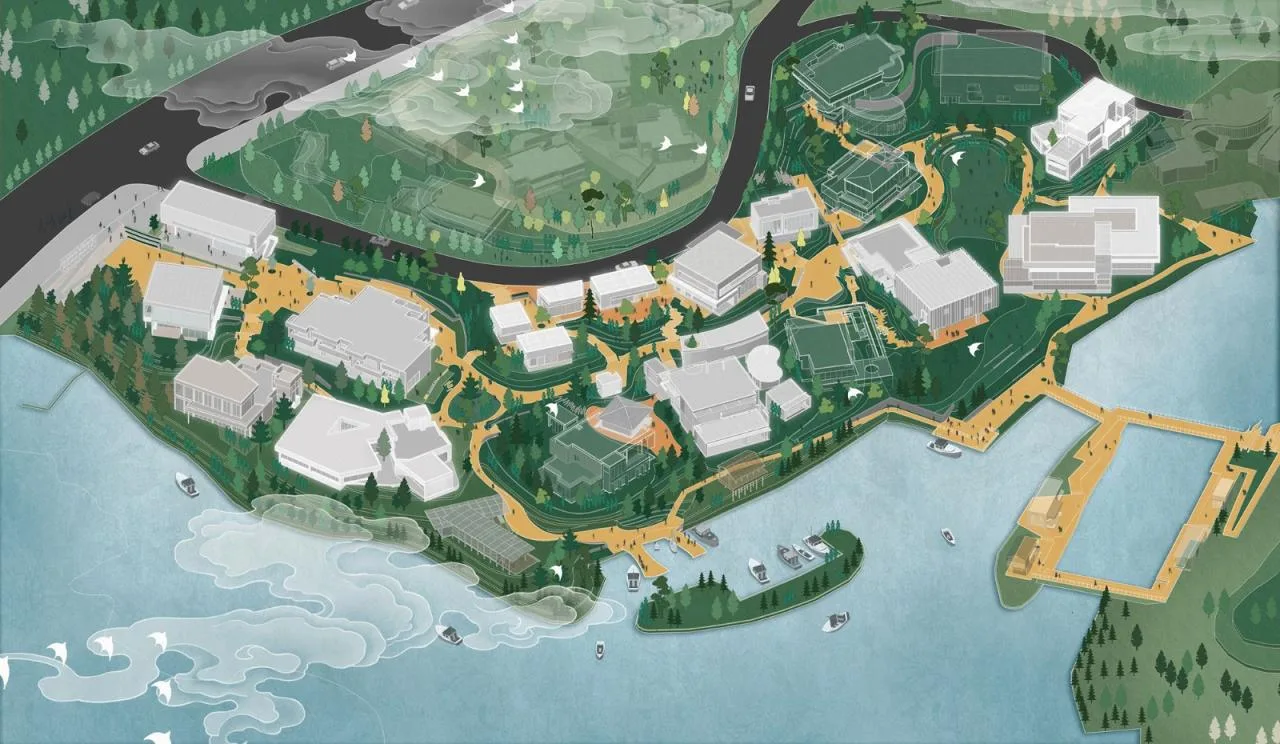
△ Axonometric Diagram
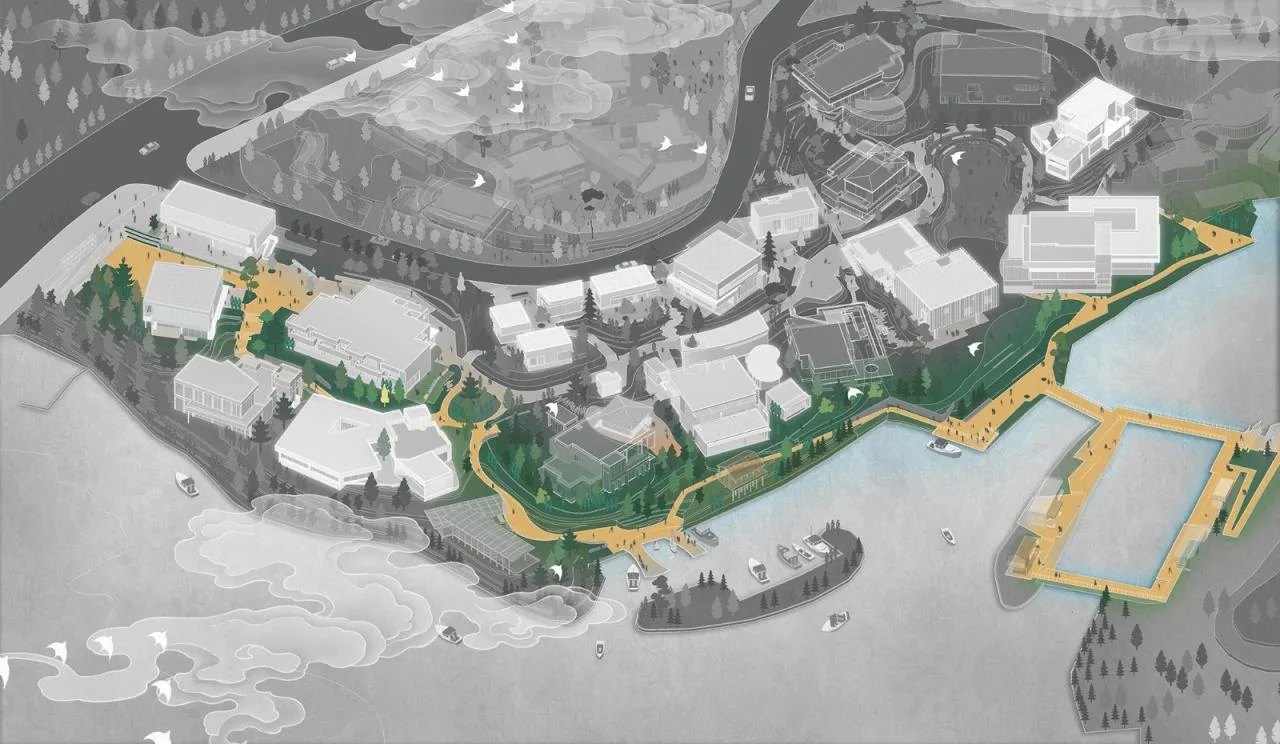
△ Axonometric Diagram
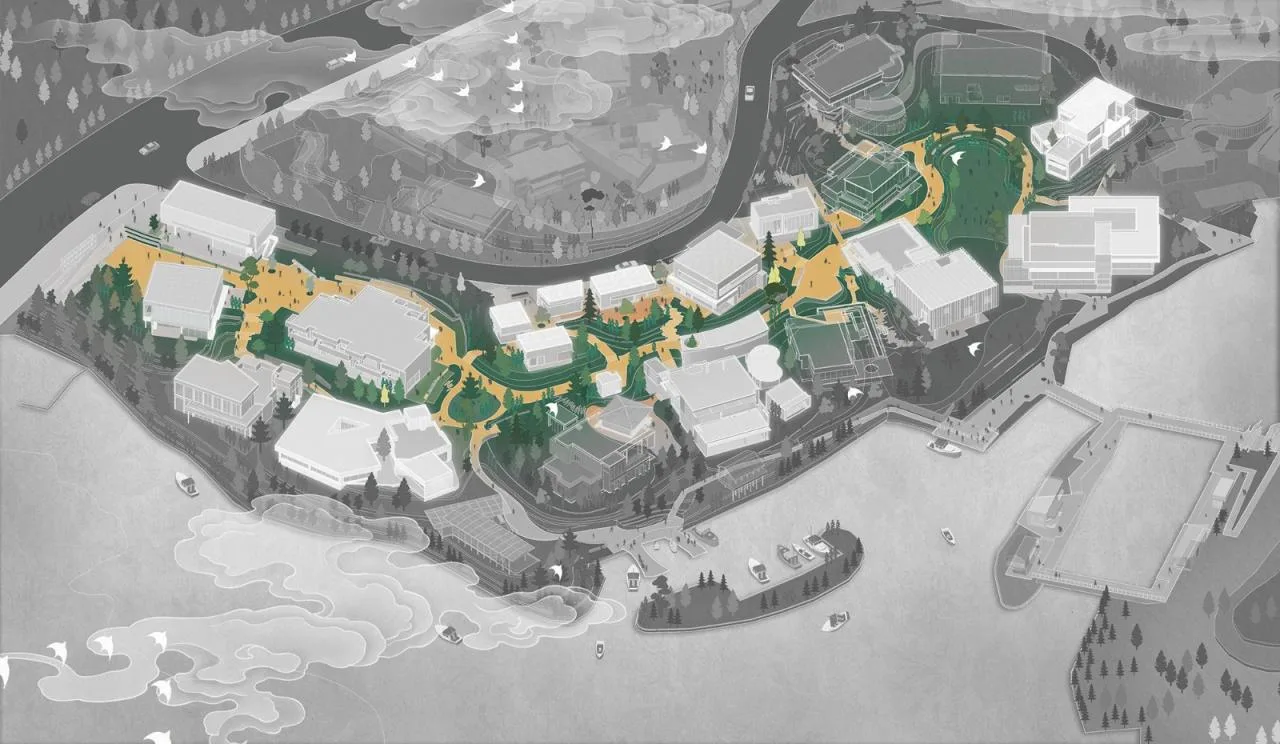
△ Axonometric Diagram
△ Axonometric Diagram
△ Plan View
Existing Buildings
△ Analysis Chart
△ Analysis Chart
Project Information
Architect: Jili Building
Area: 7,000 m²
Project Year: 2024
Photographers: Existence of Architecture, Blue Orange Photography
Lead Architects: Qi Fan, Yang Dingliang
Project Architects: Feng Pan’ao, Wang Chenxin, Tang Handan, Ding Xiaoyu, Mou Yu, Li Jun
Copywriting: Qi Fan, Yang Dingliang, Wang Chenxin
Owners: Chengdu Wanhua Investment Group Co., Ltd., Chengdu Afaqi Commercial Management Co., Ltd.
Construction Companies: Tutai Construction Group, Dingyu Construction Engineering Co., Ltd.
Construction Drawing Design: Zhouyu Design Group Co., Ltd., Sichuan Zhongheng Zhuke Survey and Design Co., Ltd. Chengdu Second Branch
Landscape Design: Yudao Landscape
Lighting Design: BPI Lighting Consultant Design Company
Curtain Wall Deepening Design: Zhouyu Design Group Co., Ltd.
Location: Chengdu














Must log in before commenting!
Sign Up