
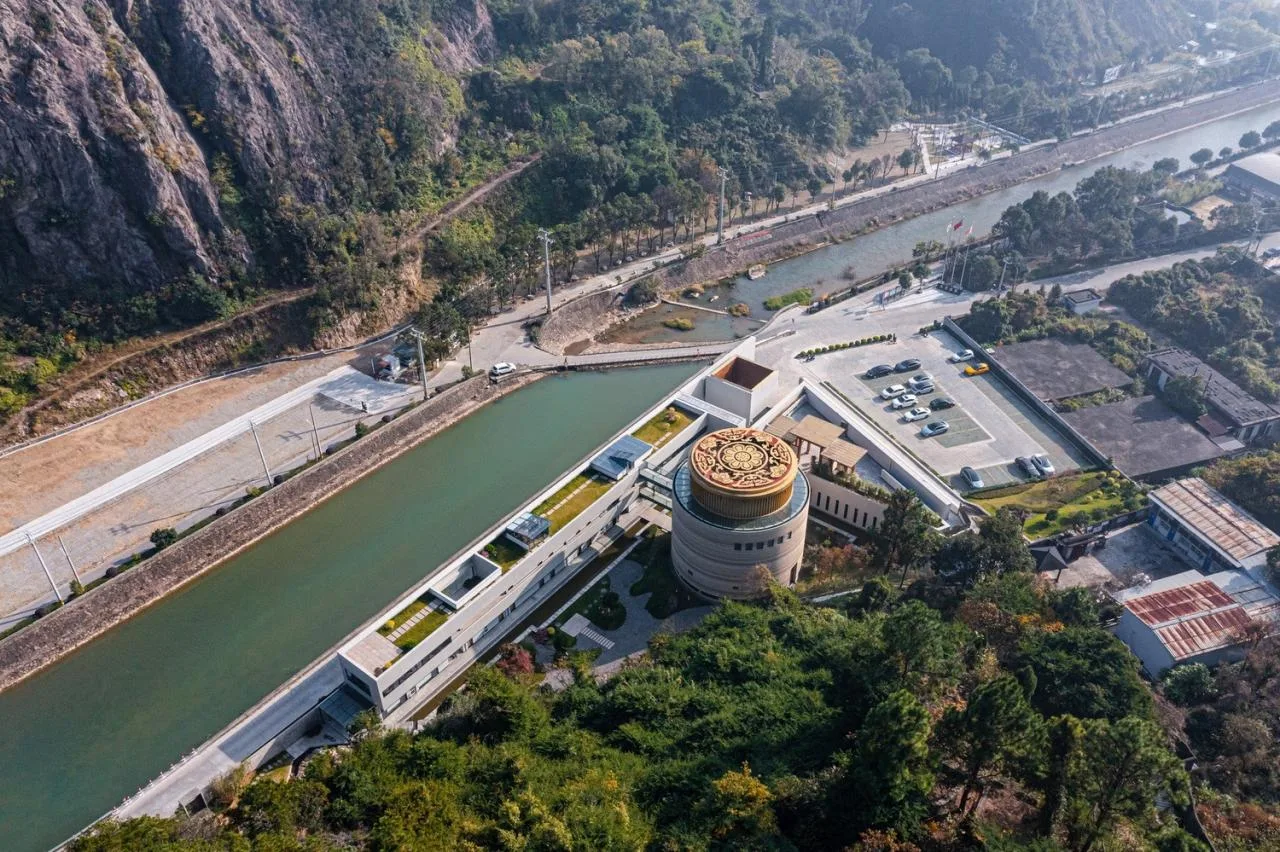
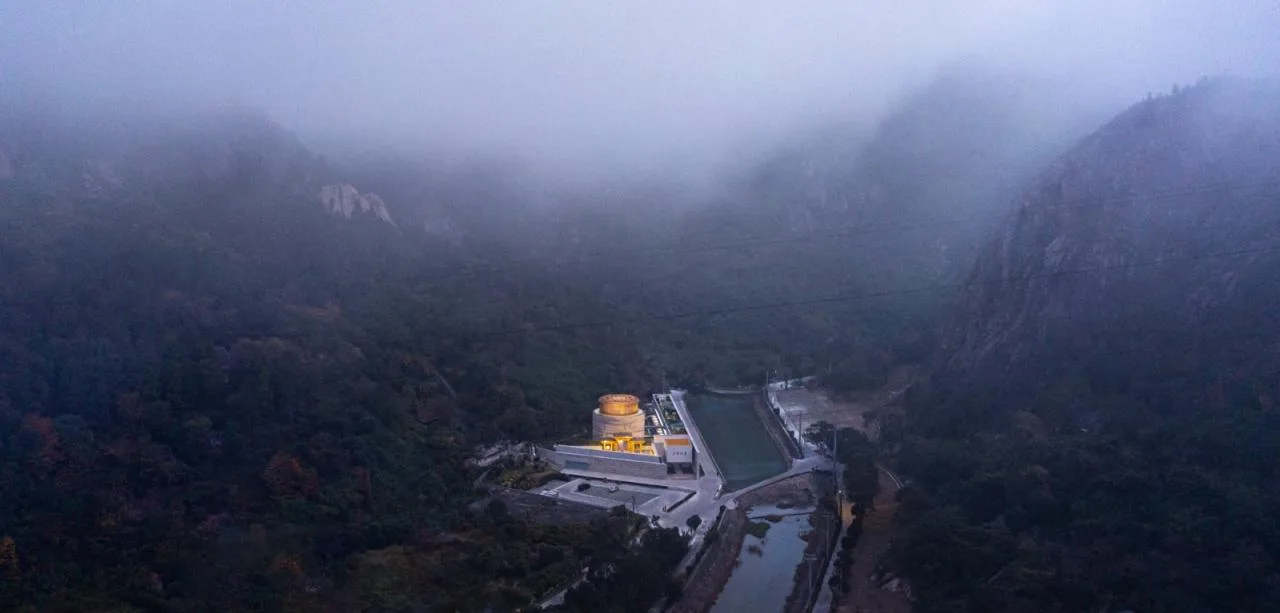
Baishui Village is nestled in the valley between Lianhua Mountain and Frog Mountain in Tangxia Town, Rui’an, Wenzhou City. The area is rich in folk Buddhist culture, with nearly every village boasting its own temple for worship. The young abbot of Puming Zen Temple envisions building a modern temple here that serves as a place for Buddhist preaching. This is a significant challenge, requiring the design to address three key relationships: between religion and secular life, tradition and modernity, and architecture and nature.
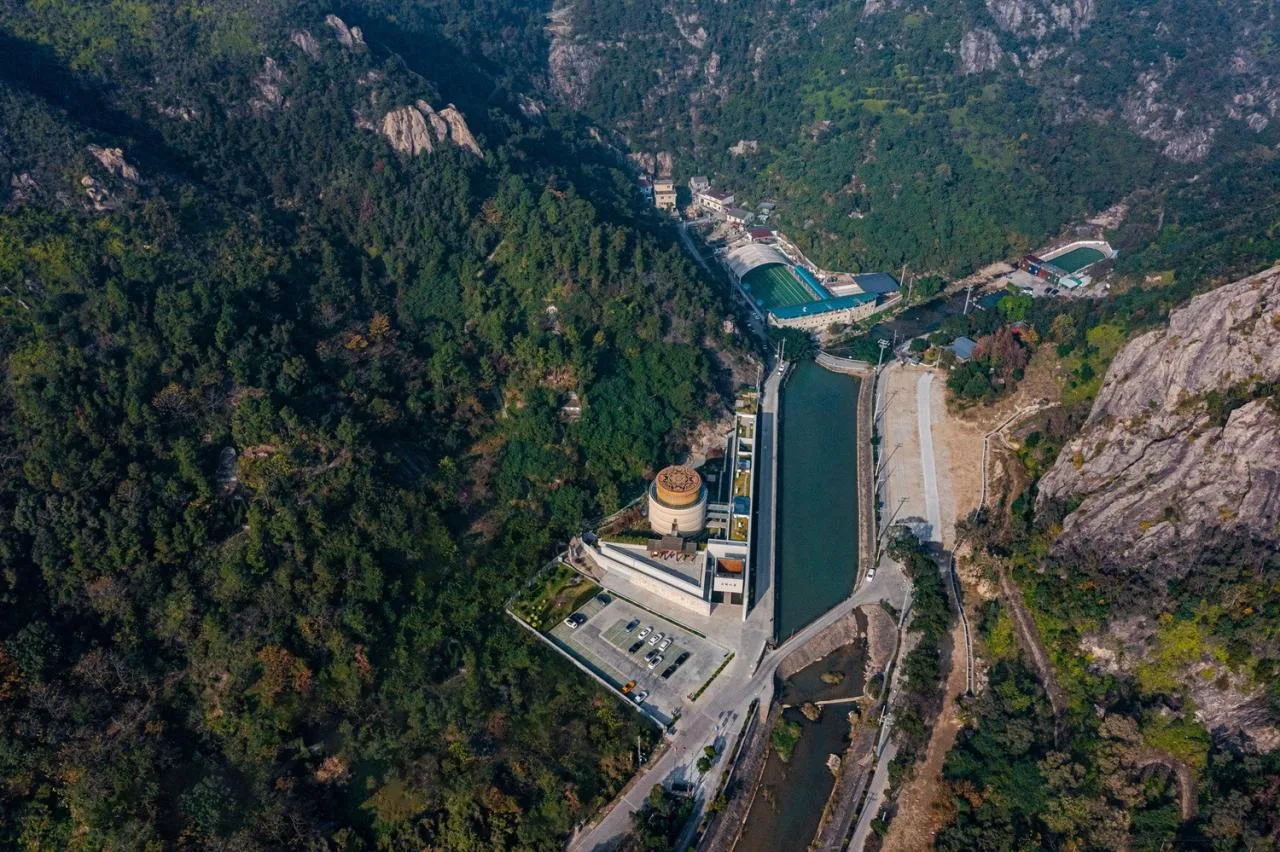
Buddhism originated in ancient India, later spreading to the Central Plains of China through Tubo during the Han Dynasty. It flourished during the Wei, Jin, and Southern and Northern Dynasties, gaining praise from Emperor Wu of the Liang Dynasty. Since then, Buddhist architecture has often followed the royal palace system, gradually evolving into a unified model characterized by symmetry along a central axis and courtyards positioned on sloping terrain.
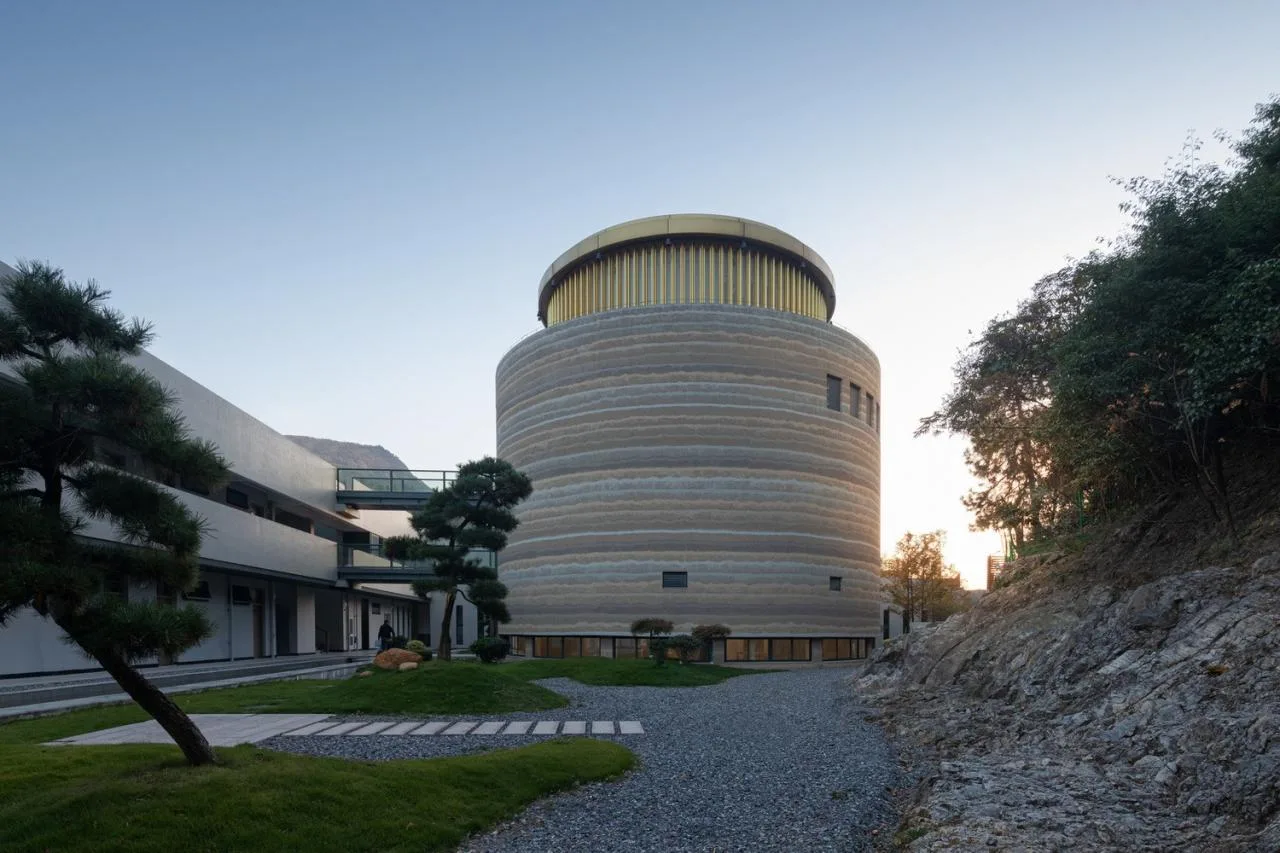
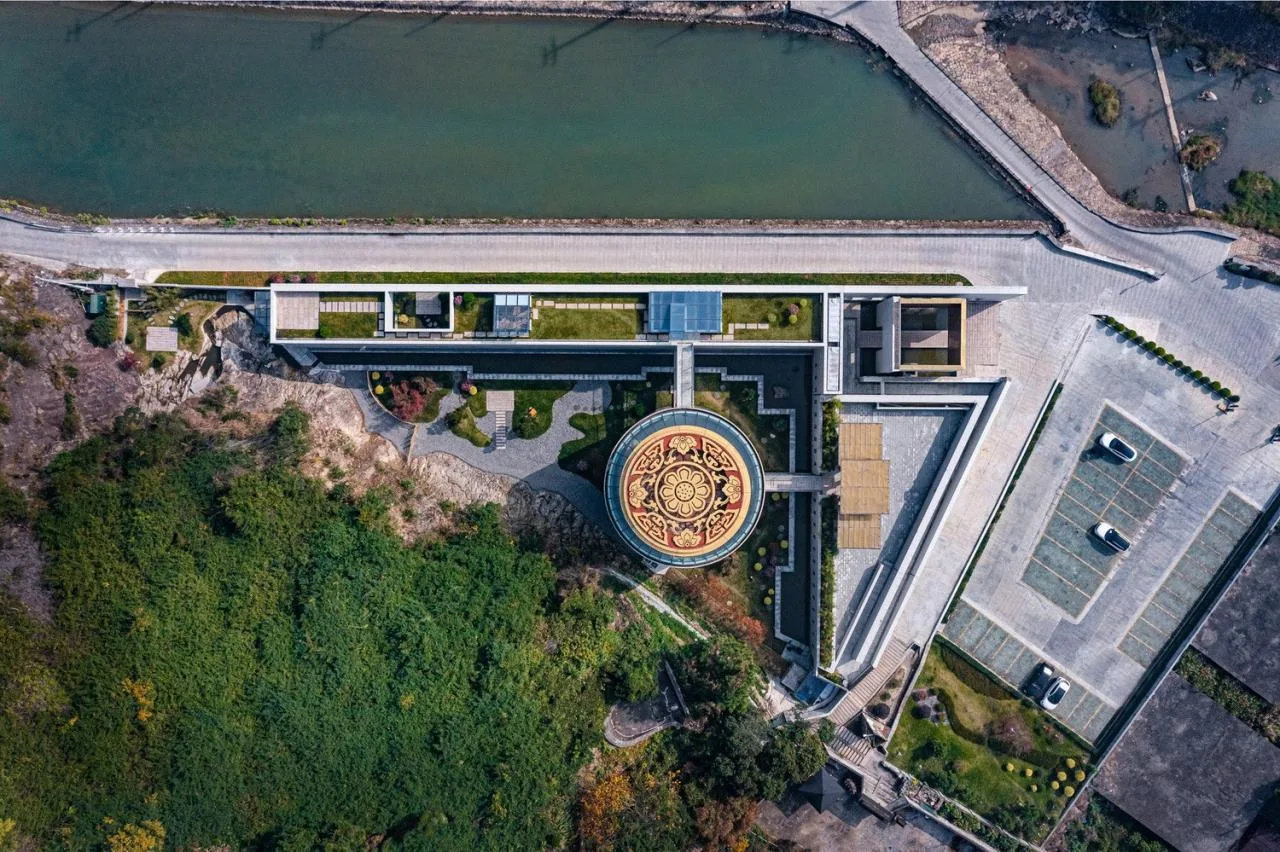
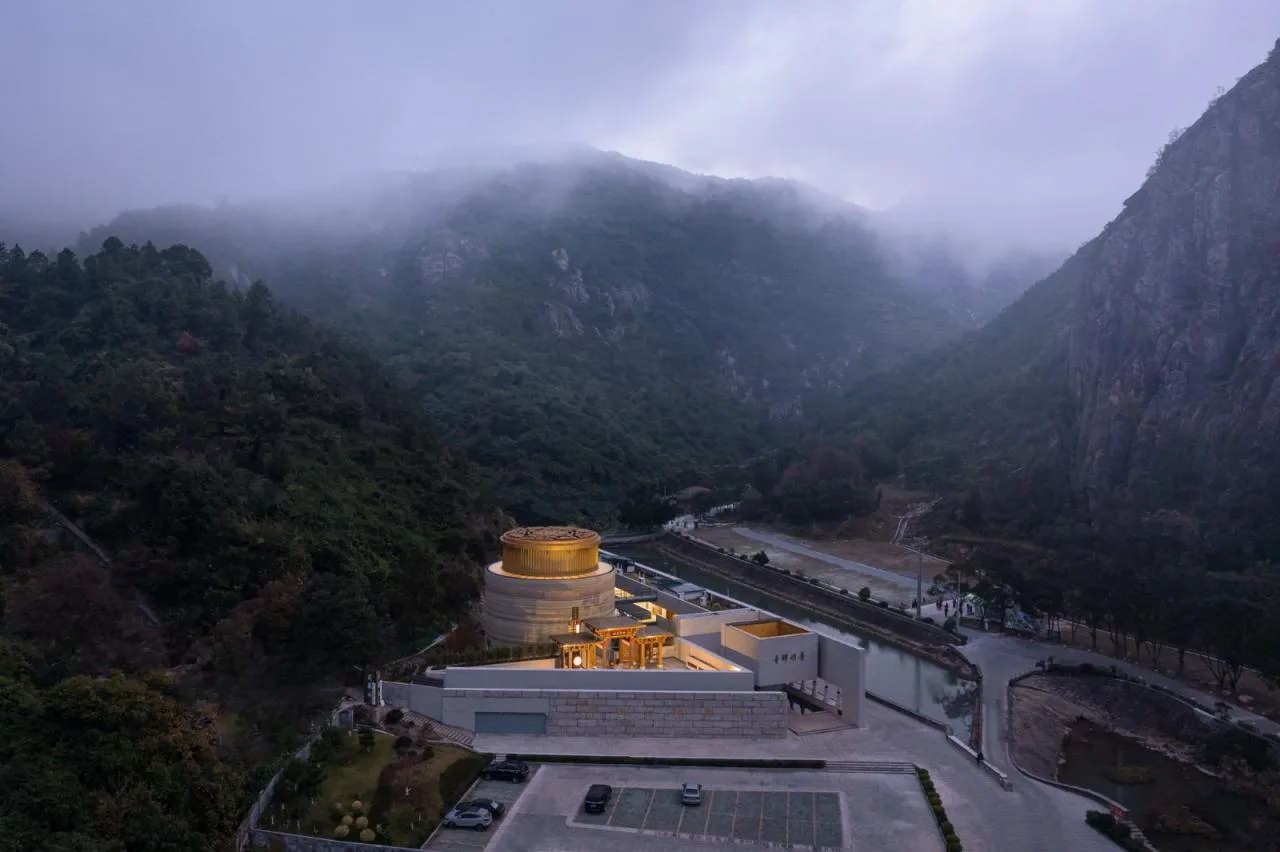
However, the project site is an acute triangular plot—narrow and constrained—making traditional layouts difficult to apply. By studying Buddhist culture before its arrival in China, we noticed the ubiquitous use of the circle—from Rangtupo and Mandala to the prayer wheel—as a fundamental form. This inspired us to abandon the traditional axial symmetry in favor of an asymmetric, flexible layout: the statue of Shakyamuni is placed at the geometric center of the site, while other functional spaces revolve around this central circle.
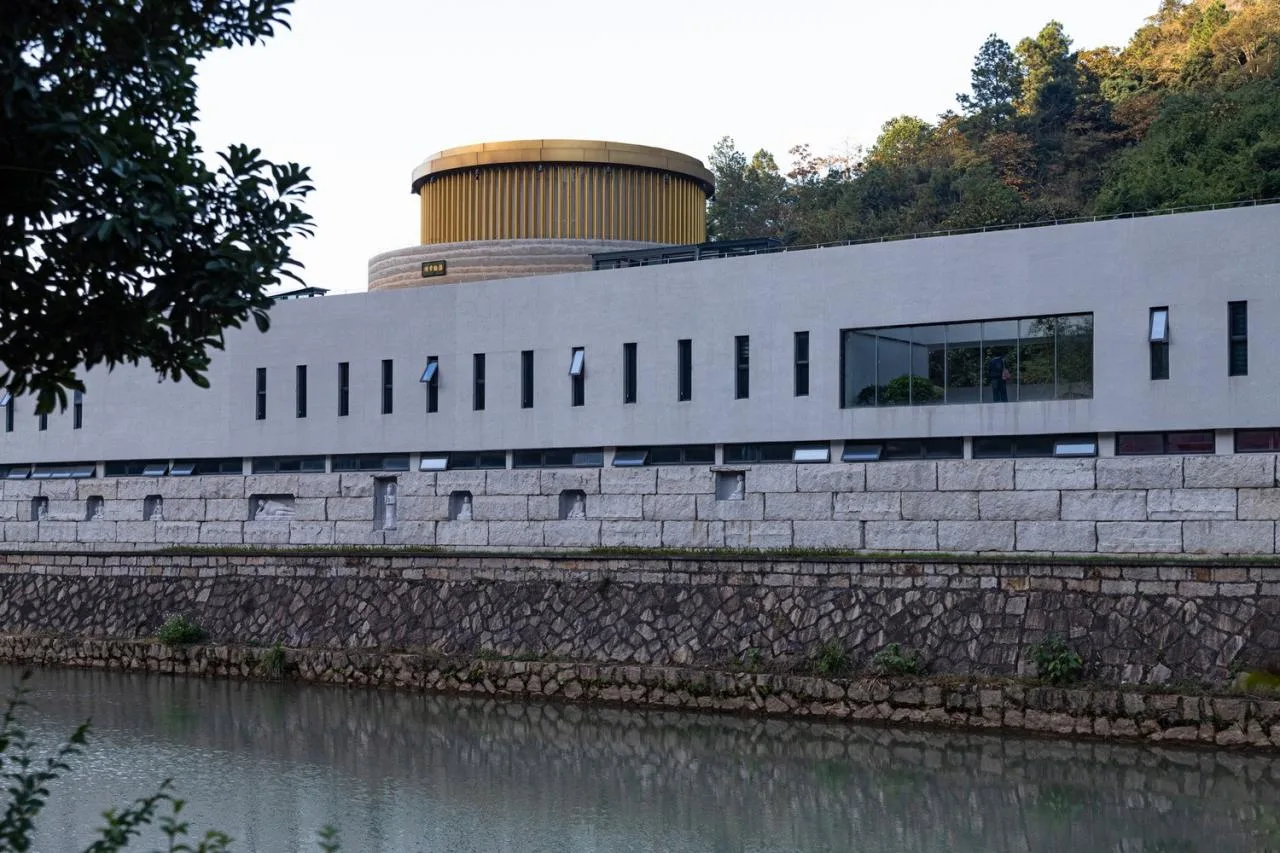
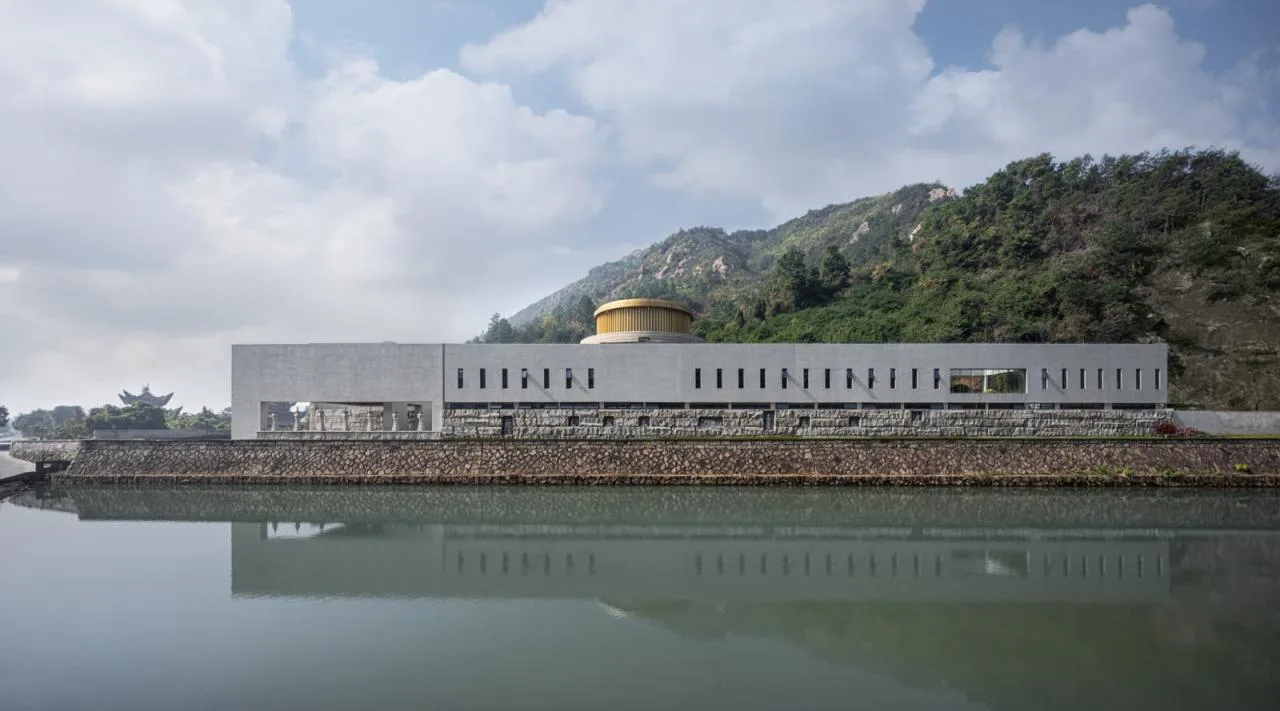
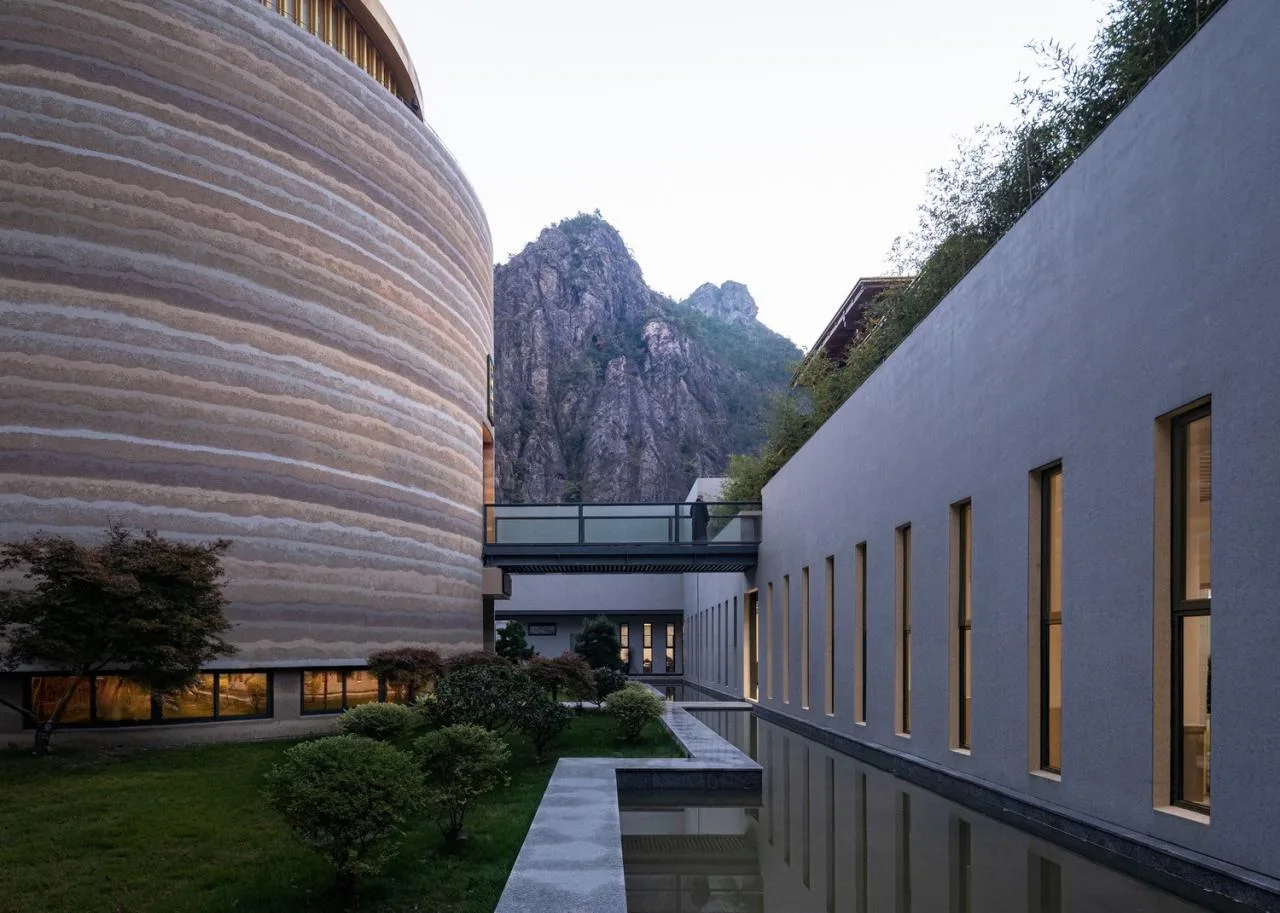
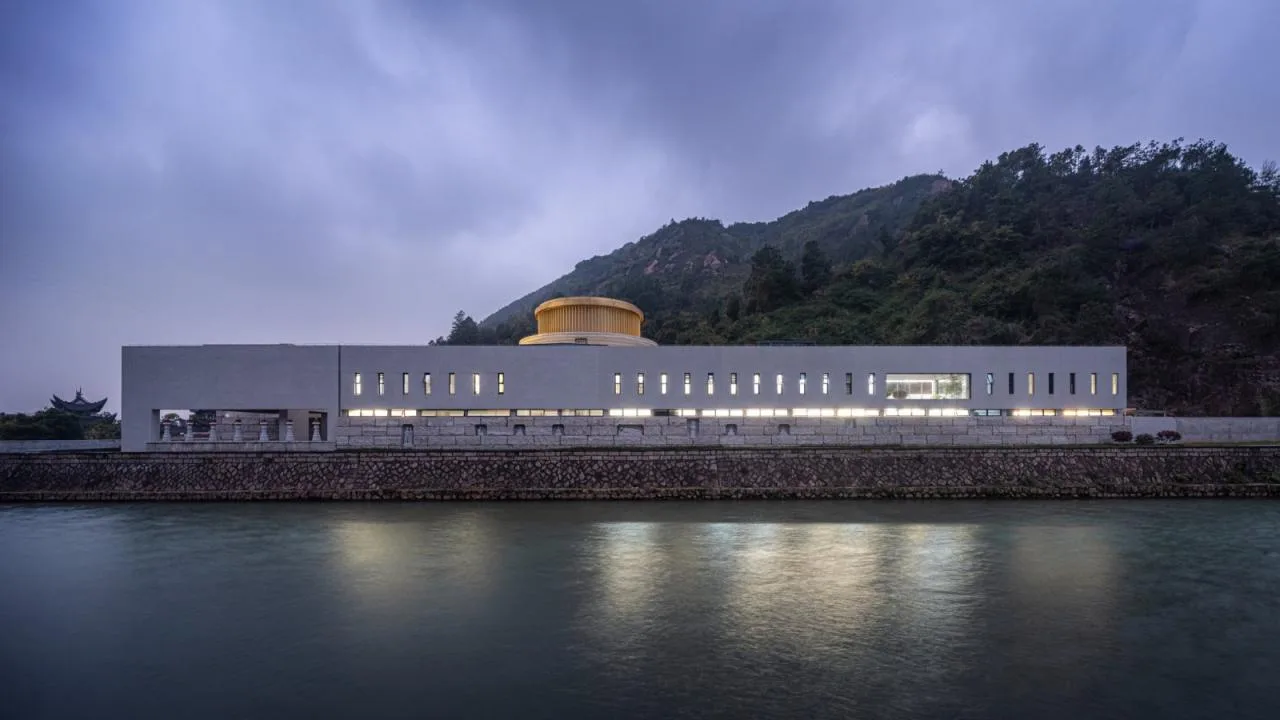
To maximize the site’s potential, we designed a straight courtyard wall along the eastern streamside path, enclosing an inward-facing courtyard at a 30-degree angle to the mountain. The outer wall is constructed from large, local natural stones, embedded with Buddha statues to create an approachable external facade for the temple. The inner walls are ‘spatialized’ to serve as living quarters for twenty monks and laypeople within the monastery.
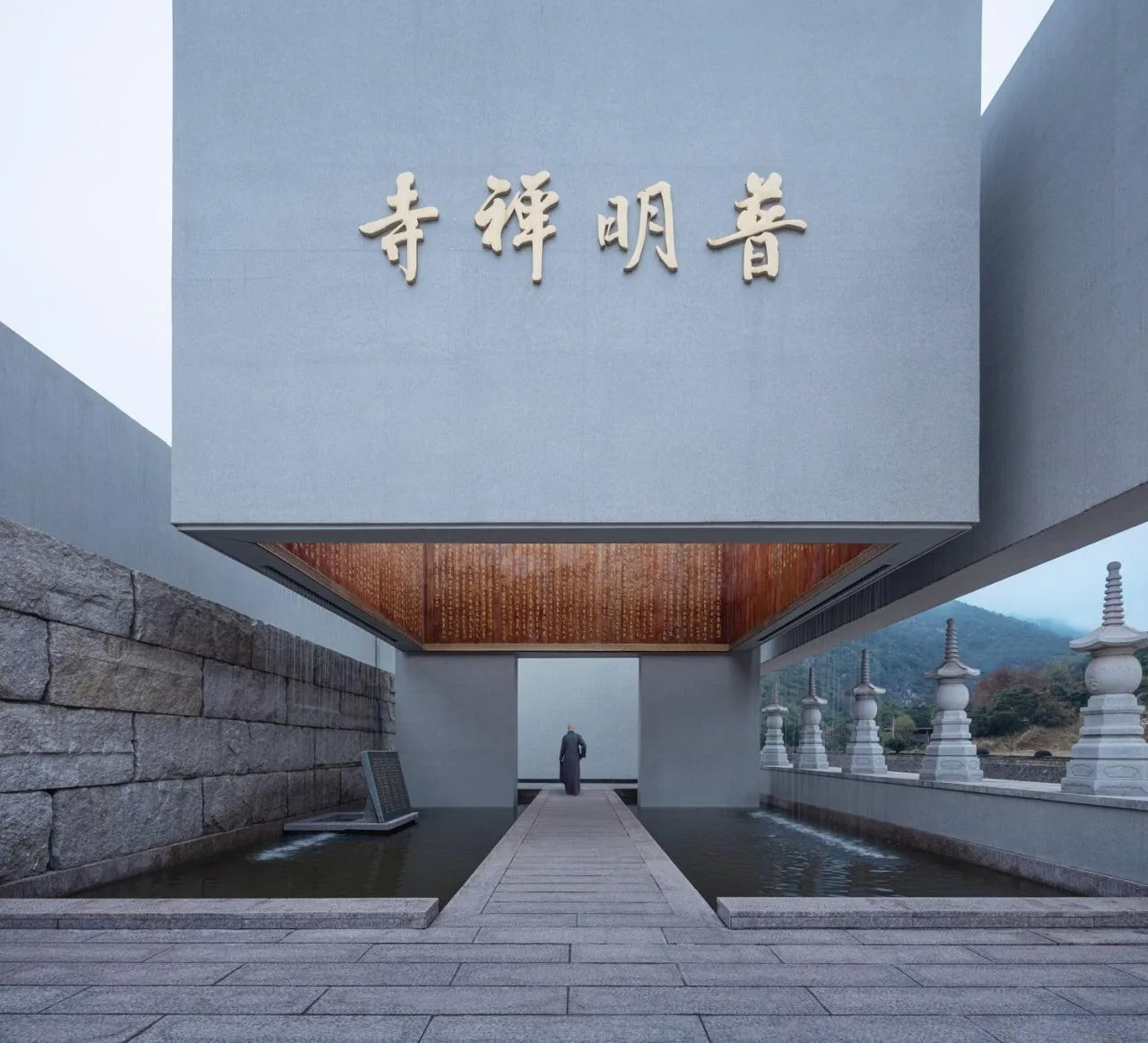
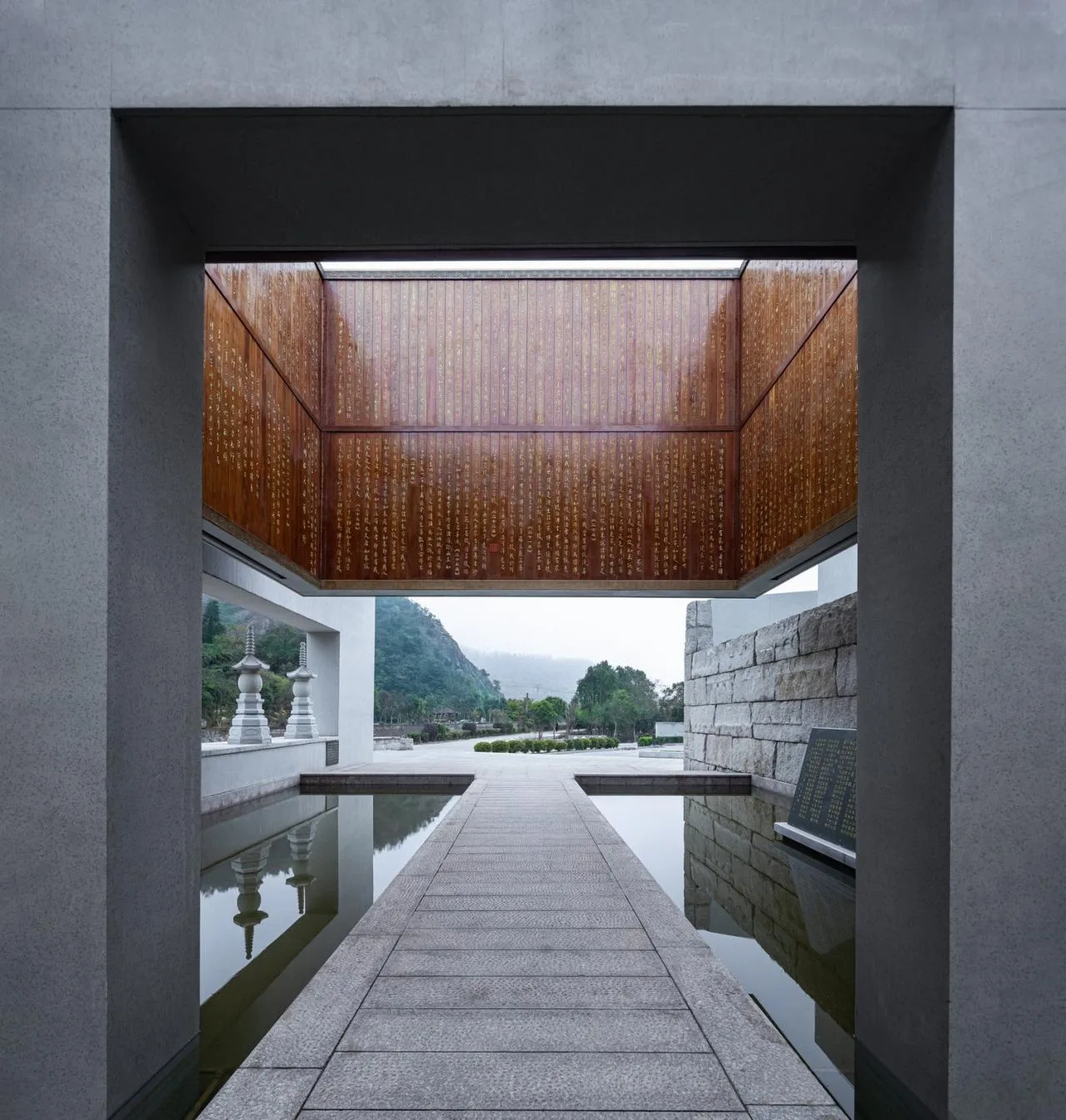
The southern end features an open mountain gate design, with a release pool formed by mountain springs introduced to the ground. Four sutra boards engraved with the Diamond Sutra are suspended on the inner wall above, creating a square spatial arrangement. Passing through the mountain gate, visitors ascend slowly along a zigzag path, experiencing changing scenery at every turn. These winding paths lead to secluded spots, enhancing the traditional Chinese temple’s sense of spatial progression and layered ritual, fostering a peaceful and tranquil atmosphere upon entering the temple.
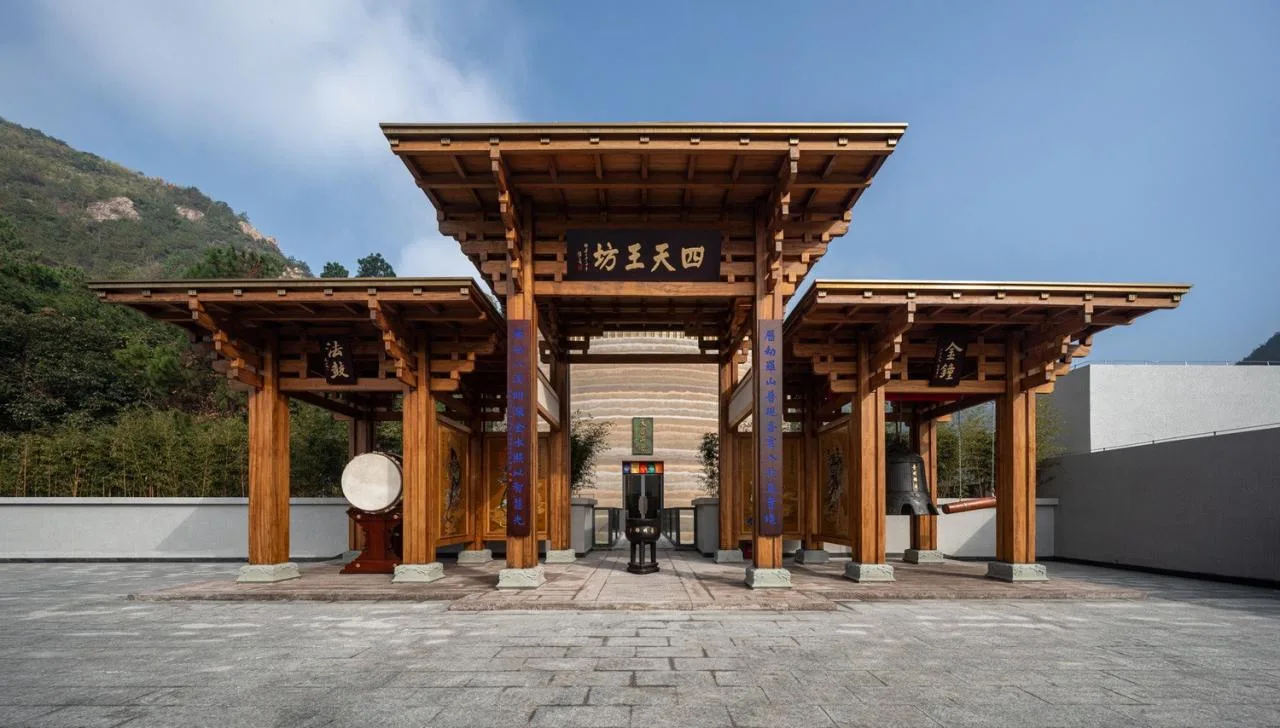
The cylindrical volume at the center forms the core of the Buddhist temple. We integrated the Shakya Mani Hall, Sutra Pavilion, and lecture hall—traditionally spread horizontally—into a vertical arrangement, uniting elements like the Buddhist cultural nave, tower, niches, and halls into one cohesive structure. The outer layer of this double-layered cylinder is the Thousand Buddha niche wall, housing various small Buddha statues preserved from the original temple. The inner layer is a translucent space for the Shakya Mani Hall, where large Buddha statues are displayed and daily morning and evening classes are held. The hall’s top cover features a six-meter radius steel structure that manually turns like a cylinder. Wind chimes gently sway, softly chanting sutras as visitors pass by.
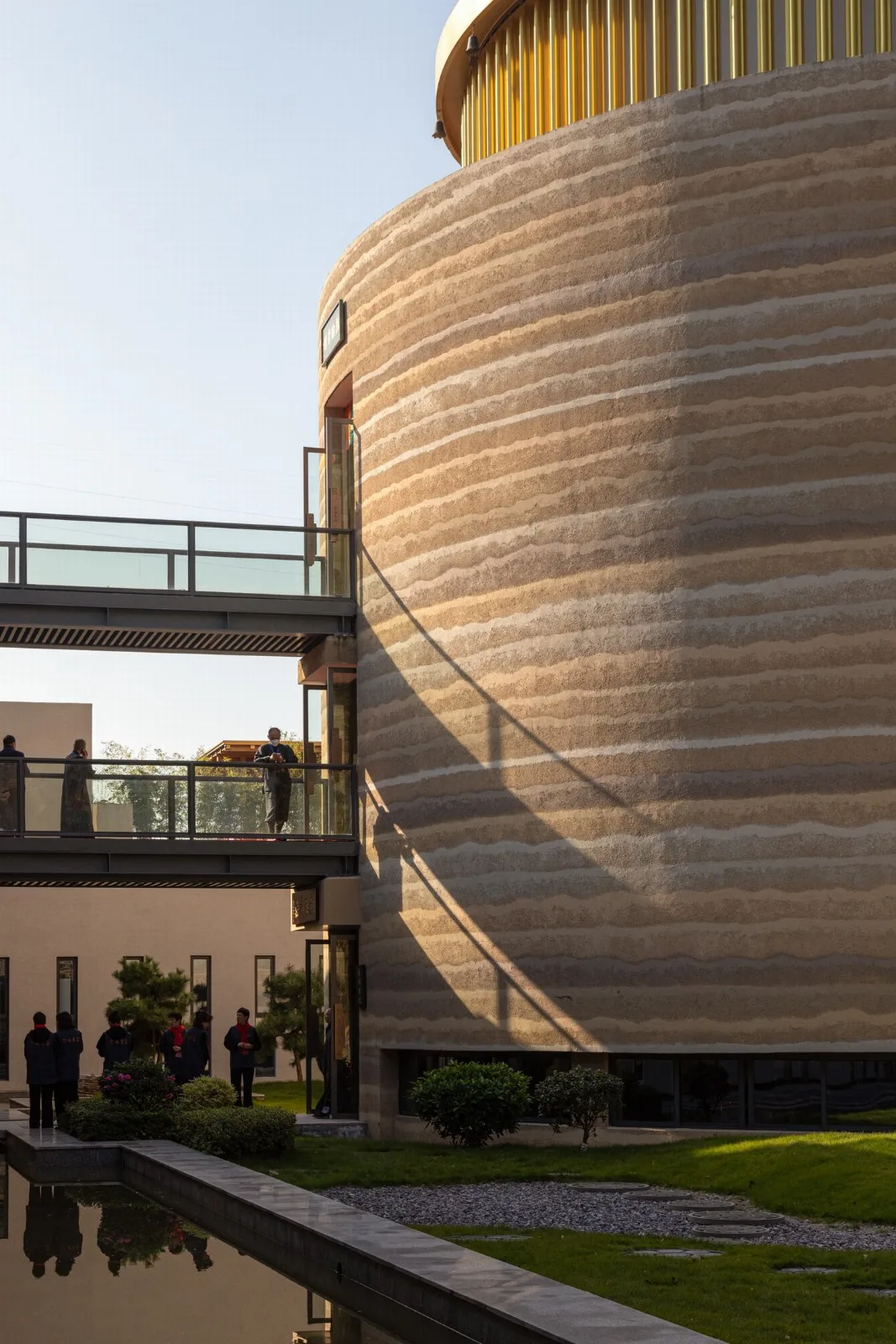
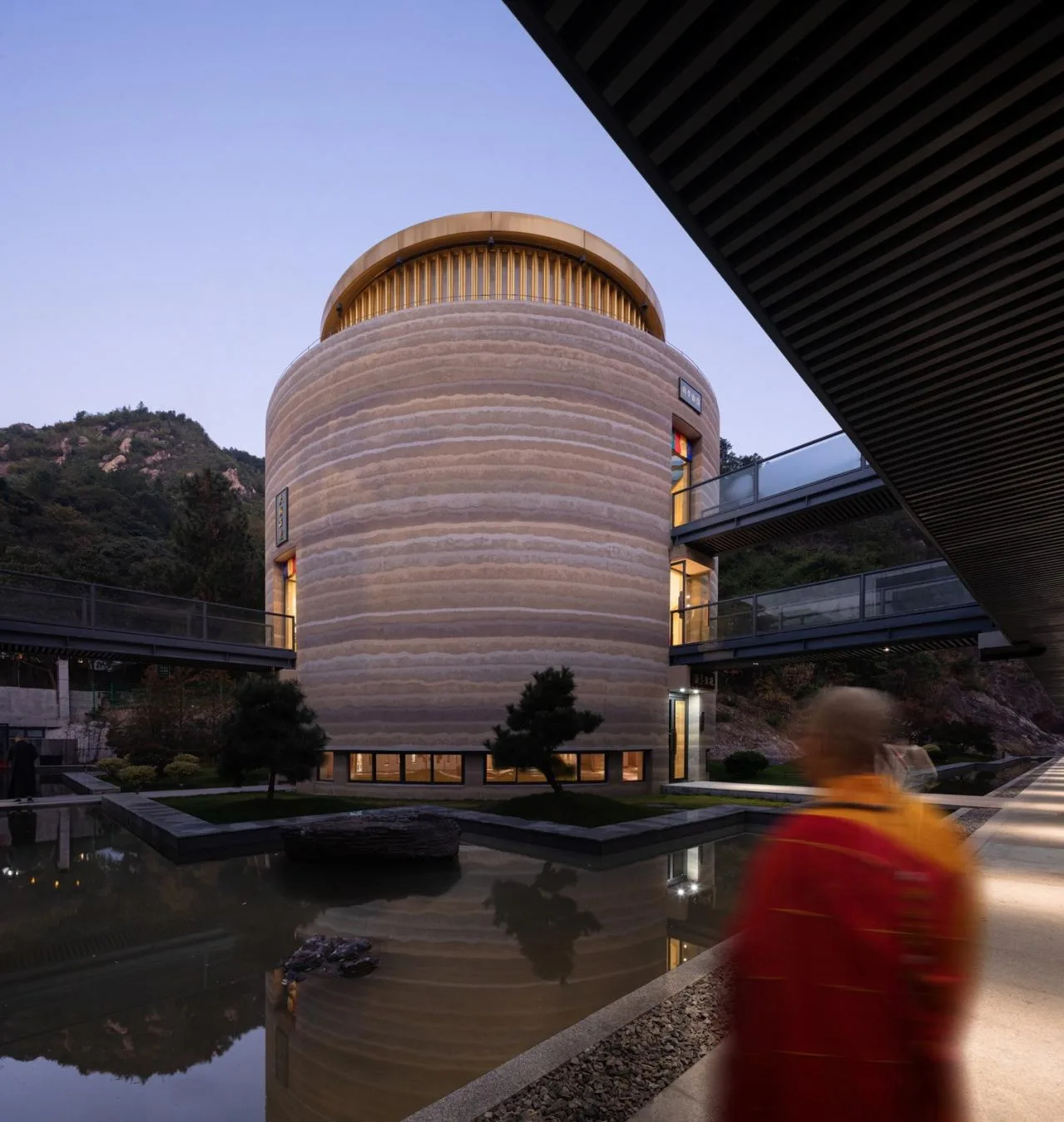
The lecture hall and scripture pavilion below serve as shared spaces for monks and villagers. Monks use these areas for preaching and studying Buddhism, while villagers engage in copying scriptures to deepen their understanding, meditate, and reflect.
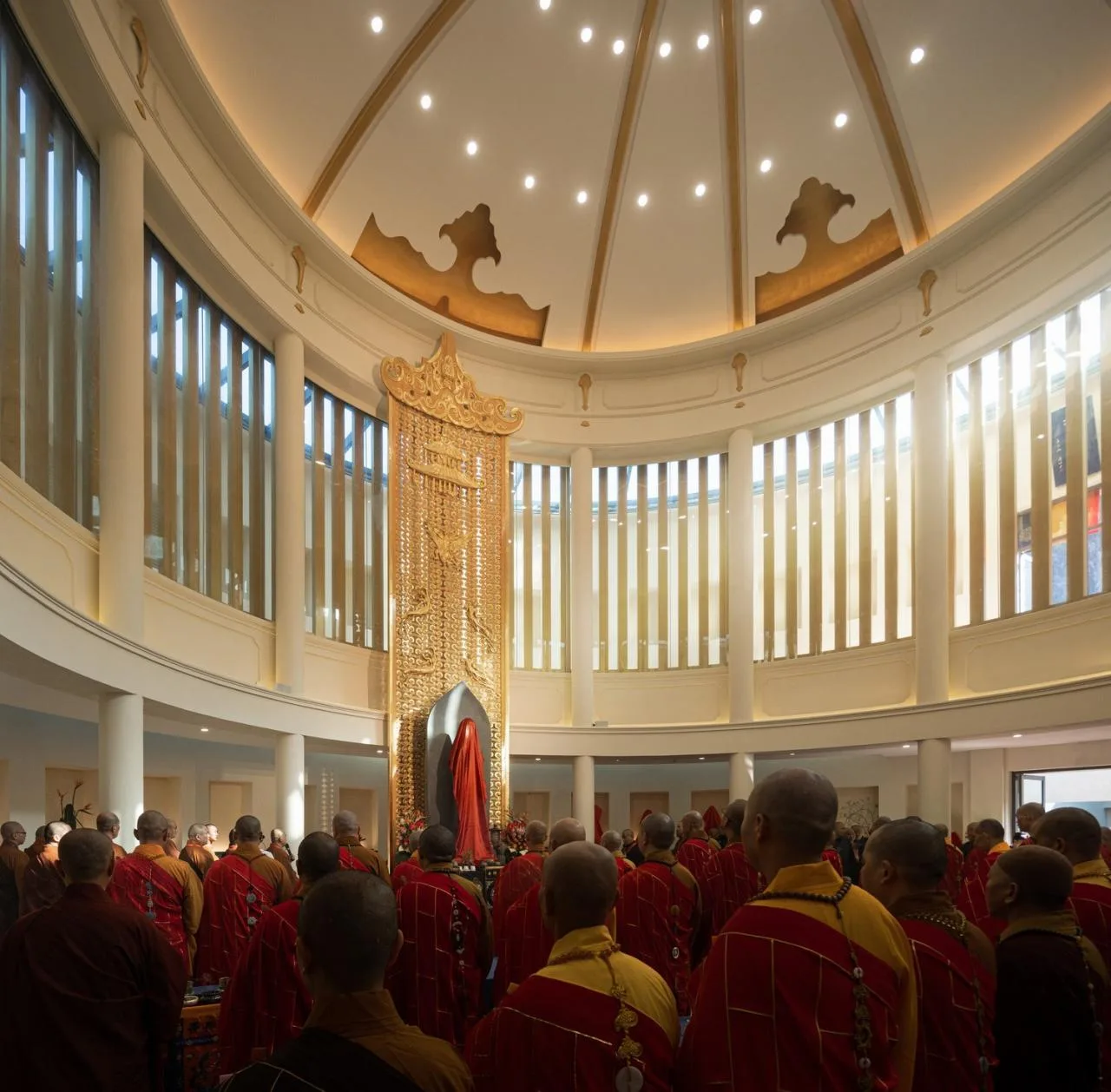
In summary, this design harmoniously integrates multiple relationships: the sacred within the secular, tradition within modernity, and architecture born from nature.
Project Drawings
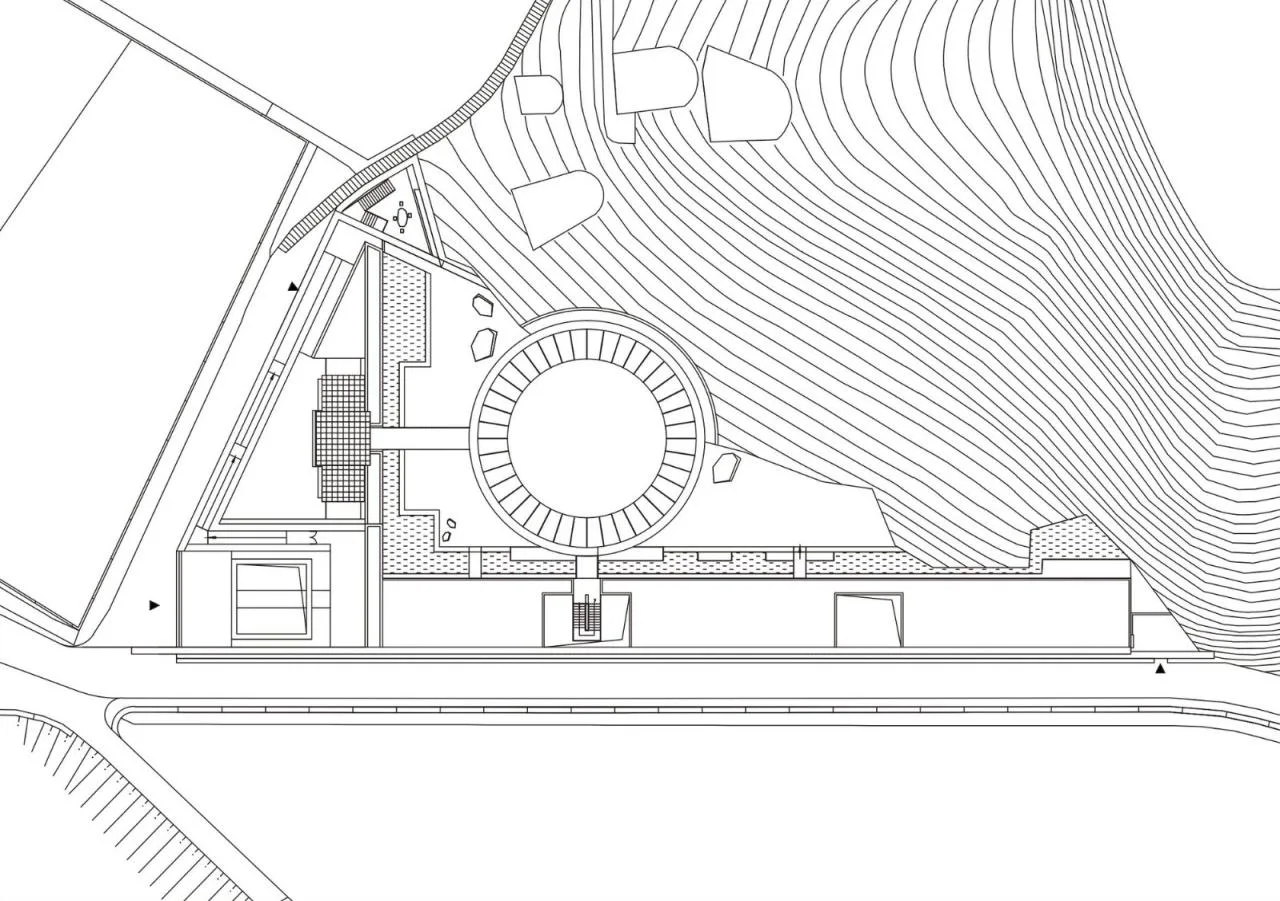
△ General Layout Plan
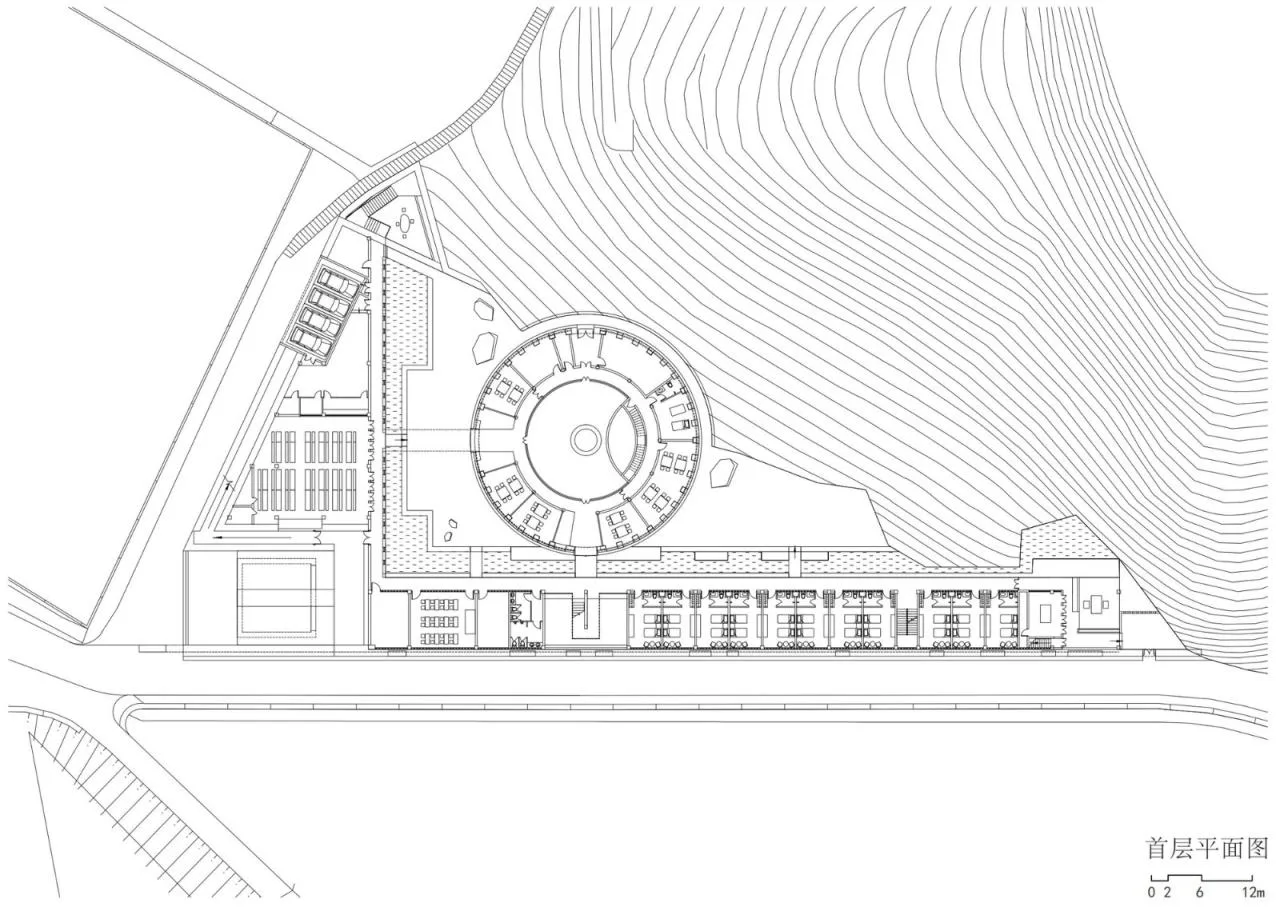
△ Plan View
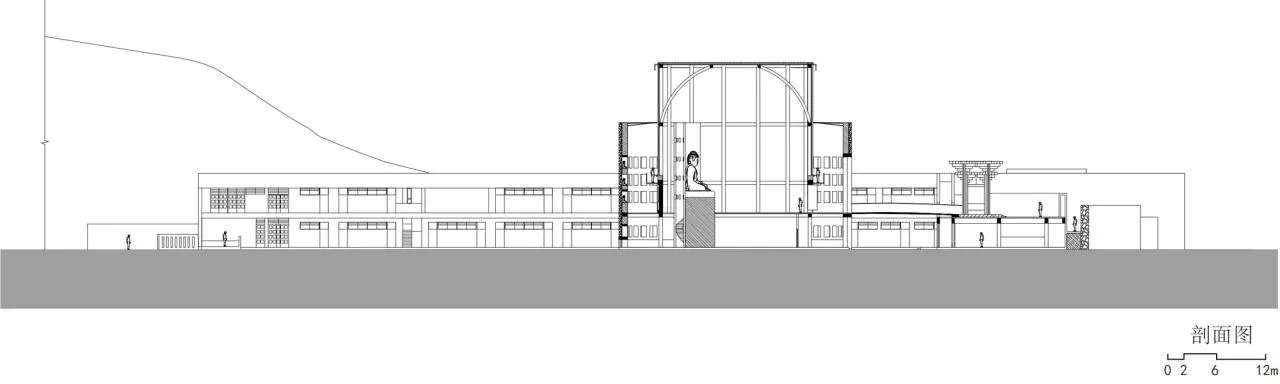
△ Section Diagram
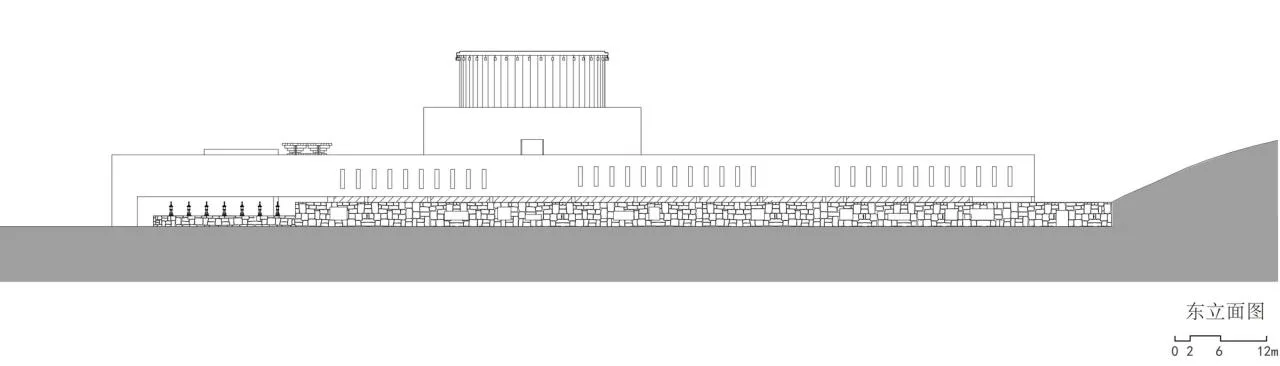
△ Elevation Drawing
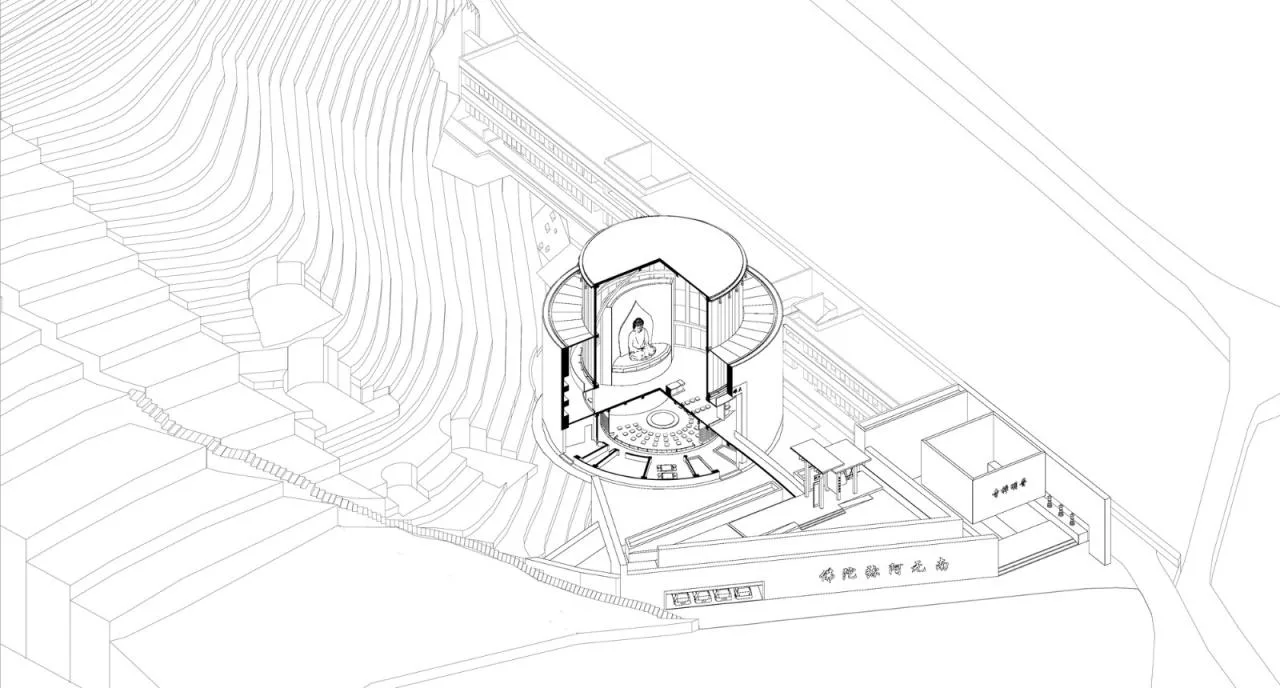
△ Axial Sectional View
Project Information
Architect: Meng Jianmin’s team
Area: 3,621 m²
Project Year: 2023
Photographer: Su Shengliang
Lead Architect: Meng Jianmin
Architects: Xu Yunchao, Xing Lihua, Fu Yongxian, Liu Wei, Zhang Shengjie, Xie Sha, Yi Yu, Du Xiaozhong, Lin Haitao, Xu Yong, Lin Fuxin, Yu Changjiang, Zeng Hong’an, Li Songming
Collaborative Design Partner: Shenzhen General Institute Chengyu Architectural Design and Research Institute
Structural Design Team: Ling Jiang, Lin Qinpeng, Chen Mingfeng
Water Supply and Drainage Design Team: Du Congbin, Cui Bing, Su Shaojing
Electrical Design Team: Luo Xing, Li Ping, Xie Ce
HVAC Design Team: Zhao Hongyu, Luo Hongfeng, Xiao Huican
Construction Contractor: Wanmu Urban Construction Group Co., Ltd
Location: Wenzhou















Must log in before commenting!
Sign Up