
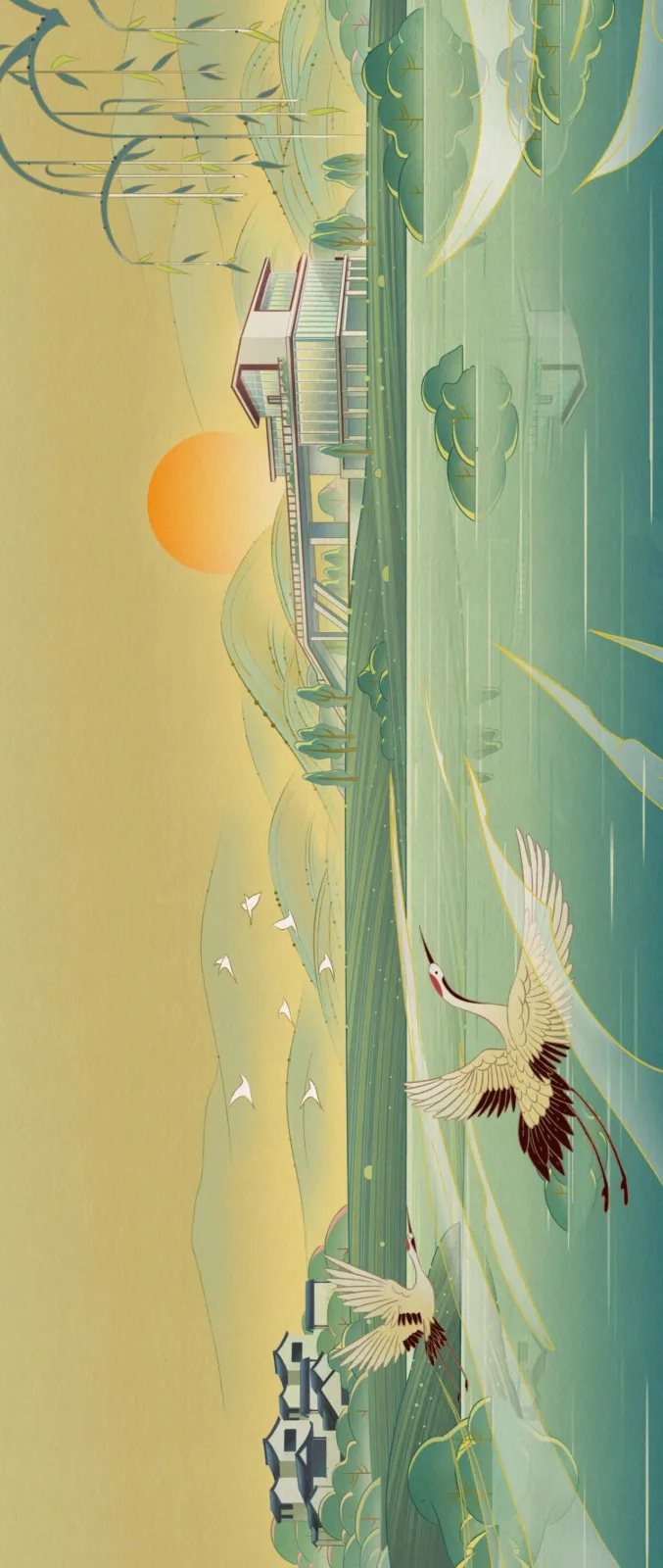
“There is Jiayu in the south, and it is covered by a shield.
A gentleman has good wine, a feast for the guests.
There are Jiayu in the south and Shanshan in the south.
A gentleman has wine, and the guest style is Yan Yi Si.”
These two lines of poetry come from the Book of Songs, specifically the Xiaoya and Nanyou Jiayu sections, portraying the sincere and simple hospitality of a host entertaining guests. Jiayu County, located by the lake in Hubei Province and renowned as the land of fish and rice, takes its name from this poem.
More than just a cultural symbol, the Book of Songs embodies a pastoral lifestyle cherished by the Chinese people, emphasizing values such as authenticity, simplicity, inclusiveness, and ecological harmony.
Inspired by the longing for this idyllic life and poetic aesthetics, the vision for Jiayu Shijing Town unfolds vividly before us.
This expansive complex spans over 4,500 acres and integrates culture, tourism, health and wellness, leisure, ecological agriculture, and rural revitalization, creating a multifaceted cultural and resort destination.
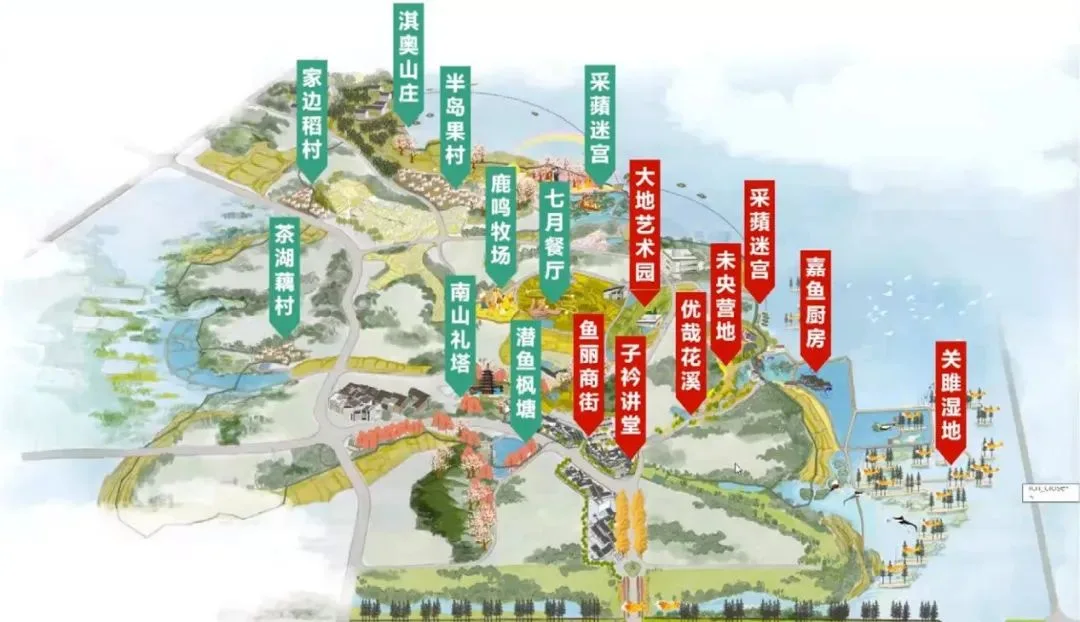
△ Planning concept illustration
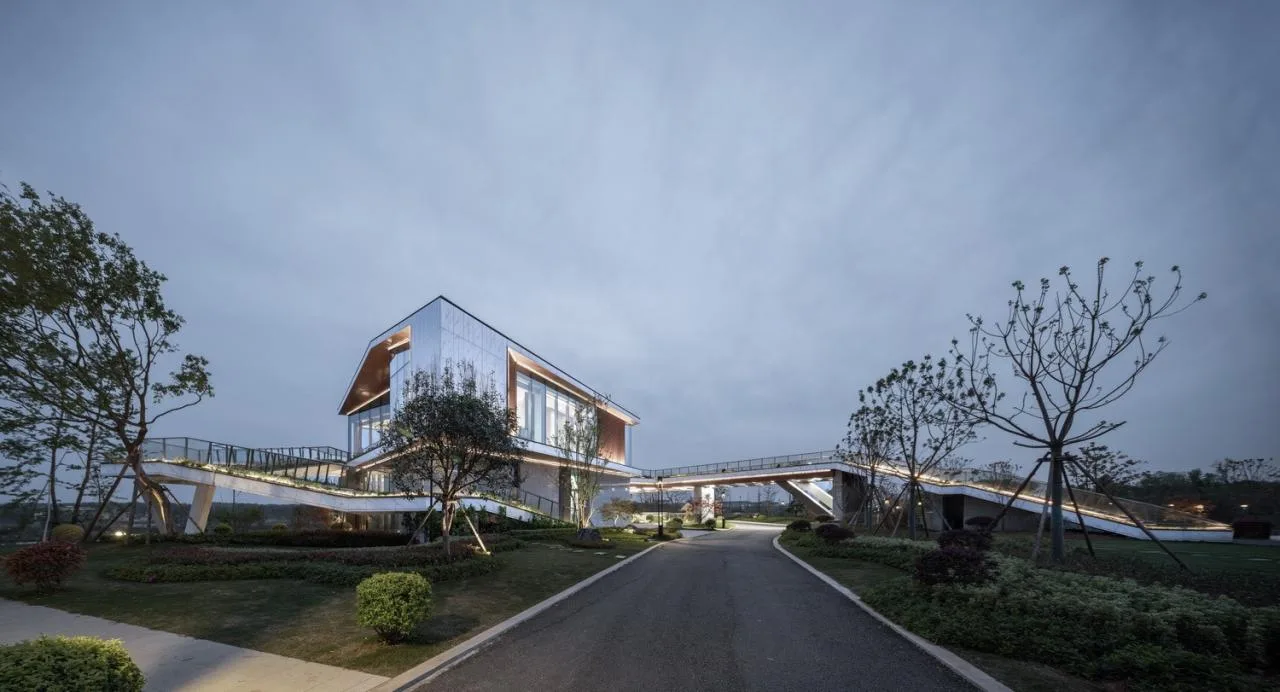
In 2019, BA Design was commissioned by Blue City Zhongrun’s owners to design the Poetry Aesthetics Museum. Positioned as the town’s exhibition center, this museum combines the functions of a library, communal living space, and reception area.
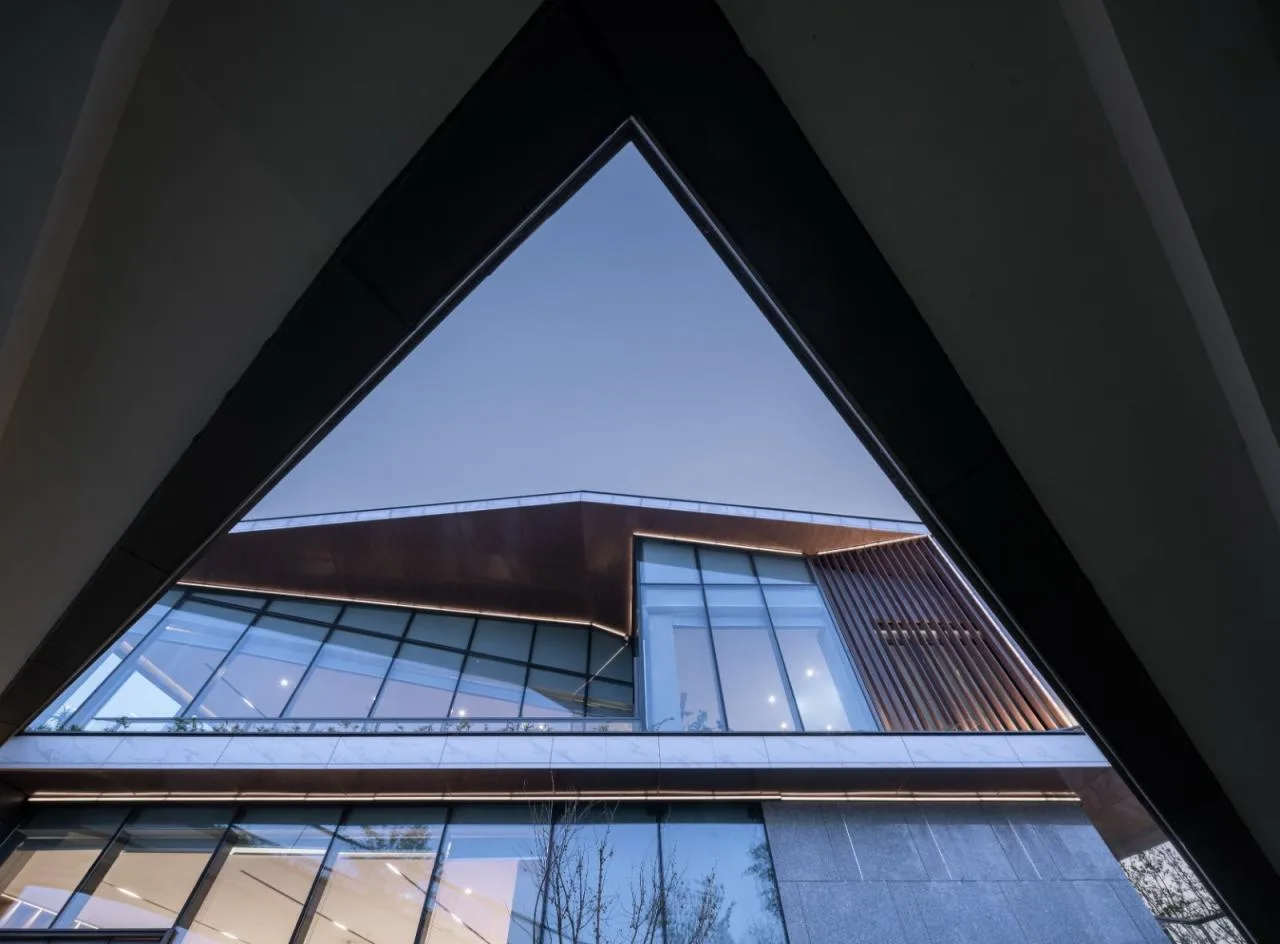
01
Site Elements and Design Strategies
Guided by Landscape Features
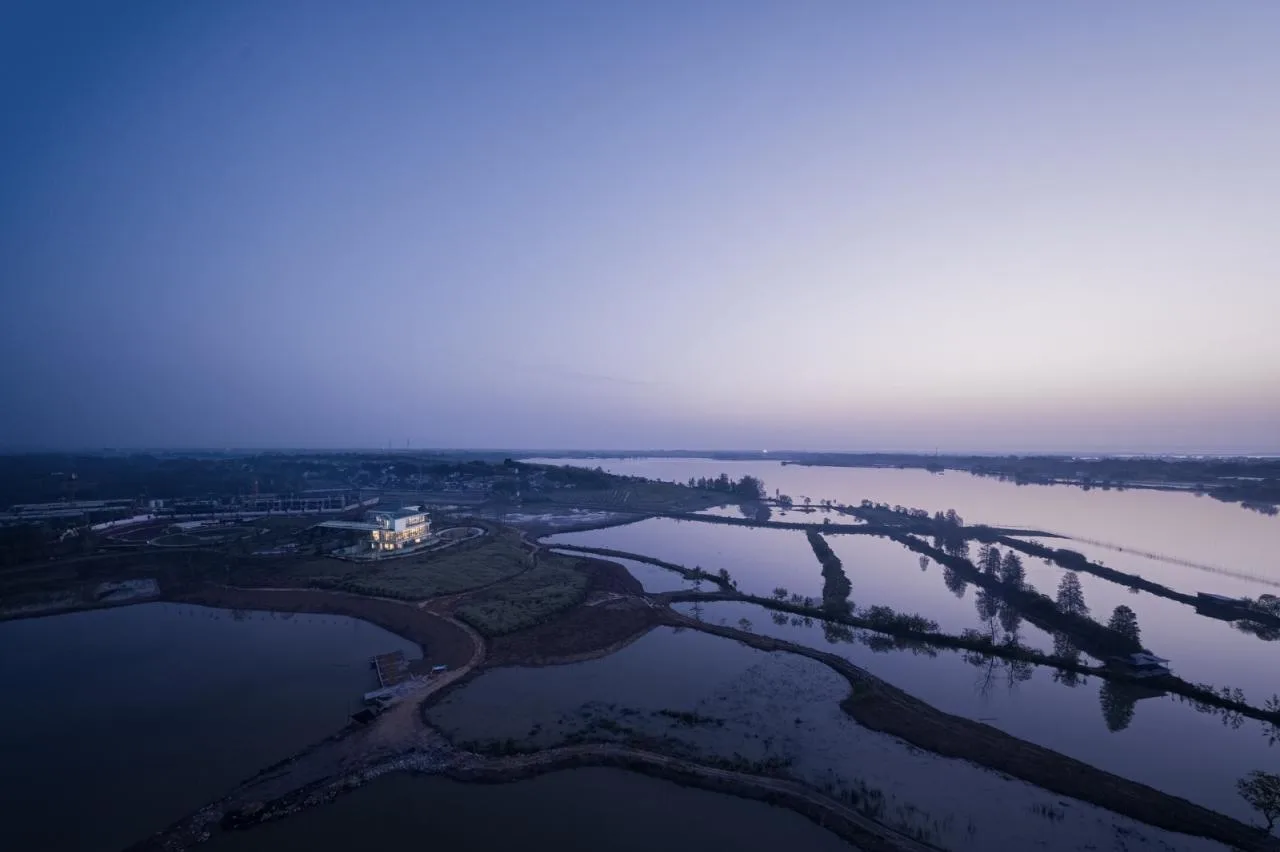
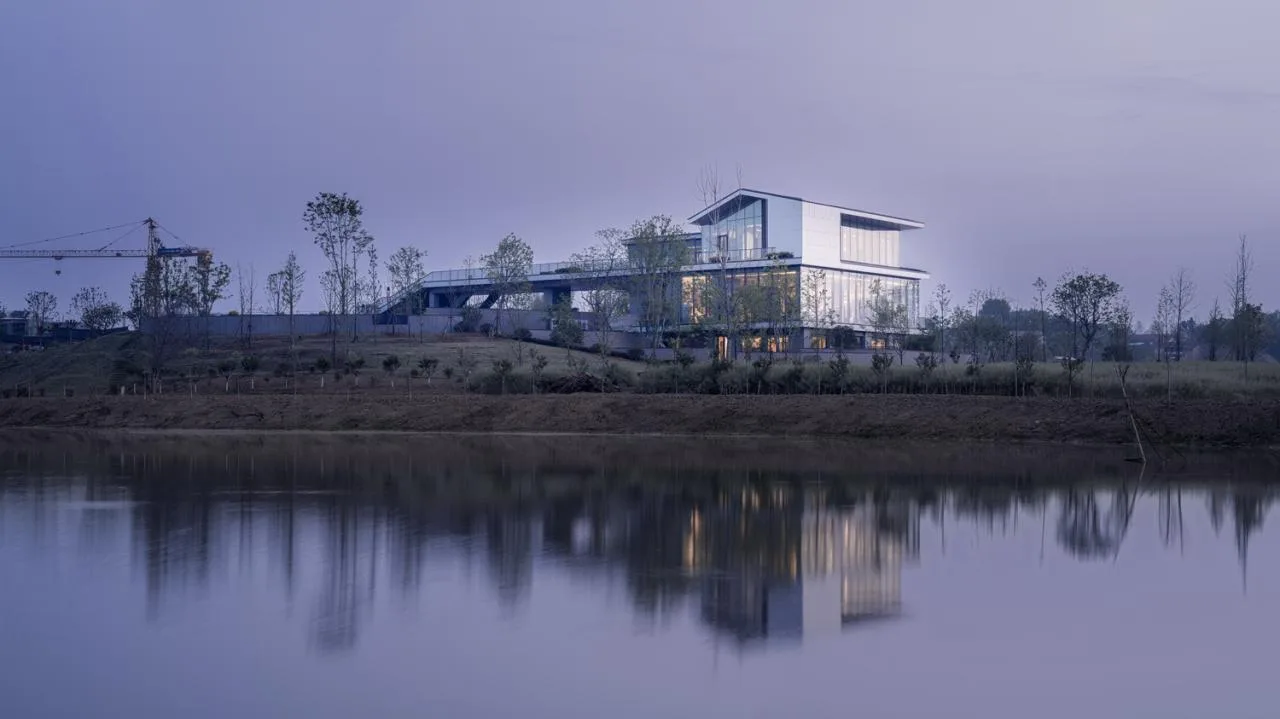
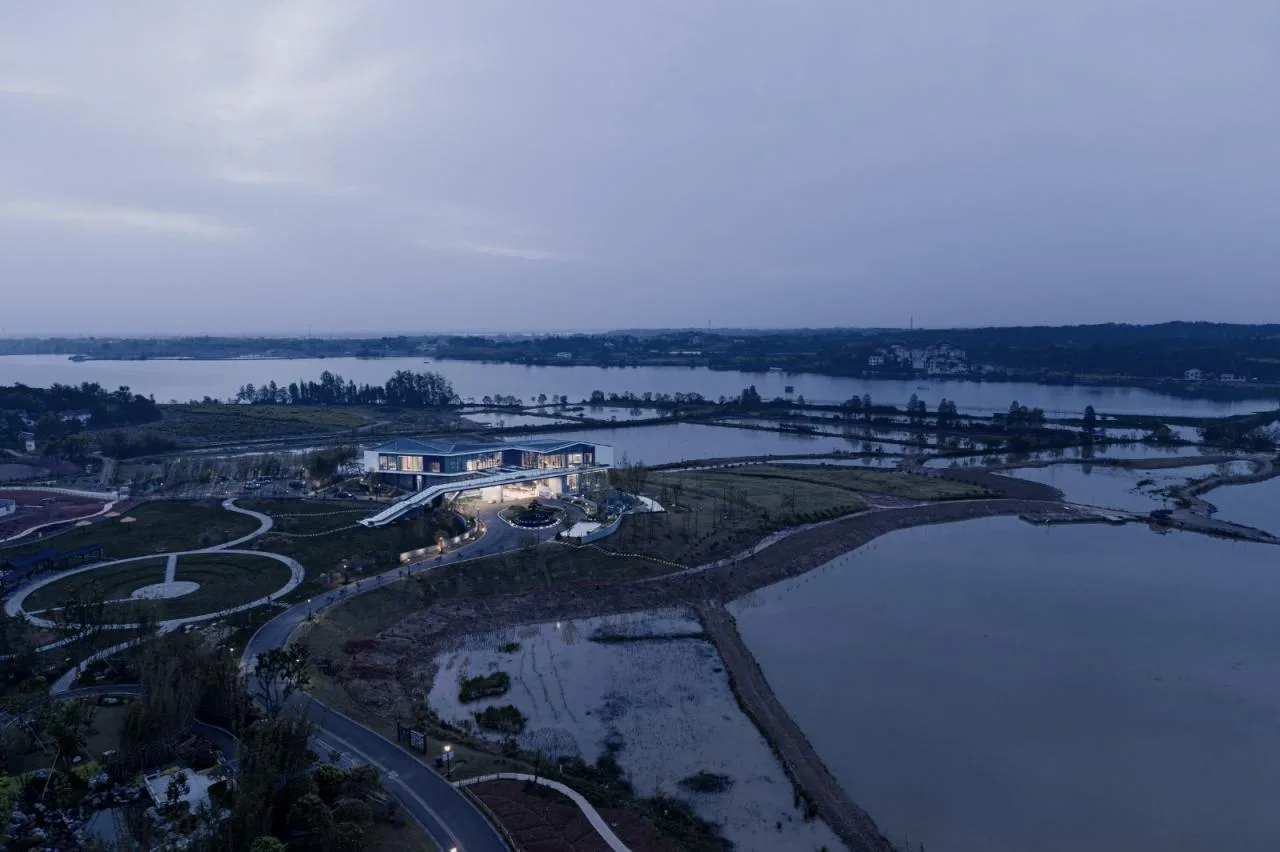
The Shijing Aesthetics Museum enjoys an exceptional location, situated just over 60 meters west of Shucha Lake, with a lotus pond to the southwest and a gently rising mountain to the northwest.
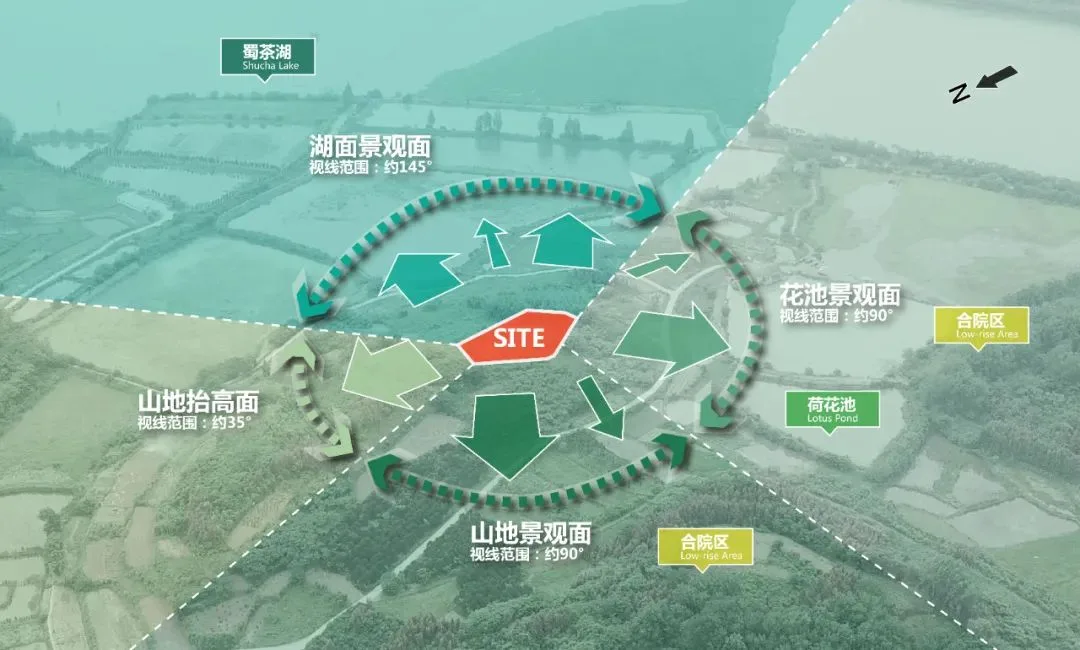
Surrounded by a 360-degree natural landscape, a key design challenge was to maximize the value of these natural features. As the Book of Songs states in “Primitive”: “…so divination was carried out to build feng shui. Facing the southern mountains, there were good forests and gathering places for the people, which served as the foundation of the world’s prosperity.” Only in places blessed with mountains, rivers, and lush vegetation can generations live with peace and contentment.
In Chinese culture, nature is not merely a backdrop but a core belief.
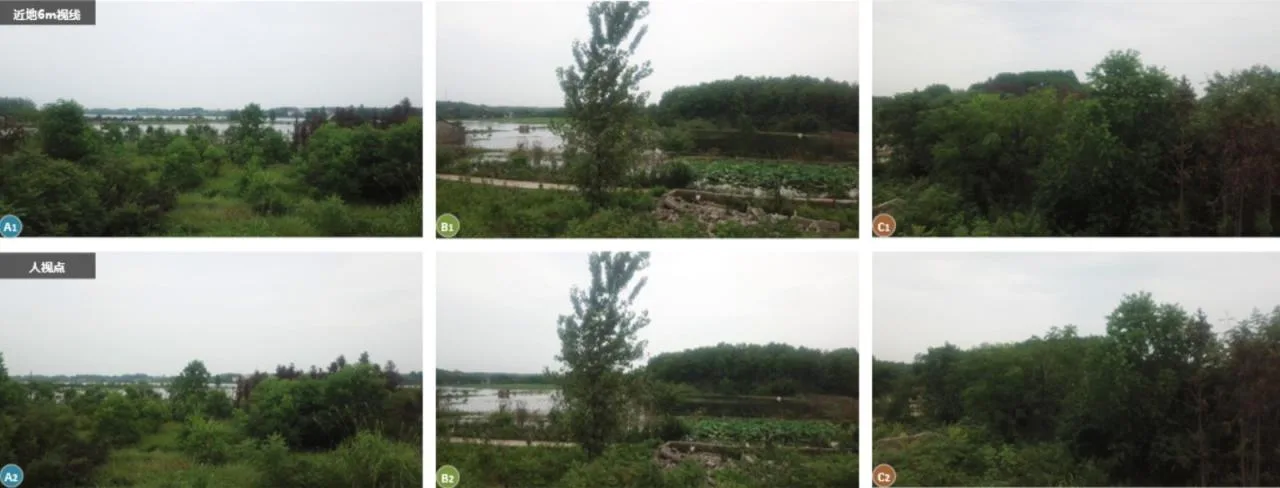
The design team analyzed the site from a human eye level at 6 meters to determine the optimal landscape views, ranking the directions as follows: A1 > A2 > B1 ≈ B2 > C1 > C2.
The terrain slopes from high in the north and west to low in the south and east, spanning approximately 68 meters north-south and 40 meters east-west, with a nearly 2-meter height difference, forming a polygonal droplet shape. Due to limited site conditions, a scattered garden layout was unsuitable, leading to the decision to concentrate individual buildings.
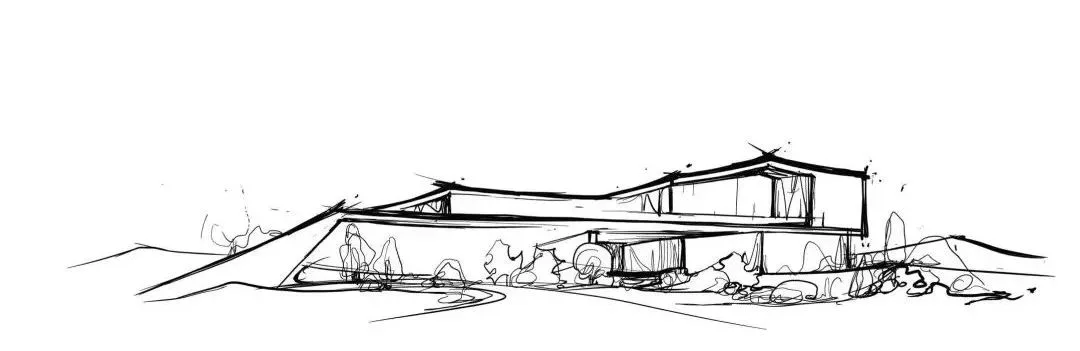
△ Conceptual scheme sketch
Within these constraints, the architects prioritized landscape elements, aiming to design a relaxed, open building that embraces the surrounding mountains, lake, and pond with sincerity and openness.
02
Cultural Symbols and Architectural Forms
Fusion and Growth
The Book of Songs holds a vital place in traditional Chinese culture. Hubei Province, where the Book of Songs Town is located, was historically known as Jingchu—characters dating back over 3,000 years. The final poem of the Book of Songs, “Shang Song,” mentions: “Jingchu, the daughter of Wei, lived in the southern township of the country.”
What architectural form can embody and showcase the cultural identity of this place linked to the Book of Songs?
Through research into historical culture, the designers identified a recurring motif in Chu artifacts: diamond patterns, representing spiritual beliefs and aesthetic tastes.
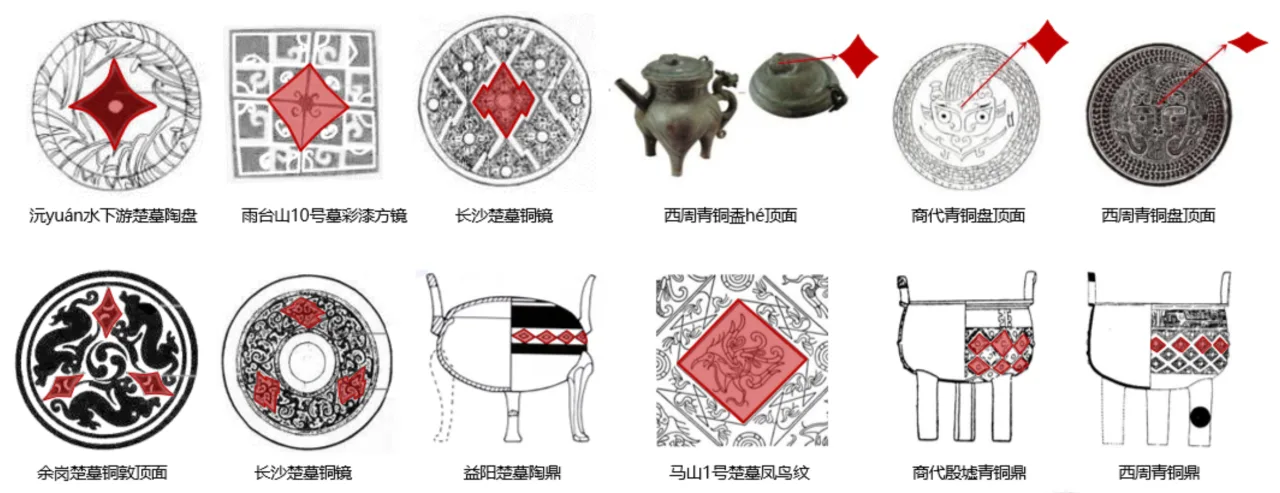
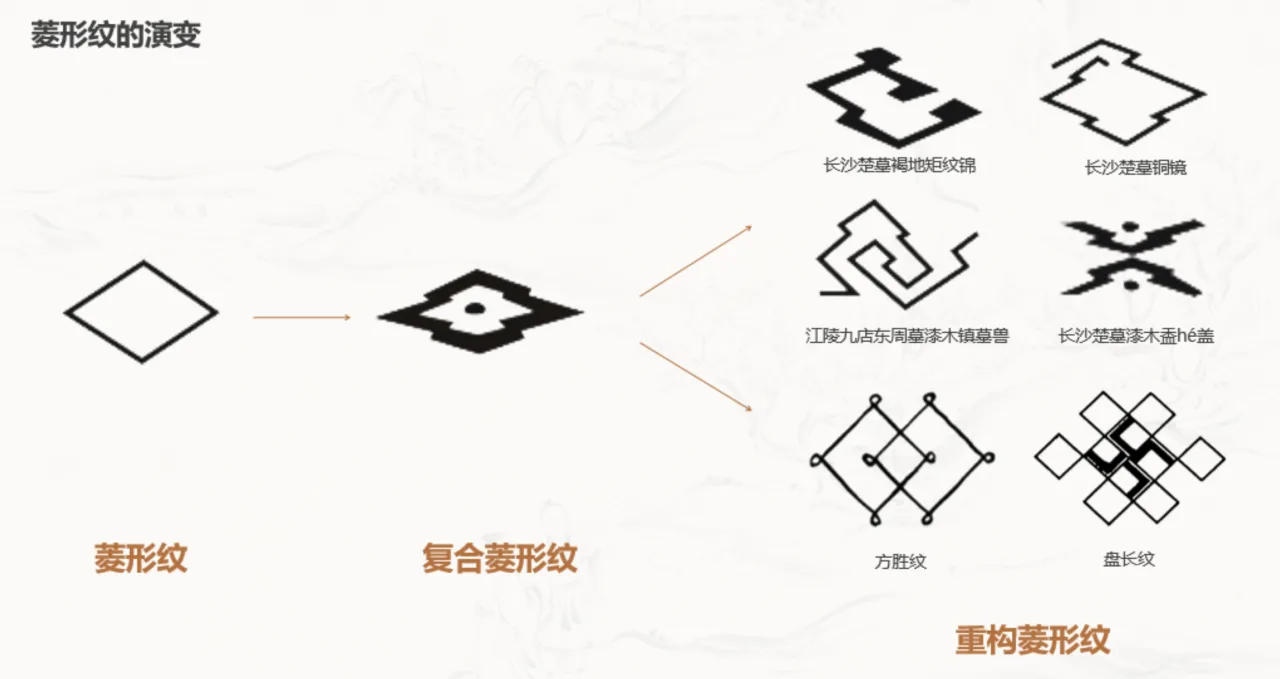
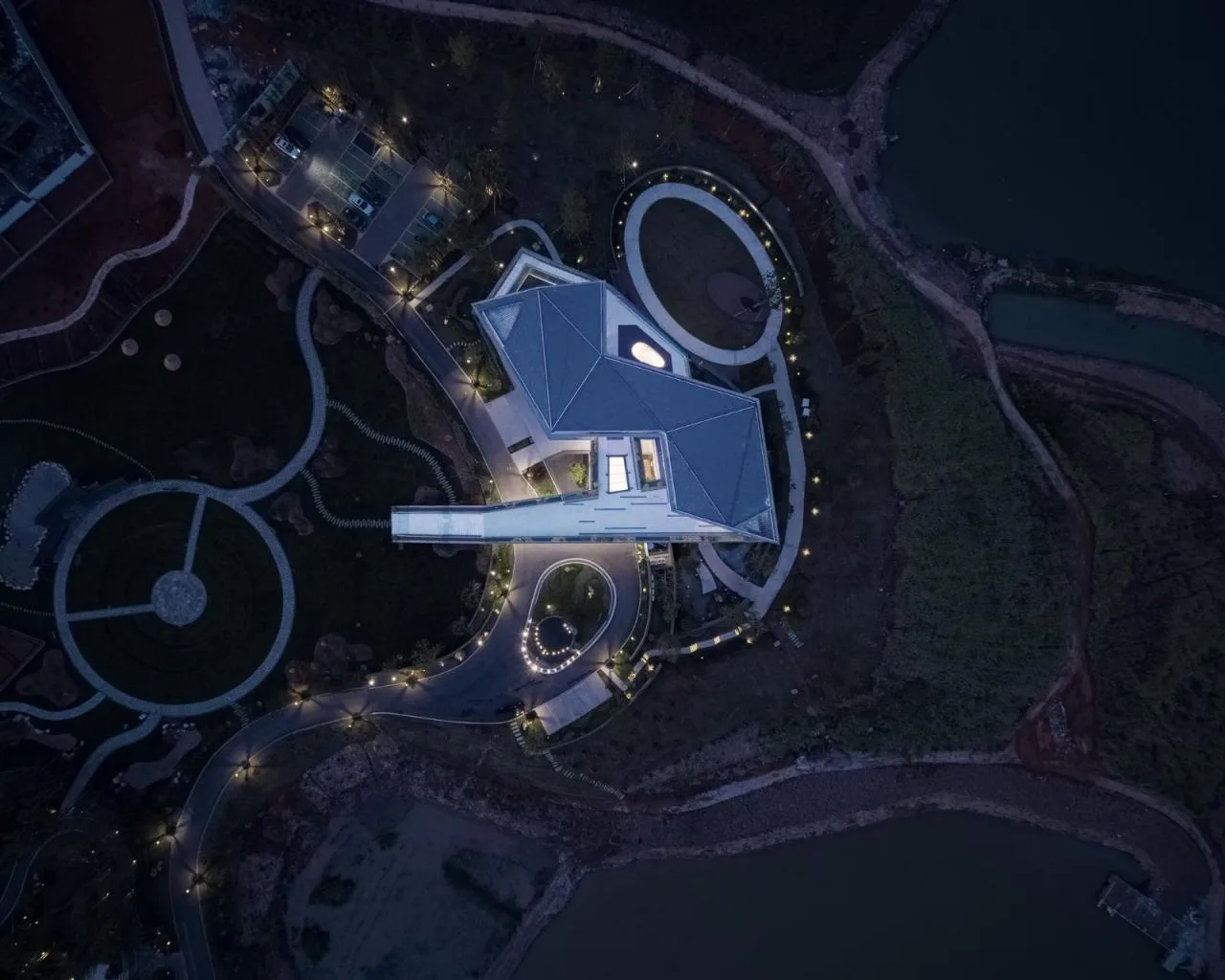
The Shijing Aesthetics Museum’s fundamental form derives from this motif, merging two overlapping diamond shapes within the site’s water droplet boundary to create a square victory pattern symbolizing the duality of culture and life.
Functioning as both a library and lifestyle center, the building embodies the concept of “merging into one” represented by the square victory pattern.
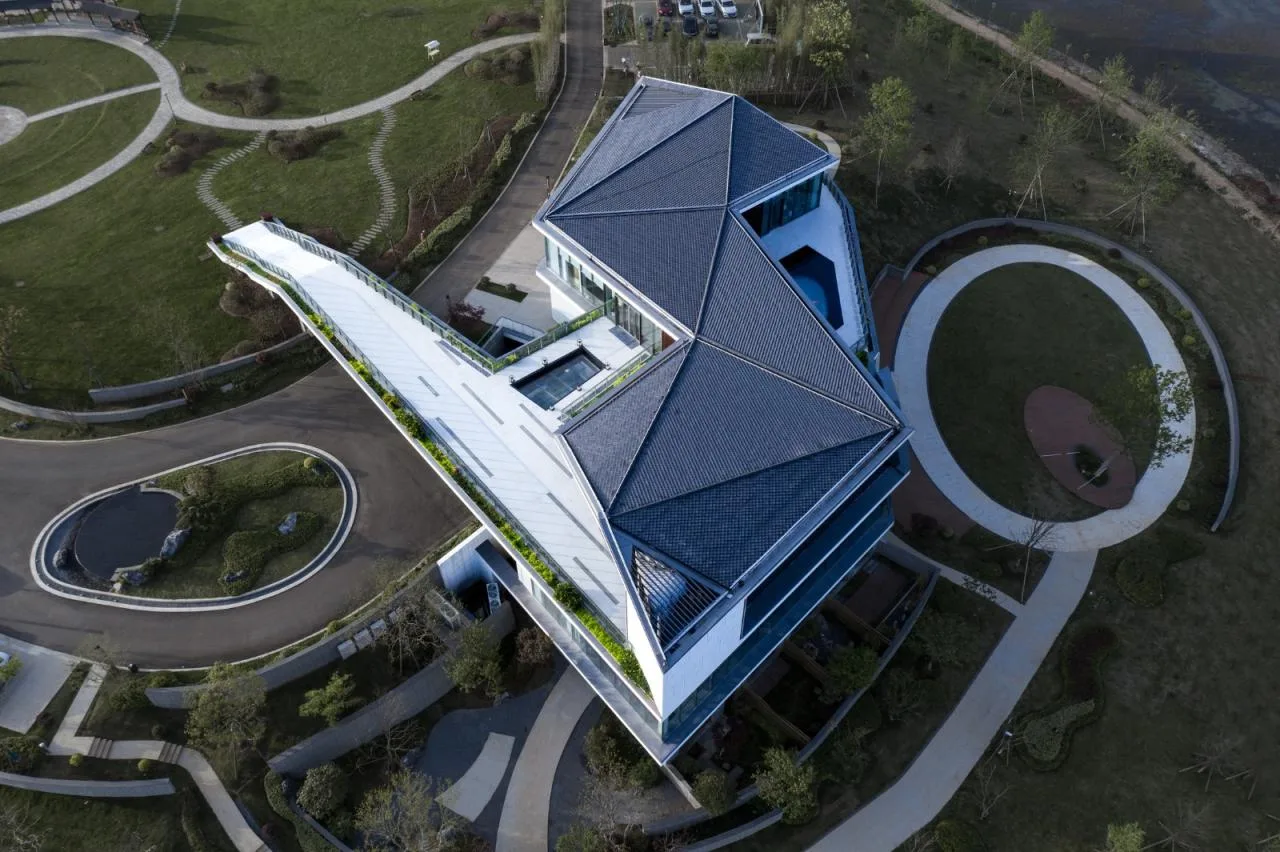
Following the terrain, the eastern side of the building rises to three floors, while the western side has two floors. The structure’s base integrates naturally with the site’s slope, resting on the ground with a relaxed, comfortable posture.
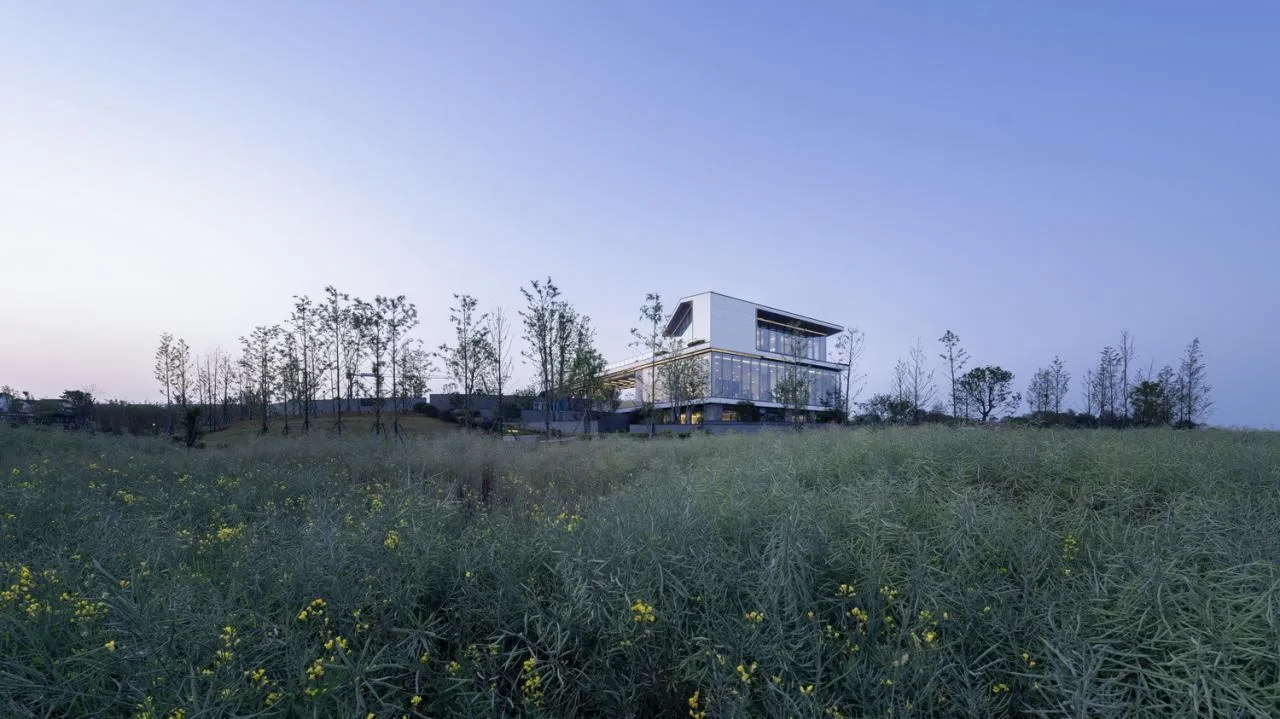
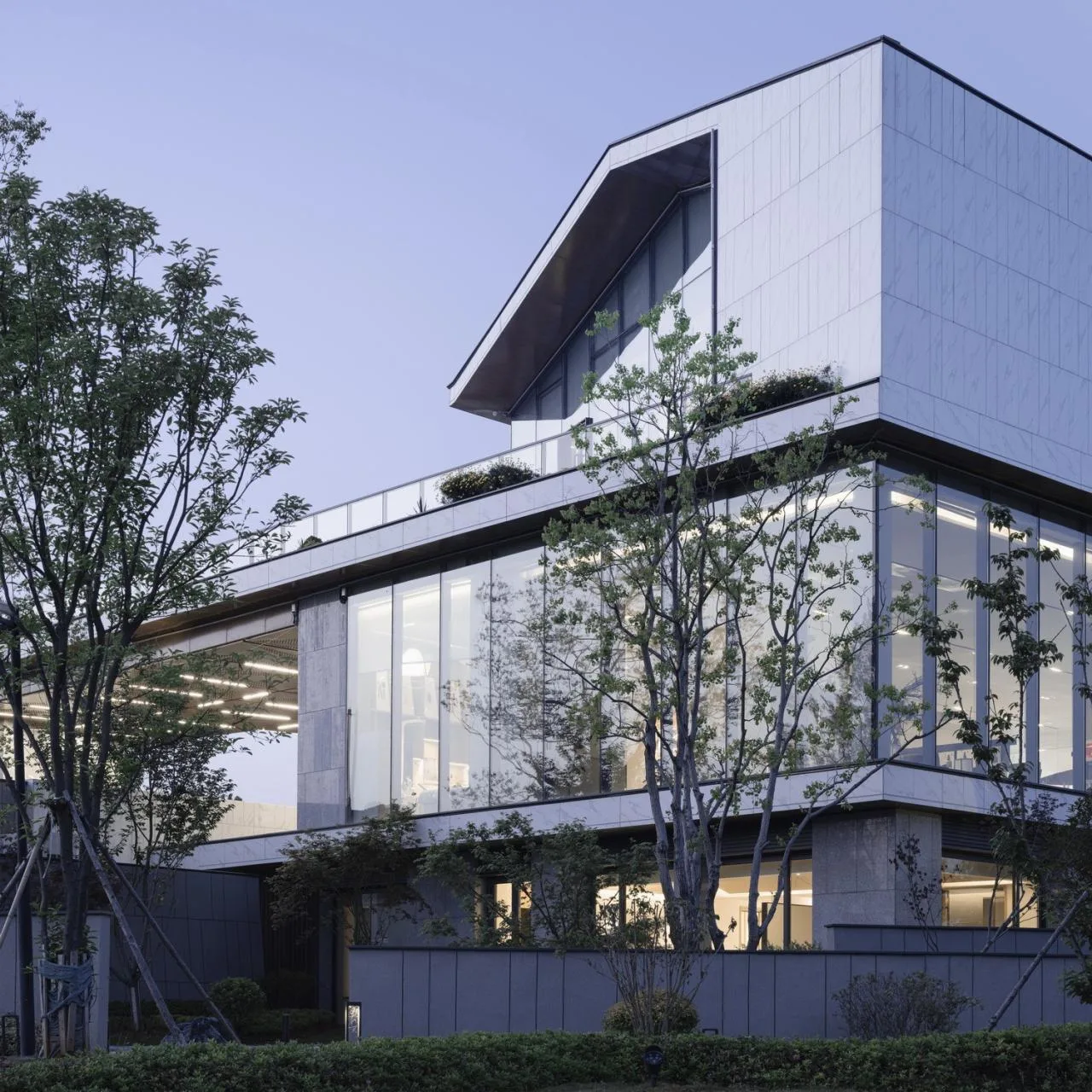
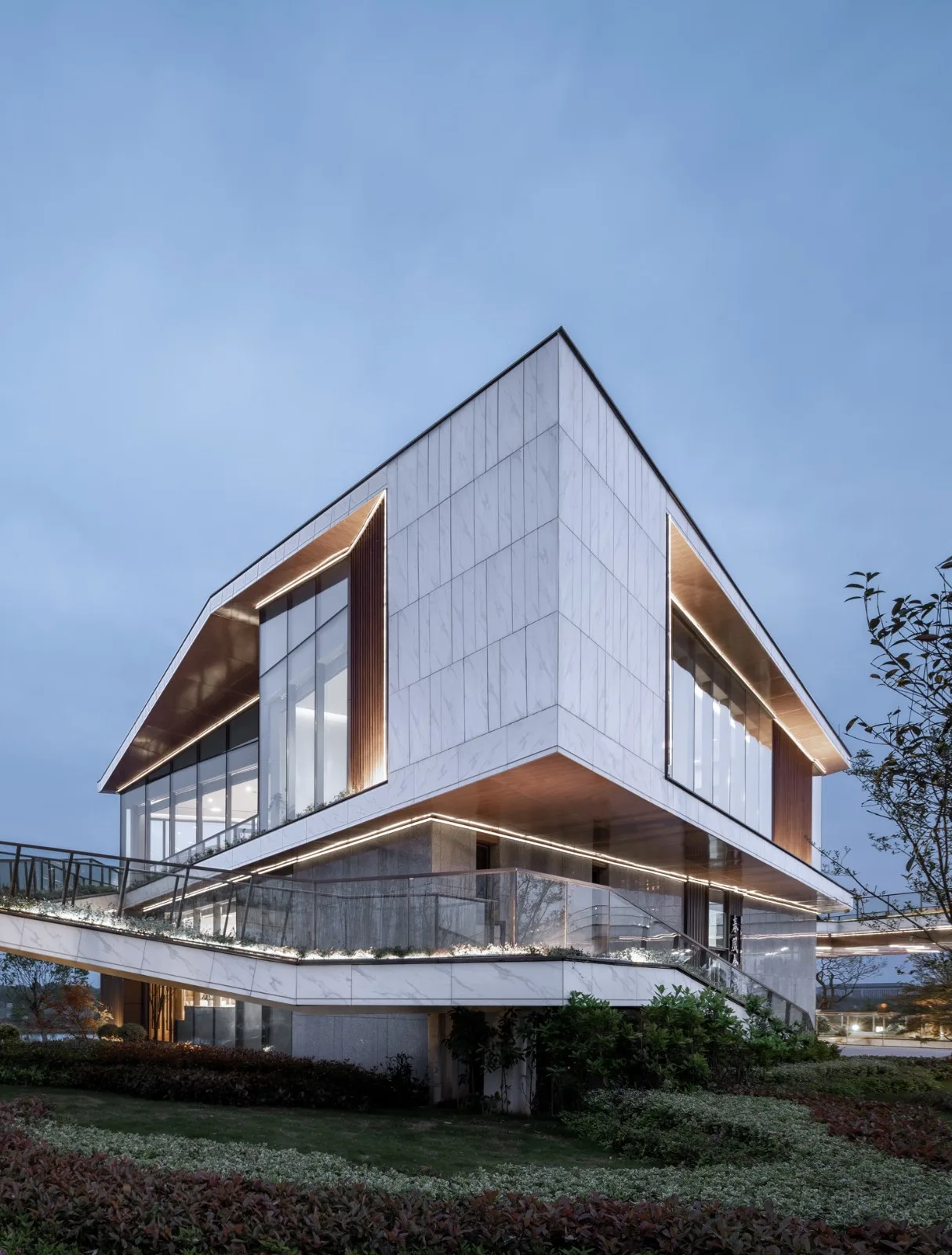
△ The building’s eastern side rises three stories
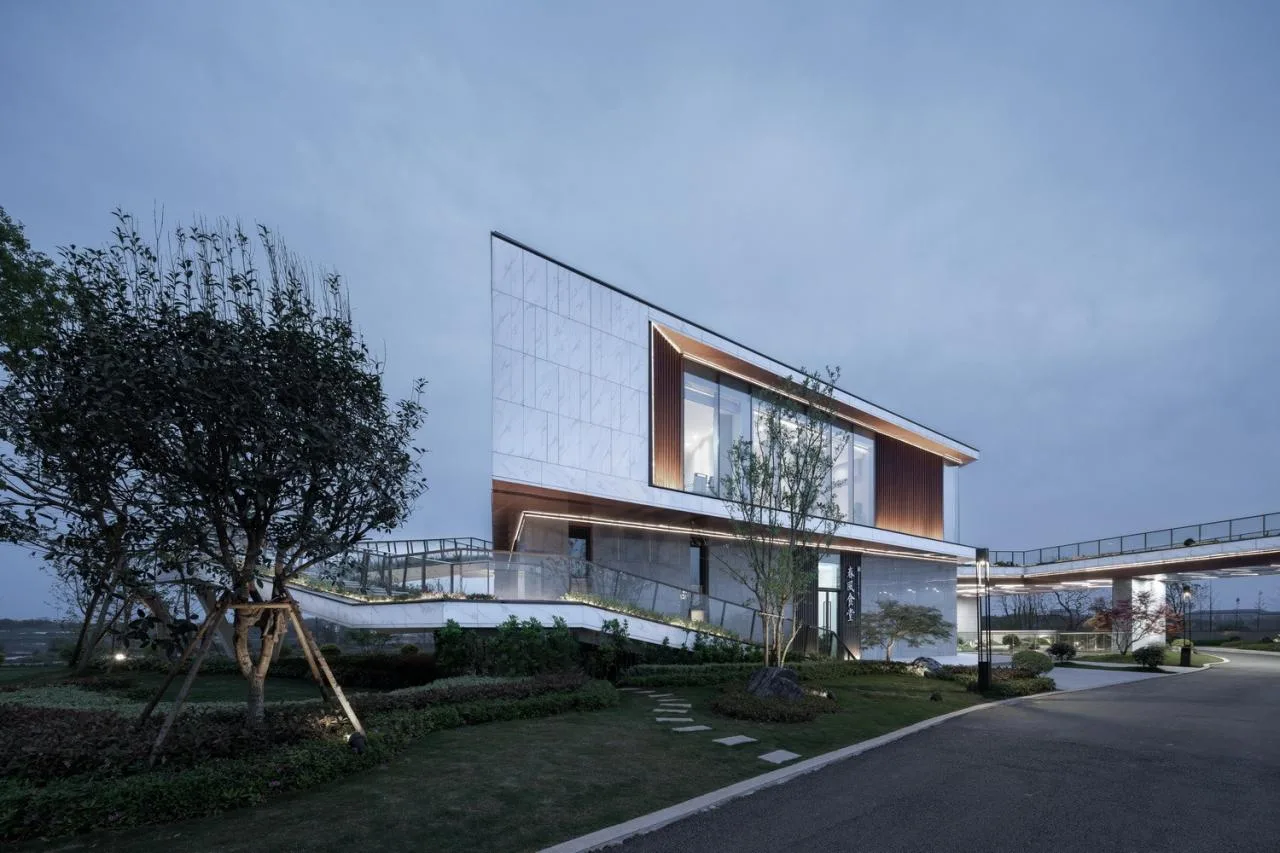
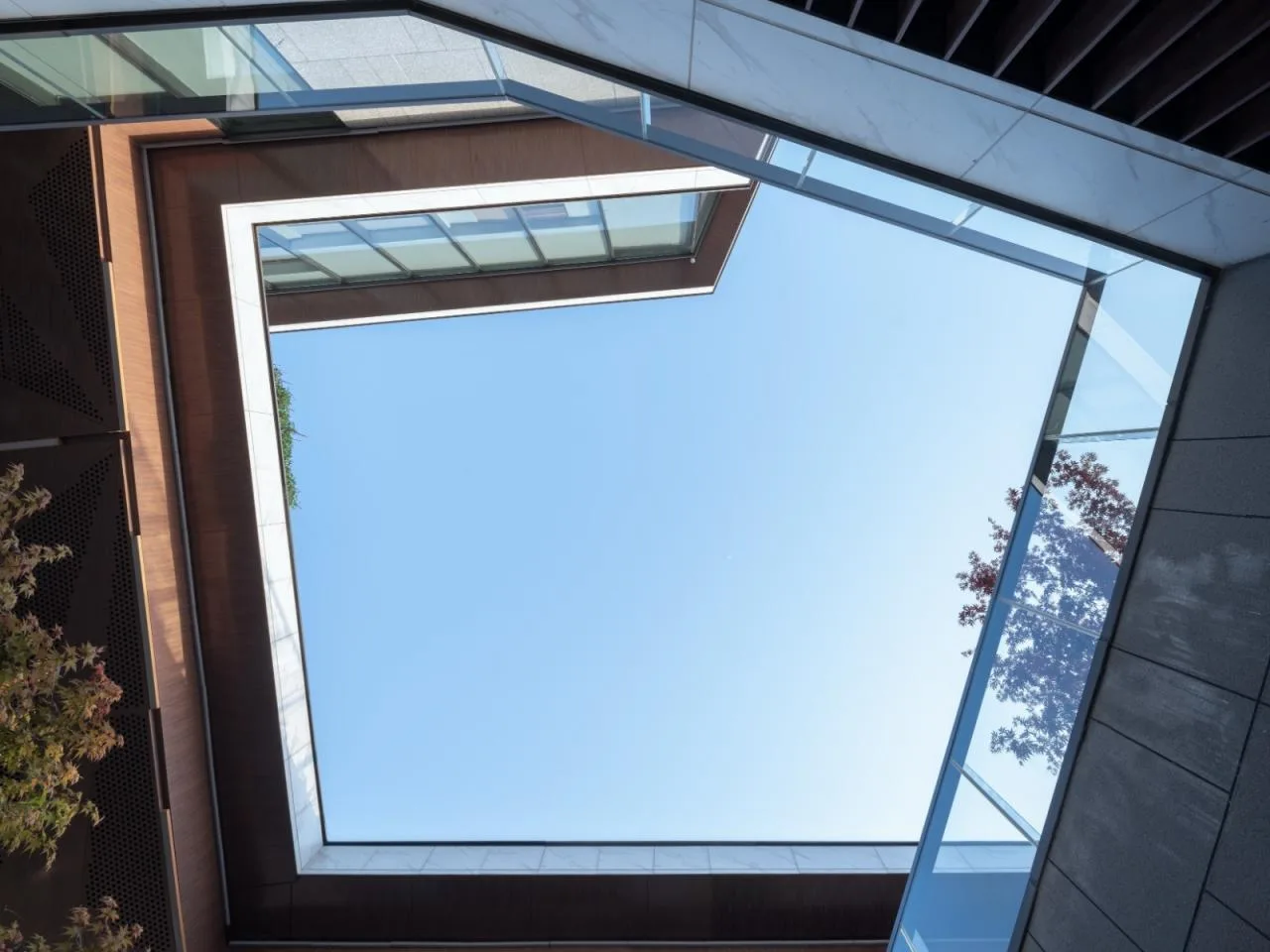
At the southwest corner, the main entrance is positioned where the Fangsheng pattern is cut, creating a viewing terrace overlooking Lianhua Lake. Below, a sunken courtyard opens to the homestay space on the first floor, facilitating a seamless transition from outdoor grey space to an indoor triple-height space accessed via the second-floor main entrance.
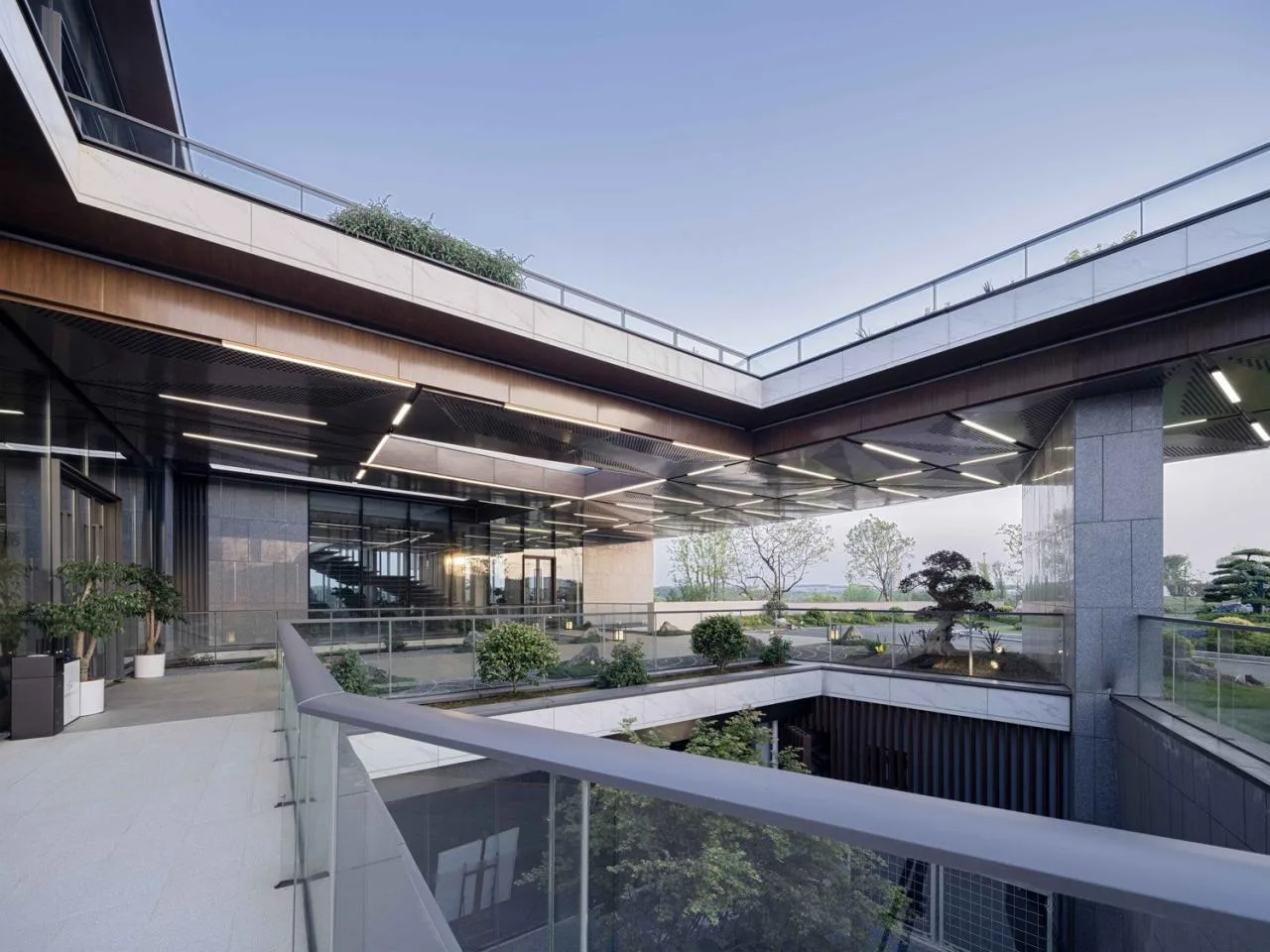
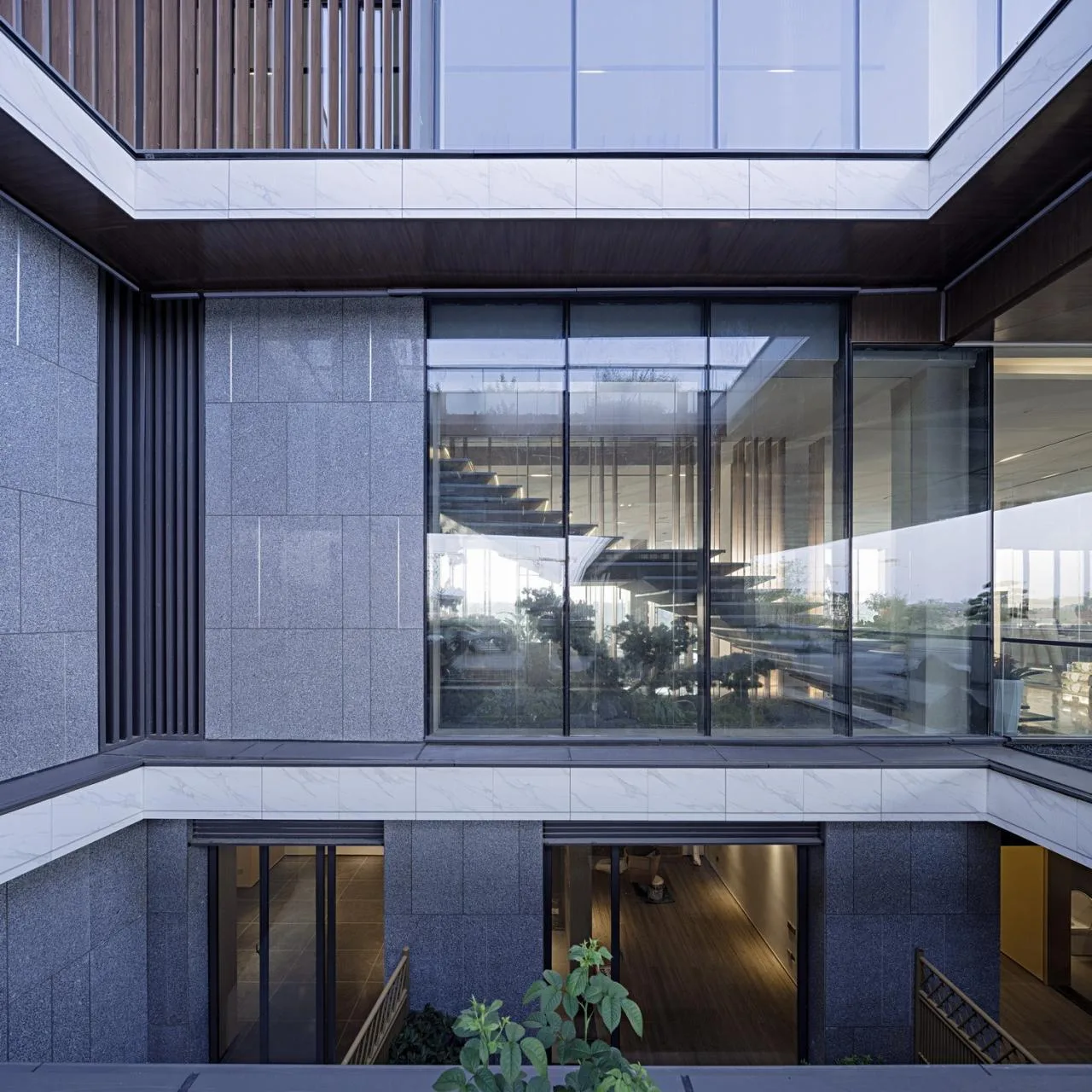
Shucha Lake stands as the site’s most outstanding natural feature. The building’s interlocking Fangsheng pattern blocks are oriented so that the longest viewing interface faces the lake.
The second floor is partially elevated, creating a spacious volume nearly parallel to the lakeshore. This open exhibition area includes a stepped reading space on the northwest side and a negotiation area on the southeast side. From floor-to-ceiling glass windows, visitors can enjoy views of the sunrise and moonset over Shucha Lake throughout the seasons.
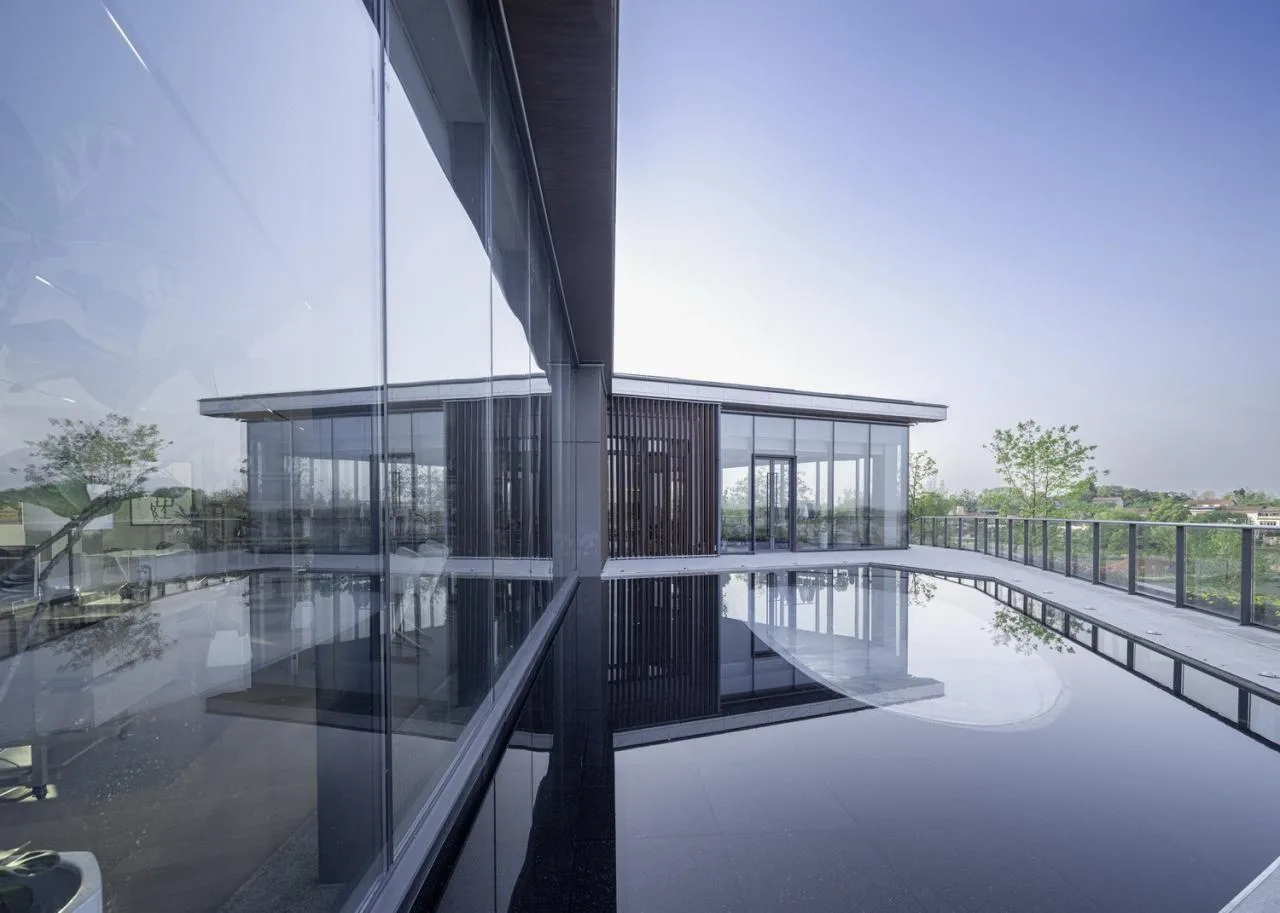
The third floor features a natural outdoor terrace that extends beyond the second floor, allowing visitors to connect intimately with nature—feeling the mist rising from Shucha Lake and the fragrance of nearby trees.
On the first floor, the architectural space opens to form a continuous interface with the lake, surrounding landscape, and sunken courtyard. The lakeside area of the Book of Songs Aesthetics Museum creates a triple interaction with Shucha Lake—facing, observing, and contemplating the water.
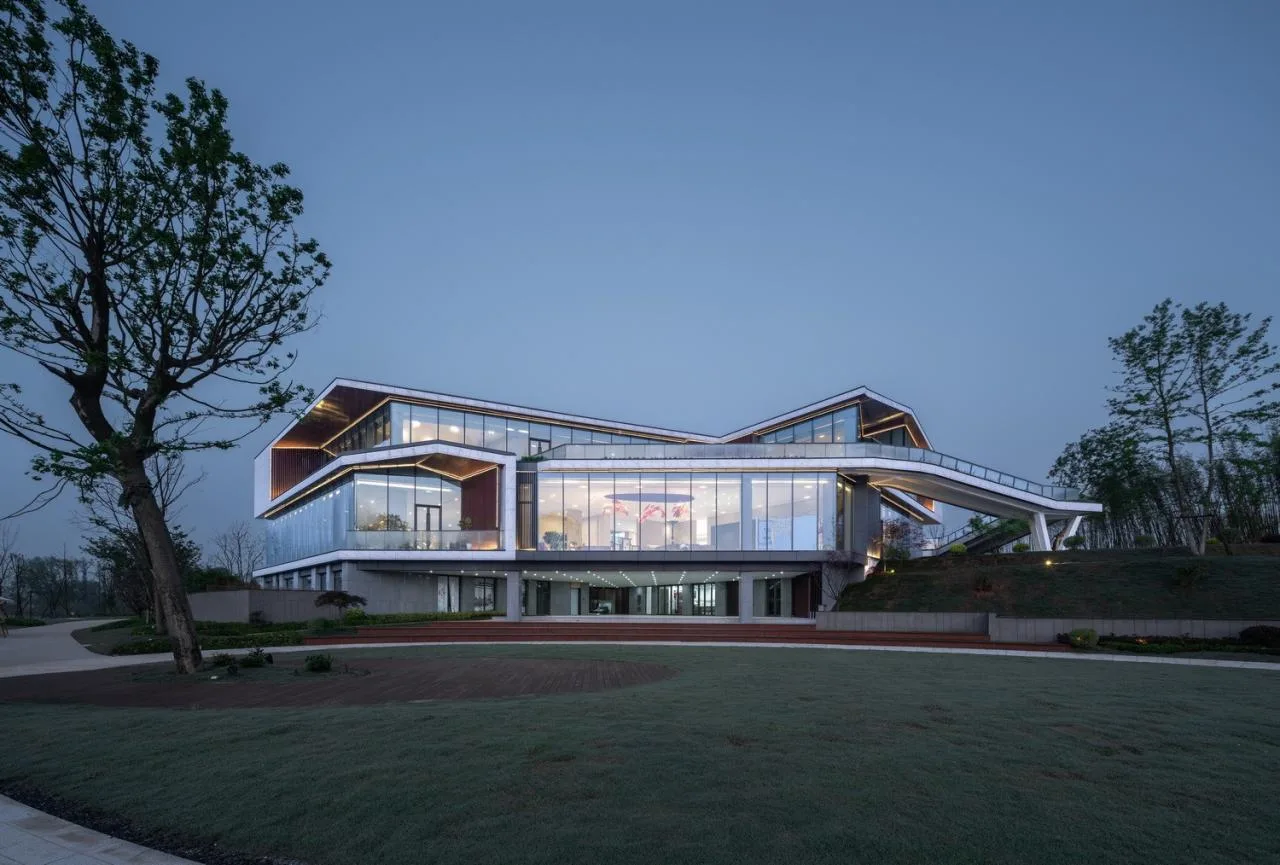
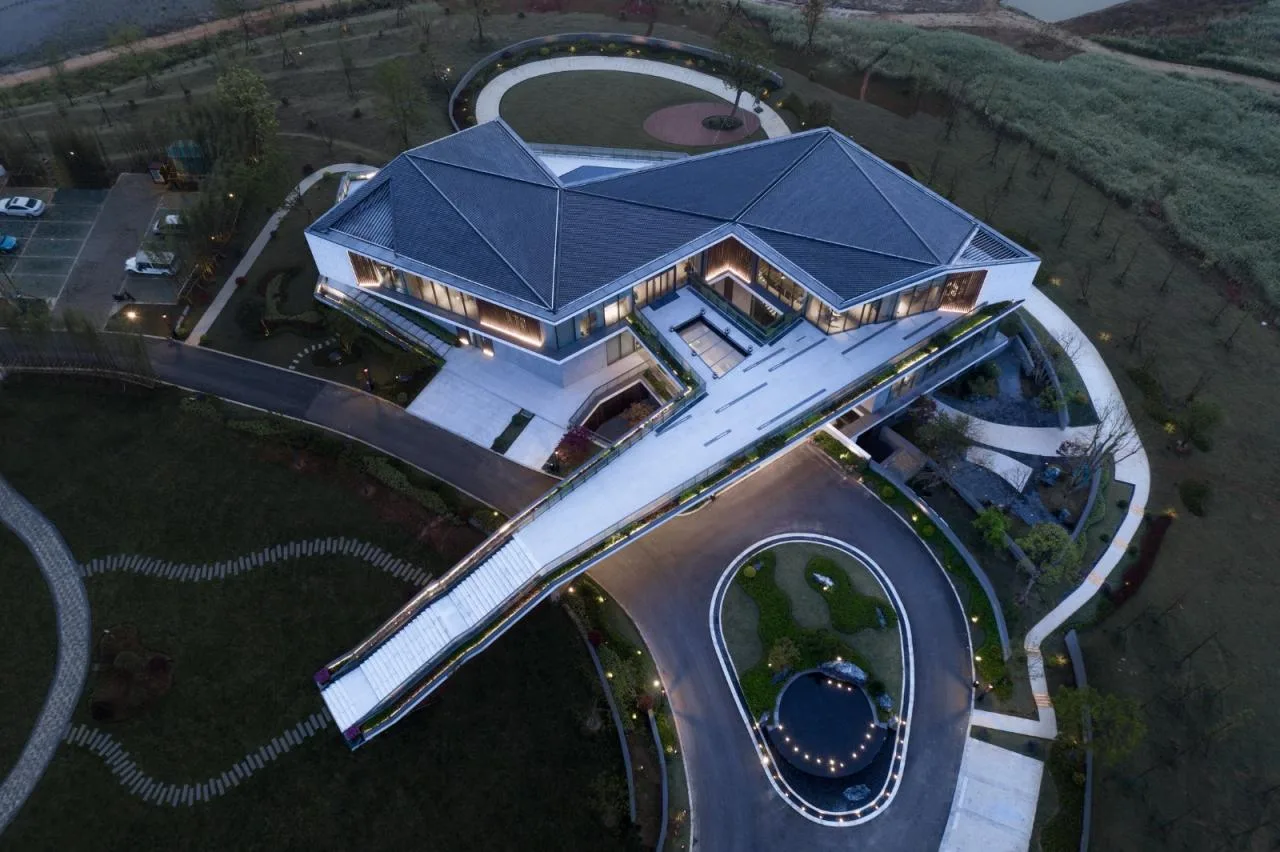
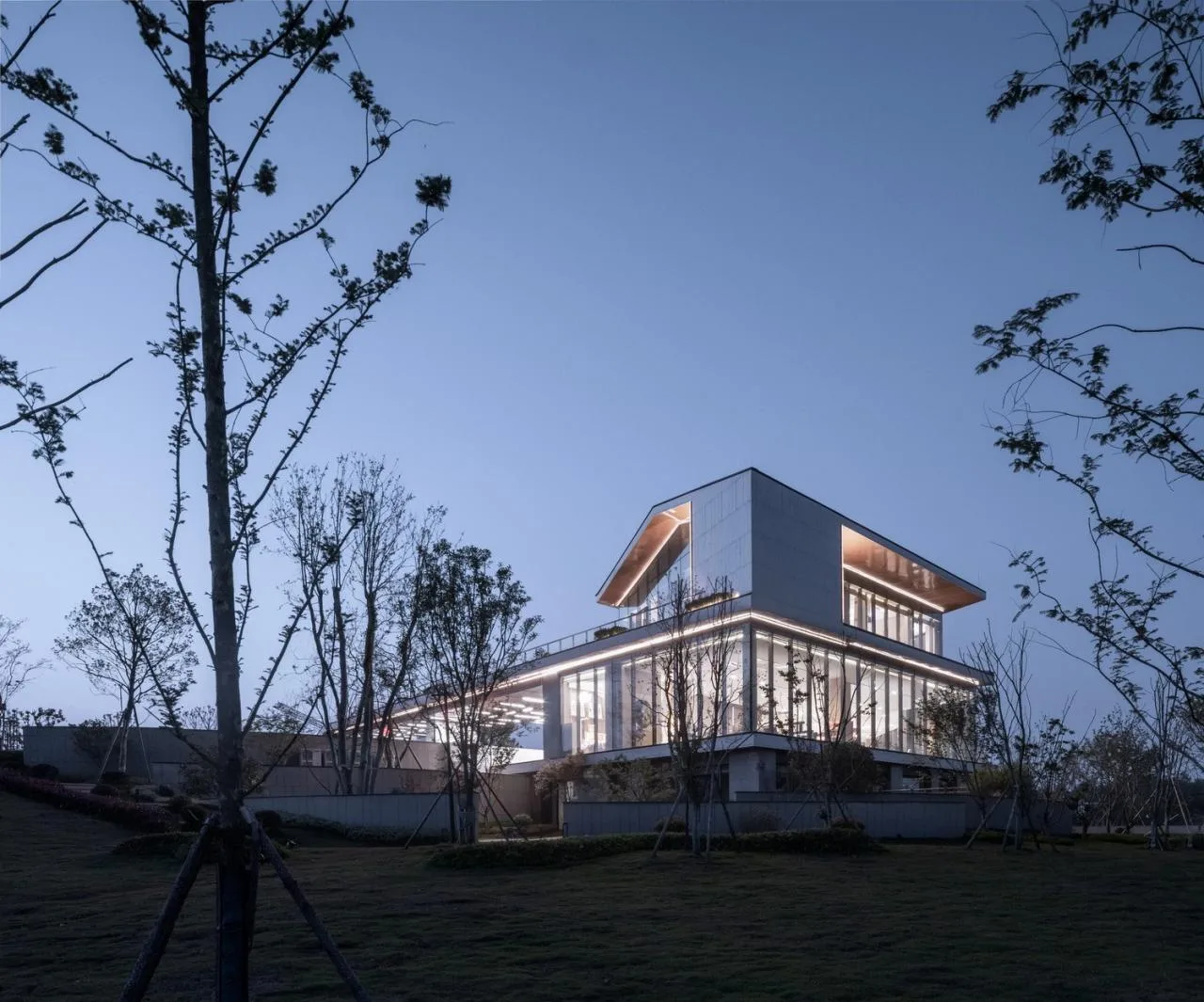
The building’s traditional double-sloped roof form is reinterpreted using coherent, multi-faceted folding design techniques to create an undulating roofline that abstracts the staggered skylines of traditional settlements.
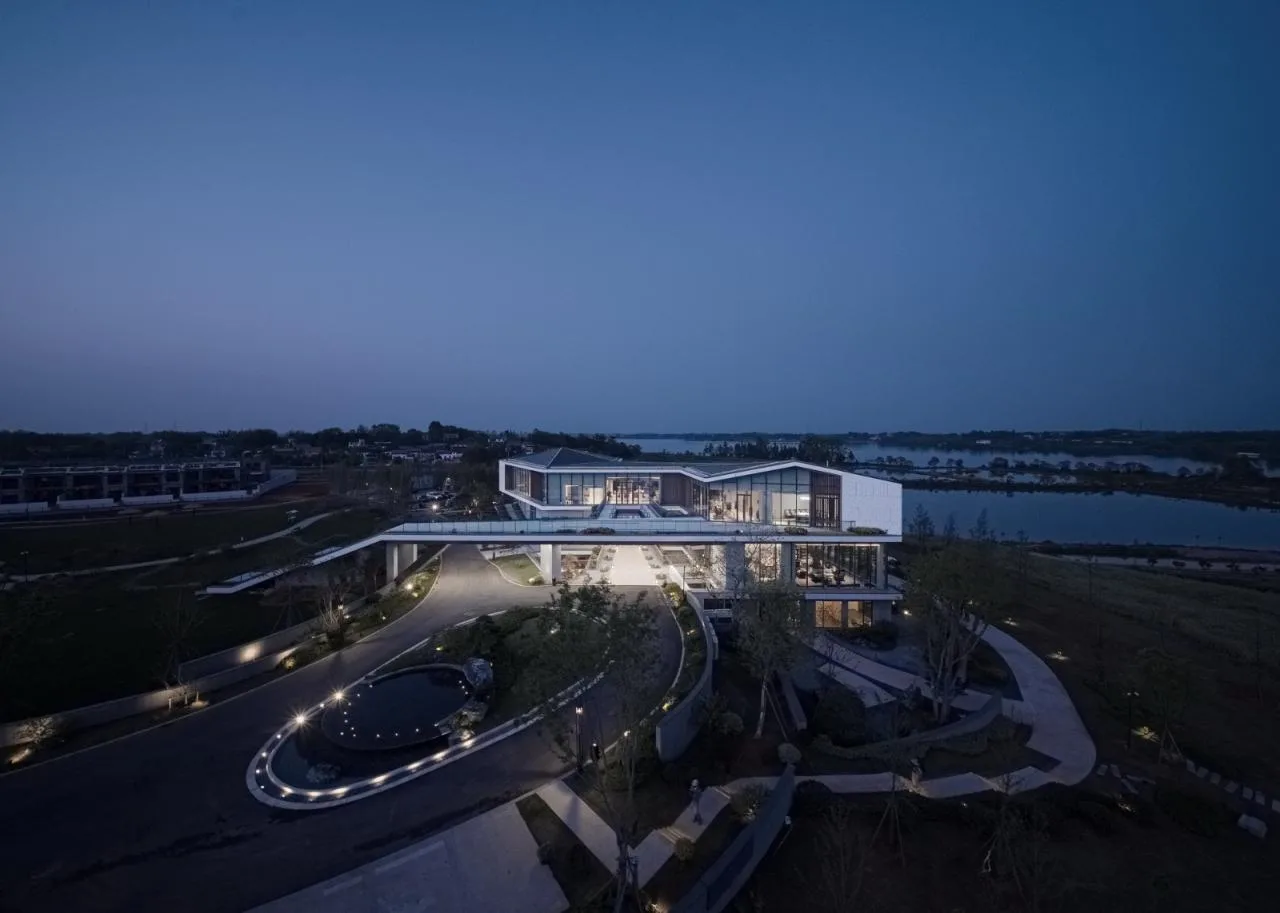
The roof’s partial overhang enhances the building’s sense of extension, while the eaves create a smooth transition between interior and exterior spaces. Fish scale tiles, lighter and more modern than traditional tiles, cover the roof. The building’s elongated form maximizes the length of the viewing surface, allowing the scenery to shift and interact with the landscape in a full 360° experience.
03
Path and Experience
Buildings That Invite Movement
If the sole purpose of architecture is to retain people, this project does not fully embrace that notion. While architecture must provide shelter and accommodation—like the Book of Songs Aesthetics Museum, which serves as a living hall, library, and reception center—it should also allow movement and flow.
Given the site’s rich landscape elements, the design intends for the building to be “walk-through,” acting as a pathway linking attractions rather than a barrier. After all, who wants to be forcibly stopped on a journey?
The Poetry Aesthetics Museum was conceived to provide a scenic viewing path.
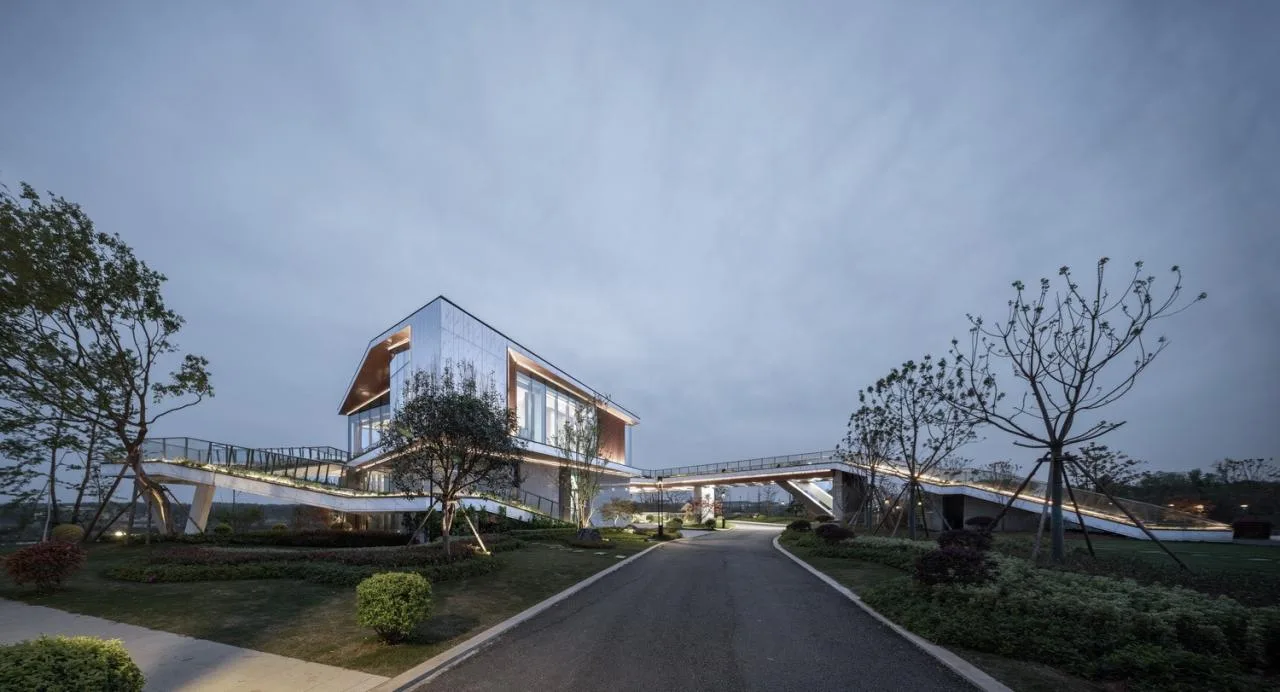
The main entrance terrace extends northwest, connecting to a landscaped staircase that gently descends to the ground. Visitors can ascend these stairs to reach the terrace, enjoying views of the lotus pond along the way.
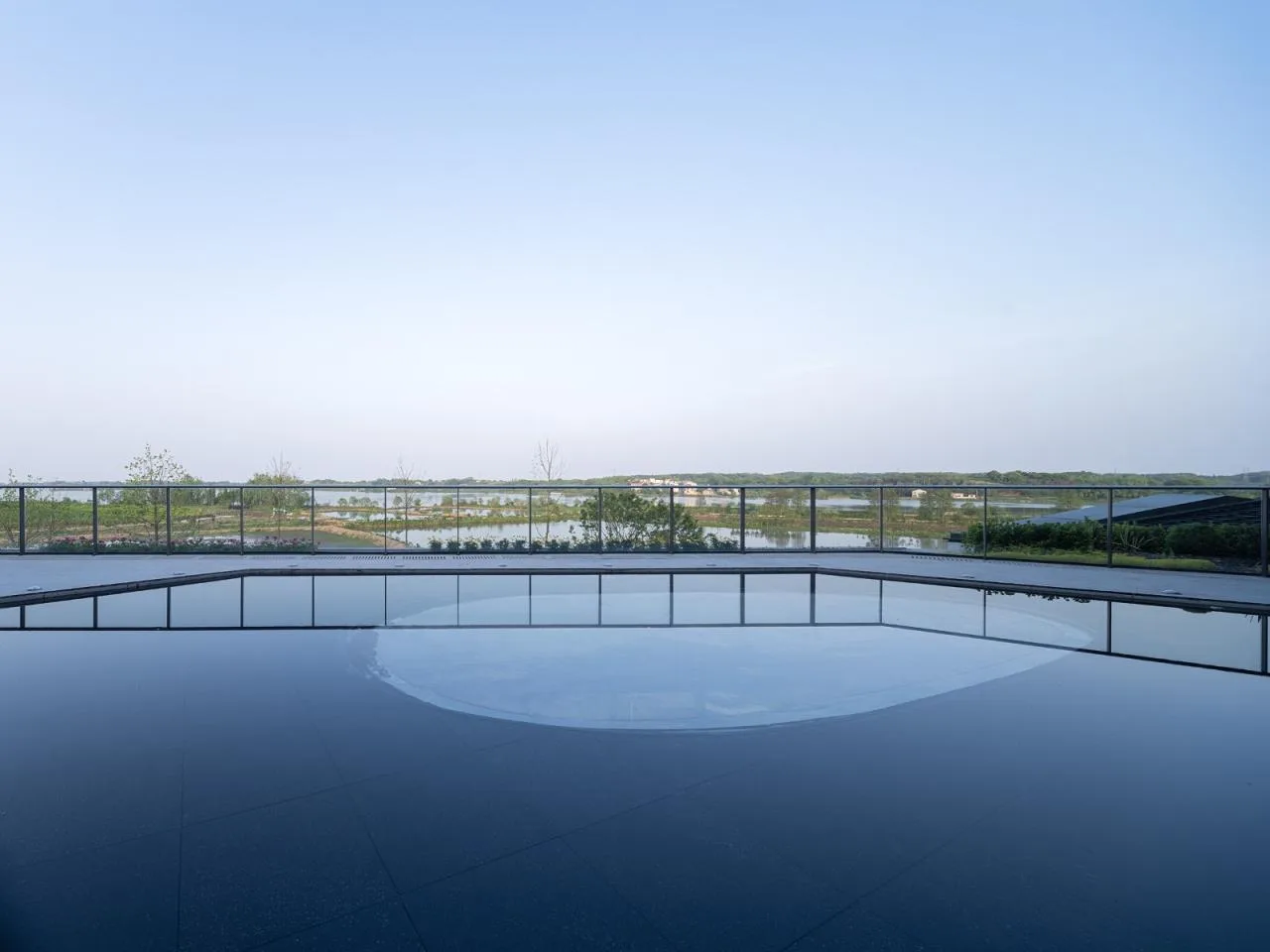
Passing through an open classroom inside the building, visitors are greeted by the serene surface of Shucha Lake, which draws the eye toward distant mountains. This space invites rest, reflection, or simply gazing outward.
Connected to this terrace is a winding staircase, contrasting with the grand staircase at the entrance. It twists twice before descending to ground level, forming a triangular courtyard alongside the building.
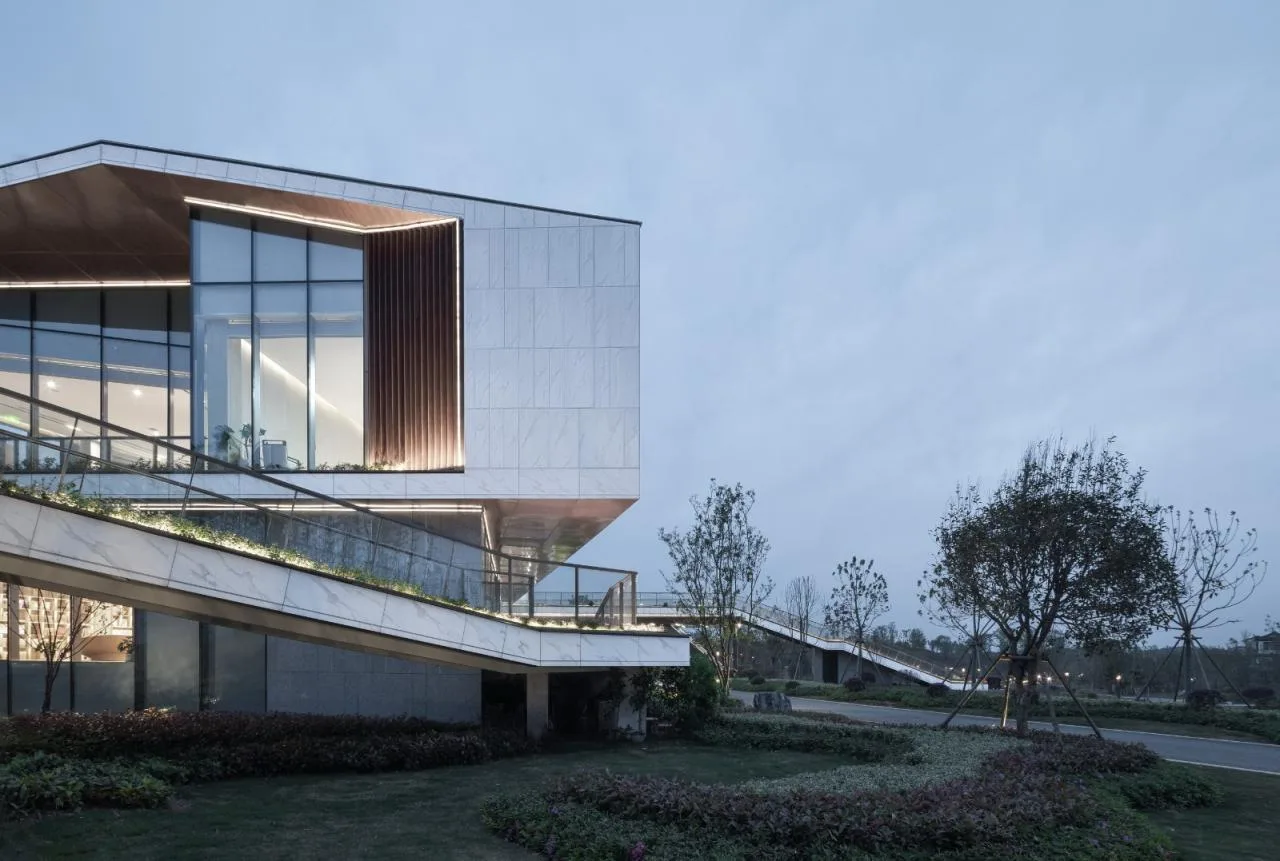
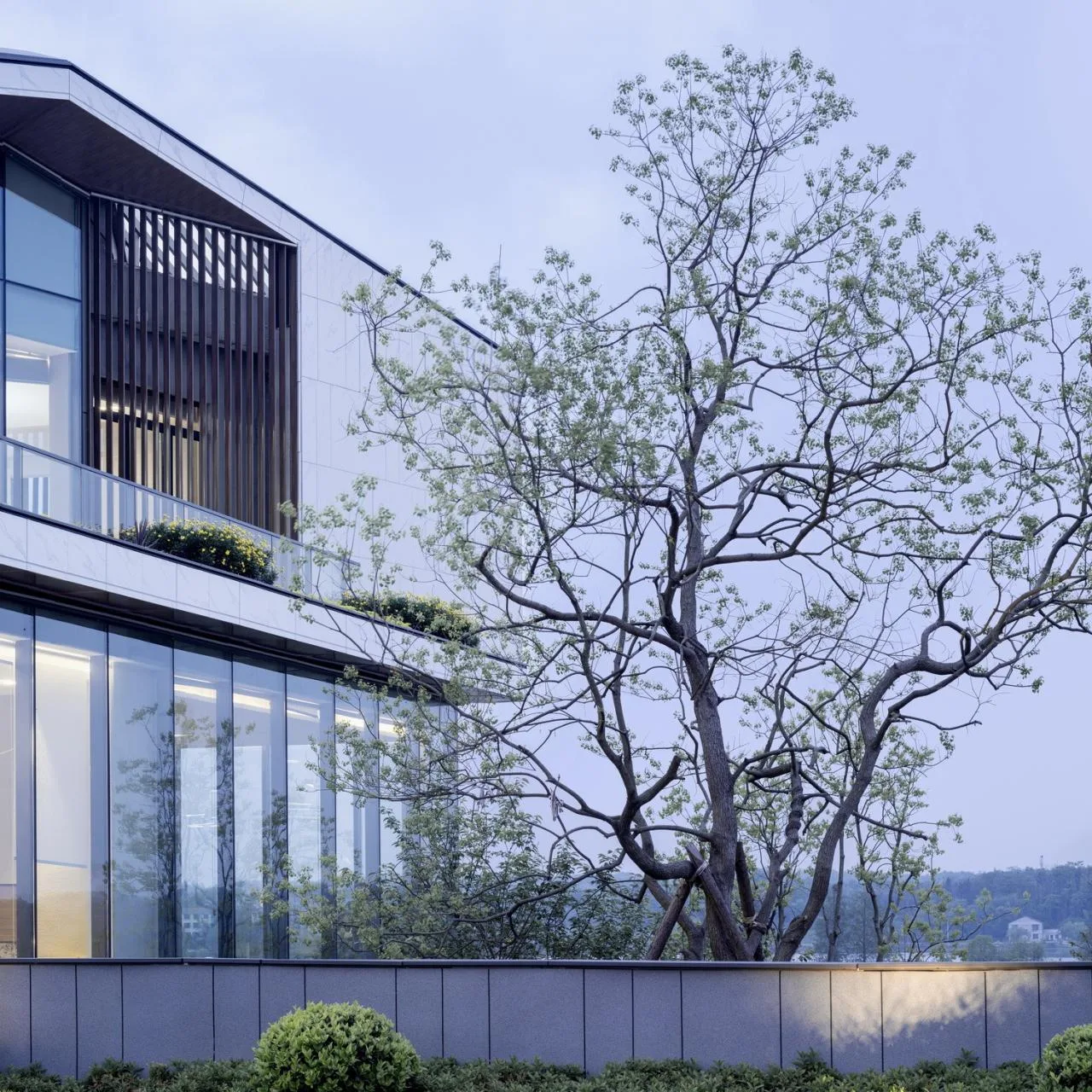
Within this venue, visitors naturally journey through both indoor and outdoor spaces. Corridors, large terraces, landscape stairs, and sunken courtyards blend architecture with nature, enriching the spatial experience.
04
Skin and Structure
Visible and Invisible
“With a door, we can go out; with a window, we don’t have to go out,” wrote Qian Zhongshu.
At the Book of Songs Aesthetics Museum, glass accounts for roughly 80% of the building’s facade, serving as a transparent link between interior and exterior spaces.
The architects utilized high-transparency white glass, enhanced with neutral gray and low-reflective LOW-E coatings. This combination maximizes light penetration while minimizing environmental reflections, ensuring clear sightlines.
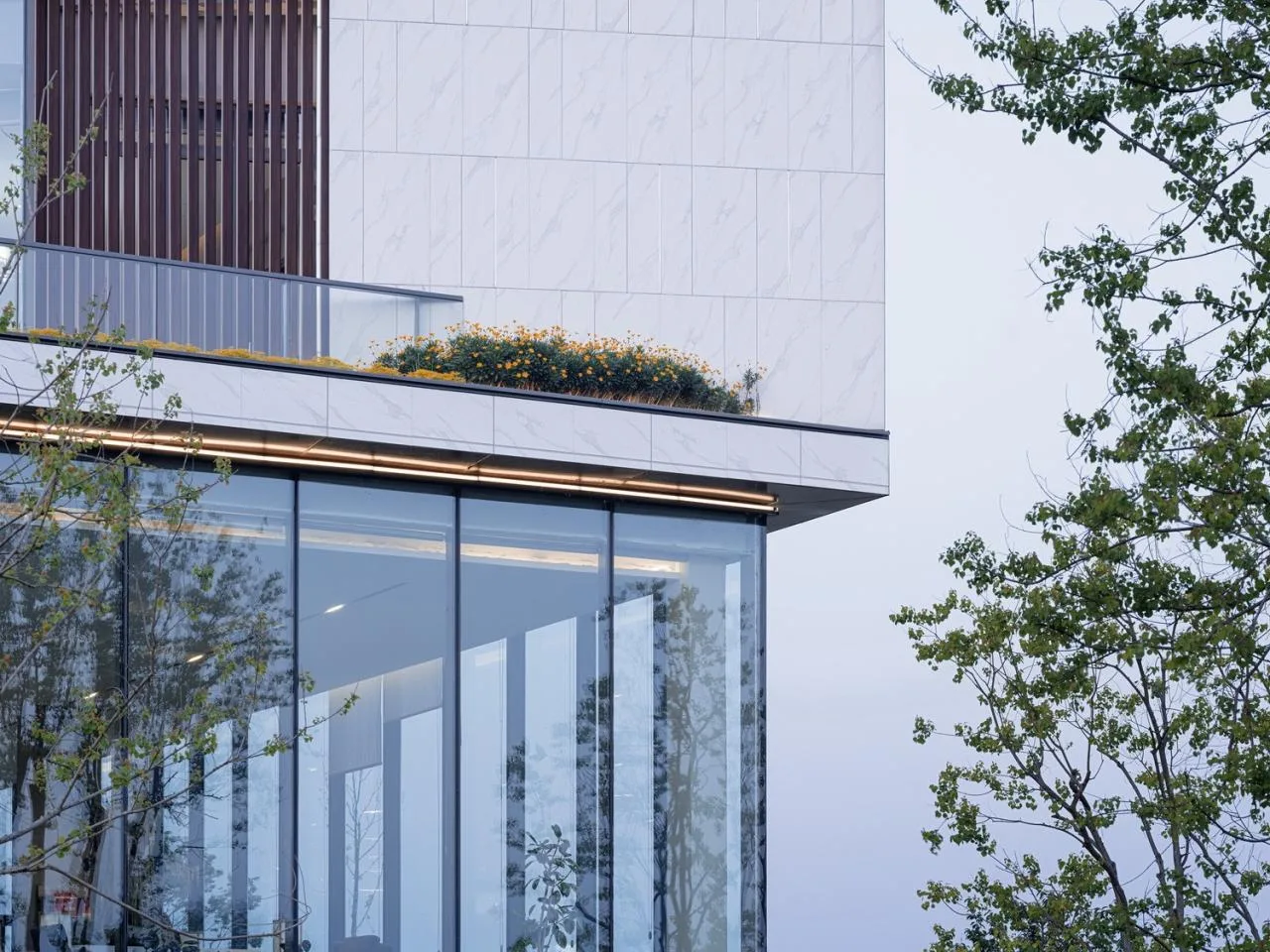
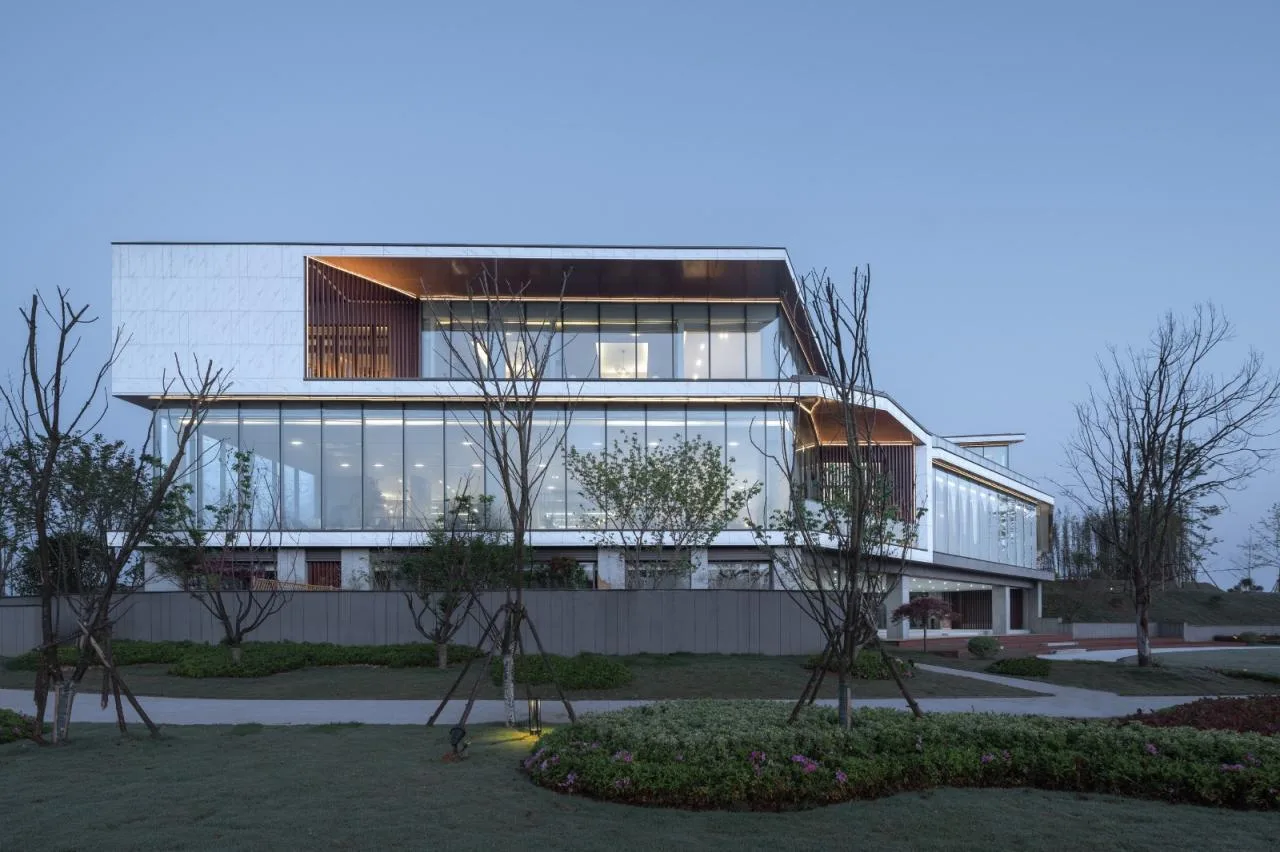
As the wind moves the clouds and the stars shift, the architects aim to deliver the most natural colors and information through the glass, connecting occupants with the environment.
Snowflake white porcelain panels form the second most prominent facade material, their warm white tone outlining the building’s pure and soft waterfront character. The first floor is clad in Baoshan gray stone, providing a stable, grounded base.
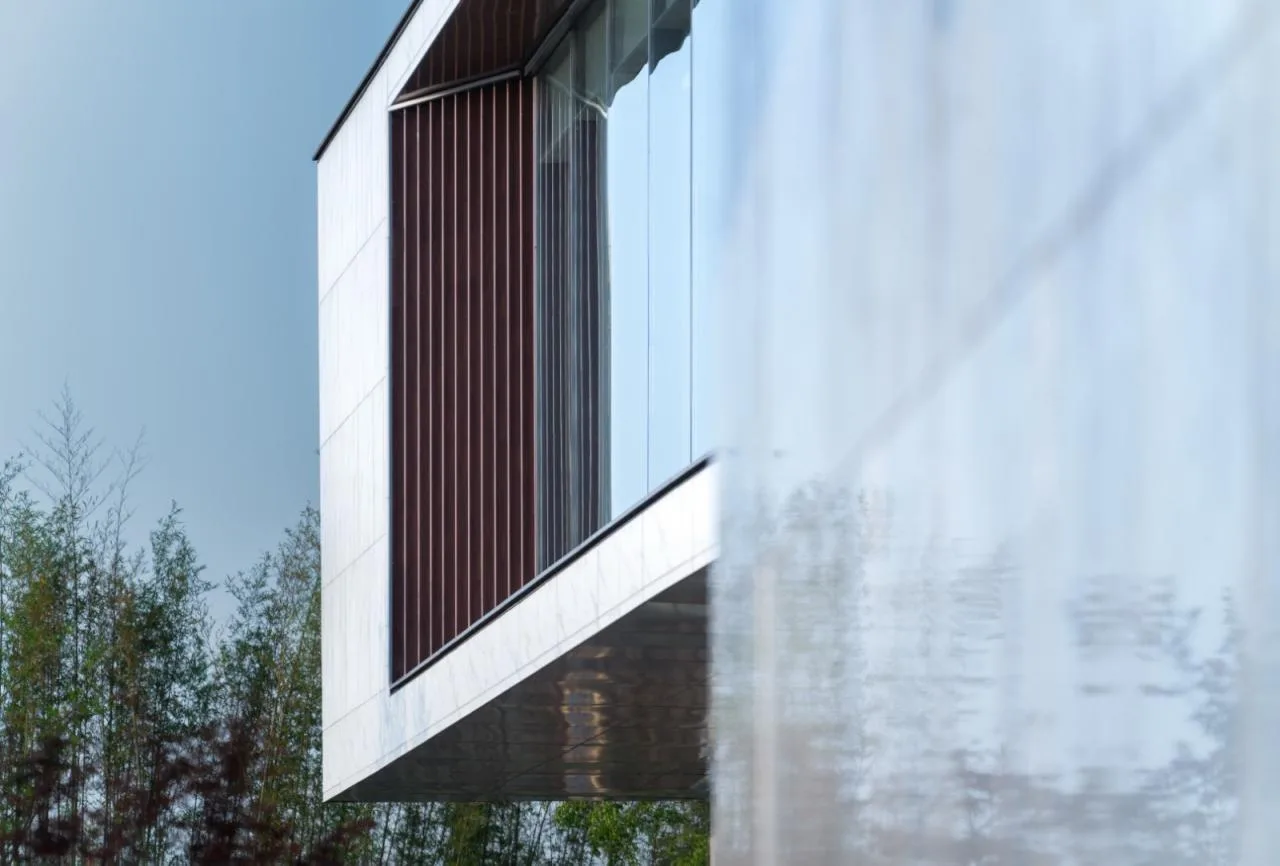
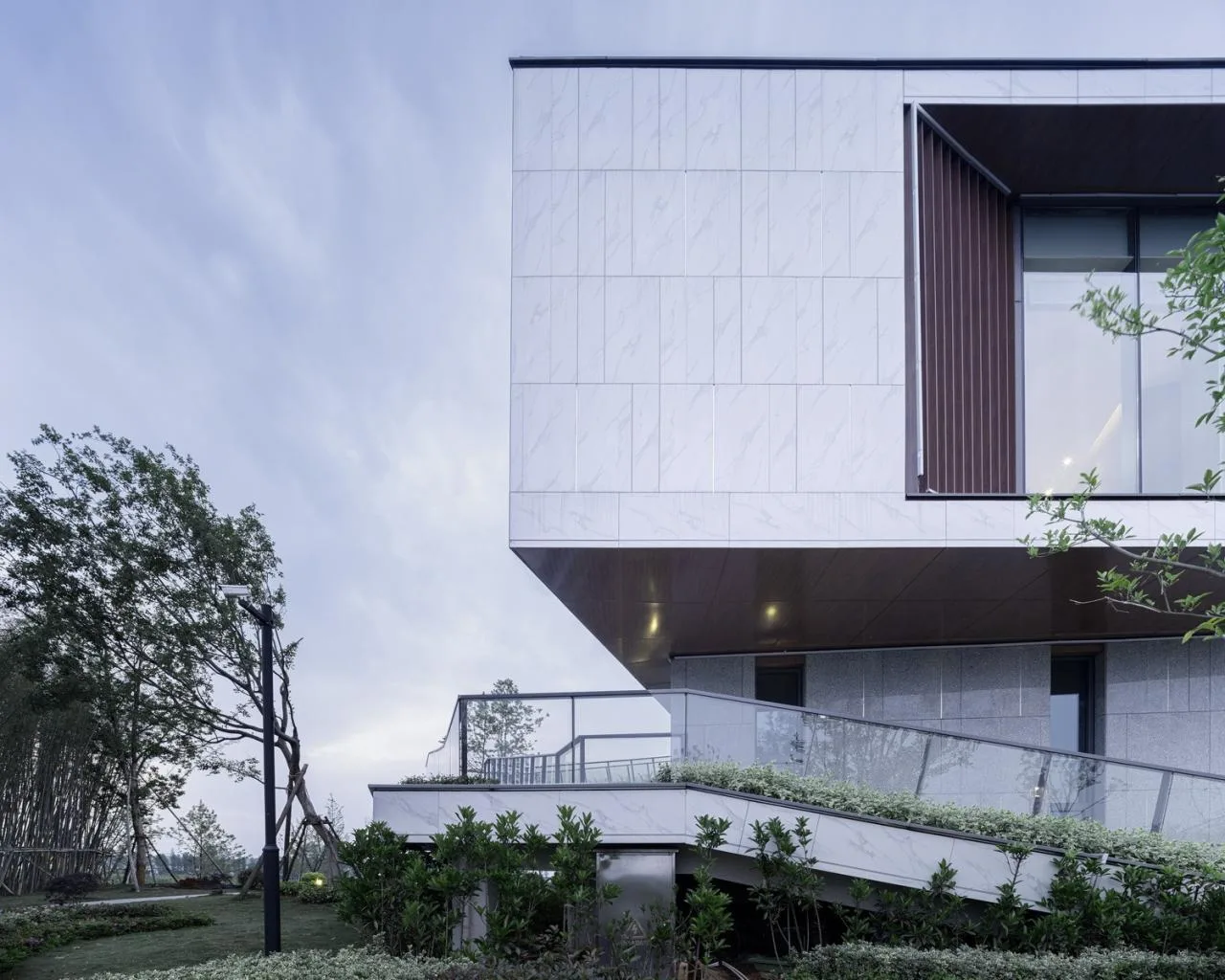
While the facade expresses the building’s character, the structure itself plays a more discreet role, disappearing to achieve the purity, relaxation, and lightness that define the Book of Songs Aesthetics Museum.
Features include a large 18m x 18m column-free grey space, a slender 4.2m overhanging roof, a 20m-long circular staircase, and a simple, clean roof design. Beneath this apparent lightness lies precise structural engineering and calculations.
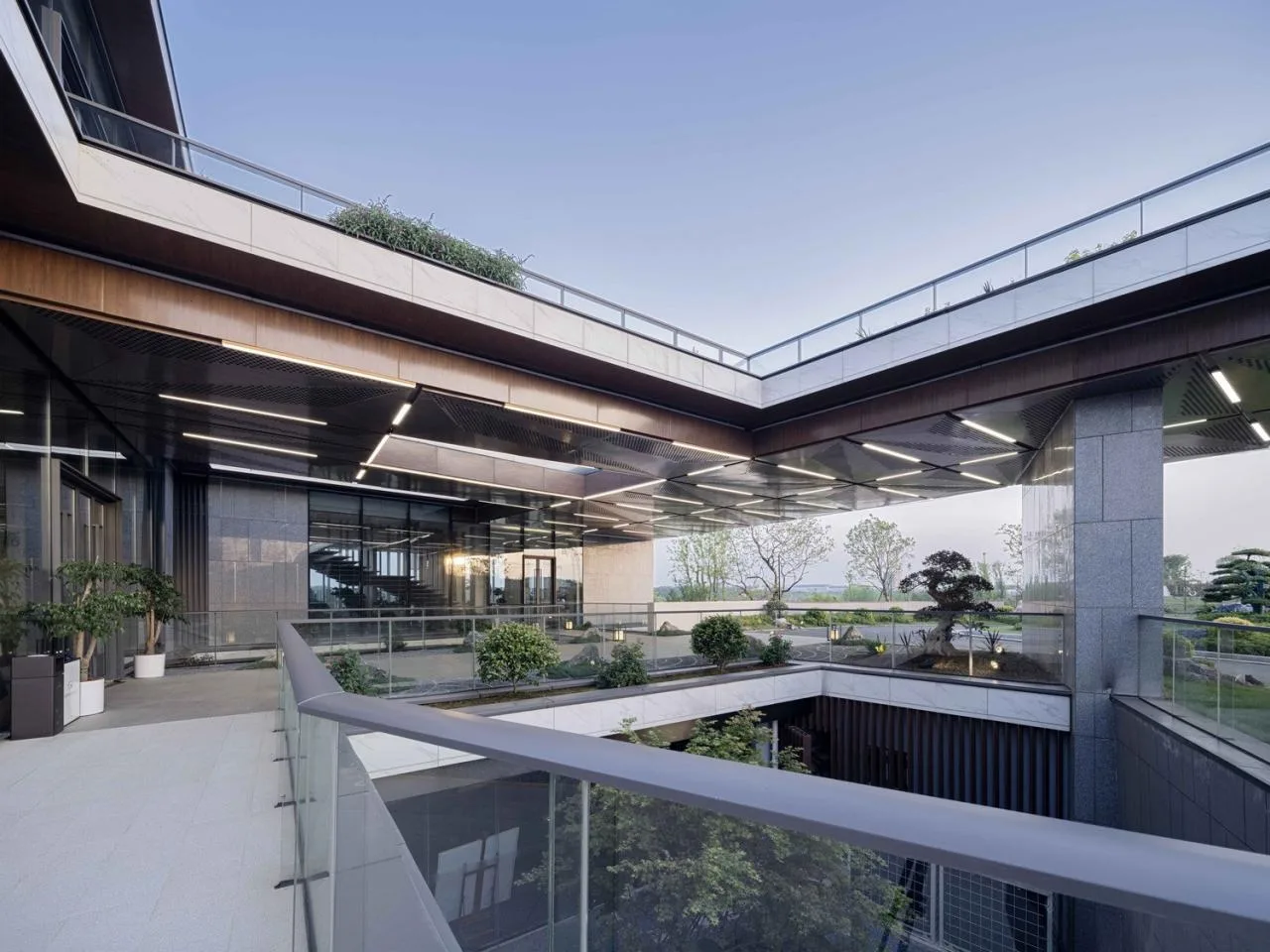
△ Entrance features an 18m x 18m large-span, column-free grey space. Structural designers used dense concrete beams to keep the structural height within 800mm.
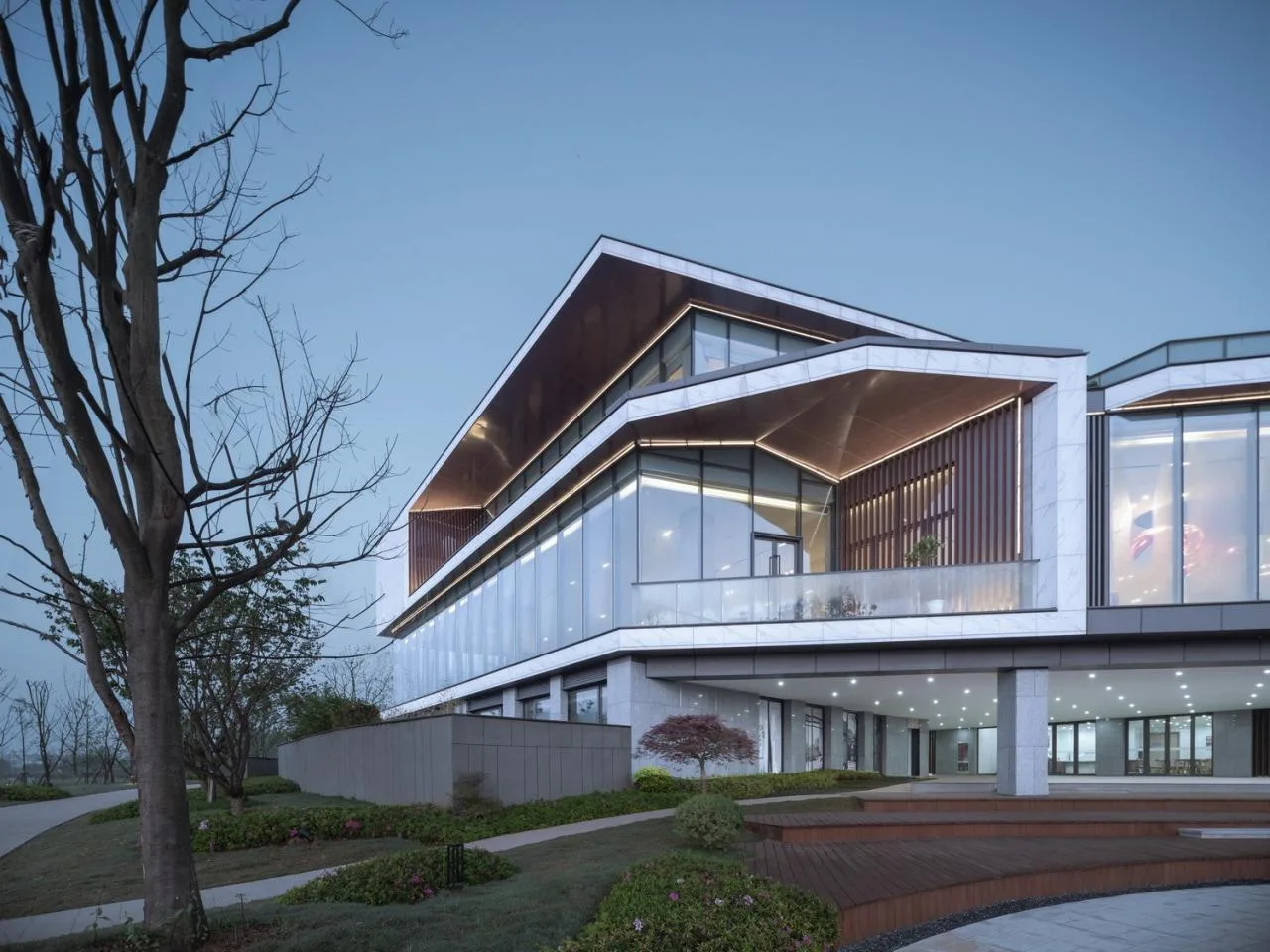
The roof’s 4.2-meter overhang is supported by a slender 200mm-thick slab.
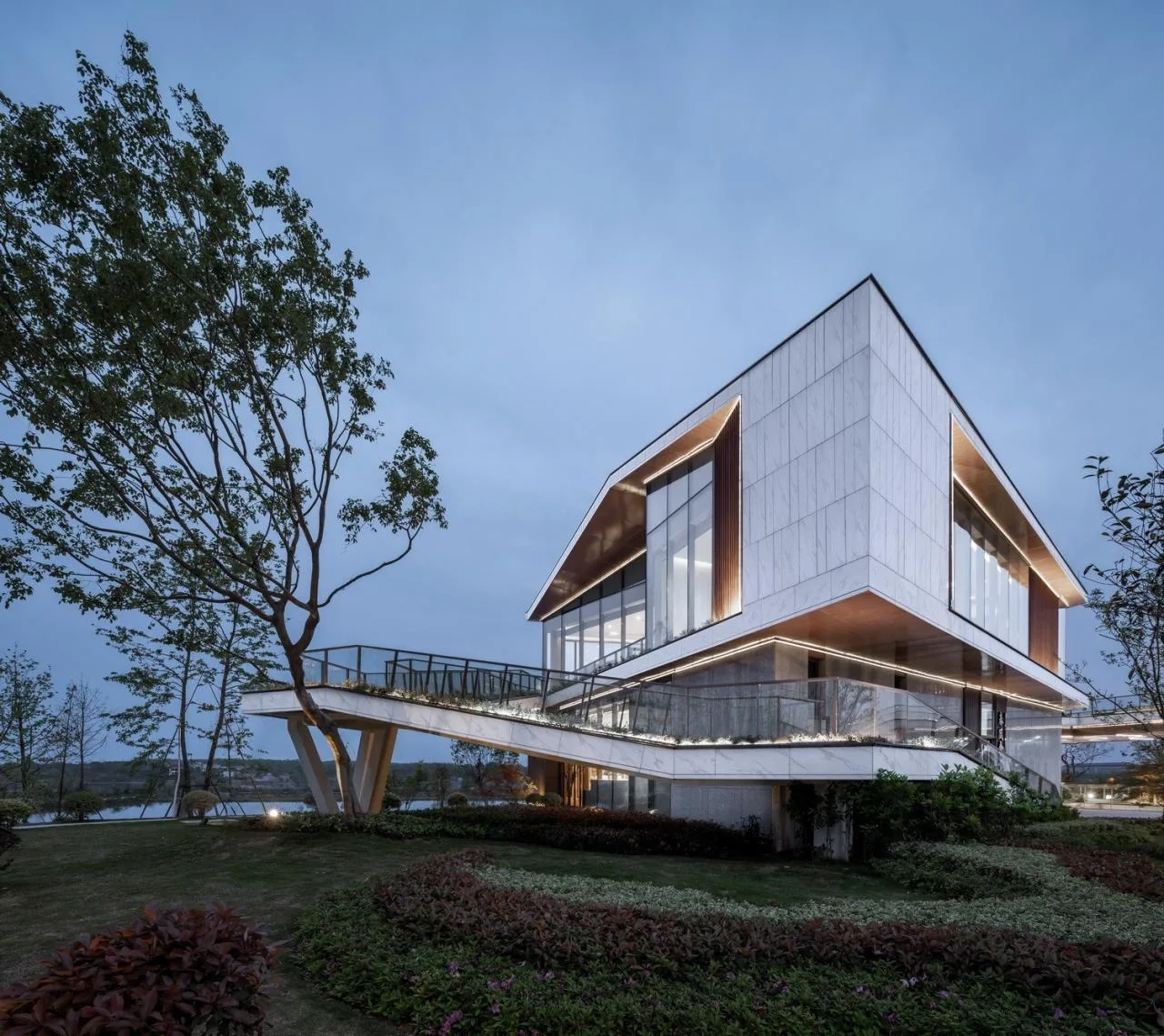
The ramp extends approximately 20 meters, with three branching columns beneath the central resting platform forming a stable triangular base.
05
Details and Craftsmanship
From Good Design to Good Architecture
At BA Design, successful implementation is a key measure of design value. Accurately translating design details is essential on the journey from “good design” to “good architecture.”
After partially lifting the double-sloped roof, an irregular form emerged beneath the eaves. To precisely convey the design intent and ensure the final effect, the design team created a detailed material splicing model in SketchUp.
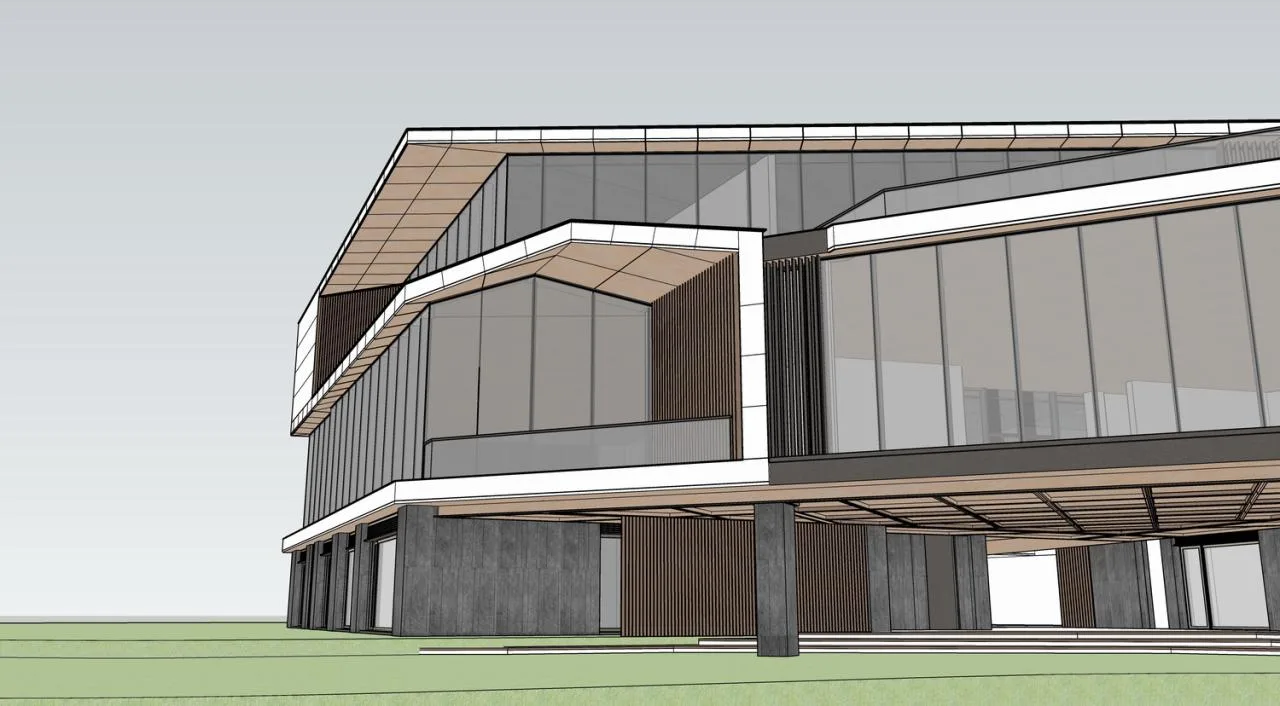
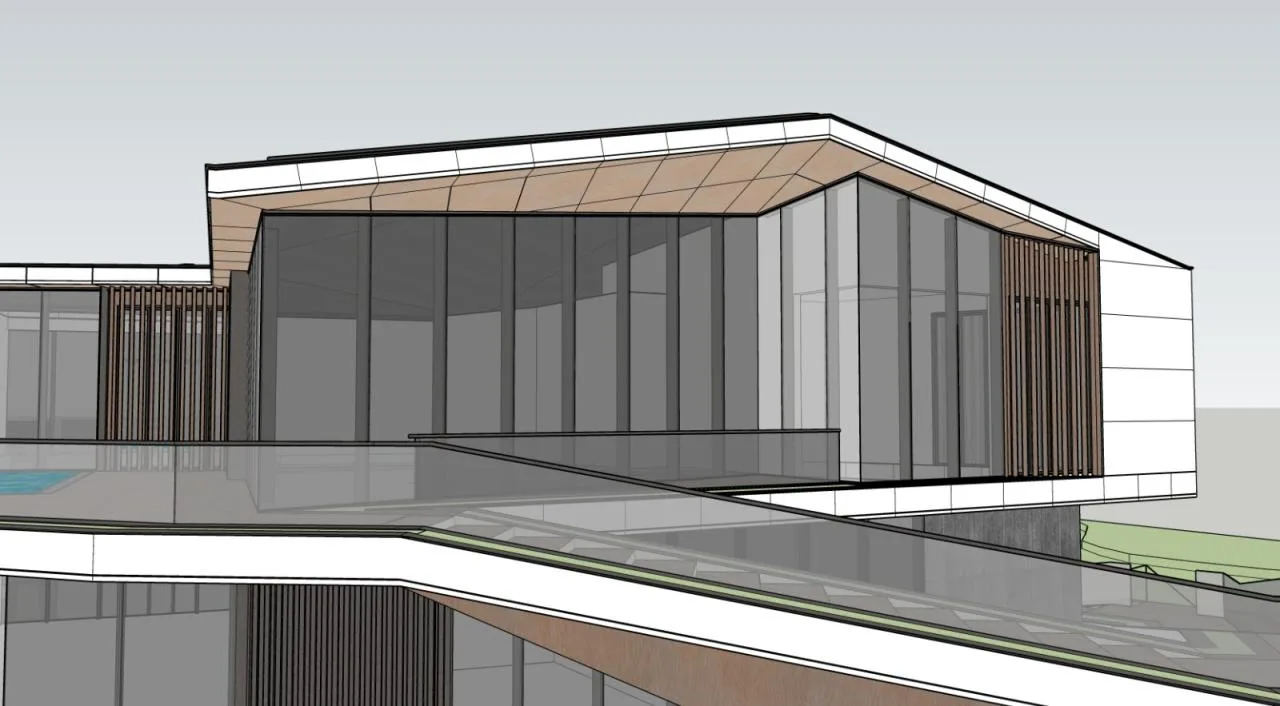
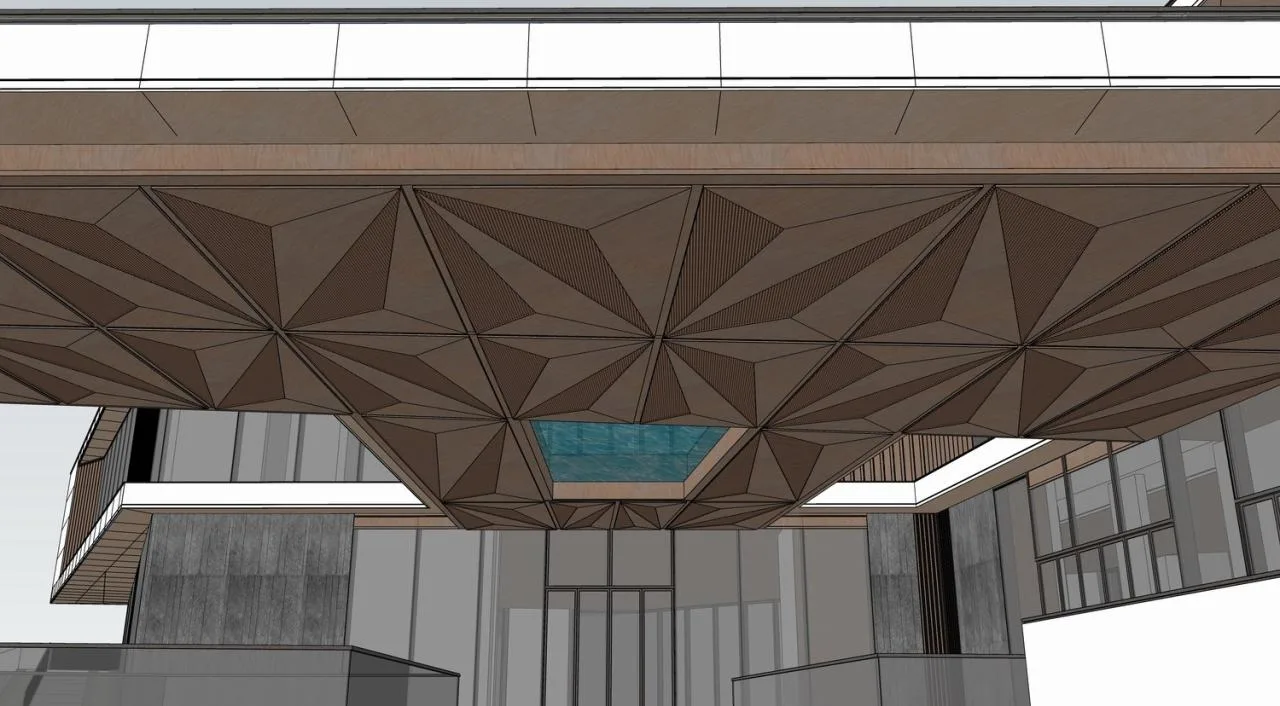
△ Material splicing SketchUp model
Material division required careful alignment of joints between the irregular roof panels to maintain aesthetics, while considering panel sizes to prevent material delamination after construction.
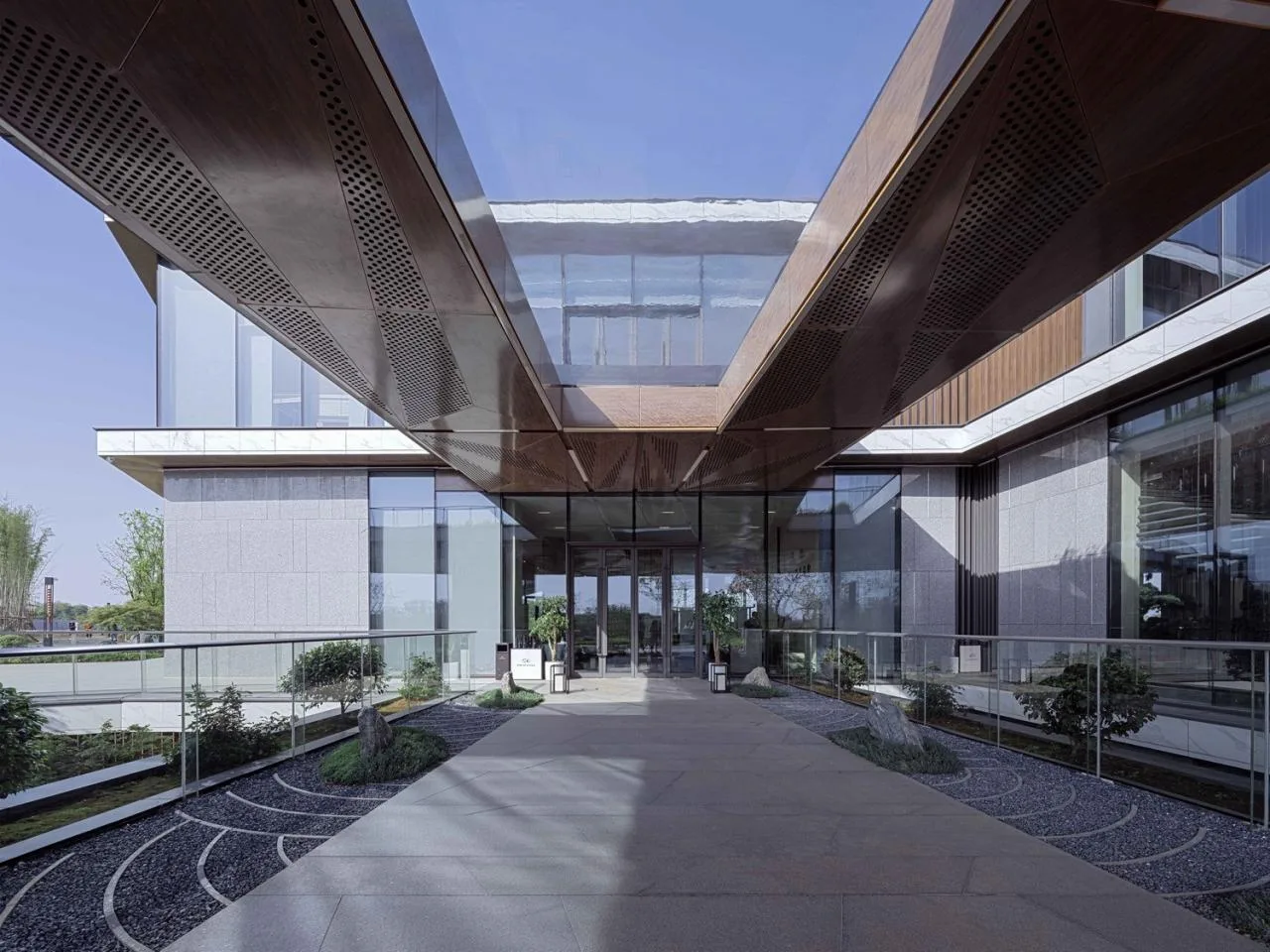
Originally, the designer intended a sculptural three-dimensional ceiling at the main entrance. However, due to budget constraints and craftsmanship limitations, 3D assembly was not feasible. Instead, the design extracts linear architectural elements and visually conveys three-dimensional tension through triangular arrangements and material variations on the ceiling plane. This approach integrates ceiling form with lighting by reserving space for light strips.
06
Final Thoughts: On Internet Celebrity Architecture
Upon receiving this project, the client expressed a desire for it to become an “internet celebrity” building.
But what exactly defines an “internet celebrity” building? Does it refer to a style, a form, or something else?
As the term “internet celebrity” becomes increasingly common in mass media, it sometimes carries negative connotations, suggesting superficial aesthetics. However, we believe beauty is universal and transcends such distinctions. Our interpretation of internet celebrity architecture is simply a building that resonates with the public and appeals aesthetically.
In this project, we aimed to center natural landscapes and use architecture as a medium to establish a universal beauty connecting nature, people, and the built environment.” – Sa Feng, BA Design
Project Information
Project Name: Jiayu Poetry Town Aesthetics Museum
Land Area: 1,964 square meters
Building Area: 2,695.03 square meters
Design Period: May 2020 – December 2020
Architectural Design Firm: BA Design
Lead Architect: Sa Feng
Architectural Designers: Luo Xuan, Ruan Guoshi, Wu Sihang, Tang Yan, Gao Yanfei
Structural Engineers: Wang Licai, Wen Hezhen, Sheng Shougang
Mechanical and Electrical Engineers: Shen Fengqiang, Lv Cunzhen, Zhou Ji, Li Wenxue
Developer: Hubei Zhongrun Kanglv Holdings Co., Ltd.
Construction Management: Blue City Taoli Chunfeng Construction Group Co., Ltd.
Landscape Design: Hangzhou Puyi Landscape Design Co., Ltd.
Interior Design: Shenzhen Matrix Interior Decoration Design Co., Ltd.
Construction Contractors: China Railway Seventh Group Wuhan Engineering Co., Ltd. (General Contractor); Zhejiang Lanzhu Garden Ancient Architecture Co., Ltd. and Changshu Ancient Architecture Garden Co., Ltd. (Landscape, Ancient Architecture); Wuhan Duanyi Construction Technology Co., Ltd. (Fine Decoration); Shenzhen Matrix Mingcui Design Co., Ltd. (Soft Decoration)
Curtain Wall Design: Zhejiang Blue City Curtain Wall Co., Ltd.
Project Photography: SHIROMIO, Architectural Photography Here
Project Location: Jiayu County, Xianning City, Hubei Province














Must log in before commenting!
Sign Up