
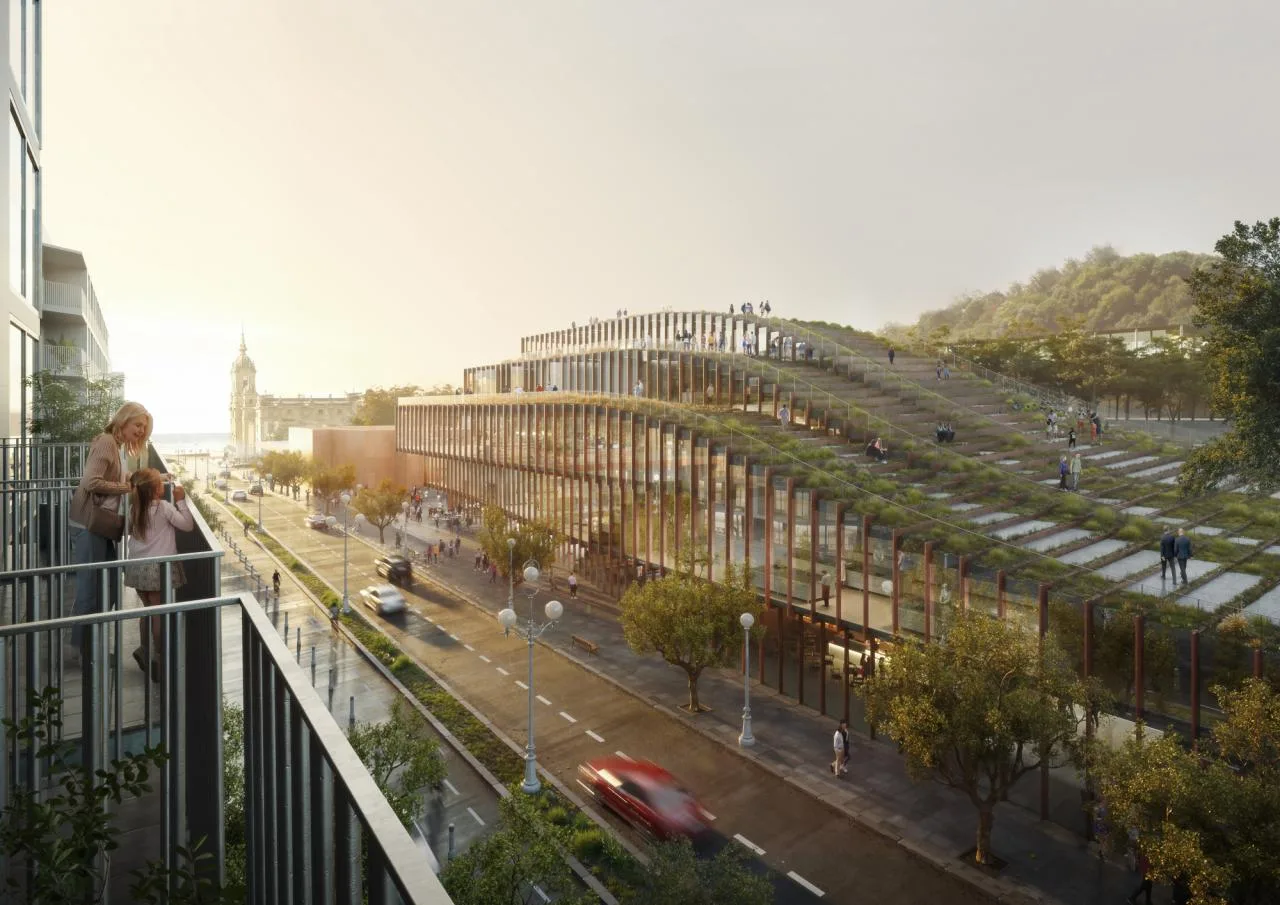
BIG has designed the new 9,000-square-meter Gastronomy Open Ecosystem (GOe) for the Basque Culinary Centre, located in the heart of San Sebastian. This innovative center connects science, cuisine, entrepreneurship, and nature, fostering culinary research, innovation, and enjoyment.
The Basque Culinary Centre, a pioneering institution in gastronomy, launched an international design competition in 2021 to create a new food innovation hub. The goal was to unite food startups, researchers, and chefs under one roof. GOe will focus on advancing alternative proteins, agricultural robotics, and strategies to reduce food waste. The proposal was selected from five invited architectural firms, including OMA, Snøhetta, 3XN, Toyo Ito & Selected Associates.
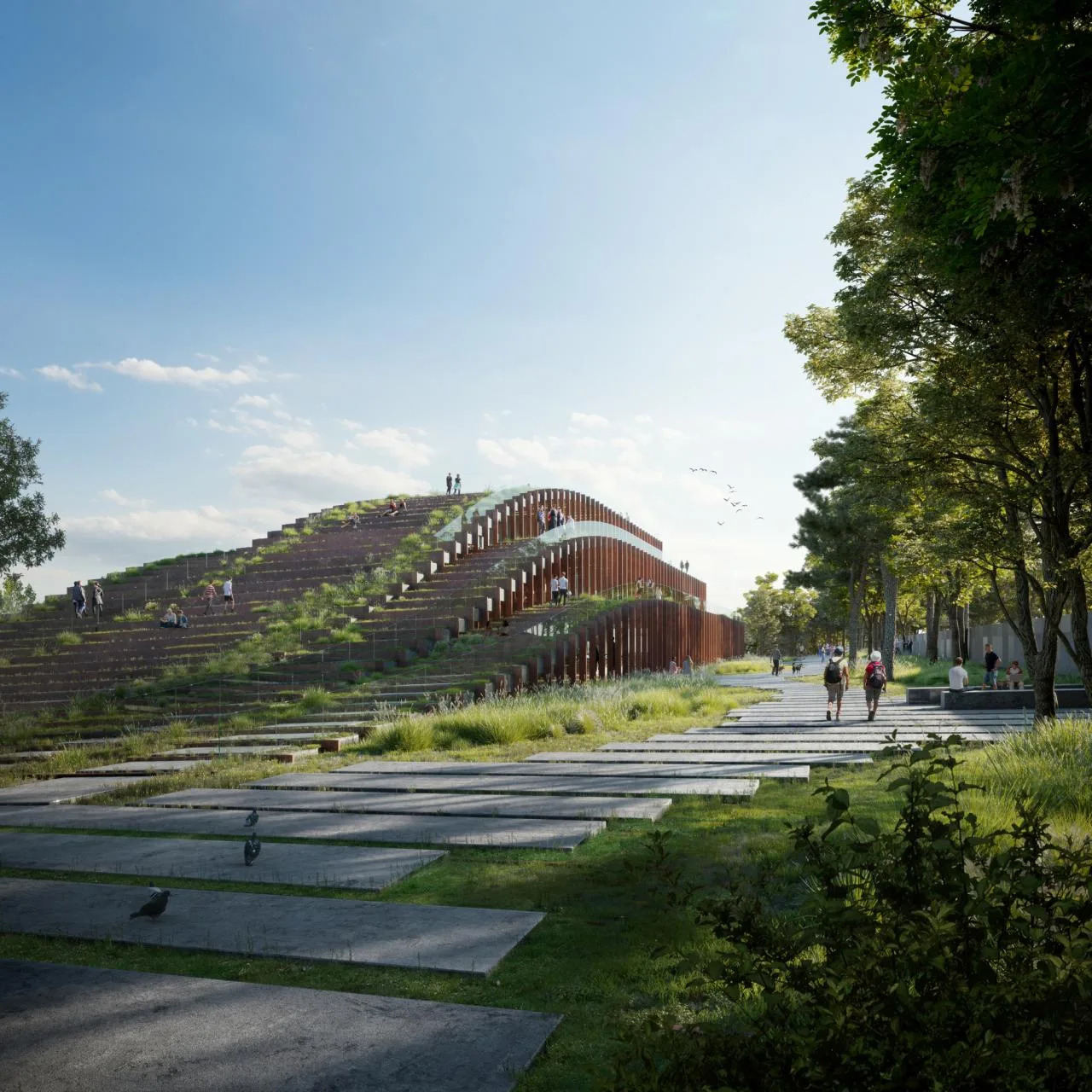
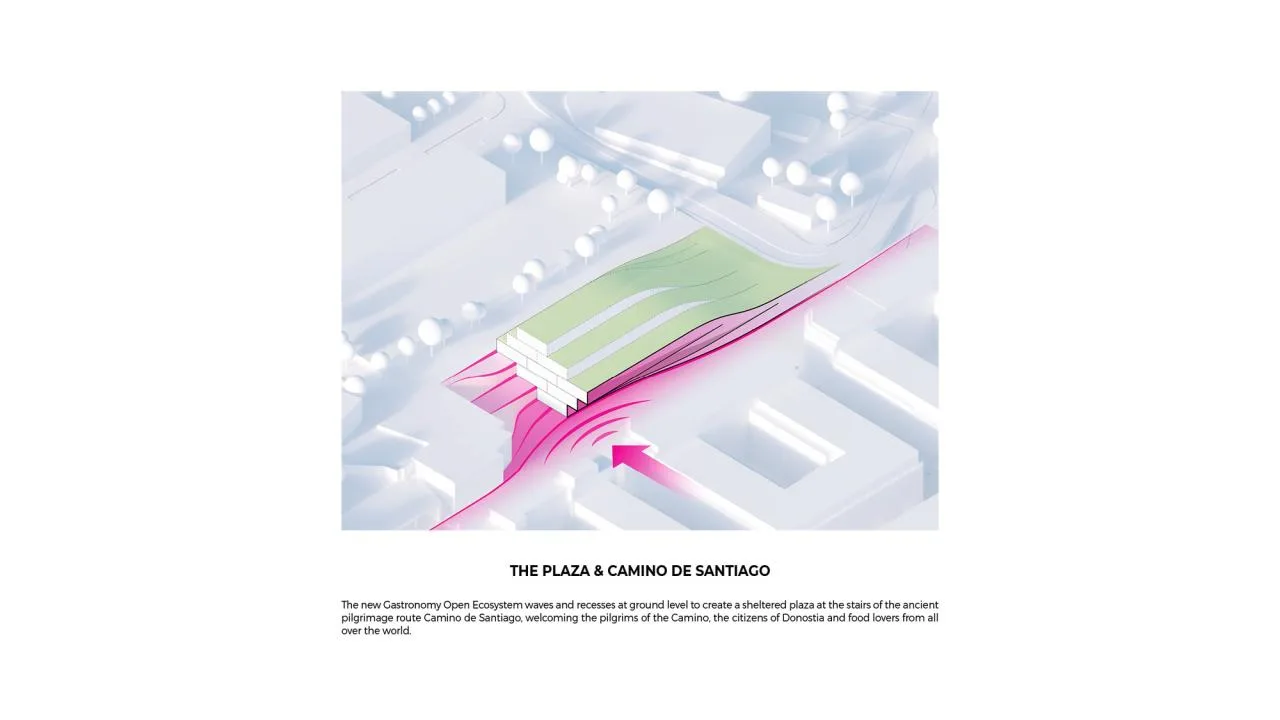
GOe is situated between the edge of San Sebastian and the Ulia Mountains, with a 10-meter elevation difference. The new center is gradually built from the lower ground up, using the height variation to protect and enhance the park’s quality while connecting the adjacent Camino Santiago pilgrimage route with the Cantabrian Sea.
Bjarke Ingels, founder and creative director of BIG Bjarke Ingels Group, shared, “We are honored to collaborate with pioneers in the modern food industry. In our hometown of Copenhagen, we designed NOMA for René Redzepi. With the San Sebastian GOe project, we are excited to elevate our architectural exploration of food to a new level.”
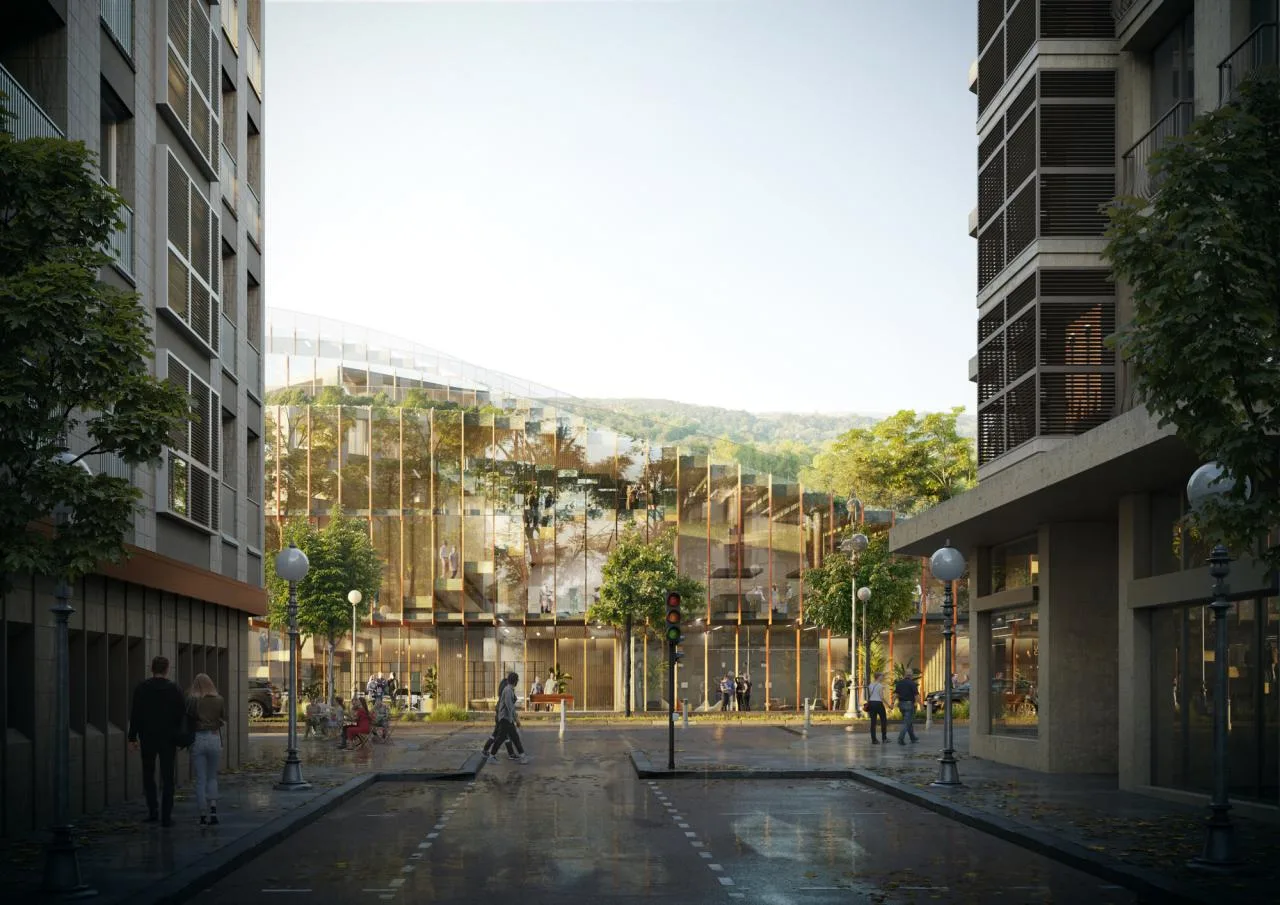
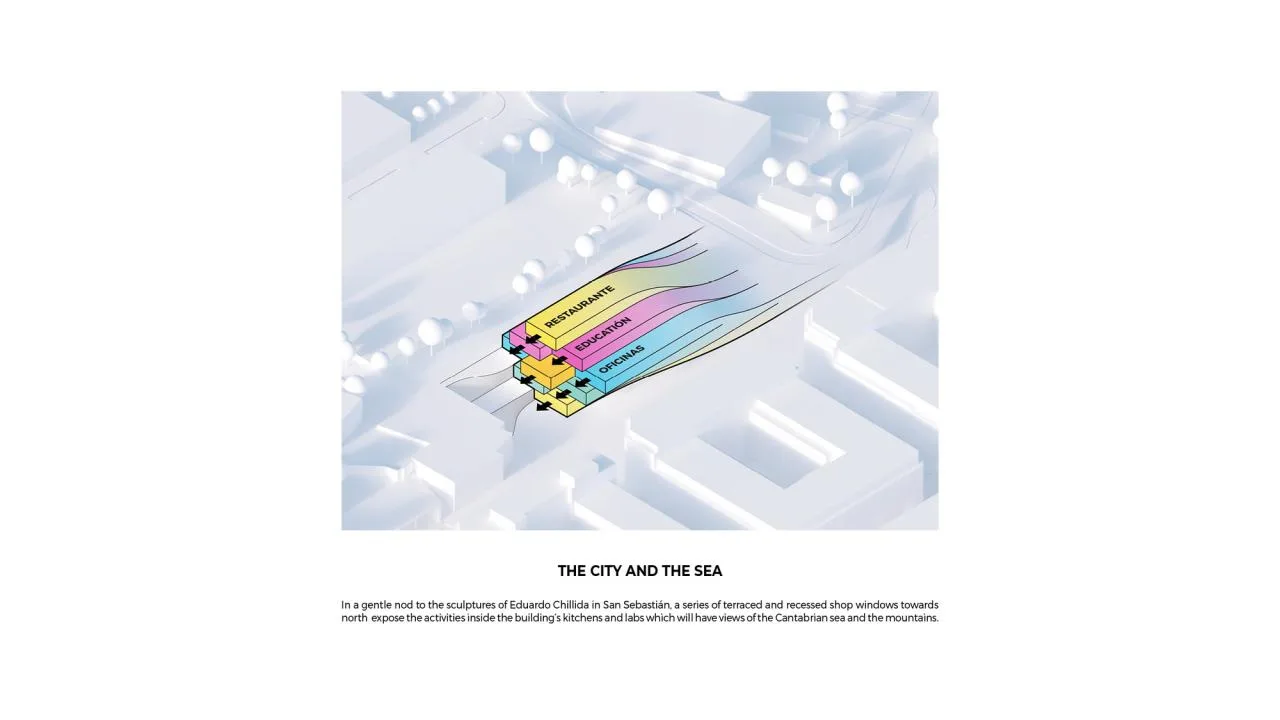
At street level, the building forms a covered public square at the rear, linking the path of the Camino Santiago pilgrims and establishing the building as a vibrant hub for culture, cuisine, and city life. The structure rises into a series of terraces and sunken windows, showcasing kitchen activities, laboratories, and classrooms to the public.
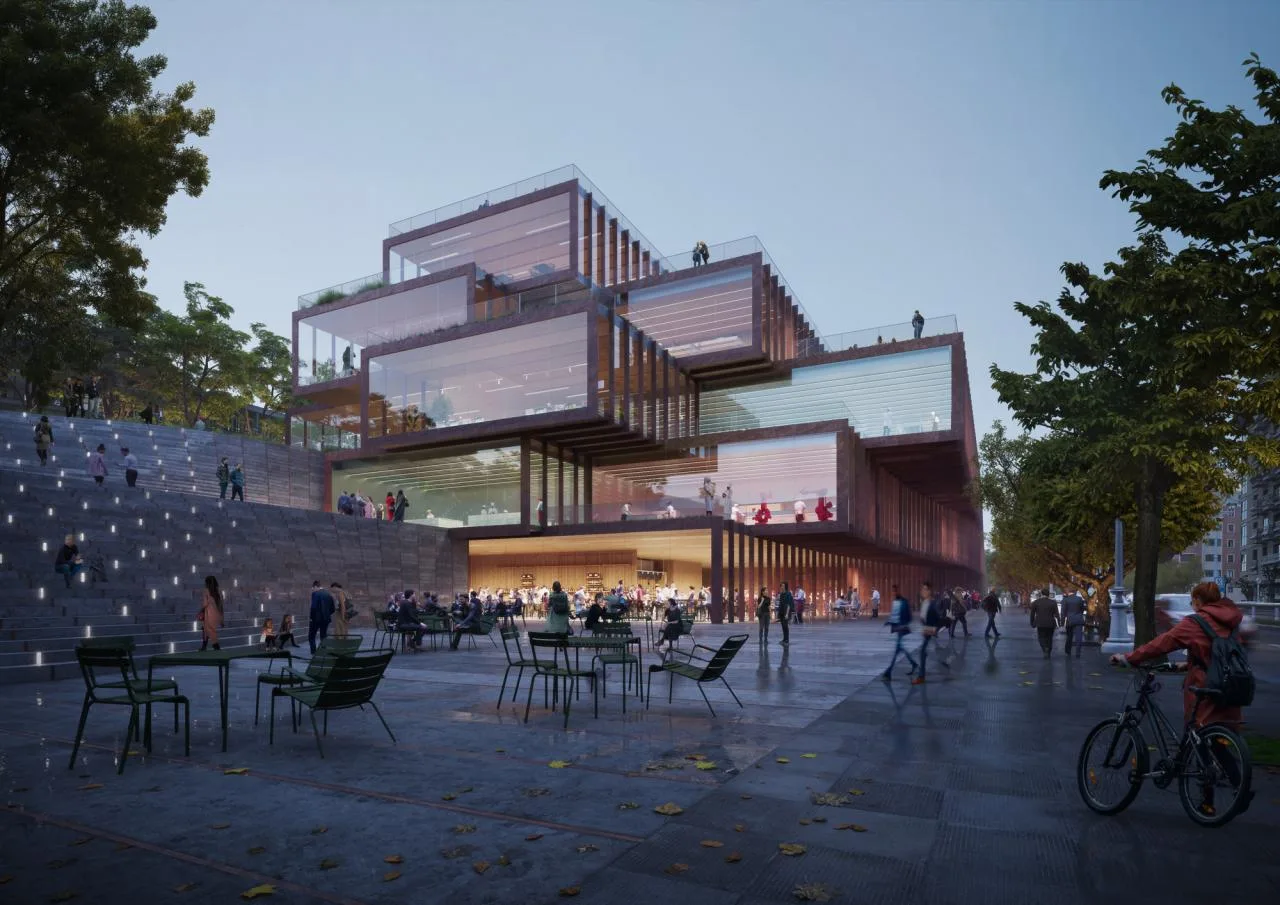
GOe — Food Open Ecosystem — embodies the Basque Culinary Center’s future strategy, consolidating the vision of Gastronomi360º. It is a space that integrates talent, research, innovation, and entrepreneurship, aiming to become an international benchmark for exploring the future limits of food.
BIG’s proposal, “Olatuen bidea – Camino de las Olas,” reflects the spirit of openness, collaboration, and participation inherent in GOe. The building not only integrates with the city but also creates new spaces for dialogue and connection. Through public-private partnership, this project will strengthen Donostia San Sebastian’s reputation as a birthplace for future cuisine,” said Joxe Mari Aizega, General Manager of the Basque Culinary Center.
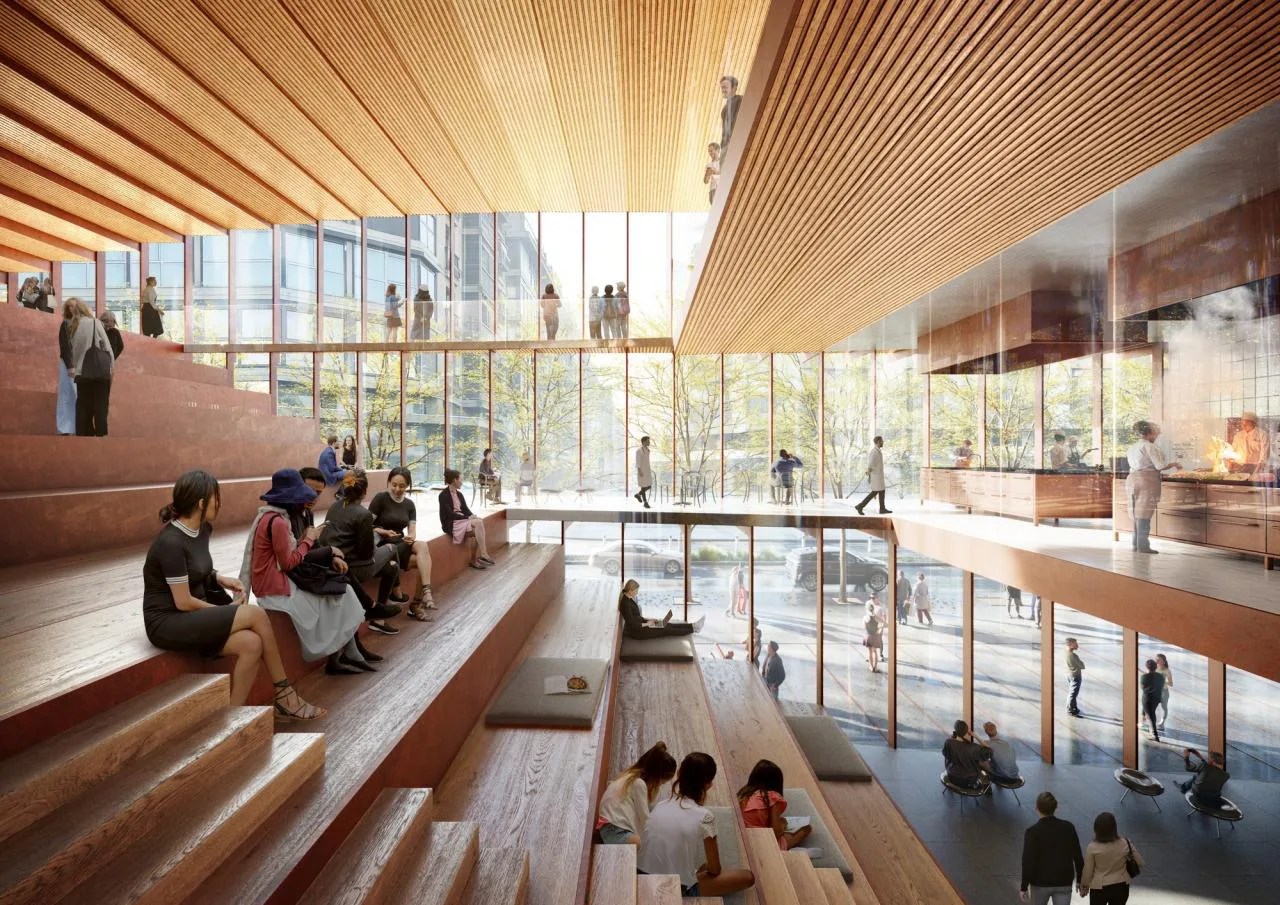
Bjarke Ingels added, “As an architectural extension of San Sebastian’s magnificent urban landscapes, our design opens the ground and creates a park on the roof, blending public city life with culinary arts and science. Situated along the famous Camino de Santiago de Compostela, we believe this fusion of food and technology, city and landscape, architecture and park has the potential to become a destination for food pilgrims worldwide.”
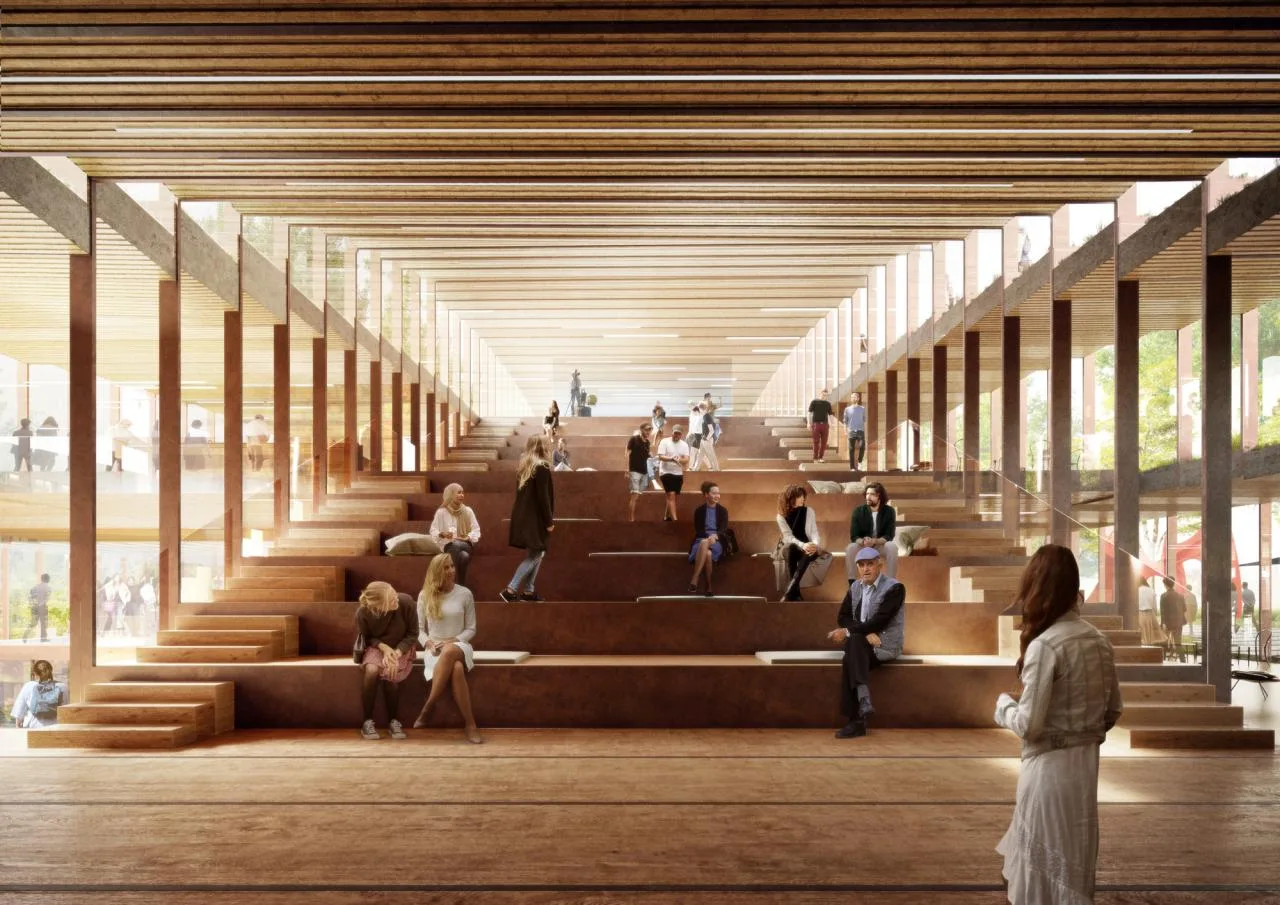
Starting by optimizing the kitchen module, the new GOe configures its public and private spaces as a connected network. The facade extends to the top floor, blending the landscape with multiple public spaces and external projects in continuous motion. GOe seems to wave at the ground, welcoming visitors and becoming a good neighbor to San Sebastian, while offering a window into global food discovery and creating new public squares, parks, and observation decks,” said João Albuquerque, partner at BIG Barcelona.
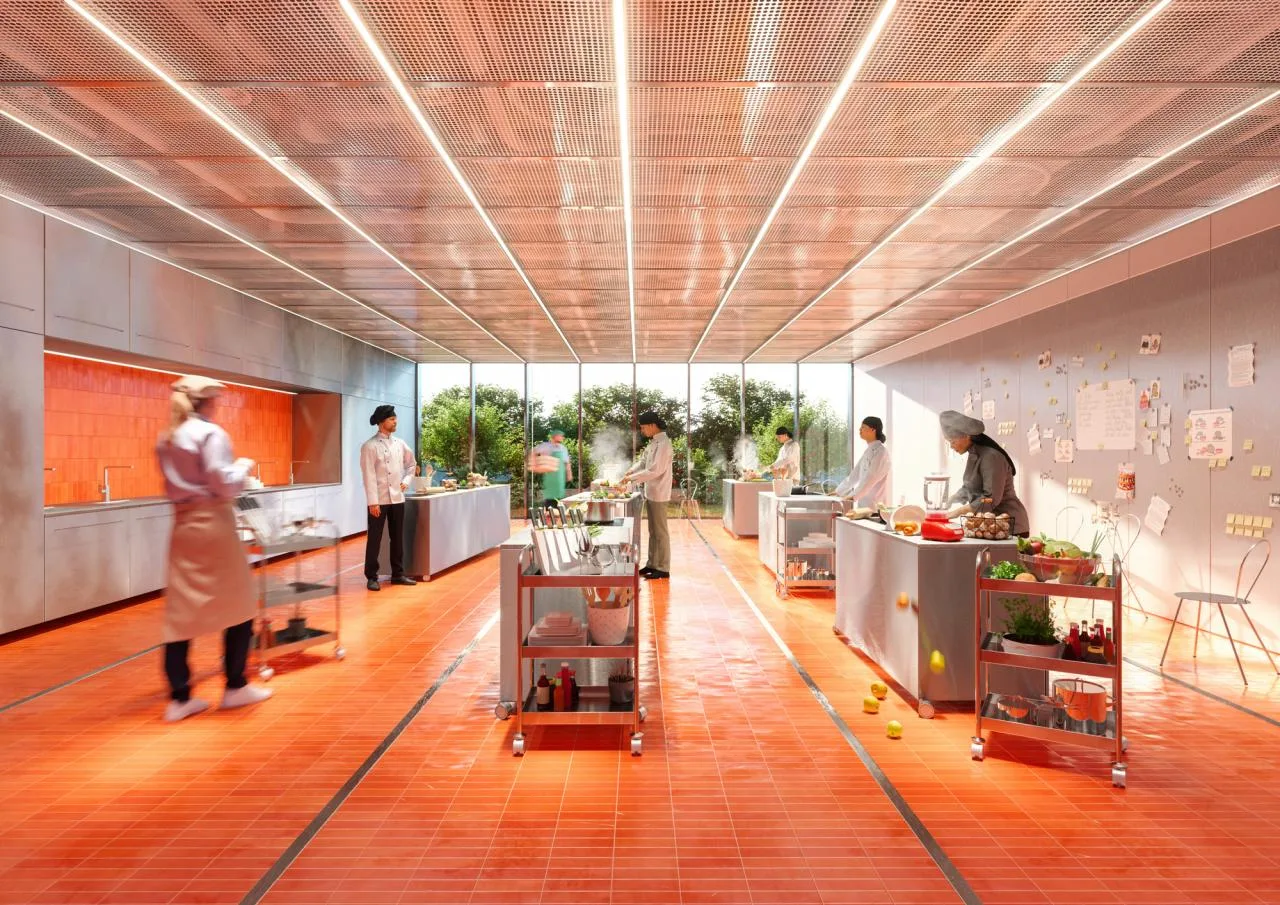
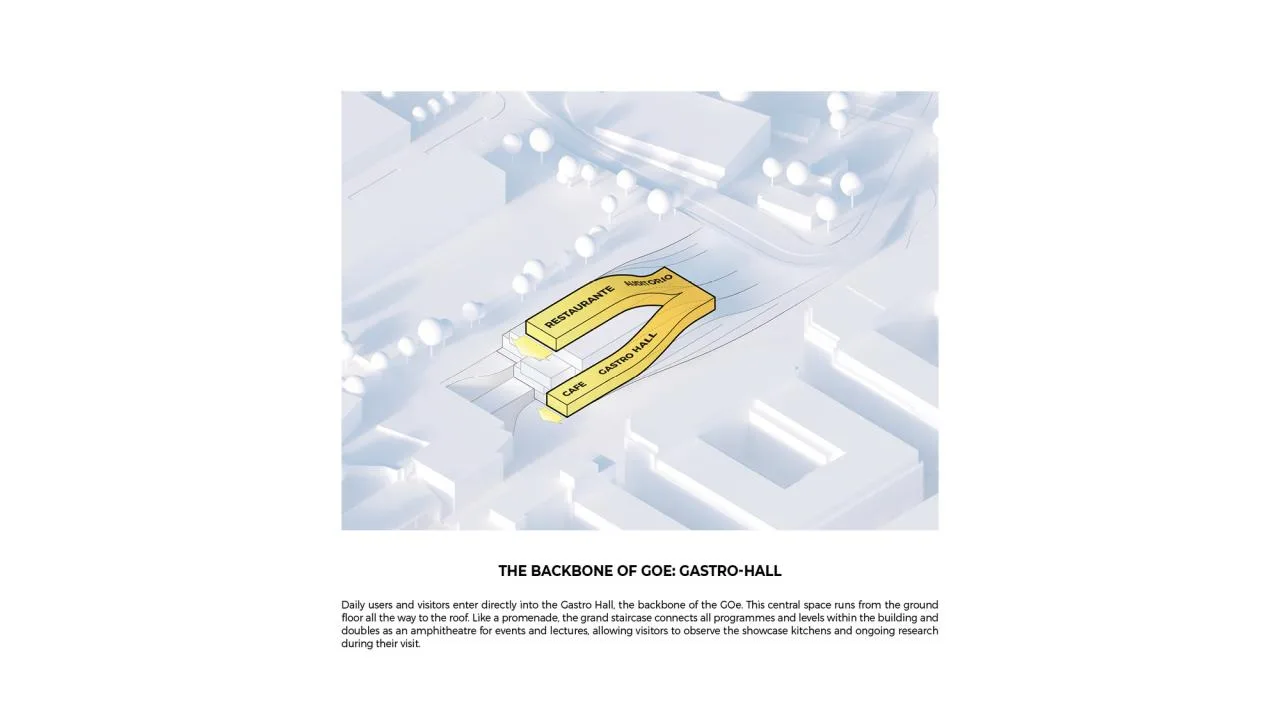
Visitors and daily users enter GOe through the main building, the Gastro Hall, which spans from the ground floor to the top floor. Like a long corridor, grand staircases connect all floors and projects within the building, serving as a circular theater for events and lectures. Visitors can observe the kitchen and ongoing research during their visit.
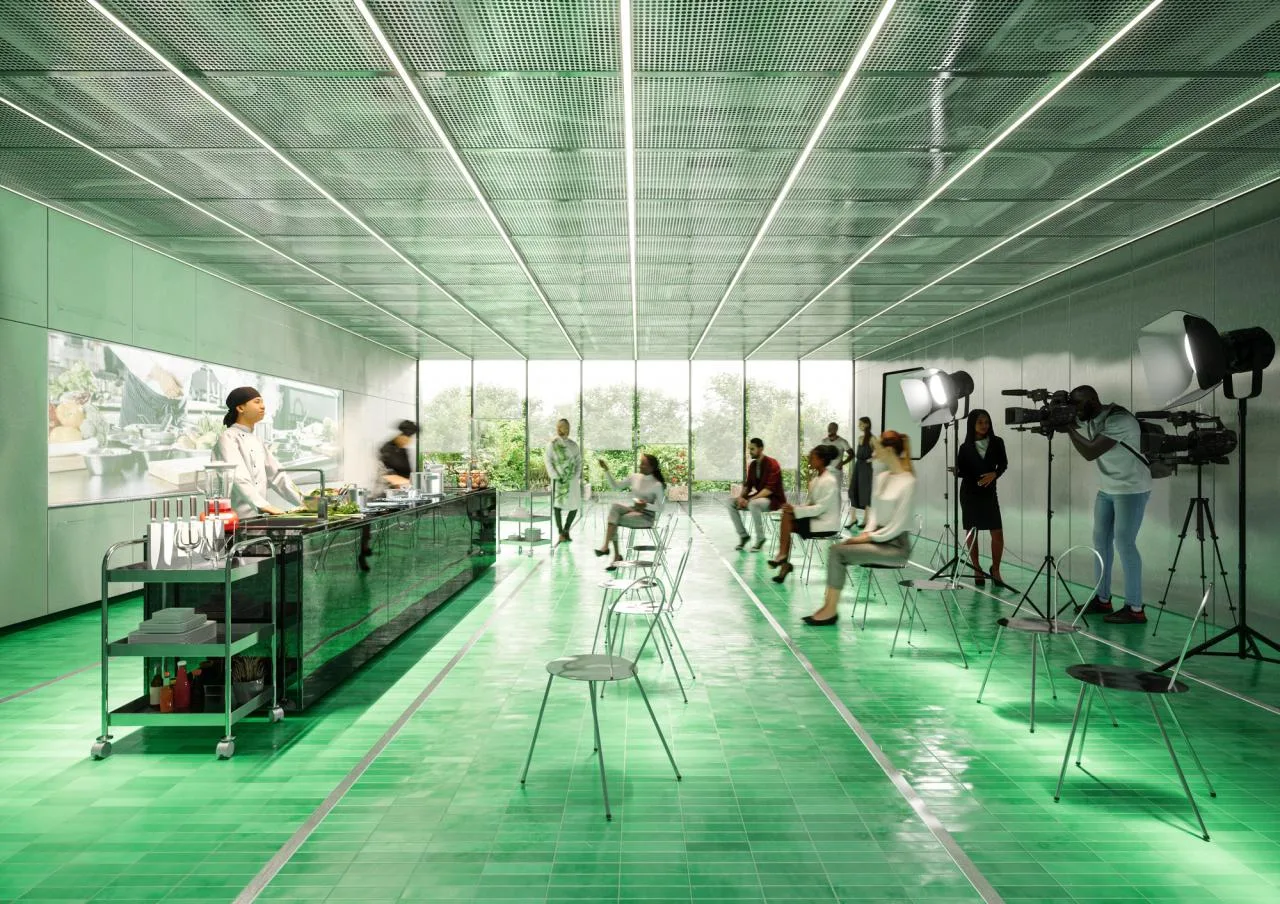
Ascending the stairs leads to the auditorium, public terrace, and a top-floor restaurant offering world-class cuisine. The food laboratory and office spaces are designed for maximum flexibility, with open classrooms, labs, and kitchens that can be rearranged for various functions.
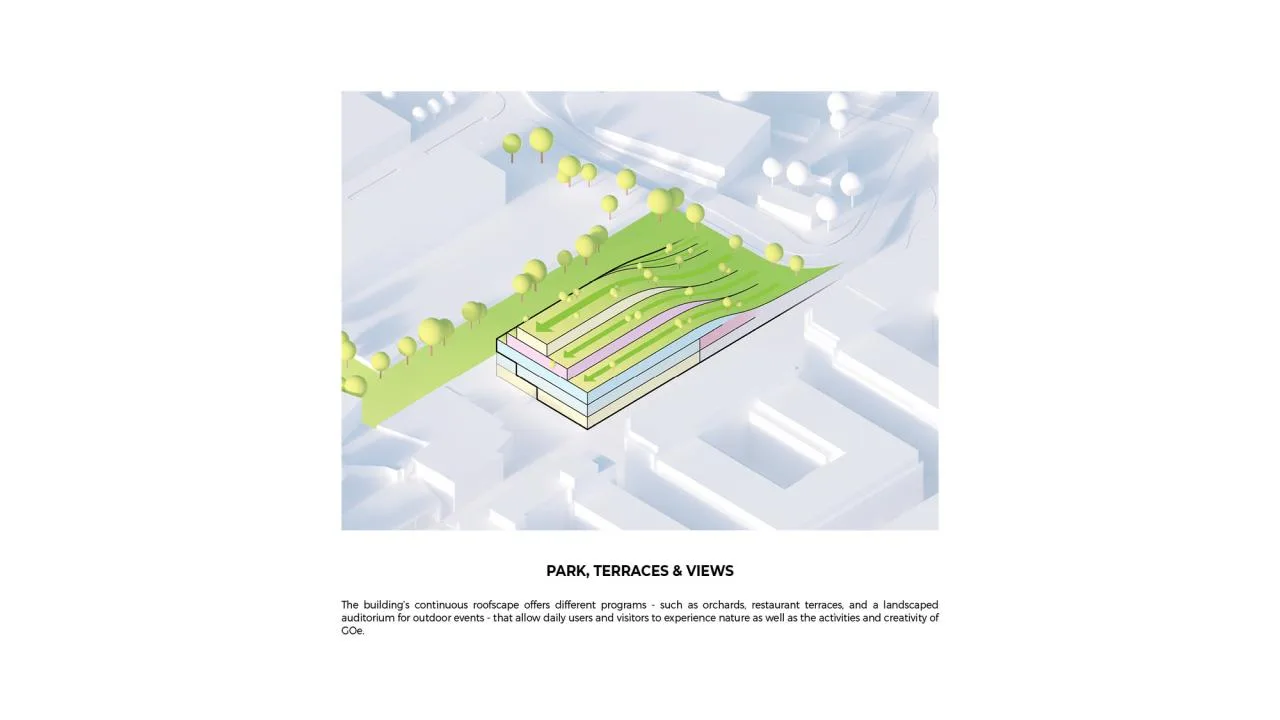
For hygiene and maintenance, kitchens and laboratories use industrial materials, while public areas feature natural materials like wood and stone to create a warm atmosphere. The building’s continuous terraces offer diverse spatial experiences, including orchards, restaurant terraces, and landscape auditoriums for outdoor activities, allowing users to engage with the vitality and creativity of GOe and nature.
Project Drawings
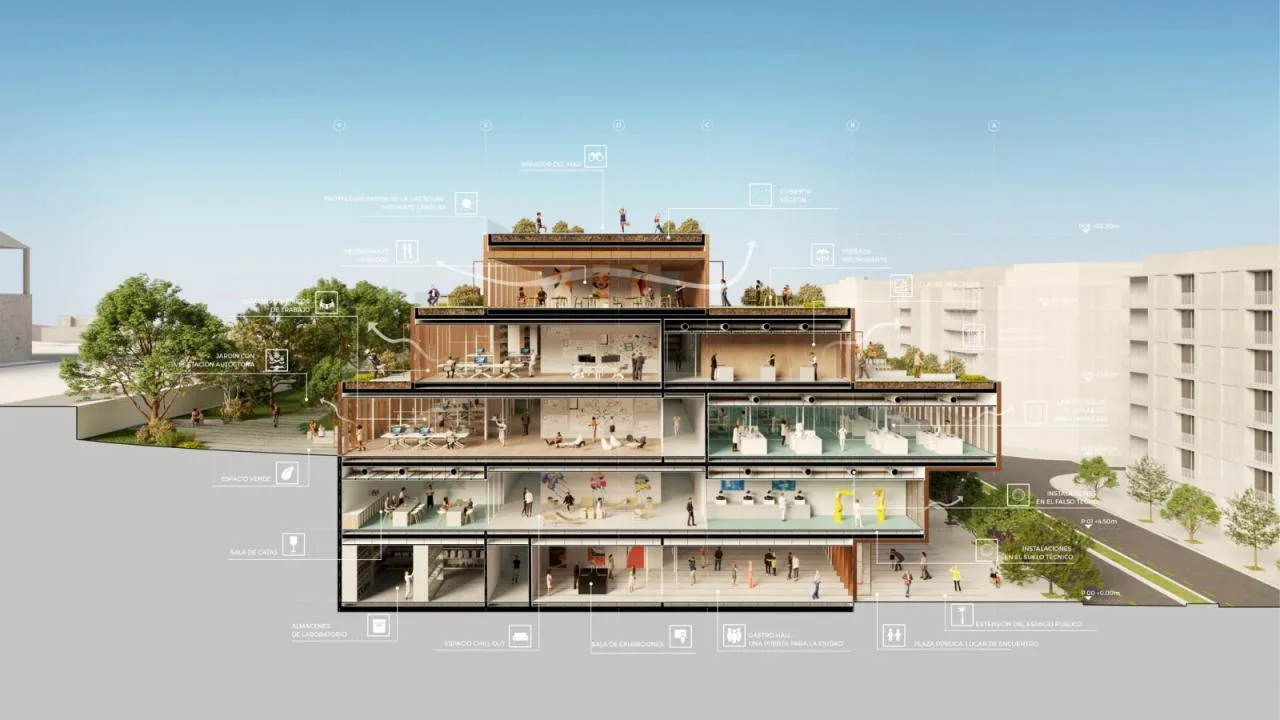
△ Sectional Perspective
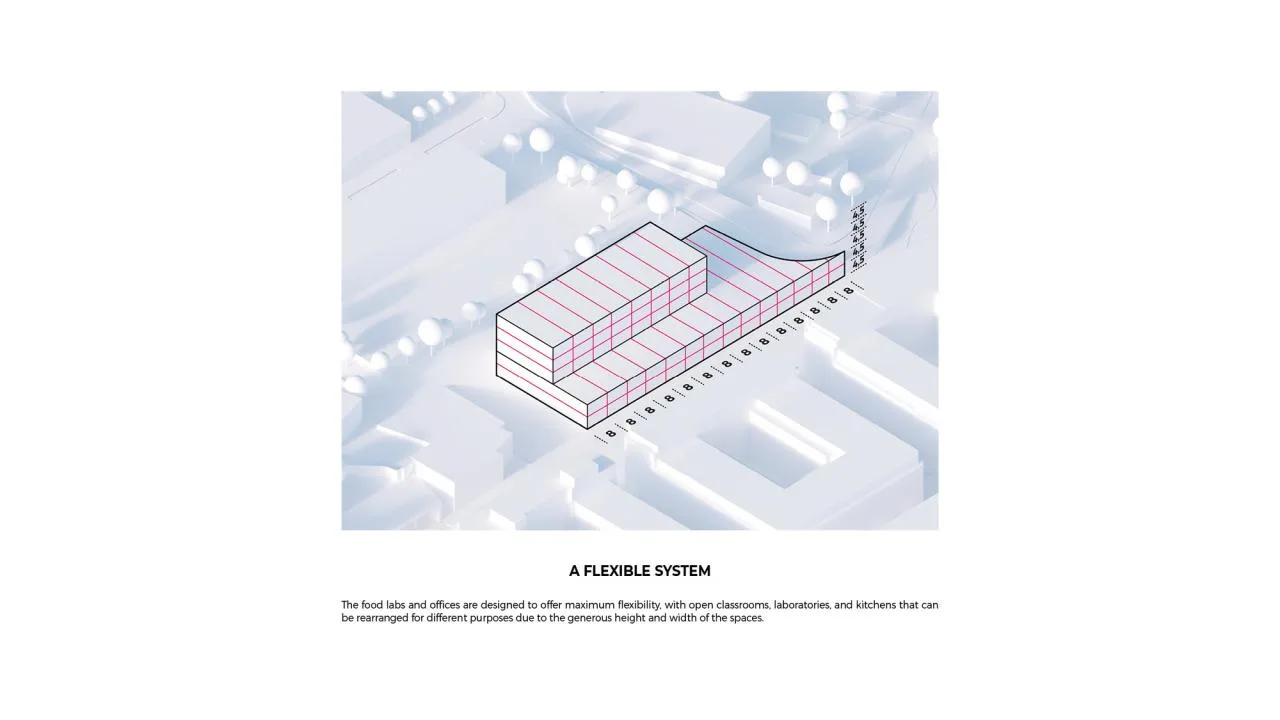
△ Analysis Chart
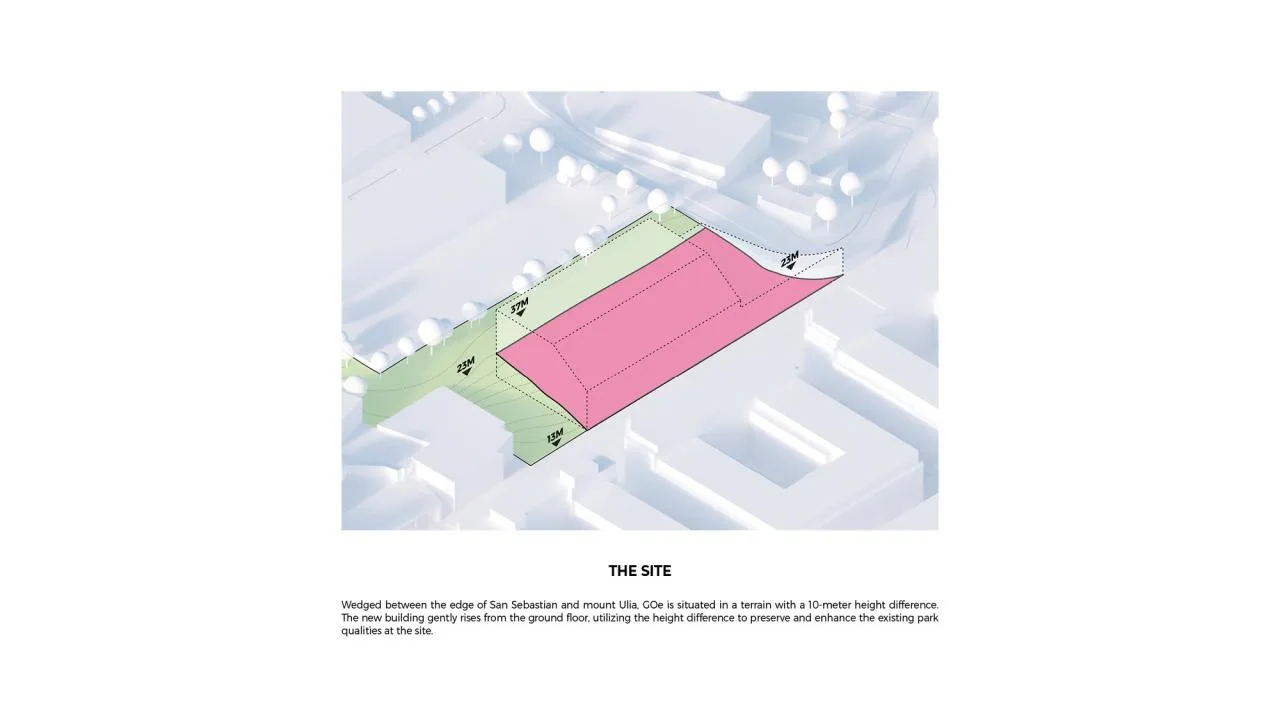
△ Analysis Chart
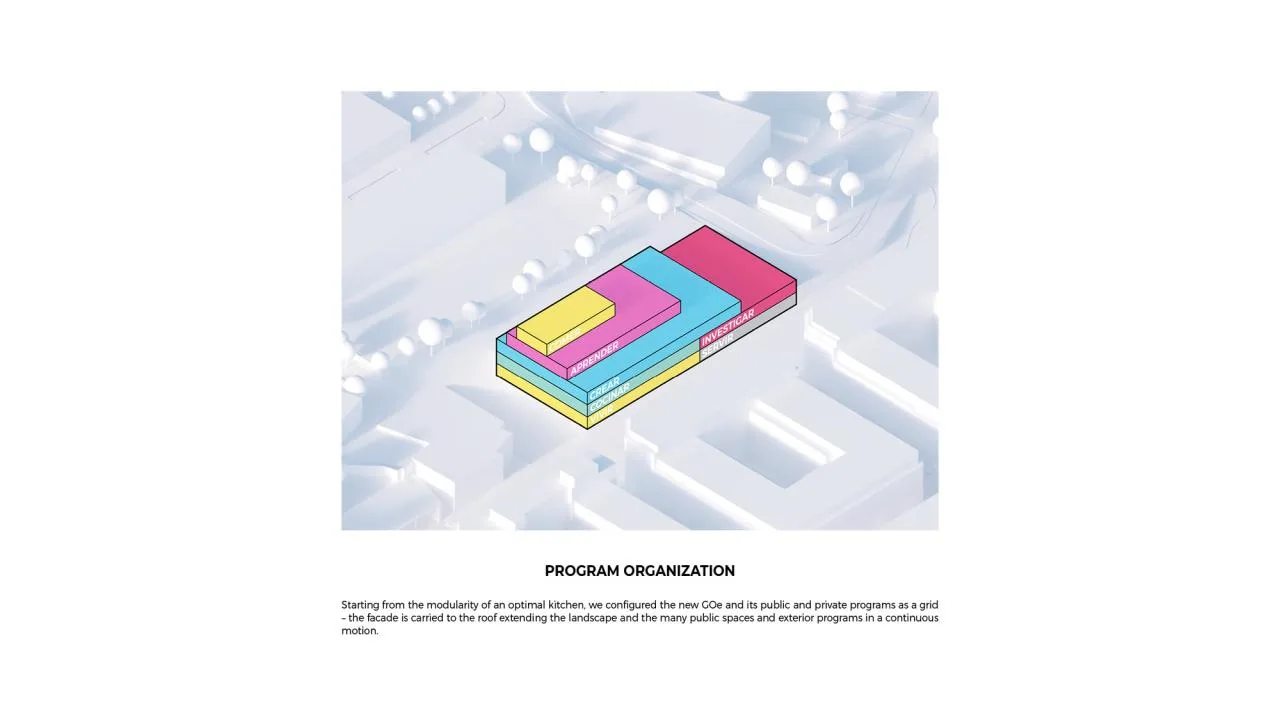
△ Analysis Chart
△ Analysis Chart
△ Analysis Chart
△ Analysis Chart
△ Analysis Chart
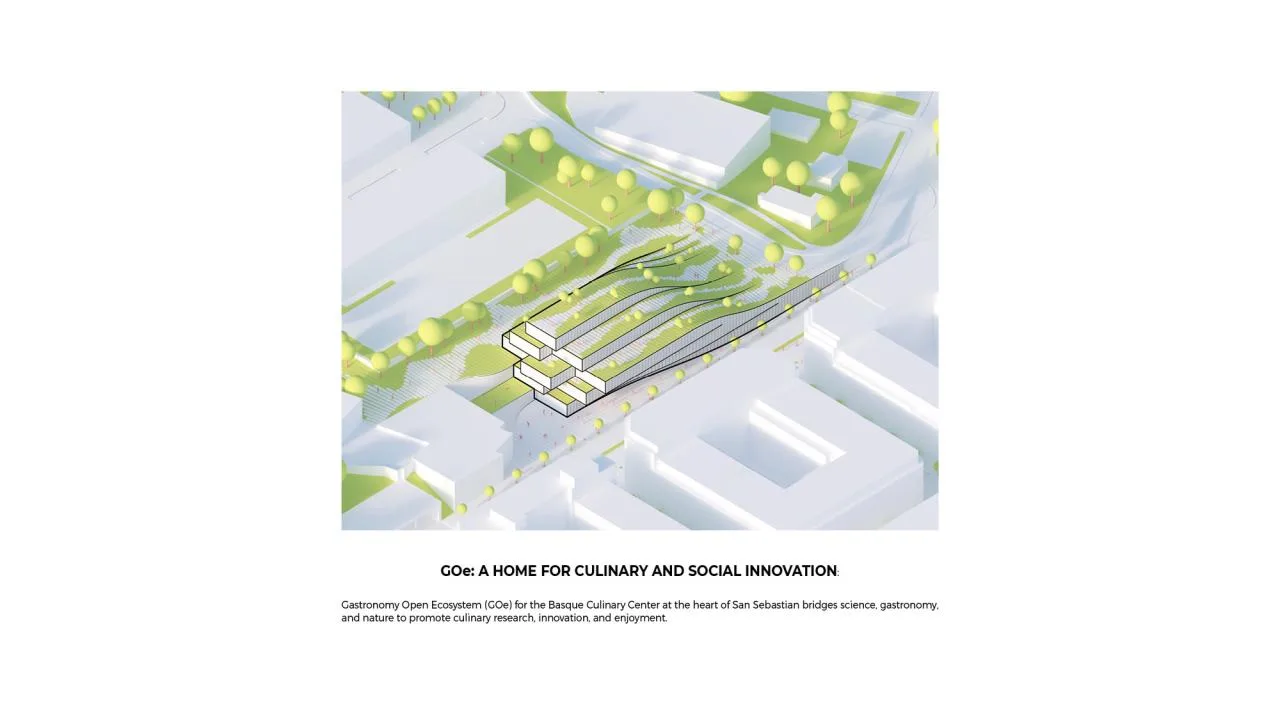
△ Analysis Chart
Project Information
Project Name: Olatuen Bidea – Camino de las Olas
Project Area: 9,090 square meters / 97,000 square feet
Client: Basque Culinary Center
Project Location: San Sebastian, Spain
Partners: Gleeds (cost consultants), Tricon (kitchen consultants), Play-Time & Fusao (Visuals)
Partners at BIG: Bjarke Ingels, João Albuquerque
Project Manager: Matthew Reger
Design Team: Gonzalo Coronado, José Gómez, Klaudia Szczepanowska, Natalia Politano, Pietro Saccardi, Hanna Johansson, Wiktoria Kolakowska
BIG Landscape Design: Laura Font Gallart
BIG Engineers: Andrea Hektor, Johan Lindqvist
BIG Sustainability: Tore Banke, Cosmin Paduraru












Must log in before commenting!
Sign Up