
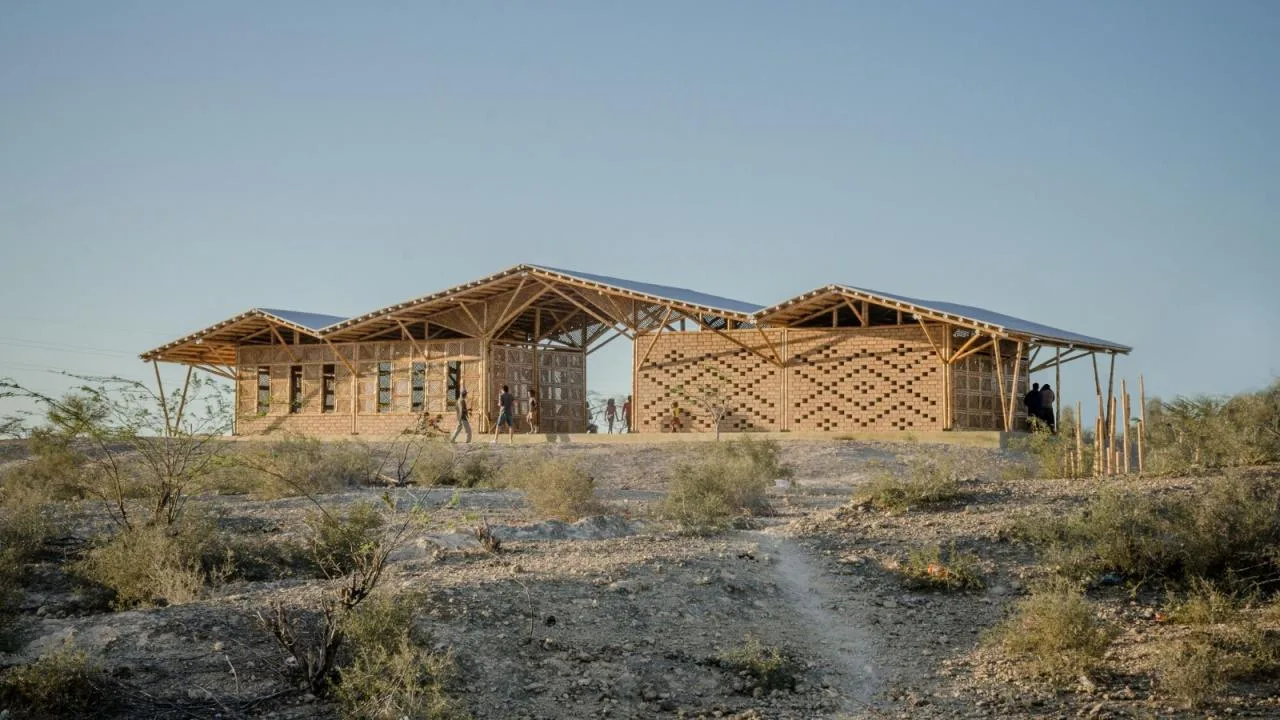
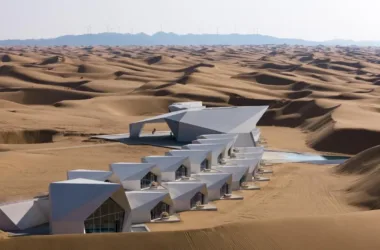
The Walirumana Ethnic Education and Entrepreneurship Center is situated 20 kilometers north of Uribia, La Guajira, along the road to Puerto Colombia. The Wayuu communities here face complex social challenges due to the region’s extension into the Venezuelan desert, which limits the normal development of their indigenous culture.
Economic difficulties, scarce production and consumption opportunities, and a lack of communication and infrastructure hinder access to basic services. These combined factors lead to extremely challenging living conditions.
The center is grounded in three core pillars: education, development, and basic social assistance. These are essential to the Proyecto Guajira initiative’s mission to foster real change within the community. To support this, designers created a multifunctional building designed to serve various communities in Guajira by providing adequate space for these activities.
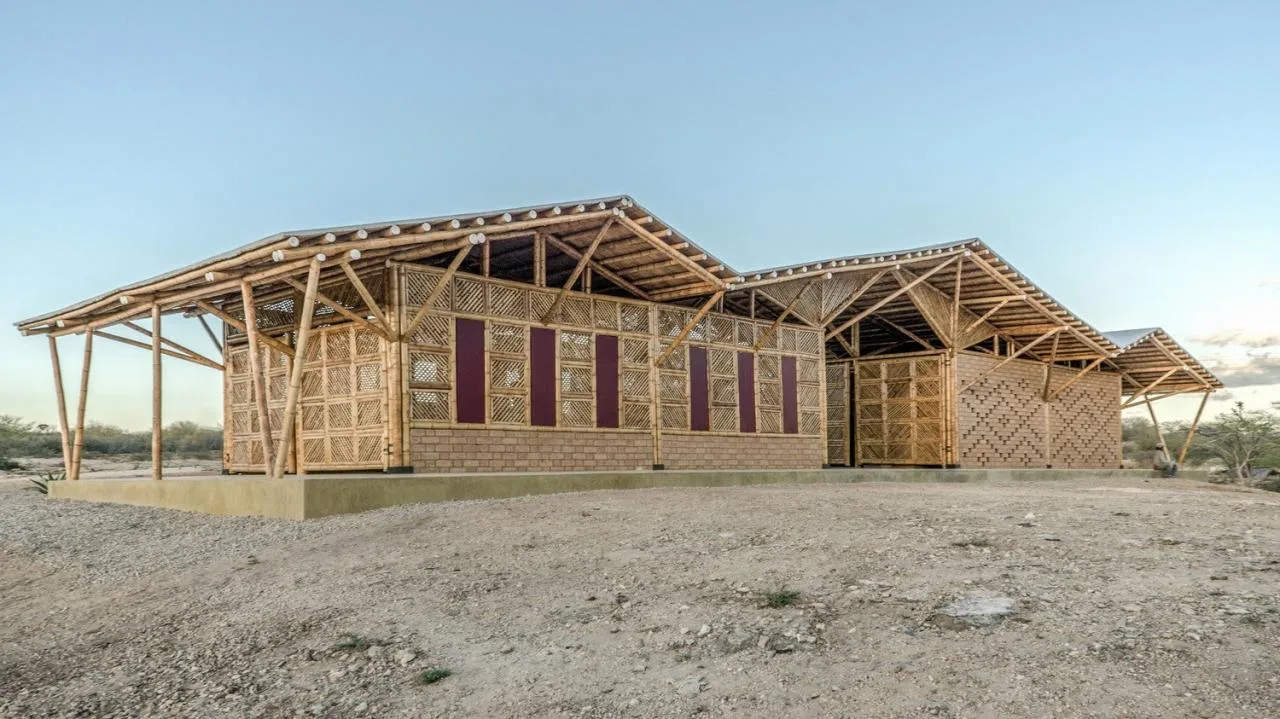
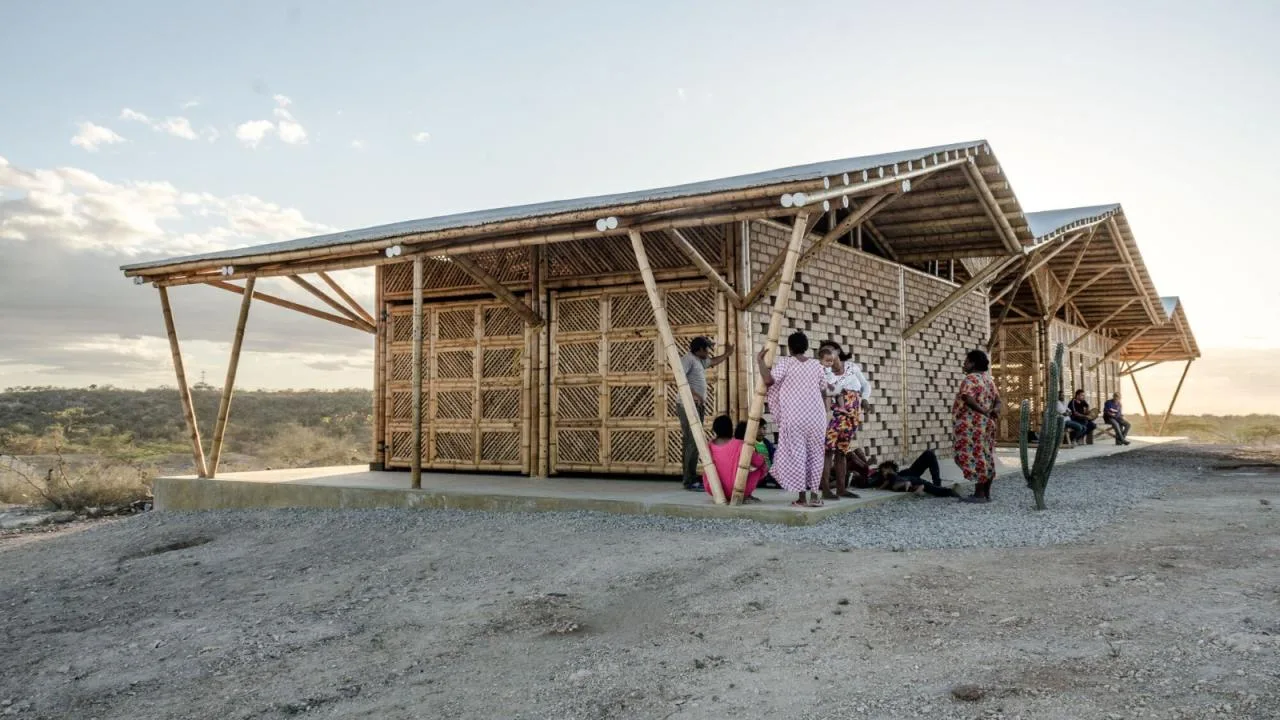
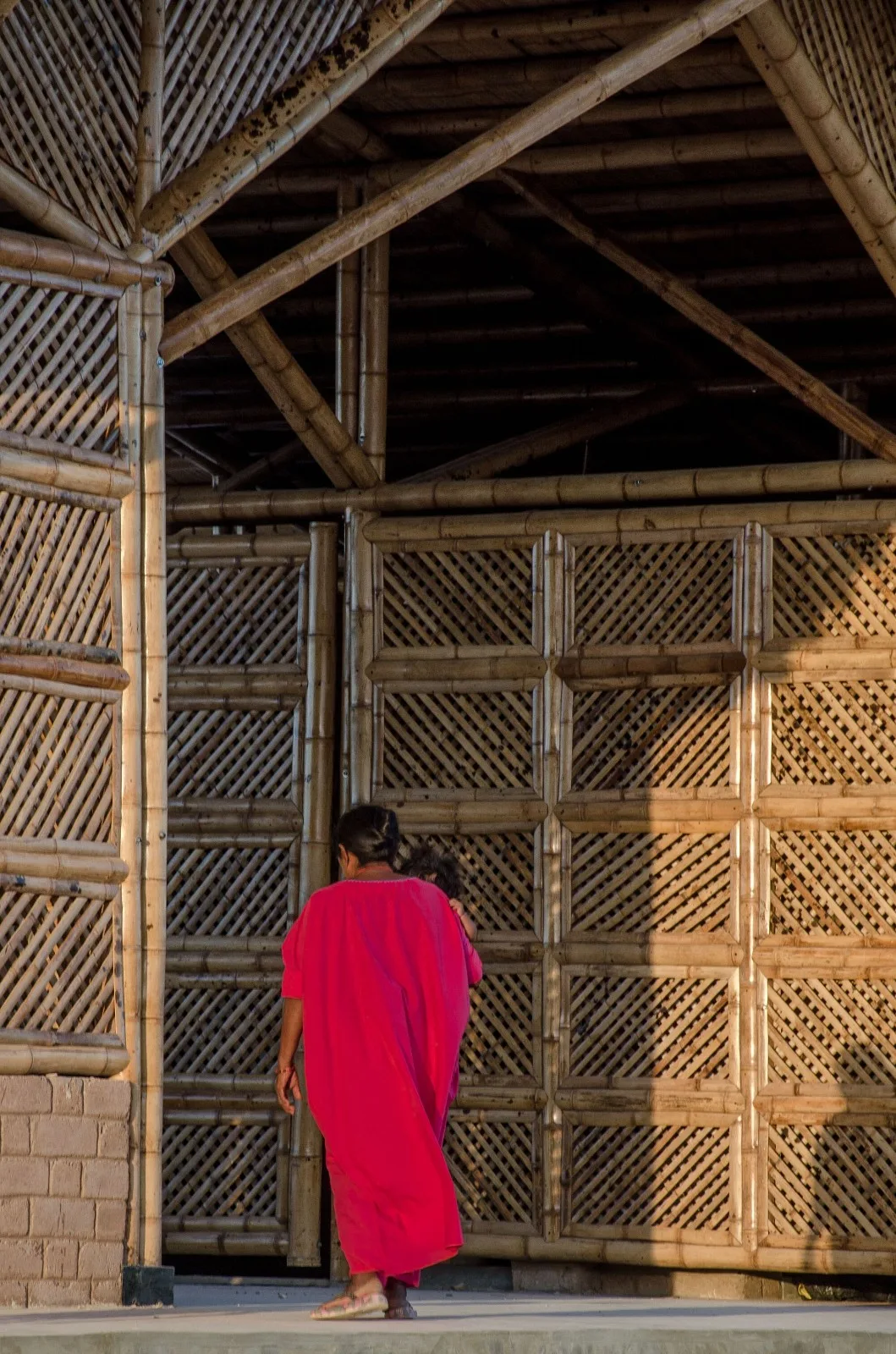
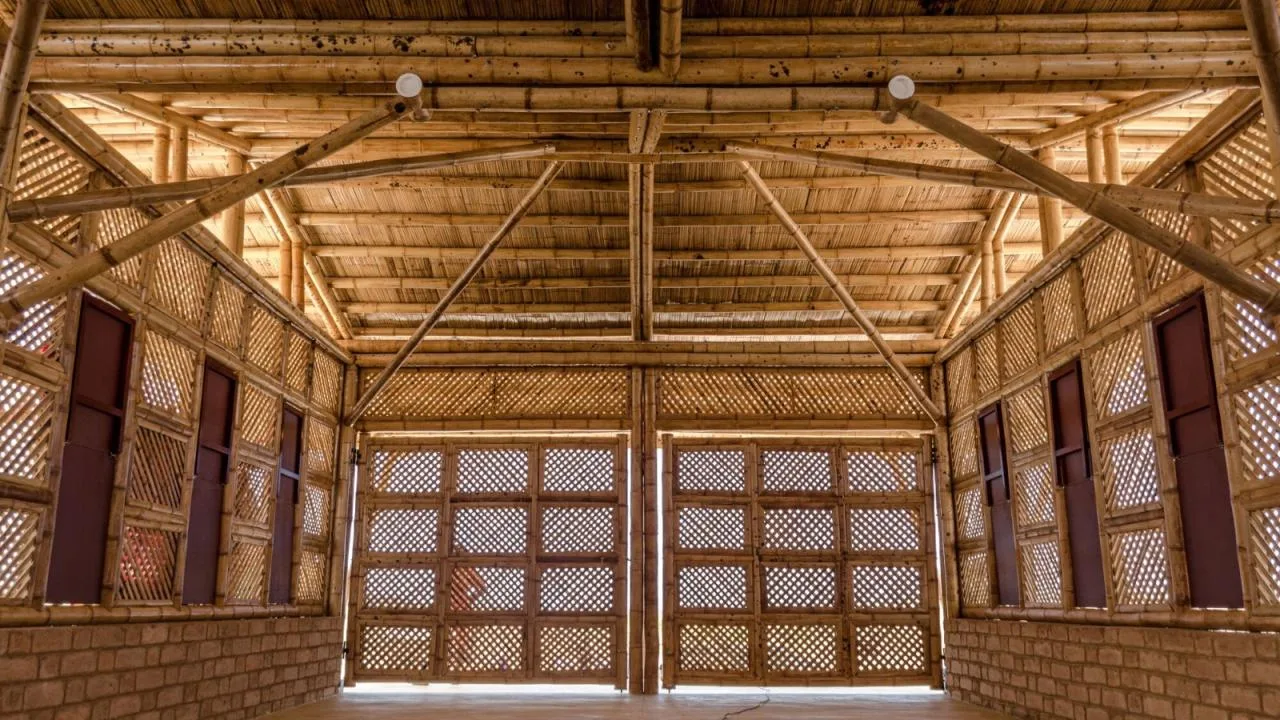
The center’s flexible design allows it to accommodate different activities and audiences at varying times. Revolving doors located at both ends and the center of the building enable the interior to be adapted for specific uses.
When all modules are closed, the space functions as a classroom for up to 50 students along with an auxiliary room for 12 people, which can also serve as a library. Conversely, opening the central module connects this main area to the kitchen and water dispenser, transforming it into a restaurant.
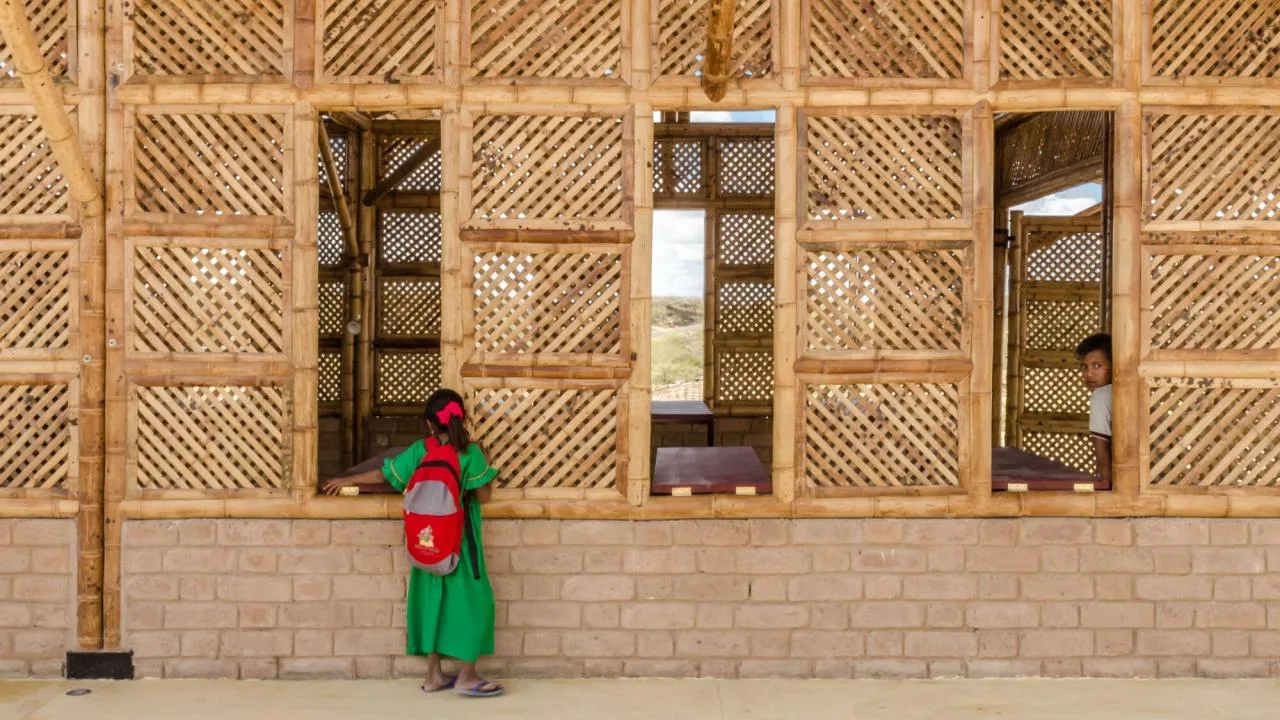
In both configurations, colorful “windows” lower from the Guadua plant walls to become desks or dining tables. Additionally, when the kitchen module is closed, the entrepreneurship center operates outdoors under tree shade, providing locals with an open space to practice their crafts.
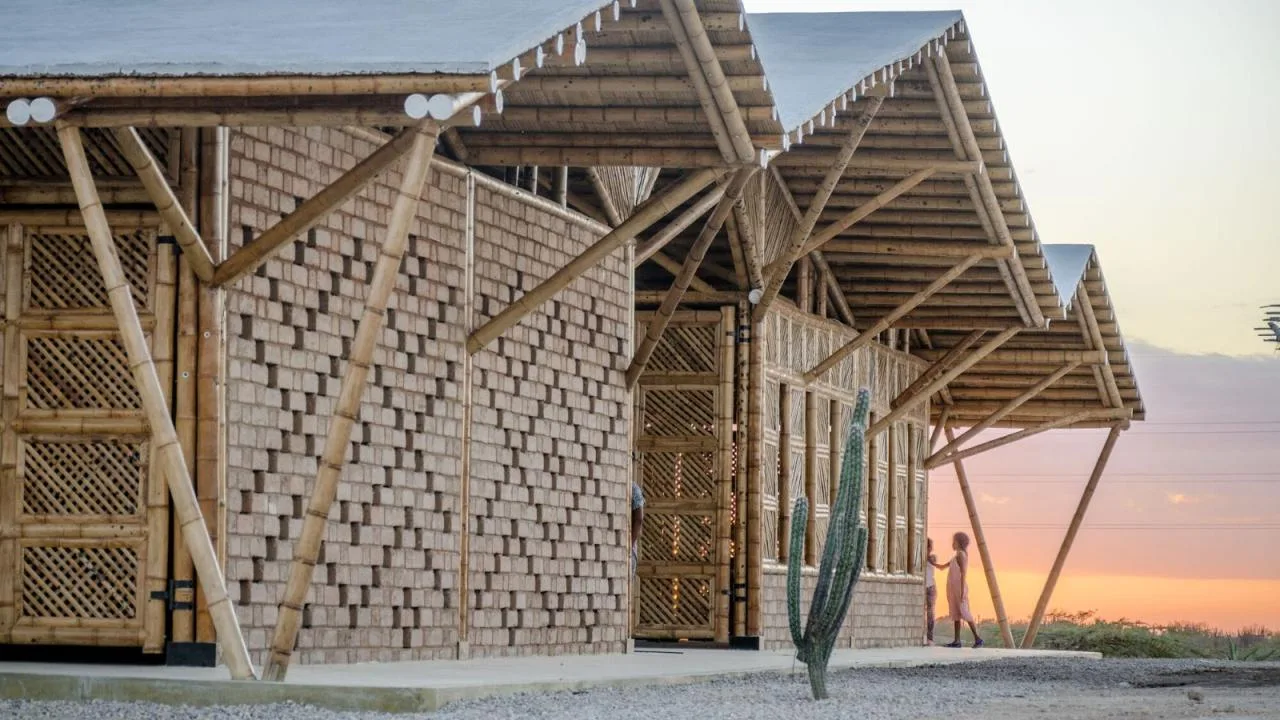
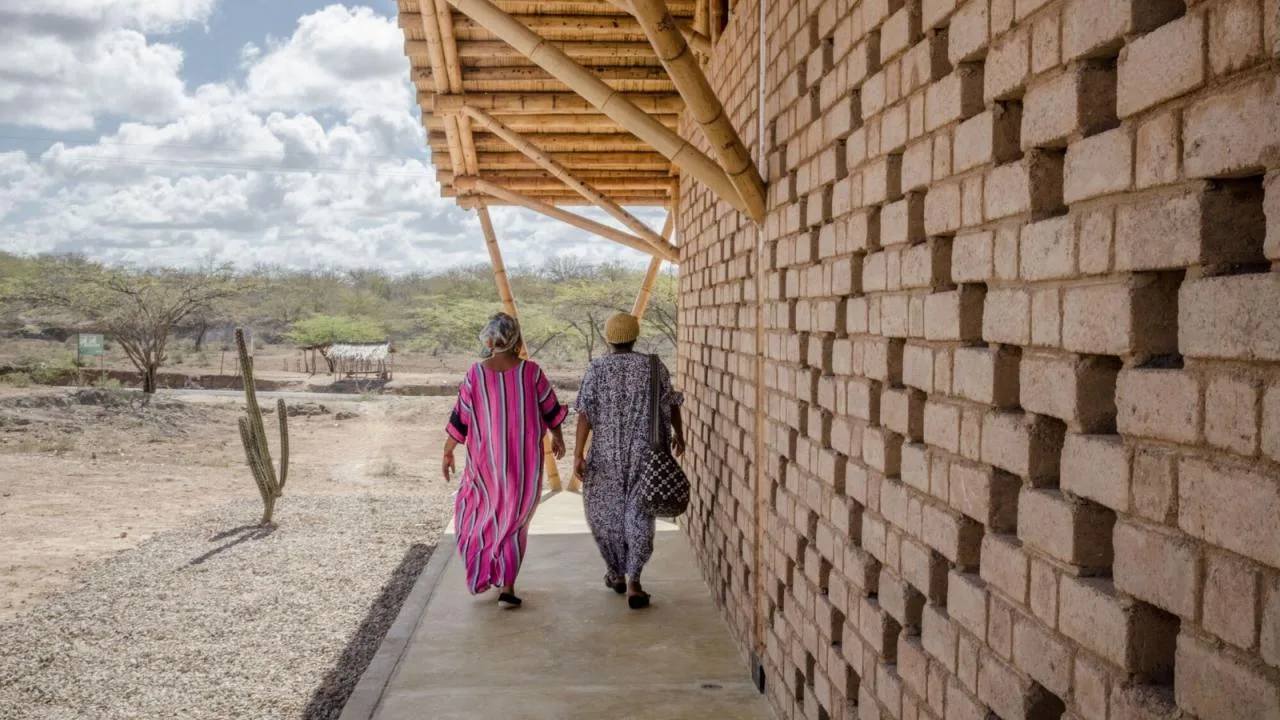
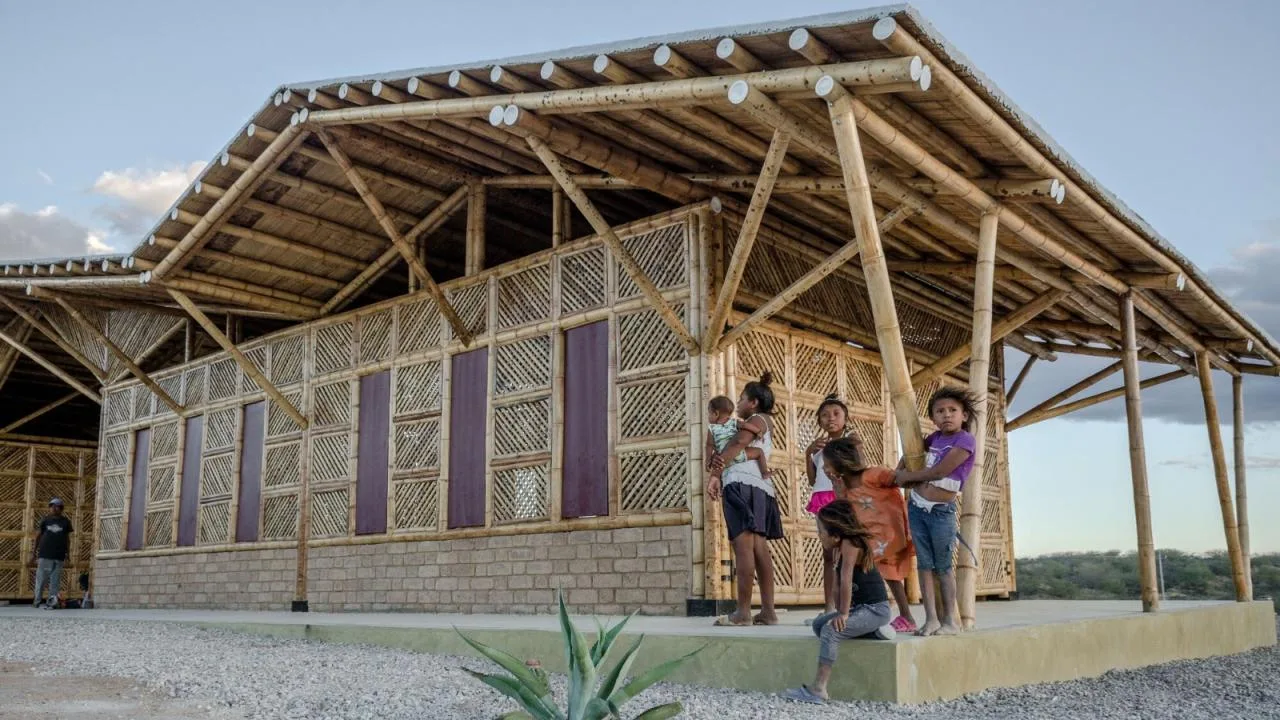
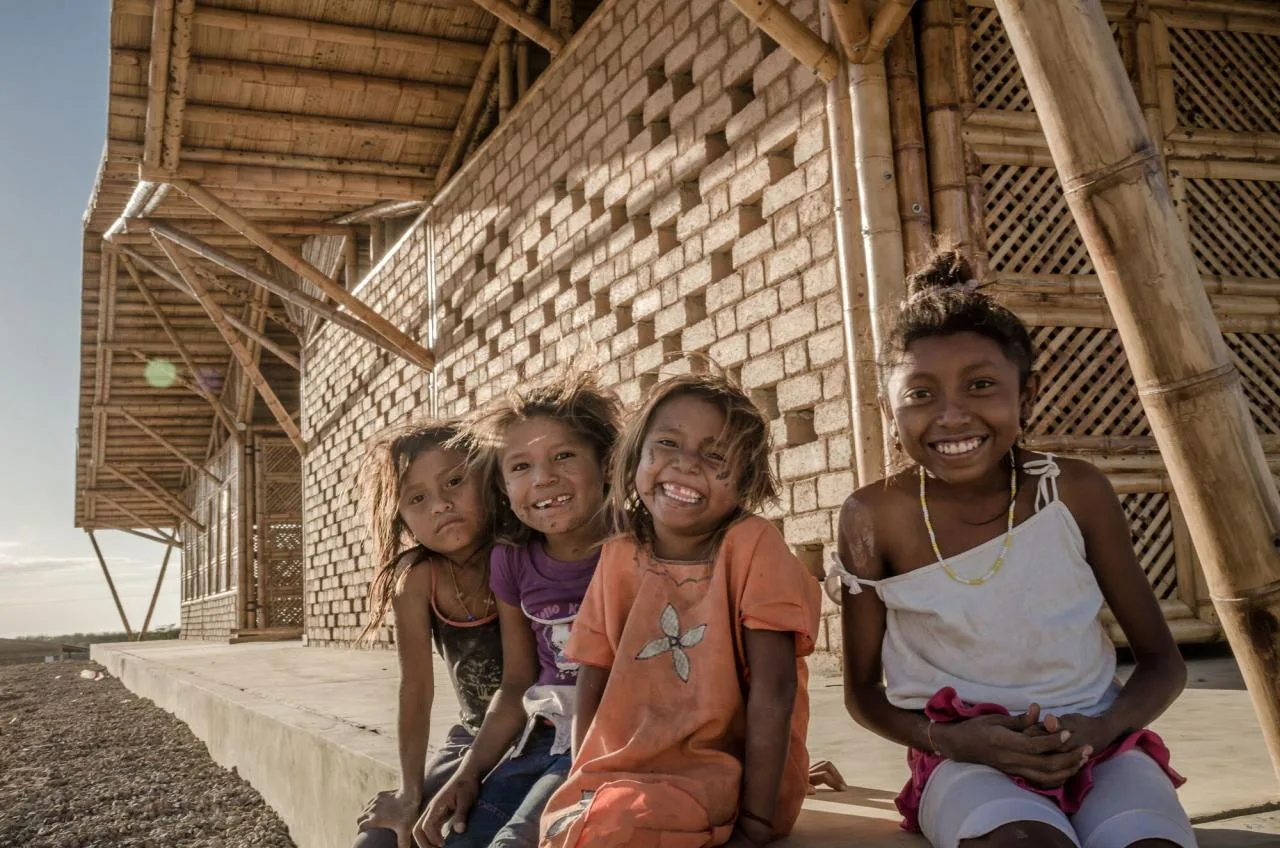
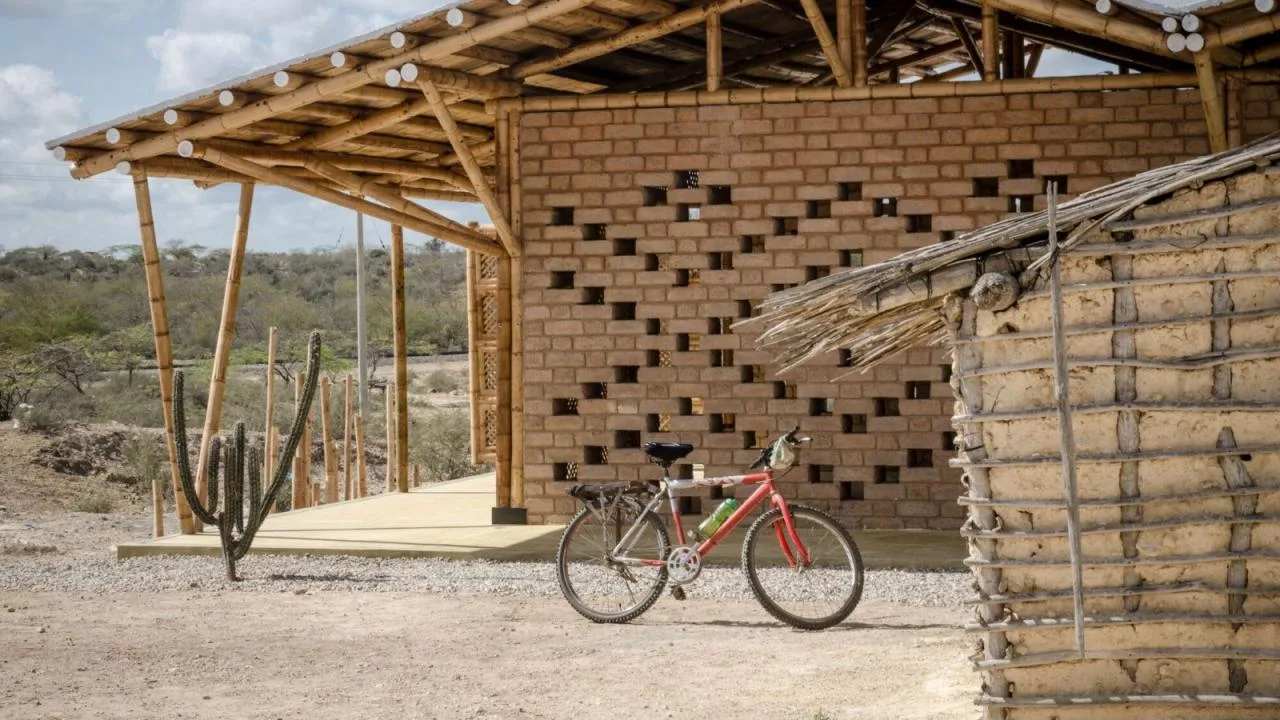
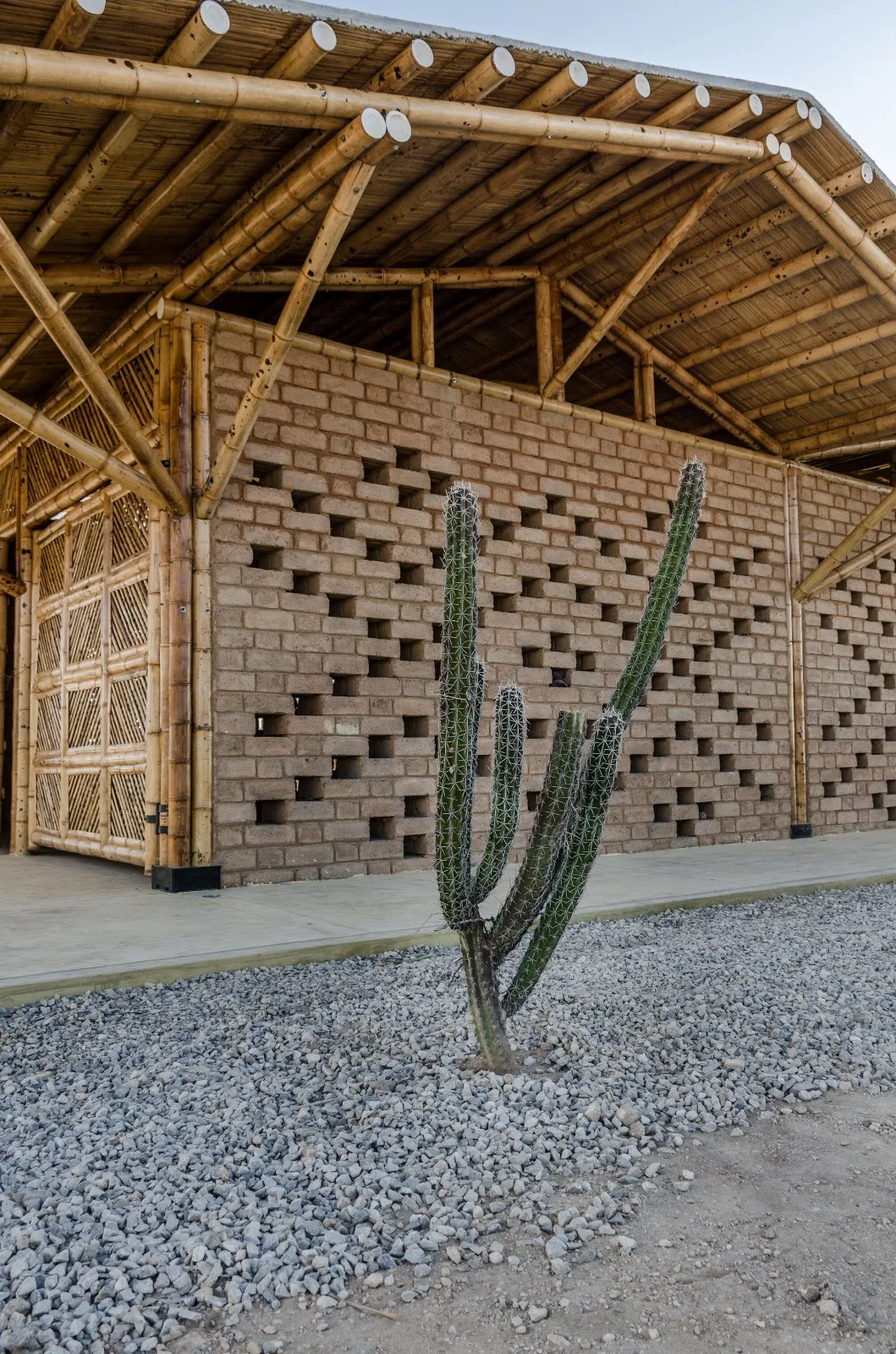
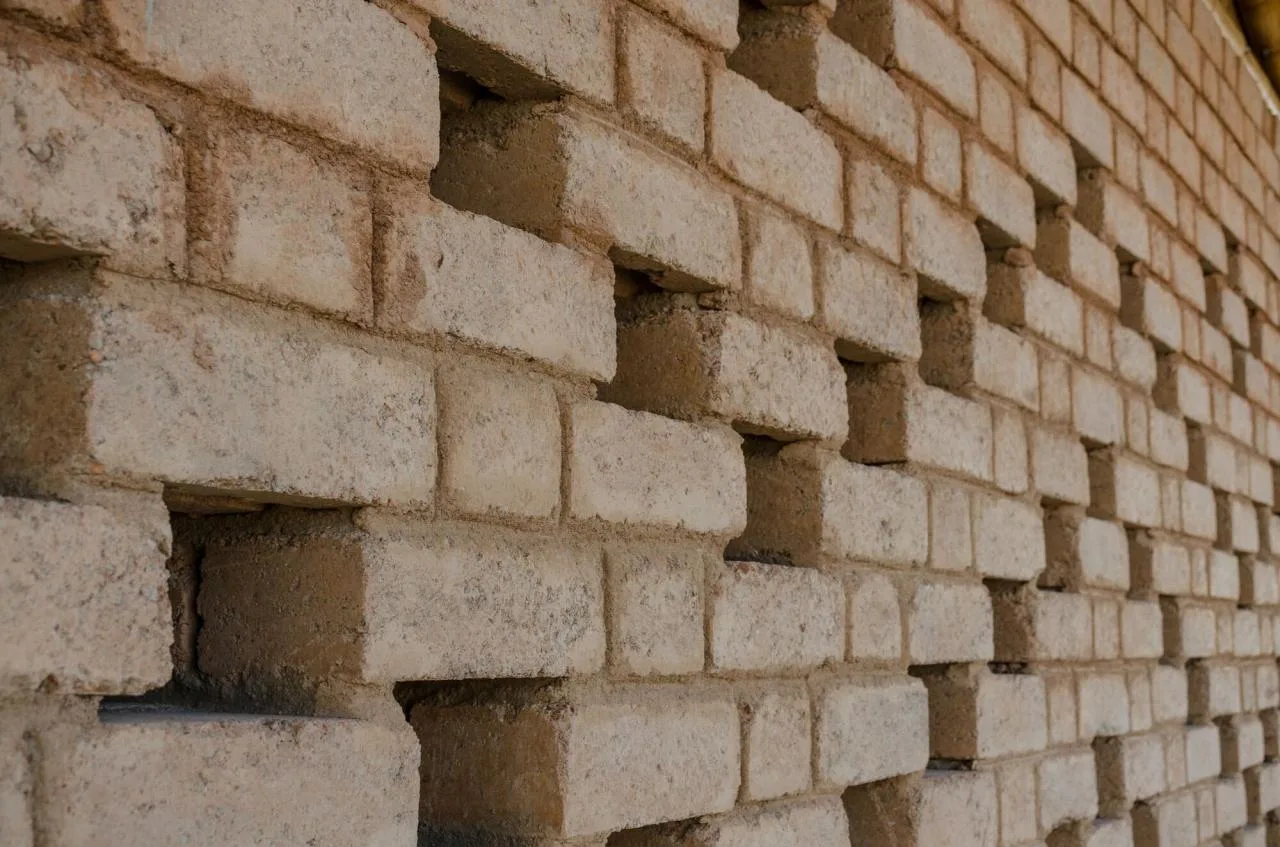
The architecture reflects many elements of Wayuu collective memory. Like local buildings, the school primarily uses soil as its main material, but it innovates by employing compressed soil blocks.
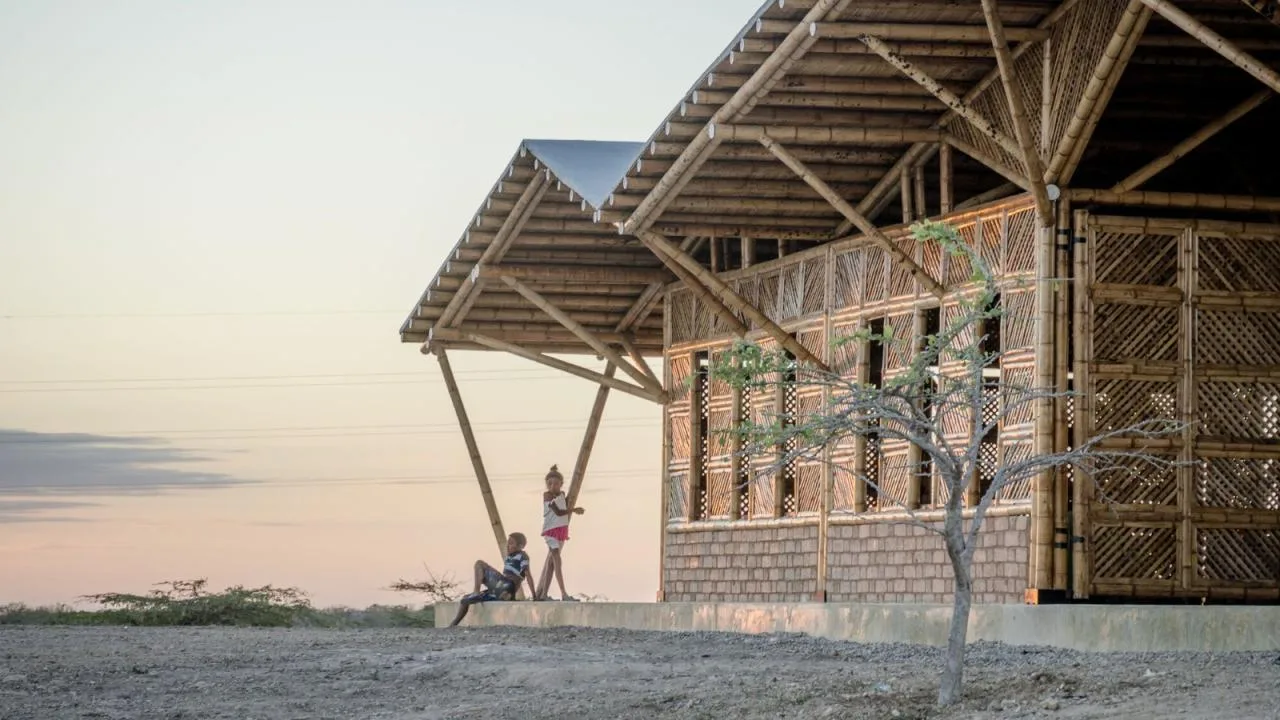
This approach creates wall grids that allow ventilation and incorporate traditional Wayuu patterns. The folding ceiling design echoes the towering desert peaks, which serve as important landmarks and hold deep cosmological significance for the Wayuu people.
Moreover, the Guadua texture on the main hall walls reinterprets local architectural patterns. Over time, the internal framework of bahareque (a traditional plastered fence wall) gradually becomes visible.
Project Drawings
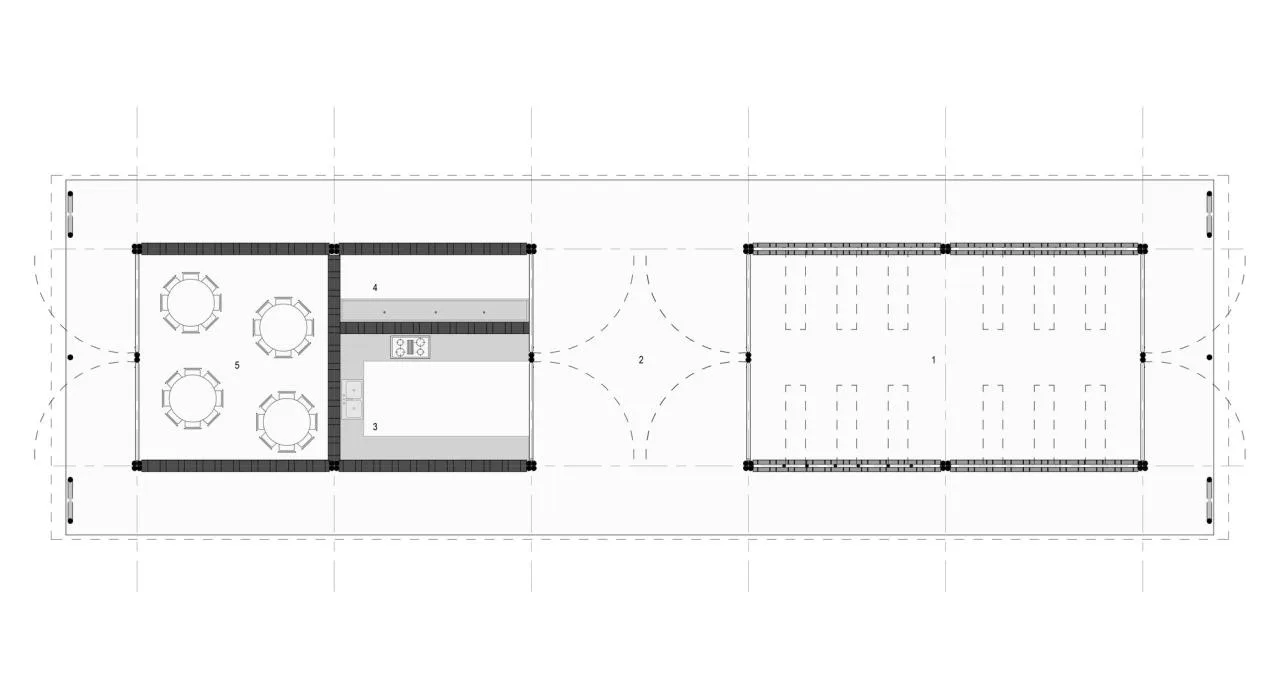
△ Plan View
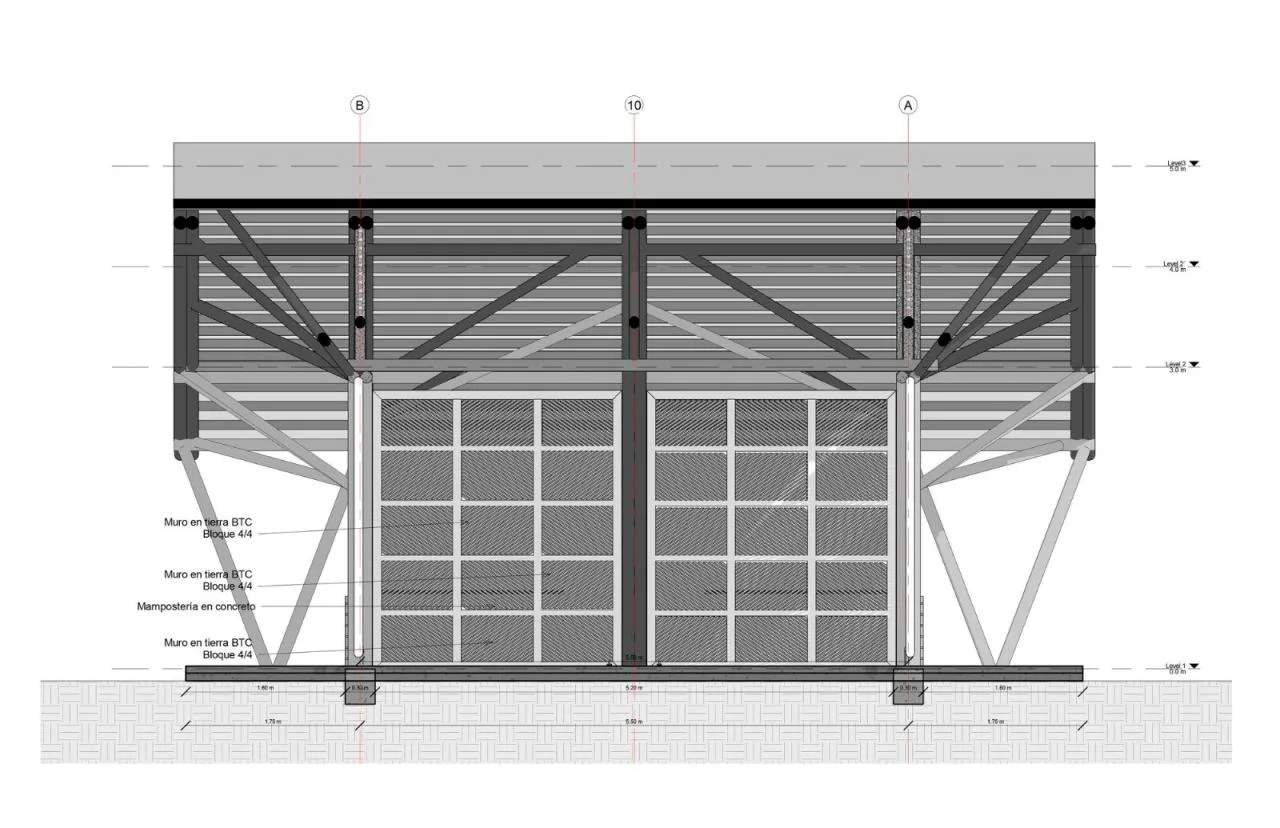
△ Section Diagram
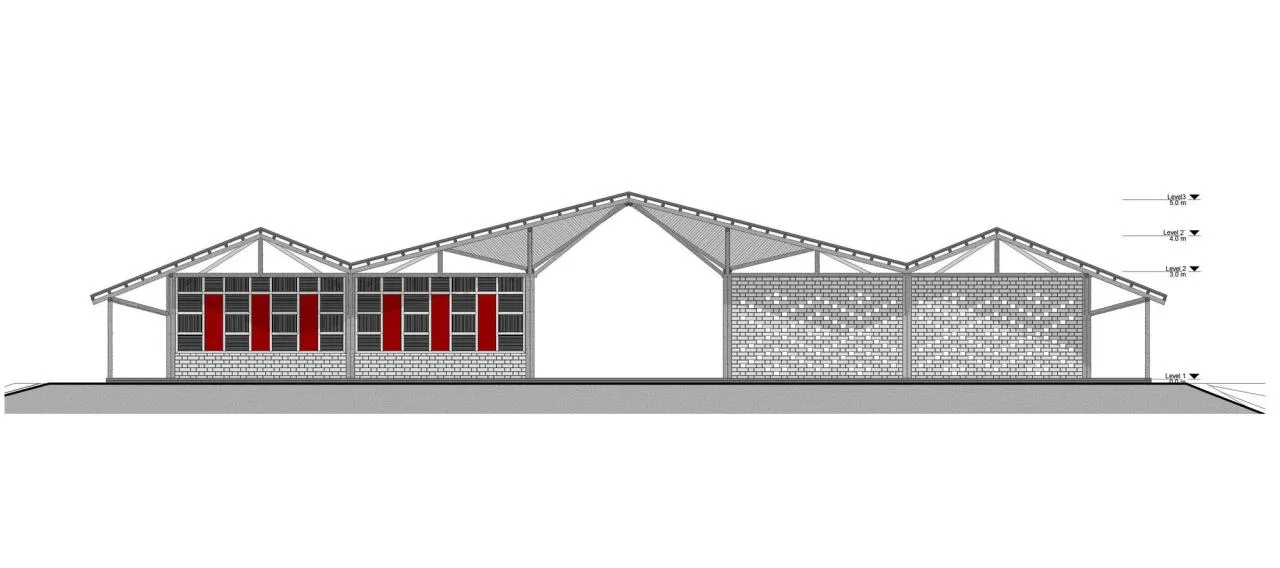
△ Elevation Drawing
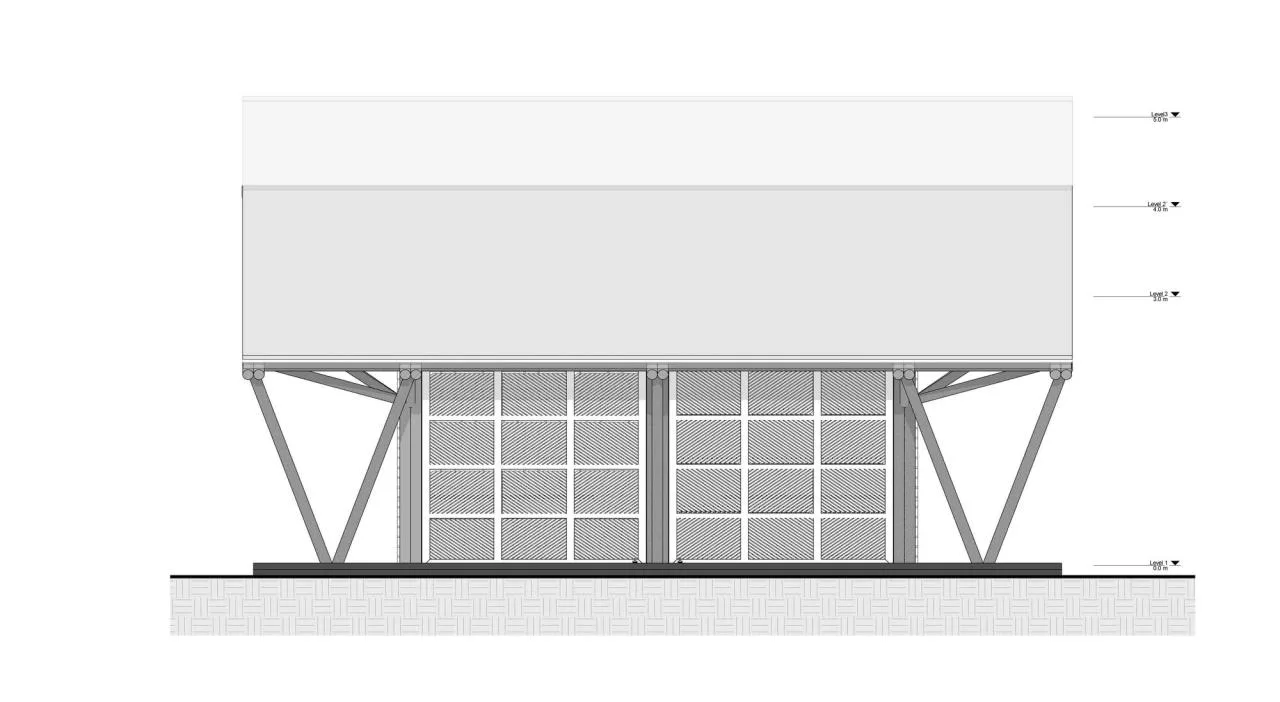
△ Elevation Drawing
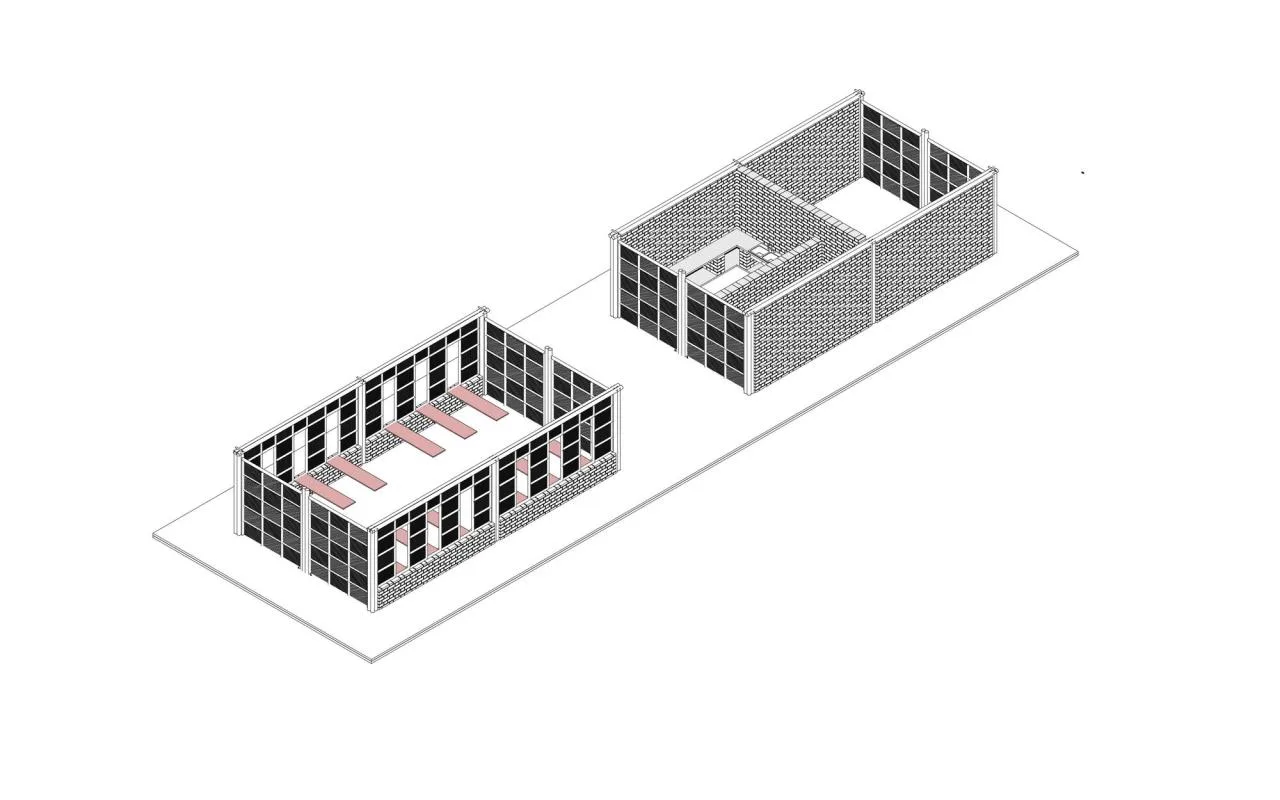
△ Spatial Schematic Diagram
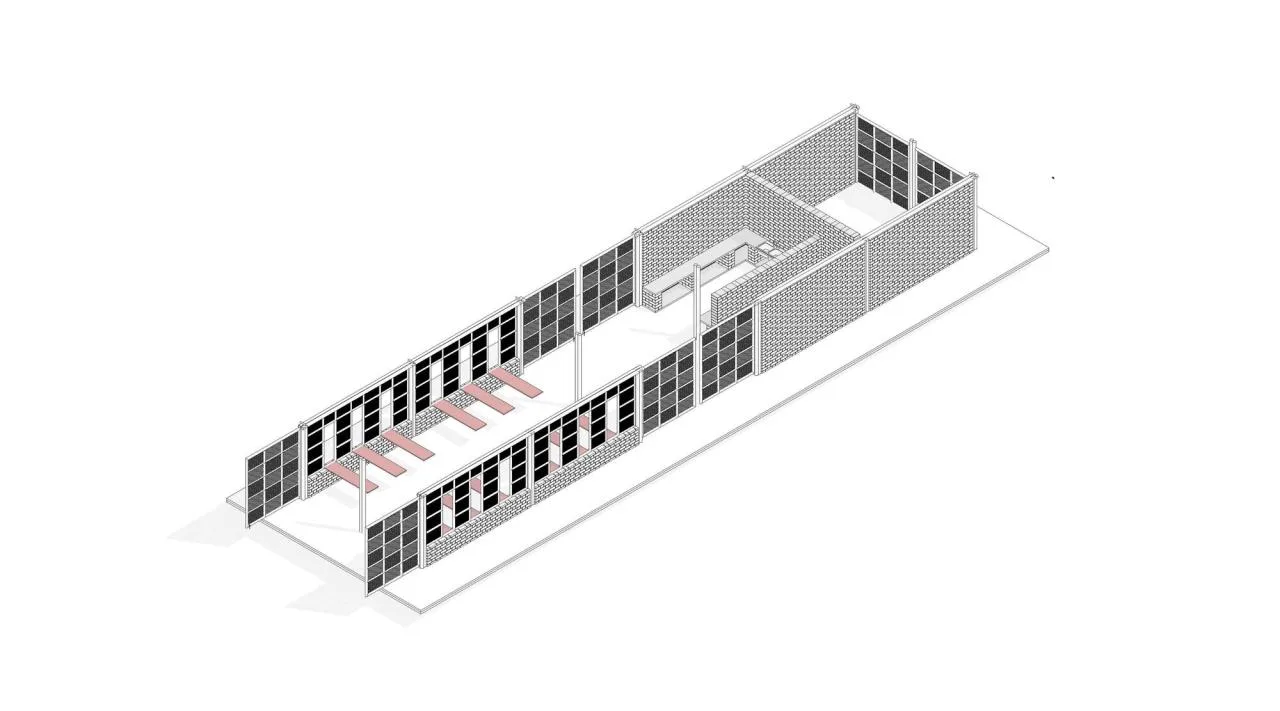
△ Spatial Schematic Diagram
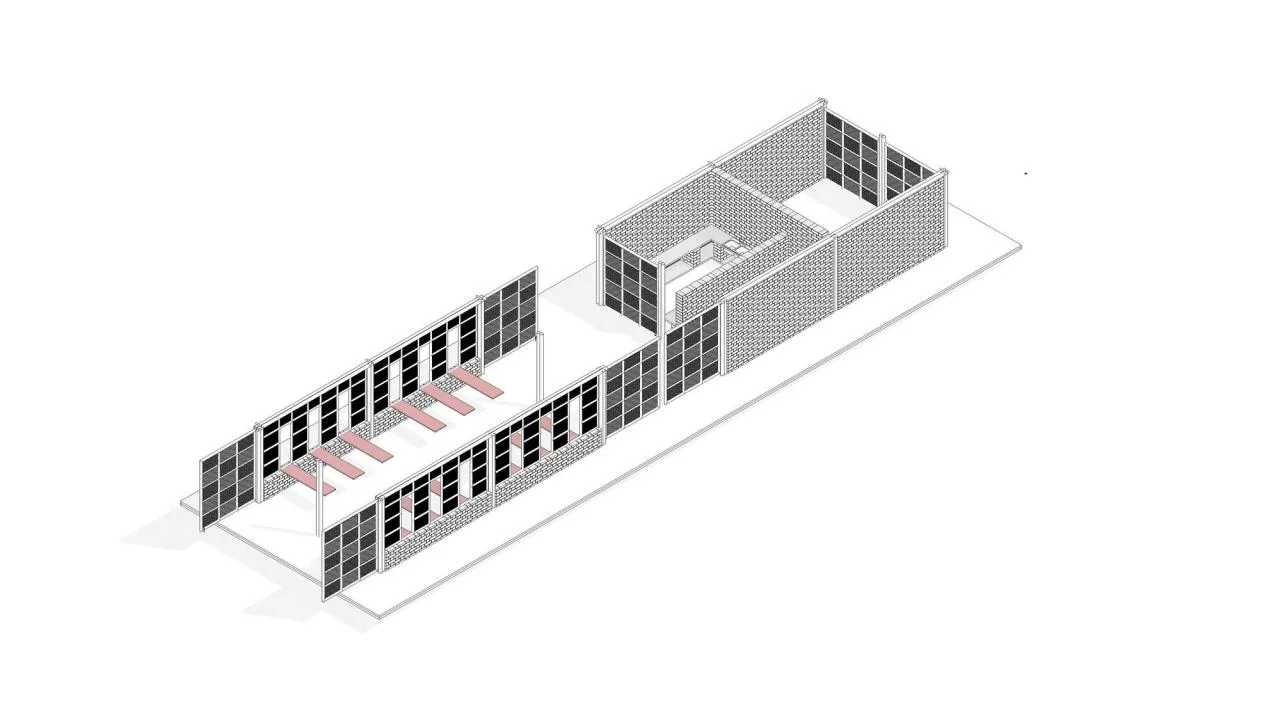
△ Spatial Schematic Diagram
Project Information
Architectural Design: Salba
Project Year: 2020
Manufacturer: Terratec
Lead Architect: Juan Salamanca Balen
Principal Organization: Proyecto Guajira (NGO)
Construction Contractor: SyC Construcciones Livianas
Onsite Construction Consultant: TierraTEC












Must log in before commenting!
Sign Up