
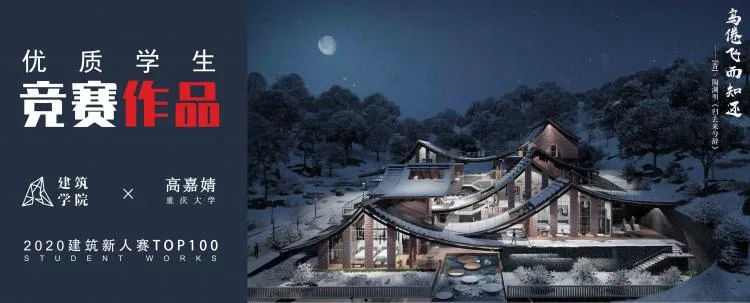
Centering on Travel and Accommodation, this project integrates in-depth research on travel demands and residential behaviors with an analysis of site relationships and the natural environment. It weaves together cultural experiences and exchanges to anchor residential spaces with their users. The focus lies on designing core living areas and creating public communication spaces within hotel-like buildings, all set within the context of the human living environment.
Award-Winning Works and Authors
Exploration of the Land and Site Management
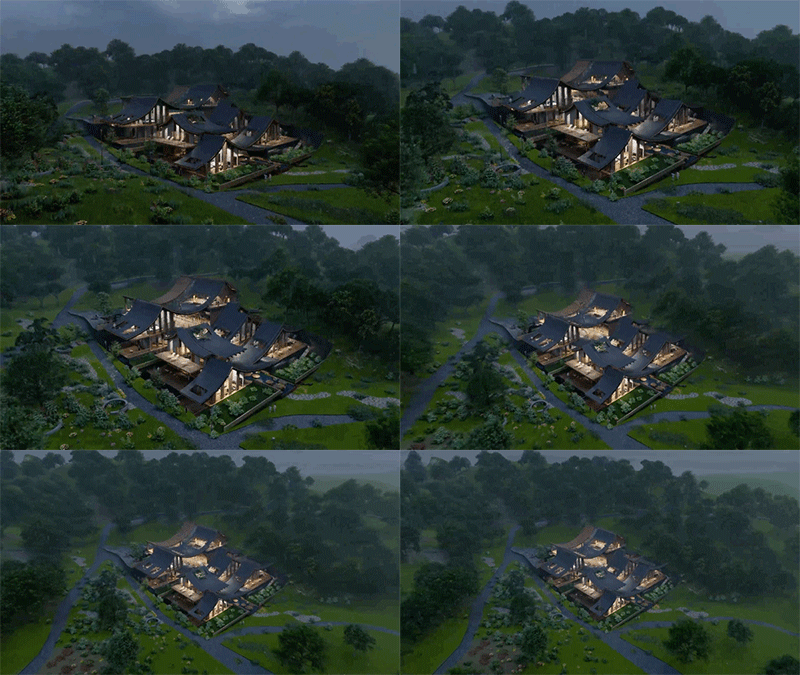
When I received the design brief during the pandemic, although teachers and senior students provided numerous site photos and aerial views, nothing compares to the depth of field research. Luckily, I had volunteered at the National Forum for Undergraduate Students in Architecture last year, which allowed me to visit a small village that left a lasting impression.
Opening the brief to design a Mountain Hostel was exciting. As someone who never misses a chance to travel, it was uplifting to imagine going on an outing or a long journey during such a unique time.
Daydreaming is part of my daily life, so I envisioned myself as a Sanhe Village resident who wears multiple hats (client, designer—both me!). My goal was to design a homestay that not only creates jobs for neighbors but also stimulates the village’s other industries, doubling its economic benefits.
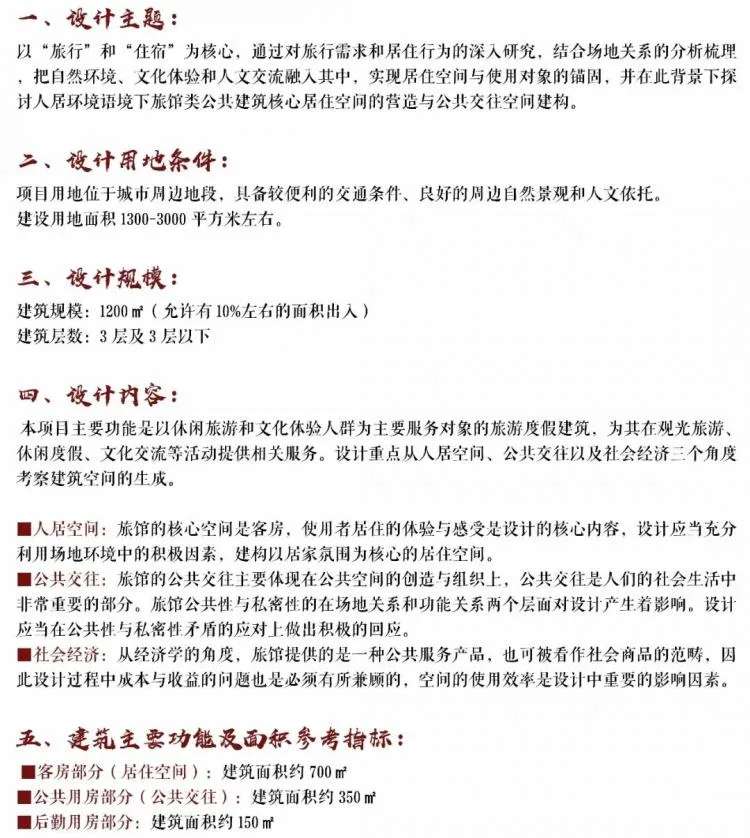
Overview of the Task Brief
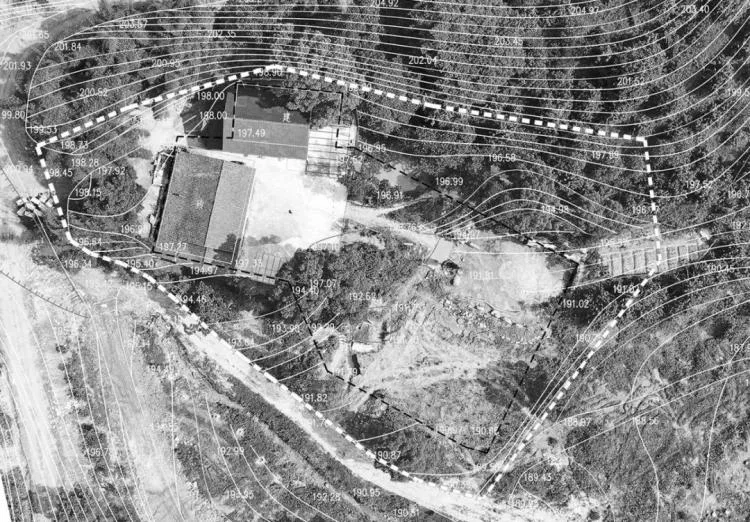
The site is located on a mountain in Sanhe Village, Chenjiaqiao Town, Shapingba District, Chongqing, near the only earthenware factory in Chongqing’s main urban area. Established in the 1990s, the pottery factory’s business has declined since 2002, leading to an aging and shrinking village population.
Recently, thanks to the establishment of kilns, cultural centers, Sanhe teahouses in remote mountains, self-media promotion, and government rural revitalization plans, tourism has increased significantly, bringing new energy and vibrancy to the village.
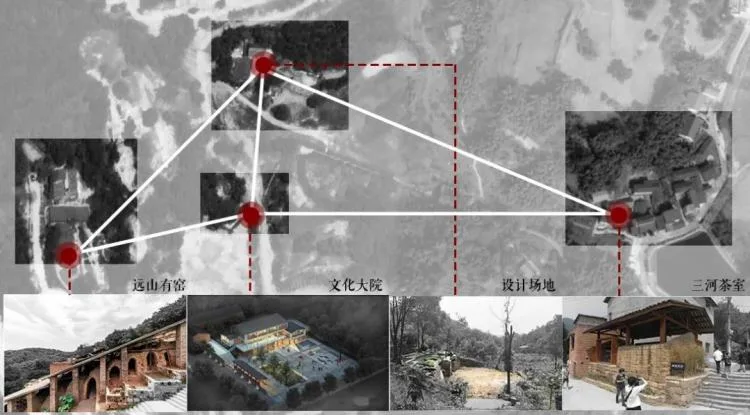
Surrounding Buildings
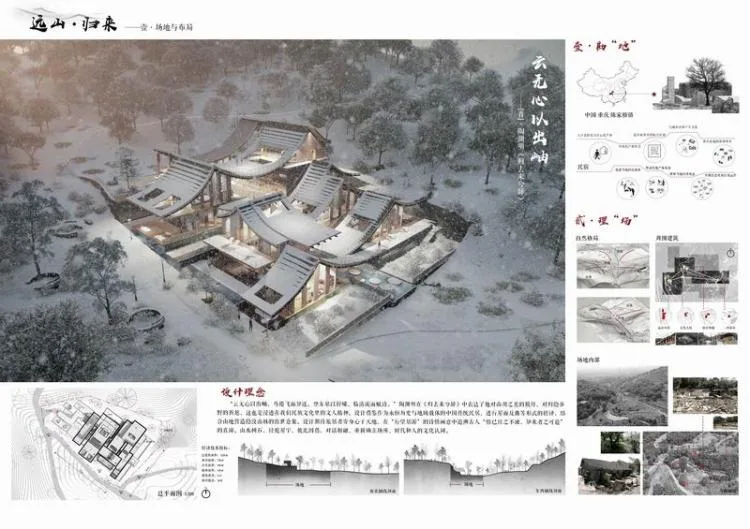
Our village offers two land options. One is narrow and near a distant mountain kiln, a popular but challenging choice for most students. I opted for the other: a depression surrounded by mountains, hidden in dense forests, backed by steep slopes planted with fruit trees. The distant view features rolling mountain ranges and a nearby stream. This natural, open layout offers fewer restrictions, allowing more creative freedom.
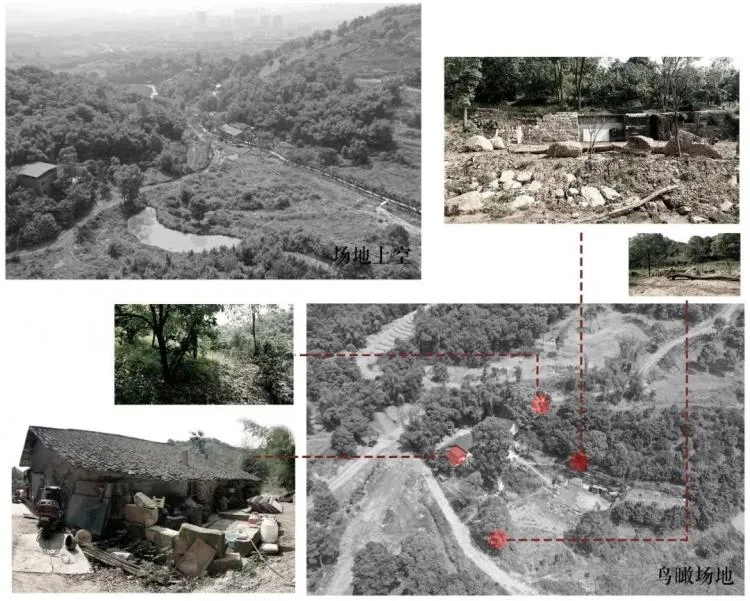
△ Realistic scene of the site environment
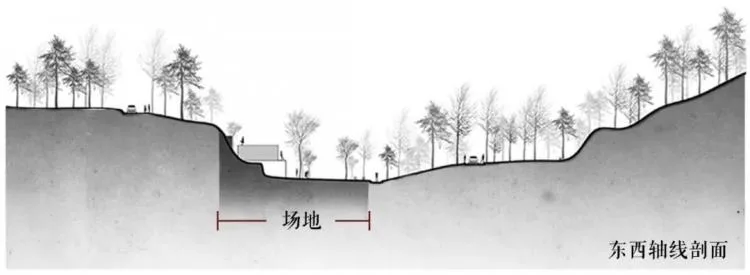
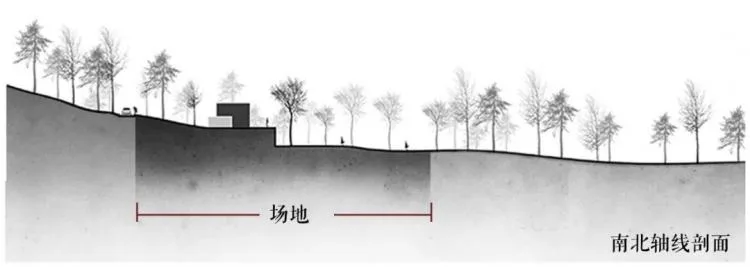
△ Site axis section
The site is backed by tall mountains with three main landscape directions. By dispersing building volumes and orienting them perpendicular to each other, the views become more balanced, and the roofs can be woven in an orderly manner.
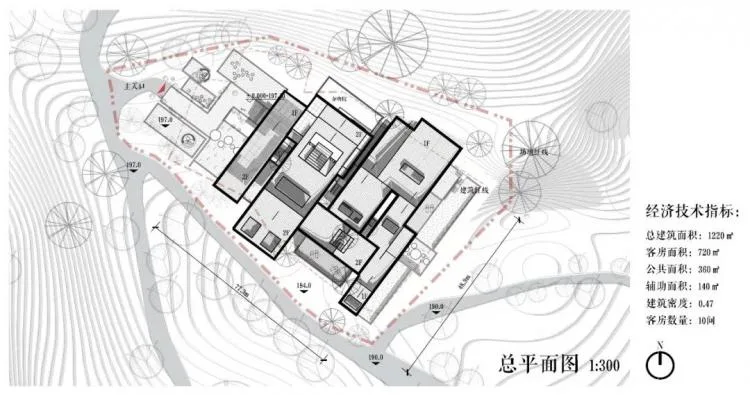
△ General layout plan
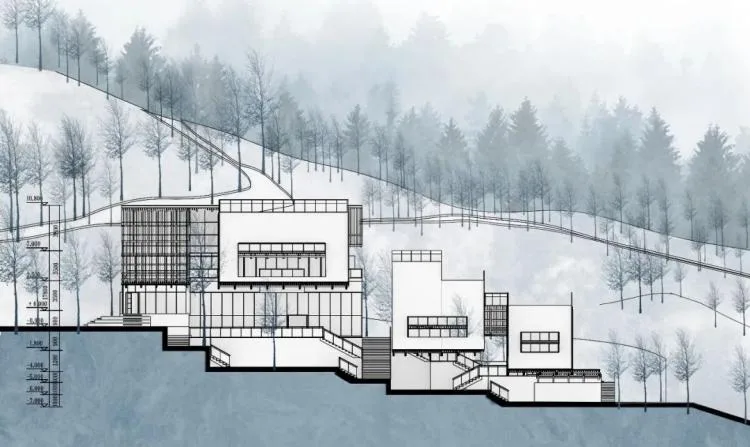
△ Section 1-1
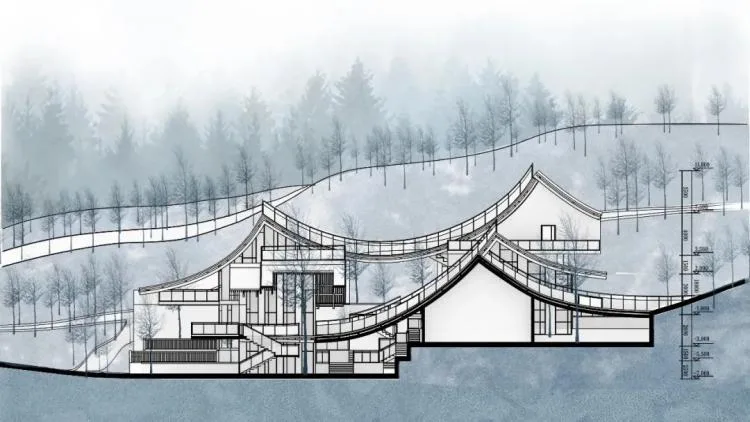
△ Section 2-2
Culture, History, and Geography
In the second class after studying the site, we were asked to define the hostel’s atmosphere and present preliminary concepts and ideas.
I imagined myself as a traveler escaping the bustling city life, leaving behind the flashy noise of ambition—much like Tao Yuanming a thousand years ago, yearning for a secluded rural life. The essence of his poem “Returning Home” perfectly captures the atmosphere this mountain hostel should evoke. (So, I dusted off my old Chinese literature textbook!)
Tracing the Spirit of Chinese Literati
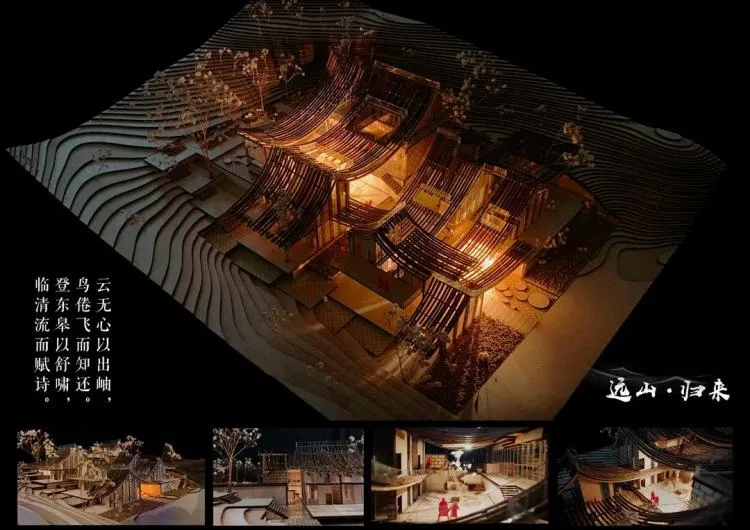
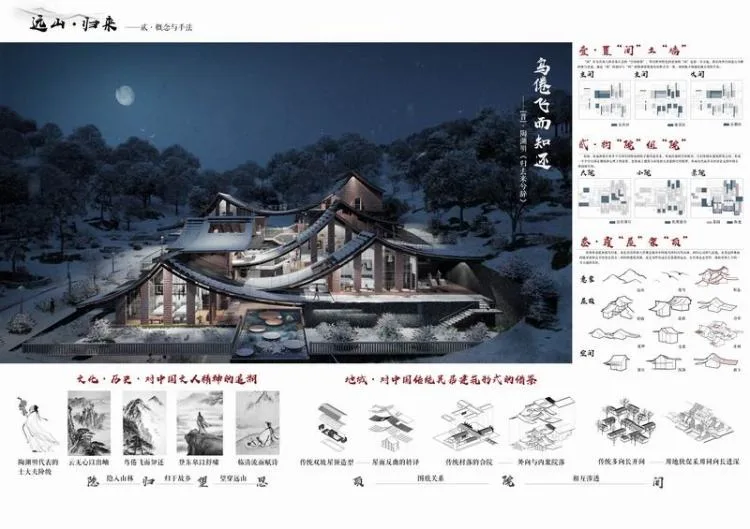
“Clouds have no heart to leave Xiu, birds fly wearily but know how to return. Climbing to Donggao, one sings softly, writing poetry with the flow of Linqing.” Tao Yuanming expressed his admiration for the beauty of mountains and rivers and his wish to retire to the countryside in his poem “Returning to the West”. This literati spirit is deeply rooted in our national culture and continues to inspire us today.
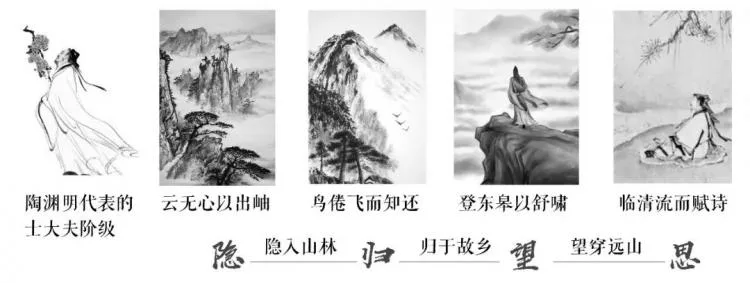
Regional Inspiration from Traditional Chinese Residential Architecture
Having found the cultural and historical tone, the next question was how to translate this into architectural form.
The most straightforward approach was to extract elements from the site and architectural style, absorb and learn from them, then innovate through imagination and creation. This respects local history and geography while allowing fresh forms to emerge.
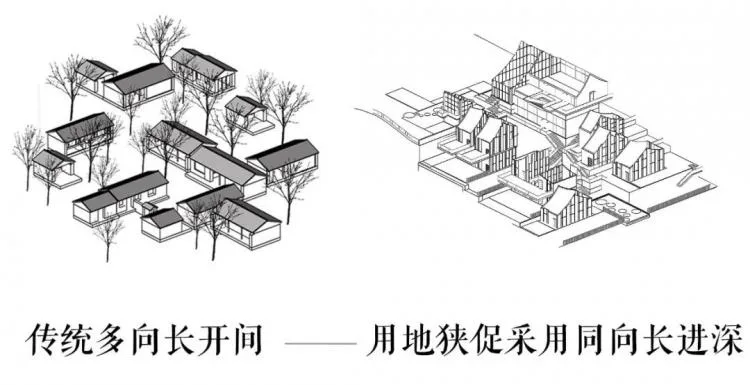
Exploring typical traditional dwellings in Sanhe Village revealed three key elements: roof, courtyard, and room, which I began to reinterpret:
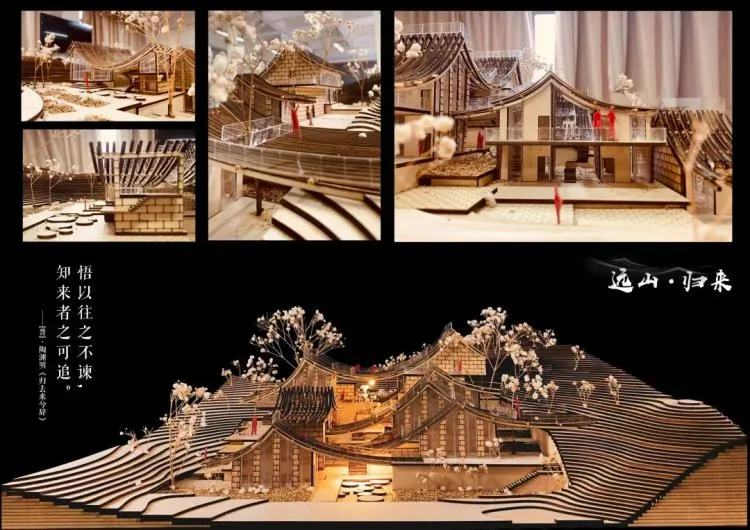
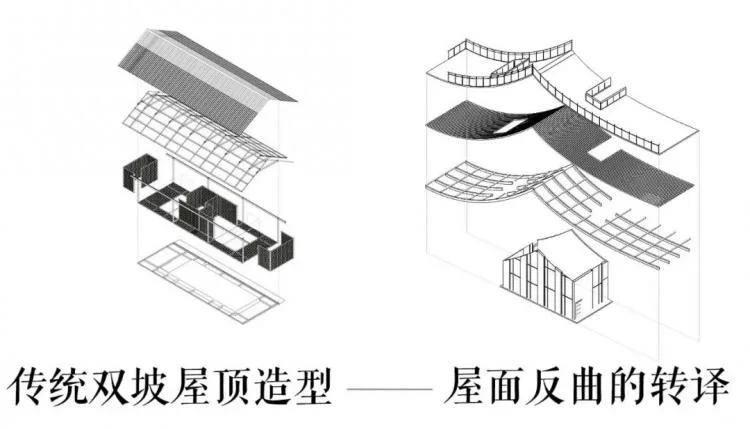
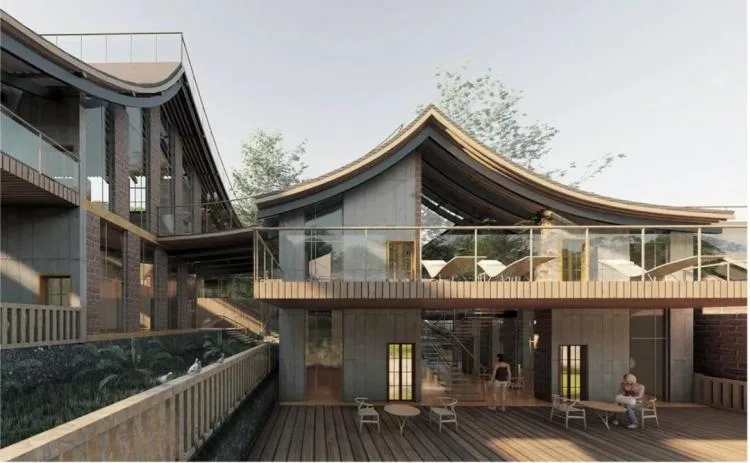
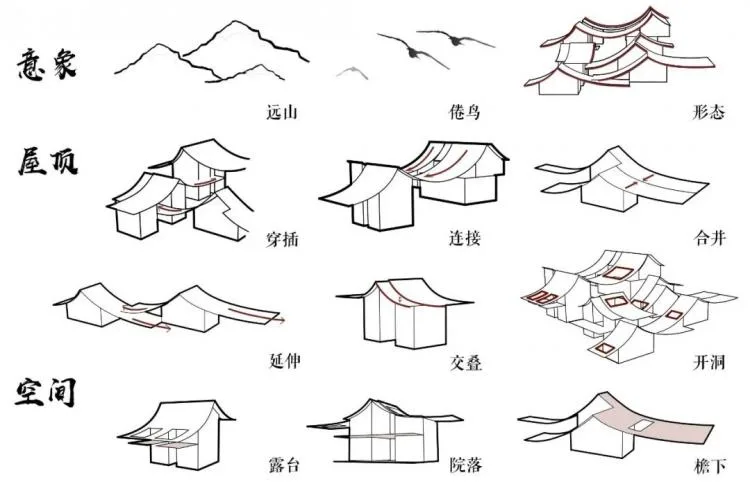
Roof element: I designed a double-pitched roof with a reversed curvature that extends and bends. This creates tension in the roof shape and allows multiple roofs to connect, covering transitional “gray” spaces between indoors and outdoors.
Courtyard element: Traditional village courtyards are usually enclosed by three or four building volumes. For a hostel, such strong enclosure isn’t necessary. Instead, volumes are arranged parallel and perpendicular to each other, creating courtyards that are enclosed on two sides while each private terrace is bounded on one side by a volume, interacting with the surrounding landscape.
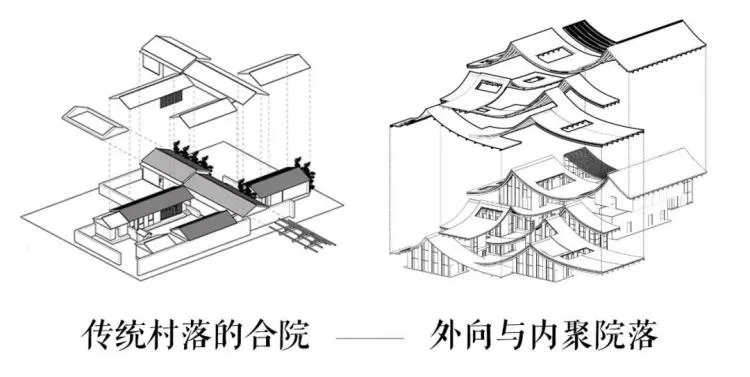
Room element: Traditional homes often use multi-directional long rooms. On this narrow site, a distributed layout helps prevent overcrowding. By aligning volumes in the same direction but deepening the layout, each unit adapts to the terrain’s elevation, ensuring optimal lighting and expansive views.
Constructing Spaces: Rooms, Walls, Courtyards, and Roofs
To avoid abstract concepts from being lost, I aimed to give each element specific forms and functions. The process can be summarized in a “Three Steps Forward” approach:
Step 1:
How can a scattered layout foster interaction between building volumes? I chose to extend and weave the curved roofs together, ensuring roof slopes gracefully follow the mountain terrain.
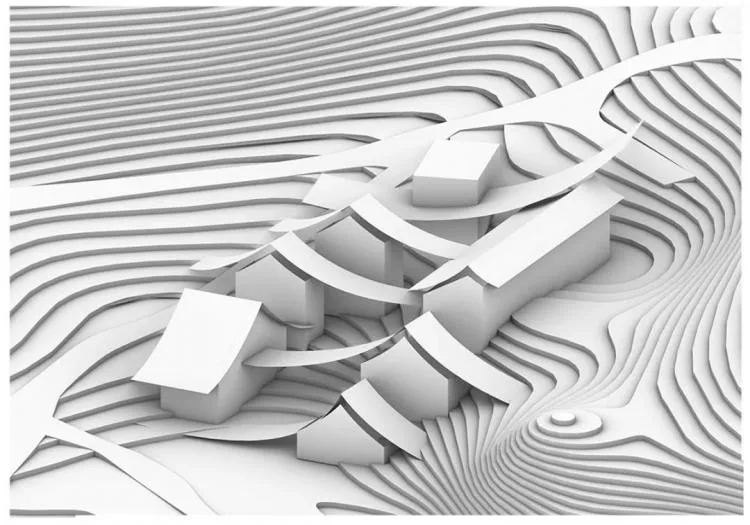
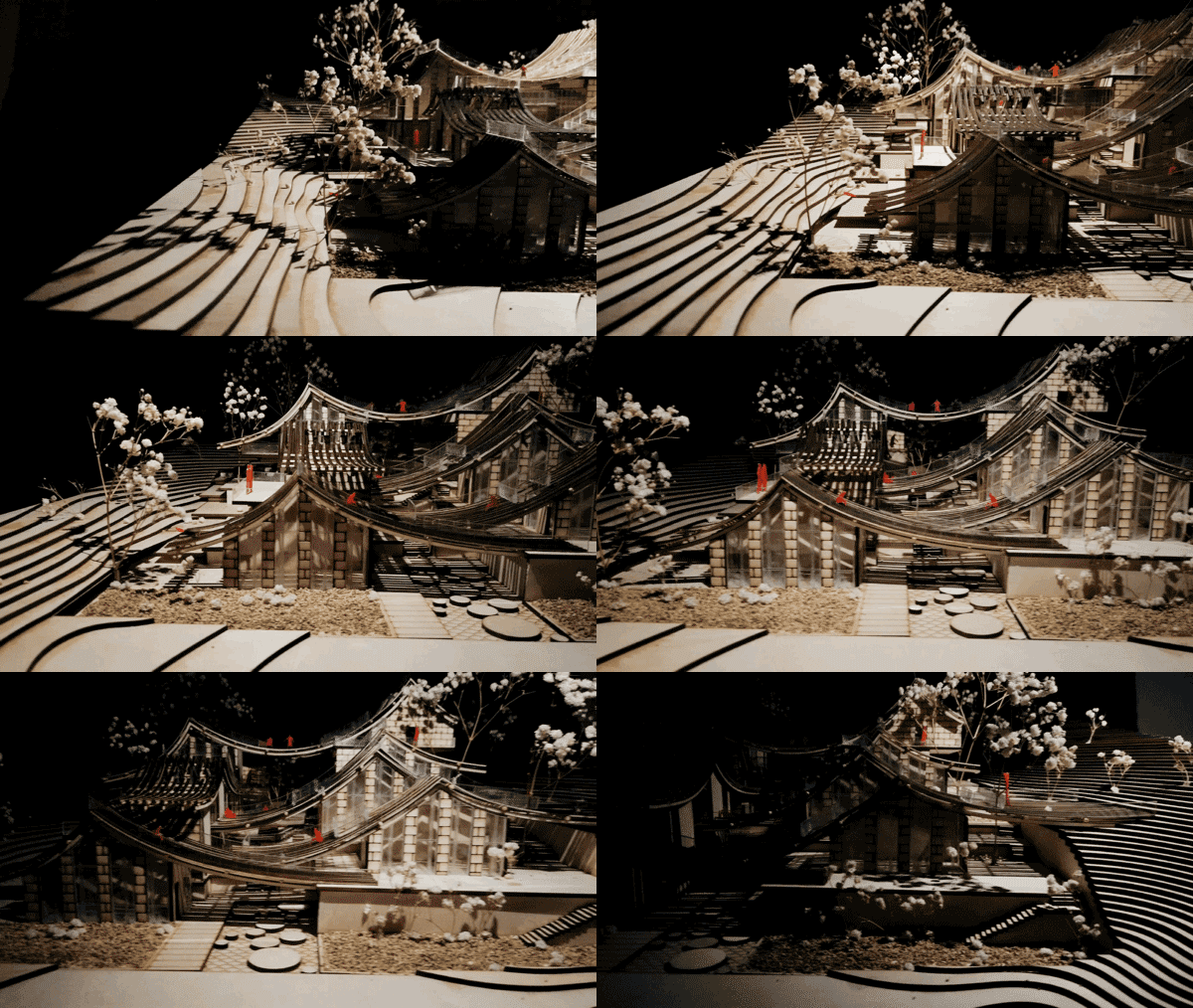
△ Model of one grass volume
Step 2:
Once functions and relationships of rooms were defined, I refined the roof extensions and interweaving, setting scenarios such as popular photo spots for social media.
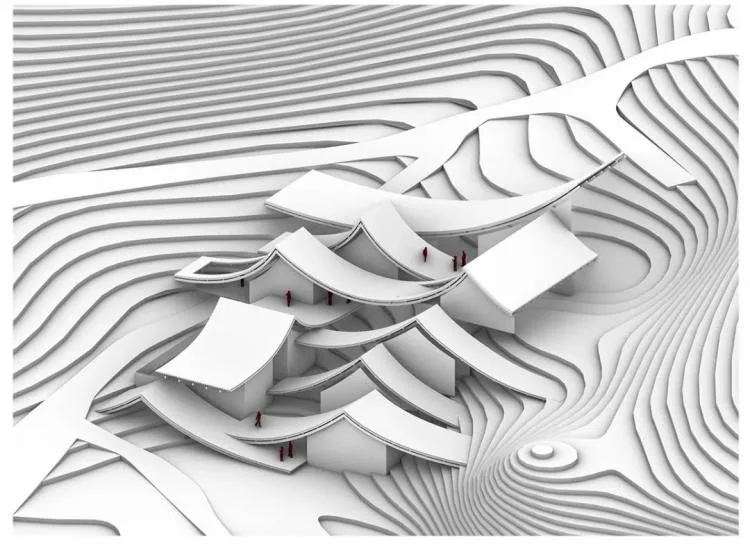
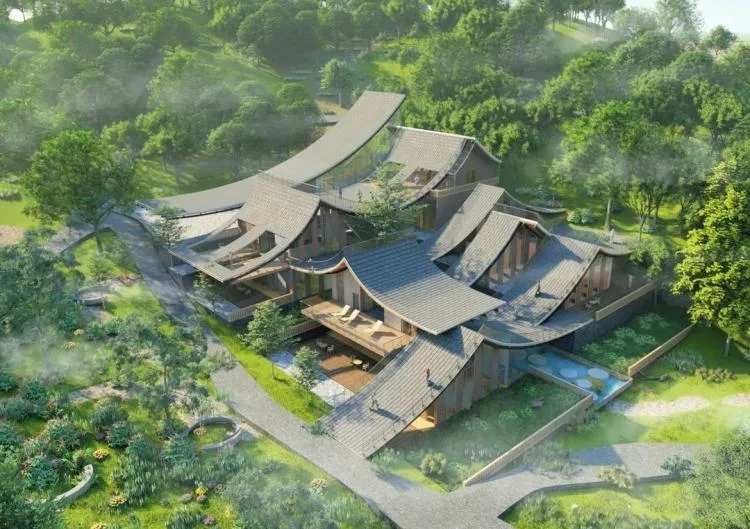
The exaggerated second grass stage
Step 3:
After feedback that the roof was overly dramatic and oppressive in lower spaces, I consolidated and integrated the roofs in public areas to highlight the core communication spaces. Guest room roofs were merged and then perforated to integrate upper and lower spaces harmoniously.
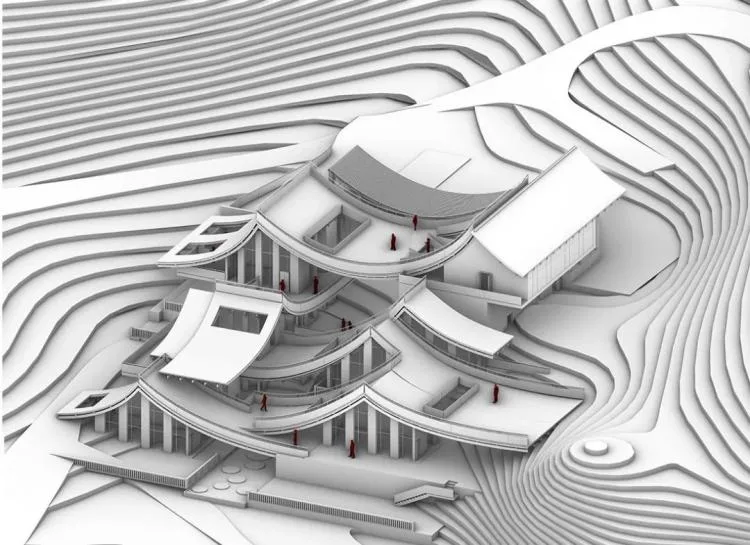
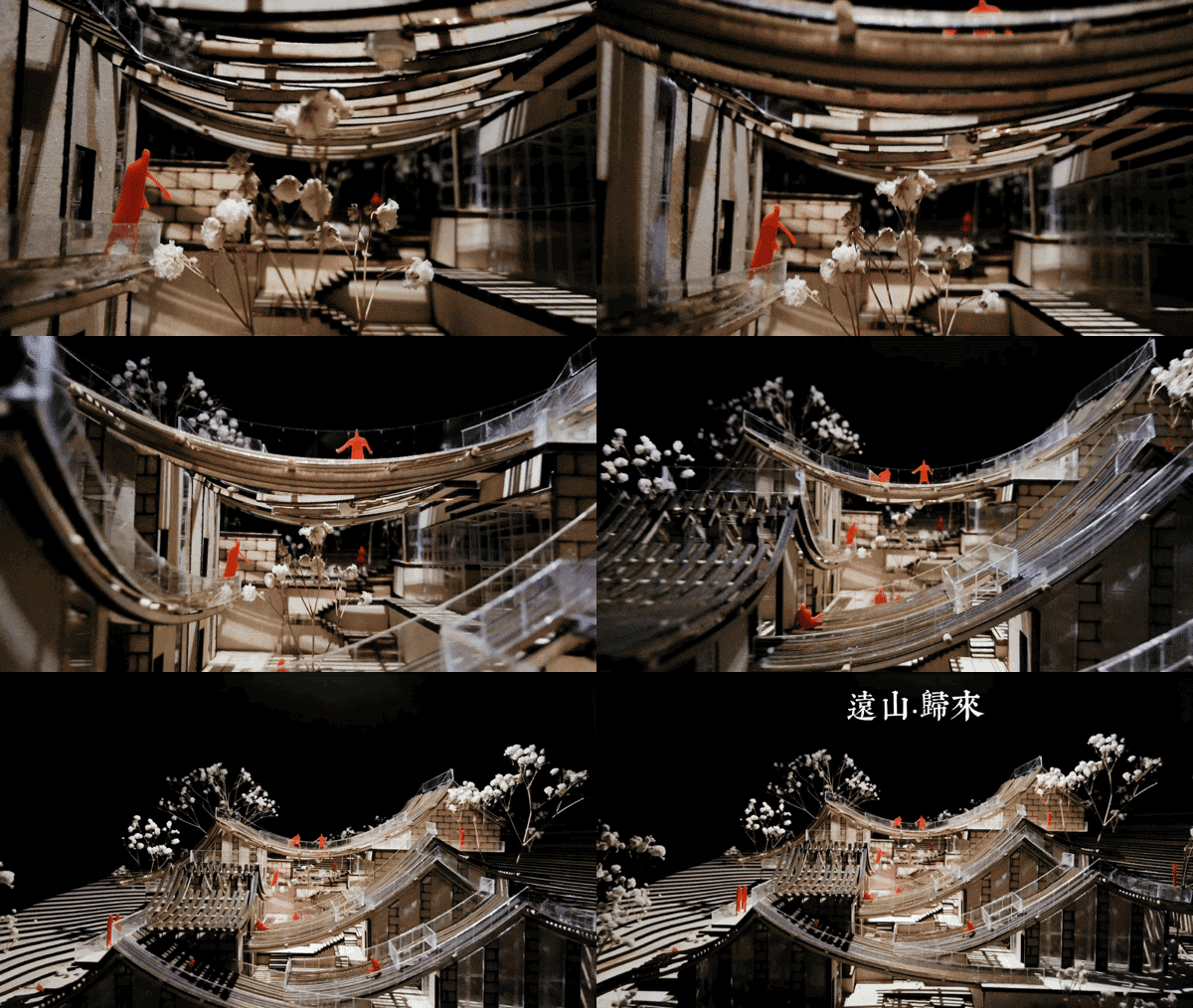
△ Final volume model
Let’s now delve into the detailed steps of this “Three Steps Forward” process:
01 Setting up “Rooms” and “Walls”
“Between” serves as a spatial container for specific people and lives. The distinctive roof space forms an entire world that constantly transforms, blending indoor and outdoor spaces. By dividing walls and staggering spaces, scattered homestays unify into one complex, lending the site a rhythm of tension and relaxation.
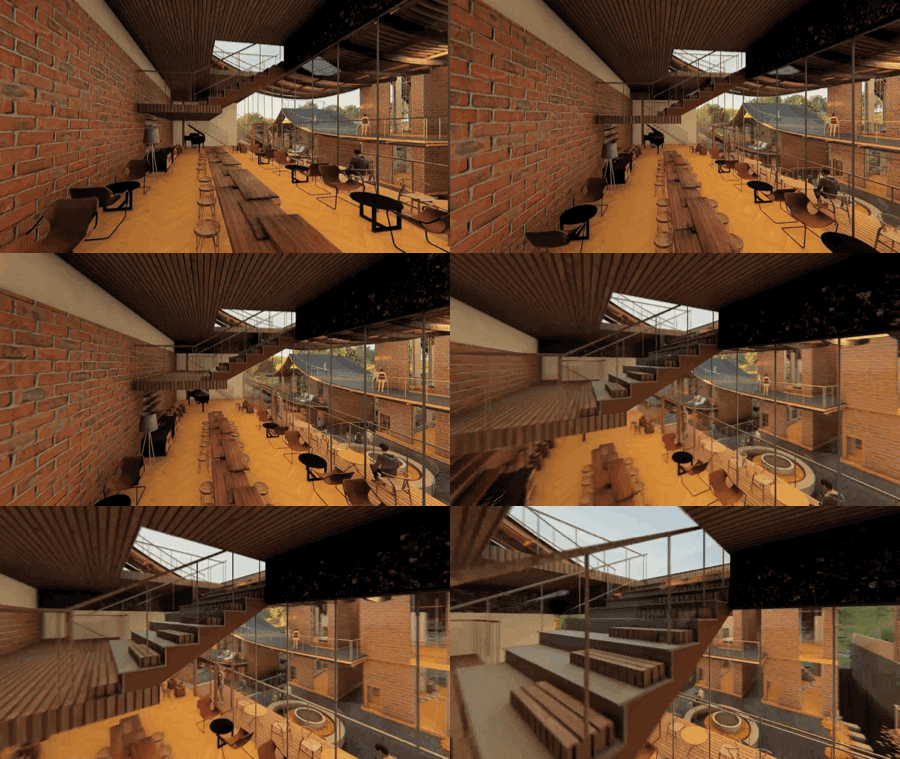
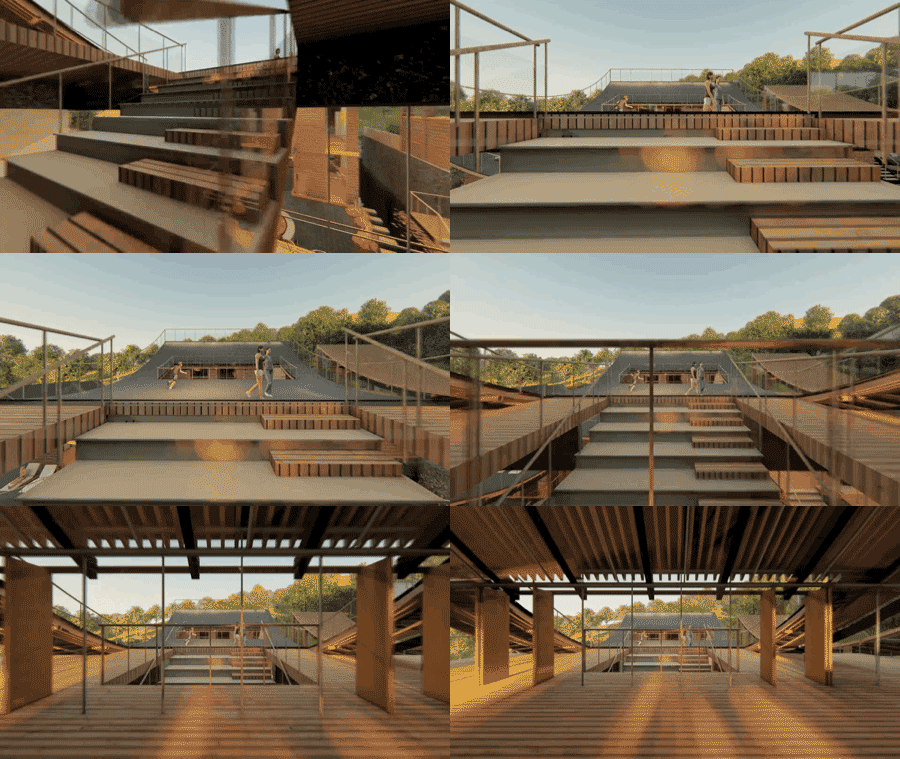
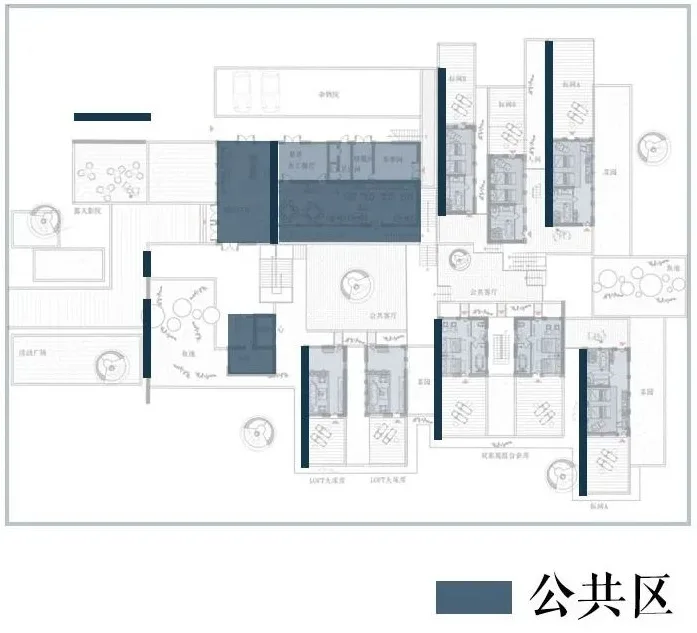
Main room: The entrance hosts common areas like the lobby, restaurant, and multipurpose hall, linked by a continuous large roof to facilities such as the fire center, convenience store, and medical room.
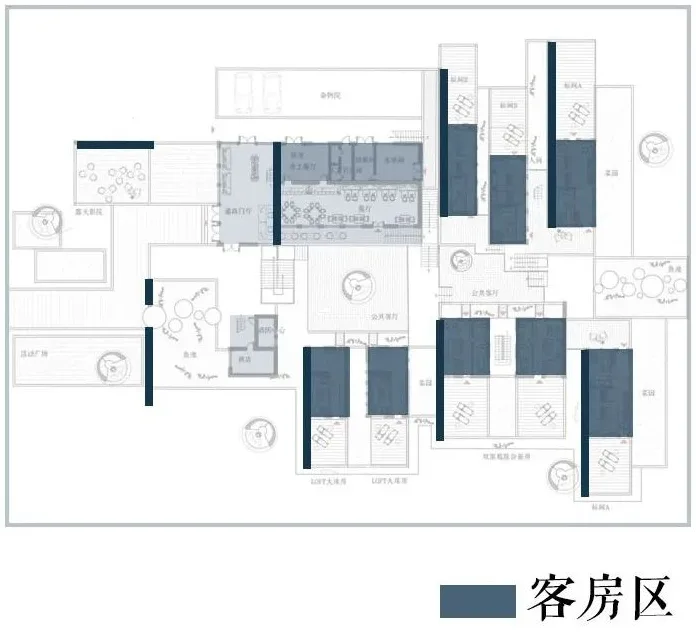
Combining two large standard rooms, two small standard rooms, two LOFT rooms, and two double family suites in staggered pairs, they cascade down according to terrain height.
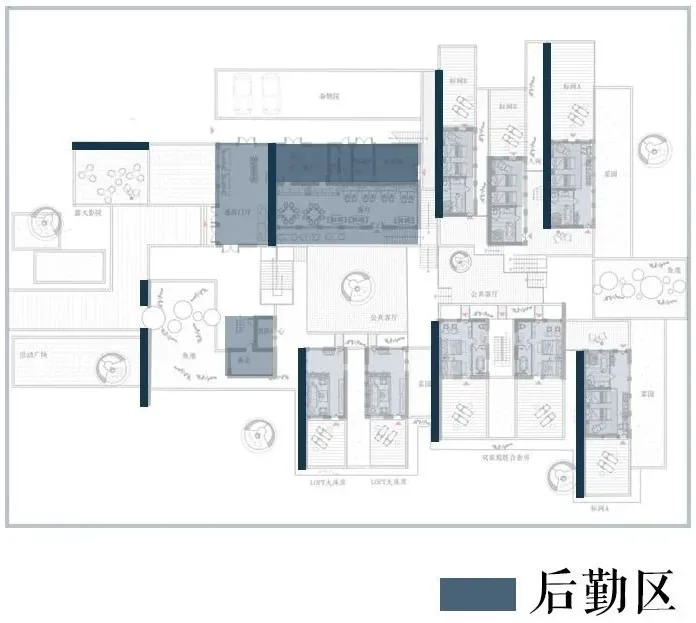
Logistics spaces such as kitchen, storage, linen room, and staff dormitory are integrated with the lobby, dining, and multipurpose areas but separated from guest areas, accessed via a rear entrance.
02 Constructing “Courtyards” and Group Spaces
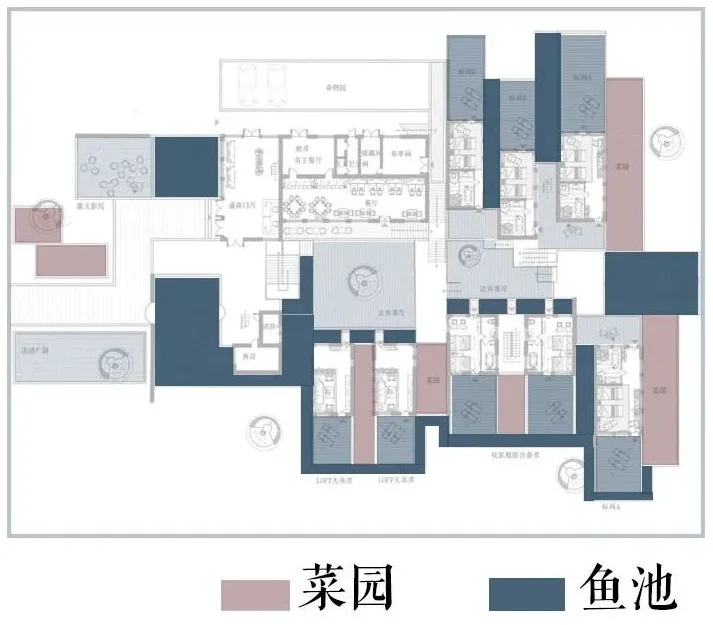
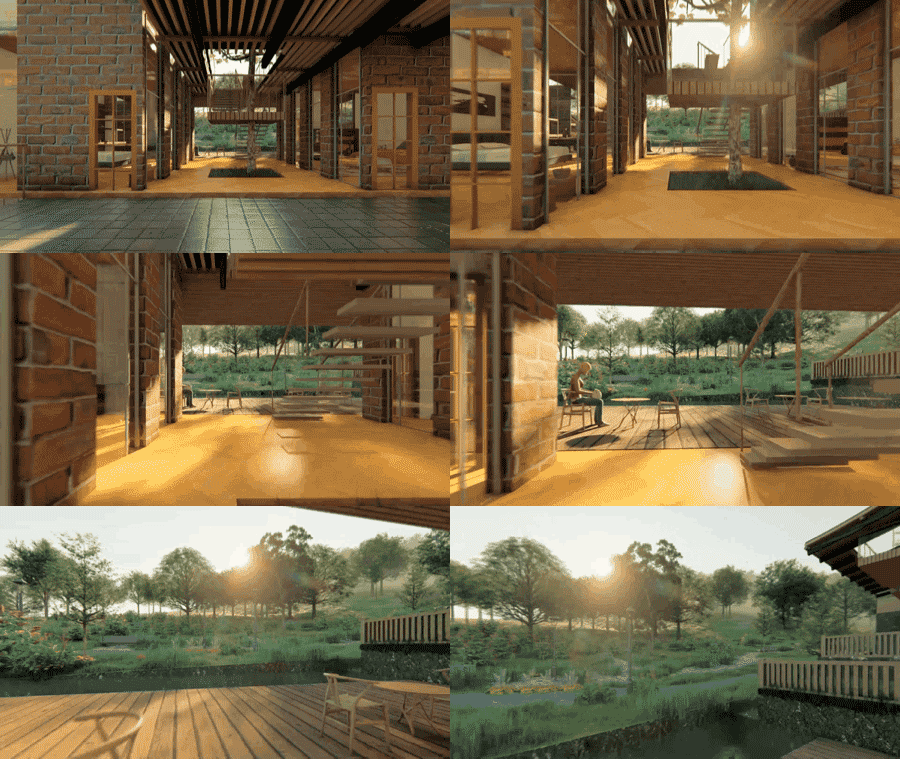
Vegetable gardens, fish ponds, and terraces create multiple courtyards with distinct spatial characters, shaping the village’s spatial pattern. These are interspersed between building clusters, providing open spaces that satisfy visual and psychological needs. They form a spatial texture blending architecture and environment, reminiscent of traditional Chinese classical gardens.
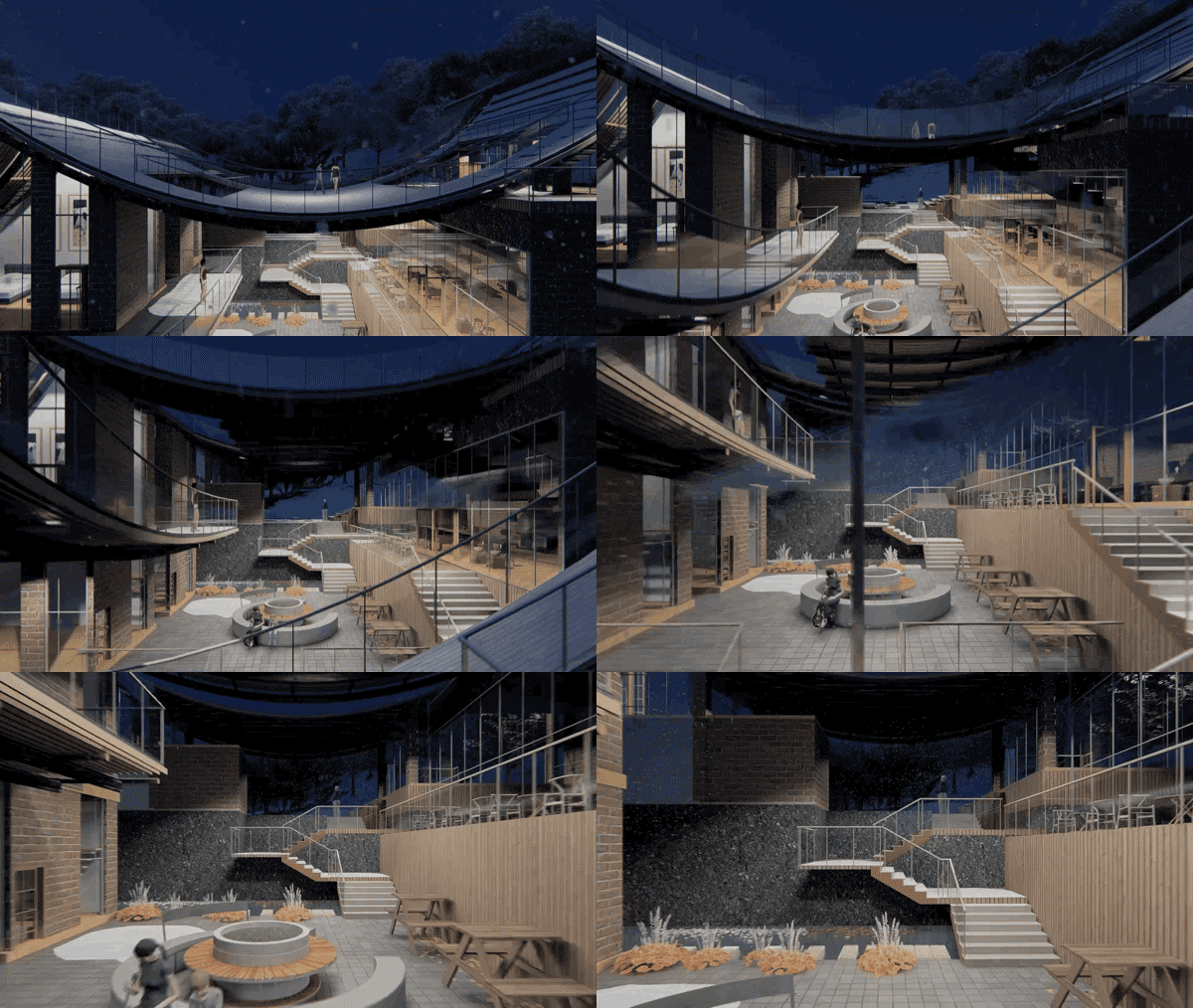
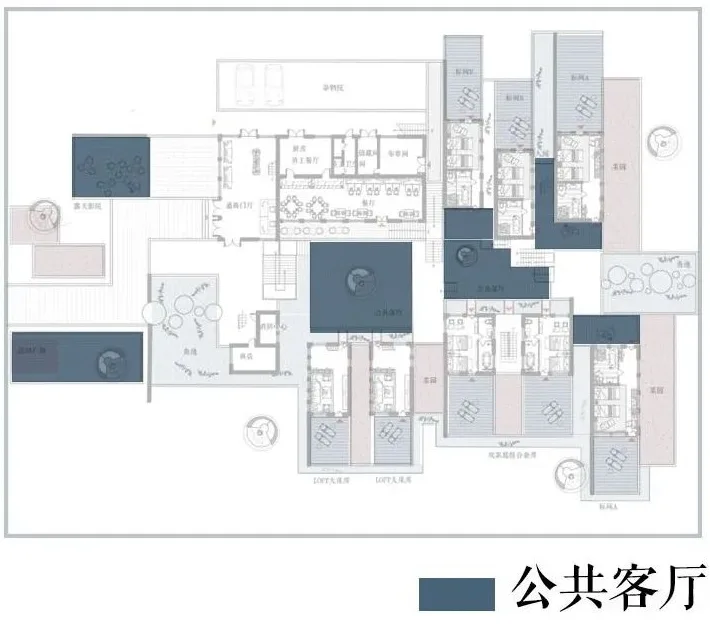
Courtyard: Large outdoor cinemas and activity plazas are placed at the entrance level, with public living rooms spread between every two to three volumes, following the terrain height.
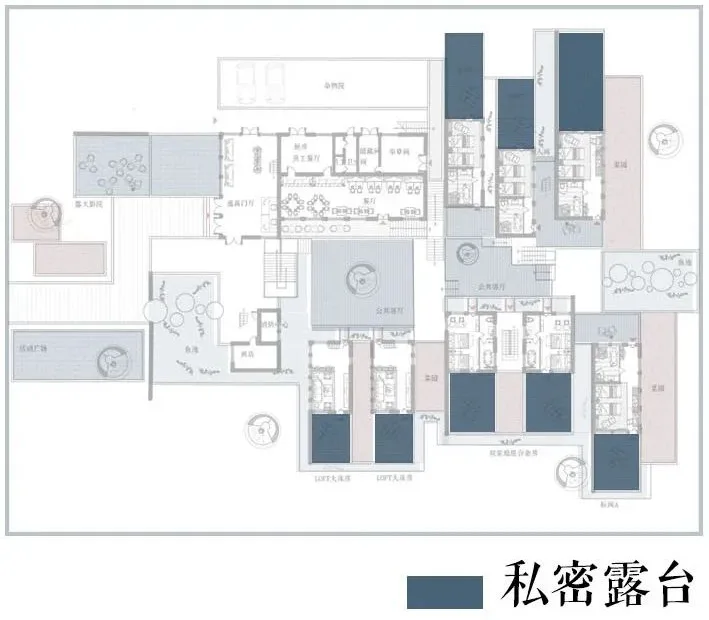
Small courtyard: Each room features a private terrace facing outward, using plants and barriers to ensure privacy.
Jingyuan: The fish pond runs through the entire site, with the vegetable garden nestled between terraces and public living rooms. This setup offers visitors a hands-on farming experience and supplies the hotel with fresh ingredients.
03 Covering the House with Roofs
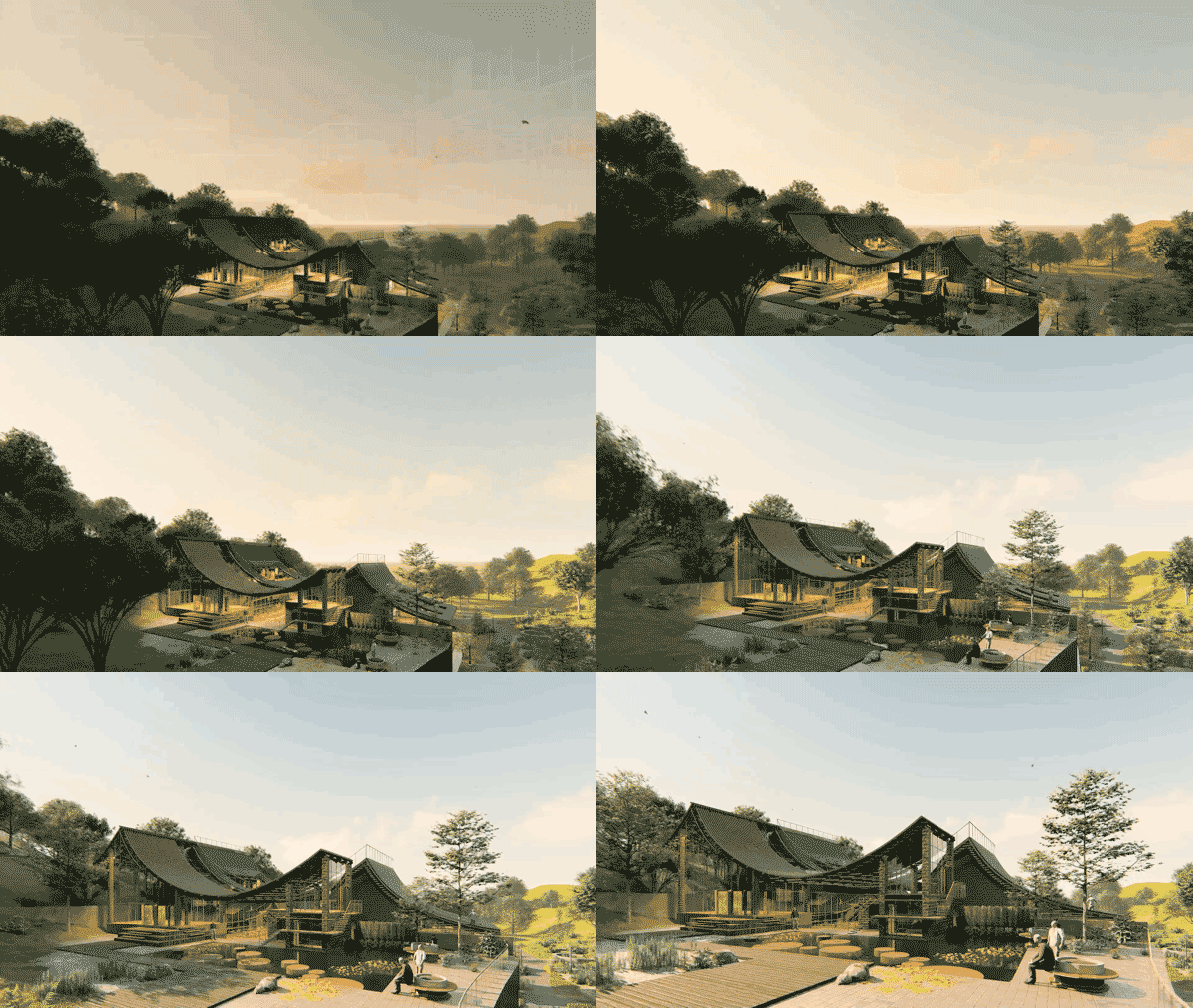
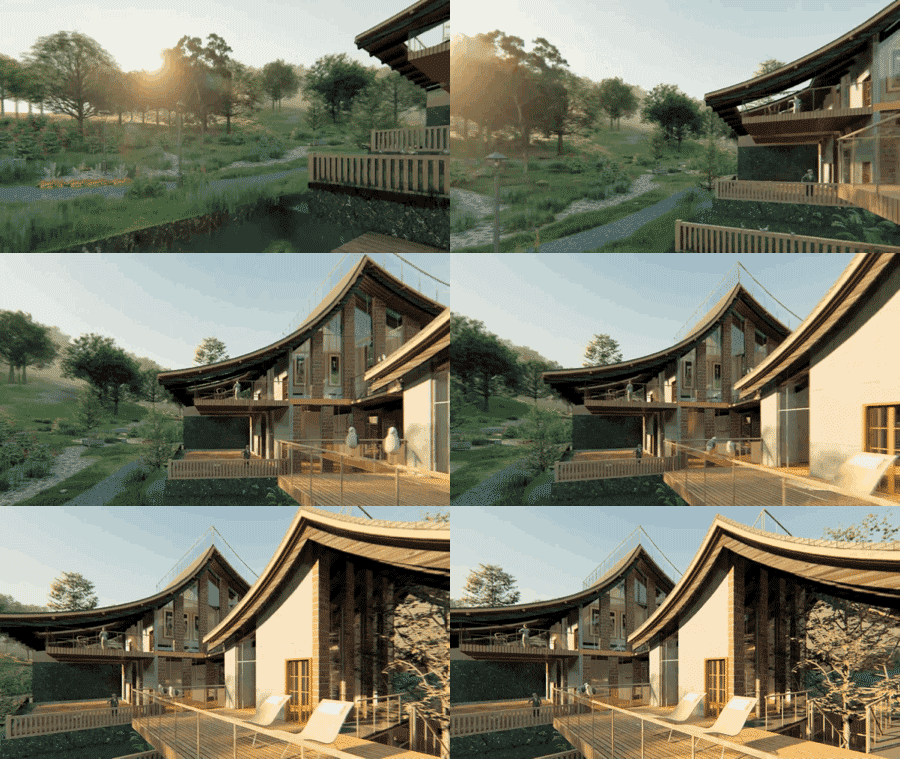
The roof shape resembles a weary bird returning to its nest, symbolizing guests coming back to nature’s embrace in the mountains and forests, finding spiritual refuge. This curved, sloping roof echoes Sanhe Village’s architectural style and the layers of distant mountains, inviting visitors to wander and pause, experiencing the world above and below the roof.
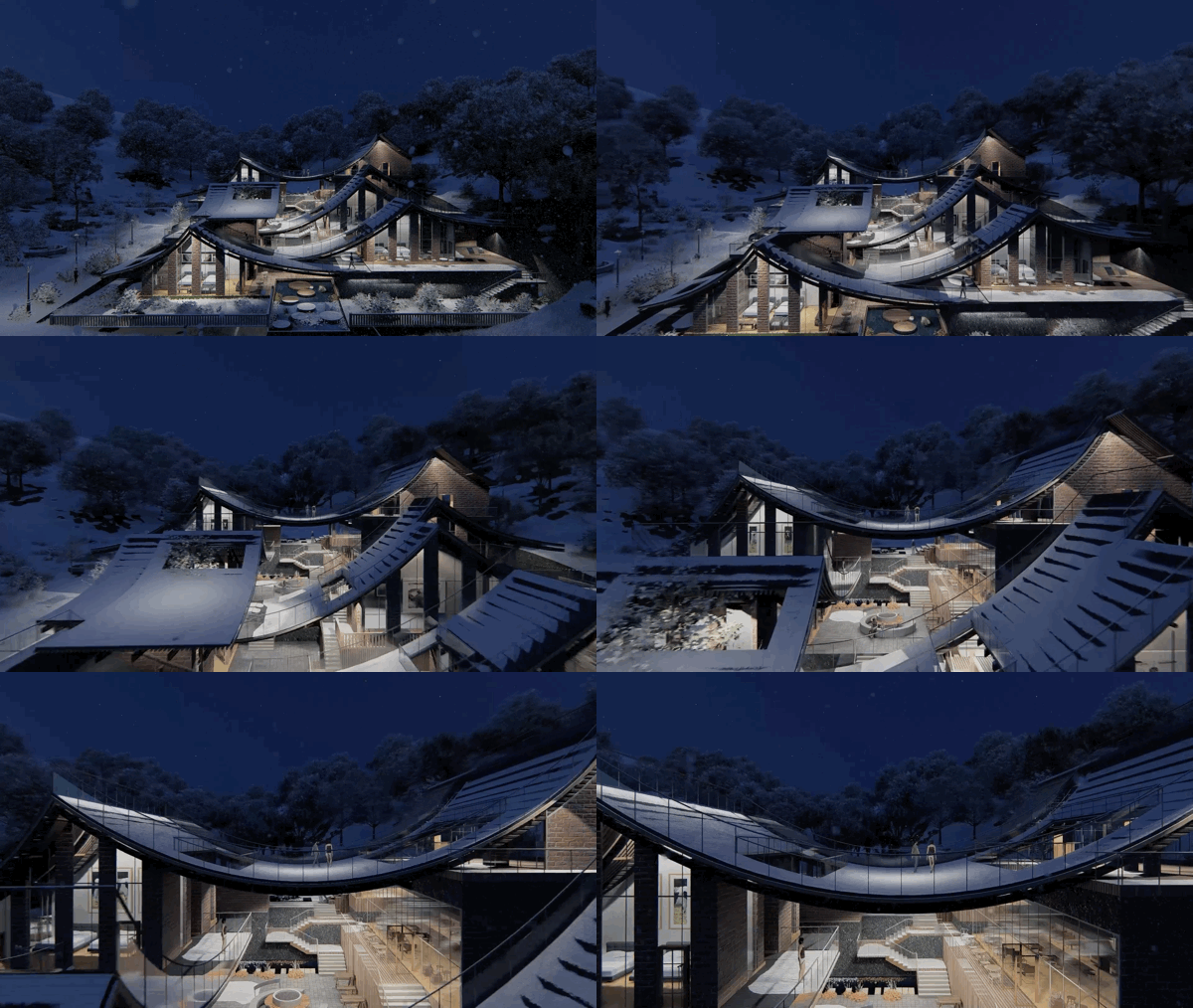
Inspired by poetic imagery of “distant mountains” and “tired birds” and the site context, various techniques such as interweaving, connecting, merging, extending, overlapping, and perforating create diverse spaces like terraces, courtyards, and eaves.
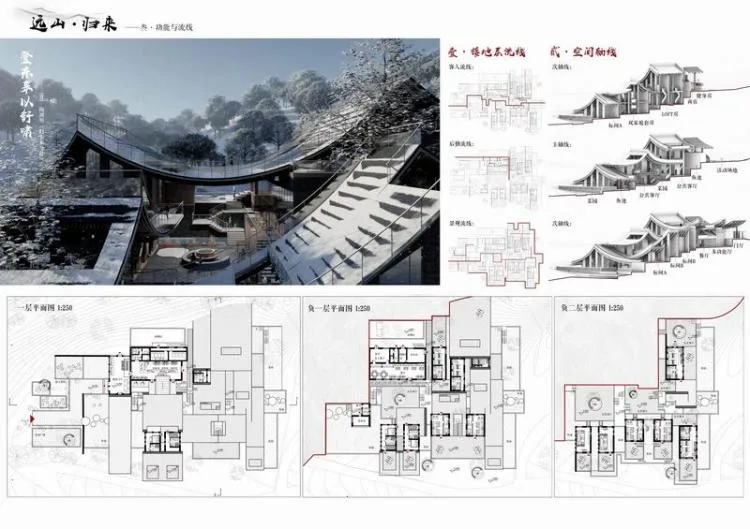
Function and Flow
The relationship between rooms and courtyards balances physical, visual, and psychological aspects—interior and exterior, openness and enclosure. Walls serve as intermediaries, sometimes inside, sometimes outside, without a fixed identity.
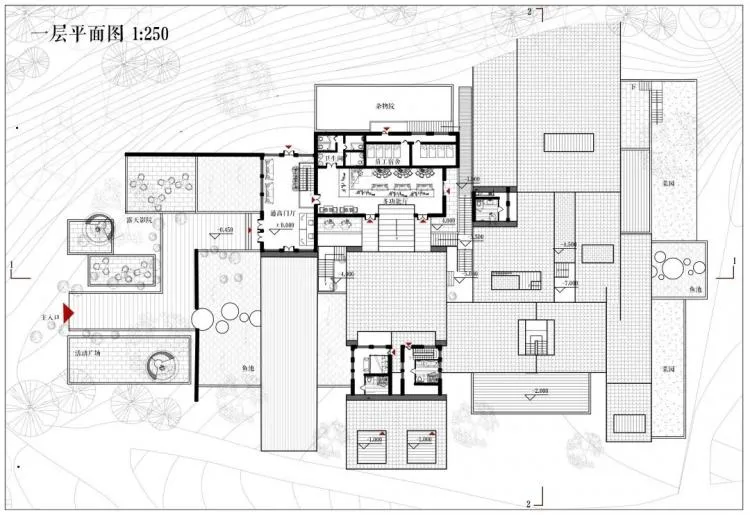
△ First floor plan
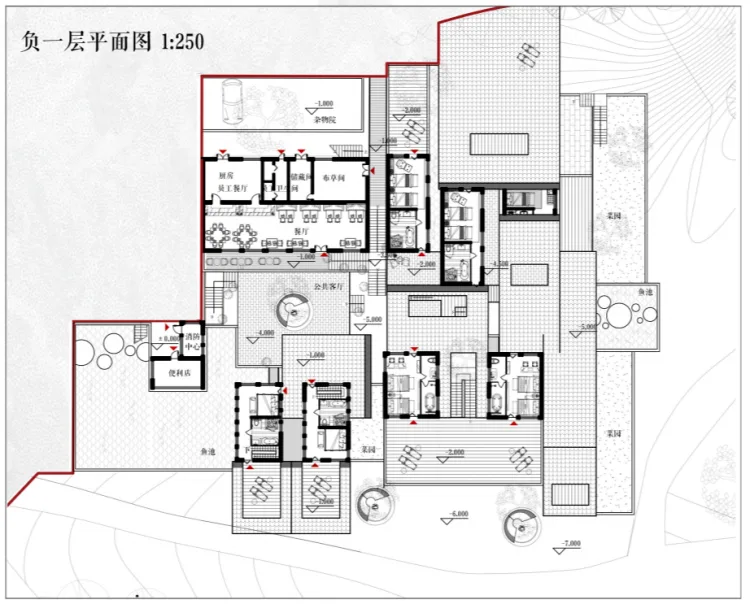 △ Basement floor plan
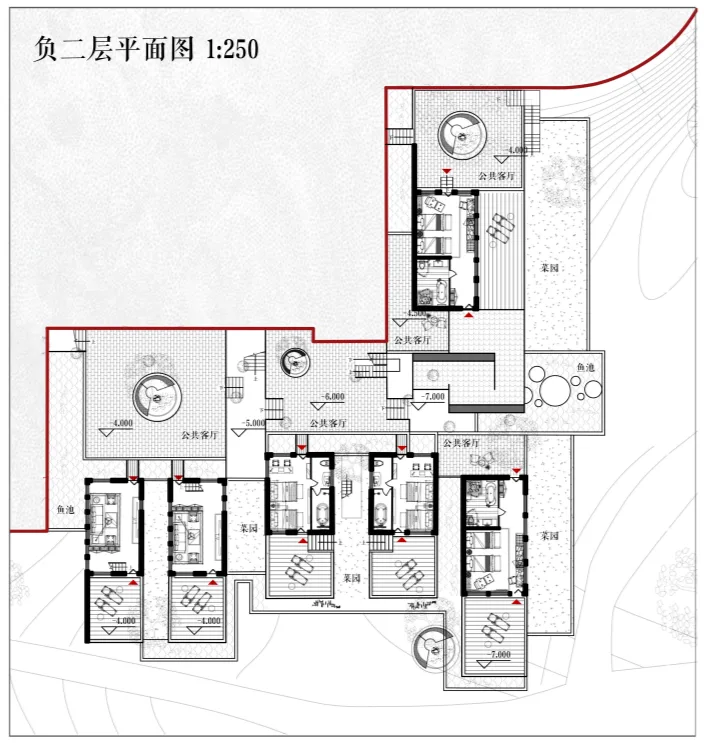 △ Second basement floor plan
The site and architecture are organized along three axes responding to terrain elevation. Open spaces such as vegetable gardens, fish ponds, and public living rooms form the main axis, while lodging units and public facilities like lobbies, restaurants, multipurpose halls, shops, and gyms align along secondary axes.
The circulation focuses on guest flow, with scenic elements like water features and tree views arranged around the axis and site perimeter, permeating the entire area.
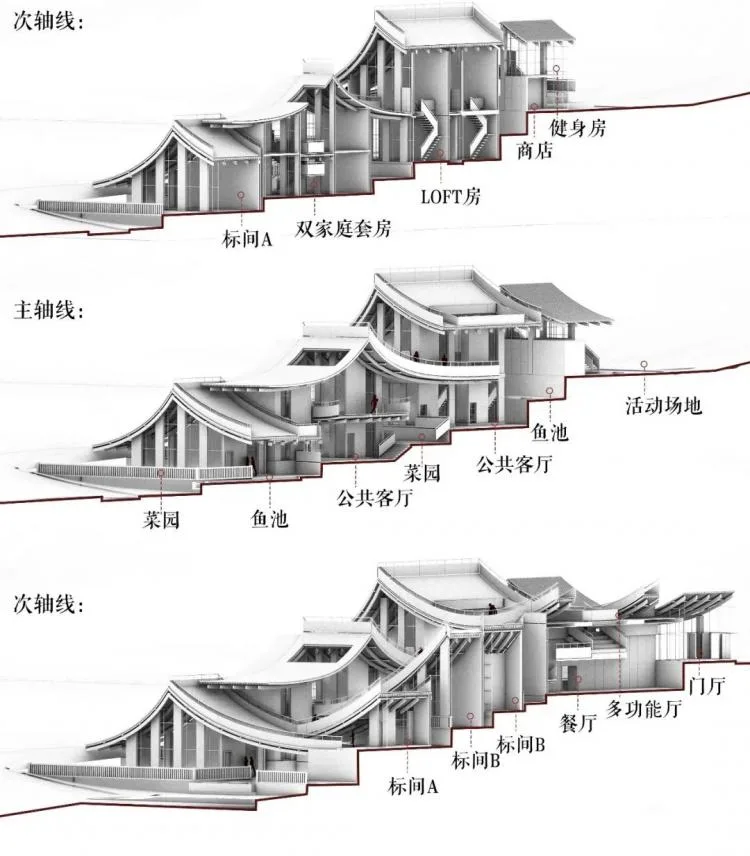
△ Axis sectioning
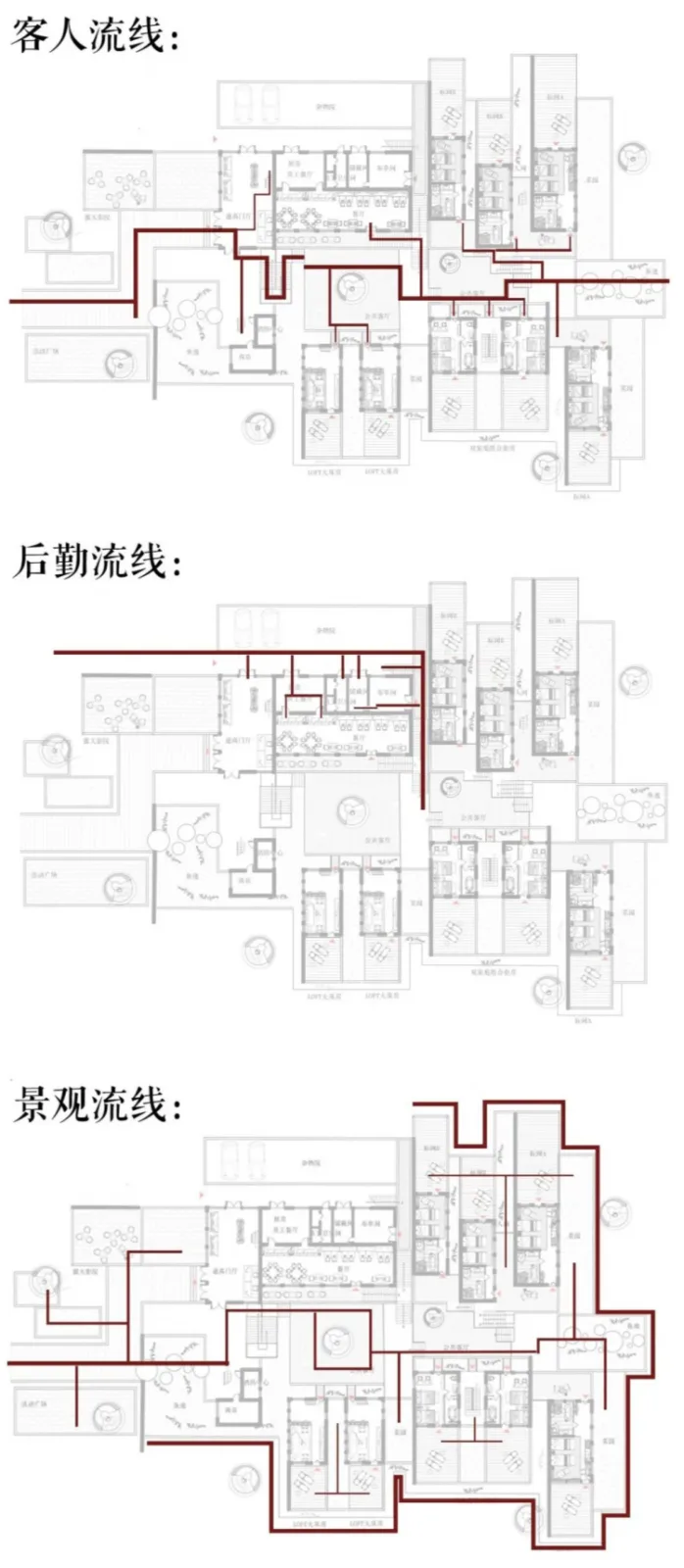
△ Ground floor flow diagram
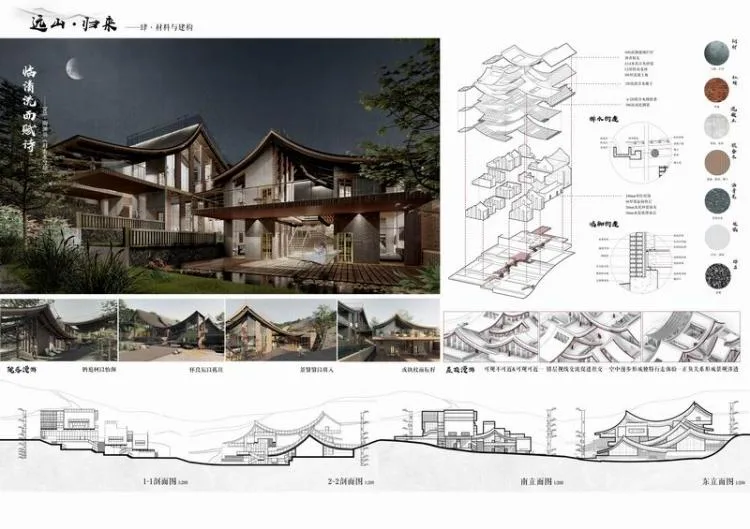
Materials and Construction
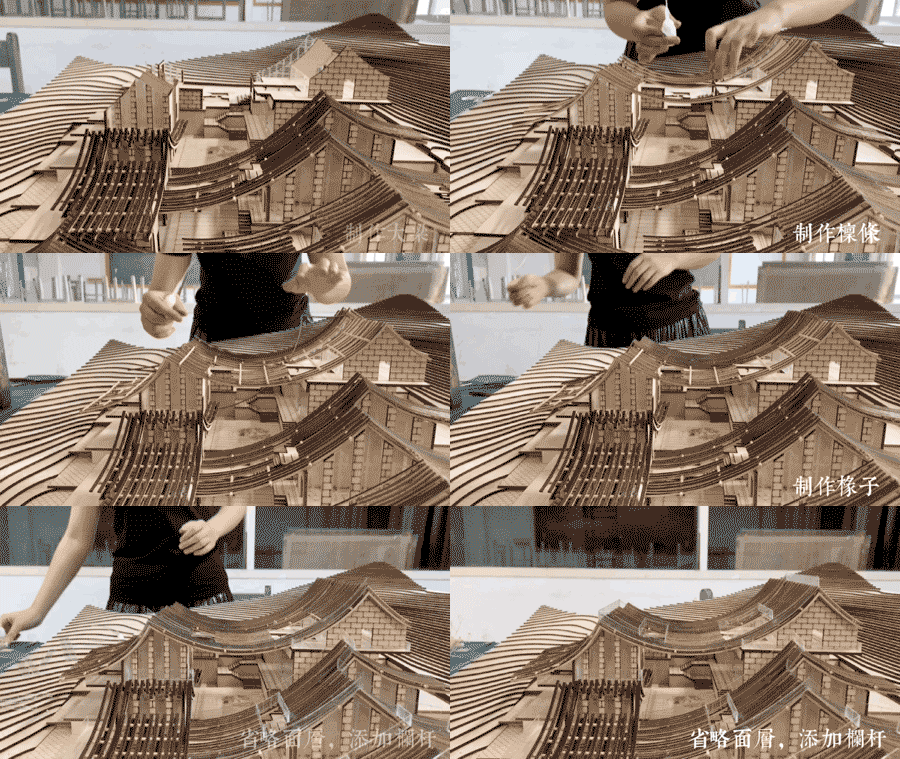
Although structural details appear late in the drawings, from the start of design I focused on preserving the traditional double-pitched roof’s structural hierarchy while incorporating modern prefabricated components to realize the curved roof concept. This was key to convincing evaluators of the idea’s feasibility.
I drew inspiration from Teacher Tian Qi’s Far Mountain Kiln and Teacher Yuan Feng’s Daoming Bamboo Village in Chengdu, Sichuan, combining their construction techniques:
Steel and wood form the main structure; walls combine brick, concrete, and glass curtain walls. The roof merges traditional craftsmanship with modern technology, supporting layered steel beams, laminated wood purlins, and rafters. A concrete slab shaped into a curve is topped with asphalt tiles and cement mortar, ensuring safe and comfortable rooftop walking.
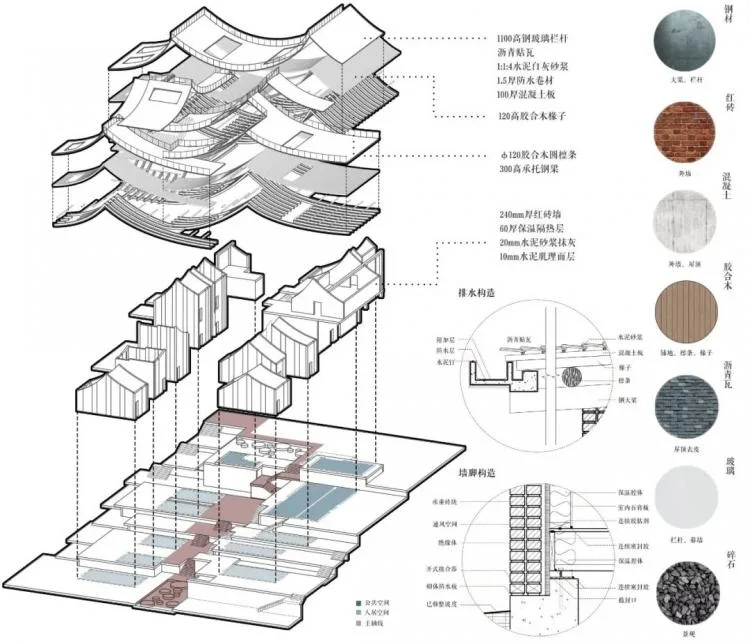
△ Axonometric breakdown diagram
The roof’s form offers a unique aerial walking experience, creating observable yet private field distances. Varied sightlines foster interaction while preserving privacy, and the interplay between roof heights enriches the landscape.

△ Roof roaming
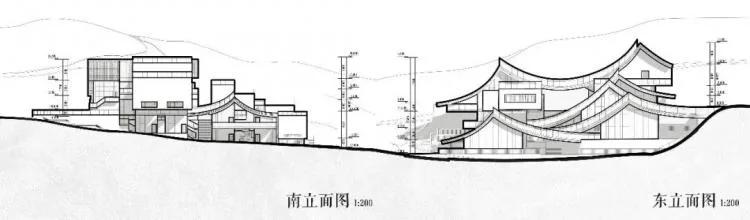
△ Elevation drawing
Place and Artistic Concept
This design feels like a dream. Upon completion, I returned to the role of the designer to reflect on whether the initial vision of “Returning to the West” had been realized:
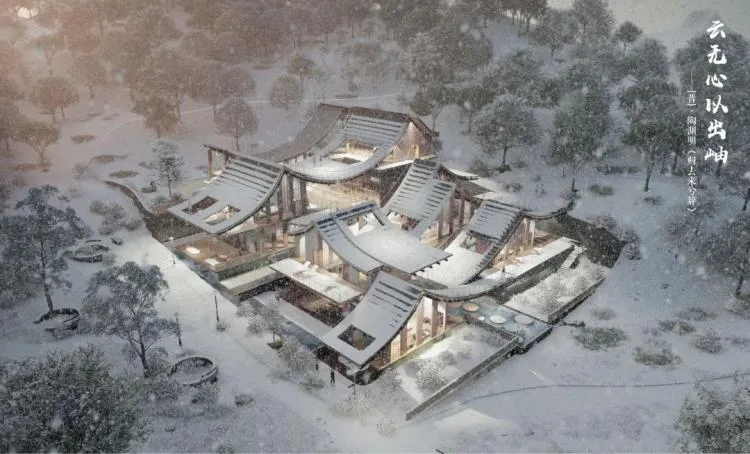
“Clouds emerge softly from the Xiu River” — the site nestles into the earth, buildings rest quietly on slopes, with mist drifting lazily from the mountains, evoking a hidden world within nature.
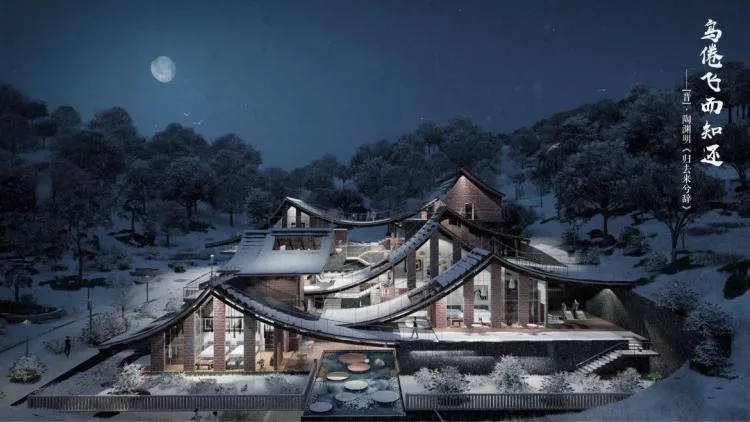
The roof resembles a tired bird returning to its nest, welcoming visitors back to the natural mountains and forests as their spiritual home.
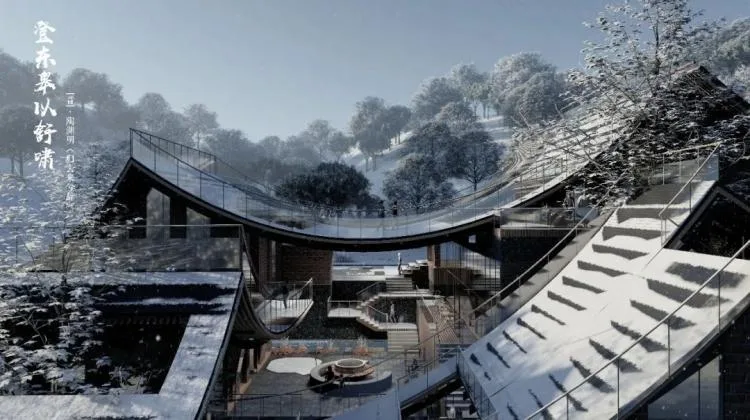
On clear mornings or vast evenings, climbing the roof to gaze at distant mountains and forests, guests breathe in the pure air, releasing stress and opening their minds.
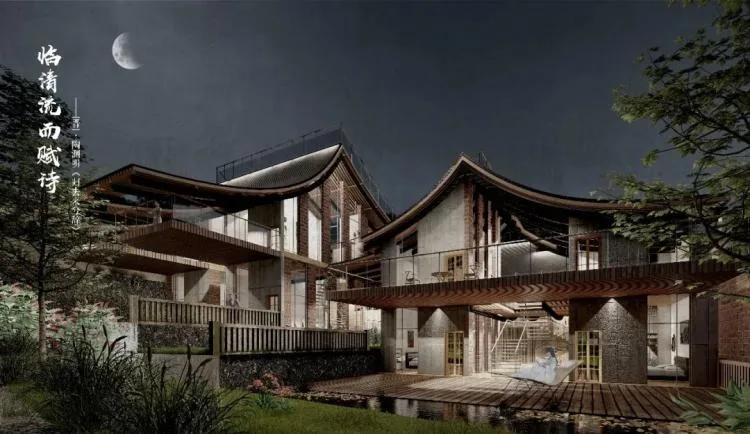
“Linqing River flows and composes poetry” — sitting on a terrace under moonlight, leisurely reading poetry with the sound of the stream, or sharing tea with friends. When inspired, jotting down travel reflections.
Summary
This design draws inspiration from traditional Chinese dwellings, carriers of enduring history and geography. Through form translation such as curved roofs, the three core elements of traditional homes—roof, courtyard, and room—are organically combined. This creates a dynamic relationship between roof and courtyard, allowing indoor and outdoor spaces to blend.
Set against mountainous terrain, it forms an emerging image of a hidden mountain forest, inviting travelers to immerse themselves in nature and reflect on the ancient wisdom of “understanding the past to guide the future” through a poetic and picturesque experience of walking, observing, living, and traveling.
Mountains, water, trees, stones, and courtyard buildings borrow and integrate elements through dialogue. By establishing spaces and walls, constructing courtyards, and covering houses with roofs, a unique mountain homestay is created where every brick and timber tells a story of history and culture.
Commentary and Reflection
A secluded forest retreat on the city’s outskirts, this homestay project seeks harmony between nature and modern life. It inspires reflection on the relationship between architecture, environment, and people. The student reinterpreted architectural form and courtyard spaces using modern techniques, recreating poetic scenes celebrated in traditional Chinese poetry and culture. In a rapidly changing world, the design seeks to harmonize history, culture, place, and people, offering a unique, creative response.
—— Mentor Lin Hua
Special thanks to Teacher Lin Hua for his guidance on concept, form, and functional flow, and to Teacher Li Jun for inspiring drawing expression and other aspects.
Reflecting on the eight-week design journey—from initial concept and imagery for a mountain homestay to detailed site layout and architectural form—there were moments of hesitation and doubt. Ultimately, encouraged by my teachers, I entered a rookie competition. The experience and achievements remain a treasured memory of my sophomore year. Please forgive any remaining imperfections in the plan!
More interpretation of high-quality works:
http://www.archcollege.com/home.php?m=Index&a=newTopicDetail&id=48838

Archcollege Long-Term Call for Authors
Manuscript fees range from 300 to 1000 RMB per article, with an annual best work bonus of 10,000 RMB.
To learn more, please leave a message via the website backend or add WeChat: JZXY-YZ.












Must log in before commenting!
Sign Up