
1. A super residential design inspired by traditional Chinese landscapes
2. Utilizing modular building units to overcome construction challenges during the pandemic
Exploring how traditional wooden frameworks can be combined with modern technology to ensure optimal living comfort
Competition Theme
The unpredictable movement of populations contributed to the rapid and uncontrollable spread of the global pandemic in 2020. In response, the world entered a “pause mode.” Reflecting on human history, what truly protects and supports us? Epidemic experts emphasize that “staying at home” is the most effective way to block virus transmission. As our daily activities suddenly became limited, what challenges did architects face?
The concept of a “Super Residence” is designed to quickly adapt to this “pause mode,” serving as both a barrier and a connection to the outside world. When restrictions lift, it should function as a vibrant community that supports people’s aspirations for a better life. The design includes a “Super Unit” within the residence, enabling occupants to live independently for extended periods within their “super living unit.”
Award-Winning Design
Competition Insights
When we first saw the competition theme, three key questions arose:
- What exactly is a Super Residence?
- How can it be localized to reflect Chinese culture?
- As architects, how do we address and improve these challenges?
We believe a “Super Residence” should encompass various essential functions, which can be understood as distinct spatial elements.

In modern cities, almost everything can be considered consumable — meaning elements have expiration dates and will need replacement. We aim to create a system that can be continuously updated to meet residents’ evolving spatial needs, adapting to changing lifestyles and providing sustainable solutions for future generations.
Design Concept
1. Pandemic Background: The Plug-in City
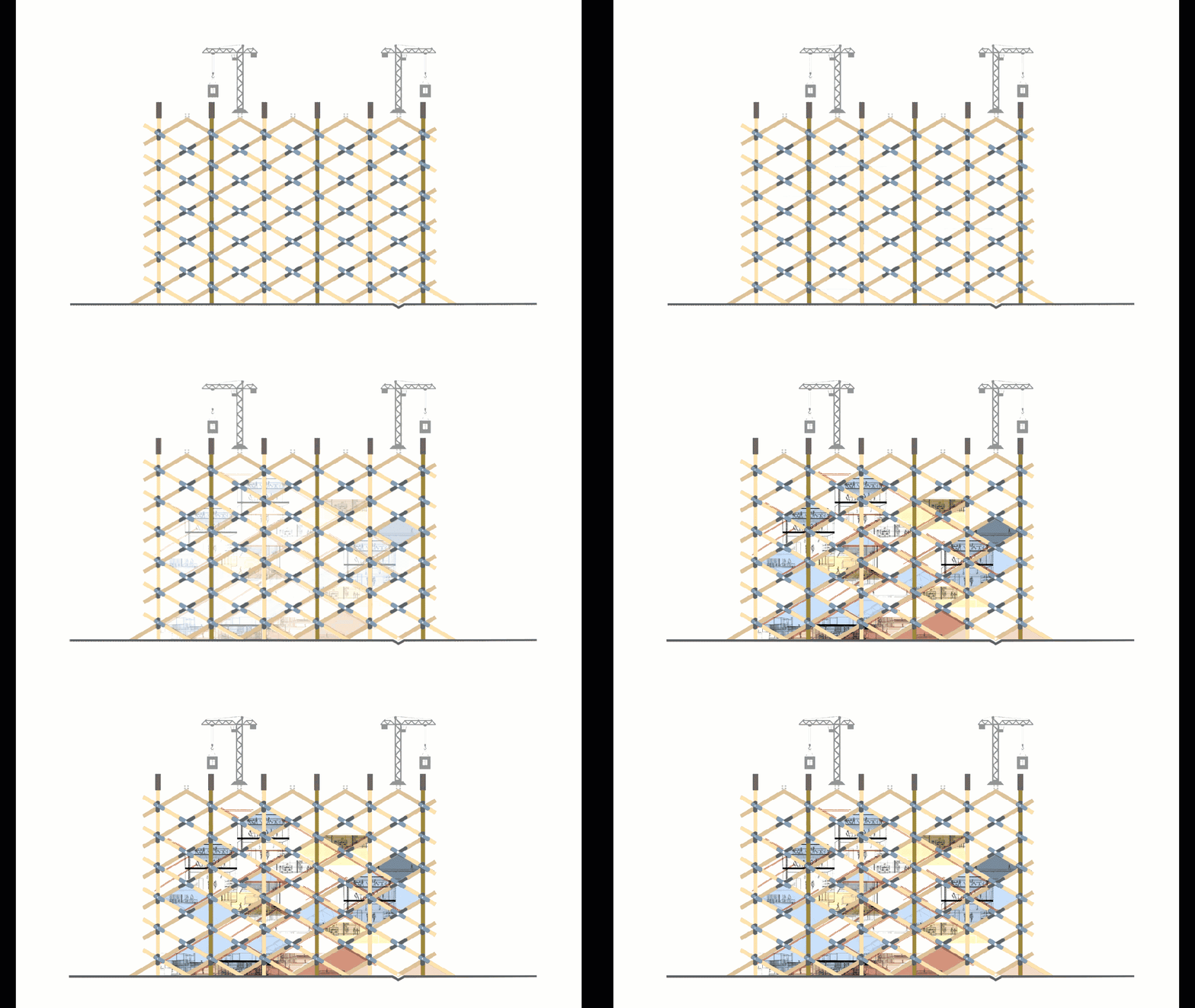
Our concept, “Plug-in City,” involves assembling a large structural framework into which movable modular blocks are inserted. This design adapts to the ever-changing social environment.
The blue zones represent residential areas, yellow areas are public spaces, orange zones supply daily necessities, and red pipelines function as mechanical rails delivering supplies and facilitating transportation. These modules can be replaced over time to keep the residence dynamic and resilient.
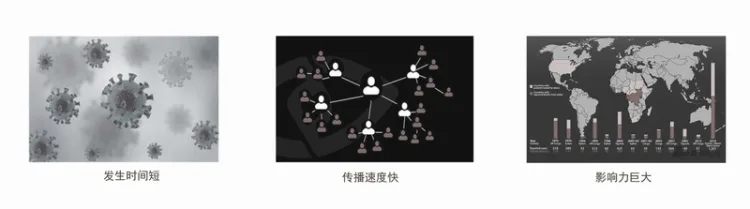
This social sustainability enables the community to respond effectively to sudden events like pandemics, which are characterized by rapid onset, fast transmission, and significant impact.
Our design supports rapid construction and addresses residents’ essential needs. Functional self-sufficiency within the community allows the entire residence to swiftly transition into a “pause mode.”
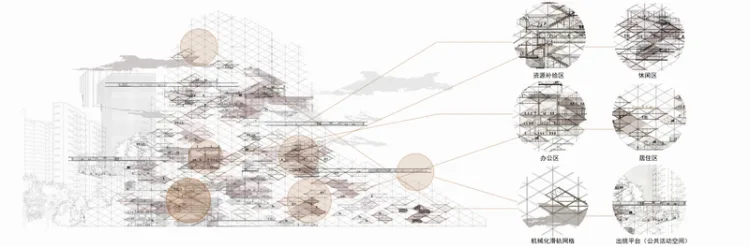
Functional Layout Diagram
2. “Mountains and Clouds as Cities”
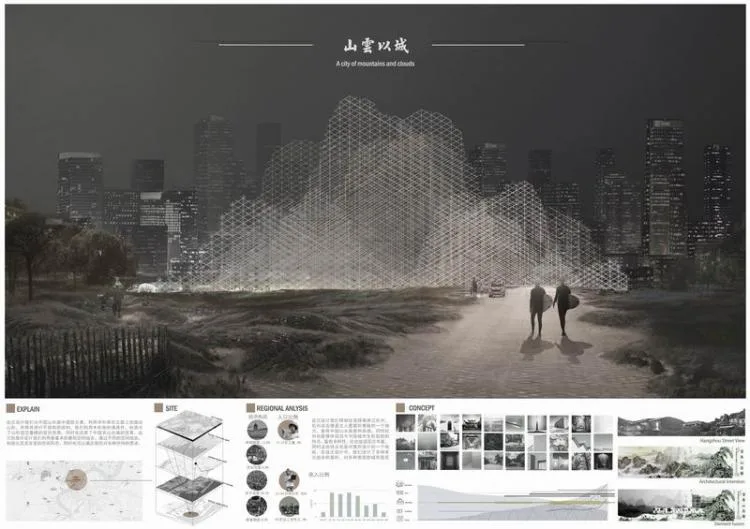
Building on our initial concept, we sought to create a localized “Super Residence” rooted in Chinese culture by drawing inspiration from traditional landscape paintings.

We extracted and translated elements from these paintings.
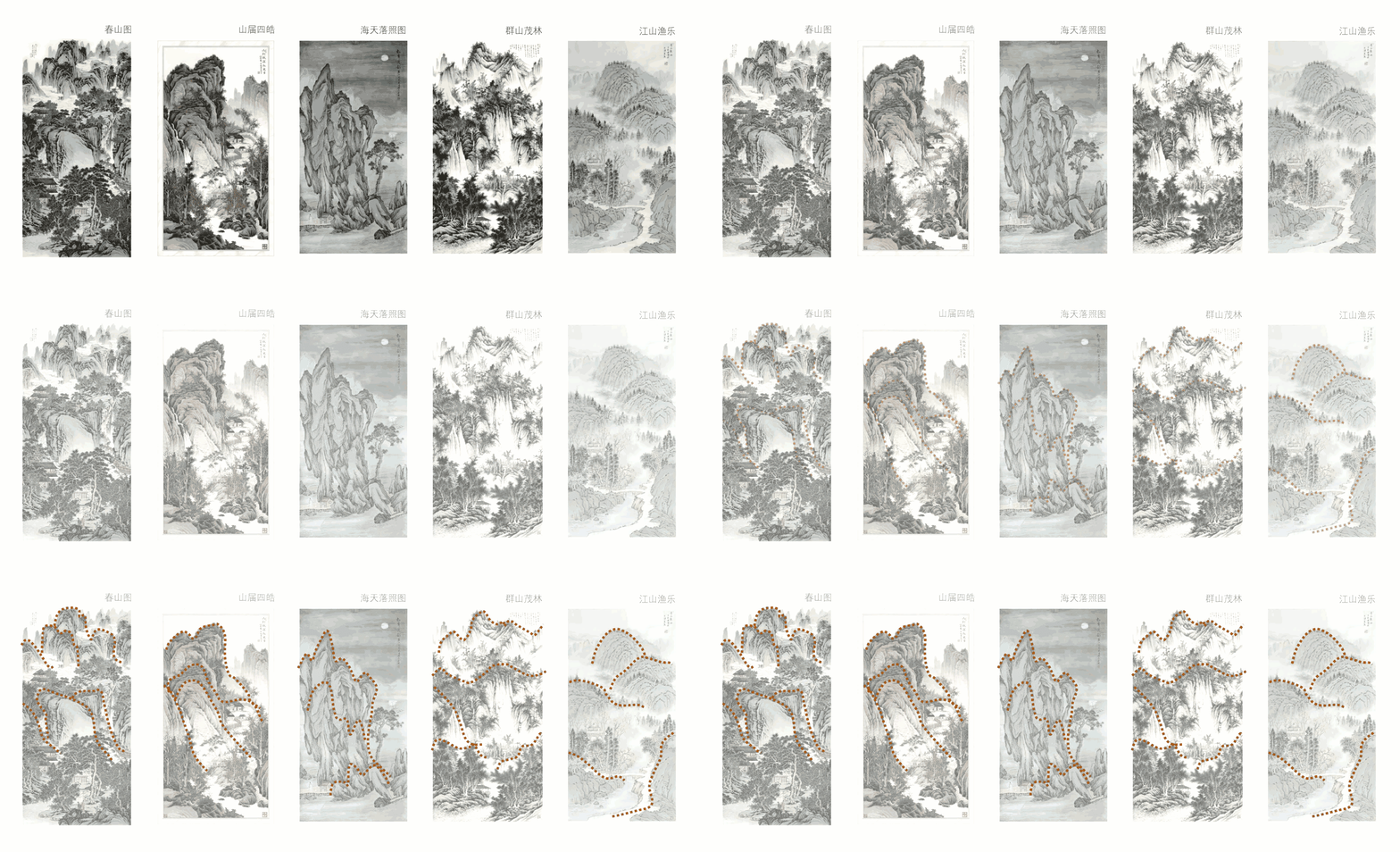
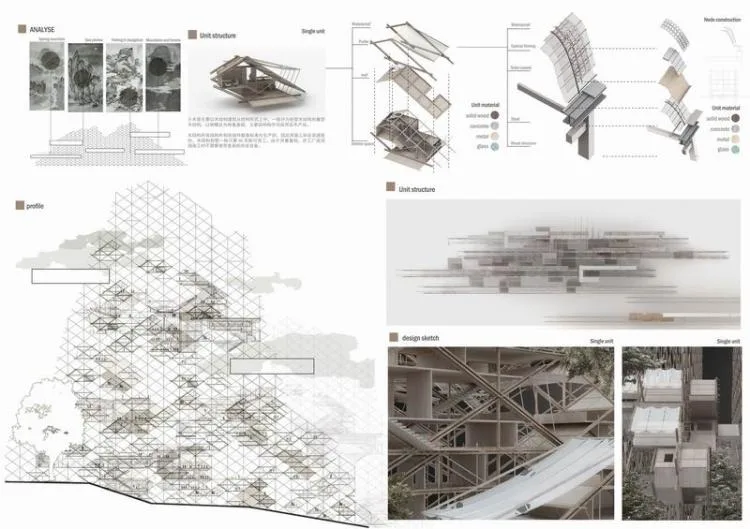
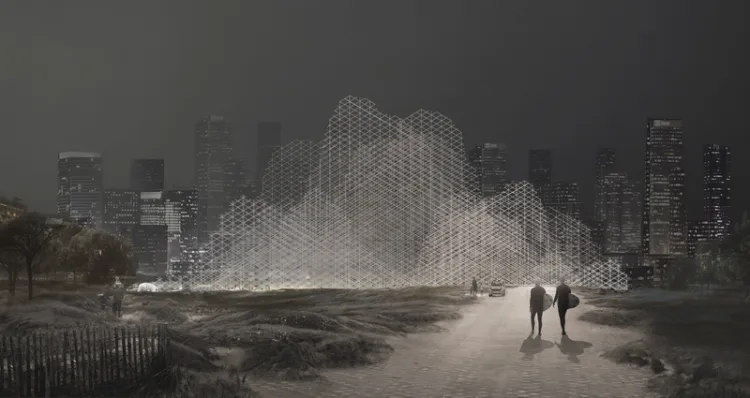
In this translation, mountains represent the structural framework, clouds symbolize the public spaces connecting units, and traditional sloped roofs form the basic elements of each unit. Since the location was not predefined, we first established the architectural concept before selecting the site.
Design Proposal
We selected Hangzhou as our site, a city known for its poetic charm and harmonious blend of landscape and urban life. Hangzhou’s diverse population offers a rich social context for our design, which aims to meet the varied needs of different community groups.
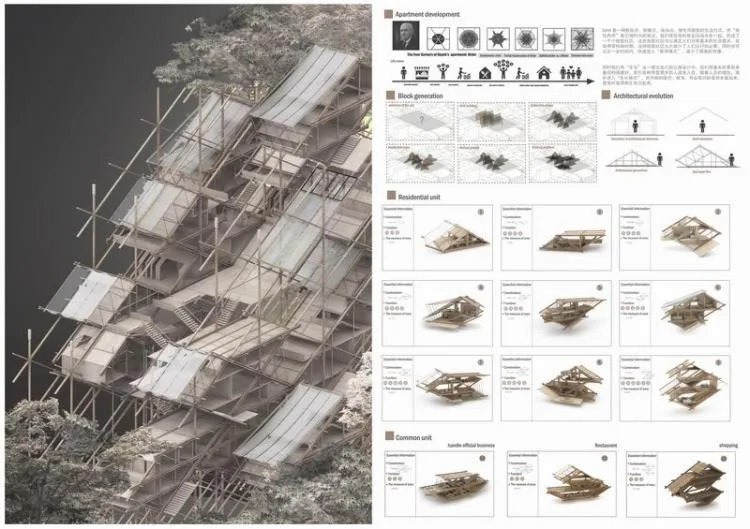
Our focus is on the traditional wooden frame, extracting key elements to design modular units that integrate traditional housing concepts while offering a new living experience.
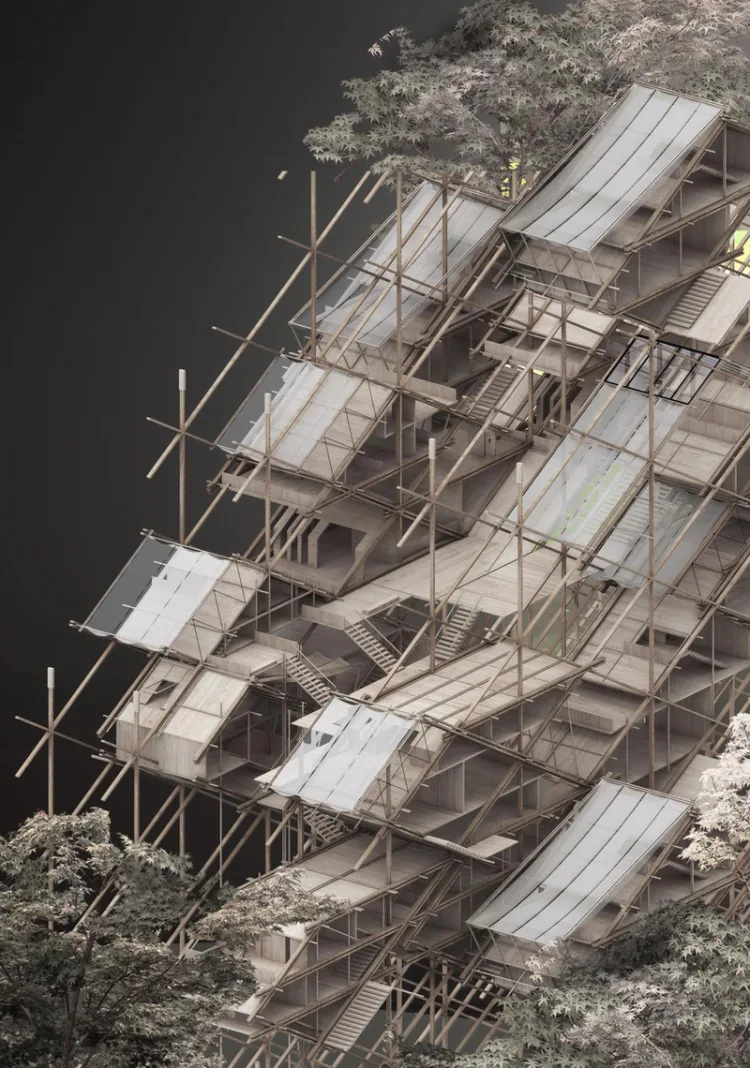
Conceptual Renderings
These standard-sized units have specific spatial layouts and are designed as modular diamond-shaped elements that can be inserted into the base frame at various points. We preconfigured scenarios based on different spatial requirements.
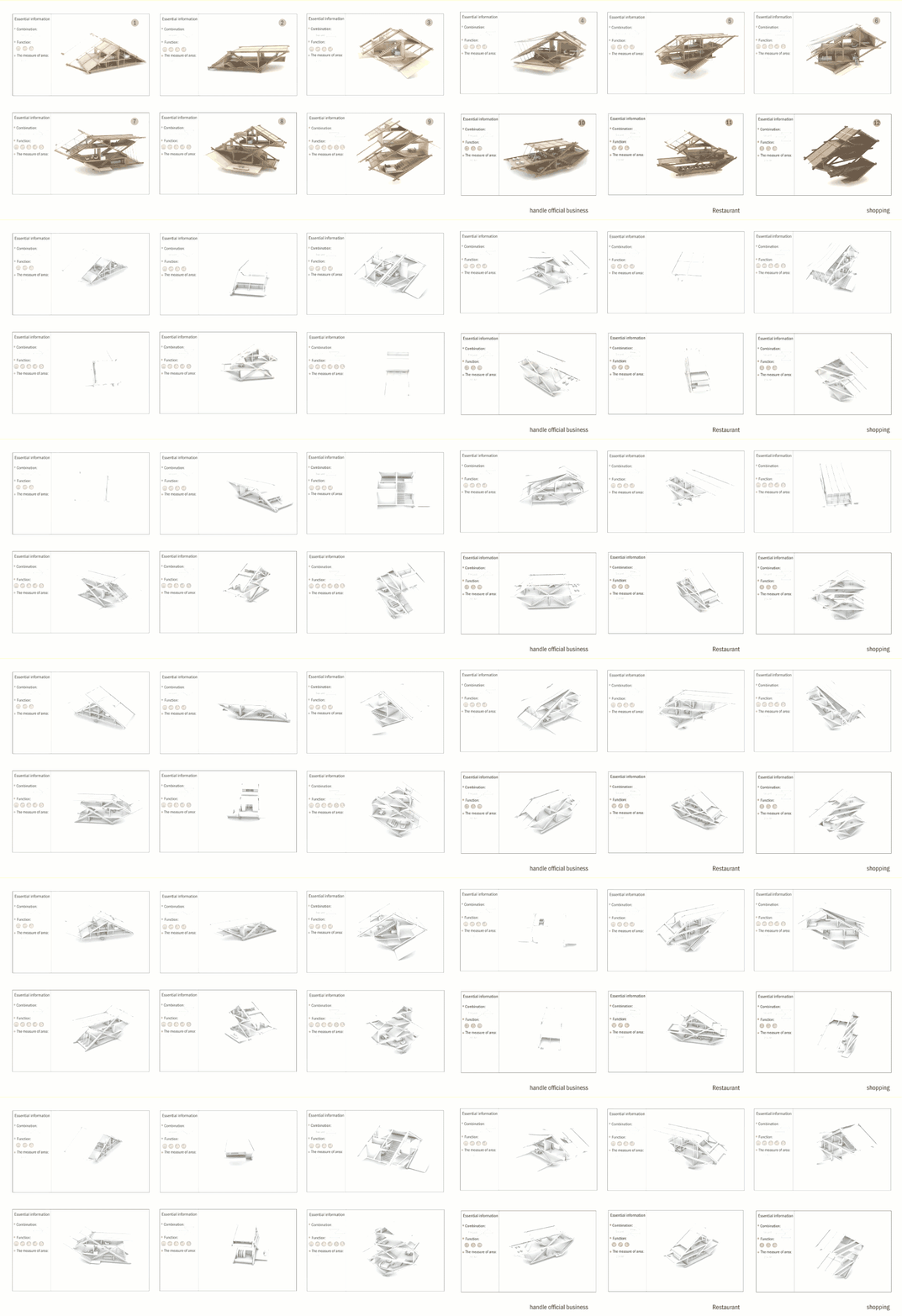
Multiple Unit Combinations
For example, the unit in the upper left corner covers 39 square meters over two floors, ideal for young individuals living alone. Units on the right offer expanded spaces, suitable for families of three to five. Additionally, several units in the lower right corner are designed for office, retail, and educational purposes.
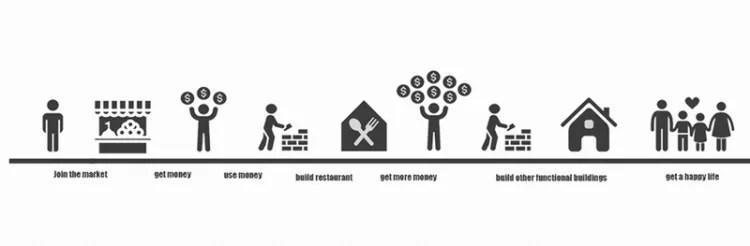
This modular approach allows for large-scale production, standardization, and repetition. Residents can modify and expand their living spaces according to changing needs.
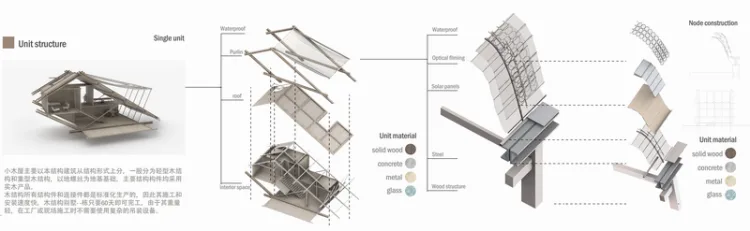
Structural Framework Generation
We use wood for the outer contour as structural support and connect transportation tracks around the structure to facilitate daily supply delivery and resident mobility. Roof-supported curtains are designed for solar power generation. In emergencies, apartments can quickly enter “pause mode,” with curtains providing temporary electricity and tracks ensuring swift delivery of essentials.
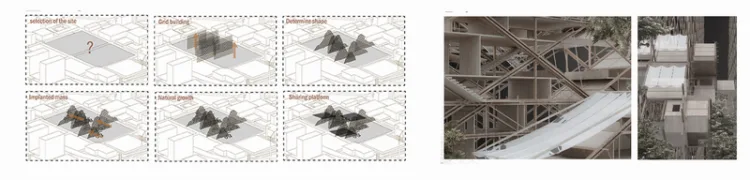
Our design envisions a living environment that grows with its residents. Unlike traditional housing, the “Mountains and Clouds in the City” concept is more two-dimensional, with buildings rising organically from the ground. Residences are modular, connected by a transportation system, and include enclosed public spaces.
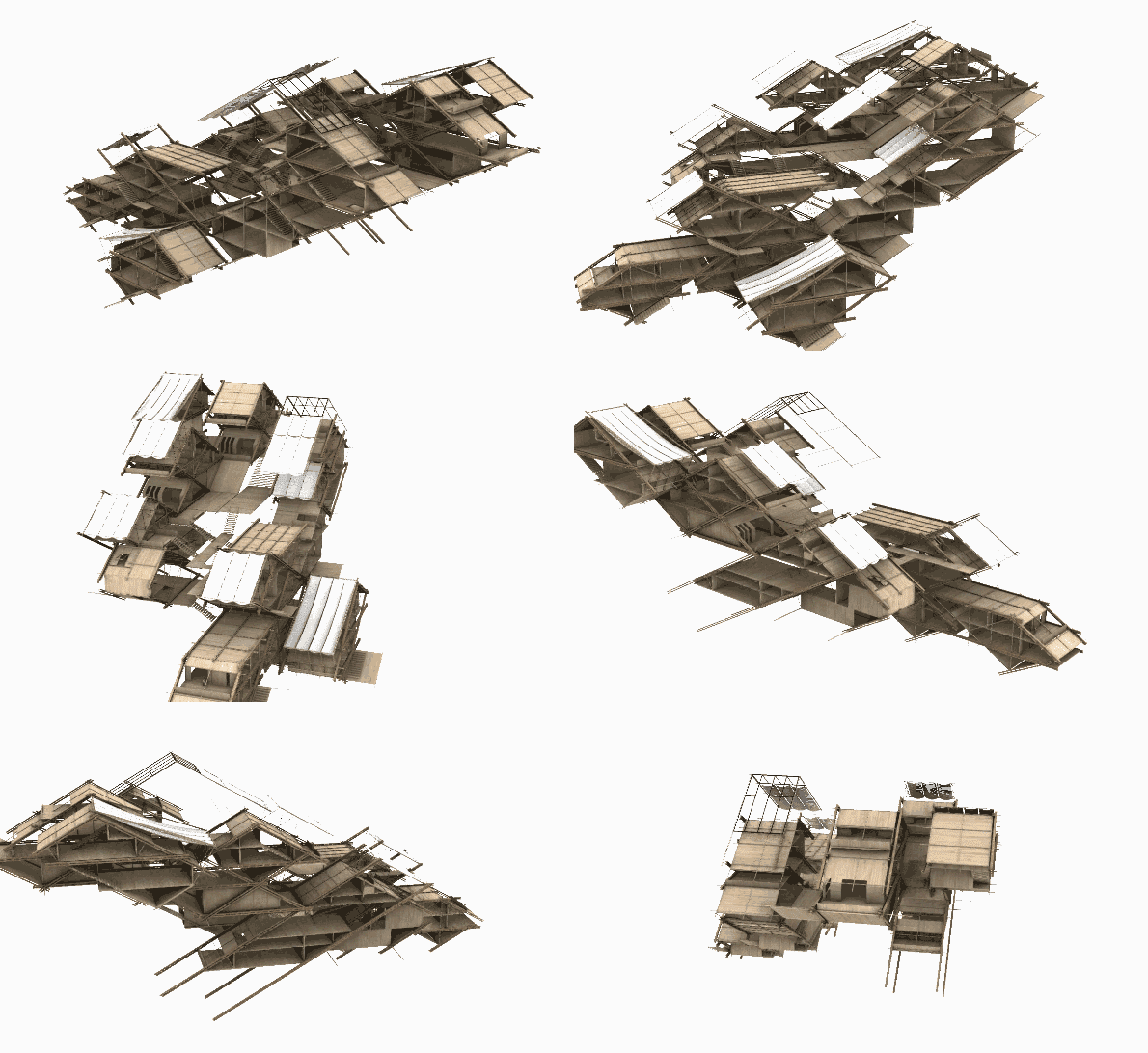
Conceptual Model Display
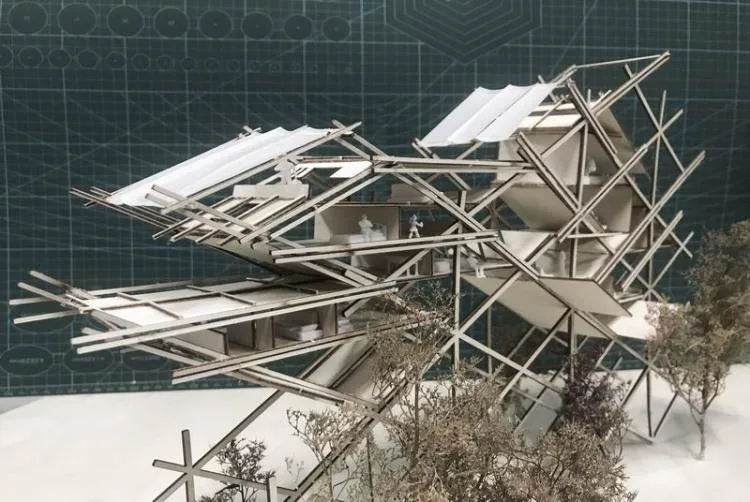
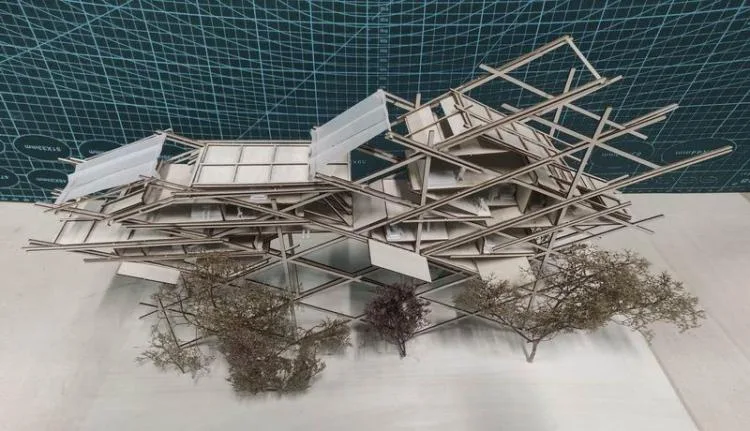
Photographs of the handmade model
The entire super residence embodies the concepts of growth and adaptability. We also hope it embraces the coming era of technological advancement and modern living.
More Quality Student Works
Explore our High-Quality Student Projects in this ongoing series.

Archcollege: Long-Term Call for Contributors
We offer manuscript fees ranging from 300 to 1000 RMB per article, plus an annual best work bonus of 10,000 RMB.
For more information, please leave a message via the website backend or add WeChat: JZXY-YZ.












Must log in before commenting!
Sign Up