
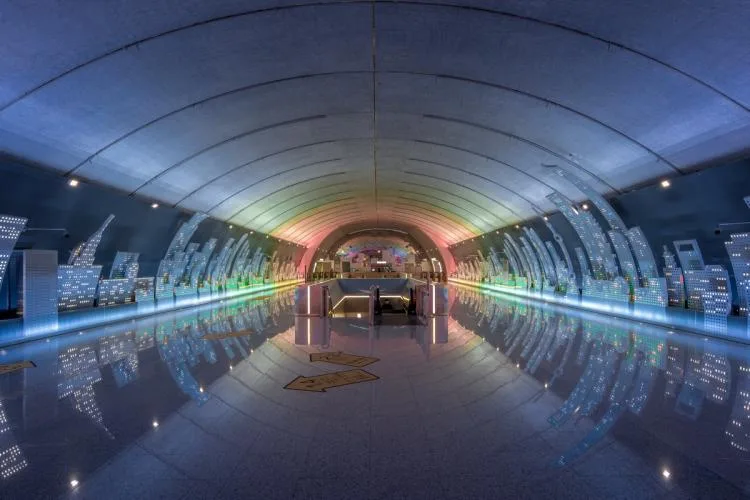
The newly completed Wuzhong Road Station on Shanghai Metro Line 15 serves as a public cultural space, showcasing the achievements of Shanghai’s reform and opening-up.
Designed by Wutopia Lab and hailed as the most beautiful subway station in Shanghai, Wuzhong Road Station was completed and began trial operation two weeks before the 2021 Spring Festival.
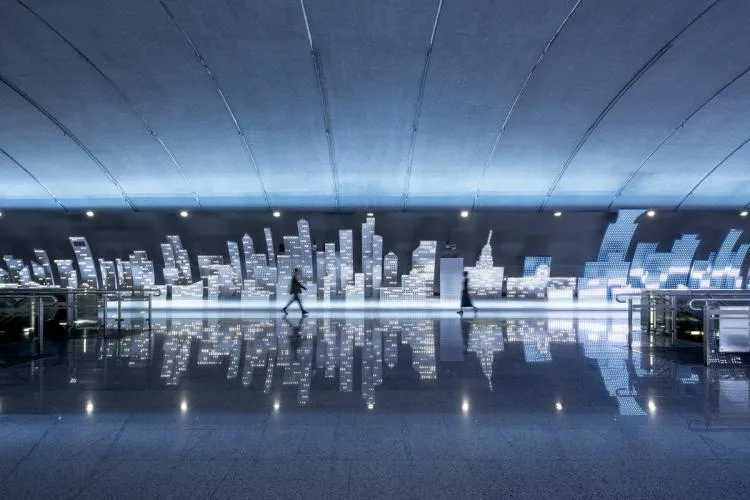
The Wuzhong Road Subway Station Hall Embodies Shanghai’s Reform and Opening-Up Achievements
Shanghai offers countless opportunities to realize dreams. Here, with ambition, anything is possible.
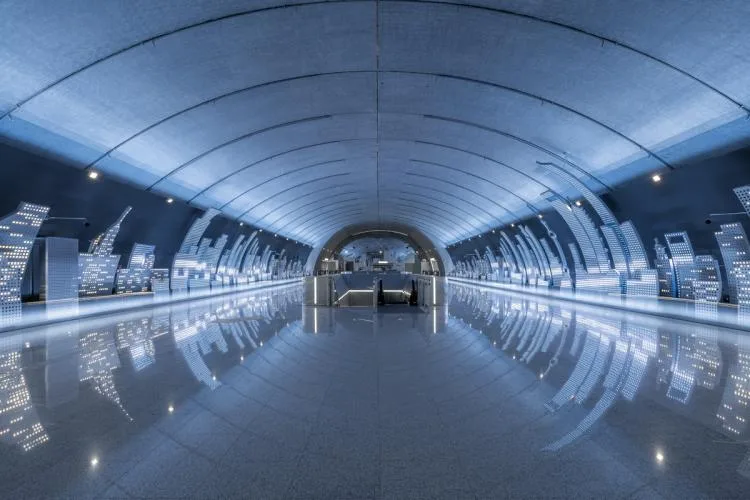
Shentong Company introduced innovation in the design of the Line 15 subway station hall by implementing a prefabricated large-span composite arch structure with a 21.6-meter net span at Wuzhong Road Station. This created Shanghai Metro’s first column-free, unobstructed large platform hall.
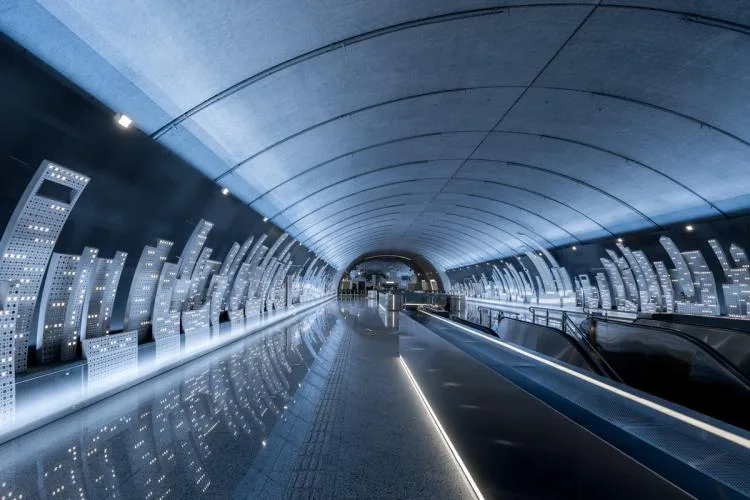
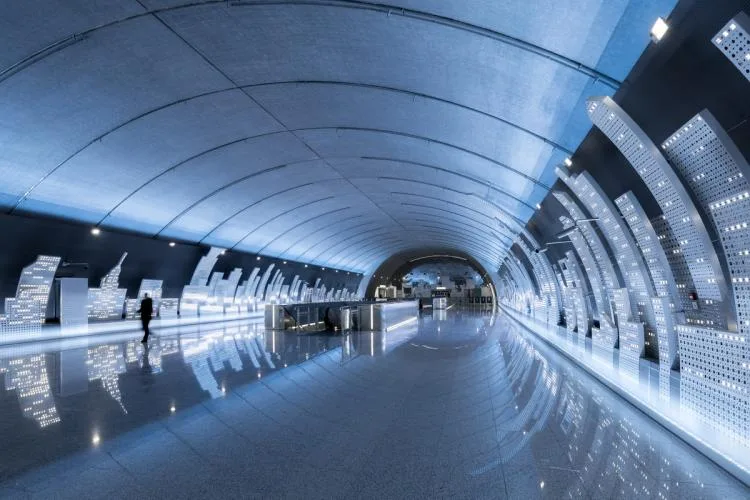
Though Shanghai’s foundation was initially unsuitable for subway construction, it has become the city with the world’s longest subway system. The subway’s continuous expansion has fueled Shanghai’s rapid urban growth and prosperity. Wuzhong Road Station also serves as Shentong Company’s headquarters. Inspired by this grand arched structure, architects envisioned the station hall as an exhibition space reflecting Shanghai’s urban development through reform and opening-up. If the station floor represents the Huangpu River, then the two sides symbolize the magnificent cityscapes of Pudong and Puxi, while the station’s ends hint at Shanghai’s bright future.
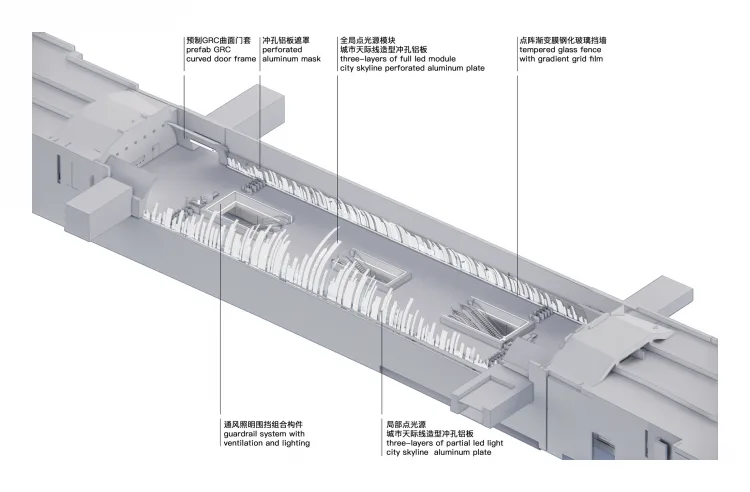
△ Station hall floor axonometric drawing
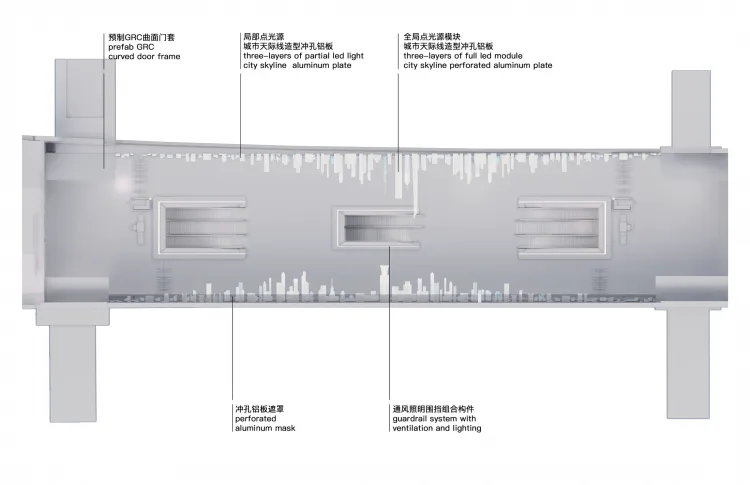
△ Station hall floor plan
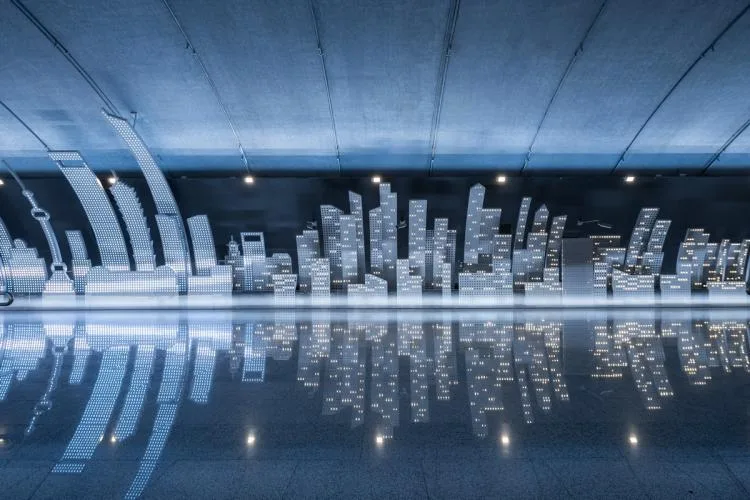
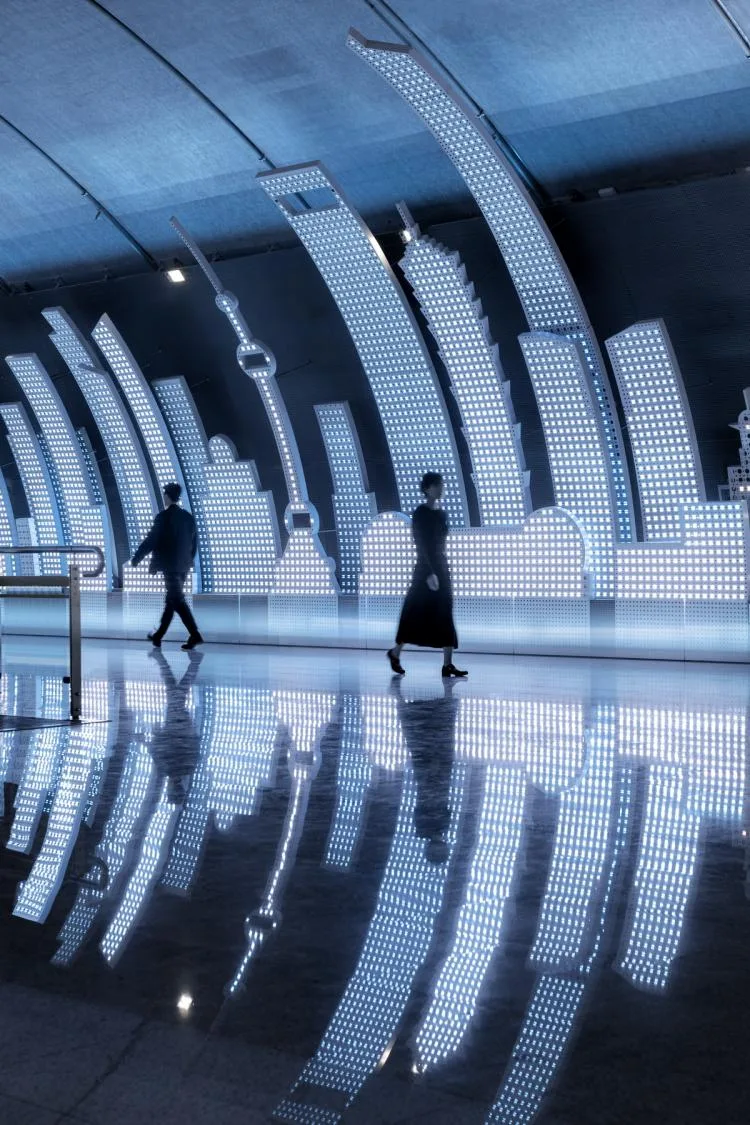
The architects’ first design step was to use perforated aluminum panels to create a layered urban landscape along both sides of the station hall, representing the cityscape on either side of the Pujiang River. Familiar landmarks are depicted alongside abstract representations of Shanghai’s skyscrapers. These urban landscapes rise along the arch walls, seemingly converging. Mirrored walls extend this scenery infinitely, evoking a sense of endless urban grandeur. In this space, both familiar and novel, visitors discover a sense of belonging and pride in Shanghai, whether longtime residents or newcomers.
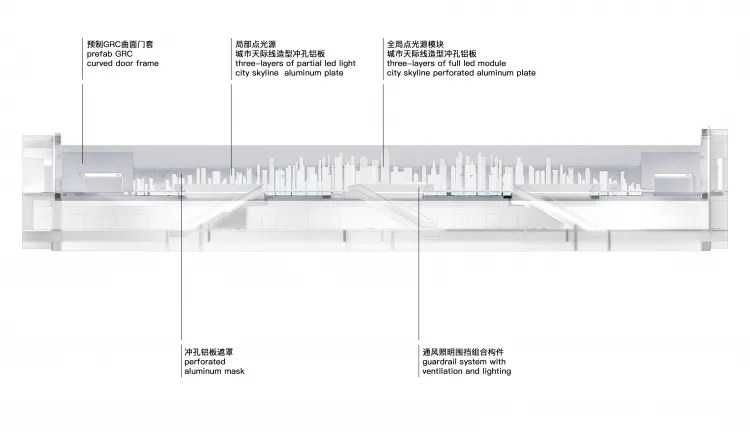
△ Section diagram
The Wuzhong Road Station Hall Reflects the Spirit of Shanghai Residents
Shanghai shines brightly with light everywhere, inspiring resilience and strength. Standing in this light, one feels empowered to face life’s challenges. Having endured hardships and frustrations over the years, Shanghai residents develop a fearless spirit.
As a Shanghai-based designer, the architect aimed to embody the spirit and character of Shanghai people, especially within the context of reform and opening-up, through careful attention to details.
Refreshing
One key trait of Shanghai residents is their desire for freshness in life. The station hall reflects this by resembling an exhibition space, with only the entrance gate reminding visitors of its function as a managed transit area. Achieving this refreshing atmosphere, however, posed challenges.
Firstly, the arch structure’s original beauty had to be preserved. Shentong Company required the architects to expose the structural elements fully, avoiding suspended ceilings that would conceal them. Moreover, suspended ceilings were incompatible with the prefabricated structure’s safety requirements, as fixing nails would compromise integrity. This created a challenge for installing air conditioning vents, sprinklers, lighting, cameras, and exit signs, which typically reside on ceilings.
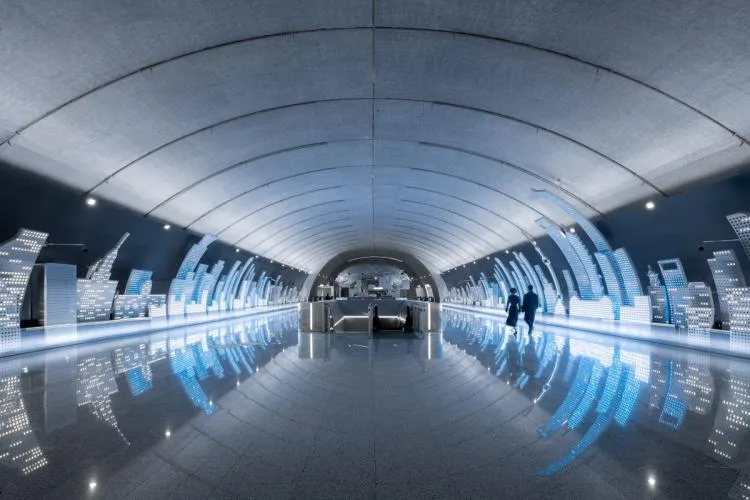
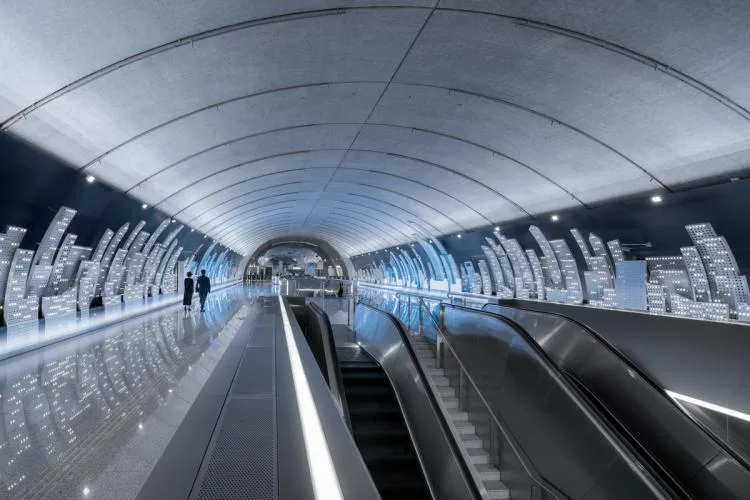
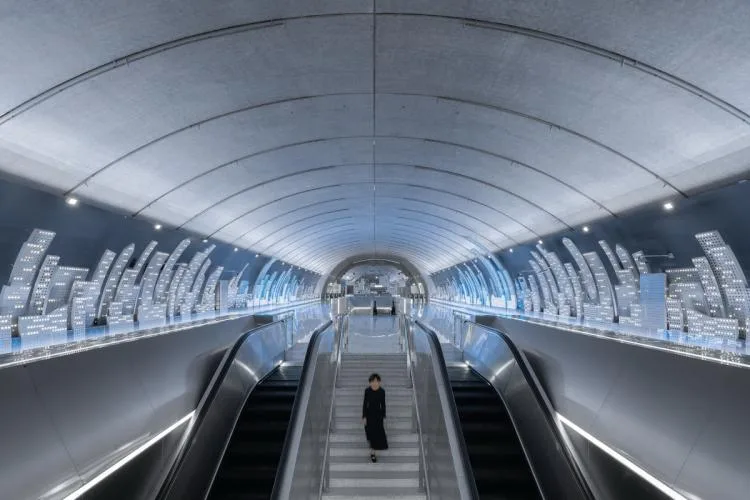
Shanghai people found innovative solutions. Fire sprinkler pipes were embedded within gaps between prefabricated components, appearing as decorative lines. Dome floodlights were positioned behind the city background wall, illuminating the ceiling from the ground up. Cameras and exit signs were mounted on the sides of structural keels. Air conditioning was split into two systems: circular nozzles on the end wall supply part of the airflow, while the rest is delivered through a U-shaped brushed stainless steel ventilation low wall integrated into the escalator railings below. This dome-like solution proved fresher and more aesthetic than traditional suspended ceilings.
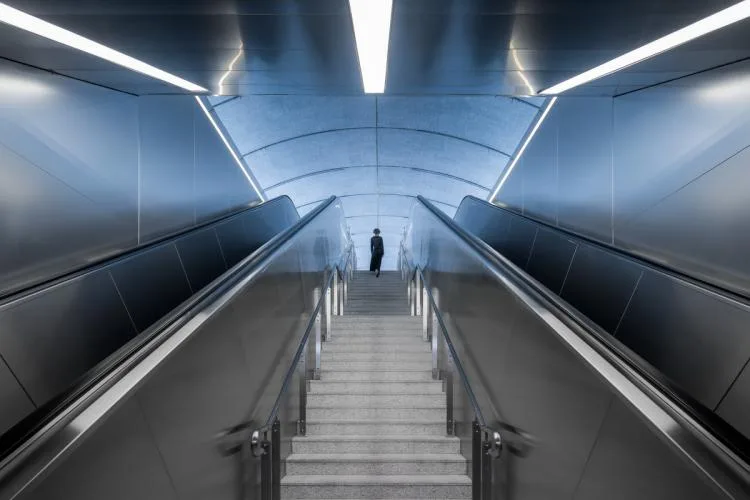
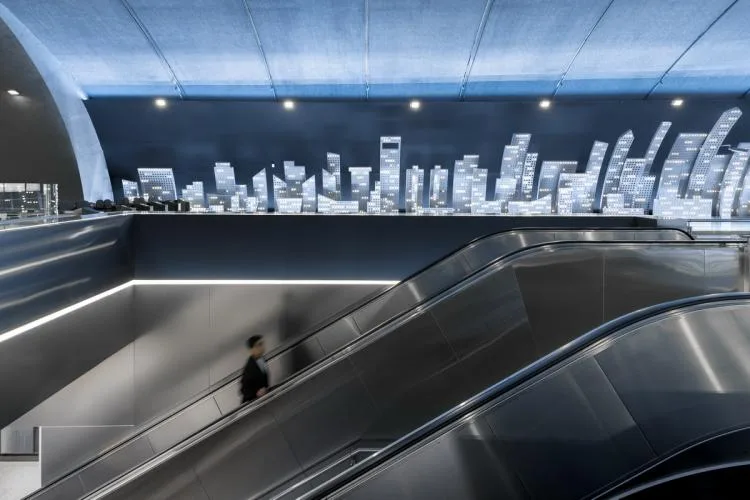
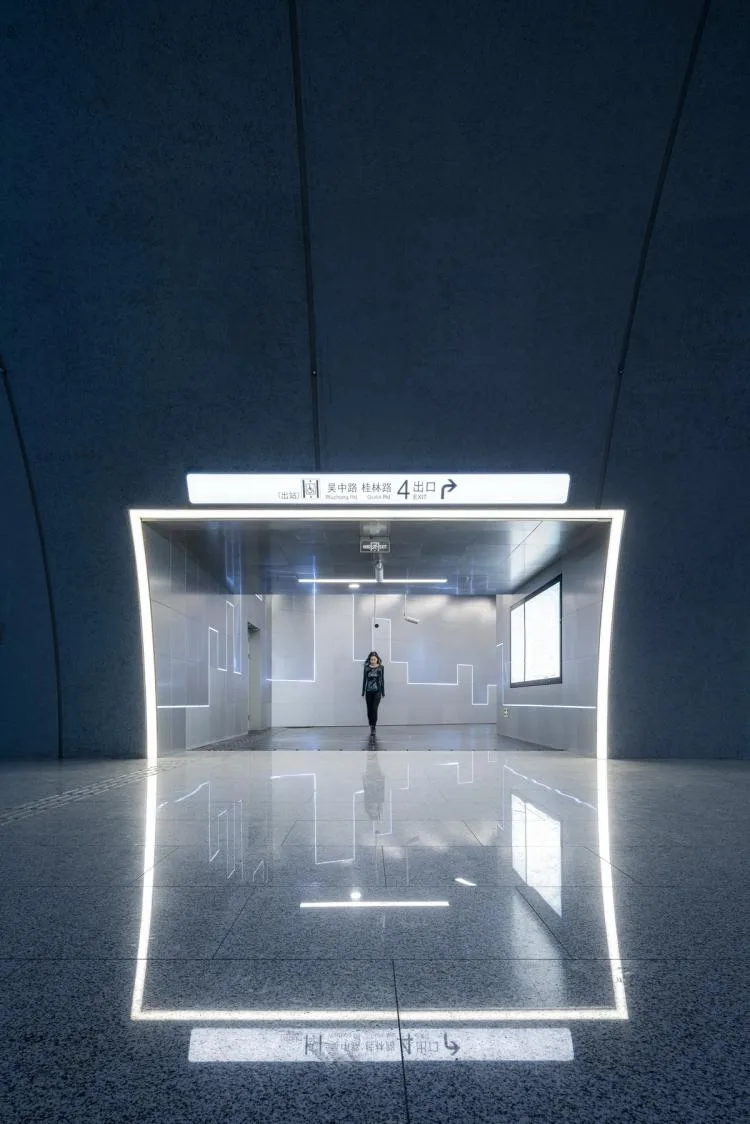
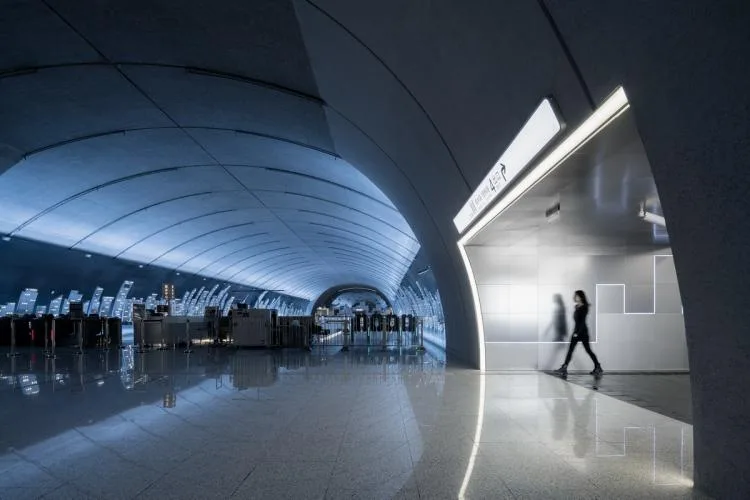
During construction, the convergence of equipment pipelines above the four station entrances posed a visual challenge, disrupting the clean arch structure and cityscape lines. To address this, the architect installed a continuous dark gray perforated aluminum panel behind the city outline to conceal the pipelines and serve as a backdrop. The arch curve at entrances was modified towards a semicircle to accommodate the integrated pipelines, forming a natural doorframe. This doorframe, prefabricated from GRC material, seamlessly integrates with the concrete arch. A cleverly hidden pivot door conceals the fire hydrant beside the entrance. Additionally, a precisely designed hyperbolic LED light strip at the entrance enhances the door’s visual impact, creating four glowing light gates with their reflections on the ground. Pedestrians pass through these light gates daily, witnessing a subtle yet refreshing urban miracle.
Crisp
Shanghai residents value precision, delicacy, and flexibility in their work. While combining ventilation openings with railings to form a ventilation low wall was aesthetically refreshing, structural beams required gaps for the ducts, creating safety concerns. Placing the fence directly at the edge made it appear bulky and unsafe.
To solve this, the architect designed a stair-shaped platform that divides at the air vent’s height. Concerns about a triangular gap between the escalator and subway led to an L-shaped fold forming a closed U-shaped loop, enhancing safety. To prevent children from climbing on the ventilation walls, protruding grille vents were added. To visually soften the ventilation walls’ bulk, brushed stainless steel was selected for its subtle reflections, and LED light strips along the base created a floating effect.
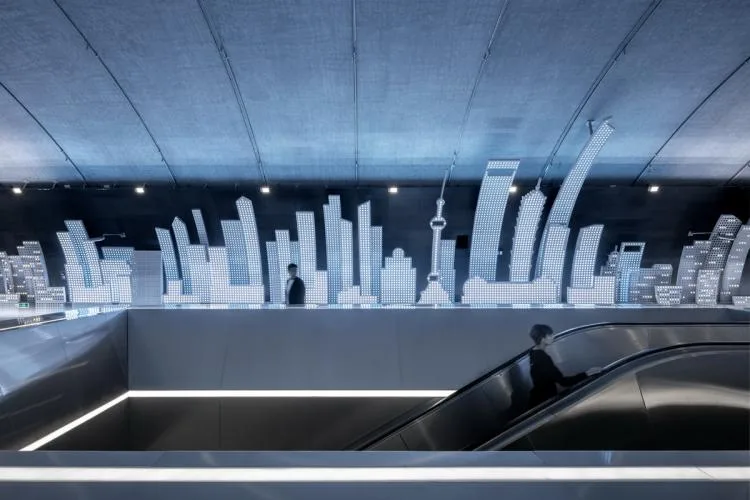
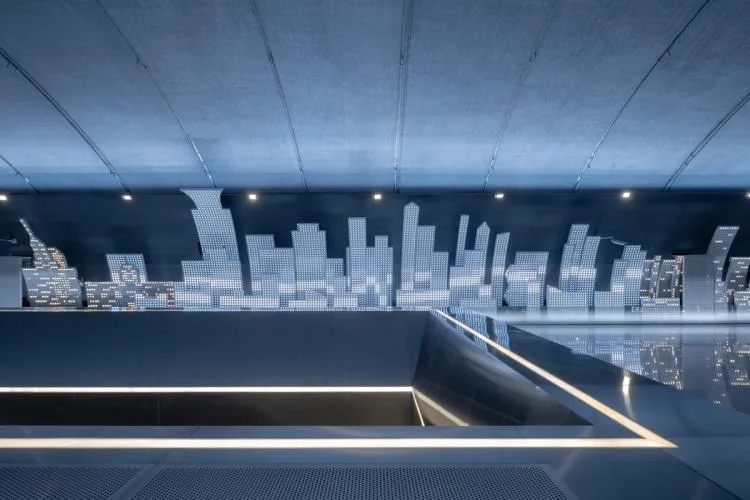
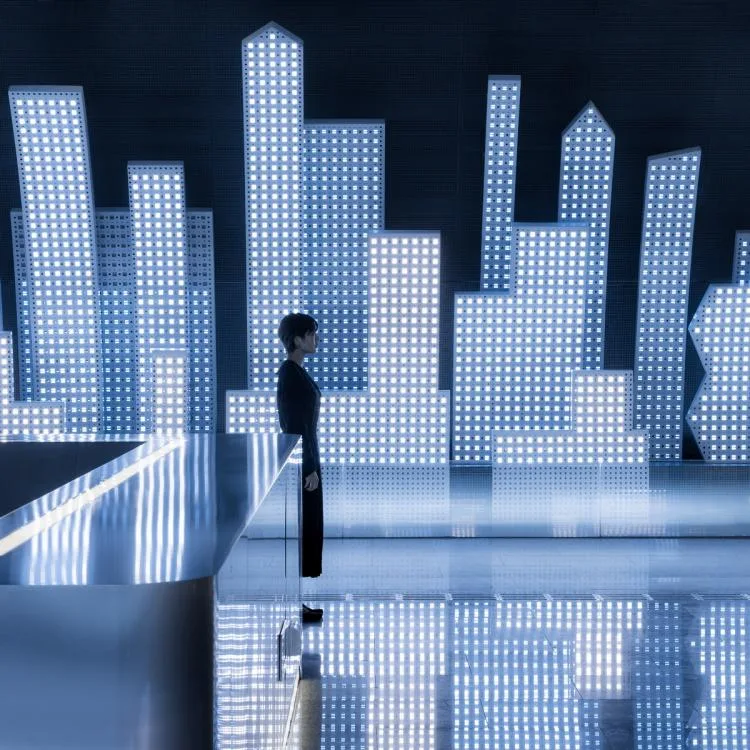
The highlight of the station hall is the urban landscape walls on both sides, depicting Shanghai’s skyline. The architect layered three perforated aluminum panels to create depth. Because nails couldn’t be used on the arch structure, plates were mounted on a grid of welded secondary keels. Dissatisfied with the aluminum plate’s thinness, the architect requested folded edges to add visual thickness and obscure keels from side views. The gaps between layers allowed installation of aluminum plates and dome floodlights without interference. To avoid rigidity, five different perforation sizes were designed, reducing light and sound reflection and softening the metal’s appearance. These layered voids create an endless cityscape within less than one meter of thickness. Standing in the hall, visitors experience Shanghai’s past, present, and future unfolding around them in a dreamlike scene.
Determined
Shanghai residents approach challenges with calm resolve. The design and construction of Wuzhong Road Station faced unexpected issues that required careful solutions without compromising the original vision.
During the construction drawing phase, regulations required a continuous 60 cm high water retaining wall in front of the urban background wall. Extending the marble floor to form this wall appeared clumsy, while a single paint layer looked crude, both visually cutting off the urban background. The architect chose continuous glass with gradient film as the water retaining barrier. The film serves as a safety marker to prevent collisions while visually creating a misty rising effect, seamlessly integrating into the design rather than feeling like an afterthought.
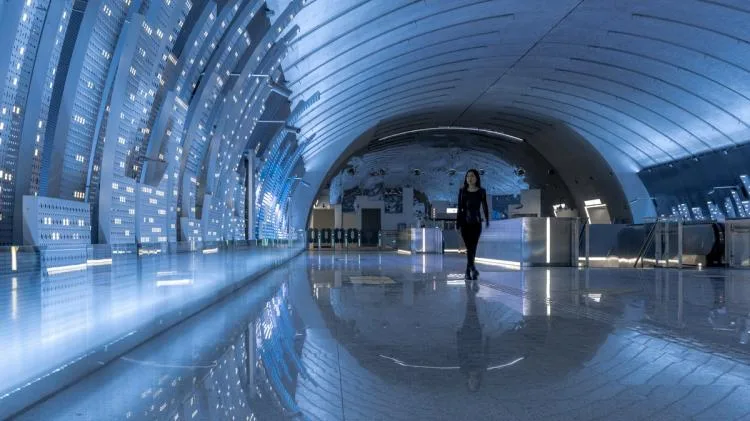
The station’s end wall also posed challenges. Initially designed as a full mirror, it had to accommodate various functional elements such as control room windows, work doors, elevator access, ventilation louvers, and ticket machines, each differing in size and depth. To maintain freshness, the architect extended the city contour line design to include these features below it as an abstract, continuous brushed stainless steel line. Above the line, mirrored surfaces reflect the urban landscapes on both sides, creating a seamless visual flow that suggests the design was always intended this way.
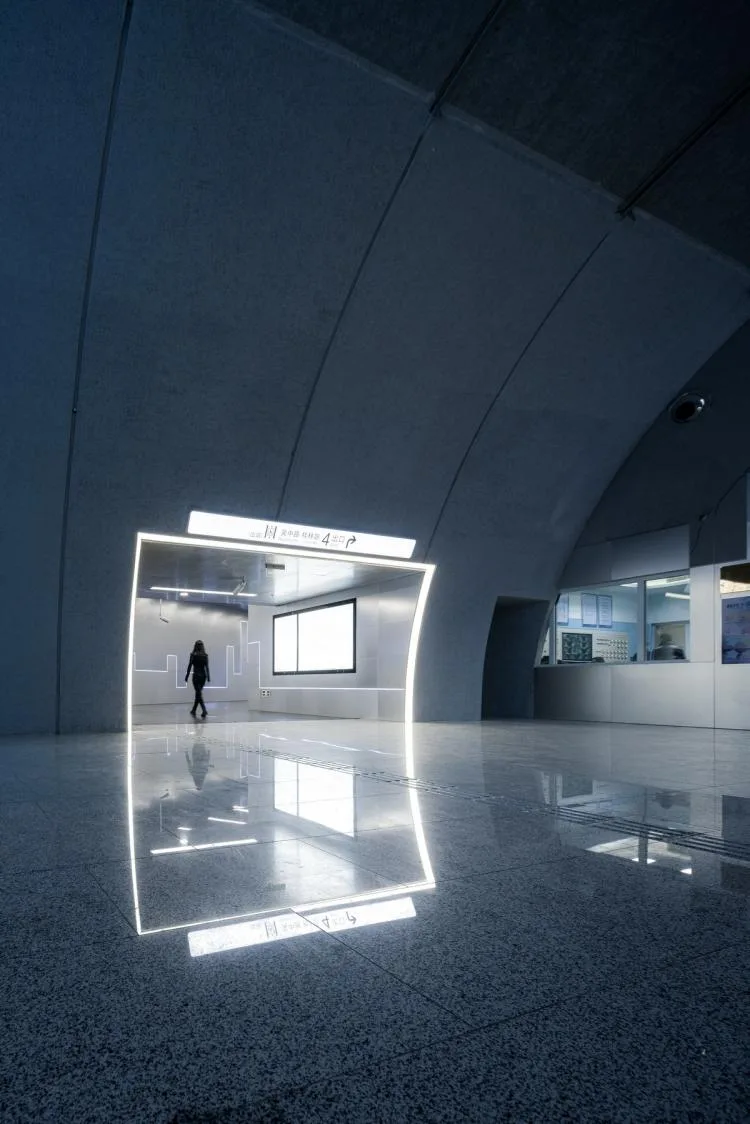
A Sense of Propriety
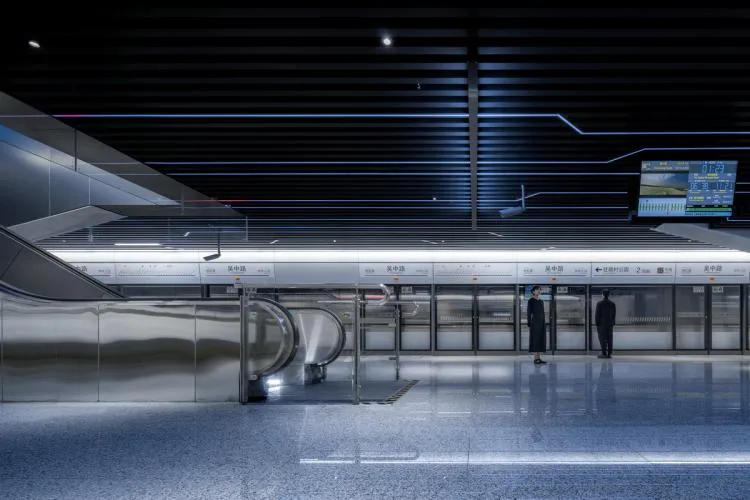
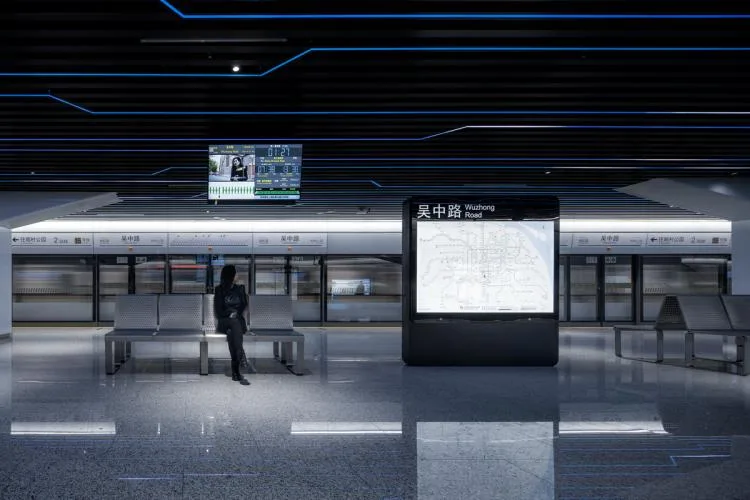
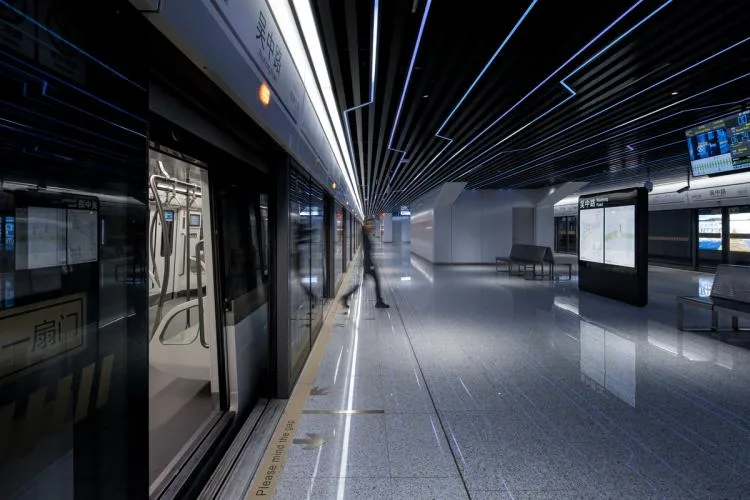
Shanghainese value moderation in their interactions and display subtle pride in appropriate ways. Visitors are guided through the station by the urban skyline abstracted as a continuous LED light strip. This outline does not replicate the complex station design but serves as a measured prelude or conclusion, embodying refined restraint.
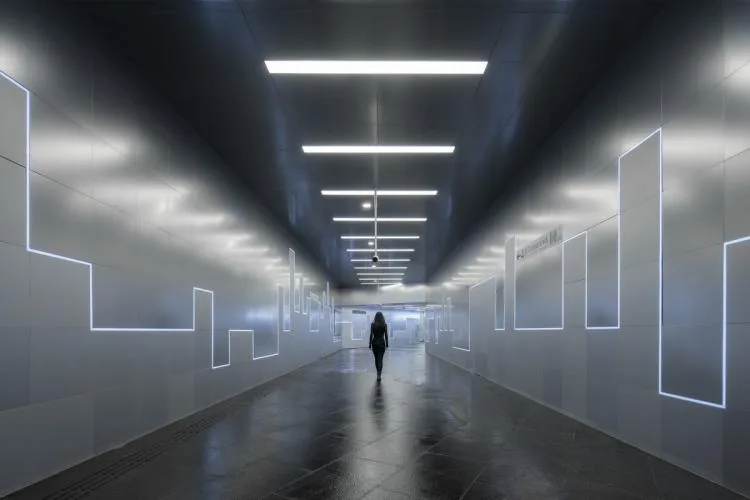
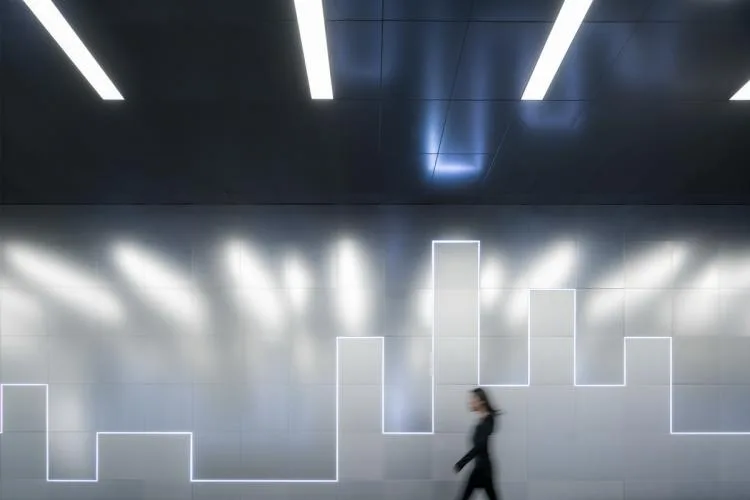
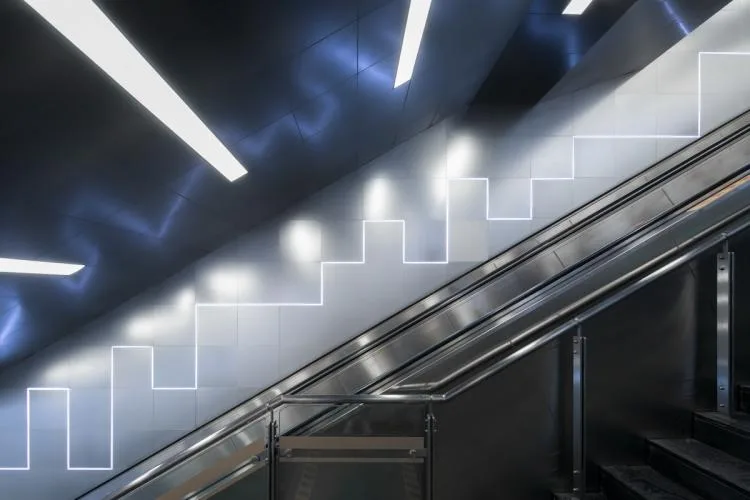
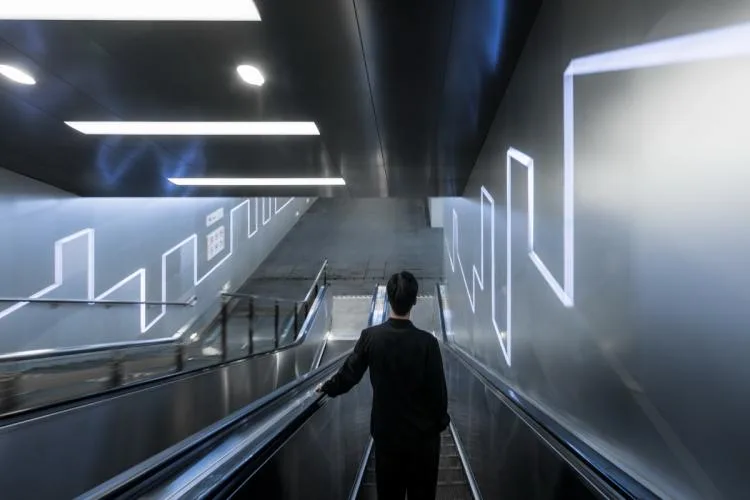
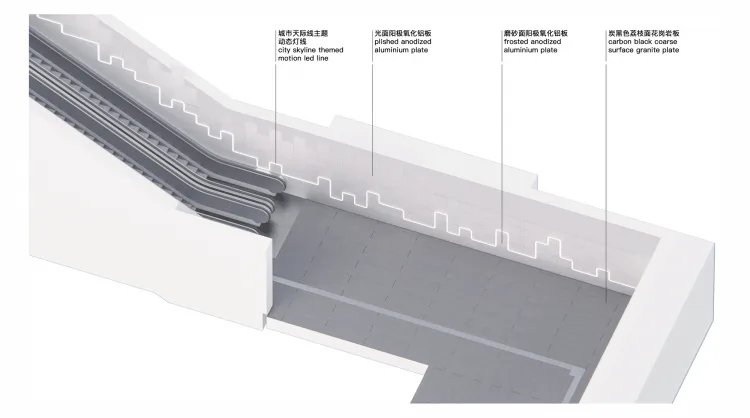
△ Channel axonometric diagram
Notice the linear LED light strips on the platform ceiling? They represent the Shanghai subway timetable, with light movement matching the subway travel directions on both platform sides, mirroring the urban contour light strips along the channel.
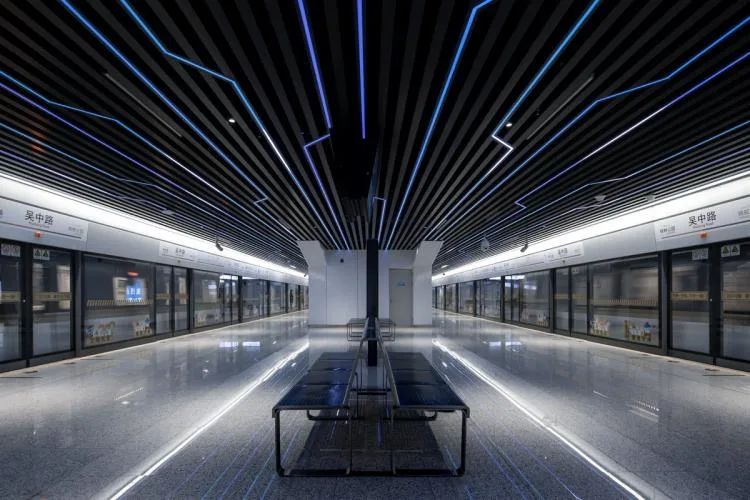
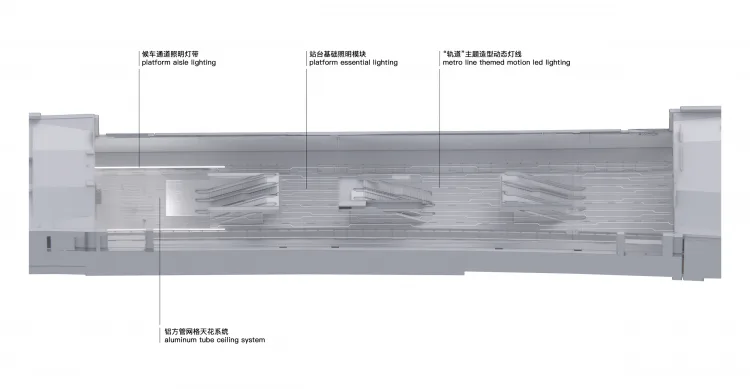
△ Platform level axonometric diagram
The city outline features iconic landmarks like the Oriental Pearl TV Tower, the Three-Piece Set, and many abstract skyscrapers. Look closely, and you’ll find ten buildings representing major Shanghai Metro stations. This subtle display reflects pride in the subway’s vital role in Shanghai’s development, expressed with quiet dignity.
Wuzhong Road Station Hall as a Public Cultural Space
Shanghai has transformed into a world of light, an ocean of stars illuminating the city.
From the outset, the architect envisioned this subway station as a symbol of Shanghai and aimed to persuade the owner to transform the functional public space into a cohesive cultural venue. Wuzhong Road Station was also planned as China’s first subway station with expressive ‘facial features.’
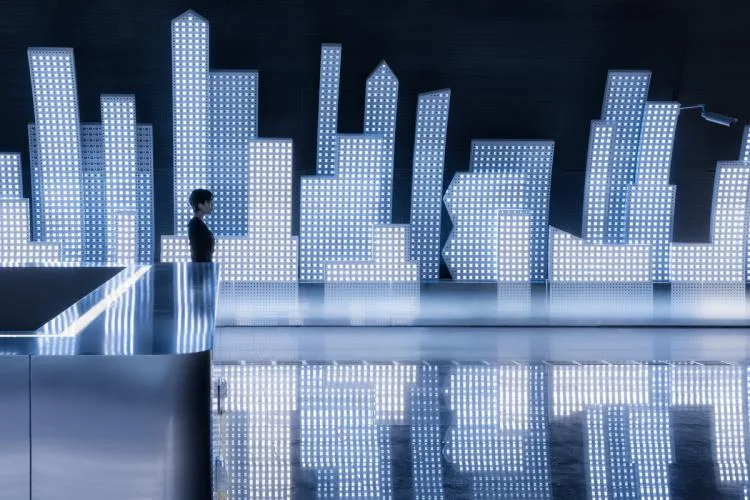
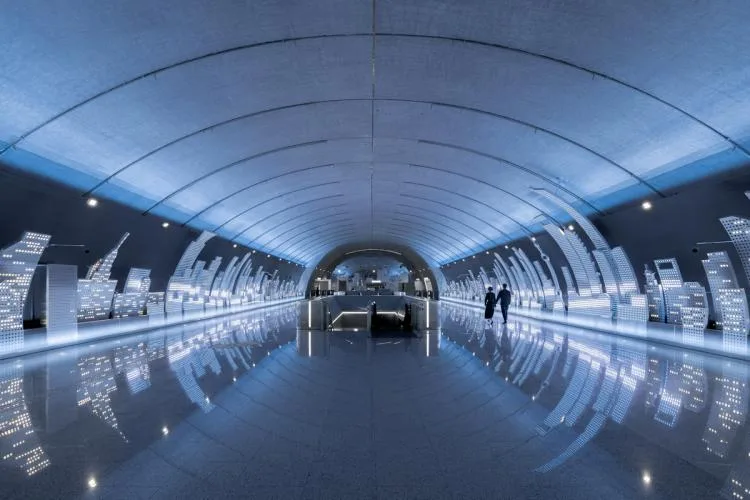
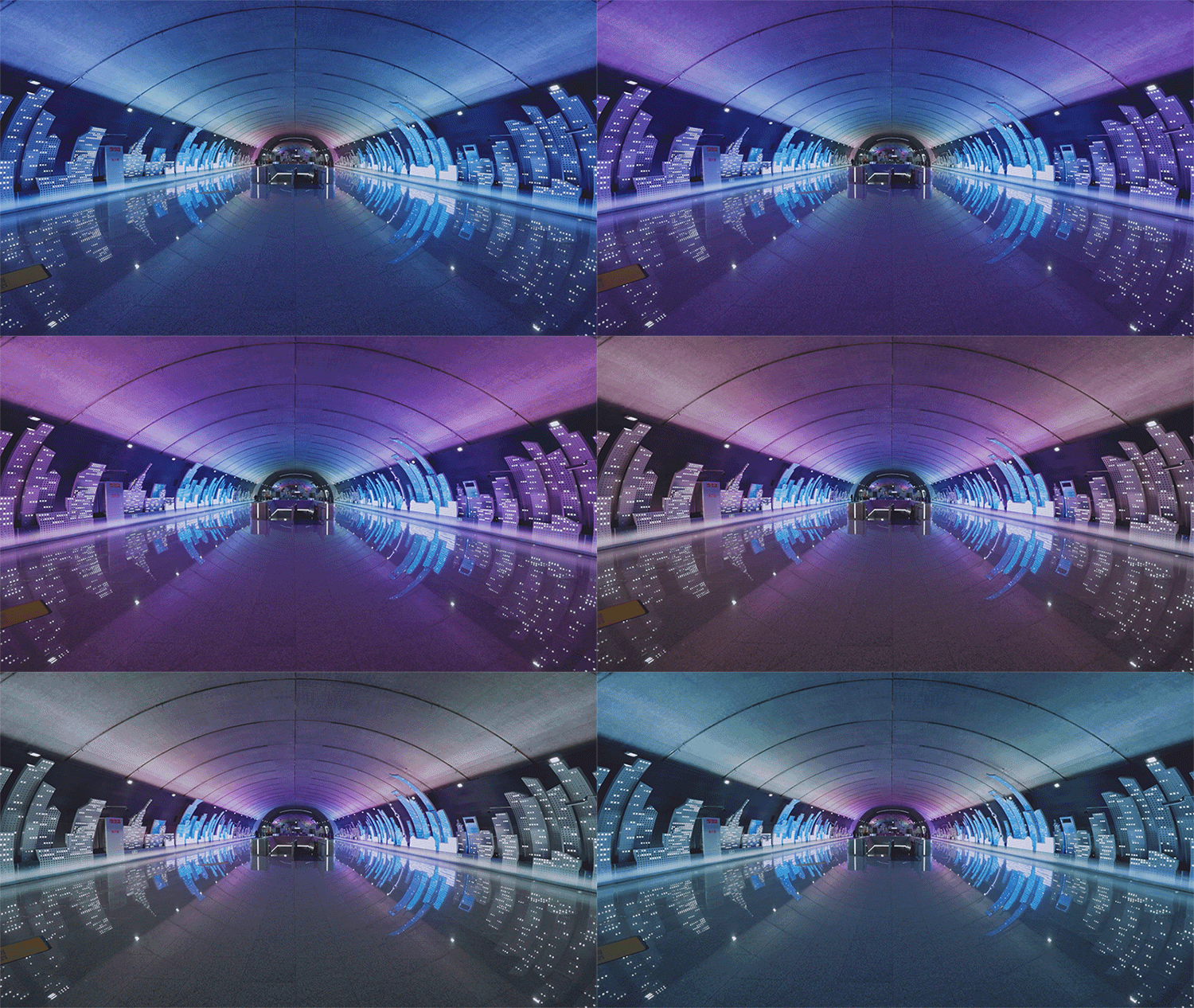
The architect explained to Shentong Company that this vision would be realized through meticulous lighting design. Wuzhong Road Station Hall’s lighting system combines four components to meet functional needs while offering imaginative dynamic effects. Without power lines along the entire arch, a floodlighting system behind the skyline aluminum panels provides indirect, soft illumination. RGB LED lights add rich colors and dynamic visuals to the dome, enhancing the atmosphere.
The three-layer aluminum skyline panels also feature separate hidden floodlights, creating clear hierarchy and depth. Behind the perforated panels near the entrances, scattered lighting mimics thousands of city lights at night. The central section includes full-coverage LED modules capable of millions of color changes and graphic effects, reminiscent of the vibrant curtain wall billboards along the Pujiang River. This intelligent lighting system transforms the hall into a cultural space full of endless creative possibilities.
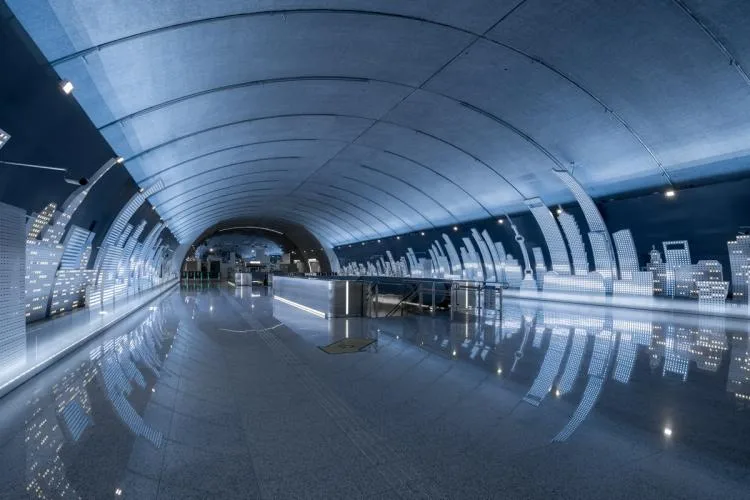
After two years of design and construction, Shentong Company praised Wuzhong Road Station for fully realizing the architect’s vision and promises. This station stands as an open urban art museum, inspiring society and earning its title as the most beautiful subway station ever seen.
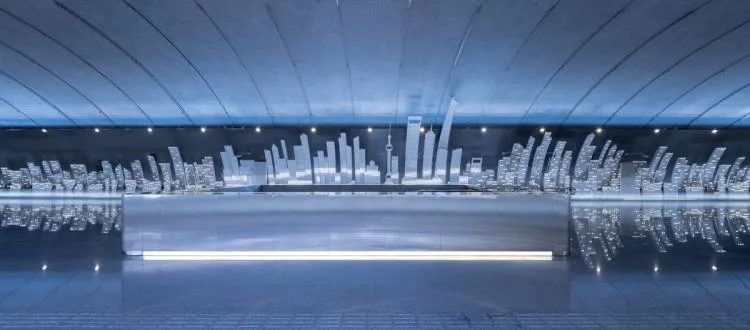
We conclude this article with the Shanghai dialect word: “pretty.”
Project Information
Project Name: Space Design of Wuzhong Road Station on Shanghai Metro Line 15
Design Company: W-mills by Wutopia Lab
Lead Architect: Yu Ting
Project Architect: Ding Ding, Mu Zhilin
Project Manager: Ding Ding
Design Team: Wang Dan, Chen Jianxiang, Song Jianxun
Construction Drawing Design Companies: Shanghai Modern Architectural Decoration Environment Design and Research Institute Co., Ltd., Shanghai Tunnel Engineering Rail Transit Design and Research Institute
Lighting Design: Wutopia Lab, Shanghai Roman Lighting
Architectural Photography: CreatAR Images
Project Location: Shanghai
Floor Area: 4000㎡
Building Materials: Perforated aluminum panels, brushed mirror stainless steel, anodized aluminum panels, sesame gray granite, black lychee surface granite, GRC, glass
Design Period: 2018–2019
Construction Period: 2019–2021












Must log in before commenting!
Sign Up