
Requirements for Doors and Windows in Prefabricated Building Standards
Technical Standards
Currently, China has released several technical standards for prefabricated buildings, including GB/T 51231-2016 “Technical Standard for Prefabricated Concrete Buildings,” GB/T 51232-2016 “Technical Standard for Prefabricated Steel Structure Buildings,” and GB/T 51233-2016 “Technical Standard for Prefabricated Wooden Structure Buildings.” These standards have been officially in effect since June 1, 2017. In addition, there are over 80 related national, industry, and local standards covering design, production, construction, and acceptance of prefabricated buildings.
The technical standards for prefabricated buildings, particularly those related to doors and windows, focus on five key aspects: coordinated modular openings, standardized design, integrated functionality, installation and assembly, and information-based control. Other design, manufacturing, installation, and acceptance requirements generally align with those for traditional door and window products.
Design Standardization
The standards specify the following requirements for the standardized design of doors and windows in prefabricated buildings:
Prefabricated buildings should be designed using modular units and combinations of modules, adhering to the principle of minimizing specifications while maximizing combinations. This approach facilitates the serialization and diversification of building components.
The facade design must comply with regulations that promote the standardization of components such as exterior windows.
External doors and windows should be factory-produced standardized series products, incorporating matching components like water repellent boards designed specifically for them.
Dimension tolerances and installation positions of components should be coordinated considering factors such as production requirements from BIM training assembly, main structural interlayer deformation, sealing material flexibility, material shrinkage, temperature-induced deformation, and construction errors.
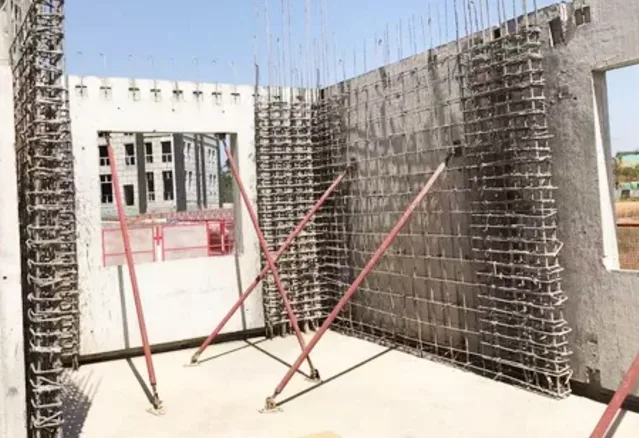
From this, it is clear that door and window design standardization should address the following areas:
1. Standardization of Dimensions
Door and window sizes should be adjusted according to the corresponding opening dimensions to ensure proper installation. Traditional installation methods include wet installation (without frames) and dry installation (with frames). For prefabricated buildings, installation methods also fall into frameless installation and frame-attached installation, with the latter further divided into pre-embedded and rear-mounted frames.
For frameless or pre-embedded frame installations, the opening size should match the standard hole size with reasonable reductions. For rear-mounted frame installations, the frame dimensions should also be appropriately reduced.
2. Standardization of Grid Division
A key factor in dividing doors and windows is the size of the opening sash. For casement windows, it is recommended to have grid widths of 600 mm and heights of 800 mm, 1000 mm, or 1200 mm. Other grid dimensions can be determined following BIM guidelines related to sash sizes.
3. Standardization of Installation Construction
For prefabricated buildings, the installation method prioritizing embedded frames is recommended.
Construction Assembly
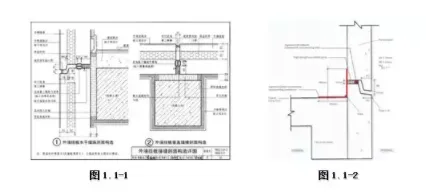
The “Standard” recommends the use of the “post installation method” for installing doors and windows in prefabricated buildings. This involves installing embedded parts at the exterior wall openings to facilitate easier replacement of doors and windows in the future.














Must log in before commenting!
Sign Up