
“All adults were once children.”
—— The Little Prince by Antoine de Saint-Exupéry
Perhaps it is not us who will change the world’s face, but the children—gardeners of the future Eden. Their innate power can pierce through the material shell of our human world like tender sprouts. To counteract the rigid discipline and excessive supervision imposed on students by the rapid construction of generic spaces, we strive to create a pastoral oasis within the intersection of city and nature, a space truly belonging to them.
In domestic basic education models that prioritize efficiency, control, and safety, there is a growing emphasis on sociality, creativity, and autonomy in student development. Yet, these educational ideals rarely find effective spatial expression in typical school designs. Conventional land-use standards and construction norms still produce spaces focused on efficiency and control—overly strict zoning, fixed usage patterns, homogenous spatial layouts, and linear circulation. Such spaces lack the inspiration and imagination essential for elementary school students.
Designing the Suzhou Science and Technology City Experimental Primary School presented a unique challenge. Due to special site conditions and project requirements, standard spatial patterns were unfeasible. This challenge became an opportunity to explore more inspiring spatial qualities for children’s growth while respecting fundamental spatial norms. Perhaps, it is the children who will change the world, with their budding ability to grow through stone, steel, and cement, just like through soil. By embracing their original power, we break free from the overbearing discipline imposed by rapid, generic school development and use space as a medium to reconnect with the natural impressions of city, mountains, water, and countryside.
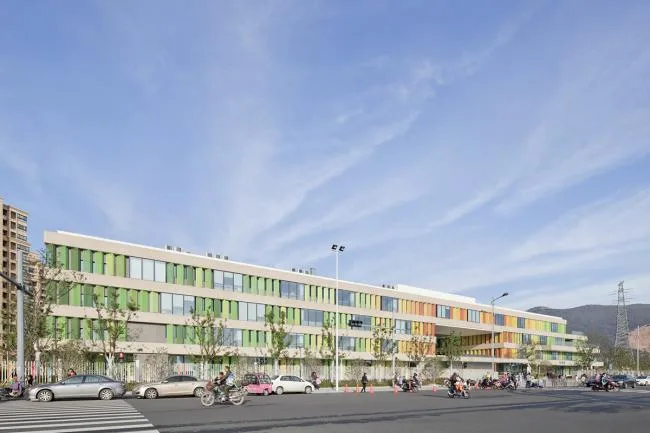
▲ South Main Entrance
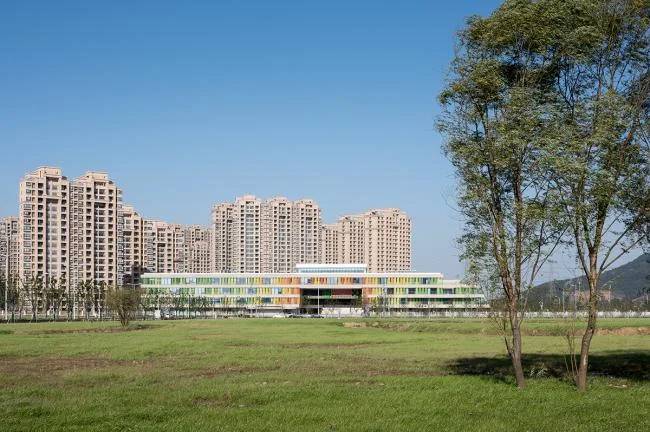
▲ South Main Entrance
Confrontation and Adaptation
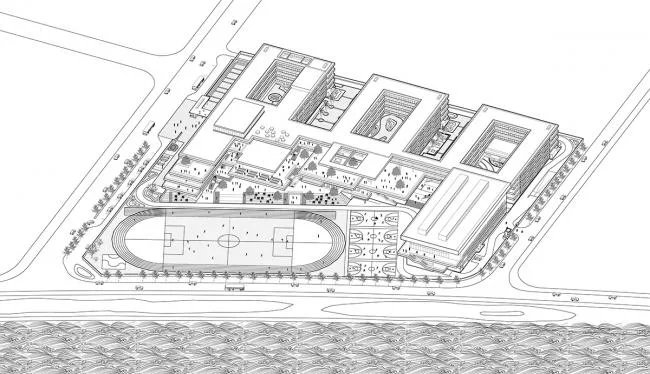
Suzhou Science and Technology City, like many rapidly developing urban areas, divides land into grids of similar sizes but varying attributes to meet modern urban operational needs efficiently. The site for Suzhou Science and Technology City Experimental Primary School epitomizes this approach, positioned at the tense boundary between the rigid urban grid and a soothing natural landscape. On one side lie rivers, wetlands, and mountains offering calming views and embodying nature and memories. On the other, high-density high-rise apartments for talent, designed with near-mathematical precision.
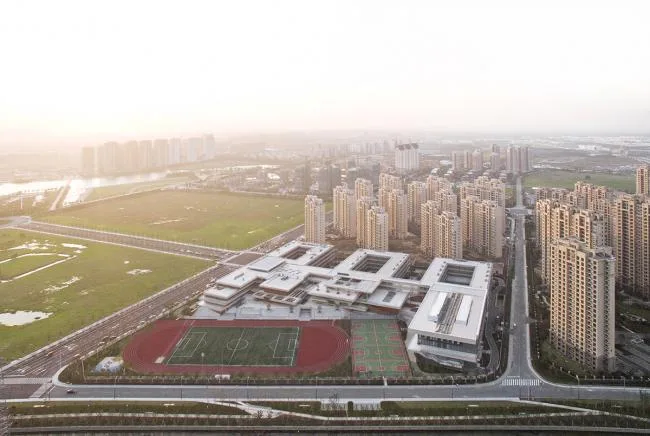
▲ Aerial View
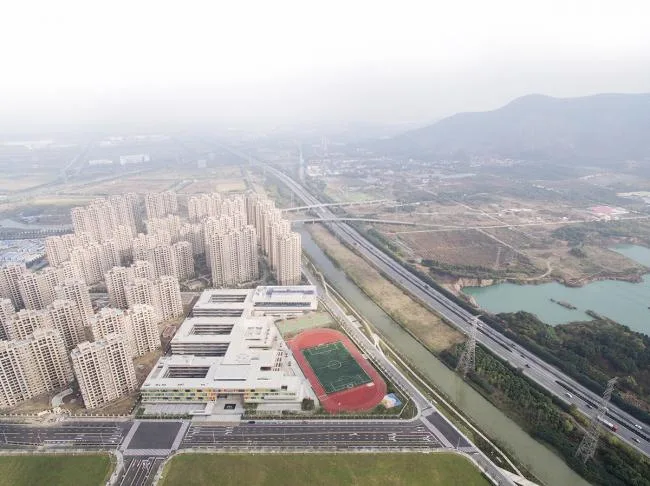
▲ Aerial View
This remaining soft, natural interface, not yet overtaken by urban development, evokes childhood memories of elementary school days. These memories are shaped not by calculated designs or uniform layouts but by irregular spaces, equidistant intervals, and fluid boundaries—elements that rigid, formulaic planning cannot replicate. In fact, overly deliberate and inflexible design concepts often conflict with the worldview we seek to cultivate.
Confronted with a compact site, a complex environment, and high-density capacity requirements (plot ratio of 1.5), our goal was to find a balance—a fusion point between these seemingly opposing elements. This project draws on the stark contrasts between the built and natural landscapes flanking the site, alongside society’s resistance to conventional exam-oriented education models. These contradictions demand that the architecture within the site itself both resists and adapts. Our primary focus was to reveal these tensions through spatial and contextual diversity, exploring their adaptability. Through comprehensive quality improvements, we have enhanced the social responsibility and educational significance embedded in this primary school’s design.
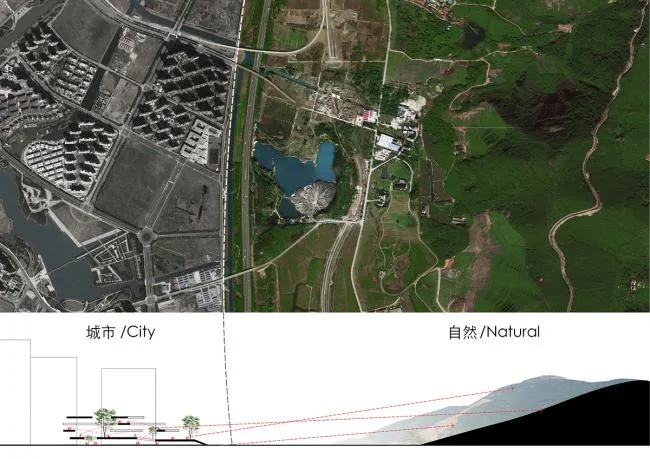
▲ Site Base
Suzhou is an ancient city with a rich urban history spanning thousands of years, embodying the legacy of Chinese civilization. It is one of China’s first 24 national historical and cultural cities. During the agricultural era, Suzhou produced 54 top scholars in literature and six in martial arts, ranking first nationwide. In modern times, the city boasts the highest number of academicians affiliated with the Chinese Academy of Sciences. Living in rapidly developing cities has created a gap in our understanding of history and place. Reflecting Suzhou’s heritage—its history, scenery, and culture—within the fast-growing Science and Technology City on the city’s western edge, and enabling children here to grasp both history and contemporary times while receiving education, has been a core professional and social responsibility throughout our design exploration.
Continuation and Evolution
Traditional academies served not only as educational institutions but as historical witnesses to the evolution of cultural transmission. Originating in the Tang Dynasty, academies were ancient folk educational organizations, typically established in secluded mountains and forests by wealthy families and scholars funding their own schools. Suzhou’s rich academy heritage spans from the Song Dynasty’s Hejing Academy, through the Yuan Dynasty’s Wenzheng Academy, to the Ming Dynasty’s Bishan Academy, and continues to the present with a dense network of academies that have historically influenced the entire country.
Our design for Suzhou Science and Technology City Experimental Primary School starts from this rich tradition, aiming to integrate Suzhou’s academy culture with contemporary educational concepts. Basic education today continually evolves amid debates on how best to enhance students’ holistic development. While ensuring effective knowledge absorption, schools also aim to simulate a micro social environment to compensate for social education gaps in family settings. We propose a positive and harmonious “Vertical Academy” system that continues and reinterprets the traditional academy model.
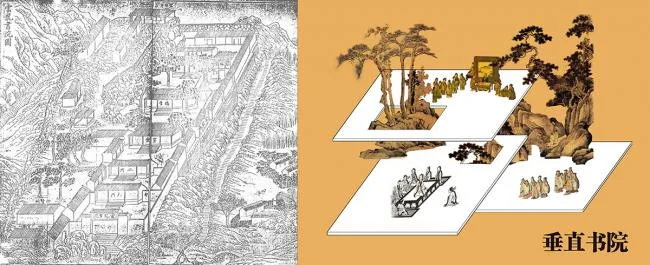
▲ Concept – Vertical Academy
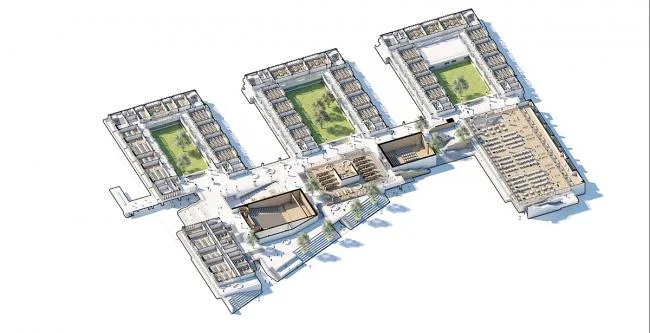
We approached school space design from both micro and macro perspectives, hoping this “Vertical Academy” would not only fulfill diverse user needs in function, form, and atmosphere but also harmoniously integrate into the urban fabric. First, we differentiated and combined school functions. Standard classrooms are grouped into three relatively independent teaching courtyards, optimized for efficiency and spacing. Located on the western side near the urban interface, classrooms are arranged in a grid pattern to meet fundamental teaching requirements. This forms a strict, introverted attitude toward the densely populated city side, creating a pure inner courtyard sanctuary within the new urban texture, shielded from surrounding high-rises.
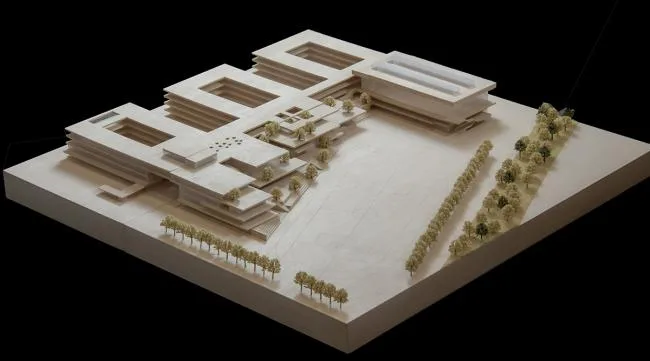
▲ Overall Bird’s-Eye View of the Model
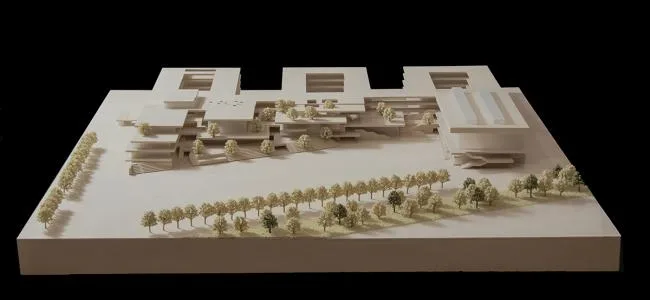
▲ Overall Bird’s-Eye View of the Model
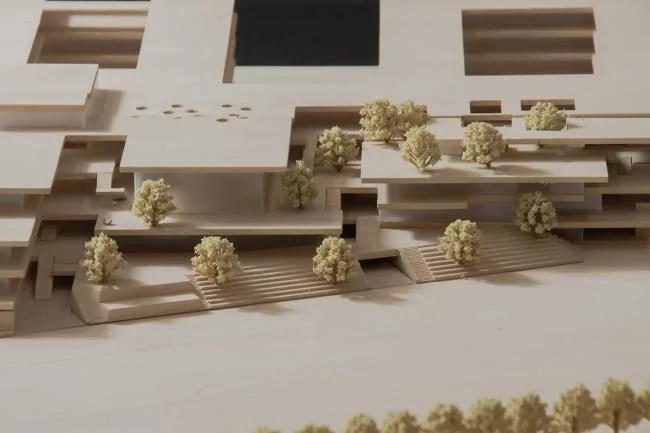
▲ Partial Bird’s-Eye View
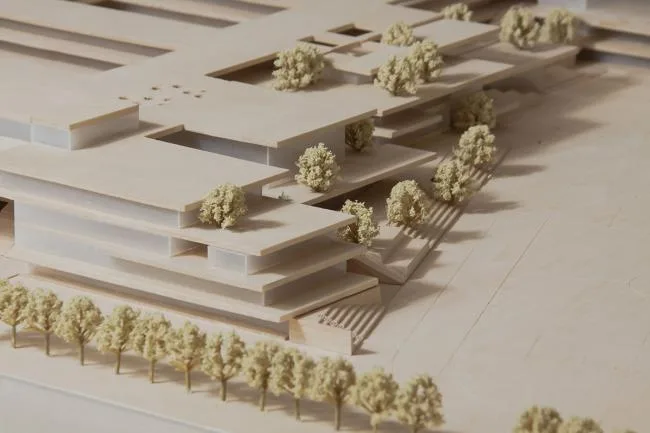
▲ Partial Bird’s-Eye View
Meanwhile, the teacher offices, administrative areas, lecture halls, libraries, elective classrooms, sheltered playgrounds, and canteens—each with distinct area, form, and volume requirements—are grouped into four clusters from south to north on the east side near the natural landscape. Each level faces the mountain to the east, creating a harmonious dialogue with nature.
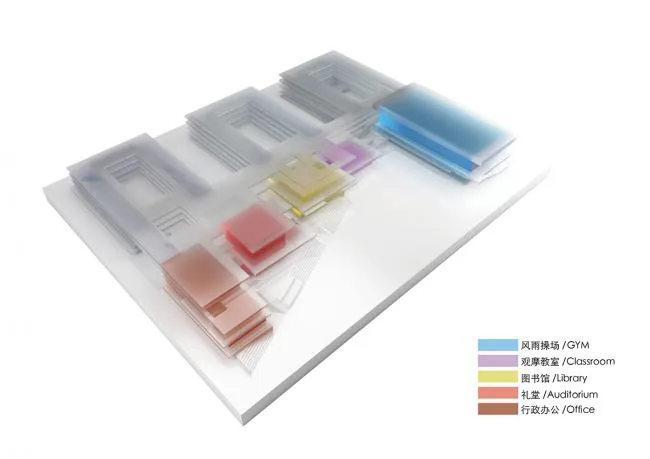
▲ Function Diagram
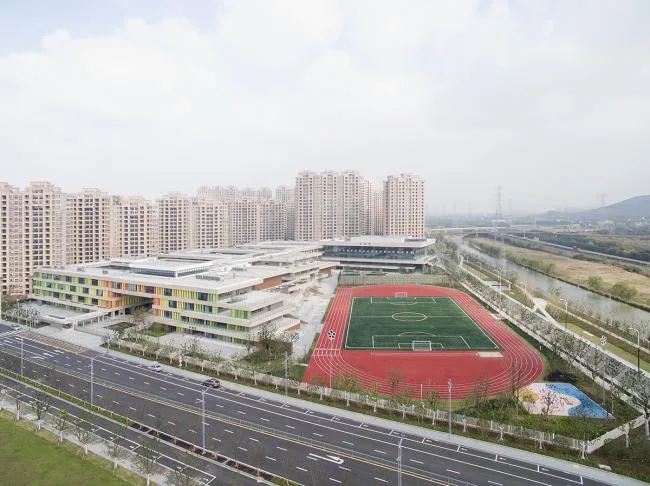
▲ Aerial View
The outdoor sports field is positioned on the east side, aligning with the building’s stepped setbacks. This approach breaks the building’s facade continuity, naturally expressing a passion and openness toward nature, while respecting the surrounding landscape.
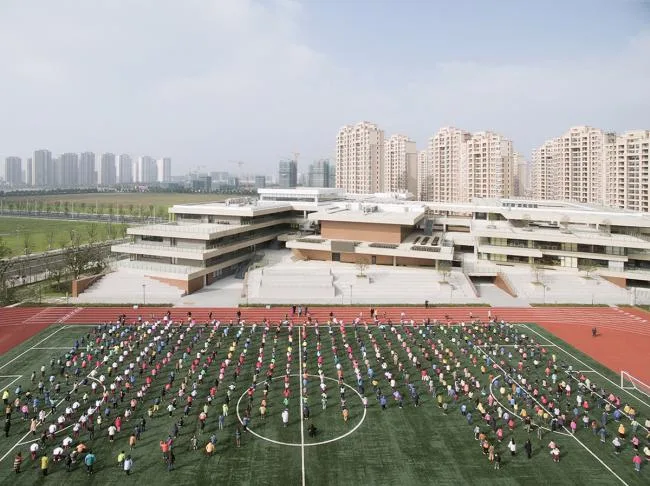
▲ East Playground
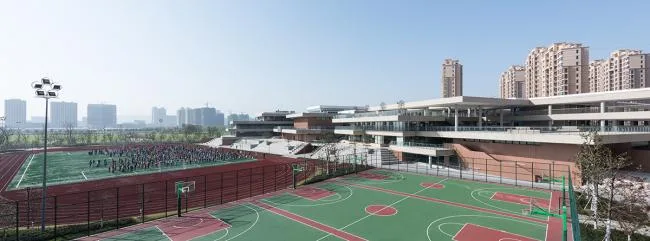
▲ East Playground
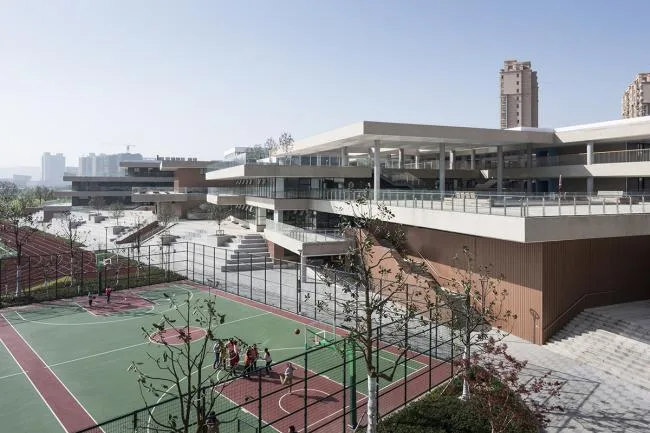
▲ Northeast Corner of the Building
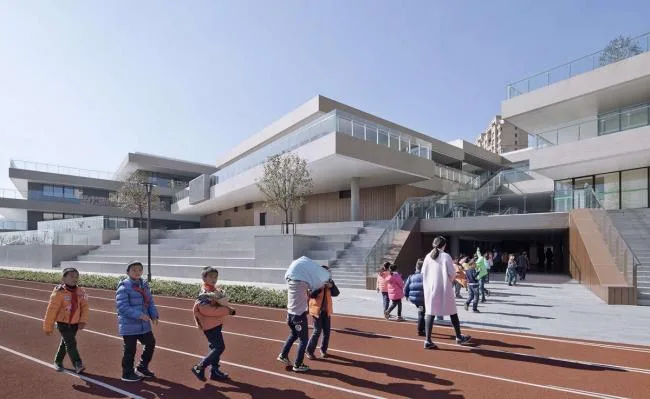
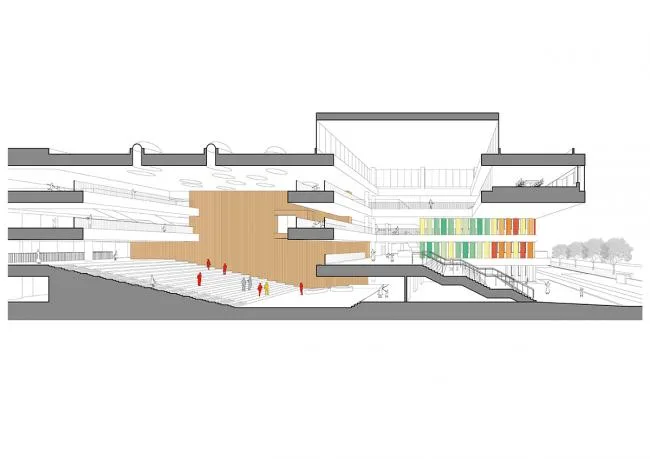
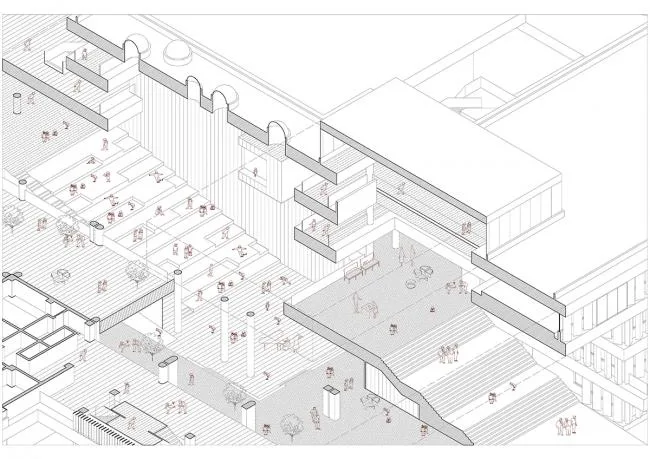
We connect the east and west spaces—each having distinct atmospheres—through a central spine-like public corridor. This corridor is both the necessary link connecting north-south school functions and a transitional space between the standard teaching areas to the west and the social, communicative areas to the east. The orderly courtyard and horizontally extending terraces engage in a harmonious dialogue here. The public corridor narrows gradually from south to north. At the southern entrance, a four-story open courtyard with abundant high-level windows welcomes teachers and students, with large steps leading directly to the second floor.
On the northern side of the entrance atrium lies a multifunctional semi-outdoor theater with irregular garden-shaped skylights, seamlessly extending the terrain of the lecture hall. This space encourages independent interaction and activities between teachers and students. Further north, a wide, multi-layered corridor connects the east and west sides.
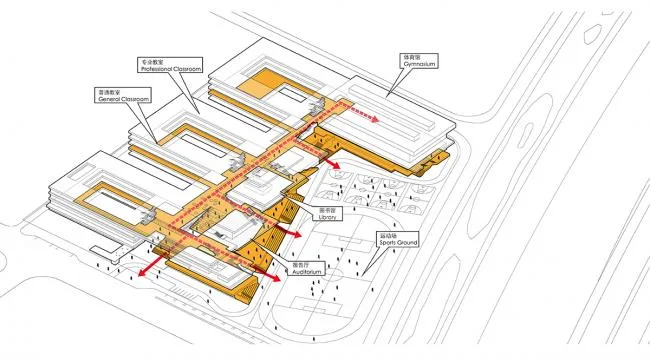
▲ Platform Streamline
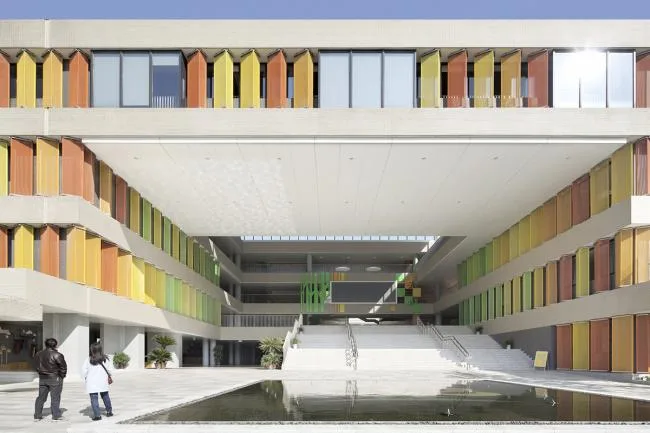
▲ South Main Entrance
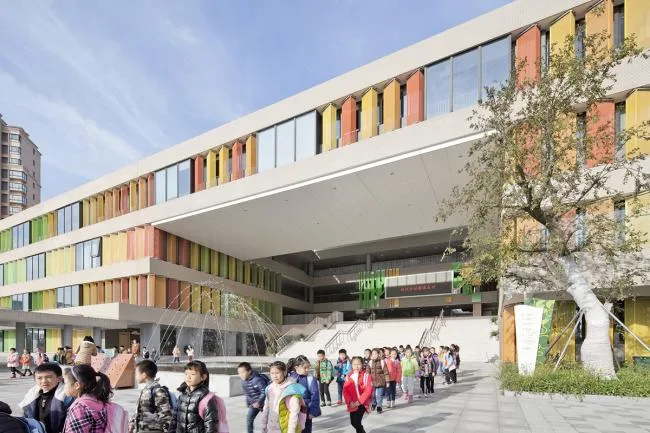
▲ South Main Entrance
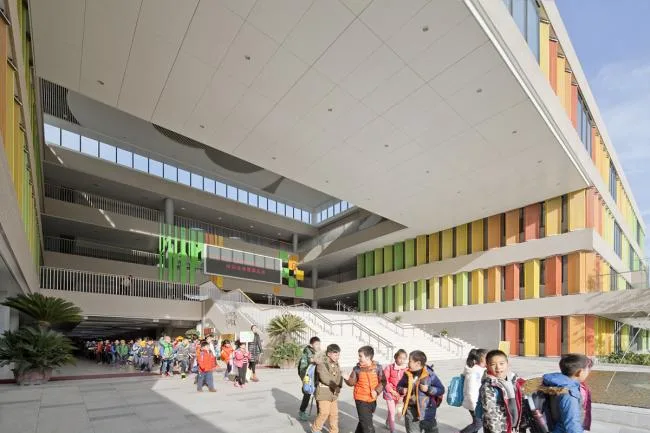
▲ South Main Entrance
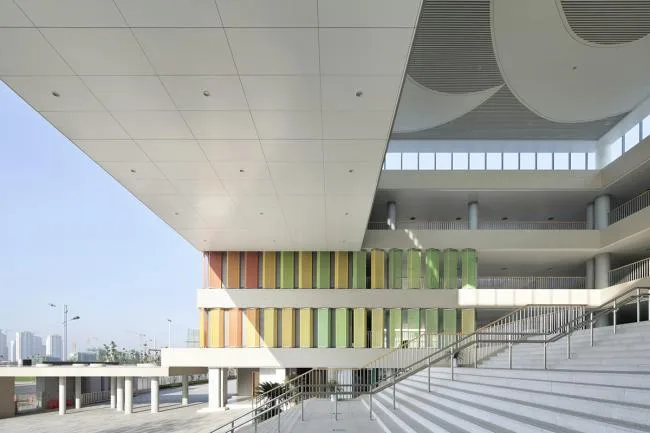
▲ South Main Entrance
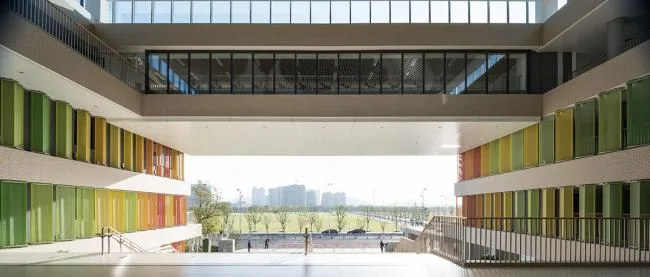
▲ South Main Entrance
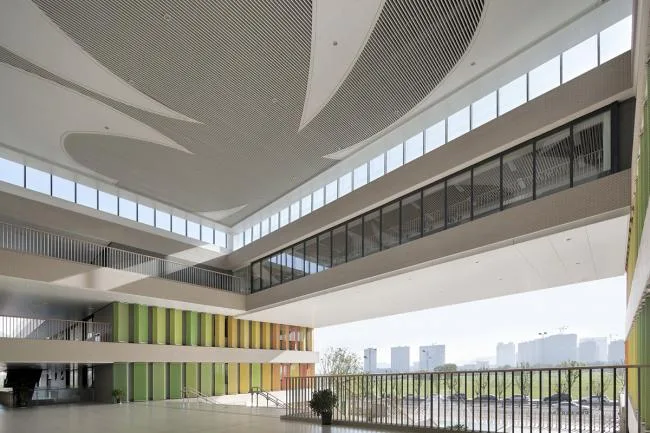
▲ South Main Entrance
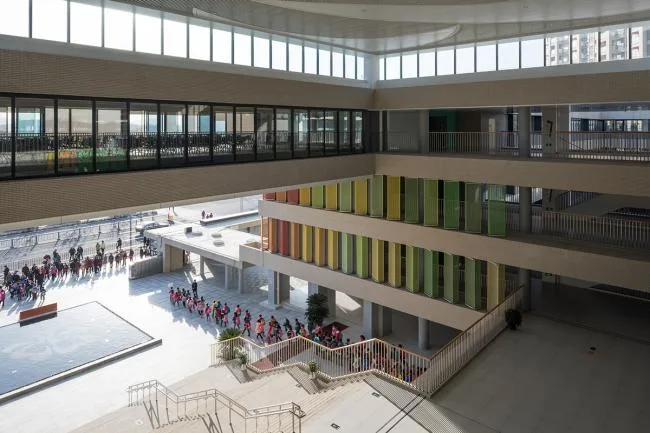
▲ South Main Entrance
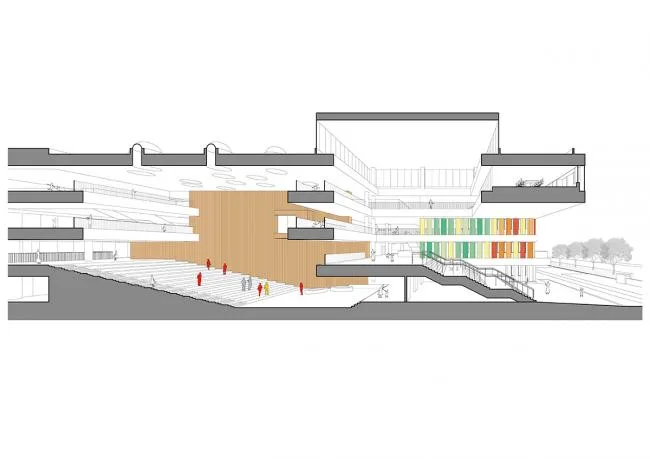
▲ Entrance Sectional Perspective
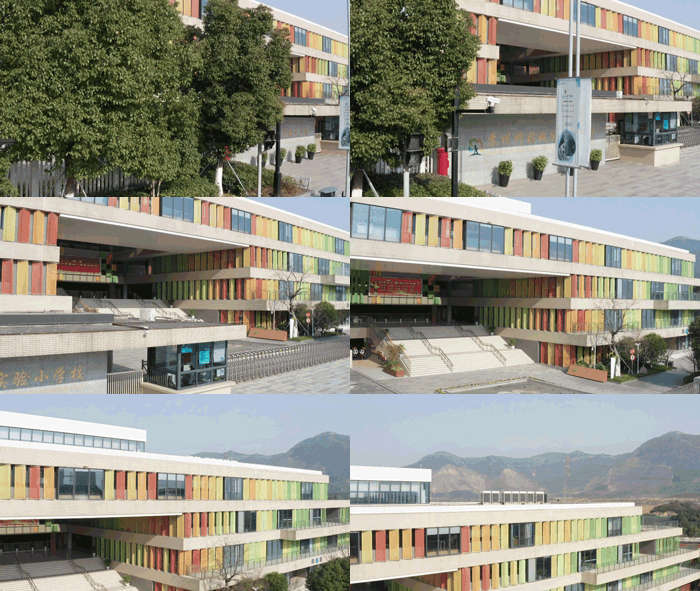
▲ South Gate
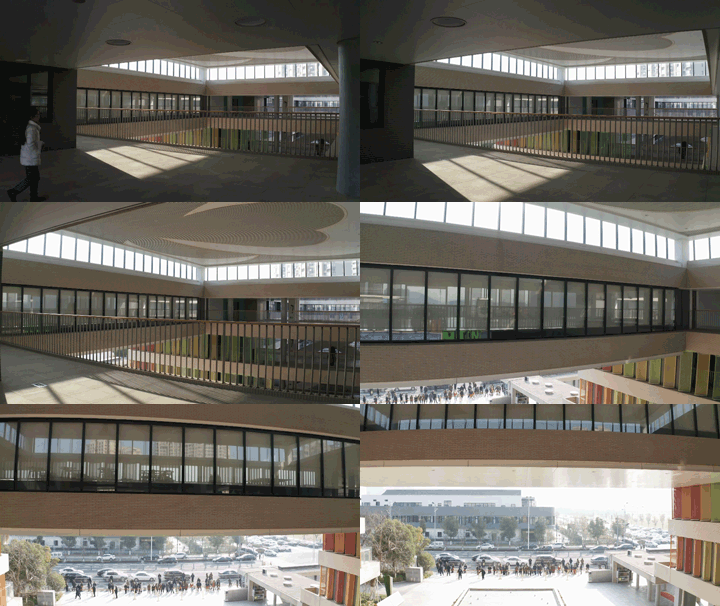
▲ Courtyard
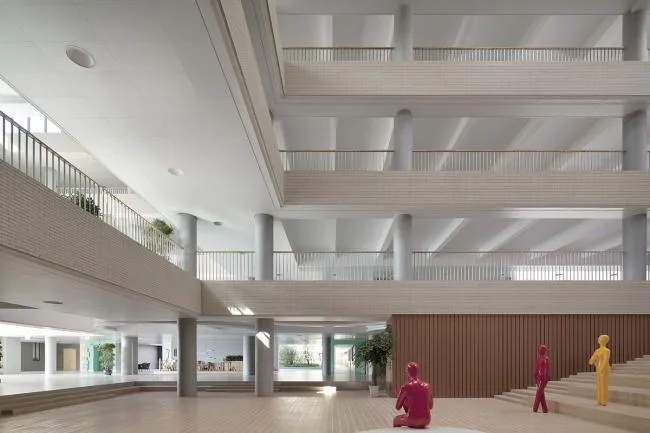
▲ Multifunctional Semi-Outdoor Theater (Photography: Summer Solstice)
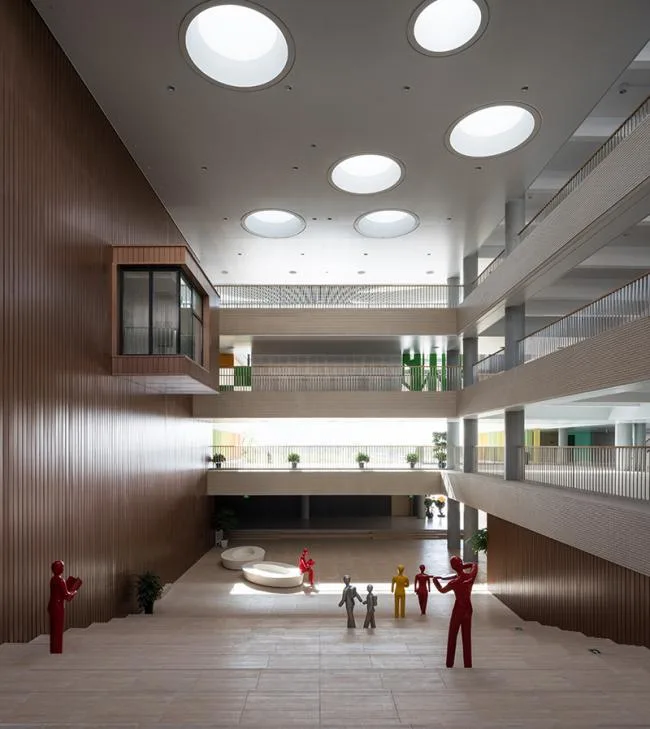
▲ Multifunctional Semi-Outdoor Theater
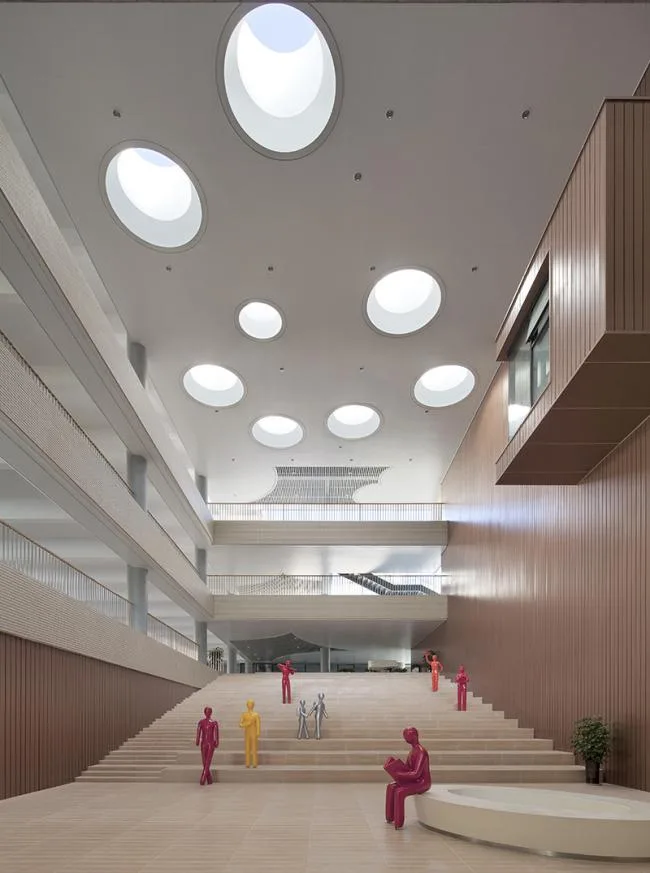
▲ Multifunctional Semi-Outdoor Theater
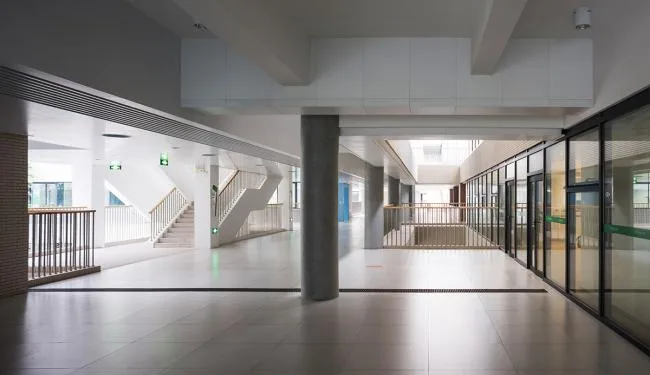
▲ North-South Corridor
After extensive discussion regarding historical context, urban development, educational philosophy, and childhood memories, we created a multi-level communication space intimately connected to nature through a dense combination of horizontal and vertical spatial patterns on this compact site. We offer a series of flexible and varied teaching venues that encourage students to explore, play, and interact. Compared to typical educational spaces in China, this design activates diverse teaching methods and fosters social skills through its public nature. The garden-like spatial experience continues the city’s context, while vertical stacking effectively addresses the shortage of activity space, forming a true “Vertical Academy.”

▲ Landscape Infiltration
Inner Courtyard and Outer Garden
Two thousand years ago, Confucius wrote in “Under the Great Tree of Rites, Teaching by the Apricot Grove” an ideal scene of learning amid nature. To provide diverse activity and social spaces where children can grow through learning, we designed an inner courtyard facing the city and a three-dimensional external garden forest toward nature. Together, they create a lively, diverse campus environment close to nature. This design not only improves space utilization efficiency but also makes self-directed learning an enjoyable lifestyle. The stacking of courtyards inside and outside grounds the building, transforming it from a singular entity into a complex that integrates teaching and play for children’s lives.
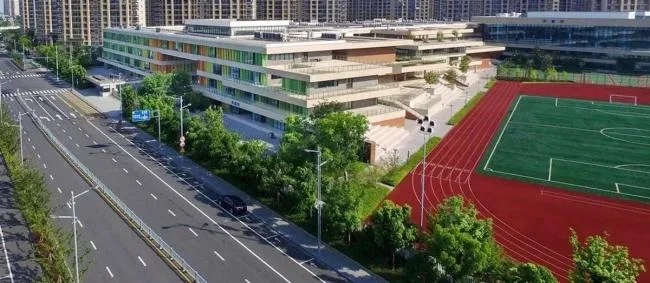
▲ Aerial View
The inner courtyard embraces traditional Chinese architectural symbolism. Its protective walls open to the sky, offering children a deep blue dome reminiscent of a clear spring in the midst of a dense city. This vertical space shields the campus from urban noise and distractions, fostering the quiet, pure atmosphere essential to learning. On sunny afternoons, children can play or study in the courtyard, looking up at the sky through the four corners—a memory evoking the classic siheyuan (courtyard) homes.
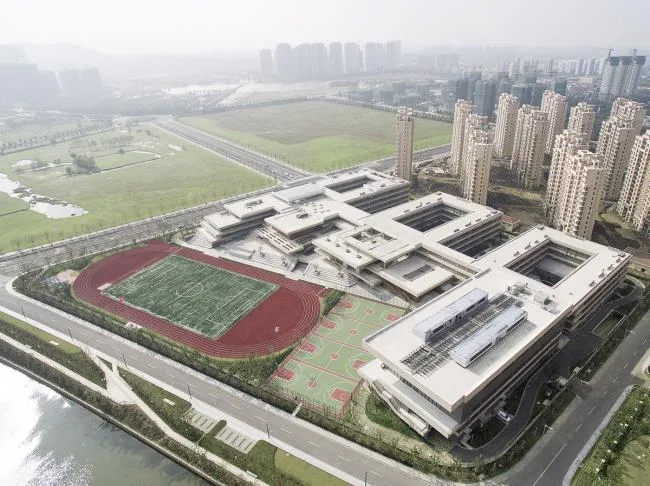
▲ Aerial View
The staggered, horizontally extended terraces recreate the essence of Jiangnan gardens. By vertically stacking shared spaces and extending horizontal platforms overlooking natural landscapes, this design offers a garden-like experience within a high-density metropolis where land is scarce. Childhood is a precious, lifelong experience. Scientific research shows that children’s living environments and study habits directly affect behavior and memory. Rich spatial variety stimulates their perception of three-dimensional space, while dynamic landscape views subtly nurture temperament. Unintentional visual connections promote social interaction, and varied extracurricular activities enliven the “outer garden” platforms—allowing children to experience nature on a grand scale.
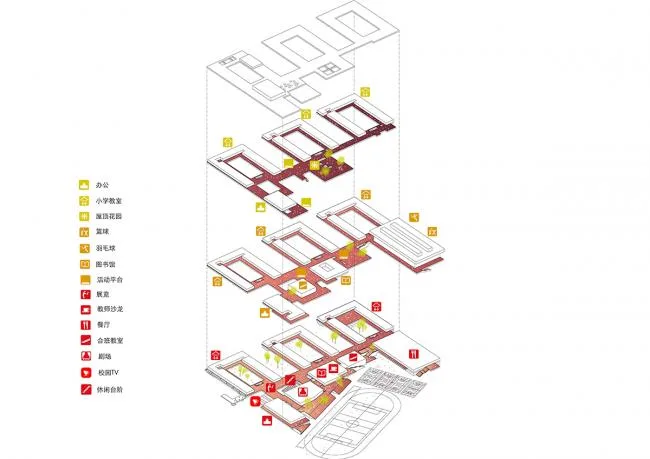
▲ Platform Activities
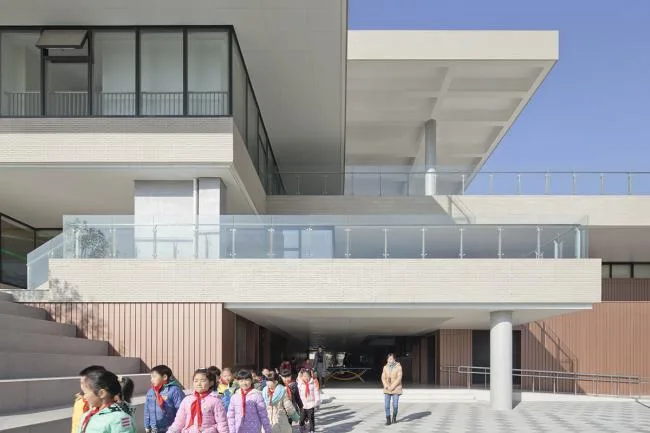
▲ First Level Platform
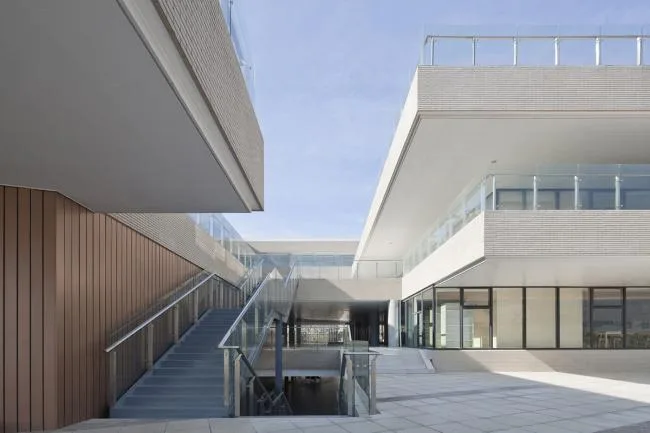
▲ Second Level Platform
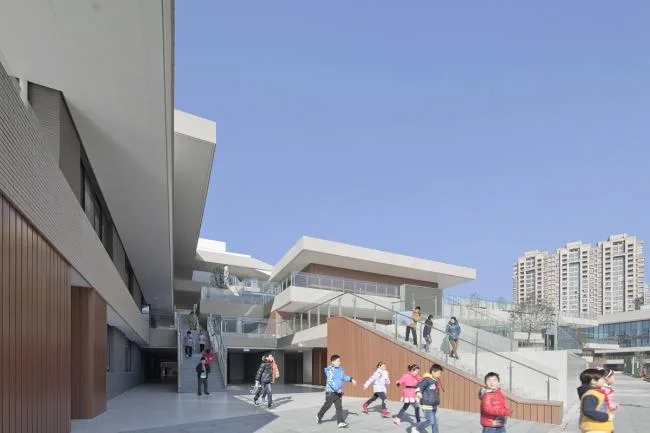
▲ Second Level Platform
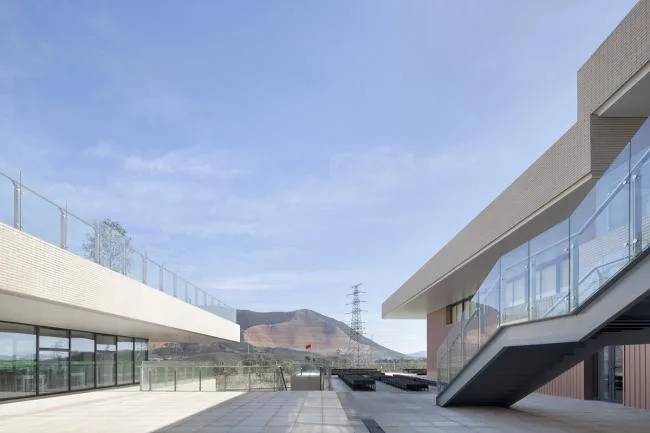
▲ Third Level Platform
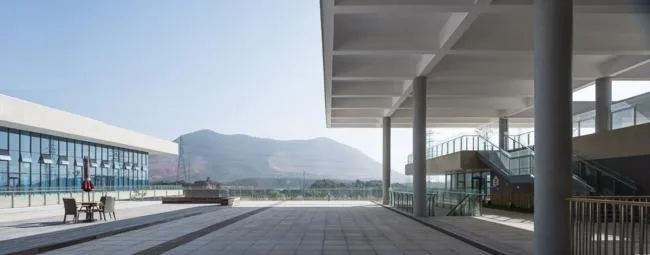
▲ Third Level Platform
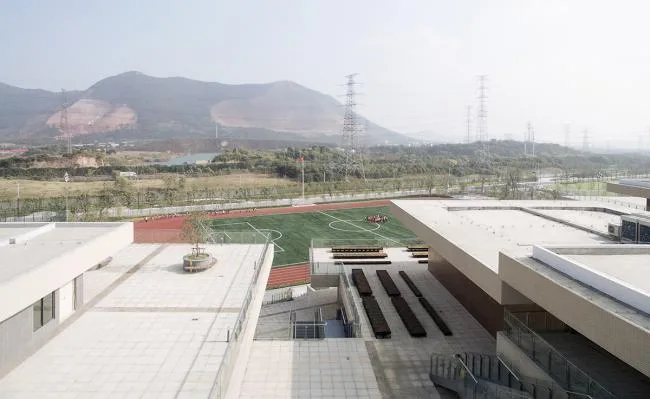
▲ Roof Platform
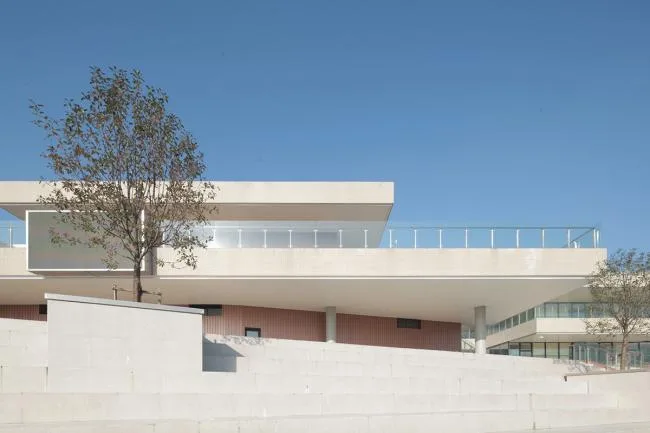
▲ Platforms and Terraces
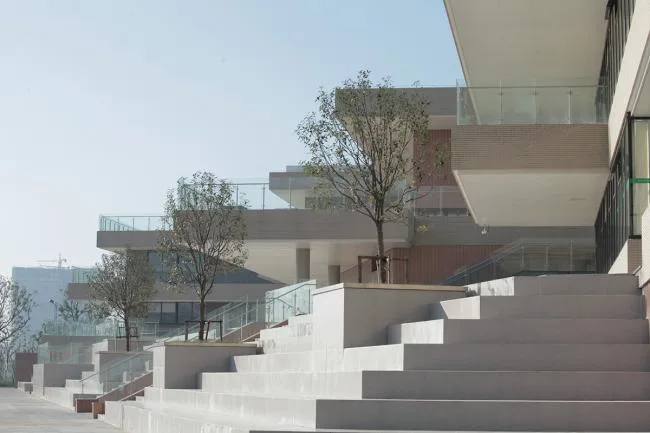
▲ Platforms and Terraces
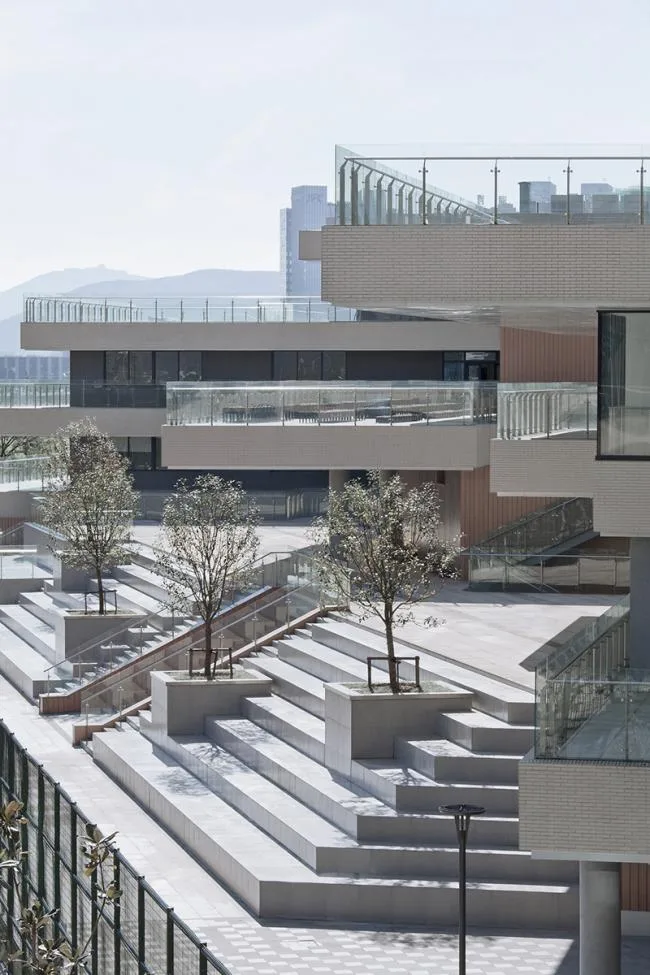
▲ Platforms and Terraces
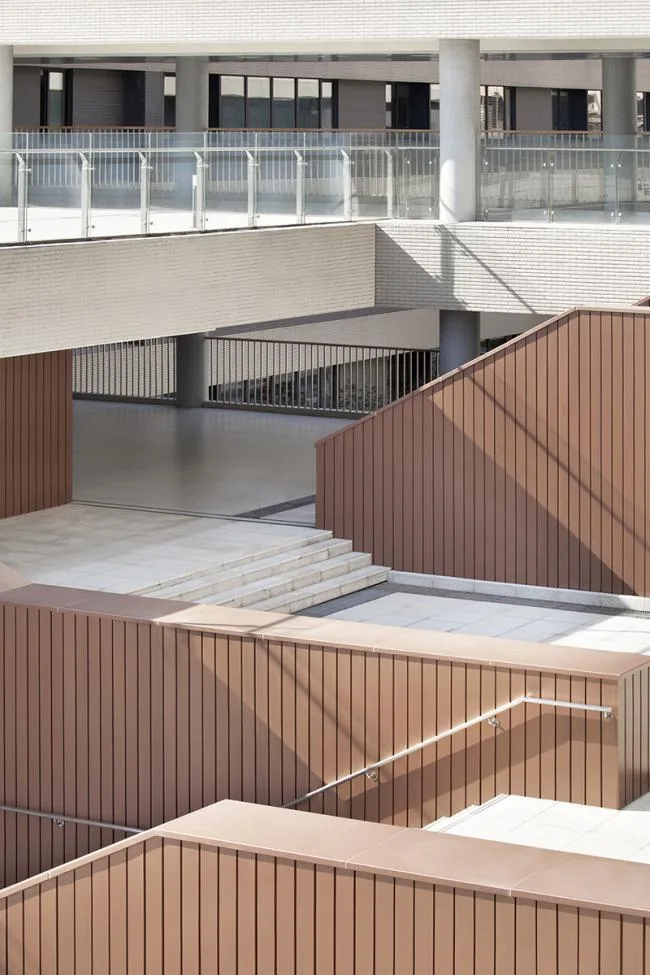
▲ Platforms and Terraces
Compact and Open
High-density land use is a common urban challenge today. Efficiently using and thoughtfully allocating limited space is crucial for creating areas where children can engage in activities. Our design classifies and combines the school’s main functional spaces by balancing tension and relaxation, allowing room for diverse possibilities in external campus activity areas. The campus is divided into three zones: standardized teaching courtyards, socially focused activity spaces, and transportation corridors serving as the “spine”. The contrast between compactness and openness reflects both an emotional confrontation with the urban environment and a deep-seated longing for nature.
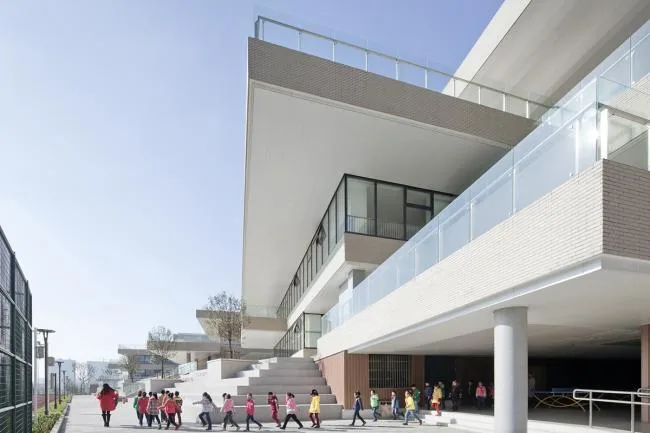
▲ Northeast Corner of the Building
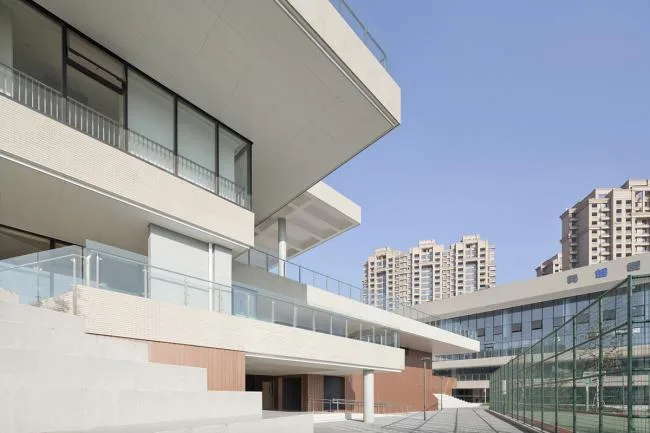
▲ Northeast Corner of the Building
Teaching units are arranged compactly to maximize space usage while adhering to standards, leaving remaining spaces flexible and adaptable. The building extends toward both the urban and natural edges, with a sports field bridging nature and architecture. The frequently used “spine” transportation system encourages exploration and discovery, creating undefined activity spaces. These meandering paths—much like the whimsical stairs of Hogwarts—offer hundreds of unique routes. Students may only realize the richness of these paths upon graduation, and years later, they might still seek to explore those they missed.
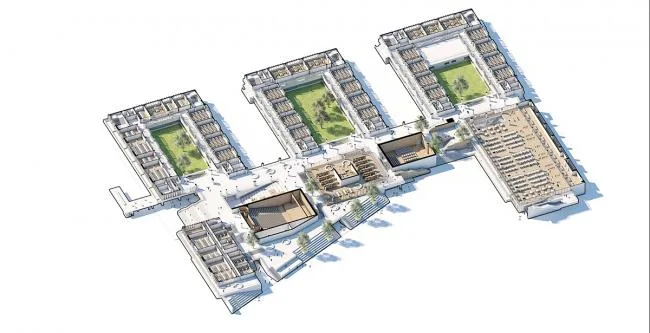
▲ Spatial Axis Measurement
The expanded transportation system flowing into loosely defined spaces blurs functional boundaries, allowing for spatial growth and versatile use. Children’s natural curiosity—touching leaves, observing insects—breathes life into these social spaces, rendering design techniques meaningful beyond theory. Amid flower rooms, gardens, and landscaped platforms, the usual urban rush and congestion fade away. Where there is tension, there is also relaxation. This balance may be the idyllic refuge we strive to create.
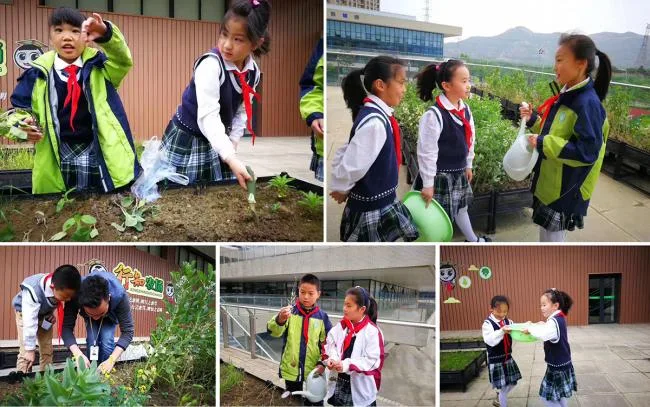
▲ Student Activities
Teaching and Nurturing
Mencius once said in “The Benevolent Lover” that a gentleman differs from ordinary people through his intention—he carries benevolence and propriety in his heart. In traditional Chinese culture, benevolence implies wisdom, charisma, and kindness, serving as an educational guiding principle. As an academy with the responsibility to teach and nurture, this role cannot be overstated. Like academic knowledge, social skills and personality develop gradually, and childhood memories play a vital role in shaping character.
Under the heavy academic demands of exam-focused education, students often lack time for social activities. Monotonous, formulaic campus life fails to inspire diverse social experiences, hindering social development—especially for only children. Studies show that collective activity spaces positively influence harmonious and healthy relationships among children. From the outset, our “Vertical Academy” design aims to address exam-focused education’s deficiencies by providing not only comfortable learning environments but also abundant opportunities for social interaction, fostering benevolence and intelligence.
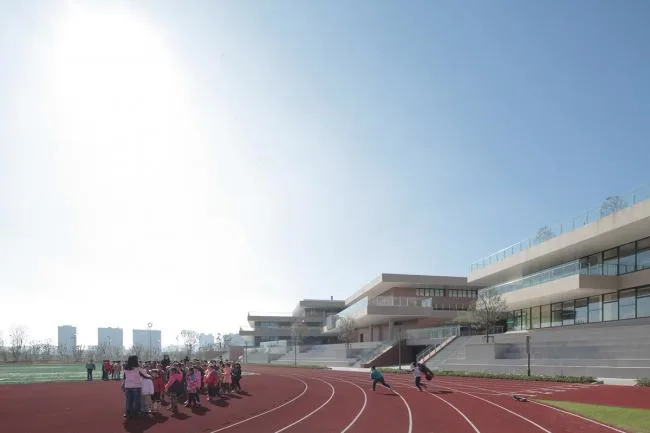
▲ Student Activities
(BIM Work) 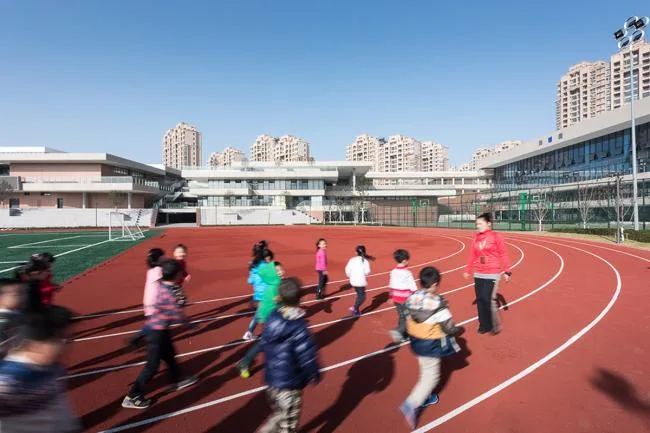
▲ Student Activities
▲ Student Activities
At Suzhou Science and Technology City Experimental Primary School, the most public functional units are encircled by the main circulation spine, enhancing accessibility and encouraging diverse activities. This layout invites every student to actively participate across various functions. The abundant social spaces support extracurricular teaching and foster a vibrant campus culture. We envision students as not just users but integral members of the campus community—their interactions and laughter forming the campus’s most vital and moving landscape.
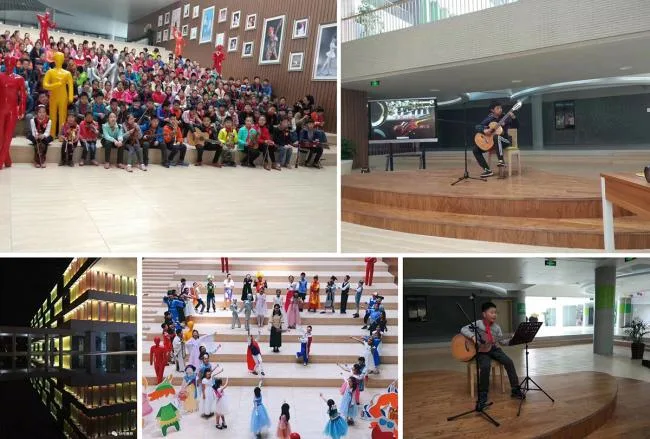
▲ Student Activities
These spaces vary in scale, privacy, and emotional resonance. The wind and rain playground and theater are open areas designed to stimulate creativity and imagination. The library offers a hybrid environment for solitude and social interaction, enabling students to read quietly or engage in thoughtful discussion. As children explore gardens and natural landscapes scattered throughout the campus, the ideal of “teaching under the trees” envisioned by architect Louis Kahn comes to life.
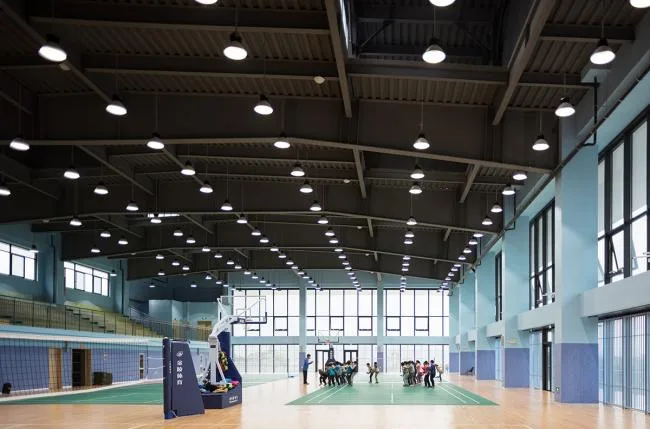
▲ Wind and Rain Playground
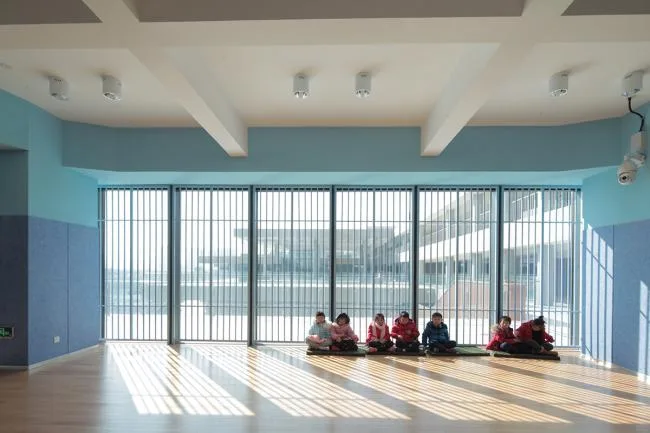
▲ Wind and Rain Playground
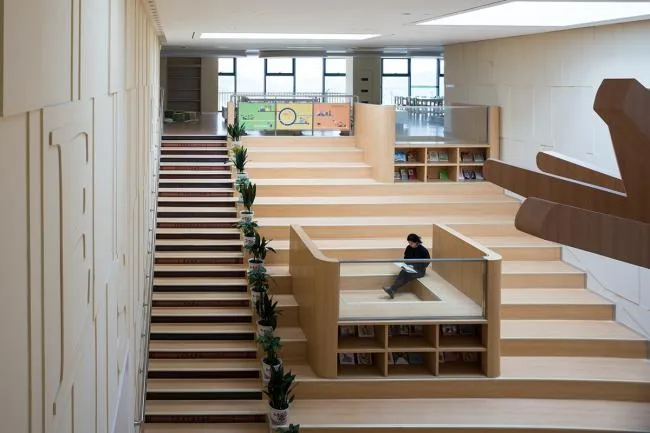
▲ Library
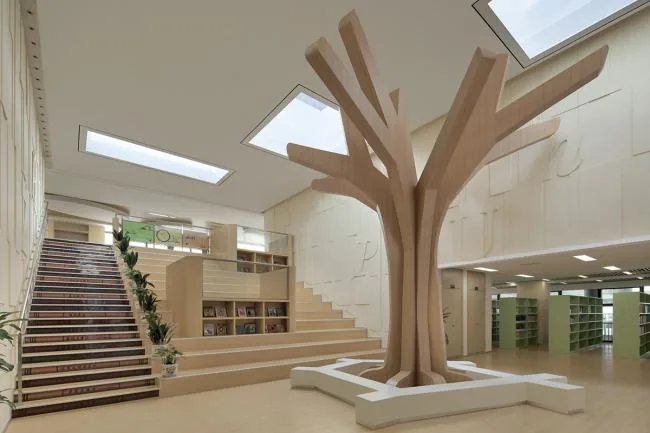
▲ Library
Conclusion
Our goal is not merely to continue the academy tradition or scatter spaces indiscriminately. Instead, we aim to craft a unique childhood experience for children. Sometimes it is a ray of light filtering through leaves, other times a leaf quietly tucked into a book—moments that may later become kindness and gentleness within their hearts. It is gratifying that recent follow-ups reveal young teachers assigning varied themes to mountain platforms, such as campus farms and happy markets, thereby fulfilling the design’s intent. Diverse and open spaces offer endless possibilities for future evolution, growing alongside childhood itself. Amid sweeping urbanization and concrete waves, we have created a model natural sanctuary where children can thrive and cherish lifelong memories.
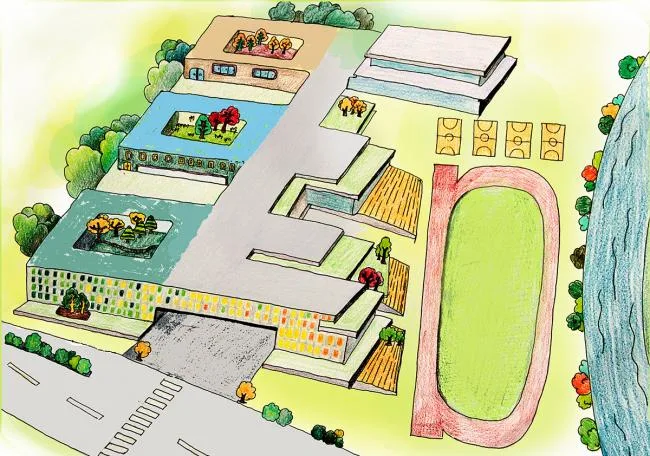
▲ Suzhou Elementary School Children’s Painting
Project Drawings:
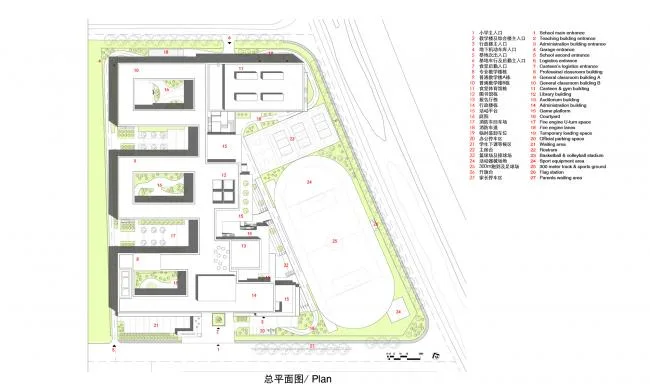
▲ General Layout Plan
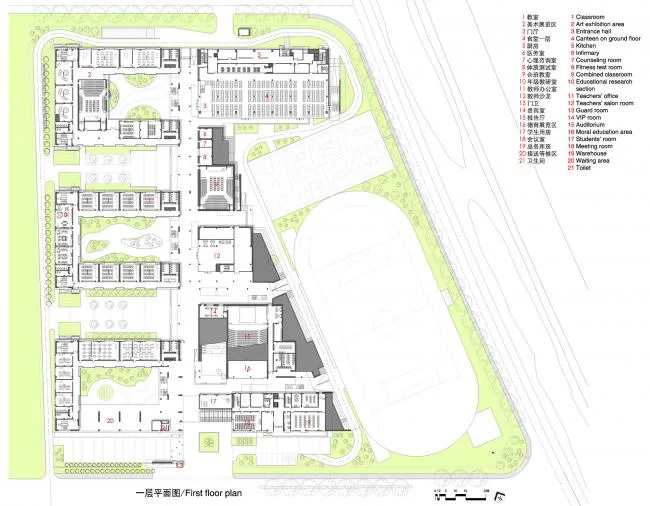
▲ First Floor Plan
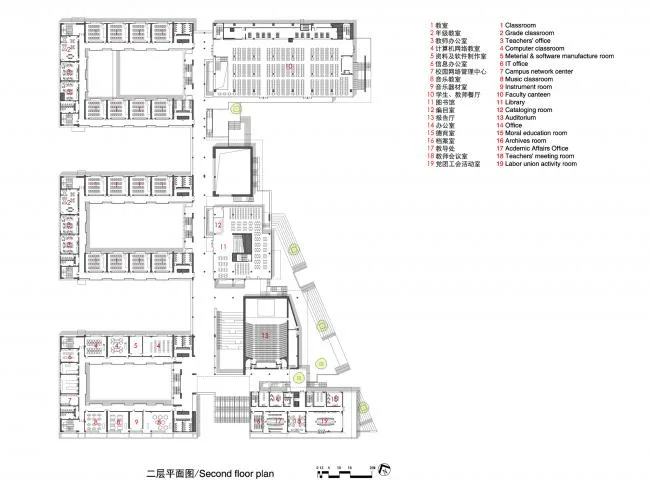
▲ Second Floor Plan
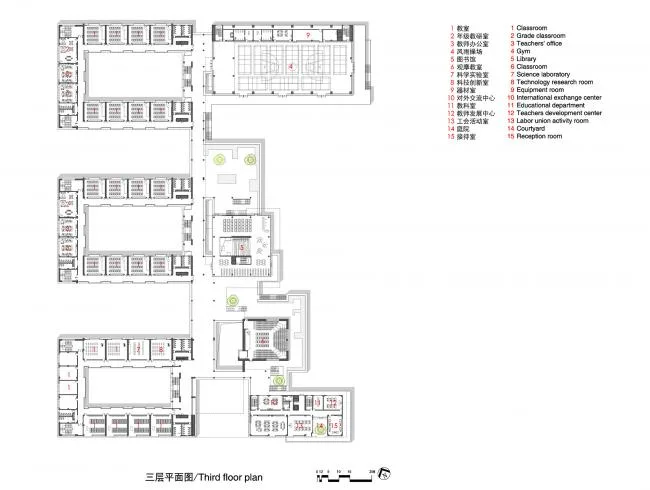
▲ Third Floor Plan
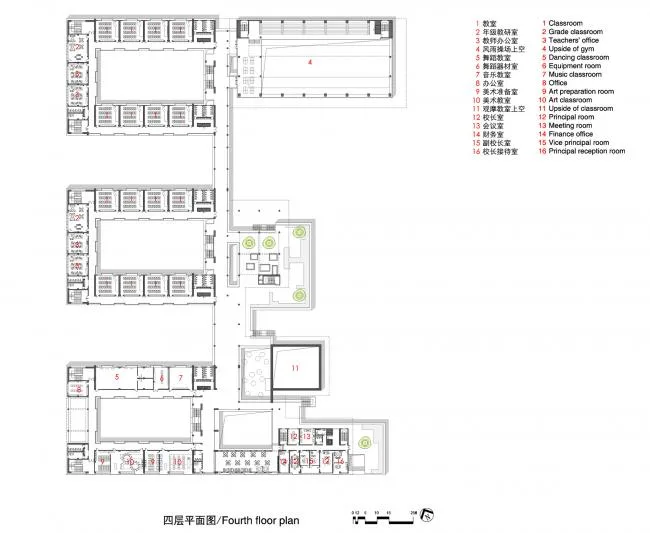
▲ Fourth Floor Plan
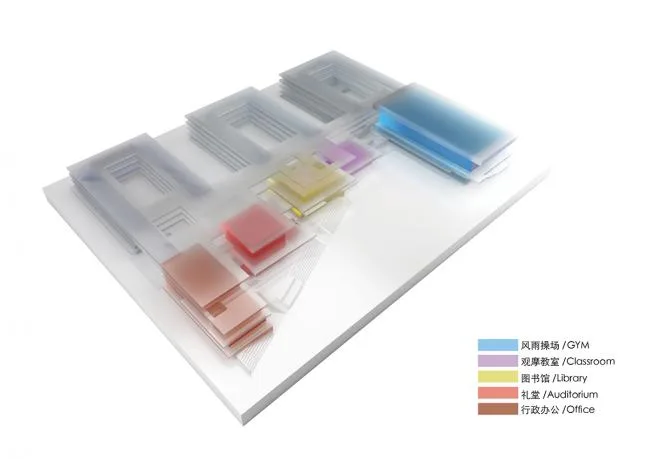
▲ Function Diagram
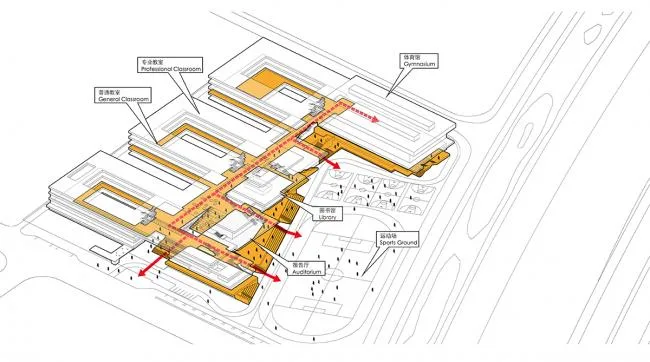
▲ Platform Streamline
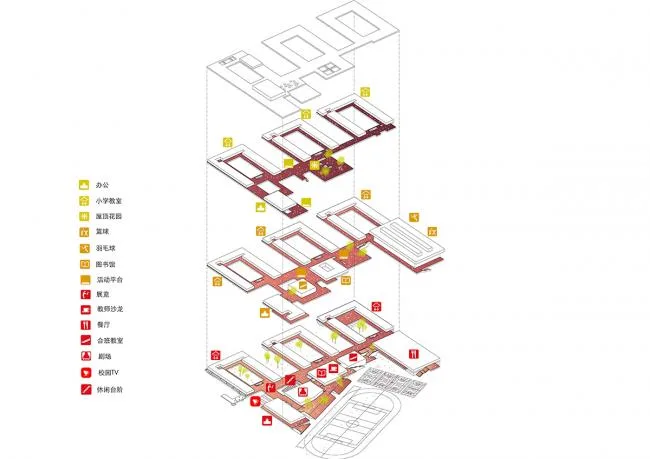
▲ Platform Activities
▲ Axial Measurement
▲ Spatial Axis Measurement
▲ Entrance Sectional Perspective
▲ Narrative Section – Entrance and Performance Space
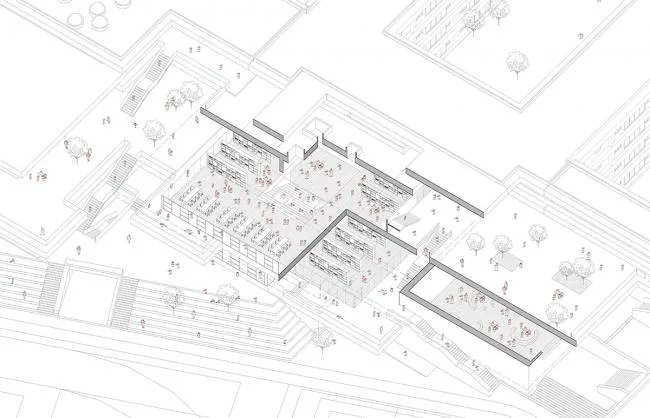
▲ Narrative Section – Library and Outdoor Platform
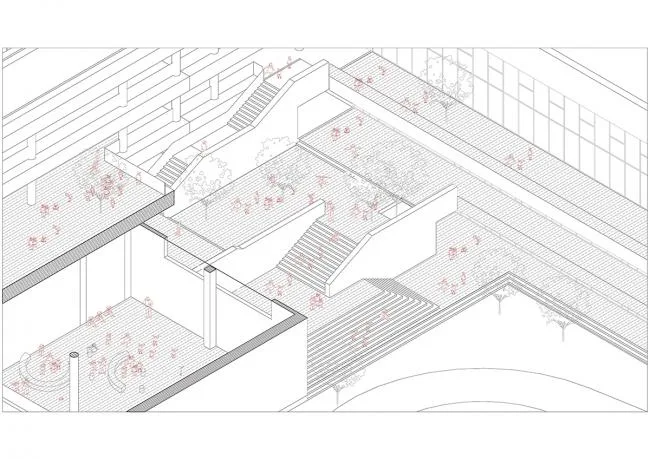
▲ Narrative Section – Playground and Corridor Steps
Project Information:
Project Name: Suzhou Science and Technology City Experimental Primary School
Lead Architects: Zhang Bin / Zhizheng Architecture Studio + Li Shuo / Dazheng Architecture Firm
Project Architects: Chen Hao (proposal and preliminary expansion), Ding Xinhui (competition)
Design Team: Wu Renjie, Zhang Jinxia, Xie Linbo, Xu Jiajin
Collaborative Design: China Railway Engineering Design Institute Co., Ltd
Location: No. 88 Keye Road, Science and Technology City, Suzhou High-tech Industrial Development Zone, Jiangsu Province
Developer: Suzhou Science and Technology City Social Service Center
Design and Construction Period: June 2013 – September 2015
Site Area: 43,880 m²
Building Area: 53,422 m²
Project Cost: 250 million RMB
Photography by Xia Zhi and Chen Hao















Must log in before commenting!
Sign Up