
The General Office of the State Council’s Guiding Opinions on Vigorously Developing Prefabricated Buildings (State Council Document [2016] No. 71) recommends that “prefabricated buildings should generally adopt the engineering general contracting model.”
The “Several Opinions of the Ministry of Housing and Urban-Rural Development on Further Promoting the Development of Engineering General Contracting” (Jian Shi No. AI-BT-SC0_93) states that “engineering general contracting typically uses the design-procurement-construction general contracting or design-construction general contracting mode.” In other words, EPC (Engineering Procurement Construction) is the predominant model for engineering general contracting.
EPC is a process where the project owner sets goals for timeline, quality, and investment, while the contractor is responsible for design, procurement, manufacturing, construction, and acceptance.
Unlike traditional project management, the EPC model transforms the organizational structure by shifting from segmented management by the owner at each project phase to integrated management by the EPC general contractor.
This article highlights three key aspects of applying the EPC model to cost control in prefabricated buildings and discusses relevant management approaches.
1. Key Control Points Across the Three Main Stages
When applying the EPC model to prefabricated buildings, the main control points occur during the three stages before design completion: bidding, contract, and design.
Bidding Phase: Assessing the Design Capabilities of the EPC General Contractor
Design is critical in determining project costs. Prefabricated building design relies heavily on information technologies—such as building modeling, pipeline clash detection, and construction simulation—to achieve modularity and standardization. This approach reduces specifications and allows for more combinations of prefabricated components, driving down costs.
Since EPC integrates design and construction, it is essential to evaluate the EPC general contractor’s overall planning capabilities in design, component production, equipment procurement, transportation, installation, and construction—especially their design expertise.
Note that in many domestic projects, design and construction units are separate entities due to qualification and regulatory reasons. Therefore, selecting a suitable EPC contractor begins with assessing the strength of the design units within the EPC consortium, as they lead the design work.
Contract Phase: Choosing the Appropriate Contract Format
Selecting the right contract template is vital. Commonly used EPC general contracting contracts include:
- The Model Text of General Contracting Contract for Construction Projects (Trial) (GF-2011-0216), jointly issued by the Ministry of Housing and Urban-Rural Development and the State Administration for Industry and Commerce;
- The “Standard Design and Construction General Contracting Bidding Document,” developed by nine ministries including the National Development and Reform Commission, widely recognized in China;
- The “Design, Procurement and Construction (EPC Turnkey Engineering Contract Conditions)”—known as the “FIDIC Silver Book”—prepared by the International Federation of Consulting Engineers. It is accepted by consulting engineer associations in over 70 countries, including the China Engineering Consulting Association.
When applying these contracts to prefabricated projects, special attention should be given to four areas:
Detailed Design
This includes deepening design, design optimization, and related statistical work for agreed assembly components. For example, when using the FIDIC Silver Book contract, the contractor should be required to perform detailed construction design (including assembly components) and submit it for approval by the employer’s representative or supervisor.
Prefabricated Construction Organization Design
Prefabricated construction requires submitting a procurement plan for assembly components, a construction organization design, and a construction plan. Domestic EPC contracts emphasize preparing construction plans and schemes (e.g., Article 7-8 in the demonstration text). However, the FIDIC Silver Book (Article 7 on “production equipment, materials, and processes”) mainly focuses on design concepts, without specifying requirements for the construction plan or prefabricated construction details.
Changes and Claims
Domestic EPC contracts provide specific clauses on scope changes, rush work, and project price adjustments (Article 13 “Project Changes and Contract Price Adjustments”). The FIDIC Silver Book also addresses value engineering projects, which are particularly important for prefabricated construction—for example, demonstrating the value of using prefabricated concrete and steel structural components with high assembly rates.
Contract Price and Payment
Pay attention to two points regarding pricing: 1) Clearly define the price ceiling of the EPC contract and agree on who bears costs exceeding the limit; 2) Consider tax provisions following VAT reform. Many prefabricated construction projects under the EPC model involve the sale of goods, processing, repair and maintenance services, intangible assets, or real estate with varying tax rates. If sales revenue is not separately accounted for, the higher tax rate will apply (see Attachment 2 of Caishui Document No. AI-B_SC_0_36).
Design Phase: Using Value Engineering to Select the Optimal Design Solution
Integrated design for prefabricated buildings requires coordination and constraints among multiple disciplines. Significant construction and installation work must be clearly defined early in the design phase to achieve the optimal design scheme. Please refer to Figure 1 below.
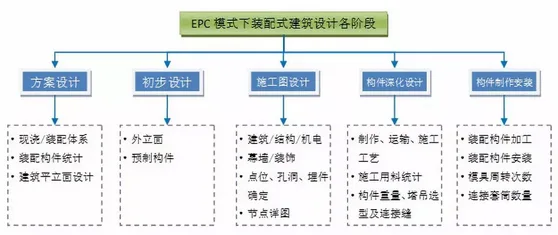
Figure 1: Main Tasks at Each Stage of Prefabricated Building Design Under EPC Mode
When selecting cast-in-place versus assembly systems, considerations include national and local regulations as well as cost factors. The more regular and simplified the building facade design, the lower the production cost of assembly components. Assembly components should follow principles of standardization, simplification, and integration.
For example, prefabricated residential buildings require component designs corresponding to different assembly rates, as shown in Table 2. EPC projects must focus on optimizing components with large proportions, such as prefabricated walls and slabs, during the design phase (see Table 3 and Figure 2).
Table 2: Correspondence Between Assembly Rate and Prefabricated Components in Residential Projects
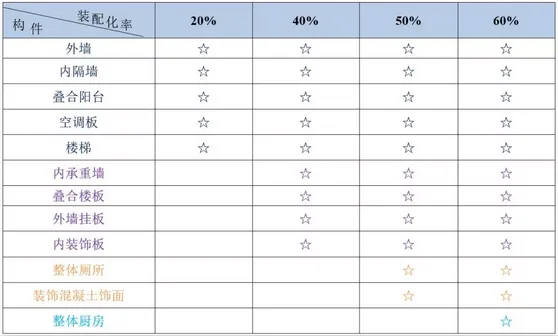
Table 3: Proportion of Concrete Components (Example: 40% Assembly Rate)
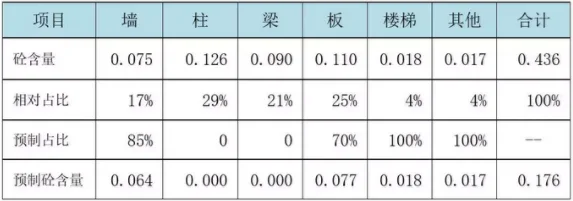
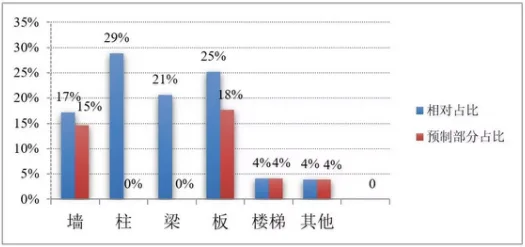
Figure 2: Comparison of Column Proportions Between Concrete and Precast Concrete

2. Case Study
Project Background: The project is an international cultural complex consisting of an international exhibition center (126,000 m²), a grand theater (38,200 m²), and an international hotel (93,000 m²).
Project Challenges:
- Short construction period: Completion required within eight months, compared to a normal construction duration of at least two years;
- Stringent construction organization demands: The harsh climate with large temperature variations, sandstorms, and temperatures dropping to -30°C, combined with logistical challenges of transporting materials to a remote northwest location;
- Complex functions and unique design elements: Architectural styles inspired by the Han and Tang dynasties, and specialized sound and lighting requirements for the grand theater.
These challenges prompted the construction team to innovate both construction methods and management approaches by adopting prefabricated construction combined with the EPC model. (Source: Architecture, Issue 20, 2016)
Case Summary: This project exemplifies the application of the EPC model in prefabricated construction. The owner no longer divides bidding by sections; instead, the EPC general contractor leverages its experience in integrated project management—such as collaborative design and procurement—and resource advantages, including centralized e-commerce procurement platforms.
The EPC contractor effectively fulfills responsibilities for overall planning, coordination, and management, ensuring seamless integration of design, procurement, and construction phases.
Thanks to the EPC approach, the project achieved schedule targets that would have been nearly impossible under traditional cast-in-place construction and management methods, while maximizing overall project benefits.
Conclusion
Prefabricated construction is characterized by high integration. EPC serves as an organizational model facilitating China’s construction industry shift from fragmented to integrated management. Both the high-integration construction method and the EPC integrated management model share the principle of unified coordination.
Although the EPC model still faces challenges such as immature management processes, unclear responsibility and authority boundaries, and weak sharing mechanisms, many BIM tutorials for EPC projects simply extend traditional general contracting models.
However, applying the EPC model to cost control in prefabricated buildings enhances its integration and innovation advantages, enabling overall project benefits and addressing difficulties in local execution and assembly efficiency.
The author believes that establishing a system that fully harnesses EPC’s integration strengths and optimizes resource allocation throughout the construction industry chain, aligned with market principles, will ultimately help achieve the cost control goals of prefabricated construction projects.














Must log in before commenting!
Sign Up