
Wu Jiming
Abstract
With the rapid advancement of digital technology in recent years, the integration of digital information into architectural creation has become increasingly prominent, leading to the emergence of numerous outstanding projects. However, the large-scale implementation of the Building Information Modeling Integrated Management System (BIM) in China remains challenging, and the gap with advanced international practices continues to widen. To address these issues, this article examines the integrated management of engineering project information within China’s architectural design sector. Drawing from a wide range of engineering practices, it thoroughly analyzes the opportunities and challenges encountered in BIM adoption. The article provides a comprehensive summary of the main BIM platforms used in China, offering a theoretical basis for the effective promotion and localization of BIM in Chinese design institutes. The practical, actionable methods outlined here are intended to support the further integration of information technology within China’s construction industry, especially among design institutes. This research systematically connects various scattered BIM strategies, offering an in-depth review of BIM practices in China. The resulting theoretical framework and operational guidance are valuable resources for future BIM implementations. In the outlook and conclusion, the author shares forward-looking insights on the future of building digital information models, digital earth, and customized design approaches, providing new directions for further research.
Keywords: digital technology, informatization, BIM system, collaborative design, localization strategy
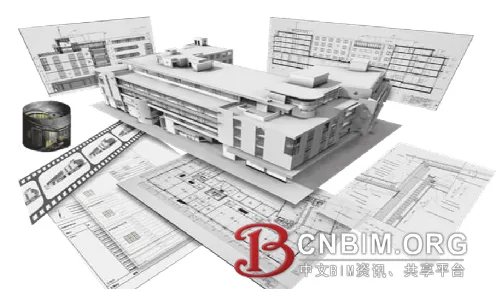
Table of Contents
Chapter 1: Introduction – The Era of Customization in Design
1.1 The Emergence of BIM and the Future of Design
1.1.1 A Brand New World
1.1.2 Virtual Reality and Emerging Media
1.1.3 Solutions for the Information Age
1.1.4 Transformation of Design Patterns and the Rise of BIM
1.2 Background and Current Application Status
1.2.1 Practical Background
1.2.2 Theoretical Background
1.3 Significance of the Topic
1.4 Purpose of the Study
1.5 Research Methods
1.5.1 Theoretical Analysis
1.5.2 Field Research
1.5.3 Technical Analysis
1.5.4 Practical Verification
1.6 Innovations and Academic Contributions
1.7 Structure of the Thesis
1.8 Areas for Further Research
1.9 Summary
Chapter 2: Opportunities and Challenges of BIM in China
2.1 Globalization and the Internet Boom
2.2 The Initial Stage of BIM Development
2.3 Engineering Practice with Chinese Characteristics
2.4 Talent Development Models
2.5 Intellectual Property Challenges
2.6 Perspectives on Current Challenges
2.6.1 Technological Universalism vs. Pessimism
2.6.2 Technological Conservatism
2.7 Summary
Chapter 3: The Development of BIM in China
3.1 Construction and Development Enterprises: Social Needs and Attention
3.1.1 SOHO China Limited: From Testing to Branding
3.1.2 Guanglianda Software Co., Ltd.: Exploring Integrated Solutions
3.2 Enterprise System Support: Development and Coordination Challenges
3.2.1 Autodesk China: Cultivating Future Markets
3.2.2 Archicad China: Seeking Breakthroughs
3.2.3 Crystal Stone Digital Media: Profit Model Confusion
3.3 Design Agencies: Navigating Change
3.3.1 SOM and RTKL: Foreign Practices in China
3.3.2 China Construction International: Pioneering Efforts
3.3.3 China Academy of Architectural Design and Research: Pursuing Better Cooperation
3.3.4 Beijing Institute of Architectural Design: Advantages and Challenges
3.3.5 Jizhu Architecture Studio: Building Unique Competitiveness
3.4 Nonlinear and Complex Architecture
3.4.1 National Stadium: Early Large-Scale BIM Practice
3.4.2 Phoenix TV Headquarters: From “Made in China” to “Created in China”
3.4.3 Expo Performance Center: Full Application of BIM
3.4.4 Shanghai Tower: A New Milestone
3.5 Engineering Management and Post-Operation
3.5.1 Luban Cost Case: Innovative Solutions
3.5.2 Hong Kong Mountain Road: Technology’s Value
3.6 Summary
Chapter 4: BIM Software Systems in Practice
4.1 Data Collection and Input
4.2 Model Simulation and Analysis
4.2.1 BIM for Sustainability
4.2.2 Structural Analysis
4.2.3 MEP (Mechanical, Electrical, Plumbing) Analysis
4.3 Modeling and Construction
4.3.1 Conceptual Design
4.3.2 Core BIM Modeling
4.4 Documentation and Communication
4.4.1 2D Drawings
4.4.2 BIM Review and Release
4.4.3 Visualization
4.4.4 Model and Clash Detection
4.5 Prototyping and Manufacturing
4.6 Engineering Management – Construction and Operations
4.7 The Digital Planet – Cloud-Based World
4.7.1 Geographic Information Systems (GIS)
4.7.2 Digital Planet Google
4.7.3 Cloud Computing
4.8 Data Analysis
4.9 Summary
Chapter 5: Comparative Analysis of BIM in China and the United States
5.1 BIM Research Reports on the Chinese Market
5.1.1 Overview
5.1.2 Report Limitations
5.1.3 Research Methods
5.2 Analysis and Re-evaluation
5.2.1 Opportunities During Economic Downturns
5.2.2 Industry Proficiency and Owner Engagement
5.2.3 The Value and Return of BIM
5.2.4 Obstacles and Project Integration
5.2.5 Collaborative Design
5.2.6 Trust-Based BIM Adoption
5.2.7 Evolution in Application Fields
5.2.8 BIM Prospects in China
5.3 Summary
5.3.1 Promising Outlook
5.3.2 Leapfrog Development
5.3.3 Fragmented Practice
5.3.4 Resistance to Change
5.3.5 Room for Progress
Chapter 6: Systemic Efficiency
6.1 System-Based Efficiency
6.1.1 Systems Theory Thinking
6.1.2 Computer-Aided Collaborative Design
6.1.3 BIM Architecture and Principles
6.1.4 Engineering Information Exchange Standards: IFC
6.1.5 Integrated Engineering Information Management
6.1.6 Cloud Computing and the Internet
6.2 Roles and Responsibilities in BIM
6.2.1 Construction and Management – System Organizers
6.2.2 Designers – System Executors
6.2.3 R&D Enterprises – System Maintainers
6.2.4 Government and Regulators
6.4 Summary
Chapter 7: Localization Strategies for BIM
7.1 Basic Preparation and Transition
7.1.1 Establishing Software and Hardware Environments
7.1.2 Transition from 2D to 3D BIM
7.1.3 Smooth Transition and Habit Retention
7.1.4 Innovative Solutions
7.1.5 Training and Retraining
7.1.6 Feasibility of Outsourcing
7.2 Practical Strategies for Projects
7.2.1 From Technology Use to Process Reengineering
7.2.2 Learning from International Management Systems
7.2.3 Preparing for Different Project Types
7.3 Systematic Construction and Management
7.3.1 Strengthening Collaboration and Cultivating Talent
7.3.2 Effective Cooperation Mechanisms
7.3.3 Rule Establishment and Risk Avoidance
7.4 Data Accumulation and Long-Term Strategy
7.4.1 Building Comprehensive Databases
7.4.2 Intelligent Derivation and Recognition Technology
7.4.3 Customized Engines and Intelligent Output
7.5 Summary
Chapter 8: Outlook and Conclusion
8.1 Summary and Conclusions
8.3 Outlook
8.4 Future Research Directions
Main Symbol Comparison Table
Sources of Illustrations and Tables
List of Major BIM Software
References
Acknowledgments and Disclaimer
Appendix: BIM Research Projects
Resume, Publications, and Achievements
Comment from Teacher Zhuang Weimin
The development of the construction industry is often accompanied by revolutions in technology, materials, and tools. The emergence of Building Information Modeling (BIM) can be regarded as the most significant tool revolution in the construction sector, even surpassing traditional tools, and bringing about a fundamental shift in creative concepts and architectural thinking. As a new platform for integrated design, BIM has been globally promoted by the International Union of Architects (UIA) as a recommended standard for professional practice. In recent years, China’s construction industry has also embraced BIM through collaborations with international architects. Many major projects have adopted BIM platforms, and numerous design companies are transitioning from traditional 2D CAD systems to BIM, which is gaining widespread attention.
However, BIM’s development and implementation in China remain uneven. One key reason is that BIM systems, originally developed in the West, lack sufficient localization for Chinese practices, impeding broader adoption. The author, drawing on deep field knowledge and personal interest in BIM, focuses on localization as a critical issue and conducts research that holds both theoretical and practical significance.
The work begins by introducing the background of BIM, analyzing its current status and challenges in Chinese design institutes, and summarizing the commonly-used BIM platforms in China based on extensive field investigations. These findings contribute valuable insights into the status and challenges of BIM in China. The author demonstrates a solid understanding of BIM, providing theoretical and technical support for BIM application and promotion strategies through analysis of system structure, generation logic, core modeling, document interfaces, management, digital nebula, and data analytics. Particularly, the comparative analysis of BIM research reports from China and the US sheds light on BIM’s prospects and offers meaningful input for the formulation of relevant policies in China’s construction industry.
The proposed macro strategy for localizing BIM in China—through the three stages of construction, practice, and transition—offers an actionable roadmap for effective BIM adoption. The future research directions outlined in the conclusion present new challenges for BIM’s development in China. The author exhibits broad vision, substantial knowledge, and a deep command of relevant literature and materials. The field-based findings on BIM’s current status and the comparative analysis with US practices provide valuable references for BIM localization in China and deserve recognition. The thesis argues its points clearly, with well-presented graphics and text, reflecting the author’s strong professional knowledge and research capabilities.
Note from Wu Jiming
This article is based on years of personal experience and practice, and was completed as the final thesis for my engineering master’s degree at Tsinghua University. I hope these findings will have meaningful impact and help more people in the field.














Must log in before commenting!
Sign Up