
Research on Data Conversion Between Building Information Models and Building Energy Consumption Simulation Software
Liu Xuecheng, Han Ningshou, Dayun
Department of Automation, Beijing Forestry University, Beijing 100083
Abstract: This article offers a comprehensive analysis of the IFC standard data exchange file and the input file format for EnergyPlus software, highlighting that both utilize object-oriented information structures to represent building models. Based on these findings, the authors present a design scheme for developing a data exchange interface between building information models and EnergyPlus software, using the object-oriented programming language C#. This approach facilitates collaboration between architects and HVAC engineers and enhances the quality of energy-saving building design.
Keywords: Building Information Modeling (BIM); IFC standards; Energy consumption simulation; EnergyPlus
STUDY ON THE DATA EXCHANGE BETWEEN BUILDING
INFORMATION MODEL AND BUILDING ENERGY
SIMULATION PROGRAM
Liu Xuecheng, Han Ning, Shou Dayun
Beijing Forestry University, Beijing 100083
Abstract: This paper discusses the characteristics of IFC files and EnergyPlus input files, concluding that both share an object-oriented data structure. The proposed data exchange interface between BIM and EnergyPlus is built on the C# object-oriented programming language. This solution improves the efficiency of information exchange between architects and HVAC engineers, and significantly enhances energy-saving design.
Keywords: Building Information Modeling (BIM), IFC Standard, Energy Simulation, EnergyPlus
Introduction
The use of Computer-Aided Design (CAD) in the construction industry has transformed traditional manual design processes. CAD not only increases modeling complexity but also simplifies data calculations, enhances professional analysis, shortens the drawing cycle, and optimizes workflow, generating substantial economic benefits. The development of Computer-Aided Architectural Design (CAAD) has led to a wide variety of specialized software for architectural drawing, performance analysis, and engineering budgeting. However, because these tools are typically developed for specific stages or professions within the building lifecycle, they lack unified data standards, preventing information sharing and collaboration. This remains a significant bottleneck for productivity improvement in the industry.
To address this challenge, researchers in China have explored methods for converting building structural models based on the Industry Foundation Classes (IFC) standard and property management systems. This project aims to study data conversion between Building Information Modeling (BIM) and building energy consumption simulation software to support integrated building design. The article first explains the characteristics of building information models and analyzes their expression using IFC standards. Next, it reviews the framework of building energy simulation software, focusing on EnergyPlus as a case study. Finally, it proposes a design for the data interface and solutions to existing problems.
Building Information Model Based on IFC Standards
Computer technology has replaced manual architectural drawing, freeing designers’ time and increasing efficiency. Despite these advances, traditional methods of information transmission through drawings persist, creating barriers to information sharing across disciplines and throughout the building lifecycle. This results in repetitive tasks and inefficiencies.
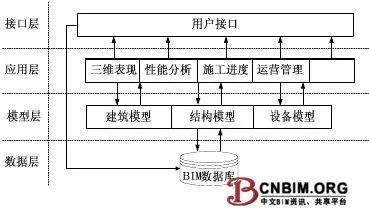
Figure 1: Structural Framework of Building Information Model
1.1 Building Information Model
The concept of BIM was first introduced in the 1980s as a natural outcome of merging information and digital technologies. BIM technology enables the digital representation of all building information—both structure and function—building a comprehensive database to support decision-making throughout the building’s lifecycle.
Figure 1 illustrates BIM’s four-layer framework: data layer, model layer, application layer, and interface layer.
- Data Layer: Stores and manages information. Unlike traditional CAAD, which relies on basic graphics (points, lines, surfaces), BIM utilizes object-oriented data organization. For instance, architects create wall class instances with properties such as position, size, composition, and material—providing richer, more computable information than a simple floor plan.
- Model Layer: Extracts relevant information for specific disciplines, or integrates information across disciplines. Structural designers can perform stress analysis, while integrated models help detect conflicts between architecture, structure, and equipment.
- Application Layer: Extends BIM applications. Using the rich information and readable data structure, researchers can perform statistical analysis, visualize models in 3D, simulate energy consumption, track construction progress, and manage properties.
- Interface Layer: Provides a user interface for interaction, enabling all participants to read and manage building information efficiently.
1.2 IFC Standards
The key to information sharing and interaction lies in standardization. Unified data expression and transmission standards enable different systems to communicate, making information exchange possible. The National Building Information Modeling Standard (NBIMS) in the United States specifies the IFC standard as the BIM data exchange standard. Developed by BuildingSMART International (formerly International Alliance for Interoperability), the IFC standards have undergone six revisions since 1997, with IFC 2×3 being widely adopted.
Defined in EXPRESS language (ISO 10303.11-1994), IFC data files are encoded in plain text and follow the STEP format (ISO 10303.21-1994). The file extension is .ifc. BIM software supporting IFC standards includes Autodesk Revit, Graphisoft ArchiCAD, and Bentley Microstation, all ensuring data consistency and eliminating redundant data entry across stages and professions, as seen in Figure 2.
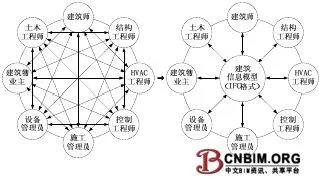
Figure 2: Transformation of Information Exchange Mode
2. Building Energy Consumption Simulation Software
2.1 Basic Framework of Energy Simulation Software
Energy-efficient design significantly reduces building energy consumption. Leveraging building physics, computers can simulate energy use during the design phase to predict performance and guide design choices. The US Department of Energy lists nearly 400 energy analysis tools, including DOE-2, BLAST, and EnergyPlus (US), ESP-r (UK), and DeST (China).
Typically, building energy simulation software consists of four modules:
- Load Simulation: Calculates cooling and heating loads, considering the effects of envelope, external environment, and internal usage.
- System Simulation: Models HVAC equipment such as air delivery systems, fans, coils, and controls.
- Equipment Simulation: Simulates energy-providing equipment like boilers, chillers, and generators.
- Cost Simulation: Evaluates energy costs for meeting building loads over time.
2.2 Introduction to EnergyPlus
EnergyPlus, developed by Lawrence Berkeley National Laboratory and several universities with support from the US Department of Energy, was launched in 2001. Combining DOE-2 and BLAST features, EnergyPlus introduces synchronous simulation of buildings, systems, and equipment, written in Fortran90. Its modular structure facilitates maintenance and expansion. EnergyPlus calculates dynamic loads based on principles of non-steady heat transfer and uses air heat balance equations as the core of simulation.
3. Project Implementation Plans
3.1 Analysis of EnergyPlus Input Data
EnergyPlus functions as a simulation kernel, with input/output files in text or spreadsheet formats. Input files include:
- Building model data (.idf): Describes enclosure, systems, and energy equipment.
- Data dictionary (.idd): Defines content and format of model data.
- Meteorological data (.epw): Provides weather parameters for simulation (temperature, solar radiation, wind speed, etc.).
Model data files are composed of multiple information blocks. As shown in Figure 3, each block starts with an object (e.g., wall) followed by its attributes. Attribute types and order are defined in the data dictionary, and cannot be changed by users.
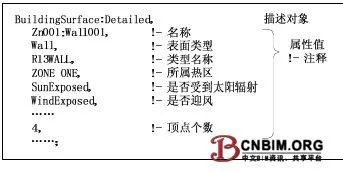
Figure 3: Information Blocks in IDF File
3.2 Analysis of IFC Standard Documents
The IFC standard defines all elements of a building model, each called an entity. Entities are similar to classes in object-oriented programming—containing properties but no methods. Examples include walls, roofs, equipment, materials, and coordinates. Entity definitions start with “ENTITY” and end with “END-ENTITY”, as illustrated in Figure 4, with entity name and attributes. Over 600 entities are defined in the IFC standard.
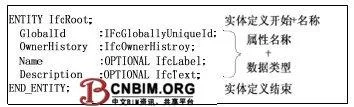
Figure 4: Entity Definition in IFC Standard
IFC exchange files consist entirely of statements, as shown in Figure 5. Each statement has a unique identifier (e.g., “#62”), followed by the entity name (e.g., IFCWALSTANDARDCASE for a wall), and a list of attributes in parentheses, separated by commas. Attribute values may reference other instances or be empty (“$”).

Figure 5: IFC File Statement Structure
3.3 Implementation of Data Exchange Interface
Through detailed analysis, it was found that both IFC and IDF files use object-oriented methods to describe building models. The authors used C# to develop a parsing converter for these files. Figure 6 outlines the basic workflow.
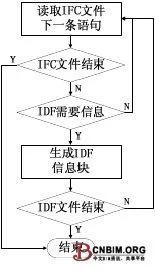
Figure 6: Workflow of Analysis Converter
Figure 7 details the structure and functions of the data interface. In this study, Autodesk Revit Architecture was used as the CAD platform to create a BIM database. The IFC export function generated IFC files for BIM models, which were then parsed to create IDF files for EnergyPlus simulation. During this process, IFC files did not include the thermal properties needed for IDF files. To address this, a material thermal parameter database was embedded in the converter, mapping material names to thermal parameters and retrieving them during conversion.
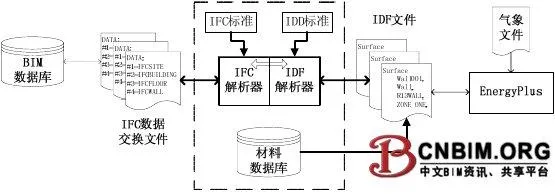
Figure 7: Data Conversion Interface
Although both IFC and IDF files use object-oriented data organization, IFC files are more complex, abstract, and comprehensive. For example, IFC 2x3TC1 contains 44 modules with 653 entities, covering nearly all architectural disciplines. EnergyPlus models are simpler, focused on geometry and material properties. Consequently, the parsing converter’s information flow is limited by the scope of IDF files.
4. Conclusion
This article proposes a design scheme for an IFC standard-based BIM and EnergyPlus data conversion interface, significantly reducing the workload for HVAC engineers and supporting the advancement of energy-saving building design. The scheme also offers reference value for data exchange research in other building specialties.
References:
1. Deng Xueyuan, Zhang Zhiyong, and Liu Xila, “Automatic Generation of Building Structure Models Based on IFC Standards,” Journal of Civil Engineering, 2007, 40(2): 6-12.
2. Zhang Jianping et al., “An Intelligent Property Management System Based on IFC Standards and Building Equipment Integration,” Journal of Tsinghua University (Science Edition), 2008, 48(6): 940-942, 946.
3. National Institute of Building Sciences, “National Building Information Modeling Standard Version 1-Part 1: Overview, Principles, and Methodologies,” 2007.
4. GB/T 16656.11-1996 Industrial Automation Systems and Integration Product Data Expression and Exchange Part 11: Description Method: EXPRESS Language Reference Manual, 1996.
5. China Institute of Standardization and Information Classification and Coding, GB/T 16656.21-1997 Industrial Automation Systems and Integration Product Data Expression and Exchange Part 21: Implementation Method: Pure Text Encoding of Exchange File Structure, 1997.
6. http://apps1.eere.energy.gov/buildings/tools_directory/alpha_list.cfm














Must log in before commenting!
Sign Up