
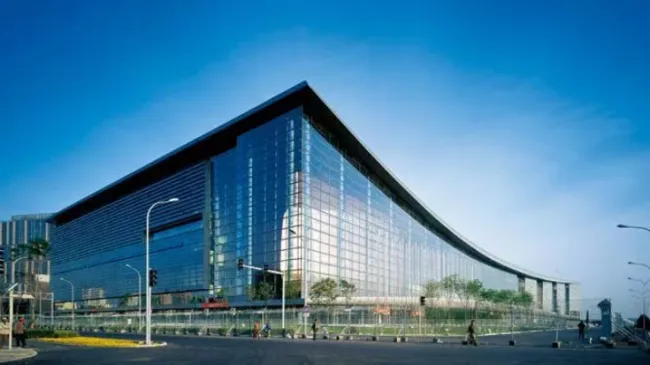
As humanistic architecture continues to evolve, the construction of large-span structural buildings in urban areas is becoming increasingly common. However, construction companies must pay close attention to the quality control issues that arise during these projects. Due to the specialized functions of large-span steel structure buildings, their tolerance for quality faults is very low. Therefore, it is essential to focus on the following four key problem areas throughout the construction process.

1. Drawing Optimization
First, it is crucial to coordinate the upper and lower structural components, considering the effects of multi-directional seismic forces. The most effective approach involves calculating seismic actions based on an overall structural model. Simplifications of the lower structure must be grounded in reliable and dynamic principles, taking into account equivalent stiffness and mass comprehensively.
Design models should be created and analyzed using specialized software. When performing calculations, the model must ensure consistent connections between the roof and main supporting elements. Additionally, force analysis should include not only the stress conditions after the structure is fully assembled but also the stresses during construction. This helps prevent damage caused by local stresses exceeding design limits before the structure is complete. Simulation of the construction process should consider component lifting, varying conditions across construction stages, structural pre-deformation techniques, and pre-assembly and unloading of components.
2. Structural Verification
(1) Structural Layout
The layout must avoid weak zones caused by local structural weakening or sudden changes, which can lead to excessive internal forces and concentrated deformation. For areas prone to weakness, seismic resistance measures should be implemented. The structure should maintain a balanced distribution of mass and stiffness, ensuring clear integrity and proper force transmission.
(2) Force System
Seismic forces from the roof should be effectively transmitted downward through supports. To prevent concentrated internal forces or significant torsional effects, the roof, supports, and lower structures should be arranged symmetrically and evenly. Prefabricated buildings should use spatial force transmission systems to maintain overall roof integrity, avoiding weak zones with abrupt changes or local weakening. Lightweight roofing systems are recommended, with strict control over roofing unit weight.
(3) Floor Slab Comfort Verification
Floor vibration comfort is a key focus, involving comfort analysis, vibration prediction, design under normal use limits, and optimization based on comfort requirements.
Verification methods include theoretical calculations, experimental studies, on-site observations, and finite element analysis. Comfort standards should consider vibration environment, source characteristics, occupant activity, and building type, ensuring vertical vibration frequencies comply with JGJ3-2010 “Technical Specification for Concrete Structures of Tall Buildings”.
3. Structural Modeling and Virtual Testing
Modern computer networks and virtual construction monitoring facilitate widespread use of steel structures. These technologies help avoid potential hazards from component misalignment or construction issues, ensuring quality while reducing costs. However, component installation or lifting may cause deviations affecting the structure’s load-bearing capacity. Simulation technology effectively mitigates these risks by allowing detailed control over critical construction aspects.
For large-span buildings with cast-in-place concrete frame columns and steel grid roofs, enhancing the in-plane constraints on frame columns can reduce overall structural displacement. The stiffness of grid elements in the plane should be considered during structural analysis.
4. Structural Seismic Resistance
Under similar conditions, arch frames experience larger node displacements compared to reinforced concrete columns and mesh shells. Arch foot dynamic reaction forces are relatively large, while column foot forces are smaller. Vertical and horizontal reaction forces at arch feet are significant, whereas column foot horizontal reactions can often be ignored. These factors should be considered in seismic design.
The structure’s weakest point lies perpendicular to the arch axis; excessive displacement here can cause stabilizing cables to loosen, load-bearing cables to break, leading to structural failure.
To improve seismic performance, lateral stiffness of dome supports can be increased, reducing absolute and differential lateral displacements, especially in the dome area. This provides more uniform stiffness distribution, benefiting overall stability. Alternatively, circumferential trusses can be installed along building partitions to support symmetric steel pipe arches, supplying external stiffness, bearing partial loads, transmitting horizontal forces, and integrating with vertical structural components for enhanced integrity.
5. Construction Quality Control
1. Pre-embedding and Fixing of Foundation Bolts
Due to steel bar interference and vibration during concrete pouring, securing anchor bolts is challenging and critical for quality control. A template-fixed bracket method is recommended.
(1) Bracket Method
Two parallel No. 8 channel steels are placed atop the reinforced steel formwork. The centerline spacing should align with the foundation axis and be slightly wider than the outer bolt spacing. Elevations of channel steel upper planes should be consistent. Channel steels on the same side are connected by spot welding, and welded to the steel formwork at fixing points. This assembly serves as a plane and elevation control network for the foundation, allowing precise anchor bolt positioning and preventing template deviation during concrete pouring. Anchor bolt position lines are defined along the longitudinal axis centerline, and to avoid cumulative errors, markings are made from the central two columns outward using steel needles on the channel steel.
(2) Pre-embedded Foundation Bolts
Two steel frames, one upper and one lower, made from angle steel and steel plates, secure the eight anchor bolts per column. After fixing the frame, it is placed in the supported steel formwork, with horizontal positioning controlled via hanging lines. Using control lines on the channel steel, the frame is accurately fixed to the template. Adjustments ensure bolt levelness, verticality, thread length, alignment, and sizing are correct. Upon verification, the steel frame is spot welded to the template channel steel. Once firmly fixed, concrete pouring can proceed, ensuring close coordination between civil and installation teams to protect threads and prevent frame displacement during pouring and compaction.
2. Manufacturing Technology for Structural Components and Irregular Nodes
Large-span steel structure buildings with complex spatial forms require manufacturing of components and irregular nodes capable of handling complex local stresses. Therefore, production must meet stress requirements to guarantee project safety and quality.
3. Lifting Construction
(1) Overall Sliding Construction Technology
A key challenge in large-span steel structure construction is maintaining stability before the entire space is formed. Sliding construction technology, combined with controllable synchronous traction equipment, allows the structure—divided into stable segments—to be horizontally moved along tracks from assembly to design position. This addresses stability issues but requires high out-of-plane stiffness, track installation, and complex synchronous control for multiple pulling points.
(2) Overall Improvement of Construction Technology
This method uses hydraulic jacks combined with valve groups and pump stations to create a hydraulic jack cluster. Controlled by computer, the system synchronously moves lifting points, ensuring stable posture and load balance during lifting or displacement of large structures.
(3) High-Altitude Unsupported Assembly Construction Technology
This technique divides the structural system into manageable sections with an optimized lifting sequence, eliminating the need for support platforms during construction. Structural rigidity forms stable units, which are sequentially expanded until the entire structure is completed.

4. Welding of Steel Structures
(1) For steel grades welded for the first time by the construction unit, welding process evaluations must be conducted, and tailored welding procedures developed for prefabrication.
(2) Supervisors must verify welders’ qualification certificates, including base and welding material types, welding positions, and certificate validity.
(3) Joint assembly quality must be strictly controlled, covering groove quality, root clearance, and alignment.
(4) Welding should not proceed when surfaces are damp or oily, temperatures are too high, or the area is exposed to wind, rain, or snow. Low hydrogen welding rods are especially sensitive. Construction units must clarify these conditions in process plans and briefings.
(5) To reduce welding stress and prevent cracks, preheating must comply with standards, maintaining temperature throughout welding and completing weld seams sequentially. Post-welding heat treatment should also be performed as required.
(6) Non-destructive testing (NDT) is mandatory for designated welds. Each weld should be proportionally tested, with inspection locations and lengths assigned by quality inspectors and communicated to NDT personnel. Flaw detection reports must specify flaw locations, and quality inspectors shall perform visual and NDT inspections promptly after welding. Any defects must be reported immediately for repair.
5. Roof Beam and Column Nodes
Roof beam-to-column nodes are critical for component safety. In this project, these nodes are rigidly connected with high-strength bolts, making quality control of bolt installation vital.
Construction teams must be well-managed, with early detection and control of quality issues. High-strength bolts should never be used as temporary bolts. If bolts do not fit holes, gas cutting may be employed to enlarge holes. Friction surfaces must be thoroughly cleaned of dirt and paint. Installation, usage, and requisition of bolts should follow standardized procedures.
Source: Architectural Technology Magazine













Must log in before commenting!
Sign Up