
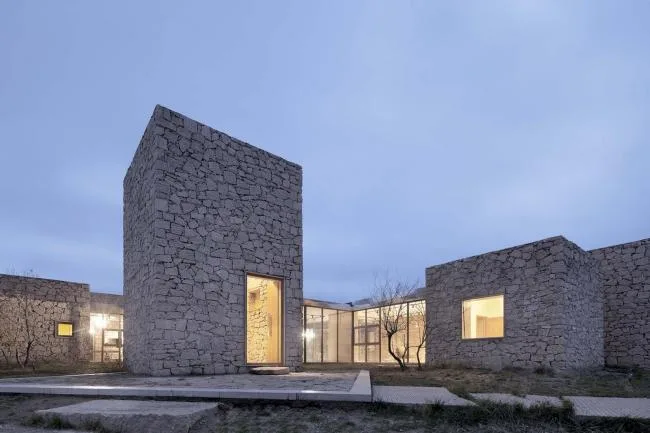
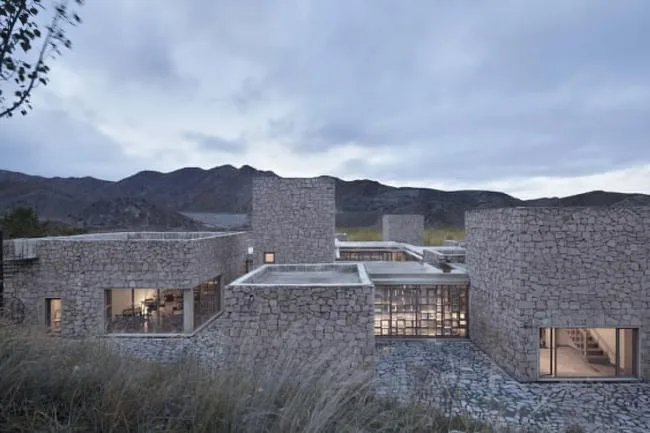
Architect Peng Lele designed a 1,000 square meter building in Baotou, situated on what appears to be an excavated barren mountain and a dried-up riverbank forest farm. The building’s owner, Zhang Jian, is a local farmer and the contractor of this forest farm. The structure serves as a homestay and is described by Zhang Jian as a “slow life” venue for dining, drinking, and entertainment (BIM design).
The choice of Peng Lele by a farmer to design this building is notable, reflecting shifts in architecture and aesthetic values. Peng Lele is renowned for designing homes for artists, which makes this collaboration between a farmer and an architect, both outside their usual roles, particularly unique. Despite this, the building was completed according to Peng Lele’s design concepts.
Once finished, the building caught the attention of those seeking creative homestays, gaining a strong reputation among this community. Locally, it has become a popular spot for young people to host meetings and parties. This led many to question Zhang Jian’s background, suspecting he might be a “returnee” with international education. However, Zhang Jian is indeed a genuine local farmer.
This privately commissioned small building, resulting from repeated consultations between the client and an architect experienced in designing art museums and studios, has become a social aesthetic phenomenon. It raises the question of how people appreciate and accept grounded yet creative contemporary architecture. In other words, a building’s creativity, regardless of its size, often lies in its capacity to spark social aesthetic events.
Creativity is closely tied to a “down-to-earth atmosphere,” a concept in ancient Chinese culture described as “favorable timing, favorable location, and harmonious people.” For this modest, cost-effective building—called “Hongshi Mountain House” by Peng Lele—its creativity draws from these three principles.
This moment reflects China’s modern and contemporary culture and architecture, which has undergone over a century of engagement with Western influences. Throughout this process, there has been a tension between traditional Chinese culture and Western culture, with ongoing reinterpretations and transformations of traditional architectural elements through a Western lens.
After nearly thirty years of rapid urbanization, architectural challenges have accumulated, such as the prevalence of monotonous concrete structures, flashy glass and metal facades, and aesthetic fatigue caused by copying Western modern and contemporary styles. There is now a growing desire for grounded, creative contemporary architecture.
Internationally, architects like Japan’s Liwei Nishizawa and Kengo Kuma have been innovatively reinterpreting traditional Eastern architecture. Likewise, last year’s Pritzker Prize winner, Indian architect Balkrishna Doshi, blends Western education with local culture to develop a modern architectural language rooted in his heritage. Young Chinese architects have also made strides in applying grounded approaches in theory and practice, including Zhang Yonghe’s early rammed earth experiments and Wang Shu’s research into traditional Chinese architecture.
In the globalization of modern and contemporary architecture, while embracing European and American influences, there is increasing emphasis on researching and adapting local traditional culture and architectural elements. This approach, prioritizing adaptation to local conditions, is becoming a growing trend in China and beyond.
Peng Lele’s recent architectural practice has developed a distinctive language for spatial experience and material selection. This approach was recognized by Zhang Jian, a genuine farmer with an individual aesthetic vision, who discovered Peng Lele’s work through architectural magazines and networks. Zhang Jian visited Peng’s studio in Songzhuang multiple times, earnestly requesting her to design this building. This collaboration sparked a social aesthetic event defined by “harmony”—a shared aesthetic recognition within a certain social group.
The building’s geographical and cultural context—”this place”—refers to the natural, social, and historical environment of China, specifically the setting of the Hongshi Mountain House. Peng Lele’s work is characterized by “tailoring to local conditions.” For example, her studio in Songzhuang, “Bai Zi Jia Yi,” along with “Guidian Art Space” and “Xiang Jing and Qu Guangci Studio,” exemplify this approach.
Space design is foundational, but the building walls, which define space, carry their own character. Peng Lele carefully selects materials that relate to the local environment—sometimes natural, sometimes social or historical. For instance, “Guidian Art Space” uses the “cement flower wall blocks” popular in the 1970s and still found in local residences. This choice creates a connection between contemporary architecture and local history, transforming a once decorative material into a modern architectural element.
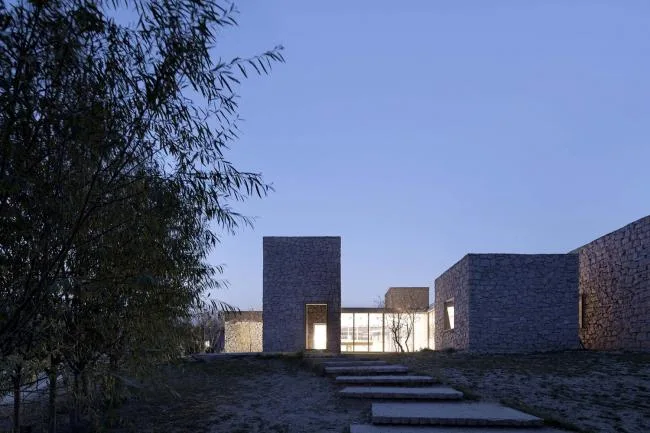
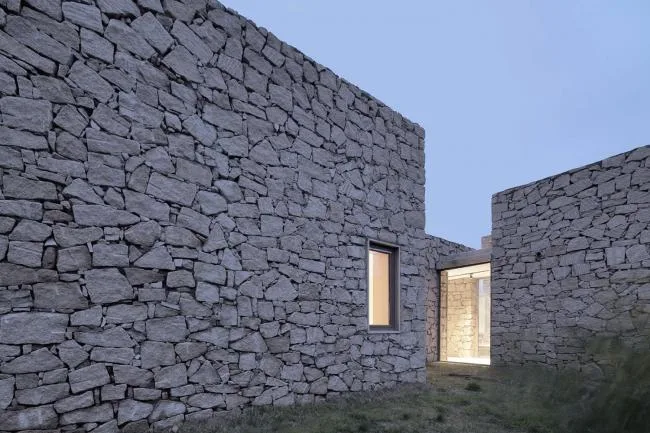
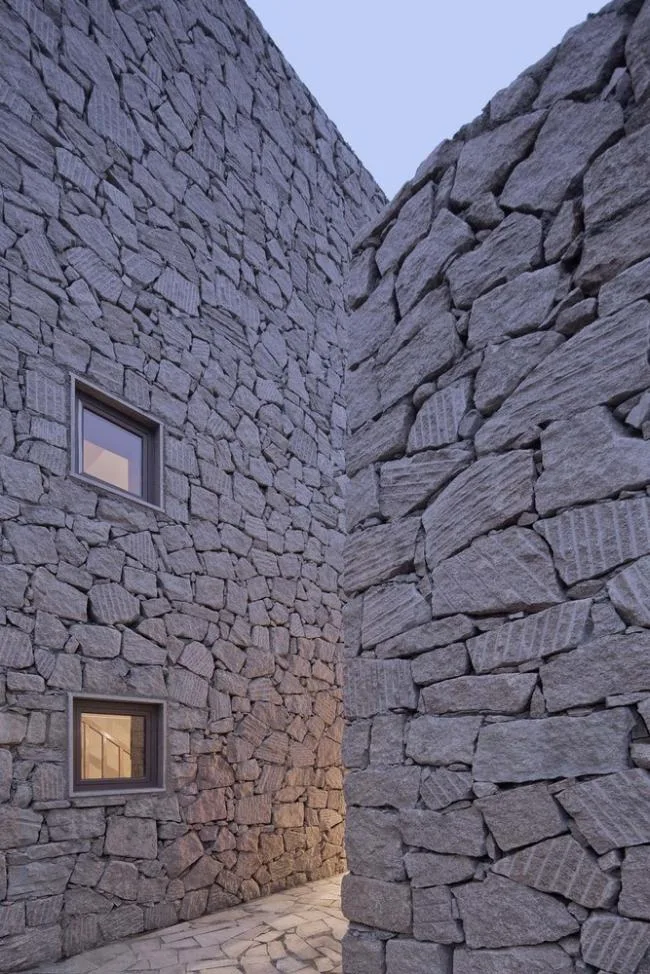
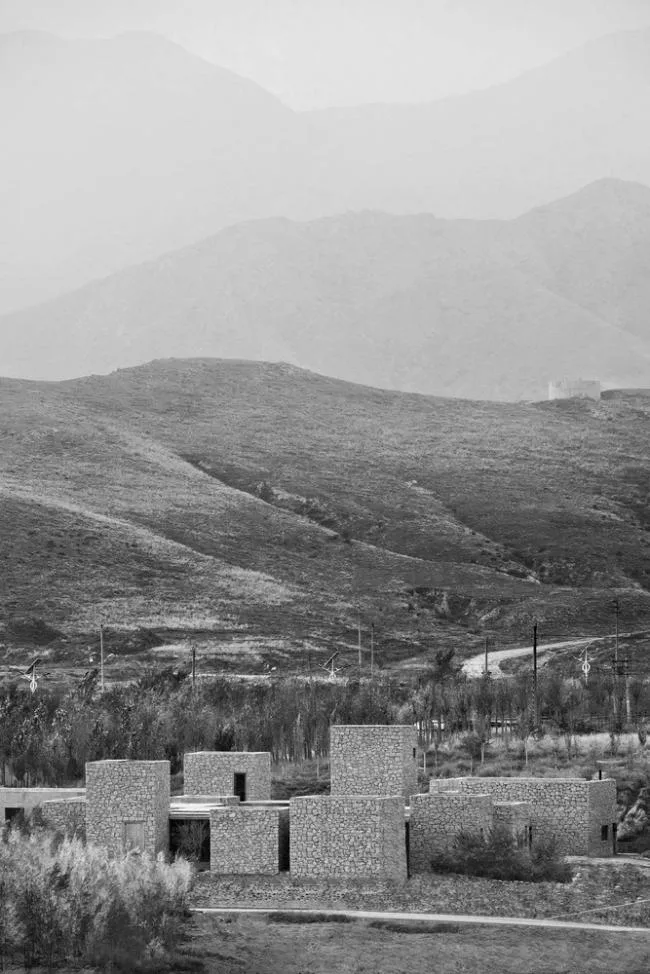
After accepting Zhang Jian’s invitation, Peng Lele visited the Baotou site without any preconceived ideas, thoroughly studying local houses, the natural environment, and customs. She discovered an abundance of various stones, commonly used in building stone dams, differing in color, density, and hardness. She chose to use leftover red stone waste from local granite slab production for the building’s main material. This choice was cost-effective and visually rich: from a distance, the large stones create a rough masonry texture, while up close, the distinct traces on each stone provide intricate detailing, similar to the material used in “Guidian Art Space.”
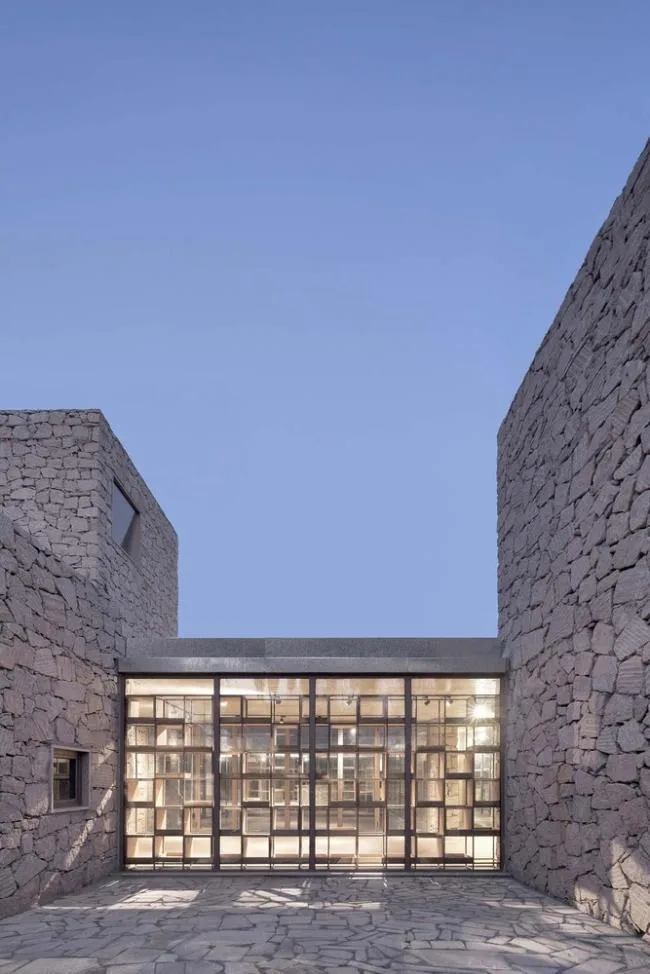
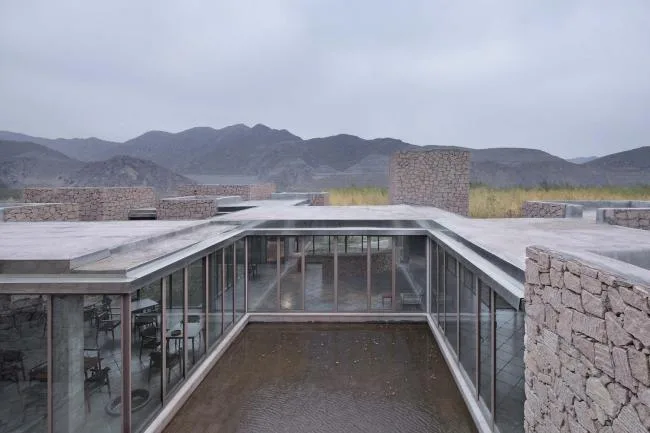
Once the materials were confirmed, Zhang Jian invited over ten local farmers to construct the building using traditional masonry methods. Over the course of a year, they built more than ten square-shaped functional “boxes” of varying heights. These simple, neat, and rough-textured earth-red boxes blend naturally into the Hetan Forest Farm’s green shade, growing organically from the barren mountains and dry riverbanks around them.
The Red Stone Mountain House belongs to its natural environment, as does every work by Peng Lele. It also reflects her design philosophy and consistent architectural language developed over the years. She prioritizes the essential functional spaces first, considering the client’s needs, plot quality, terrain, sunlight orientation, social customs, and neighboring buildings to form a comprehensive concept.
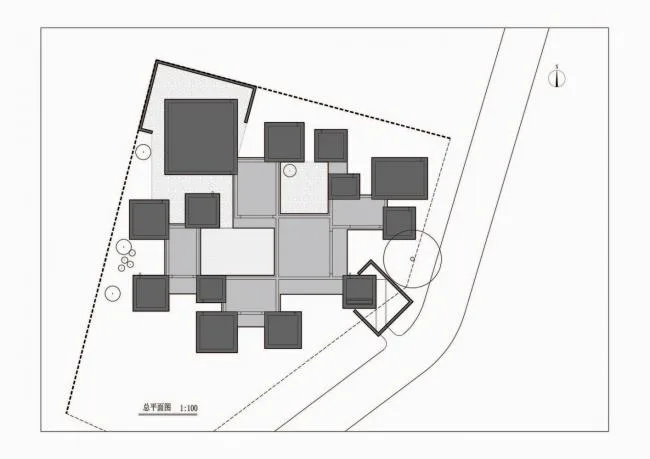
Once the concept is established, Peng Lele applies a strategy reminiscent of Go game tactics, placing the main functional spaces carefully. These spaces are linked by corridor-like connections, inspired by traditional architecture, creating complex yet orderly “connecting spaces” with public or flexible uses.
These connective spaces can take various forms: belts, corridors, halls, or hybrids thereof—sometimes narrow, sometimes wide, winding and twisting to link the main functional areas.
For example, in the artist Qi Zhilong Studio designed by Peng Lele, a short, narrow corridor connected the building’s “boxes.” At Hongshi Mountain House, this corridor expands and transforms, losing its corridor-like feel and becoming a more open, flowing space.
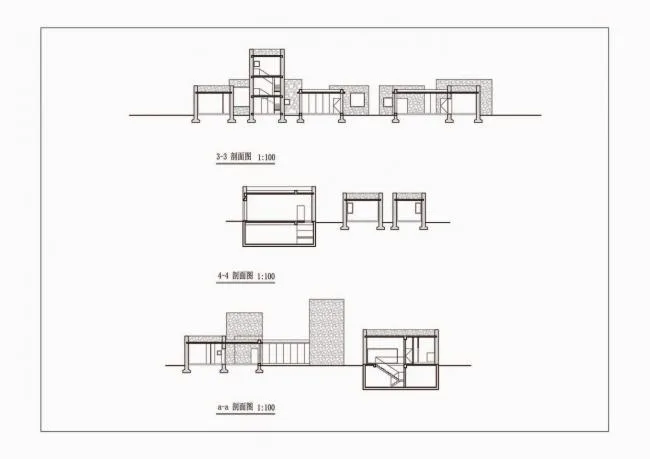
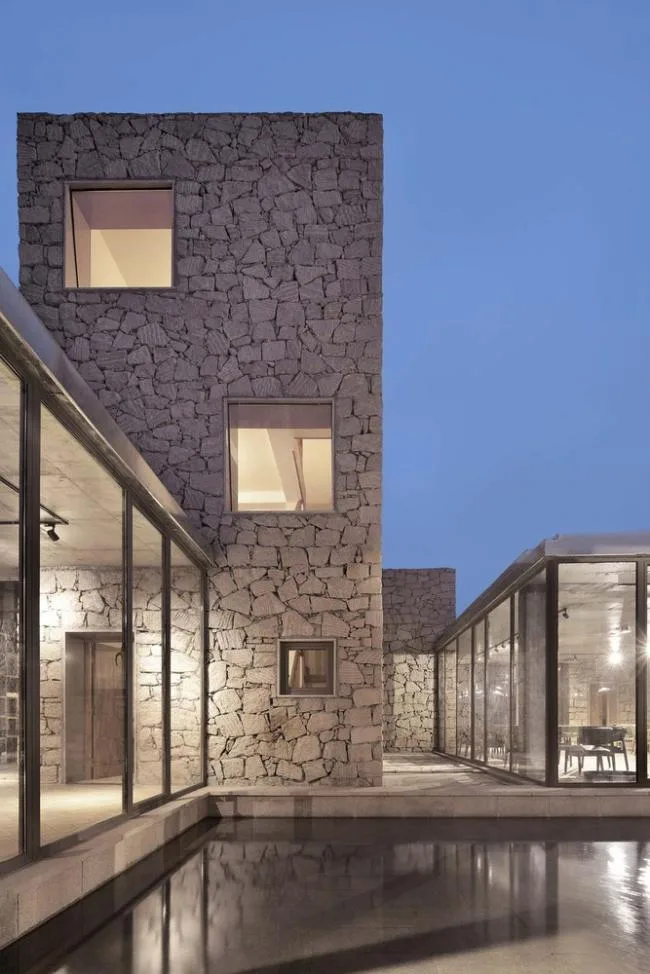
The house consists of three groups of functional boxes with varying numbers and heights: six guest room boxes, four entertainment boxes, and two dining boxes, plus a public box with a separate entrance. All boxes differ in size and height, connected by a corridor sealed with glass, creating a diverse and flexible transparent space.
The design emphasizes strong contrasts: the rough red stone walls enclosing the boxes juxtaposed with the transparent glass corridor spaces highlight material contrasts between natural stone and modern glass, as well as spatial contrasts between enclosed and open areas.
Inside the transparent corridor, visitors experience the winding path while viewing the exterior greenery, mountains, riverbanks, and the variously sized red stone boxes, along with small courtyards, pools, and other interesting spatial features. This 1,000 square meter building maximizes spatial variety and sensory experience.
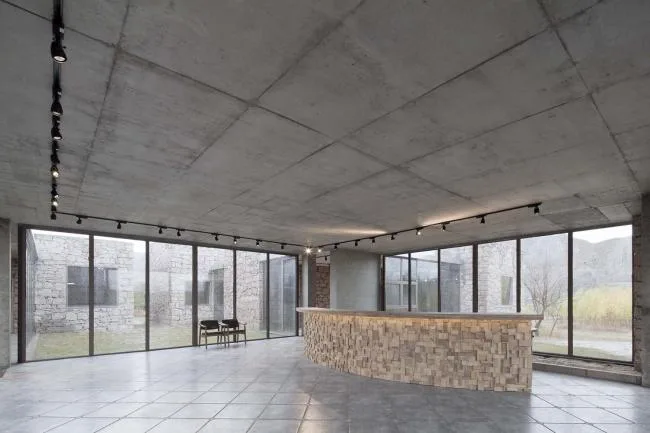
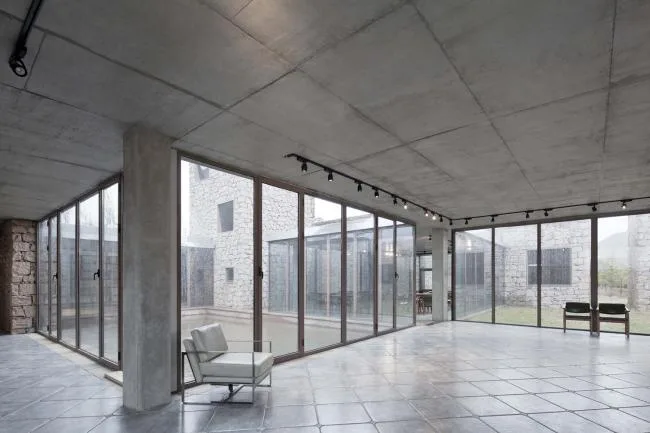
Hongshi Mountain House also features thoughtful details, such as tilted glass windows designed to combat strong wind and sand. The windows tilt inward at the top and bottom to prevent accumulation of debris, a practical solution reflecting the principle of adapting to local conditions.
Some windows also protrude from the exterior wall, creating a striking contrast with the rough red stone surrounding them. These details invite visitors to discover more unique, grounded design elements throughout the building.
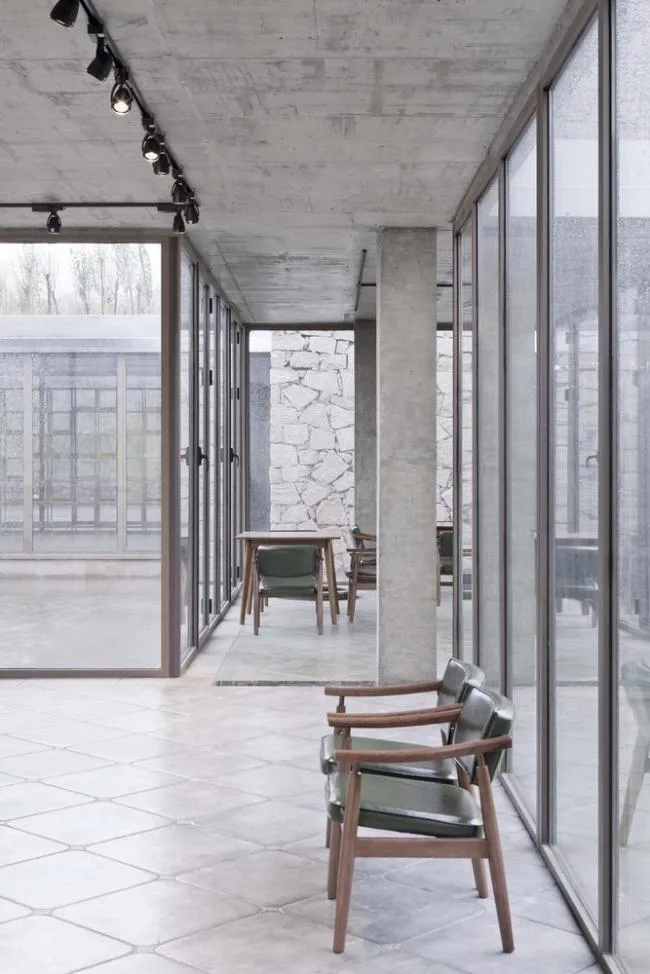
Whether under bright sunlight, at sunset, or during continuous rain, the exceptionally clear skies of Baotou’s outskirts offer brilliant light. The red stone walls and reflective glass complement each other, while mountain lights and tree shadows are reflected across large glass surfaces.
At times, one might wonder if the surrounding mountain lights and tree shadows are part of the building or if the building is simply an extension of the natural landscape. The Red Stone Mountain House is fully integrated into its environment.
Drawings
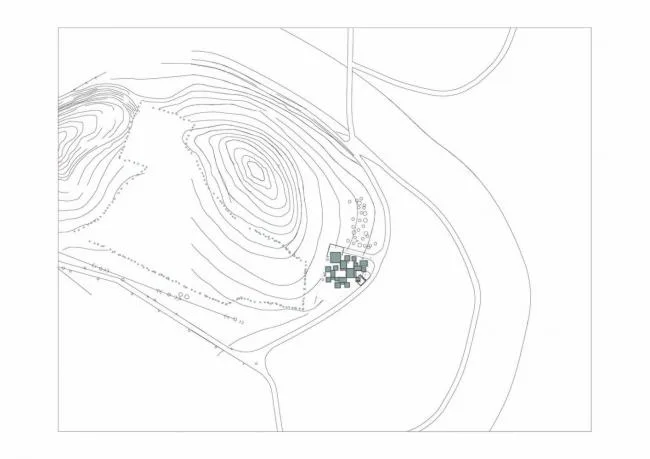
Location Map
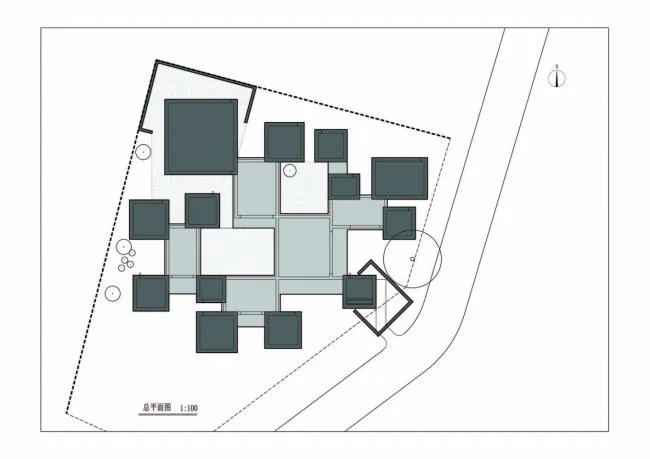
Master Plan
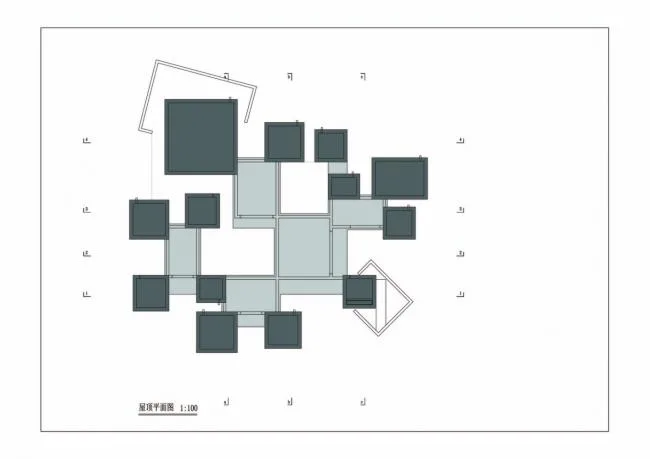
Roof Plan
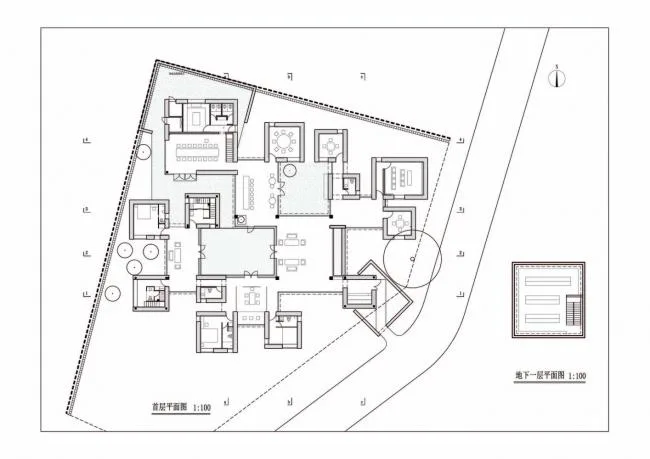
First Floor Plan
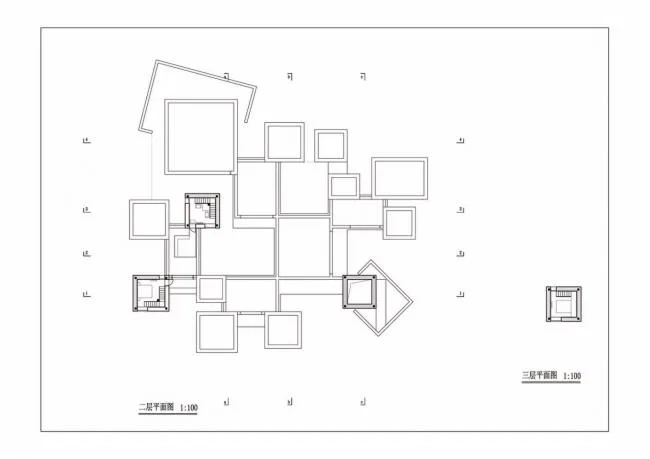
Second Floor Plan
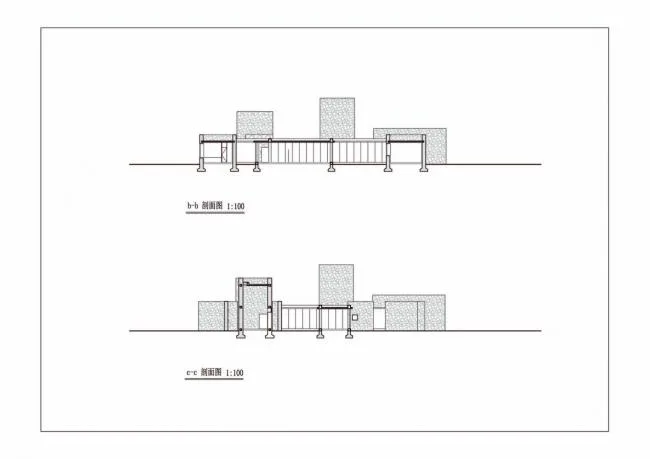
Sectional View
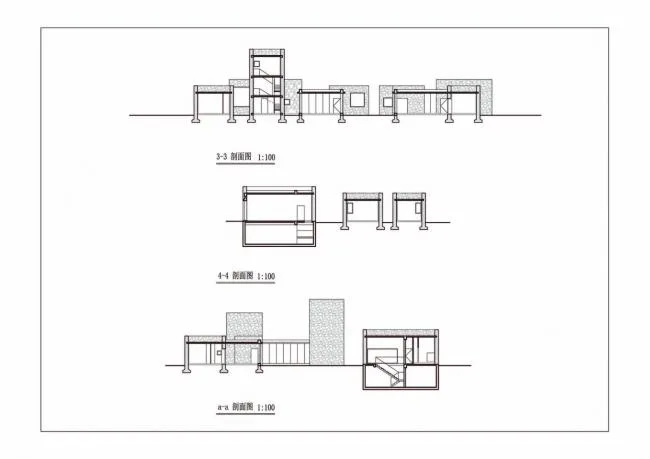
Sectional View
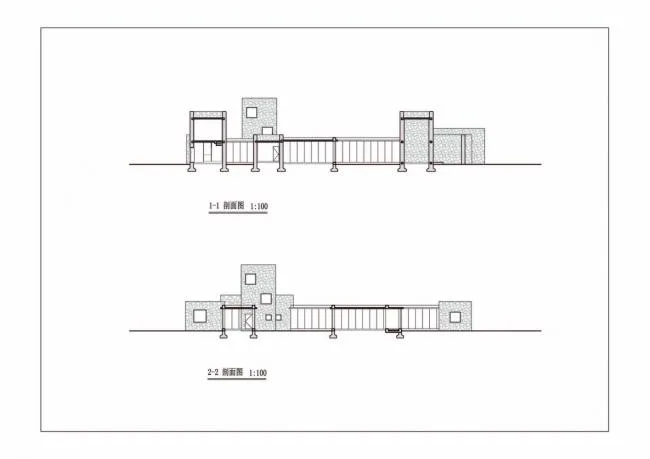
Sectional View

Northwest Elevation View
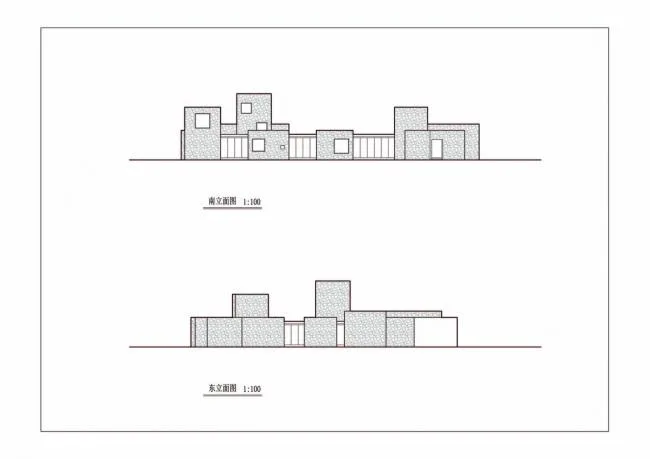
Southeast Elevation View

Detail Drawing
Project Information
Architect: Bai Zijia Yi
Address: Yindongshan Ecological Park, Baotou, Inner Mongolia, China
Category: Hotel
Lead Architect: Peng Lele
Project Architects: Cao Yi, Zhu Xiao
Author: Li Xianting
Building Area: 1,875.0 m²
Project Year: 2016
Photographer: Summer Solstice













Must log in before commenting!
Sign Up