
On December 23, 2016, the Ministry of Housing and Urban-Rural Development released the “Consumption Quota for Prefabricated Construction Projects,” which took effect on March 1, 2017. How familiar are you with the consumption quota related to prefabricated construction projects?
What impact do prefabricated buildings have on pricing foundations? What new challenges do they present for engineering cost management? How should costs be managed during the contracting phase? And how should operations proceed during the implementation and final settlement stages? The following discussion will address these questions in detail—stay tuned for the upcoming series.
1. How Prefabricated Buildings Affect Pricing Foundations
Prefabricated modular buildings have shifted from on-site production of elements such as columns, walls, beams, floors, stairs, roofs, and balconies to transactional purchases (or self-manufacturing) of finished concrete components. This change renders the traditional method of calculating costs—based on sub-items for each element—obsolete, as costs are now integrated into the commodity price of each component.
On-site construction has evolved into factory-based component production, diminishing the direct influence of labor, materials, and machinery consumption on overall costs. Consequently, market inquiries and bidding processes have become increasingly critical. Manual on-site operations have been replaced by mechanical assembly, and as the building assembly rate rises, prefabricated construction increasingly reflects the characteristics of installation engineering pricing. Accordingly, pricing has shifted from production-based methods to installation-based methods.
Cost management has also evolved, moving from a dual focus on consumption quotas and price information to prioritizing price information supplemented by consumption quotas. This transformation calls for enhanced informatization and market-driven approaches in cost management.
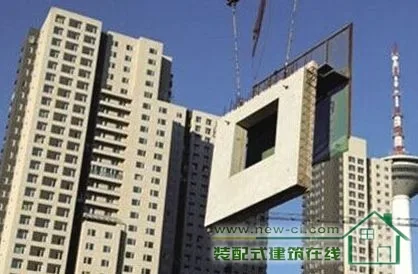
With the integration of building components, entire bathrooms and kitchens are now traded as complete packages, with prices covering design, production, transportation, assembly, and related costs. Prices are no longer determined by itemizing and measuring specific construction tasks. Instead, costs depend on specifications or grades needed to fulfill required functions.
Cost management for these components should shift focus from on-site production to evaluating their functional quality. As production, transport, and installation become more socialized and specialized, pricing moves from on-site production models to competitive market models. This shift heightens the importance of contract transactions and market price awareness.
2. Challenges in Cost Management for Prefabricated Buildings
2.1 Incomplete and Distorted Component Price Information
The consumption quota for all types of prefabricated components and accessories is based on on-site installation of purchased finished products. Component price information heavily influences bidding control prices, quotations, and completion settlements. Reasonably determining and scientifically applying component prices are foundational to effective cost management.
However, due to low standardization levels in China’s prefabricated building design, diversity and non-standardization of components lead to incomplete and inconsistent pricing information. The lack of dynamic market data reflecting current prices and the absence of unified market standards for quotations contribute to missing or distorted price information.
Currently, prefabricated buildings typically shift cast-in-place construction to factory production without fixed products, manufacturing components according to project requirements. Standardization is insufficient, and components are often customized. Some projects even use patented products—for example, significant discrepancies exist between the service life and price of domestic versus imported waterproof rubber strips.
While finished component prices can be partly determined through quota pricing, they include not only labor, raw materials like steel and concrete, and formwork amortization, but also factory land costs, plant and equipment depreciation, patent fees, financial expenses, and taxes. This complexity makes pricing highly uncertain.
2.2 Calculation Bases and Rates for Management Fees, Profits, and Regulatory Fees
In many Chinese provinces, the calculation base for management fees, profits, and regulatory fees does not rely solely on the sum of personnel and machinery costs—for example, regulatory fees are often calculated only on labor costs.
Since component parts have already incurred labor, materials, machinery, and measures costs, their pricing is considered part of material costs. This shift leads to a significant increase in material costs and a reduction in labor and measures costs. Because labor costs are embedded in product prices, the ratio of labor to material costs varies with assembly rates.
Therefore, existing calculation bases and rates for management fees, profits, and regulatory fees, which are largely based on cast-in-place methods, need adjustment to reflect prefabricated building realities.
2.3 Need for Improved Measurement Standards
Prefabricated construction differs significantly in techniques and methods from cast-in-place concrete, requiring unique sub-project considerations. While some bill of quantities items exist in the “Code for Measurement of Building Construction and Decoration Engineering” for prefabricated components, these remain exploratory due to evolving processes and quality demands.
The measurement specifications lag behind current practices, offering incomplete or unclear items, and project descriptions often only list conventional content affecting unit prices. This incompleteness hampers the effective implementation of bill of quantities pricing models in prefabricated projects.
Overall, existing measurement standards are insufficient to meet the cost management needs of prefabricated construction, impeding market growth and development.
2.4 Pricing Bases and Gaps in Measure Project Fees
Current pricing bases for measure items—such as vertical transportation, extra height fees, and safety and civilized construction fees—are calculated assuming all on-site pouring.
With the widespread use of prefabricated R&D components, the scope and timing of on-site measure items are constantly changing. For example, in prefabricated concrete construction, the work involved in formwork and scaffolding installation and removal is greatly reduced, making calculation based solely on building area questionable.
Additionally, prefabricated construction is a new technology with insufficient measurement standards for tasks like on-site component stacking and working surface supports. This lack results in absent pricing bases and leads to arbitrary pricing.
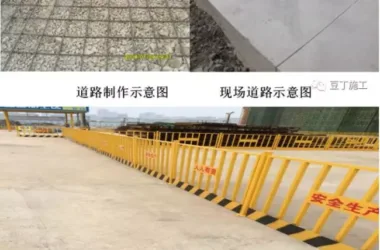
Furthermore, current attention tends to focus on physical projects, with less consideration for prefabricated assembly technology’s impact on construction measures, whether direct or indirect. For instance, temporary production and living houses, structural supports in foundation pits, quick-install bearing platform foundations, prefabricated road slabs and formwork hoops, reinforced concrete assembly tower crane foundations, and support frames are commonly used in industrial construction.
This gap in pricing bases increases the risk of disputes and conflicts between contracting parties.
Adjusting the Risk Range of Material Costs in Comprehensive Unit Prices
Because labor costs are largely embedded within component prices, when provincial quota stations adjust labor unit prices, component suppliers adjust their prices based on market labor costs. This transfer shifts labor cost risks originally borne by employers to contractors.
Therefore, the risk range for component parts borne by contractors, as stipulated in bidding documents, should not be set at 5% but is recommended to be lower than 5%.














Must log in before commenting!
Sign Up