
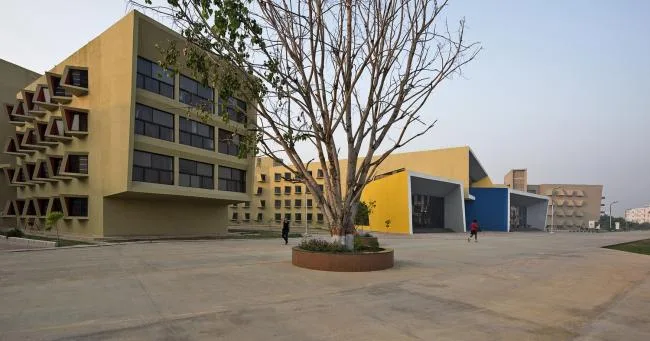
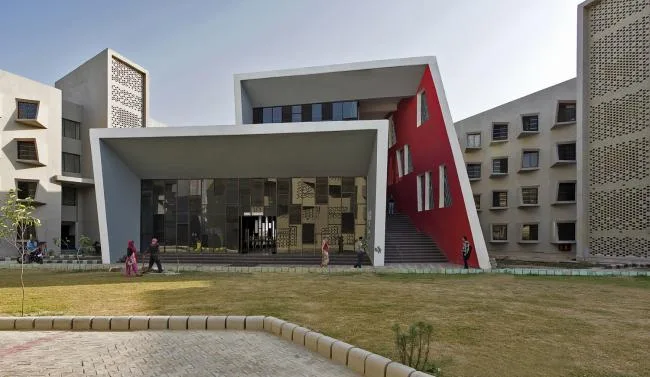
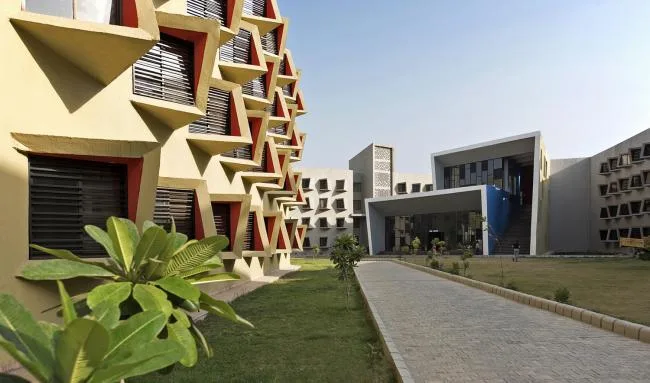
This student dormitory project draws its initial design inspiration from the streets of Mathura’s old town area in India, where it is located. The design successfully creates a cohesive and organic space that reflects its cultural context.
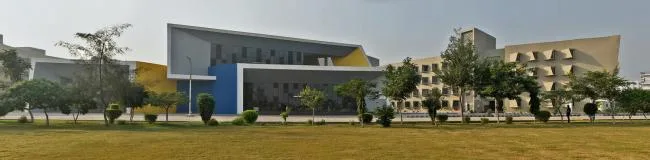
▼ Front of the building
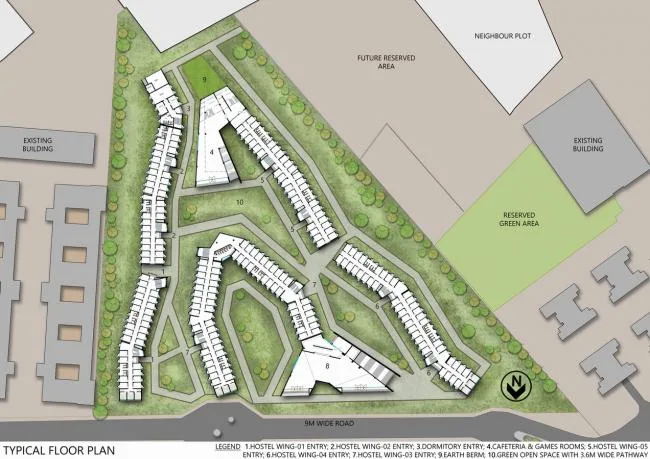
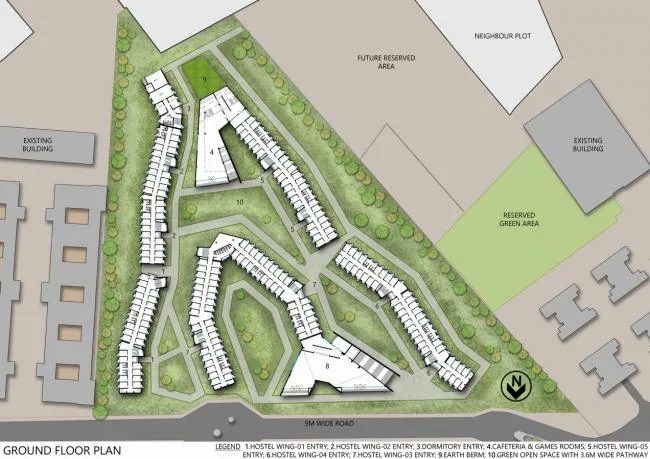
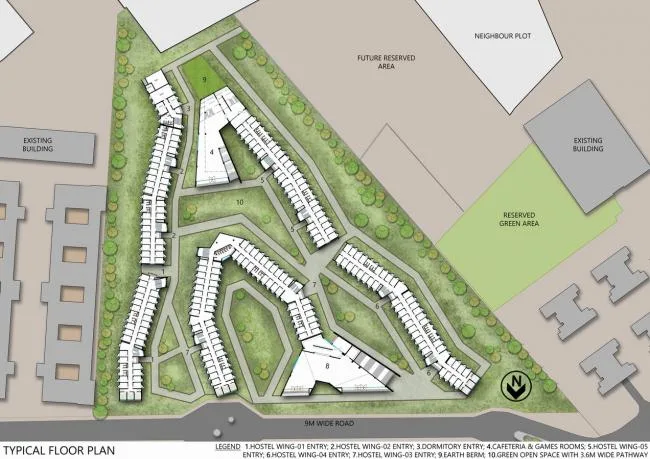
The dormitory accommodates 800 guest rooms spread across four floors. It consists of five linear, strip-shaped building blocks arranged on a wedge-shaped plot. The architect skillfully twists and rotates these blocks along their lengths to optimize the layout and create unique spatial experiences.
The entire project features a total of 800 guest rooms.
▼ Standard floor plan
The building blocks create interspersed courtyards, fostering open, communal spaces that enhance the living environment.
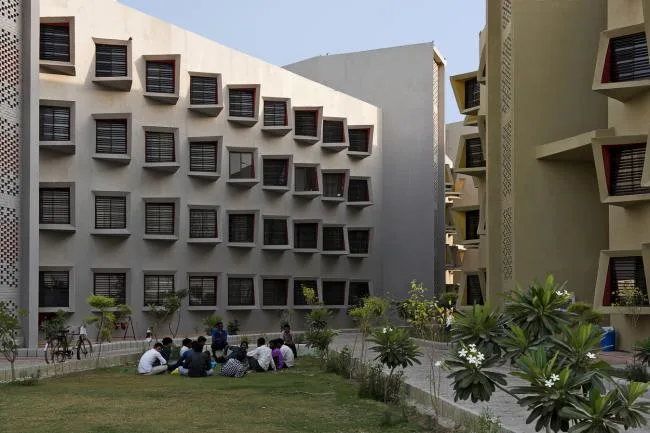
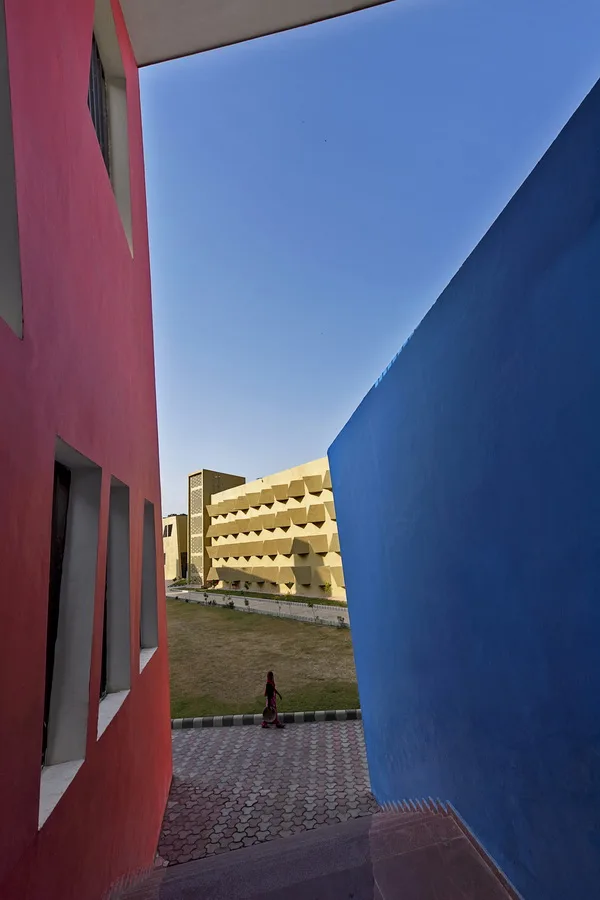
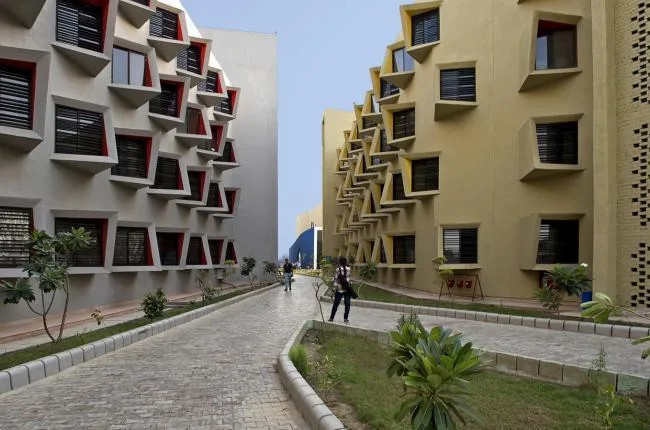
▼ Passage between building blocks
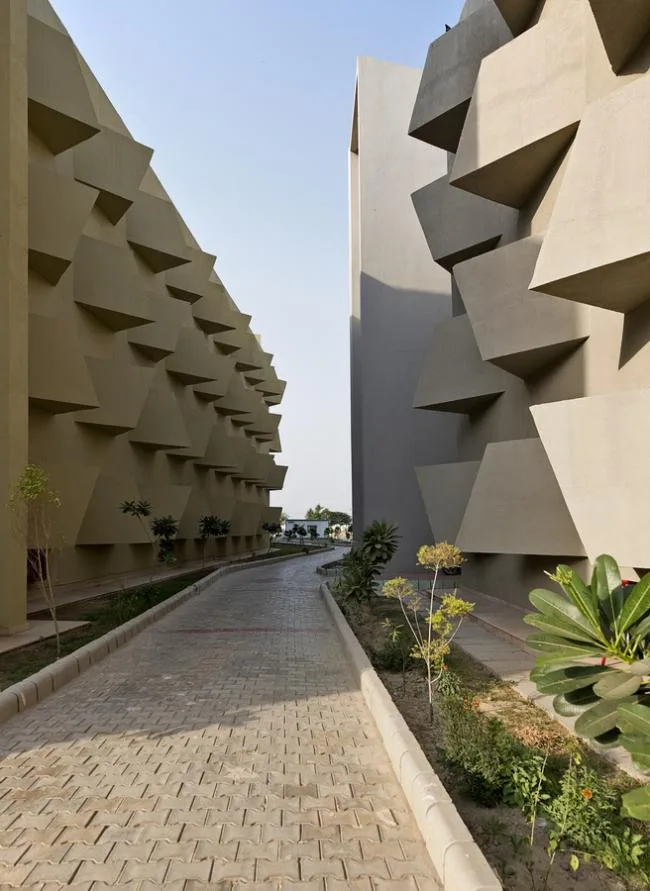
These new dormitory blocks are situated near existing dormitories to the east and west, all within a large university campus. The design features distinctive signage styles throughout, reinforcing each area’s unique identity.
▼ Distinctive signage styles on the building
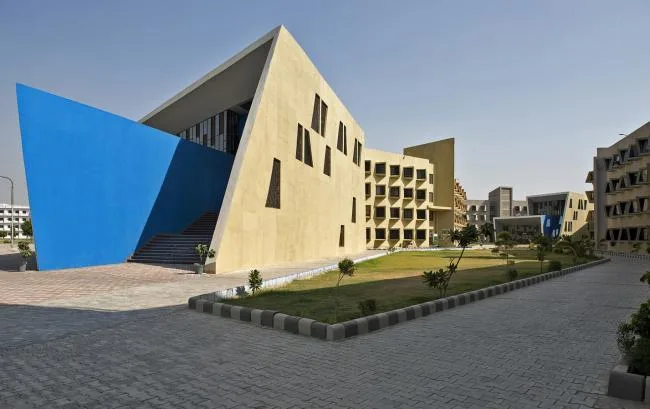
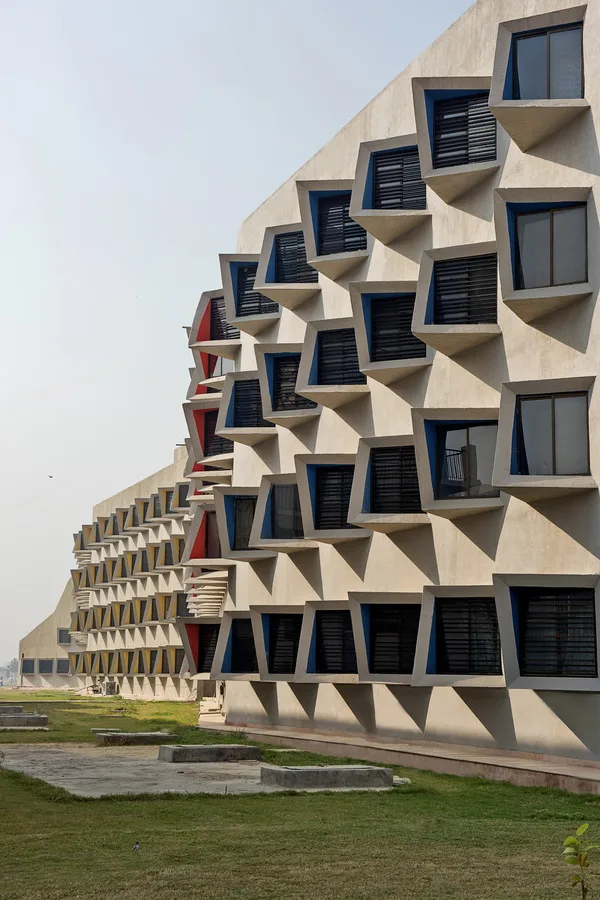
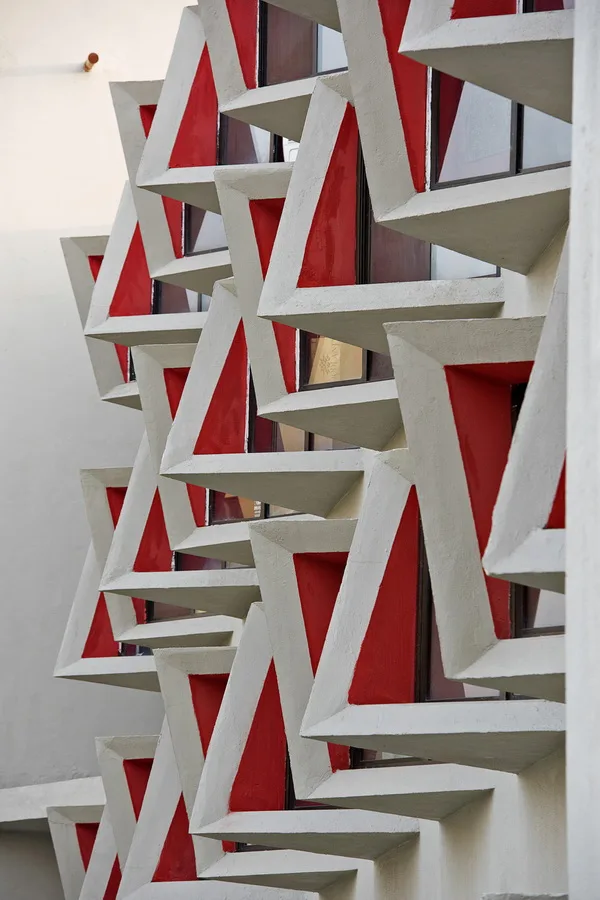
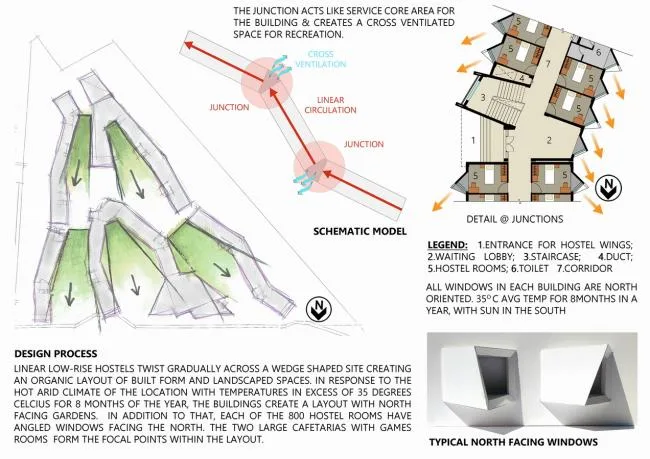
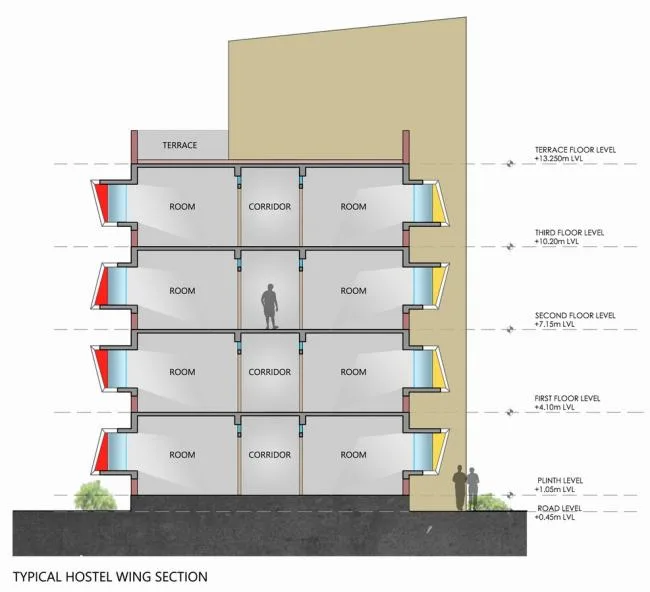
All buildings are oriented to face the large garden area to the north, offering views over a vast recreational park. Each dormitory room is equipped with wedge-shaped, protruding windows facing north toward the playground.
▼ Activity area north of the building
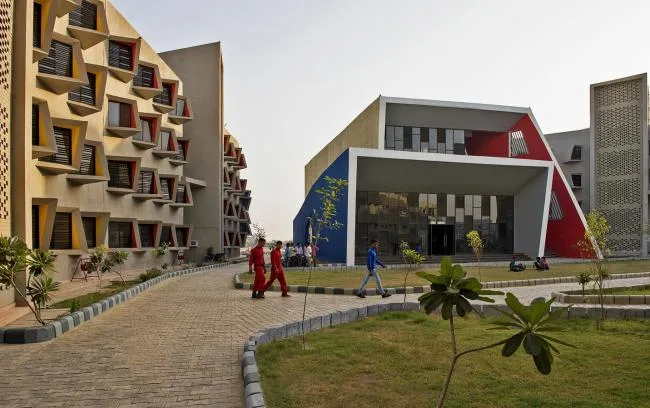
▼ Dormitory wedge-shaped protruding window
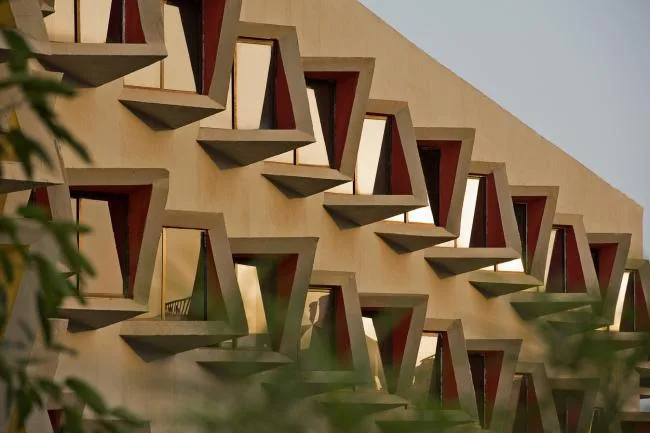
▼ The wedge-shaped protruding windows provide both natural light and shading
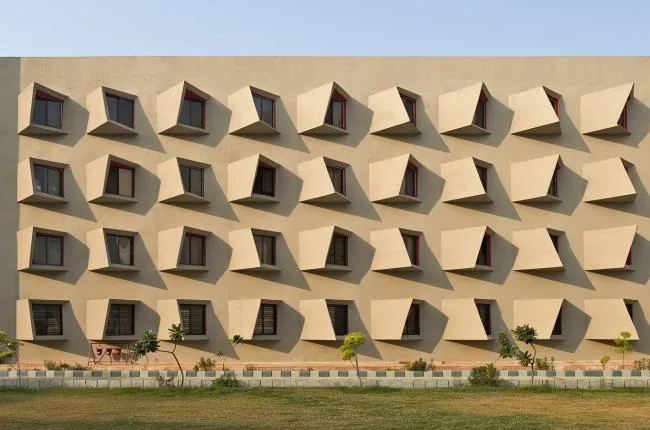
▼ Wedge-shaped windows facing north maximize natural lighting
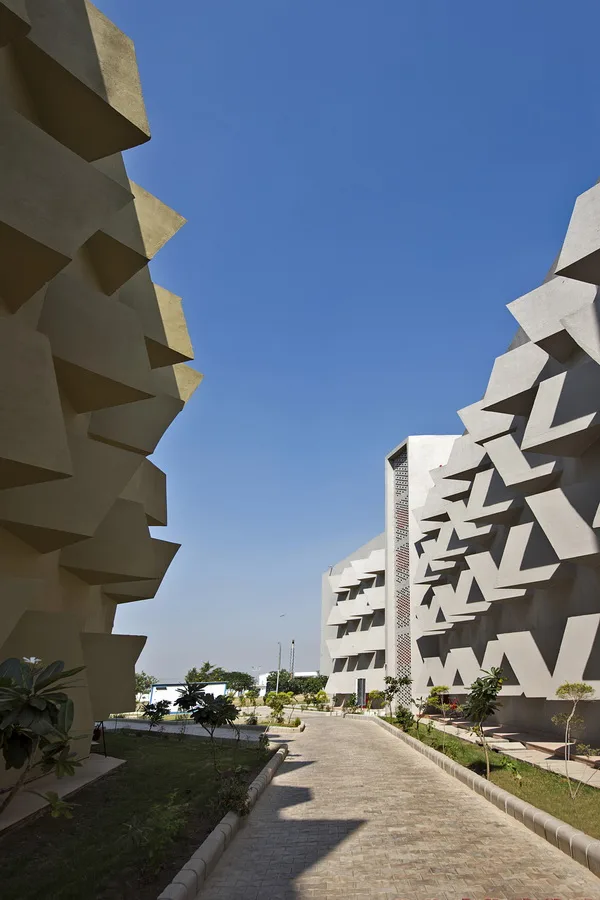
▼ Window wall shading created by convex shapes
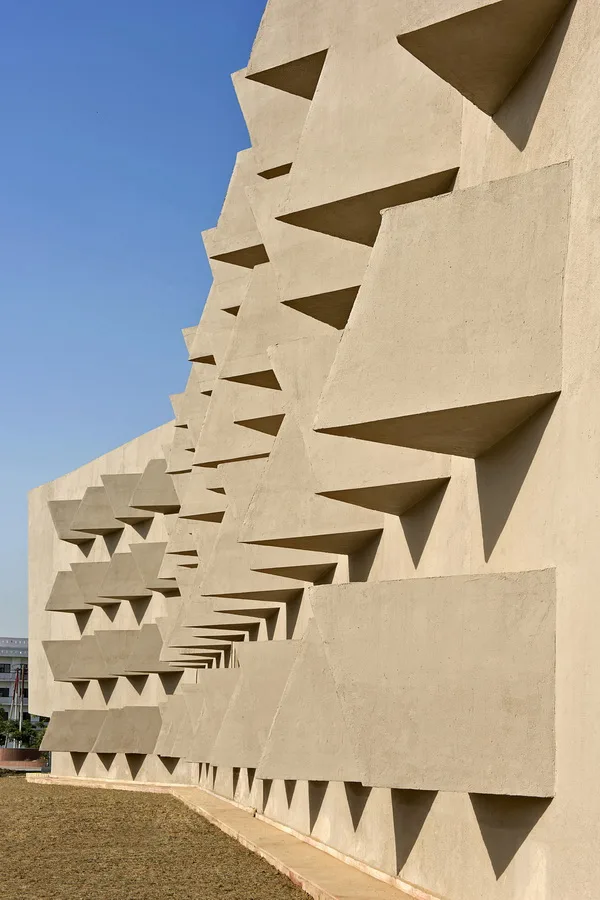
Ventilation openings are integrated into the internal corridors of each dormitory, promoting cross-ventilation. At each bend along the linear buildings, small openings allow natural light to penetrate the interior circulation spaces.
▼ Sectional drawing
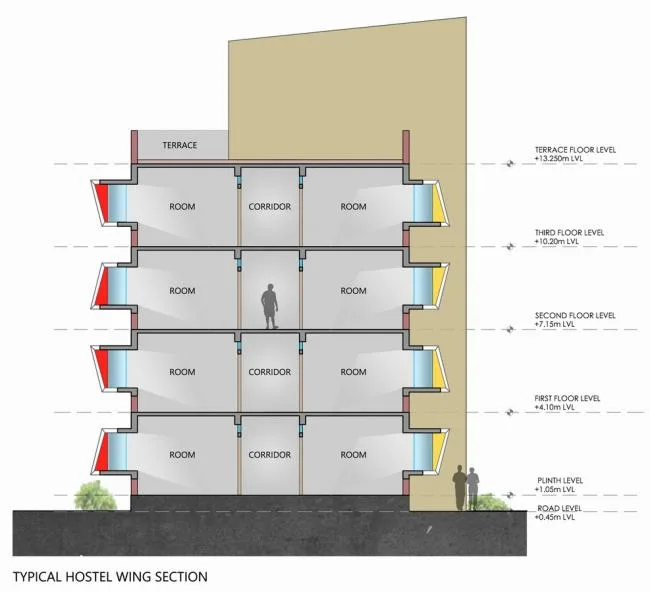
These thoughtful design details contribute to a green, energy-efficient building. They minimize heat gain and unnecessary energy consumption, which is crucial given the local climate. In India, the sun’s position in the southern hemisphere causes temperatures to exceed 300°F for eight months of the year. During winter, when the sun is in the northern hemisphere, the design allows direct sunlight to warm the interiors, preventing cold indoor temperatures.
The design carefully addresses temperature variations caused by the sun’s changing position, enhancing environmental friendliness and energy efficiency.
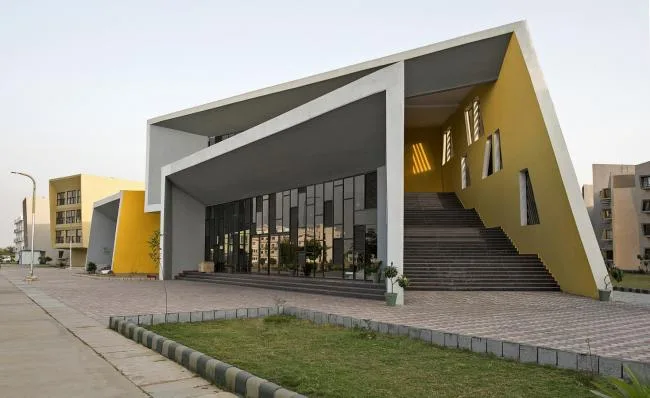
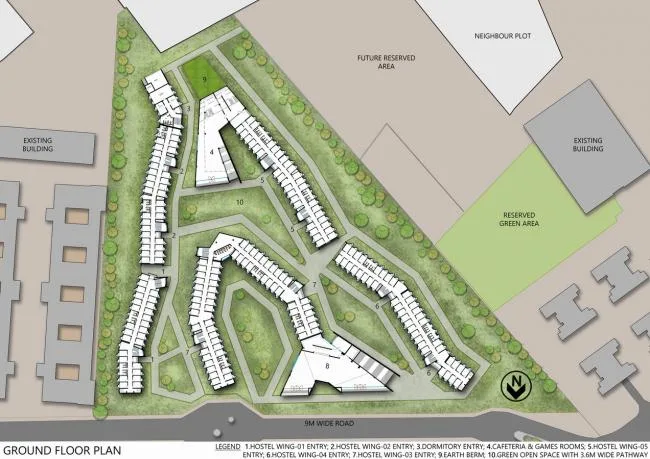
Two focal areas are established at the ends of the linear building clusters. These spaces house self-service restaurants, game rooms, and gyms, all with access to north-facing gardens and terraces. Public spaces feature high ceilings reaching up to 20 feet, creating a spacious atmosphere.
▼ First floor plan
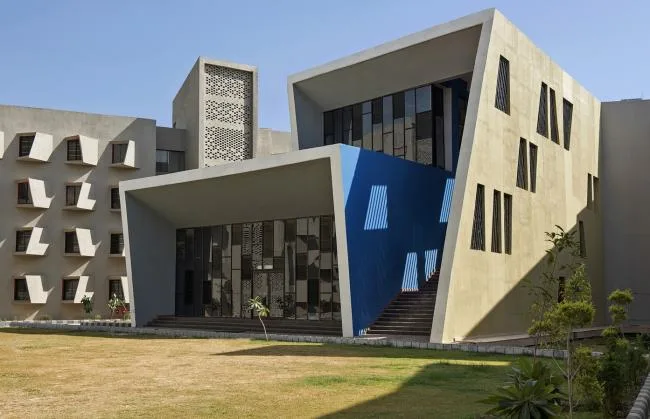
A 20-foot-high public space porch
▼ Wide staircase
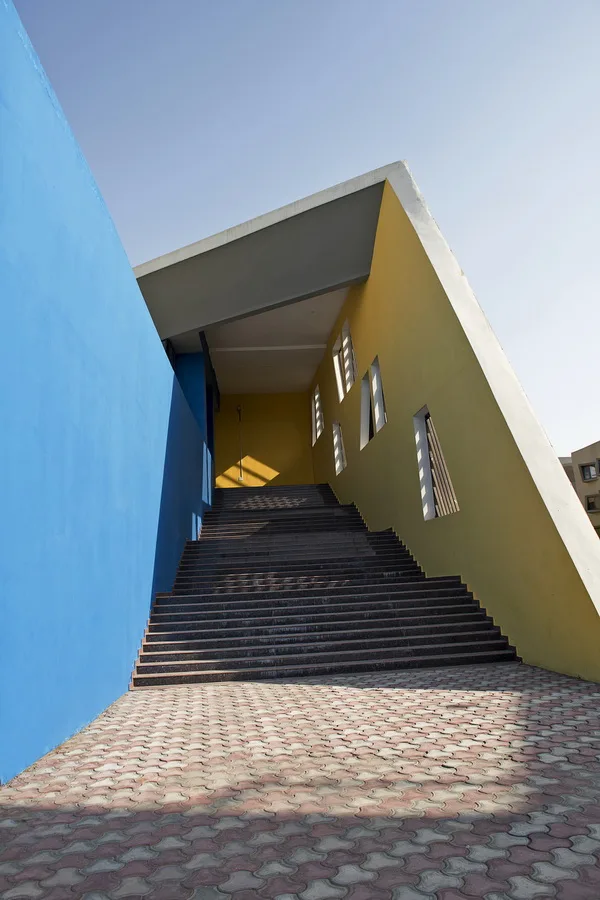
A 20-foot-high public space porch
▼ Stairs
▼ Public space porch
The organic layout of the buildings reflects the distinctive character of each space on the site. The project’s color scheme emphasizes the function of each block and facility through different colored bands. Brightly colored dormitory bay windows dominate each block, creating a unique and recognizable aesthetic.
▼ Yellow wedge-shaped protruding window
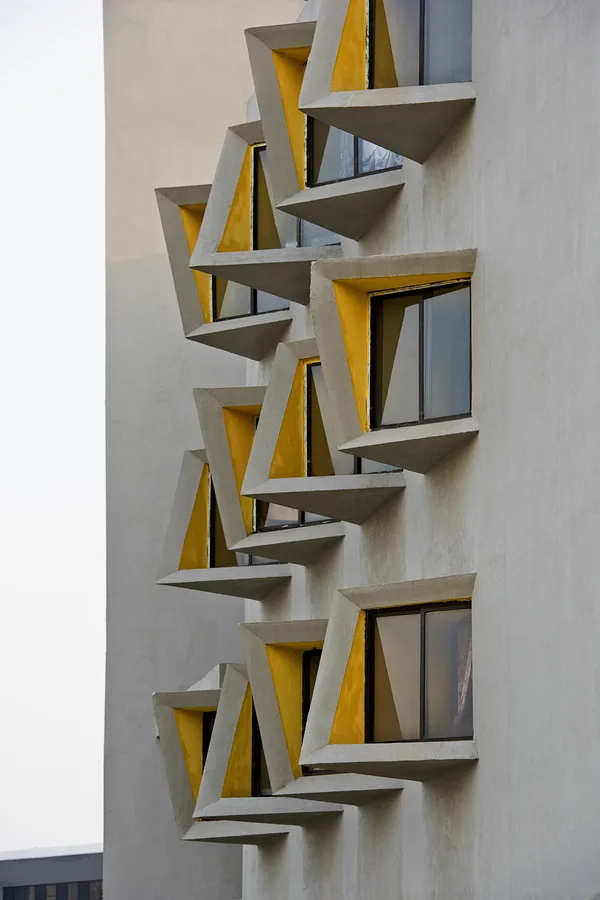
▼ Red wedge-shaped protruding window
An integrated rainwater collection and recycling system, along with solar panels, enhances the project’s energy efficiency. These sustainable features also support natural ventilation throughout the buildings.
▼ Energy-efficient buildings
The micro-streets between building volumes are designed with careful attention to the local climate and site orientation. This approach creates varied experiences and constantly changing spatial sensations for residents across the entire 6-acre site.
▼ Streets designed with climate and site considerations
Project Drawings:
▼ Design process illustration
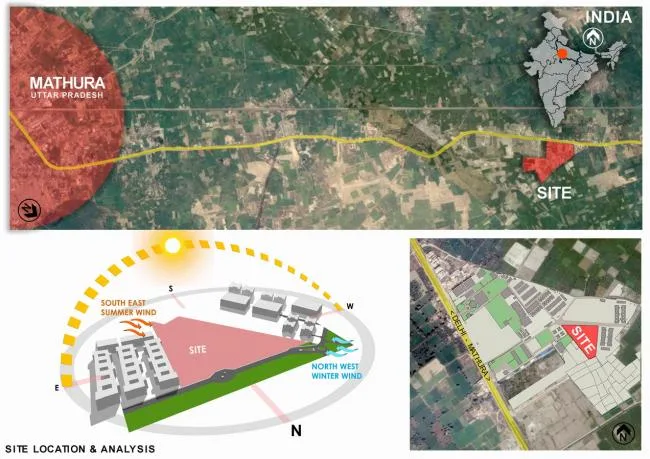
Location map of the site
▼ Standard floor plan
▼ First floor plan
(BIM Learning)
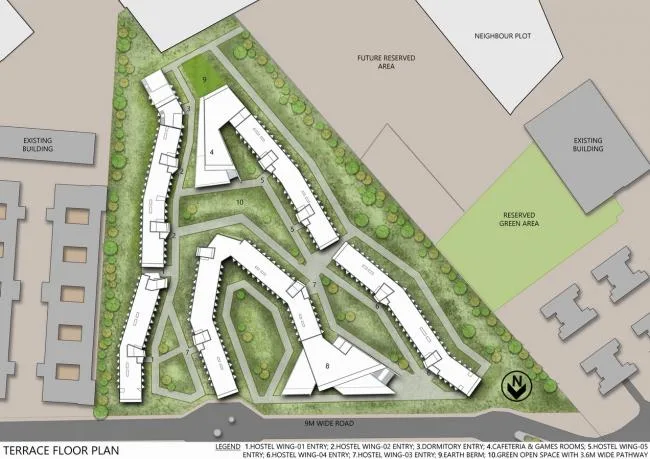
▼ Roof plan
▼ Sectional drawing
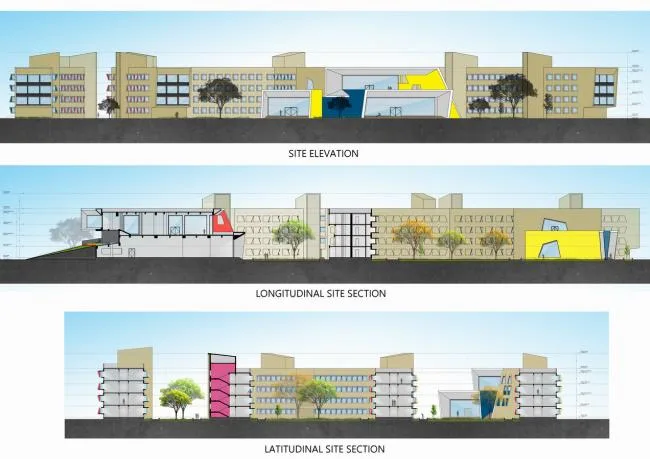
▼ Section and elevation view
Project Information:
Architect: Sanjay Puri Architects
Location: Mathura, Uttar Pradesh, India
Building Type: Residential
Lead Architects: Sanjay Puri, Ishveen Bhasin
Building Area: 211,000 square feet
Project Year: 2017
Architectural Photographer: Dinesh Mehta
Manufacturers: Kohler, Somany; Texture and paint suppliers
Structural Design Consultant: Padaria Consultant
Environmental Protection Consultant: Epsilon Design Consulting Company
Client: University of Grad












Must log in before commenting!
Sign Up