
Currently, an increasing number of construction projects in China are actively adopting BIM technology, especially in large-scale, complex developments such as three-sided projects and cast-in-place reinforced concrete structures with tight schedules and significant cost pressures. The value of BIM technology in these contexts is becoming increasingly evident. It enables rapid interpretation of design plans, early detection of technical issues, and efficient organization of engineering data for production planning, material preparation, and progress management.
However, the use of BIM technology in prefabricated concrete (PC) structures is still largely experimental. This article uses the Longxin Elderly Hotel project as a case study to provide a comprehensive overview of integrating PC and BIM technologies. The technical approach employed in this project offers valuable insights for applying BIM in the construction of prefabricated concrete structures.
Project Overview
The Longxin Elderly Hotel is located at the intersection of Nanhai Road and Jialingjiang Road in Haimen City, Jiangsu Province (see Figure 1), benefiting from a prime location. The building’s structure consists of cast-in-place frame shear wall systems below the 4th floor of the main building and on the 1st to 2nd floors of the podium. From the 4th to the 24th floors, the main building features a fully prefabricated and assembled integral frame shear wall system. The 25th floor and the machine room floor revert to cast-in-place frame shear wall structures. The building’s total height reaches 88.6 meters, with a construction area of approximately 21,265.1 square meters—18,605.6 above ground and 2,659.5 underground. Upon completion, this project will be China’s first prefabricated building to reach 88.6 meters in height and the first prefabricated structure with an overall assembly rate of 80%.
Regarding the fully prefabricated integral frame shear wall system from floors 4 to 24, columns begin at the 4th floor; beams and floor slabs start from the top of the 5th floor; stairs, balcony railings, and air conditioning panels extend from the 4th to the 24th floor as PCa components. The exterior façade of shear walls and cast-in-place frame columns utilize precast concrete hanging plates as external formwork, implemented between the 4th and 24th floors. Column-beam joints are cast-in-place at the column heads, with beam reinforcement anchored via keyways. Floor slabs use semi-PCa composite slabs, and beams adopt semi-PCa composite beams.
Why BIM Technology Is Essential in Prefabricated Concrete Construction
1) Challenges in PC Projects for Senior Apartments
PC projects for senior apartments involve multiple specialized subcontractors—covering civil engineering, mechanical and electrical installations (including electrical, plumbing, fire protection, weak current, HVAC), decoration, and other trades. These specialties work in alternating sequences, making coordination particularly challenging. The scope of general contracting management is broad and complex, and advancing toward a refined, information-driven construction model is a major challenge.
Coordination difficulties are a significant obstacle in PC projects for elderly apartments. Compared to traditional buildings, PC construction requires tighter coordination and more detailed planning. Construction teams must possess strong drawing deepening capabilities. The detailed design for PC component factories must consider correct pre-embedding of pipelines across disciplines such as water supply and drainage, electrical, fire protection, weak current, and heating. Additionally, embedded iron parts must be accurately positioned for construction convenience—for example, lifting embeds, welded steel pipe columns with floor edge enclosures, and iron parts attached to tower crane walls, personnel and cargo elevators. Any mistake or omission at any stage can severely disrupt lifting and construction onsite. Therefore, production and construction coordination is critical for PC projects.
2) Features of BIM Technology
BIM transforms traditional 2D drawings into detailed 3D visual models, enabling professionals from various disciplines to clearly and accurately understand design intent. This facilitates timely, effective decision-making. Projects that adopt BIM enable real-time, three-dimensional collaboration across disciplines and team members. Deepening design changes trigger linked updates, reducing design errors caused by communication delays. Moreover, BIM allows simulation of real construction scenarios, enabling early identification of potential issues and development of optimal construction plans.
3) The Synergy Between BIM Technology and PC Construction in Senior Apartments
Thanks to its coordination, visualization, and simulation capabilities, BIM technology supports integration of multidisciplinary drawings, detailed component design, and comprehensive layout of installation pipelines in senior apartment projects. BIM simulations can even model PC component lifting scenarios, detect possible issues, and visually present technical solutions. The strong complementarity between BIM’s capabilities and the characteristics of PC projects makes BIM an ideal technology for senior apartment construction.
Application Scope and Technical Approach of BIM Technology
Using BIM to Coordinate Multidisciplinary Information
Historically, construction projects faced risk due to fragmented information across disciplines, resulting in isolated data silos with limited integration and sharing. The lack of a common interactive platform led to information loss and errors. BIM technology aims to transform this situation. It effectively reduces construction and social costs caused by common issues such as mistakes, omissions, clashes, and design changes. Sharing a unified BIM model that integrates buildings, structures, and installations makes conflict detection intuitive and straightforward.
For example, in the PC standard floors of the senior apartments spanning the 4th to 25th floors, 83 preliminary clashes were identified by integrating models from civil engineering, water supply and drainage, electrical, fire protection, and weak current. Each clash is documented with 3D graphics, precise location, involved pipelines and equipment, and corresponding drawing references.
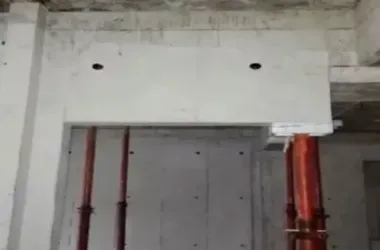
Using this clash information (see Figure 2), designers can specify the size and position (relative size and elevation) of reserved pipe holes within precast beams such as YKL3 (1)-1 during deepening design. This ensures that the precast beams can be lifted and installed on site without requiring additional modifications or openings.
It is clear that if a PC project has numerous clashes like these, relying solely on the technical team’s spatial imagination to identify them would inevitably lead to omissions. Discovering these issues only during construction would result in costly rework, delays, and increased expenses. BIM’s capacity to integrate architectural, structural, and installation data enables early detection and prevention of such problems.
Cost Management Leveraging BIM
For cost management, the senior apartment project customizes construction quota standards encoded within the BIM model. The system then automatically calculates quantities, enabling precise cost estimation. Accurate quantity takeoff is fundamental for stakeholders including owners, contractors, material suppliers, and project management teams. The prerequisite for precise quantity calculation via software is a highly accurate BIM model. Compared with manual methods, BIM-based quantity calculations are more precise and can automatically generate electronic documents for sharing, remote transmission, and permanent archiving.
Accurate quantity takeoff is crucial for all cost management activities—cost estimation, bidding, negotiations, labor contracts, and progress payments. The main reason construction enterprises struggle with fine management and integrated decoration is the inability to rapidly and accurately acquire large volumes of engineering data needed for resource planning. This often leads to reliance on empirical methods and resource waste.
Thanks to BIM technology, this project efficiently obtains a wealth of engineering data, enabling the project department to develop accurate material plans. This reduces waste in resources, logistics, and storage, and supports strict material requisition and consumption control.
Optimizing Pipeline Layout Using BIM Technology
The preliminary clash detections from integrating civil, water supply and drainage, electrical, fire protection, and weak current models provide a foundation for installation teams to comprehensively plan pipeline layouts. Traditional pipeline design relies on 2D representations of 3D spatial relationships, which causes technical limitations and poor construction outcomes. After implementing Luban BIM technology, the benefits are clear:
1) Modeling and coordinated optimization across specialties. The 3D model can be sectioned into large samples and axonometric views at any location to observe and adjust pipeline elevations and clashes. See Figure 3 for a corridor cross-section.
Figure 3 Corridor section
2) After pipeline integration, floor ceiling heights are determined to coordinate with fine decoration work.
3) The integrated BIM model supports real-time walkthroughs, detailed observation, and annotations of critical nodes. Using BIMWorks, internal inspections and design rationality reviews are possible. Walk routes can be customized, and keyboard controls enable intuitive exploration of internal equipment and pipeline layouts, dynamically detecting equipment clashes.
4) With integrated equipment and pipeline data, the BIM model enables precise statistics and listings of installed systems.
Applying BIM to Deepen PC Component Drawings
In early PC structure modeling, reserved openings are a key focus. Unlike traditional cast-in-place concrete, where openings can be made after curing, PC components cannot be arbitrarily modified once fabricated. All reserved holes must be clearly and accurately detailed in component drawings to ensure proper factory production. Upon arrival at the site, components can be lifted and installed without additional modifications, avoiding major construction obstacles.
This strict requirement demands close collaboration with mechanical and electrical teams. Professionals across disciplines must verify pipeline installations and reserved openings within the model, identify issues, submit modifications to the design team, and finalize accurate PC component drawings to eliminate construction problems before fabrication.
BIM-Based Simulation of PC Component Hoisting
Before actual construction, BIM technology enables simulation of PC component hoisting based on the lifting plan, allowing optimization of the construction sequence. For the elderly apartment project, a 6-day construction cycle per standard floor is planned. The simulation animation vividly represents the process, serving as a practical guide for onsite teams and helping technical personnel understand the full procedure.
Additionally, the simulation process helped identify issues early, facilitating timely adjustments to construction plans. The animation also serves as a tool to promote corporate culture and communication.
In summary, this article uses the prefabricated and assembled concrete structure project for senior apartments to introduce the challenges of PC structures and the features of BIM technology. It highlights the strong synergy between BIM and prefab construction, outlining the inherent advantages of BIM application in senior apartment PC projects. The article details the technical approach across five areas: multidisciplinary information clash detection, BIM-based cost management, pipeline layout optimization, BIM-supported deepening of PC component drawings, and BIM-driven PC component hoisting simulation. These insights provide valuable references for applying BIM technology in similar engineering projects.













Must log in before commenting!
Sign Up