
By examining the characteristics of vertical transportation in prefabricated buildings, this article compares it with traditional building methods and explores pricing strategies for vertical transportation in prefabricated construction. The goal is to offer guidance for accurately determining vertical transportation costs in prefabricated buildings.
Keywords: prefabricated building; vertical transportation; pricing
1. Introduction
Prefabricated building is an innovative construction model that plays a crucial role in advancing supply-side structural reforms and new urbanization efforts. This approach helps conserve resources and energy, reduce construction pollution, enhance labor productivity and quality, improve safety, and foster integration between construction and information industries. It also encourages the development of new industries and addresses issues of overcapacity.
In recent years, various national policies have been issued to support the growth of prefabricated buildings. For more details, please refer to the list of policy documents related to prefabricated buildings.
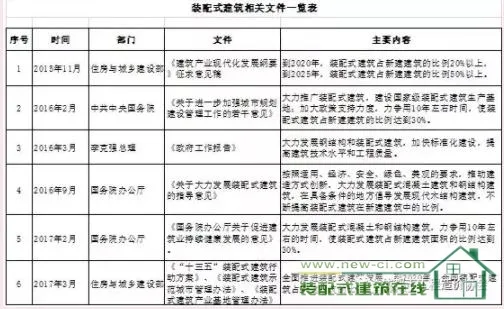
Alongside pricing policies for prefabricated buildings, supportive measures from national and regional authorities have introduced supplementary quotas and regulations. These efforts have largely addressed the challenges of pricing in prefabricated construction and positively influenced its development. However, as a novel construction method, pricing issues remain controversial, particularly regarding vertical transportation costs. National and provincial pricing documents vary: some argue vertical transportation costs should not be adjusted based on traditional building costs, while others believe these costs can be negotiated based on the unique characteristics of prefabricated buildings and construction planning.
This article aims to analyze vertical transportation characteristics in prefabricated buildings through practical engineering cases, identify differences from traditional buildings, explore pricing methodologies, and provide a reasonable approach for determining vertical transportation costs in prefabricated construction.
2. Analysis of the Characteristics and Pricing Challenges of Vertical Transportation in Prefabricated Buildings
2.1 Vertical Transportation and Machinery Costs
Vertical transportation involves lifting the necessary labor, materials, and machinery from ground level to the required height during construction. Vertical transportation machinery costs refer to the expenses associated with operating vertical transportation machinery to complete all project tasks within a reasonable timeframe for a unit project.
The main factors influencing vertical transportation fees are:
- Vertical transportation machinery configuration, including the selection and quantity of equipment;
- Machinery usage measured in shifts, which correlates with the construction duration.
This study focuses on how prefabricated buildings configure vertical transportation machinery and how their machinery usage differs from traditional buildings. Specifically, it examines high-rise prefabricated residential buildings, taking a 24 to 33-floor affordable housing project with a height of 96 meters as a case study. This analysis evaluates the vertical transportation machinery configuration and consumption differences to better understand machinery costs in prefabricated construction.
2.2 Characteristics and Pricing Challenges of Vertical Transportation in Prefabricated Buildings
On construction sites, vertical transportation typically involves three types of machinery: tower cranes, construction elevators, and gantry (cross frame) material hoists. Both prefabricated and traditional high-rise residential buildings commonly use tower cranes and construction elevators in combination for vertical transportation.
The unique features of vertical transportation machinery in prefabricated buildings are mainly influenced by machinery configuration and construction period effects on machinery shift consumption, as detailed below.
2.2.1 Influence of Machinery Configuration on Unit Price of Machinery Shifts
Vertical transportation machinery for high-rise residential buildings primarily includes tower cranes and construction elevators. Prefabricated buildings require different machinery selections compared to traditional methods, taking into account their specific characteristics:
(1) Tower Crane: Tower crane layout depends on coverage area, lifting capacity, crane positioning relative to the building facade, attachment conditions, and installation/dismantling requirements. While layout conditions are similar for prefabricated and traditional buildings, tower crane model selection differs significantly.
In traditional buildings, tower cranes mainly handle materials such as steel bars and concrete. In prefabricated buildings, cranes must also lift heavy prefabricated components. Therefore, selecting a tower crane model must consider the maximum lifting capacity at the arm’s end to accommodate the weight of these components.
Because prefabricated components are often heavy, tower cranes with high lifting capacities are necessary. This usually involves using large cranes with cut arms to ensure the arm end can safely lift the components. For example, in the affordable housing project analyzed, prefabricated components weigh between 5 and 6.5 tons. Hence, the tower crane’s lifting point should be rated for at least 6.5 tons, often requiring a large long-arm crane (70-75m arm length) such as the JP7525, with the arm cut to 40-50 meters.
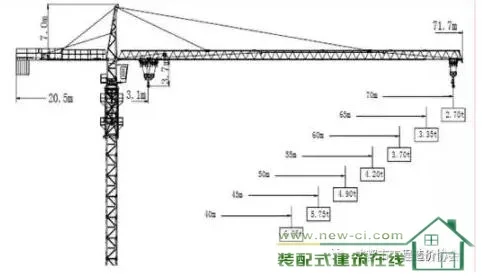
(2) Construction Elevator: Construction elevators transport personnel and materials on high-rise sites. The selection criteria for these elevators in prefabricated buildings are essentially the same as in traditional construction and will not be further discussed here.
2.2.2 Impact of Construction Period on Machinery Shift Consumption
Machinery shift consumption is closely tied to the construction period. Prefabricated buildings involve manufacturing components off-site in factories, then transporting and assembling them on-site, which generally shortens the construction timeline compared to traditional methods.
Although time savings vary across projects, there is broad agreement that prefabrication reduces overall construction duration. This reduction directly affects the number of machinery shifts required, making it essential to accurately assess the impact of the shortened construction period on machinery usage when determining costs.
2.3 Challenges in Pricing Vertical Transportation Machinery for Prefabricated Buildings
As a relatively new construction approach, the cost differences in vertical transportation between prefabricated and traditional buildings have sparked debate in the engineering field. Project stakeholders often encounter disputes over vertical transportation costs in prefabricated construction, which can delay project progress.
For example, the “Supplementary Quota for Prefabricated Reinforced Concrete Components and Urban Art Decoration Engineering of Prefabricated Buildings” issued by Sichuan Province’s Department of Housing and Urban-Rural Development specifies that lifting fees for prefabricated reinforced concrete components should follow corresponding frame shear vertical transportation fees. For projects with eaves heights exceeding 50 meters, lifting torque is set at 1000 KN·m, considering self-elevating tower cranes. Any deviations from these quotas must be negotiated between the client and contractor.
Therefore, to determine vertical transportation costs fairly, it is necessary to consider the unique machinery configuration and shift consumption patterns of prefabricated buildings. However, establishing unit prices and machinery shift consumption rates remains one of the most challenging aspects of pricing vertical transportation in prefabricated construction.
3. Research on Pricing Vertical Transportation Costs in Prefabricated Buildings
This study analyzes vertical transportation machinery configuration and unit consumption in a prefabricated high-rise residential building in Chengdu. By examining the specific characteristics of prefabricated vertical transportation, it proposes a pricing method to help reasonably calculate vertical transportation costs in such projects.
3.1 Technical Approach for Pricing Research
Vertical transportation machinery costs represent the expenses required to complete all contracted work within a reasonable timeframe for a unit project. This research compares prefabricated and traditional buildings in terms of machinery configuration and machinery shift consumption. It determines the unit price for tower crane shifts and adjustment factors for labor and machinery costs to establish an accurate vertical transportation cost for prefabricated buildings.
For traditional buildings, vertical transportation costs mainly comprise labor costs (labor consumption multiplied by labor unit price), machinery costs (tower crane and construction elevator shifts multiplied by their respective unit prices), and comprehensive overheads.
The vertical transportation cost for prefabricated buildings can be calculated using the formula below, which factors in differences in machinery configuration and machinery shift consumption between prefabricated and traditional constructions:
Vertical transportation cost for prefabricated buildings = labor cost (labor consumption × labor unit price) × adjustment factor + machinery cost (tower crane machinery unit consumption × unit price + construction elevator machinery unit consumption × unit price) × adjustment factor + comprehensive cost
Note: Tower crane machinery shift consumption (unit price per shift) 1














Must log in before commenting!
Sign Up