
Concrete serves as a fundamental material in building construction and civil engineering. Since the 1980s, the advancement of concrete materials and engineering technology in China has been closely linked to the rise of ready-mixed concrete. Before this shift, concrete was mixed on-site by construction teams, a method that could no longer satisfy the demands of large-scale, fast-paced construction in terms of material preparation, quality control, and construction techniques. Guided by government industrial policies, major cities began restricting and eventually prohibiting on-site concrete mixing by adopting foreign commercial concrete production and construction technologies. As a result, concrete production centralized in mixing plants, ushering in a new era of intensive, industrialized, commercialized, specialized, and mechanized manufacturing of concrete as a structural material.
There was once a saying: “three parts material, seven parts construction,” highlighting that the quality of concrete largely depended on the work of construction personnel during on-site mixing. Today, quality control has shifted to centralized monitoring of premixed concrete production and transportation processes in factories, significantly enhancing the quality management of concrete structures. Centralized mixing enables the use of advanced technology and equipment, specialized production management, higher equipment utilization, precise measurements, reduced material waste, increased efficiency, and better product quality. It also improves working conditions for workers and reduces environmental pollution. Naturally, the development of ready-mixed concrete has introduced new challenges, which must be addressed through ongoing innovation.
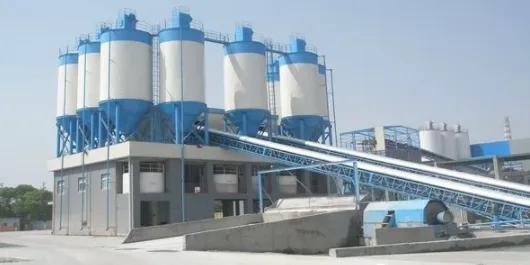
The development of ready-mixed concrete in China spans over 30 years. Reflecting on this history provides valuable insights as we move toward green and high-quality development.
Policy Support and Rapid Growth
At the onset of China’s reform and opening-up period, cost concerns led many to question the viability of ready-mixed concrete. Some analyses compared only raw material and production costs, ignoring quality, efficiency, and environmental factors—concepts not yet widely recognized at the time. However, government regulators understood that ready-mixed concrete was essential for modern construction, enabling green building practices, ensuring high-quality projects, accelerating construction speed, promoting resource conservation, and improving environmental quality.
To encourage its development, the Ministry of Construction issued the “Several Opinions on the Development of Commercial Concrete in Cities during the Seventh Five-Year Plan” in 1987, outlining the national development direction and policies for ready-mixed concrete. In 1994, the Ministry promoted commodity concrete and bulk cement technologies as key industry innovations. By 2003, multiple ministries jointly prohibited on-site concrete mixing in urban areas with deadlines, accelerating the nationwide adoption of ready-mixed concrete.
Beijing exemplifies this progress. Starting in the 1980s, the city rapidly expanded its ready-mixed concrete industry. By the late 1990s, 70 mixing plants operated in the city, with ready-mixed concrete accounting for half of urban construction volume. To reduce pollution from sand and gravel storage and bagged cement use on sites, the Beijing Municipal Construction Commission mandated pre-mixed concrete use for projects exceeding 100 cubic meters within the Fourth Ring Road in 1998.
Throughout the early 2000s, Beijing issued stricter regulations, banning on-site mixing within the Fourth Ring Road and requiring pre-mixed concrete for large projects citywide. These policies aimed to reduce pollution and improve construction quality. Further measures addressed air pollution control, halted approvals of new commercial mixing plants, and regulated plant operations and transport vehicles.
However, after rapid growth, Beijing’s concrete industry faced challenges such as oversupply, disorderly competition, and environmental impacts due to lax management. In response, the Beijing Municipal Commission of Construction suspended new qualifications and approvals for ready-mixed concrete plants in 2008, initiating structural adjustments and environmental governance. Policies such as the “Development Plan for the Ready Mixed Concrete Industry in Beijing” and “Green Management Regulations” were enacted to guide the industry toward sustainable practices.
In 2009, updated production management regulations set standards for site selection, equipment, production control, and emission monitoring. Additional plans addressed capacity control and environmental compliance. Despite these efforts, challenges persisted, leading to further tightening of environmental policies and enforcement in 2016, including prohibitions on reopening closed plants and bans on plant expansion.
These governance efforts have yielded significant improvements. By mid-2018, unlicensed plants were mostly closed, industry order and quality improved, and green production standards were widely adopted. Beijing had 156 qualified ready-mixed concrete stations, with a designed annual capacity of approximately 250 million cubic meters; actual output in 2017 was 46.72 million cubic meters. Figure 1 illustrates production changes from 2000 to 2017.
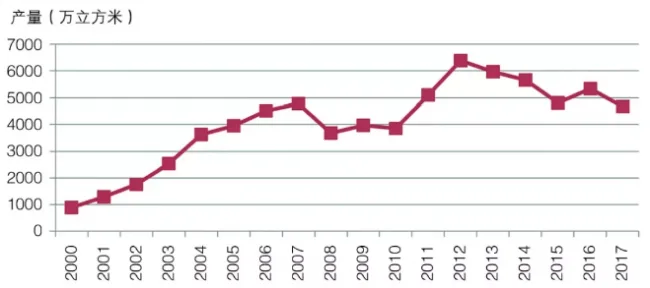
Figure 1: Changes in Ready-Mixed Concrete Production in Beijing (2000–2017)
However, as Beijing pursues its strategic role as a “four centers” city, the ready-mixed concrete industry lags behind in embracing green, environmentally friendly, and high-end manufacturing. Issues such as overcapacity, inefficient industrial structure, poor economic performance, misaligned industrial layout, and limited environmental resources remain widespread nationally. These challenges have led to skepticism about the industry’s sustainable growth.
Challenges as Opportunities: Pathways Forward
Challenges also represent opportunities, but transformation requires deliberate effort. Beijing’s ready-mixed concrete sector is adapting to the city’s strategic positioning, aiming to contribute to its development as a “four centers” city. Authorities are proactively addressing issues and exploring innovative development strategies. In 2018, the Beijing Municipal Commission of Housing and Urban-Rural Development engaged with industry stakeholders to redefine the social role and development plan for ready-mixed concrete in the new era. The following five key directions have emerged:
1. Ban New Construction and Expansion of Mixing Plants
Both national and Beijing-specific policies recognize the severe overcapacity in ready-mixed concrete production. Reducing capacity is challenging, but the first step is to prohibit any new construction or expansion of mixing plants. Regulations such as Beijing’s Air Pollution Prevention and Control Rules and the “Blue Sky Defense War” action plans reinforce this ban, requiring strict enforcement against illegal activities and emphasizing long-term policy commitment. This approach encourages optimization of existing resources over expansion.
2. Enforce Environmental Regulations Strictly
Environmental protection is a top national priority, with Beijing at the forefront. Numerous laws and action plans, including the Environmental Protection Law, Air Pollution Prevention Law, and various blue sky defense initiatives, impose increasingly stringent standards and enforcement measures. These policies serve to phase out outdated capacity and promote green transformation across industries, including ready-mixed concrete.
3. Address Rising Production Costs
Beijing has cracked down on illegal quarrying, banned natural sand mining, and controlled transport vehicle overloading, leading to a shortage and price rise in sand and gravel supplies, mainly sourced from Hebei Province. Cement and fly ash prices have also increased significantly, as shown in Figure 2.
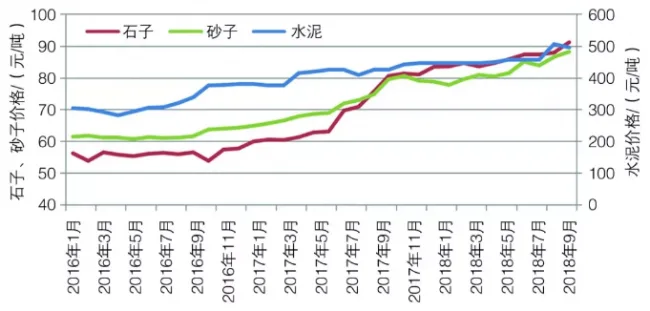
Figure 2: Price Trends of Main Raw Materials for Ready-Mixed Concrete (2016–2018)
These cost pressures require enterprises to innovate, achieve economies of scale, refine management, improve efficiency, and reduce costs. Mergers, acquisitions, and greater industry concentration are necessary strategies for competitiveness and innovation.
4. Promote Reduction, Intensification, and High-Quality Development
National and regional reforms are driving the relocation of non-capital functions and industrial upgrading aligned with Beijing’s “four centers” strategy. Policy documents like the Beijing Urban Master Plan and Blue Sky Defense War Action Plan emphasize the need for the ready-mixed concrete industry to adopt focused, efficient, and quality-driven development. This trend will likely become a nationwide regulatory standard.
5. Accelerate Digitalization and Intelligent Manufacturing
Information technologies such as the Internet of Things, big data, and artificial intelligence are rapidly reshaping industries. Integrating digital and intelligent manufacturing with ready-mixed concrete production is crucial for transforming its traditionally low-tech image into a high-end, innovative sector. Implementing intelligent production, quality control systems, and information management is essential for competitive transformation.
Strategic Insights and Industry Outlook
Historical experience shows that difficult periods often mark turning points. Research on Beijing’s industry restructuring has fostered consensus between regulators and enterprises around coordinated development. Policy recommendations emphasize industry self-discipline and sustainable growth, fueling optimism among entrepreneurs.
Reshaping the Industry’s Image
The traditional image of concrete mixing as a low-tech, rough process must be replaced by recognition of ready-mixed concrete as a sophisticated, specialized, and environmentally conscious industry. It should be seen as essential for urban construction, ecological sustainability, emergency response, modern manufacturing, and public education. For example, in Japan, local governments use ready-mixed concrete trucks for firefighting, while in China, stories have emerged of drivers assisting in fire extinguishment with truck water supplies. Furthermore, concrete plants should harmonize with urban and rural environments, enhancing cityscapes and environmental aesthetics. Beijing, as the capital, should lead this transformation.
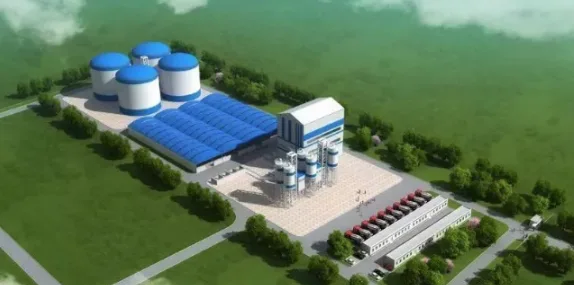
Promoting Green Development Across the Industry Chain
The ready-mixed concrete industry encompasses raw material extraction, procurement, factory production, logistics, and construction. Currently, comprehensive lifecycle management, especially upstream green management, remains incomplete. Key tasks include:
- Green Aggregate Bases: Aggregates constitute about 75% of concrete by weight and significantly affect its performance. The industry must extend management to upstream aggregate production, ensuring environmentally responsible mining and production. Beijing plans to develop green sand and gravel bases in Hebei Province and surrounding counties, adhering to national green mine standards and emphasizing scale, informatization, and industrialization.
- Enhanced Solid Waste Utilization: Utilizing construction and industrial waste as concrete aggregates or powders is vital for a circular economy. Companies should invest in technologies for high-quality resource recovery and promote the use of recycled materials while maintaining product safety and quality. Beijing has launched standards and rating systems for green ready-mixed concrete to support this goal.
- Factory Greening and Beautification: The industry is transitioning from basic centralized factories to modern, integrated manufacturing facilities. Urban integration requires thoughtful factory design, landscaping, and architectural harmony with surroundings to improve city aesthetics and industry acceptance.
- Full Green Production Implementation: This includes enclosed raw material and product transport, clean factory environments, use of clean-fuel vehicles, and maintaining clean transport vehicles to minimize pollution and urban disruption. Beijing’s revised “Green Production Management Regulations for Ready Mixed Concrete” mandate environmental upgrades and cleaner production practices.
- Environmental Logistics Projects: To reduce haze contributions from bulk material transport, cities promote “revolving railways” and clean-fuel vehicles. Beijing encourages containerized railway transport for aggregates and the use of new-energy mixer trucks for urban deliveries, signaling an inevitable shift towards cleaner logistics.
Innovation as the Driver of High-End Development
Orderly development requires leading innovation, guided by government policies and regulations. Enterprises must actively engage in transformation and green development to remain competitive. Key innovation areas include:

- Strengthening Innovation Capacity: Many enterprises underinvest in innovation. Beijing’s role as a national science and technology hub requires the concrete industry to build open R&D platforms, including national and industry research centers, key labs, and postdoctoral programs. Increased investment in scientific innovation will promote high-end, green, and quality development.
- Advancing Material Greening: Transforming construction and industrial waste into valuable concrete components is crucial. Research is needed to improve quality control and develop technologies for large-scale, high-value use of recycled materials, enabling sustainable, low-carbon production.
- Applying Intelligent Manufacturing: The industry faces talent shortages and image challenges. By embracing “Internet Plus” technologies, intelligent manufacturing, and integrated information management across procurement, production, logistics, customer service, and finance, the industry can modernize and elevate its profile.
- Developing High-Performance Products: Ready-mixed concrete competes technologically with cast-in-place and precast methods, as well as with other structural materials. Continuous innovation is essential to meet safety and durability demands. For example, advanced U.S. systems use sensors and AI to monitor and control concrete performance in real time, ensuring quality. Embracing such intelligent control technologies is vital for resolving quality management challenges.
Building a Healthy Industry Ecosystem
A sustainable industry ecosystem requires vibrant internal and external environments. The ready-mixed concrete sector should foster innovation led by industry leaders, promote cooperation alongside competition, and improve market order through self-discipline. Governments should support mergers and restructuring to optimize regional industry layouts, encourage industrial chain integration upstream and downstream, and extend quality assurance throughout the construction process.
External conditions depend on government policies and law enforcement to regulate quality, safety, credit, clean production, and environmental protection. Industry self-discipline is essential but must be supported by effective supervision. Balancing self-regulation and government oversight remains a key challenge needing innovative solutions.
Conclusion
Beijing’s experience reflects the broader trajectory of ready-mixed concrete development in China. While its unique position as the capital means some differences from other regions, many lessons are widely applicable. Beijing’s efforts to embrace the new era’s demands for green, high-quality, and innovative development offer valuable insights for the national industry.
Author: Xu Yongmo, Zhuang Jianying












Must log in before commenting!
Sign Up