
With the advancement of social economies and the increasing demands of military operations, national defense engineering has seen a deeper integration of intelligent management systems. These systems are centered around military operations and include various subsystems such as command, security, equipment management, and network communications. In equipment management, automated monitoring is applied to devices including power generation, electrical distribution, water supply and drainage, ventilation, and air conditioning. The result is a networked, integrated system where personnel, equipment, and information function cohesively. This integration enables resource sharing, operational optimization, and rapid responses—ensuring both safety and efficiency. As most national defense engineering projects are located underground, the reliability of their ventilation and air conditioning systems is especially critical during emergencies and times of conflict.
The ventilation and air conditioning systems play an essential role in maintaining the internal environment of defense facilities. Automated management of these systems relies on continuous parameter measurement, status assessment, operational control, and fault diagnosis. Operation control for air conditioning includes start/stop commands, interlock controls, comfort regulation, and energy management. Effective equipment management depends on accurate parameter readings and thorough technical evaluation, with energy-saving controls only possible when the system is operating under normal parameters.
Equipment Status Monitoring
Monitoring the status of ventilation and air conditioning equipment is vital for understanding operational processes, evaluating performance, and precisely controlling parameters to maintain desired indoor air quality. Status monitoring not only supports energy-efficient operation but also enables timely maintenance. To be effective, it is necessary to select appropriate sensors, monitoring points, and methods tailored to each equipment type and its operational conditions. Real-time data collection covers the refrigeration cycle, air heat and humidity treatment, and the cooling water cycle.
The system is comprised of numerous mechanical and interconnected components, producing both analog and switch signals distributed across multiple devices. Monitoring targets include fluid systems—such as refrigerant, ventilation, and water flow—and electrical control systems, which contain signal-sensitive components, processors, and controllers.
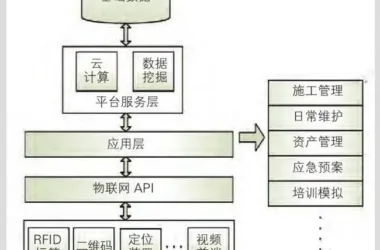
Hardware design for status monitoring includes selecting the right sensors/transmitters, signal processing modules, PLC controller modules, and actuators. It also involves establishing connections between the PLC controller and the central server, and configuring the central processor. On the software side, PLC monitoring and central server software are used. PLC software manages parameter measurement, status monitoring, data processing, and communication, enabling the PLC controller to adjust actuators based on feedback from device status and sensor signals. Central server software provides modules for the monitoring interface, data processing, communication, and database management. Through the central server, real-time dehumidifier status can be monitored and database information can be created, reviewed, or stored. The system can rapidly respond to events such as fault alarms and equipment control. Performance calculations for devices like dehumidifiers, water pumps, and fans are based on collected operational parameters. The Coefficient of Performance (COP) for a dehumidifier, reflecting refrigeration efficiency, is used for performance testing and fault diagnosis. Cooling capacity is determined by the enthalpy difference method, while power consumption is measured with power sensors.
The overall efficiency of a water pump is defined as the ratio of the water’s total potential energy increase to the pump’s shaft power. Total potential energy is calculated from the measured flow rate and pressure differential, while shaft power equals the product of motor power (measured) and efficiency (usually assumed constant). For fans, total efficiency is determined by measuring total pressure, air volume, and motor power.
Energy-Saving Equipment Control
Energy-saving control strategies for ventilation and air conditioning include variable capacity controls for compressors, fans, and pumps; avoiding simultaneous cooling and heating in the air system; eliminating unnecessary dehumidification and humidification; and managing the water system to prevent energy loss from chilled and hot water bypass. In national defense engineering, particular attention is paid to fresh air volume control and variable frequency cooling water pumps, both of which significantly enhance energy efficiency.
In central China, the main environmental challenge for national defense engineering is moisture prevention and dehumidification. The primary air conditioning load is moisture, so dehumidification is required during operation. Typically, refrigerated dehumidifiers are used; however, when outdoor humidity is low, ventilation can achieve dehumidification, leading to considerable energy savings equivalent to the dehumidifier’s power consumption. Generally, dehumidifiers consume more energy than fans, so using ventilation for dehumidification can cut energy use by more than 50%.
Outdoor meteorological conditions vary significantly throughout the year, so air conditioning operation is usually divided into summer, winter, and transitional periods. Summer, which is often the rainy season, requires minimal fresh air intake. Winter is dry but unsuitable for prolonged fresh air operation due to low temperatures. During transitional periods, the ventilation system can use fresh outdoor air. Outdoor humidity fluctuates daily, typically reaching its lowest late at night. For optimal energy savings, the fresh air volume should be adjusted according to weather conditions and the operational patterns of personnel and equipment inside the facility.
National defense ventilation and air conditioning systems can operate in four modes: no fresh air, fixed fresh air volume, continuous adjustment of fresh air based on CO2 concentration, and dedicated fresh air mode. First, the fresh air volume must meet personnel respiratory requirements, monitored by CO2 sensors. Second, decisions about fresh air intake are made by comparing indoor and outdoor moisture content. Maintenance of the fresh air system should be performed weekly.
These projects typically have multiple air conditioning zones, each with specific fresh air requirements. It is not advisable to use large volumes of fresh air during rainy, snowy, or windy conditions, as this complicates control. Implementing these energy-saving strategies depends on the support of equipment automation management systems and accurate meteorological data.
Variable Frequency Cooling Water Pump Control
A temperature-regulating dehumidifier features an adjustable air outlet temperature and is equipped with both air-cooled and water-cooled condensers. Its electronic control system is managed by a PLC controller. The cooling water flow in the water-cooled condenser is regulated according to the dehumidifier outlet temperature: when the set temperature is higher, the water flow is reduced; when the set temperature is lower, the flow is increased.
Large national defense projects often operate ten or more temperature-regulating dehumidifiers at the same time. Each dehumidifier responds differently to variations in outdoor weather and indoor load, affecting the overall cooling water demand. Originally, the cooling water system supplied water according to the design load, regardless of actual dehumidifier operation. If the supplied water exceeded requirements, the excess was diverted through a regulating valve, resulting in wasted pump energy. Variable frequency cooling water pump control adjusts pump operation based on the water supply pressure of the water-cooled condenser. When water demand decreases and supply pressure rises, the PLC uses a frequency converter to reduce the motor speed and lower pump output. Conversely, increased water demand leads to higher pump output, achieving energy savings.
An experiment conducted at a national defense project showed that, out of 8,760 hours per year, the dehumidifier operated for 2,630 hours at an average load rate of 50%. The water-cooled condenser’s average load rate was 60%, and the annual power savings rate for the variable frequency cooling water pump reached 52%.
Liu Shunbo and Yang Zhiguo













Must log in before commenting!
Sign Up