
A Concise Review of Developing the Design Project Management System in China’s Survey and Design Sector
Over the past decade, the survey and design industry has undergone a profound transformation in its journey toward digitalization. Leading design firms have steadily focused on their core operations, subjecting design project management to continuous waves of change. This evolution began with applications for finance, personnel, document, and drawing management, and has progressively deepened into the management of business and design workflows. The guiding philosophy has shifted from office automation and paperless processes to PDM (Product Data Management) and comprehensive design process management. The core objective is to control the entire process of delivering design outputs, standardize design management, boost production efficiency, cut design costs, implement scientific incentive management, and effectively collect, archive, and leverage design drawings. Ultimately, the aim is to strengthen internal governance, deliver premium services to clients, build a powerful brand image, enhance market competitiveness, and improve profitability.
Early attempts to build design project management systems frequently ended in failure, with many projects stalling and few delivering functional results. Even systems that were viable at the time often failed to adapt to the growth and changes within design companies, necessitating a complete rebuild. These setbacks stem primarily from two key factors:
(1) Survey and design enterprises often lack a clear understanding of digitalization, and their inexperience leads to misguided efforts. They tend to focus on isolated aspects while overlooking the intrinsic connections between upstream and downstream processes. As a result, management fails to form a closed loop, data remains fragmented, and the system is vulnerable to interference from different departments and personnel with varying habits and methods, making it difficult to apply. Furthermore, there is a tendency to blindly pursue advanced project management concepts from abroad, while neglecting the significant differences in production methods and management models among domestic design enterprises. The management level and practical conditions of these enterprises are often unable to adapt to foreign project management software. The approach is overly idealistic, hoping to achieve a comprehensive management system in one go, aiming for full-process design automation and an immediate improvement in design management standards.
(2) Software developers are often impatient and driven by a desire for quick success. They focus solely on competing for market share and customers, but are unwilling to make the necessary investments. Their approach is limited to imitation, resulting in low-level development, fierce competition, and a lack of innovation or core technology. They can only offer a single product with a flawed technical architecture. When faced with changes, the only option is to start from scratch. The developers are young and technically-minded, but lack a background in design institutes. They do not understand the client’s business management models or practical conditions, cannot grasp the client’s management objectives, and are unable to reasonably assess client needs and structure effective technical solutions.
2. Challenges in Implementing PLM Systems in Domestic Survey and Design Enterprises
PLM (Product Lifecycle Management) refers to the management of a product’s entire lifecycle. In practice, PLM encompasses three levels: the “PLM field,” the “PLM philosophy,” and “PLM software products.” According to CIMdata’s definition, PLM is a strategic enterprise application that provides a suite of solutions to support the collaborative creation, management, dissemination, and use of product-defined information. This collaboration extends across enterprise boundaries and throughout the entire product lifecycle, integrating people, processes, business systems, and information.
PLM includes the following components:
Basic technologies and standards (such as XML, visualization, collaboration, and enterprise application integration)
Tools for information creation and analysis (such as CAD, CAM, CAE, CASE, and information publishing tools)
Core functions (such as data warehousing, document and content management, and workflow and task management)
Application functions (such as configuration management)
Business/industry-oriented solutions and consulting services (such as for the automotive and high-tech industries)
The concept of PLM originated in the 1970s, initially proposed as a product innovation-oriented system to meet the development needs of major manufacturing enterprises. The goal was to minimize R&D costs during the incubation phase and maximize enterprise profits from the growth phase to the end phase, in order to shorten product launch cycles, improve product and service quality, reduce product costs, and enhance enterprise profitability.
The introduction of PLM systems into domestic design enterprises is only a few years old, and so far, only some large professional design enterprises have begun to experiment with them. From consulting, evaluating, selecting, purchasing, and deploying external systems to training and trial runs, there is still a long way to go before they can be fully applied. Domestic design companies face significant obstacles and challenges in implementing PLM systems and achieving full lifecycle management of design products within a few years, with the biggest difficulty being the differences between domestic and international environments.
(1) PLM systems originated in the socio-economic environment of foreign countries:
The engineering construction market is mature and standardized.
Project construction periods are relatively reasonable.
The production organization mode is stable, management relationships are simple, and personnel structures and division of labor are well-defined.
Personnel management is at a high level, with high professional quality and seamless cooperation.
There is a high degree of standardization, sound systems, standardized operational processes, adherence to rules and regulations, and strong execution capabilities.
The assessment and allocation mechanisms for projects and personnel are relatively mature.
(2) Domestic design companies generally face more severe survival pressures:
As China’s economy continues to grow rapidly, most design companies operate under conditions of “fewer people, more work, and overtime,” in a state of rushing to meet deadlines.
The engineering construction market is not yet mature, and competition is fierce.
The construction periods and quotations requested by clients are often unreasonable, and frequent changes made by clients make it difficult for design companies to organize production in a systematic manner.
Design enterprises are still in a period of deepening reform, and their organizational, operational, and production models are not yet finalized, changing rapidly.
Design companies are still exploring more reasonable assessment and allocation systems.
Because PLM systems developed by foreign companies do not account for China’s unique national conditions, they generally encounter the problem of being “unsuited to local conditions,” making them difficult to implement and apply.
Proposal for a Full Lifecycle Management System for Design Projects
3.1 The Full Lifecycle of a Design Project
The full lifecycle of a design project begins with tracking customer requirements and participating in bidding, proceeds through signing contracts and formally undertaking the project, issuing task notifications, and organizing the production of design products, continues with delivering to customers and archiving design drawings, and concludes with accumulating knowledge and making it reusable for future design projects, thus completing the entire lifecycle (Figure 1).
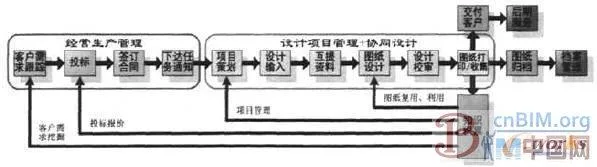
Figure 1: The full lifecycle of a design project
3.2 Design Project Lifecycle Management System
The concept of a design project lifecycle management system is grounded in standardized design management, with knowledge accumulation, collection, management, and reuse as both the starting point and the ultimate goal. It relies on information technologies such as data warehousing, network collaboration, and project information management to provide a complete solution for every stage of the design project lifecycle: customer demand tracking, bidding, contract signing, task notification, project planning, design input, mutual data submission, drawing design, design review, drawing printing, publishing, delivery, collection, archiving, utilization, and archive management.
3.3 Key Issues to be Addressed
(1) Transcending the limitations of the traditional project stages (initiation, planning, execution, monitoring, and closure), the system extends forward to project tracking and bidding, and backward to the collection, archiving, and reuse of design outcome documents, thereby achieving true, complete lifecycle management of design projects.
(2) Emphasizing the precipitation, extraction, management, and recycling of knowledge. This recycling not only covers the entire design project process but also achieves reuse in the new project cycle through the analysis, consultation, and satisfaction of new customer needs.
(3) Providing information services to all managers and project team members involved in the design project, including the institute director, management personnel from business, production, and technical quality departments, design directors, project leaders, professional leaders, designers, and reviewers.
(4) Effectively managing and monitoring key project management information, such as progress, quality, cost, human resources, product documents, contracts, fees, output value, performance evaluation, and allocation for design projects.
(5) Managing key processes within design projects, such as task allocation, planning, input, mutual submission of materials, review, verification, publication, and archiving, while retaining records of quality activities, communication, and collaboration to facilitate the identification of responsibilities.
(6) Being capable of adapting to different management objectives, organizational models, business production models, and application conditions.
Construction of a Full Lifecycle Management System for Design Projects
4.1 Overall System Architecture
The overall architecture of the design project lifecycle management system is illustrated in Figure 2.
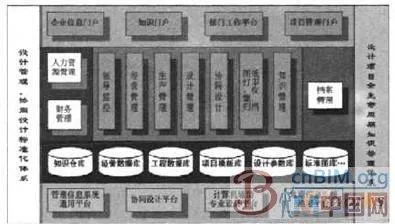
Figure 2 Overall architecture of the design project lifecycle system
4.2 System Construction Content
(1) Leadership Monitoring
Provide a platform for institute leaders to monitor the overall operation and production status of all design projects in real-time.
(2) Business Management
Timely track, objectively evaluate, and fully satisfy customer needs, while continuously exploring new requirements. Provide information monitoring methods and business data statistical analysis tools to scientifically predict and reasonably bid on prices, reducing business risks. Effectively manage contracts, and accurately and timely grasp the status of charging, payments, and expenditures to control the balance of income and expenses and improve enterprise profitability.
(3) Production Management
Develop production plans, control the initiation, task allocation, completion, and closure of design projects, monitor project progress in real-time, allocate project and professional output values reasonably, and assess the performance of projects and professional designers.
(4) Design Management
Establish a project portal to manage and dynamically monitor key elements such as project progress, quality, cost, personnel, product documents, and working hours, as well as project planning, design input, data exchange, drawing design, design review, drawing printing, publishing, delivery, archiving, and post-service activities.
(5) Collaborative Design
Establish a collaborative workspace to provide a standardized working environment for designers, facilitating collaboration within and between specialties, and effectively managing the creation, production, release, change, exchange, sharing, and communication of design documents.
(6) Drawing Production, Collection, and Archiving
Manage the printing and publishing process of design documents, effectively collect drawing files and engineering attributes based on existing work methods, and automatically archive them.
(7) Knowledge Management
Establish a knowledge system for the full lifecycle management of design projects, providing convenient tools for the extraction, management, and circular utilization of knowledge from key stages, including customer requirement tracking, bidding, project planning, mutual data submission, drawing design, review, drawing printing, collection, archiving, post-service, and archive management (such as a knowledge portal, attribute and classification creation, search engine, and permission management).
(8) Archive Management
Standardize the management of archived files for design projects, including project management documents, design deliverables (electronic drawings, etc.), and quality records, for easy access, browsing, downloading, and utilization.
(9) Human Resource Management
Realize the linkage between the basic information of production personnel and the dynamic information of projects, facilitating the timely grasp of personnel workload and rational allocation. Conduct scientific performance evaluations for project team members.
(10) Financial Management
Link financial, operational, and project management data to provide real-time insights into project revenue and expenses for comparison and accounting.
4.3 System Construction Strategy
(1) Building a full lifecycle management system for design projects is a long-term and arduous task that involves many aspects and carries high risks. Whether the system is built all at once or implemented in phases, overall planning is essential. Design companies that already have local applications but do not wish to completely overhaul them must plan and develop reasonable and feasible integration solutions based on their actual situation.
(2) Developing unified design management and collaborative design standards, and establishing reasonable connections between departments, specialties, major design management links, and design product data in line with essential management requirements, can effectively prevent the emergence of “information islands” caused by localized construction.
(3) The business management of design enterprises varies greatly. Building a design project lifecycle management system must fully consider different management purposes, organizational, operational, and production modes, application conditions, and work habits. It must emphasize both the overall situation and critical local needs, meeting the requirements of reality while adapting to the demands of long-term development. Design enterprises should clarify their needs and choose suitable application systems based on their own management modes and characteristics.
(4) The design of a project lifecycle management system is a complex systems engineering project that requires the comprehensive application of various specialized technologies. Therefore, a service-oriented (SOA) technology architecture should be adopted, built on an open and scalable integrated platform. This platform should support multiple technology routes and be capable of continuous improvement, ensuring a smooth transition as information technology evolves.
(5) At present, the vast majority of designers still rely on 2D professional design software for drawing and collaboration. The design project lifecycle management system cannot be rushed; it must also reserve space for the ultimate transformation toward BIM (Building Information Modeling) and the 3D design approach it supports. Extracting valuable data from 2D software for knowledge accumulation and utilization without changing designers’ habits is a shortcut that achieves twice the result with half the effort.
Research and Practice of the Design Project Lifecycle Management System
Beijing Lizheng Software Design and Research Institute has been researching and practicing project lifecycle management systems since the 1990s, with the goal of providing comprehensive and professional information technology services to design enterprises and improving their overall design and management efficiency. Although this exploration has experienced setbacks, we have never abandoned our efforts. Through continuous investment, improvement, deepened understanding, and enhanced technical capabilities, the application effects are gradually becoming evident.
From 1998 to 1999, Lizheng successively developed survey and design CAD and road integration CAD software, pioneering the linkage between graphics and databases and forming the prototype of parametric design for engineering construction projects.
In 2000, Lizheng collaborated with a design institute to develop a knowledge database management system, taking the first step in knowledge management and utilization for engineering design projects.
In 2002, Lizheng launched a design process and drawing management system, covering the main management processes of design projects from bidding (commissioning), project approval, design planning, design input, mutual data submission, drawing design, design review, publishing, delivery, and archiving, to drawing management.
In 2005, leveraging independent professional CAD software and specialized technologies like graphic recognition, Lizheng developed a two-dimensional collaborative design platform and tools, which improved the efficiency of design collaboration without altering designers’ habits.
In 2006, Lizheng launched the “Second Generation Management Information System Universal Platform,” a modular and detachable product. It can flexibly configure business models and application systems like building blocks to meet the needs of different design enterprises, management purposes, management modes, and application conditions. It supports multiple technological routes and can quickly adapt to the development and changes of design enterprises.
In recent years, Lizheng has collaborated with design institutes to actively explore applications such as knowledge management and database-supported collaborative design for professional institutes. Through technology research and development, innovation, and integration, it continuously moves closer to the ultimate goal of a design project lifecycle management system.
6 Conclusion
For the survey and design industry, the full lifecycle management of design projects is undoubtedly a revolution. The application and ultimate implementation of a design project lifecycle management system will thoroughly and profoundly transform current design and management methods, significantly elevating the productivity level of design enterprises. This will require long-term and arduous efforts from both design enterprises and software companies.














Must log in before commenting!
Sign Up