
In the first-ever BIM application competition for construction projects, the Shandong Provincial Capital Cultural and Art Center’s “San Guan” BIM application project claimed second prize. Under the guidance of the Jinan West Railway Station Area Engineering Construction Command, the scheme design was developed by the world-renowned French AS Architecture Studio. A joint team, composed of China Construction International and Shandong Tongyuan Design Group Co., Ltd., oversaw the expansion and construction drawing design.
Meeting Project Challenges with Targeted Strategies
The “San Guan” design is rooted in the concept of “Luoyun Spring Surge.” The architecture features sweeping, undulating lines and a strong sense of dynamic tension, channeling the energy of spring water and the vitality of culture. The building’s facade visually captures the essence of Jinan’s springs—the city celebrated as the “Spring City”—through gentle, rippling waves. The designer translated this imagery via pixelation: first arranging diamond shapes reminiscent of water droplets to form a water-like surface, then applying this pattern to the facade, resulting in a light gray hollow aluminum panel exterior.
Beyond its striking aesthetic, the facade blends tradition and modernity. By using projection and pixelation technology to integrate iconic images of Baotu Spring into the building’s surface, the design honors cultural heritage while embracing contemporary construction practices.
As a flagship project of the 10th Art Festival, “San Guan” faced a series of hurdles: multiple design stakeholders, a tight design schedule, complex spatial relationships, numerous folds in the form, multiple irregular surfaces, and challenges in spatial positioning—all of which posed significant obstacles during the design phase.
To tackle these issues, the project team leveraged the expertise of leading domestic and international design institutes and formed a dedicated BIM design team. Using BIM Technology, they made auxiliary adjustments to the design scheme, achieved precise spatial coordinate positioning, and streamlined the design drawing process. The team focused on resolving cross-disciplinary collisions, optimizing the comprehensive pipeline design, ensuring full-process quality control for drawings, and refining the overall design.
Prioritizing Visualization and Design Refinement
The “San Guan” project’s functional buildings are designed as a unified whole, making both the overall visual impact and interior space design critical challenges. BIM models enabled the visualization of design effects, laying the foundation for visual planning. In the early planning stage, architectural and site models for “San Guan” were created to refine the scheme, while the rationality of key indoor spaces was assessed using Autodesk Navisworks walkthroughs.
Within the project, particularly in the art museum component, numerous inclined columns led to conflicts between equipment disciplines and structural columns. Collisions involving curtain walls or external stone materials and structures were mostly soft collisions, driven by operational space requirements. For hard collisions, the project team established corresponding collision classifications and prioritized resolution strategies.
Expanding the Reach of BIM Models
Using BIM models and virtual reality technology to deliver comprehensive, interactive project presentations marks a new frontier for BIM. The cross-disciplinary application of BIM models has introduced new methods and workflows for project presentation, transforming traditional virtual reality production processes. In this project, the diverse application of BIM models delivered tangible benefits to designers. The precision and accuracy of BIM models also improved the quality of virtual reality, enhancing its expressive power and content, and underscoring its value in indoor decoration display and outdoor 3D landscape design.
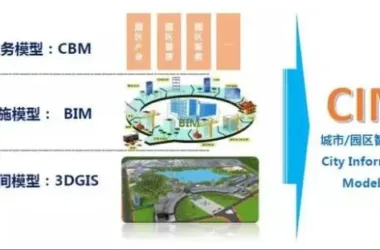
Designers replaced conventional model-building approaches with BIM information models, seamlessly integrating digital cities with BIM and expanding BIM’s role within the “San Guan” project. All terrain and buildings on the plot were modeled in BIM, enabling smooth, convenient, and effective data exchange with the digital city management platform, thus increasing the data volume.
As BIM applications continue to deepen, their importance only grows, and their scope keeps expanding. Through in-depth project practice, the once fragmented and siloed design workflow has evolved into a parallel, interactive, and integrated model. Data and graphic modifications, along with communication with all stakeholders, have become fast and efficient.
Our reporter: Ren Jia












Must log in before commenting!
Sign Up