
Construction industrialization transcends basic assembly—it is far more than a mere fusion of conventional practices and on-site installation. Adopting traditional construction management models for assembly-based projects does not equate to genuine industrialization. The modern era of construction industrialization rests on five foundational principles:
1. Standardized Design
Standardized design centers on the development of standardized units. Unlike earlier methods—such as modular design or standardized templates that focused on isolated elements—today’s standardization is powered by advanced information technology. A key driver is the adoption of BIM technology, which offers strong information-sharing and collaboration capabilities, breaking previous limitations. This enables more effective creation of standardized units and ensures their repeated application across the entire construction lifecycle. A clear real-world example is Hong Kong’s public housing, which uses seven well-established design layouts that are both practical to deploy and highly efficient.
2. Factory Production
Factory production is the cornerstone of construction industrialization. While many equate “industrialization” with factory-made building components, the factory manufacturing of primary structural elements takes top priority. In traditional construction, ensuring structural precision remains a major challenge. Errors often fall within common tolerances, leading to issues like inconsistent door and window dimensions across different floors. Primary structural construction has long relied heavily on manual labor, with excessive dependence on frontline migrant workers. This results in excessive on-site waste, material inefficiency, environmental harm, and makes on-site quality control difficult. Factory production of primary structures addresses these problems, delivering millimeter-level accuracy and enabling the standardization of decorative components. True industrial construction requires a shift in production methods, not just a focus on prefabrication rates.
3. Prefabricated Construction
The core of prefabricated construction lies in two key areas: construction technology and construction management, with management being especially critical. Industrial operations differ fundamentally from traditional models. Instead of the current layered subcontracting approach, construction industrialization advocates the “EPC” model—engineering, procurement, and construction general contracting. This integrated model is particularly emphasized in the early stages of construction industrialization. EPC unifies design, production, and construction, optimizing project design, integrating resources and technology, and maximizing benefits across the entire construction process. It ensures the transformation of production methods within the context of building industrialization. Through the EPC model, technology is consolidated into integrated solutions, achieving optimal resource allocation across the full project lifecycle.
4. Integrated Decoration
Integrated decoration starts at the design stage, coordinating seamlessly with component manufacturing and assembly construction. It integrates with the main structure, rather than beginning decoration only after the building shell is completed.
5. Information Management
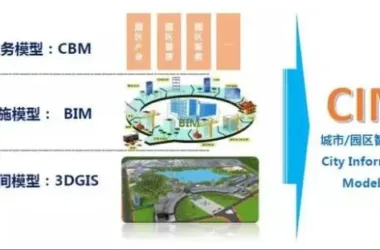
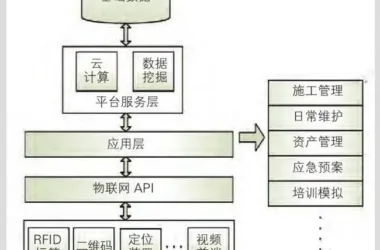
Information management across the construction process requires building an information model from the very start of design. Multiple disciplines collaborate through this information platform, and drawings are further refined before entering the factory. Simulating the construction process is also essential during the assembly phase. Additionally, components are equipped with chips to enable quality tracking. The widespread adoption of BIM technology accelerates the evolution of engineering construction toward industrialization, standardization, and intensification. It promotes higher-level resource sharing across all stages and professional fields of engineering construction, effectively addressing coordination gaps between disciplines and industries. It resolves disconnects between design and construction, as well as between components and construction techniques, significantly improving the refinement, production efficiency, and engineering quality of construction projects—and fully showcasing the advantages of new construction industrialization.
The next phase of construction industrialization is primarily driven by the construction industry itself, not the real estate sector. The construction industry stands to gain the most from industrialization, and active promotion by construction enterprises is the right path forward. However, many construction companies have yet to recognize the critical role of construction methods, treating them merely as a requirement for enterprise promotion. This mindset must change quickly, and research and application of construction methods should be strengthened to establish them as the core competitiveness of enterprises in the industrial era.
Author: Ye Ming, Director of the Building Technology Department at the Housing Industrialization Promotion Center of the Ministry of Housing and Urban-Rural Development, has dedicated his career to the research, promotion, and management of housing industrialization technology.













Must log in before commenting!
Sign Up