
BIM (Building Information Modeling) is a 3D digital technology that creates an integrated engineering data model for construction projects. This digital representation encompasses both the physical and functional characteristics of a facility’s assets (see Figure 1). The BIM model not only contains 3D geometric information, but also a wide range of non-geometric data such as material types, weight, cost, and construction progress. This allows for the simulation of real-world behaviors. BIM can be implemented throughout all phases of a project’s lifecycle, including planning, design, construction, and operations management.
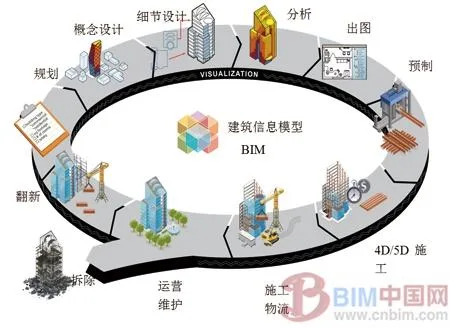
Figure 1 Project lifecycle information transfer enabled by BIM
As BIM becomes more widely recognized within the Chinese construction industry, its significance for both the sector and business development is increasingly acknowledged. The “Outline for the Development of Informationization in the Construction Industry (2011-2015)” identifies BIM Technology as a key driver for industrial advancement. This recognition has fueled a greater demand for BIM standards and specifications. In response, the Ministry of Housing and Urban-Rural Development initiated research on BIM standards, with the China Academy of Building Research leading the establishment of the “China BIM Development Alliance.” This alliance brings together domestic research organizations, universities, companies, and software developers to collaboratively drive the development of BIM standards and software.
Technical exchanges related to BIM are also on the rise. In 2010 and 2012, the Chinese Society of Cartography organized international conferences focusing on collaborative BIM applications for the design, construction, and real estate industries. Both the design and construction fields are now actively exploring BIM applications in practice.
Since BIM Technology was first used in the main stadium for the Beijing Olympics—the “Bird’s Nest”—major projects such as Shanghai Center, Beijing’s “China Zun,” Galaxy SOHO, Wuhan Center, and Tianjin 117 Building have adopted BIM in their design and construction processes.
The benefits of BIM in construction are reflected mainly in six areas: visual representation, simulation of construction processes and technologies, advanced mechanical and electrical design, construction progress simulation, cost management, and digital component processing.
Visual Representation. Based on 2D drawings provided by design institutes, BIM models can be developed for civil engineering structures and MEP (Mechanical, Electrical, and Plumbing) systems (see Figure 2). BIM also enables detailed modeling for interior decoration (see Figure 3) and integration of models across multiple disciplines (see Figure 4).
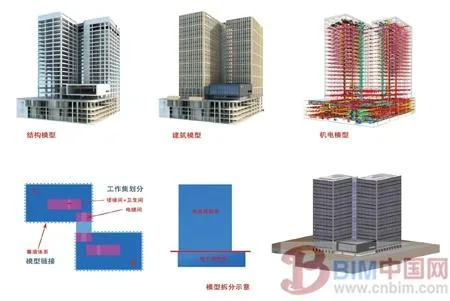
Figure 2 Civil engineering and MEP BIM model
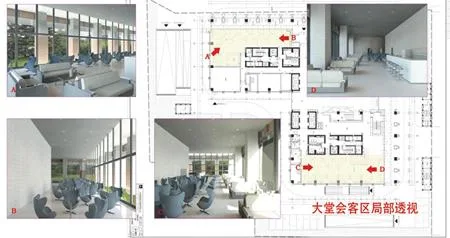
Figure 3 BIM-based fine decoration

Figure 4 Integrated multidisciplinary model for Yunnan Science and Technology Museum
Simulation of Construction Process and Technology. BIM is utilized for construction plan validation (see Figure 5), deep foundation pit modeling (see Figure 6), and simulation of complex structural beam-column nodes, accurately reflecting real site conditions (see Figure 7).
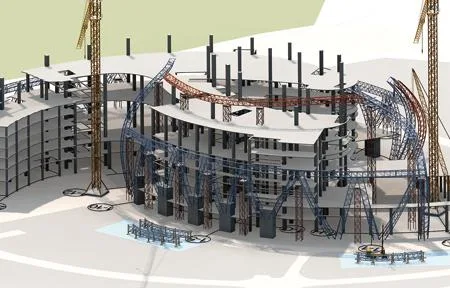
Figure 5 Collision detection for steel structures during hoisting
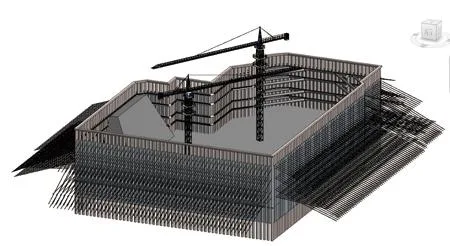
Figure 6 Foundation pit support, pile foundation, and anchor rod models for Jianyan Institute’s new research building
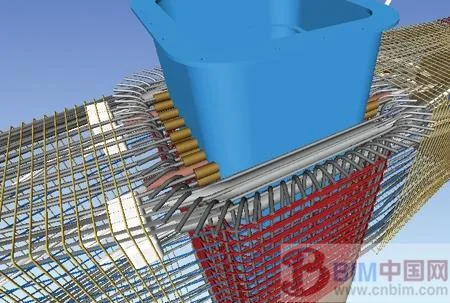
Figure 7 Simulation of complex structural nodes
Advanced Mechanical and Electrical Design. BIM models for MEP engineering support collision detection, pipeline integration, digital processing, prefabrication, and simulated installation (see Figure 8).
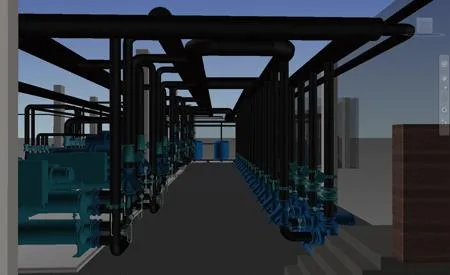
Figure 8 Comprehensive layout of equipment and pipelines in the computer room
Construction Progress Simulation. By linking the BIM model with the construction schedule and site information for 4D dynamic simulation, the entire construction process can be visualized in real time. By selecting a specific date or task, users can clearly track daily progress and work quantities.
For example, PKPM-4D construction simulation software provides a user-friendly interface, allowing 4D construction management to be completed in just three steps. The software supports importing schedules from popular formats and provides visual scheduling (see Figure 9). It is compatible with modeling software such as Revit, Archicad, Magicad, and IFC files, streamlining workflows and eliminating the need to switch between systems. The platform connects BIM models with construction schedules by analyzing dependencies among site layout, progress, facilities, and materials, enabling two-way data exchange between BIM and scheduling software.
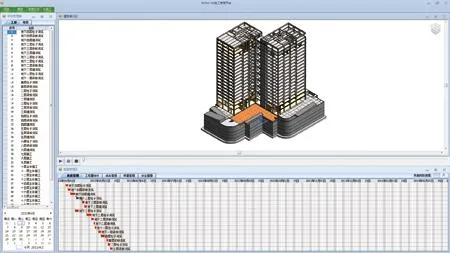
Figure 9 Progress plan visualization
Construction Cost Management. By using PKPM-5D simulation software in conjunction with BIM models, real-time, two-way data exchange is established between quantity calculation and cost estimation. Any modifications to the model are instantly reflected in the cost updates. The BIM model contains comprehensive cost data, and combined with schedule information, it is possible to generate an S-shaped cost curve as the schedule is tracked visually in real time (see Figure 10).
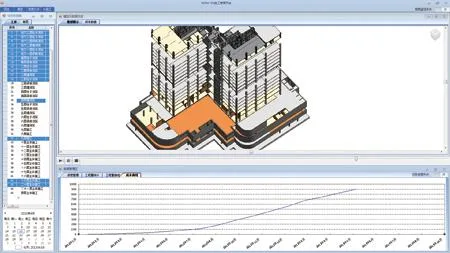
Figure 10 Real-time generation of S-shaped cost curve
Digital Component Processing. BIM enables advanced design and completion acceptance for steel structures and other specialized fields.
China Academy of Building Research; Wang Jing













Must log in before commenting!
Sign Up